 View larger
Dinosaur Worksheets
Dinosaurs, eggs, bones and volcanoes for counting, patterns, same and different, words, a read-aloud, a fossils passage and word problems.
Download the dinosaurs worksheets
Dinosaur worksheets for preschool
 View larger
 View all 2 pages
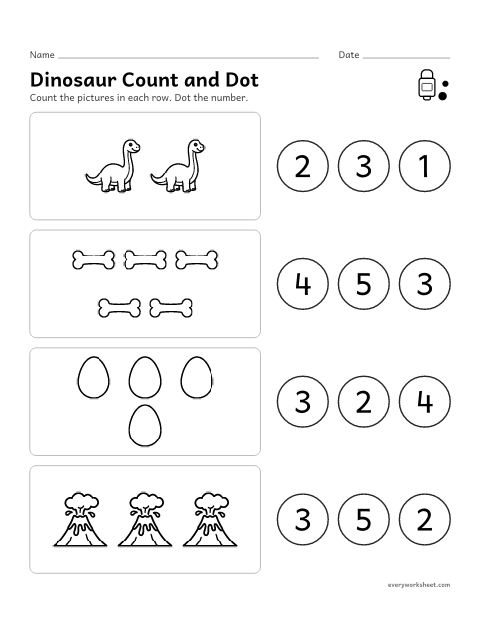
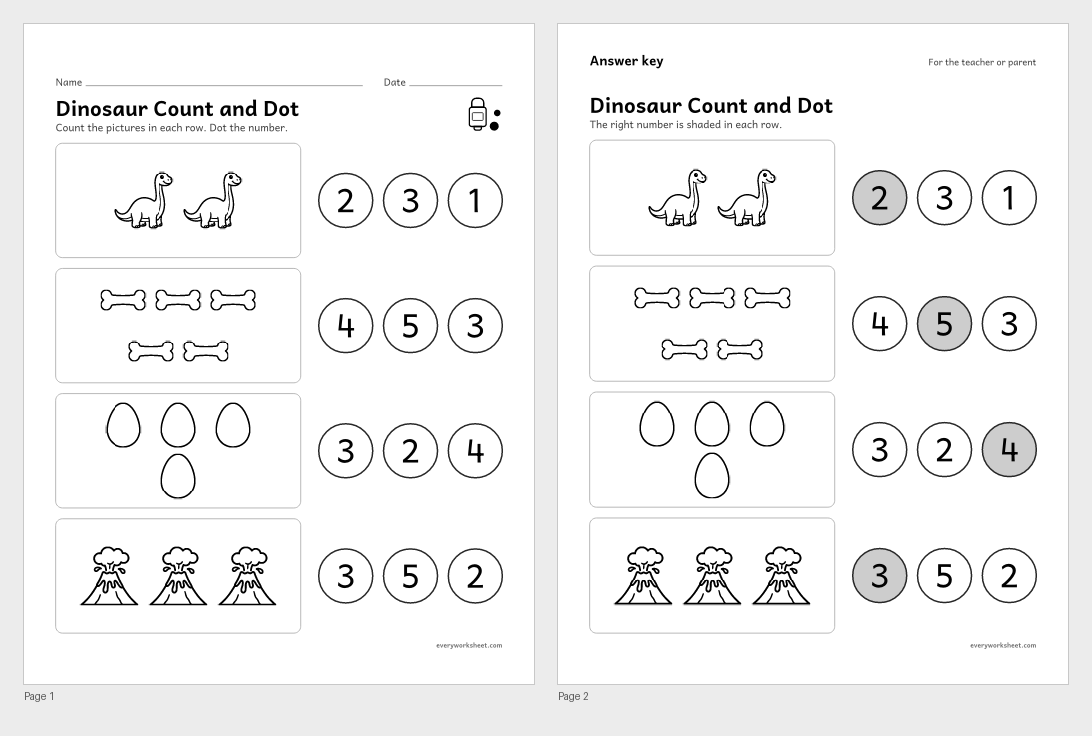
Dinosaur count and dot
Counting 1 to 5 pictures and finding the number
Answer key on page 2
2 pages252 KB
 View larger
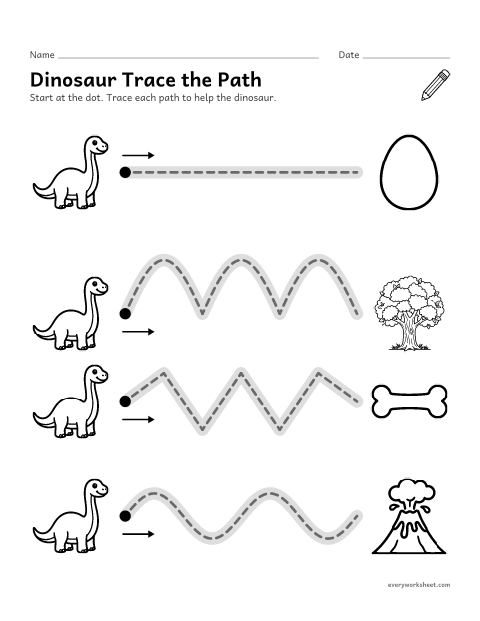
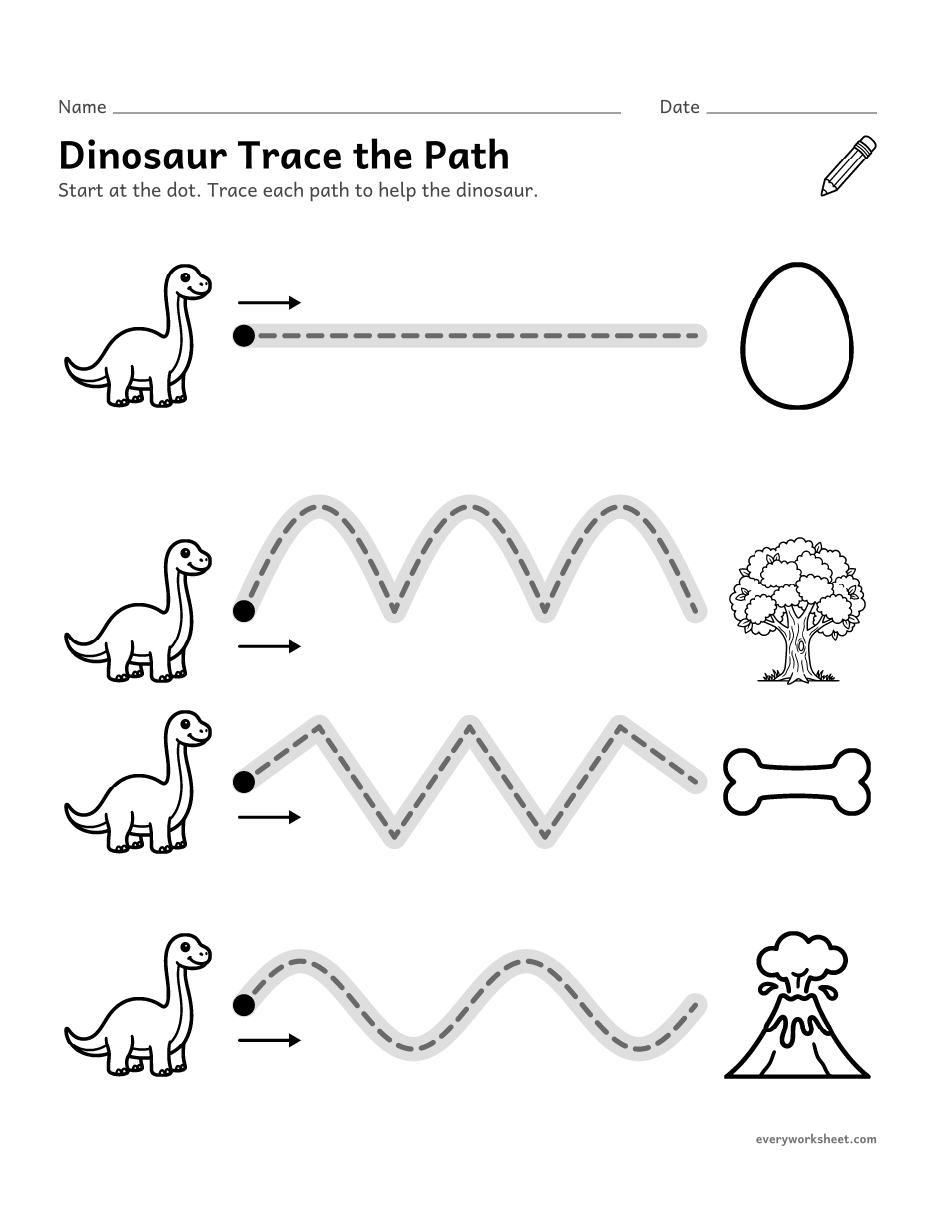
Dinosaur trace the path
Tracing straight, wavy and zigzag lines from left to right
1 page162 KB
 View all 2 pages
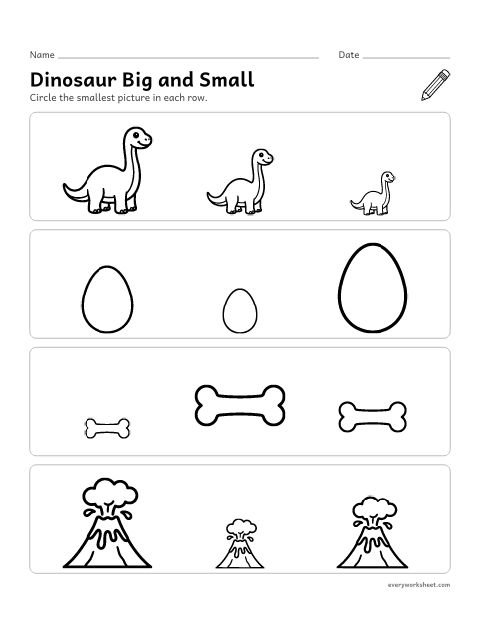
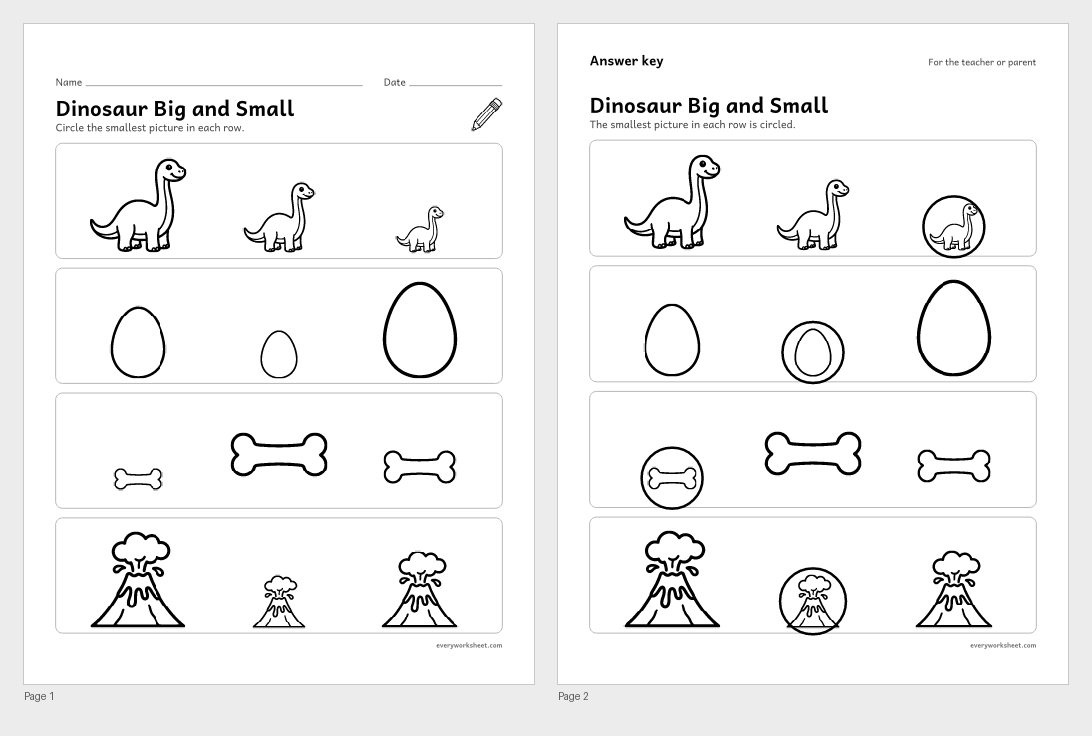
Dinosaur big and small
Comparing sizes and finding the smallest
Answer key on page 2
2 pages286 KB
 View all 2 pages
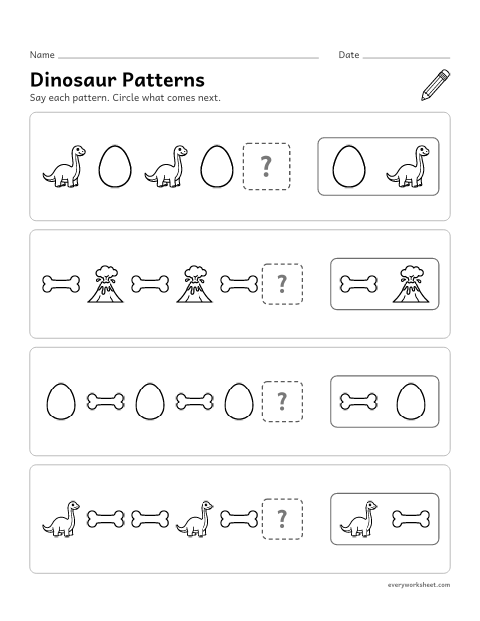
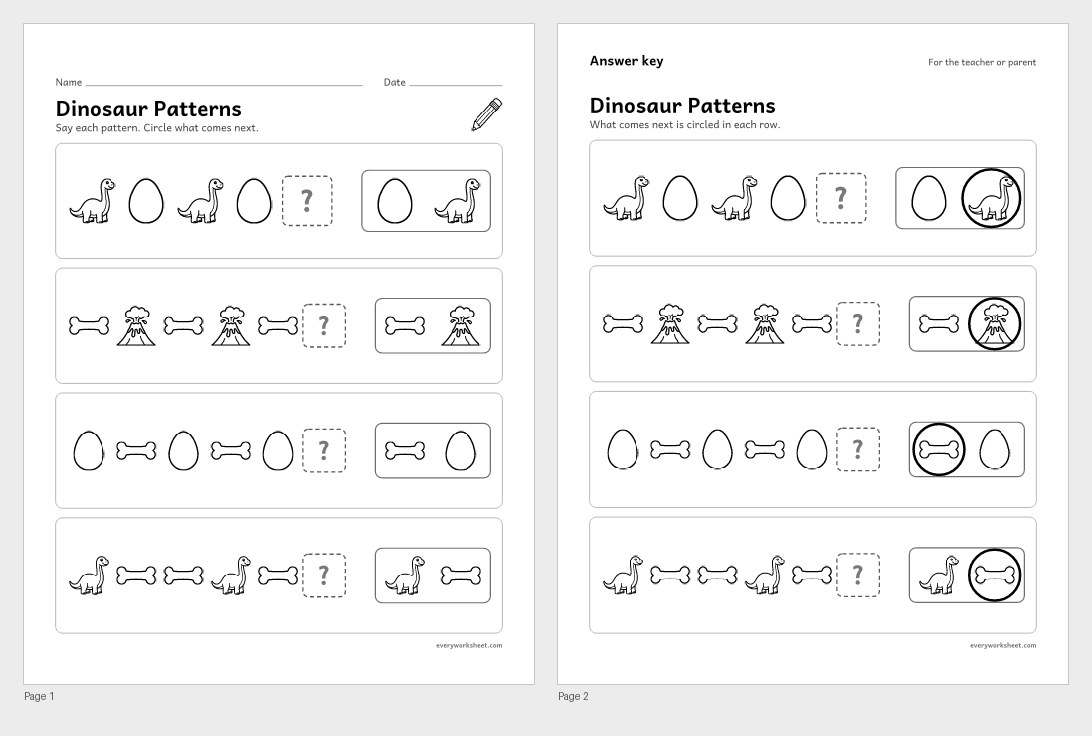
Dinosaur patterns
Finding what comes next in AB and ABB patterns
Answer key on page 2
2 pages593 KB
 View all 2 pages
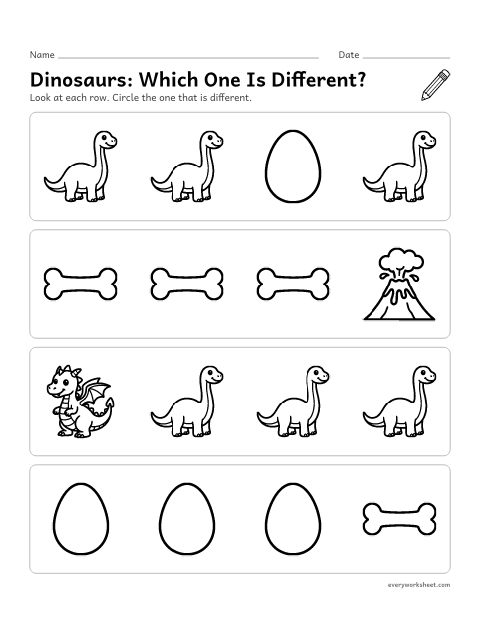
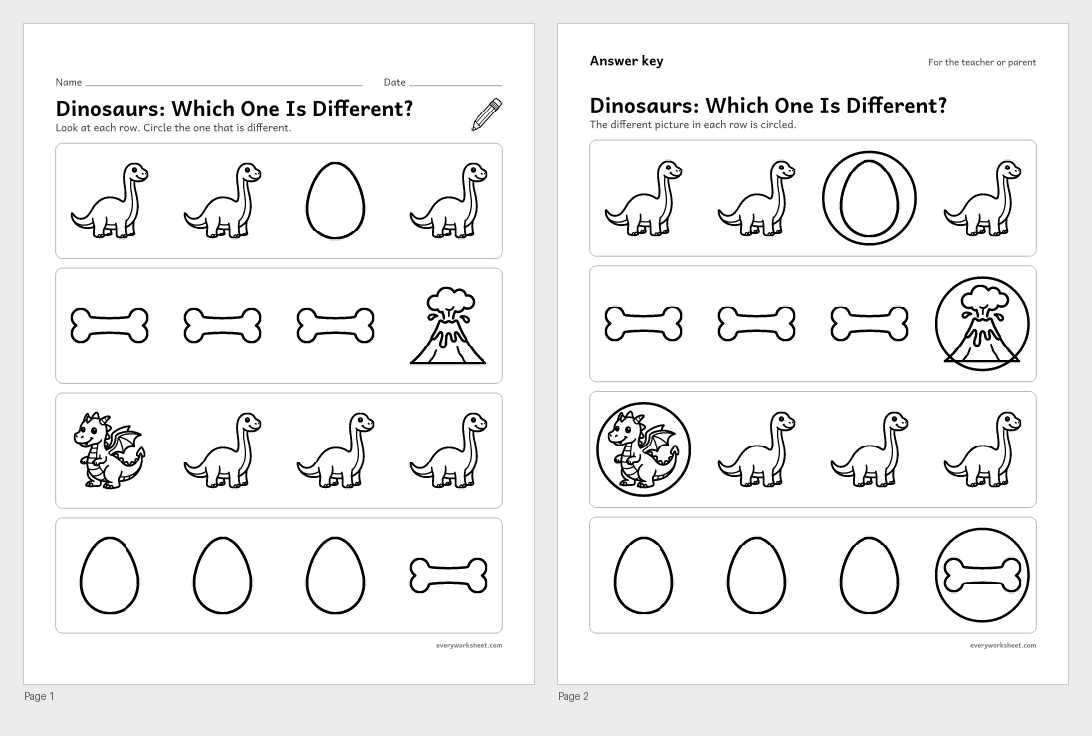
Dinosaurs: which one is Different?
Finding the picture that is different
Answer key on page 2
2 pages411 KB
Dinosaur worksheets for kindergarten
 View all 2 pages
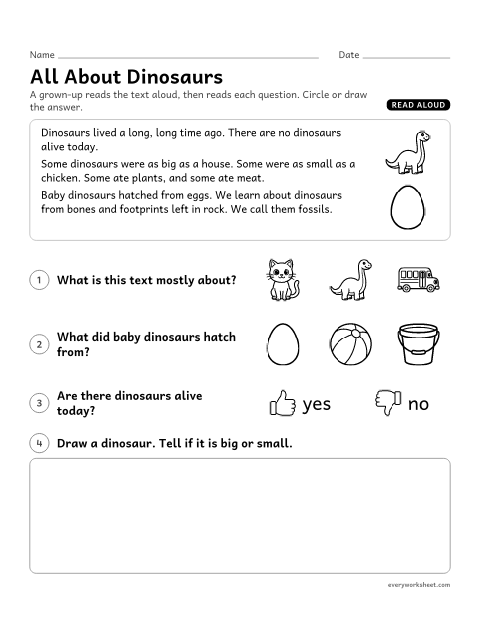
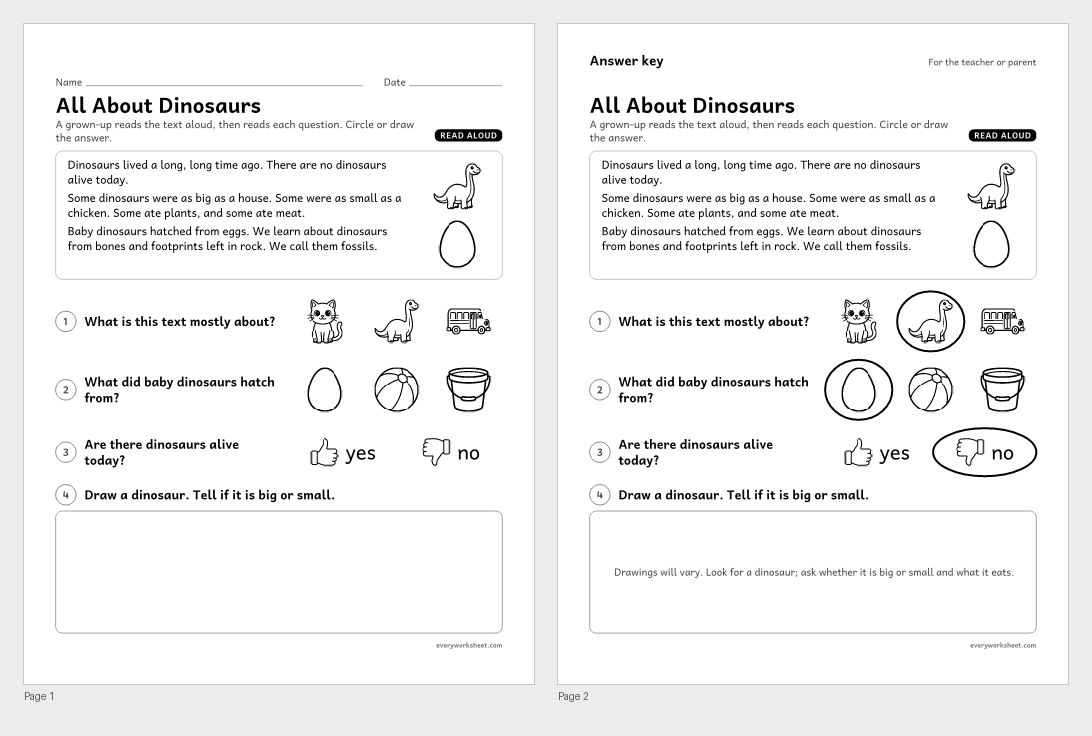
All about dinosaurs
Listening to an informational text and naming the main topic and key details
Answer key on page 2
2 pages309 KB
 View all 2 pages
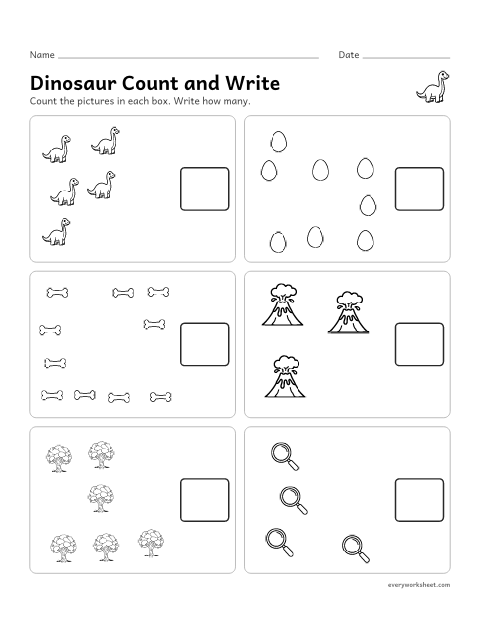
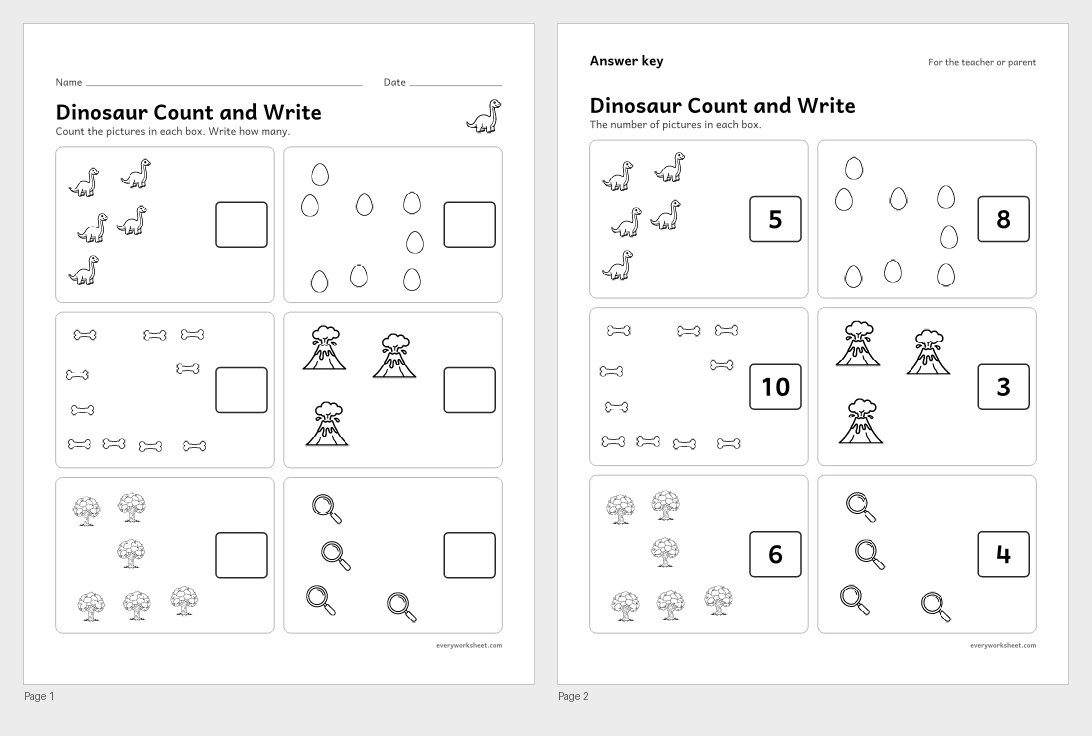
Dinosaur count and write
Counting up to 10 objects in a scattered group and writing the number
Answer key on page 2
2 pages814 KB
 View all 2 pages
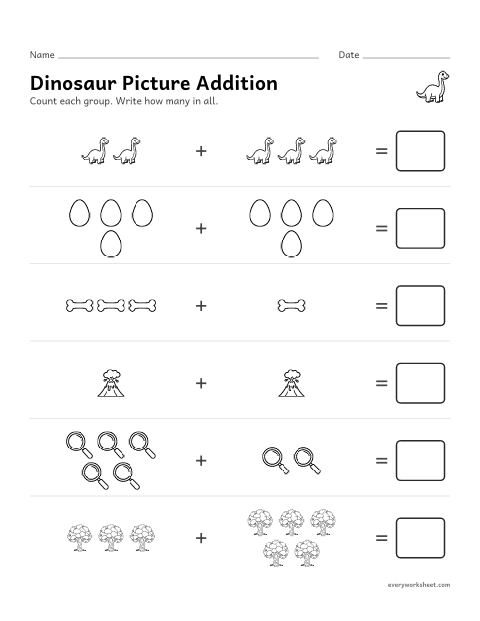
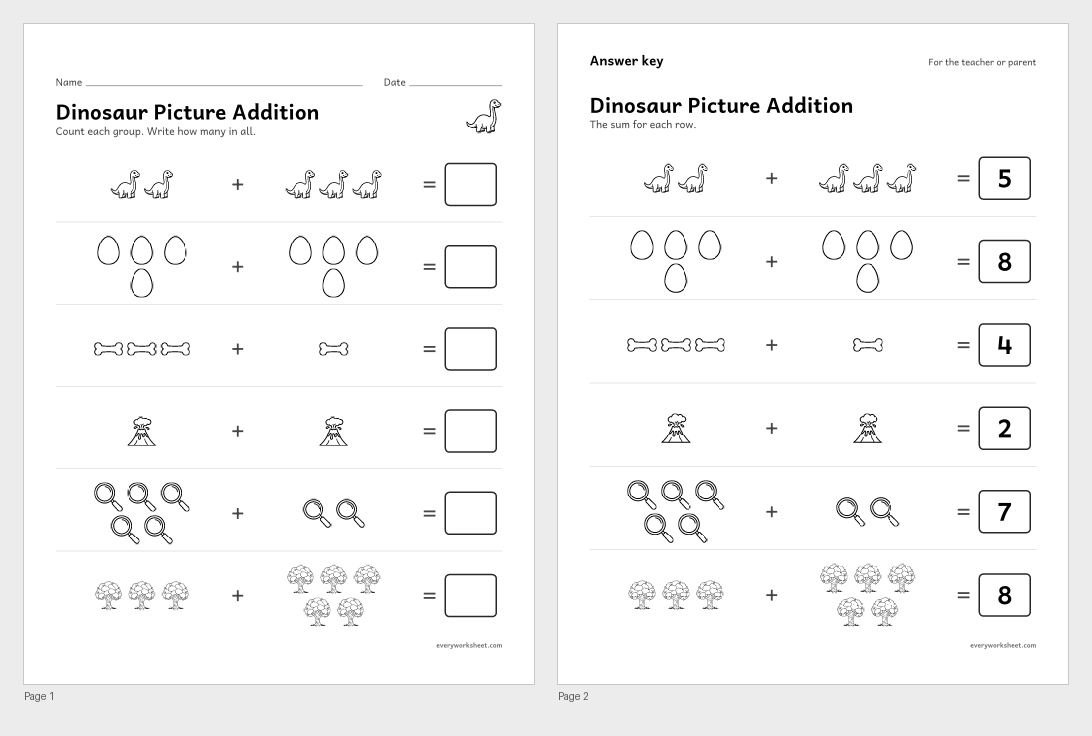
Dinosaur picture addition
Adding within 10 with pictures
Answer key on page 2
2 pages984 KB
 View larger
 View all 2 pages
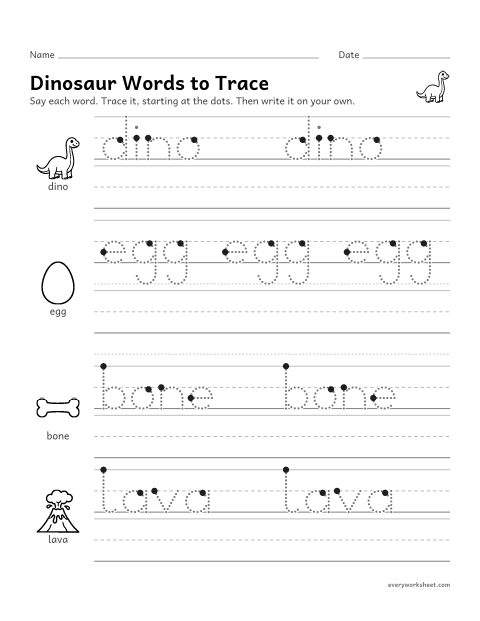
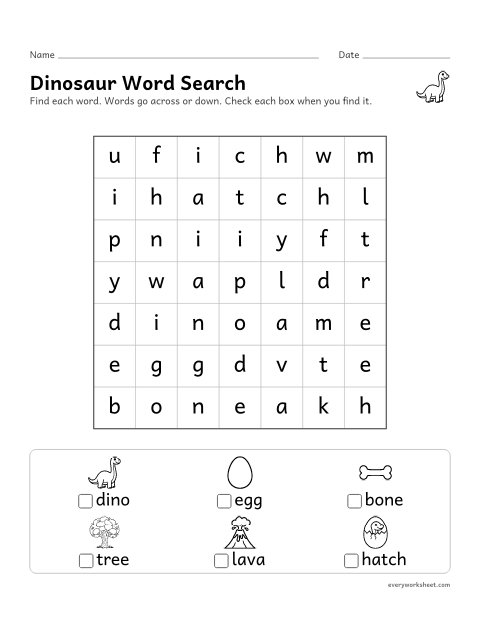
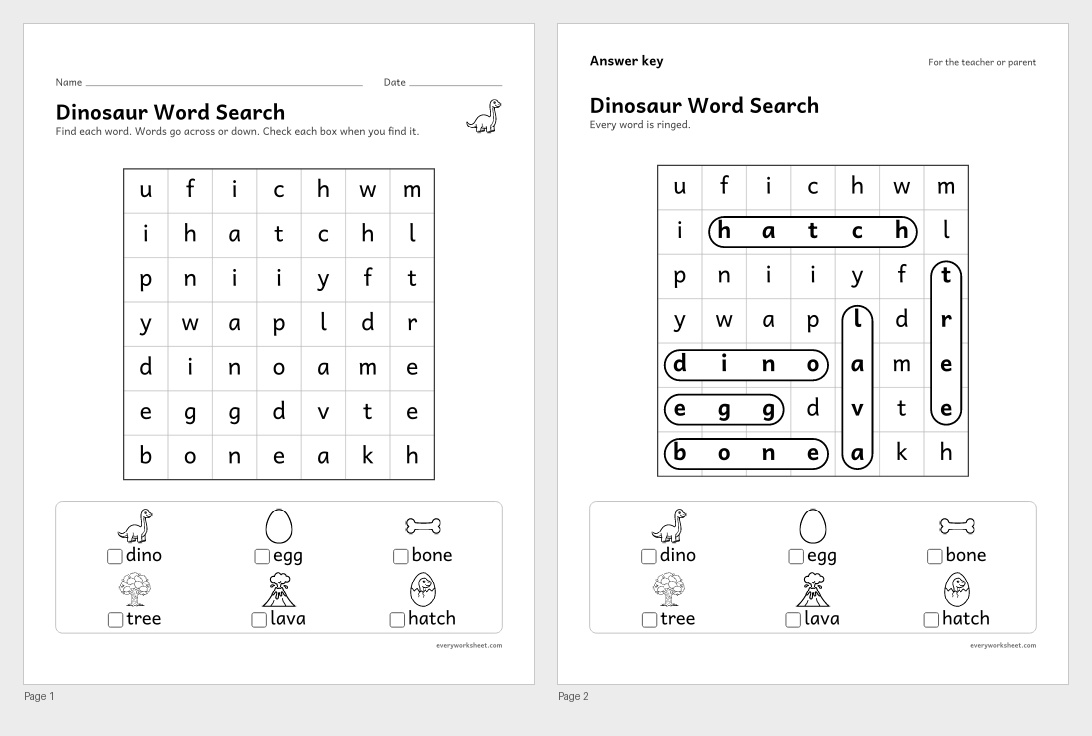
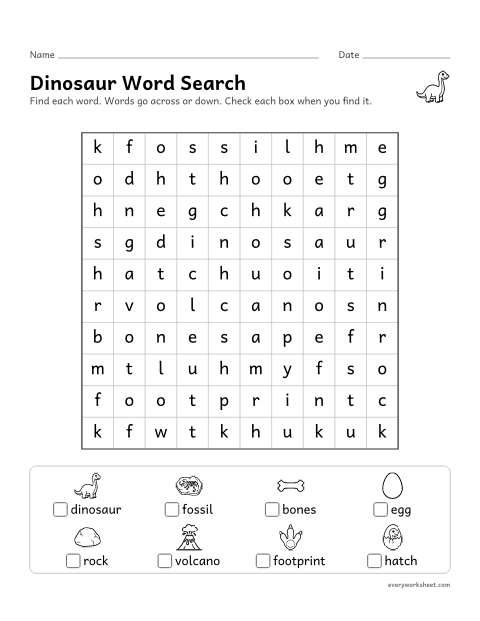
Dinosaur word search
Finding dinosaur words letter by letter
Answer key on page 2
2 pages246 KB
 View larger
Dinosaur worksheets for 1st grade
 View all 2 pages
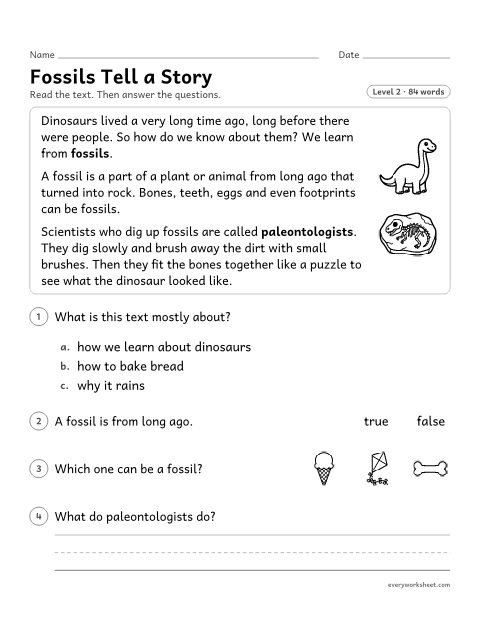
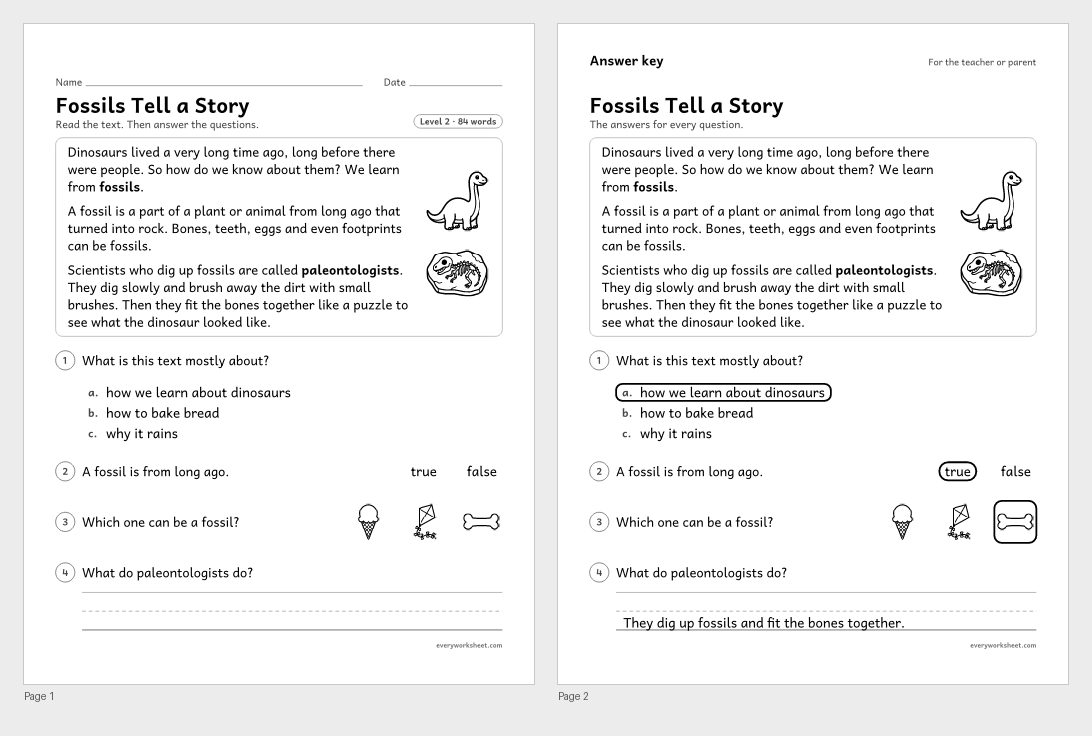
Fossils tell a story
Finding the meaning of new words in a nonfiction text
Answer key on page 2
2 pages235 KB
 View all 2 pages
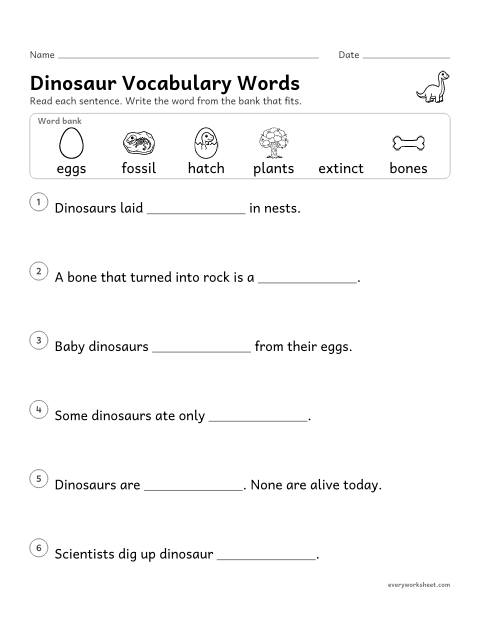
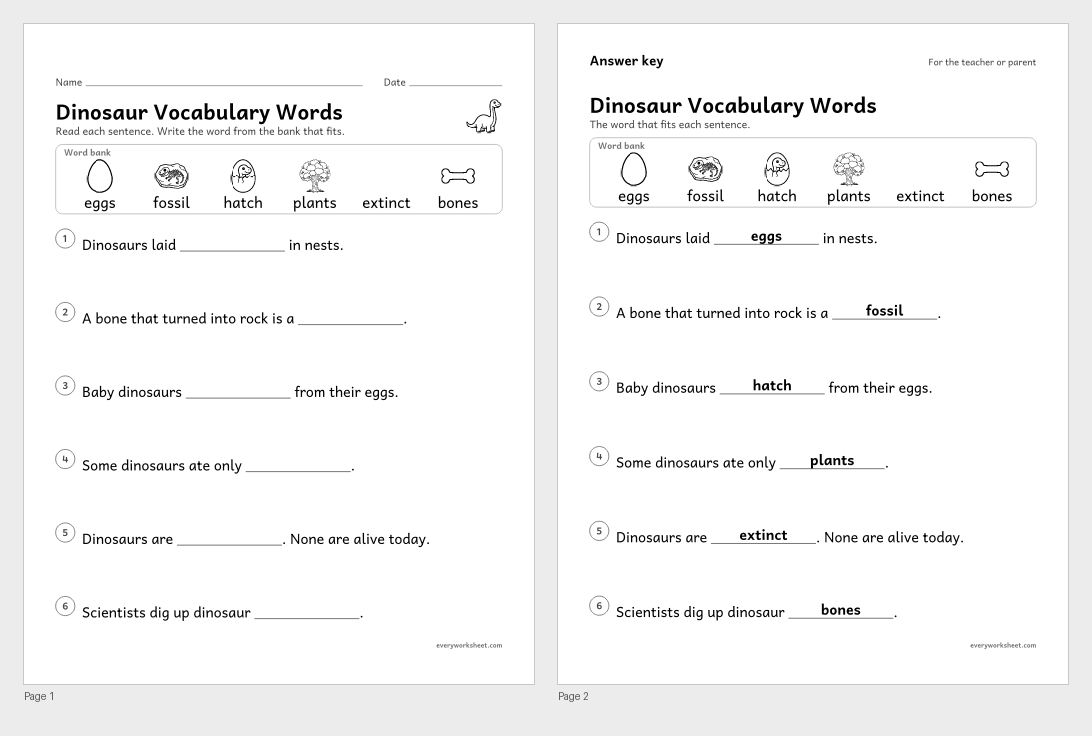
Dinosaur vocabulary words
Using sentence clues to choose the word that fits
Answer key on page 2
2 pages255 KB
 View all 2 pages
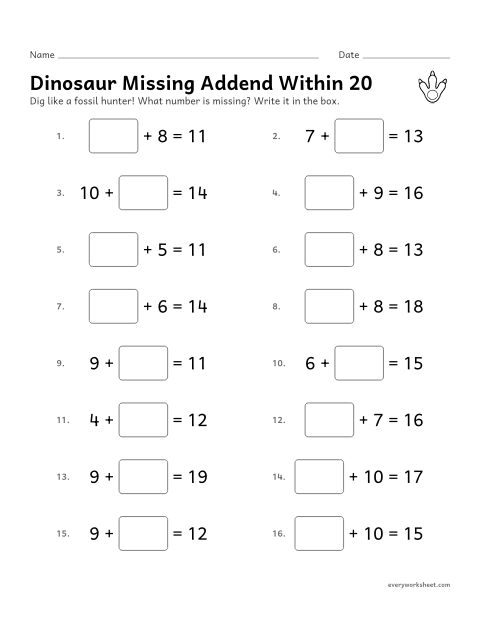
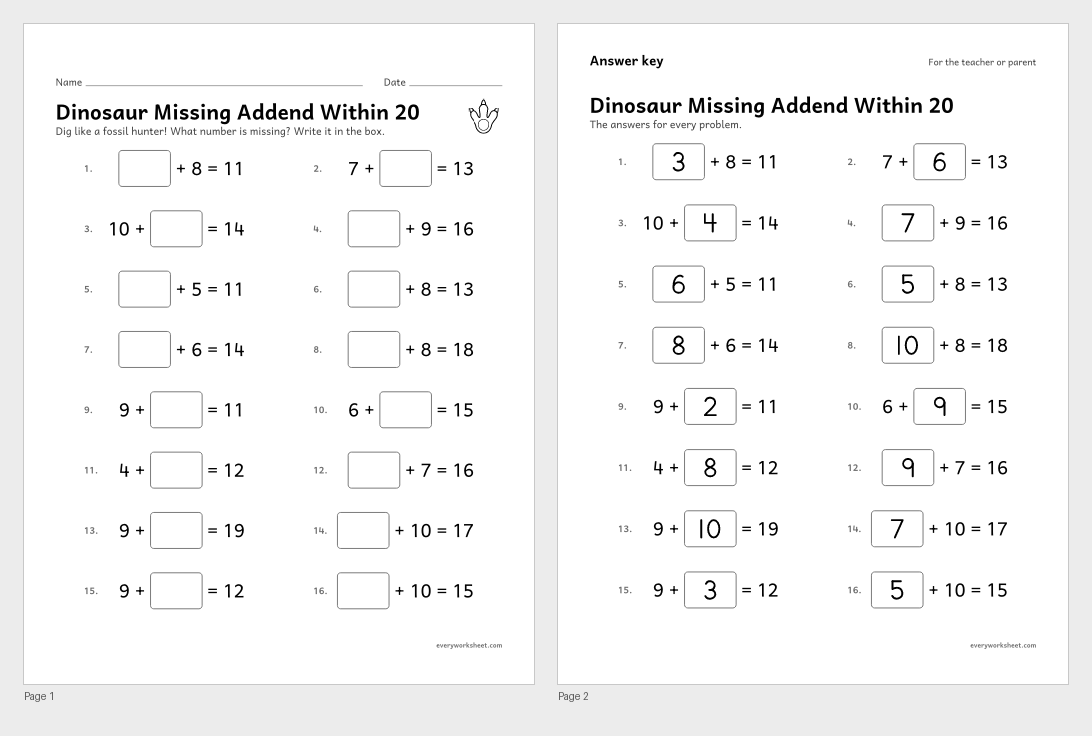
Dinosaur missing addend within 20
Finding a missing addend within 20
Answer key on page 2
2 pages101 KB
 View all 2 pages
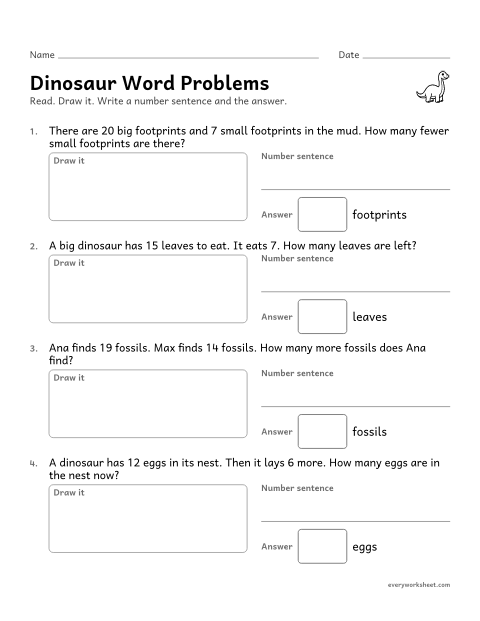
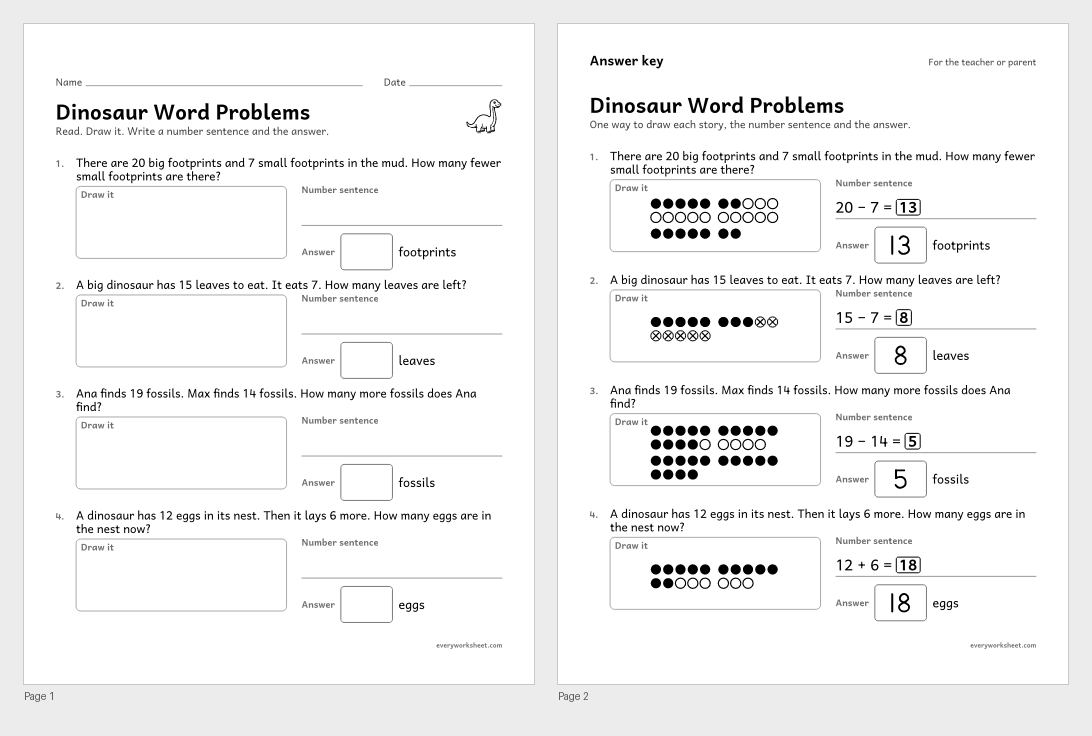
Dinosaur word problems
Solving add, take away and compare word problems within 20
Answer key on page 2
2 pages68 KB
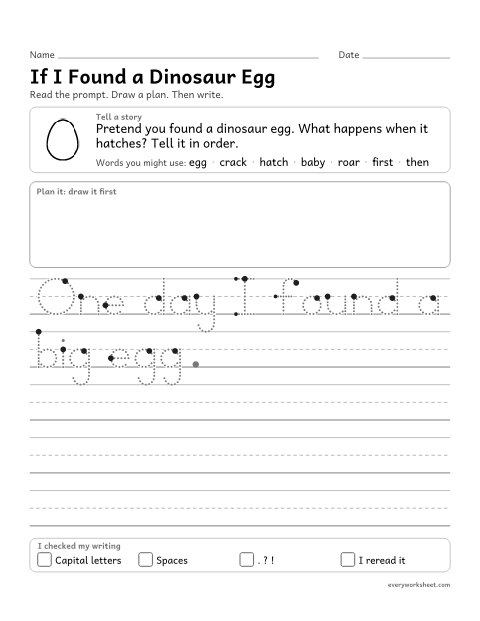 View larger
 View all 2 pages
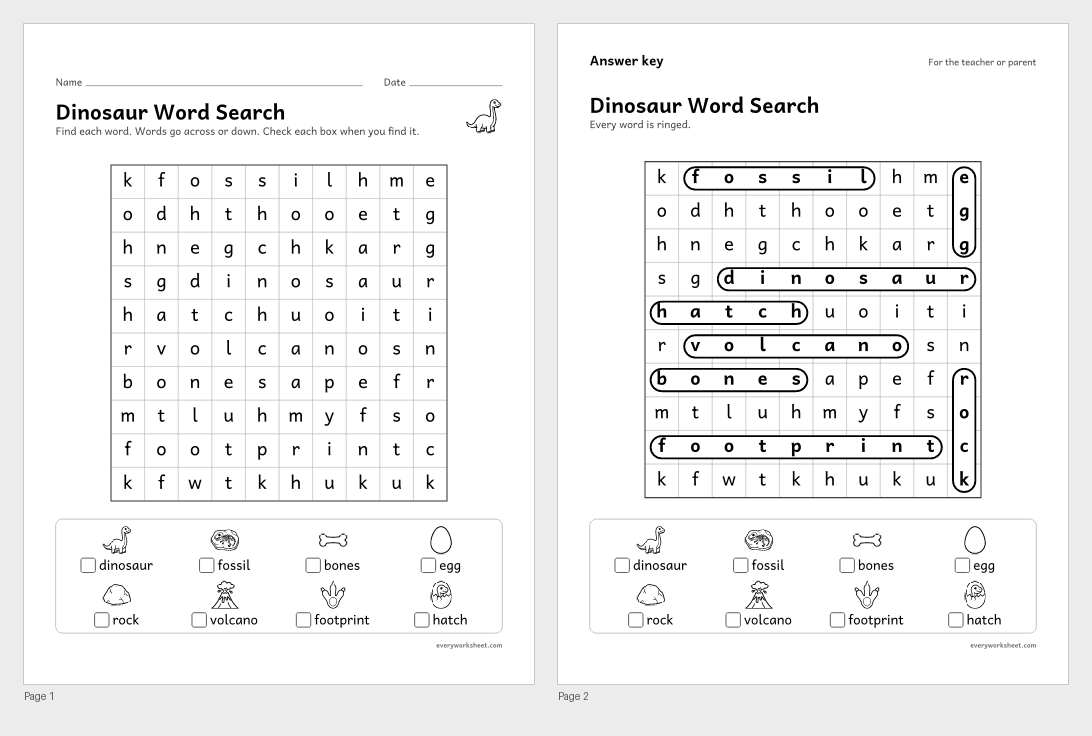
Dinosaur word search
Reading and finding dinosaur words
Answer key on page 2
2 pages327 KB
Print at 100% (actual size) for the cleanest tracing lines.
About these dinosaurs worksheets
Few themes get young children as excited as dinosaurs. These worksheets turn that excitement into real practice. Preschoolers count and dot, trace paths, compare big and small, find patterns, spot the one that is different and color a big dinosaur. Kindergartners count and write, add with pictures, trace dinosaur words, find words in a big word search, listen to a short read-aloud and write about a pet dinosaur. 1st graders read about fossils, learn words like hatch and extinct, find a missing addend and solve dinosaur word problems.
Use them in a dinosaur unit, during a theme week, or any time a child is in a dinosaur phase. The facts are kept simple and true: dinosaurs lived long ago, hatched from eggs, and we learn about them from fossils.
Every page is black and white, prints on US Letter or A4, and pages with one right answer have an answer key on page 2.
Standards
ELOF P-MATH 2Child recognizes the number of objects in a small set.ELOF P-MATH 7Child understands simple patterns.ELOF P-MATH 8Child measures objects by their various attributes using standard and non-standard measurement. Uses differences in attributes to make comparisons.ELOF P-PMP 3Child demonstrates increasing control, strength, and coordination of small muscles.ELOF P-SCI 3Child compares and categorizes observable phenomena.CCSS.ELA-LITERACY.L.K.1.APrint many upper- and lowercase letters.CCSS.ELA-LITERACY.RF.K.1.BRecognize that spoken words are represented in written language by specific sequences of letters.CCSS.ELA-LITERACY.RI.K.2With prompting and support, identify the main topic and retell key details of a text.CCSS.ELA-LITERACY.W.K.3Use a combination of drawing, dictating, and writing to narrate a single event or several loosely linked events, tell about the events in the order in which they occurred, and provide a reaction to what happened.CCSS.MATH.CONTENT.K.CC.B.5Count to answer "how many?" questions about as many as 20 things arranged in a line, a rectangular array, or a circle, or as many as 10 things in a scattered configuration; given a number from 1–20, count out that many objects.CCSS.MATH.CONTENT.K.OA.A.2Solve addition and subtraction word problems, and add and subtract within 10, e.g., by using objects or drawings to represent the problem.CCSS.ELA-LITERACY.L.1.4.AUse sentence-level context as a clue to the meaning of a word or phrase.CCSS.ELA-LITERACY.RF.1.3.BDecode regularly spelled one-syllable words.CCSS.ELA-LITERACY.RI.1.4Ask and answer questions to help determine or clarify the meaning of words and phrases in a text.CCSS.ELA-LITERACY.W.1.3Write narratives in which they recount two or more appropriately sequenced events, include some details regarding what happened, use temporal words to signal event order, and provide some sense of closure.CCSS.MATH.CONTENT.1.OA.A.1Use addition and subtraction within 20 to solve word problems involving situations of adding to, taking from, putting together, taking apart, and comparing, with unknowns in all positions, e.g., by using objects, drawings, and equations with a symbol for the unknown number to represent the problem.CCSS.MATH.CONTENT.1.OA.D.8Determine the unknown whole number in an addition or subtraction equation relating three whole numbers. For example, determine the unknown number that makes the equation true in each of the equations 8 + ? = 11, 5 = _ - 3, 6 + 6 = _.
How to use them
- Read the dinosaur read-aloud (kindergarten) or the fossils passage (1st grade) first, then use the other pages as practice.
- On the big and small page, ask children to say which is the biggest and smallest before they circle.
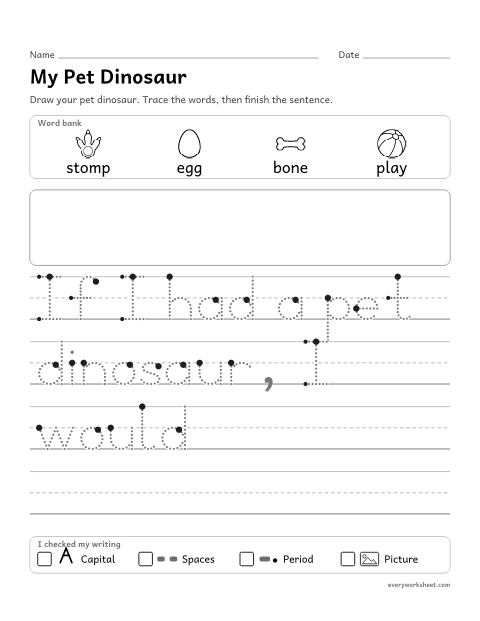
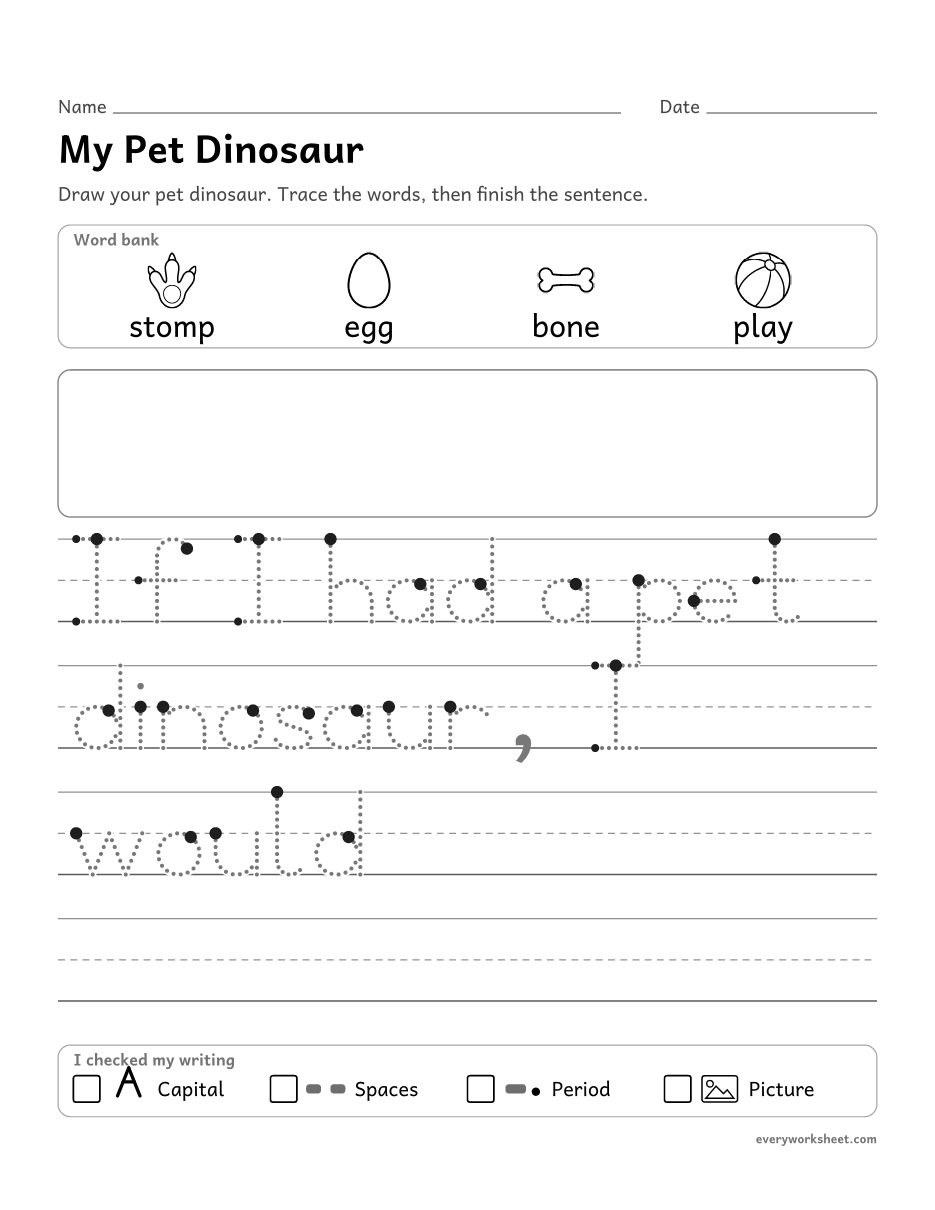
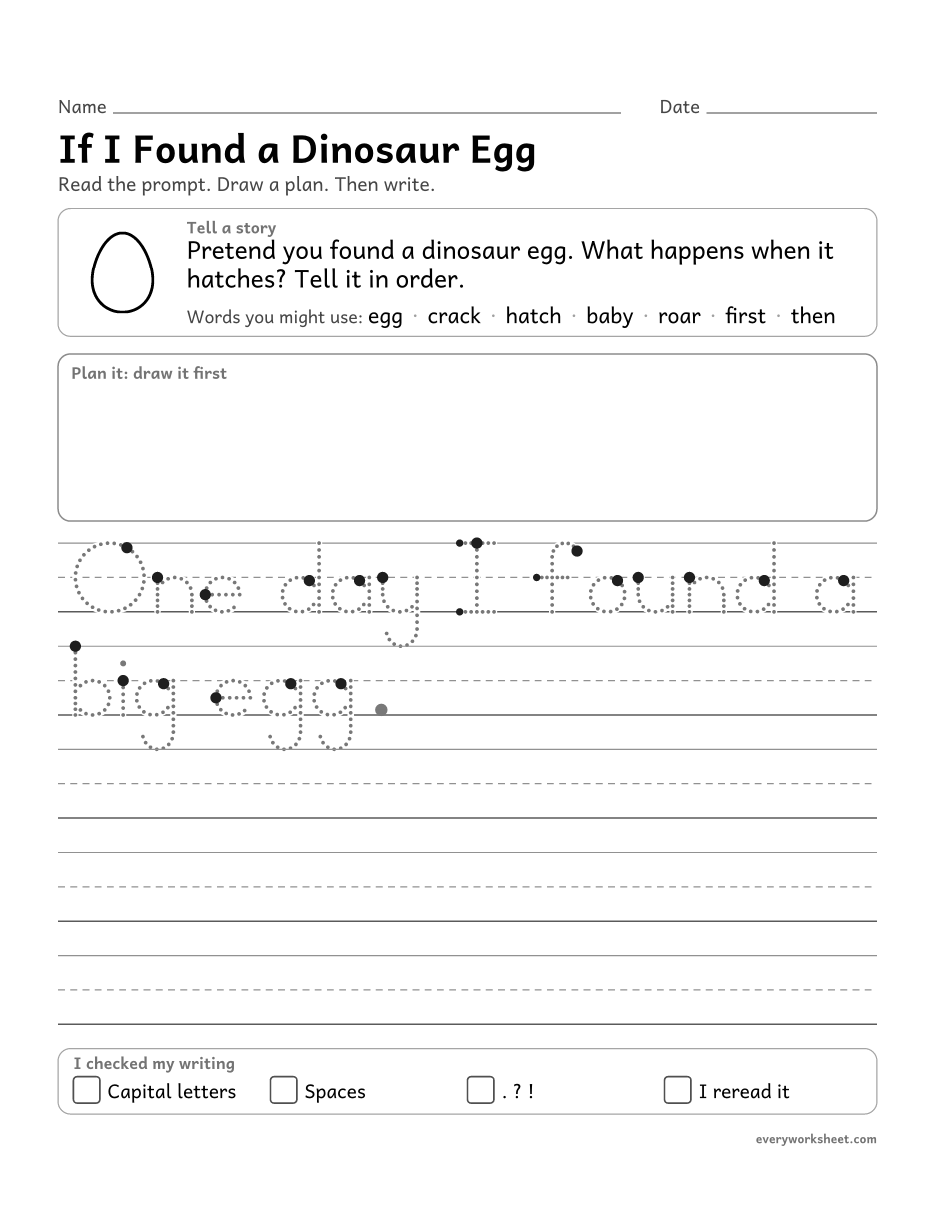
- Before the writing prompt, talk about what a pet dinosaur would eat, where it would sleep and how big it would grow.
- Hide a few toy dinosaurs or bones in a sand tray and let children dig before the fossils passage.
Teaching tips
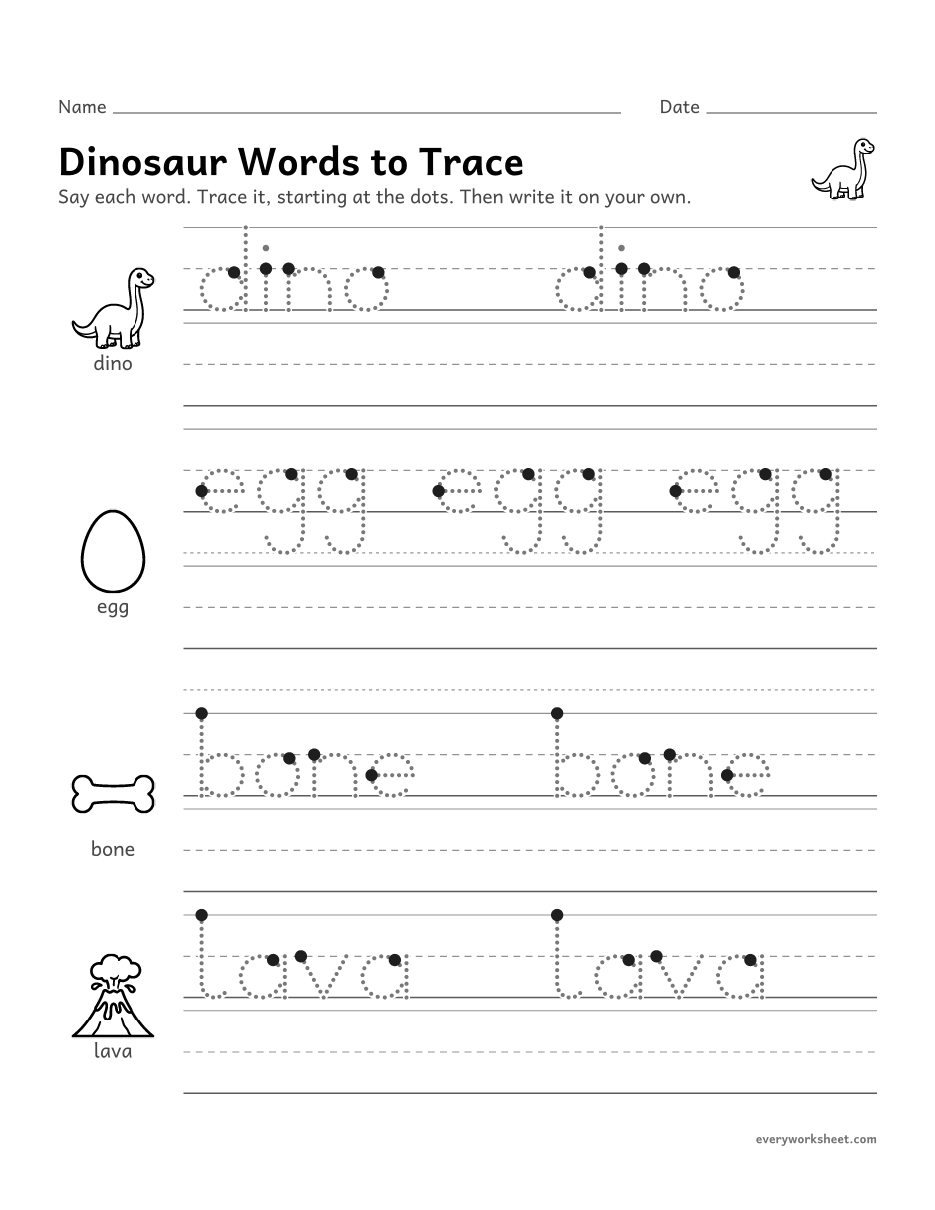
- Children love long dinosaur names, but the skill is the point. Simple words like dino, egg and bone are best for tracing.
- Remind children that no dinosaurs are alive today, so a pet dinosaur story is pretend.
- For 1st grade missing addend sheets, count on from the number you know: 9 and how many more make 13?
- Let preschoolers name each dinosaur as they color it. A made-up name is fine!
Questions teachers and parents ask
Are the dinosaur facts accurate?
Yes. The texts keep to simple, true facts: dinosaurs lived long ago, none are alive today, baby dinosaurs hatched from eggs, some ate plants and some ate meat, and we learn about them from fossils.
What is a fossil?
A fossil is a part of a plant or animal from long ago that turned into rock, such as a bone, a tooth, an egg or a footprint. The 1st grade passage explains it in kid-friendly words.
What grades are these dinosaur worksheets for?
Preschool, kindergarten and 1st grade. Each grade has its own group, from counting and patterns to reading passages and word problems.
Do the pages have answer keys?
Every page with one right answer has an answer key on page 2. Coloring, tracing, drawing and writing pages do not need one.