 View larger
Easter Worksheets
Bunnies, chicks and decorated eggs on pages that practice counting, patterns, letter sounds, doubles, reading and spelling.
Download the easter worksheets
Easter activities for preschool
 View larger
 View larger
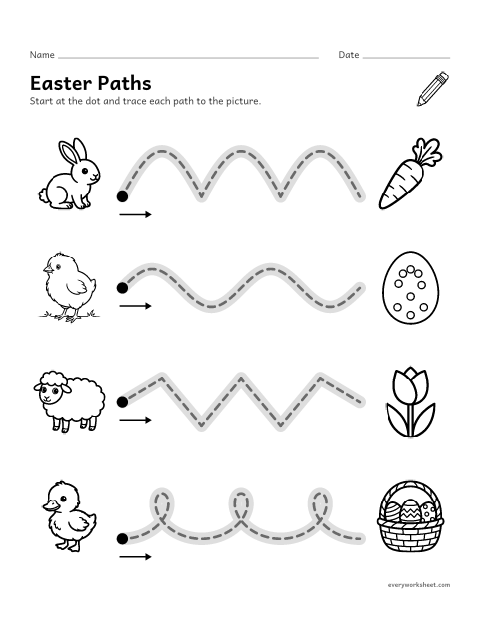
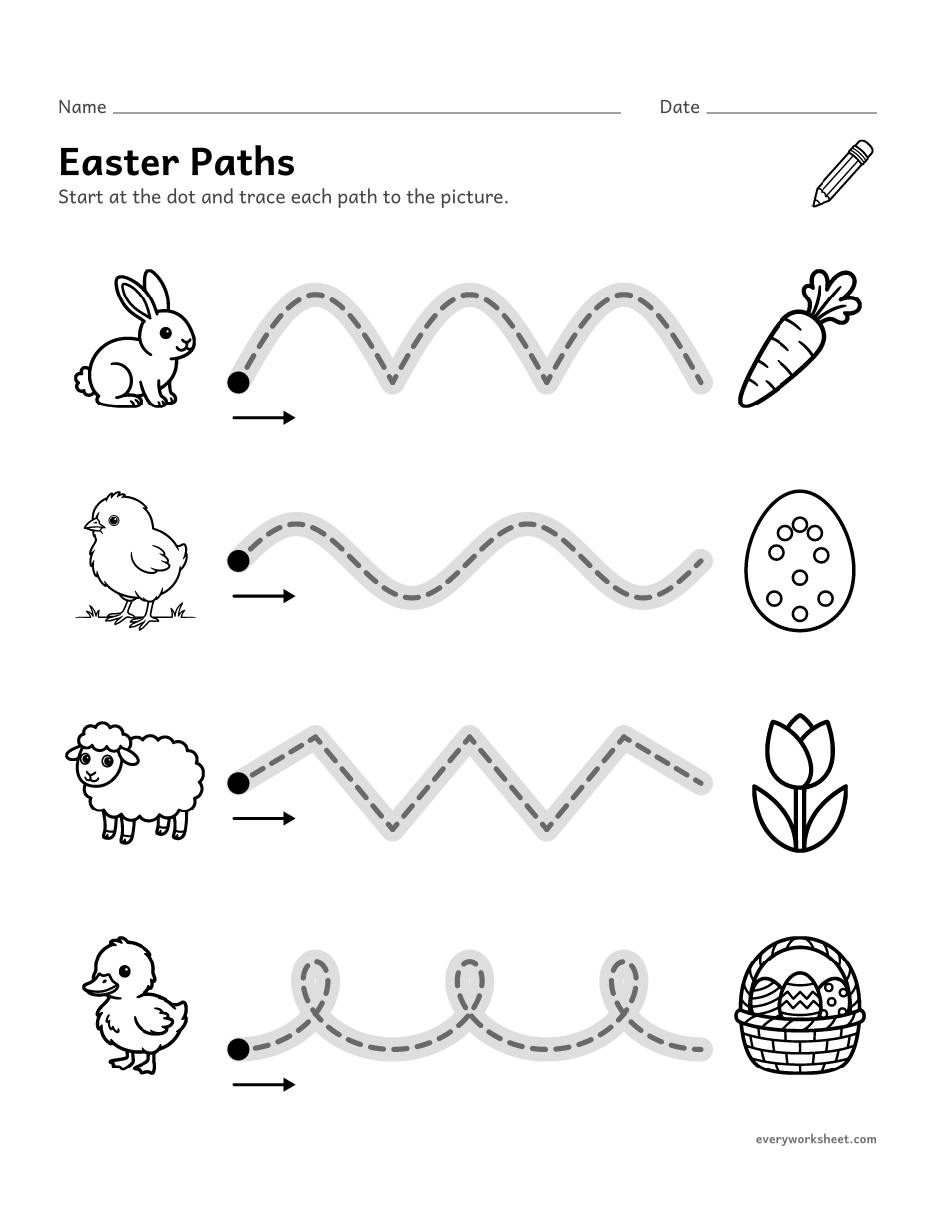
Easter trace the path
Tracing wavy, hill, zigzag and loop paths from left to right
1 page159 KB
 View larger
 View all 2 pages
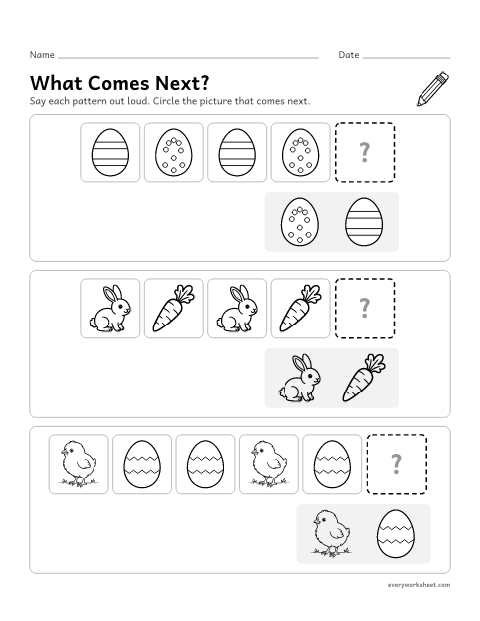
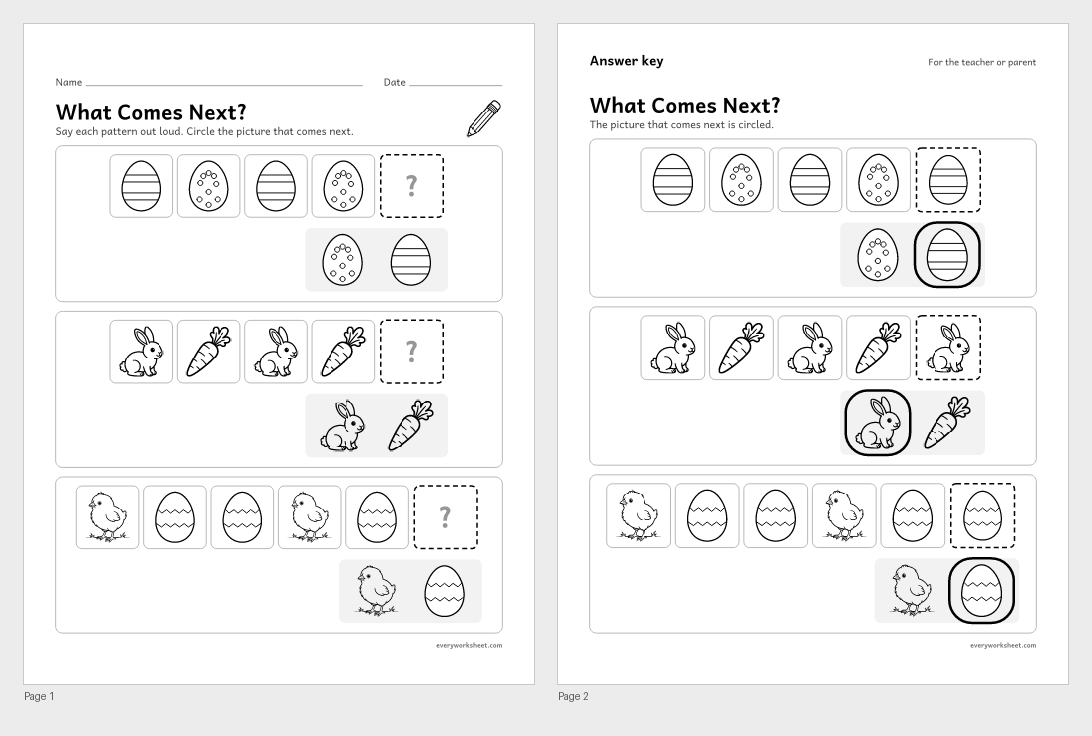
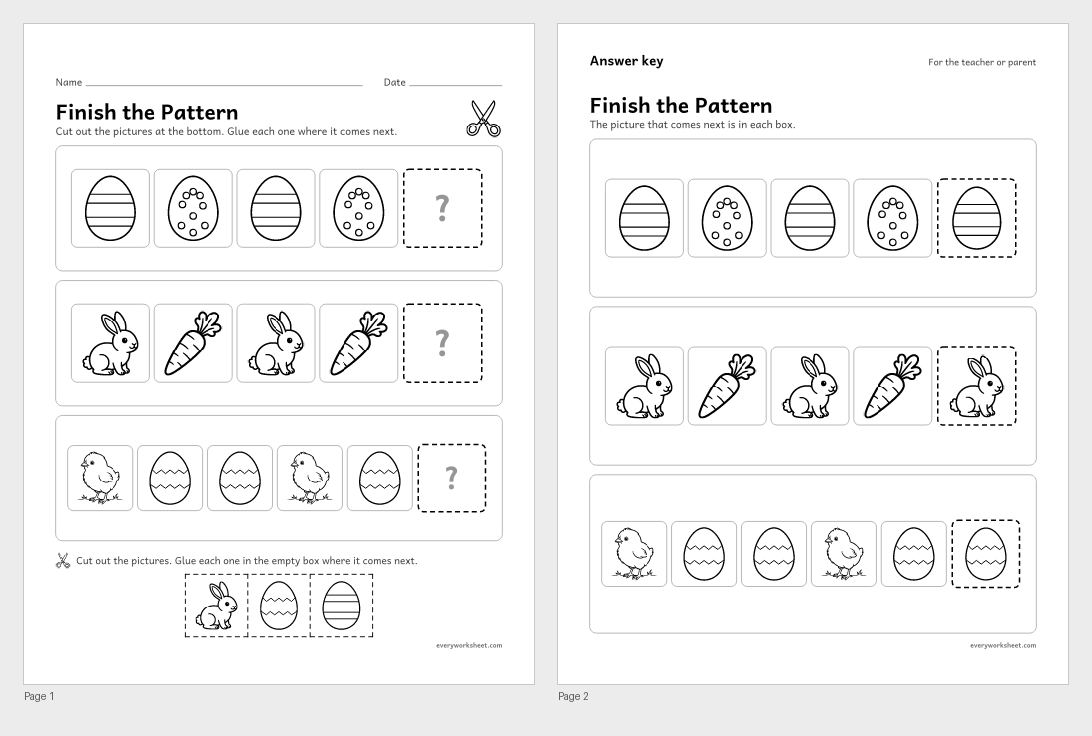
Easter egg Patterns: what comes Next?
Finishing AB and ABB picture patterns
Answer key on page 2
2 pages196 KB
 View all 2 pages
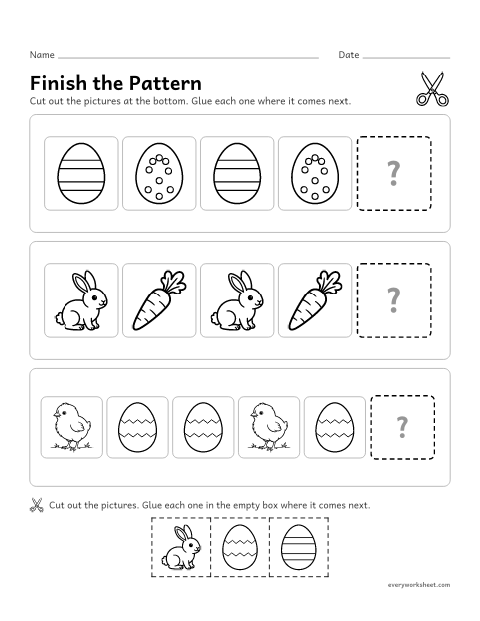
Easter egg patterns cut and paste
Finishing AB and ABB picture patterns
Answer key on page 2
2 pages219 KB
 View all 2 pages
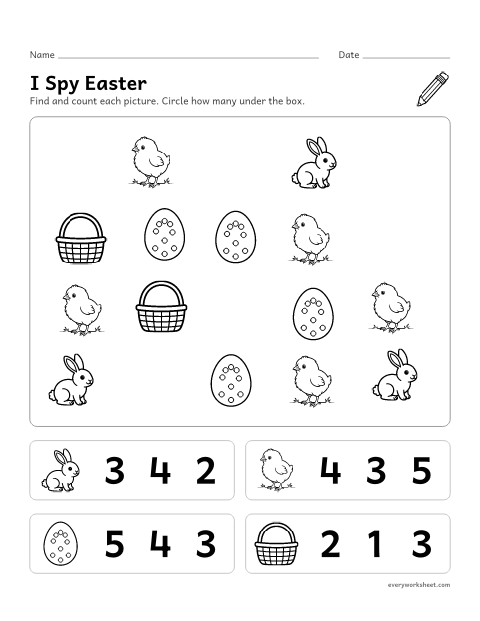
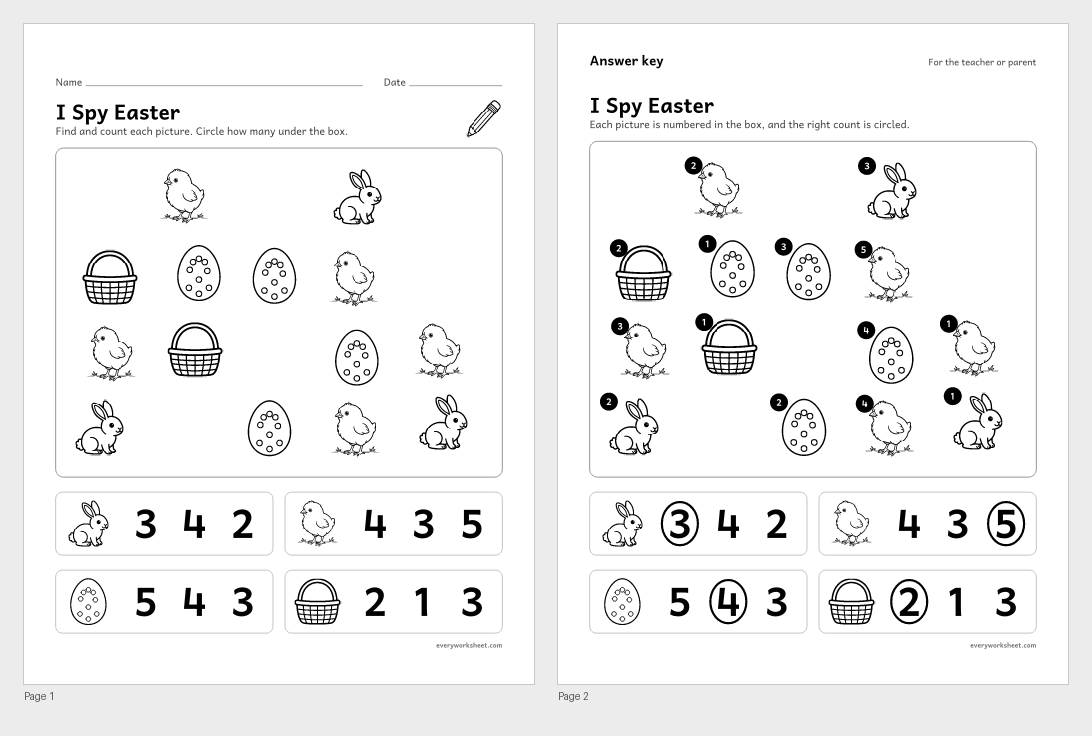
I spy easter
Finding and counting up to 5 of each Easter picture
Answer key on page 2
2 pages258 KB
 View all 2 pages
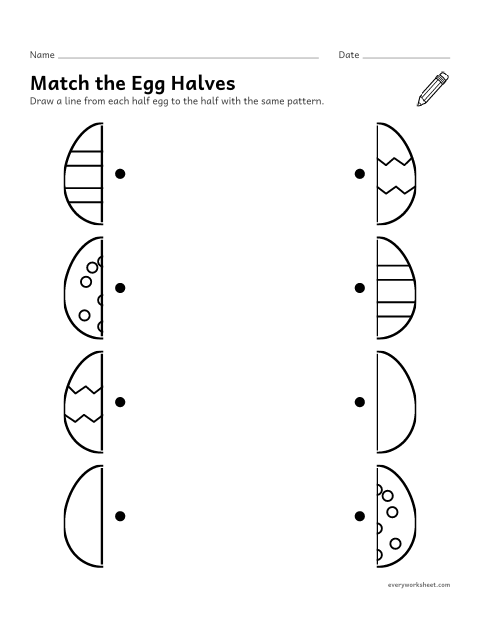
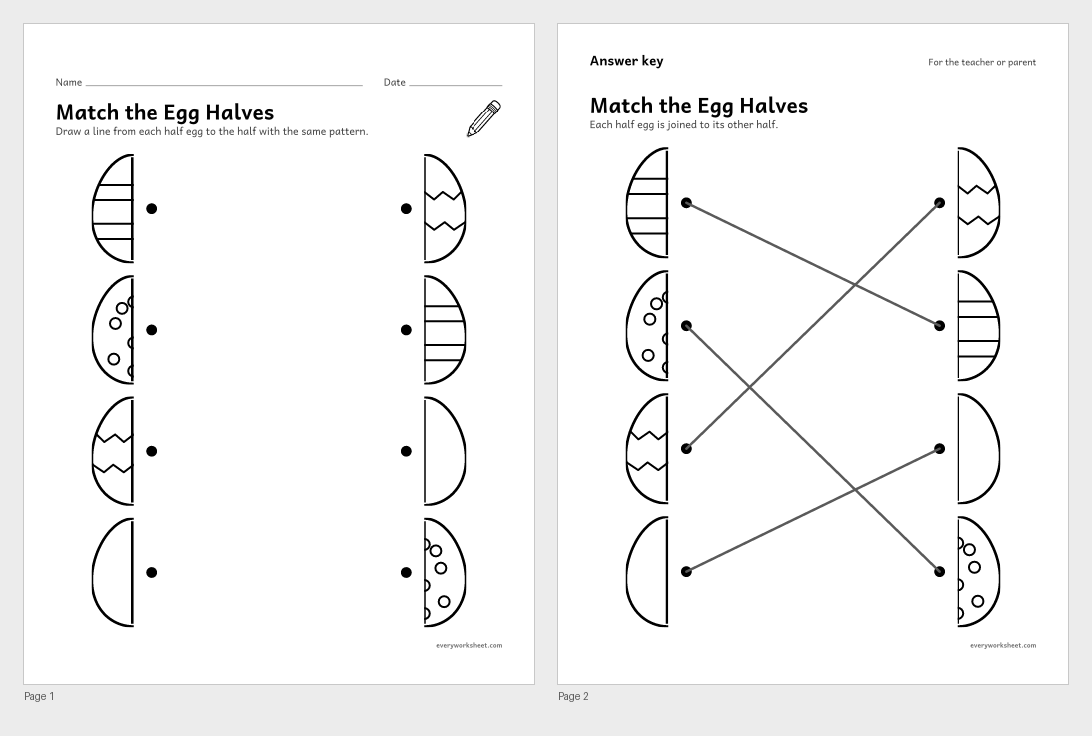
Match the easter egg halves
Matching egg halves by their pattern
Answer key on page 2
2 pages39 KB
 View larger
Easter worksheets for kindergarten
 View all 2 pages
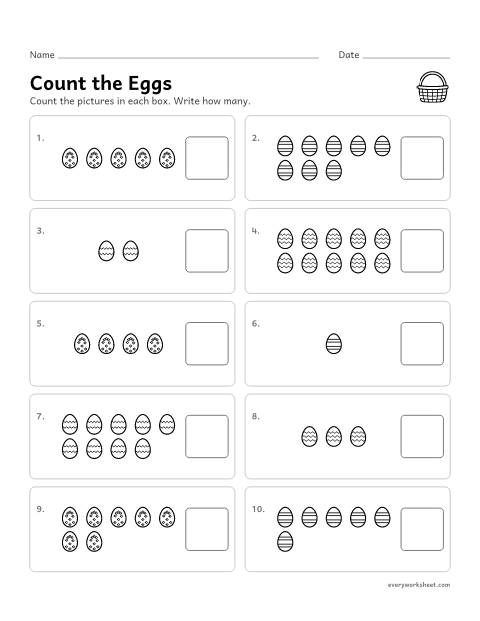
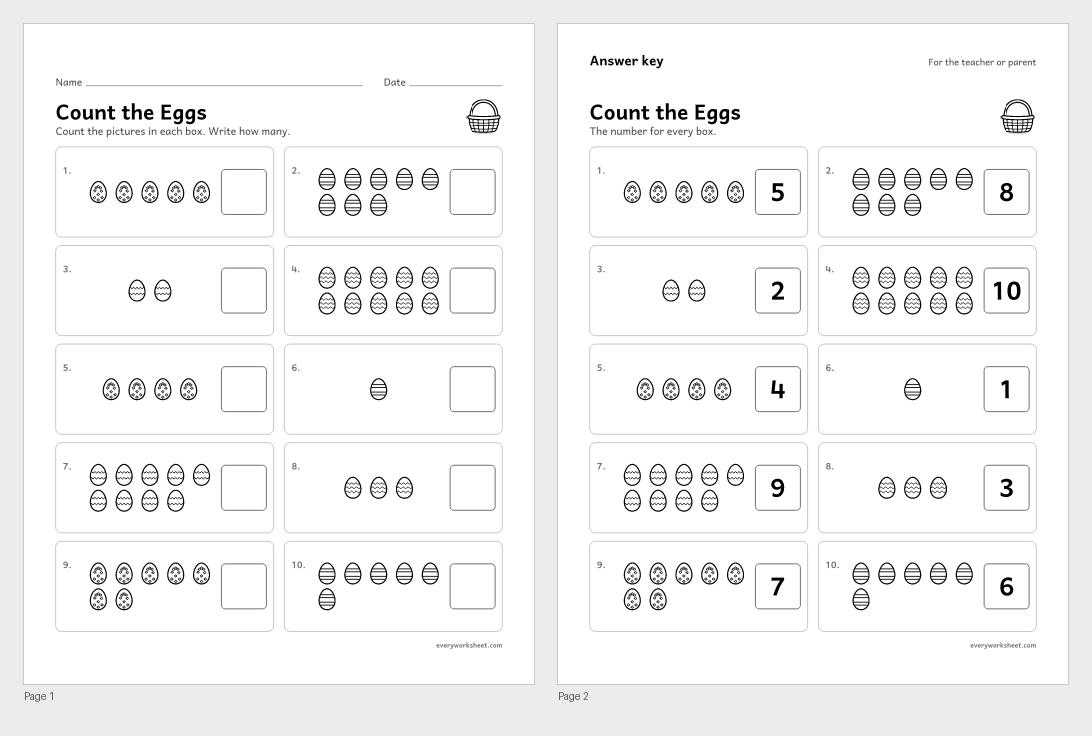
Count the easter eggs 1–10
Counting up to 10 pictures and writing the number
Answer key on page 2
2 pages98 KB
 View all 2 pages
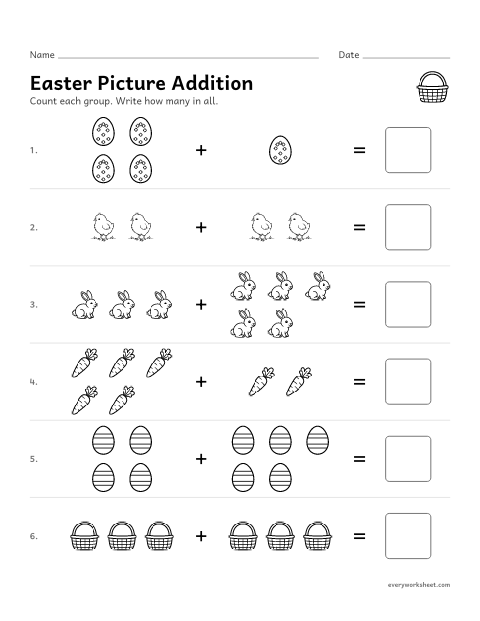
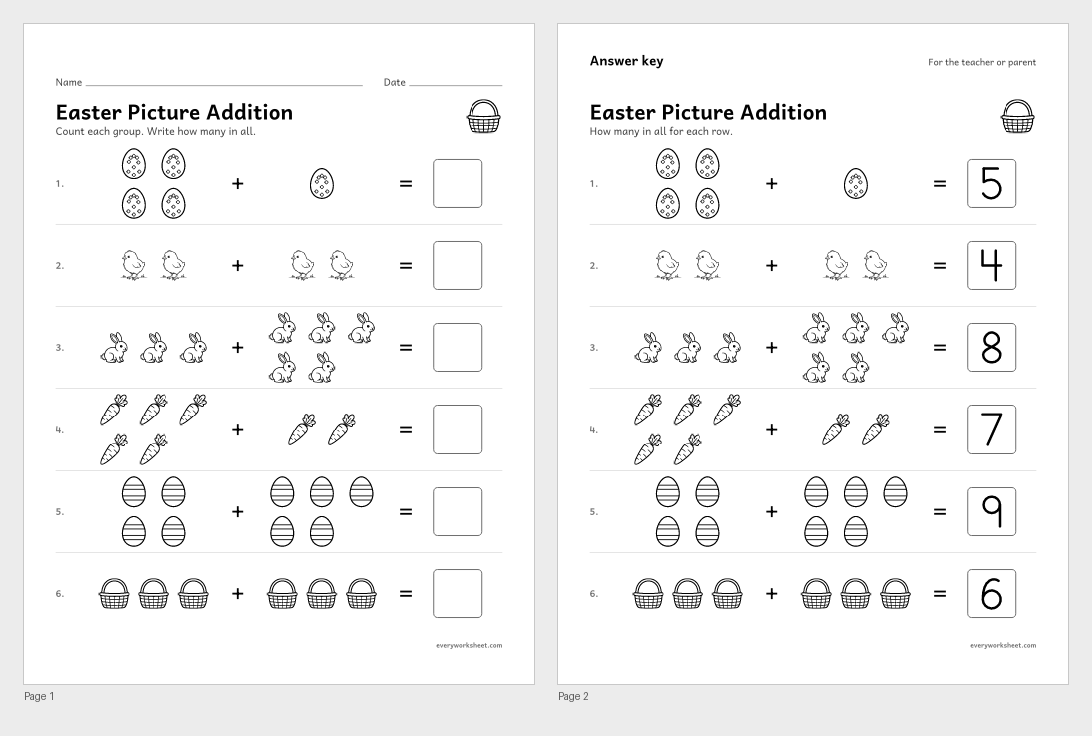
Easter egg picture addition within 10
Adding two groups of pictures within 10
Answer key on page 2
2 pages407 KB
 View all 2 pages
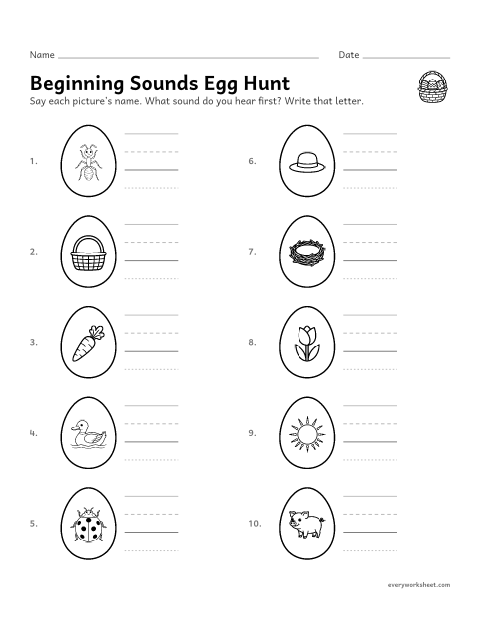
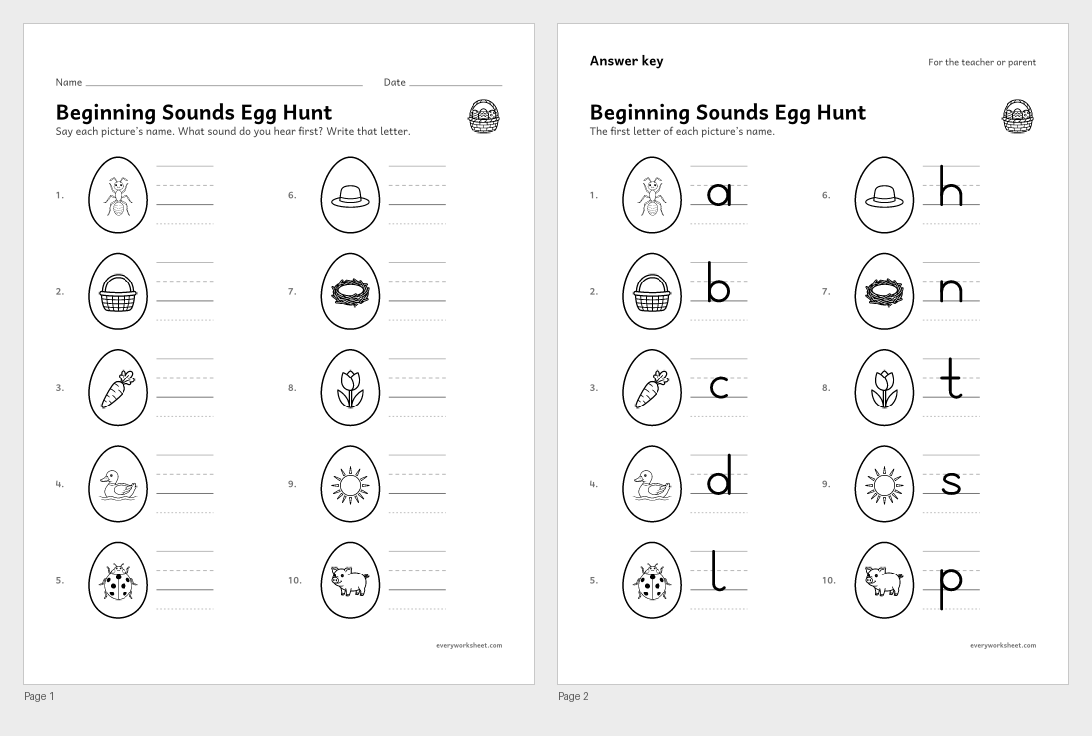
Easter egg Hunt: beginning sounds
Hearing the first sound in a word and writing its letter
Answer key on page 2
2 pages382 KB
 View larger
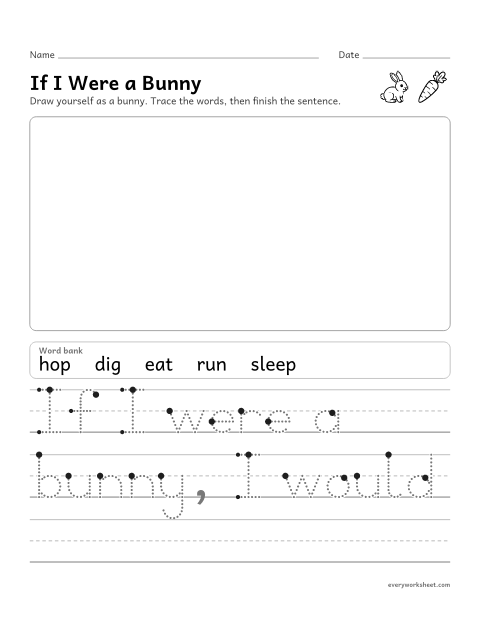
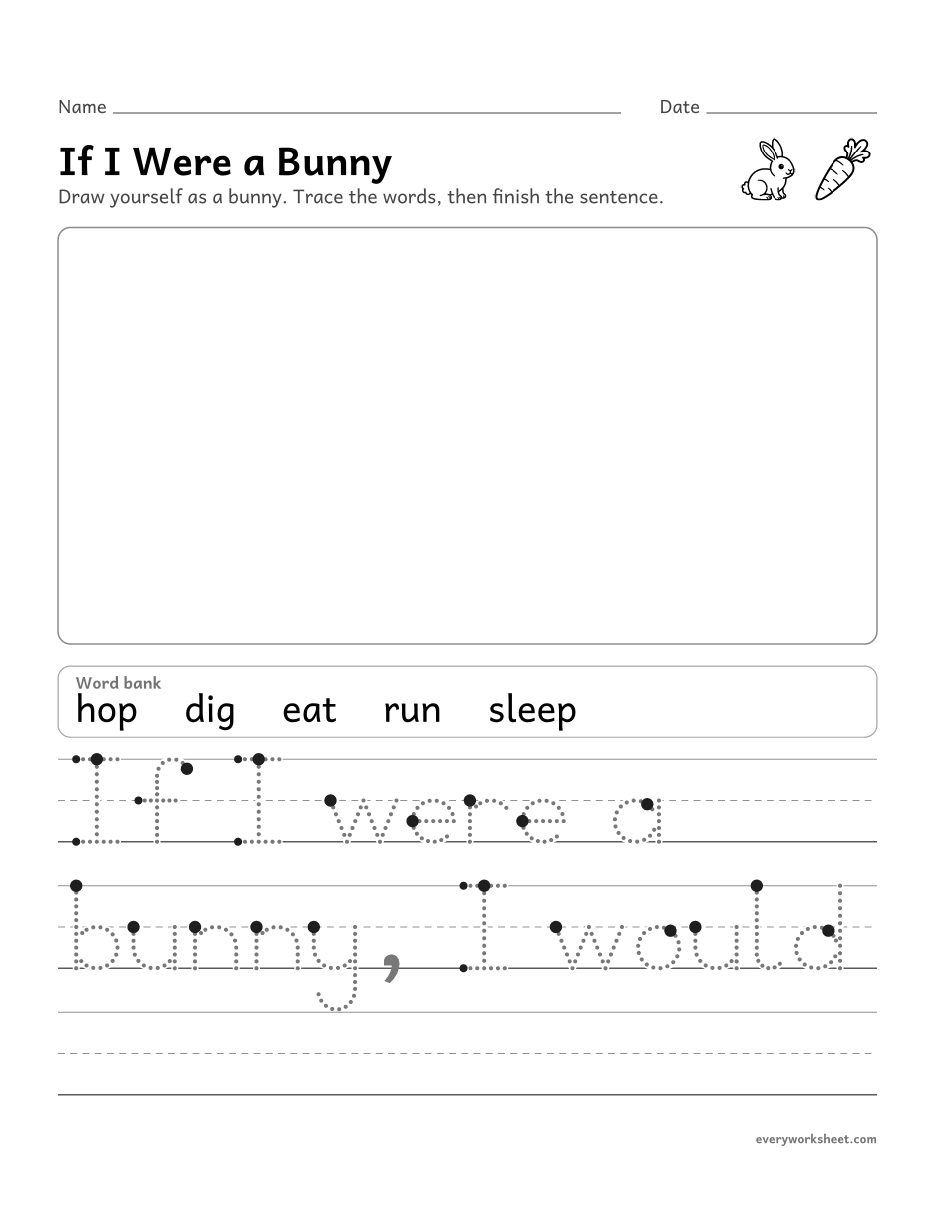
If I were a bunny writing prompt
Drawing and writing a short story about being a bunny
1 page50 KB
 View all 2 pages
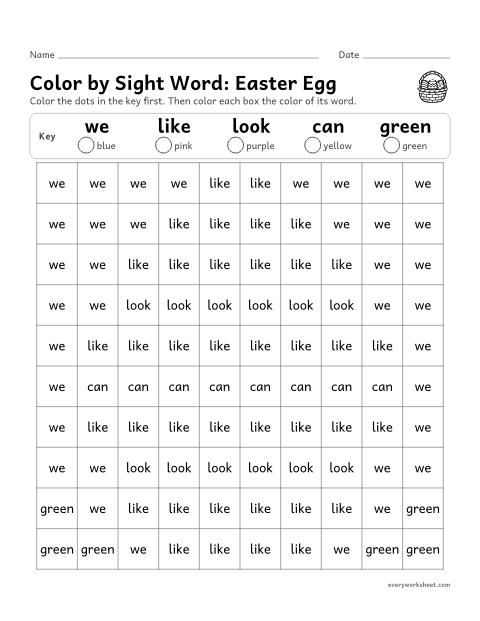
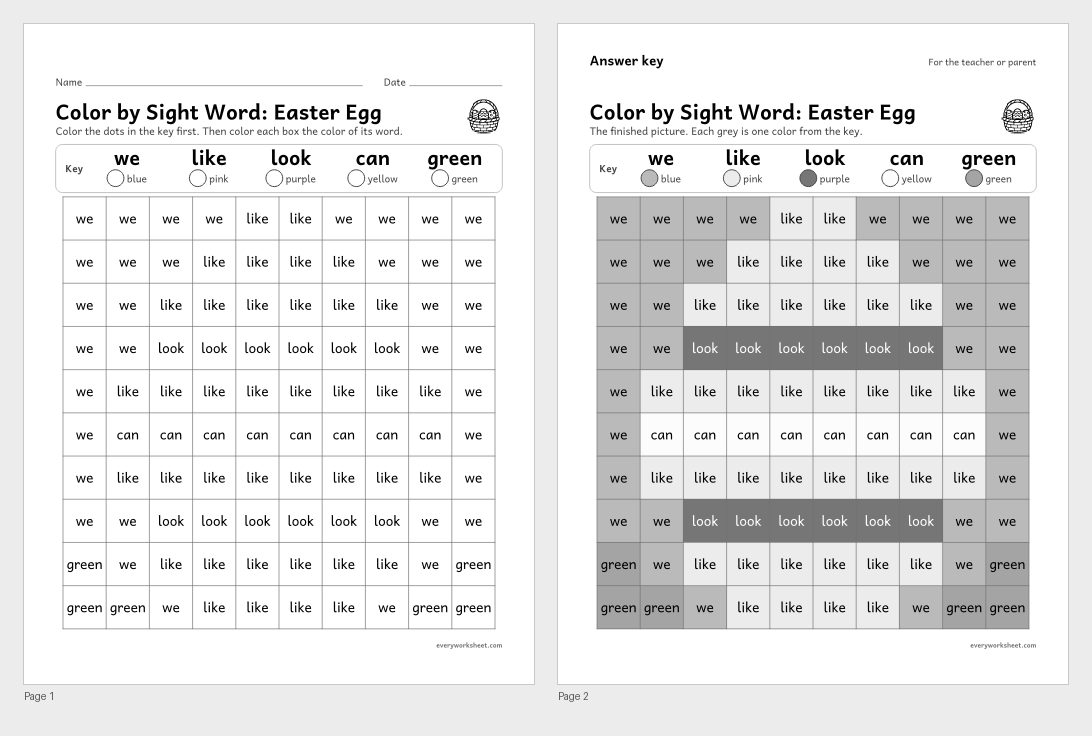
Color by sight Word: easter egg
Reading sight words to color a picture
Answer key on page 2
2 pages157 KB
 View all 2 pages
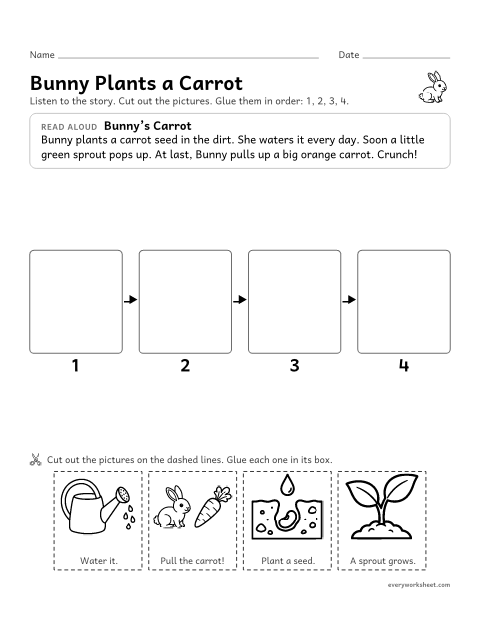
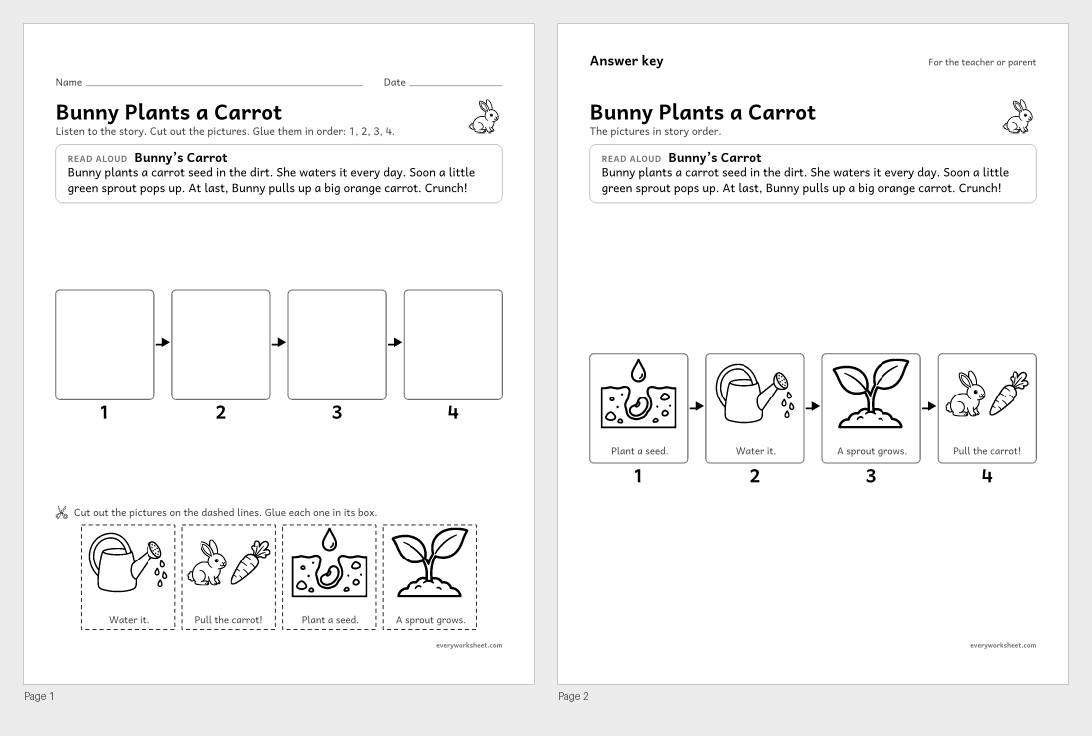
Bunny plants a carrot sequencing cut and paste
Putting the events of a short story in order
Answer key on page 2
2 pages193 KB
 View all 2 pages
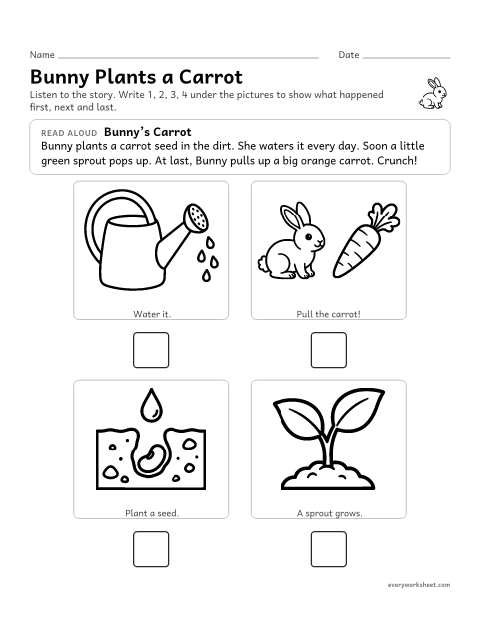
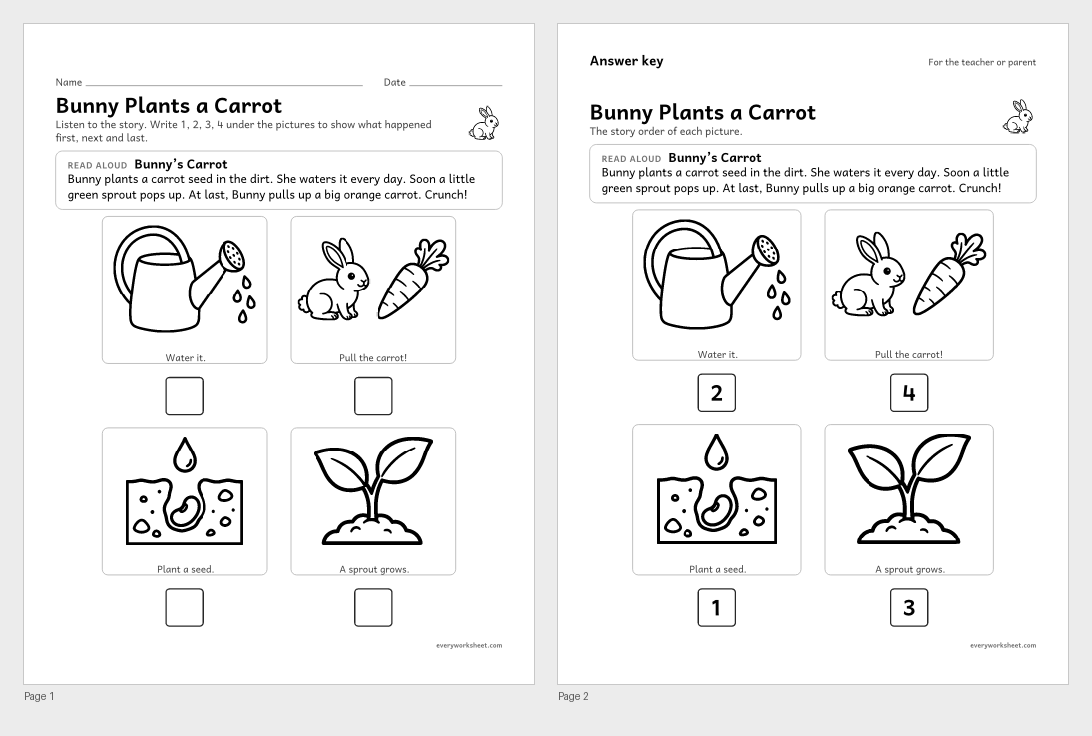
Bunny plants a carrot sequencing
Putting the events of a short story in order
Answer key on page 2
2 pages167 KB
 View all 2 pages
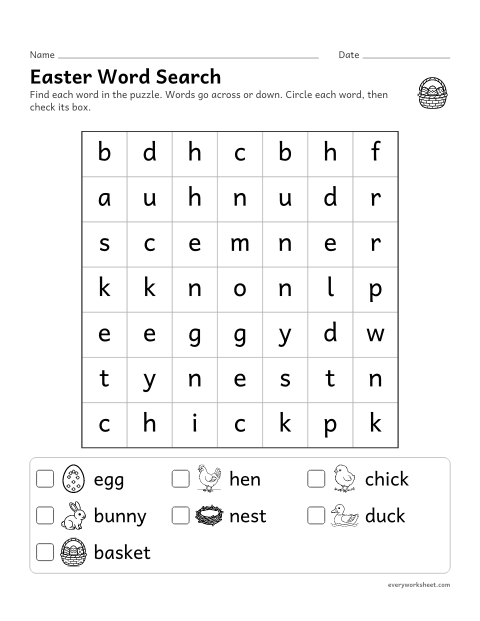
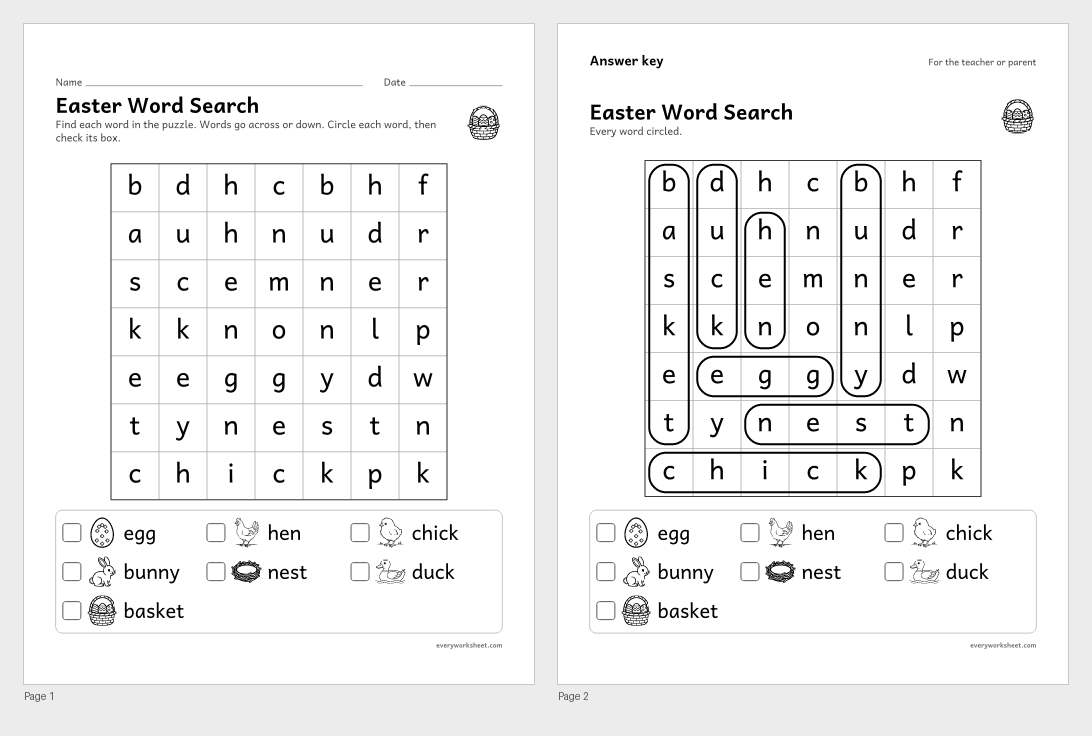
Easter word search for kindergarten
Finding words by their letters
Answer key on page 2
2 pages319 KB
Easter worksheets for 1st grade
 View all 2 pages
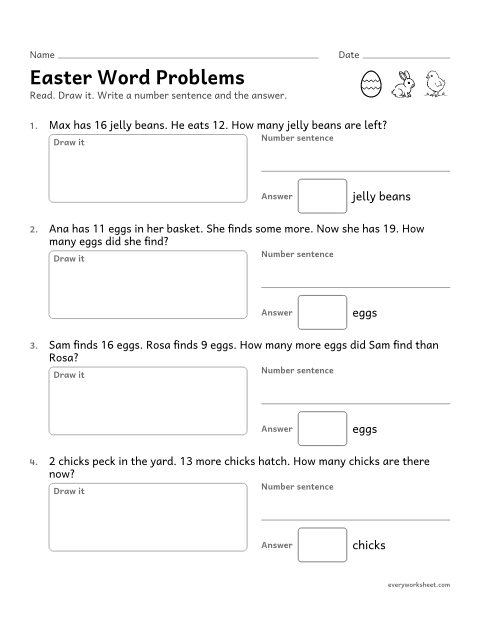
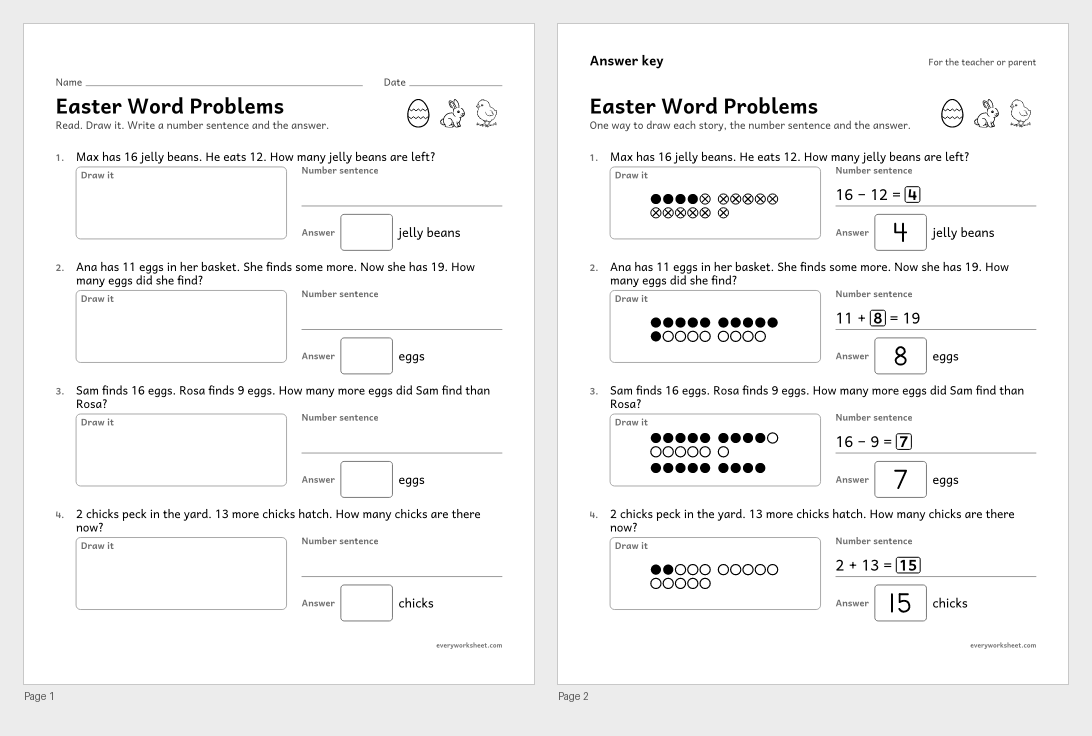
Easter word problems
Solving Easter egg hunt word problems within 20
Answer key on page 2
2 pages97 KB
 View all 2 pages
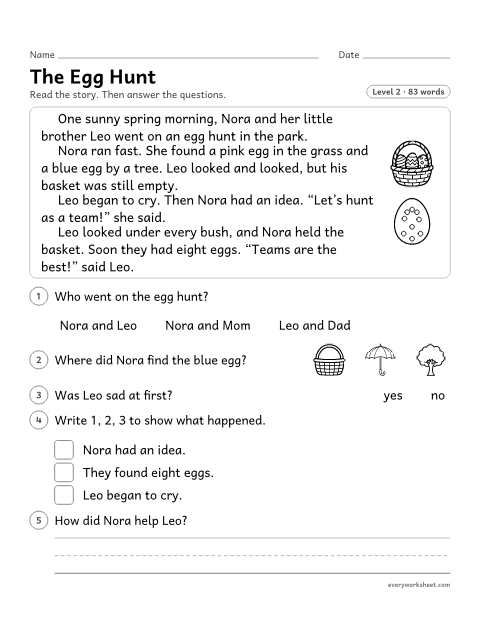
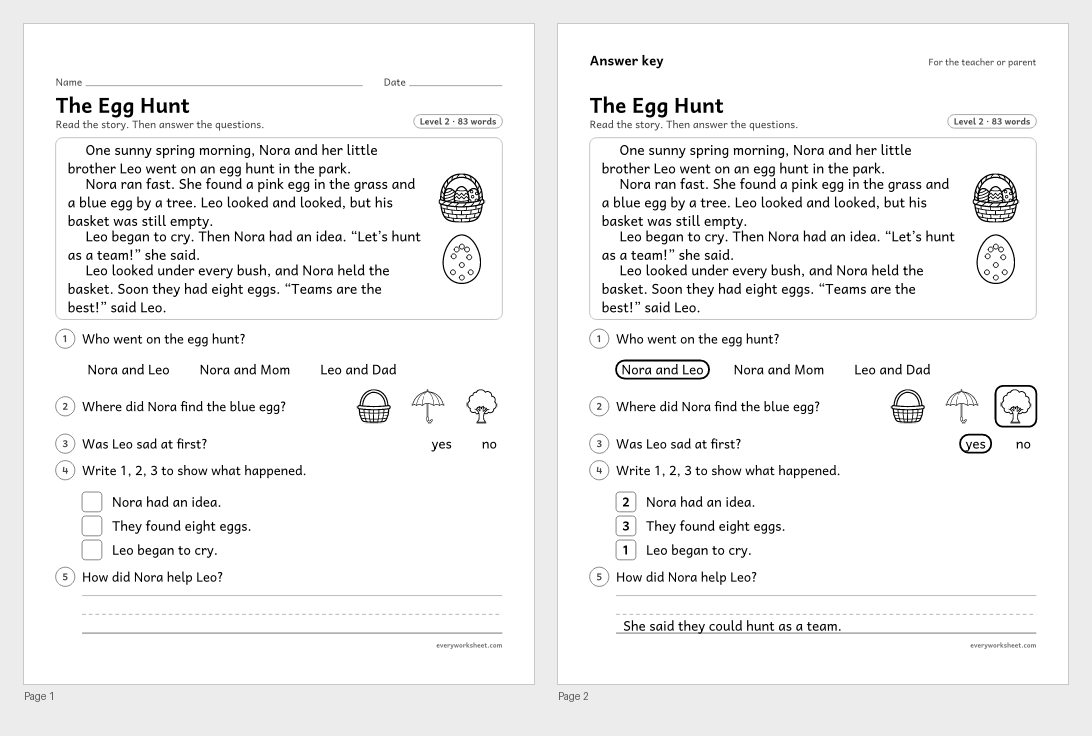
The egg hunt reading passage
Reading a short story and describing its characters and major events
Answer key on page 2
2 pages185 KB
 View all 2 pages
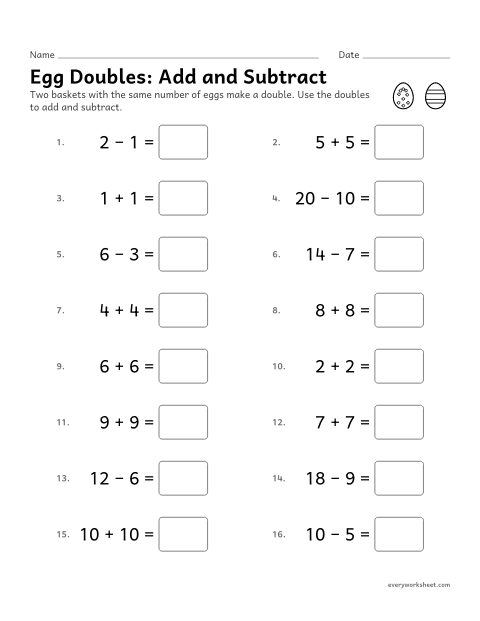
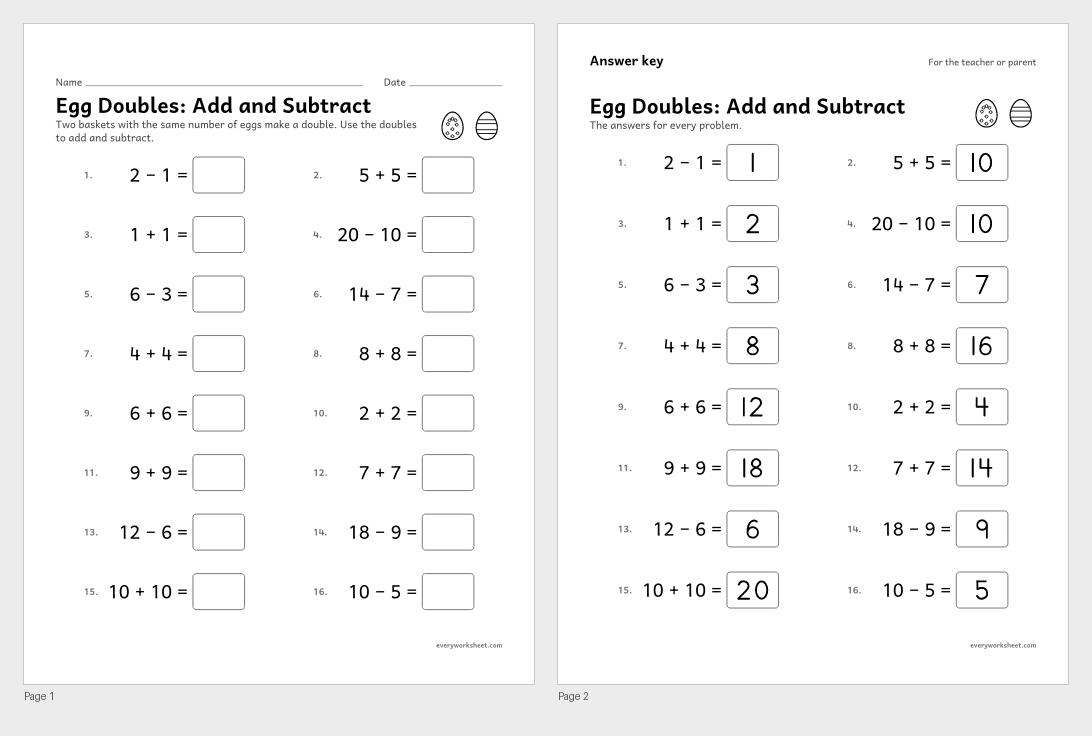
Egg Doubles: add and subtract
Adding and subtracting with doubles facts
Answer key on page 2
2 pages85 KB
 View larger
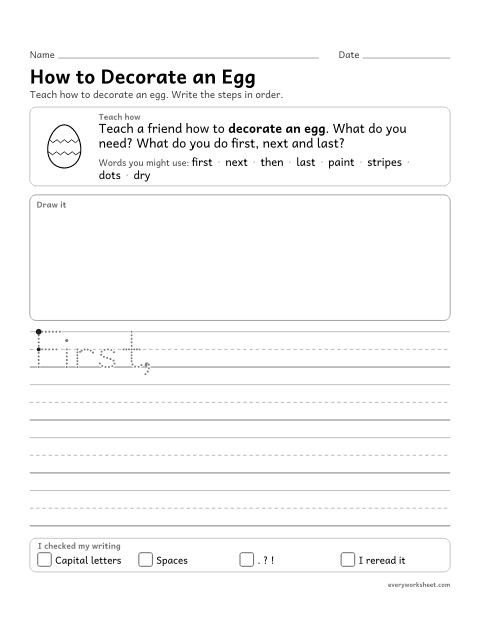
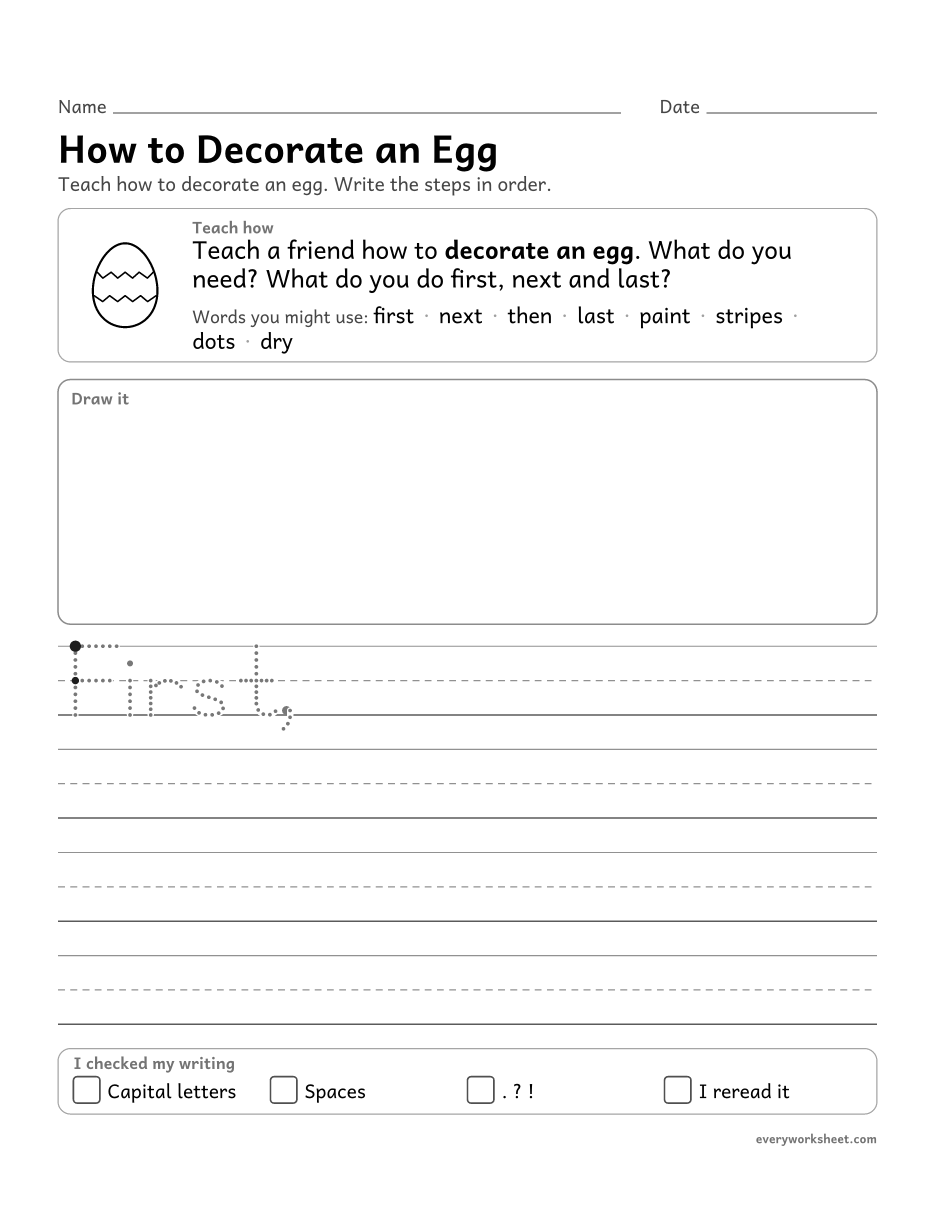
How to decorate an egg writing prompt
Writing how-to steps in order with a topic and a closing
1 page31 KB
 View all 2 pages
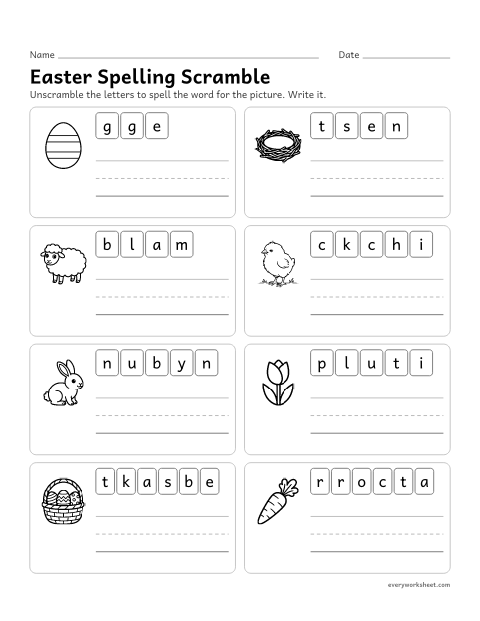
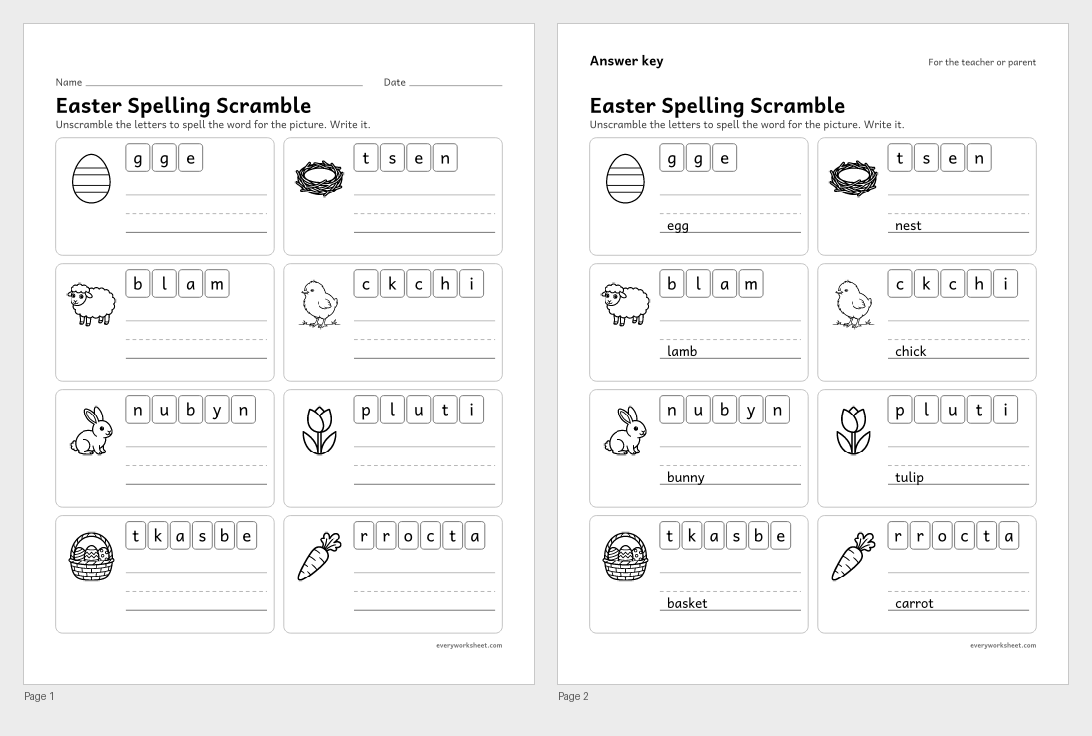
Easter spelling scramble
Spelling Easter words with common spelling patterns
Answer key on page 2
2 pages298 KB
 View all 2 pages
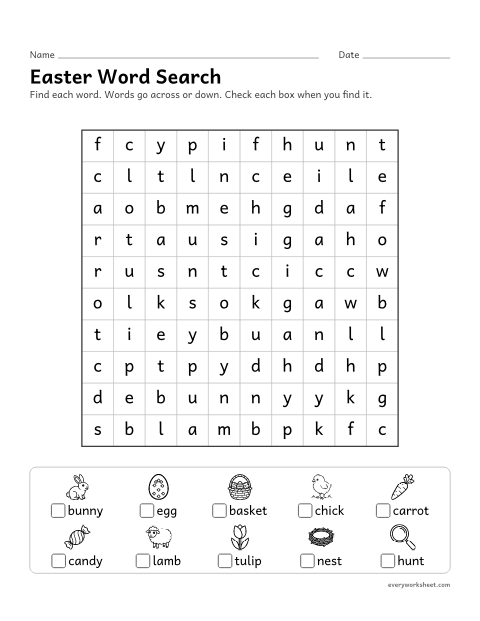
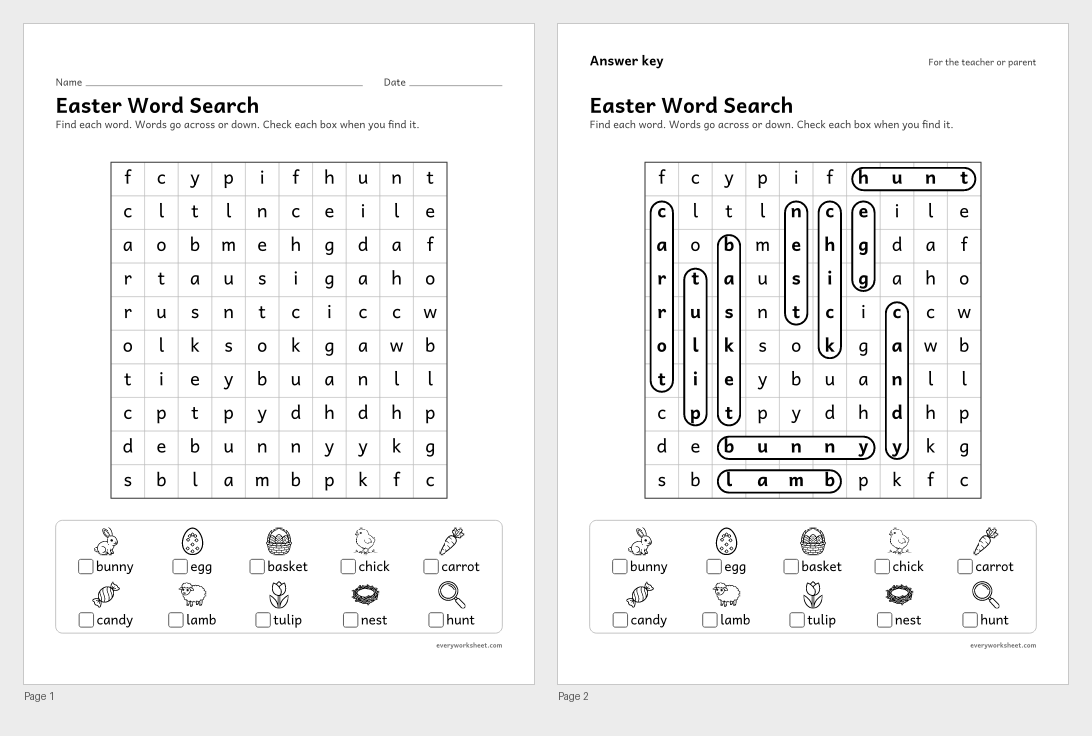
Easter word search
Finding and reading Easter words by their spelling
Answer key on page 2
2 pages367 KB
 View all 2 pages
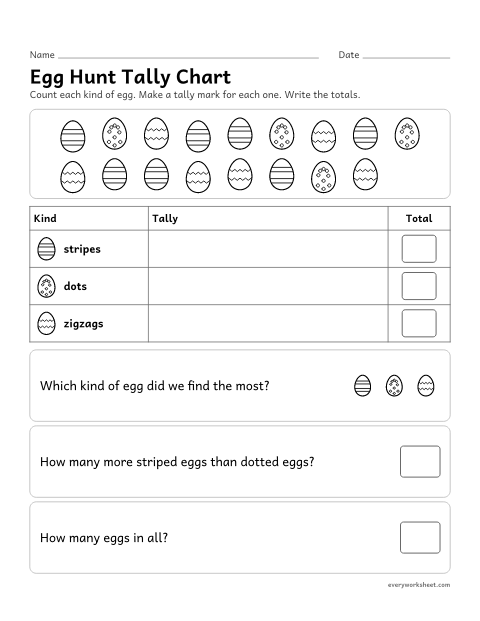
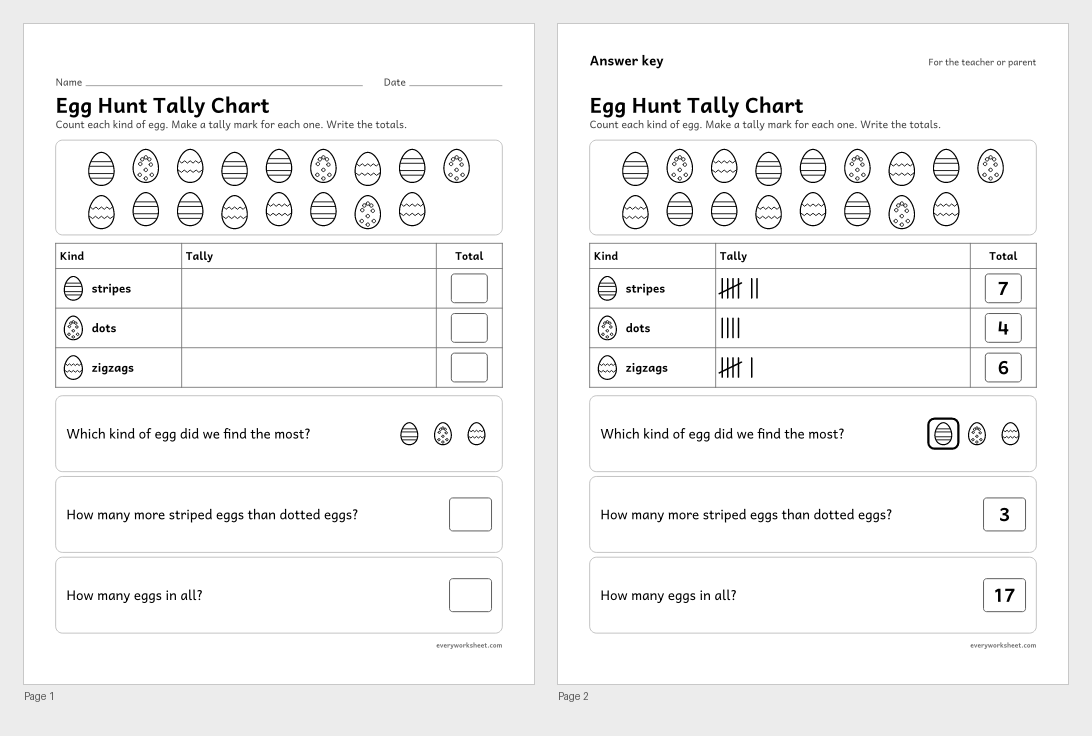
Egg hunt tally chart
Sorting and tallying eggs into three groups and comparing the totals
Answer key on page 2
2 pages52 KB
Print at 100% (actual size) for the cleanest tracing lines.
About these easter worksheets
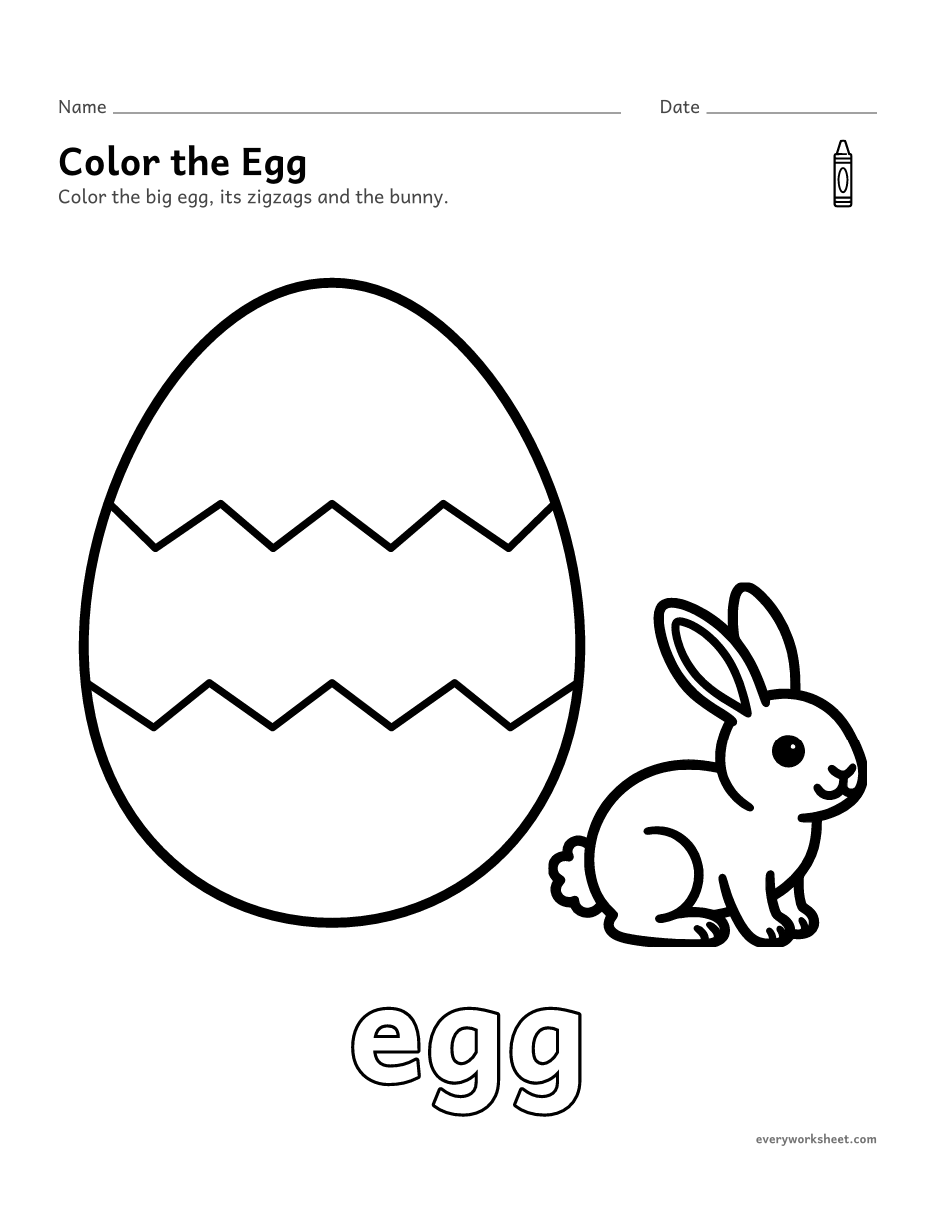
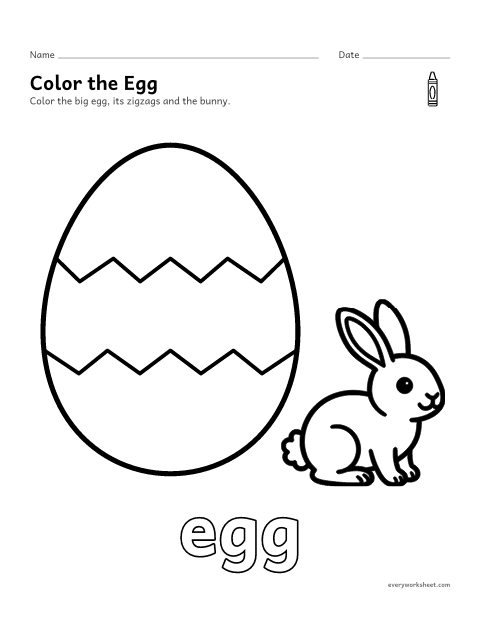
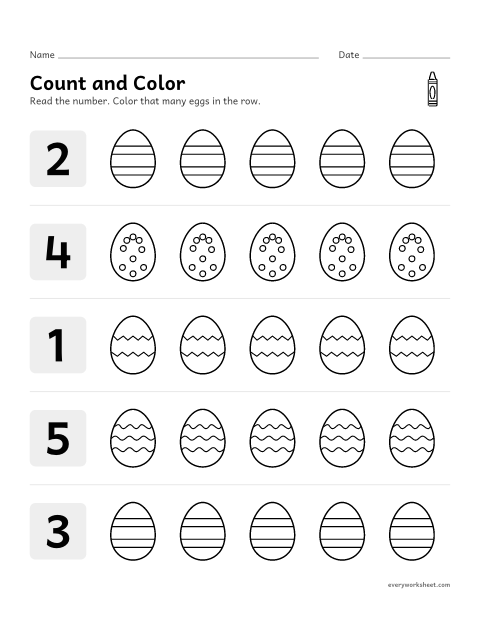
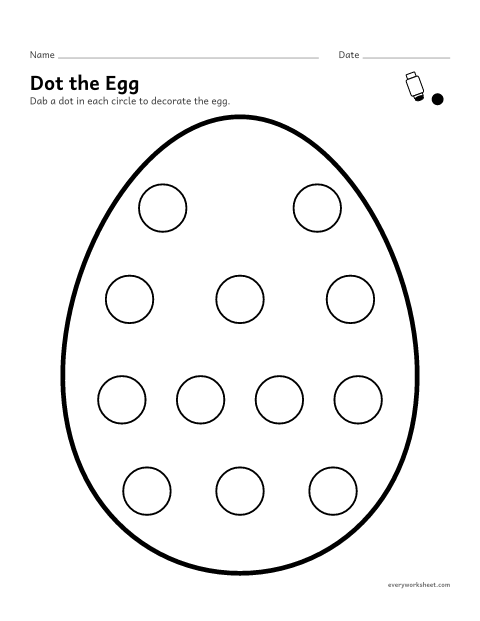
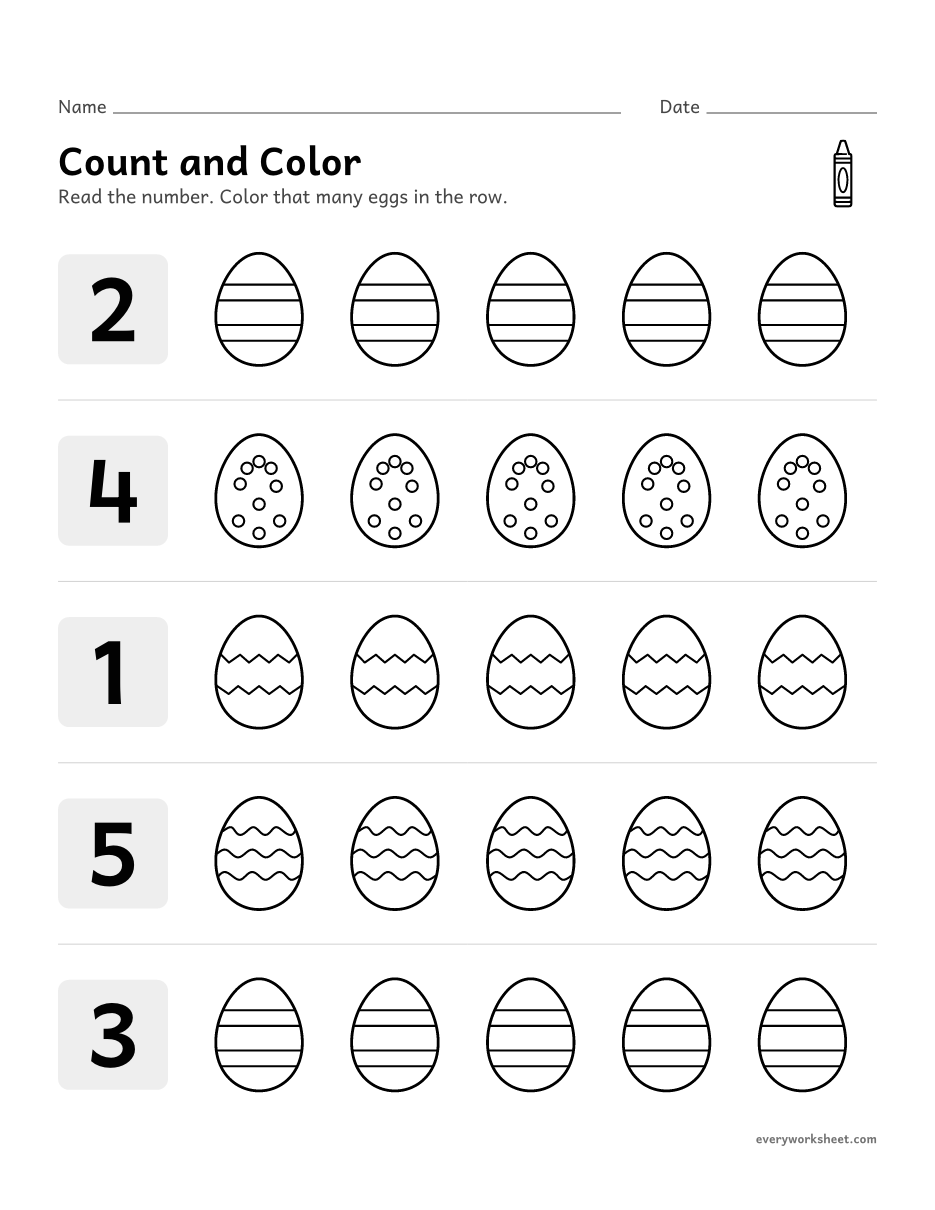
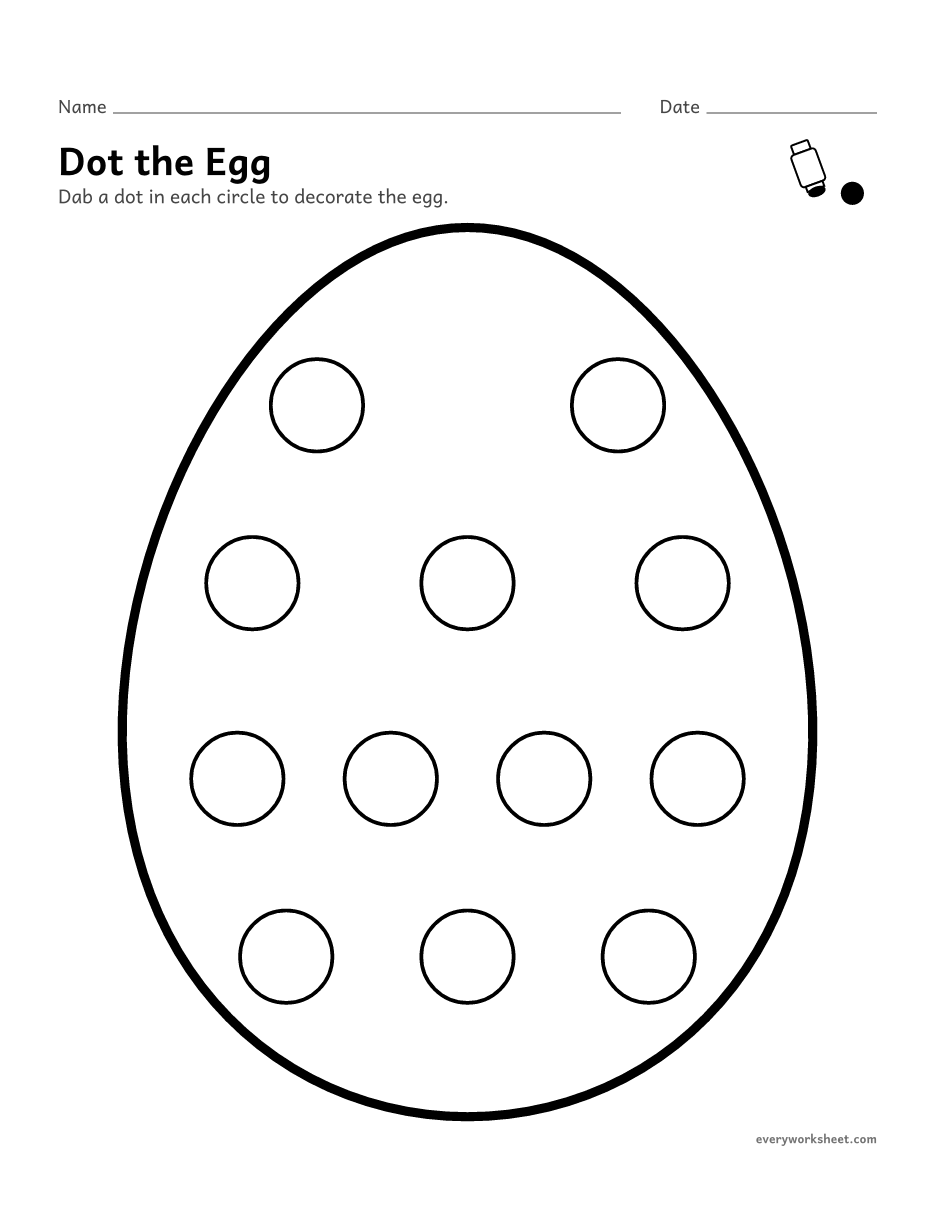
These Easter worksheets fill spring baskets with real skill practice. Preschoolers color a big decorated egg, trace bunny paths, count and color eggs, finish egg patterns, match egg halves and play I spy. Kindergartners count eggs, add with pictures, hunt for beginning sounds, color by sight word, write about being a bunny and put a bunny's carrot story in order. 1st graders solve egg hunt story problems, practice doubles, read an egg hunt story, unscramble spelling words, write how to decorate an egg and make a tally chart.
Easter falls in March or April. Use these pages in the weeks before spring break or alongside an egg hunt. The pictures are bunnies, chicks, eggs, baskets and spring flowers. For a science tie-in, the Chicken Life Cycle page shows how a chick grows inside an egg.
Every page is black and white, prints on US Letter or A4, and pages with one right answer have an answer key on page 2.
Standards
ELOF P-MATH 2Child recognizes the number of objects in a small set.ELOF P-MATH 3Child understands the relationship between numbers and quantities.ELOF P-MATH 7Child understands simple patterns.ELOF P-PMP 3Child demonstrates increasing control, strength, and coordination of small muscles.ELOF P-SCI 3Child compares and categorizes observable phenomena.CCSS.ELA-LITERACY.L.K.2.CWrite a letter or letters for most consonant and short-vowel sounds (phonemes).CCSS.ELA-LITERACY.RF.K.1.BRecognize that spoken words are represented in written language by specific sequences of letters.CCSS.ELA-LITERACY.RF.K.3.CRead common high-frequency words by sight (e.g., the, of, to, you, she, my, is, are, do, does).CCSS.ELA-LITERACY.RL.K.2With prompting and support, retell familiar stories, including key details.CCSS.ELA-LITERACY.W.K.3Use a combination of drawing, dictating, and writing to narrate a single event or several loosely linked events, tell about the events in the order in which they occurred, and provide a reaction to what happened.CCSS.MATH.CONTENT.K.CC.B.5Count to answer "how many?" questions about as many as 20 things arranged in a line, a rectangular array, or a circle, or as many as 10 things in a scattered configuration; given a number from 1–20, count out that many objects.CCSS.MATH.CONTENT.K.OA.A.1Represent addition and subtraction with objects, fingers, mental images, drawings, sounds (e.g., claps), acting out situations, verbal explanations, expressions, or equations.CCSS.ELA-LITERACY.L.1.2.DUse conventional spelling for words with common spelling patterns and for frequently occurring irregular words.CCSS.ELA-LITERACY.RL.1.3Describe characters, settings, and major events in a story, using key details.CCSS.ELA-LITERACY.W.1.2Write informative/explanatory texts in which they name a topic, supply some facts about the topic, and provide some sense of closure.CCSS.MATH.CONTENT.1.MD.C.4Organize, represent, and interpret data with up to three categories; ask and answer questions about the total number of data points, how many in each category, and how many more or less are in one category than in another.CCSS.MATH.CONTENT.1.OA.A.1Use addition and subtraction within 20 to solve word problems involving situations of adding to, taking from, putting together, taking apart, and comparing, with unknowns in all positions, e.g., by using objects, drawings, and equations with a symbol for the unknown number to represent the problem.CCSS.MATH.CONTENT.1.OA.C.6Add and subtract within 20, demonstrating fluency for addition and subtraction within 10. Use strategies such as counting on; making ten (e.g., 8 + 6 = 8 + 2 + 4 = 10 + 4 = 14); decomposing a number leading to a ten (e.g., 13 - 4 = 13 - 3 - 1 = 10 - 1 = 9); using the relationship between addition and subtraction (e.g., knowing that 8 + 4 = 12, one knows 12 - 8 = 4); and creating equivalent but easier or known sums (e.g., adding 6 + 7 by creating the known equivalent 6 + 6 + 1 = 12 + 1 = 13).
How to use them
- Pick the group for your child's grade and print one or two pages a day in Easter week.
- Use plastic eggs as counters on the counting, addition and doubles pages: open an egg, count what is inside, close it and count again.
- For the egg patterns, the cut and paste page and the circle-it page practice the same skill.
- Read the 1st grade egg hunt story twice: once for fun, then again to find the answers.
Teaching tips
- Preschool: say patterns out loud together, "stripes, dots, stripes, dots", before children choose what comes next.
- Kindergarten: on the egg hunt beginning sounds page, say each picture name slowly and listen for the very first sound.
- 1st grade: doubles like 6 + 6 are worth learning by heart, because they help with near doubles like 6 + 7.
- Decorate the coloring page egg with the same stripes, dots and zigzags from the pattern pages.
Questions teachers and parents ask
When is Easter?
Easter moves each year and falls between late March and late April. These pages work any time in spring.
Are these Easter worksheets religious?
No. They use bunnies, chicks, eggs, baskets, carrots and spring flowers, so they suit public school classrooms and homes alike.
Is there an answer key?
Yes. Every page with one right answer, including the word searches and the egg hunt story, has an answer key on page 2.
What skills do the Easter pages cover?
Patterns, counting and fine motor work in preschool; counting, addition, beginning sounds, sight words and sequencing in kindergarten; word problems, doubles, reading, spelling, writing and data in 1st grade.