 View larger
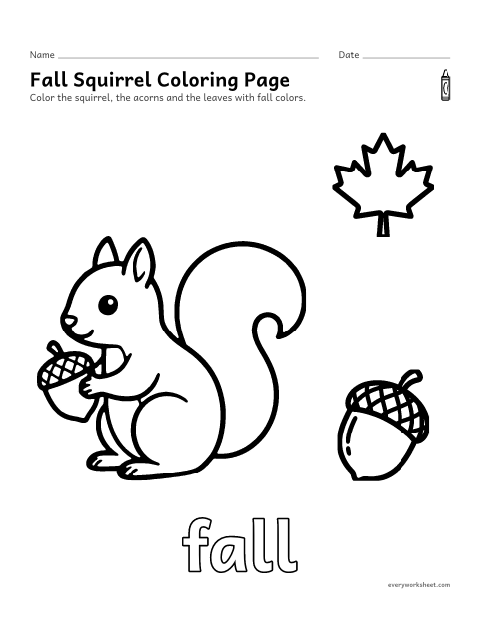
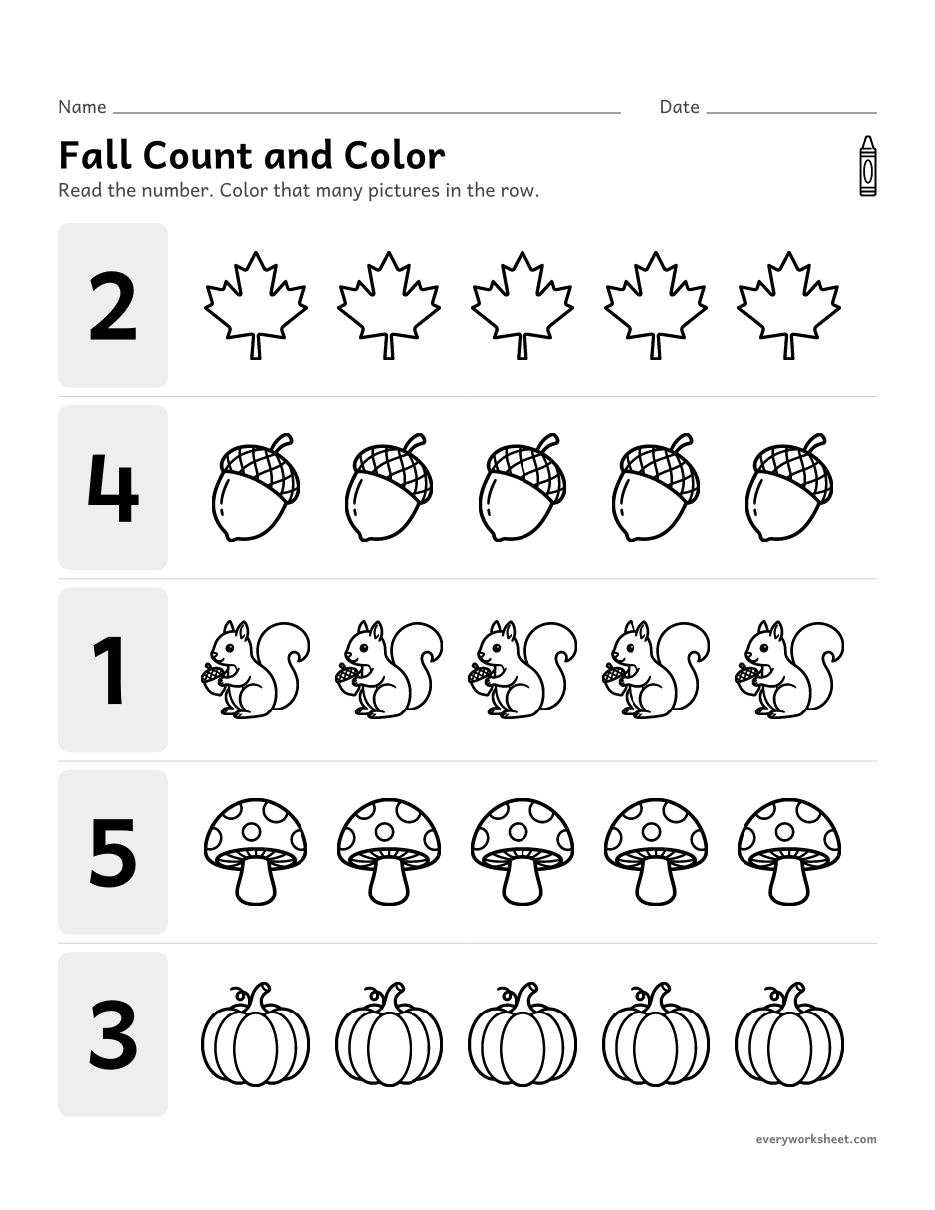
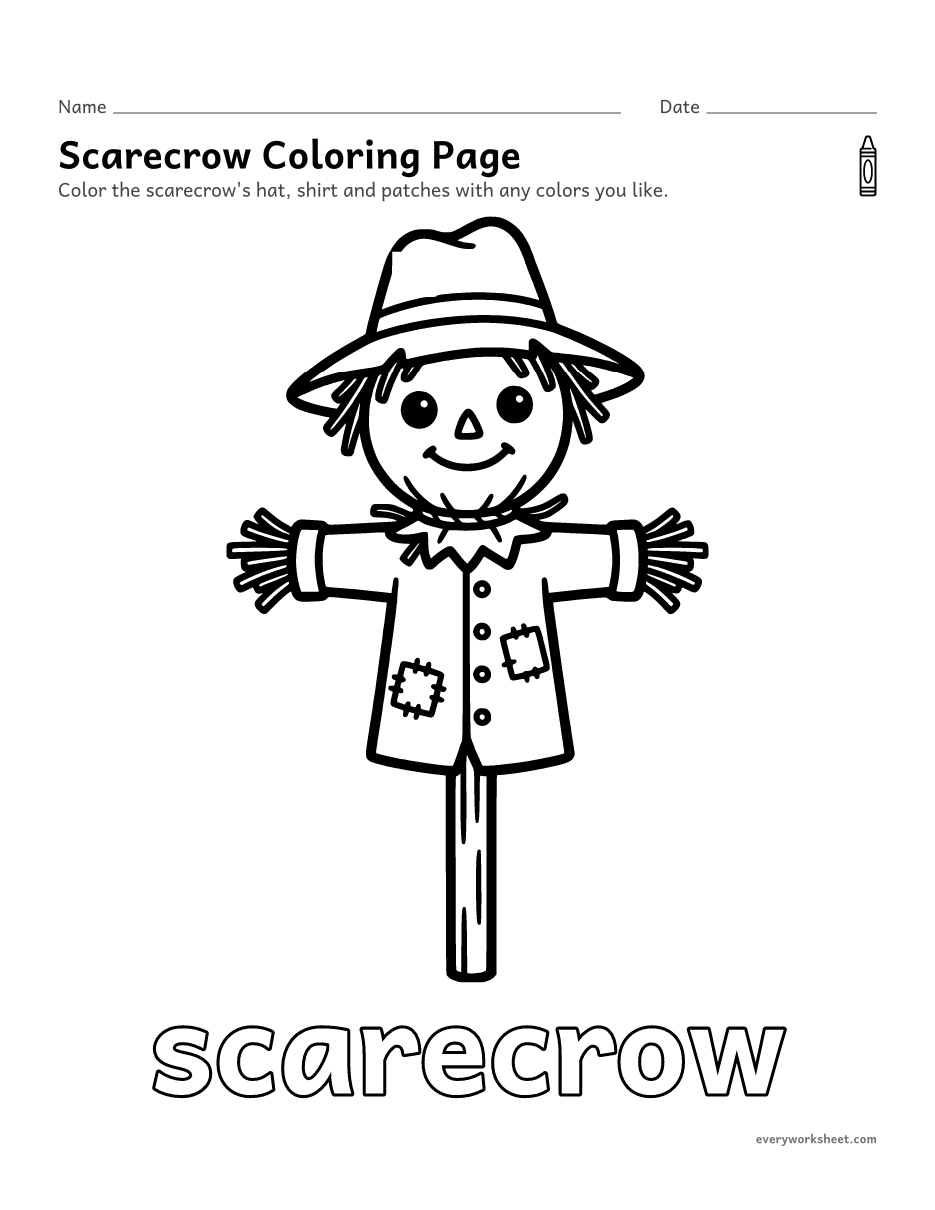
Fall squirrel coloring page
Coloring a fall picture of a squirrel, acorns and leaves
1 page90 KB
Leaves, acorns, squirrels and a scarecrow on pages that practice real skills: counting, fine motor work, CVC words, subtraction, reading and writing.
View largerColoring a fall picture of a squirrel, acorns and leaves
1 page90 KB
 View larger
 View larger
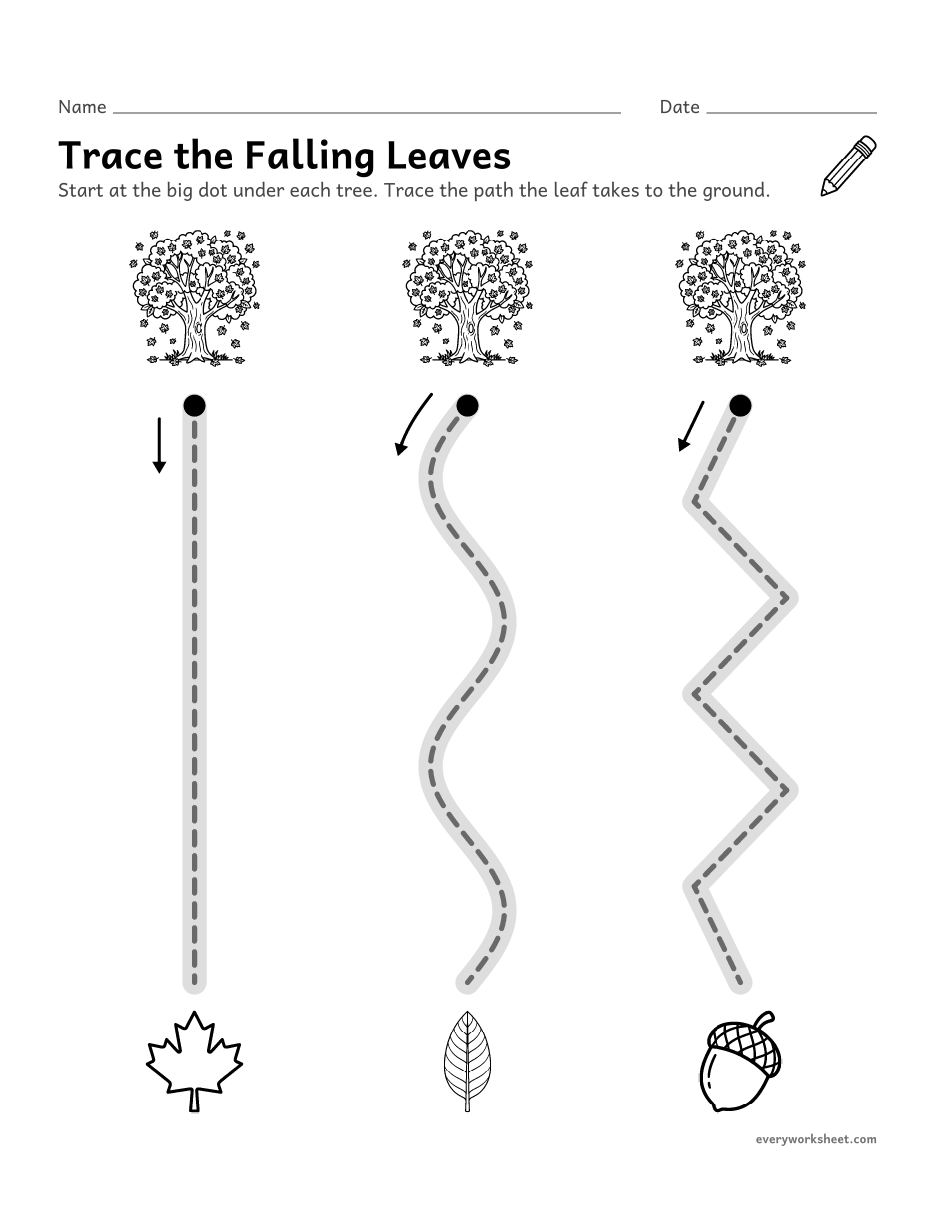
Tracing top to bottom: straight, wavy and zigzag paths
1 page290 KB
 View all 2 pages
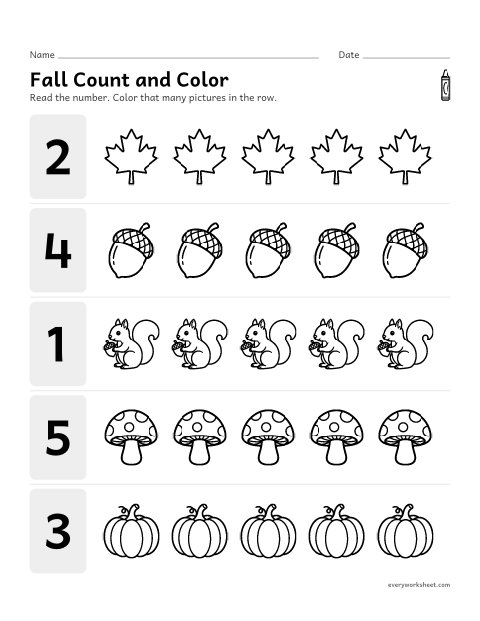
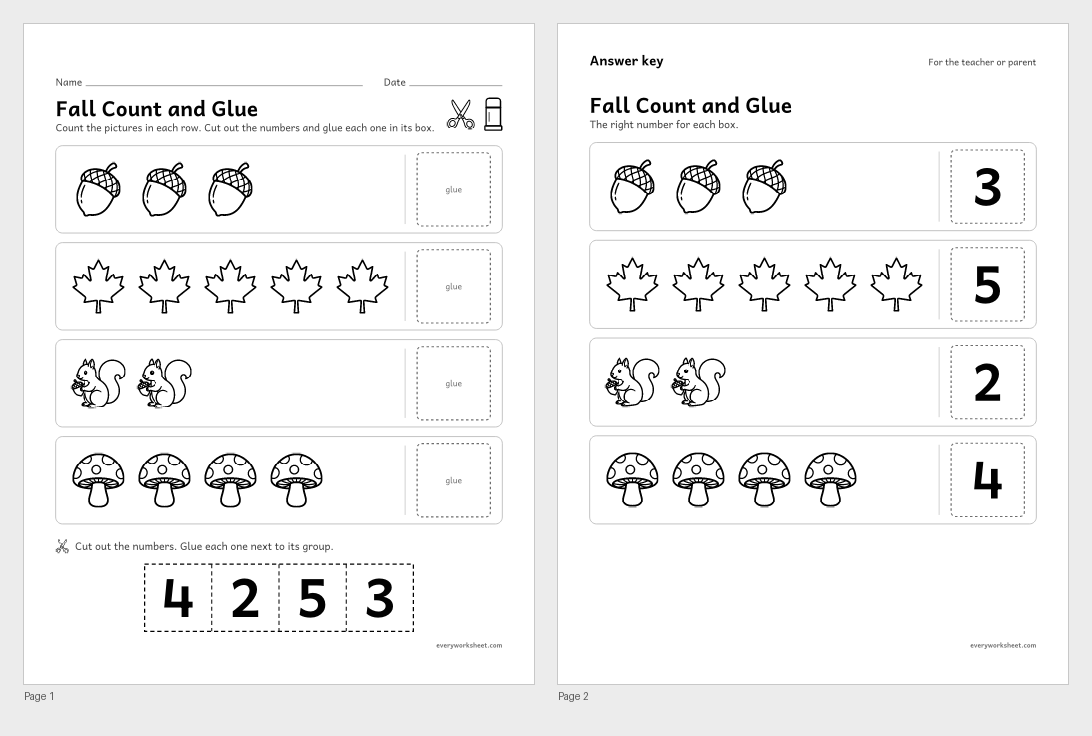
Counting fall things to 5 and gluing the matching number
Answer key on page 2
2 pages478 KB
 View all 2 pages
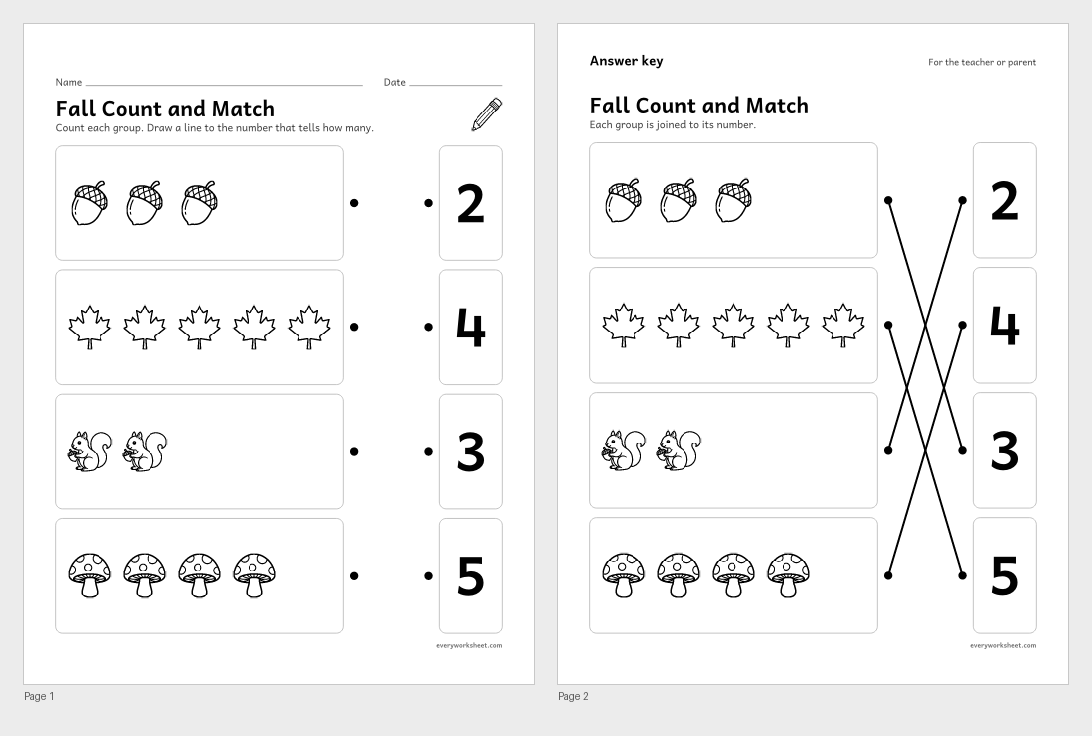
Matching groups of 1 to 5 fall things to numbers
Answer key on page 2
2 pages430 KB
 View larger
 View larger
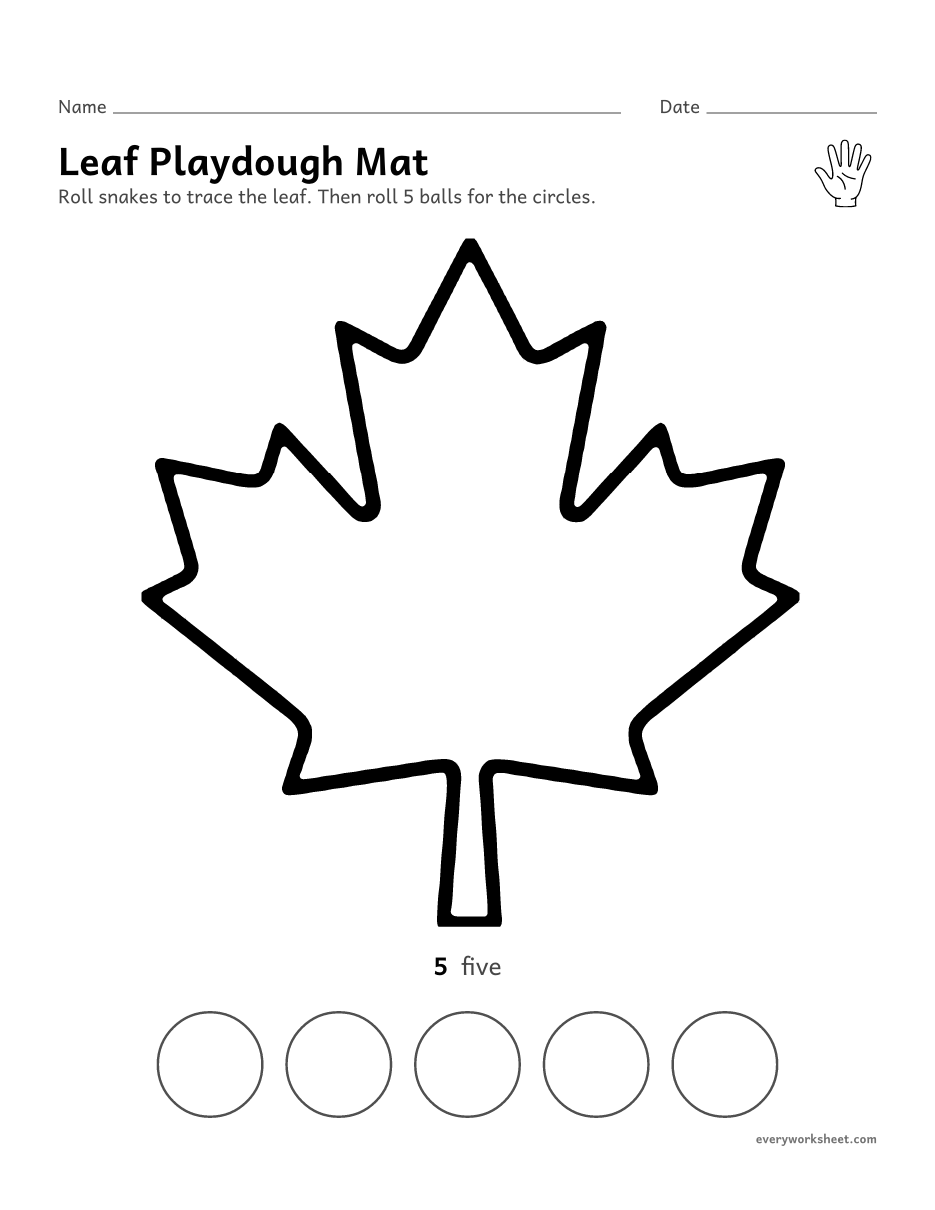
Rolling and pressing playdough along a big leaf outline
1 page40 KB
 View all 2 pages
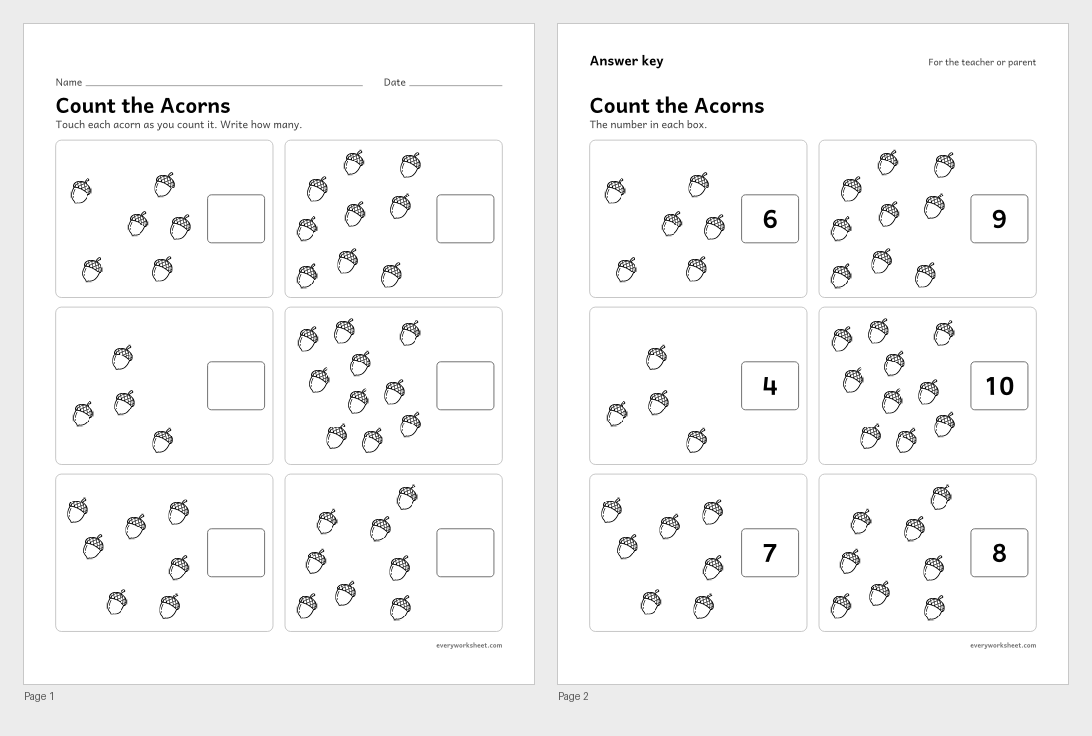
Counting scattered groups of up to 10 and writing how many
Answer key on page 2
2 pages1.9 MB
 View all 2 pages
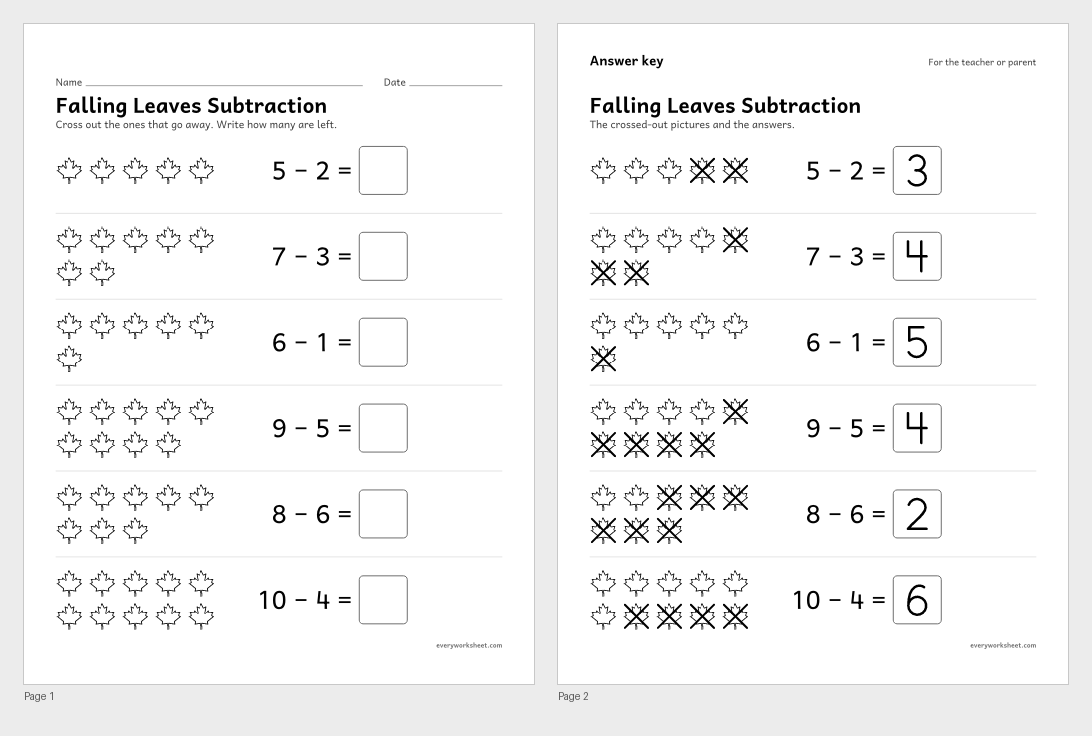
Taking away pictures to subtract within 10
Answer key on page 2
2 pages112 KB
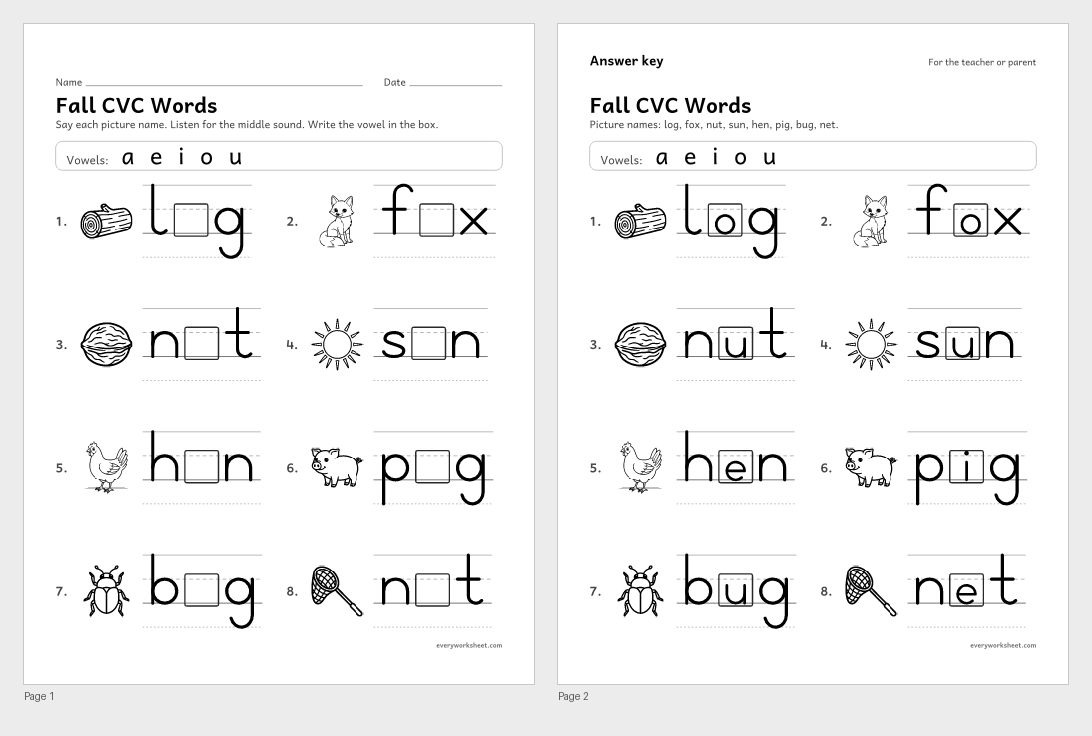 View all 2 pages
Writing the short vowel in CVC picture words
Answer key on page 2
2 pages319 KB
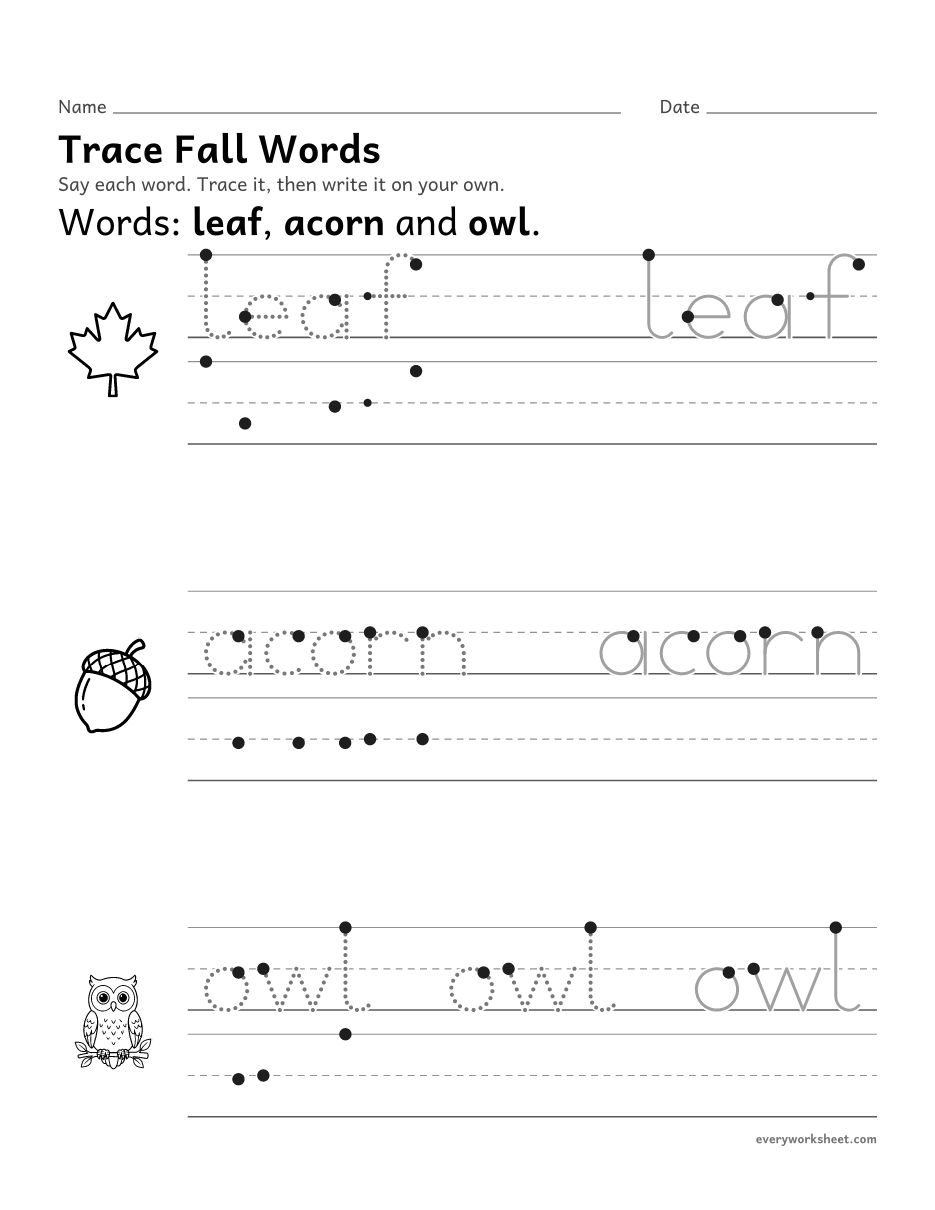 View larger
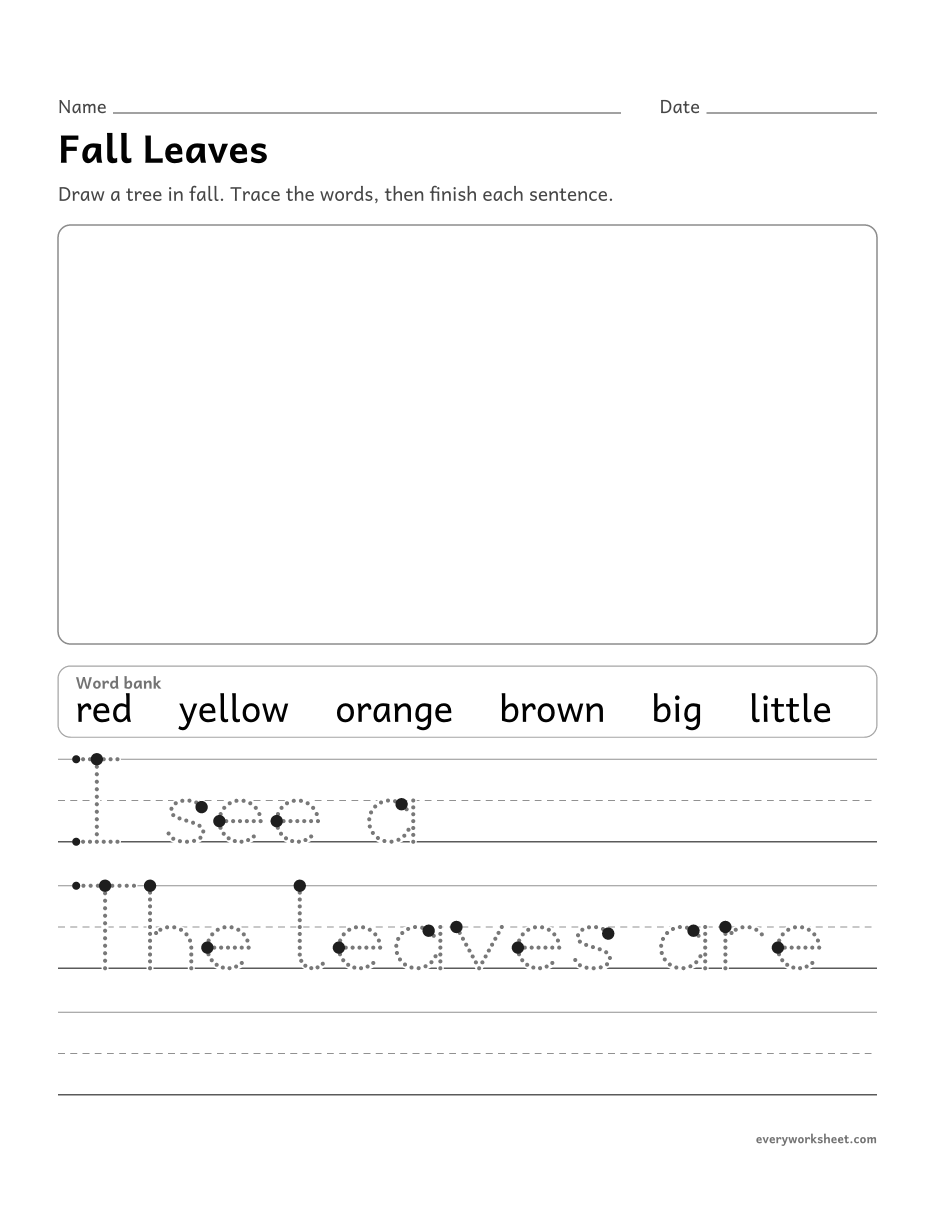 View larger
Drawing and writing to describe leaves in fall
1 page27 KB
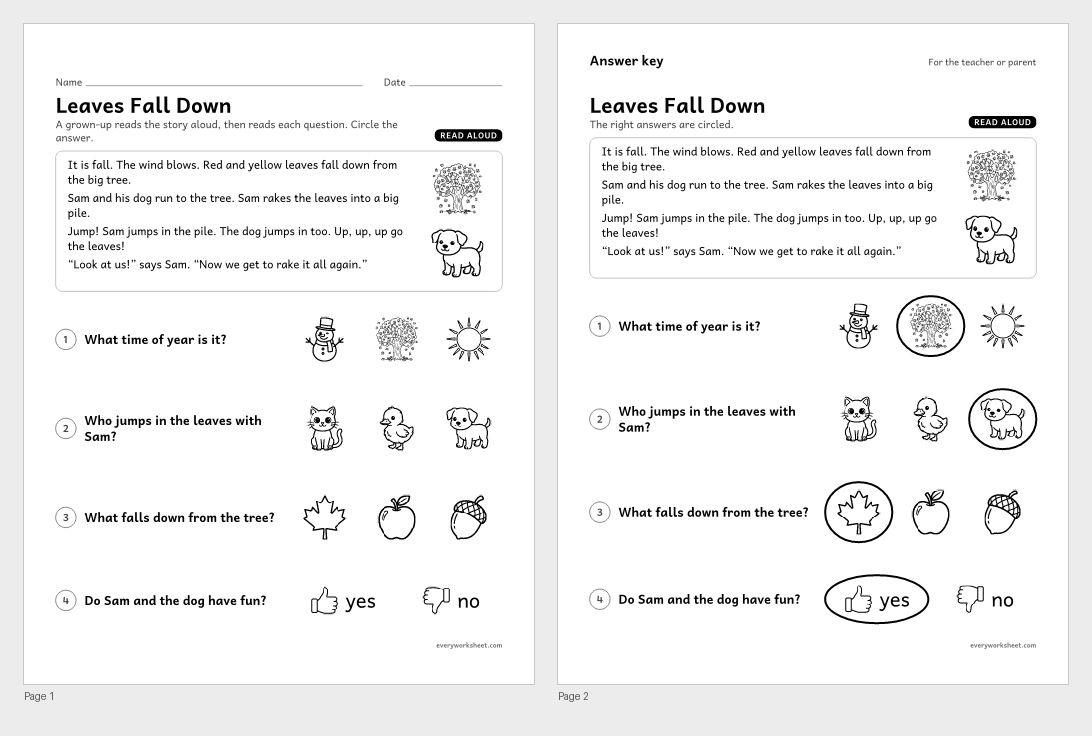 View all 2 pages
Listening to a story and answering questions about key details
Answer key on page 2
2 pages684 KB
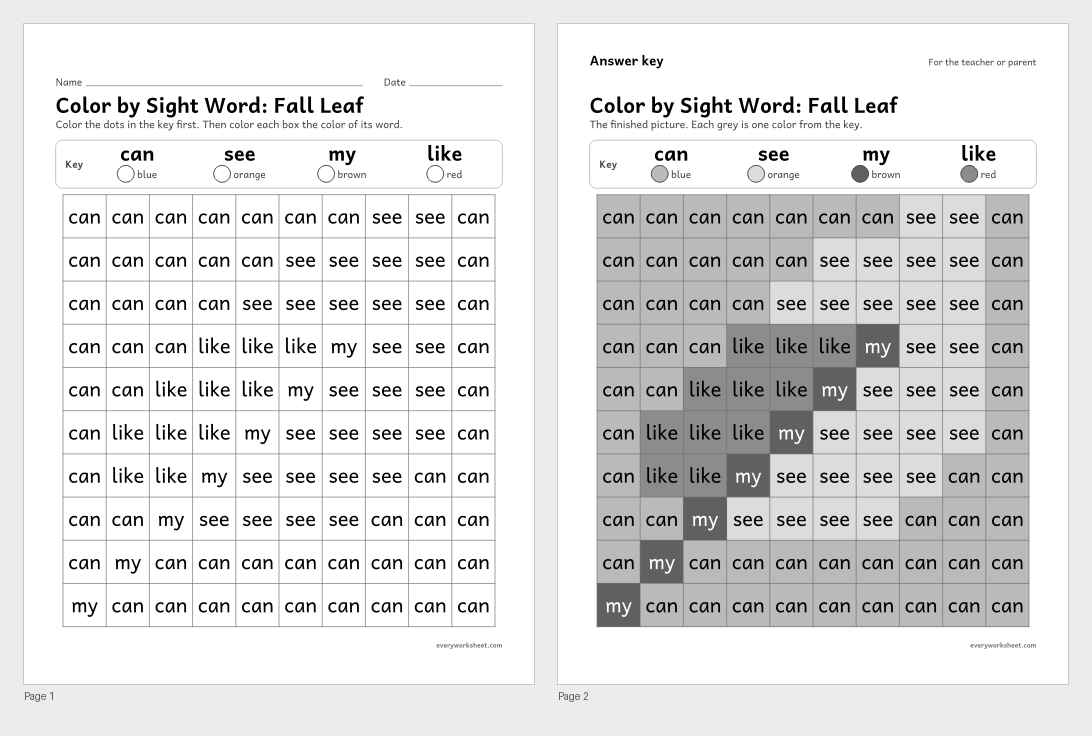 View all 2 pages
Reading sight words to color a picture
Answer key on page 2
2 pages77 KB
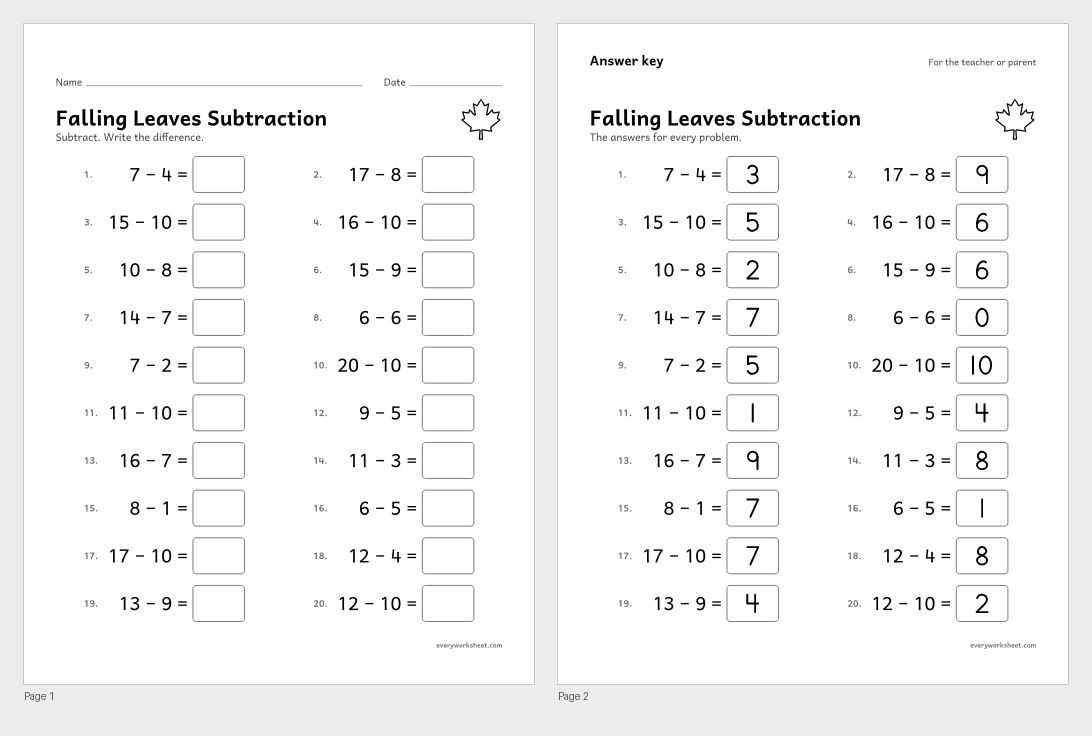 View all 2 pages
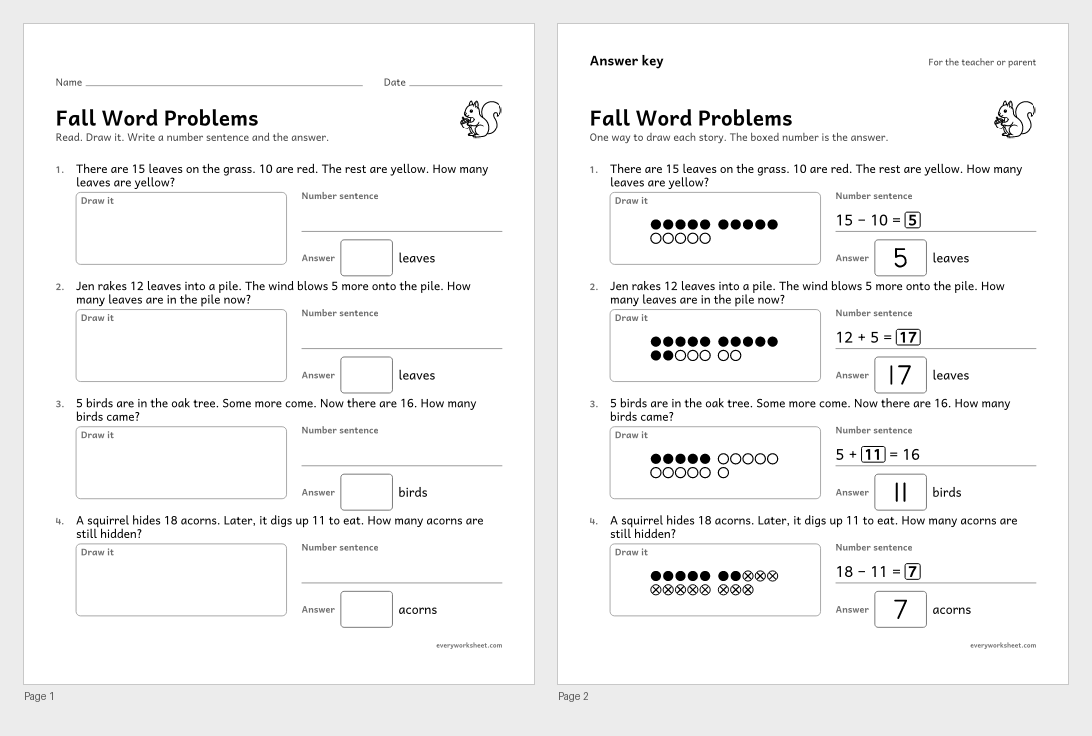 View all 2 pages
Solving fall word problems within 20, including a missing change
Answer key on page 2
2 pages103 KB
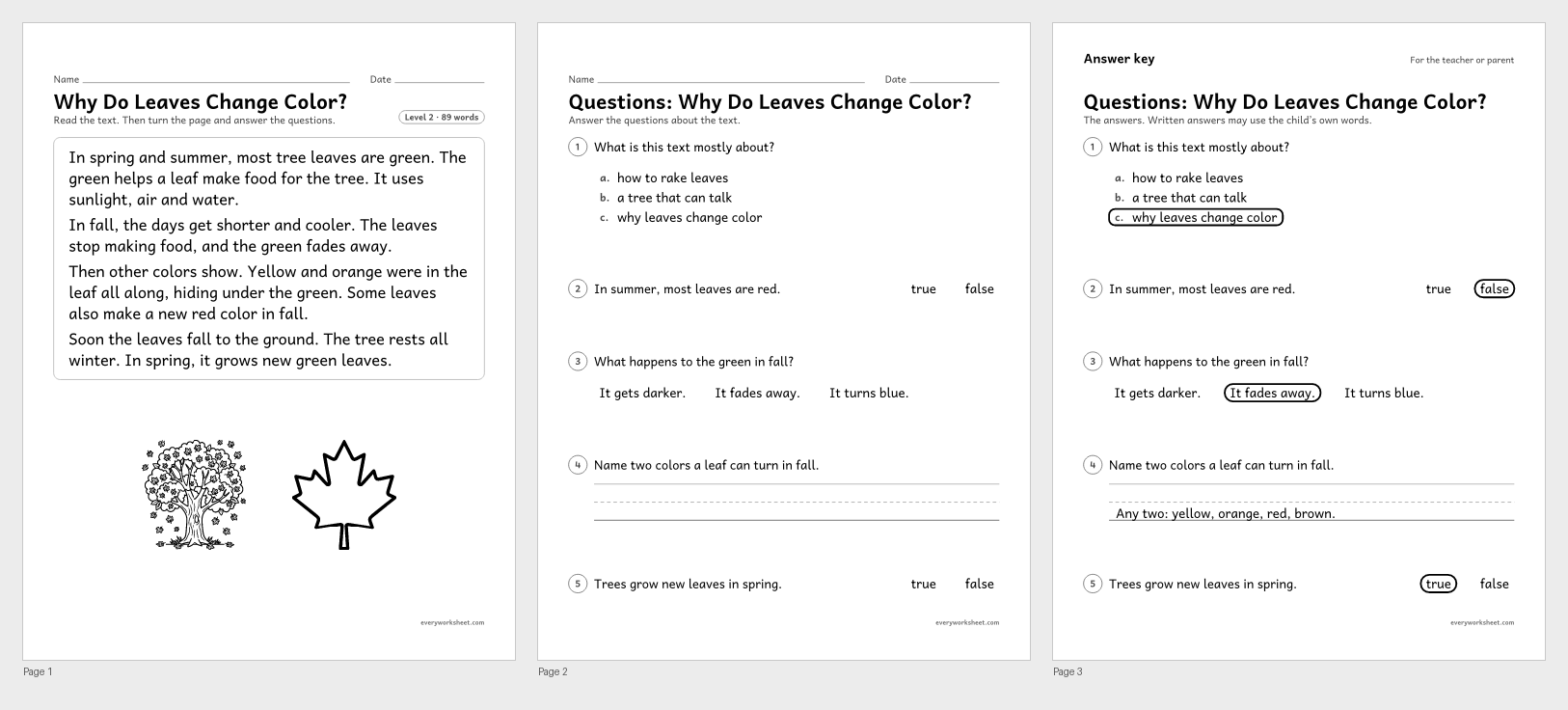 3 pagesView all 3 pages
Telling the main topic and key details of a nonfiction text about fall leaves
Answer key on page 3
3 pages129 KB
 View larger
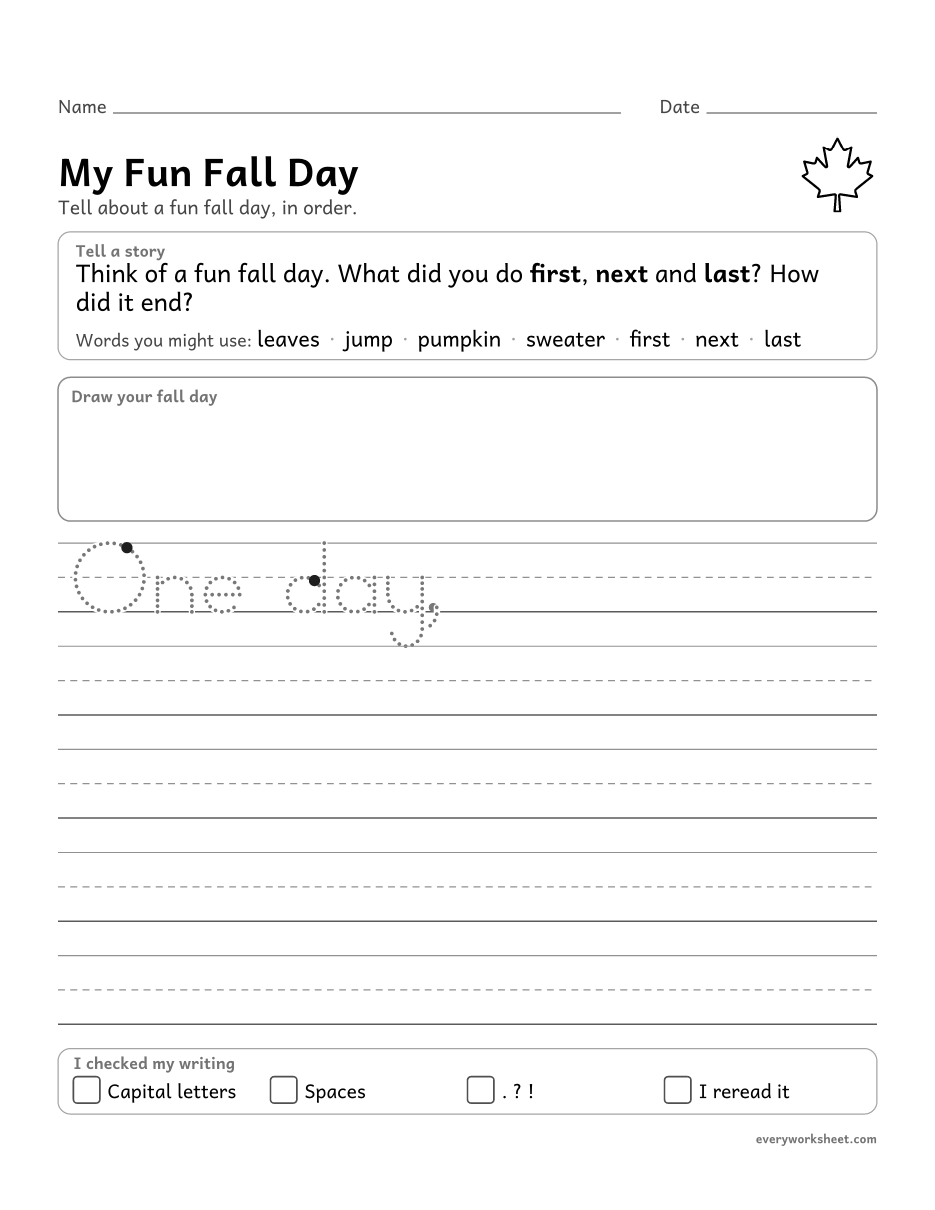
Writing a short narrative with events in order and time words
1 page45 KB
 View all 2 pages
 View all 2 pages
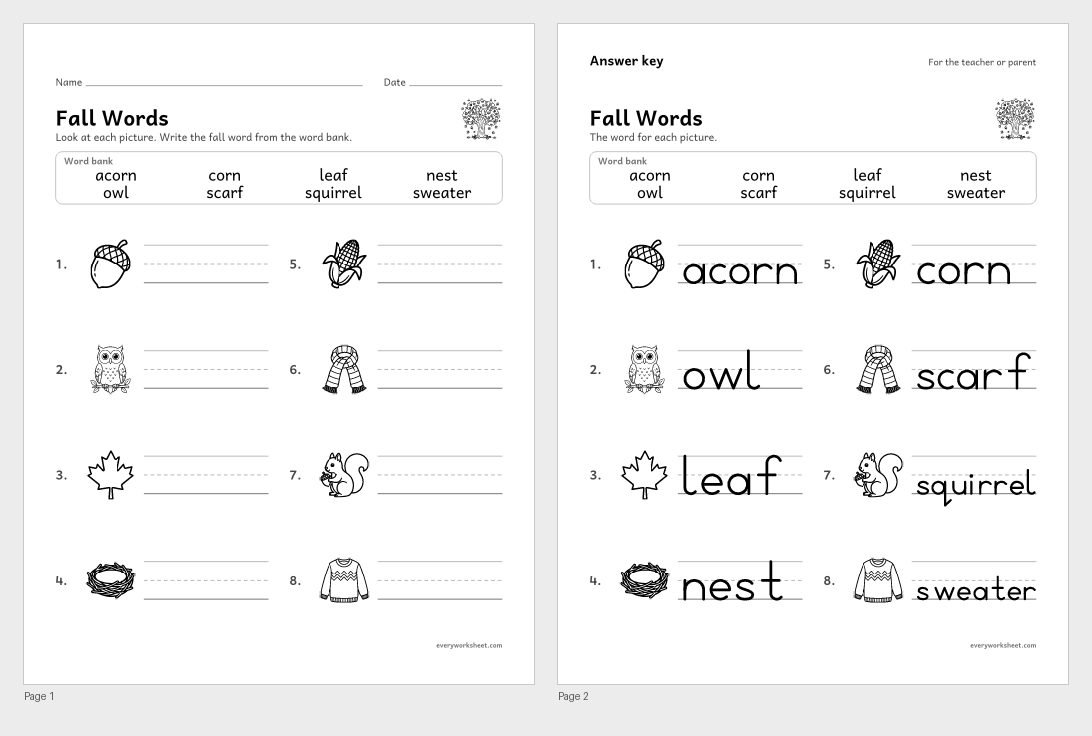
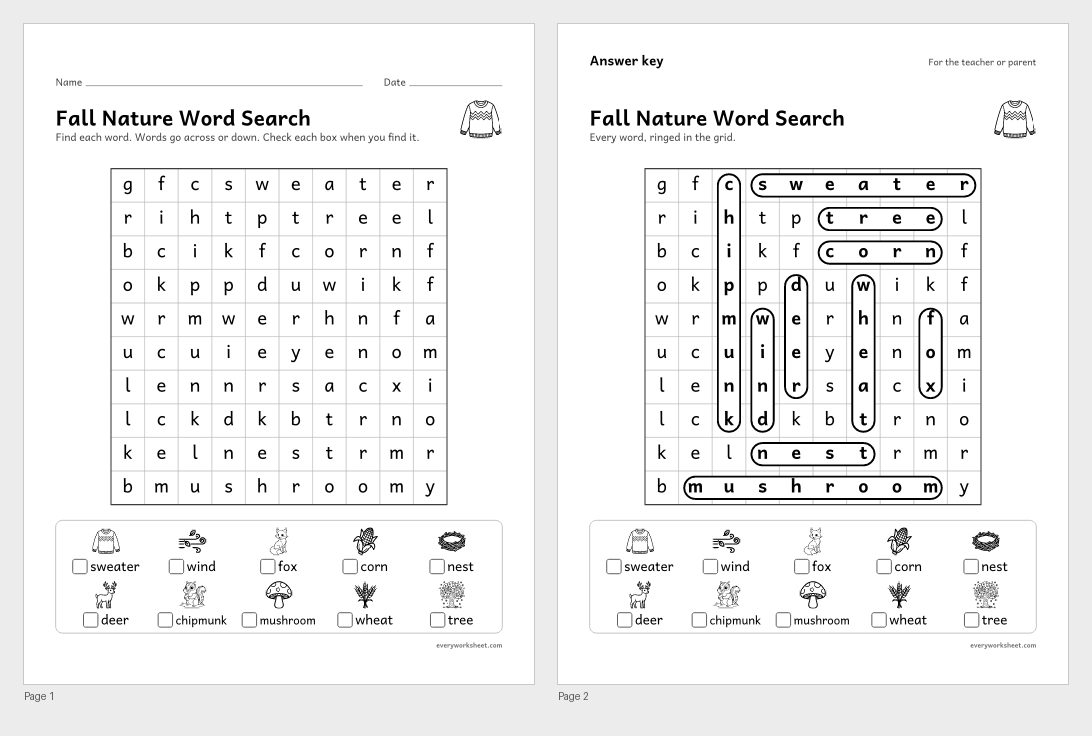
Finding and reading fall nature words by their spelling
Answer key on page 2
2 pages507 KB
 View all 2 pages
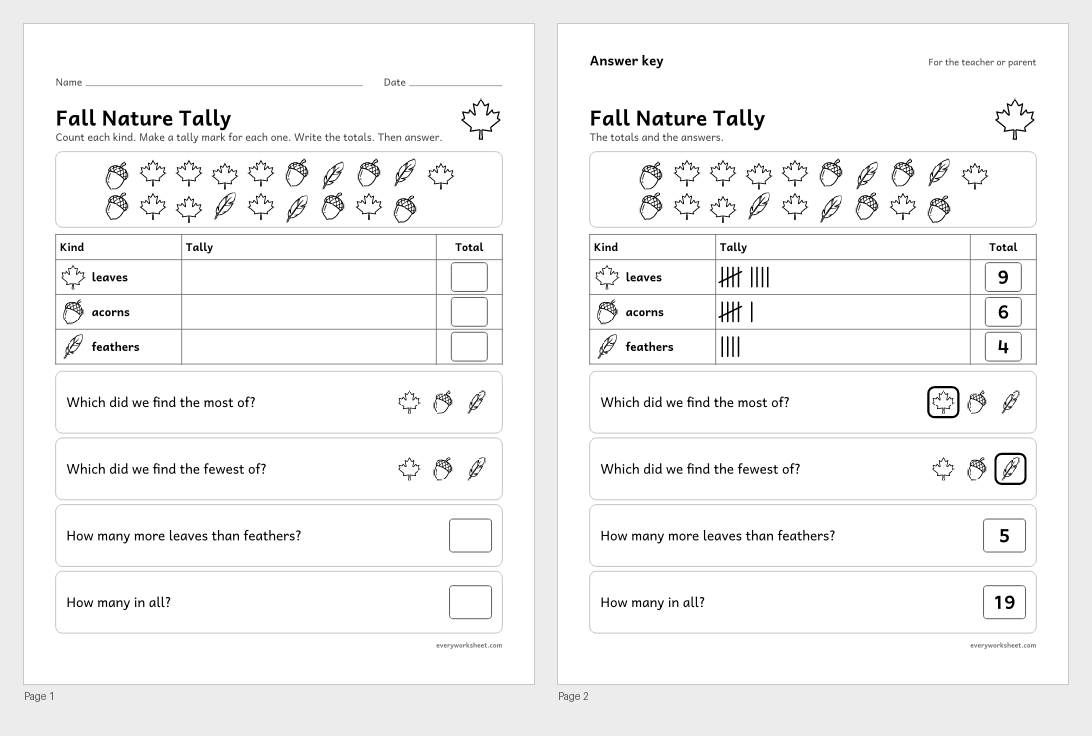
Sorting fall things into a tally chart and comparing the totals
Answer key on page 2
2 pages819 KB
Print at 100% (actual size) for the cleanest tracing lines.
These fall worksheets bring falling leaves, acorns, squirrels and a friendly scarecrow into everyday practice. Preschoolers color a fall squirrel, count and color, trace the path of falling leaves, count and glue, and roll playdough on a big leaf. Kindergartners count acorns, subtract falling leaves, write CVC words, trace fall words, listen to a short read-aloud and write about fall. 1st graders solve fall word problems, read a short nonfiction text about why leaves change color, write about a fun fall day, spell fall words and keep a nature tally.
Use them from late September through November, alongside a leaf walk or a nature table. For the science of the seasons, see Seasons Worksheets and Seasons Worksheets for Preschool. For apples, pumpkins, Halloween and Thanksgiving, each has its own page.
Every page is black and white, prints on US Letter or A4, and pages with one right answer have an answer key on page 2.
ELOF P-MATH 3Child understands the relationship between numbers and quantities.ELOF P-PMP 3Child demonstrates increasing control, strength, and coordination of small muscles.CCSS.MATH.CONTENT.K.CC.B.5Count to answer "how many?" questions about as many as 20 things arranged in a line, a rectangular array, or a circle, or as many as 10 things in a scattered configuration; given a number from 1–20, count out that many objects.CCSS.MATH.CONTENT.K.OA.A.1Represent addition and subtraction with objects, fingers, mental images, drawings, sounds (e.g., claps), acting out situations, verbal explanations, expressions, or equations.CCSS.ELA-LITERACY.RF.K.3.CRead common high-frequency words by sight (e.g., the, of, to, you, she, my, is, are, do, does).CCSS.ELA-LITERACY.RL.K.1With prompting and support, ask and answer questions about key details in a text.CCSS.ELA-LITERACY.L.K.1.APrint many upper- and lowercase letters.CCSS.ELA-LITERACY.L.K.2.CWrite a letter or letters for most consonant and short-vowel sounds (phonemes).CCSS.ELA-LITERACY.W.K.2Use a combination of drawing, dictating, and writing to compose informative/explanatory texts in which they name what they are writing about and supply some information about the topic.CCSS.MATH.CONTENT.1.MD.C.4Organize, represent, and interpret data with up to three categories; ask and answer questions about the total number of data points, how many in each category, and how many more or less are in one category than in another.CCSS.MATH.CONTENT.1.OA.A.1Use addition and subtraction within 20 to solve word problems involving situations of adding to, taking from, putting together, taking apart, and comparing, with unknowns in all positions, e.g., by using objects, drawings, and equations with a symbol for the unknown number to represent the problem.CCSS.MATH.CONTENT.1.OA.C.6Add and subtract within 20, demonstrating fluency for addition and subtraction within 10. Use strategies such as counting on; making ten (e.g., 8 + 6 = 8 + 2 + 4 = 10 + 4 = 14); decomposing a number leading to a ten (e.g., 13 - 4 = 13 - 3 - 1 = 10 - 1 = 9); using the relationship between addition and subtraction (e.g., knowing that 8 + 4 = 12, one knows 12 - 8 = 4); and creating equivalent but easier or known sums (e.g., adding 6 + 7 by creating the known equivalent 6 + 6 + 1 = 12 + 1 = 13).CCSS.ELA-LITERACY.RI.1.2Identify the main topic and retell key details of a text.CCSS.ELA-LITERACY.L.1.2.DUse conventional spelling for words with common spelling patterns and for frequently occurring irregular words.CCSS.ELA-LITERACY.W.1.3Write narratives in which they recount two or more appropriately sequenced events, include some details regarding what happened, use temporal words to signal event order, and provide some sense of closure.From late September through November. They fit a fall or seasons unit, the weeks between back to school and Thanksgiving, and any rainy-day indoor recess.
Yes. Every page practices a grade skill: counting, fine motor work and patterns in preschool, counting, subtraction, CVC words and sight words in kindergarten, and facts, word problems, reading and writing in 1st grade.
Yes. Every page with one right answer has an answer key on page 2 of the same PDF. Coloring, tracing, playdough and writing pages do not need one.
Each has its own page with preschool, kindergarten and 1st grade worksheets: Apple Worksheets, Pumpkin Worksheets, Halloween Worksheets and Thanksgiving Worksheets.