 View larger
Groundhog Day Worksheets
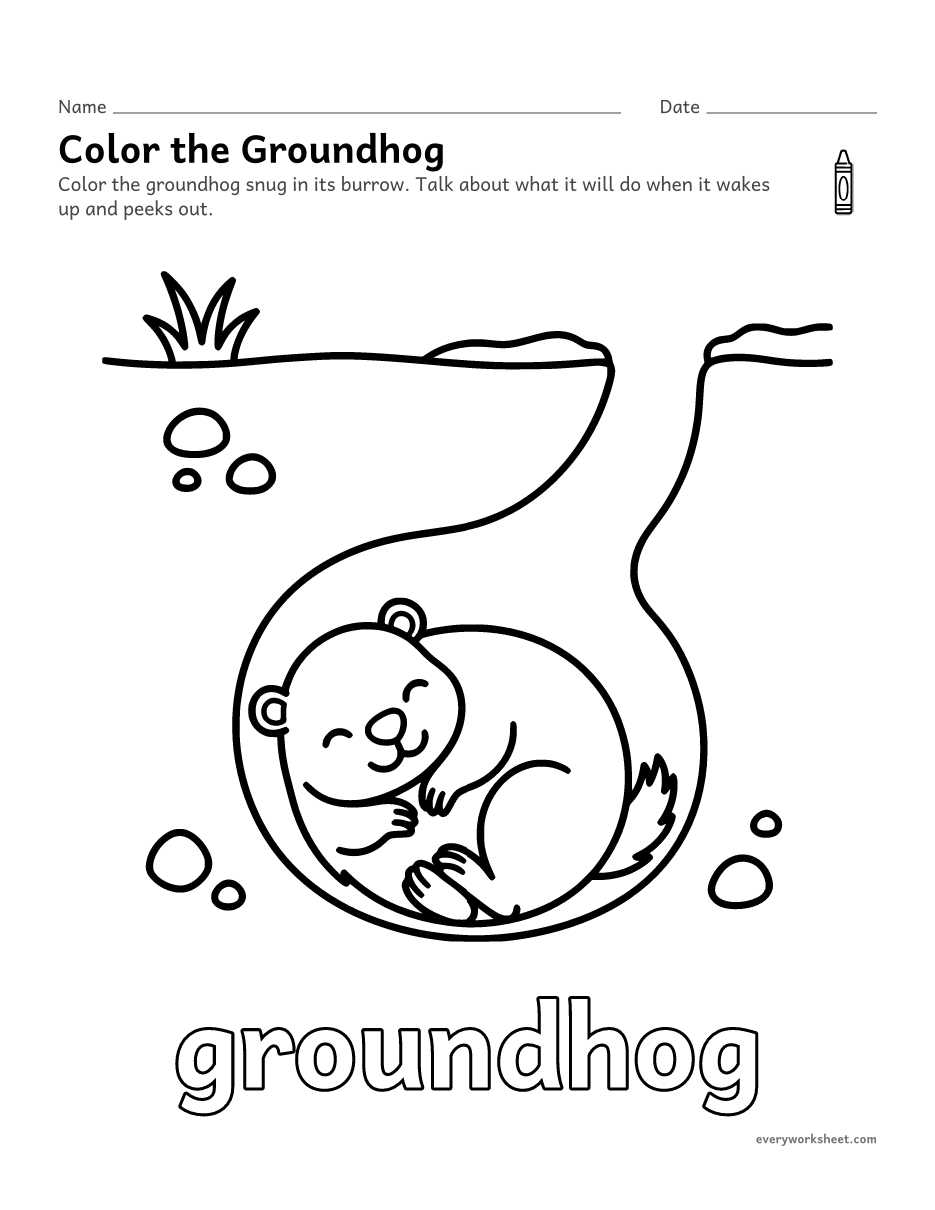
Counting and patterns, sunny or cloudy, a read-aloud, a class prediction graph, a groundhog passage, shadow science and a February calendar.
Download the groundhog day worksheets
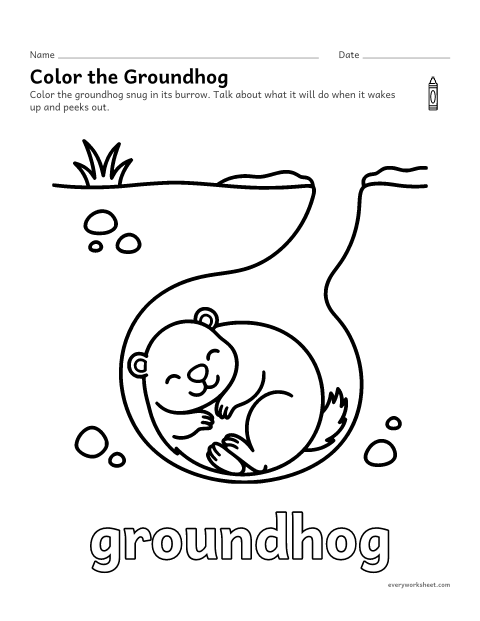
Groundhog Day worksheets for preschool
 View larger
 View all 2 pages
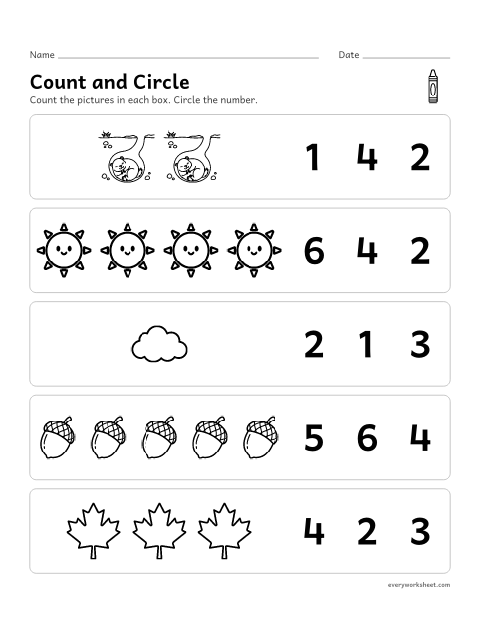
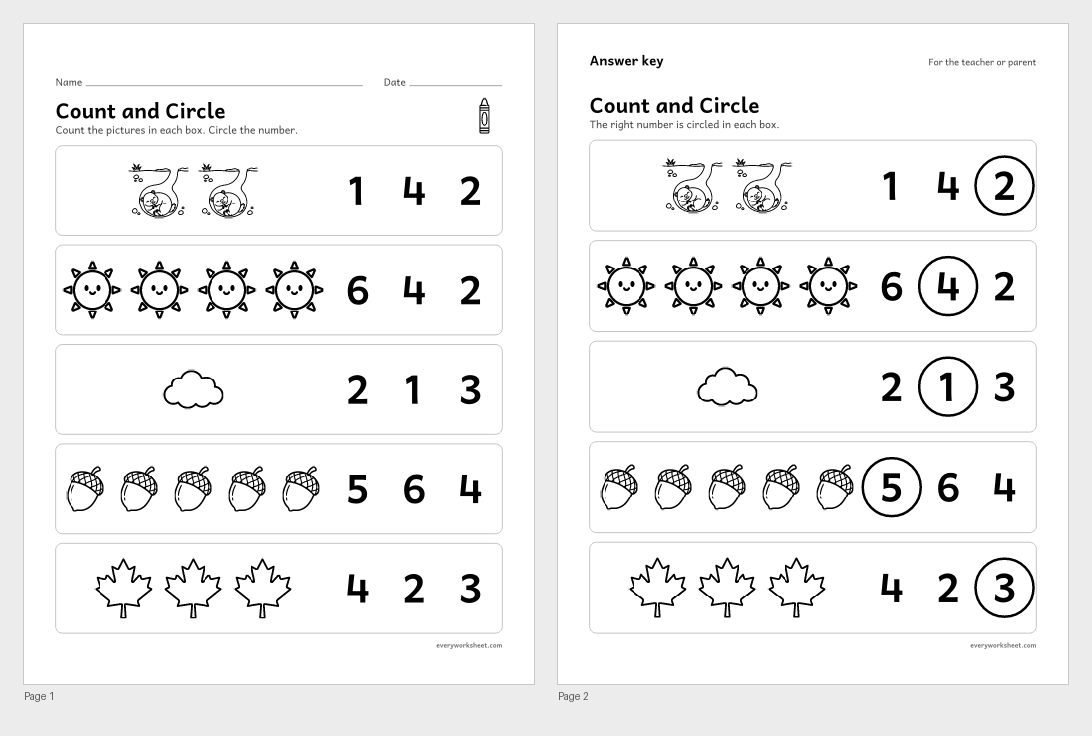
Groundhog day count and circle
Counting up to 5 and matching the number
Answer key on page 2
2 pages336 KB
 View larger
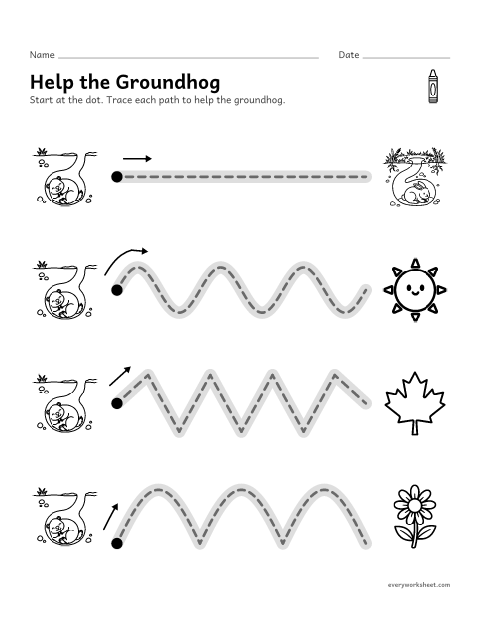
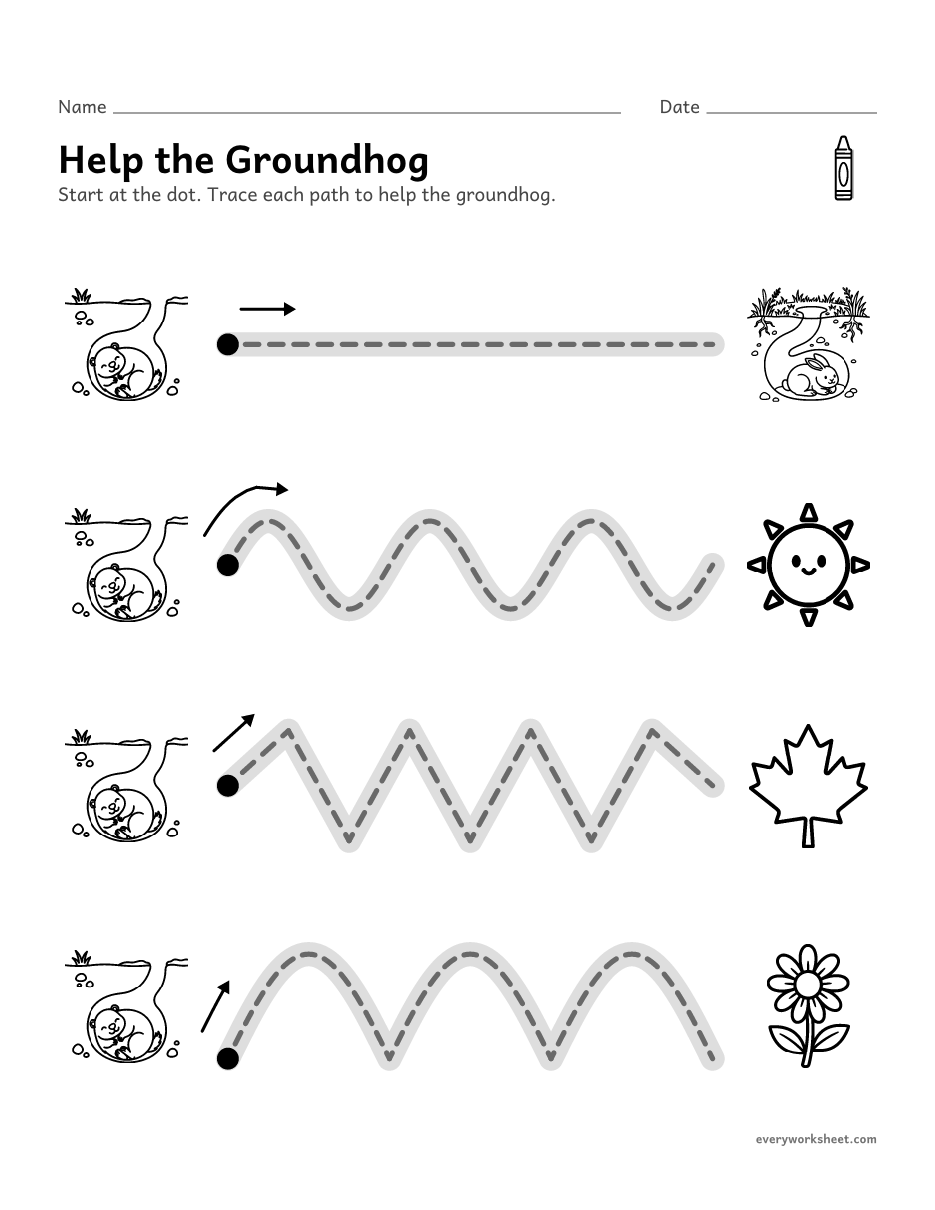
Groundhog trace the path
Tracing straight, wavy, zigzag and arched paths
1 page120 KB
 View all 2 pages
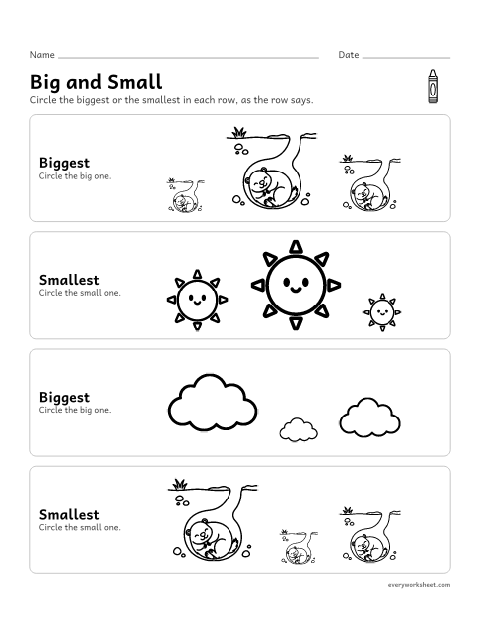
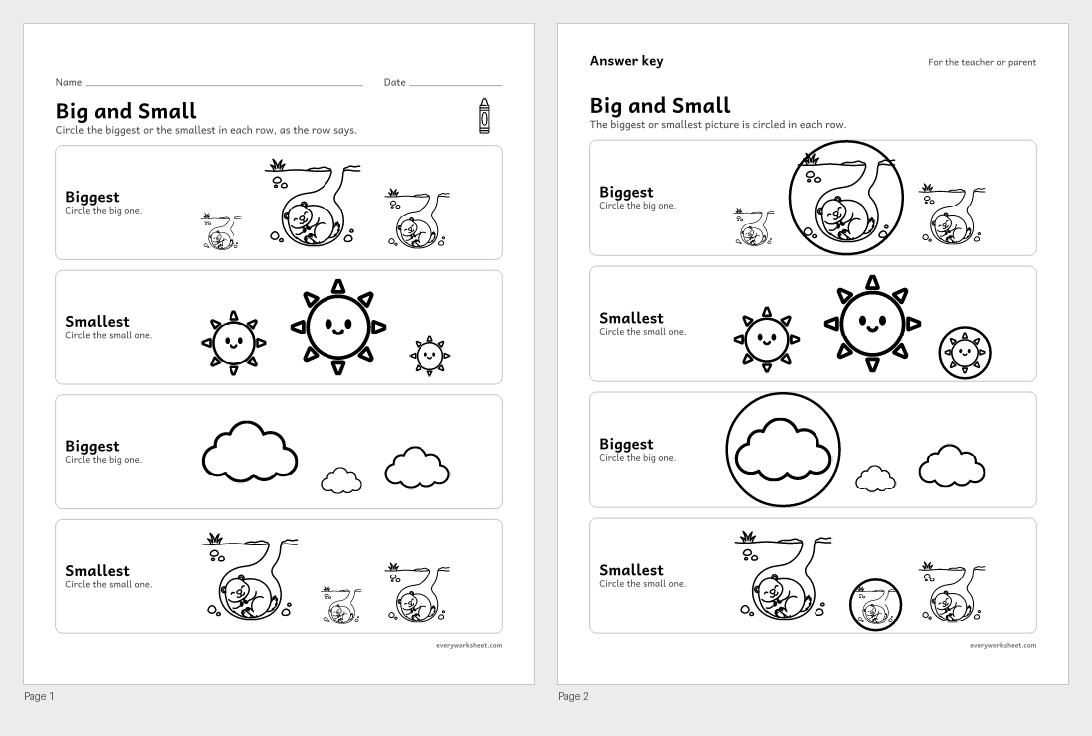
Groundhog day big and small
Comparing size: biggest and smallest
Answer key on page 2
2 pages106 KB
 View all 2 pages
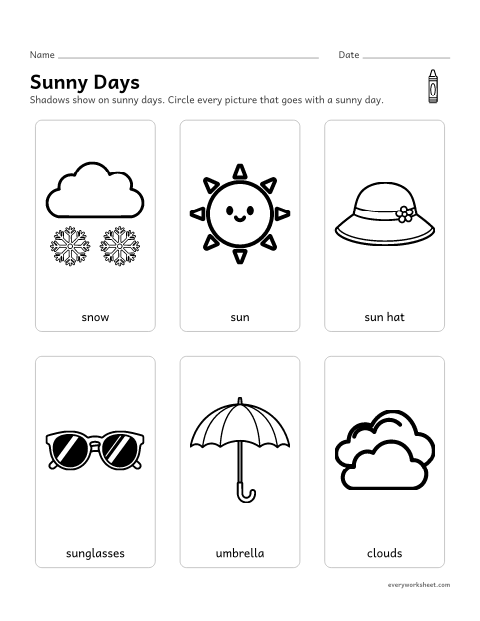
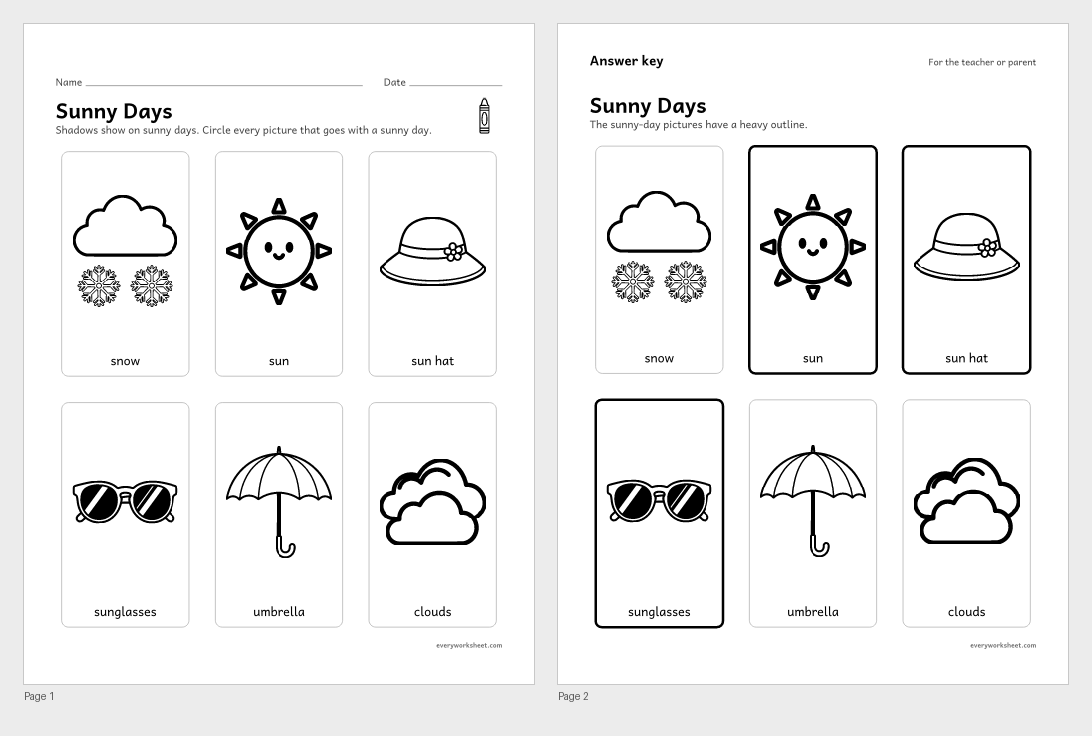
Groundhog day sunny or cloudy for preschool
Telling sunny from cloudy weather
Answer key on page 2
2 pages86 KB
 View all 2 pages
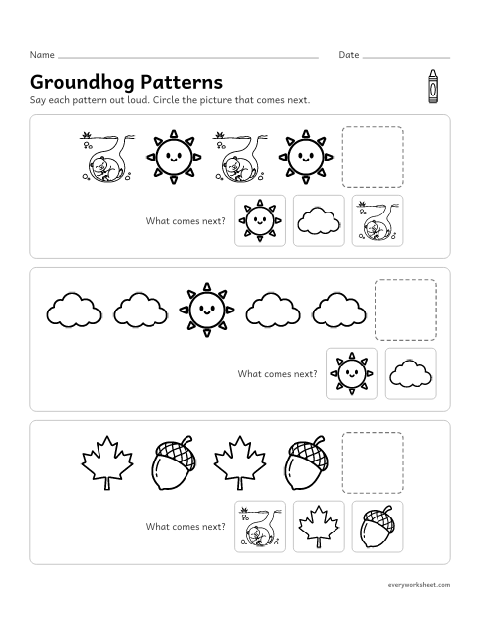
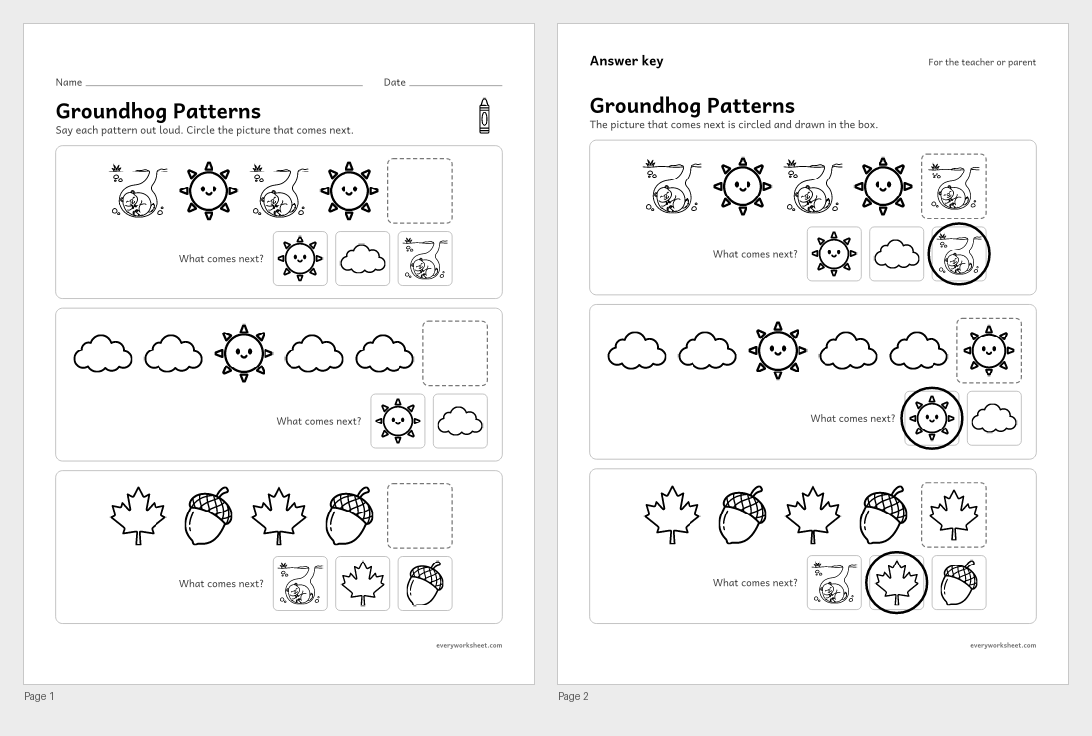
Groundhog day Patterns: what comes Next?
Finishing AB and AAB picture patterns
Answer key on page 2
2 pages385 KB
Groundhog Day worksheets for kindergarten
 View all 2 pages
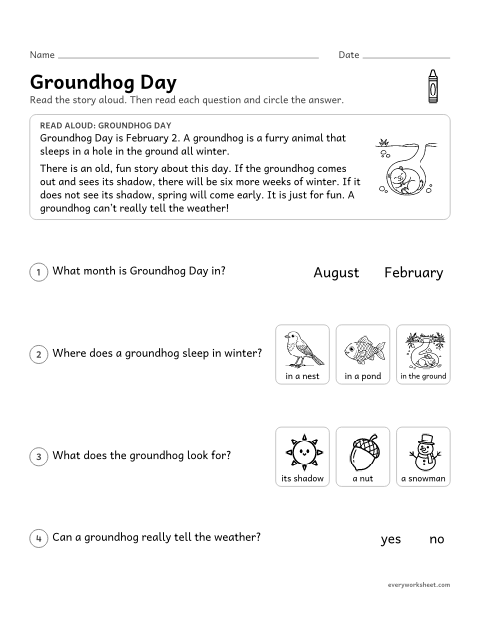
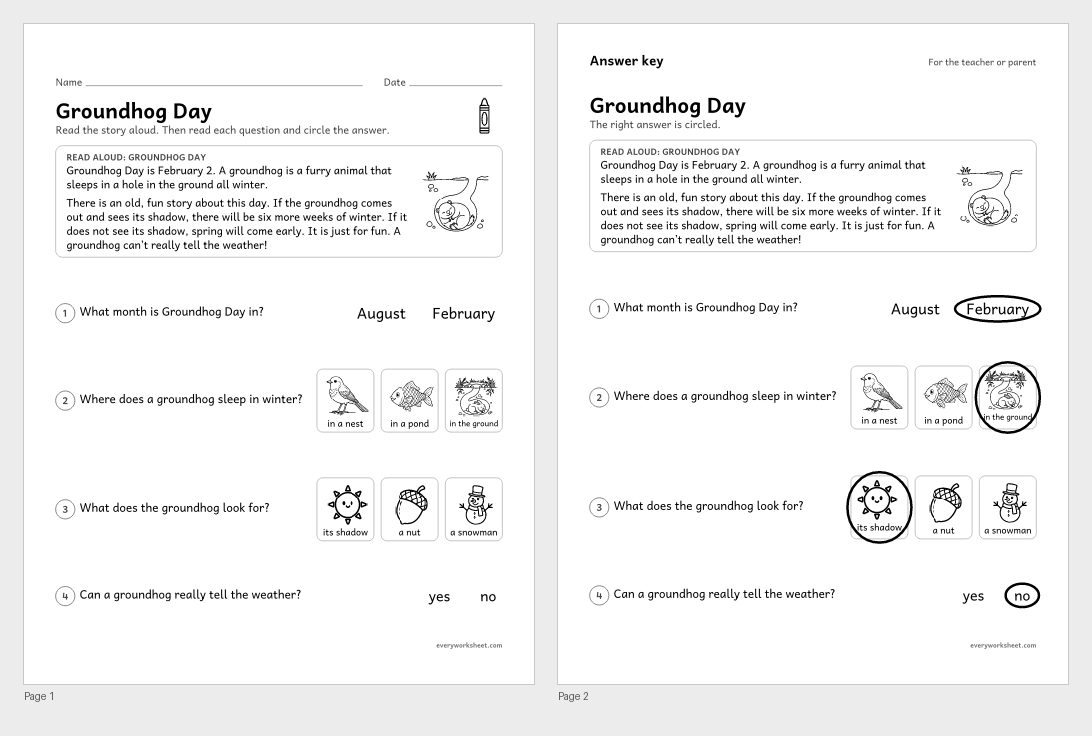
Groundhog day Read-Aloud for kindergarten
Listening to facts about Groundhog Day and answering questions
Answer key on page 2
2 pages268 KB
 View larger
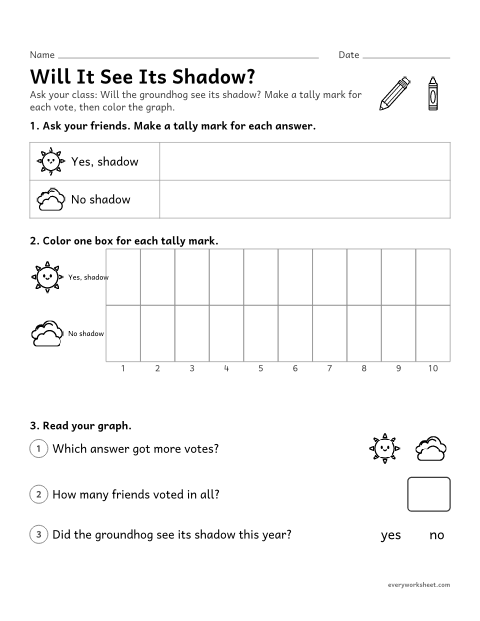
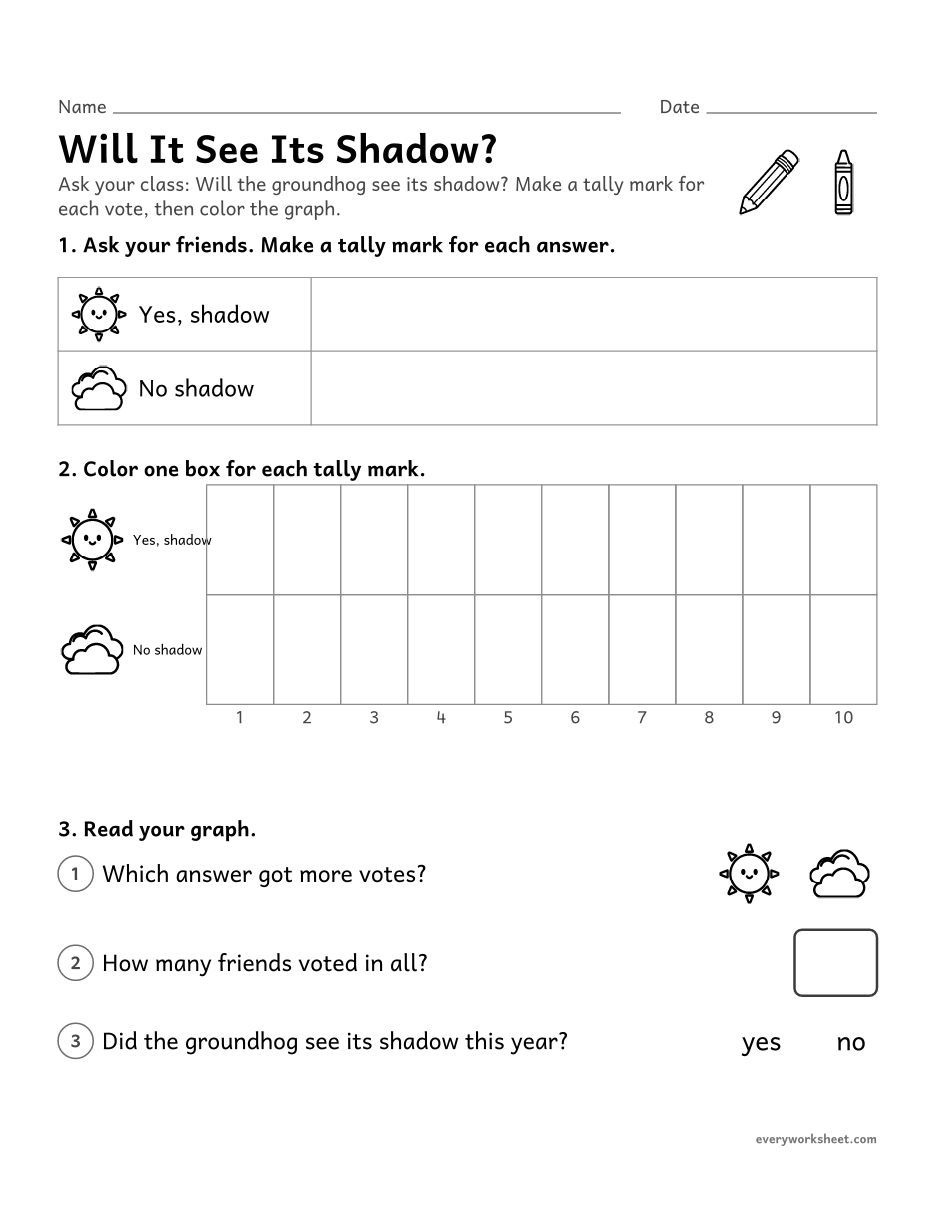
Groundhog day prediction class graph
Collecting votes and showing them on a graph
1 page55 KB
 View larger
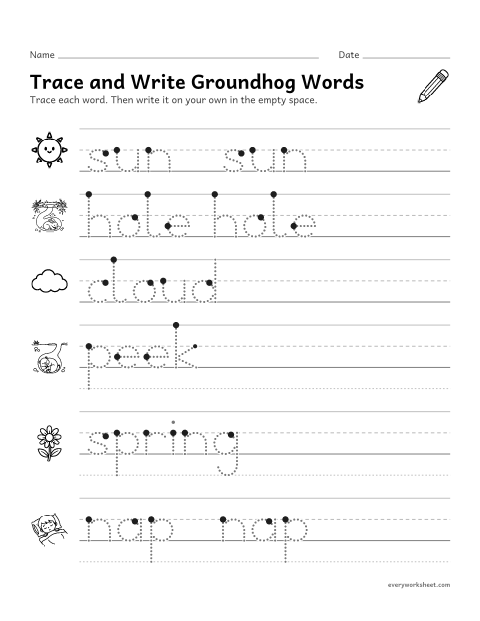
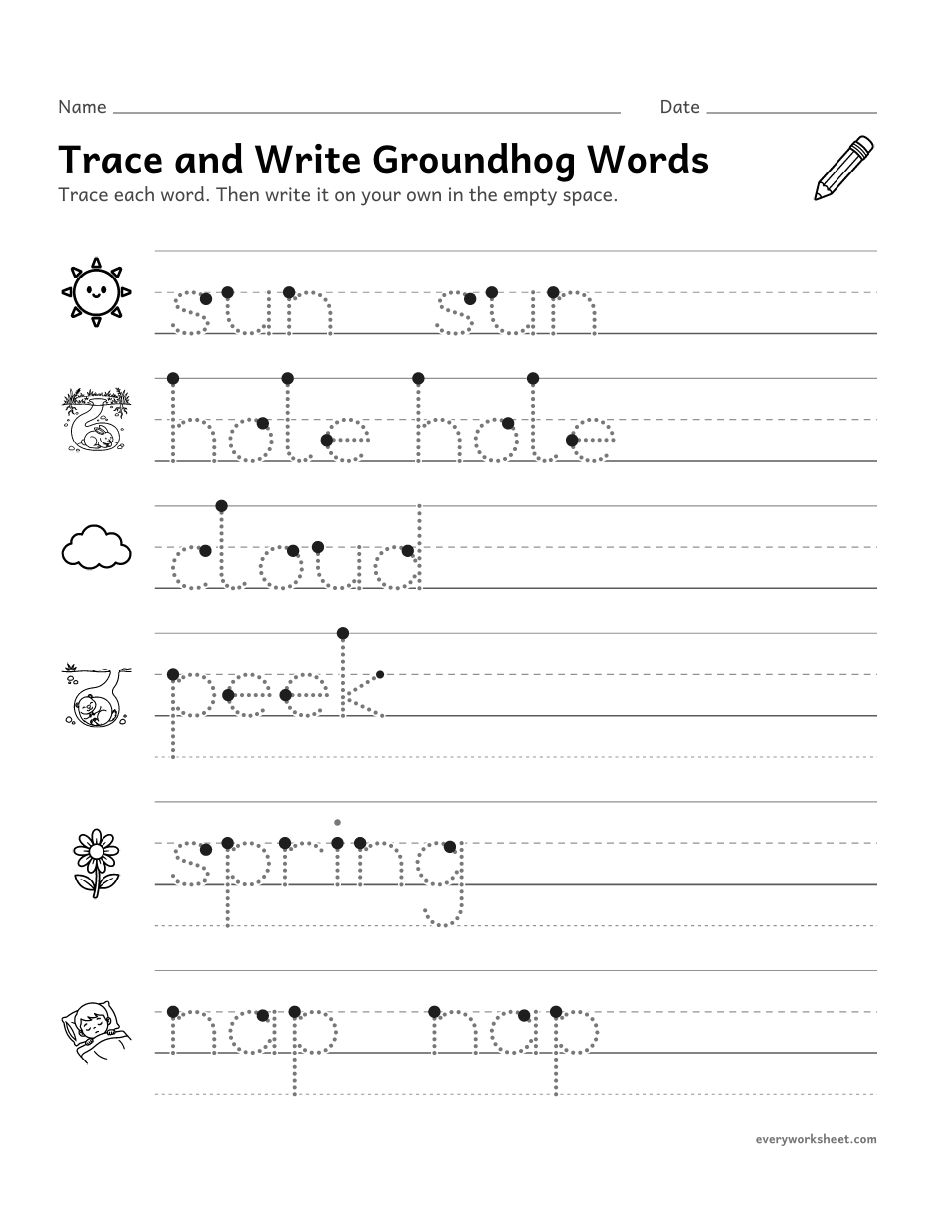
Groundhog day word tracing for kindergarten
Tracing and writing short words
1 page127 KB
 View all 2 pages
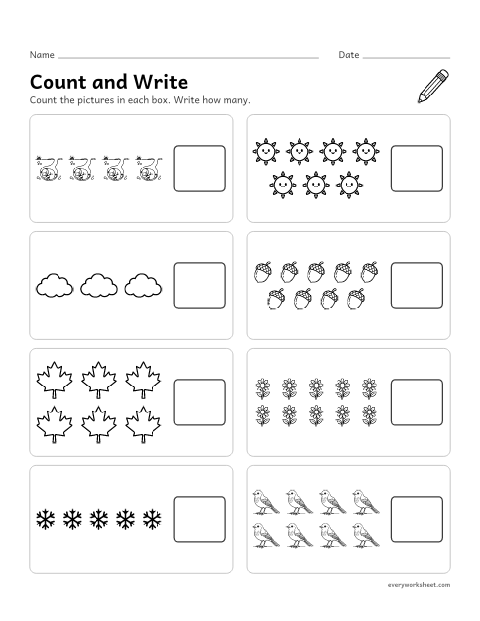
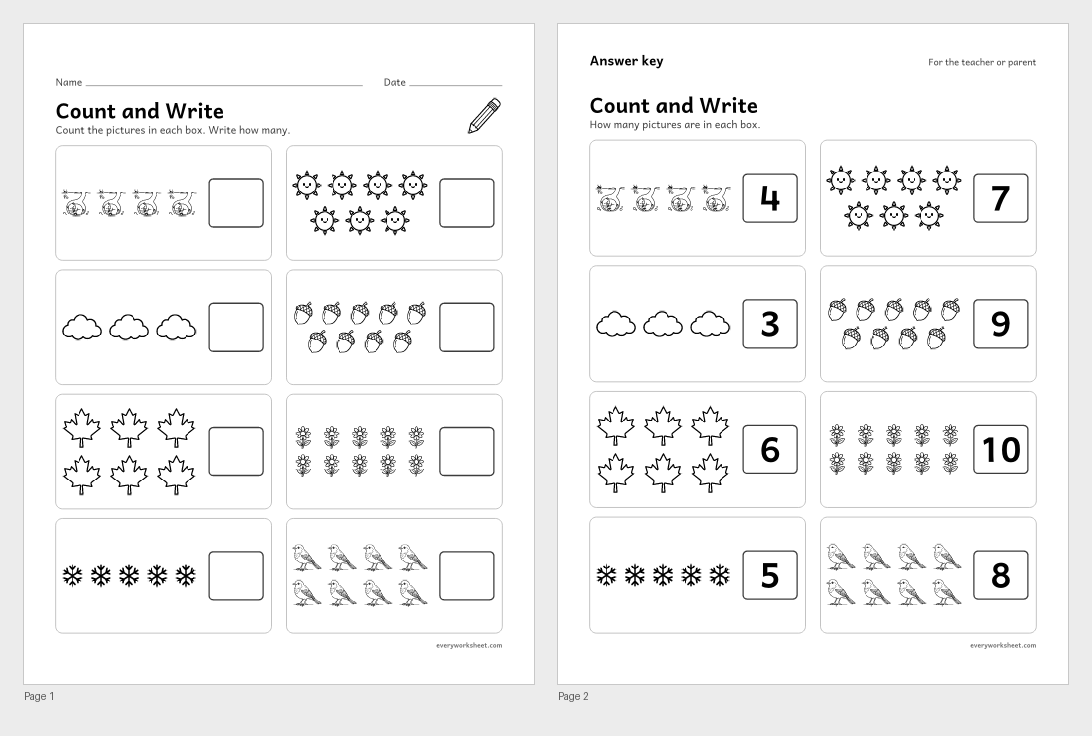
Groundhog day count and write
Counting up to 10 objects and writing the number
Answer key on page 2
2 pages956 KB
 View all 2 pages
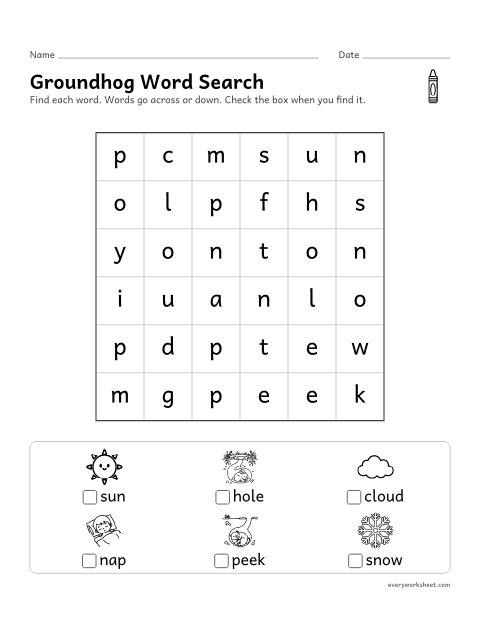
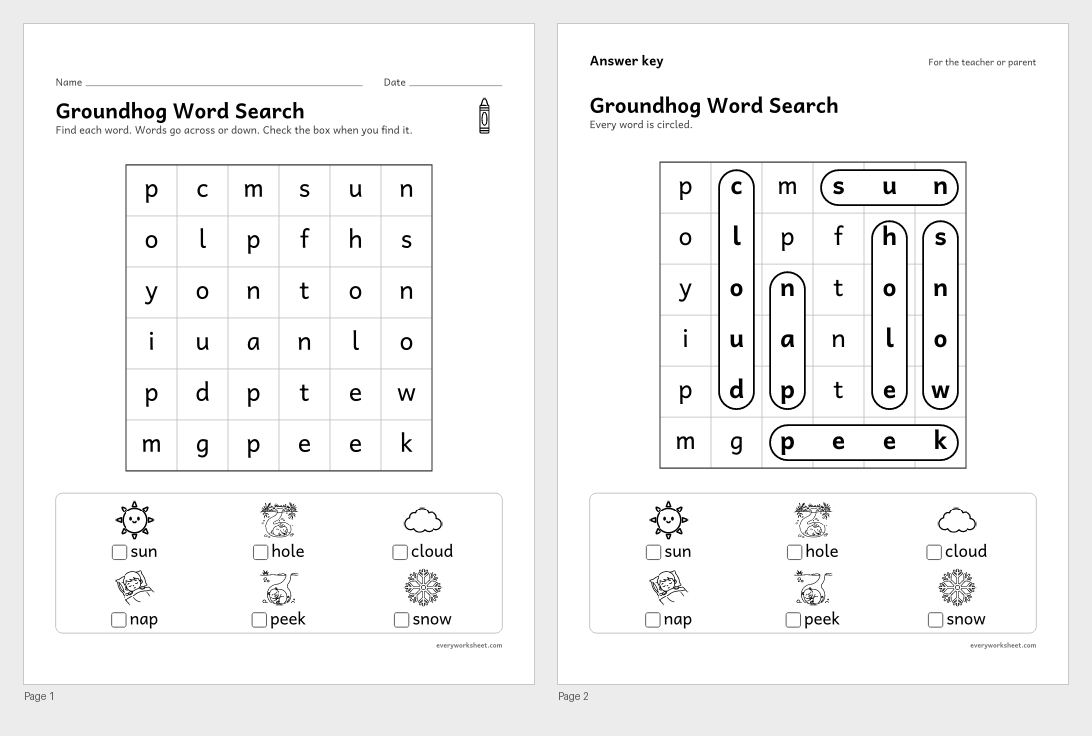
Groundhog day word search for kindergarten
Finding and reading short words
Answer key on page 2
2 pages200 KB
 View all 2 pages
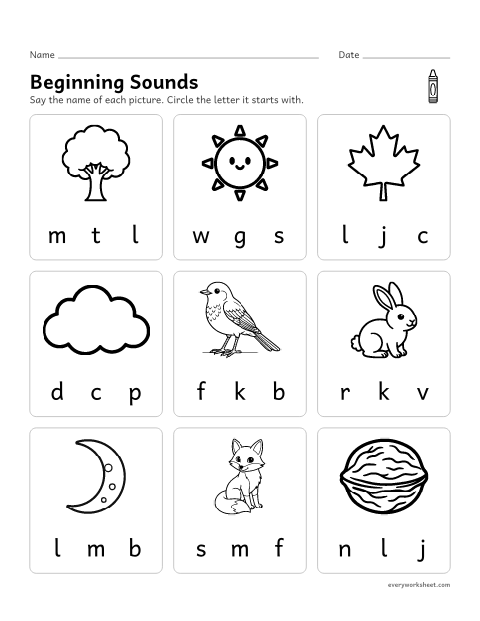
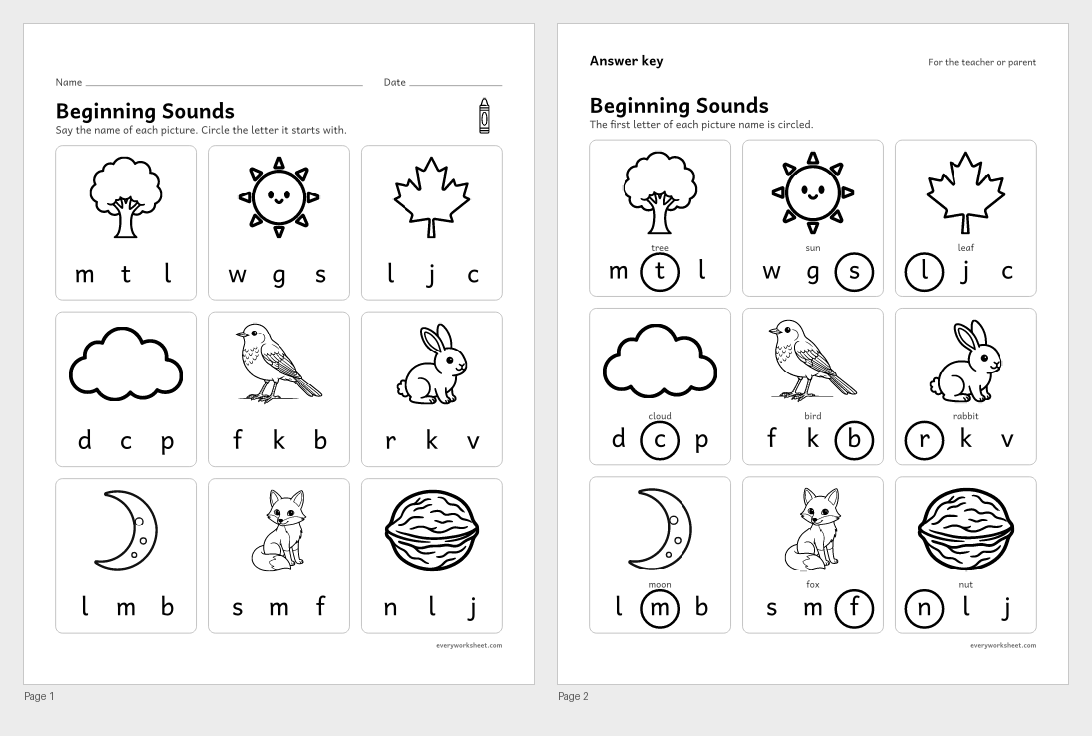
Groundhog day beginning sounds
Naming the first sound of a word and the letter that spells it
Answer key on page 2
2 pages244 KB
Groundhog Day worksheets for 1st grade
 View all 2 pages
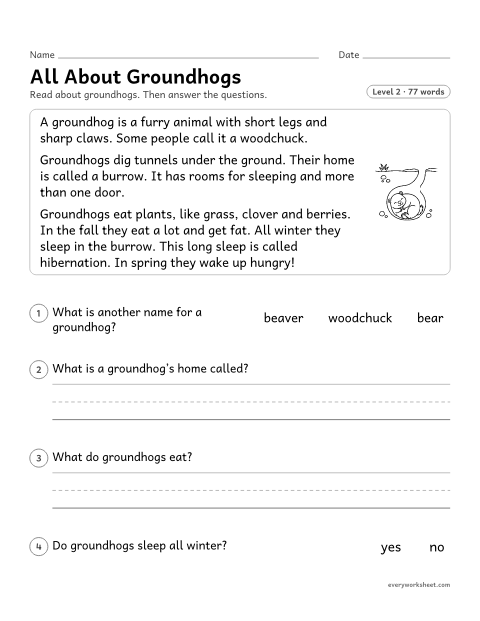
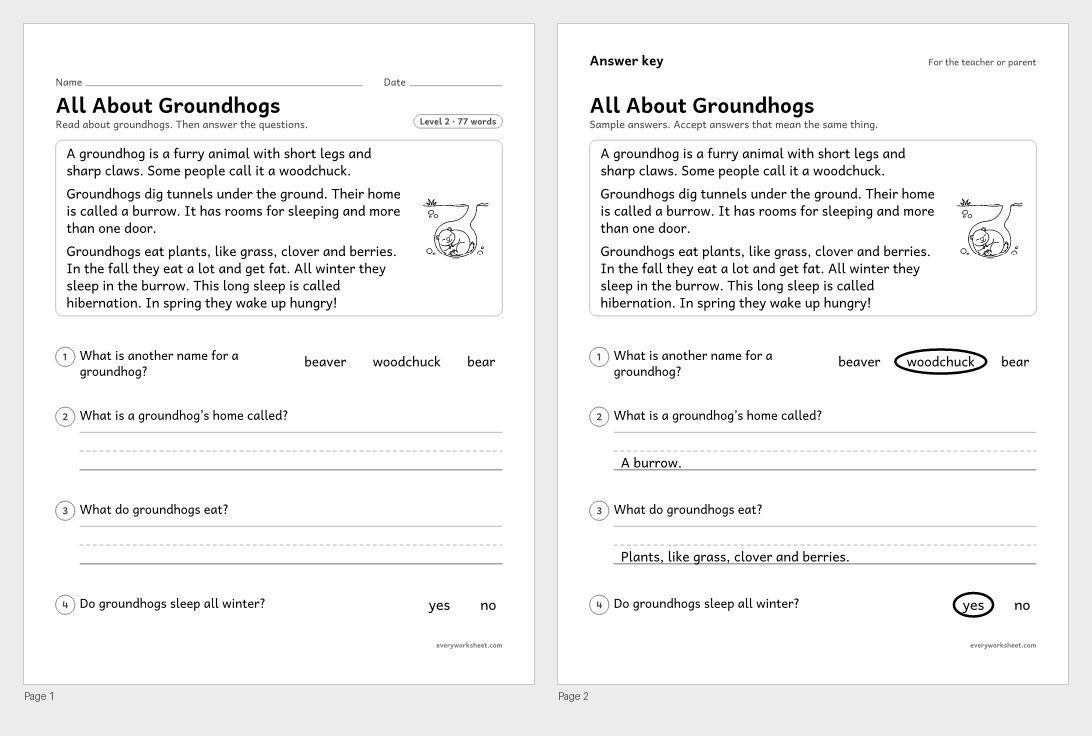
All about Groundhogs: nonfiction reading passage
Reading a nonfiction passage and answering questions about key details
Answer key on page 2
2 pages60 KB
 View larger
 View larger
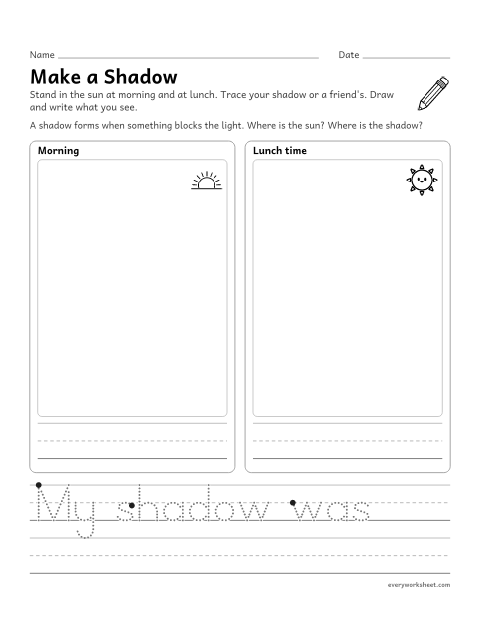
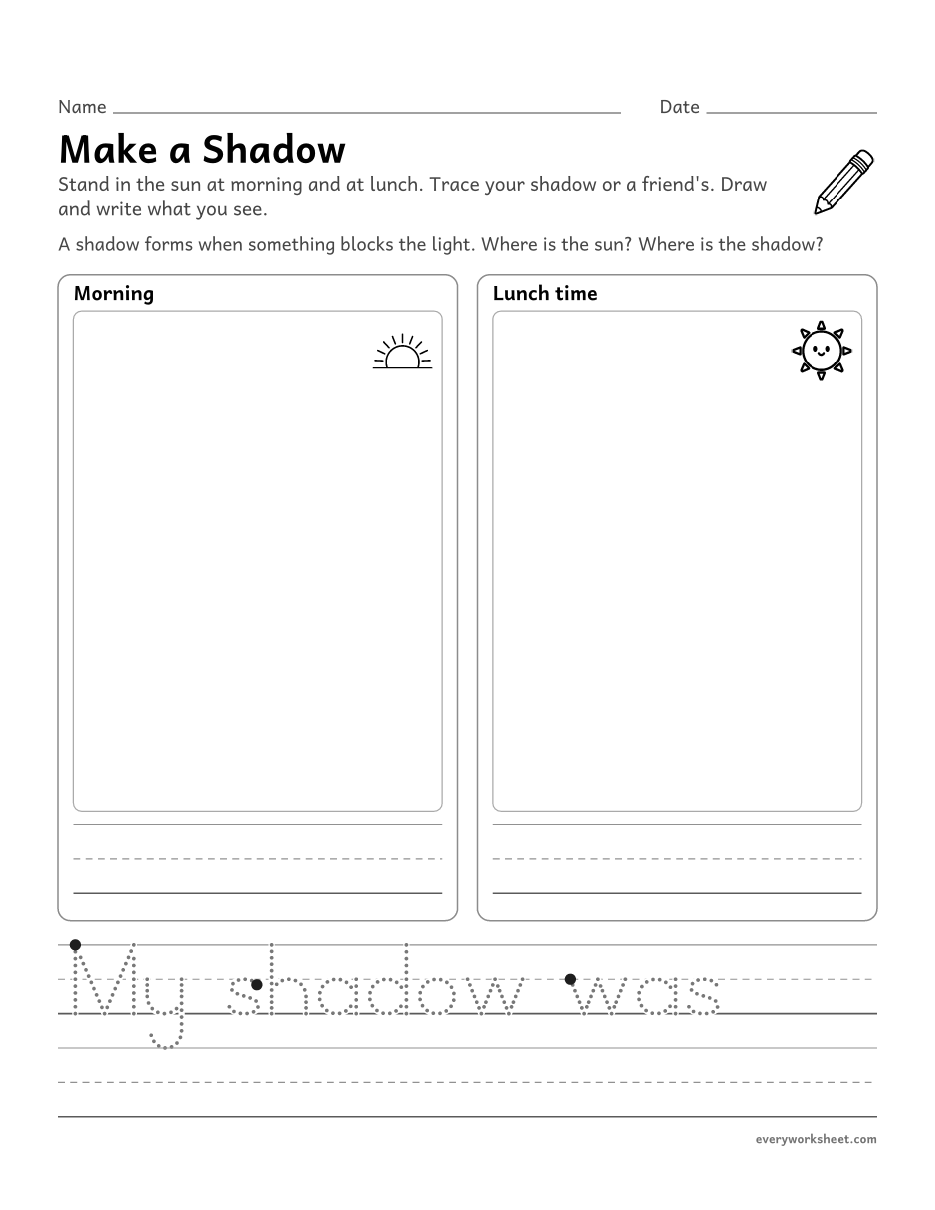
Shadow Investigation: groundhog day science
Observing that shadows form when an object blocks light
1 page50 KB
 View all 2 pages
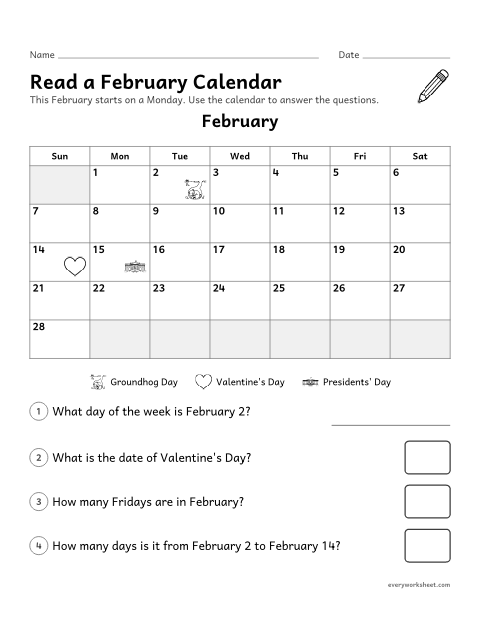
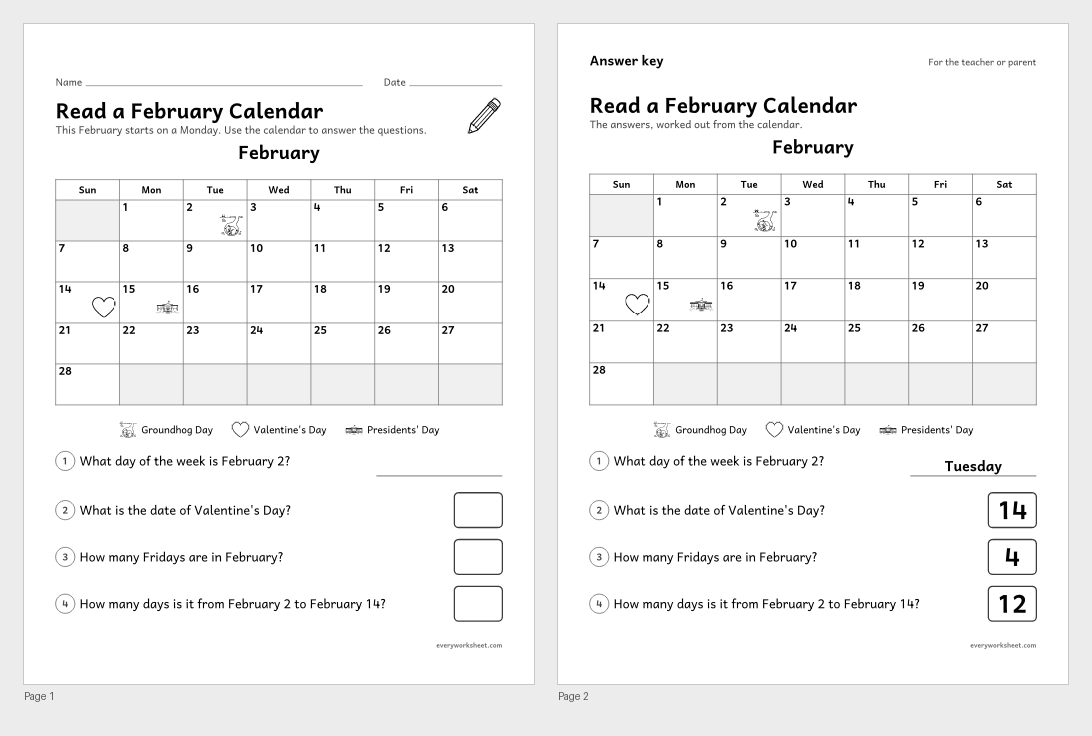
February calendar worksheet
Reading a calendar: days of the week, dates and counting days
Answer key on page 2
2 pages230 KB
 View all 2 pages
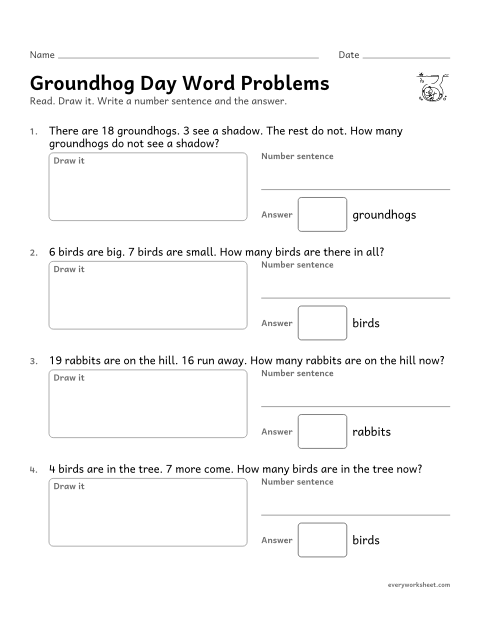
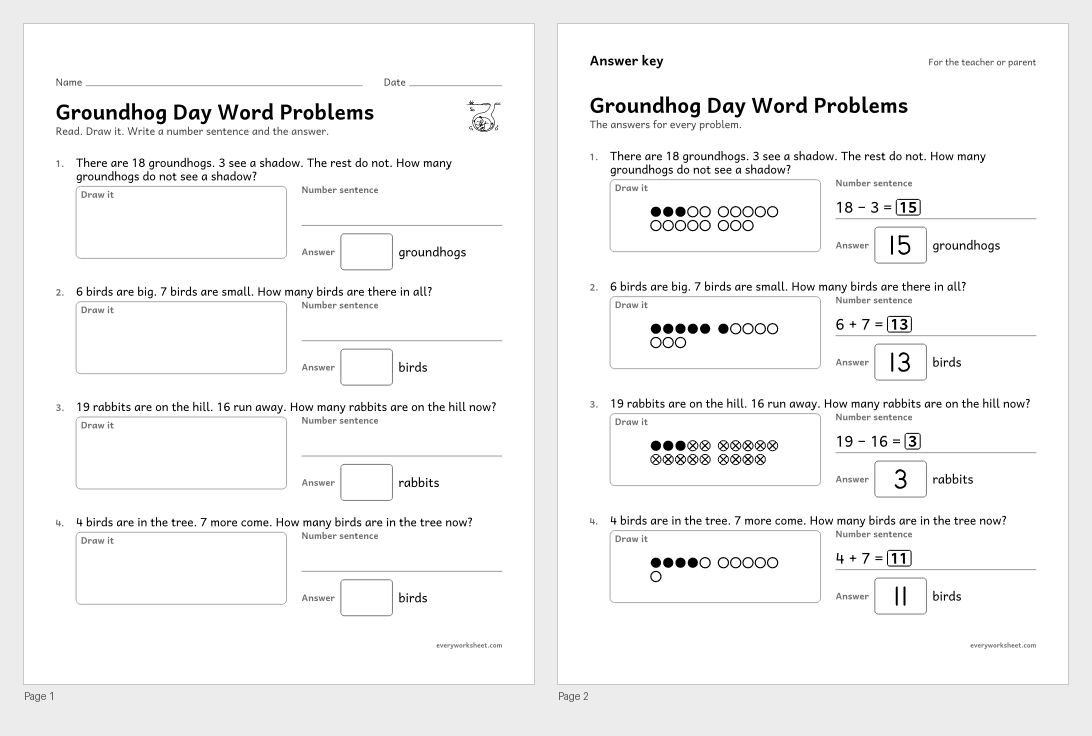
Groundhog day word problems
Solving Groundhog Day add and take away word problems within 20
Answer key on page 2
2 pages60 KB
Print at 100% (actual size) for the cleanest tracing lines.
About these groundhog day worksheets
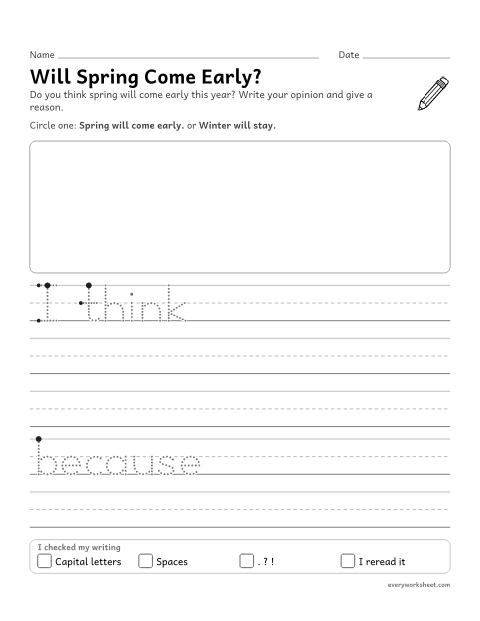
Groundhog Day is February 2. The old story says that if the groundhog sees its shadow, there will be six more weeks of winter. These worksheets enjoy the fun and teach the real science: groundhogs are animals that hibernate in burrows, and shadows form when something blocks the sun's light.
Preschoolers color a groundhog, count and circle, trace paths, compare big and small, finish patterns and find the sunny skies. Kindergartners hear a read-aloud, vote in a class prediction graph, trace words, count and write and do a word search. 1st graders read about real groundhogs, write an opinion about spring, investigate their own shadows, solve word problems and read a February calendar.
For more on winter sleepers, see our animals that hibernate worksheets. Pages with one right answer have an answer key on page 2.
Standards
ELOF P-MATH 3Child understands the relationship between numbers and quantities.ELOF P-MATH 7Child understands simple patterns.ELOF P-MATH 8Child measures objects by their various attributes using standard and non-standard measurement. Uses differences in attributes to make comparisons.ELOF P-PMP 3Child demonstrates increasing control, strength, and coordination of small muscles.ELOF P-SCI 3Child compares and categorizes observable phenomena.CCSS.ELA-LITERACY.L.K.1.APrint many upper- and lowercase letters.CCSS.ELA-LITERACY.RF.K.3Know and apply grade-level phonics and word analysis skills in decoding words.CCSS.ELA-LITERACY.RF.K.3.ADemonstrate basic knowledge of one-to-one letter-sound correspondences by producing the primary sound or many of the most frequent sounds for each consonant.CCSS.ELA-LITERACY.RI.K.1With prompting and support, ask and answer questions about key details in a text.CCSS.MATH.CONTENT.K.CC.B.5Count to answer "how many?" questions about as many as 20 things arranged in a line, a rectangular array, or a circle, or as many as 10 things in a scattered configuration; given a number from 1-20, count out that many objects.CCSS.MATH.CONTENT.K.MD.B.3Classify objects into given categories; count the numbers of objects in each category and sort the categories by count.CCSS.ELA-LITERACY.RI.1.2Identify the main topic and retell key details of a text.CCSS.ELA-LITERACY.W.1.1Write opinion pieces in which they introduce the topic or name the book they are writing about, state an opinion, supply a reason for the opinion, and provide some sense of closure.CCSS.MATH.CONTENT.1.NBT.A.1Count to 120, starting at any number less than 120. In this range, read and write numerals and represent a number of objects with a written numeral.CCSS.MATH.CONTENT.1.OA.A.1Use addition and subtraction within 20 to solve word problems involving situations of adding to, taking from, putting together, taking apart, and comparing, with unknowns in all positions, e.g., by using objects, drawings, and equations with a symbol for the unknown number to represent the problem.NGSS 1-PS4-3Plan and conduct investigations to determine the effect of placing objects made with different materials in the path of a beam of light.
How to use them
- The day before February 2, take the class vote on the prediction graph. Check the news the next morning and talk about what happened.
- Go outside on a sunny day for the shadow page. Trace shadows with chalk in the morning and again at lunch.
- Use the February calendar to find Groundhog Day, Valentine's Day and Presidents' Day.
Teaching tips
- Make it clear that a groundhog can't really predict the weather. It's a fun tradition.
- Shadows are shorter at midday, when the sun is high, and longer in the morning and afternoon.
- Some people call a groundhog a woodchuck. It's the same animal.
Questions teachers and parents ask
How do you explain Groundhog Day to kids?
On February 2, people watch a groundhog come out of its burrow. An old story says that if it sees its shadow, winter will last six more weeks. It's just for fun; a groundhog can't really tell the weather.
What science goes with Groundhog Day?
Shadows and animals in winter. Shadows form when something blocks light, and groundhogs hibernate through the winter in burrows. The shadow investigation and the groundhog passage cover both.
Are there answer keys?
Yes, for every page with one right answer. The class prediction graph and the shadow investigation have no single answer.