 View larger
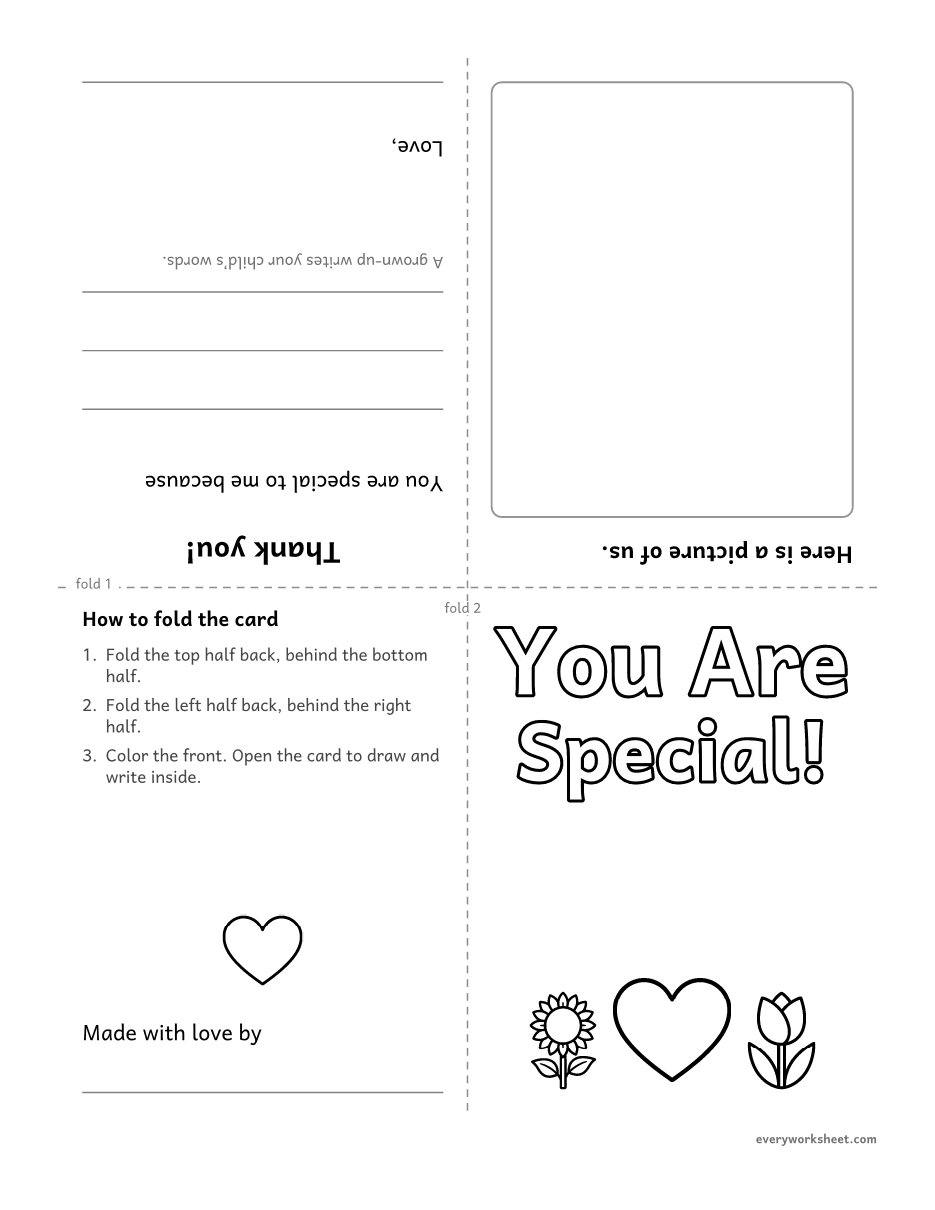
Mother's day card to color
Coloring and drawing a card for Mom, with a grown-up writing the words
1 page88 KB
Cards, All About My Mom pages, letters and helper coupons, each with a someone special version, plus Mother's Day math and reading.
View largerColoring and drawing a card for Mom, with a grown-up writing the words
1 page88 KB
 View larger
Coloring and drawing a card for someone special, with a grown-up writing the words
1 page78 KB
 View larger
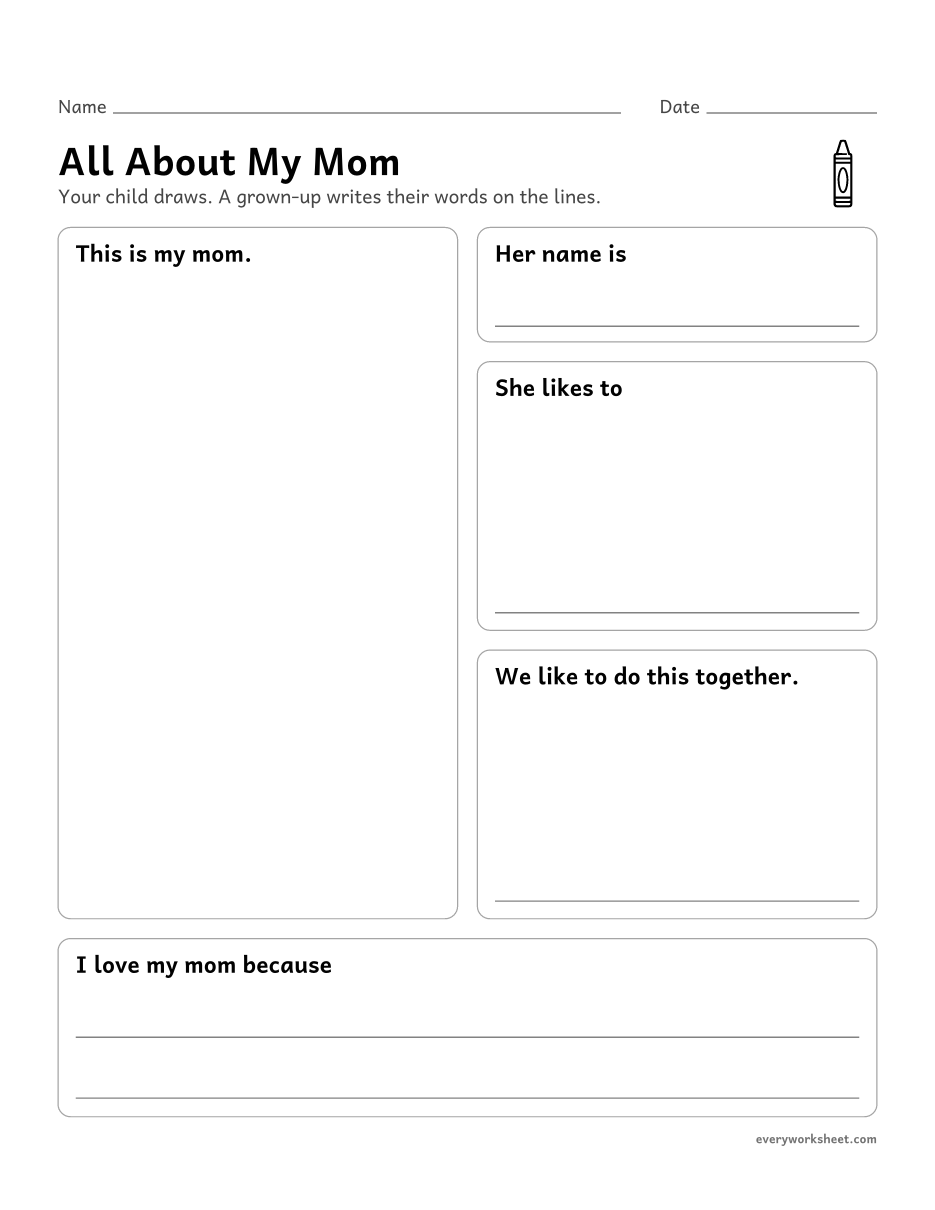
Drawing and telling about Mom, with a grown-up writing the words
1 page31 KB
 View larger
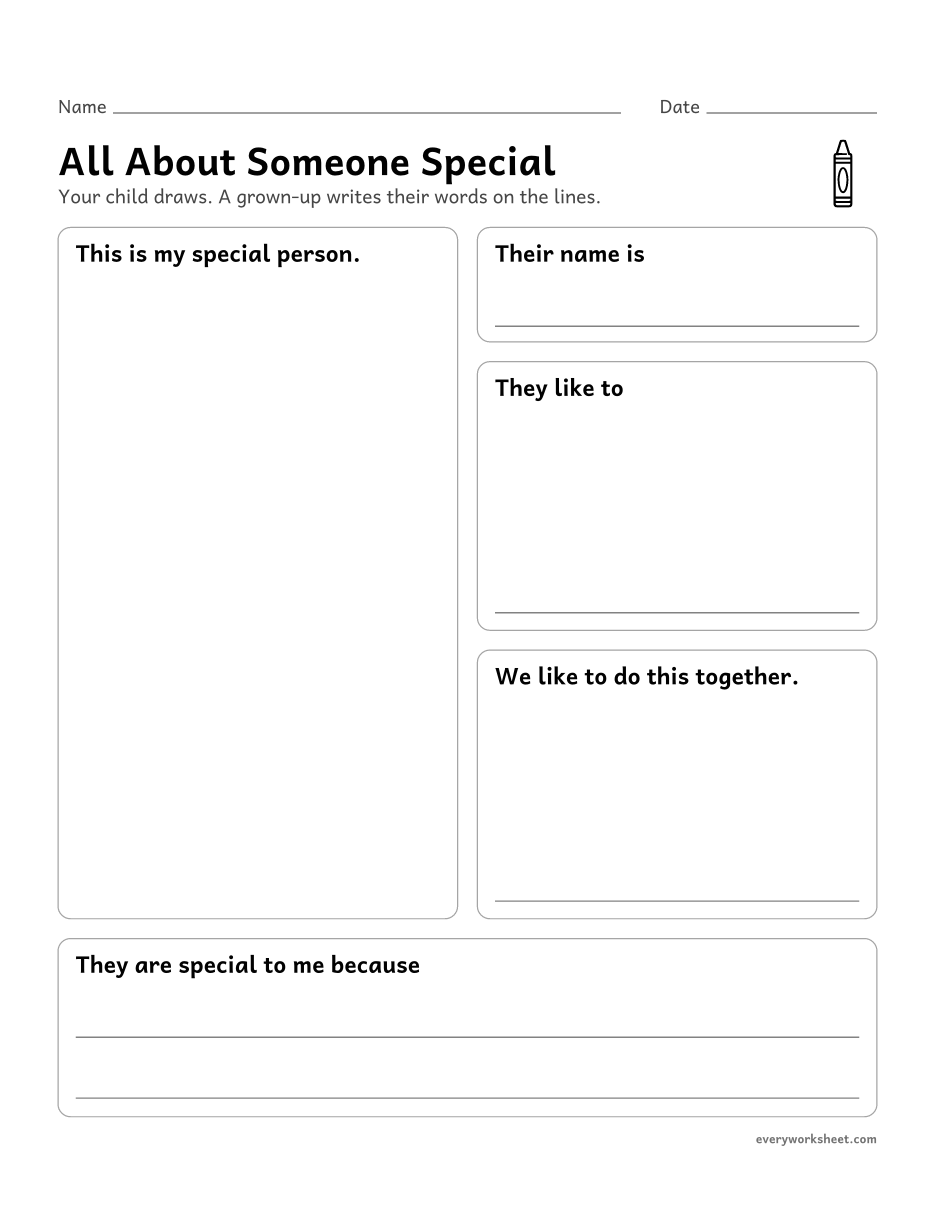
Drawing and telling about someone special, with a grown-up writing the words
1 page30 KB
 View all 2 pages
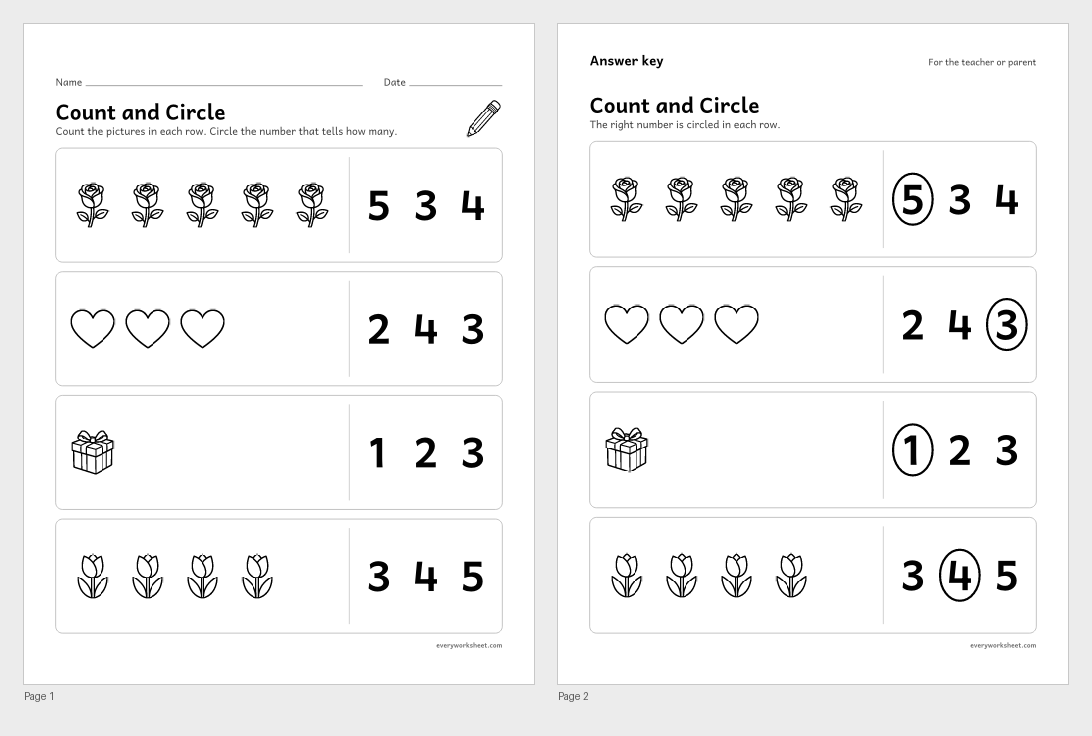
Counting groups of 1 to 5 flowers, hearts and gifts
Answer key on page 2
2 pages454 KB
 View larger
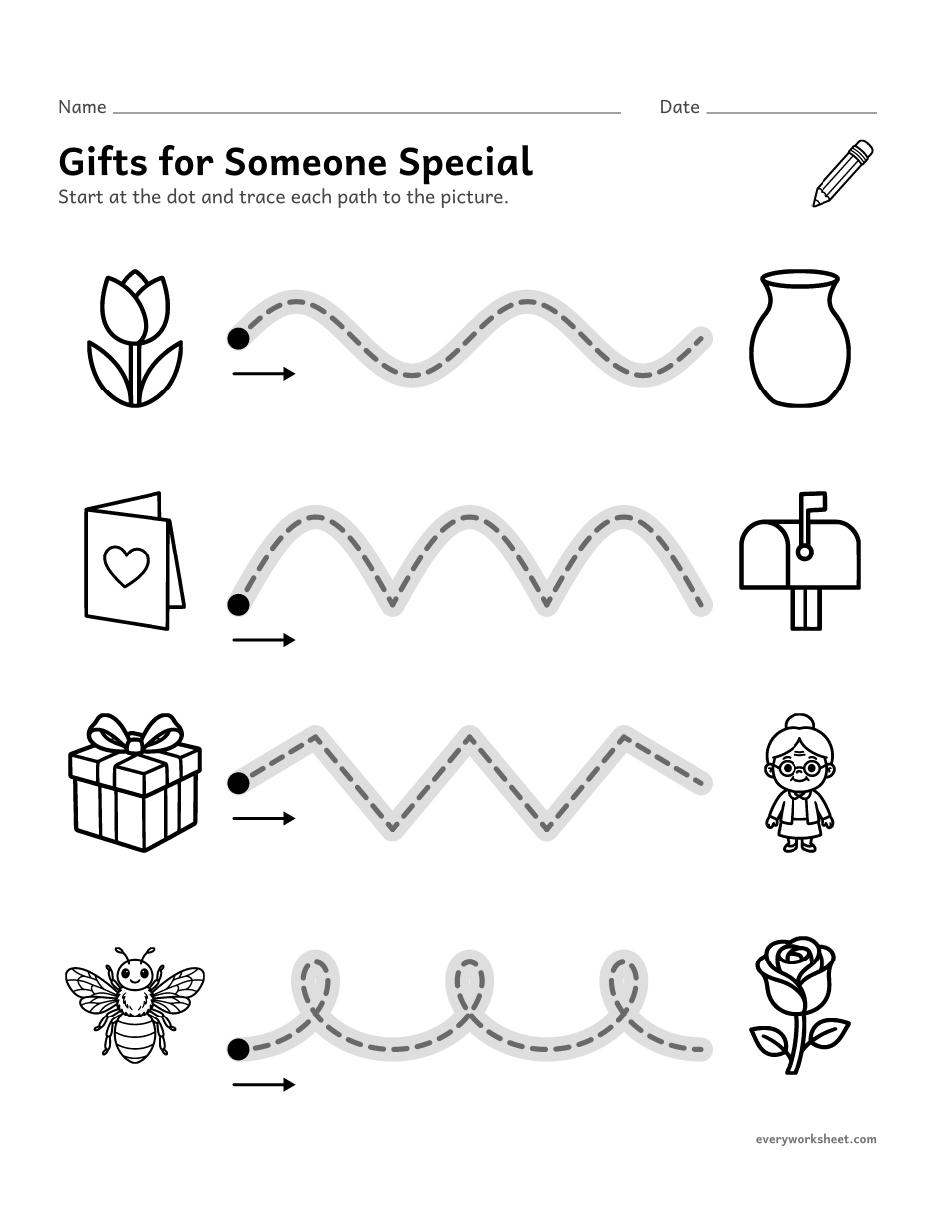
Tracing wavy, hill, zigzag and loop paths from left to right
1 page161 KB
 View all 2 pages
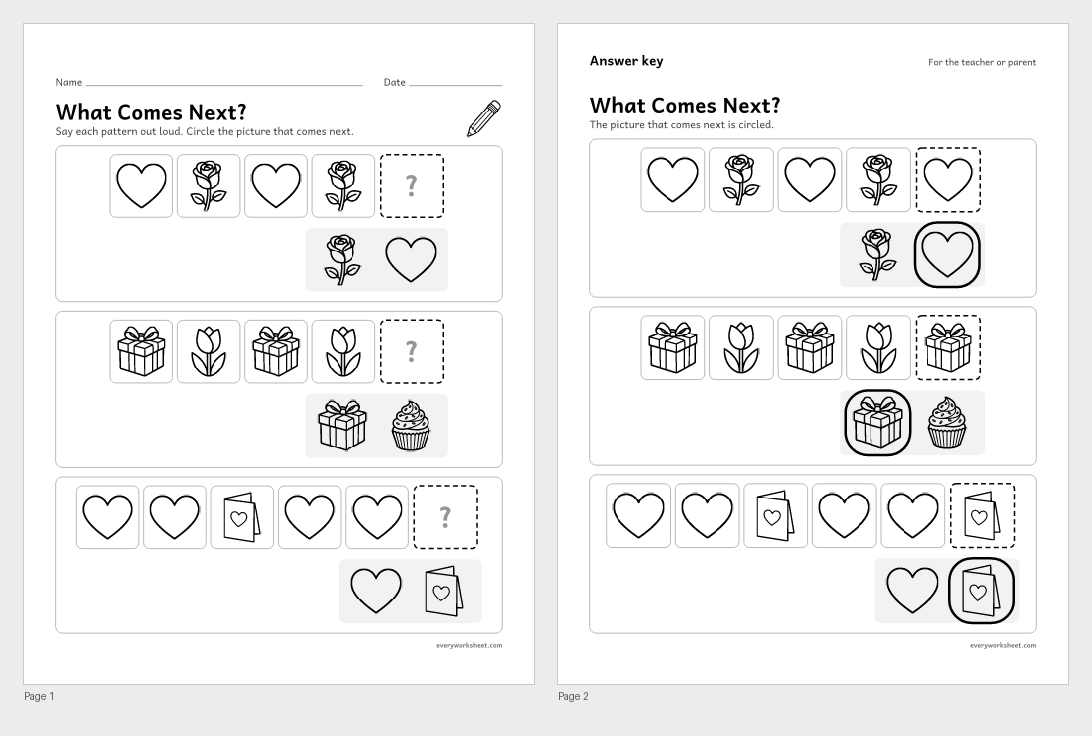
Finishing AB and ABB picture patterns
Answer key on page 2
2 pages657 KB
 View larger
 View all 2 pages
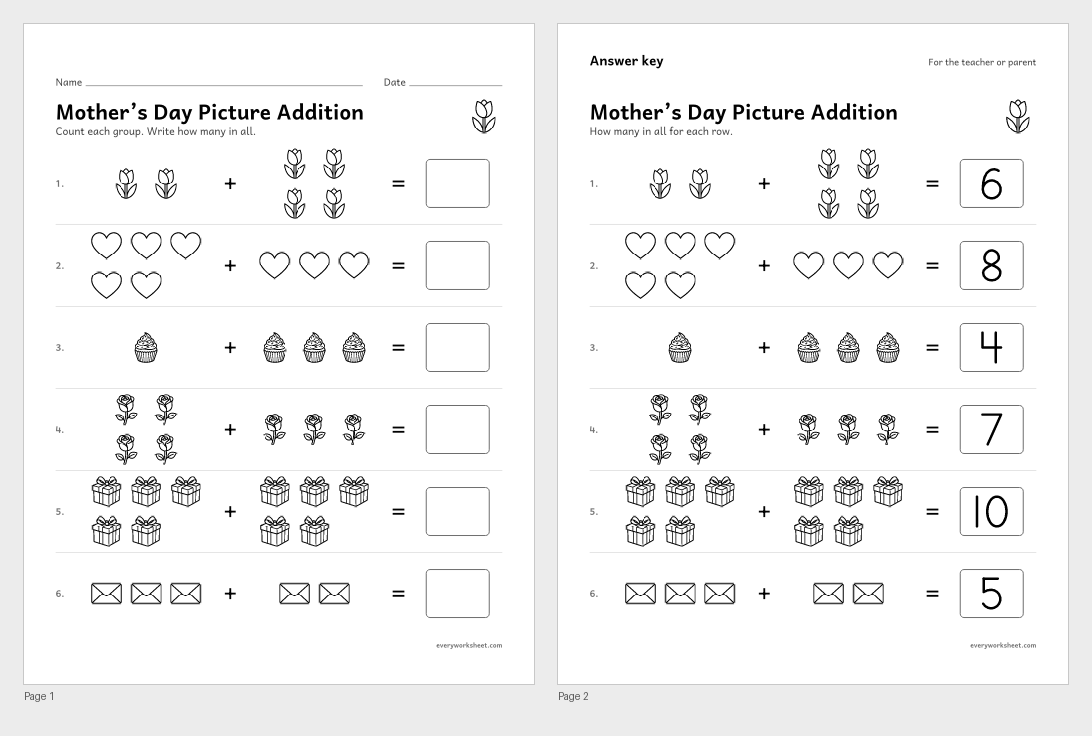
Adding two groups of pictures within 10
Answer key on page 2
2 pages1.3 MB
 View larger
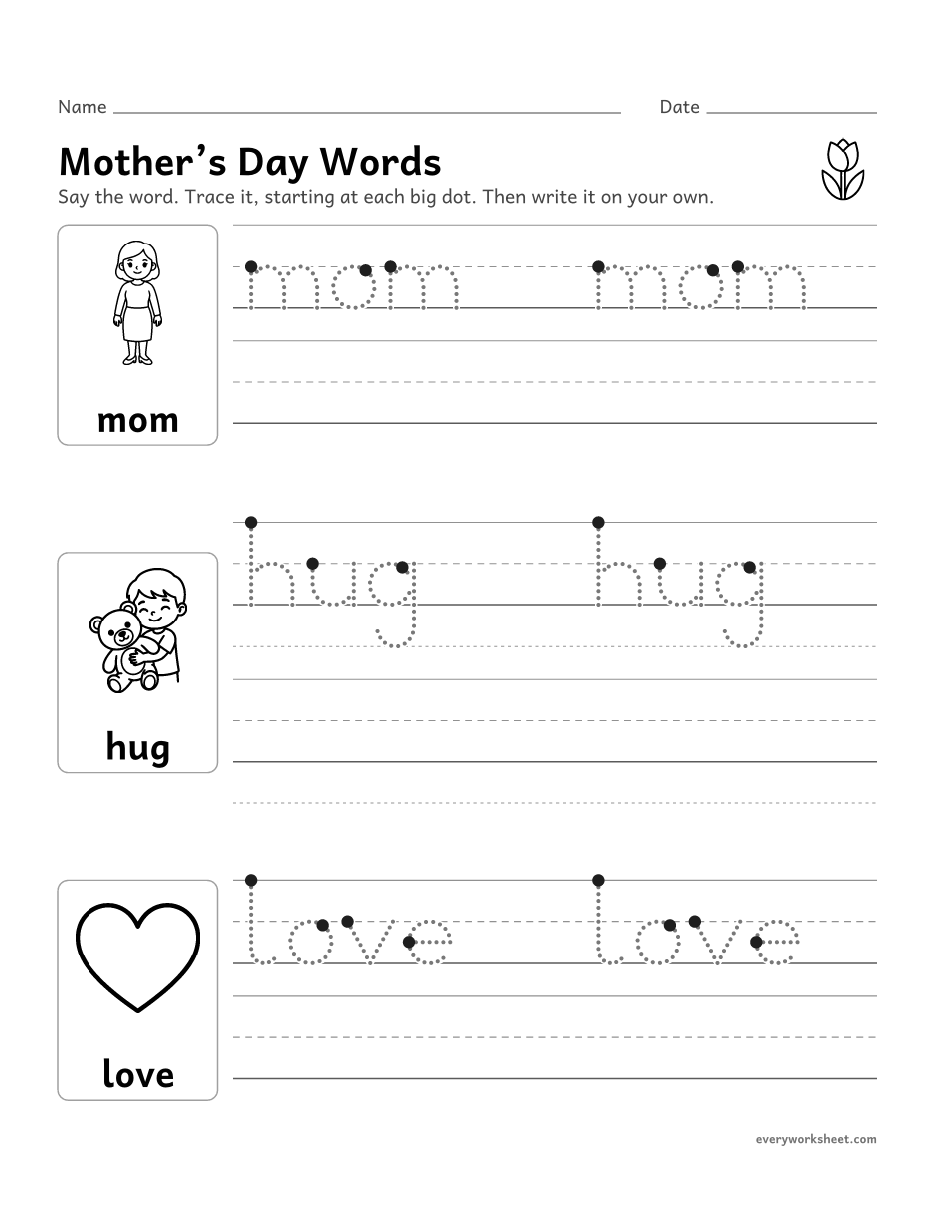
Tracing and writing mom, hug and love
1 page86 KB
 View larger
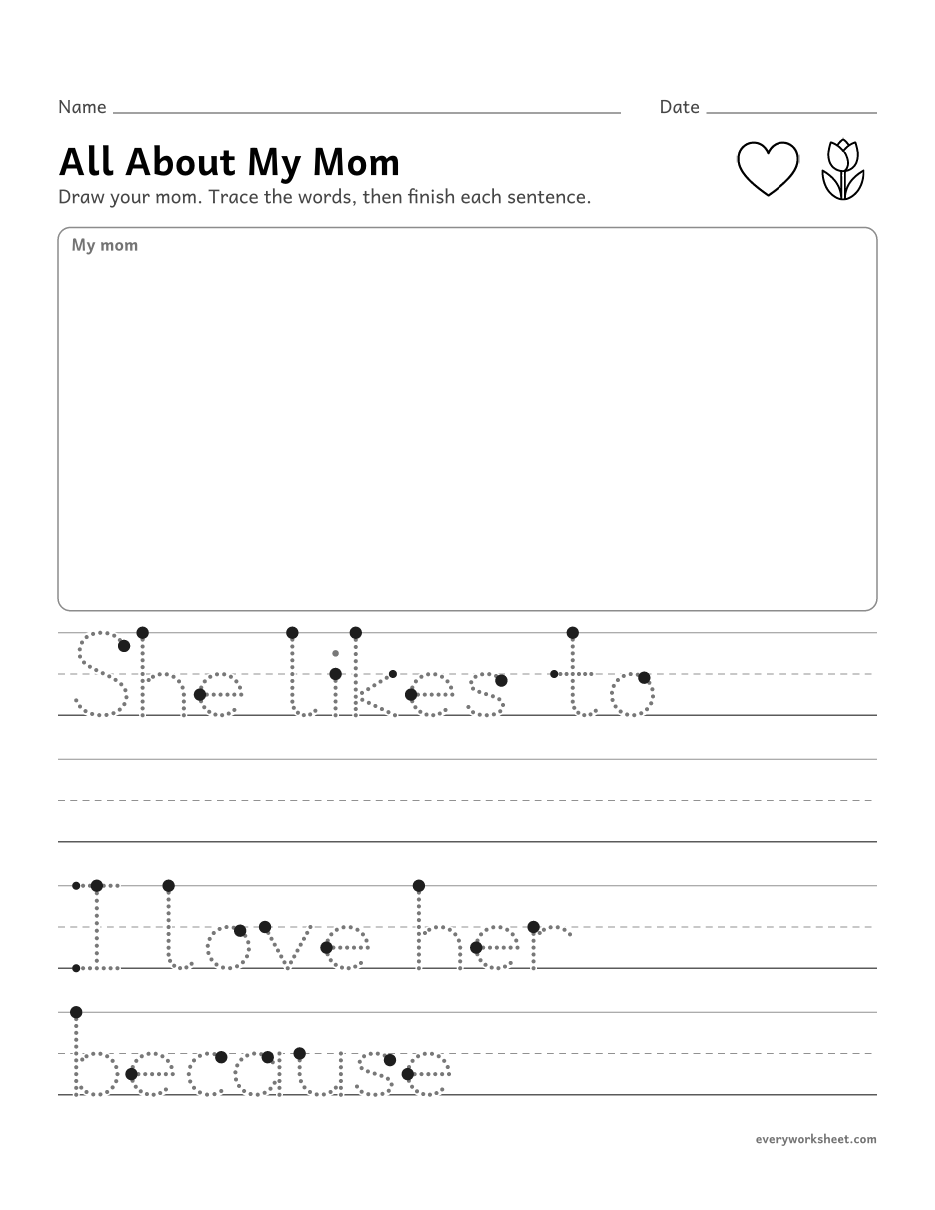
Drawing and writing facts about a grown-up
1 page55 KB
 View larger
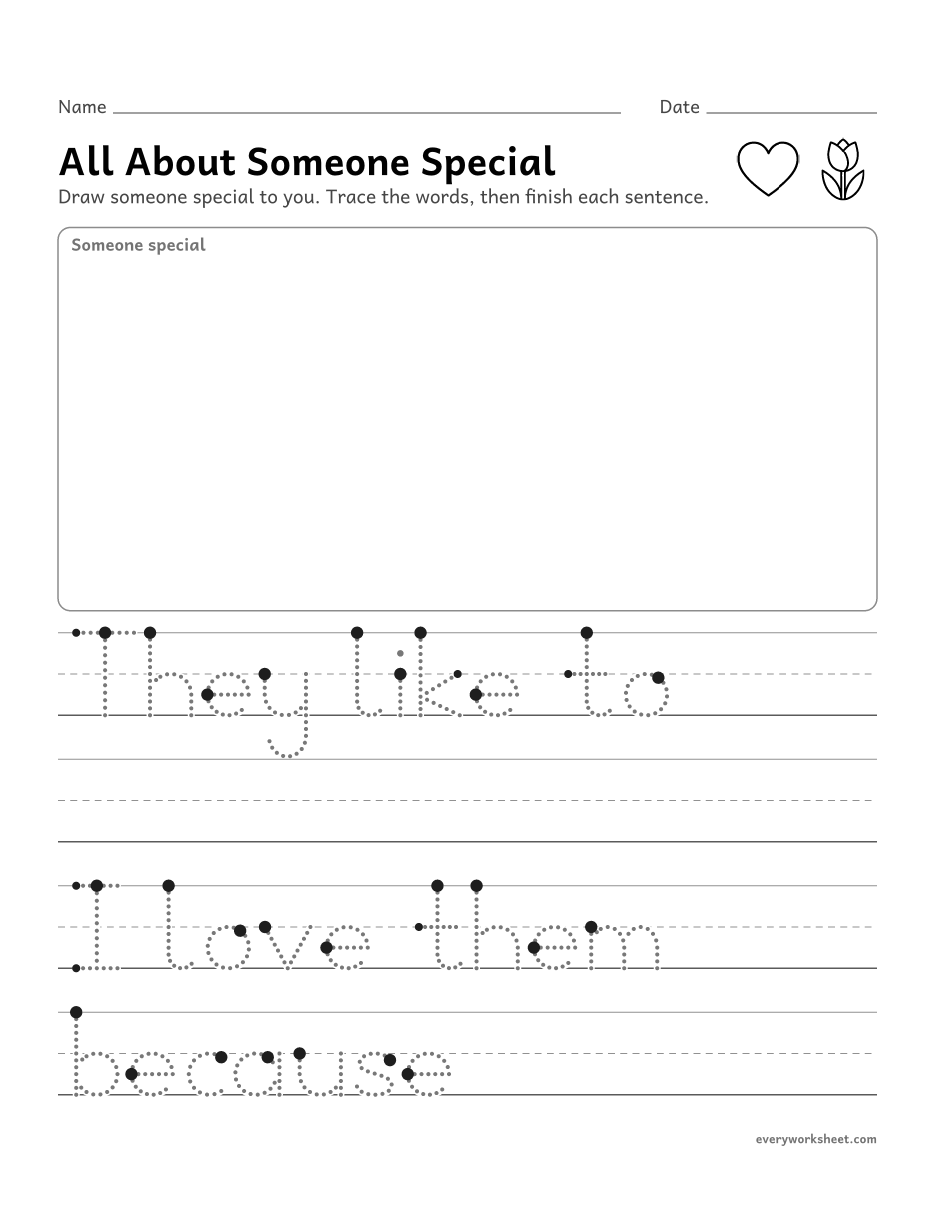
Drawing and writing facts about a grown-up
1 page56 KB
 View larger
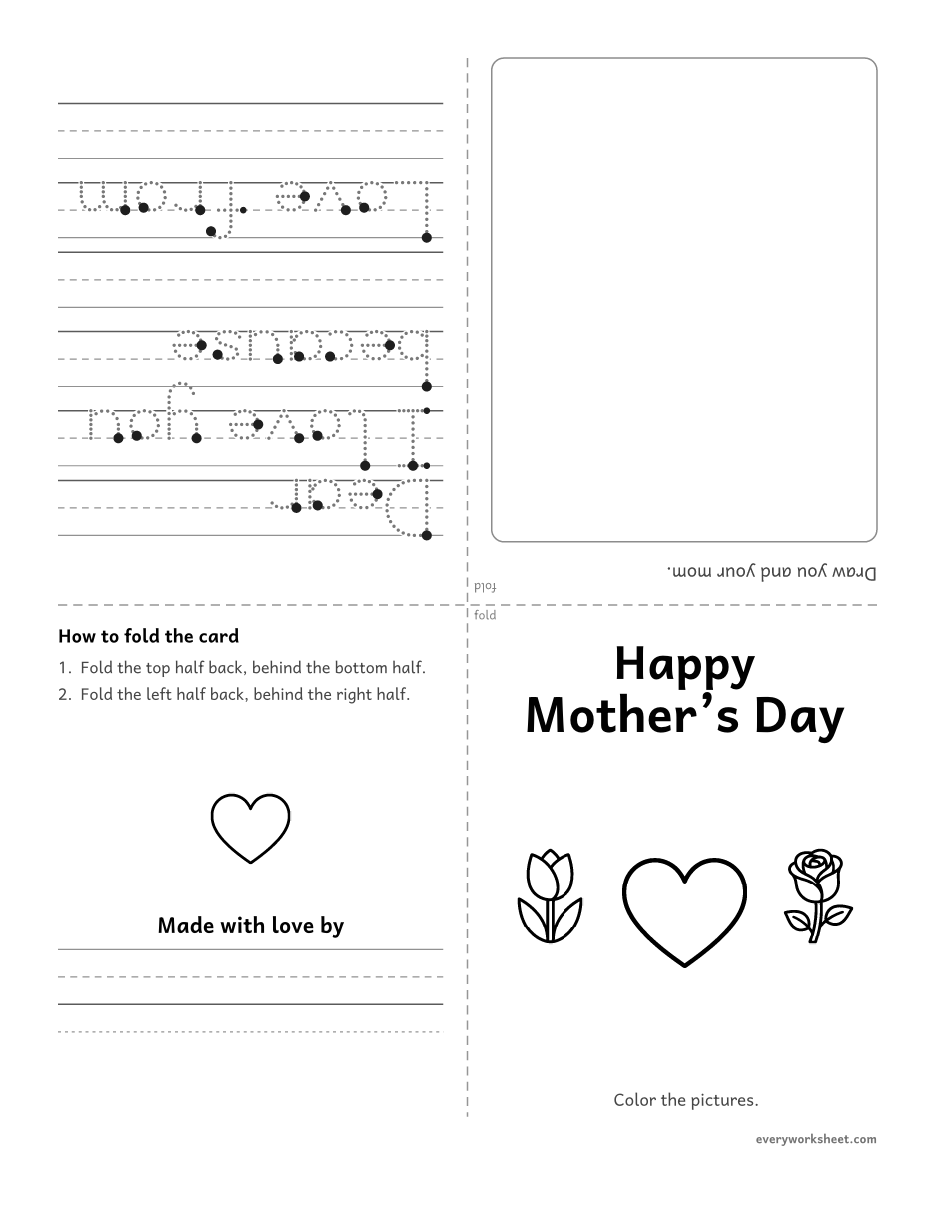 View larger
Writing a card with a reason (I love you because ...)
1 page90 KB
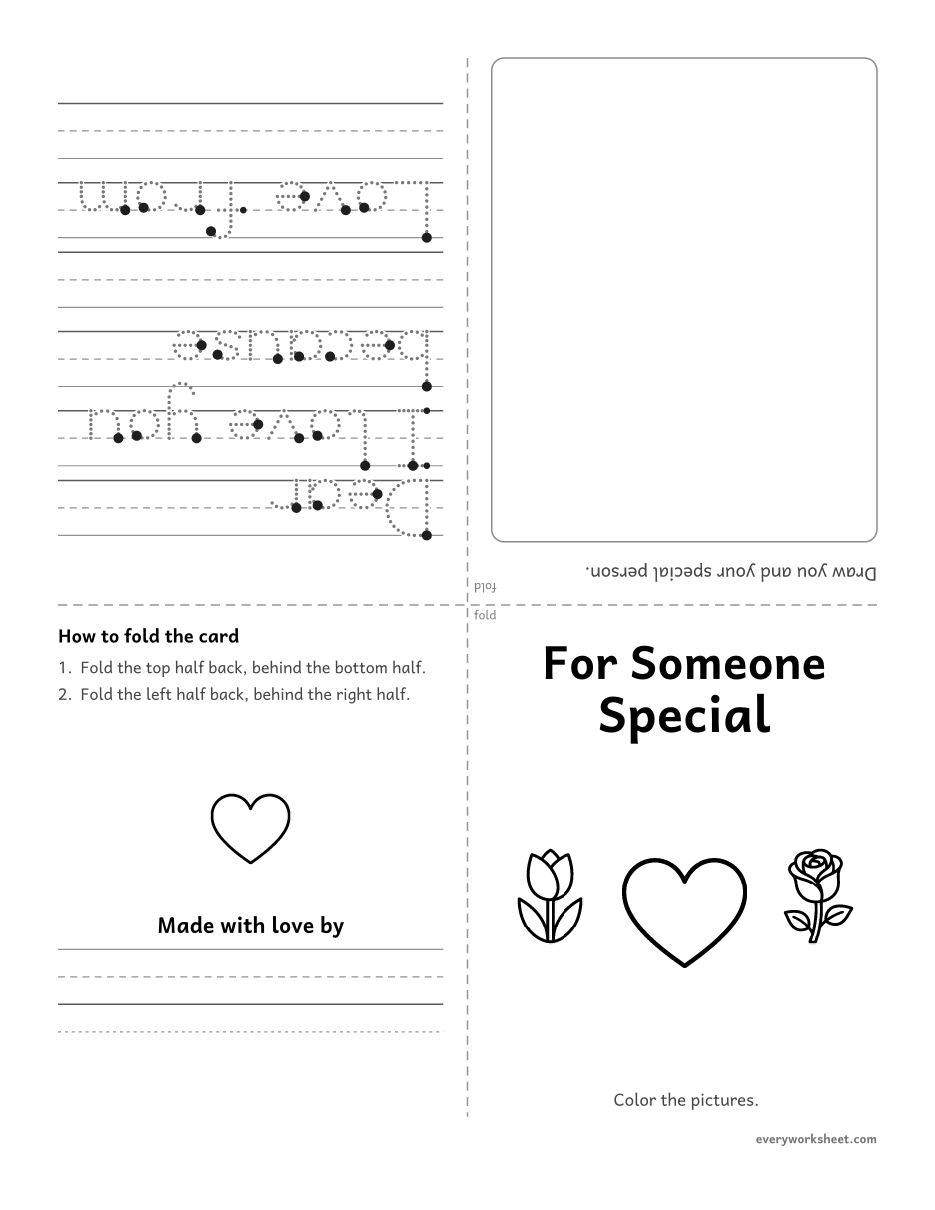 View larger
Writing a card with a reason (I love you because ...)
1 page90 KB
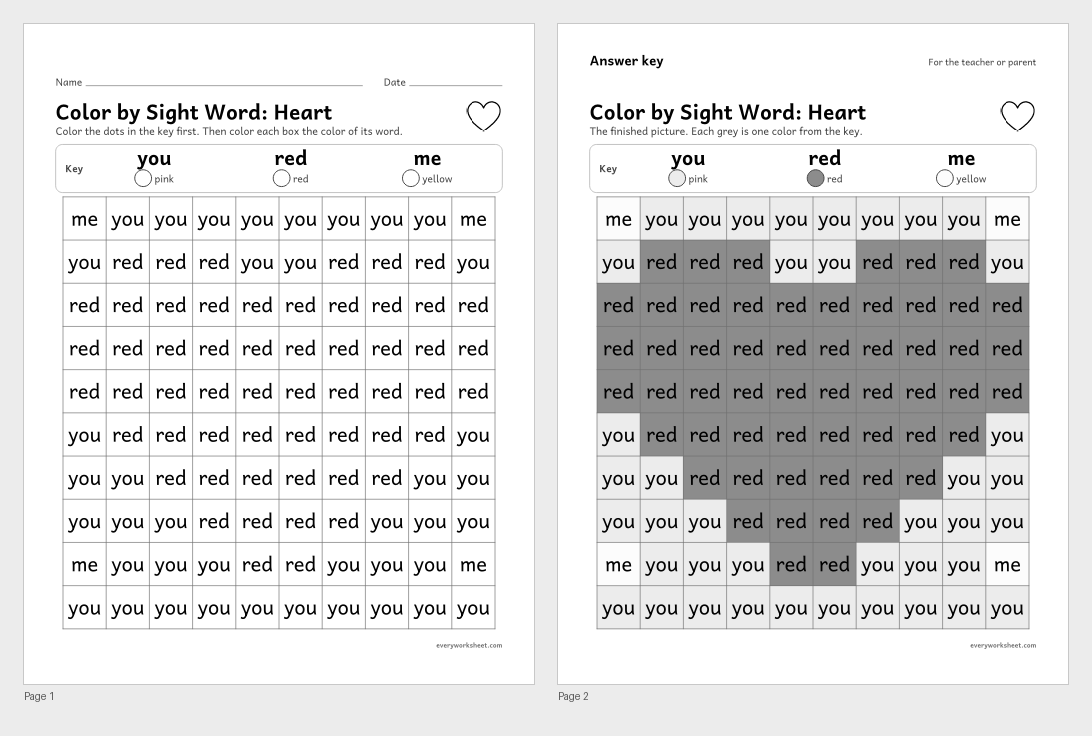 View all 2 pages
Reading sight words to color a picture
Answer key on page 2
2 pages99 KB
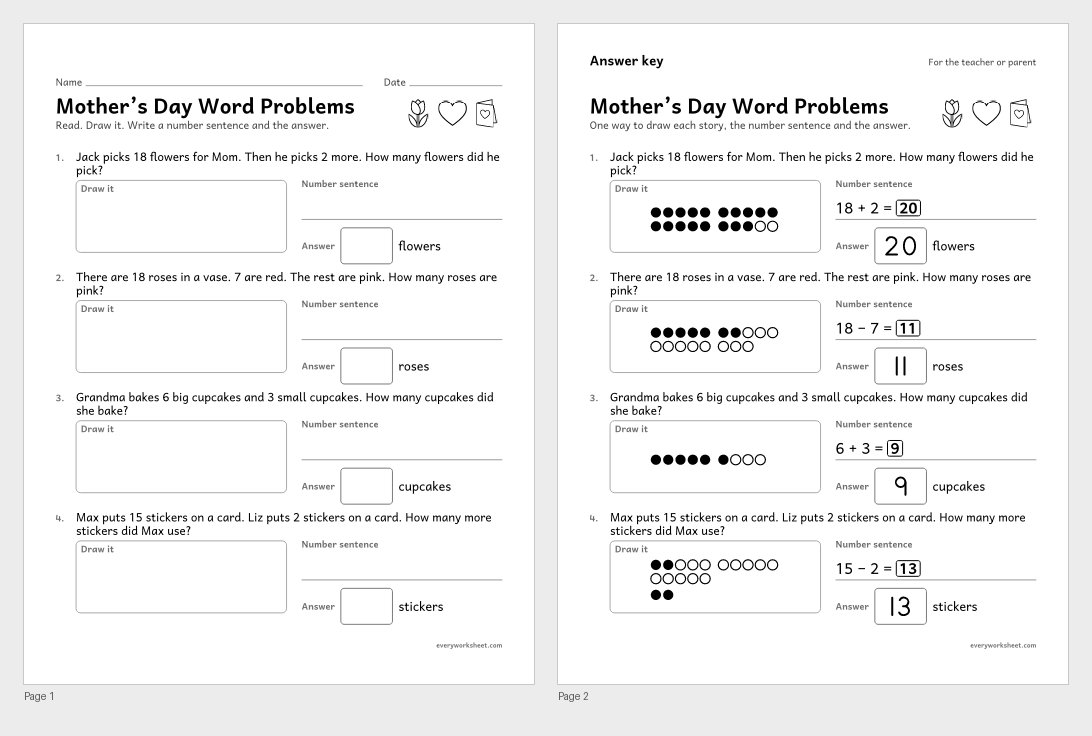 View all 2 pages
Solving Mother's Day word problems within 20
Answer key on page 2
2 pages125 KB
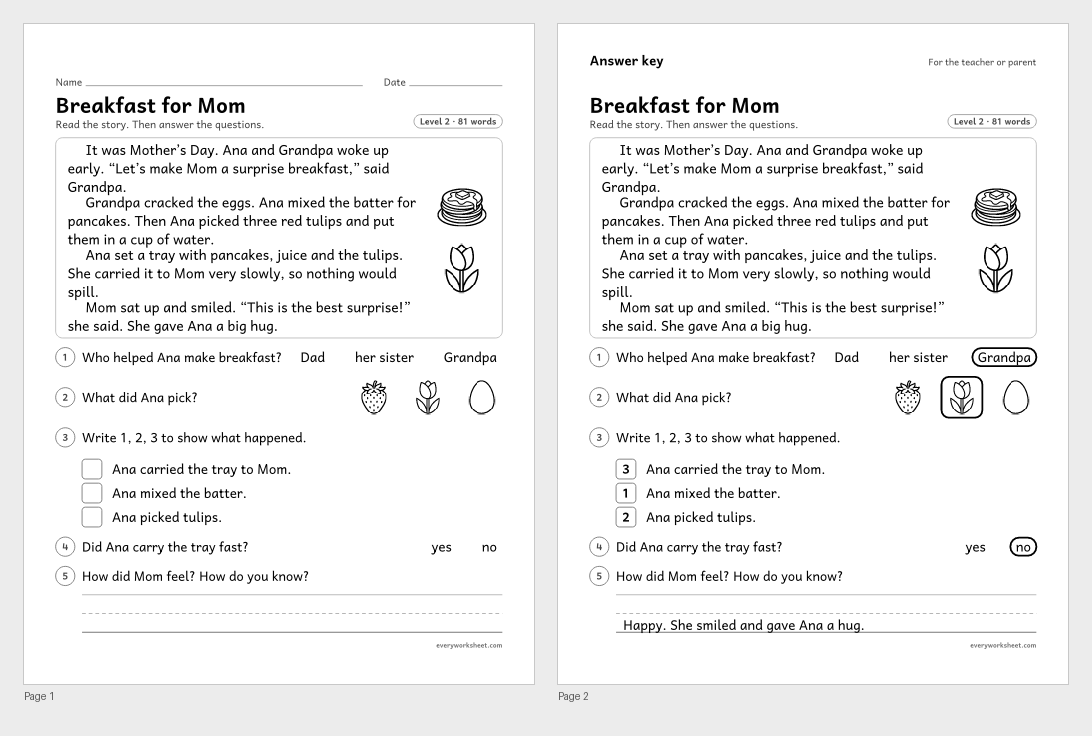 View all 2 pages
Reading a short story and describing its characters and major events
Answer key on page 2
2 pages236 KB
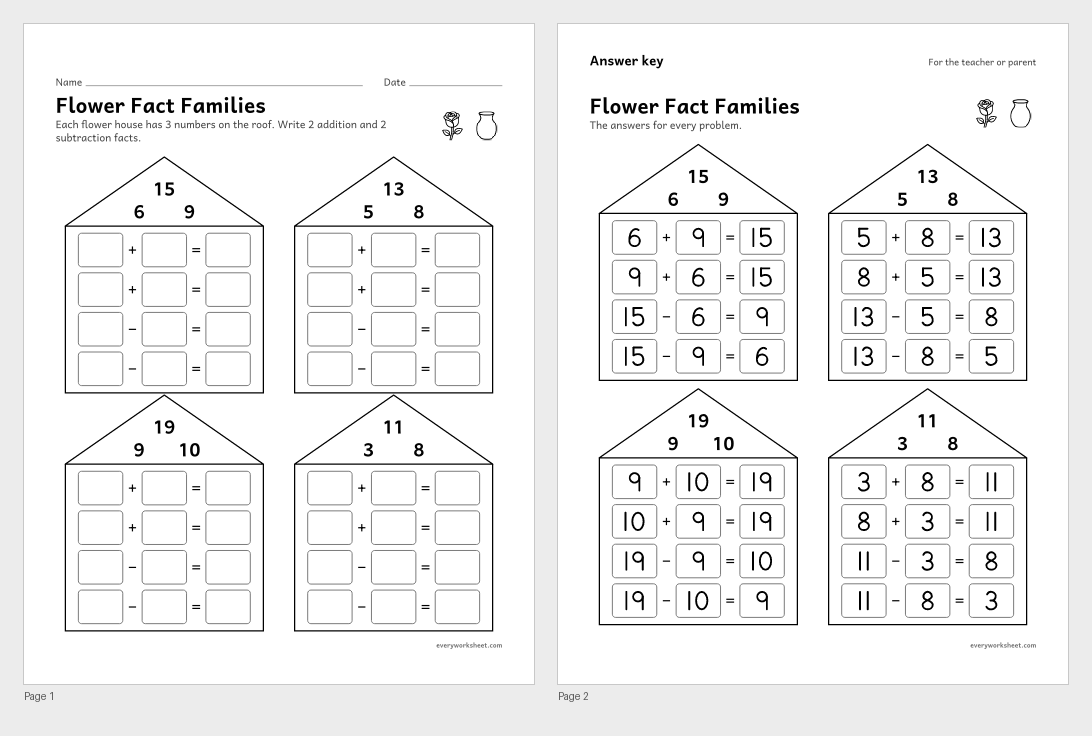 View all 2 pages
Writing fact families within 20
Answer key on page 2
2 pages122 KB
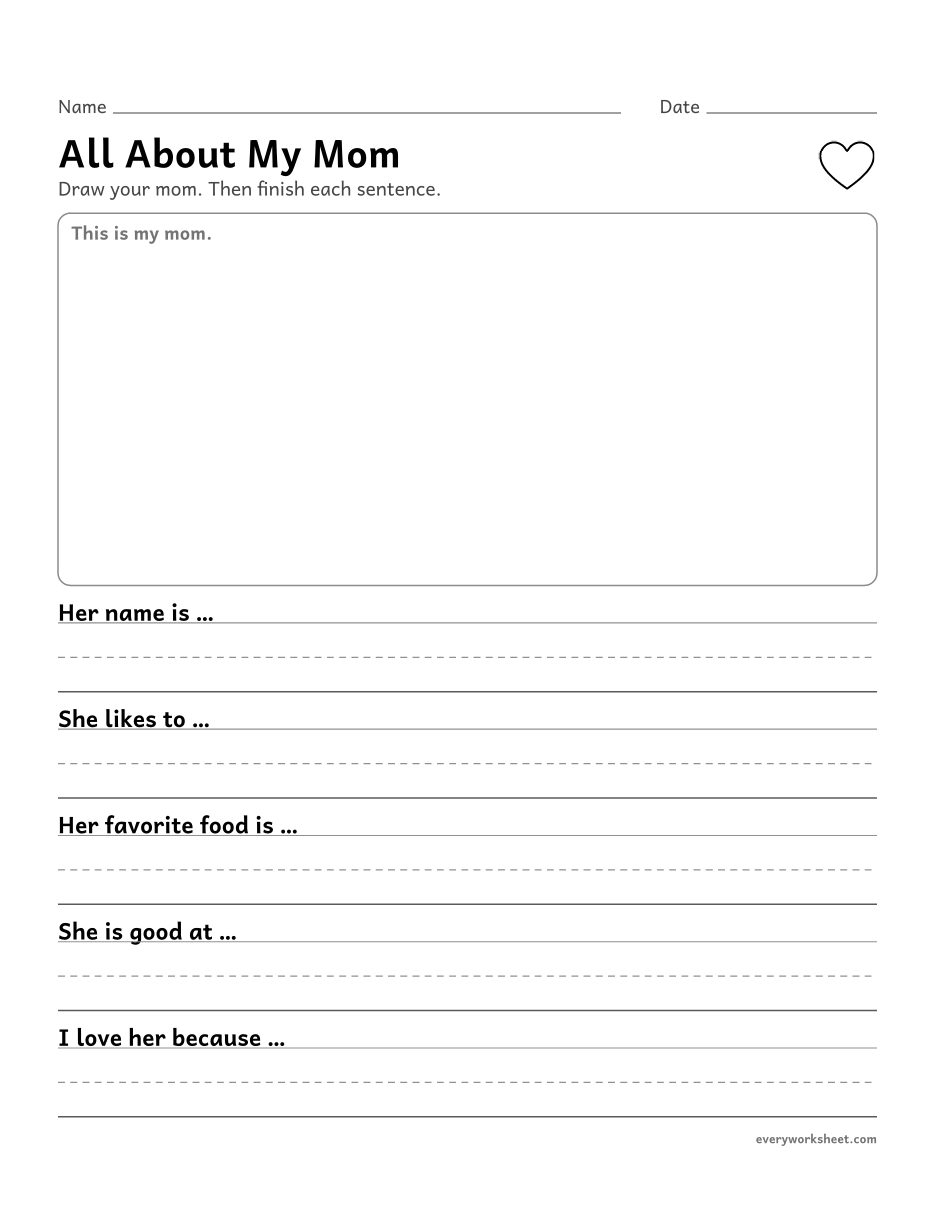 View larger
Writing facts about a family member in complete sentences
1 page36 KB
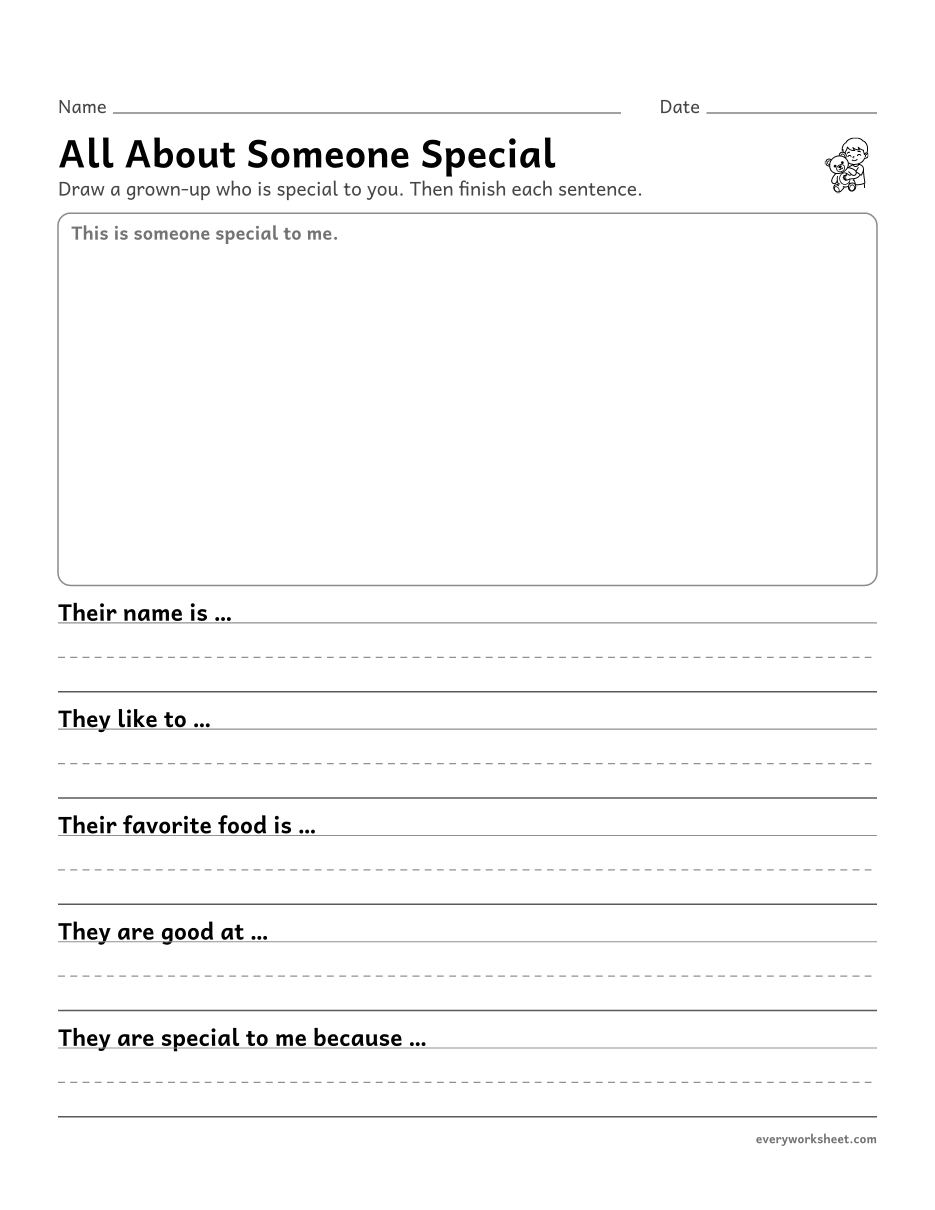 View larger
Writing facts about a special grown-up in complete sentences
1 page48 KB
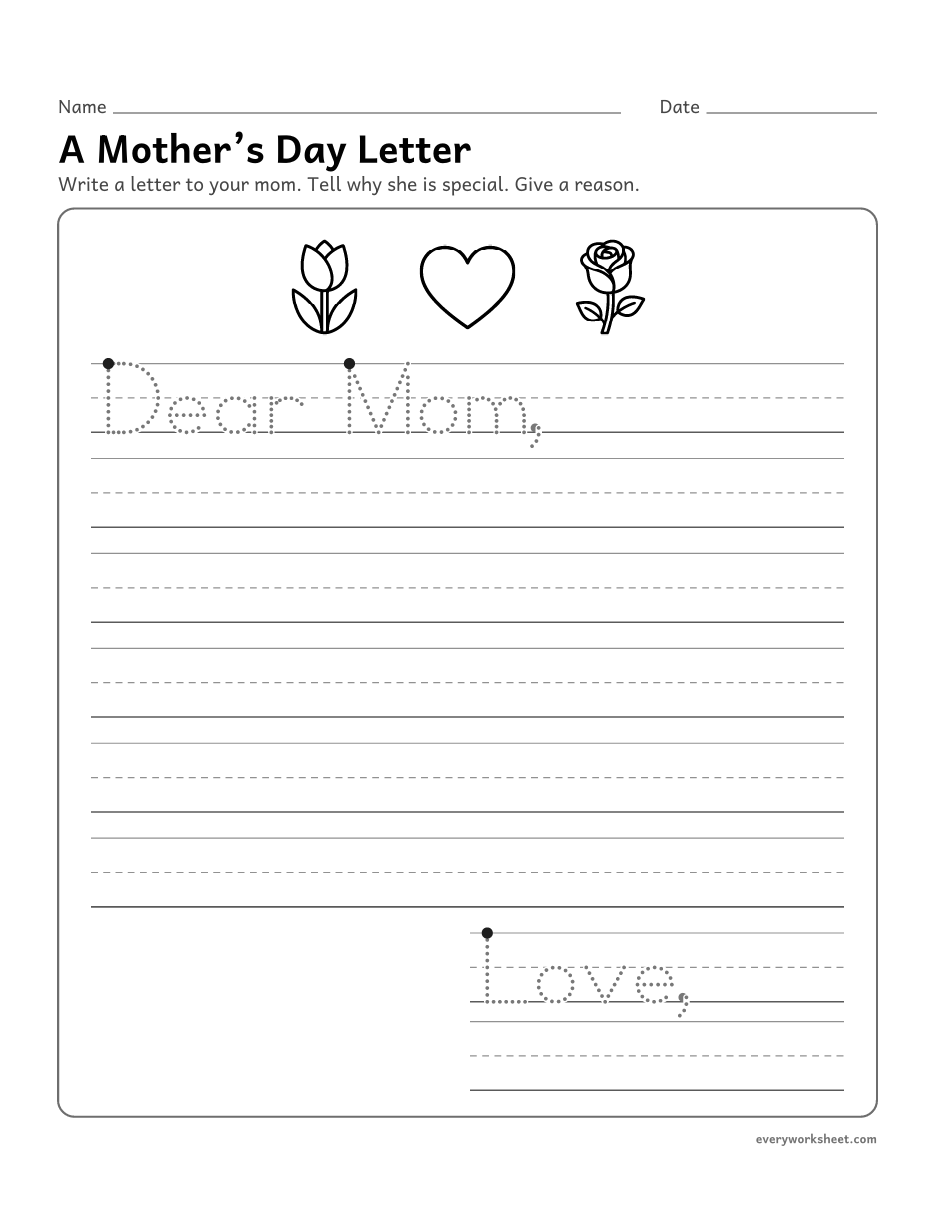 View larger
Writing a letter that gives an opinion and a reason
1 page75 KB
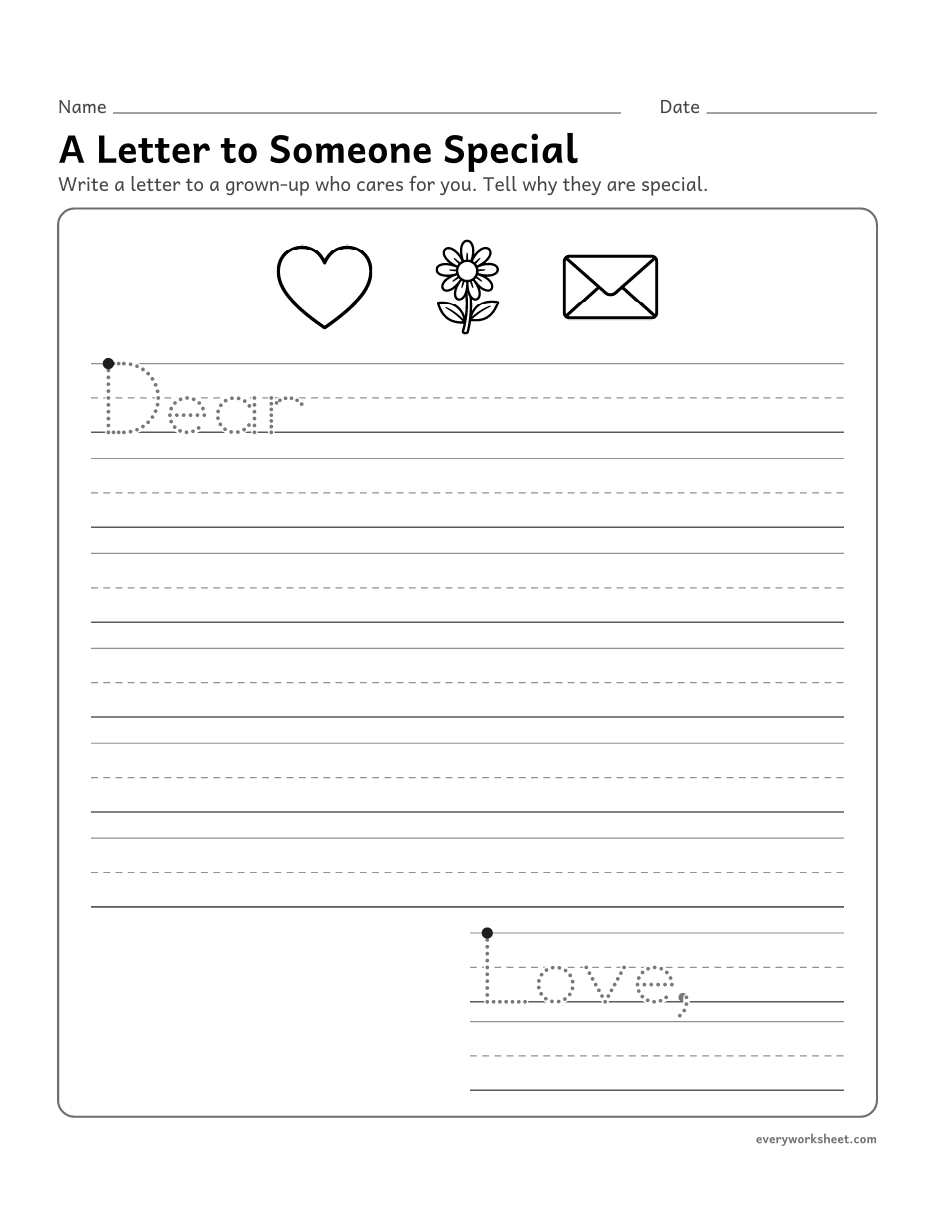 View larger
Writing a letter that gives an opinion and a reason
1 page54 KB
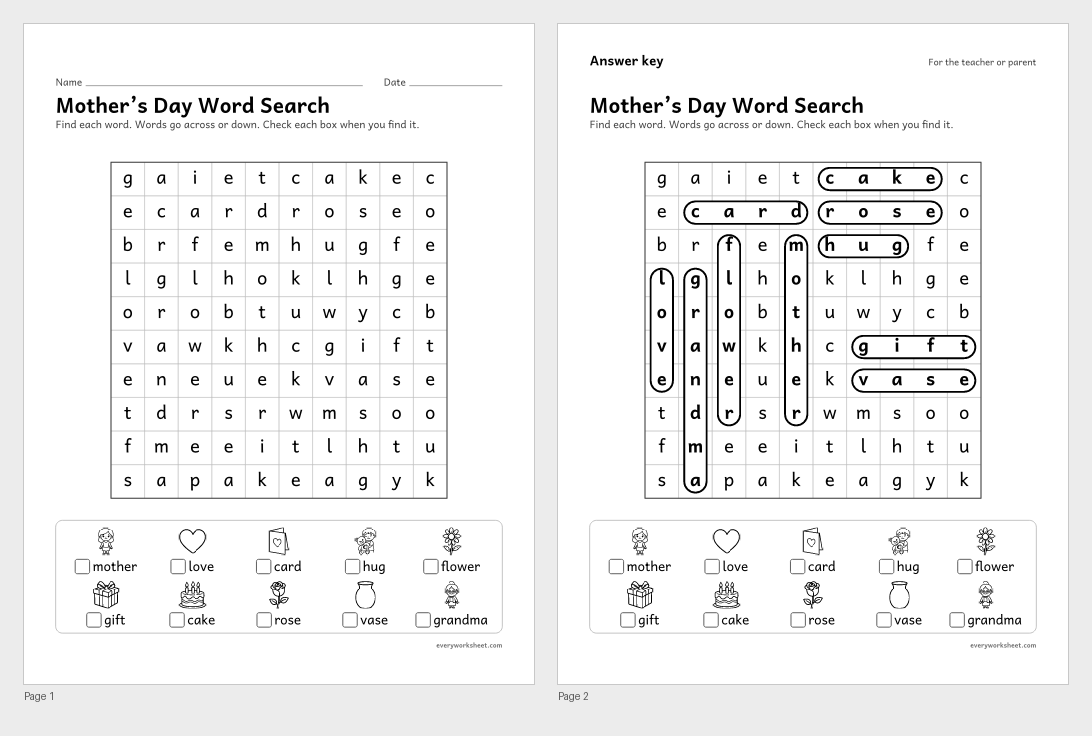 View all 2 pages
Finding and reading Mother's Day words by their spelling
Answer key on page 2
2 pages404 KB
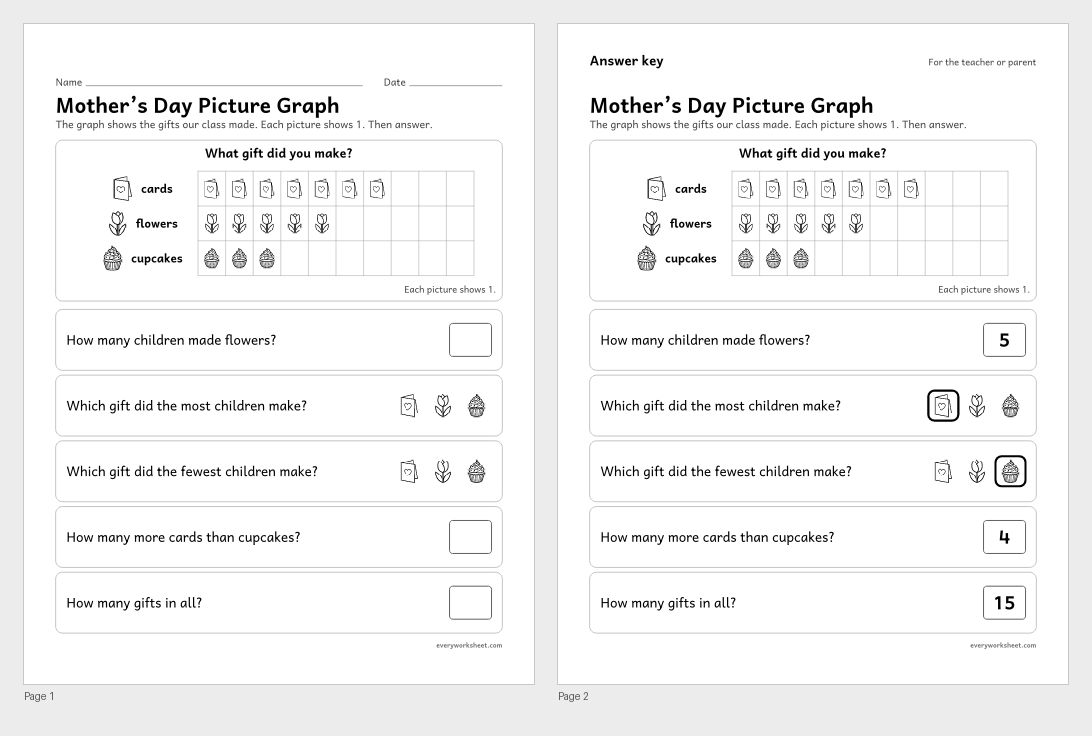 View all 2 pages
Reading a picture graph and comparing the groups
Answer key on page 2
2 pages741 KB
 View larger
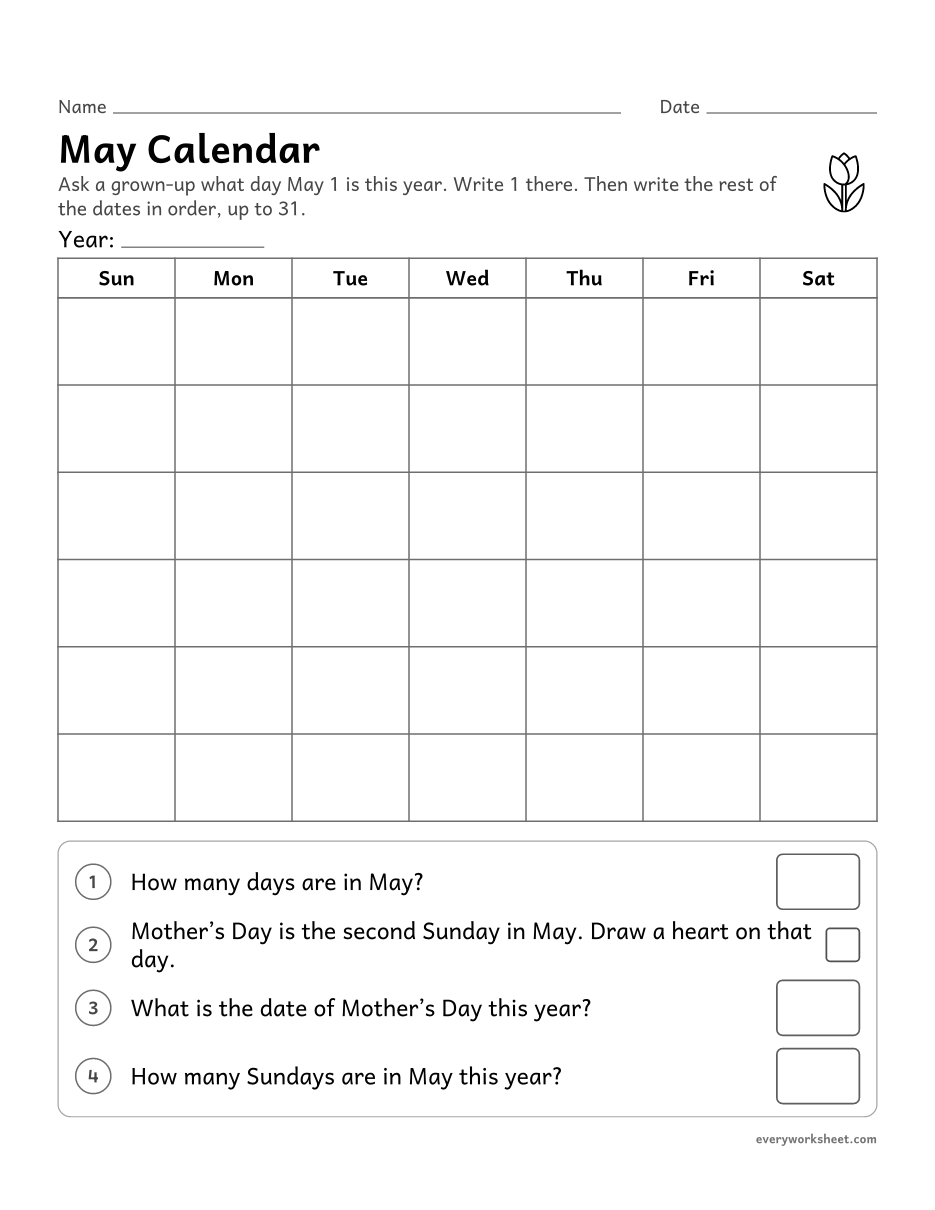
Writing the dates 1 to 31 in order on a May calendar and finding the second Sunday
1 page51 KB
Print at 100% (actual size) for the cleanest tracing lines.
These Mother's Day worksheets give children a gift to make and real skills to practice. Preschoolers color a fold-up card, draw for an All About My Mom page while a grown-up writes their words, count flowers, trace paths to a gift and dot a heart. Kindergartners write inside a card, finish an All About My Mom page, make helper coupons, trace Mother's Day words, add with pictures and color by sight word. 1st graders write a letter, fill in an All About My Mom questionnaire, read a story about a surprise breakfast, solve word problems, work with fact families, read a picture graph and fill in a May calendar.
Every card, All About page and letter also comes in a someone special version, for a grandma, aunt, dad, foster parent or any grown-up who cares for the child. Print the version that fits each child so everyone has someone to make a gift for.
Every page is black and white, prints on US Letter or A4, and pages with one right answer have an answer key on page 2.
ELOF P-MATH 2Child recognizes the number of objects in a small set.ELOF P-MATH 7Child understands simple patterns.ELOF P-PMP 3Child demonstrates increasing control, strength, and coordination of small muscles.ELOF P-SE 11Child has sense of belonging to family, community, and other groups.ELOF P-SE 7Child expresses care and concern toward others.CCSS.ELA-LITERACY.L.K.1.APrint many upper- and lowercase letters.CCSS.ELA-LITERACY.RF.K.3.CRead common high-frequency words by sight (e.g., the, of, to, you, she, my, is, are, do, does).CCSS.ELA-LITERACY.W.K.1Use a combination of drawing, dictating, and writing to compose opinion pieces in which they tell a reader the topic or the name of the book they are writing about and state an opinion or preference about the topic or book.CCSS.ELA-LITERACY.W.K.2Use a combination of drawing, dictating, and writing to compose informative/explanatory texts in which they name what they are writing about and supply some information about the topic.CCSS.MATH.CONTENT.K.OA.A.1Represent addition and subtraction with objects, fingers, mental images, drawings, sounds (e.g., claps), acting out situations, verbal explanations, expressions, or equations.CCSS.ELA-LITERACY.L.1.2.DUse conventional spelling for words with common spelling patterns and for frequently occurring irregular words.CCSS.ELA-LITERACY.RL.1.3Describe characters, settings, and major events in a story, using key details.CCSS.ELA-LITERACY.W.1.1Write opinion pieces in which they introduce the topic or name the book they are writing about, state an opinion, supply a reason for the opinion, and provide some sense of closure.CCSS.ELA-LITERACY.W.1.2Write informative/explanatory texts in which they name a topic, supply some facts about the topic, and provide some sense of closure.CCSS.MATH.CONTENT.1.MD.C.4Organize, represent, and interpret data with up to three categories; ask and answer questions about the total number of data points, how many in each category, and how many more or less are in one category than in another.CCSS.MATH.CONTENT.1.NBT.A.1Count to 120, starting at any number less than 120. In this range, read and write numerals and represent a number of objects with a written numeral.CCSS.MATH.CONTENT.1.OA.A.1Use addition and subtraction within 20 to solve word problems involving situations of adding to, taking from, putting together, taking apart, and comparing, with unknowns in all positions, e.g., by using objects, drawings, and equations with a symbol for the unknown number to represent the problem.CCSS.MATH.CONTENT.1.OA.B.4Understand subtraction as an unknown-addend problem.The second Sunday in May in the United States. Most classes make cards in the week before.
Every card, All About page and letter comes in a someone special version, so children can make a gift for any grown-up who cares for them.
Fold the top half back behind the bottom half, then fold the left half behind the right. The cover is on the front and the inside opens like a book. The folding steps are printed on the page.
Yes, for the math, word search, story and graph pages. Cards, All About pages and letters have no one right answer.