 View larger
Pumpkin Worksheets
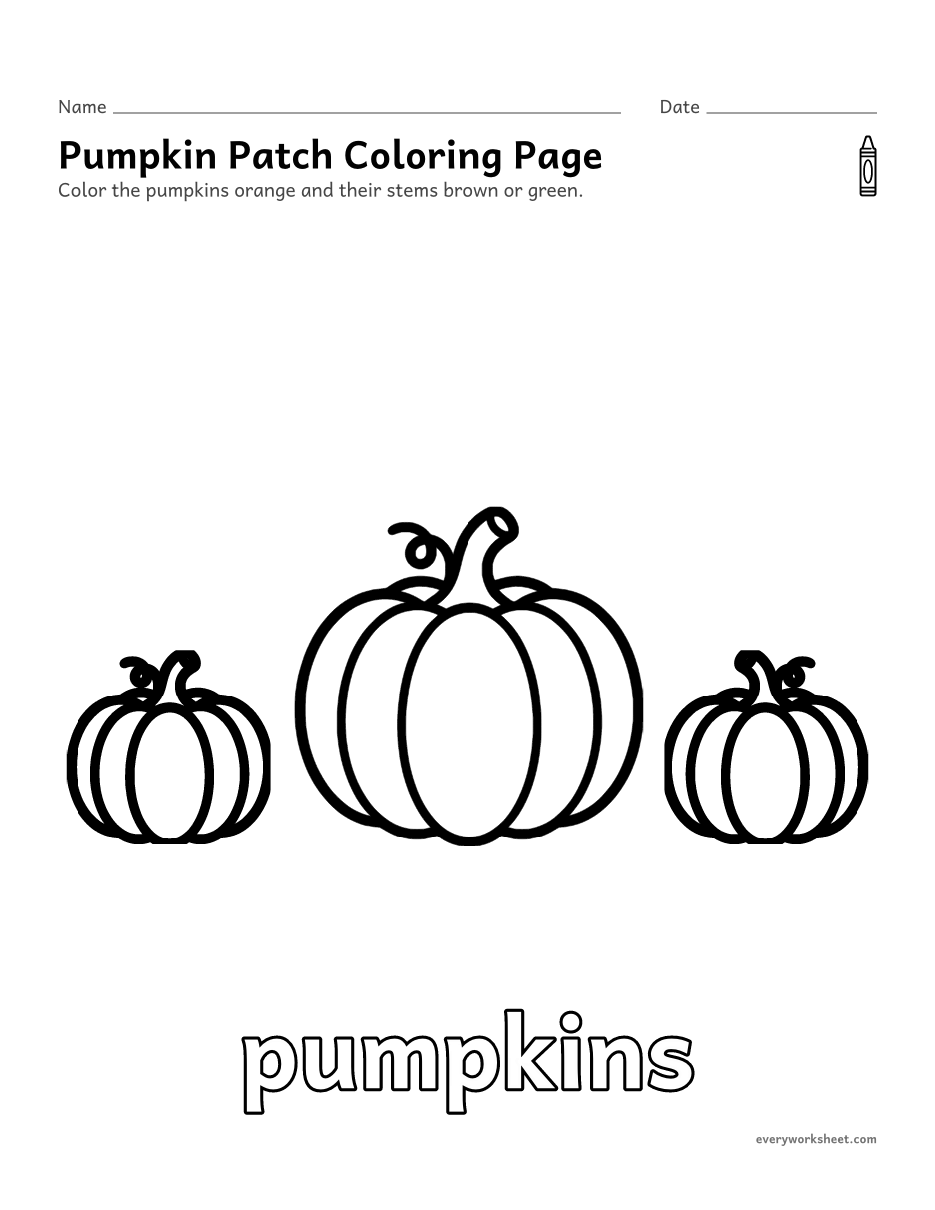
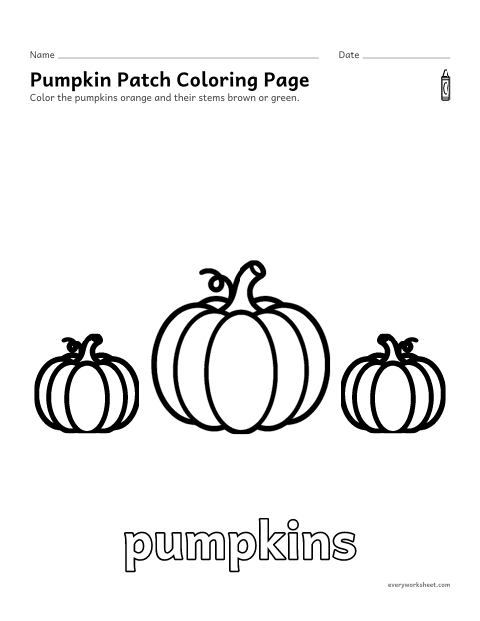
Pumpkin patch pages that practice real skills: counting, size, fine motor work, teen numbers, the P sound, sight words, reading, writing and tens and ones.
Download the pumpkin worksheets
Pumpkin activities for preschool
 View larger
 View all 2 pages
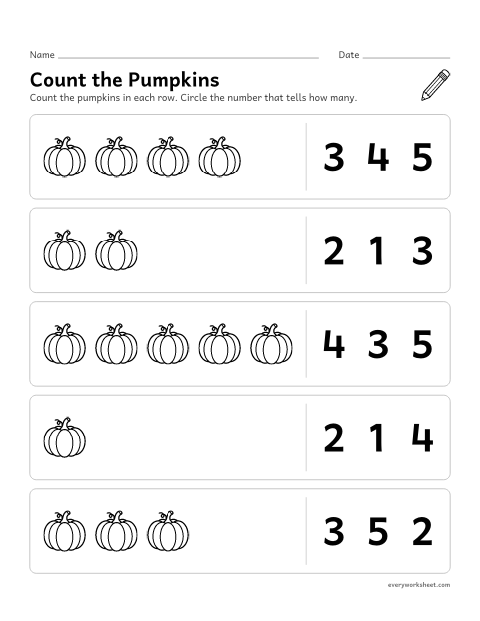
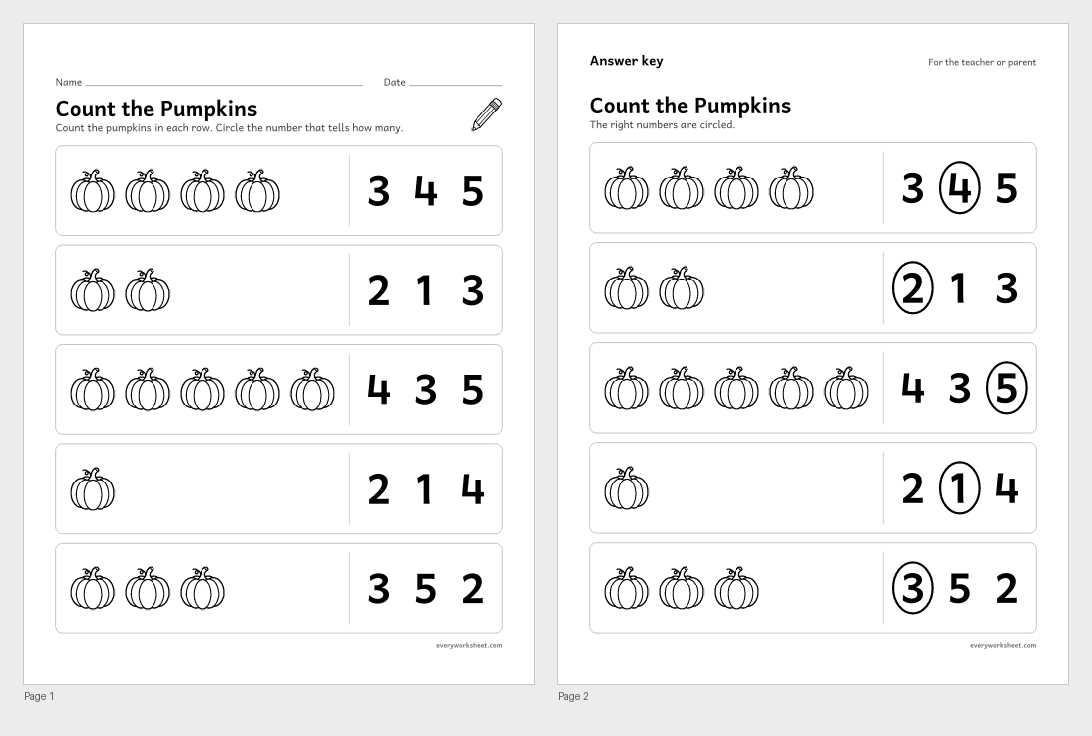
Count the pumpkins
Counting pumpkins to 5 and matching the number
Answer key on page 2
2 pages750 KB
 View larger
 View all 2 pages
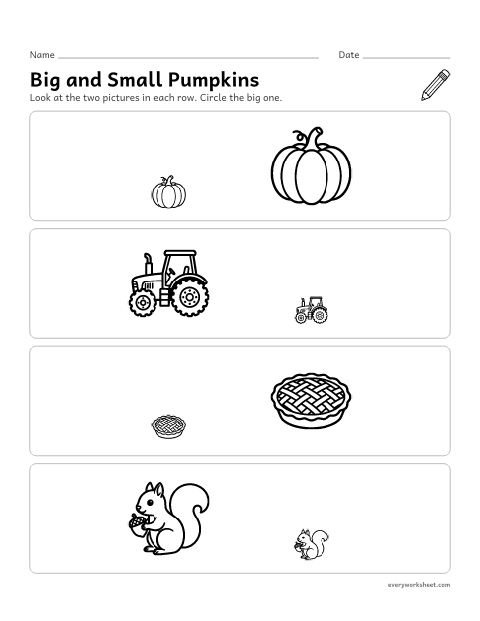
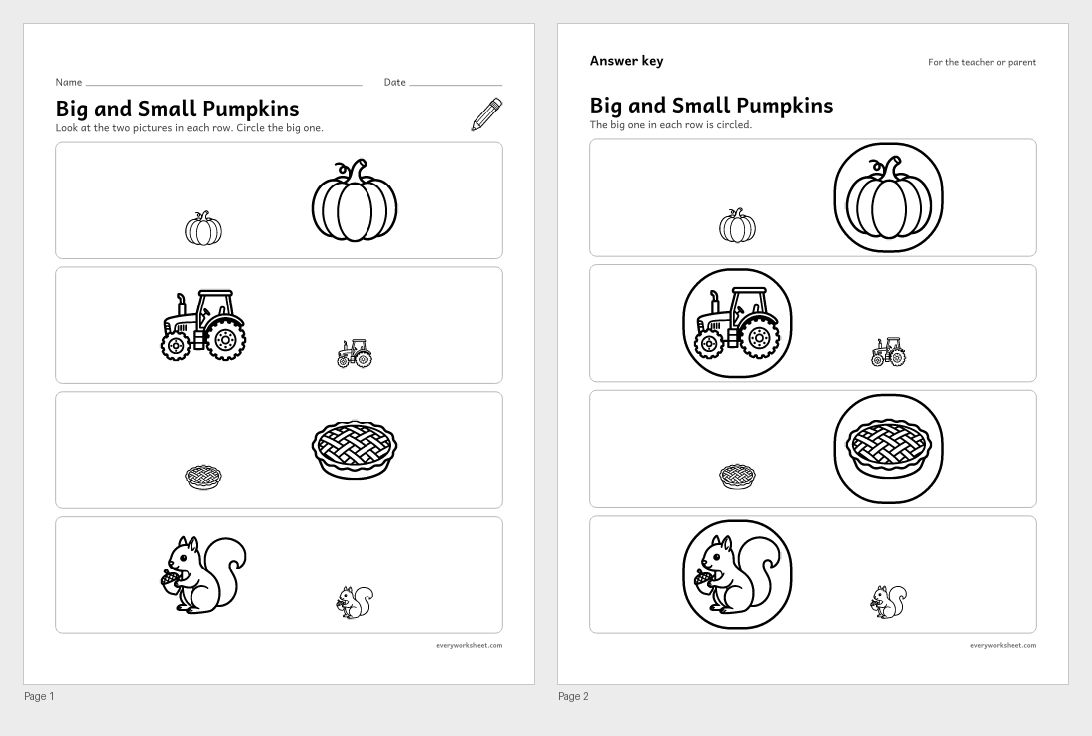
Big and small pumpkins
Comparing two pumpkin patch things by size
Answer key on page 2
2 pages504 KB
 View larger
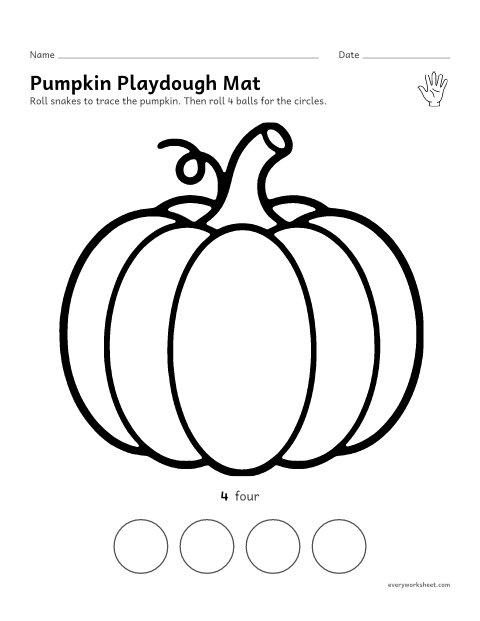
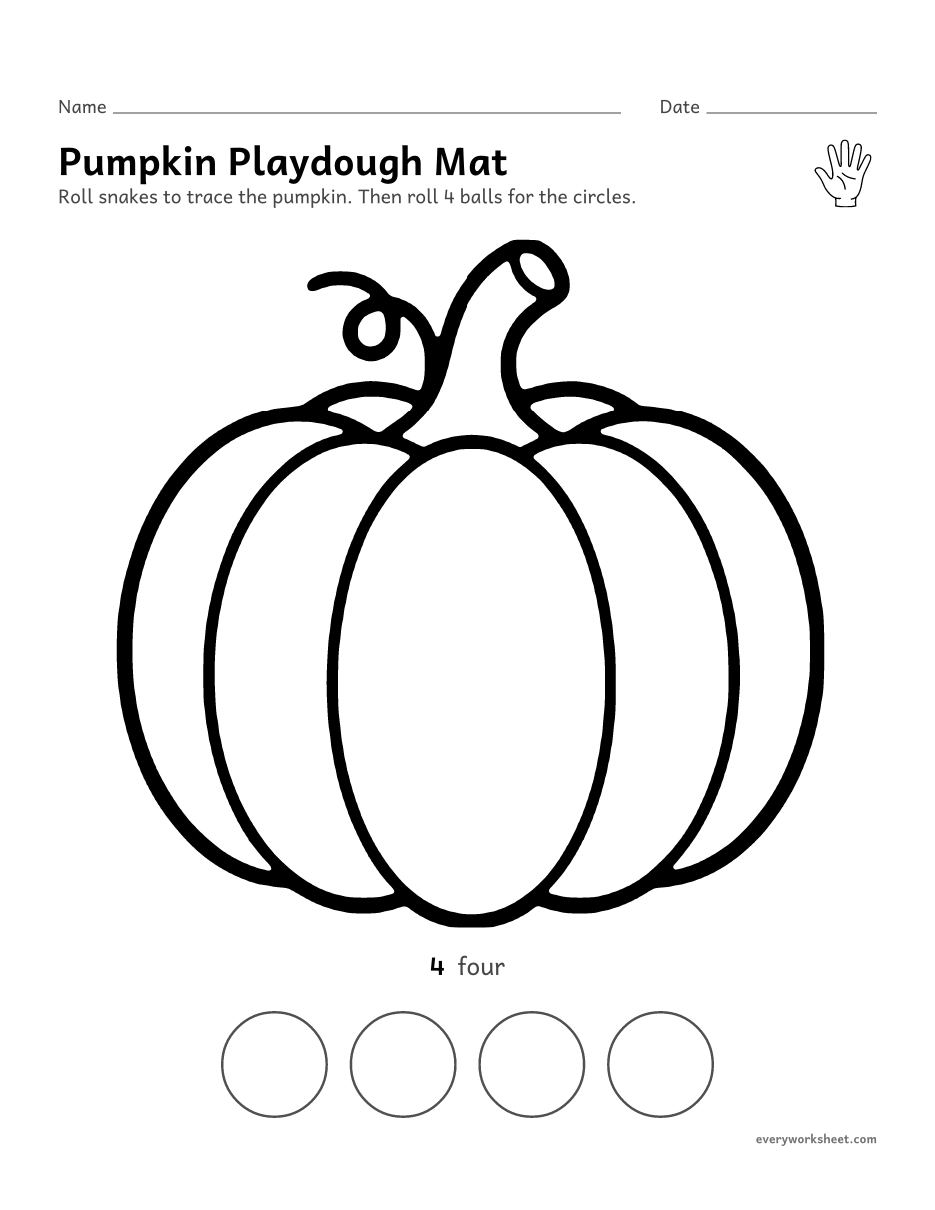
Pumpkin playdough mat
Rolling and pressing playdough along a big pumpkin outline
1 page52 KB
 View all 2 pages
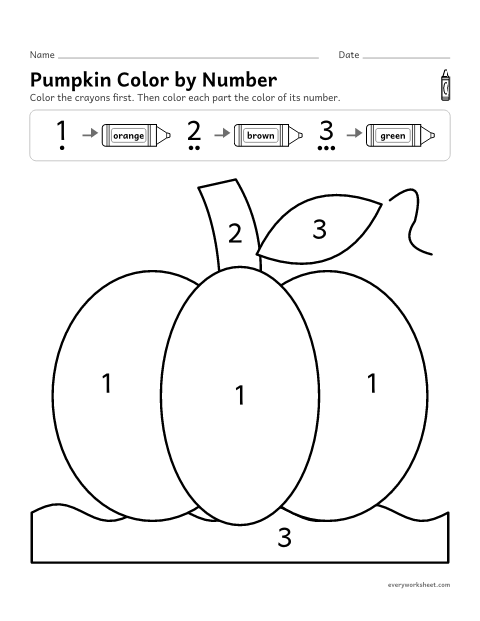
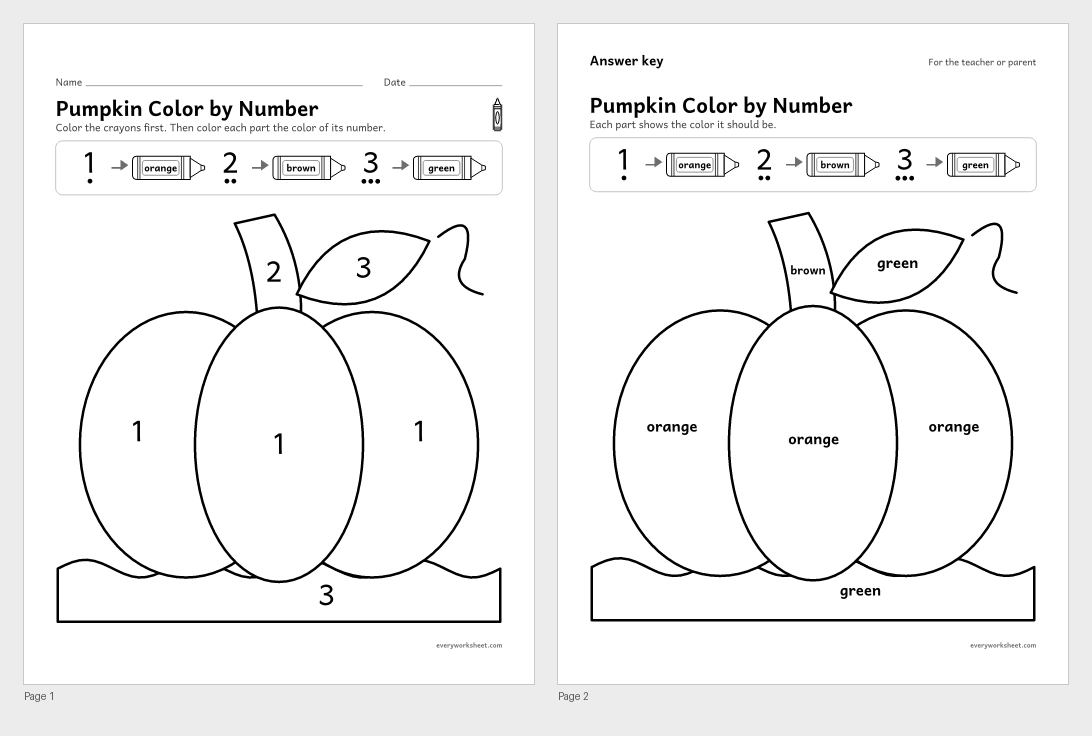
Pumpkin color by number
Reading the numerals 1 to 3 to color a pumpkin
Answer key on page 2
2 pages40 KB
Pumpkin worksheets for kindergarten
 View all 2 pages
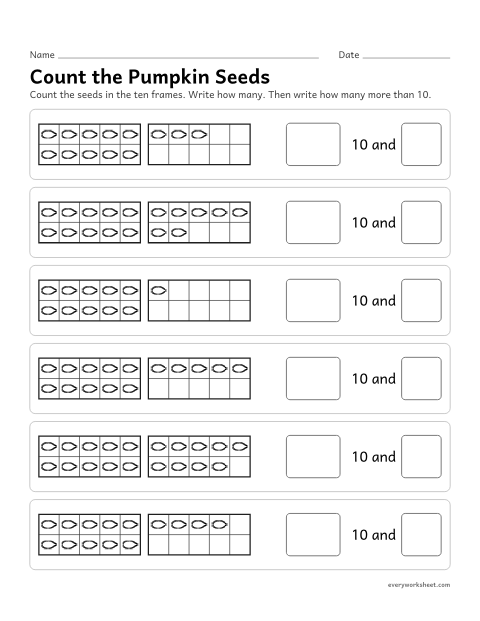
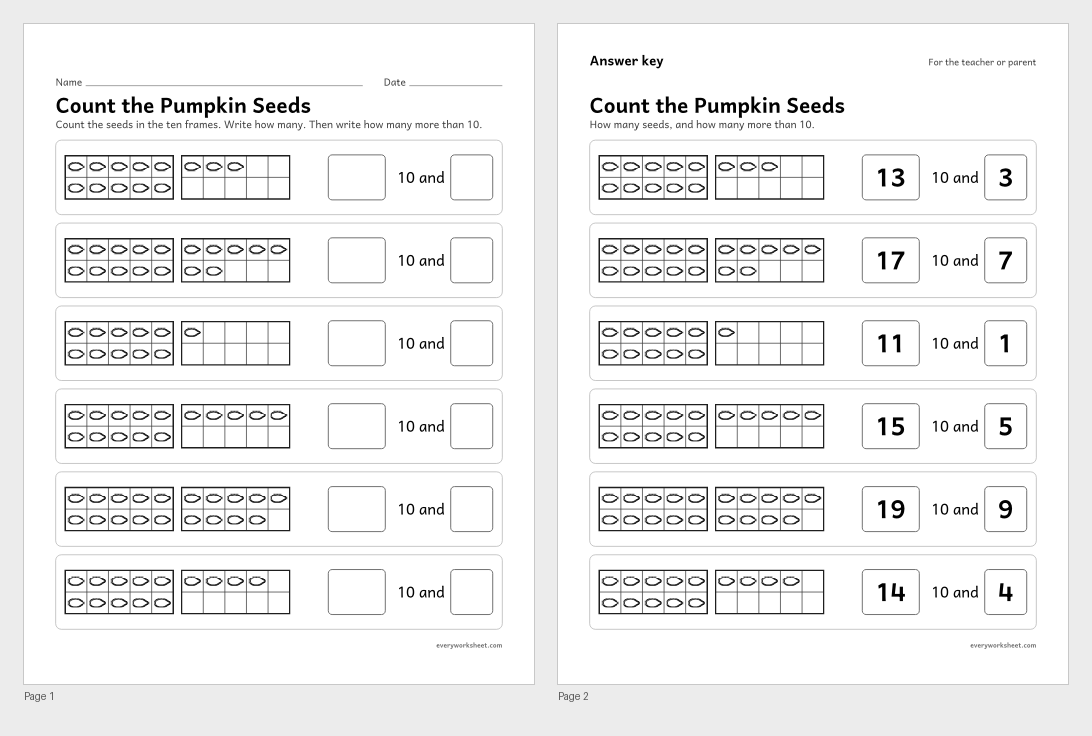
Count the pumpkin seeds 11–20
Counting 11 to 19 seeds as 10 and some more
Answer key on page 2
2 pages78 KB
 View all 2 pages
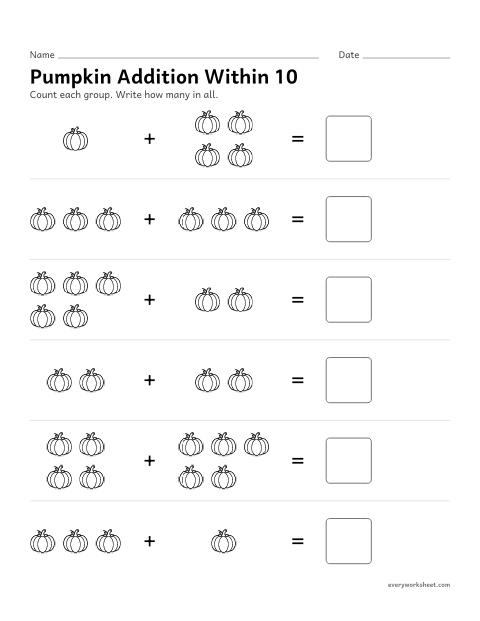
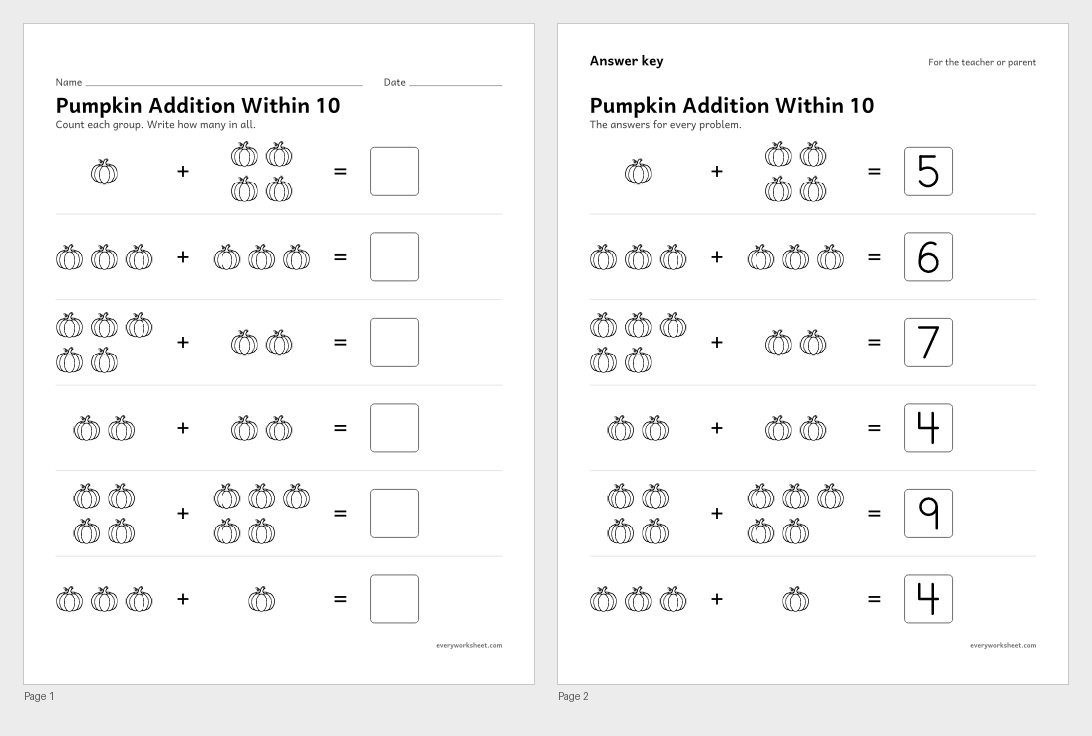
Pumpkin addition within 10
Adding two groups of pictures within 10
Answer key on page 2
2 pages1.7 MB
 View all 2 pages
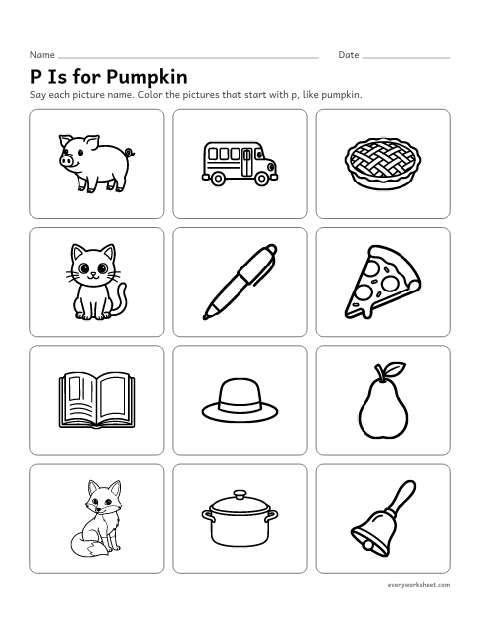
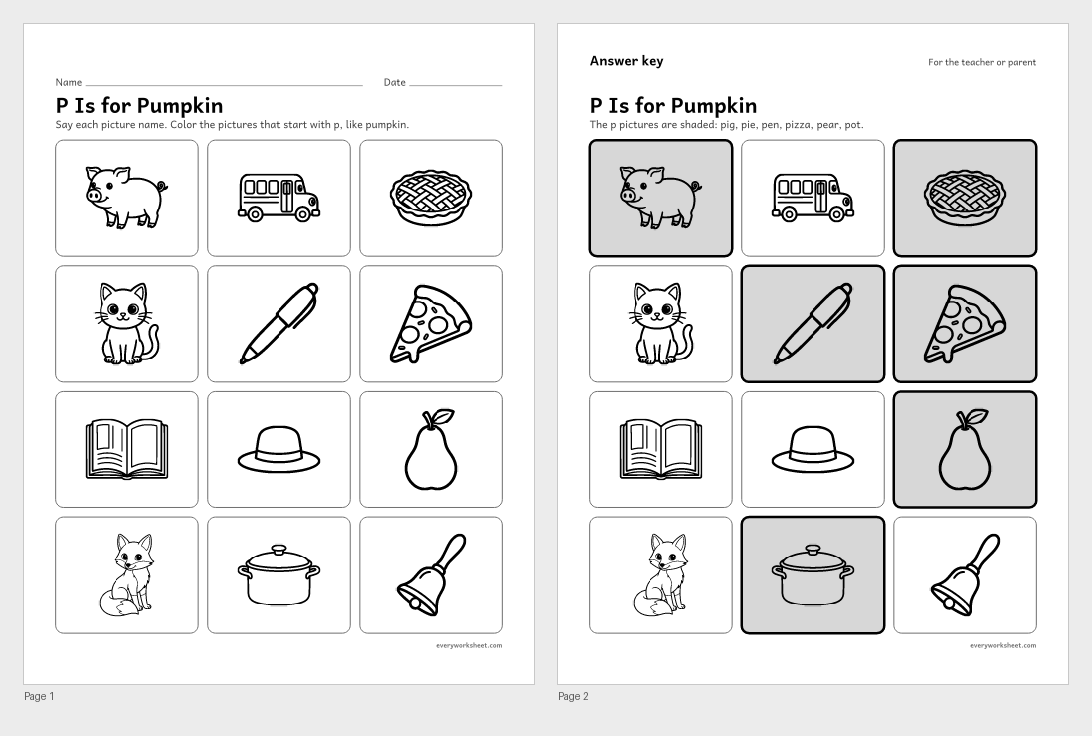
Pumpkin beginning sound P
Hearing the p sound at the start of a word
Answer key on page 2
2 pages444 KB
 View all 2 pages
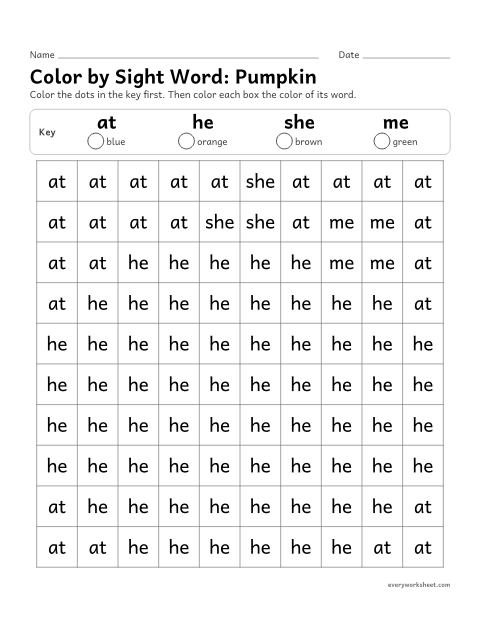
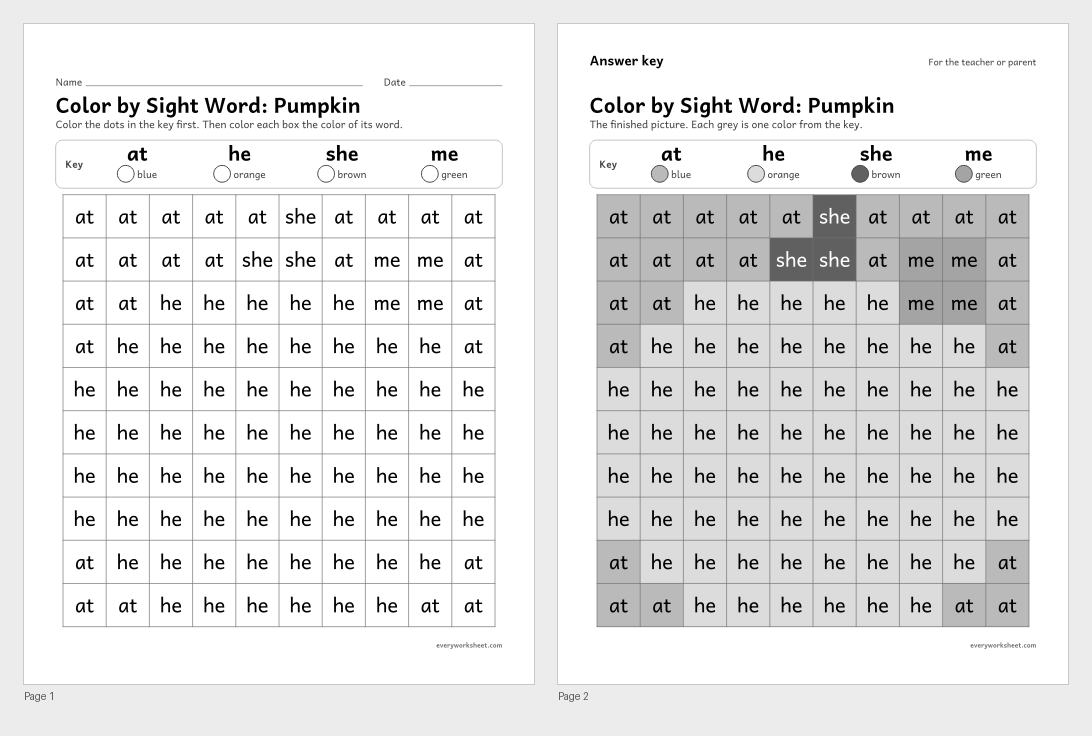
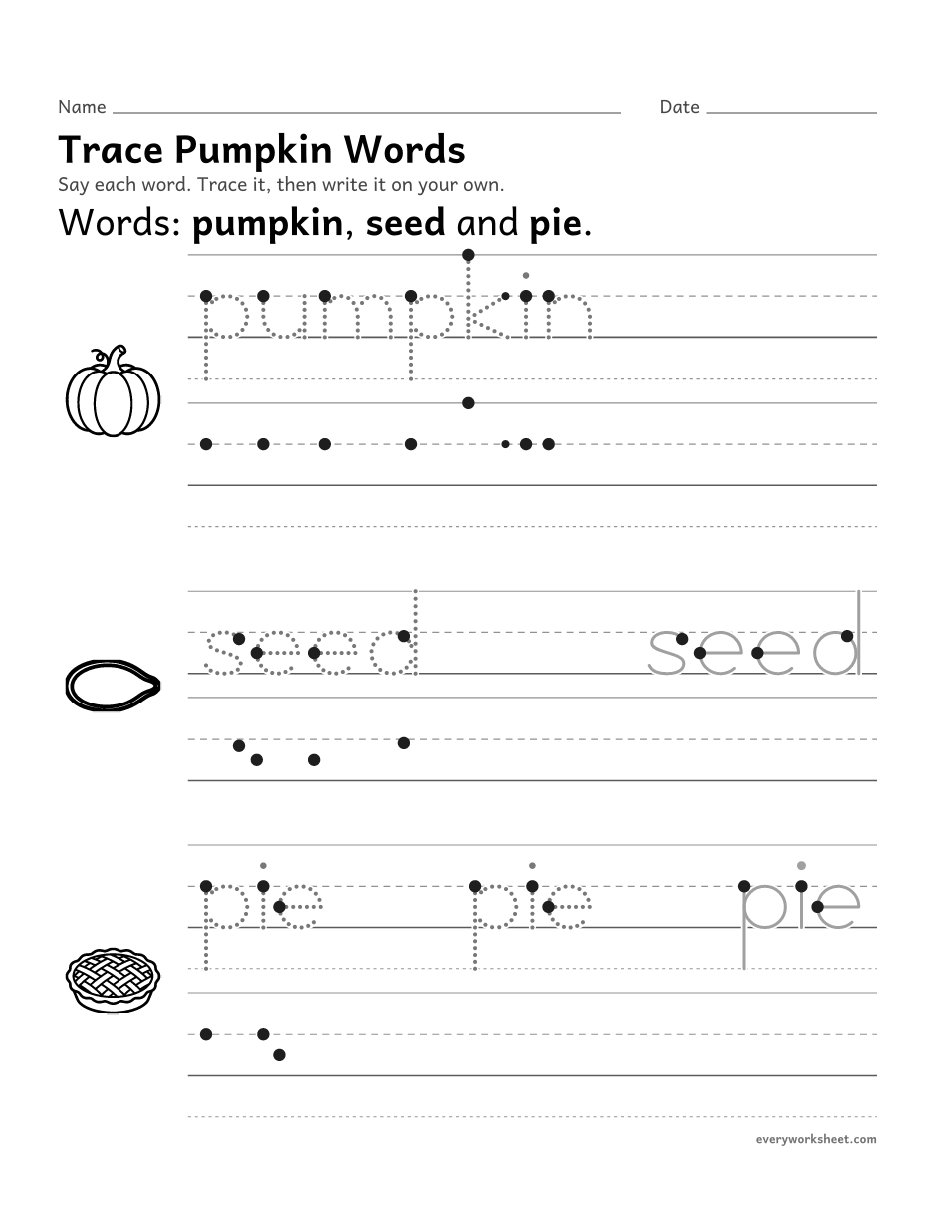
Color by sight Word: pumpkin
Reading sight words to color a picture
Answer key on page 2
2 pages77 KB
 View larger
 View all 2 pages
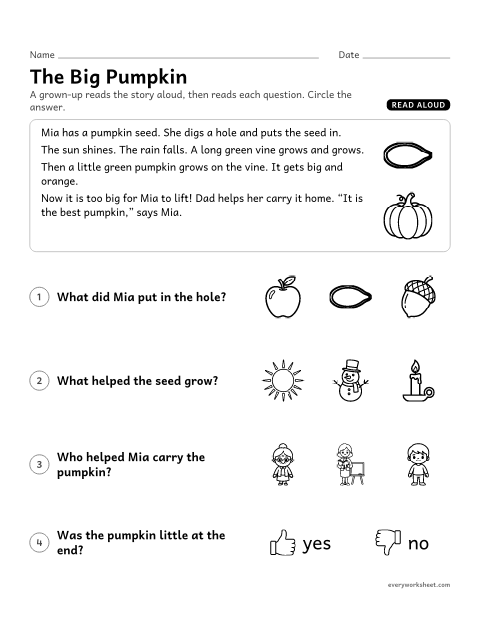
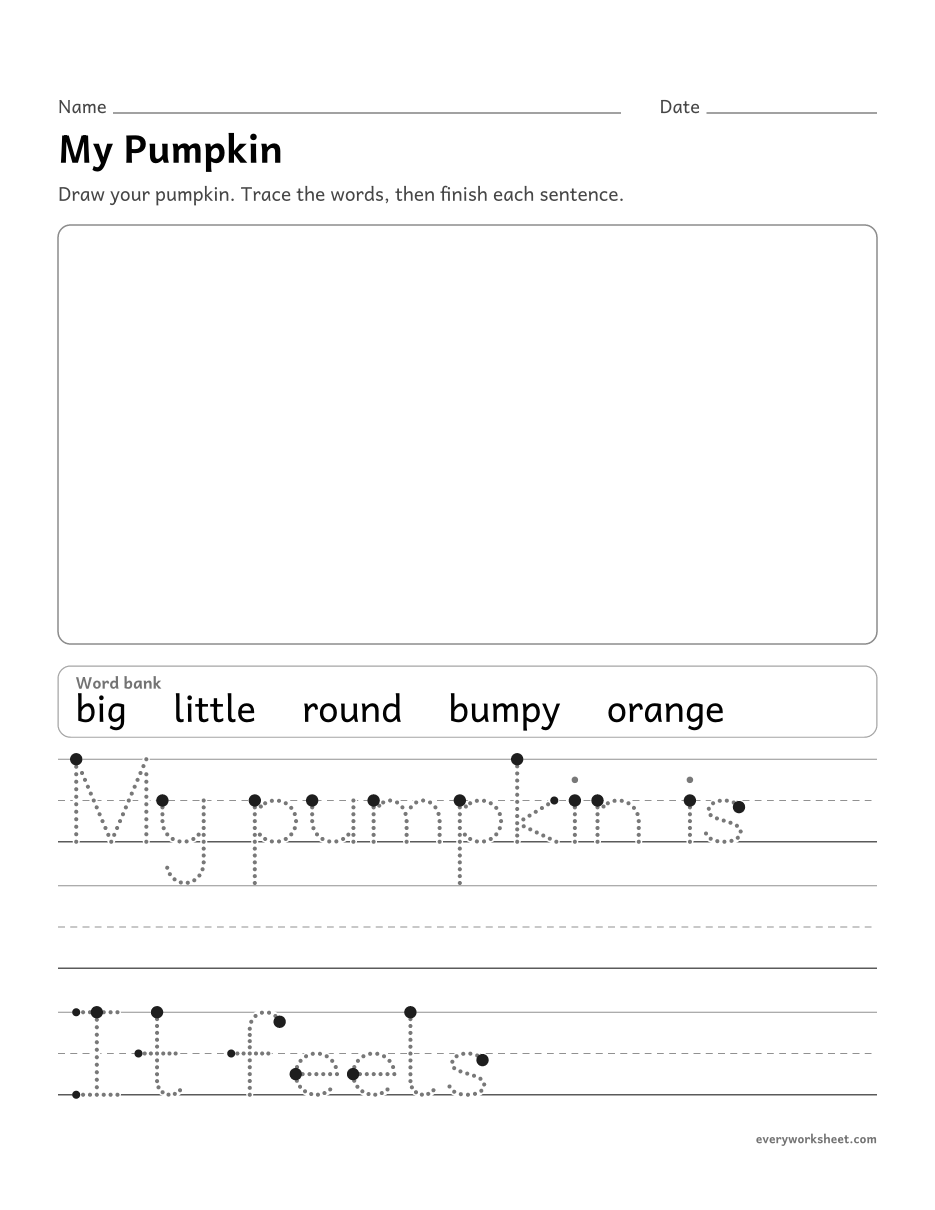
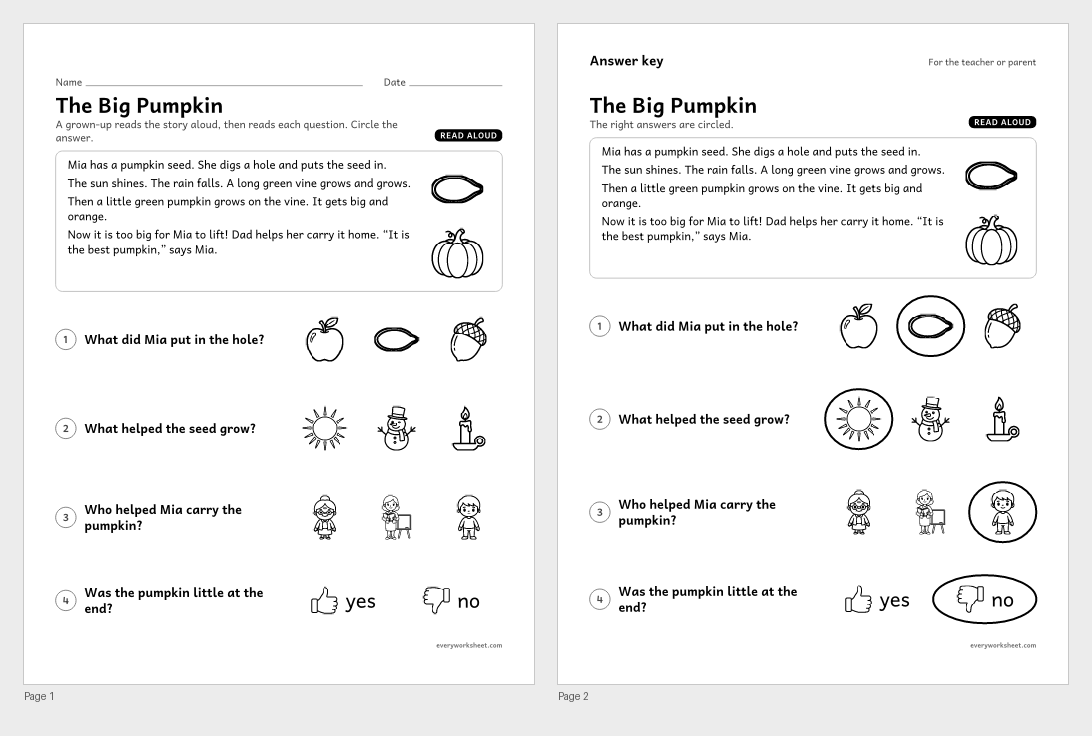
Read Aloud: the big pumpkin
Listening to a story and answering questions about key details
Answer key on page 2
2 pages374 KB
 View larger
Pumpkin worksheets for 1st grade
 View all 2 pages
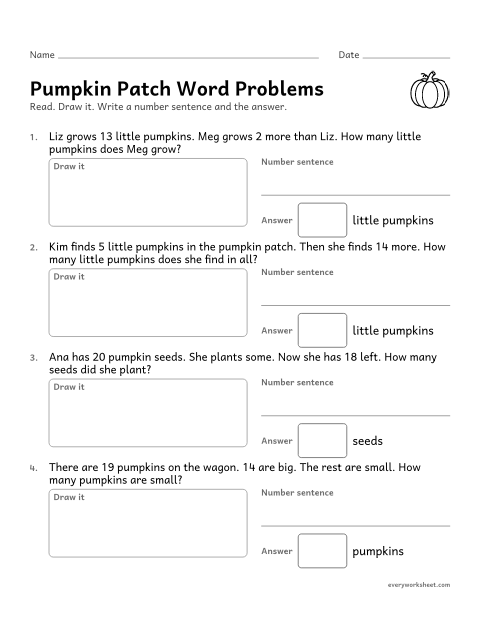
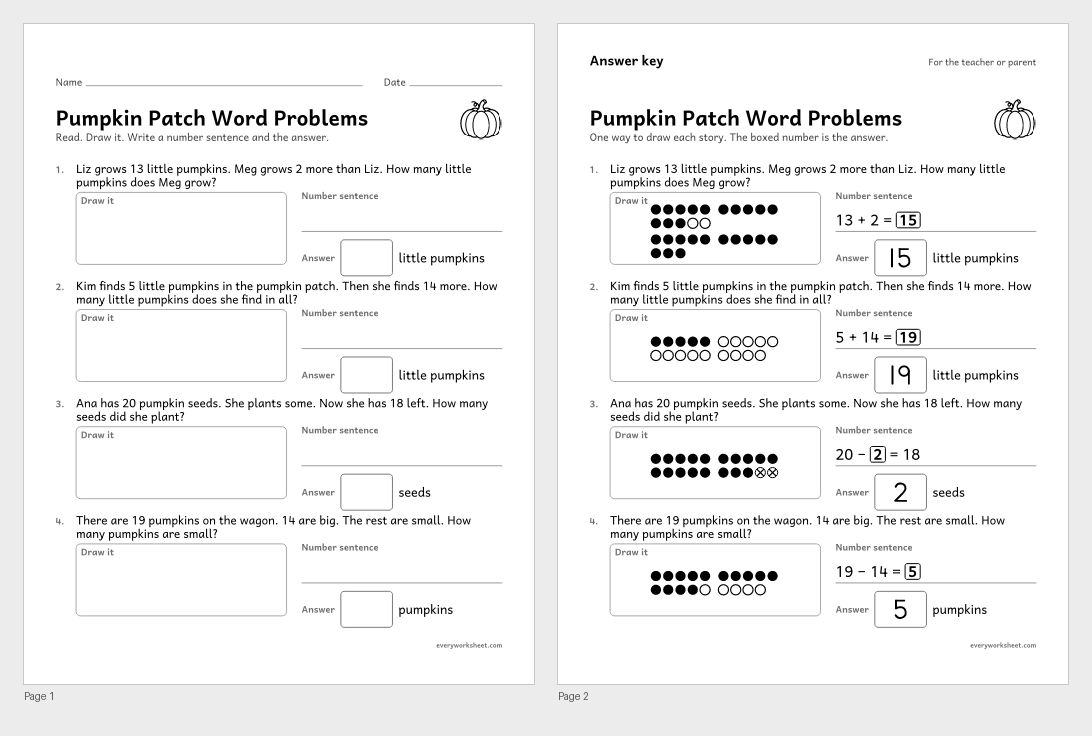
Pumpkin patch word problems
Solving pumpkin word problems within 20 with the unknown in different places
Answer key on page 2
2 pages101 KB
 3 pagesView all 3 pages
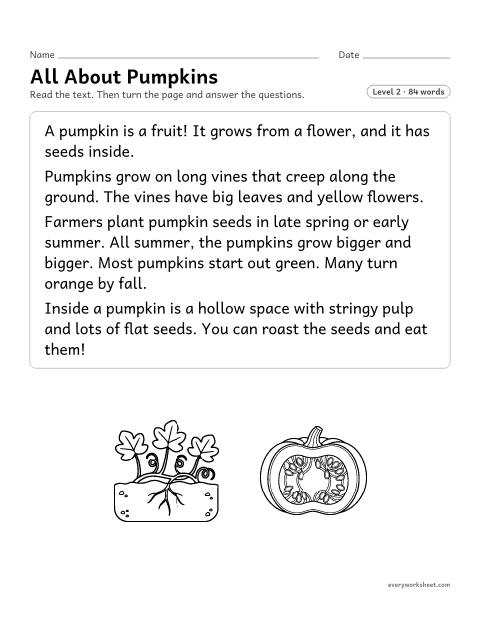
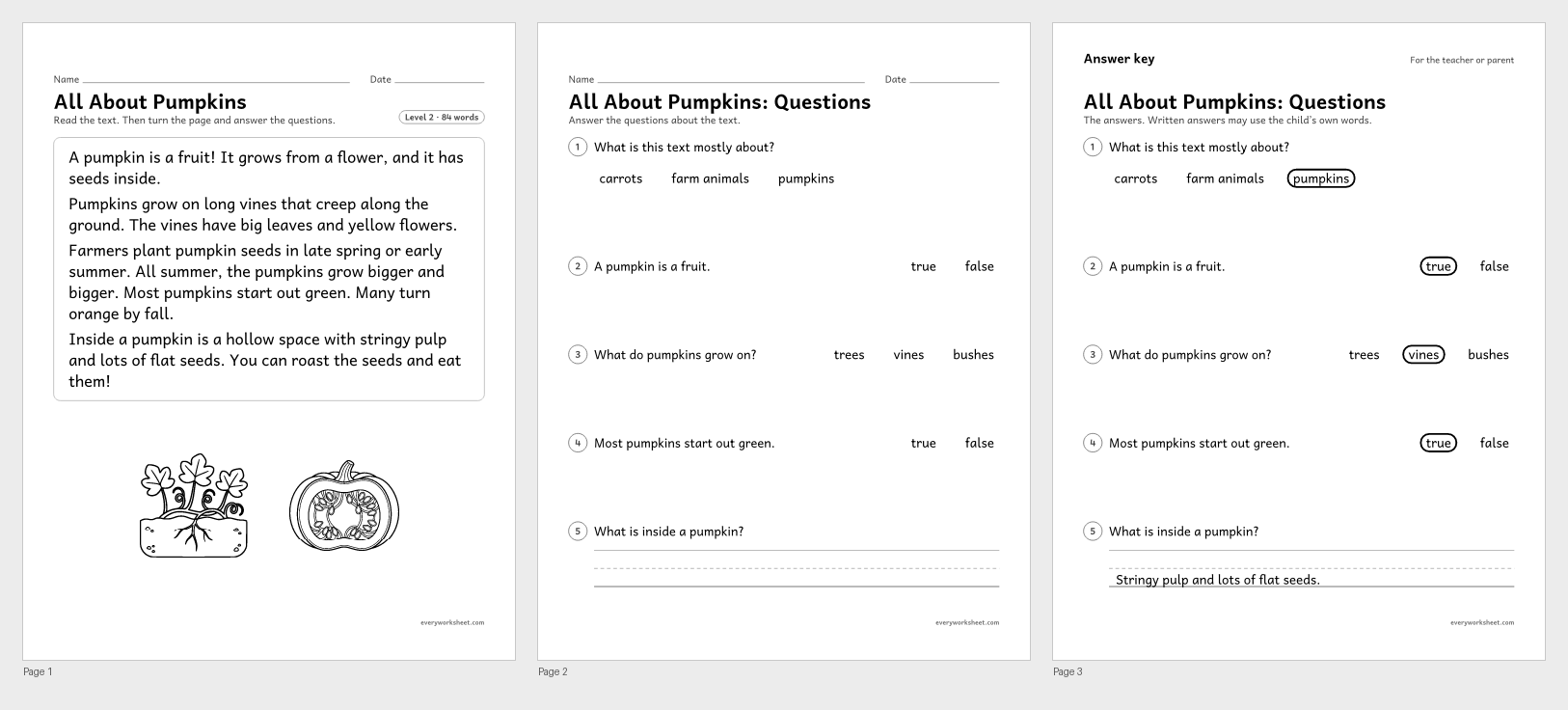
All about pumpkins
Telling the main topic and key details of a nonfiction text about pumpkins
Answer key on page 3
3 pages75 KB
 View larger
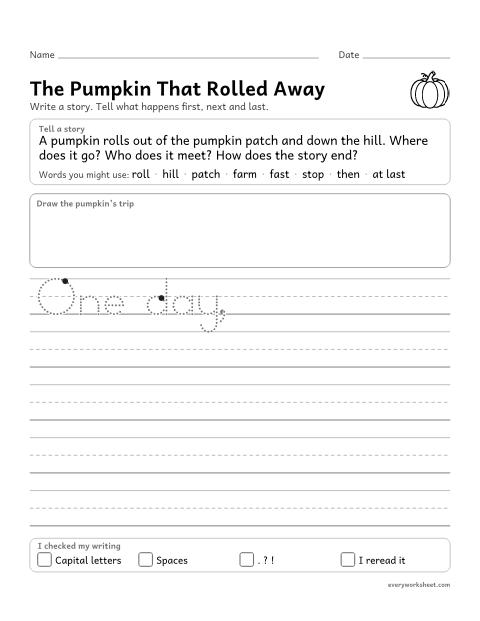
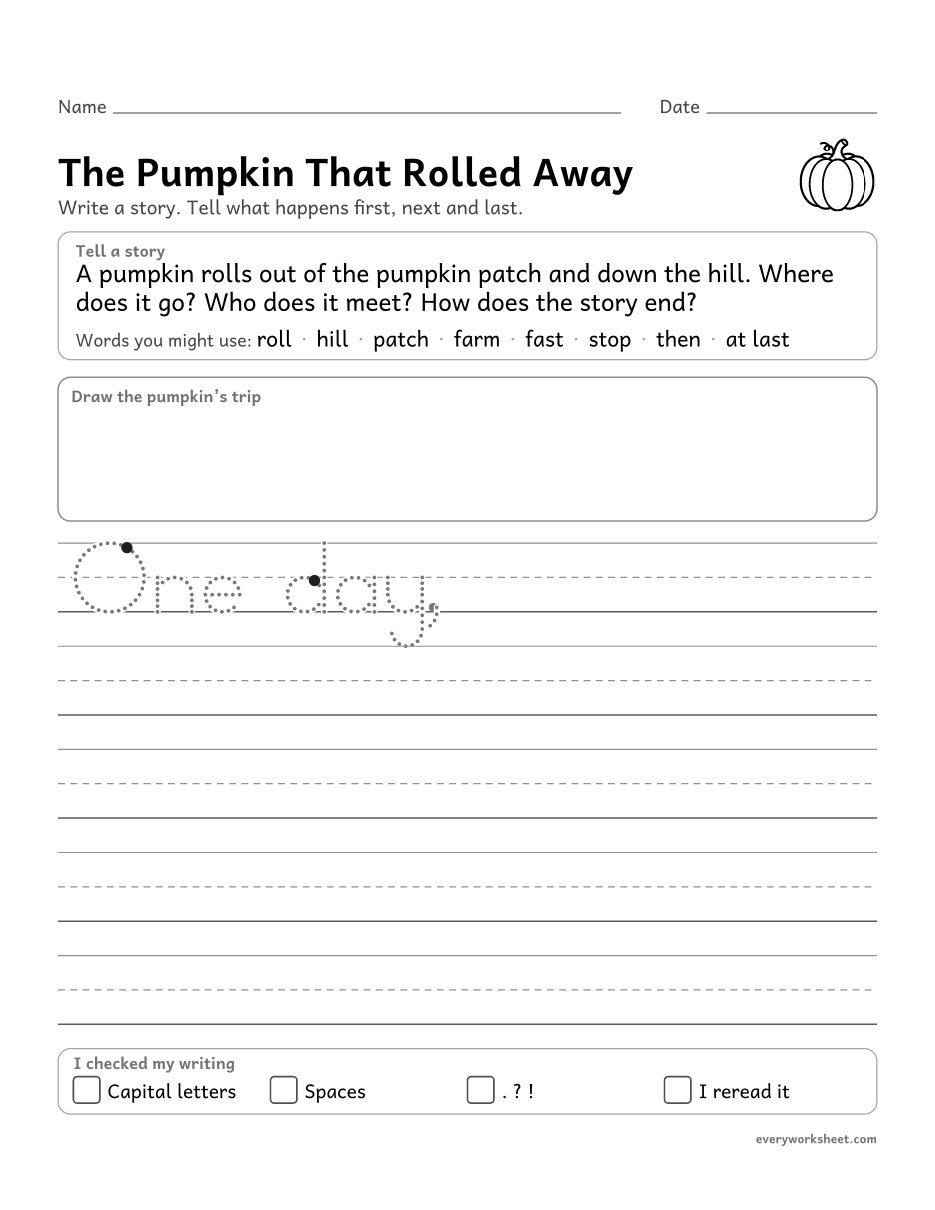
The pumpkin that rolled away
Writing an imaginative narrative with a beginning, middle and end
1 page56 KB
 View all 2 pages
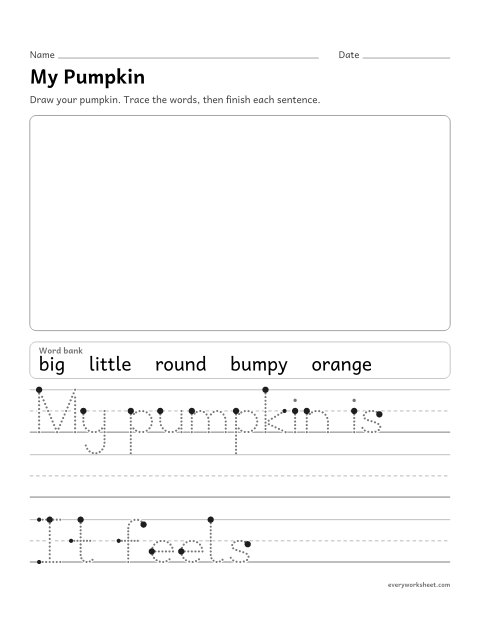
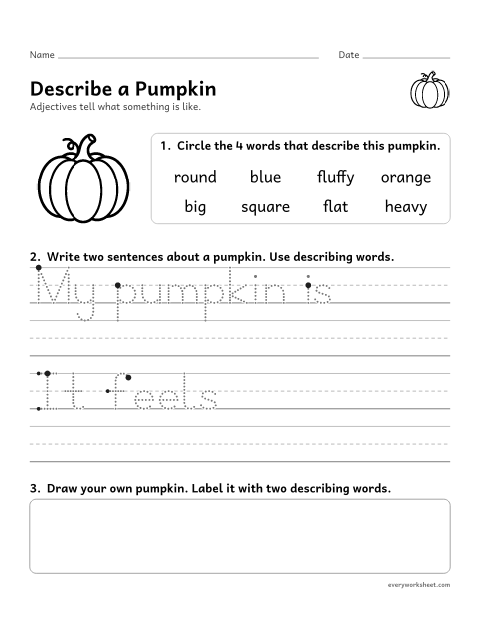
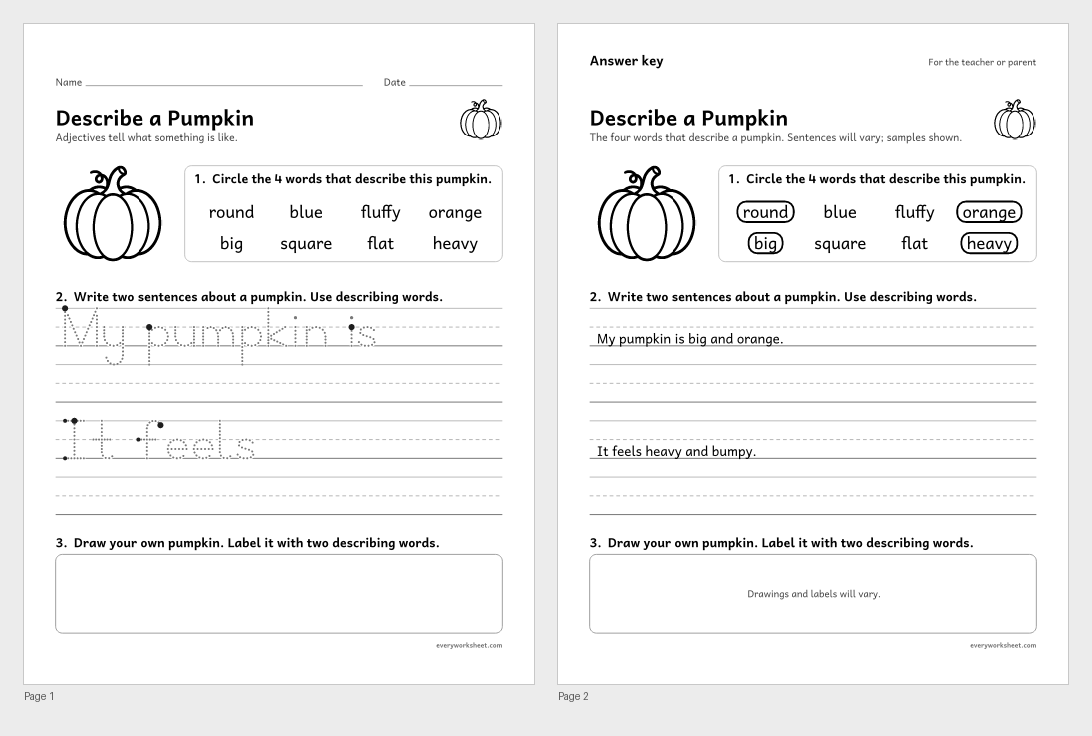
Describe a pumpkin
Choosing and using adjectives to describe a pumpkin
Answer key on page 2
2 pages138 KB
 View all 2 pages
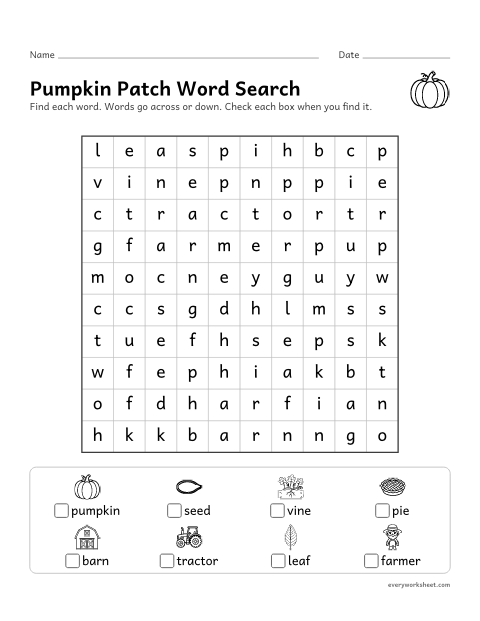
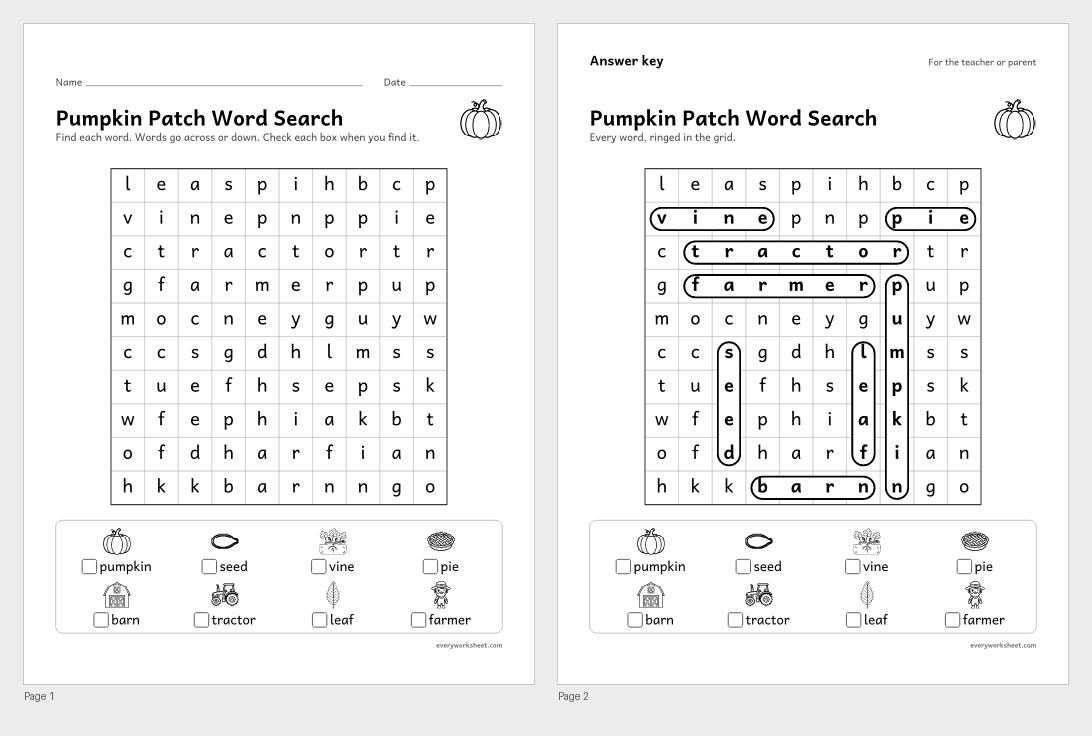
Pumpkin patch word search
Finding and reading pumpkin patch words by their spelling
Answer key on page 2
2 pages404 KB
 View all 2 pages
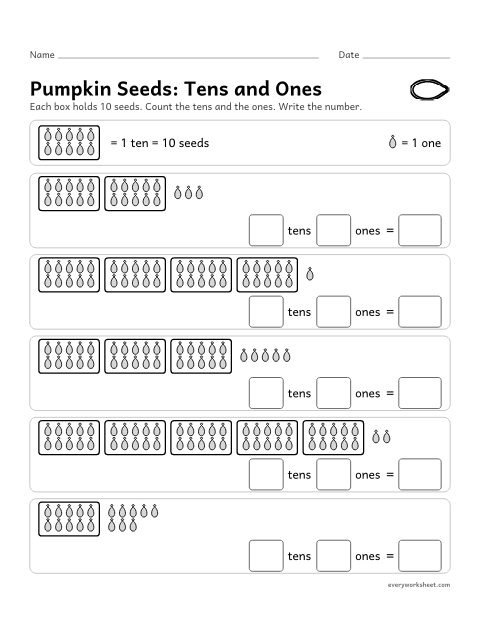
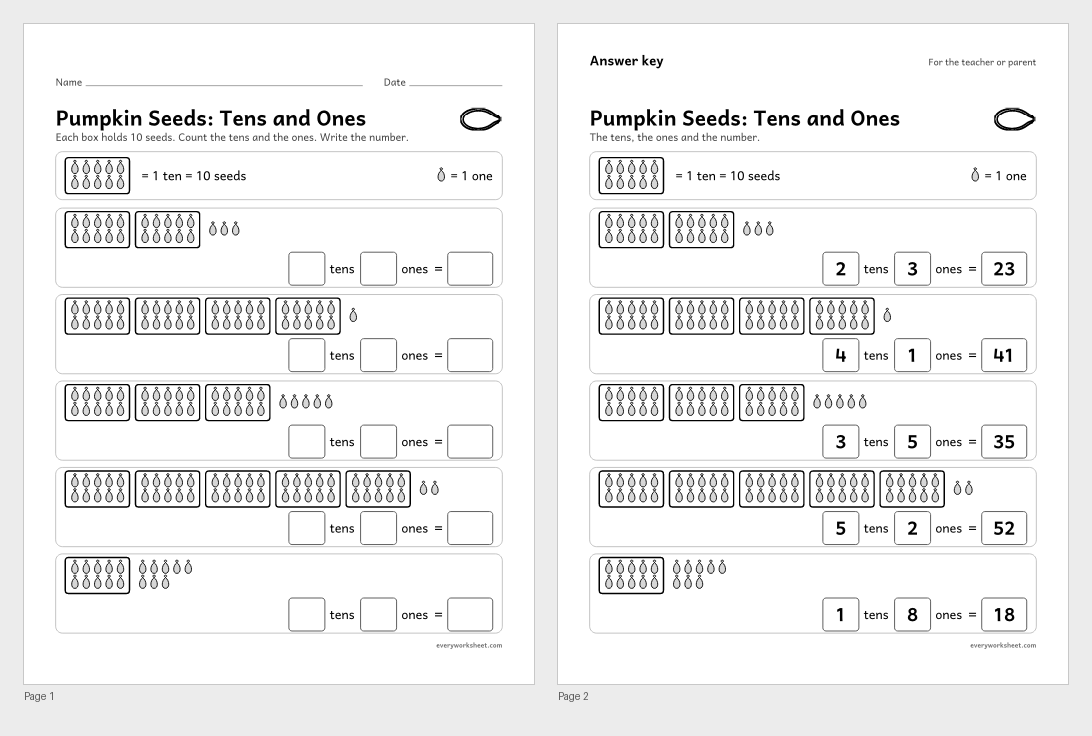
Pumpkin Seeds: tens and ones
Counting seeds as tens and ones and writing the two-digit number
Answer key on page 2
2 pages71 KB
Print at 100% (actual size) for the cleanest tracing lines.
About these pumpkin worksheets
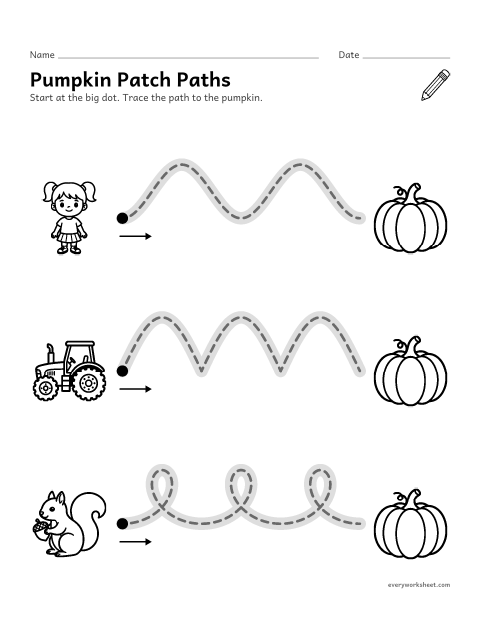
These pumpkin worksheets bring the pumpkin patch into math and literacy practice. Preschoolers color a pumpkin patch, count pumpkins, trace curly vines, compare big and small pumpkins, roll a playdough pumpkin and color by number. Kindergartners count pumpkin seeds as 10 and some more, add pumpkins, find pictures that begin with p, color by sight word, listen to a read-aloud and write about their own pumpkin. 1st graders solve pumpkin patch word problems, read a nonfiction text about pumpkins, describe a pumpkin with adjectives, write a silly story and count seeds in tens and ones.
For how a pumpkin grows from seed to vine to pumpkin, see Pumpkin Life Cycle. The pumpkin seed pages are a great follow-up to scooping out a real pumpkin.
Every page is black and white, prints on US Letter or A4, and pages with one right answer have an answer key on page 2.
Standards
ELOF P-MATH 3Child understands the relationship between numbers and quantities.ELOF P-MATH 5Child associates a quantity with written numerals up to 5 and begins to write numbers.ELOF P-MATH 8Child measures objects by their various attributes using standard and non-standard measurement. Uses differences in attributes to make comparisons.ELOF P-PMP 3Child demonstrates increasing control, strength, and coordination of small muscles.CCSS.MATH.CONTENT.K.NBT.A.1Compose and decompose numbers from 11 to 19 into ten ones and some further ones, e.g., by using objects or drawings, and record each composition or decomposition by a drawing or equation (e.g., 18 = 10 + 8); understand that these numbers are composed of ten ones and one, two, three, four, five, six, seven, eight, or nine ones.CCSS.MATH.CONTENT.K.OA.A.1Represent addition and subtraction with objects, fingers, mental images, drawings, sounds (e.g., claps), acting out situations, verbal explanations, expressions, or equations.CCSS.ELA-LITERACY.RF.K.3.ADemonstrate basic knowledge of one-to-one letter-sound correspondences by producing the primary sound or many of the most frequent sounds for each consonant.CCSS.ELA-LITERACY.RF.K.3.CRead common high-frequency words by sight (e.g., the, of, to, you, she, my, is, are, do, does).CCSS.ELA-LITERACY.RL.K.1With prompting and support, ask and answer questions about key details in a text.CCSS.ELA-LITERACY.L.K.1.APrint many upper- and lowercase letters.CCSS.ELA-LITERACY.W.K.2Use a combination of drawing, dictating, and writing to compose informative/explanatory texts in which they name what they are writing about and supply some information about the topic.CCSS.MATH.CONTENT.1.NBT.B.2Understand that the two digits of a two-digit number represent amounts of tens and ones.CCSS.MATH.CONTENT.1.OA.A.1Use addition and subtraction within 20 to solve word problems involving situations of adding to, taking from, putting together, taking apart, and comparing, with unknowns in all positions, e.g., by using objects, drawings, and equations with a symbol for the unknown number to represent the problem.CCSS.ELA-LITERACY.RI.1.2Identify the main topic and retell key details of a text.CCSS.ELA-LITERACY.L.1.1.FUse frequently occurring adjectives.CCSS.ELA-LITERACY.L.1.2.DUse conventional spelling for words with common spelling patterns and for frequently occurring irregular words.CCSS.ELA-LITERACY.W.1.3Write narratives in which they recount two or more appropriately sequenced events, include some details regarding what happened, use temporal words to signal event order, and provide some sense of closure.
How to use them
- Pick the group for your child's grade, or spread the pages across a pumpkin week in October.
- Scoop out a pumpkin together and save the seeds. Wash and dry them to use as counters on the counting pages.
- Group real seeds in tens in small cups before the 1st grade tens and ones page.
- Use the describe a pumpkin page with a real pumpkin on the table so children can look, touch and lift it.
Teaching tips
- Preschool: line up three real pumpkins or squash by size before the big and small page.
- Kindergarten: on the pumpkin seed page, fill the ten frame first and say "ten", then count on.
- 1st grade: if a child counts all the seeds one by one, ask, "How many full tens can you see?"
- No pumpkin? Orange paper circles work well as counters.
Questions teachers and parents ask
When should I use pumpkin worksheets?
In October, around a pumpkin patch trip, a pumpkin carving day or a fall harvest unit. They are not Halloween pages, so they work in any class.
Do you have pumpkin life cycle pages?
Yes. Pumpkin Life Cycle covers seed, sprout, vine, flower and pumpkin. These pumpkin worksheets focus on math and literacy.
Is there an answer key?
Yes. Every page with one right answer has an answer key on page 2 of the same PDF. Coloring, tracing, playdough and writing pages do not need one.
Are there Halloween pages too?
Yes. Halloween Worksheets has friendly ghosts, bats, candy and costumes, with separate pages for preschool, kindergarten and 1st grade.