 View larger
Build a snowman playdough mat
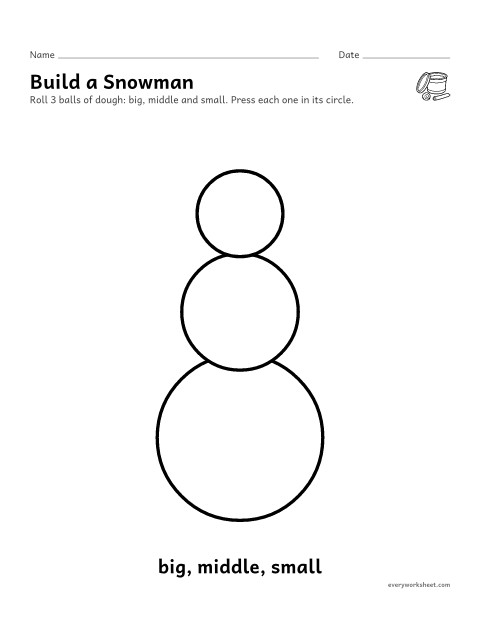
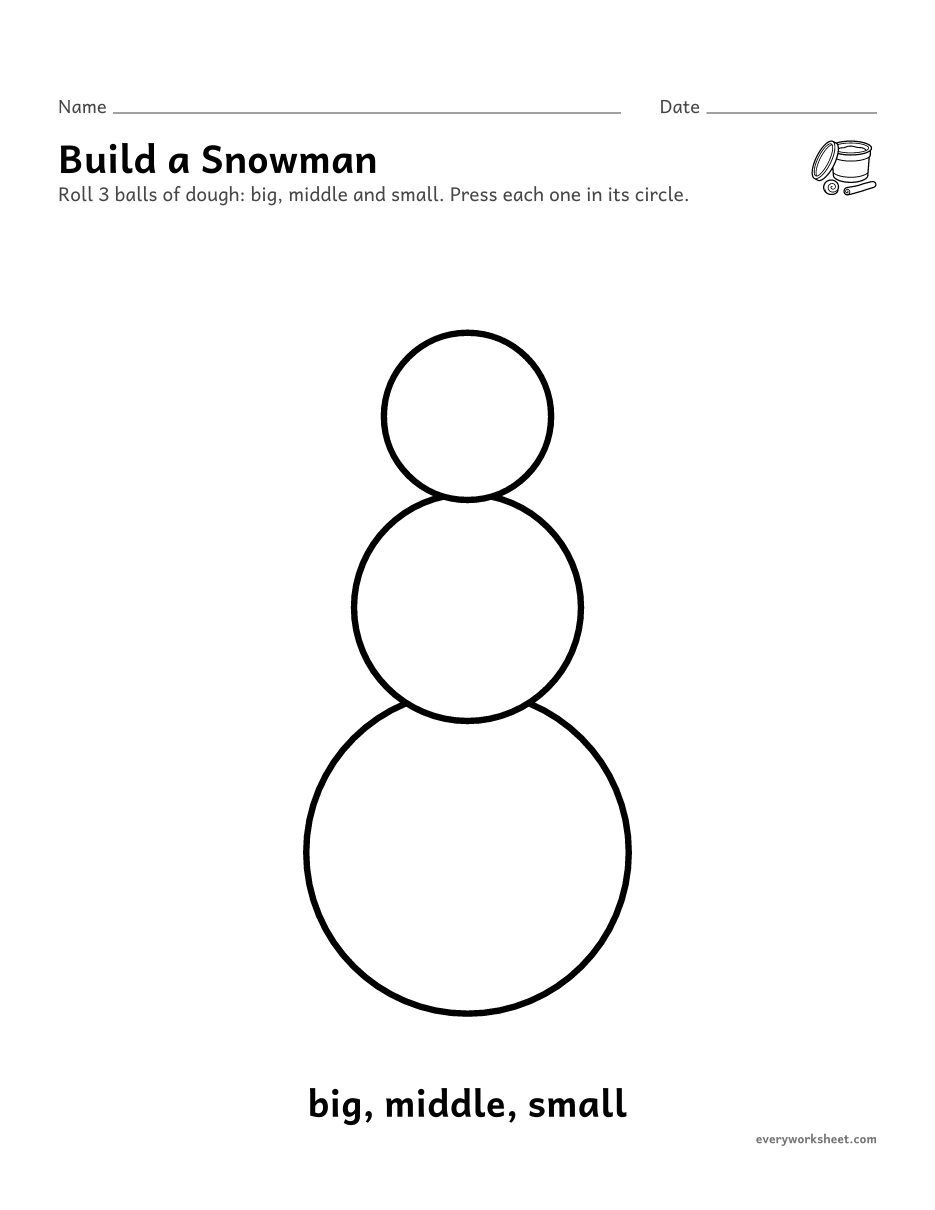
Rolling and placing dough by size: big, middle, small
1 page56 KB
Build a snowman with playdough, count buttons, sequence the steps, write a how-to and solve snowman math.
View largerRolling and placing dough by size: big, middle, small
1 page56 KB
 View all 2 pages
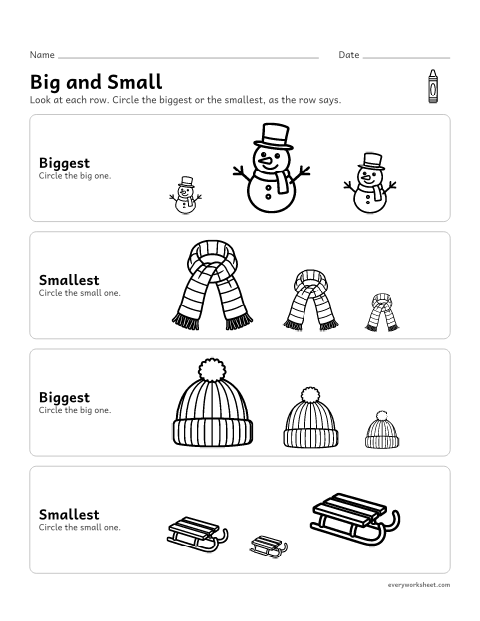
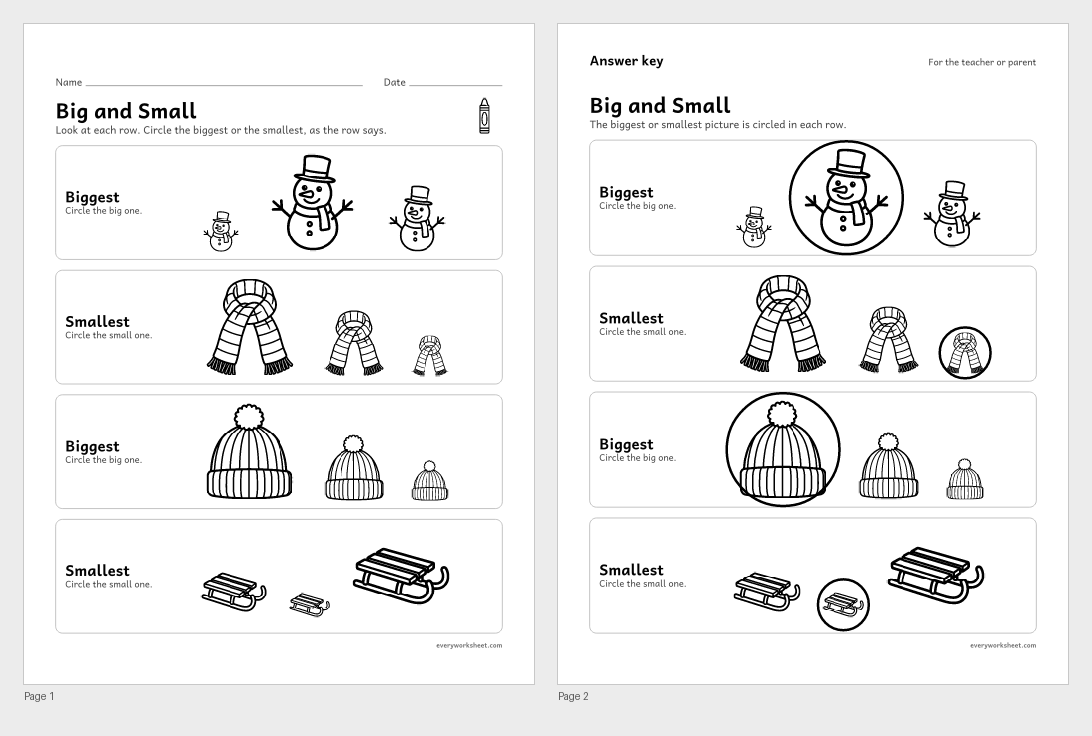
Comparing size: biggest and smallest
Answer key on page 2
2 pages357 KB
 View all 2 pages
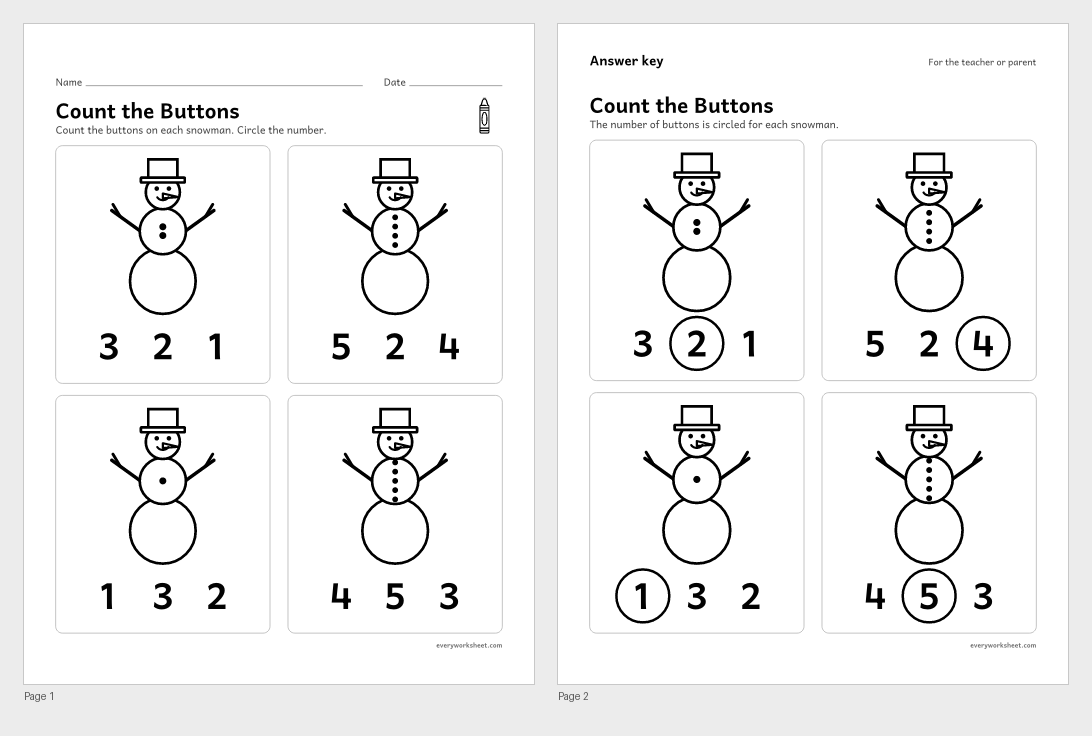
Counting buttons to 5 and matching the number
Answer key on page 2
2 pages36 KB
 View larger
 View all 2 pages
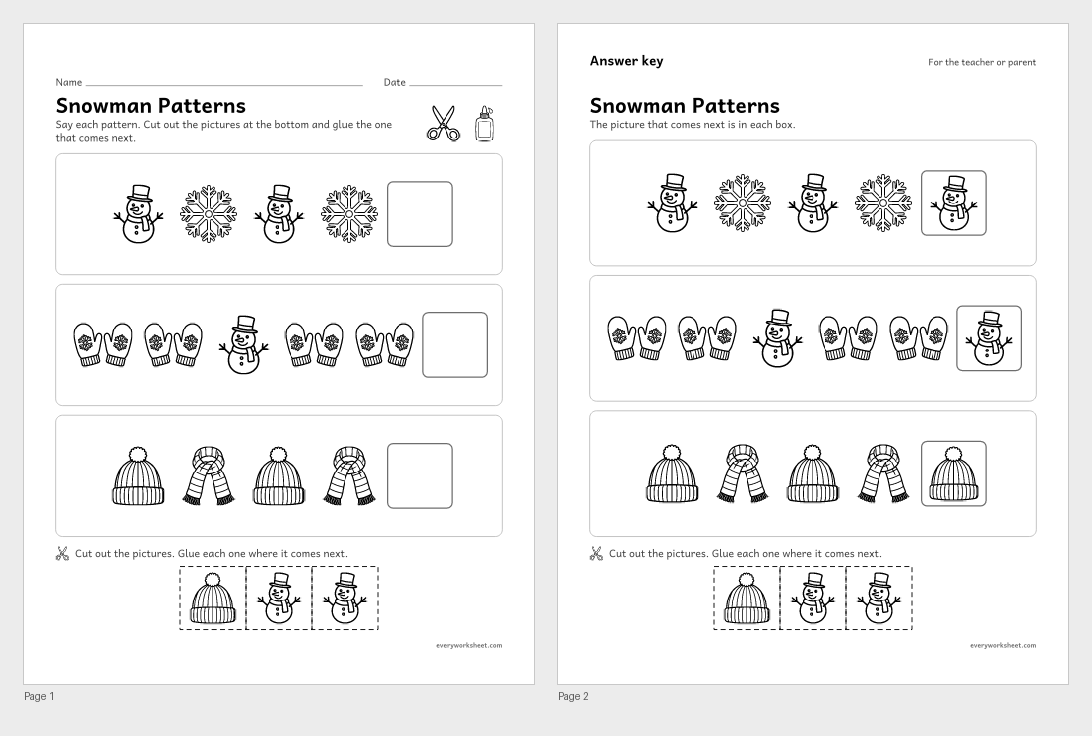
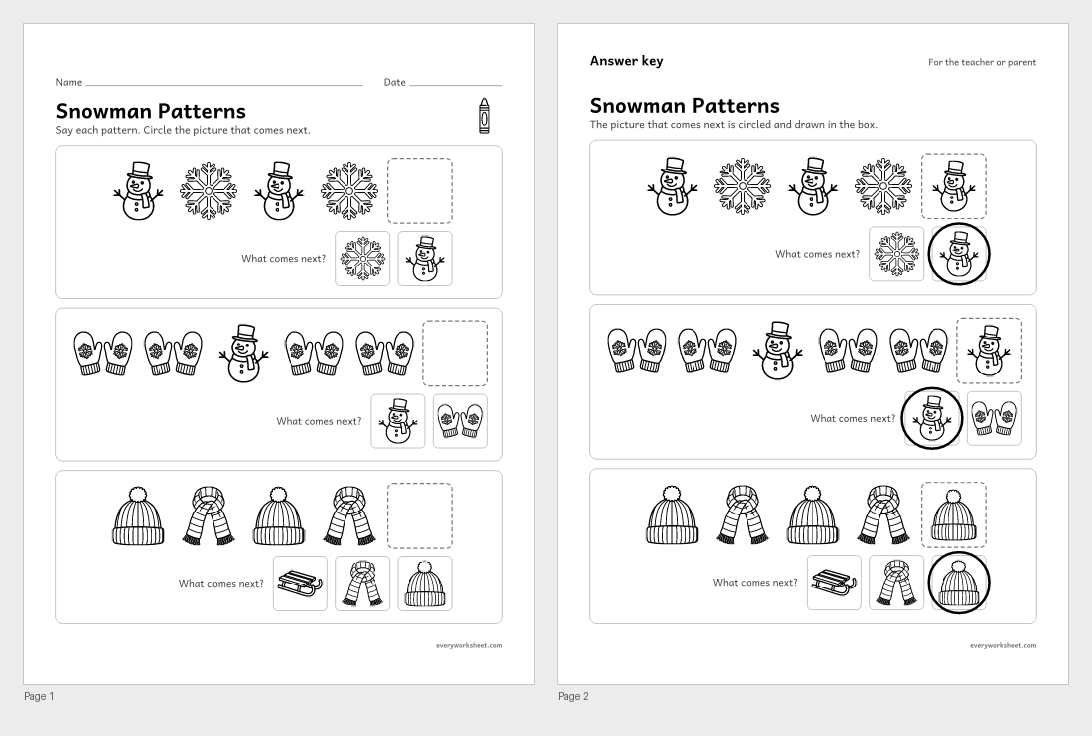
Finishing AB and AAB picture patterns
Answer key on page 2
2 pages495 KB
 View all 2 pages
Finishing AB and AAB picture patterns
Answer key on page 2
2 pages518 KB
 View larger
 View all 2 pages
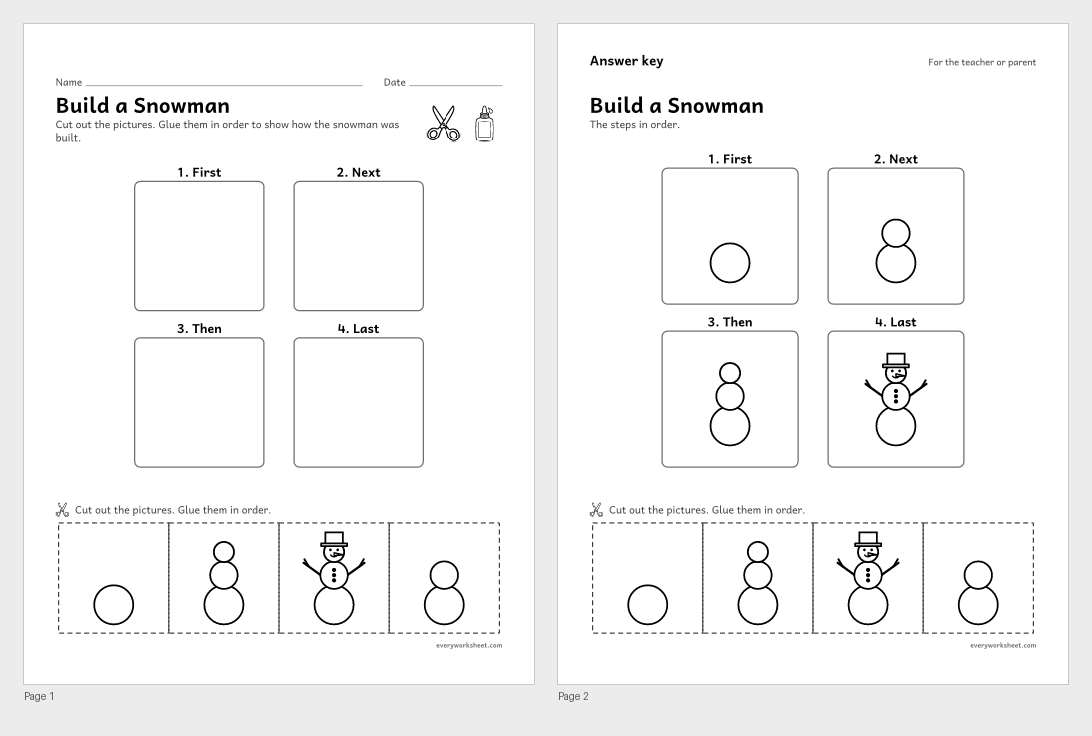
Putting the steps of building a snowman in order
Answer key on page 2
2 pages127 KB
 View all 2 pages
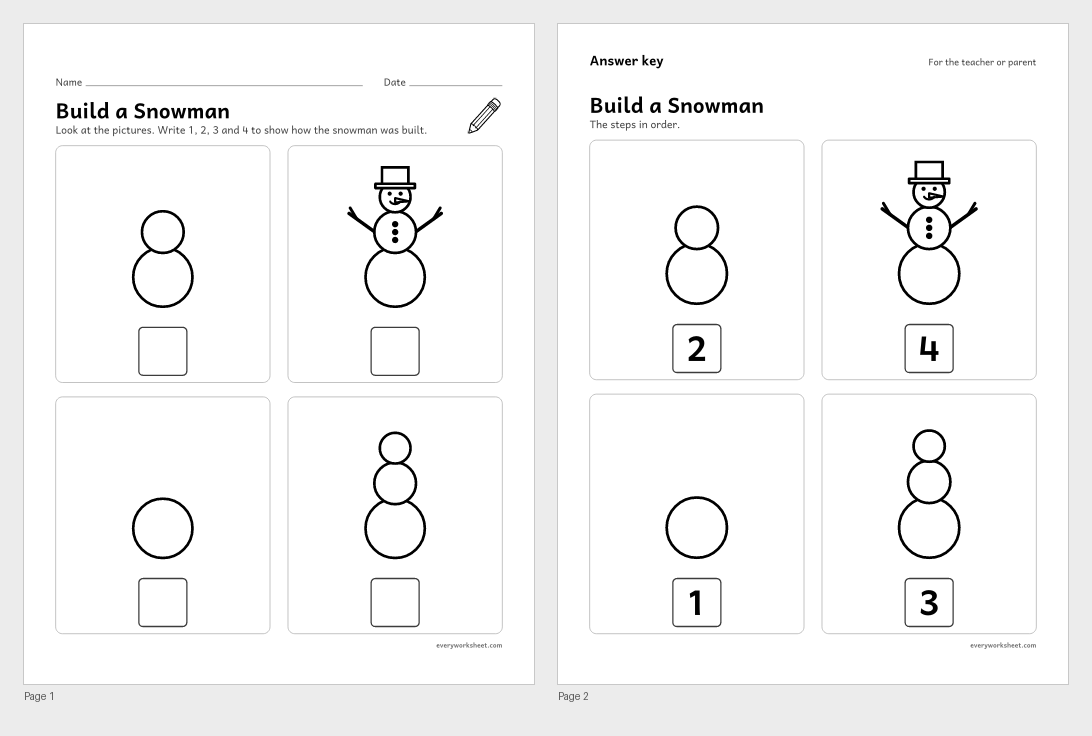
Putting the steps of building a snowman in order
Answer key on page 2
2 pages40 KB
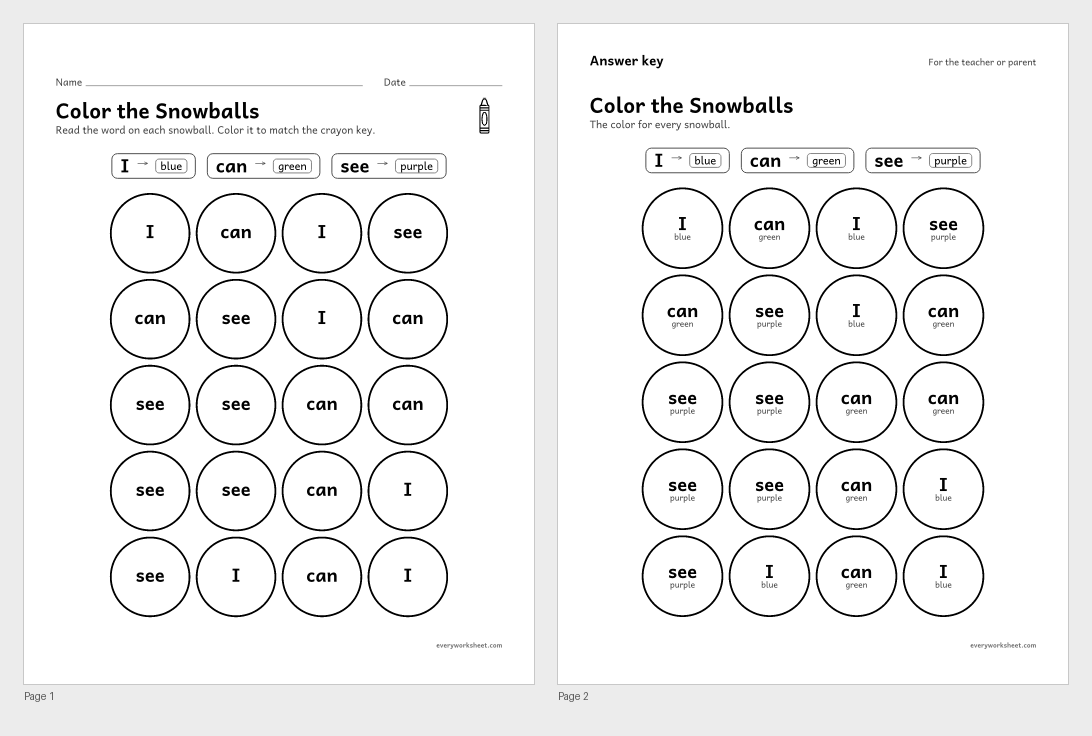 View all 2 pages
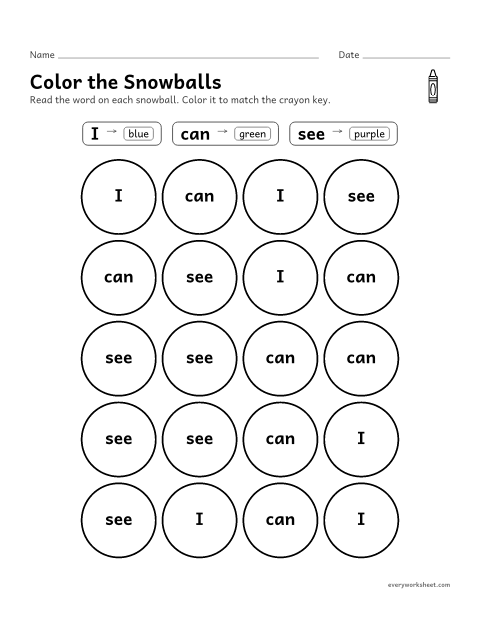
Reading the sight words I, can, see
Answer key on page 2
2 pages46 KB
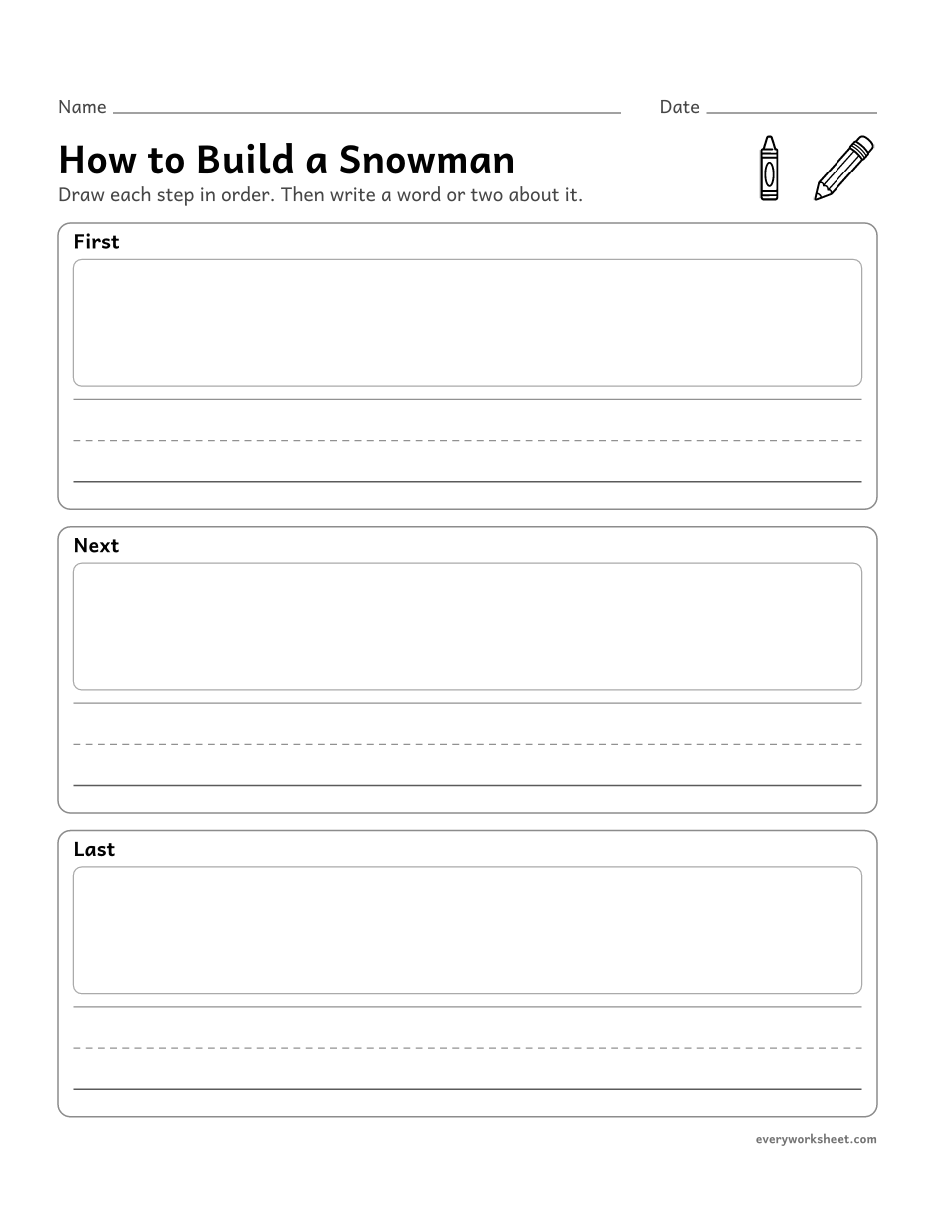 View larger
Drawing and writing the steps of a how-to in order
1 page40 KB
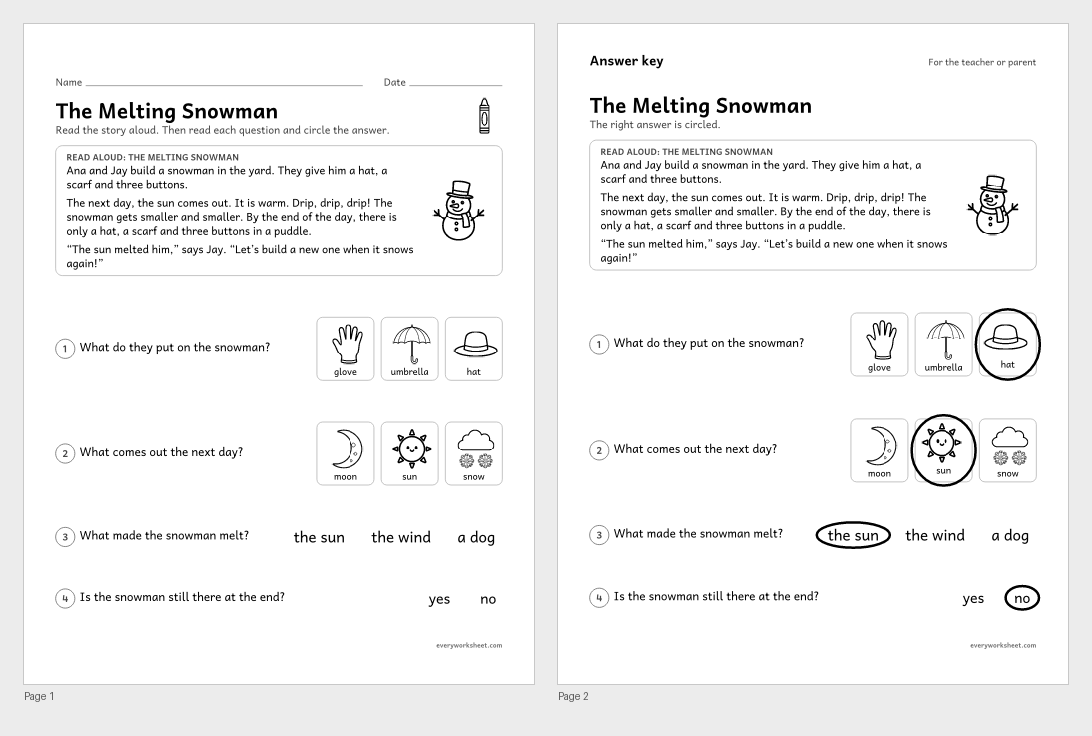 View all 2 pages
Listening to a story and telling what happened and why
Answer key on page 2
2 pages177 KB
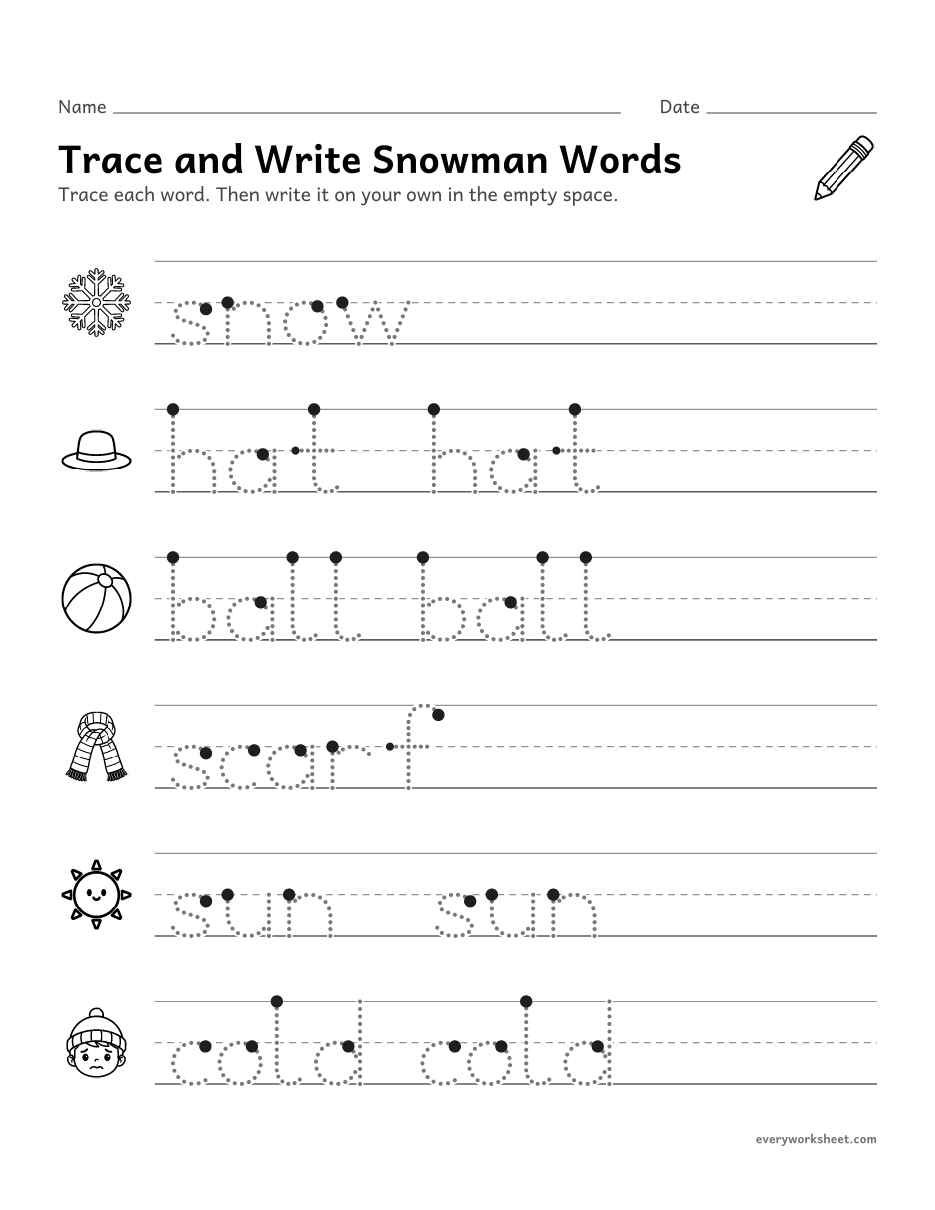 View larger
 View larger
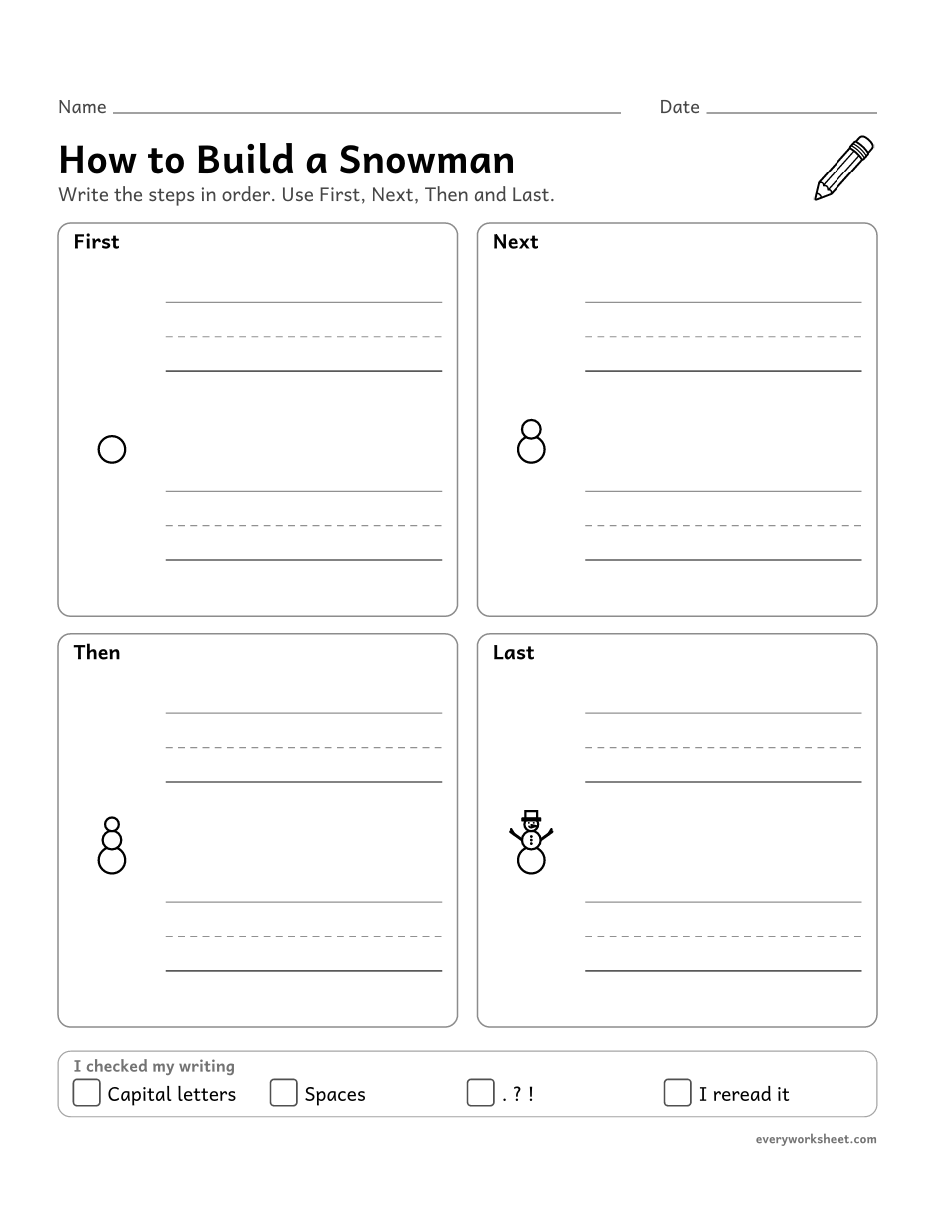
Writing a how-to with steps in order and time-order words
1 page40 KB
 View all 2 pages
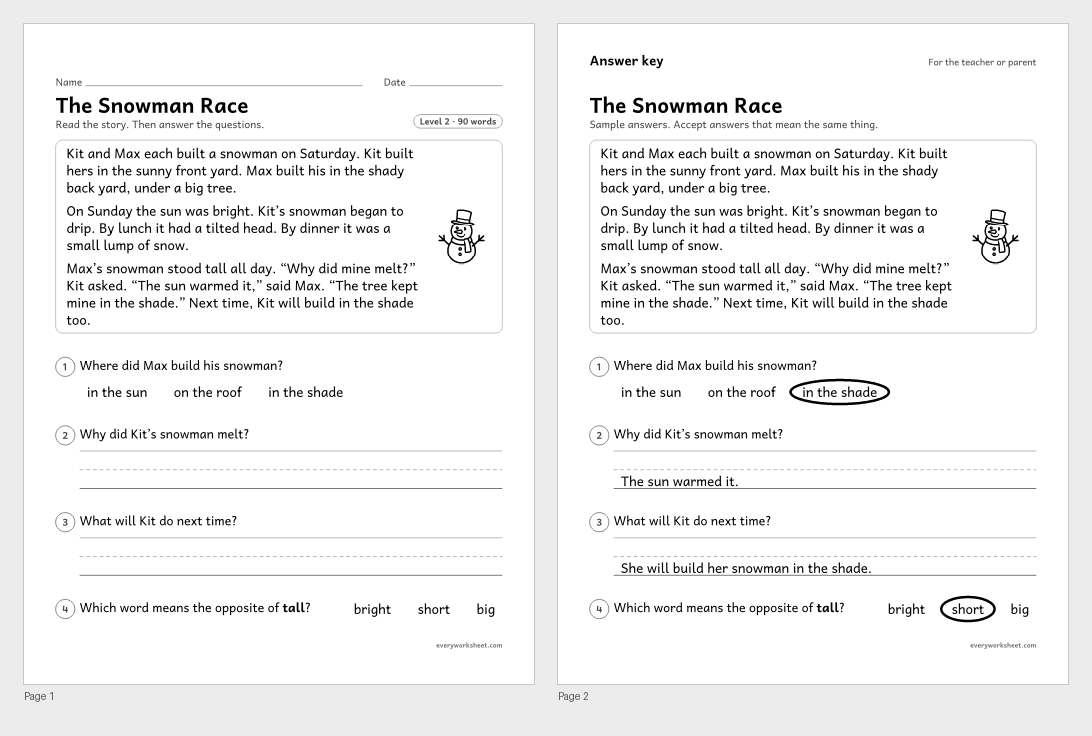
Reading a short story and telling cause and effect
Answer key on page 2
2 pages78 KB
 View all 2 pages
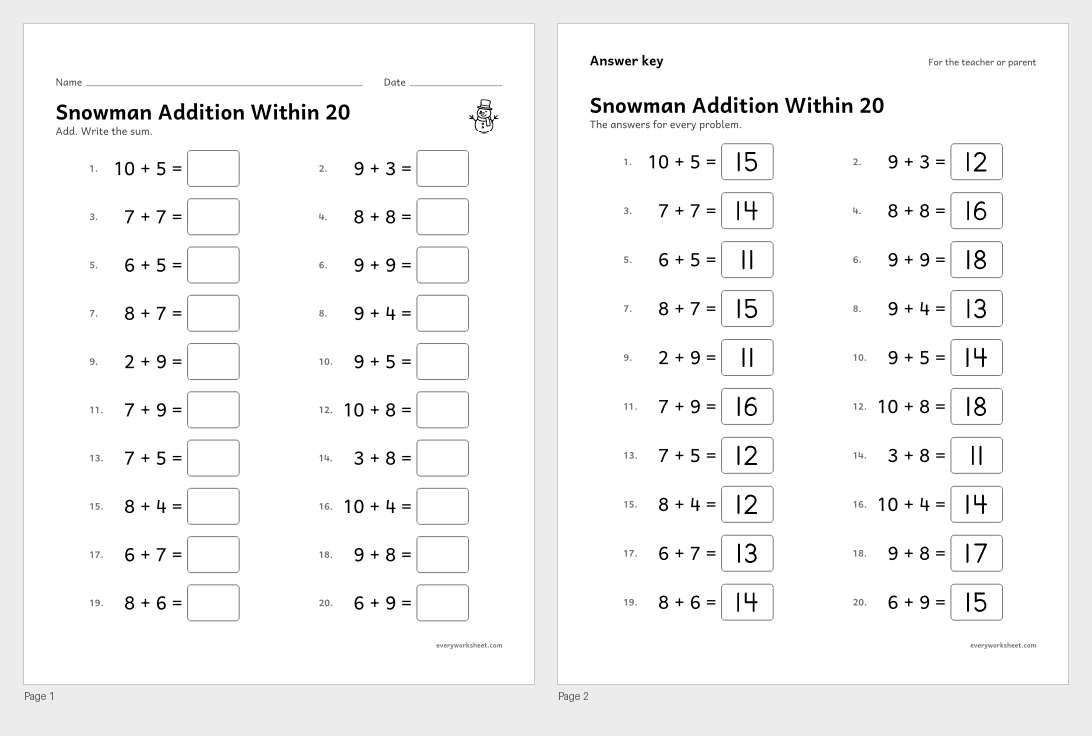
Adding within 20 (sums 11 to 20)
Answer key on page 2
2 pages113 KB
 View all 2 pages
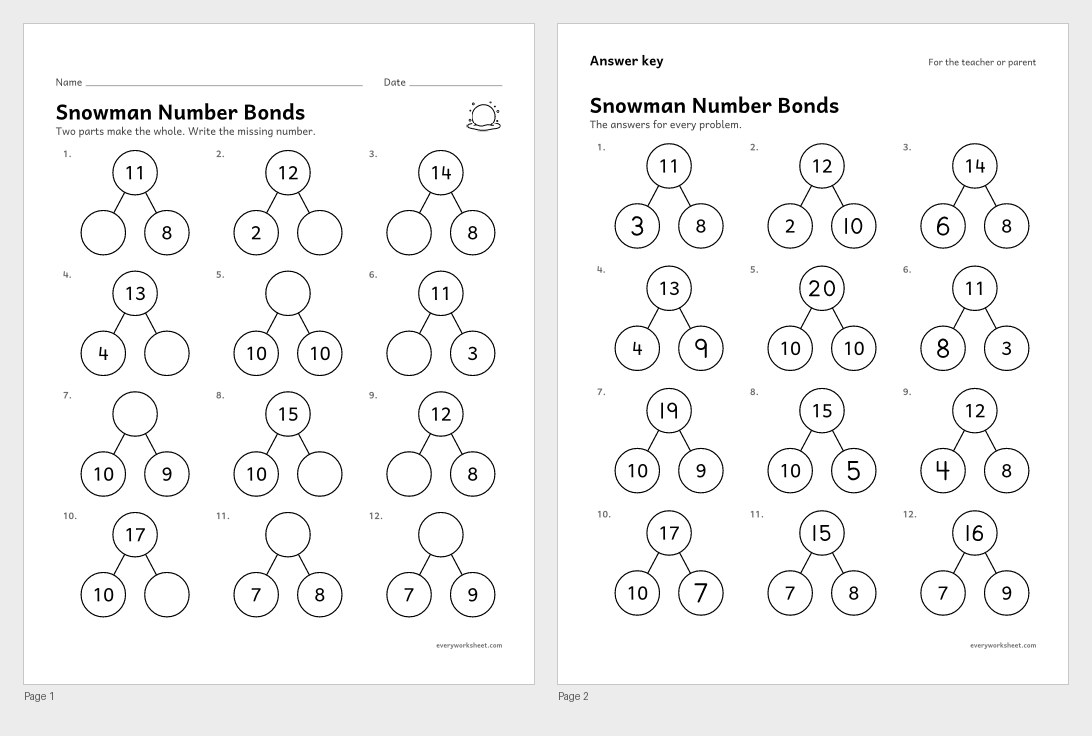
Finding a missing part or whole within 20
Answer key on page 2
2 pages62 KB
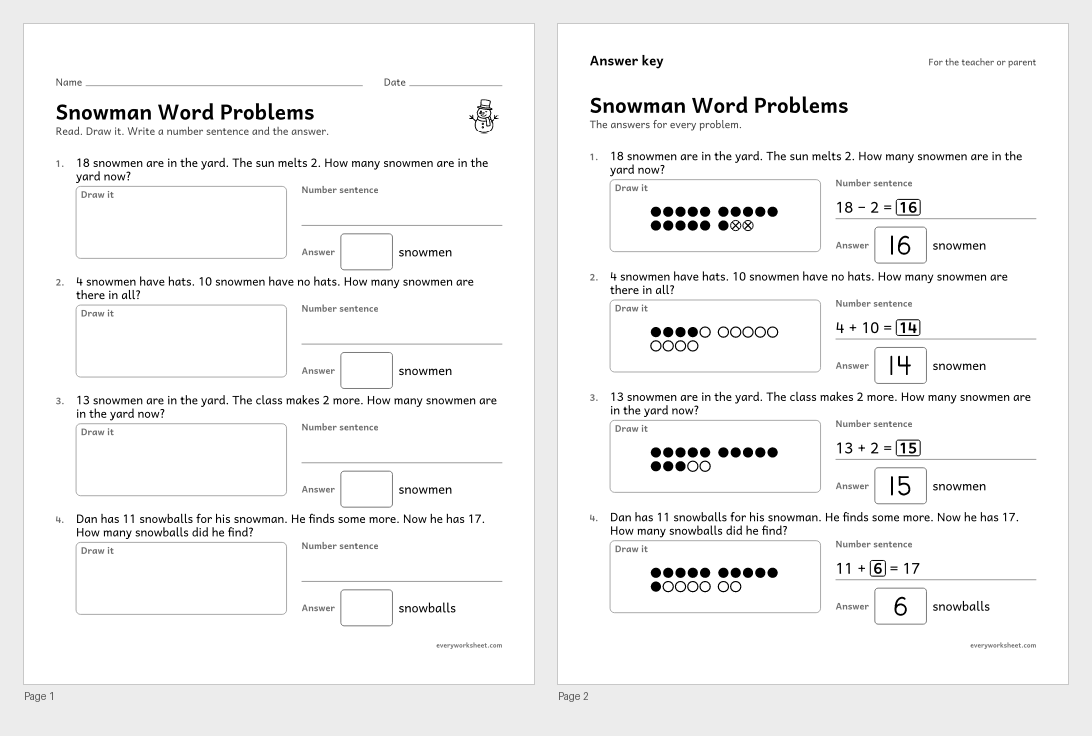 View all 2 pages
Solving snowman word problems with the result or the change unknown
Answer key on page 2
2 pages69 KB
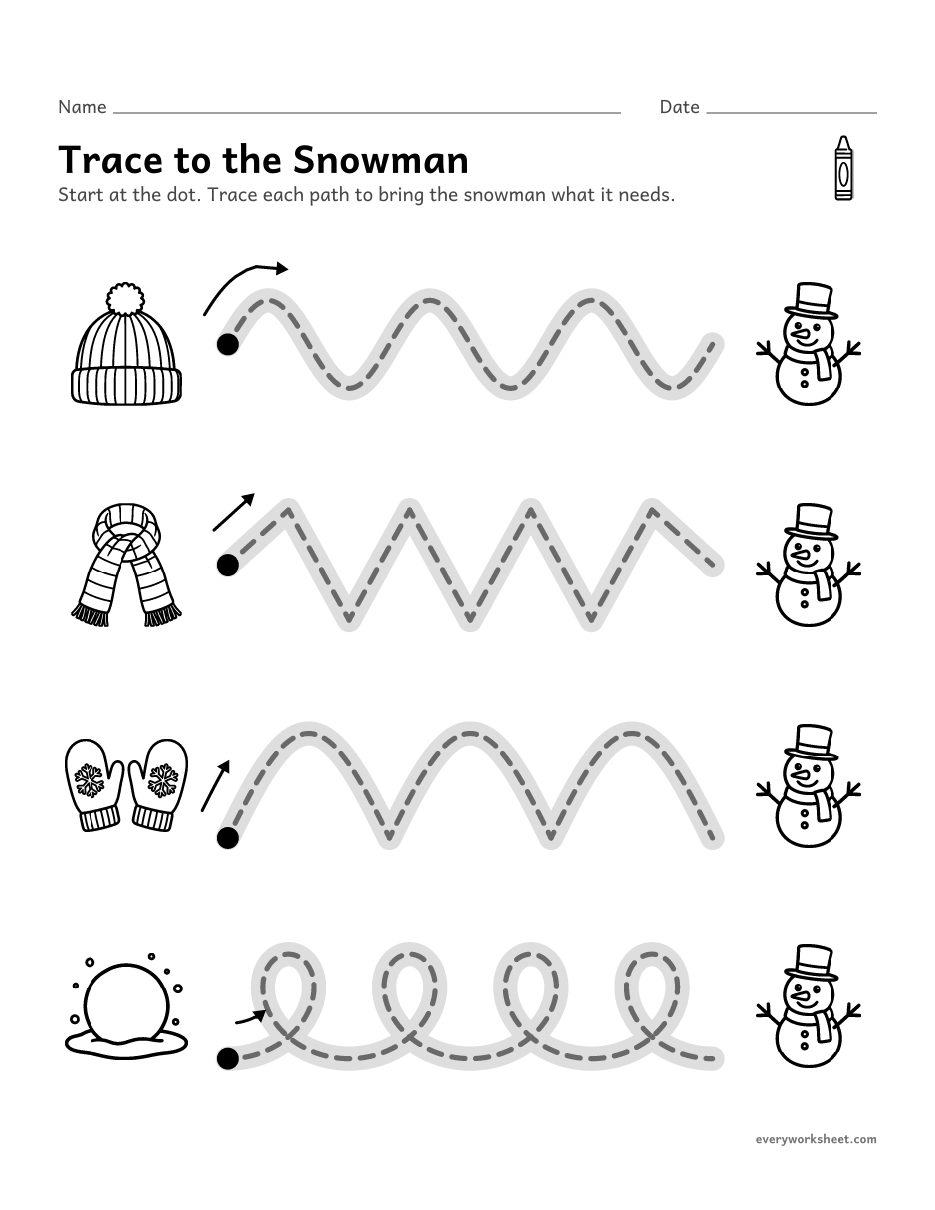
Print at 100% (actual size) for the cleanest tracing lines.
Building a snowman is a story every child knows, which makes it a great way to practice order words, counting and size. Preschoolers roll big, middle and small balls on a playdough mat, count snowman buttons, compare big and small and finish snowman patterns. Kindergartners put the steps of building a snowman in order, color by sight word, write a simple how-to and hear a story about a melting snowman.
1st graders write a how-to with First, Next, Then and Last, read a story about two snowmen in sun and shade, and practice addition within 20, number bonds and snowman word problems.
Use these pages any time in winter, and especially after a real snowman day. Pages with one right answer have an answer key on page 2.
ELOF P-MATH 2Child recognizes the number of objects in a small set.ELOF P-MATH 7Child understands simple patterns.ELOF P-MATH 8Child measures objects by their various attributes using standard and non-standard measurement. Uses differences in attributes to make comparisons.ELOF P-PMP 3Child demonstrates increasing control, strength, and coordination of small muscles.CCSS.ELA-LITERACY.L.K.1.APrint many upper- and lowercase letters.CCSS.ELA-LITERACY.RF.K.3.CRead common high-frequency words by sight (e.g., the, of, to, you, she, my, is, are, do, does).CCSS.ELA-LITERACY.RL.K.2With prompting and support, retell familiar stories, including key details.CCSS.ELA-LITERACY.RL.K.3With prompting and support, identify characters, settings, and major events in a story.CCSS.ELA-LITERACY.W.K.2Use a combination of drawing, dictating, and writing to compose informative/explanatory texts in which they name what they are writing about and supply some information about the topic.CCSS.ELA-LITERACY.RL.1.3Describe characters, settings, and major events in a story, using key details.CCSS.ELA-LITERACY.W.1.2Write informative/explanatory texts in which they name a topic, supply some facts about the topic, and provide some sense of closure.CCSS.MATH.CONTENT.1.OA.A.1Use addition and subtraction within 20 to solve word problems involving situations of adding to, taking from, putting together, taking apart, and comparing, with unknowns in all positions, e.g., by using objects, drawings, and equations with a symbol for the unknown number to represent the problem.CCSS.MATH.CONTENT.1.OA.C.6Add and subtract within 20, demonstrating fluency for addition and subtraction within 10. Use strategies such as counting on; making ten; decomposing a number leading to a ten; using the relationship between addition and subtraction; and creating equivalent but easier or known sums.Size words (big, middle, small), counting to 5, simple patterns and fine motor control. The playdough mat, button counting, big and small and pattern pages each practice one of these.
Talk through the steps out loud, then draw them in order. Kindergartners draw each step and write a word; 1st graders write a sentence for each step using First, Next, Then and Last.
Yes. The cut and paste page has a twin where children write 1, 2, 3 and 4 under the pictures, with the same answer key.