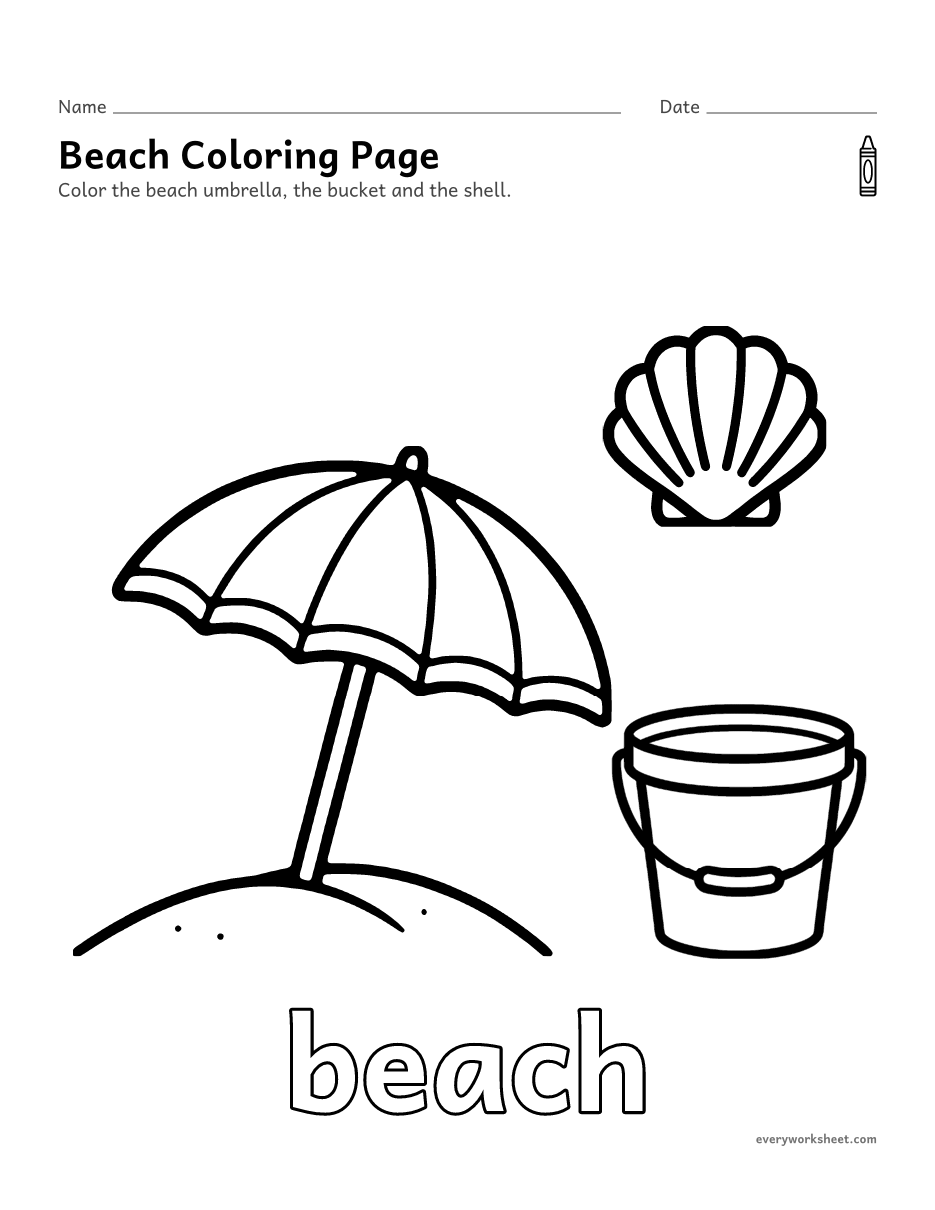
 View larger
Summer Worksheets
Beach, sun and summer fun pages that practice real skills: counting, patterns, letter sounds, word searches, reading, writing and a summer reading log.
Download the summer worksheets
Summer worksheets for preschool
 View larger
 View all 2 pages
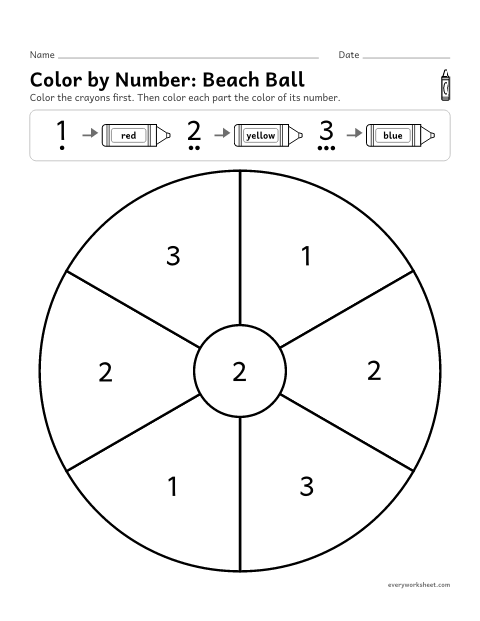
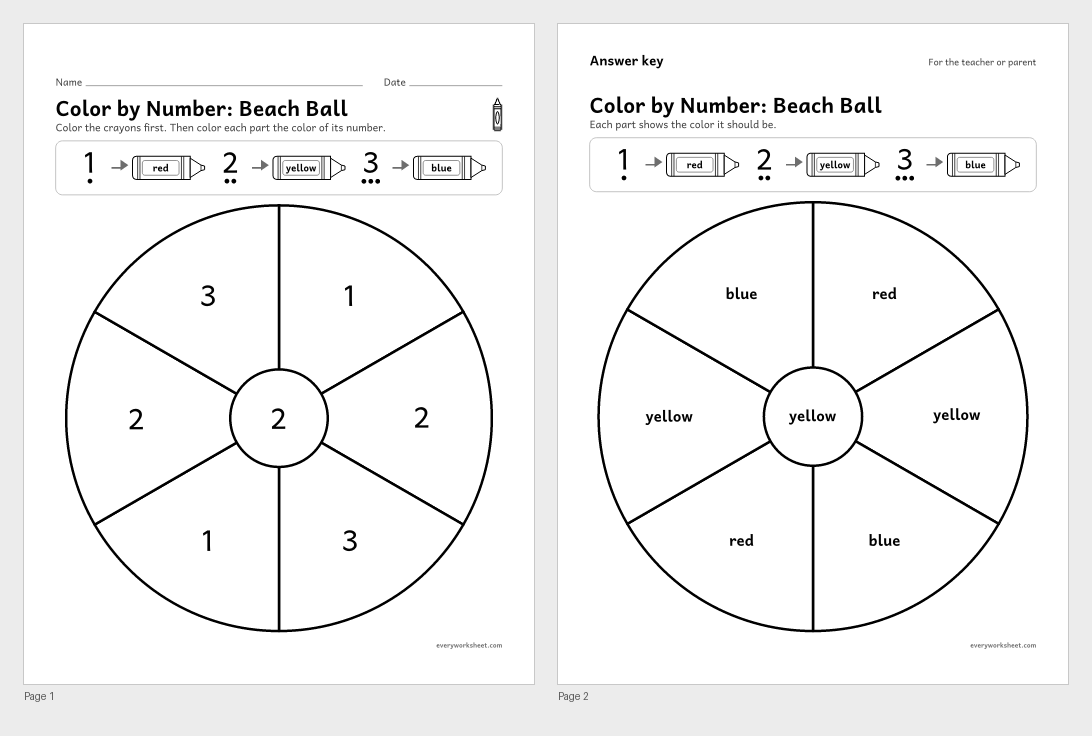
Color by Number: beach ball
Reading the numerals 1 to 3 to color
Answer key on page 2
2 pages38 KB
 View all 2 pages
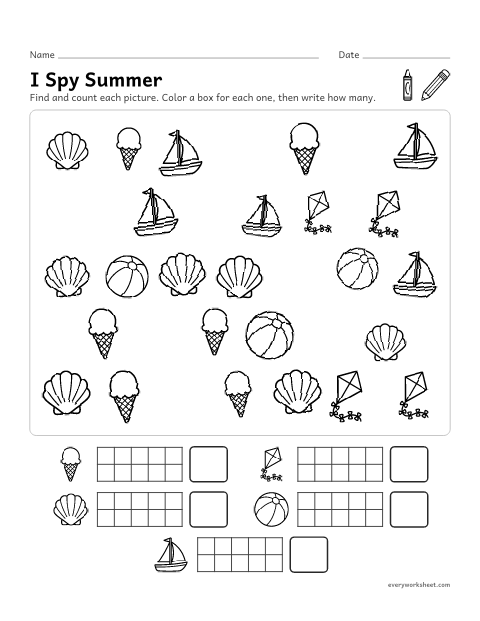
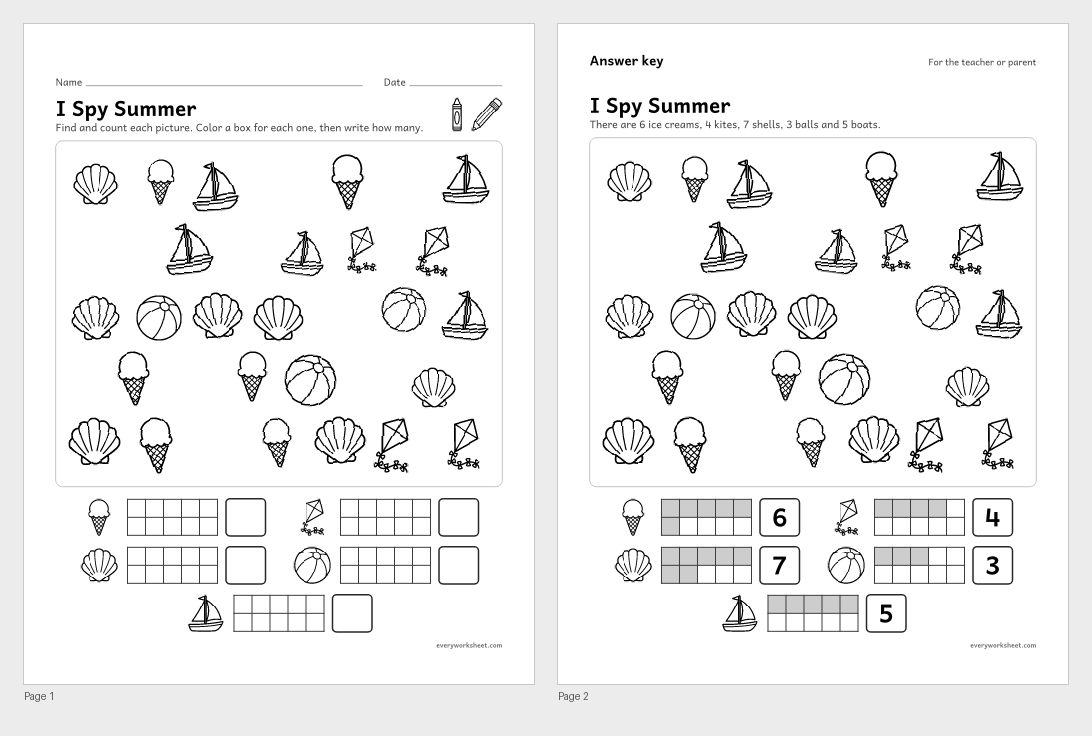
I spy summer
Finding and counting summer pictures up to 7
Answer key on page 2
2 pages1016 KB
 View all 2 pages
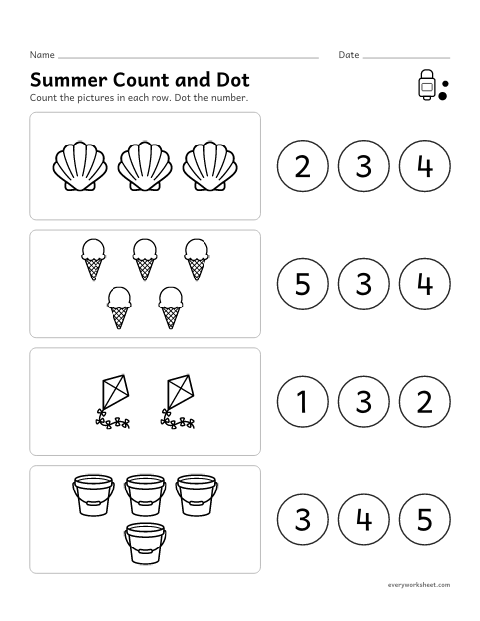
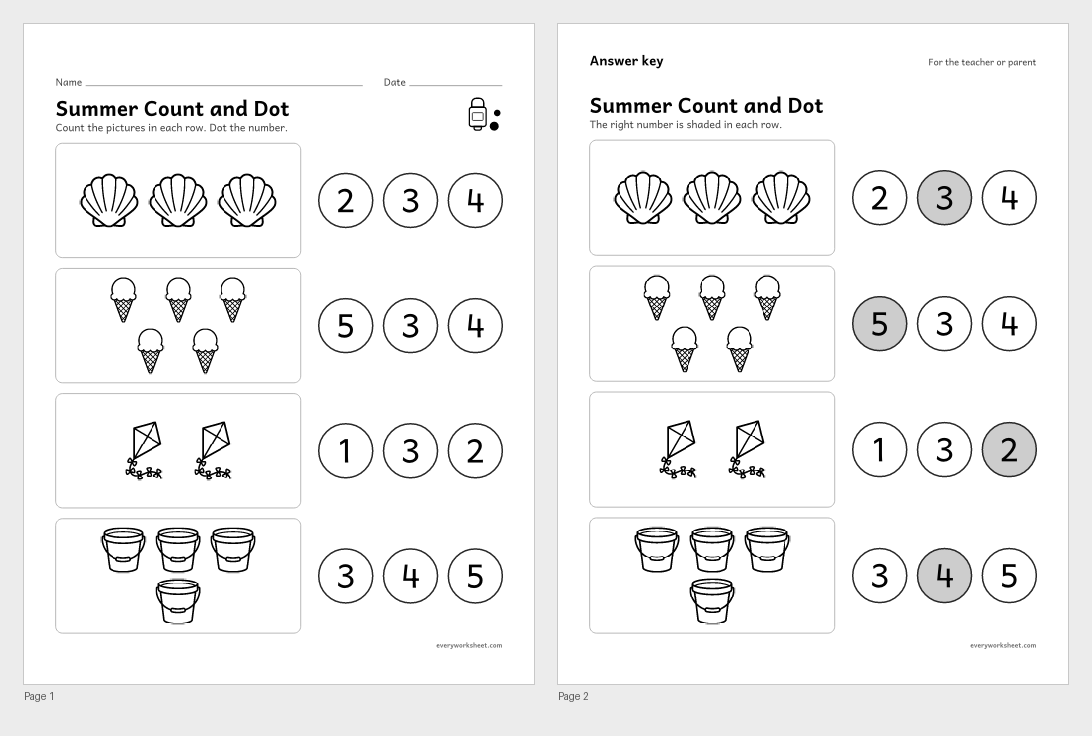
Summer count and dot
Counting 1 to 5 summer pictures and finding the number
Answer key on page 2
2 pages399 KB
 View larger
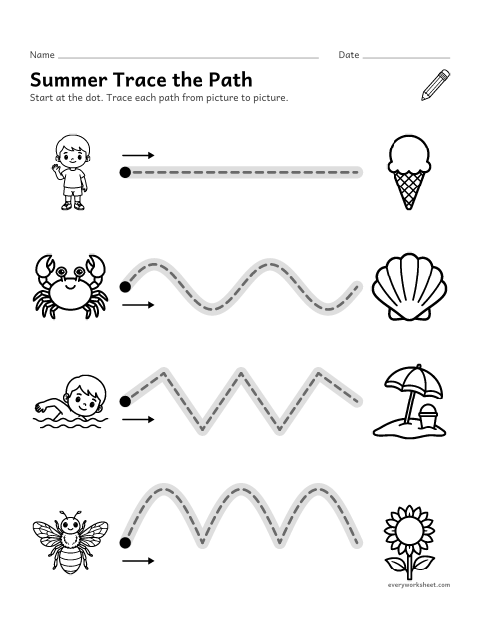
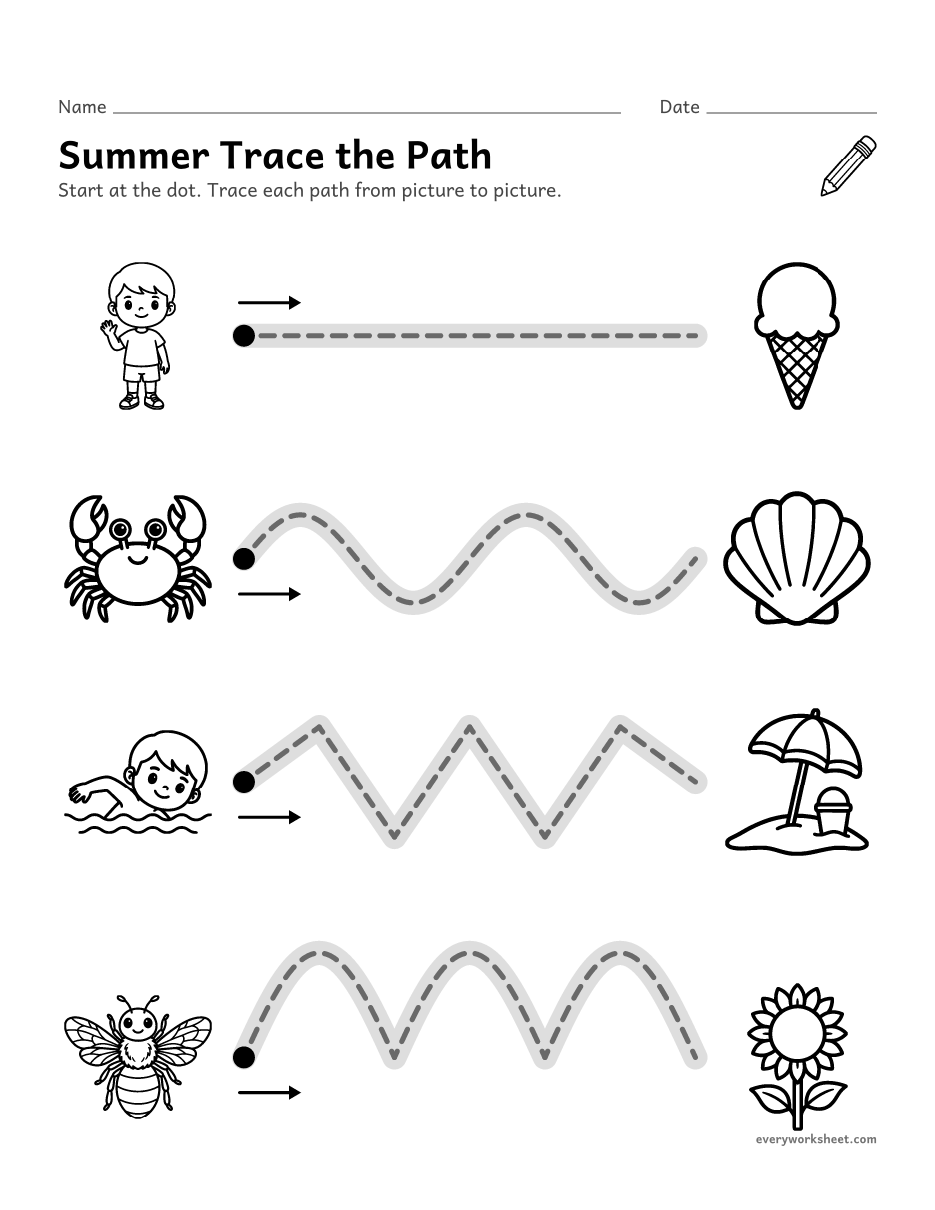
Summer trace the path
Tracing straight, wavy and zigzag lines from left to right
1 page165 KB
 View all 2 pages
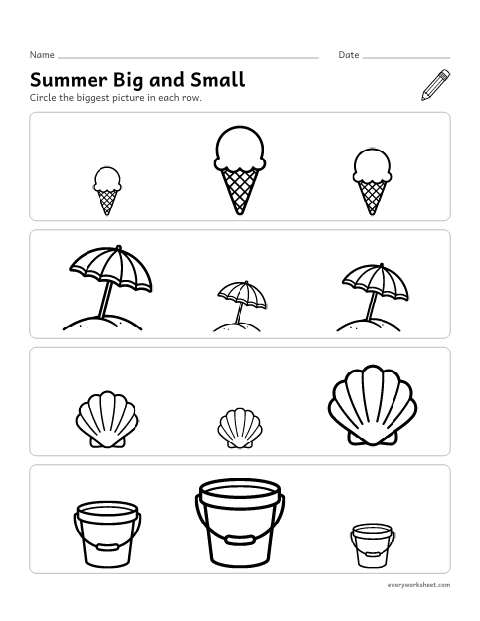
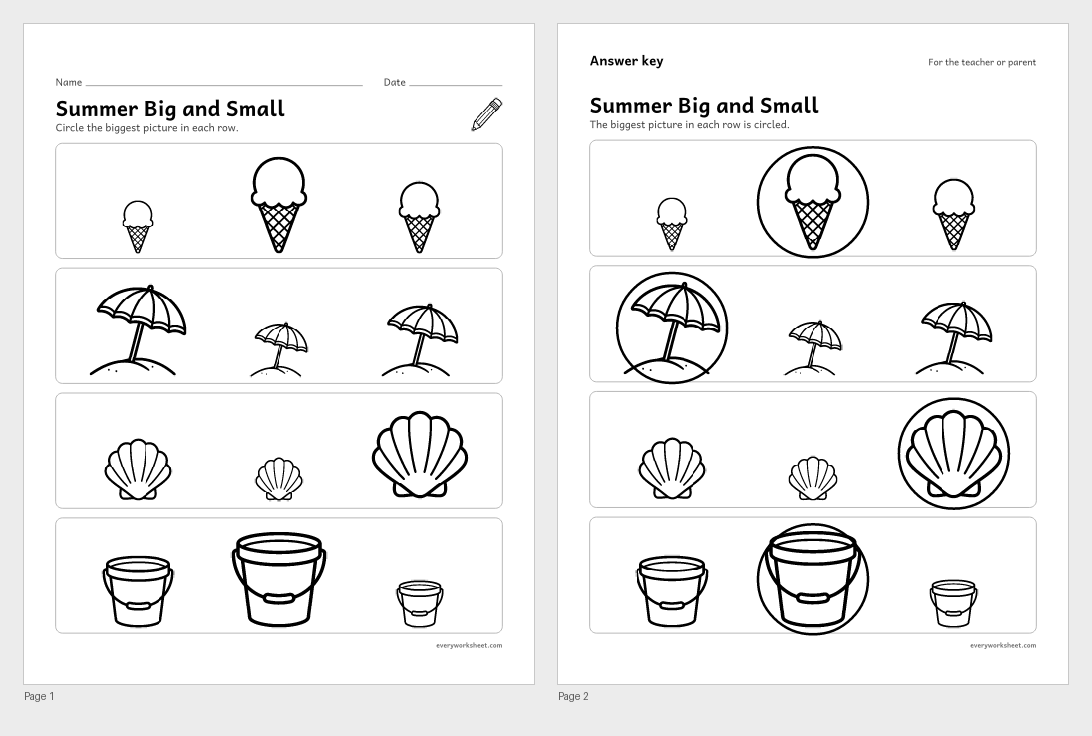
Summer big and small
Comparing sizes and finding the biggest
Answer key on page 2
2 pages422 KB
 View all 2 pages
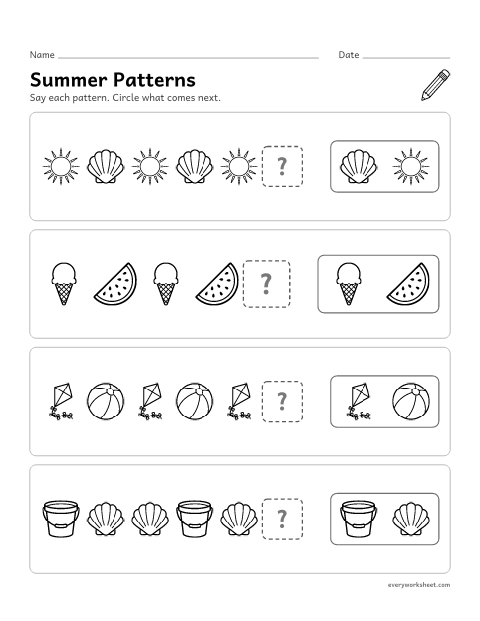
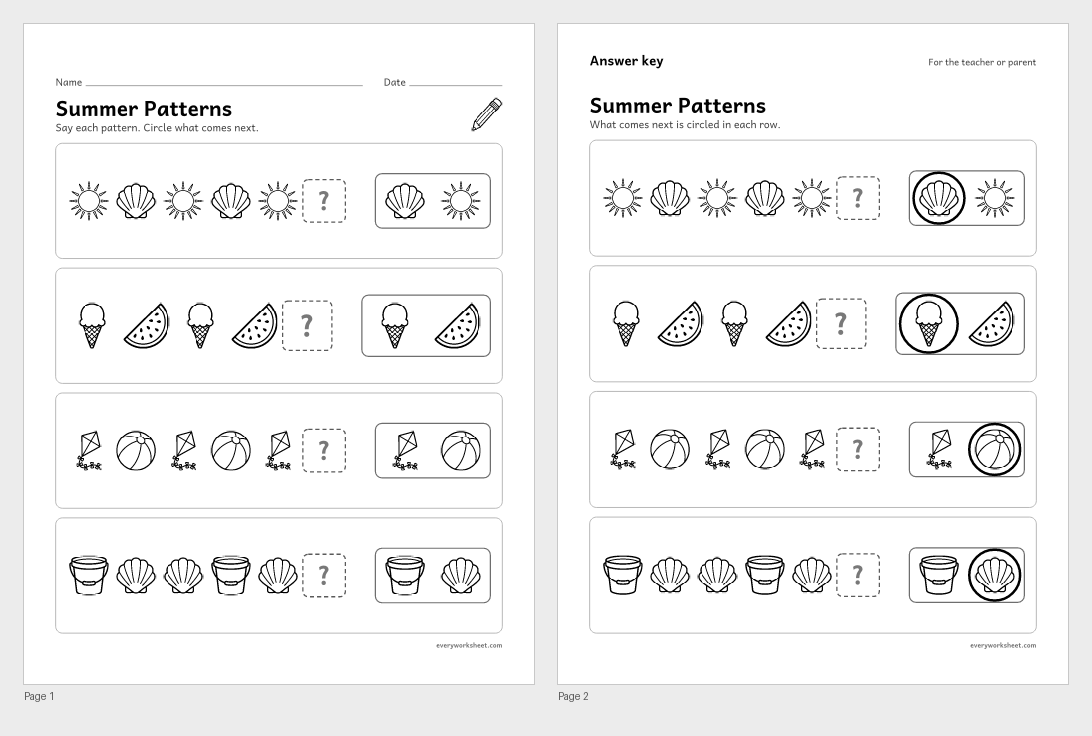
Summer patterns
Finding what comes next in AB and ABB patterns
Answer key on page 2
2 pages888 KB
 View all 2 pages
 View larger
Summer worksheets for kindergarten
 View all 2 pages
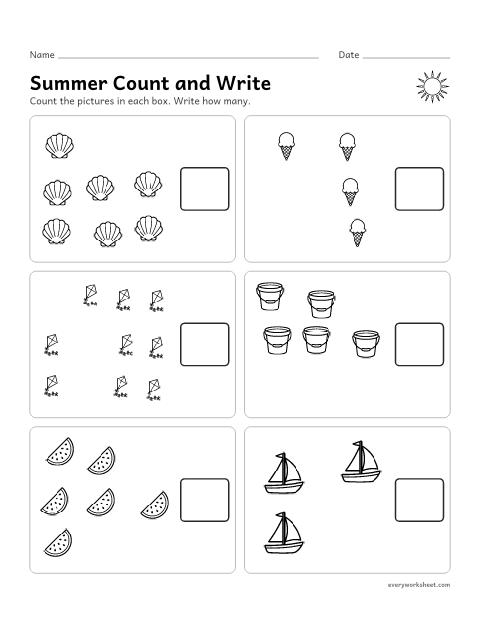
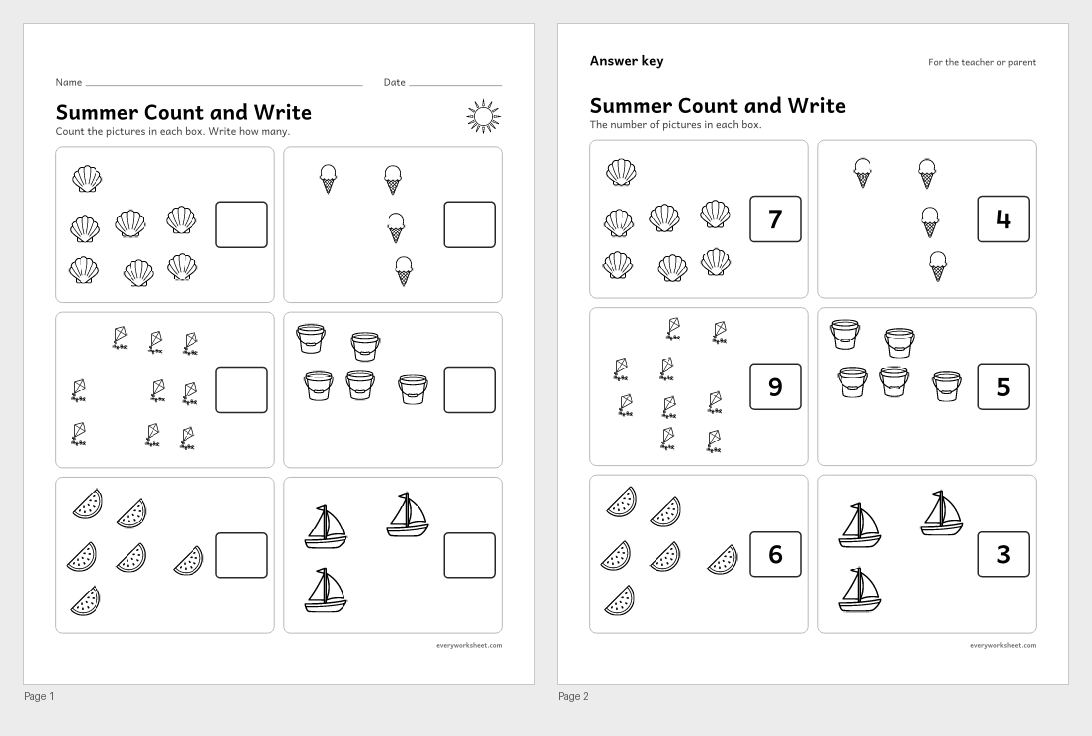
Summer count and write
Counting up to 10 objects in a scattered group and writing the number
Answer key on page 2
2 pages1.1 MB
 View all 2 pages
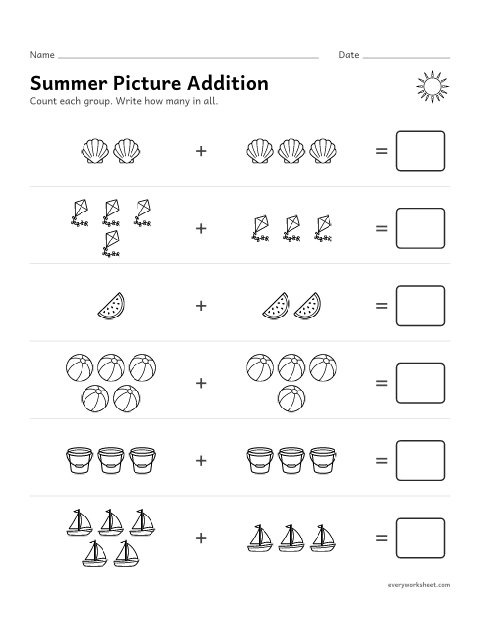
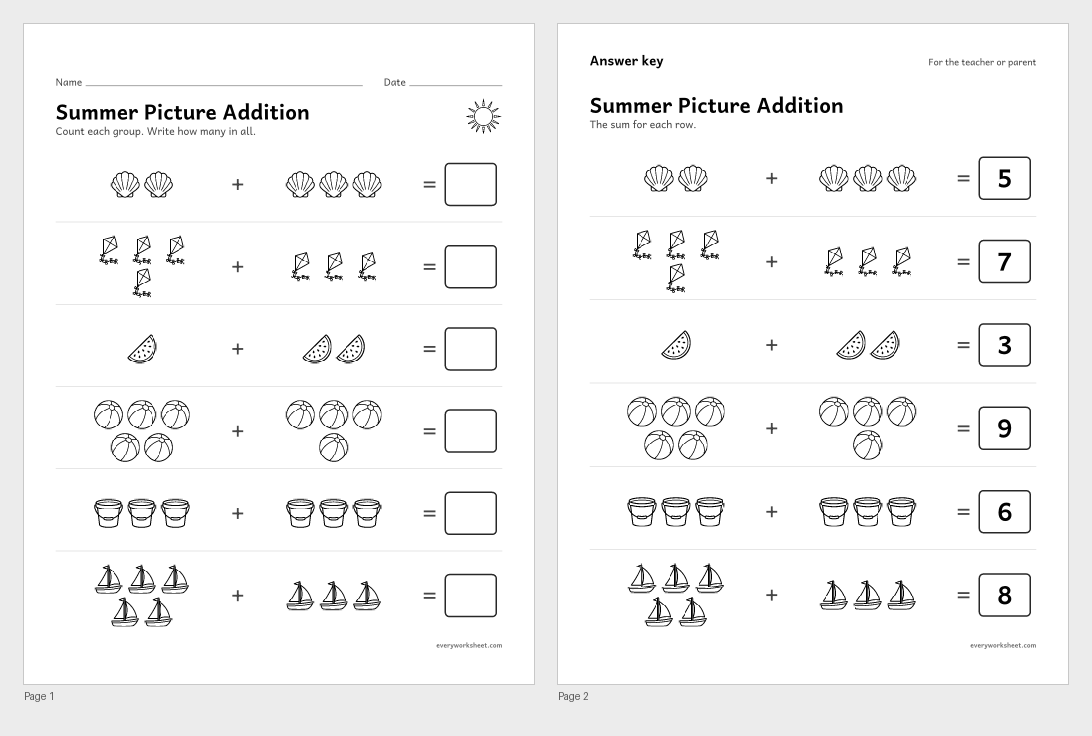
Summer picture addition
Adding within 10 with pictures
Answer key on page 2
2 pages1.3 MB
 View all 2 pages
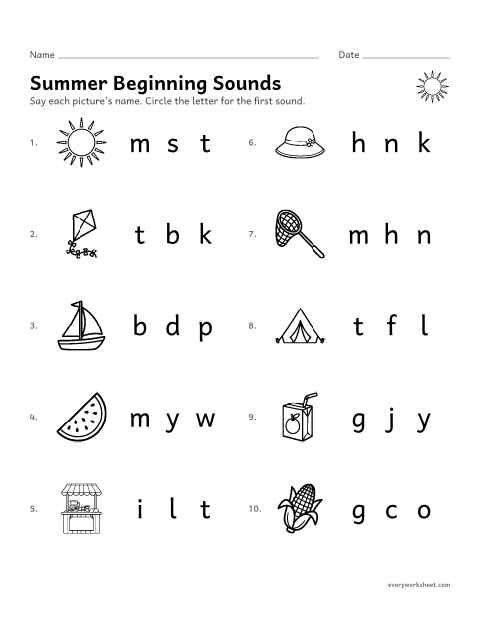
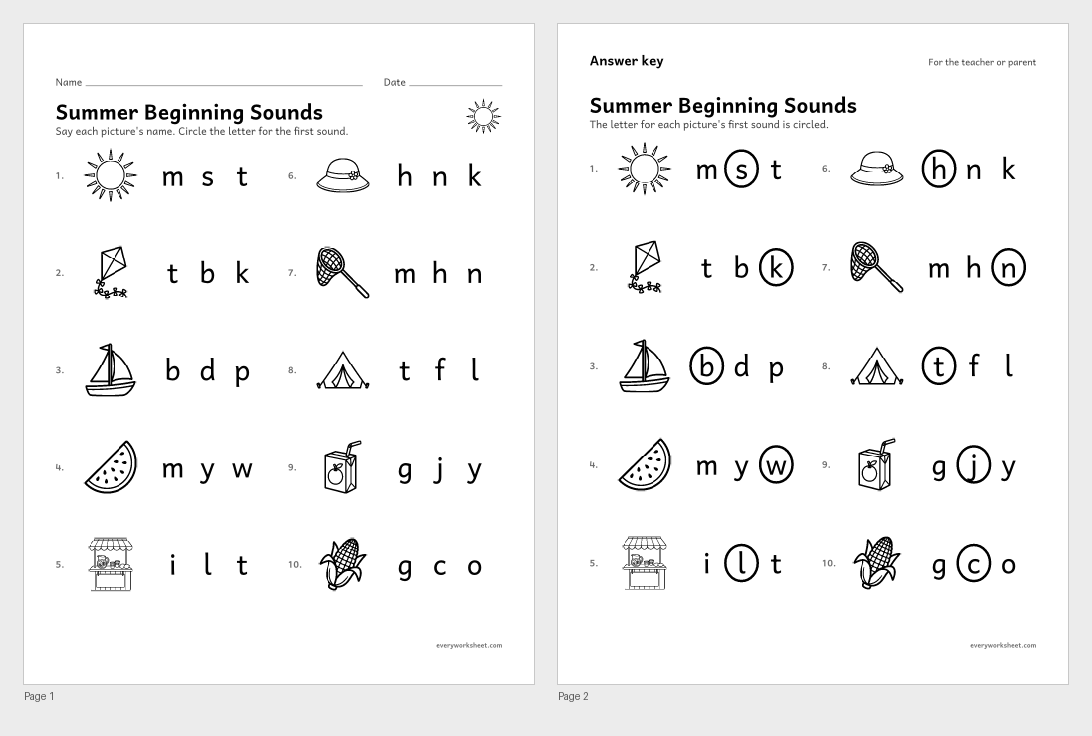
Summer beginning sounds
Hearing the first sound of a word and matching it to its letter
Answer key on page 2
2 pages380 KB
 View larger
 View all 2 pages
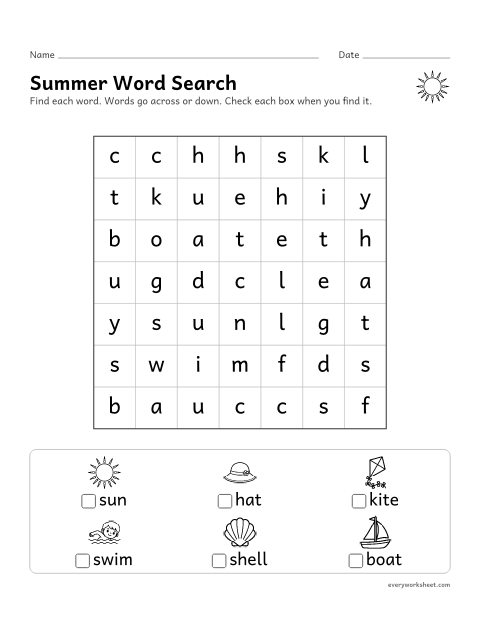
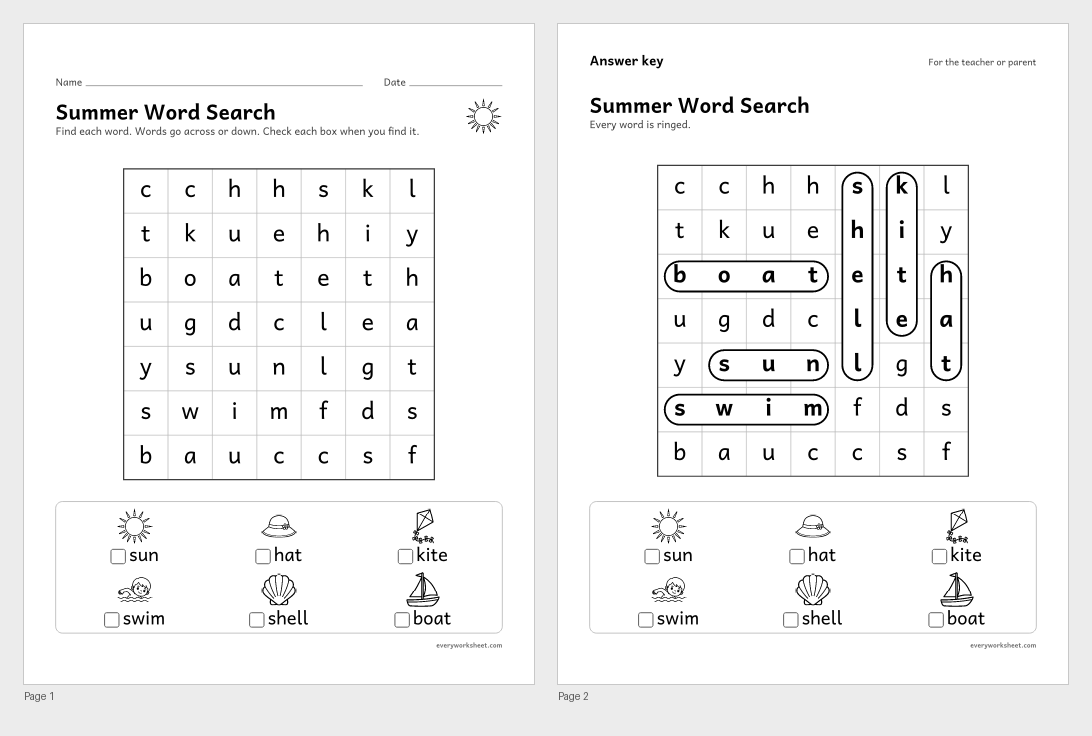
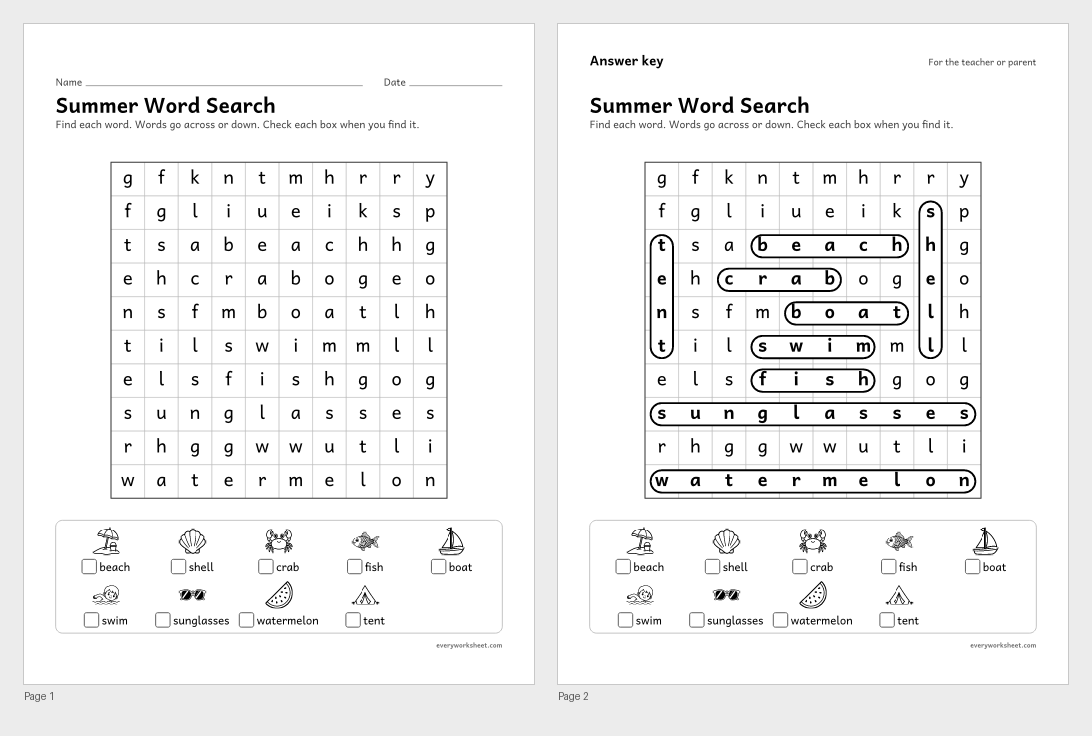
Summer word search
Finding summer words letter by letter
Answer key on page 2
2 pages212 KB
 View all 2 pages
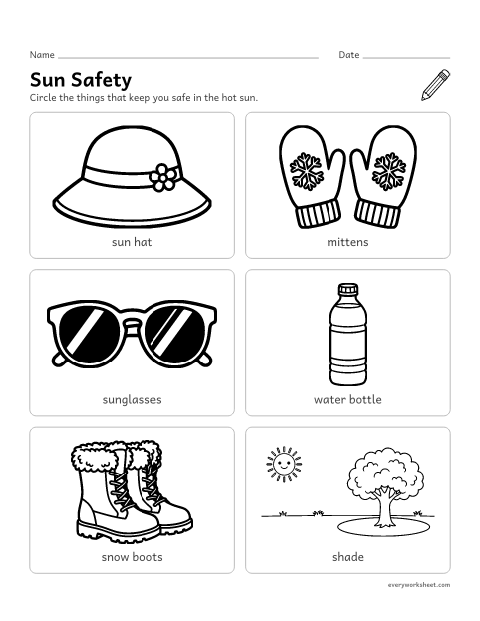
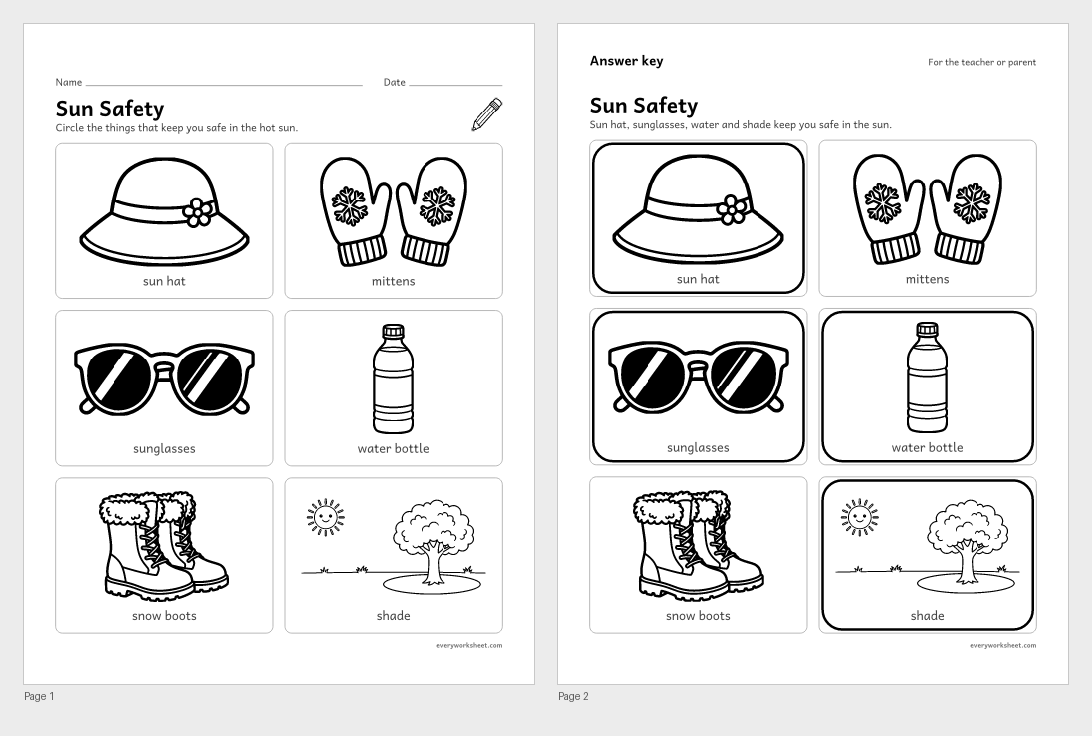
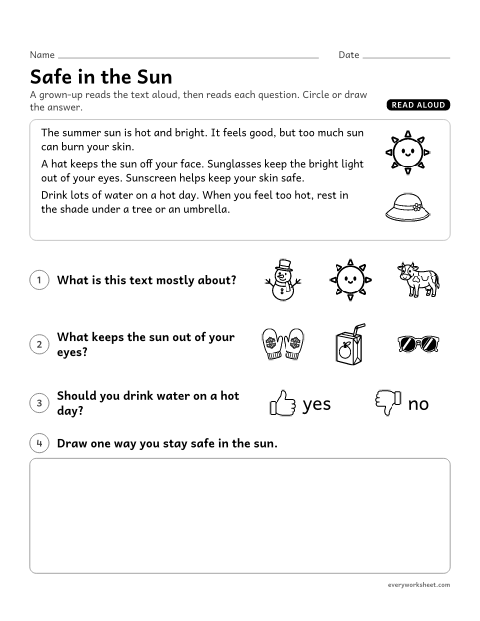
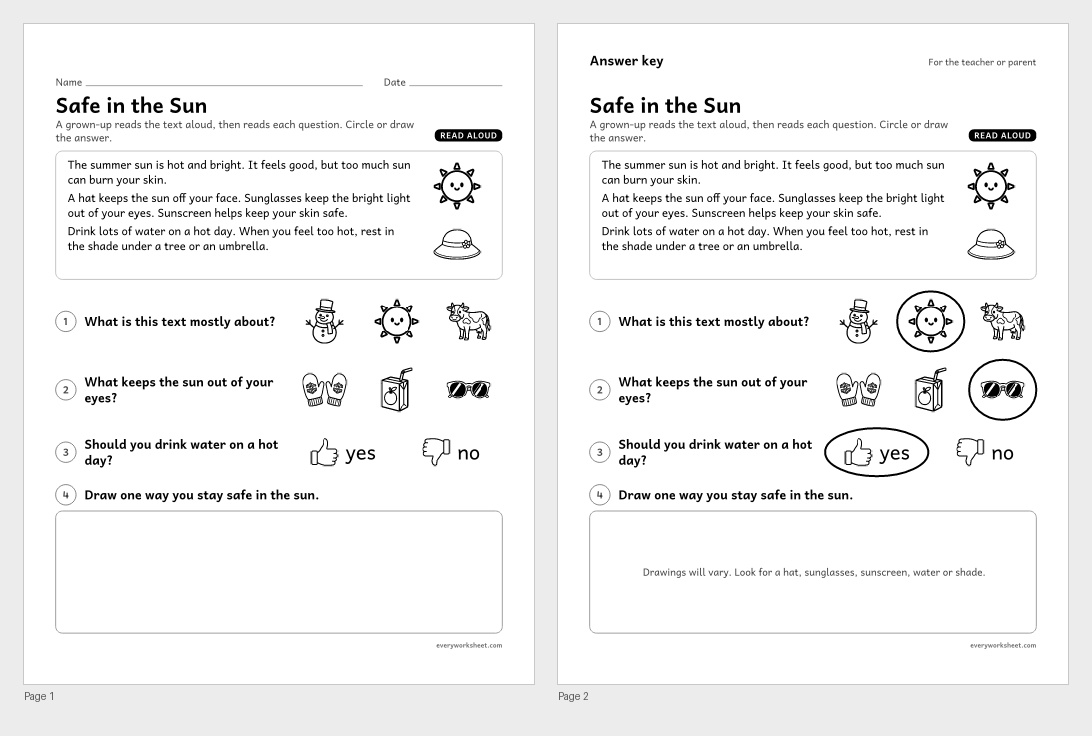
Safe in the sun
Listening to an informational text and naming the main topic and key details
Answer key on page 2
2 pages220 KB
 View all 2 pages
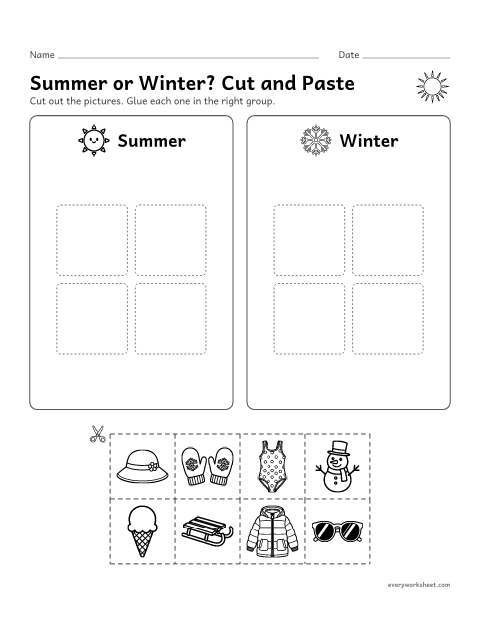
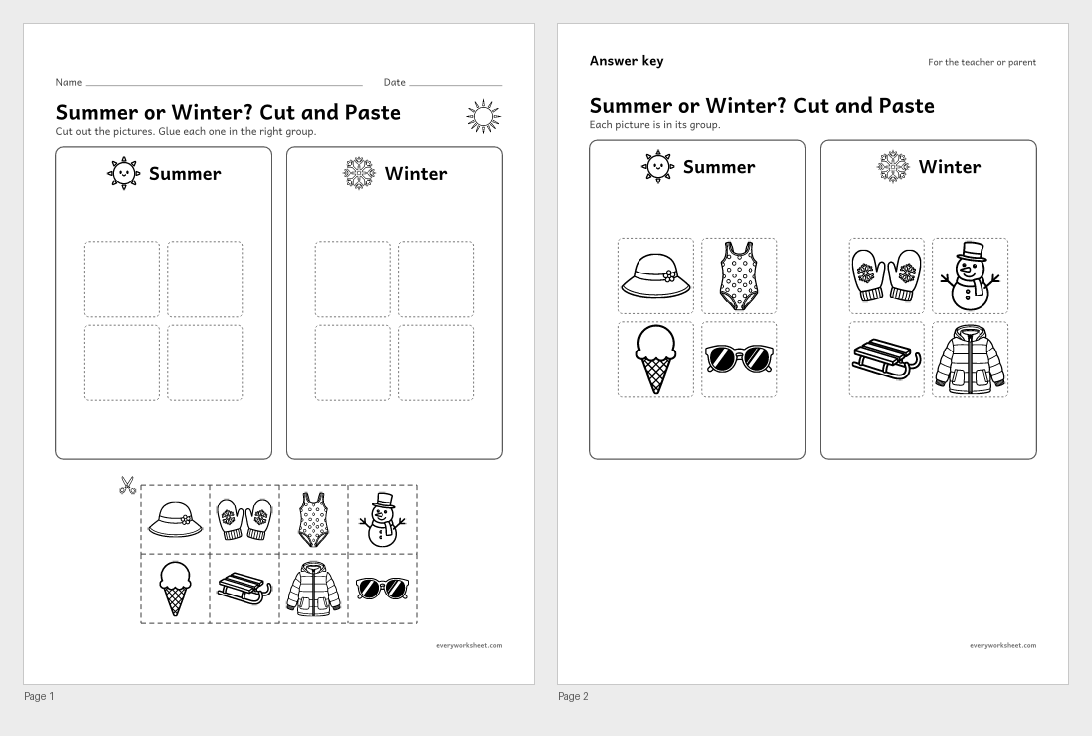
Summer or Winter? cut and paste
Sorting things we use in summer and in winter
Answer key on page 2
2 pages277 KB
 View all 2 pages
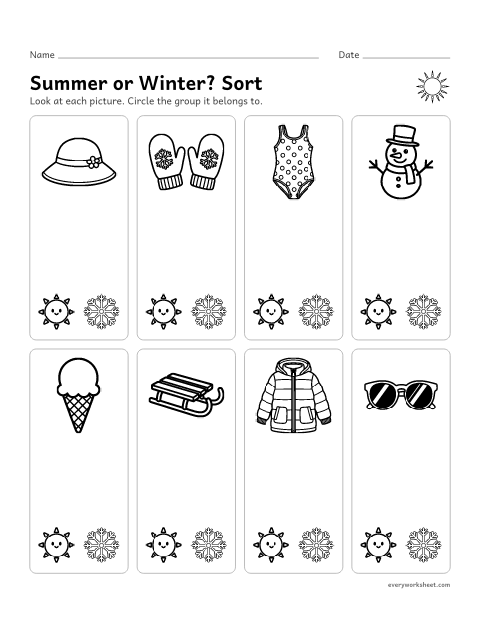
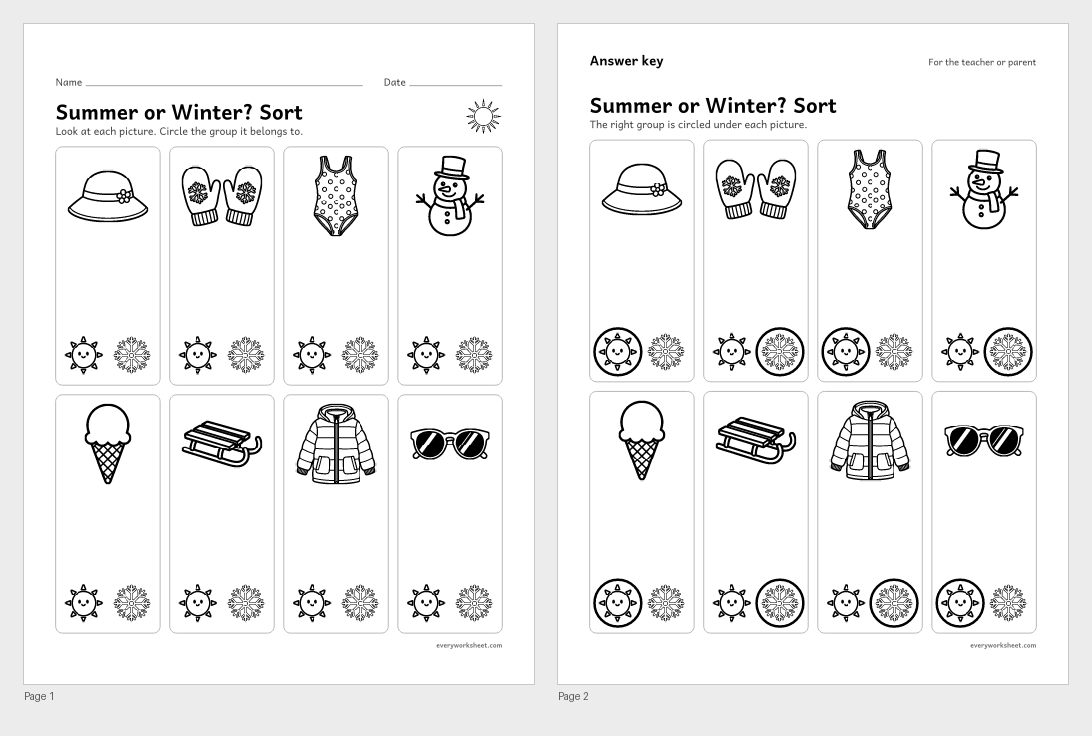
Summer or Winter? sort
Sorting things we use in summer and in winter
Answer key on page 2
2 pages422 KB
 View larger
 View larger
Summer worksheets for 1st grade
 View all 2 pages
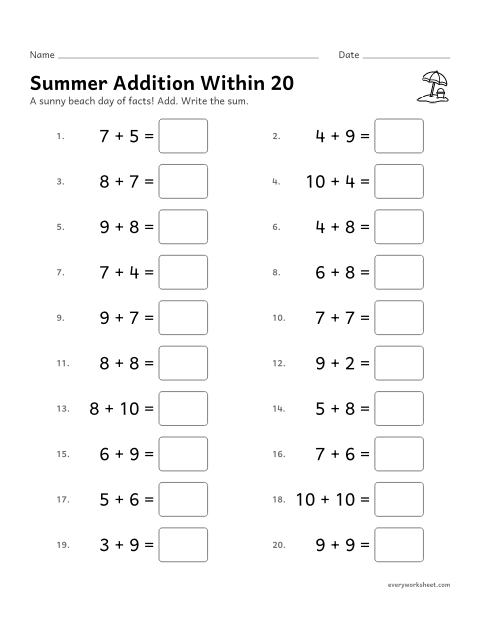
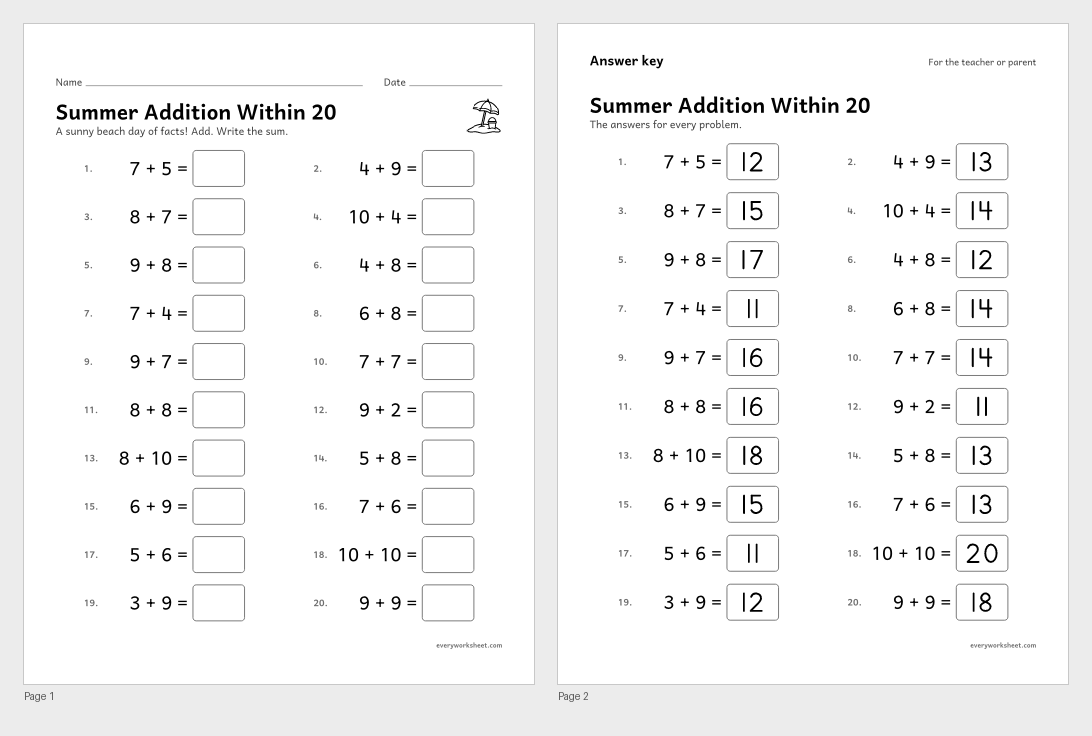
Summer addition within 20
Adding within 20 (sums 11 to 20)
Answer key on page 2
2 pages116 KB
 View all 2 pages
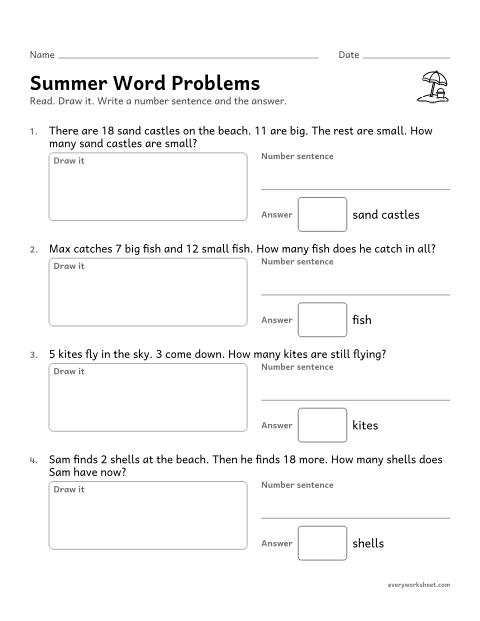
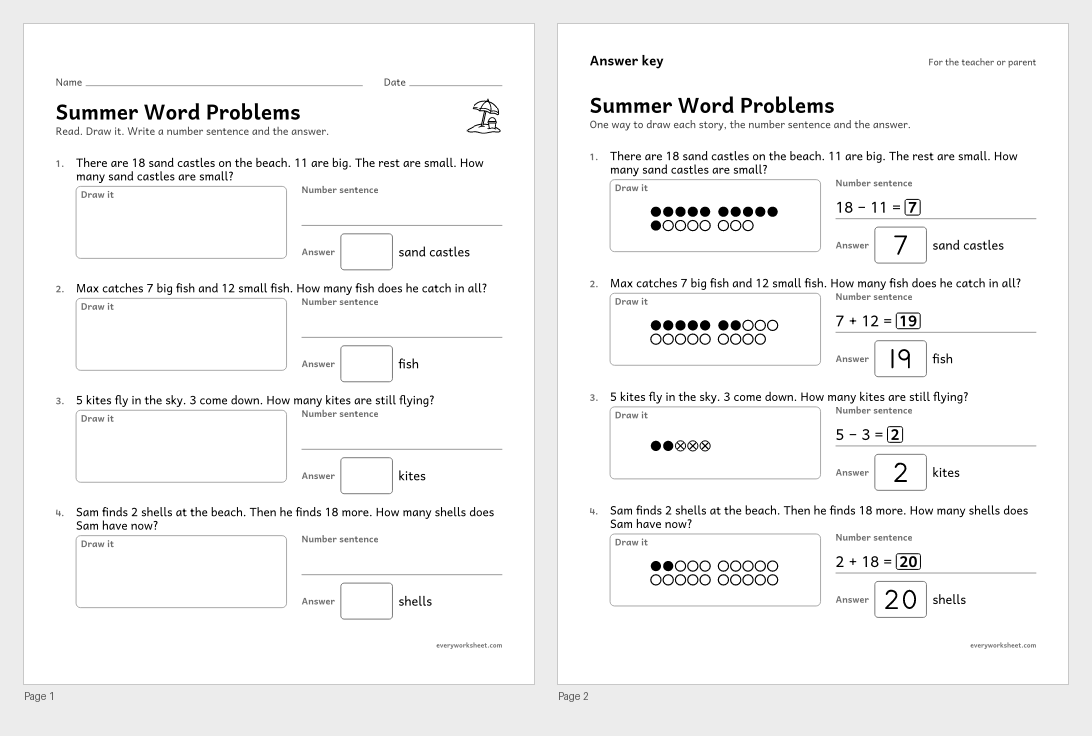
Summer word problems
Solving addition and subtraction word problems within 20
Answer key on page 2
2 pages73 KB
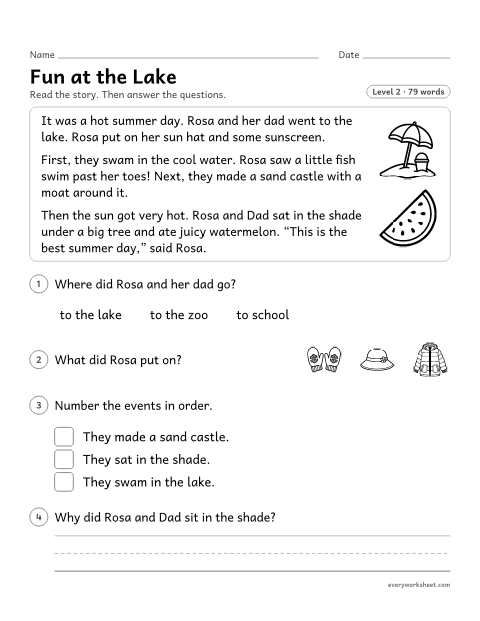 View all 2 pages
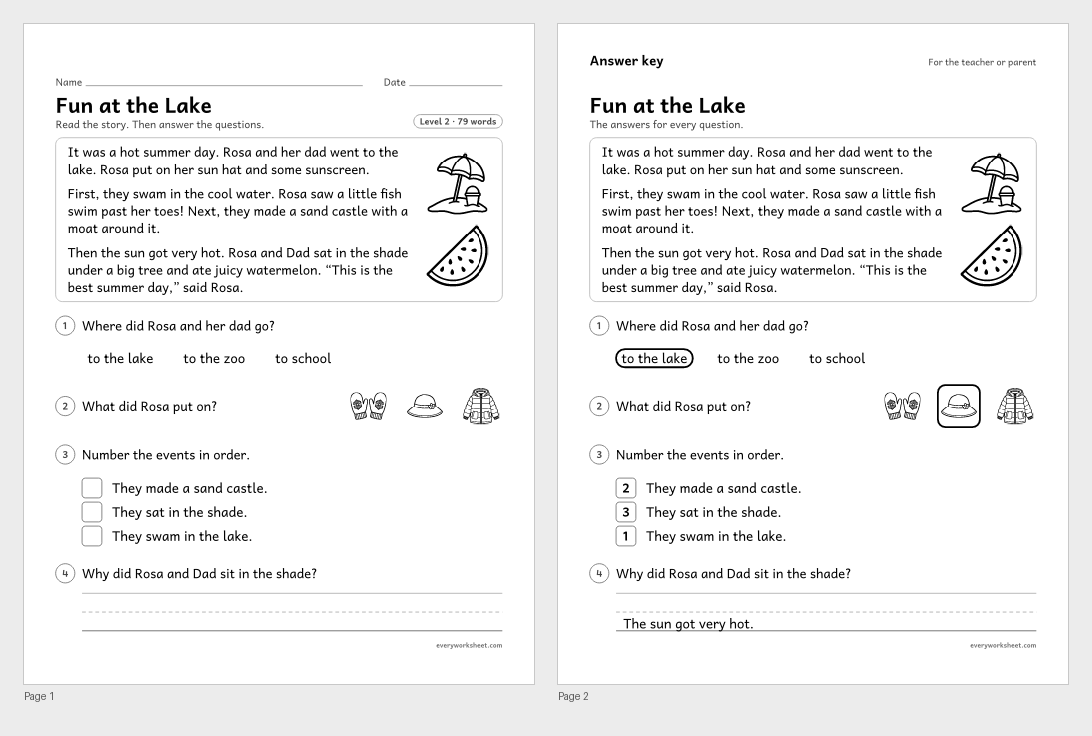
Fun at the lake
Retelling a story's events in order and describing its key details
Answer key on page 2
2 pages163 KB
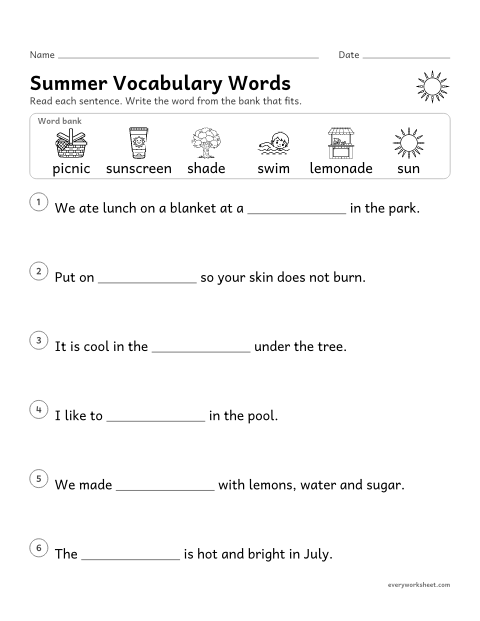 View all 2 pages
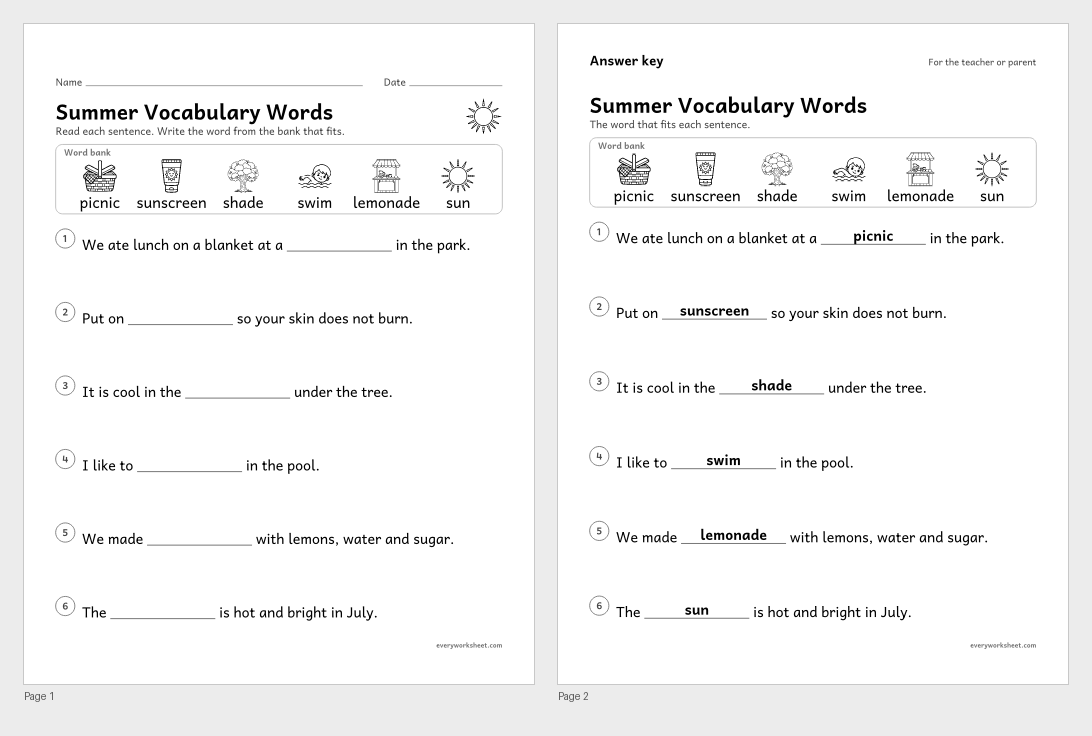
Summer vocabulary words
Using sentence clues to choose the word that fits
Answer key on page 2
2 pages270 KB
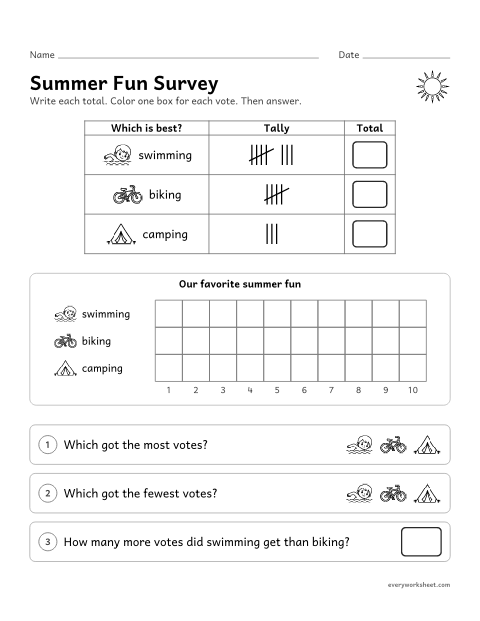 View all 2 pages
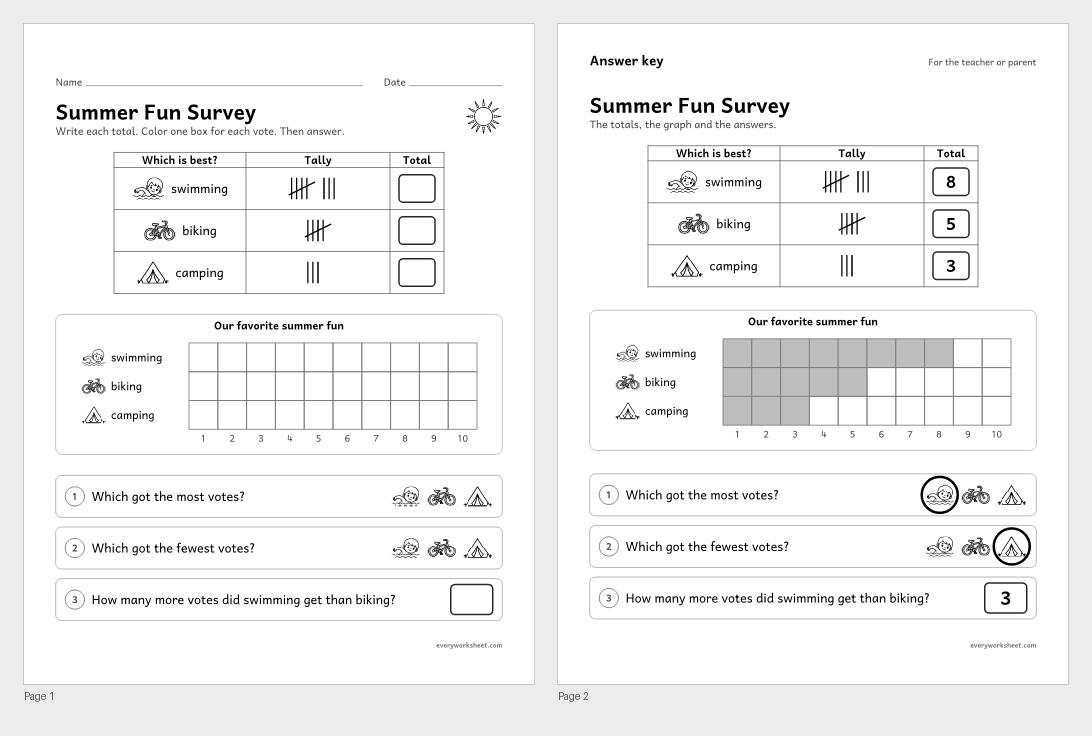
Summer fun survey
Organizing survey data in a tally chart and bar graph and comparing the totals
Answer key on page 2
2 pages596 KB
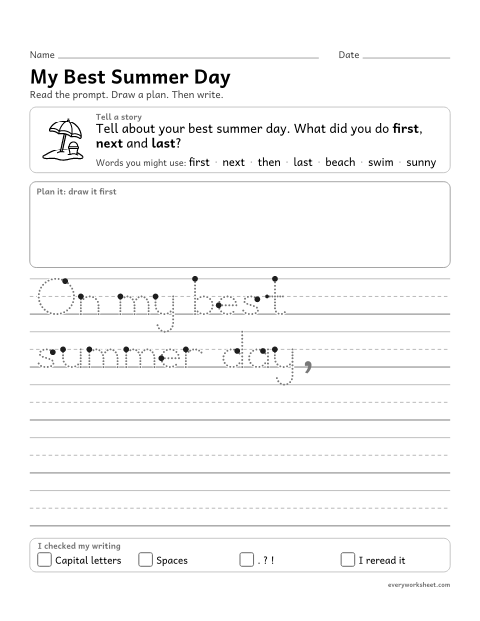 View larger
 View all 2 pages
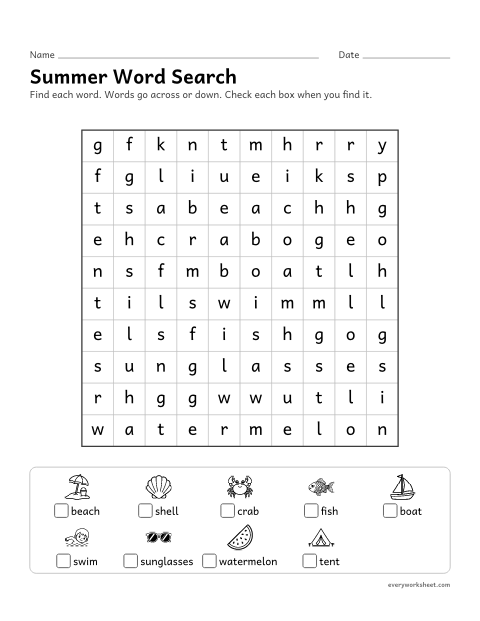
Summer word search
Finding and reading theme words by their spelling
Answer key on page 2
2 pages339 KB
 View larger
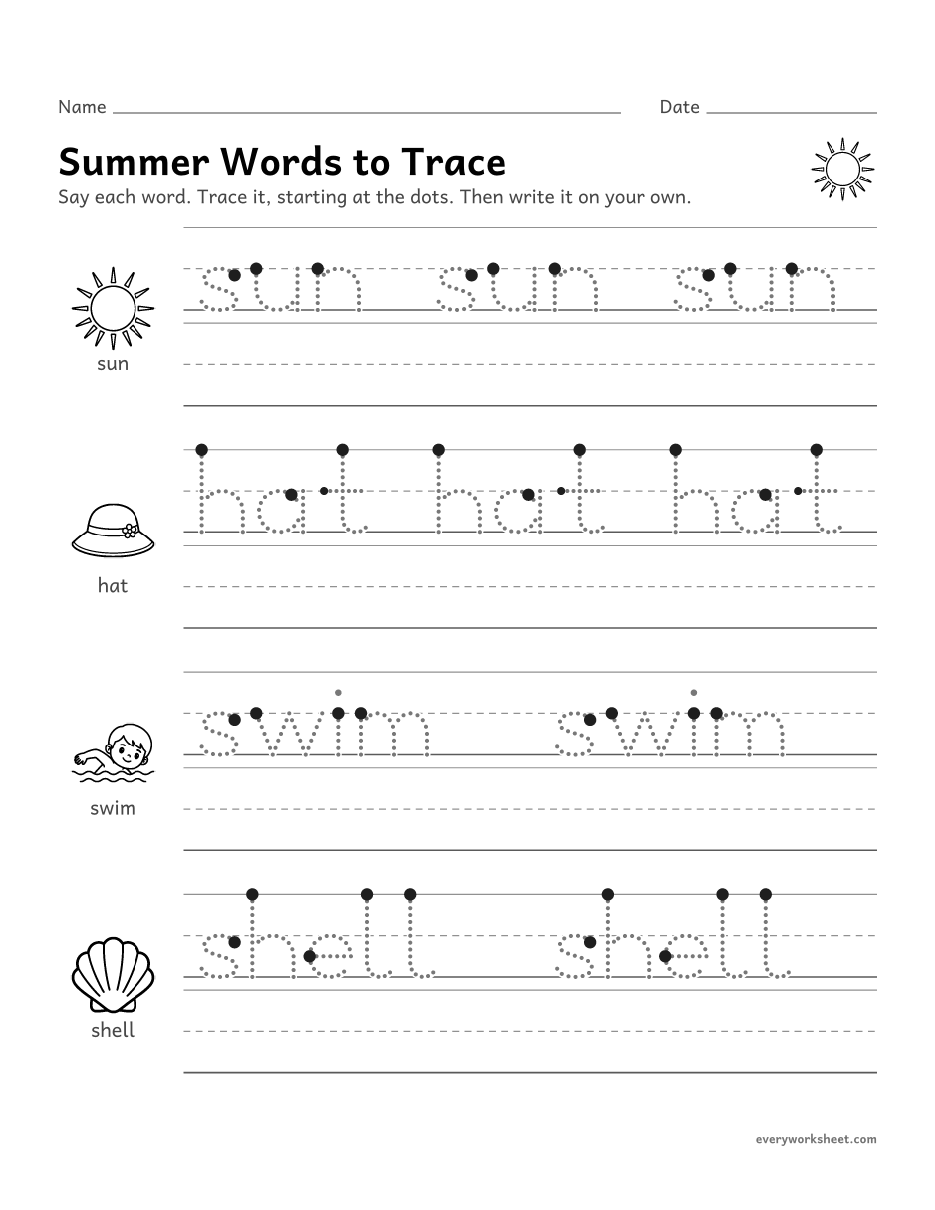
Print at 100% (actual size) for the cleanest tracing lines.
About these summer worksheets
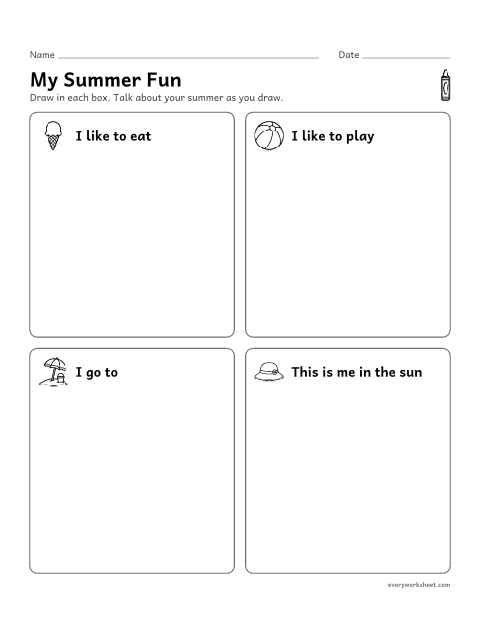
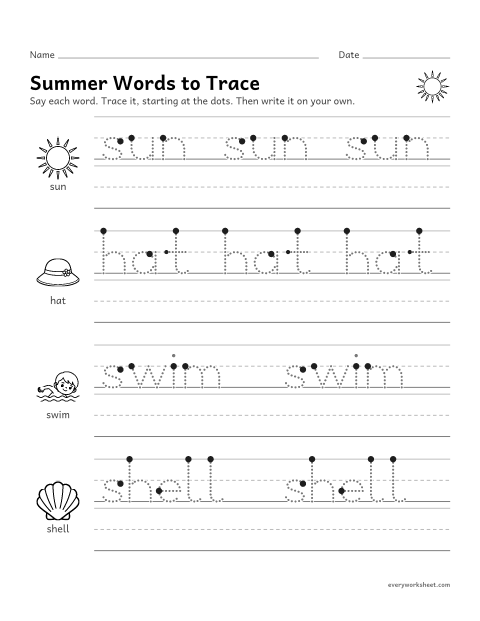
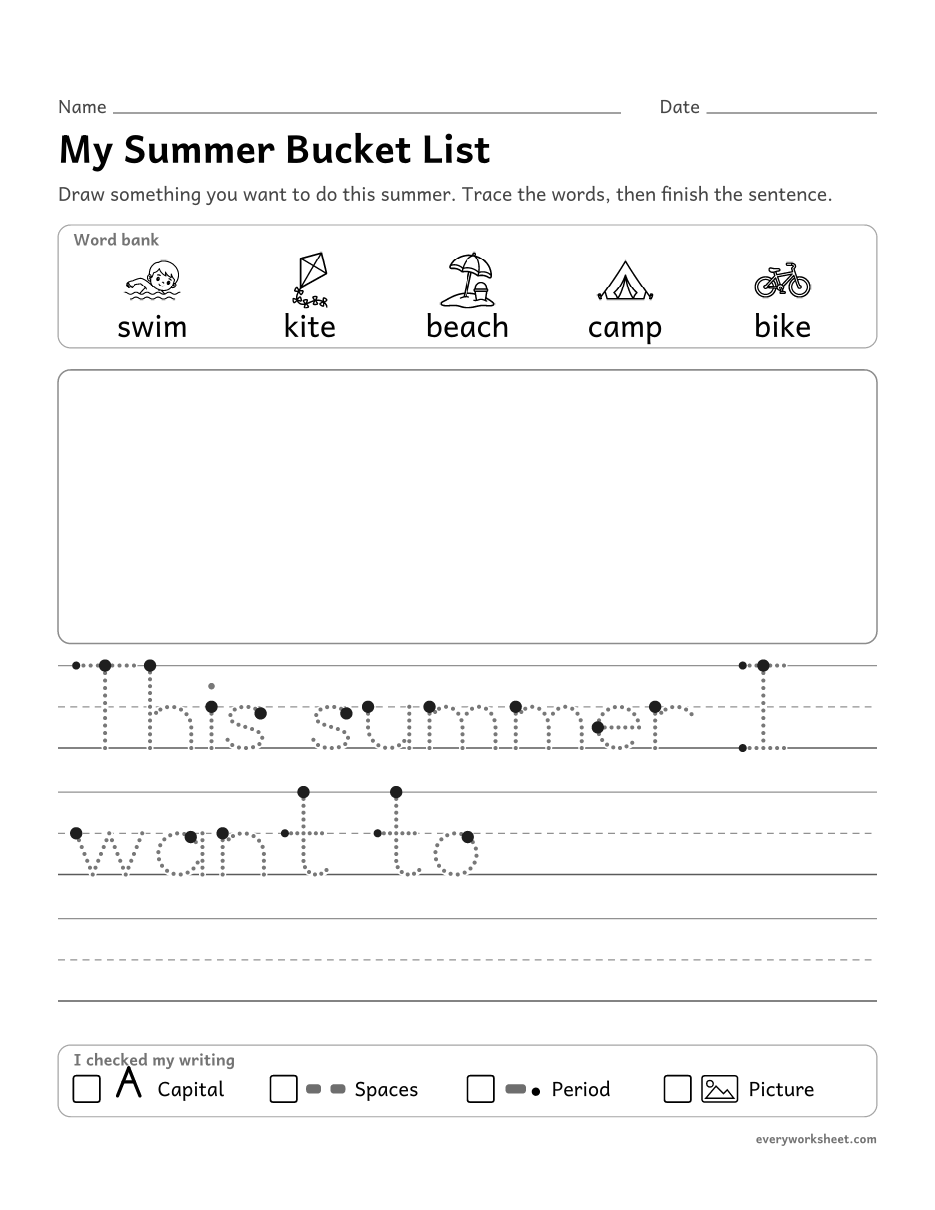
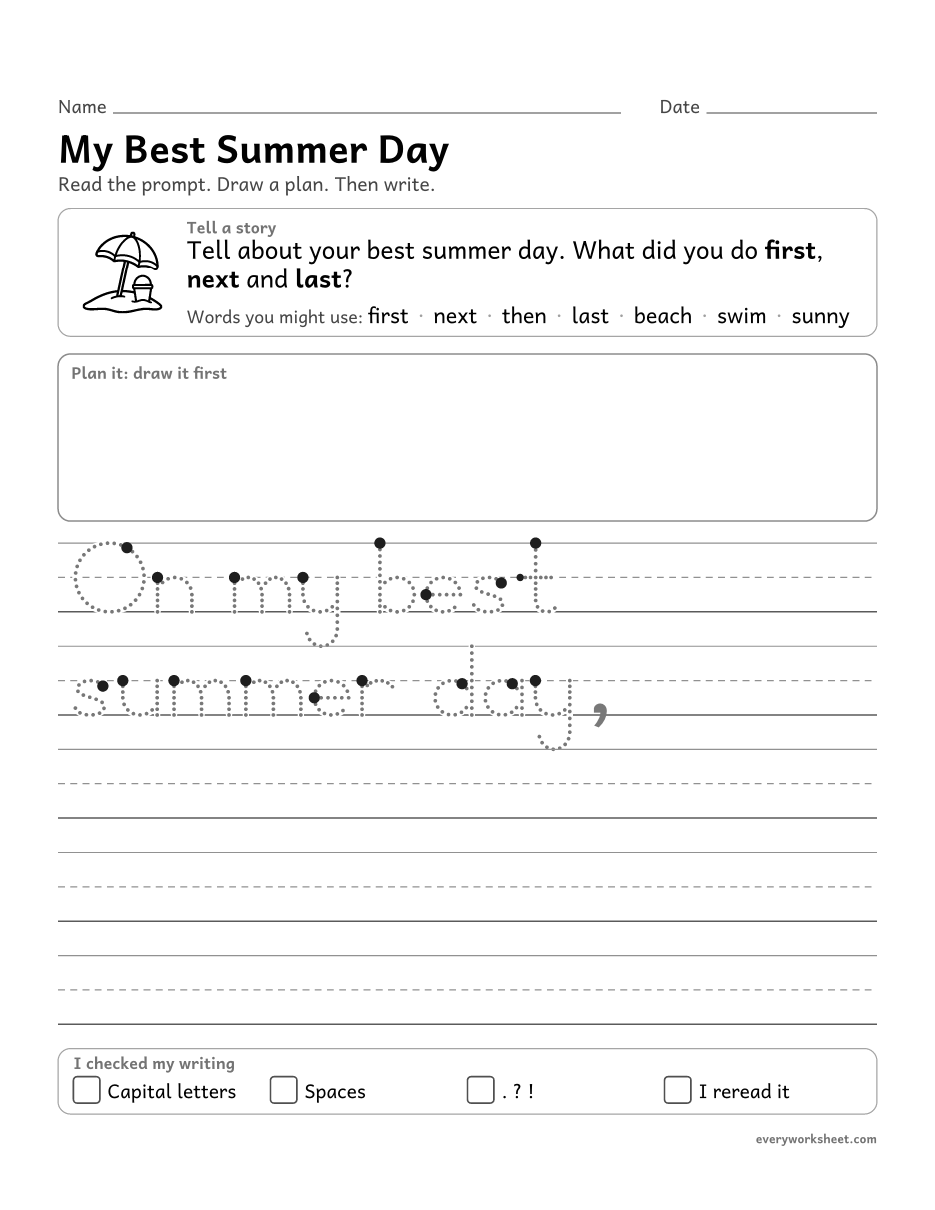
These summer worksheets wrap real skill practice in beach balls, ice cream, kites and sand pails. Preschoolers count and dot, trace paths, find patterns and color by number. Kindergartners count and write, add with pictures, hear first sounds, trace summer words and listen to a short read-aloud about staying safe in the sun. 1st graders add within 20, solve summer word problems, read a story about a day at the lake, run a class survey and write about their best summer day.
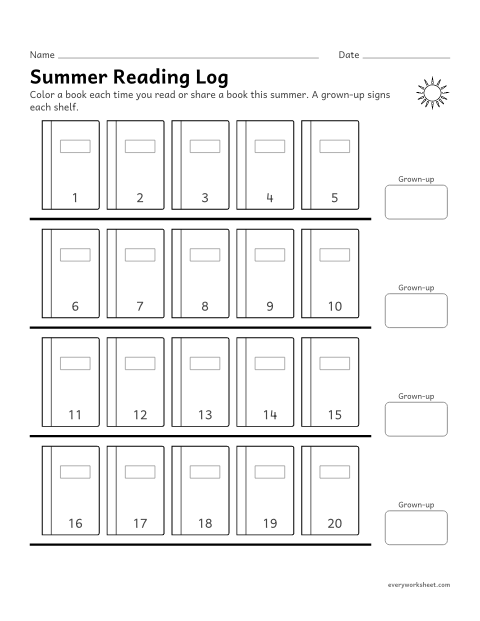
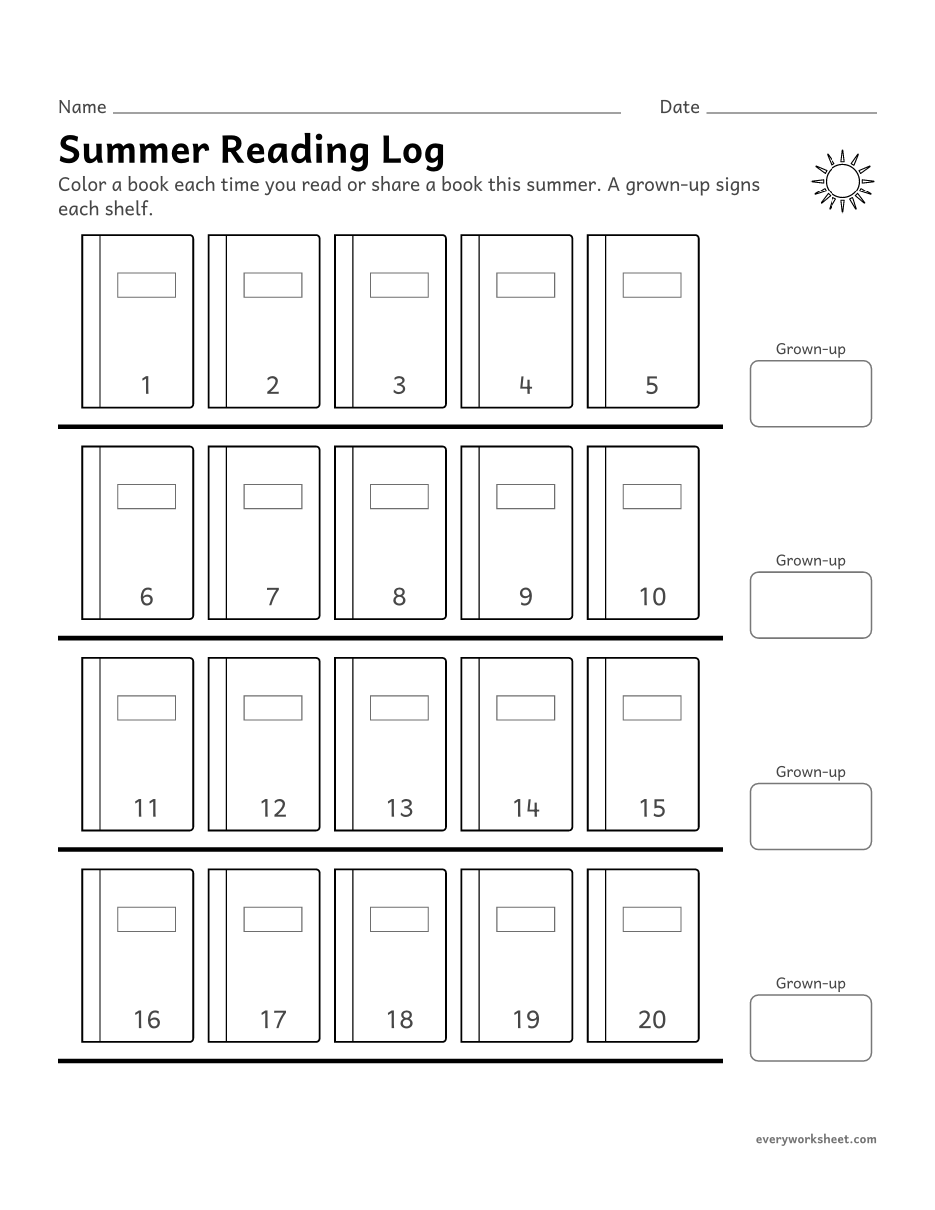
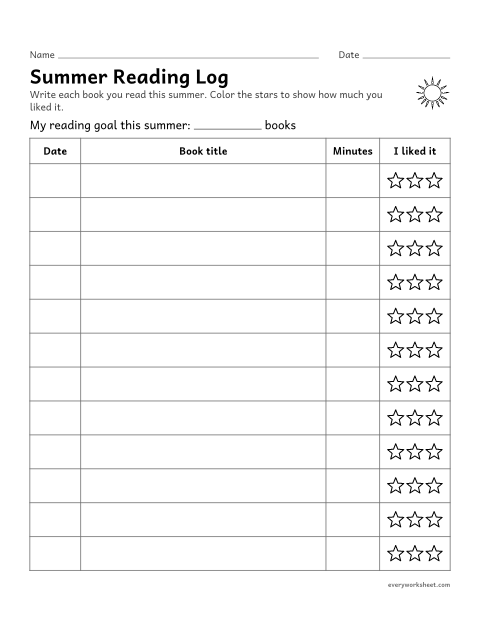
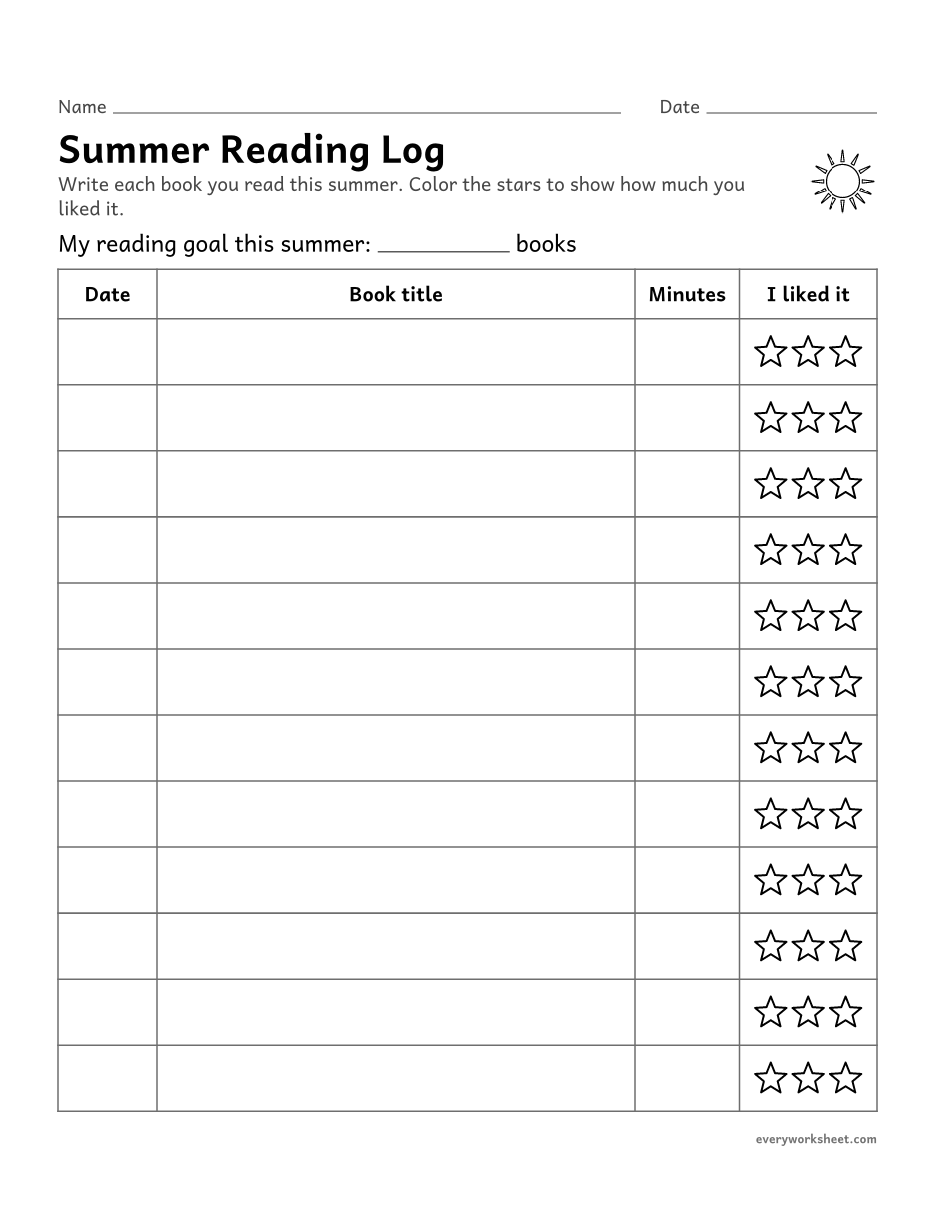
Use them in the last weeks of school, at summer camp, or at home to keep skills fresh over the break. The summer word searches are a favorite for a quiet morning, and the summer reading logs (a color-a-book shelf for kindergarten and a log table for 1st grade) give children a reading goal for the whole break. For more reading logs, see Reading Log Worksheets, and for sun and shade experiments, see Sunlight and Shade.
Every page is black and white, prints on US Letter or A4, and pages with one right answer have an answer key on page 2.
Standards
ELOF P-LC 5Child expresses self in increasingly long, detailed, and sophisticated ways.ELOF P-MATH 2Child recognizes the number of objects in a small set.ELOF P-MATH 5Child associates a quantity with written numerals up to 5 and begins to write numbers.ELOF P-MATH 7Child understands simple patterns.ELOF P-MATH 8Child measures objects by their various attributes using standard and non-standard measurement. Uses differences in attributes to make comparisons.ELOF P-PMP 3Child demonstrates increasing control, strength, and coordination of small muscles.ELOF P-PMP 6Child demonstrates knowledge of personal safety practices and routines.CCSS.ELA-LITERACY.L.K.1.APrint many upper- and lowercase letters.CCSS.ELA-LITERACY.L.K.5.ASort common objects into categories (e.g., shapes, foods) to gain a sense of the concepts the categories represent.CCSS.ELA-LITERACY.RF.K.1.BRecognize that spoken words are represented in written language by specific sequences of letters.CCSS.ELA-LITERACY.RF.K.3.ADemonstrate basic knowledge of one-to-one letter-sound correspondences by producing the primary or many of the most frequent sounds for each consonant.CCSS.ELA-LITERACY.RI.K.2With prompting and support, identify the main topic and retell key details of a text.CCSS.ELA-LITERACY.RL.K.10Actively engage in group reading activities with purpose and understanding.CCSS.ELA-LITERACY.W.K.3Use a combination of drawing, dictating, and writing to narrate a single event or several loosely linked events, tell about the events in the order in which they occurred, and provide a reaction to what happened.CCSS.MATH.CONTENT.K.CC.B.5Count to answer "how many?" questions about as many as 20 things arranged in a line, a rectangular array, or a circle, or as many as 10 things in a scattered configuration; given a number from 1–20, count out that many objects.CCSS.MATH.CONTENT.K.OA.A.2Solve addition and subtraction word problems, and add and subtract within 10, e.g., by using objects or drawings to represent the problem.CCSS.ELA-LITERACY.L.1.4.AUse sentence-level context as a clue to the meaning of a word or phrase.CCSS.ELA-LITERACY.RL.1.10With prompting and support, read prose and poetry of appropriate complexity for grade 1.CCSS.ELA-LITERACY.RL.1.3Describe characters, settings, and major events in a story, using key details.CCSS.ELA-LITERACY.W.1.3Write narratives in which they recount two or more appropriately sequenced events, include some details regarding what happened, use temporal words to signal event order, and provide some sense of closure.CCSS.MATH.CONTENT.1.MD.C.4Organize, represent, and interpret data with up to three categories; ask and answer questions about the total number of data points, how many in each category, and how many more or less are in one category than in another.CCSS.MATH.CONTENT.1.OA.A.1Use addition and subtraction within 20 to solve word problems involving situations of adding to, taking from, putting together, taking apart, and comparing, with unknowns in all positions, e.g., by using objects, drawings, and equations with a symbol for the unknown number to represent the problem.CCSS.MATH.CONTENT.1.OA.C.6Add and subtract within 20, demonstrating fluency for addition and subtraction within 10. Use strategies such as counting on; making ten (e.g., 8 + 6 = 8 + 2 + 4 = 10 + 4 = 14); decomposing a number leading to a ten (e.g., 13 - 4 = 13 - 3 - 1 = 10 - 1 = 9); using the relationship between addition and subtraction (e.g., knowing that 8 + 4 = 12, one knows 12 - 8 = 4); and creating equivalent but easier or known sums (e.g., adding 6 + 7 by creating the known equivalent 6 + 6 + 1 = 12 + 1 = 13).
How to use them
- Pick the group for your child's grade. Each one mixes math, reading and writing, so a page a day makes an easy summer routine.
- Talk about the pictures first. Name the beach things together before a counting or sounds page.
- Send the summer reading log home on the last day of school with a goal, and celebrate the books read when school starts again.
- Pair the sun safety pages with a real hat, sunglasses and water bottle, and let children show what each one does.
Teaching tips
- For preschoolers, keep it short: one page, lots of talk, and a crayon or dot marker.
- On the kindergarten count and write page, have children touch each picture once as they count, then write the number.
- On the 1st grade word problems, ask children to draw the story before they write the number sentence.
- Summer slide is real but small steps work. Ten minutes of reading or one worksheet a day is plenty.
Questions teachers and parents ask
When should I use summer worksheets?
In the last weeks of the school year, at summer camp, and at home over the break. A page or two a week keeps counting, letter sounds and reading fresh until school starts again.
Are there summer worksheets for each grade?
Yes. There is a group for preschool, kindergarten and 1st grade. Each group covers math, reading and writing at that grade's level.
Is there a summer reading log?
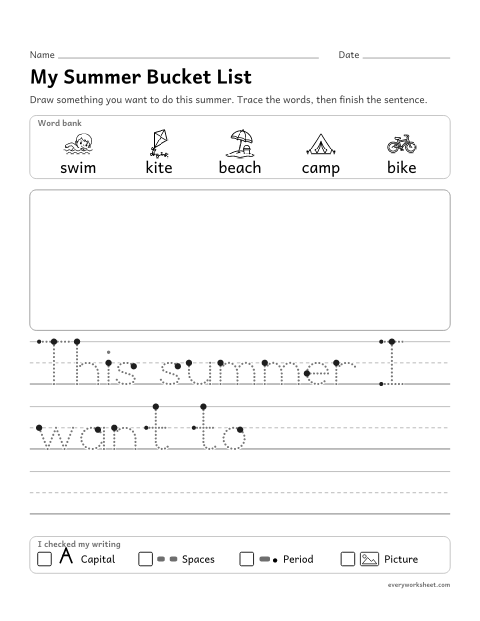
Yes. Kindergarten children color a book on a shelf for each book they read or share, and 1st graders write the date, title and minutes and color stars to rate each book.
Do the pages have answer keys?
Every page with one right answer has an answer key on page 2. Coloring, tracing, drawing and writing pages do not need one.