 View larger
Winter animals coloring page
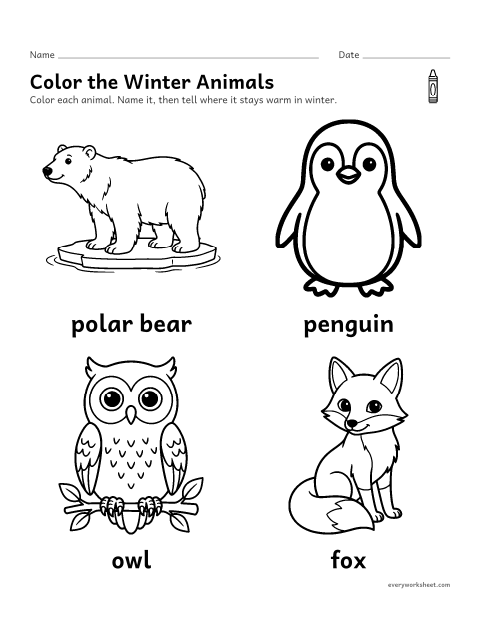
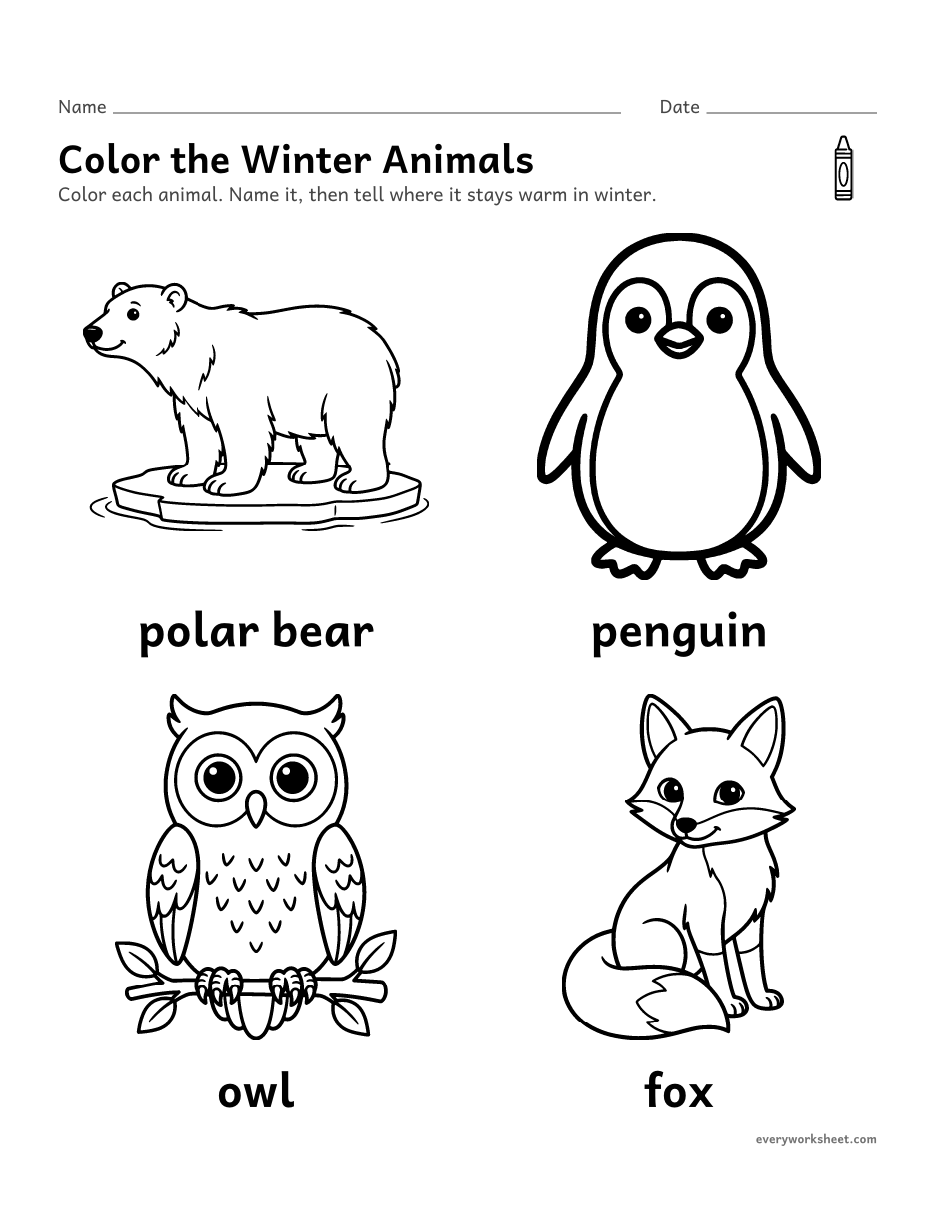
Naming winter animals and coloring inside the lines
1 page86 KB
Snow, mittens and winter animals for counting, tracing, patterns, beginning sounds, reading, writing and word problems.
View largerNaming winter animals and coloring inside the lines
1 page86 KB
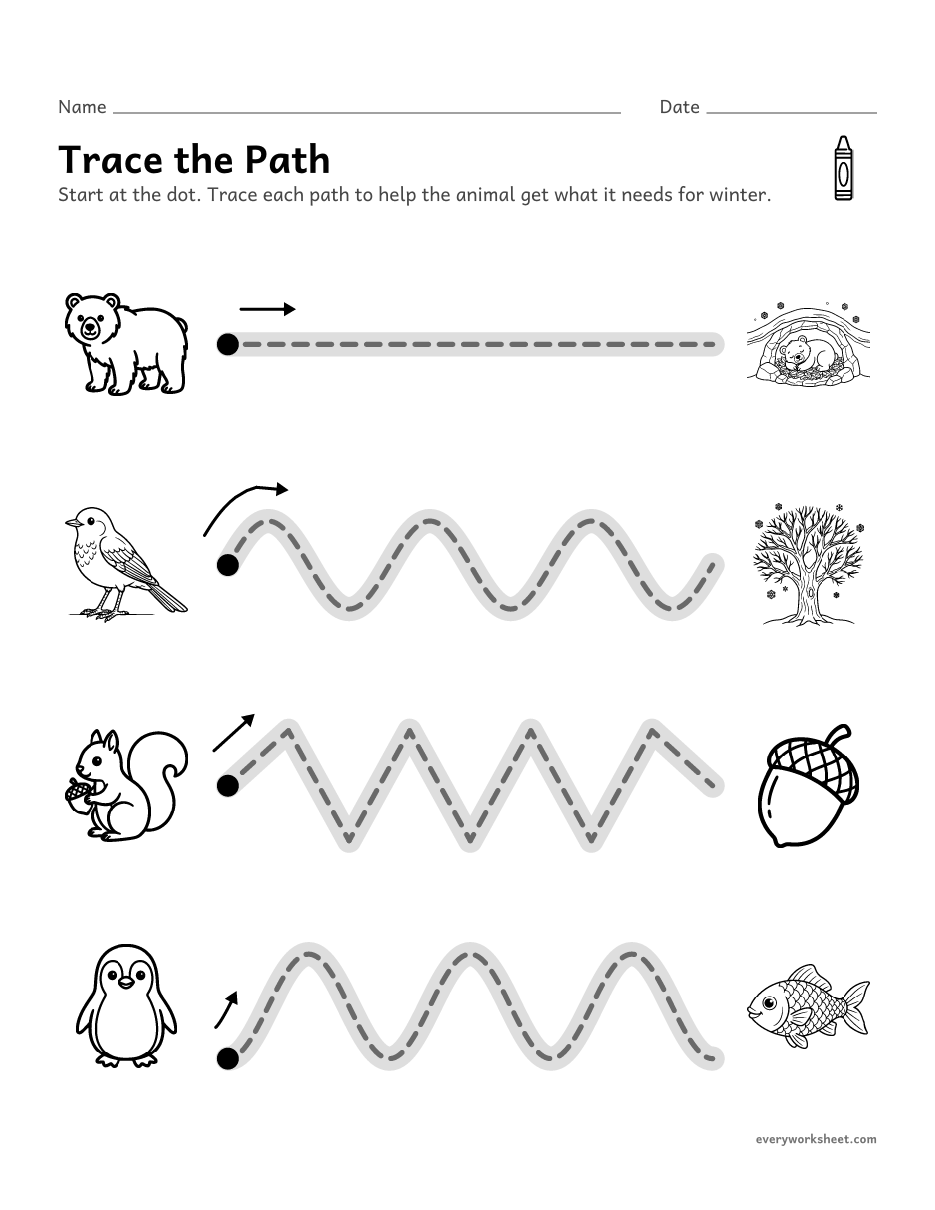 View larger
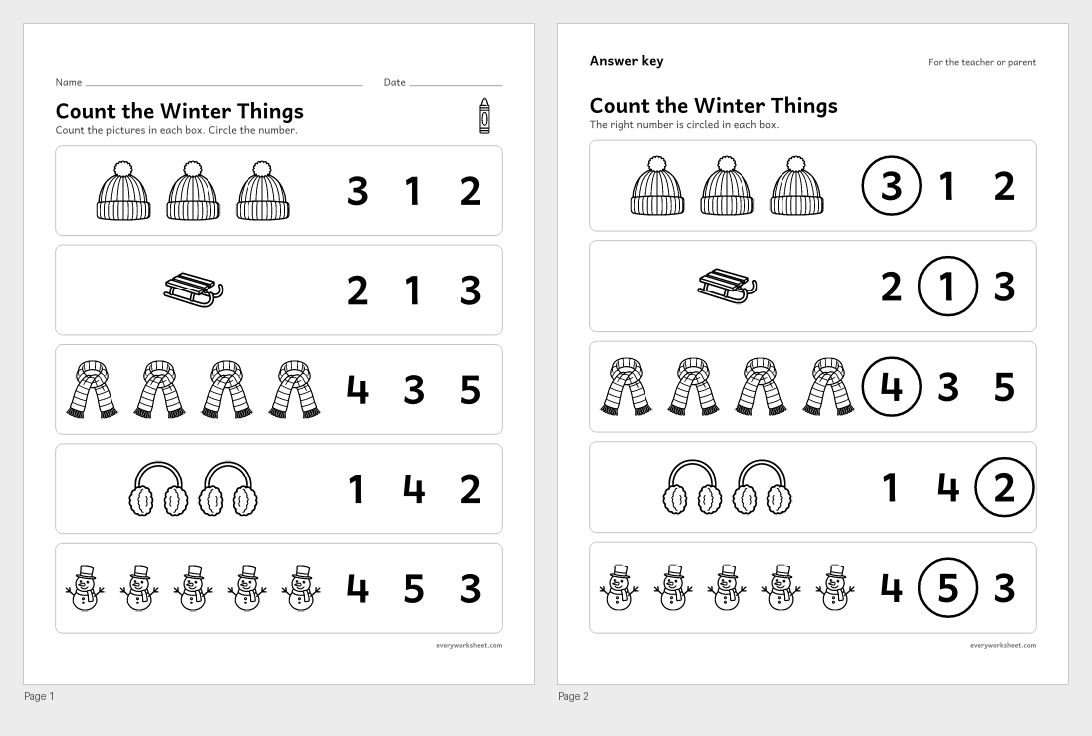 View all 2 pages
Counting up to 5 winter things and matching the number
Answer key on page 2
2 pages400 KB
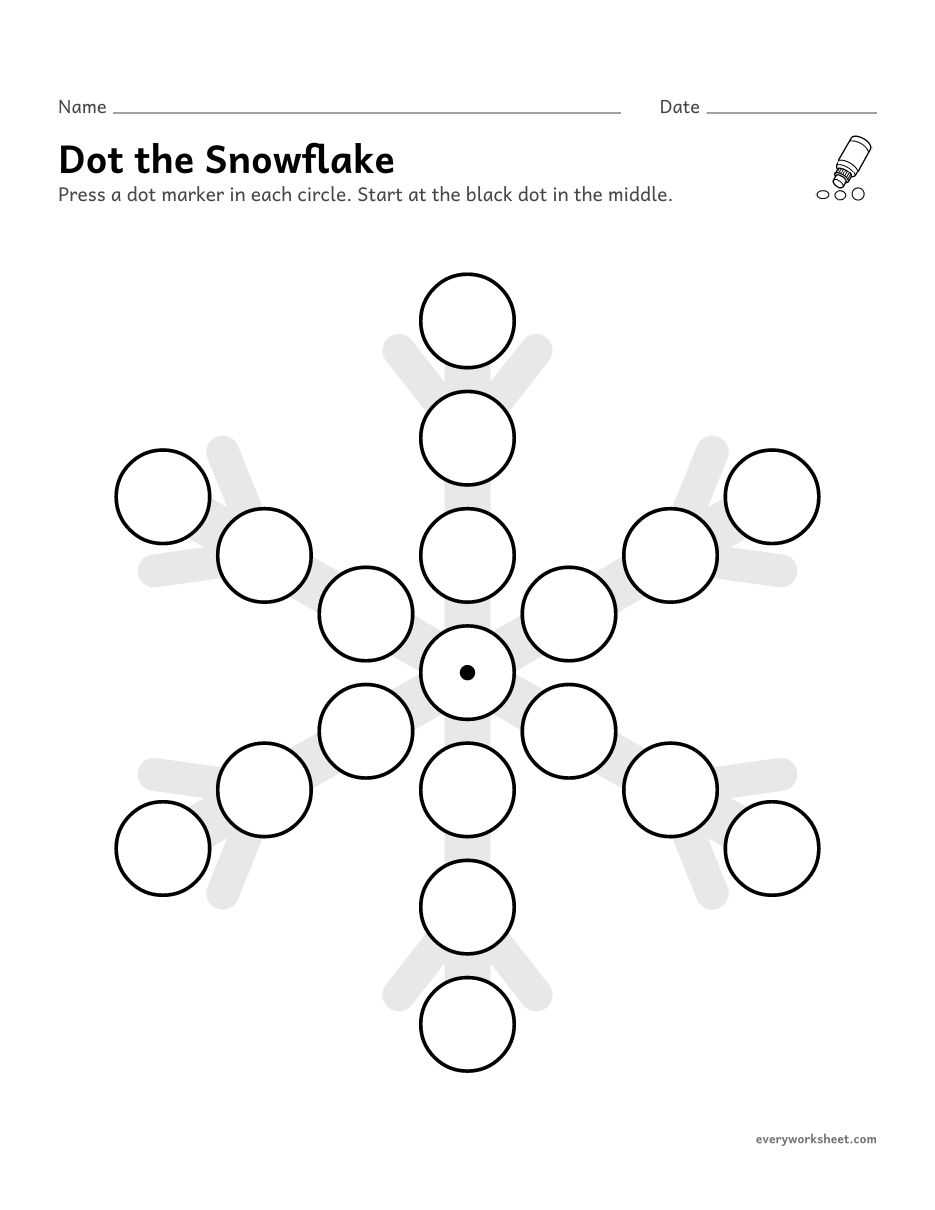 View larger
Using a dot marker with control, one circle at a time
1 page39 KB
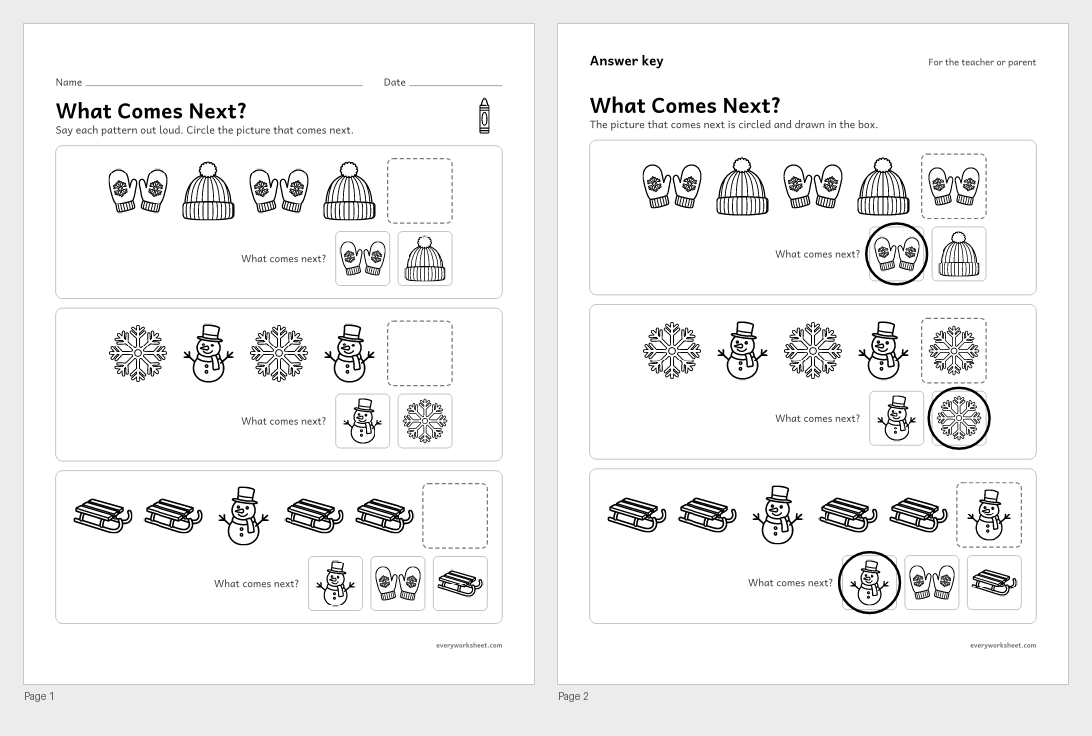 View all 2 pages
Finishing AB and ABB picture patterns
Answer key on page 2
2 pages703 KB
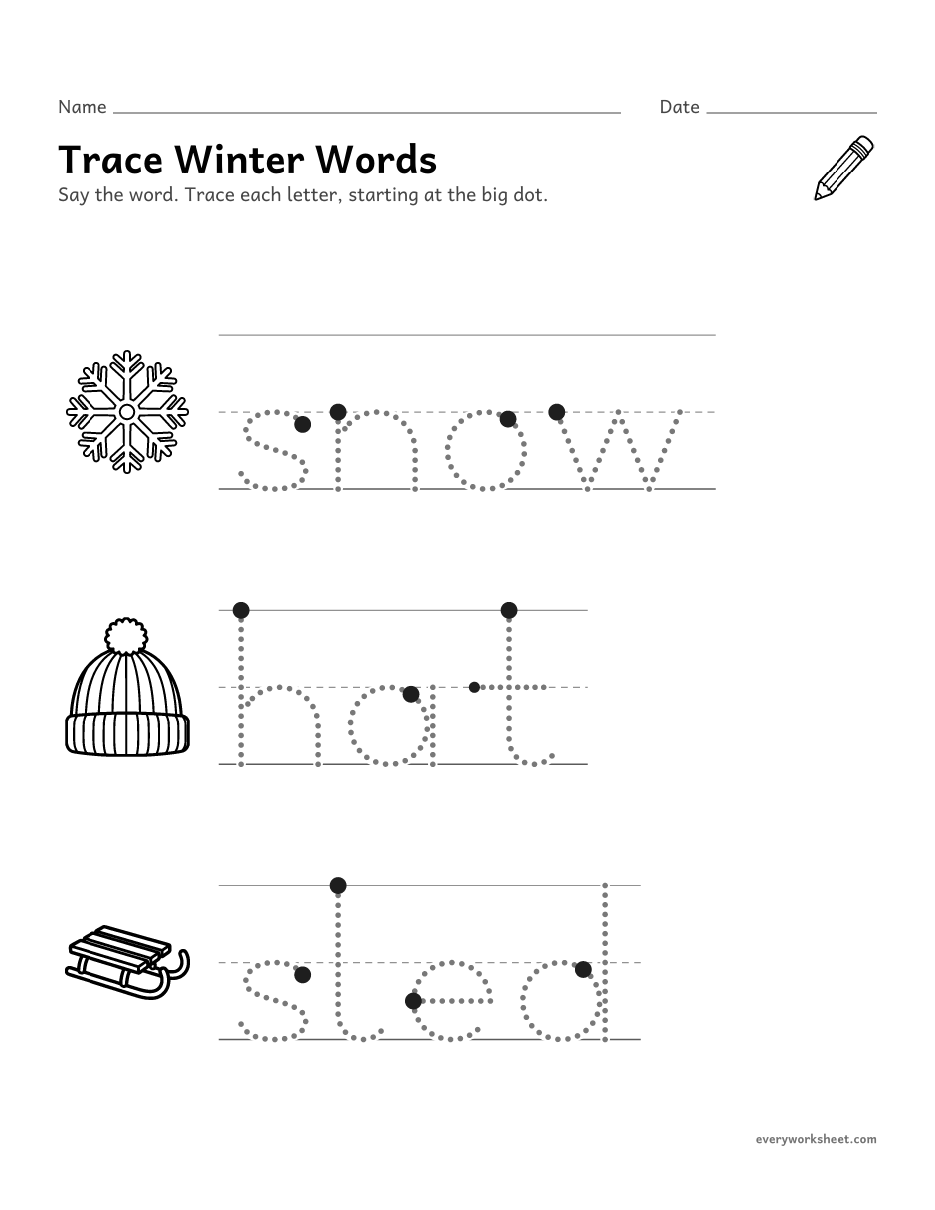 View larger
Tracing big letters in short winter words
1 page83 KB
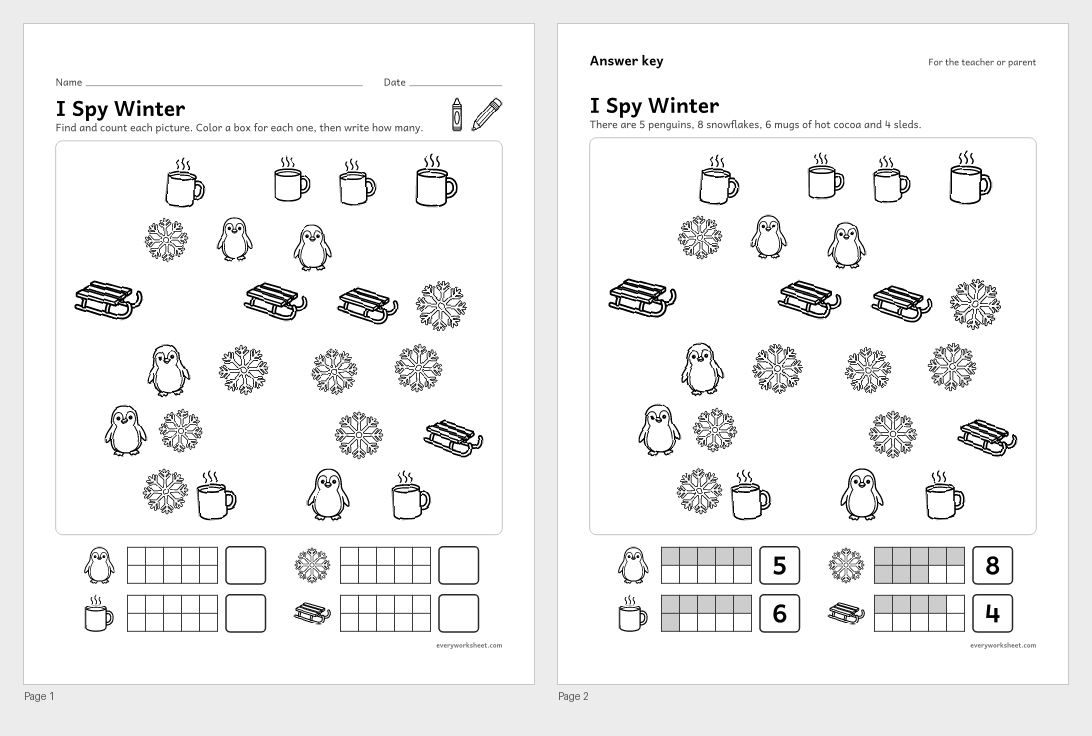 View all 2 pages
Finding and counting winter things to 10
Answer key on page 2
2 pages809 KB
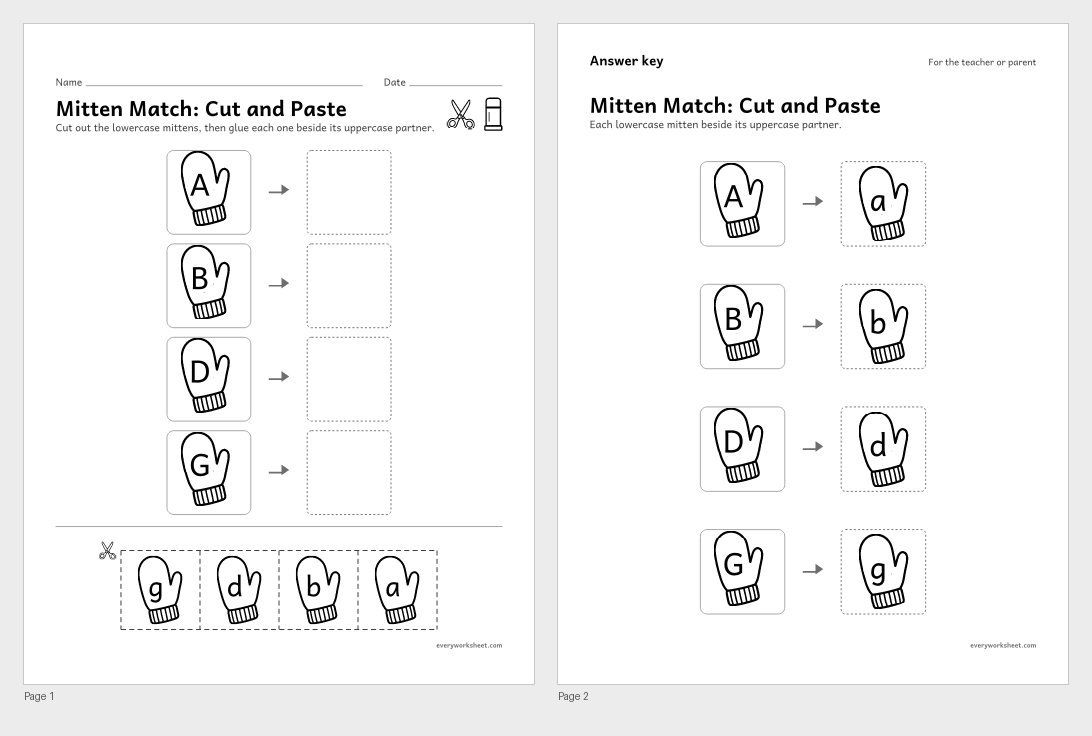 View all 2 pages
Matching uppercase and lowercase letters
Answer key on page 2
2 pages113 KB
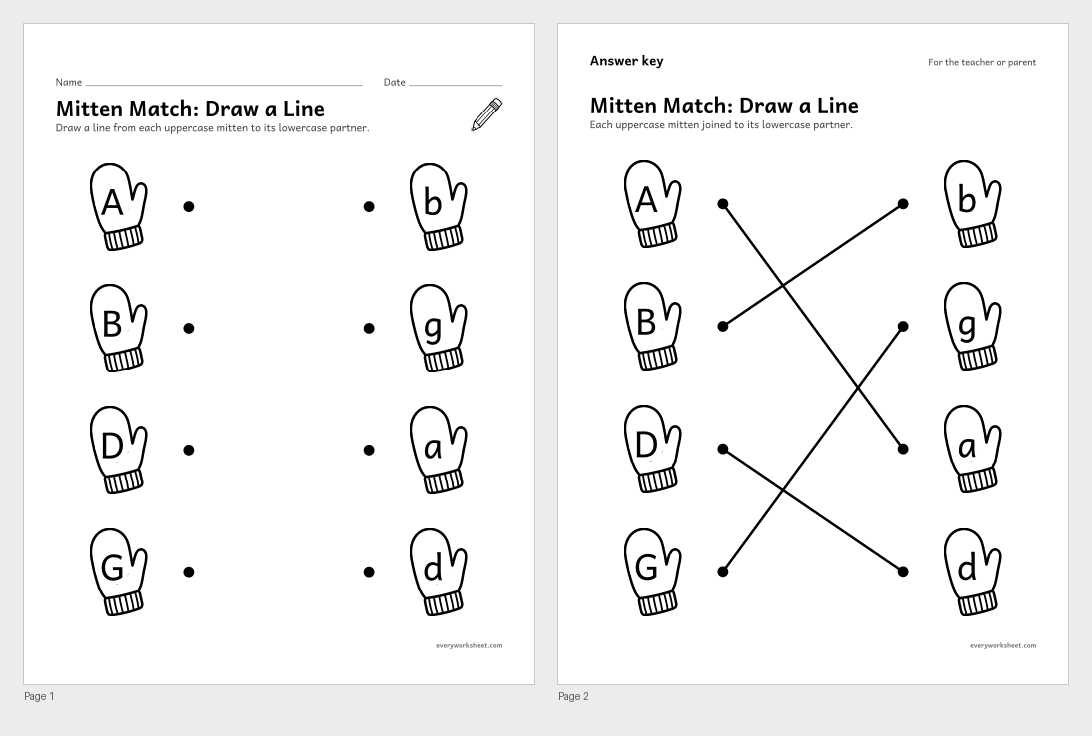 View all 2 pages
Matching uppercase and lowercase letters
Answer key on page 2
2 pages66 KB
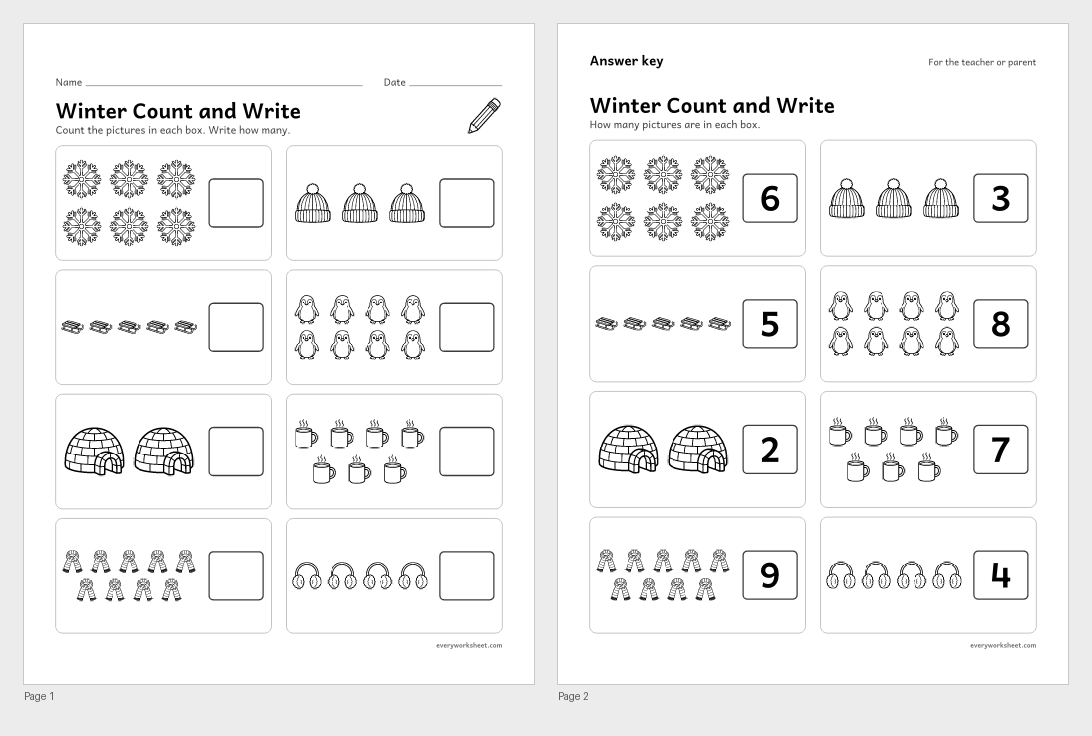 View all 2 pages
Counting up to 10 objects and writing the number
Answer key on page 2
2 pages1.0 MB
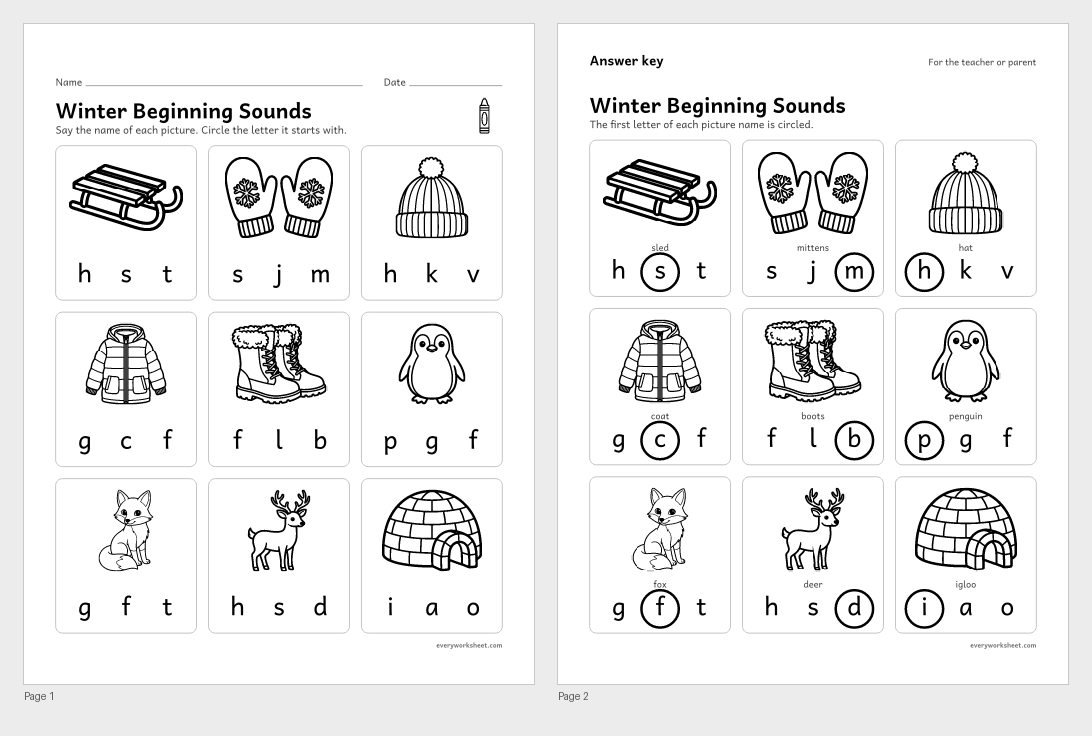 View all 2 pages
Naming the first sound of a word and the letter that spells it
Answer key on page 2
2 pages330 KB
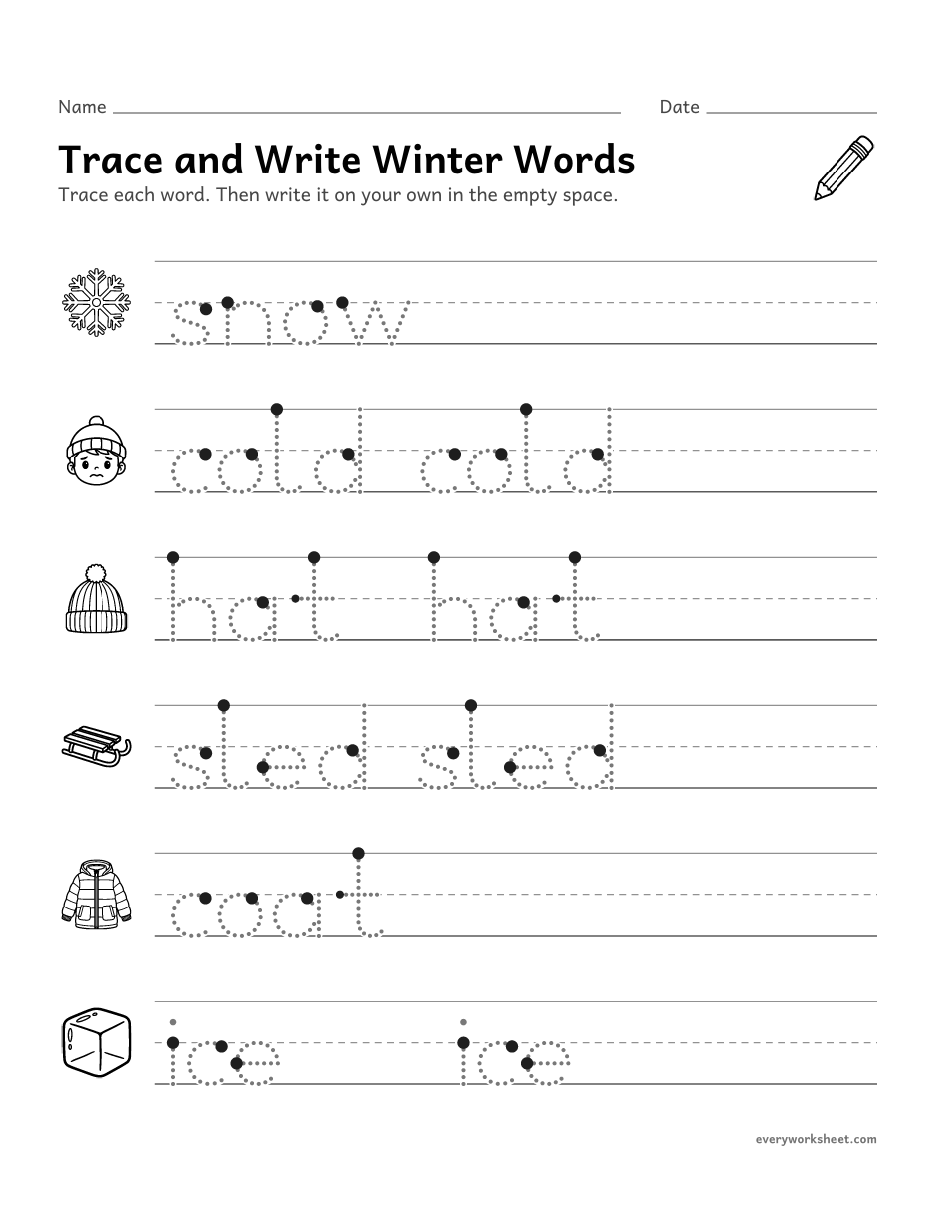 View larger
Tracing and writing short winter words
1 page141 KB
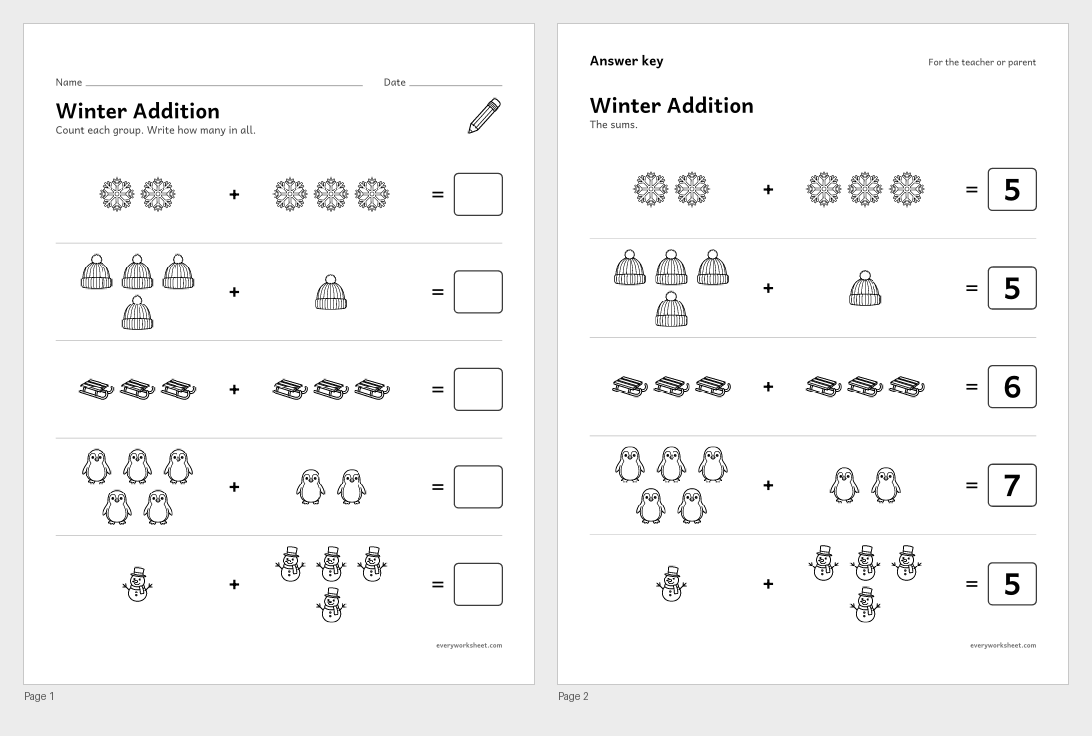 View all 2 pages
Adding within 10 with pictures
Answer key on page 2
2 pages907 KB
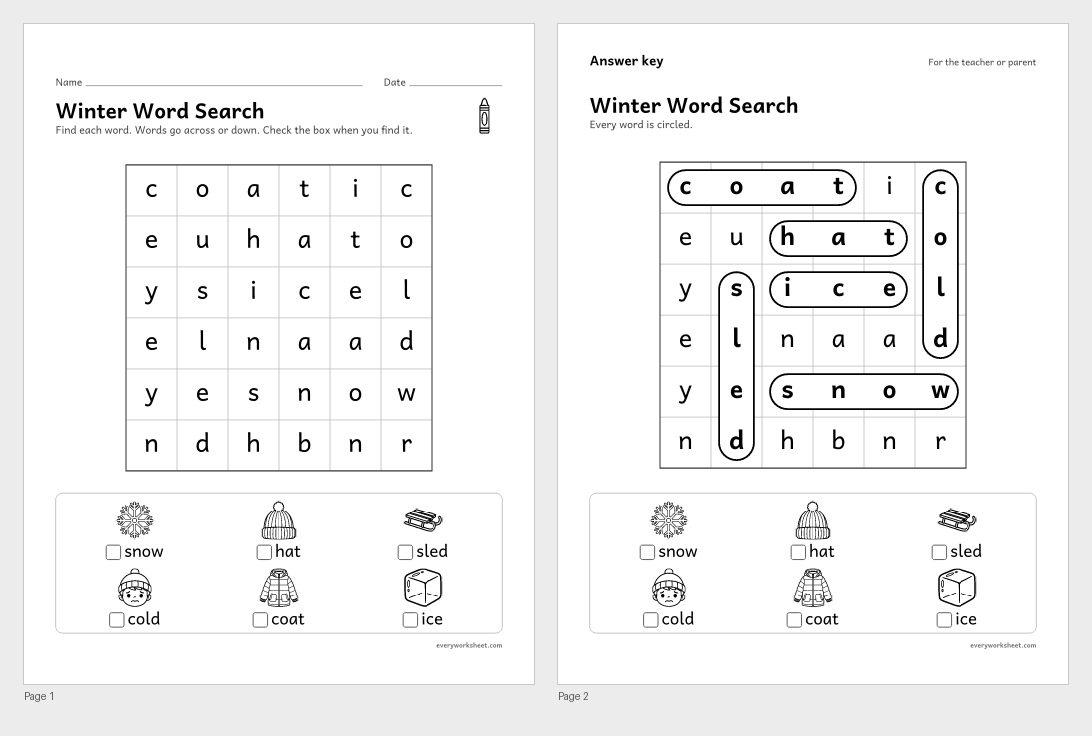 View all 2 pages
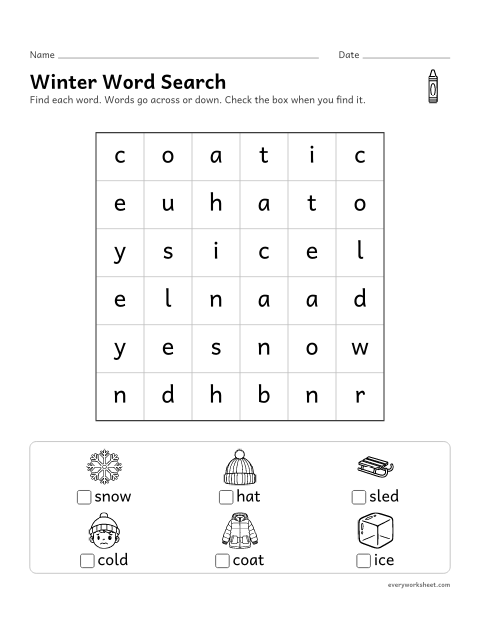
Finding and reading short winter words
Answer key on page 2
2 pages234 KB
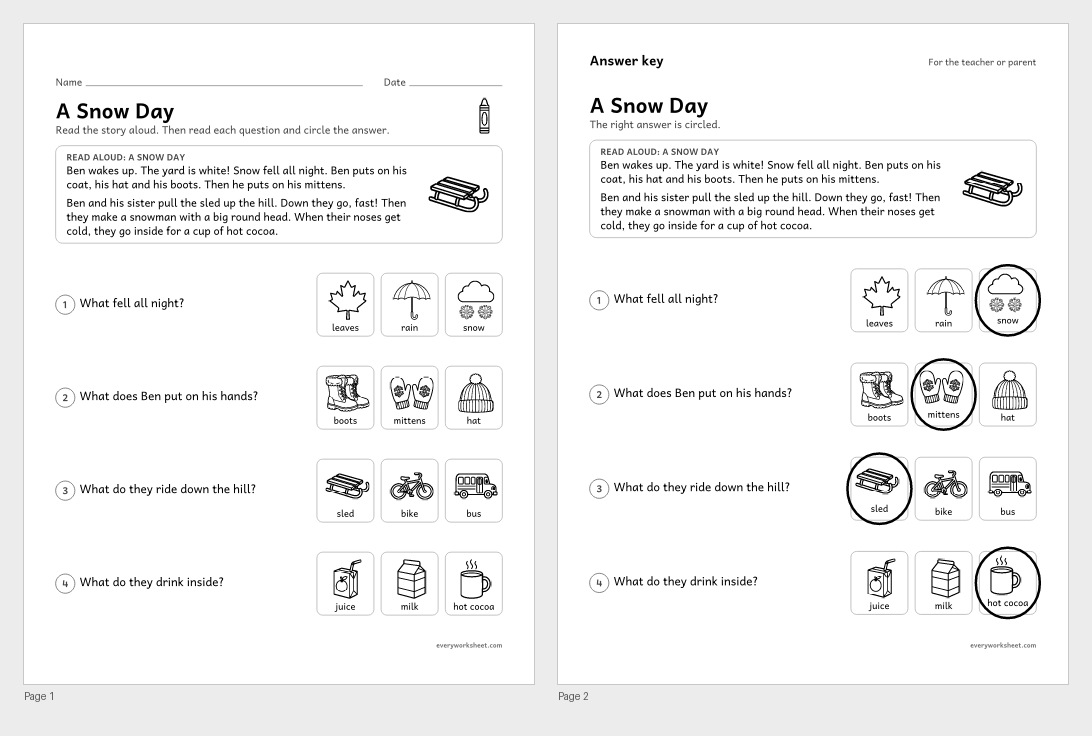 View all 2 pages
Listening to a story and answering questions about key details
Answer key on page 2
2 pages459 KB
 View larger
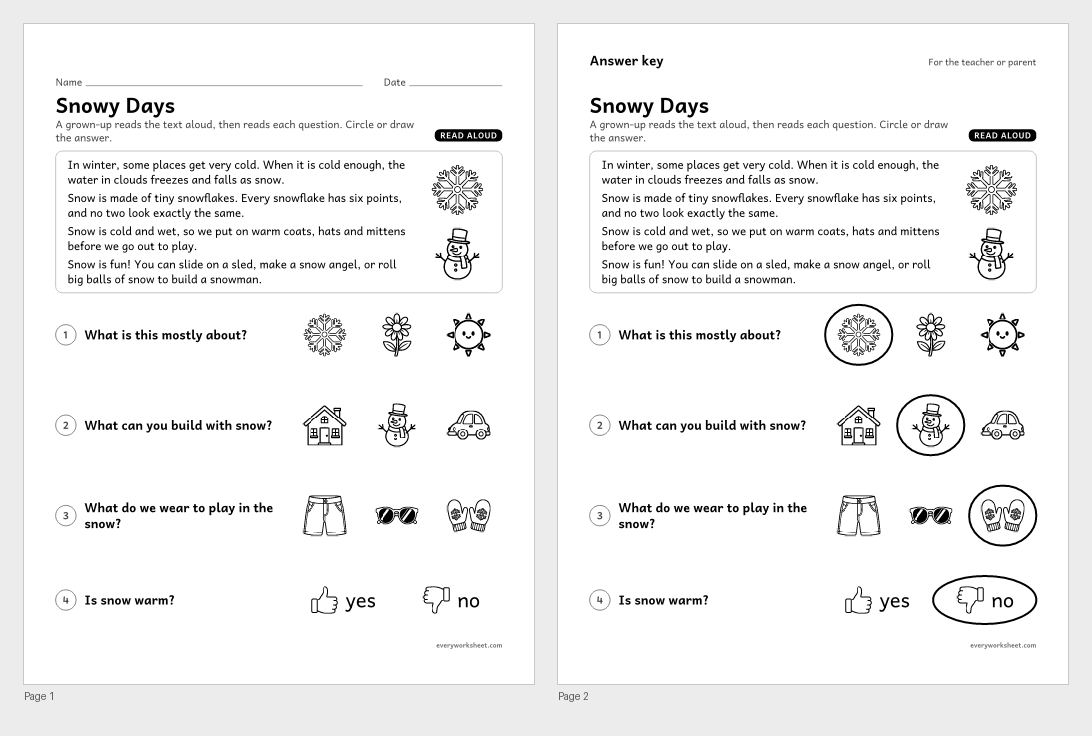 View all 2 pages
Listening to an informational text and naming the main topic and key details
Answer key on page 2
2 pages284 KB
 View all 2 pages
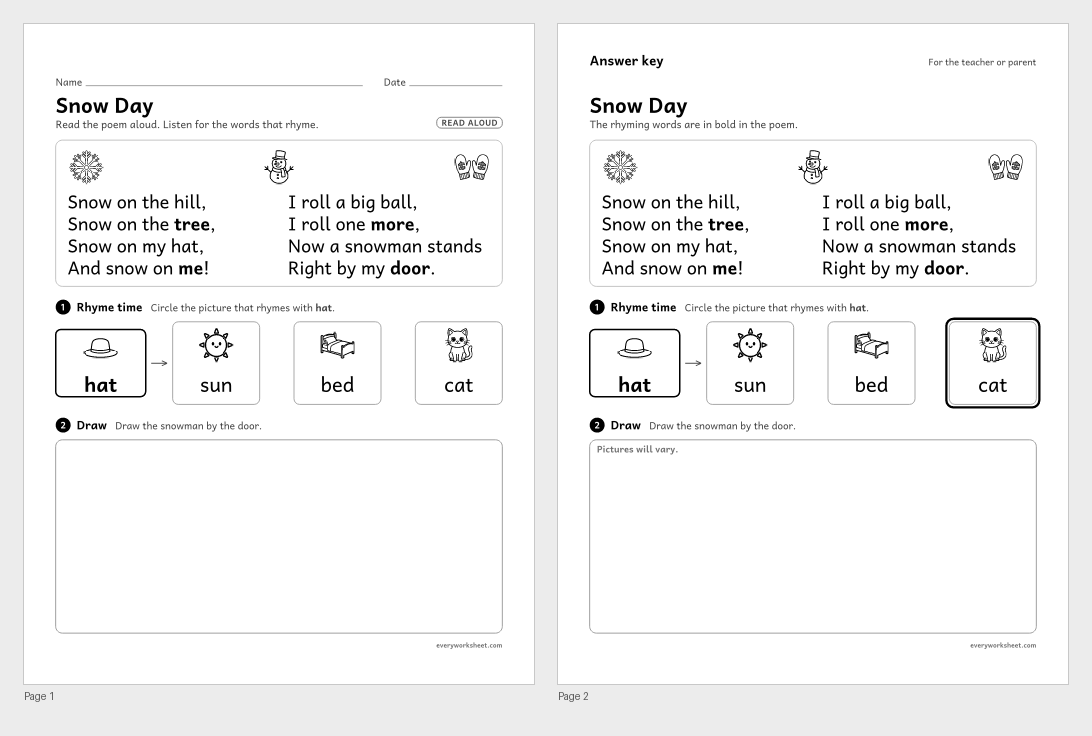
Listening to a poem, hearing rhyming words and drawing what the poem says
Answer key on page 2
2 pages236 KB
 View all 2 pages
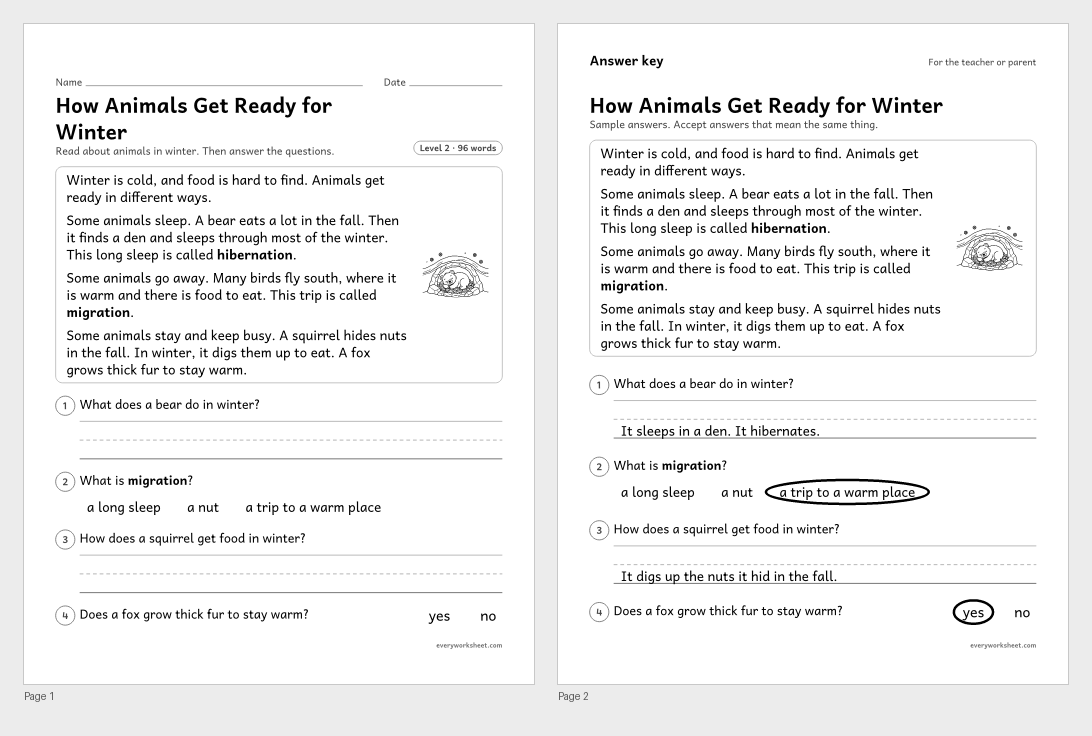
Reading a nonfiction passage and answering questions about key details
Answer key on page 2
2 pages117 KB
 View all 2 pages
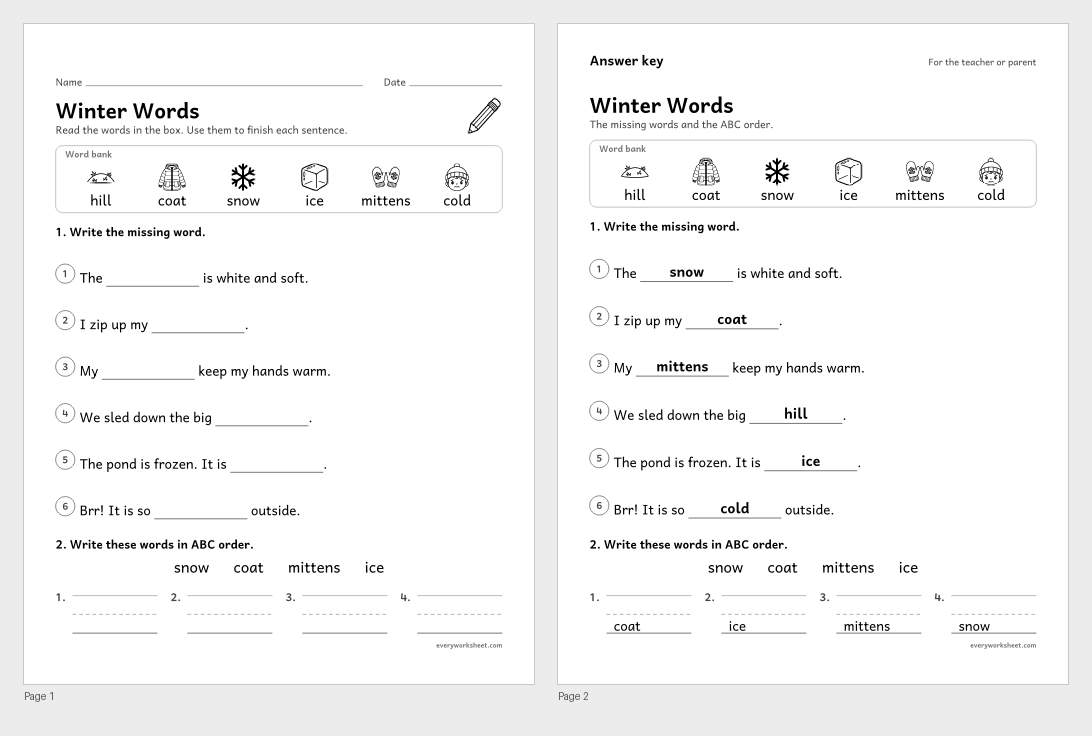
Using winter words in sentences and putting words in ABC order
Answer key on page 2
2 pages228 KB
 View larger
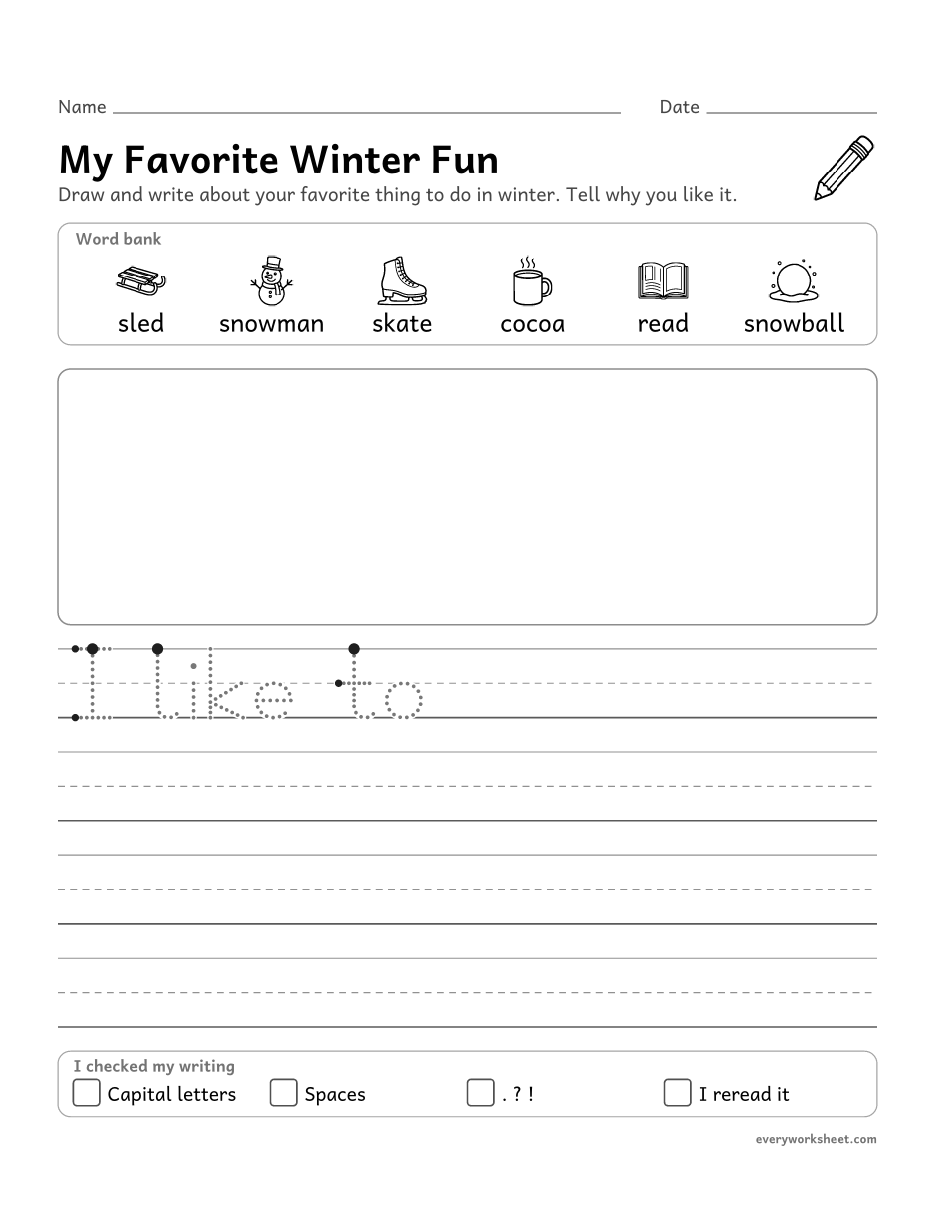
Writing an opinion with a reason
1 page150 KB
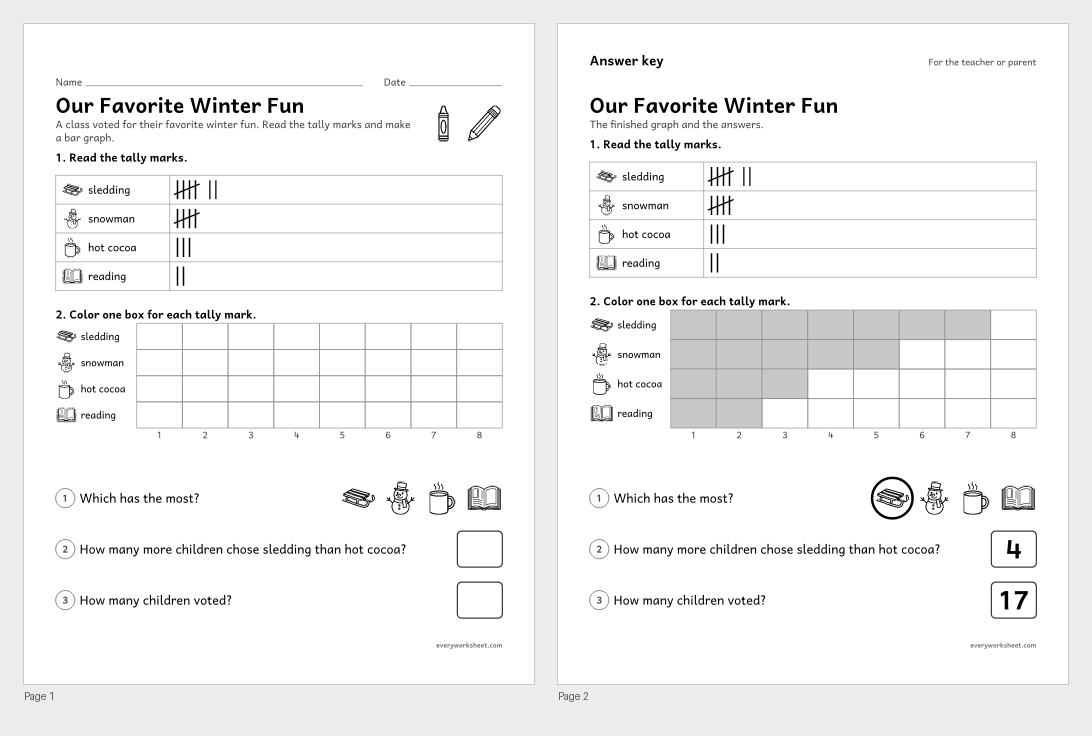 View all 2 pages
Reading tally marks, making a bar graph and comparing
Answer key on page 2
2 pages502 KB
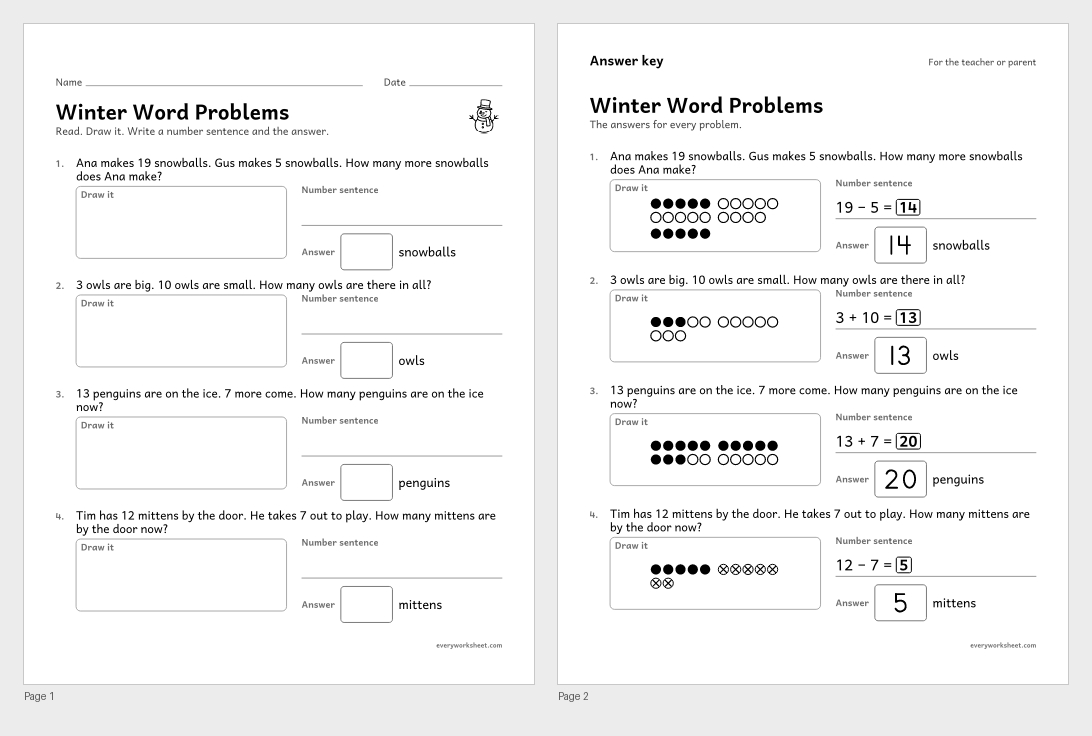 View all 2 pages
Solving winter add, take away and compare word problems within 20
Answer key on page 2
2 pages69 KB
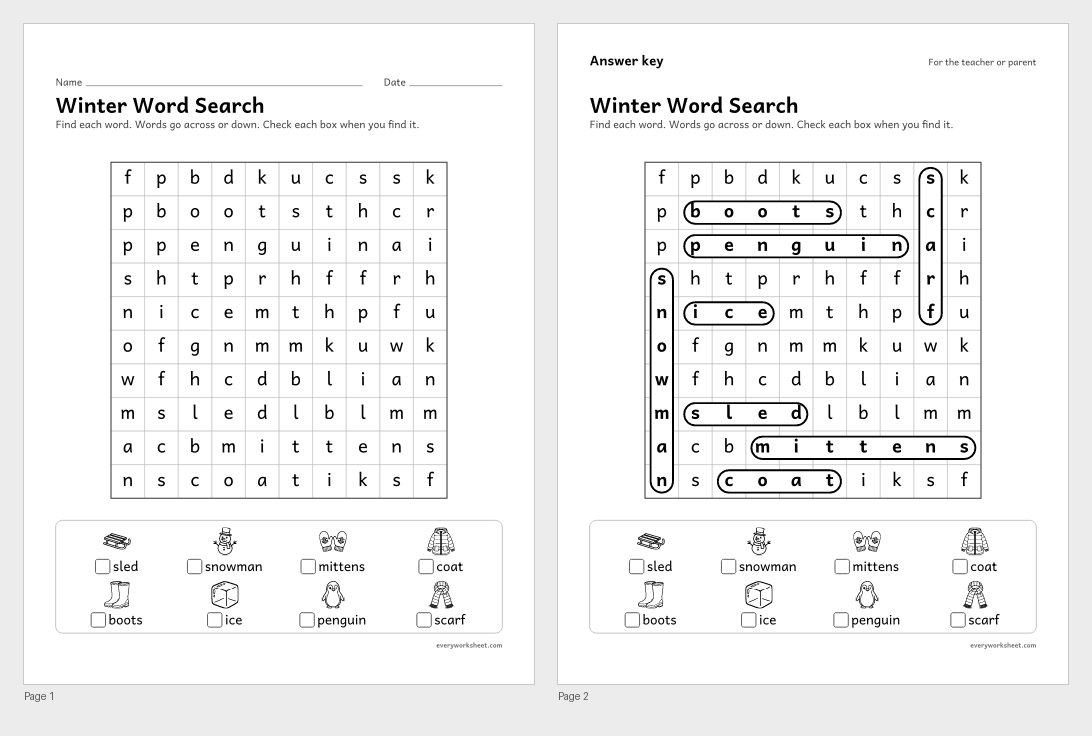 View all 2 pages
Finding and reading theme words by their spelling
Answer key on page 2
2 pages286 KB
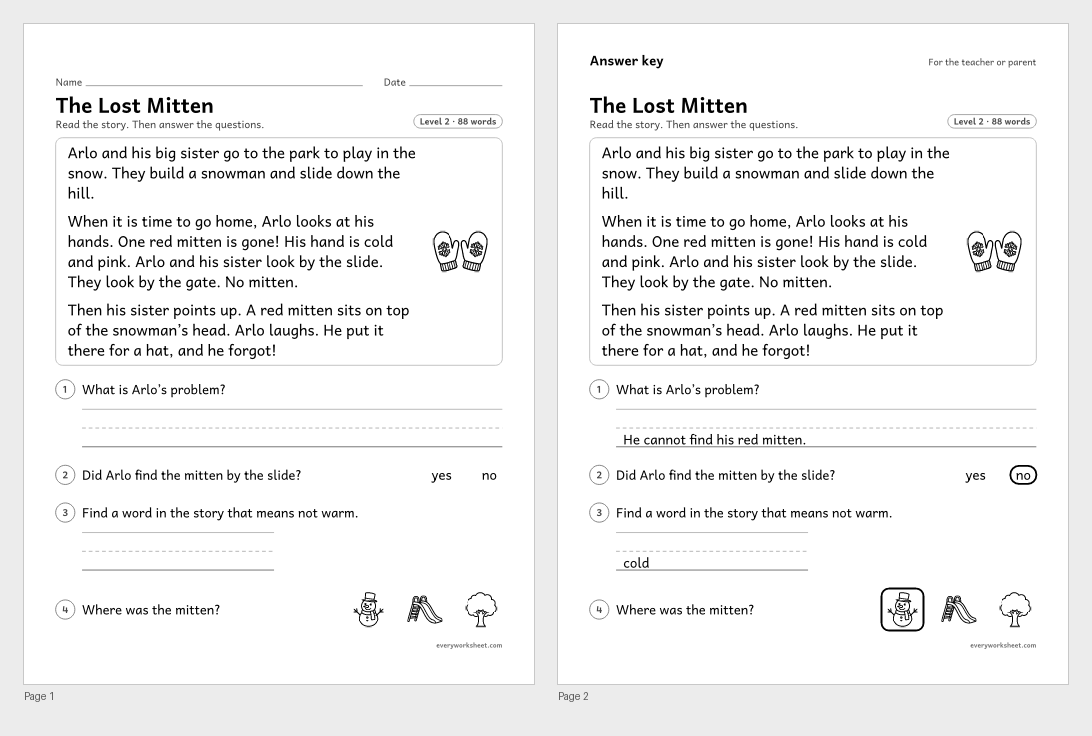 View all 2 pages
Telling the setting, the problem and how a story ends
Answer key on page 2
2 pages163 KB
 View all 2 pages
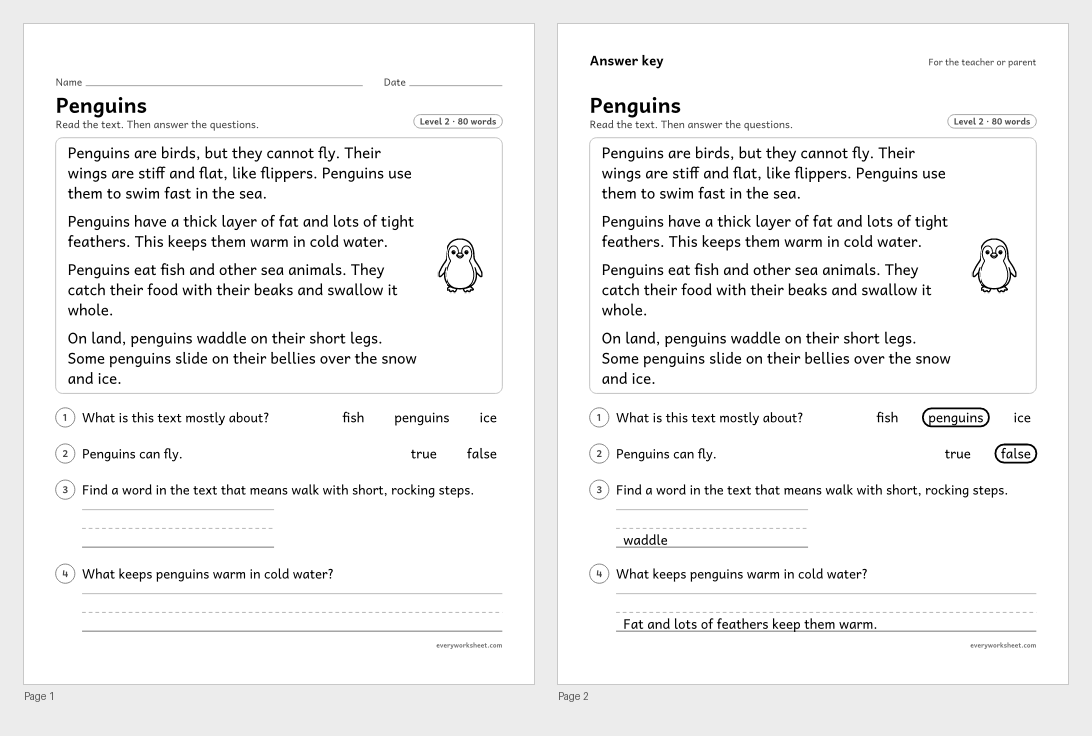
Using the text to work out the meaning of a word in a nonfiction text
Answer key on page 2
2 pages82 KB
Print at 100% (actual size) for the cleanest tracing lines.
These winter worksheets turn snow days, mittens and sleepy bears into real practice. Preschoolers count winter clothes, trace paths to an animal's winter home, dot a snowflake and finish picture patterns. Kindergartners count and write to 10, add with pictures, hear beginning sounds and trace short winter words. 1st graders read about how animals get ready for winter, solve winter word problems, read a tally chart and write about their favorite winter fun.
Use them from the first cold snap in December through the end of February. They pair well with a science unit on weather or hibernation: our animals that hibernate, weather and seasons worksheets go deeper into those topics.
Every page is black and white line art that prints well on a school copier, on US Letter or A4. Pages with one right answer have an answer key on page 2.
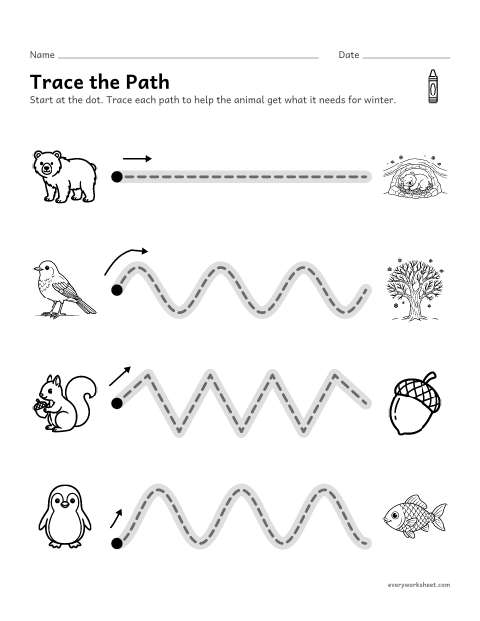
ELOF P-LIT 6Child writes for a variety of purposes using increasingly sophisticated marks.ELOF P-MATH 2Child recognizes the number of objects in a small set.ELOF P-MATH 3Child understands the relationship between numbers and quantities.ELOF P-MATH 7Child understands simple patterns.ELOF P-PMP 3Child demonstrates increasing control, strength, and coordination of small muscles.ELOF P-SCI 1Child observes and describes observable phenomena (objects, materials, organisms, and events).CCSS.ELA-LITERACY.L.K.1.APrint many upper- and lowercase letters.CCSS.ELA-LITERACY.RF.K.3Know and apply grade-level phonics and word analysis skills in decoding words.CCSS.ELA-LITERACY.RF.K.3.ADemonstrate basic knowledge of one-to-one letter-sound correspondences by producing the primary sound or many of the most frequent sounds for each consonant.CCSS.ELA-LITERACY.RL.K.1With prompting and support, ask and answer questions about key details in a text.CCSS.ELA-LITERACY.W.K.3Use a combination of drawing, dictating, and writing to narrate a single event or several loosely linked events, tell about the events in the order in which they occurred, and provide a reaction to what happened.CCSS.MATH.CONTENT.K.CC.B.5Count to answer "how many?" questions about as many as 20 things arranged in a line, a rectangular array, or a circle, or as many as 10 things in a scattered configuration; given a number from 1-20, count out that many objects.CCSS.MATH.CONTENT.K.OA.A.2Solve addition and subtraction word problems, and add and subtract within 10, e.g., by using objects or drawings to represent the problem.CCSS.ELA-LITERACY.L.1.2.DUse conventional spelling for words with common spelling patterns and for frequently occurring irregular words.CCSS.ELA-LITERACY.RI.1.1Ask and answer questions about key details in a text.CCSS.ELA-LITERACY.RL.1.3Describe characters, settings, and major events in a story, using key details.CCSS.ELA-LITERACY.W.1.1Write opinion pieces in which they introduce the topic or name the book they are writing about, state an opinion, supply a reason for the opinion, and provide some sense of closure.CCSS.MATH.CONTENT.1.MD.C.4Organize, represent, and interpret data with up to three categories; ask and answer questions about the total number of data points, how many in each category, and how many more or less are in one category than in another.CCSS.MATH.CONTENT.1.OA.A.1Use addition and subtraction within 20 to solve word problems involving situations of adding to, taking from, putting together, taking apart, and comparing, with unknowns in all positions, e.g., by using objects, drawings, and equations with a symbol for the unknown number to represent the problem.Short, hands-on pages work best: a dot marker snowflake, tracing paths to an animal's winter home, counting winter clothes to 5, finishing picture patterns and coloring winter animals. Each takes about 10 minutes.
No. The winter pages are about snow, cold weather, clothes and animals, so you can use them all season. Holiday pages, like Christmas and Valentine's Day, have their own topics.
Yes. Counting, patterns, sounds, word searches, reading questions and math pages have an answer key on page 2 of the PDF. Coloring, tracing and writing pages have no single right answer.
That animals survive winter in three main ways: some hibernate, like bears; some migrate to warmer places, like many birds; and some stay active, like squirrels and foxes. The reading passage covers all three.