 View all 2 pages
Big and Small: circle the big one
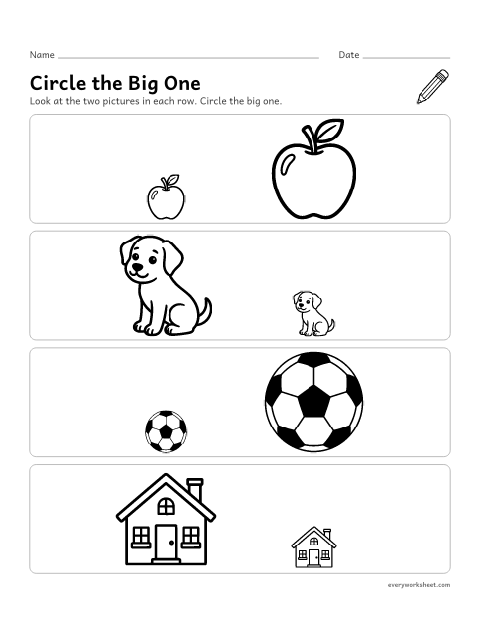
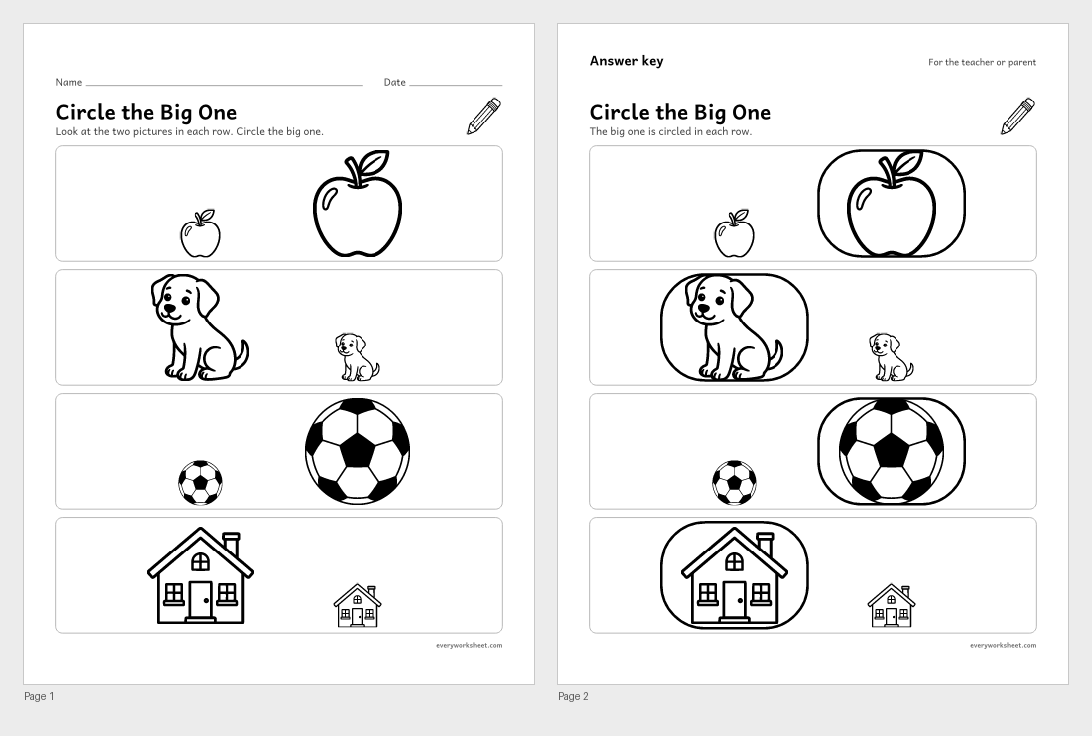
Comparing size: finding the big one
Answer key on page 2
2 pages163 KB
Circle the big one and the small one, tall and short, long and short, sort big and small animals, and match bears to bowls.
View all 2 pagesComparing size: finding the big one
Answer key on page 2
2 pages163 KB
 View all 2 pages
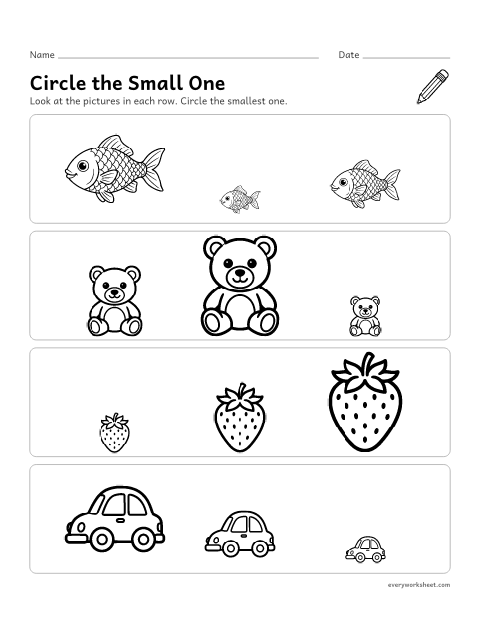
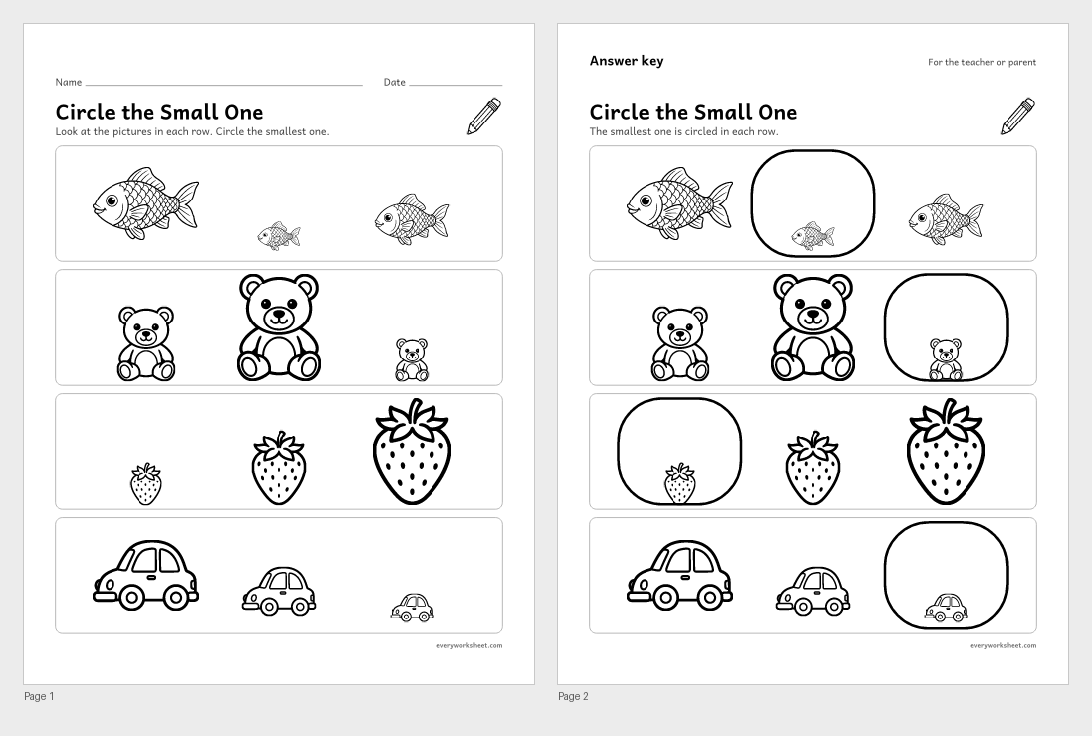
Comparing size: finding the small one
Answer key on page 2
2 pages366 KB
 View all 2 pages
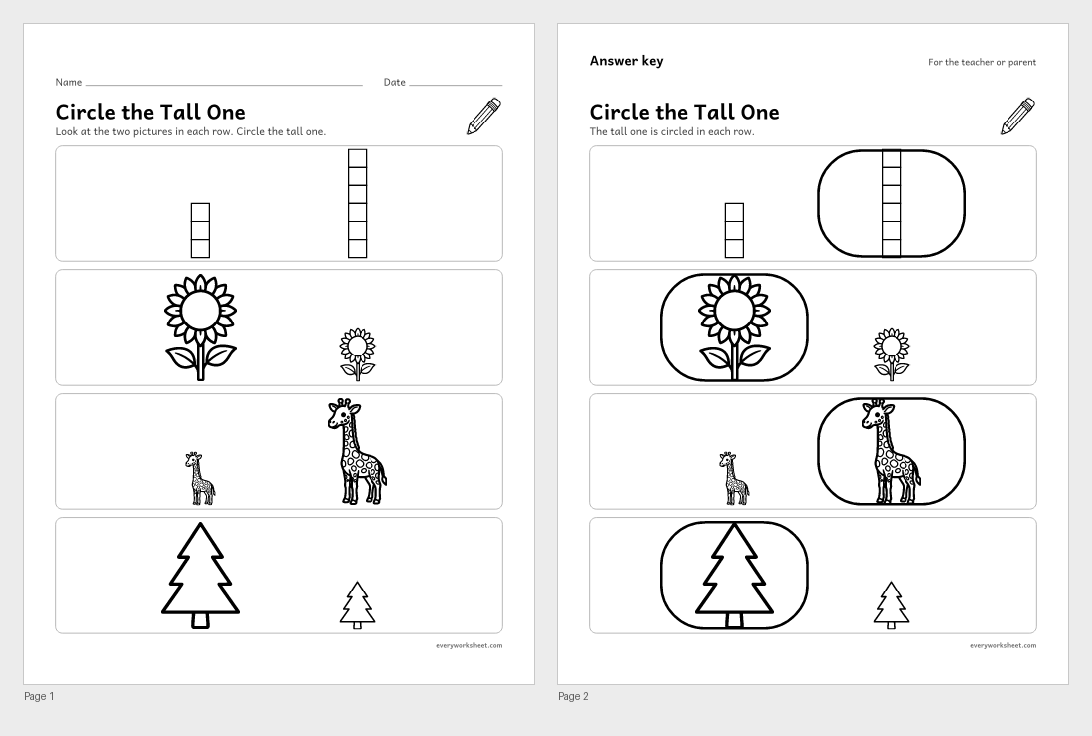
Comparing height: tall and short
Answer key on page 2
2 pages190 KB
 View all 2 pages
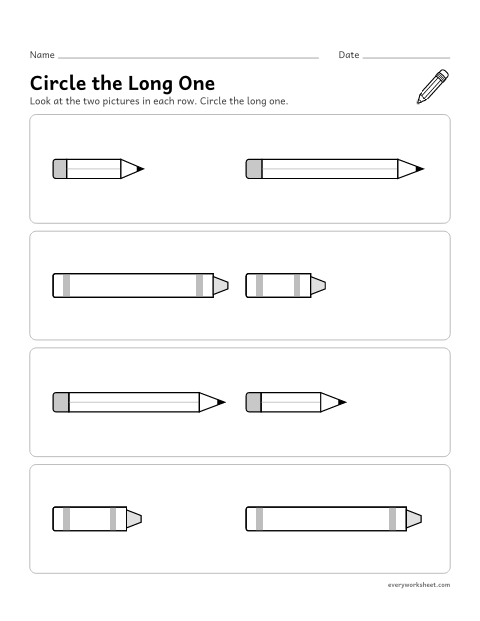
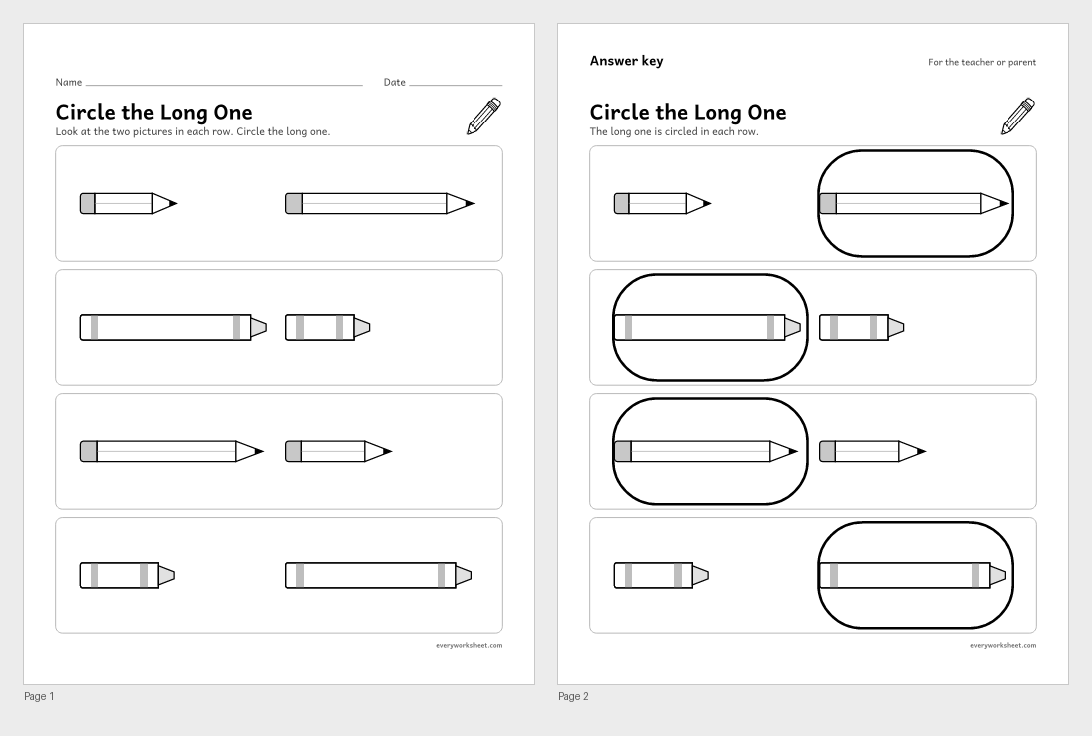
Comparing length: long and short
Answer key on page 2
2 pages47 KB
 View all 2 pages
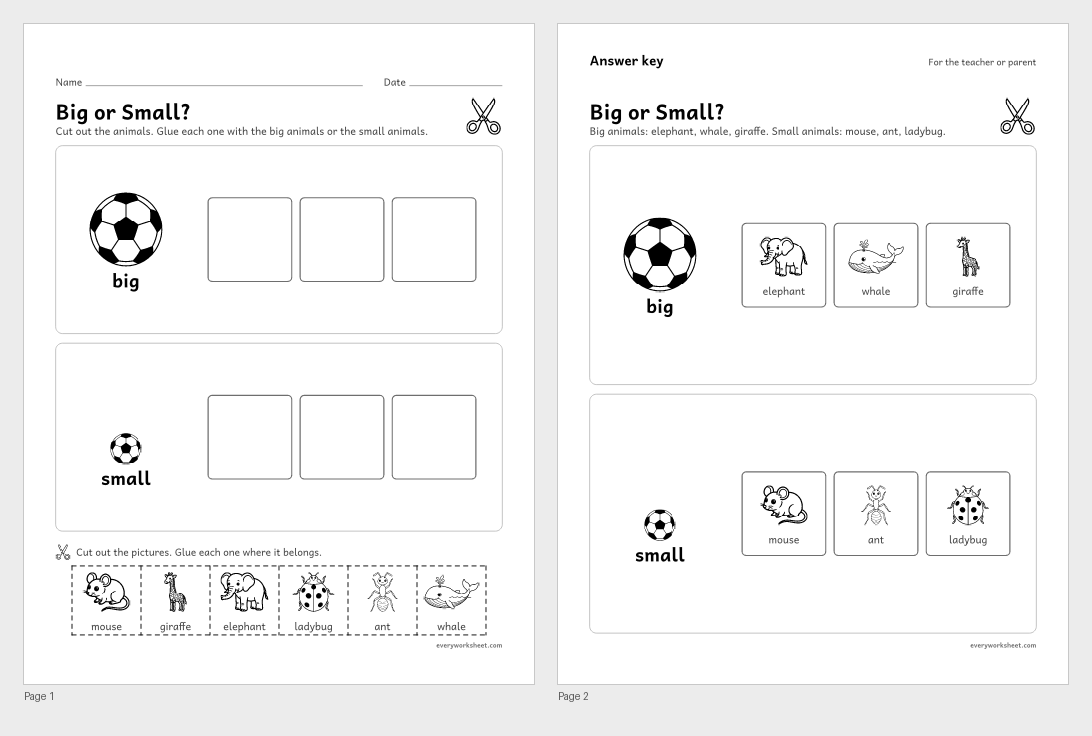
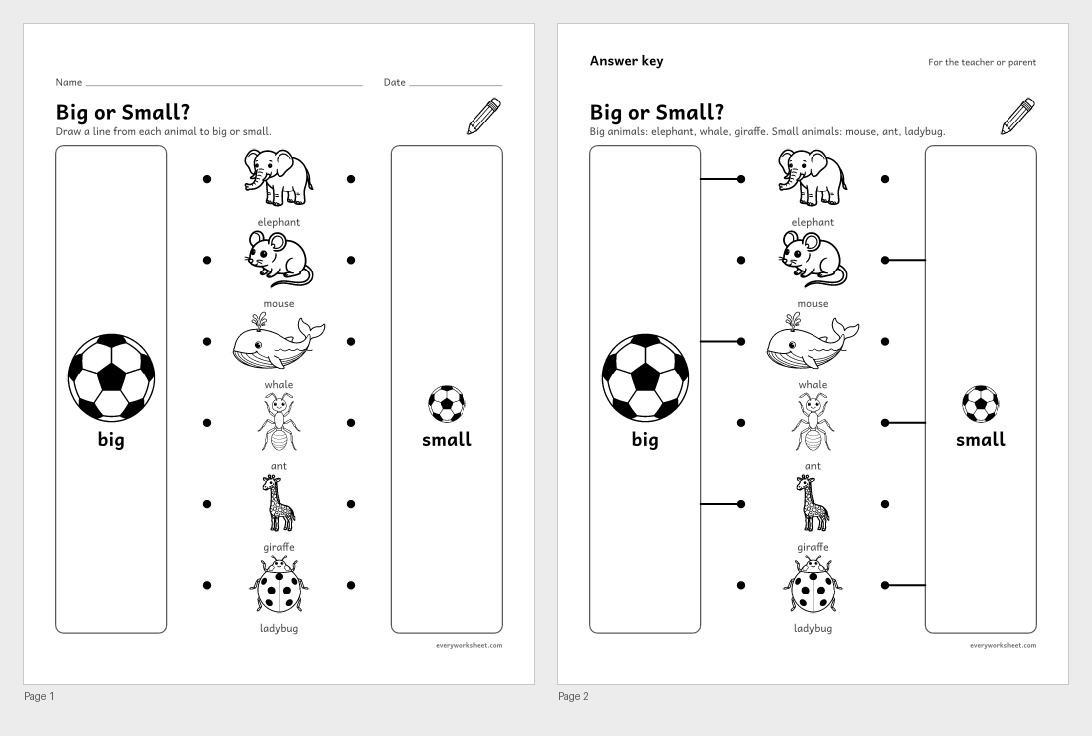
Sorting animals into big and small
Answer key on page 2
2 pages314 KB
 View all 2 pages
Sorting animals into big and small
Answer key on page 2
2 pages246 KB
 View all 2 pages
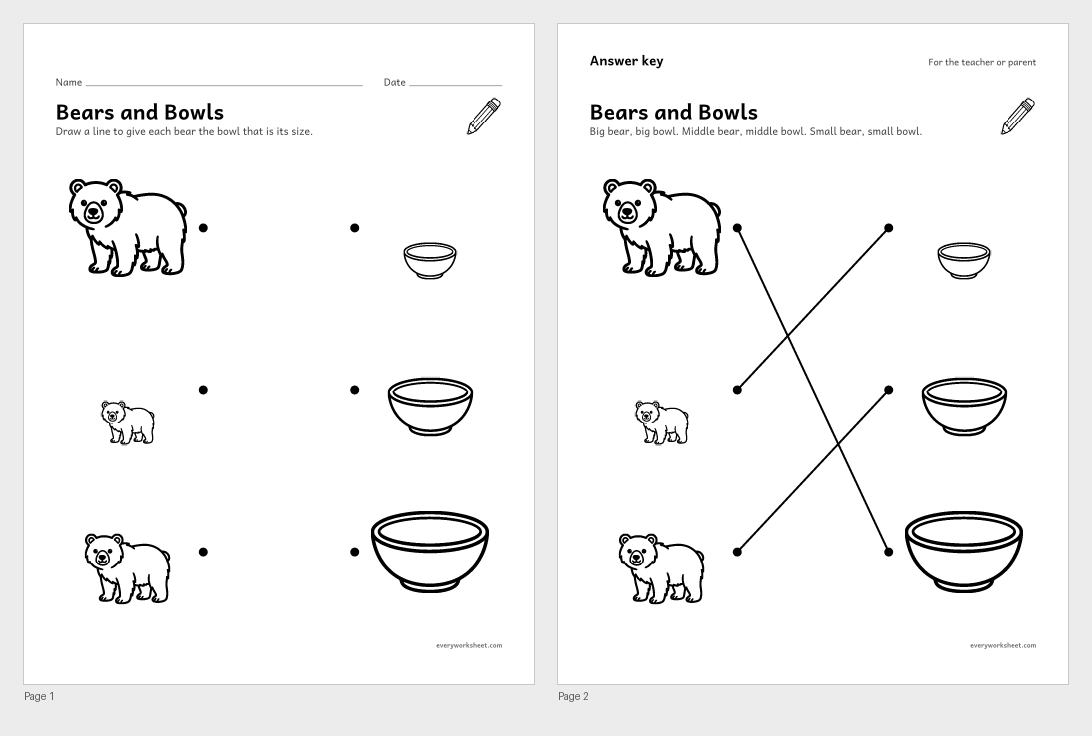
Matching big, medium and small
Answer key on page 2
2 pages220 KB
Print at 100% (actual size) for the cleanest tracing lines.
Comparing size is one of the first ways preschoolers measure. Is it big or small? Tall or short? Long or short? These big and small worksheets give children the words for size and lots of practice comparing two or three things.
On the first pages, children circle the big one, then the smallest of three. The tall and short page compares towers, flowers, giraffes and trees standing on the same line, and the long and short page compares pencils and crayons. Big and small animals is a sort about real size: an elephant is big and an ant is small, even when the pictures are the same size.
Bears and bowls matches a big, a middle and a small bear to the bowl that fits. Every page has an answer key on page 2.
ELOF P-MATH 8Child measures objects by their various attributes using standard and non-standard measurement. Uses differences in attributes to make comparisons.ELOF P-LC 6Child understands and uses a wide variety of words for a variety of purposes.Big and small first, then tall and short, long and short, and the middle size, medium. These words are the start of measuring.
Compare two real things that are the same except for size, like two balls. Ask which is big and which is small, then try pictures.
Yes. Every page has an answer key on page 2.