 View larger
Line Tracing Worksheets
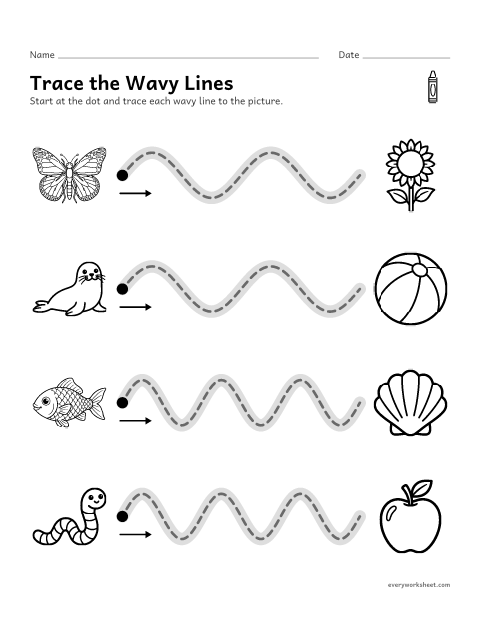
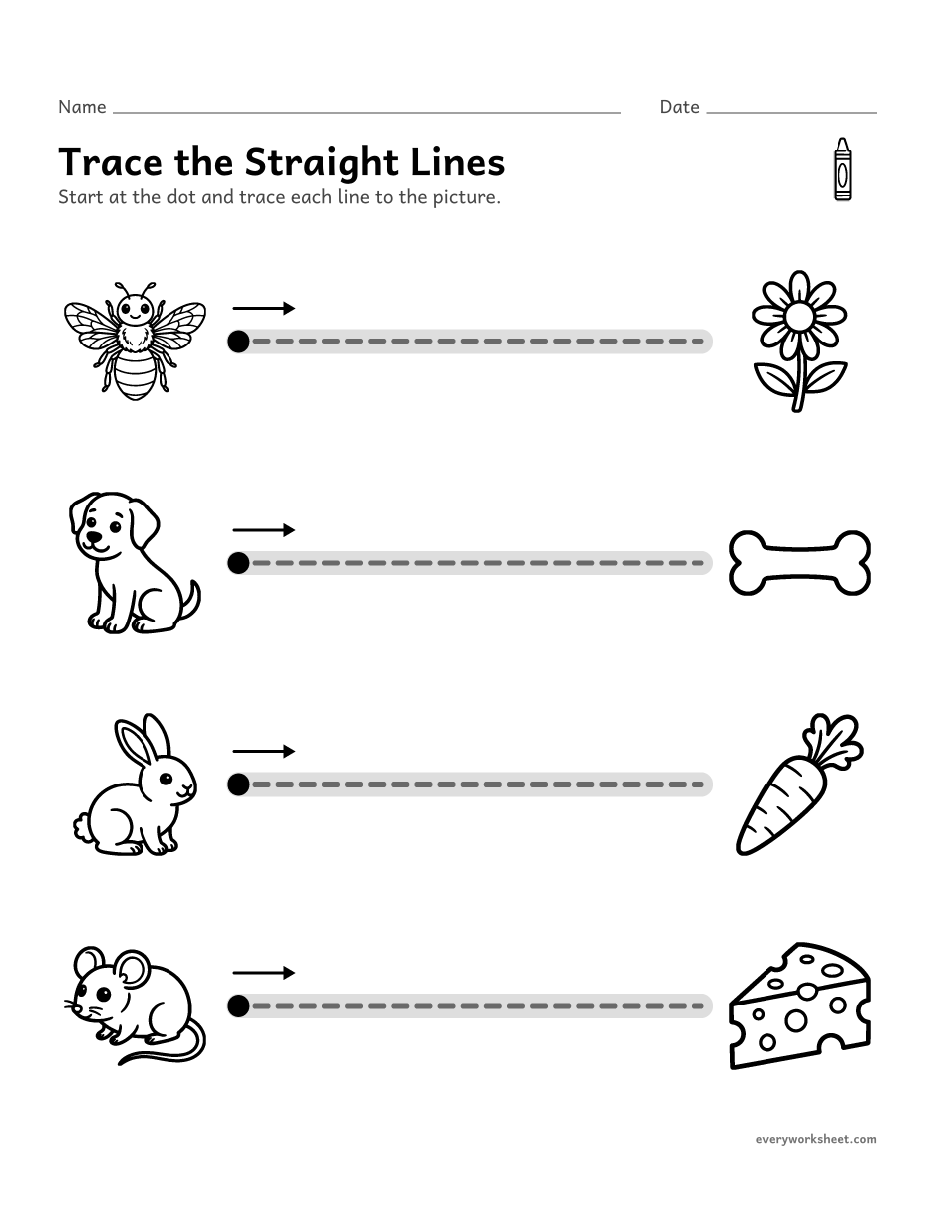
Big picture-to-picture paths to trace: straight lines, lines down, slanted lines, hops, waves, zigzags and loops.
Download the line tracing worksheets
Straight and slanted lines
 View larger
 View larger
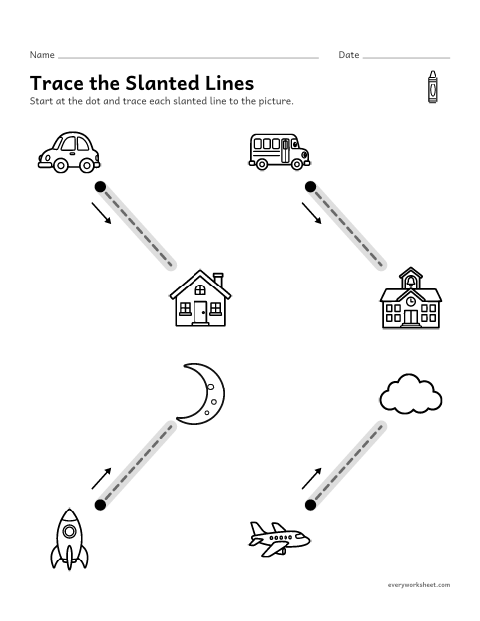 View larger
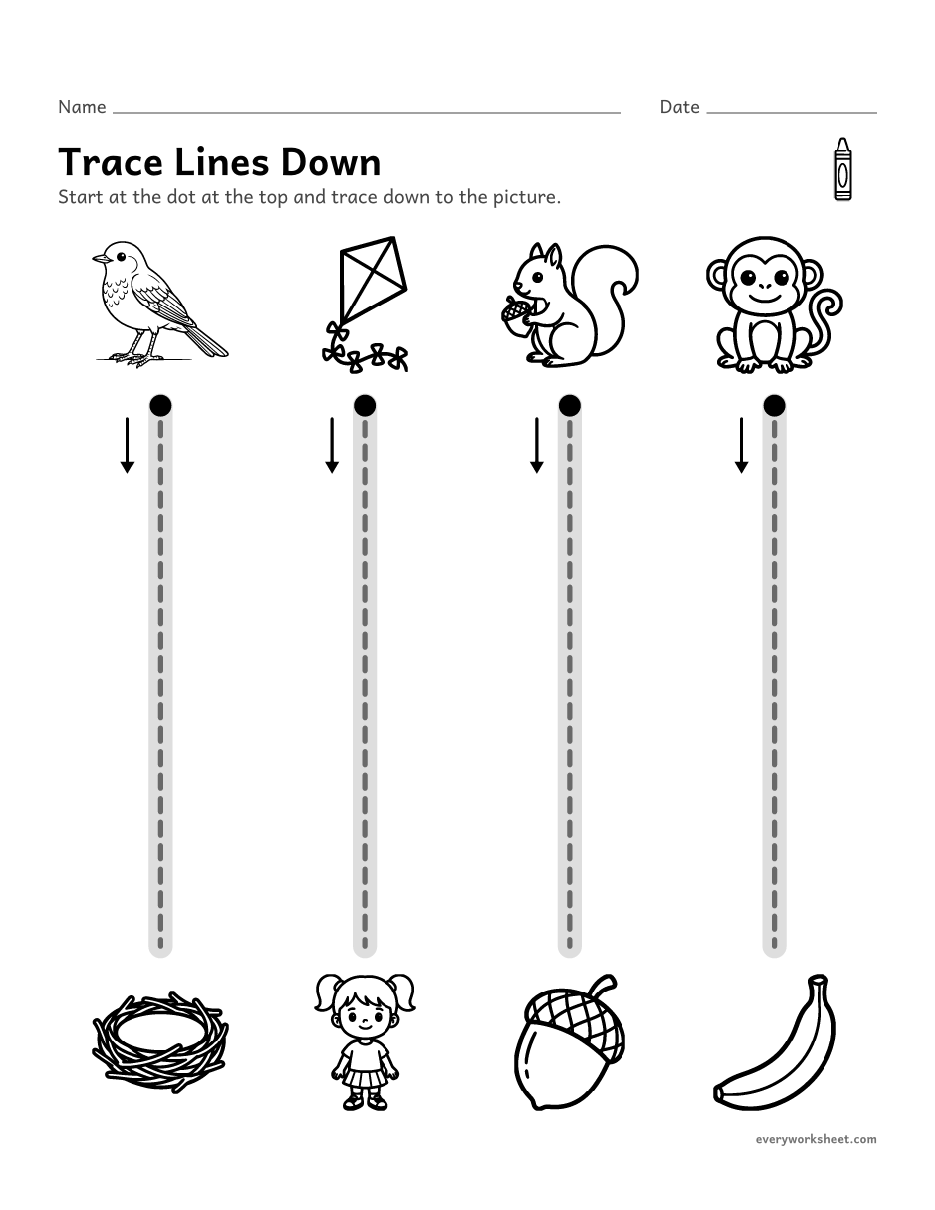
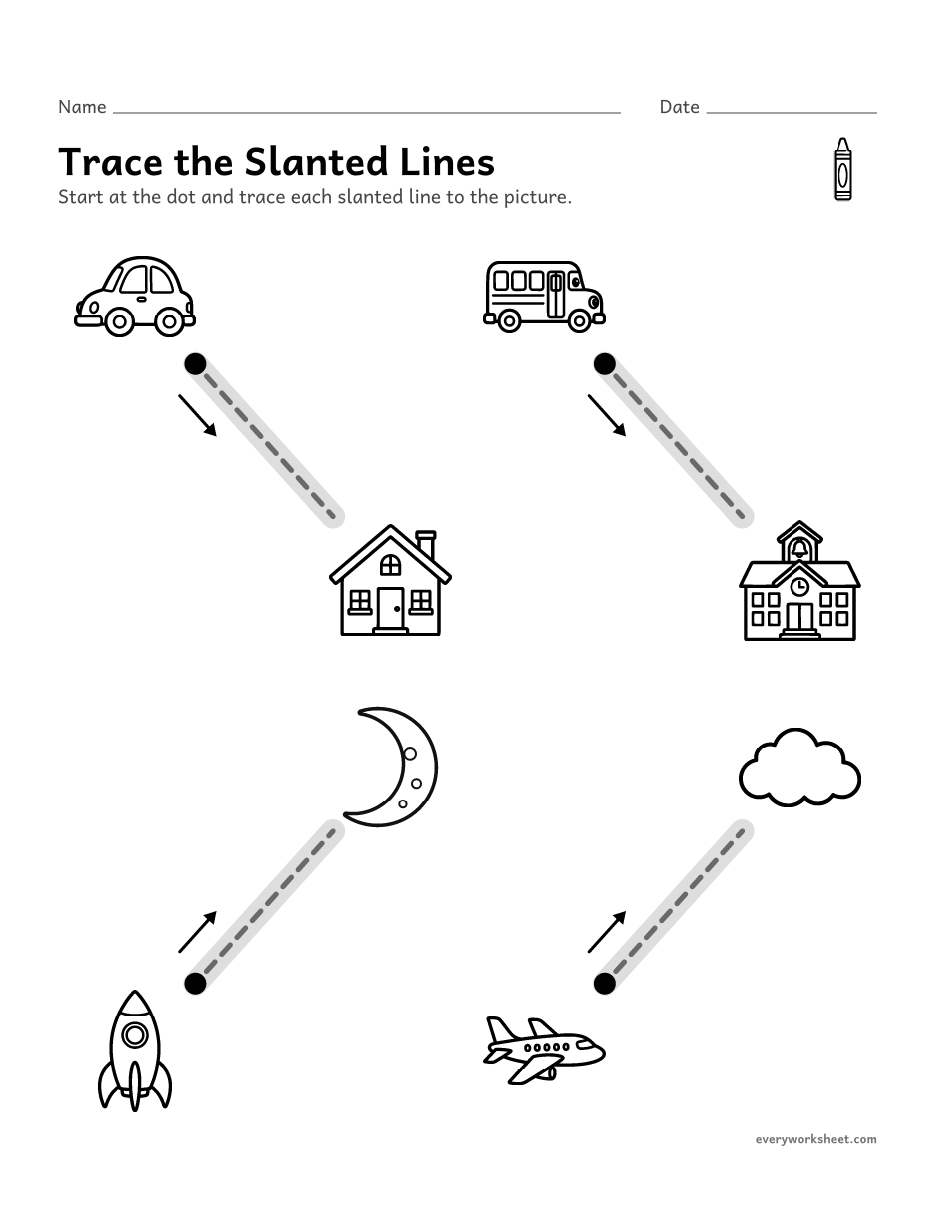
Curved, wavy and zigzag lines
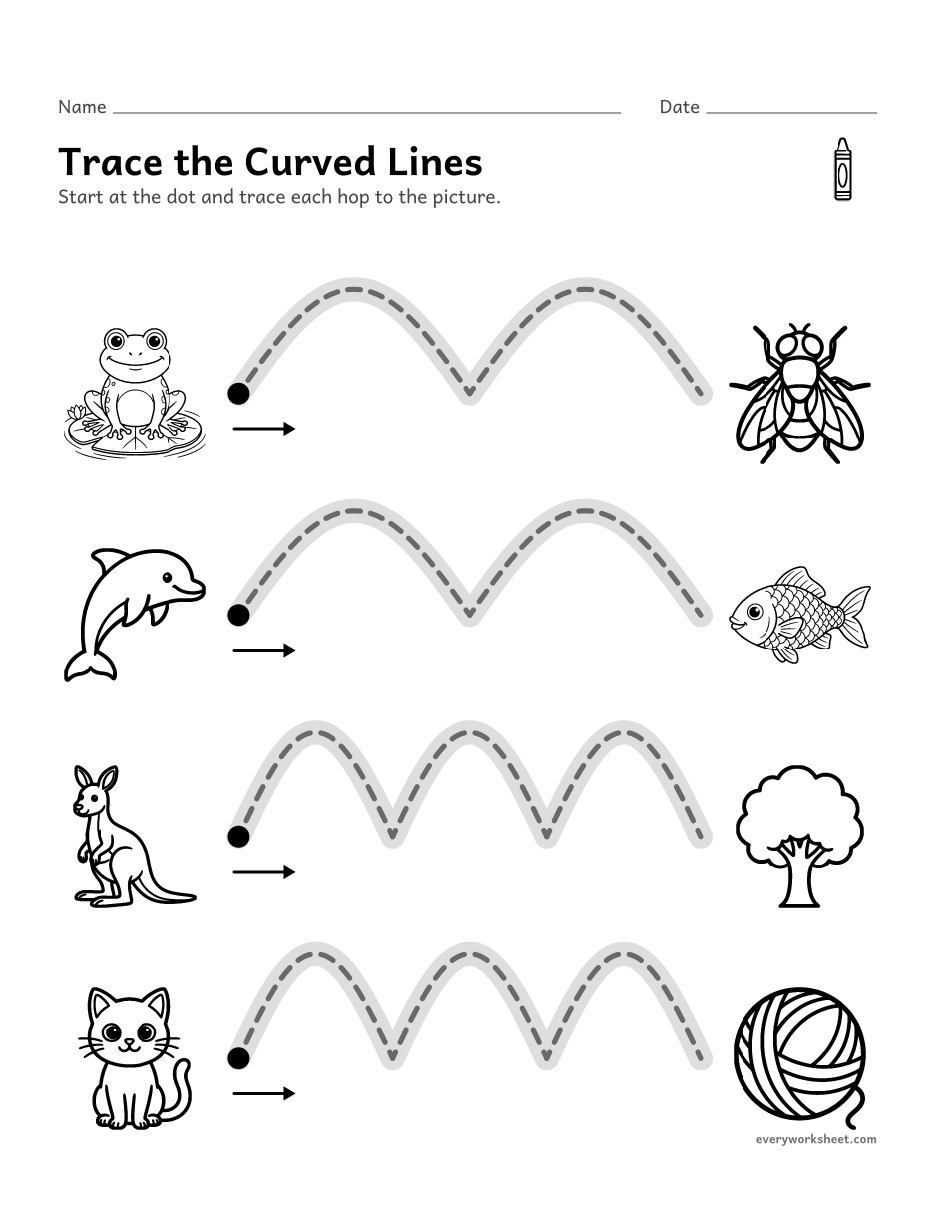
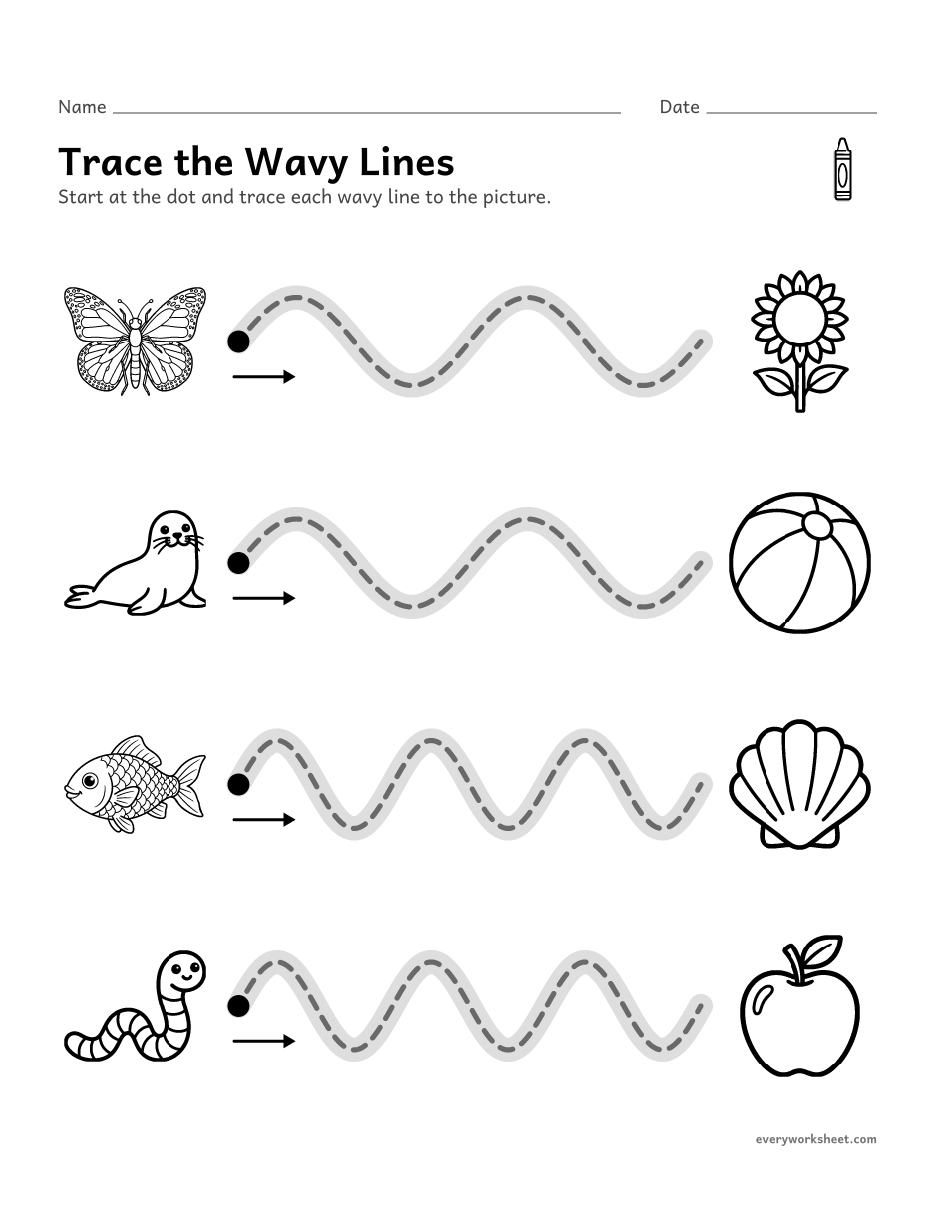
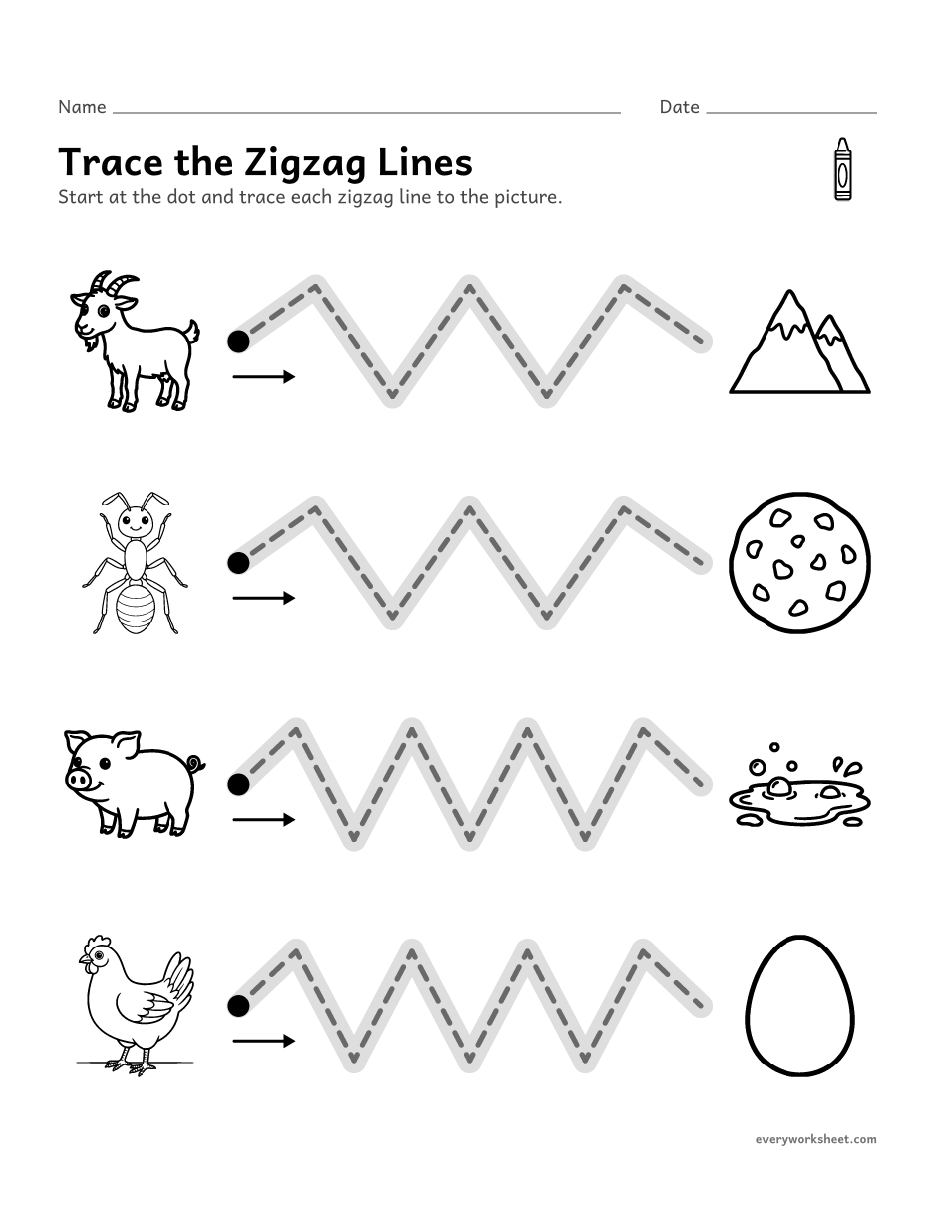
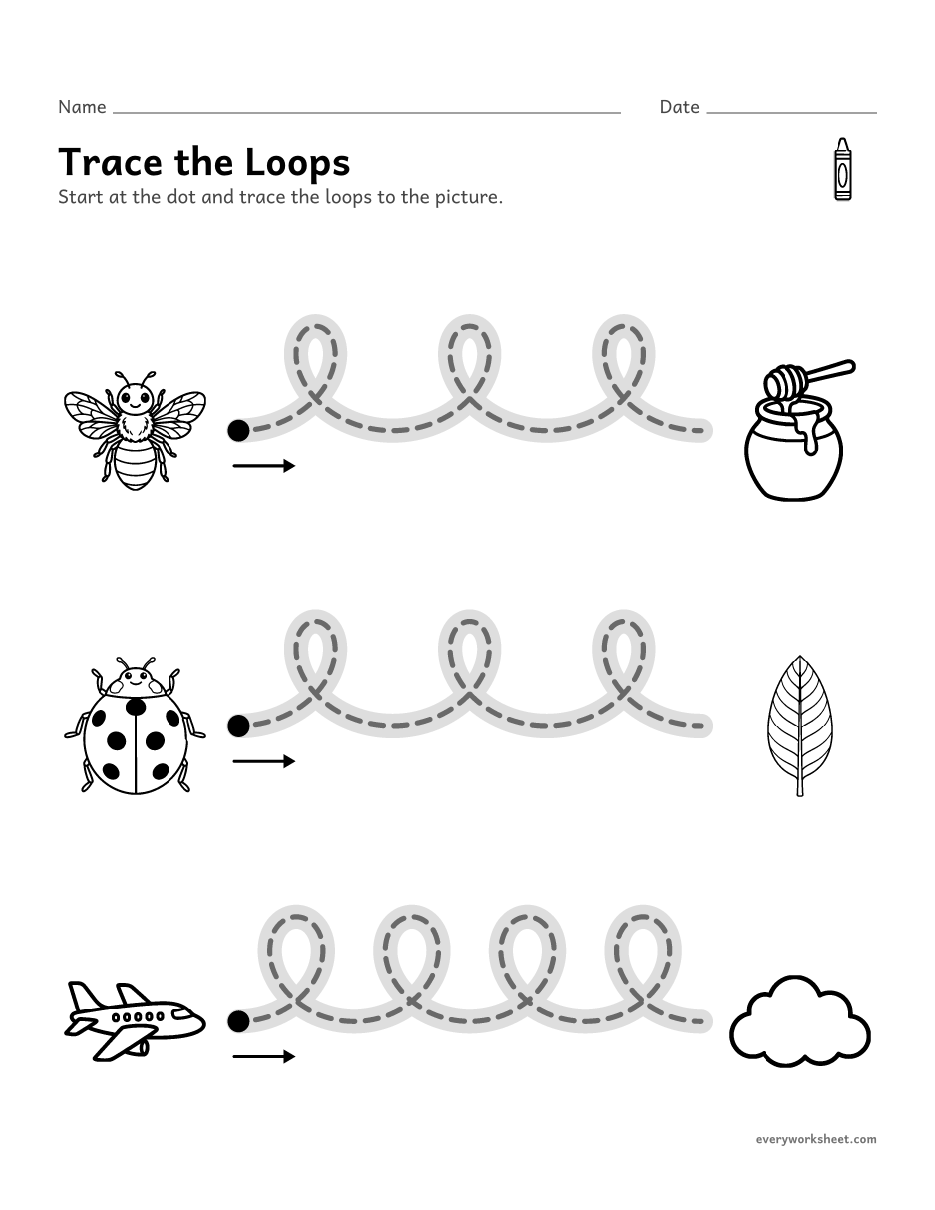
Long paths and review
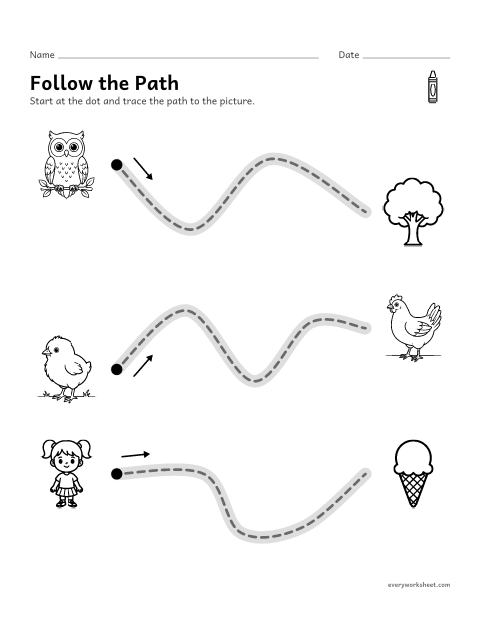 View larger
Picture to picture tracing paths
Tracing long curving paths from picture to picture
1 page115 KB
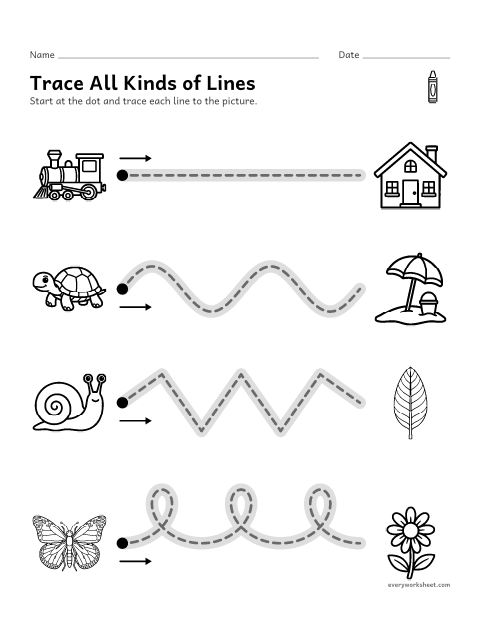 View larger
Line tracing review
Tracing straight, curved, wavy and zigzag lines and loops
1 page174 KB
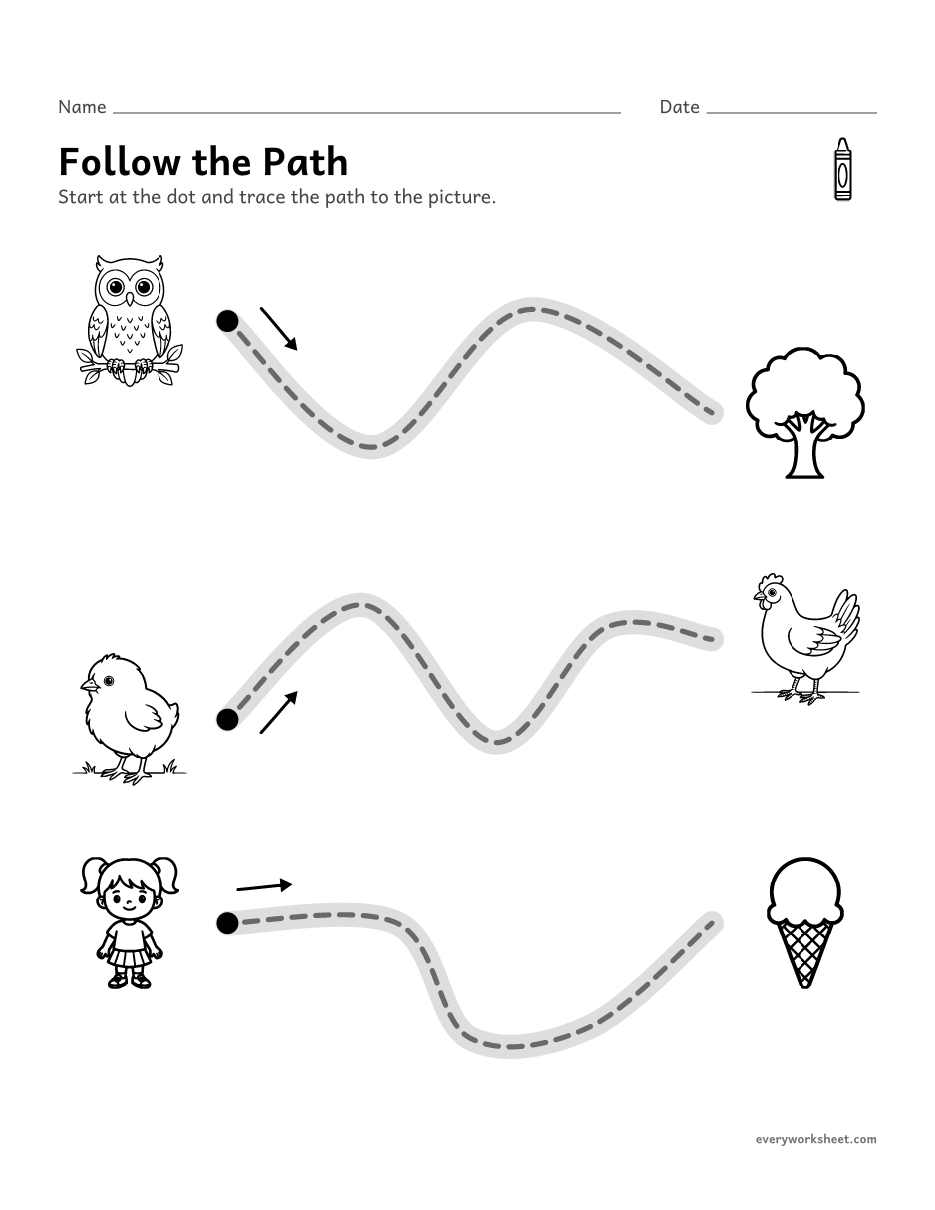
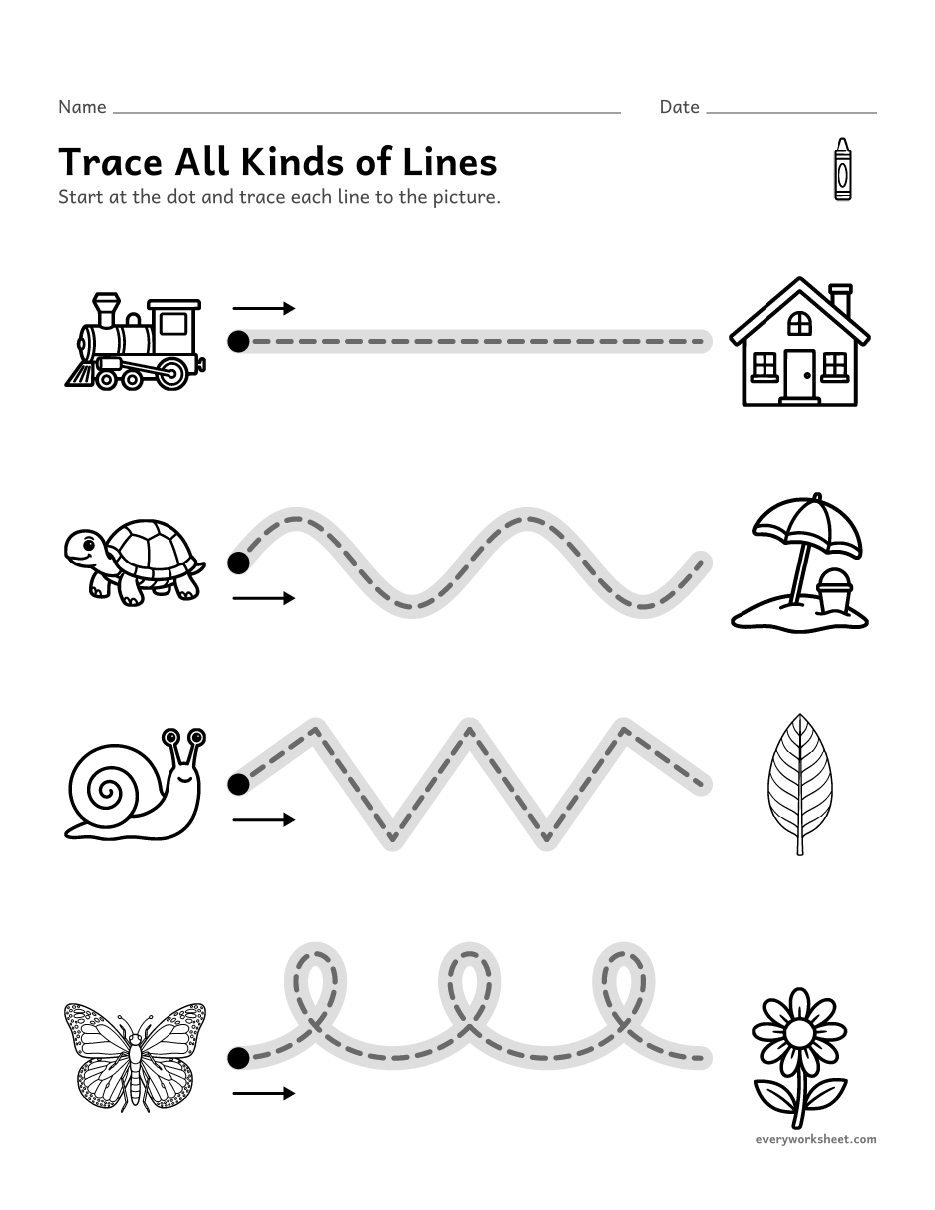
Print at 100% (actual size) for the cleanest tracing lines.
About these line tracing worksheets
Before children can write letters, they need to make the lines letters are built from: straight lines across and down, slanted lines, curves and loops. These line tracing worksheets give preschoolers exactly that practice, one kind of line per page.
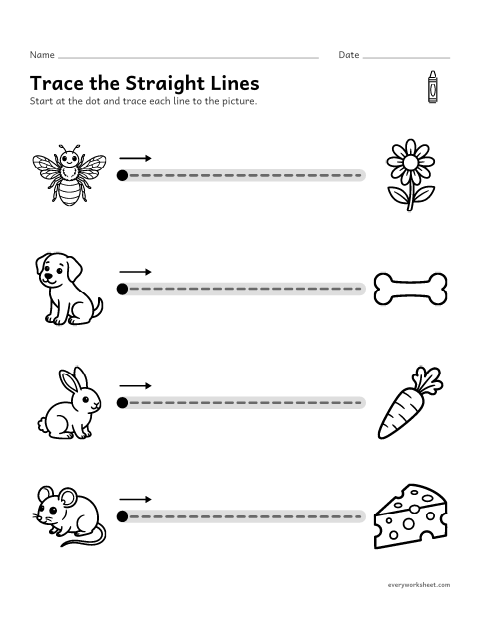
Every path is wide and easy to see: a thick grey path with dashes to trace, a big black dot where the line starts and an arrow that shows which way to go. Each line ends at a picture, so a child has a goal, like helping the bee reach the flower or the dog reach its bone.
Work through the pages in order, from straight lines across, then lines down and slanted lines, to curved hops, wavy lines, zigzags and loops. The follow the path page has long curving paths, and the review page mixes every kind of line.
Standards
ELOF P-PMP 3Child demonstrates increasing control, strength, and coordination of small muscles.ELOF P-LIT 6Child writes for a variety of purposes using increasingly sophisticated marks.ELOF P-PMP 2Child uses perceptual information to guide motions and interactions with objects and other people.
How to use them
- Start with straight lines across. Show your child the big dot, then trace the first line together with your finger before using a crayon.
- Give a fat crayon or a short pencil. Small hands control short tools better than long ones.
- Say the line as you go: "Start at the dot, go across to the bone." On zigzags, say "up, down, up, down."
- One page is plenty for a three- or four-year-old. Come back to the same page another day rather than doing several at once.
- Slip a page into a sheet protector and use a dry-erase marker for practice you can wipe off and repeat.
Teaching tips
- Staying on the grey path matters more than staying exactly on the dashes. Praise a line that stays on the path.
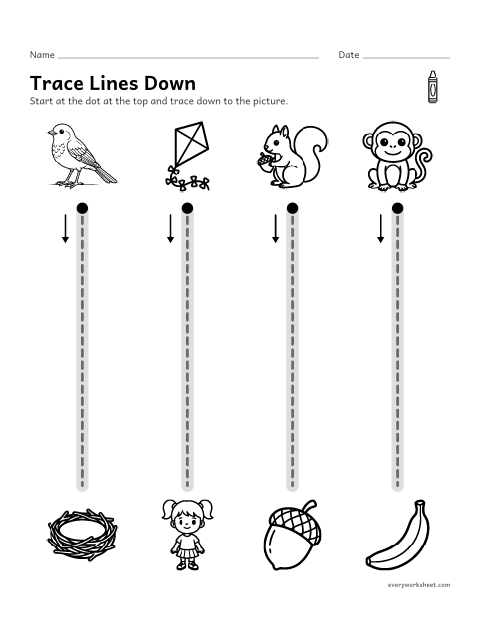
- Lines down should go from top to bottom, and lines across from left to right. These are the same directions children use to write letters.
- If a child rushes, ask them to drive the crayon slowly, like a car on a road.
- Loops are the hardest. Let children trace loops in the air or in sand before trying them on paper.
Questions teachers and parents ask
What lines should preschoolers trace first?
Start with straight lines across and down, then slanted lines, then curves, waves, zigzags and loops. These are the strokes children later use to write letters and numbers.
How do I help a child who goes off the line?
Slow down and trace the path with a finger first. Staying on the wide grey path is a good result at this age; the line does not need to be perfect.
Can I reuse these pages?
Yes. Put a page in a sheet protector or laminate it and use a dry-erase marker, then wipe it clean and trace again.