 View larger
Body Parts Worksheets for Preschool
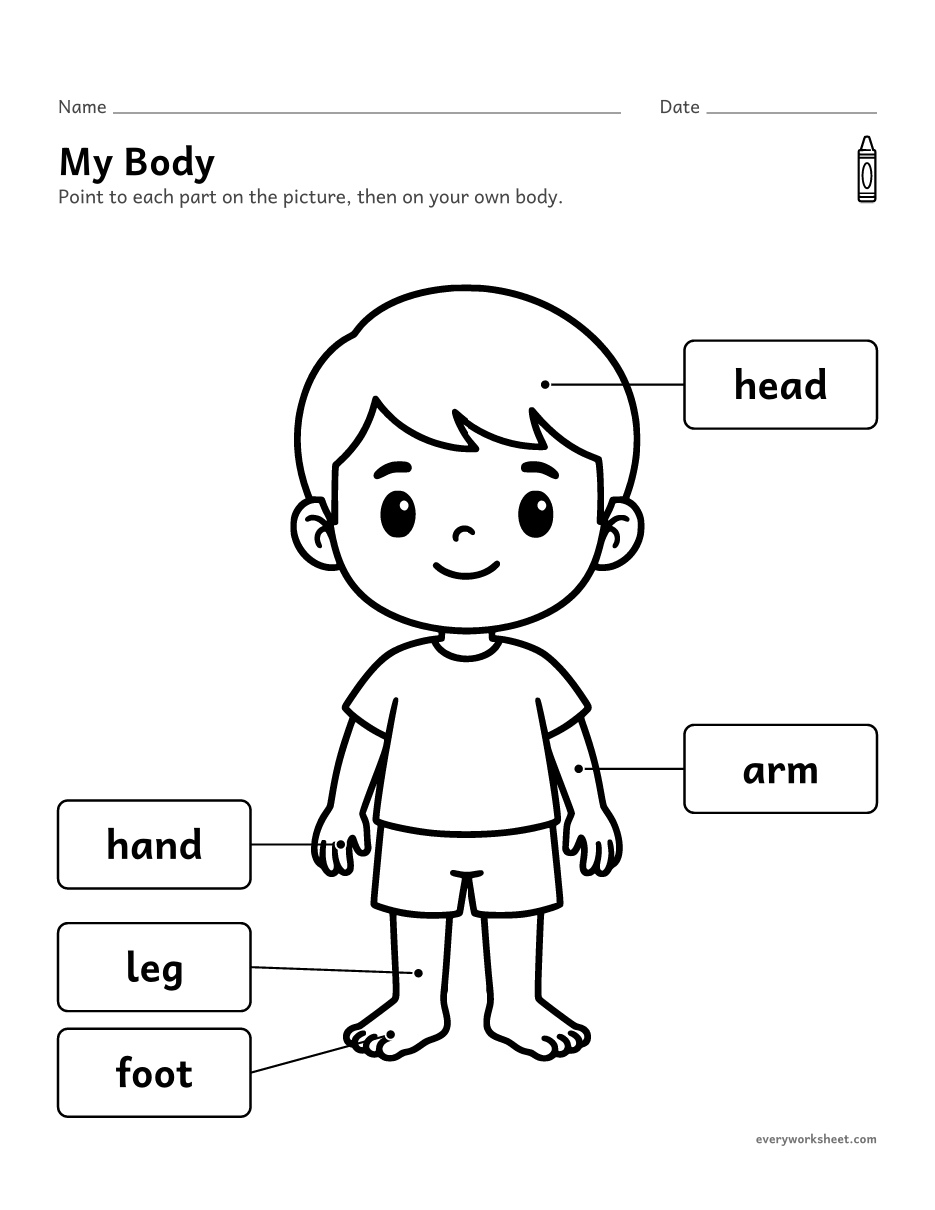
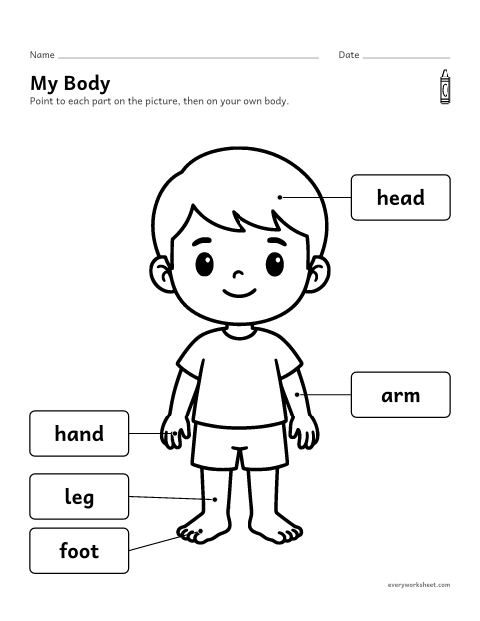
My Body and My Face posters, face cut and paste and matching pages, clothes for each body part and counting body parts.
Download the body parts worksheets
My body and my face
 View larger
 View larger
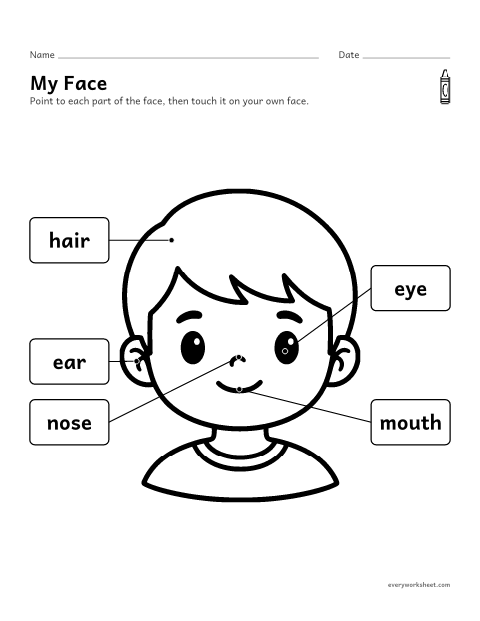
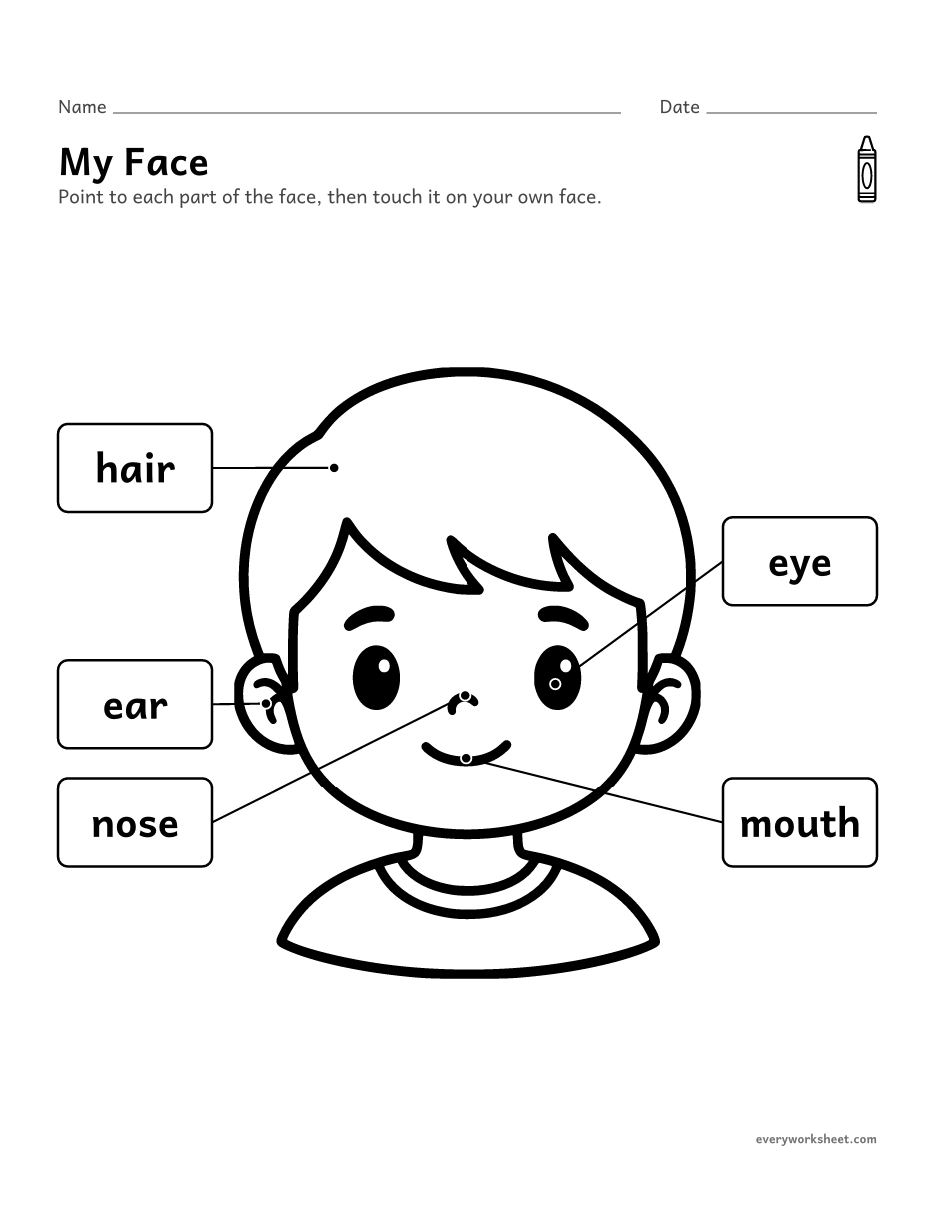
Parts of the face poster for preschool
Naming the hair, eyes, ears, nose and mouth
1 page34 KB
Parts of the face
 View all 2 pages
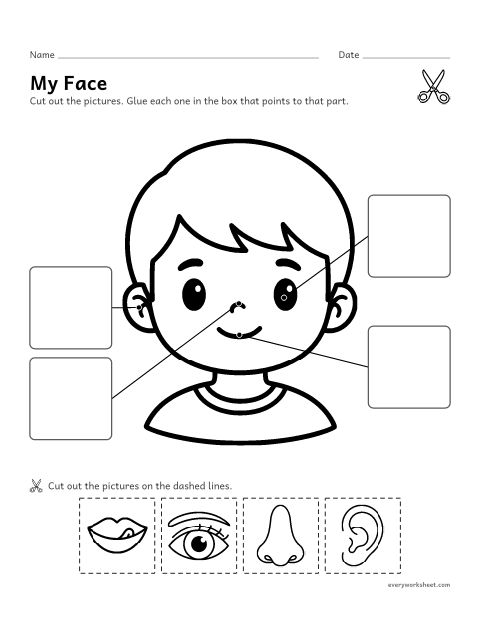
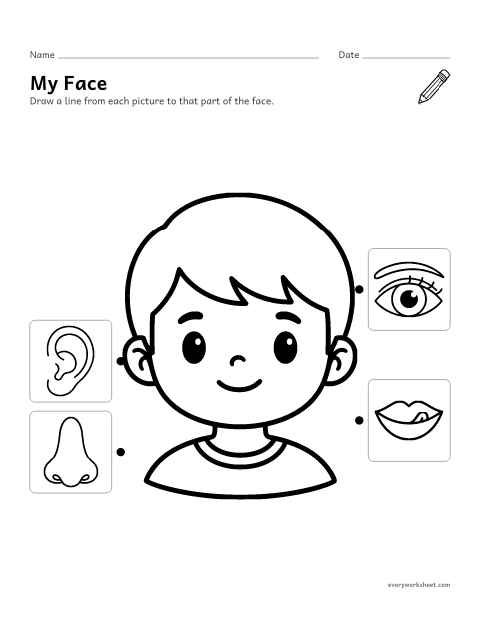
Parts of the face cut and paste for preschool
Matching pictures of the eye, ear, nose and mouth to the face
Answer key on page 2
2 pages106 KB
 View all 2 pages
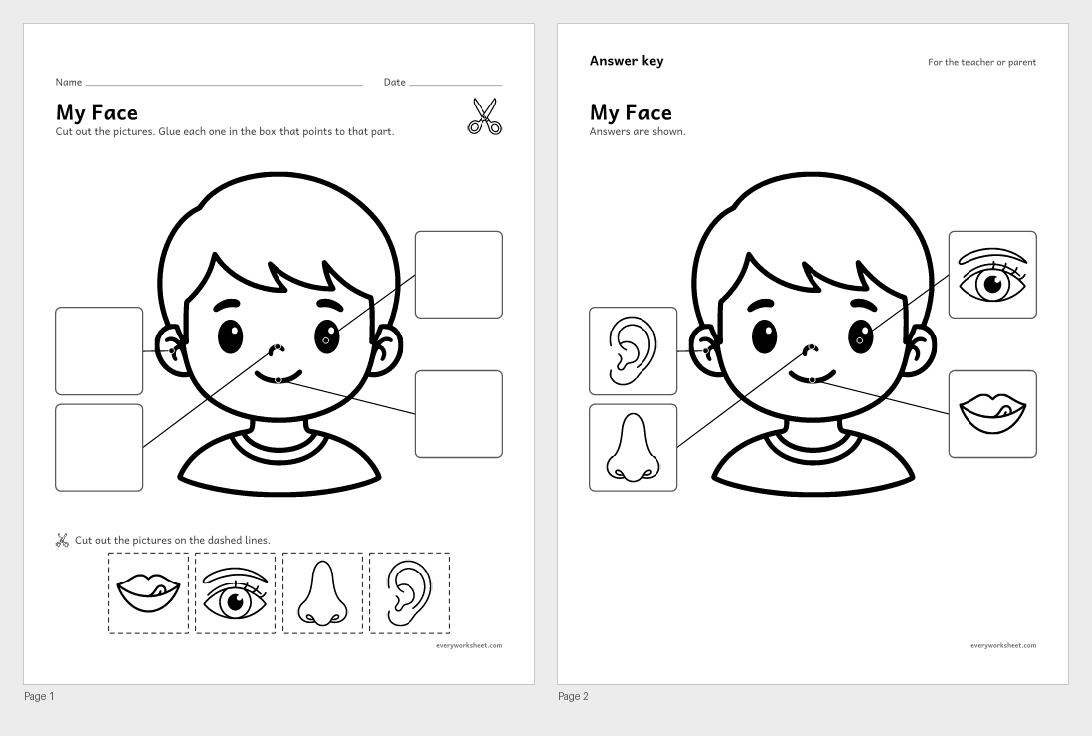
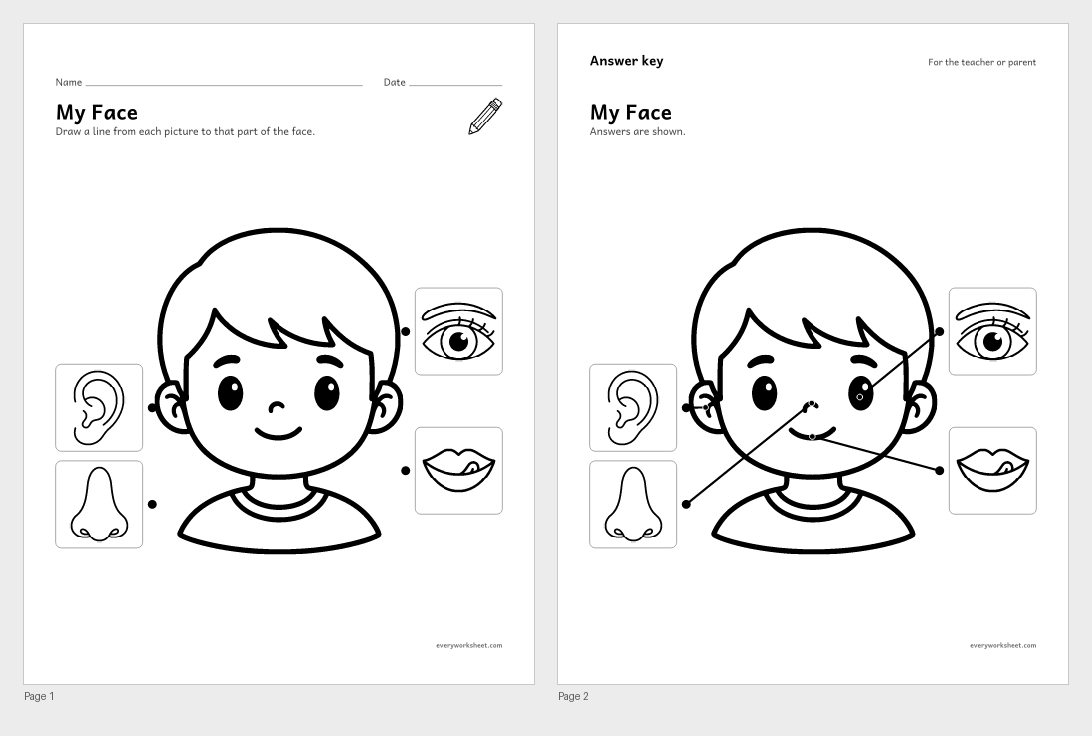
Parts of the face matching worksheet for preschool
Matching pictures of the eye, ear, nose and mouth to the face
Answer key on page 2
2 pages59 KB
Using body part words
 View all 2 pages
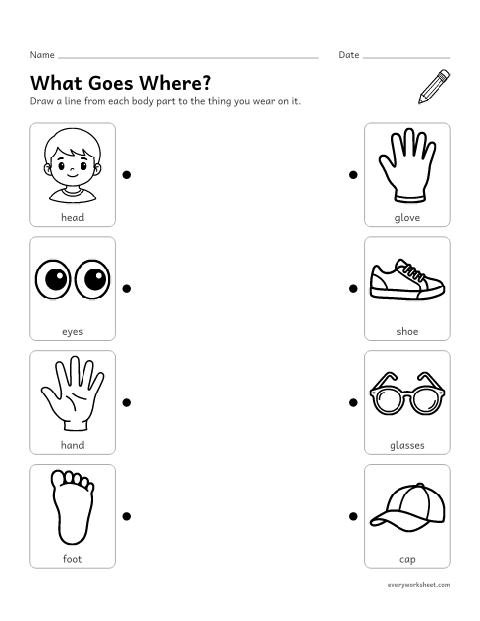
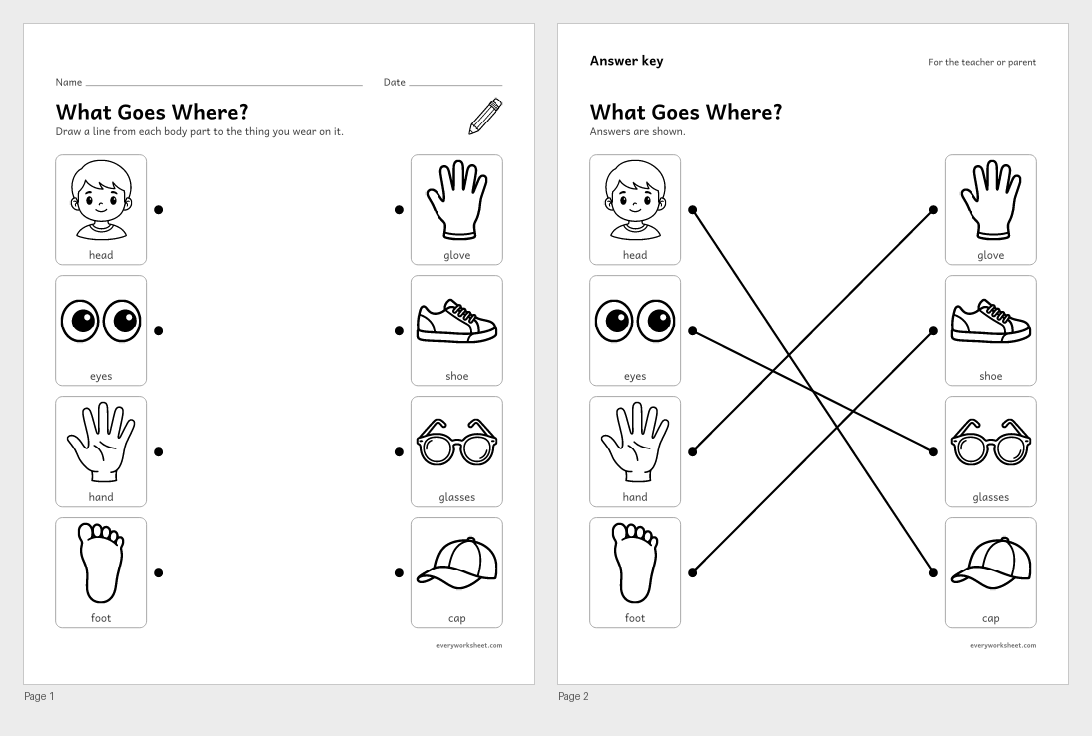
Body parts and clothes matching worksheet
Matching body parts to the clothes we wear on them
Answer key on page 2
2 pages211 KB
 View all 2 pages
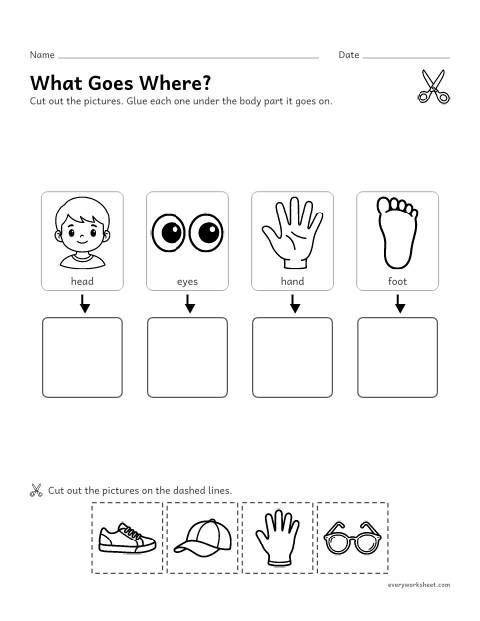
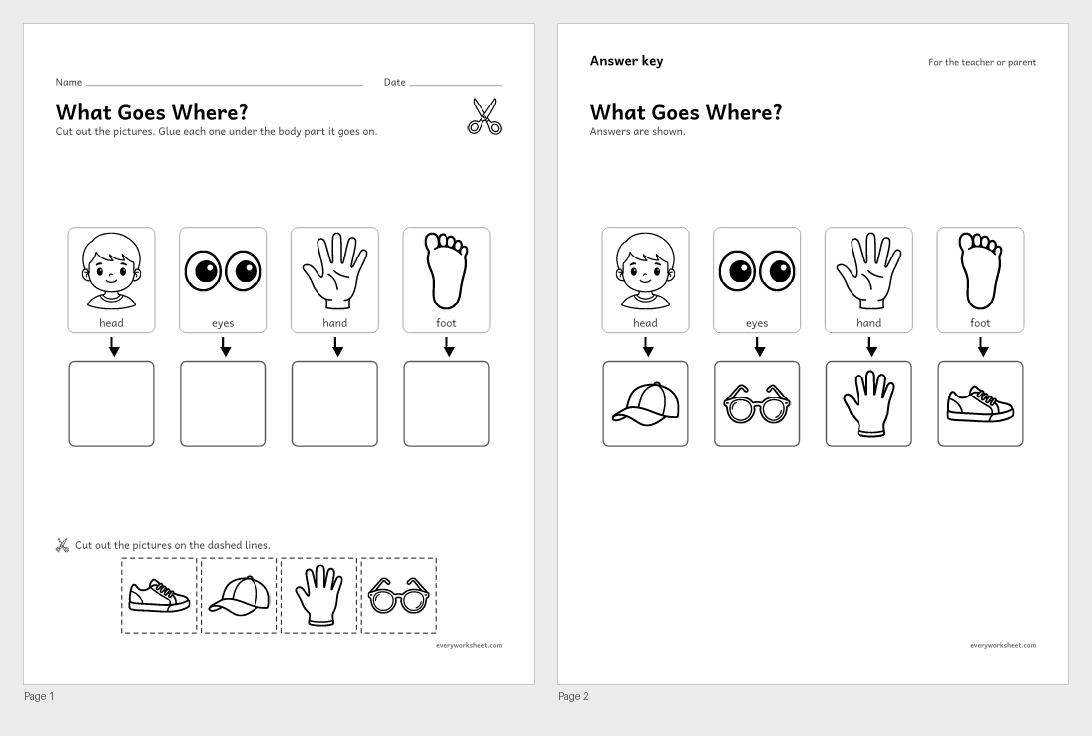
Body parts and clothes cut and paste
Matching body parts to the clothes we wear on them
Answer key on page 2
2 pages256 KB
 View all 2 pages
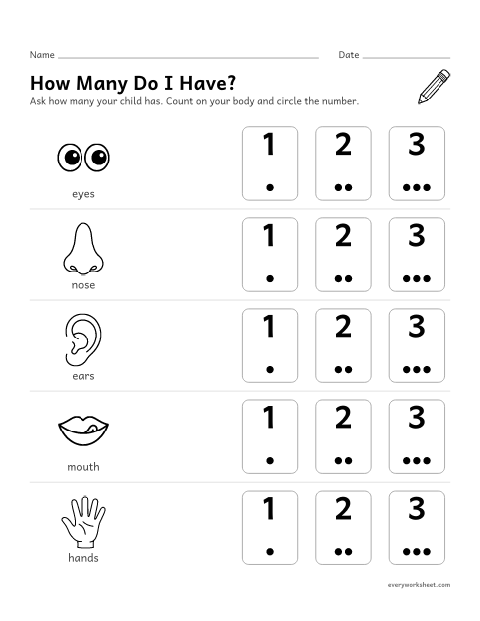
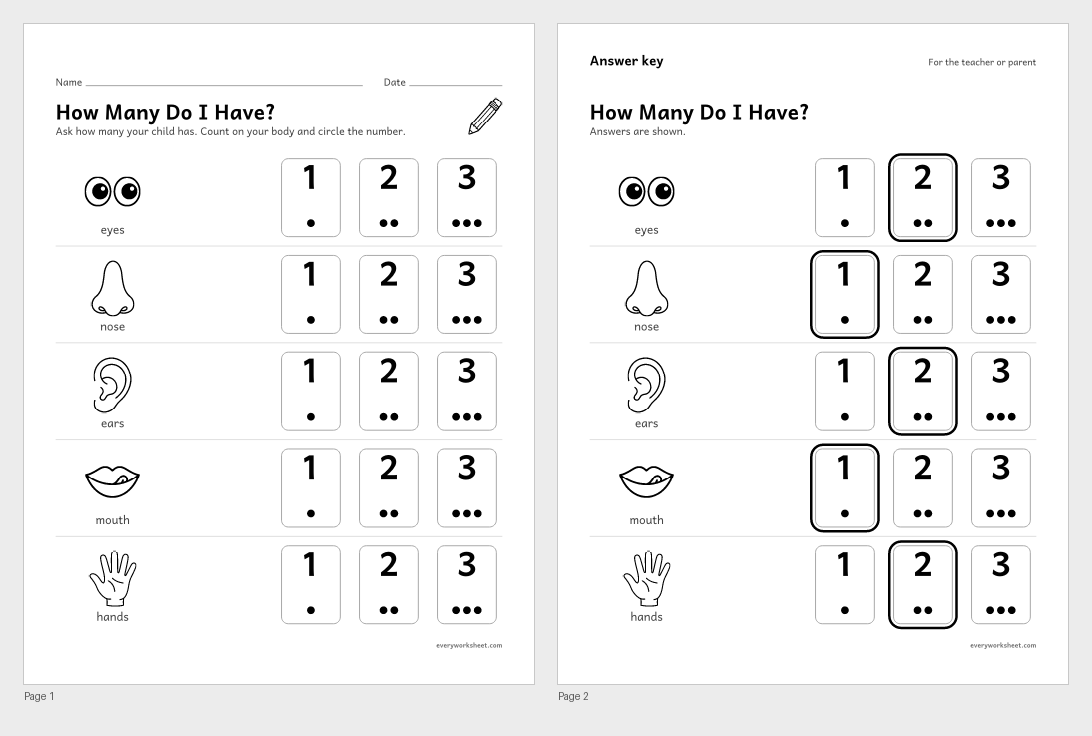
How many body Parts? counting worksheet
Counting own body parts: eyes, nose, ears, mouth and hands
Answer key on page 2
2 pages72 KB
Print at 100% (actual size) for the cleanest tracing lines.
About these body parts worksheets
Naming the parts of the body is one of the first science and vocabulary lessons in preschool. These body parts worksheets help children name the head, arms, hands, legs and feet, and the eyes, ears, nose, mouth and hair on a face.
Children point and touch, cut and glue, draw lines and count on their own bodies. Every page has big pictures and one short direction for a grown-up to read. Pages with right answers have an answer key on page 2, and each cut and paste page has a no-cut version.
Standards
ELOF P-LC 6Child understands and uses a wide variety of words for a variety of purposes.ELOF P-LC 7Child shows understanding of word categories and relationships among words.ELOF P-MATH 2Child recognizes the number of objects in a small set.ELOF P-PMP 3Child demonstrates increasing control, strength, and coordination of small muscles.
How to use them
- Use the My Body poster with a song like Head, Shoulders, Knees and Toes. Point to each part on the picture, then on your own body.
- On the face pages, sit in front of a mirror and touch each part of your face before cutting or drawing lines.
- For What Goes Where?, bring out a real hat, glasses, a glove and a shoe and let your child put each one on.
- On How Many Do I Have?, count on your own body together, then circle the number.
- Play Simon Says with body part words to review.
Teaching tips
- Use the real words: foot and feet, hand and hands, eye and eyes. Point out that we have two of some parts and one of others.
- Our hands help us touch and our eyes help us see. Link this topic to the five senses.
- Every body is different. Talk about how bodies can look different and still have the same parts.
- Choose the no-cut versions when scissors are not practical. They teach the same words.
Questions teachers and parents ask
What body parts should preschoolers know?
Start with head, arms, hands, legs and feet, and the parts of the face: eyes, ears, nose, mouth and hair. Older preschoolers can add words like knees, elbows, shoulders and fingers.
How do you teach body parts to preschoolers?
Use songs, mirrors and games like Simon Says. Point to a part on a picture, then on your own body, and say the word together.
Does this body parts worksheet have an answer key?
Yes. The face cut and paste and matching pages, the clothes matching pages and the counting page have an answer key on page 2. The posters do not need one.