 View larger
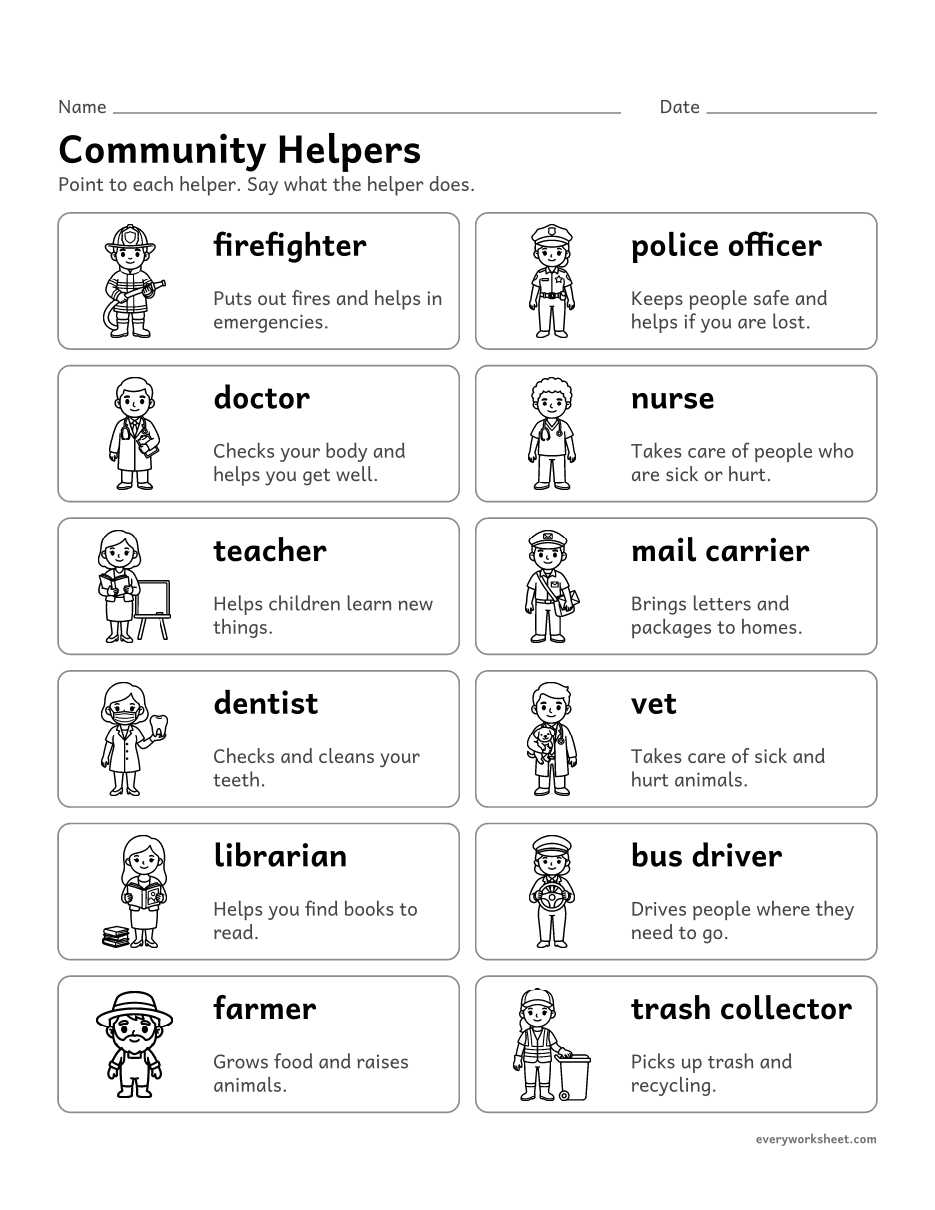
Community Helpers Worksheets for Kindergarten
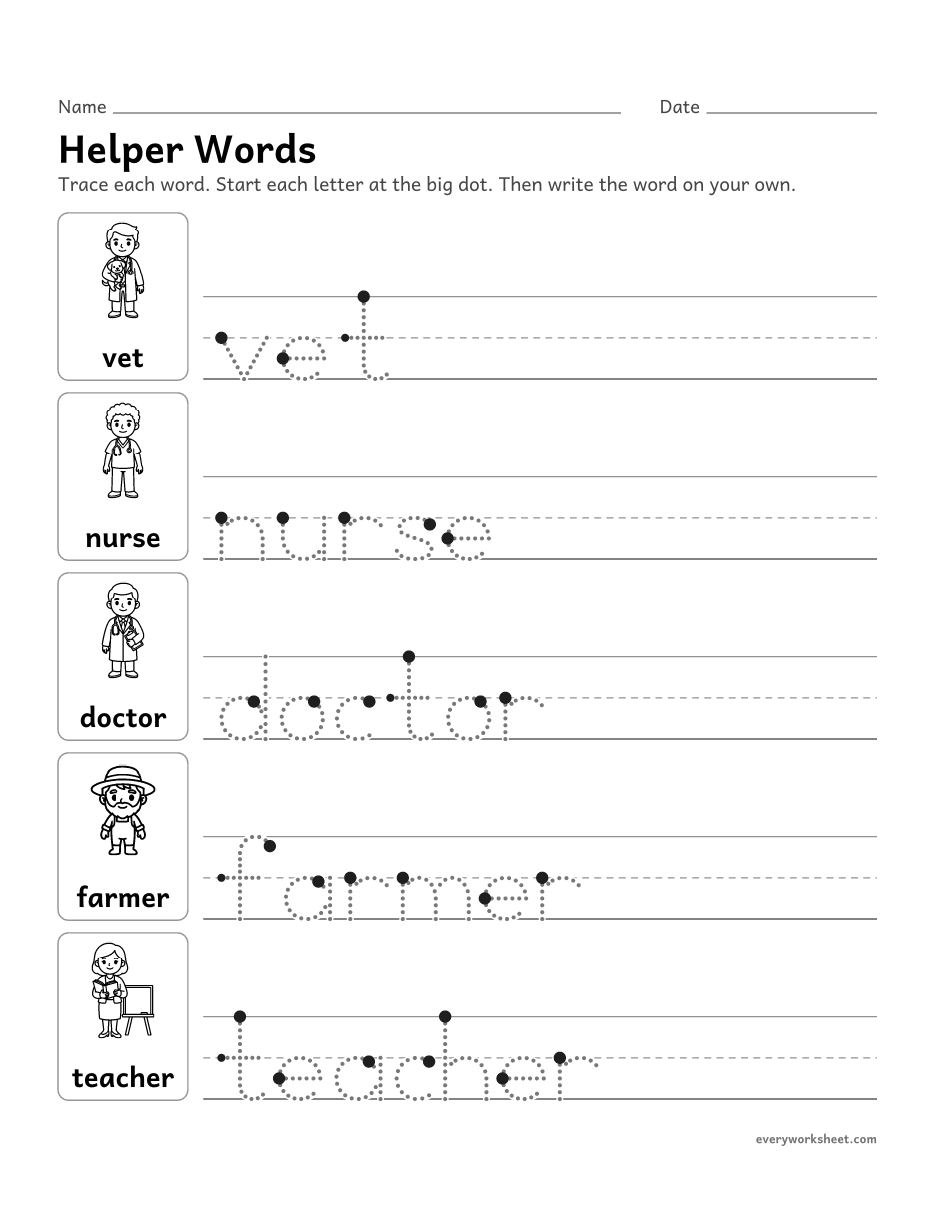
A community helpers chart, helpers and their tools, where helpers work, riddles, who can help, a read-aloud story, helper words and a thank-you page.
Download the community helpers worksheets
Community helpers chart and helper words
 View larger
 View larger
Helpers, tools and workplaces
 View all 2 pages
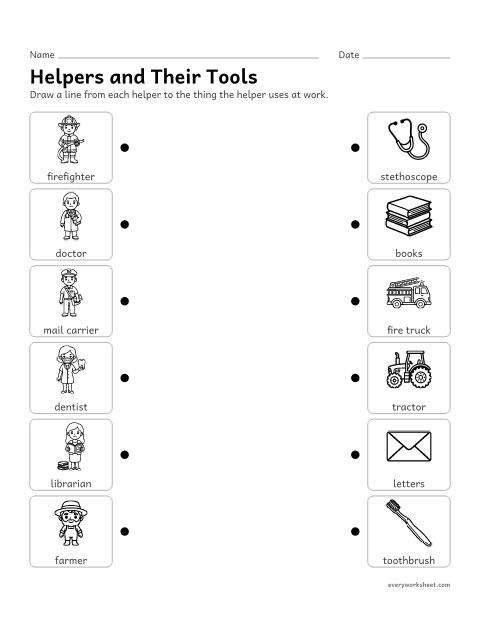
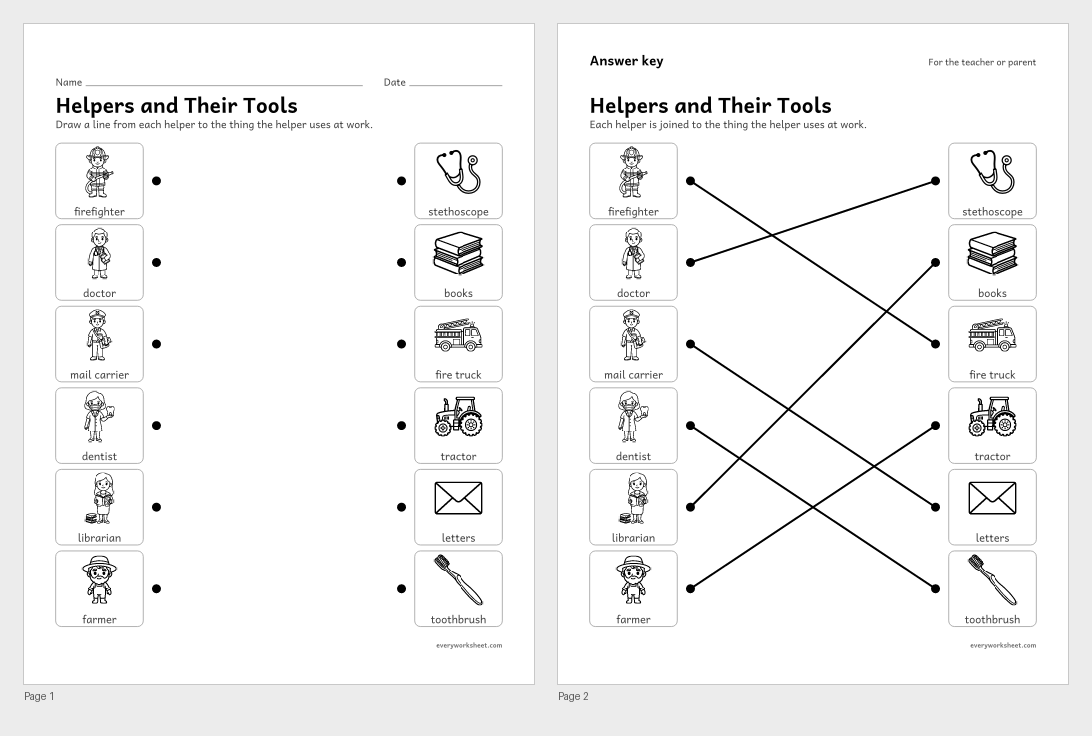
Community helpers and their tools matching
Matching community helpers to the tools and vehicles they use
Answer key on page 2
2 pages435 KB
 View all 2 pages
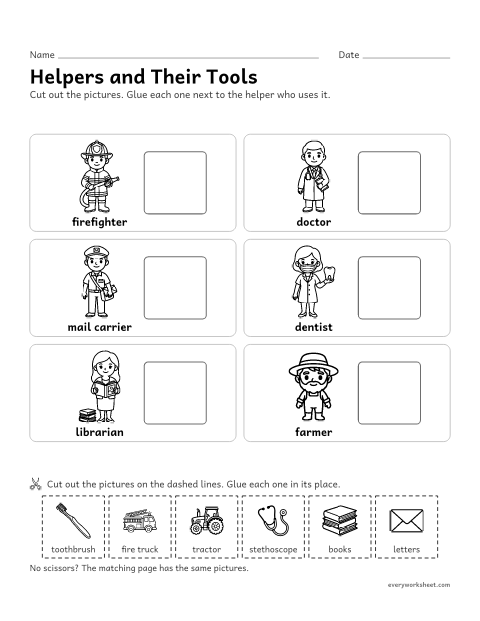
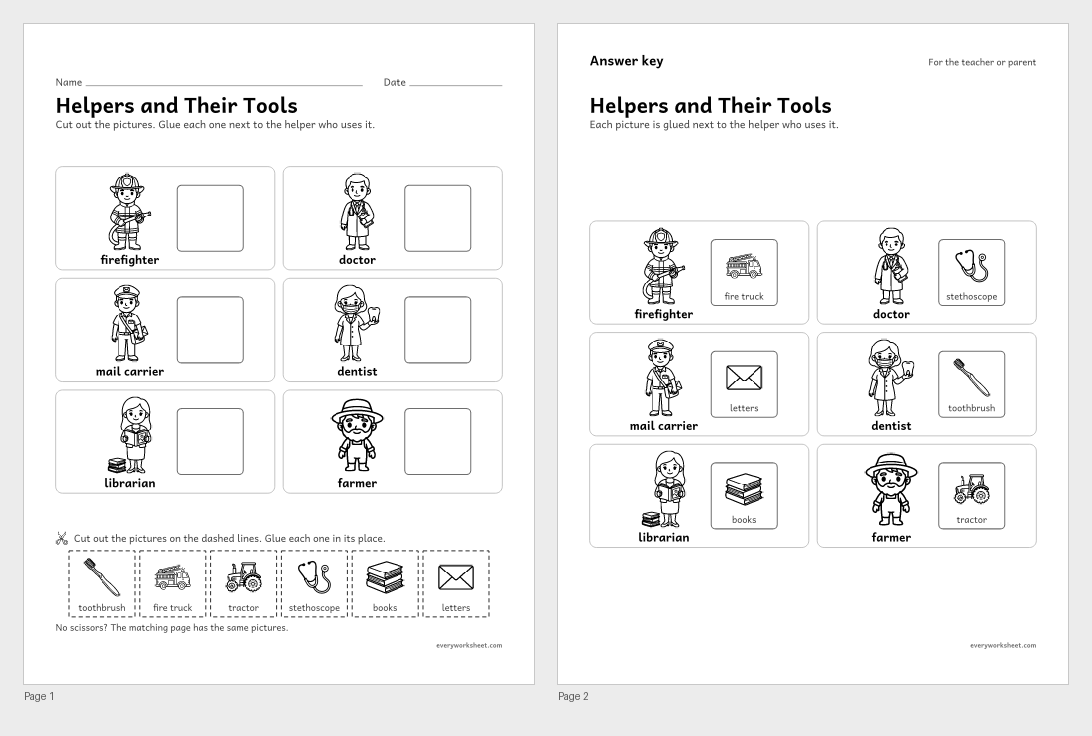
Community helpers and their tools cut and paste
Matching community helpers to the tools and vehicles they use
Answer key on page 2
2 pages463 KB
 View all 2 pages
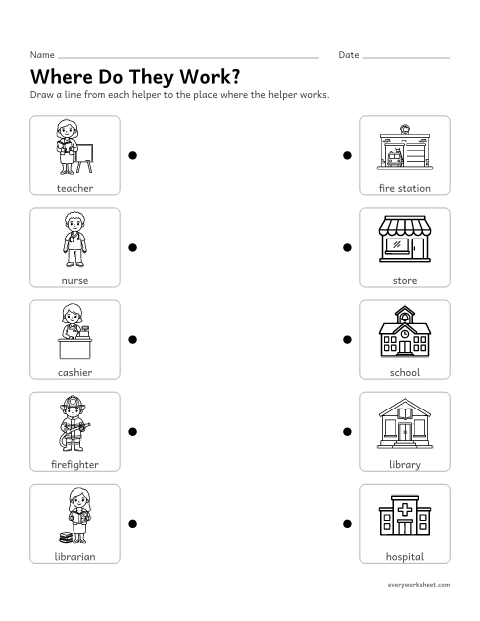
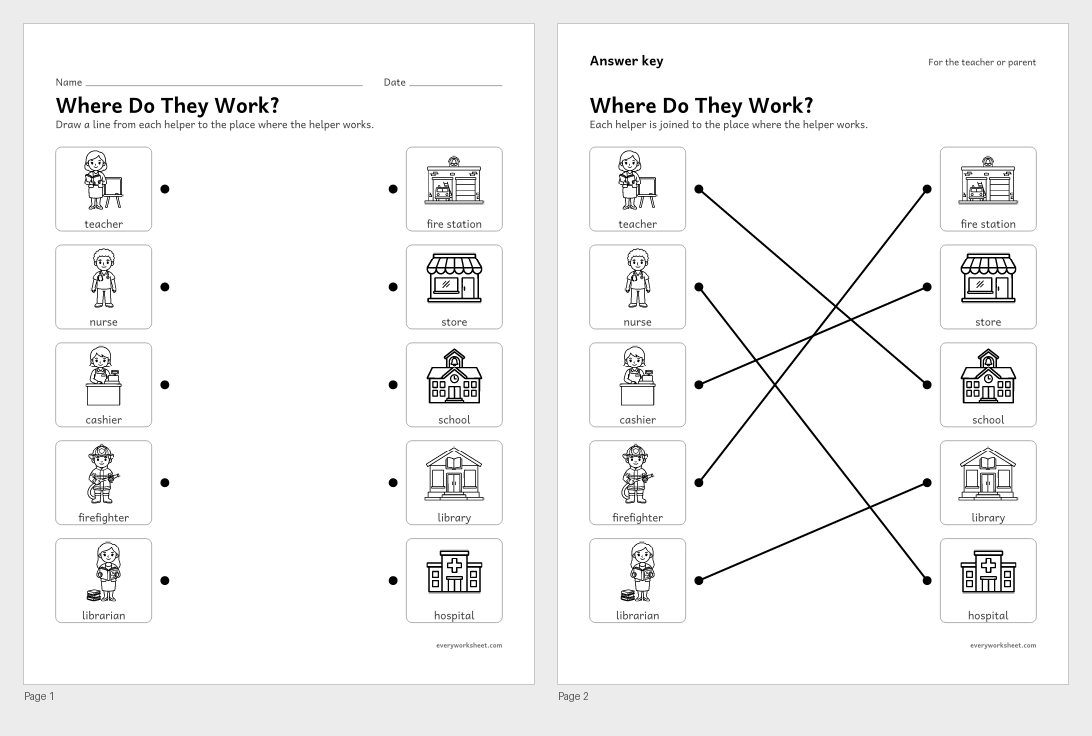
Where do community helpers Work? matching
Matching community helpers to the places where they work
Answer key on page 2
2 pages242 KB
Riddles, problems and a story
 View all 2 pages
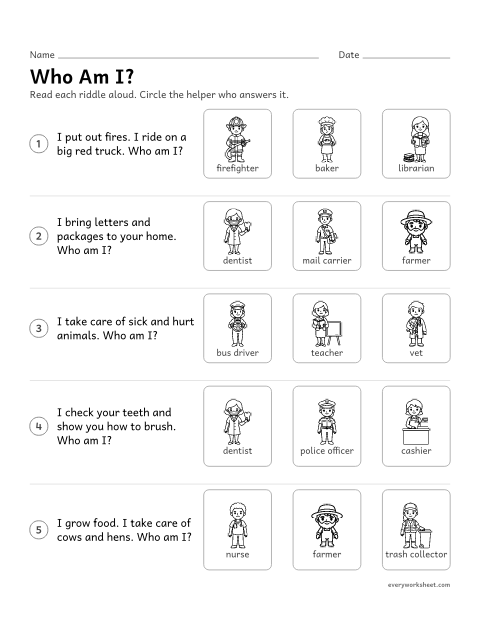
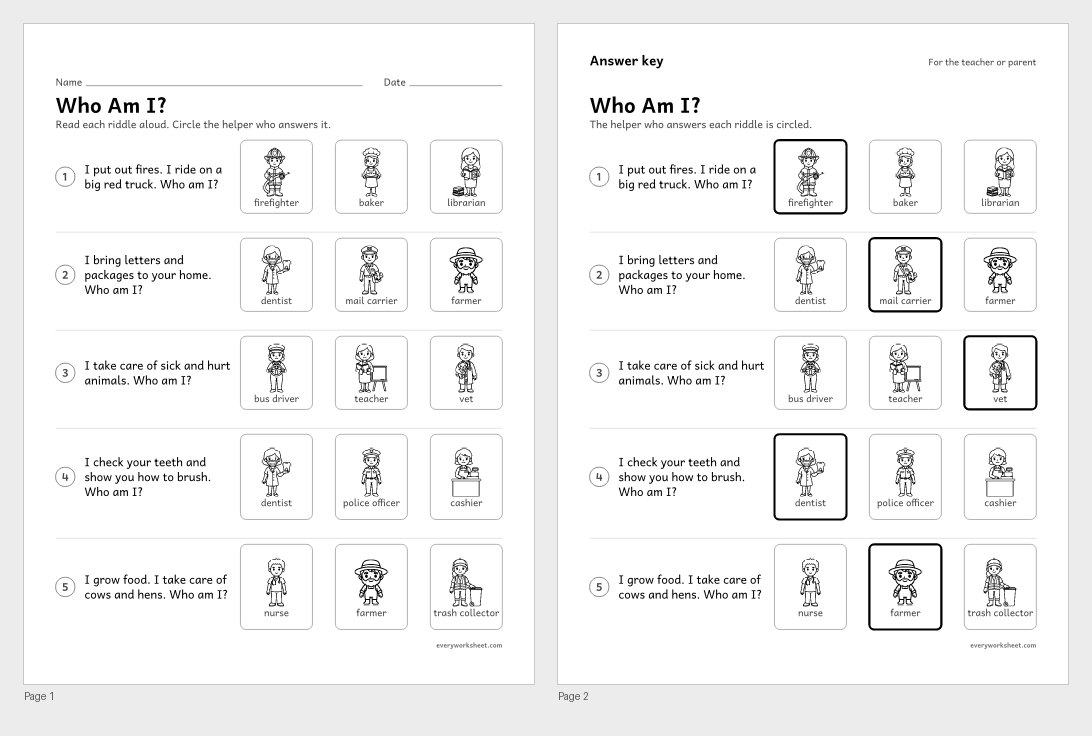
Community helpers Riddles: who am I?
Naming community helpers from clues about their work
Answer key on page 2
2 pages474 KB
 View all 2 pages
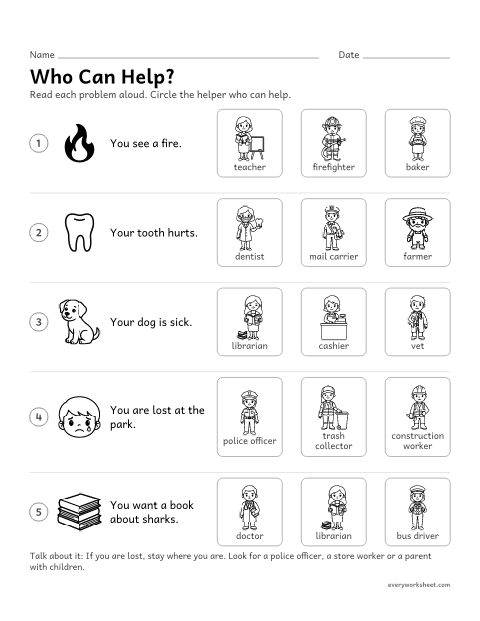
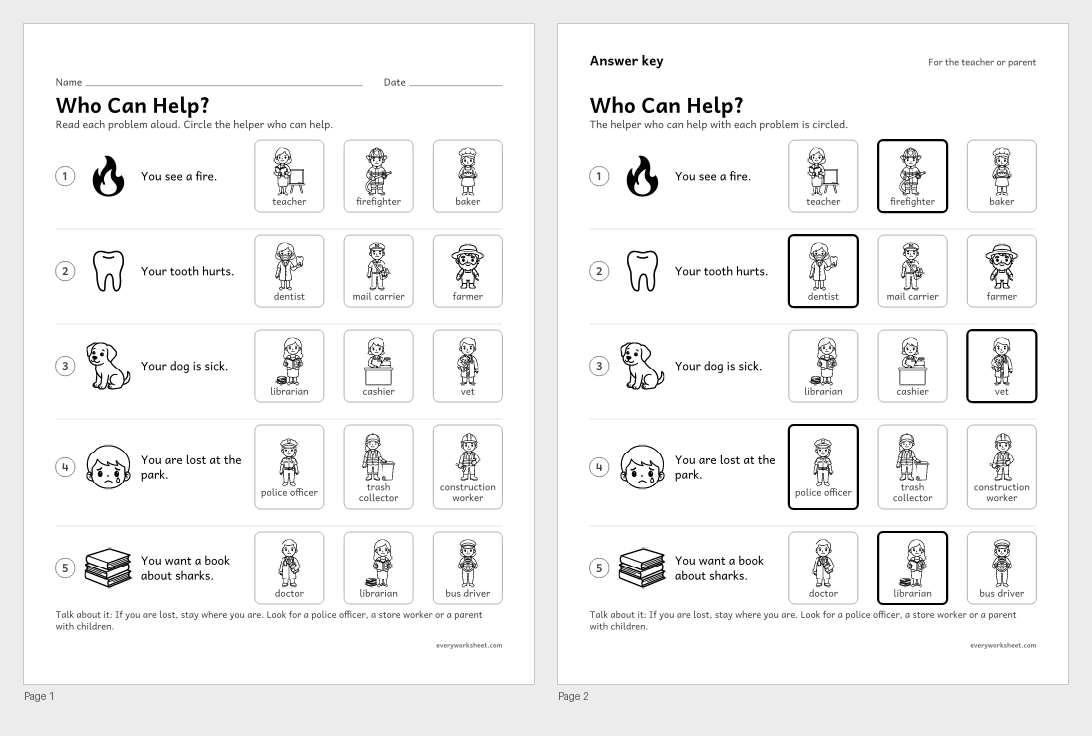
Who can Help? community helpers worksheet
Choosing the community helper who can help with a problem
Answer key on page 2
2 pages624 KB
 View all 2 pages
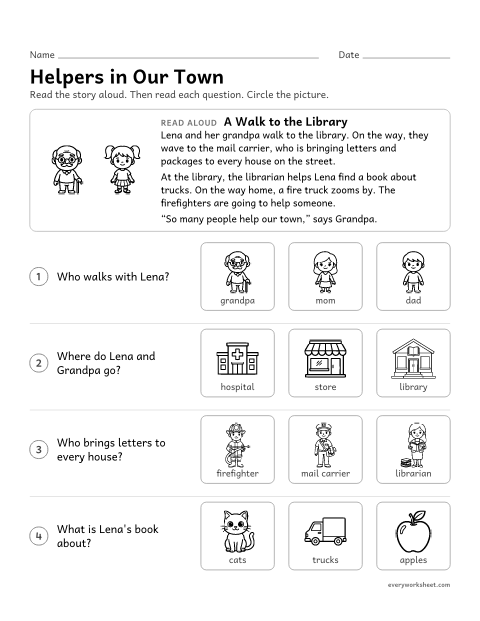
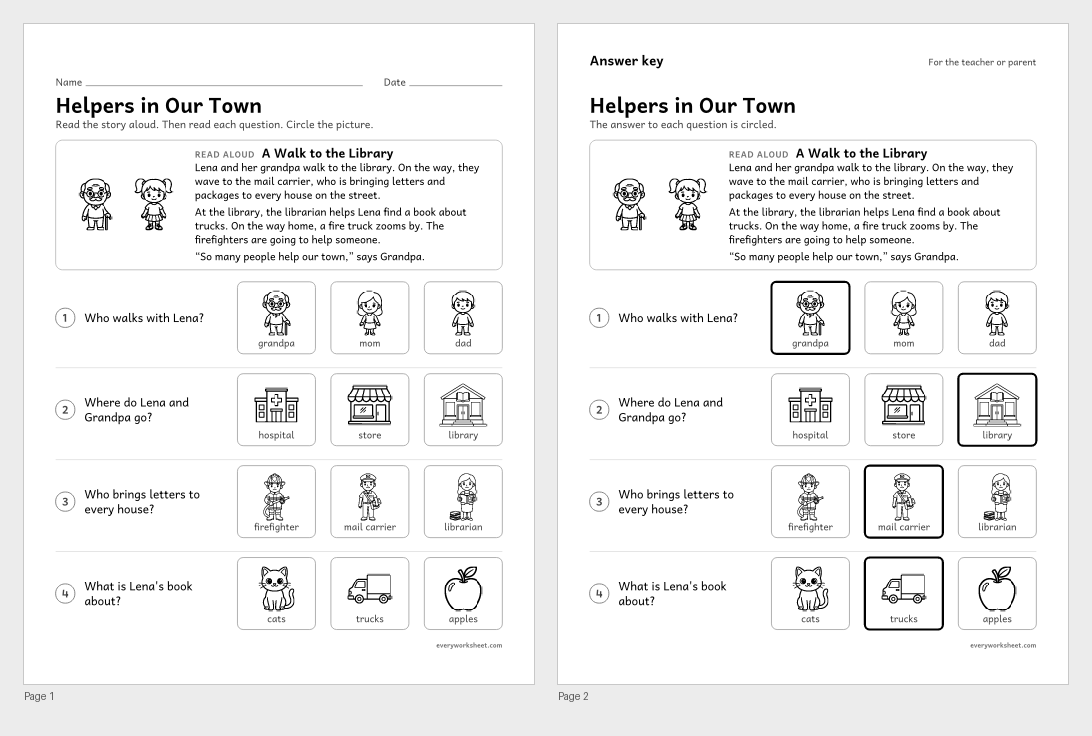
Community helpers Read-Aloud story
Answering questions about community helpers in a story read aloud
Answer key on page 2
2 pages503 KB
Thank a helper
 View larger
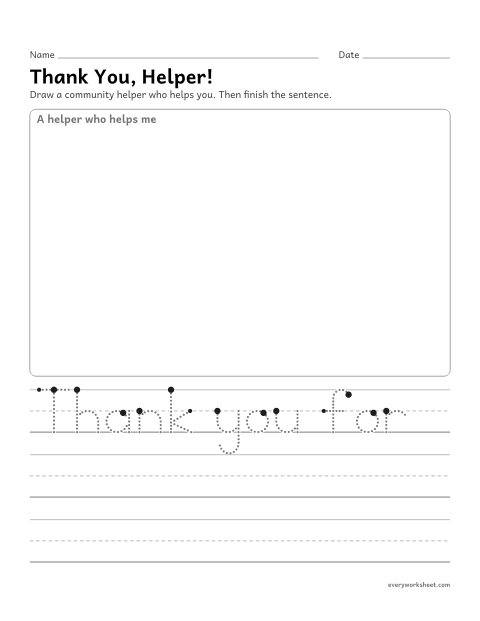
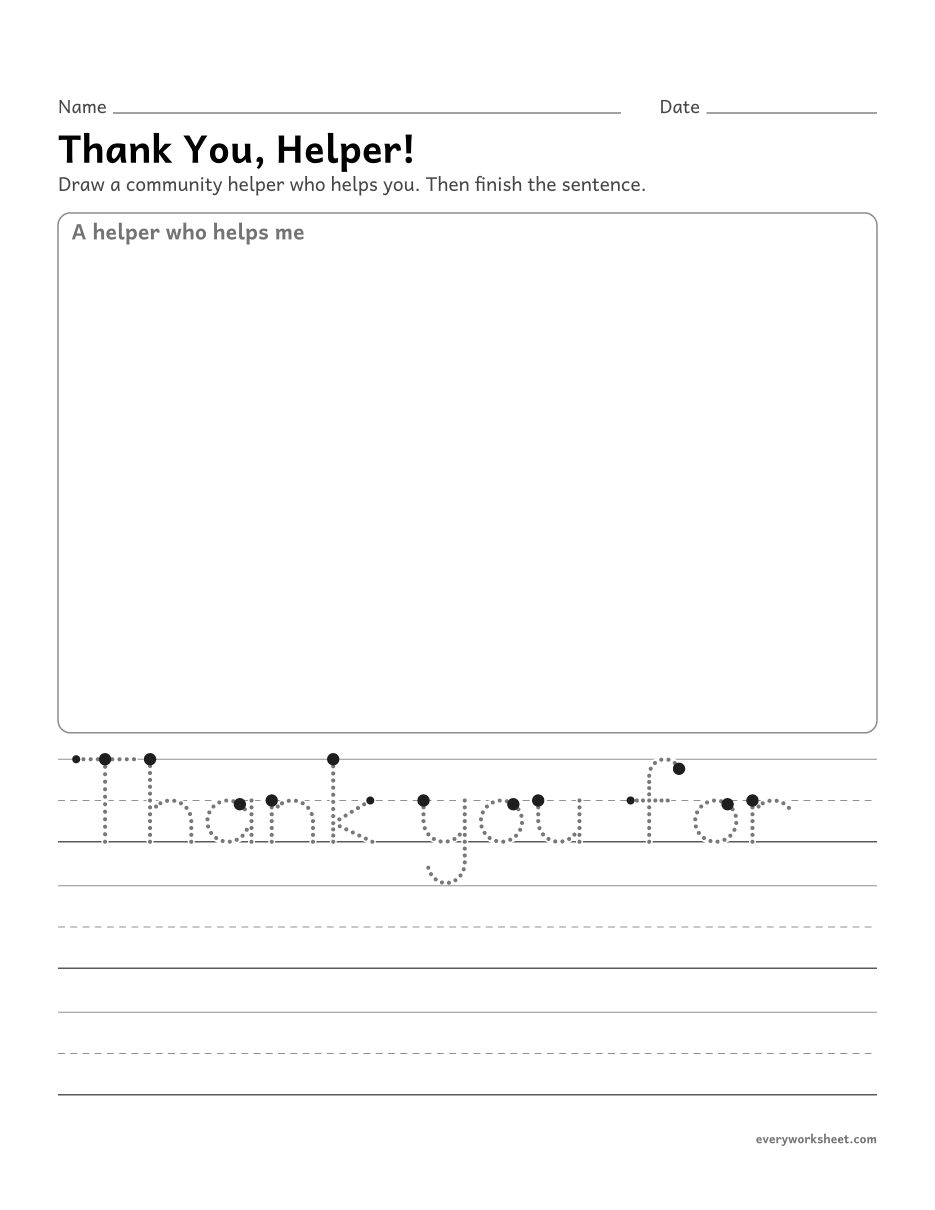
Thank you community helper writing page
Drawing and writing a thank-you to a community helper
1 page26 KB
Print at 100% (actual size) for the cleanest tracing lines.
About these community helpers worksheets
Community helpers are the people who keep a town running: firefighters and police officers who keep us safe, doctors, nurses and dentists who keep us healthy, teachers and librarians who help us learn, and mail carriers, bus drivers, farmers and trash collectors who do work everyone counts on. Kindergartners already know many of them. These worksheets help children name each helper, say what the helper does and see how every job matters.
Start with the community helpers chart, then match each helper to the thing they use at work and to the place where they work. The helpers and tools activity comes as a matching page and as a cut and paste page with the same pictures, so you can choose scissors or a pencil. The riddles and the Who Can Help? page ask children to think about what each helper does, and the read-aloud story checks listening. Helper words to trace and a thank-you page bring in writing.
Every page is built for children who are not reading yet: big pictures, a word under each one, and short questions for a grown-up to read aloud. Every page with one right answer has an answer key on page 2.
Standards
C3 D2.Civ.2.K-2Explain how all people, not just official leaders, play important roles in a community.C3 D2.Civ.1.K-2Describe roles and responsibilities of people in authority.C3 D2.Civ.7.K-2Apply civic virtues when participating in school settings.C3 D2.Eco.3.K-2Describe the skills and knowledge required to produce certain goods and services.CCSS.ELA-LITERACY.SL.K.2Confirm understanding of a text read aloud or information presented orally or through other media by asking and answering questions about key details and requesting clarification if something is not understood.CCSS.ELA-LITERACY.L.K.1.APrint many upper- and lowercase letters.CCSS.ELA-LITERACY.W.K.2Use a combination of drawing, dictating, and writing to compose informative/explanatory texts in which they name what they are writing about and supply some information about the topic.
How to use them
- Hang the community helpers chart where children can see it. Point to one helper a day and ask, "What does this helper do? How does this helper help us?"
- Use the matching page and the cut and paste page on different days, or give the cut and paste page to children who are ready to use scissors.
- Read each riddle aloud twice before children circle an answer. Ask them to point to the clue that helped them.
- Read the Who Can Help? problems slowly. Stop after each one and talk about what to do, especially for being lost.
- Read the story aloud once all the way through, then reread one part before each question.
- Invite a real community helper to visit, or take a short walk around the school. Afterward, children can draw that helper on the thank-you page and give it to them.
Teaching tips
- Children cannot read the riddles and questions yet. They are for a grown-up to read; the pictures and short words under them are what children use.
- Talk about helpers children see every day, like the school nurse, the bus driver and the person who cleans the school, not only firefighters and police officers.
- Point out that helpers can be men or women. Use the pictures to talk about who might do each job.
- On the tracing page, have children say each letter as they trace it, starting at the big dot, then write the word on their own in the space after it.
- For extra challenge, ask children to name a tool that is not on the page for each helper.
Questions teachers and parents ask
Who are community helpers?
Community helpers are people whose jobs help everyone in a town or city. Firefighters, police officers, doctors, nurses, dentists, vets, teachers, librarians, mail carriers, bus drivers, farmers and trash collectors are good ones to start with in kindergarten.
How do you teach community helpers in kindergarten?
Start with helpers children already know and talk about what each one does and uses. Match helpers to their tools and workplaces, read short stories, and if you can, invite a helper to visit or take a walk to see helpers at work.
Is there a cut and paste version?
Yes. The helpers and their tools activity has a cut and paste page and a matching page with the same six pictures, so children who are not ready for scissors can do the same activity with a pencil.
Do these worksheets have answer keys?
Yes. The matching, cut and paste, riddle, Who Can Help? and story pages each have an answer key on page 2. The chart, tracing and drawing pages do not need one.