 View larger
Family tree template
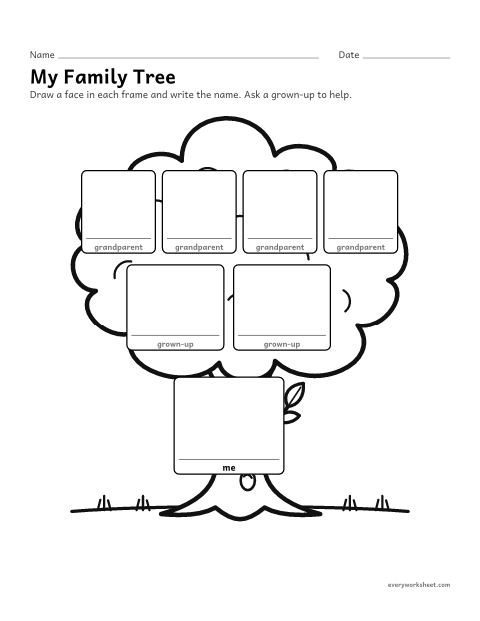
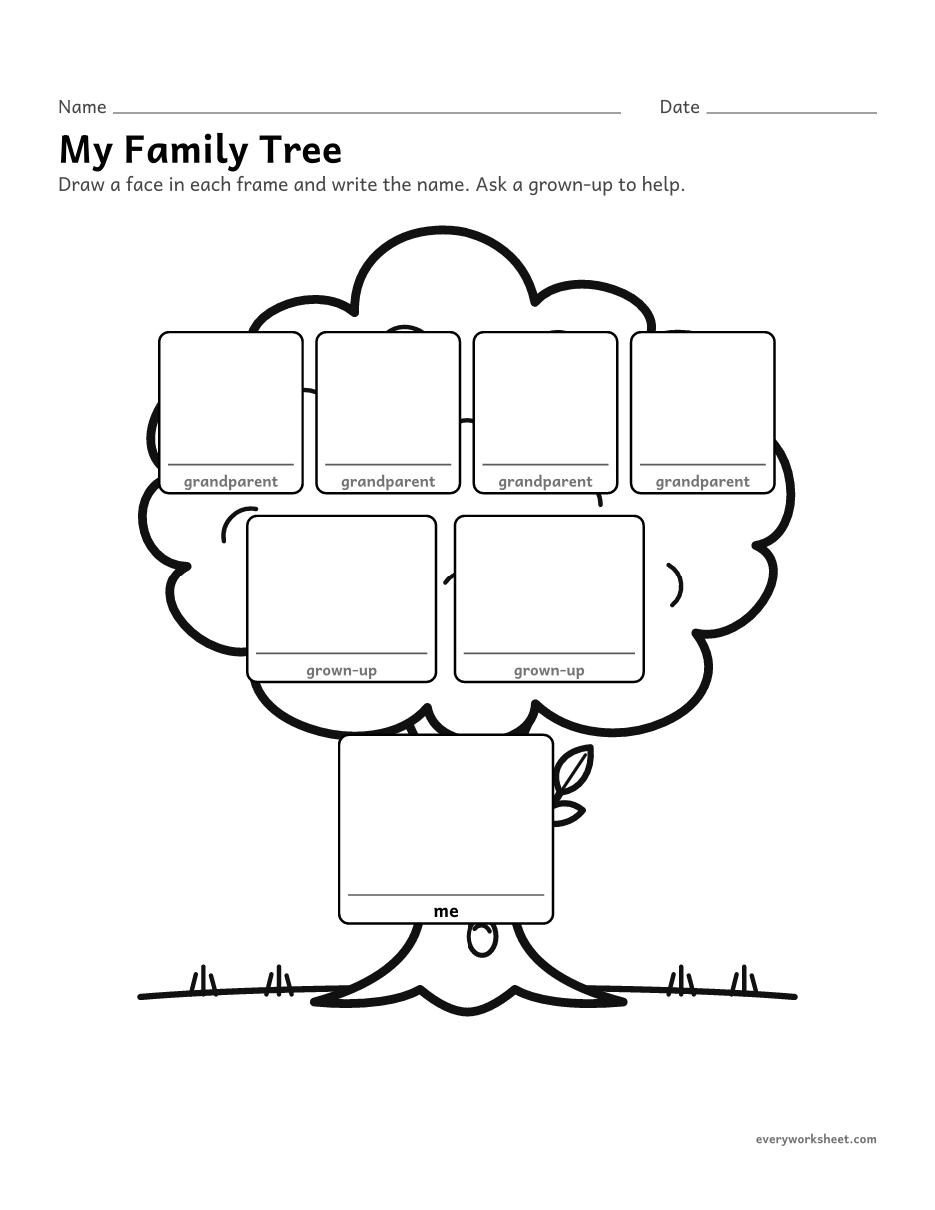
Showing me, my grown-ups and my grandparents on a family tree
1 page27 KB
Three family tree templates, a family words chart, a read-aloud about different families, counting, home jobs and a family interview.
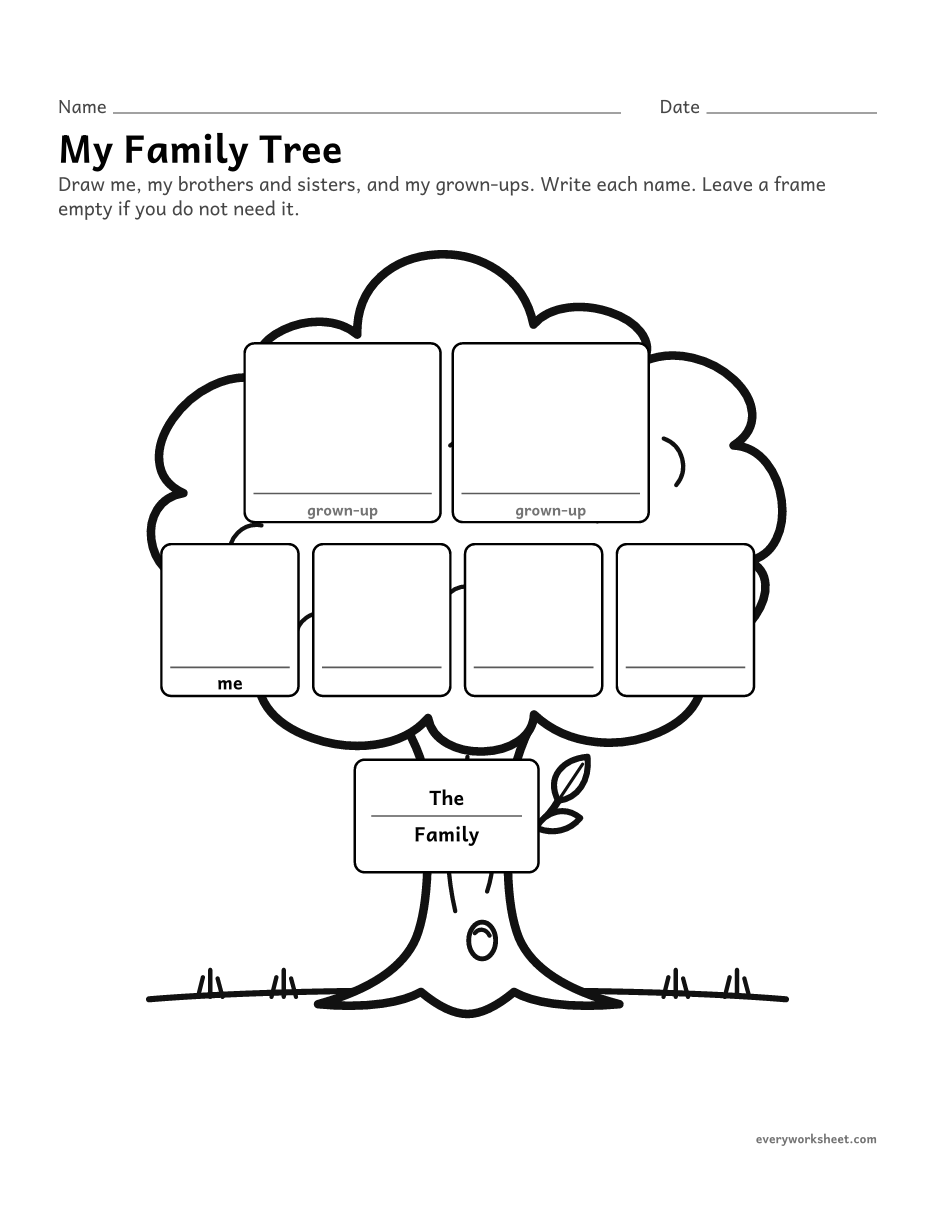
View largerShowing me, my grown-ups and my grandparents on a family tree
1 page27 KB
 View larger
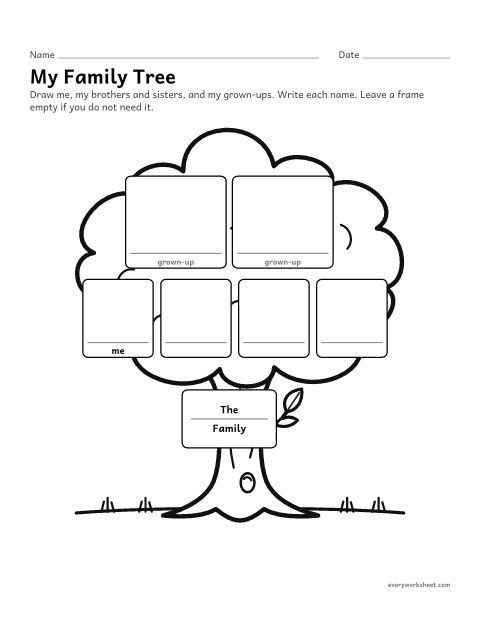
Showing me, my brothers and sisters and my grown-ups on a family tree
1 page27 KB
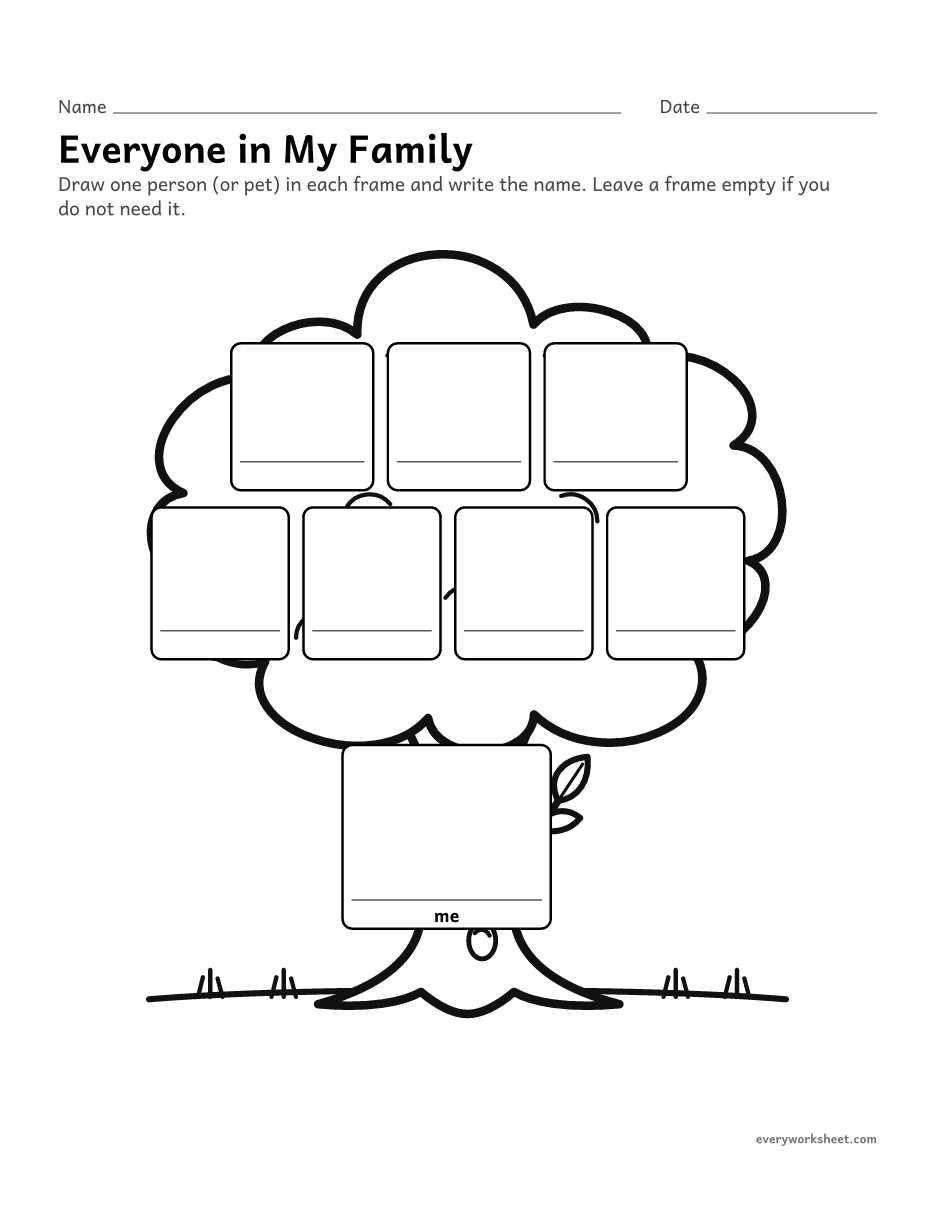 View larger
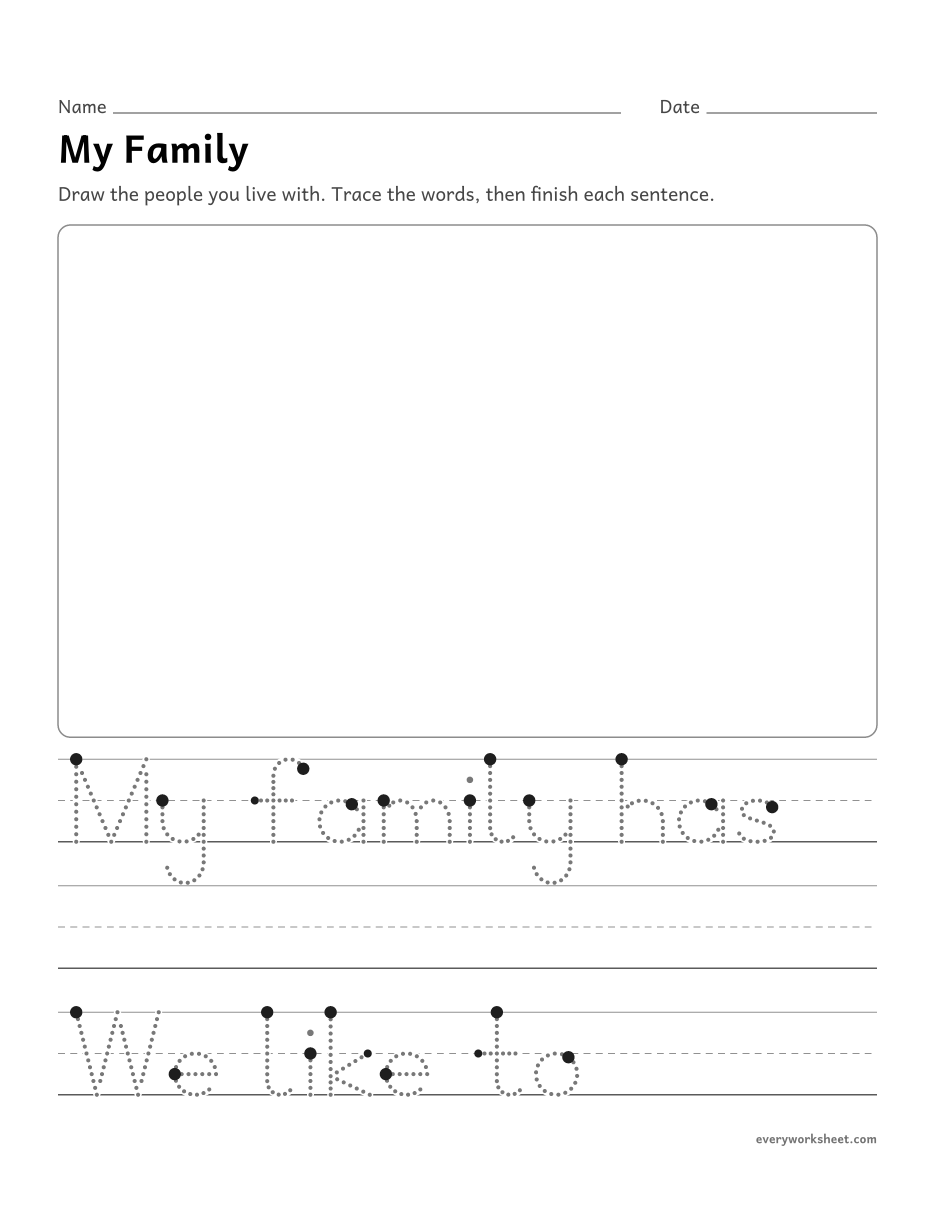
Drawing and naming the people in my family, whatever its shape
1 page26 KB
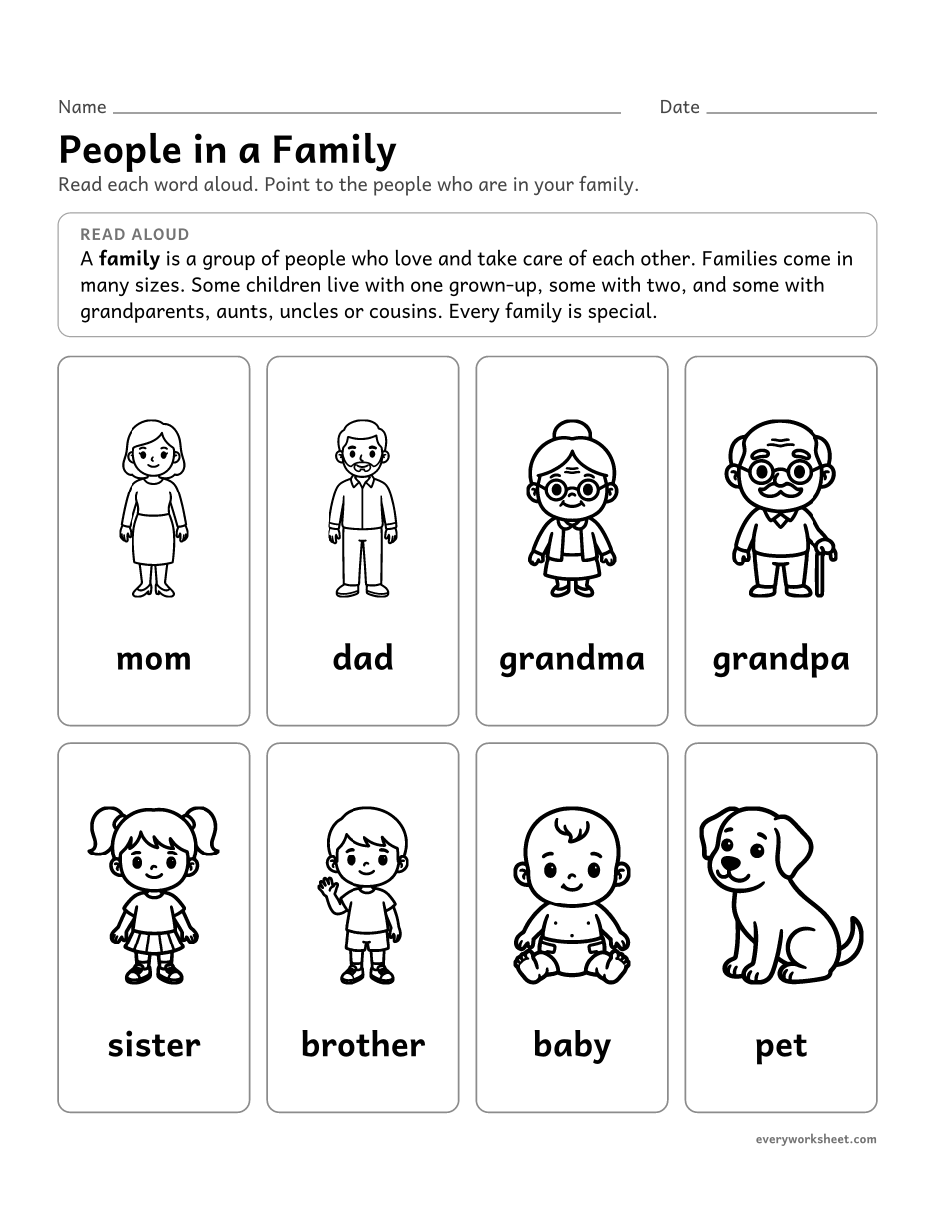 View larger
 View all 2 pages
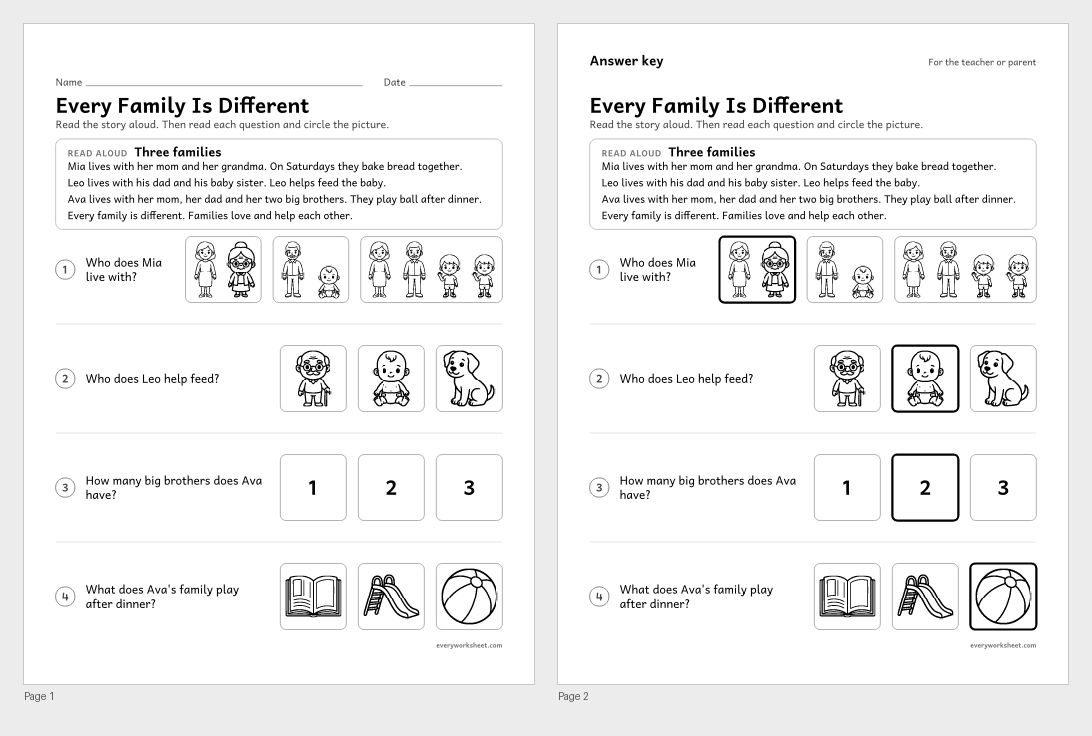
Listening to a story about different families and answering questions about it
Answer key on page 2
2 pages506 KB
 View all 2 pages
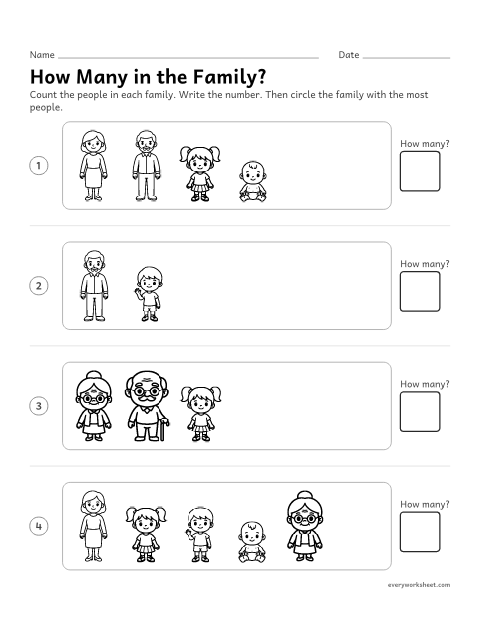
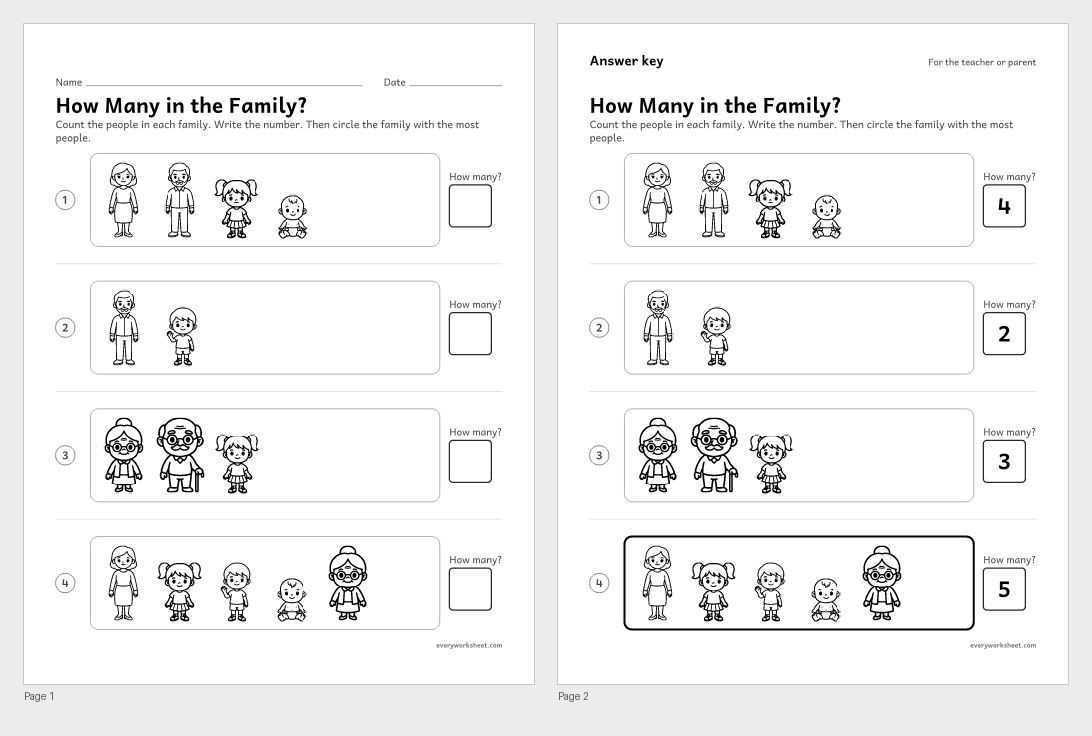
Counting the people in families of different sizes and finding the largest
Answer key on page 2
2 pages559 KB
 View larger
 View all 2 pages
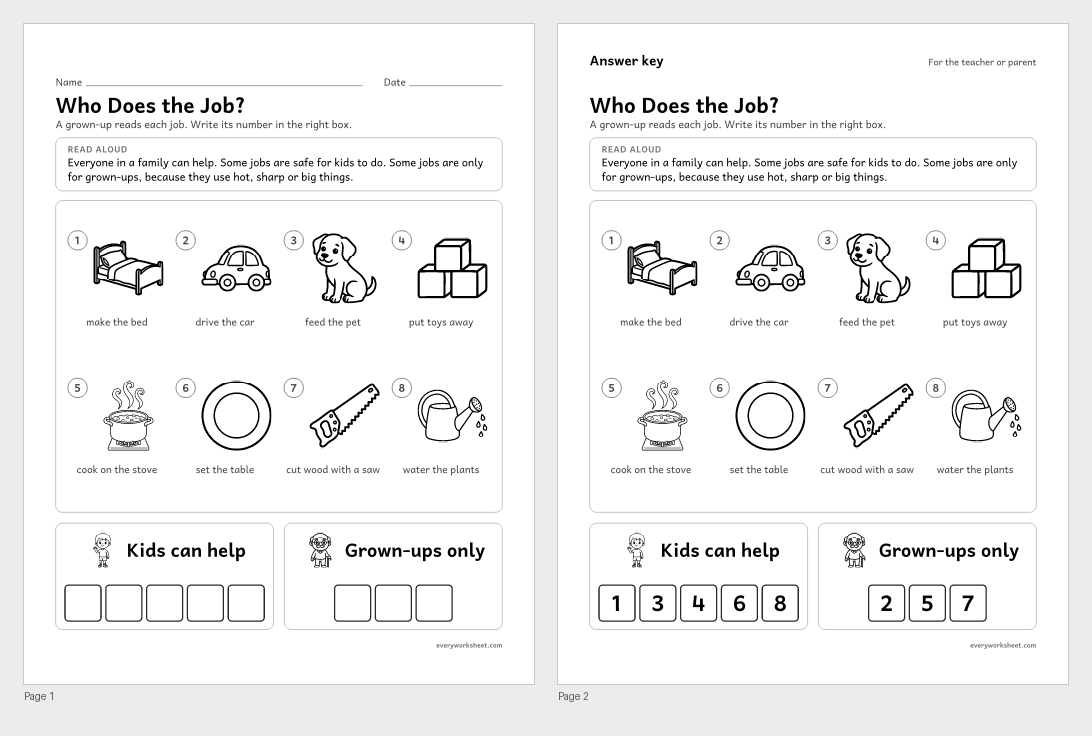
Sorting home jobs into jobs kids can help with and jobs for grown-ups
Answer key on page 2
2 pages312 KB
 View all 2 pages
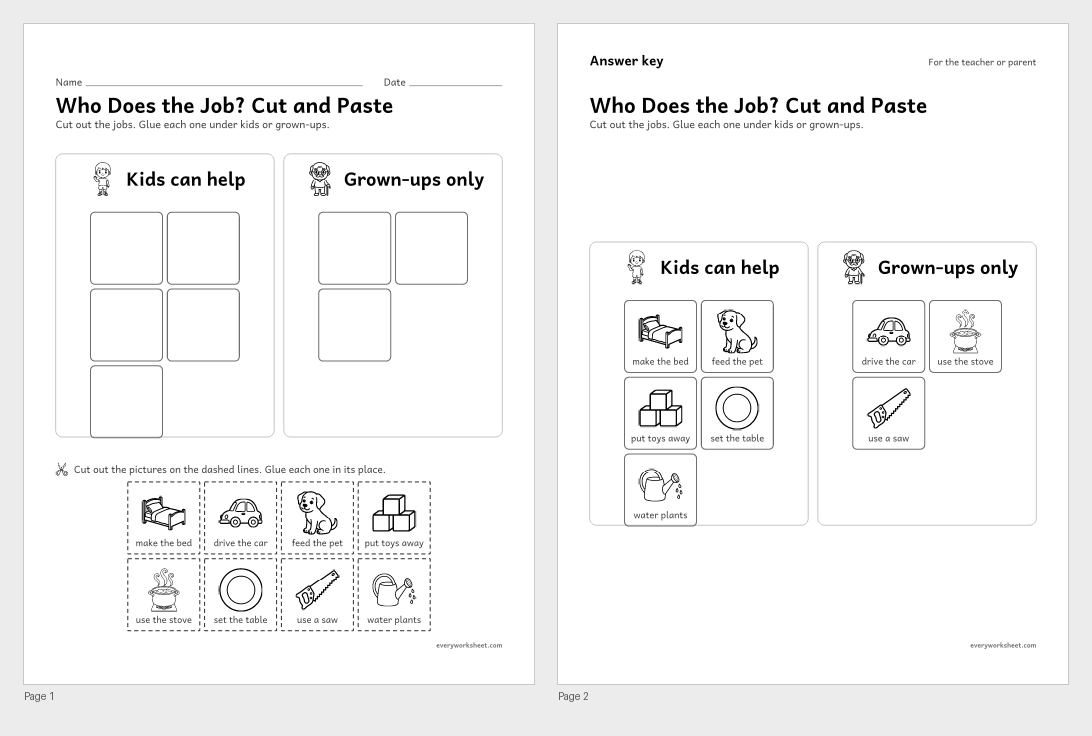
Sorting home jobs into jobs kids can help with and jobs for grown-ups
Answer key on page 2
2 pages330 KB
 View larger
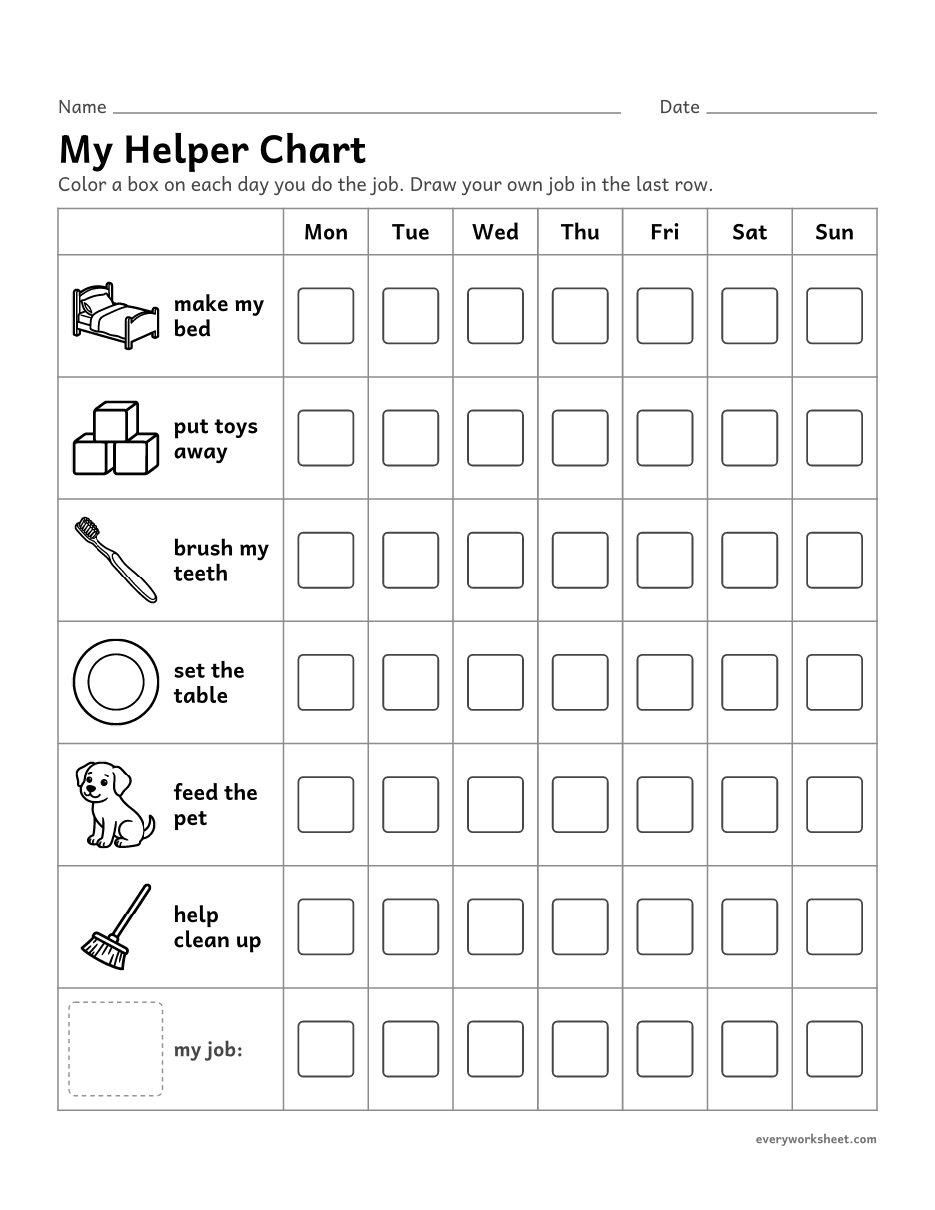
Doing jobs to help my family and keeping track for a week
1 page120 KB
 View larger
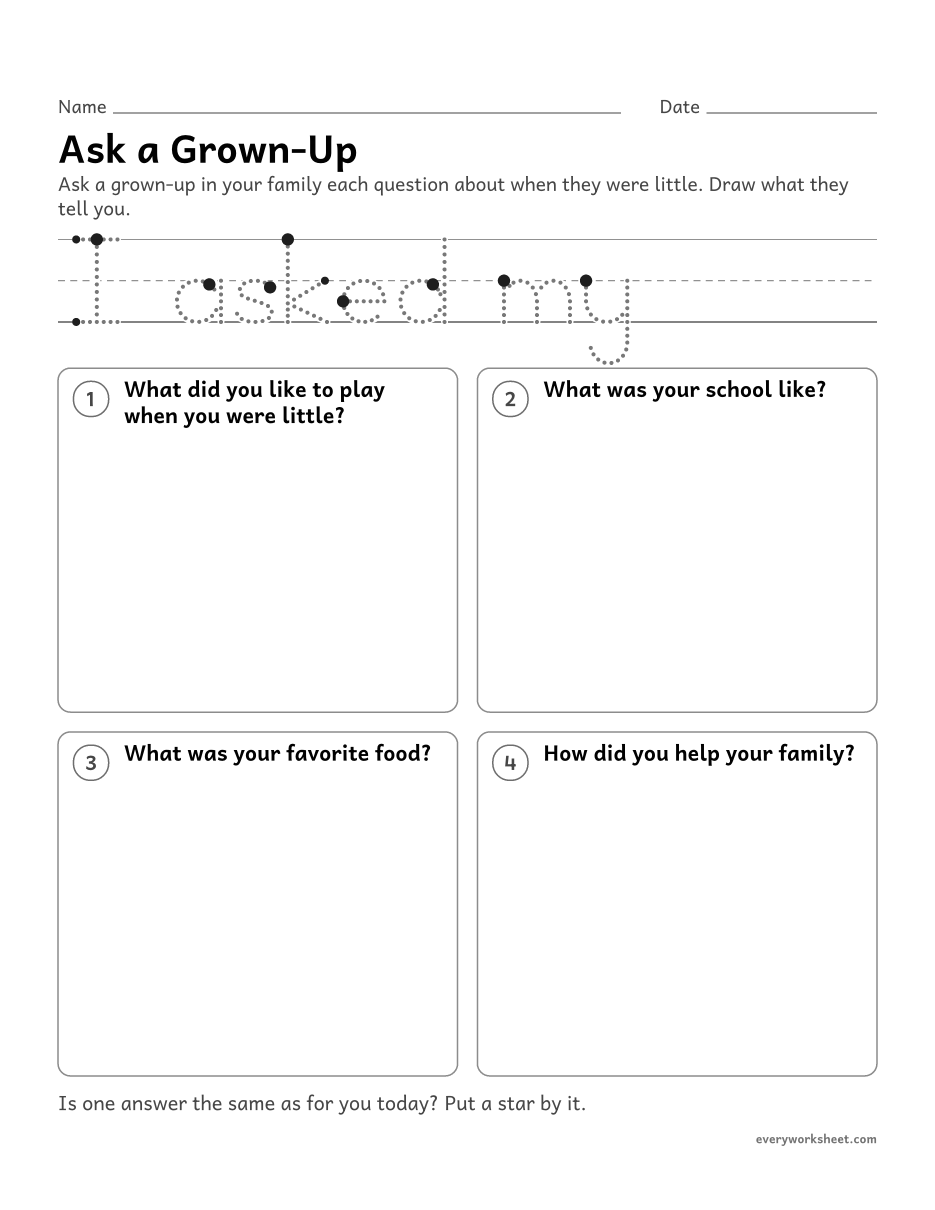
Asking a family member about life when they were young and comparing it with today
1 page32 KB
Print at 100% (actual size) for the cleanest tracing lines.
A family tree is a simple way for kindergartners to show the people they live with and the people who came before them. These family tree worksheets give children big frames to draw each face and a line to write each name, so the tree works for pre-readers.
Families come in many shapes, so there are three family tree templates. The classic template has frames for four grandparents, two grown-ups and me. The second shows me with my brothers and sisters and my grown-ups. The third is an open tree with seven blank frames and me on the trunk, so every child can draw exactly the people (and pets) in their family. Children can leave a frame empty if they do not need it.
The rest of the pages build on the tree. A family words chart names the people in a family, a short read-aloud meets three different families, and a counting page compares family sizes. Children sort jobs kids can help with at home from jobs for grown-ups, keep a weekly helper chart, and interview a grown-up about when they were little. Pages with one right answer have an answer key on page 2.
CCSS.ELA-LITERACY.SL.K.4Describe familiar people, places, things, and events and, with prompting and support, provide additional detail.CCSS.ELA-LITERACY.SL.K.2Confirm understanding of a text read aloud or information presented orally or through other media by asking and answering questions about key details and requesting clarification if something is not understood.CCSS.ELA-LITERACY.SL.K.3Ask and answer questions in order to seek help, get information, or clarify something that is not understood.CCSS.ELA-LITERACY.L.K.5.CIdentify real-life connections between words and their use (e.g., note places at school that are colorful).C3 D2.His.2.K-2Compare life in the past to life today.C3 D2.His.3.K-2Generate questions about individuals and groups who have shaped significant historical changes and continuities.C3 D2.Civ.6.K-2Describe how communities work to accomplish common tasks, establish responsibilities, and fulfill roles of authority.CCSS.MATH.CONTENT.K.CC.B.5Count to answer "how many?" questions about as many as 20 things arranged in a line, a rectangular array, or a circle, or as many as 10 things in a scattered configuration; given a number from 1–20, count out that many objects.CCSS.ELA-LITERACY.W.K.2Use a combination of drawing, dictating, and writing to compose informative/explanatory texts in which they name what they are writing about and supply some information about the topic.Start with the child in the middle or on the trunk, then add the grown-ups they live with, then grandparents. Have the child draw each face and help them write each name. Keep it to people they know.
Use the classic template for three generations, the brothers and sisters template for a family of children and grown-ups, or the open tree when families in your class look different. The open tree has blank frames that fit any family.
Every family is a real family. Let children draw the people who live with them and take care of them, and leave frames empty if they do not need them.
Yes. The read-aloud questions, the counting page and the jobs at home sorts have an answer key on page 2. The family trees, chart and interview are about each child's own family, so they have no key.