 View larger
Feelings Worksheets for Kindergarten
A feelings chart, draw the feelings, matching, how would you feel, happy or sad sorts, a story, a check-in chart, a graph and calm down strategies.
Download the feelings worksheets
Naming feelings
 View larger
 View larger
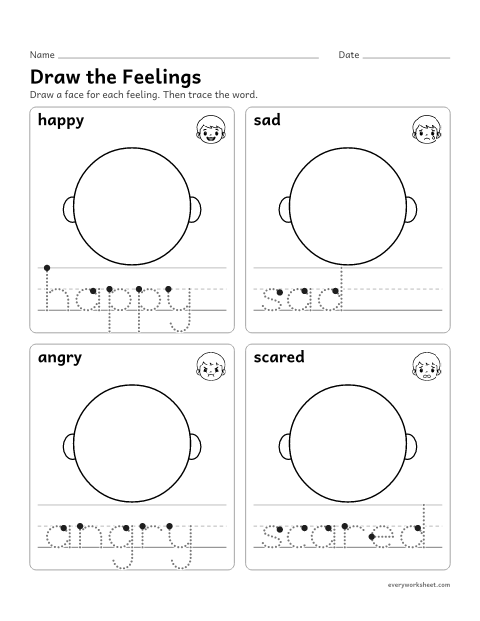
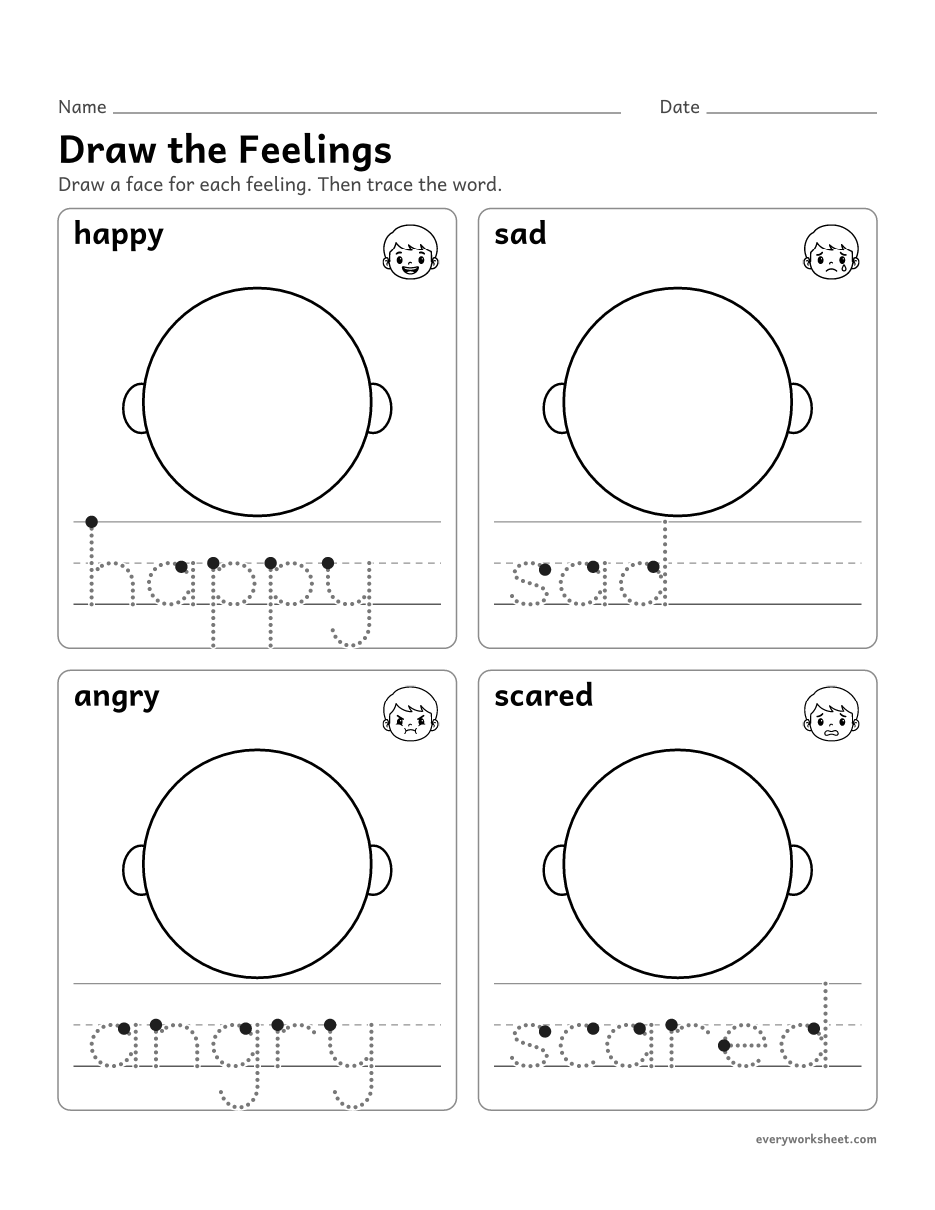
Draw feelings faces
Drawing faces that show feelings and tracing feeling words
1 page109 KB
 View all 2 pages
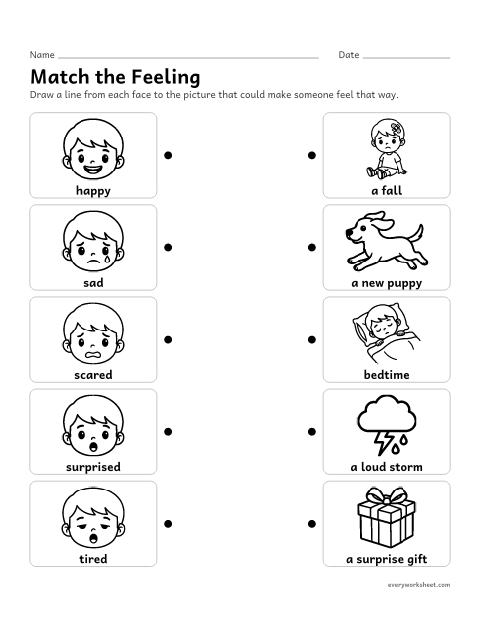
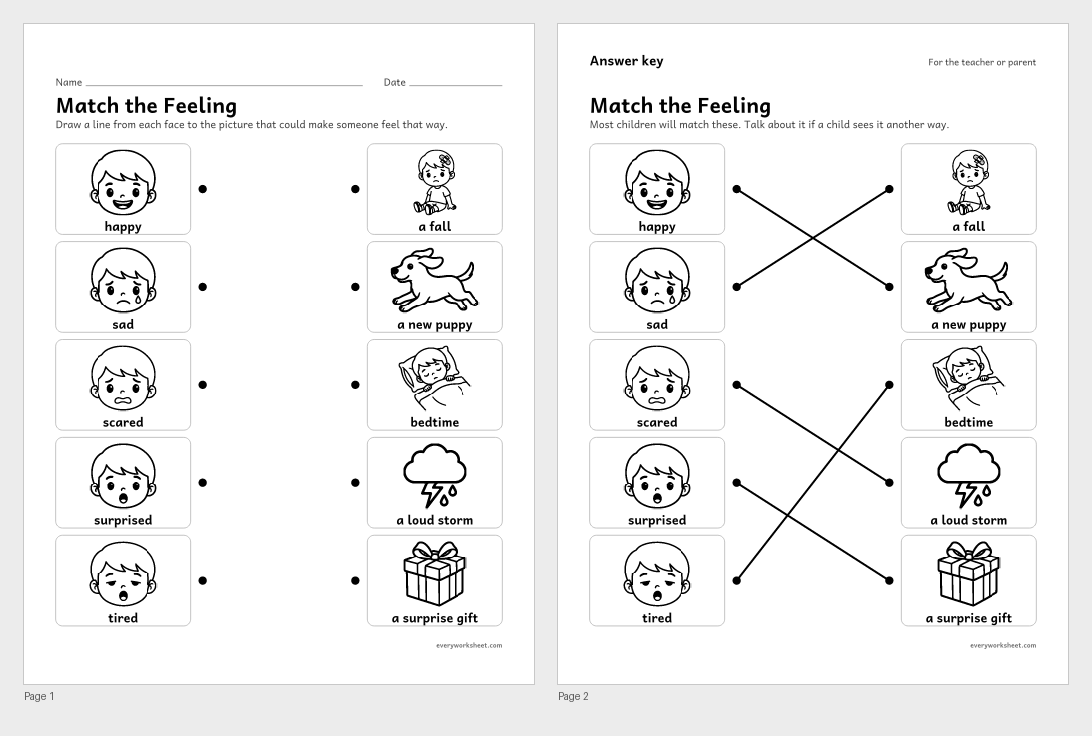
Feelings matching
Matching feelings to everyday events that cause them
Answer key on page 2
2 pages435 KB
What makes us feel this way
 View larger
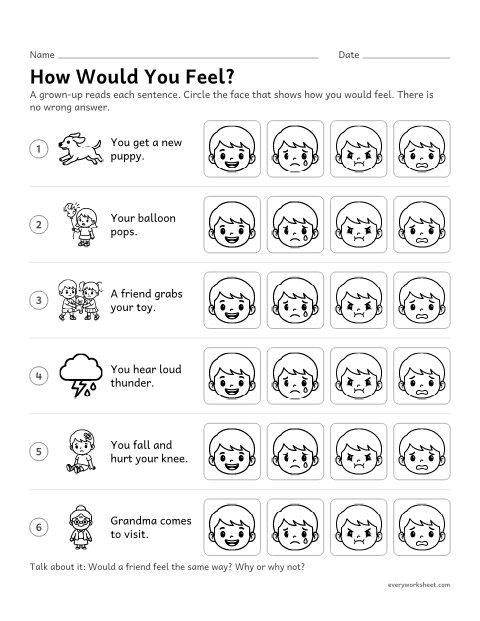
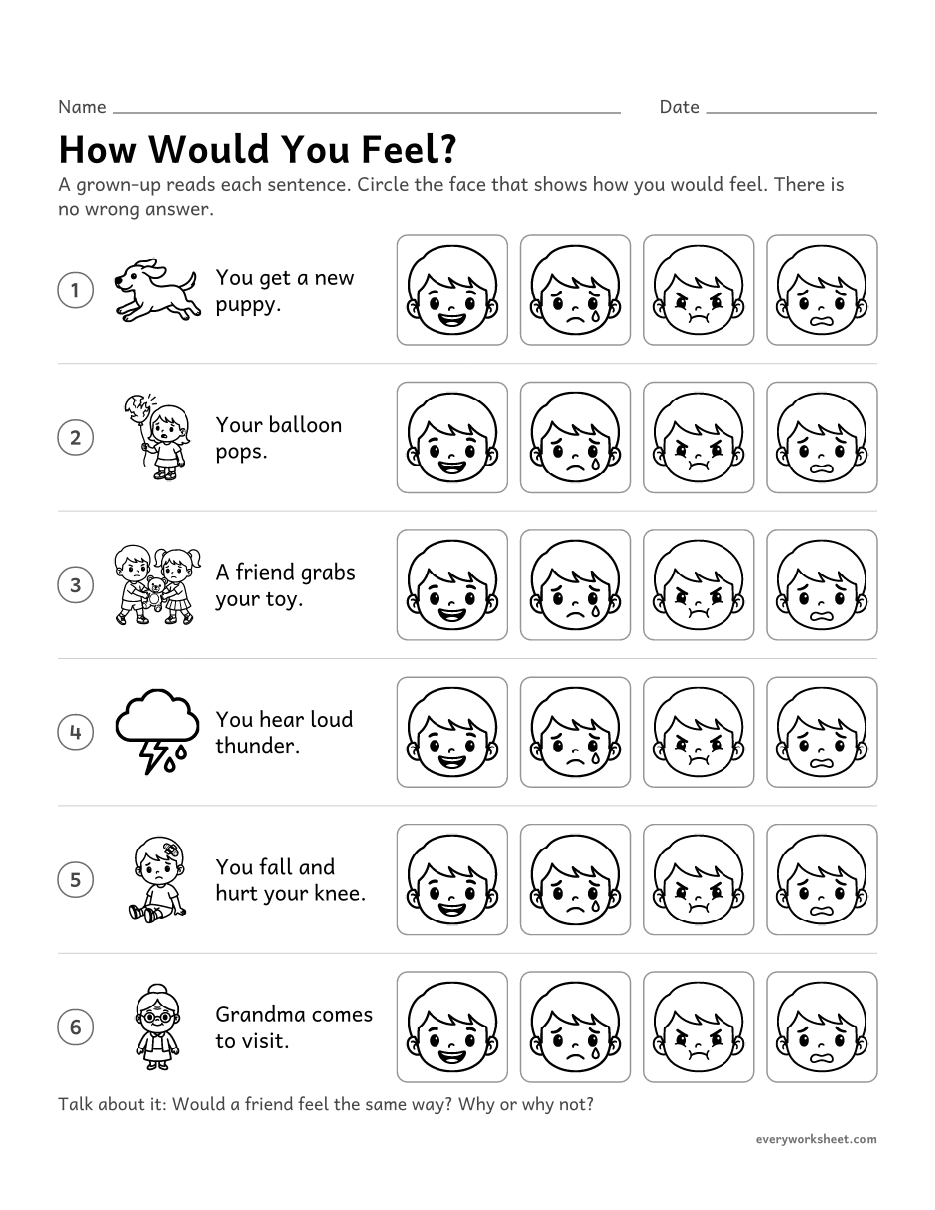
How would you Feel?
Naming how I would feel and comparing my feelings with a friend's
1 page625 KB
 View all 2 pages
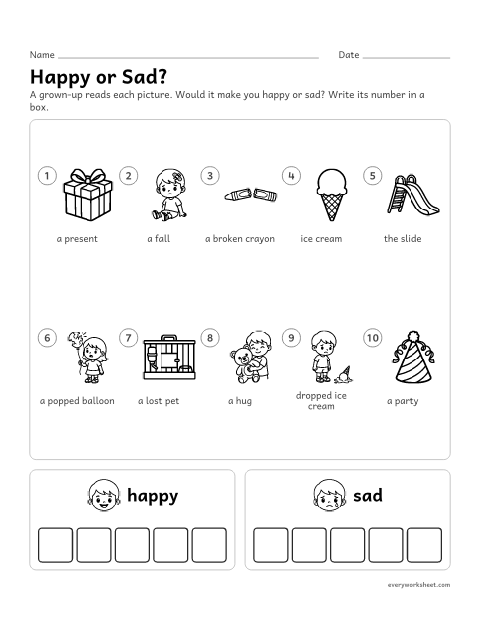
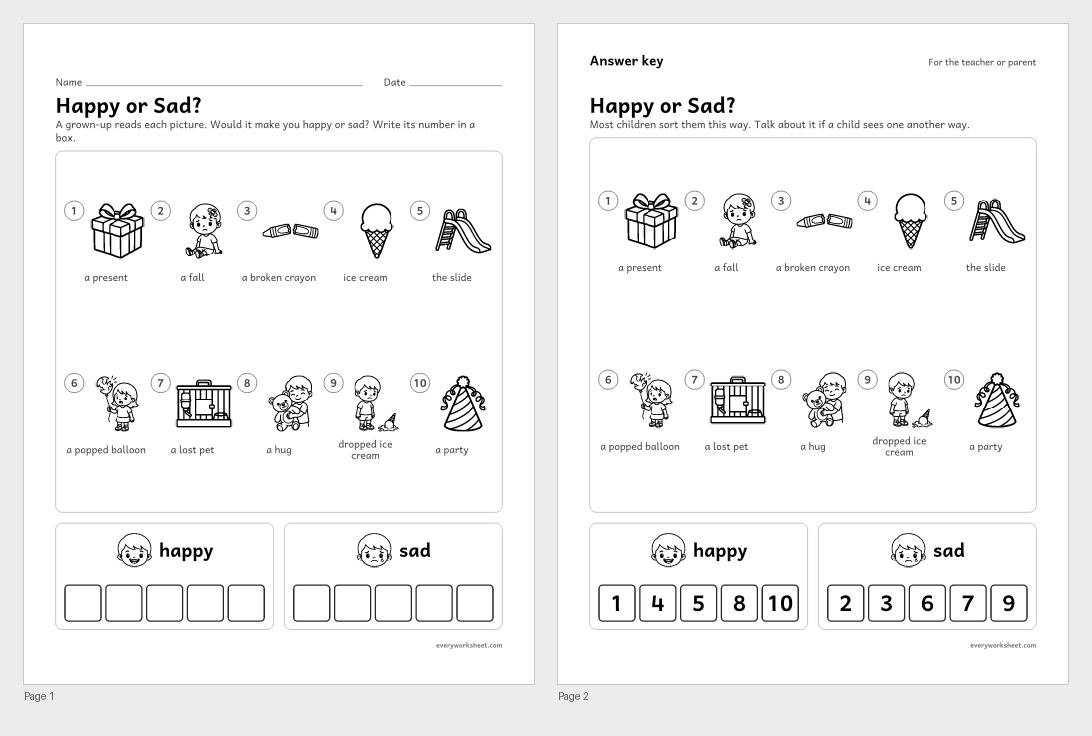
Happy or sad sort
Sorting everyday events by the feeling they cause
Answer key on page 2
2 pages543 KB
 View all 2 pages
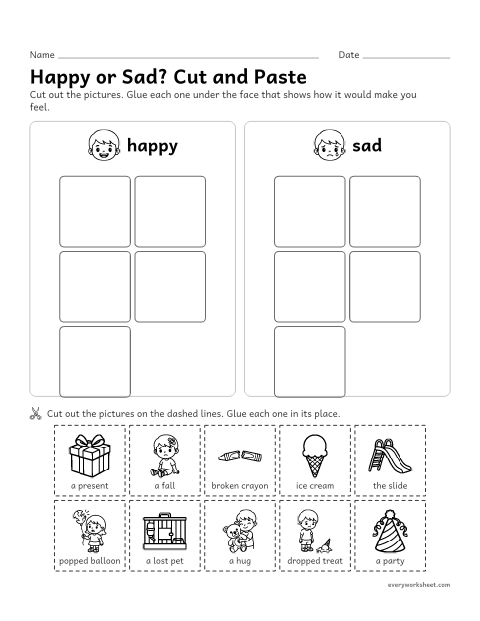
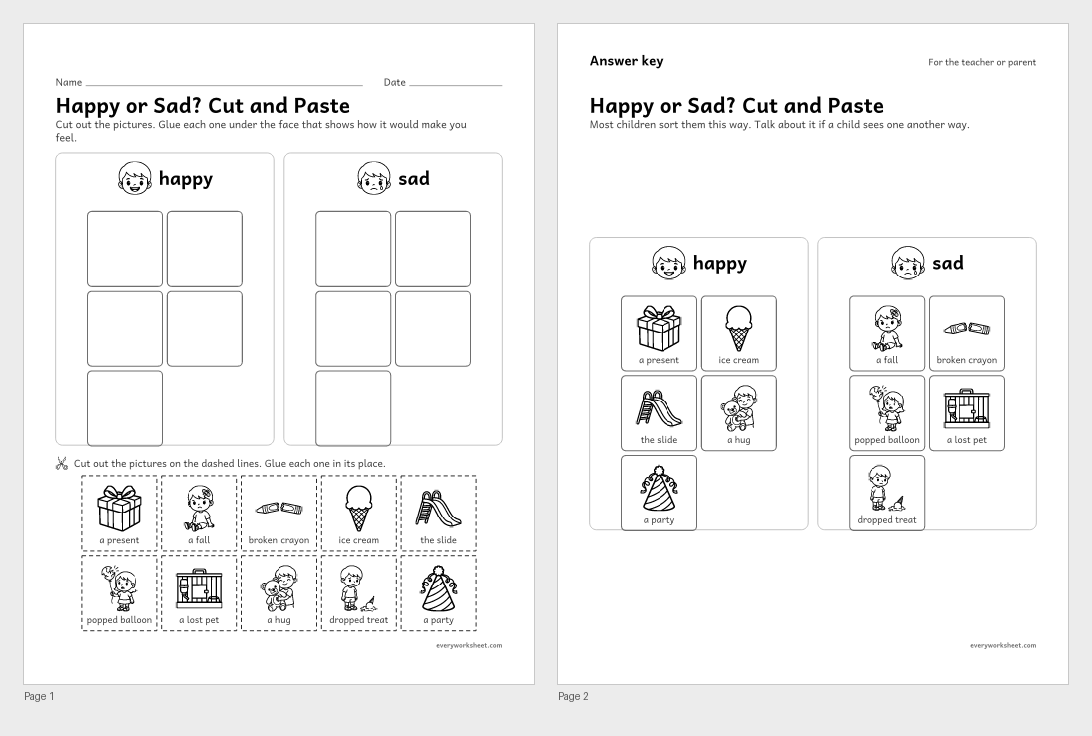
Happy or sad cut and paste
Sorting everyday events by the feeling they cause
Answer key on page 2
2 pages560 KB
 View all 2 pages
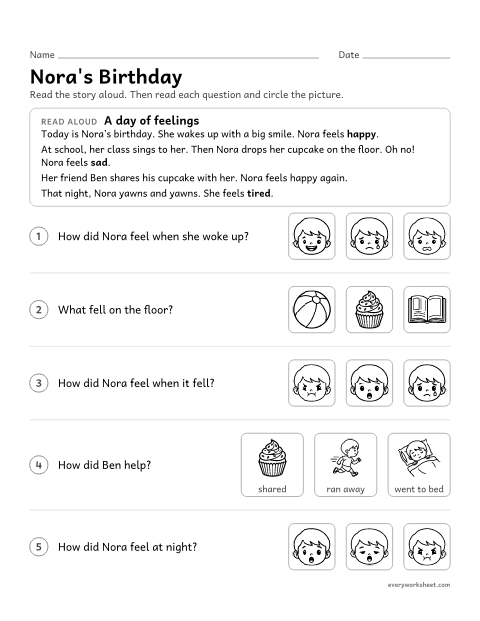
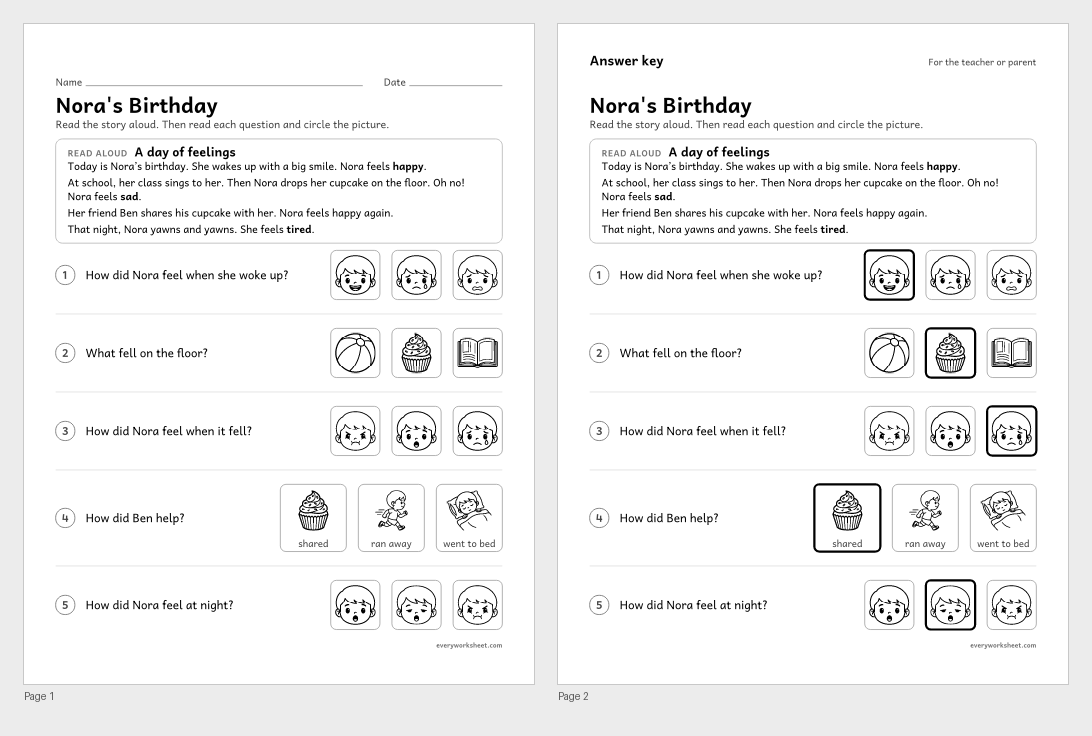
Feelings Read-Aloud: Nora's birthday
Listening to a story and naming how a character feels
Answer key on page 2
2 pages678 KB
Feelings check-in and calm down
 View larger
 View all 2 pages
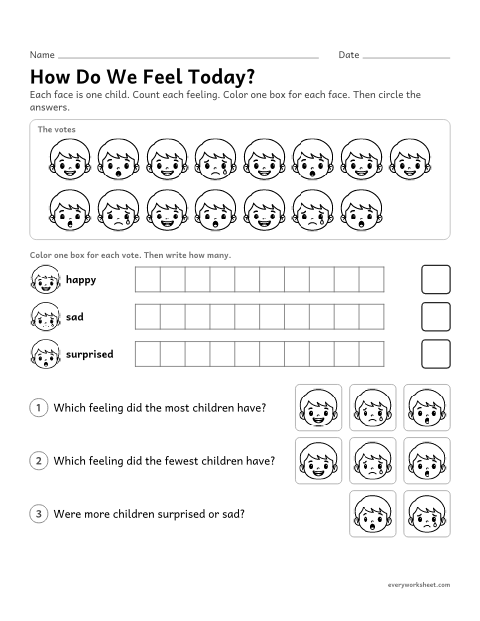
Feelings picture graph
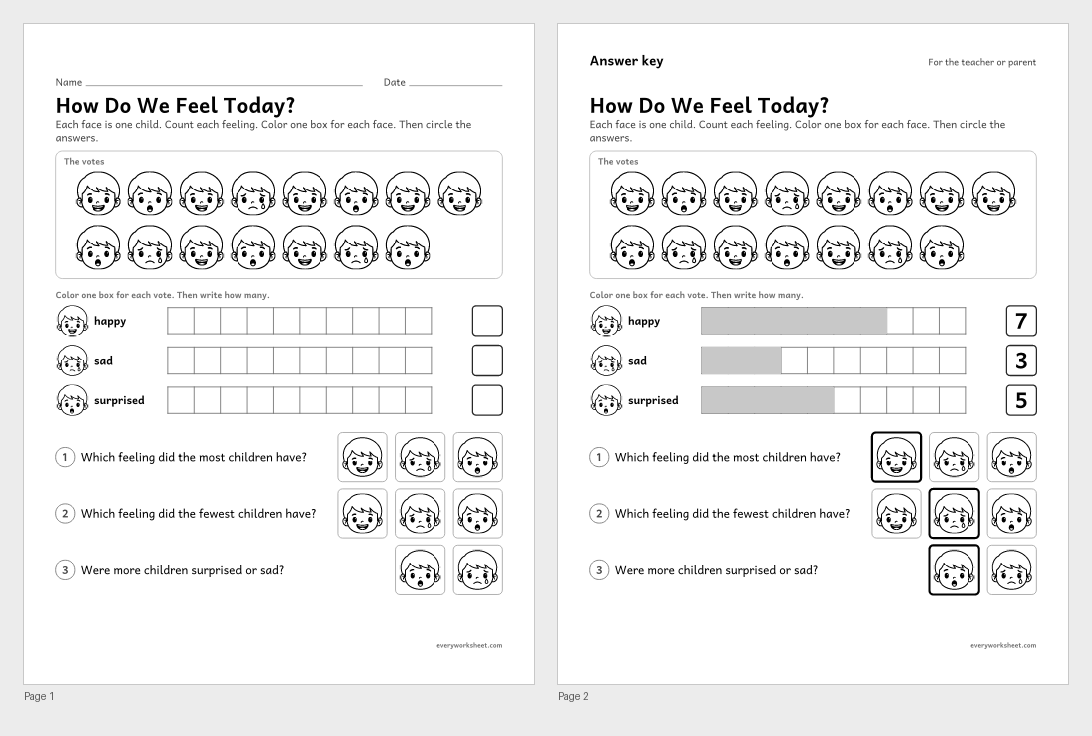
Counting feelings in a class, making a picture graph and comparing the counts
Answer key on page 2
2 pages1.1 MB
 View larger
Calm down strategies
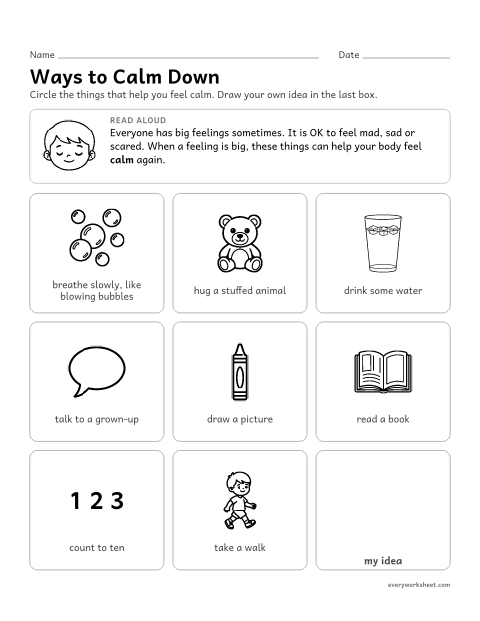
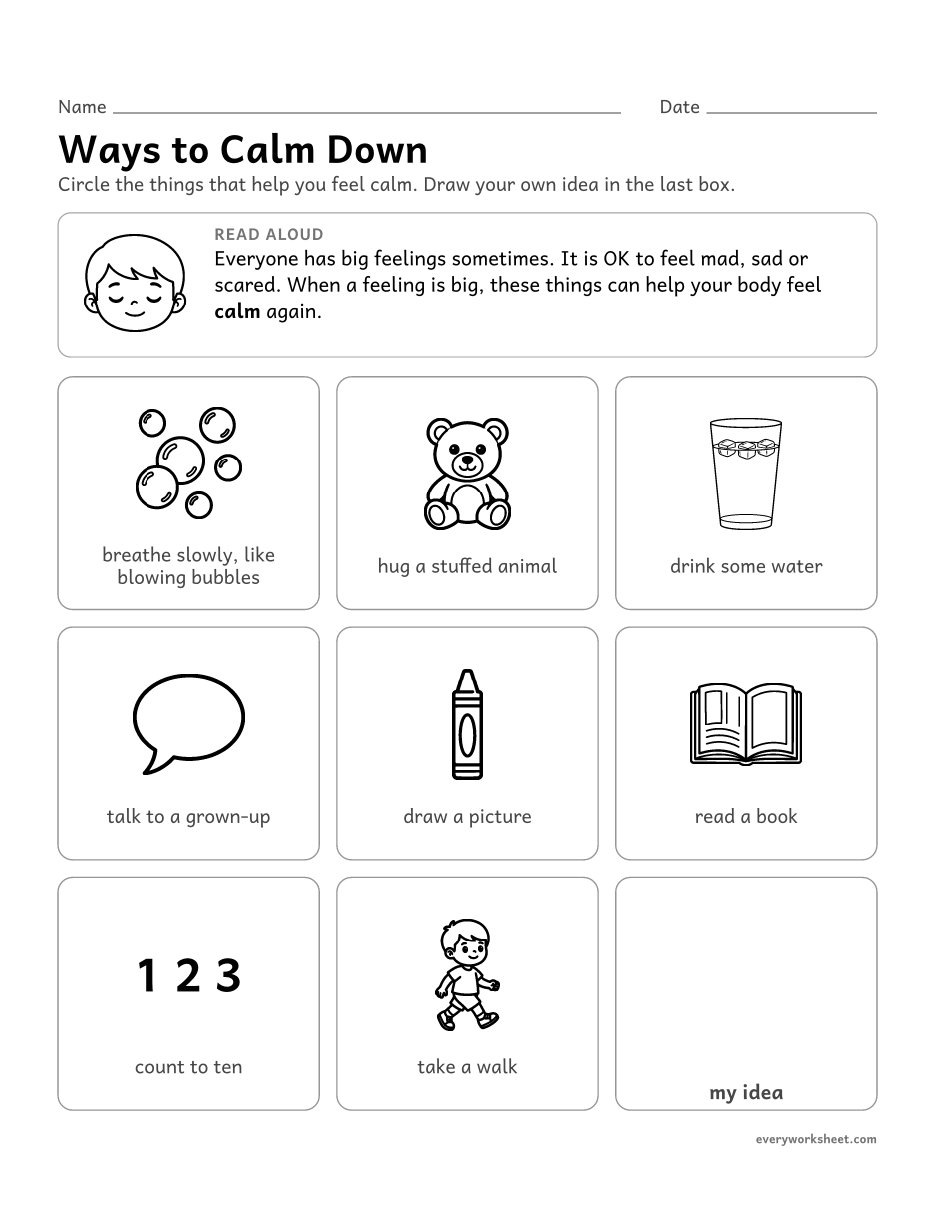
Choosing healthy ways to calm down when I have a big feeling
1 page142 KB
Print at 100% (actual size) for the cleanest tracing lines.
About these feelings worksheets
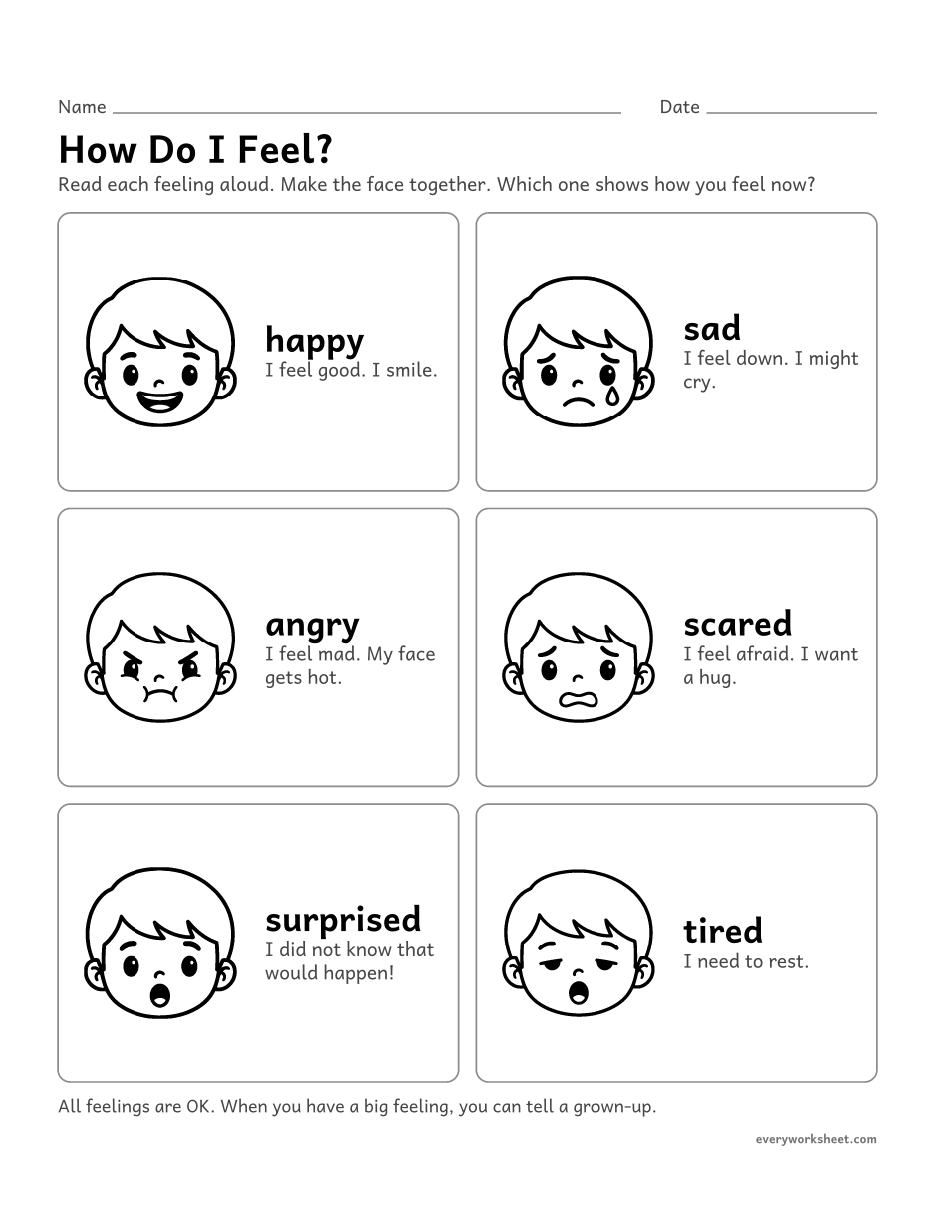
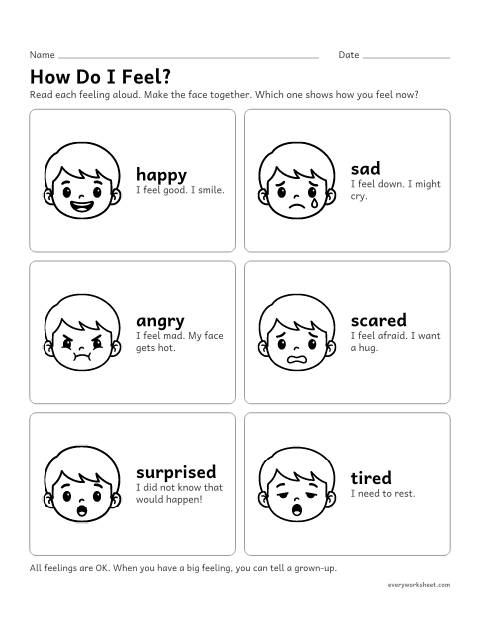
Kindergartners have big feelings and are still learning the words for them. When children can say "I feel mad" or "I feel scared," they can ask for help, calm down sooner and understand that friends may feel differently about the same thing. These emotions worksheets give them the words and faces for six feelings: happy, sad, angry, scared, surprised and tired.
Start with the feelings chart and the draw the feelings page, where children draw a face for each feeling and trace the word. The matching page and the happy or sad sorts connect feelings to everyday events, like a new puppy or a popped balloon. How Would You Feel? has no wrong answers: children circle their own face and then ask a friend, which is a gentle first lesson in other points of view.
A short read-aloud follows Nora through her birthday and asks how she feels at each part. The feelings check-in chart works as a daily routine, the feelings graph counts how a class feels, and the calm down page gives children ideas to try when a feeling gets big. Pages with one right answer have an answer key on page 2.
Standards
CCSS.ELA-LITERACY.SL.K.6Speak audibly and express thoughts, feelings, and ideas clearly.CCSS.ELA-LITERACY.SL.K.1Participate in collaborative conversations with diverse partners about kindergarten topics and texts with peers and adults in small and larger groups.CCSS.ELA-LITERACY.SL.K.2Confirm understanding of a text read aloud or information presented orally or through other media by asking and answering questions about key details and requesting clarification if something is not understood.CCSS.ELA-LITERACY.L.K.6Use words and phrases acquired through conversations, reading and being read to, and responding to texts.CCSS.ELA-LITERACY.L.K.5.ASort common objects into categories (e.g., shapes, foods) to gain a sense of the concepts the categories represent.C3 D2.Civ.10.K-2Compare their own point of view with others' perspectives.C3 D2.Civ.7.K-2Apply civic virtues when participating in school settings.CCSS.MATH.CONTENT.K.MD.B.3Classify objects into given categories; count the numbers of objects in each category and sort the categories by count.CCSS.ELA-LITERACY.L.K.1.APrint many upper- and lowercase letters.
How to use them
- Read the feelings chart aloud and make each face together in a mirror or with a partner.
- On How Would You Feel?, read each sentence and let children circle a face. Then ask a few children why, and notice when friends chose different faces.
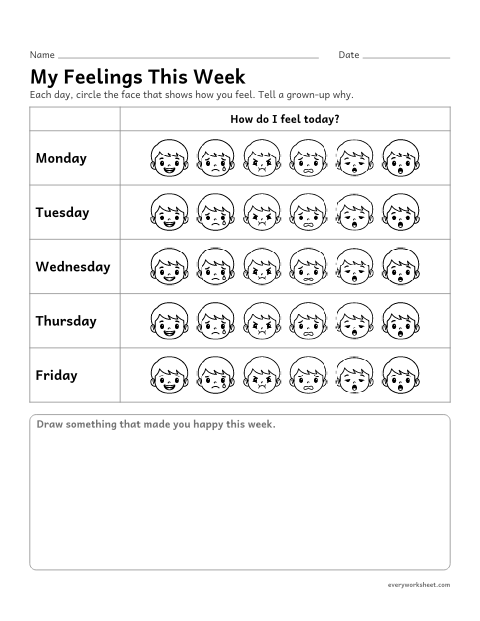
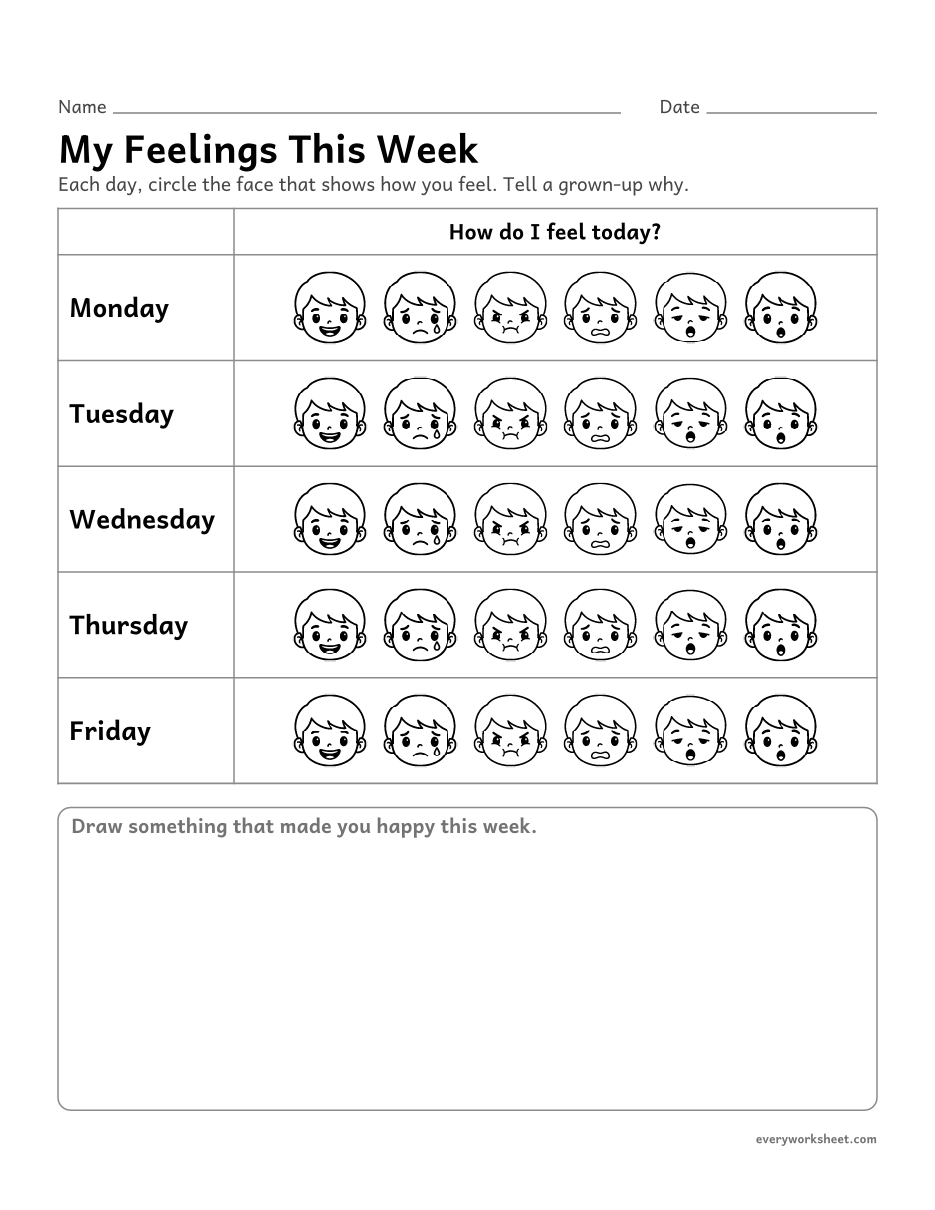
- Use the feelings check-in chart at morning meeting or at home before school for a week.
- Teach one calm down strategy at a time when everyone is calm, then practice it. Keep the page where children can see it.
- Read the story aloud twice before children answer the questions.
Teaching tips
- All feelings are OK. The goal is to name a feeling and choose a safe way to show it, not to stop feeling it.
- On the sorts and the matching page, most children will agree on the answers, but feelings can differ. If a child explains another choice, accept it and talk about it.
- Use the same feeling words all year so children hear them often.
- Pre-readers work from the faces and pictures. The words are for a grown-up to read aloud.
- If a child shares a worrying feeling on a check-in chart, follow up privately.
Questions teachers and parents ask
What feelings should kindergartners learn?
Start with happy, sad, angry, scared, surprised and tired. Once those are easy, add words like worried, excited, proud and calm.
How do you teach feelings to kindergartners?
Name feelings when they happen, show the face, and talk about what caused them. Use pictures and stories, and practice one calm down strategy at a time when children are calm.
Do feelings worksheets have right answers?
Some do. The matching page, the happy or sad sorts, the story questions and the graph have an answer key on page 2. How Would You Feel?, the check-in chart and the calm down page are about each child, so there is no wrong answer.
Why are feelings part of social studies?
Getting along at school starts with understanding your own feelings and seeing that others may feel differently. That is the first step toward taking turns, solving problems and being a good citizen.