 View larger
Feelings Worksheets for Preschool
Friendly feelings pages for preschool: a feelings chart, matching faces, find the feeling, playdough face mats, tracing and calm down choices.
Download the feelings worksheets
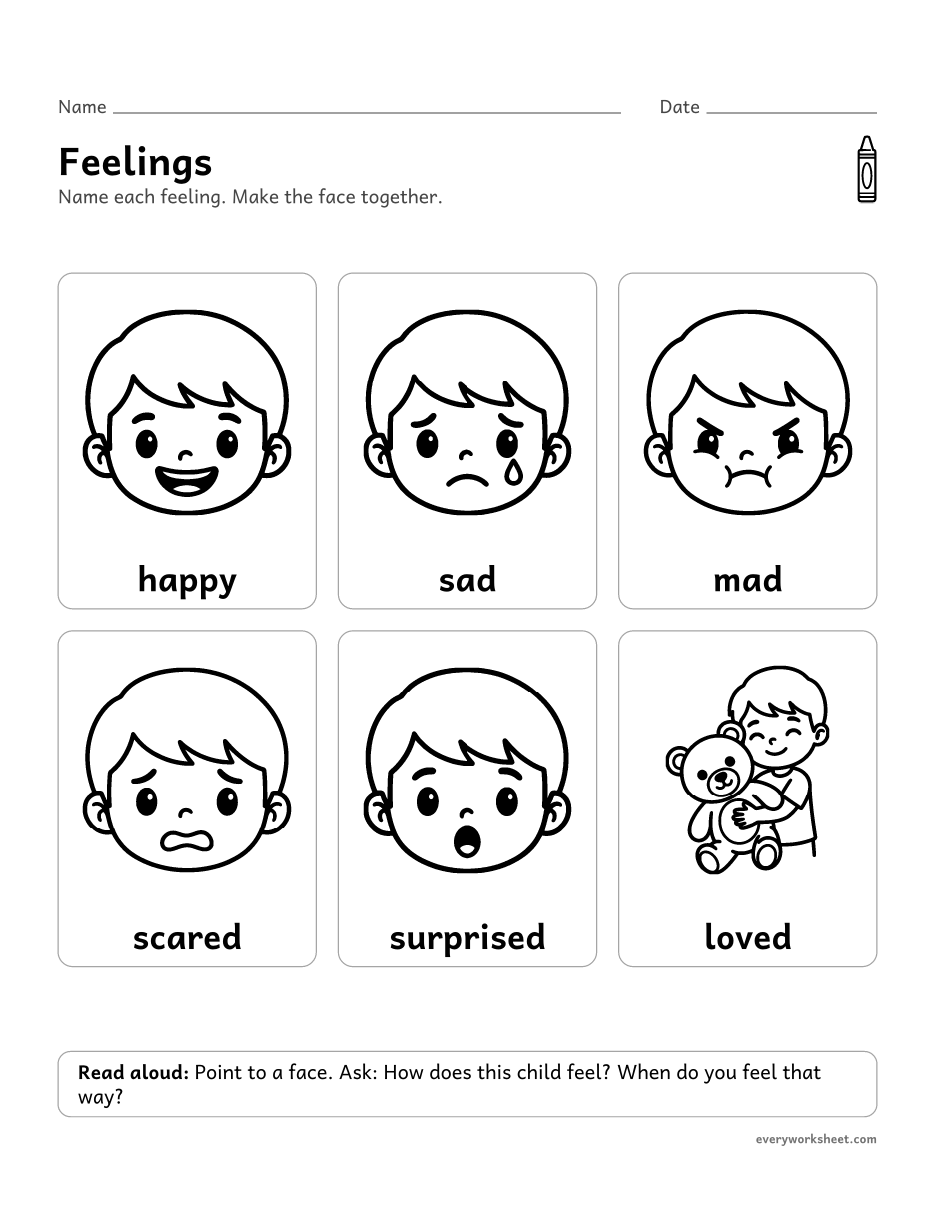
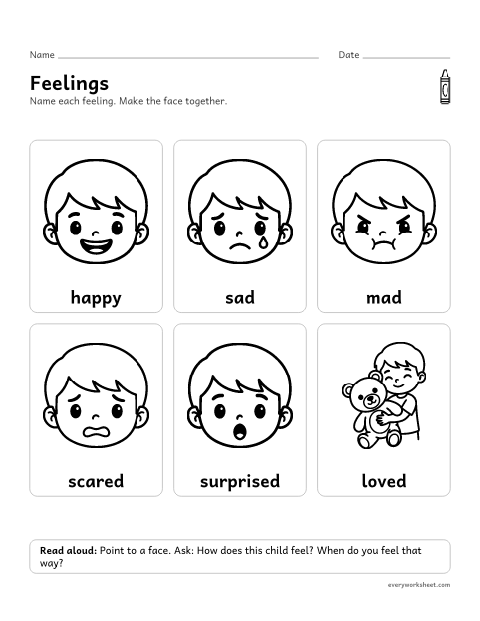
Learn the feelings faces
 View larger
 View all 2 pages
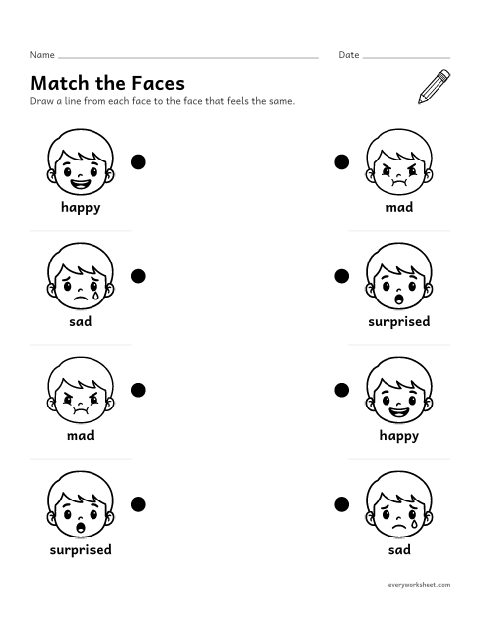
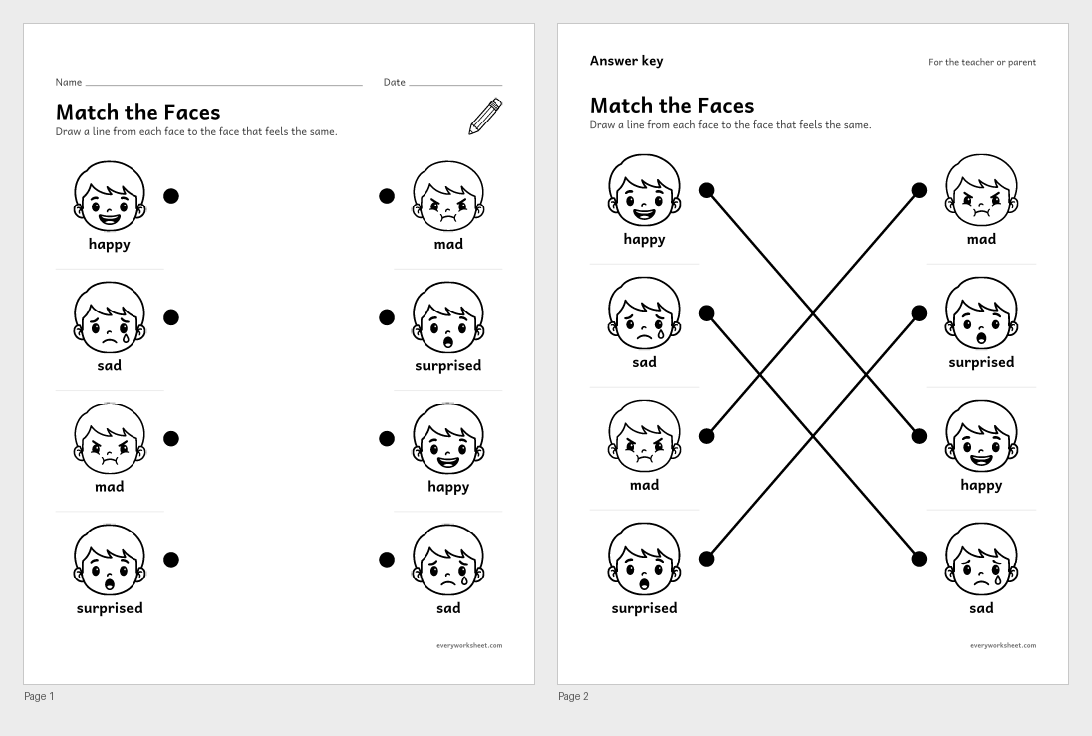
Match the feelings faces
Matching faces that show the same feeling
Answer key on page 2
2 pages357 KB
 View all 2 pages
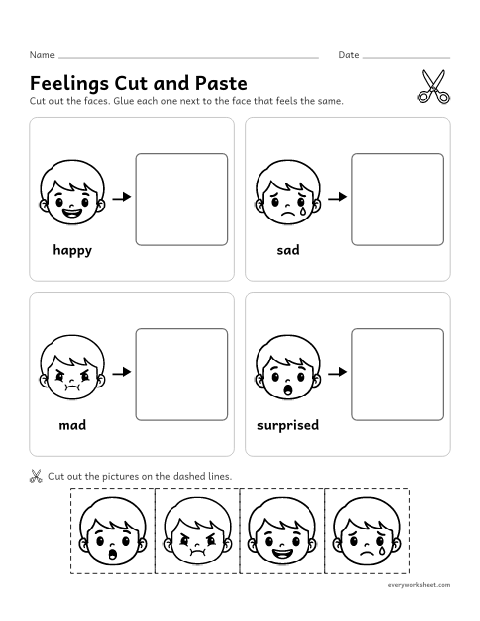
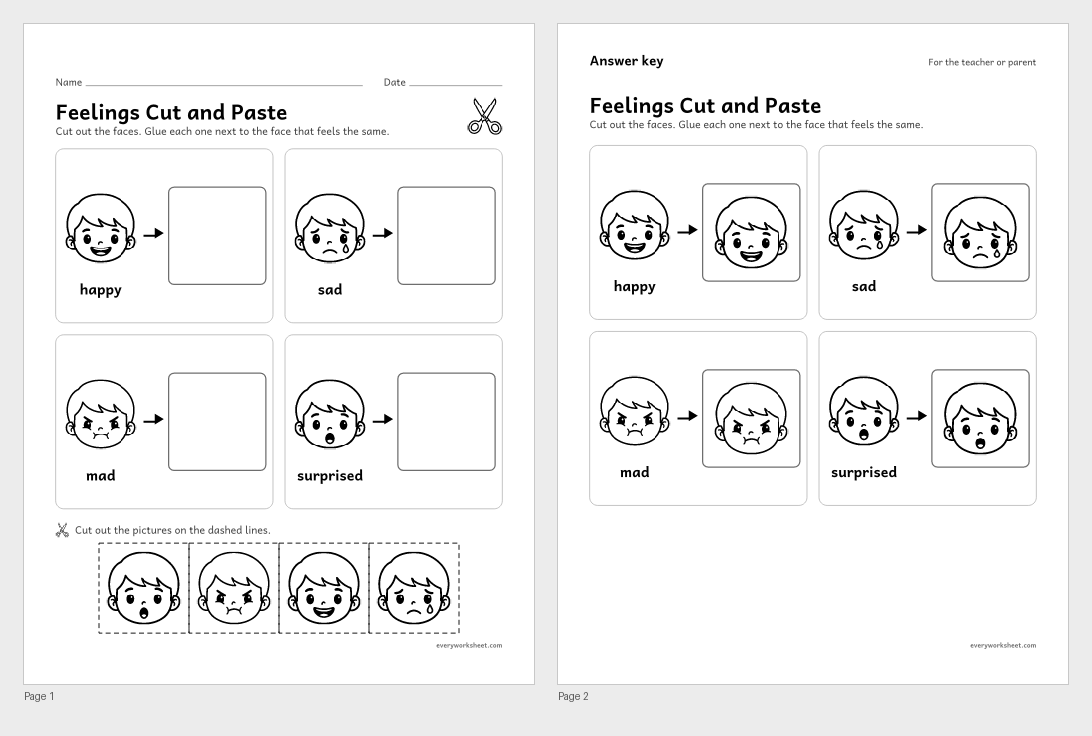
Feelings faces cut and paste
Matching faces that show the same feeling
Answer key on page 2
2 pages409 KB
 View all 2 pages
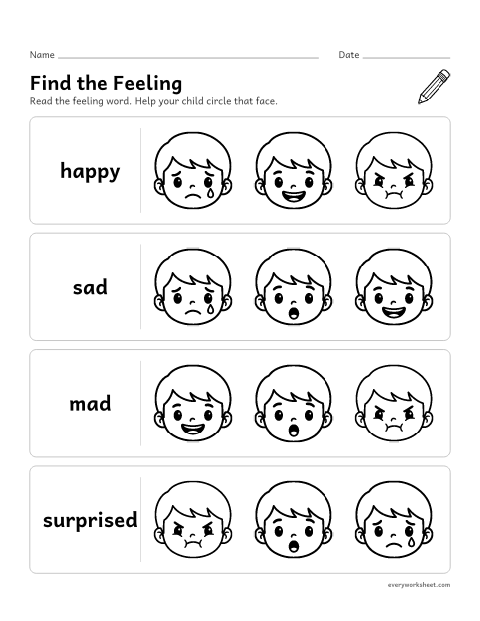
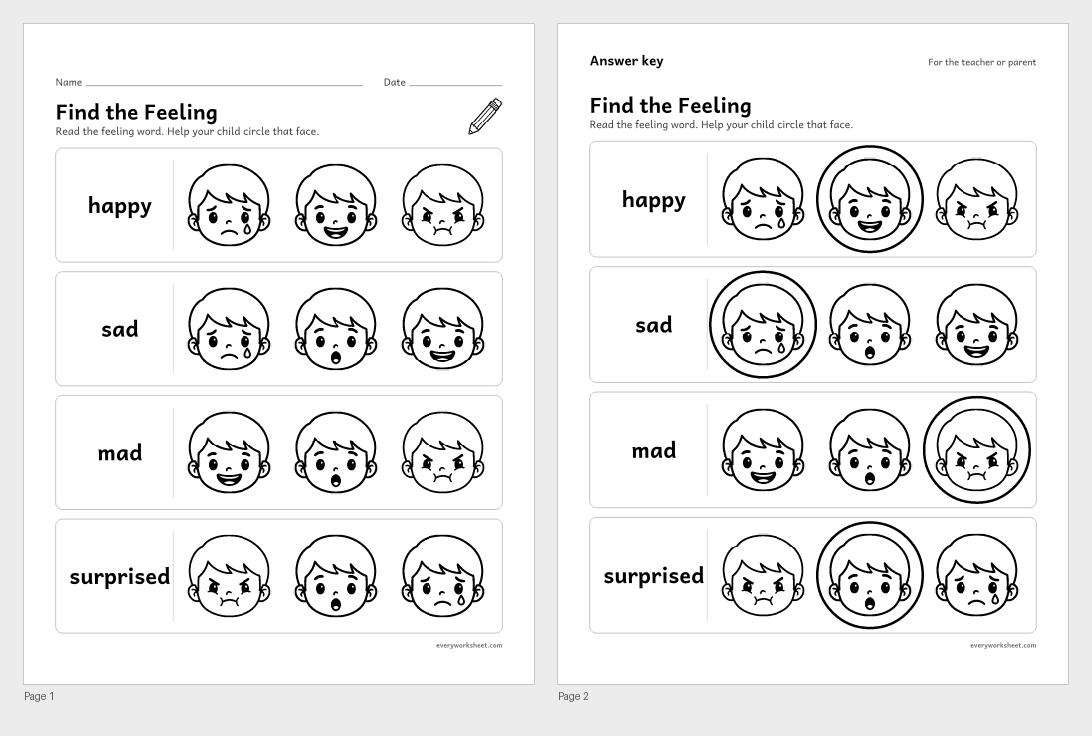
Find the Feeling: circle the face
Finding the face for a feeling word
Answer key on page 2
2 pages518 KB
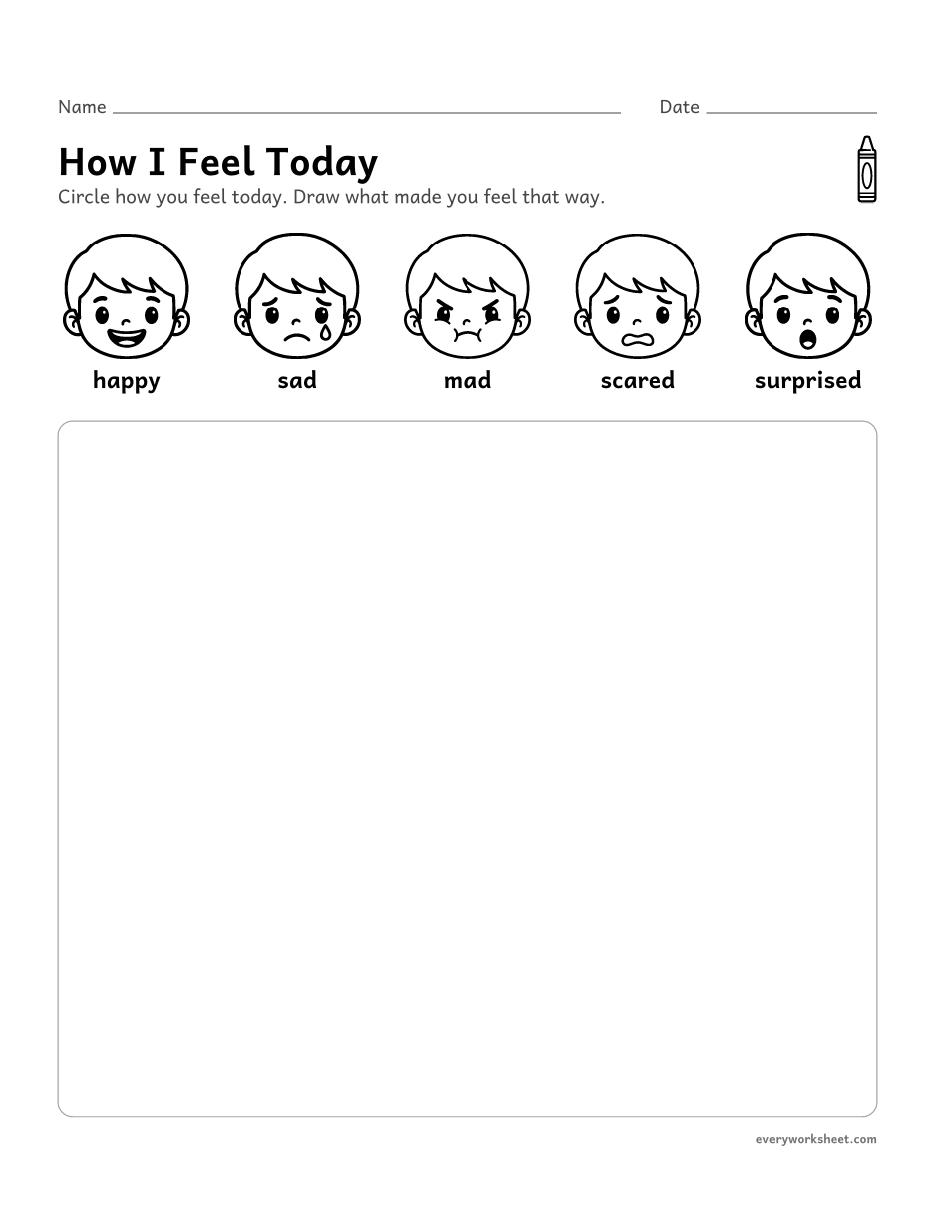
Show and tell how you feel
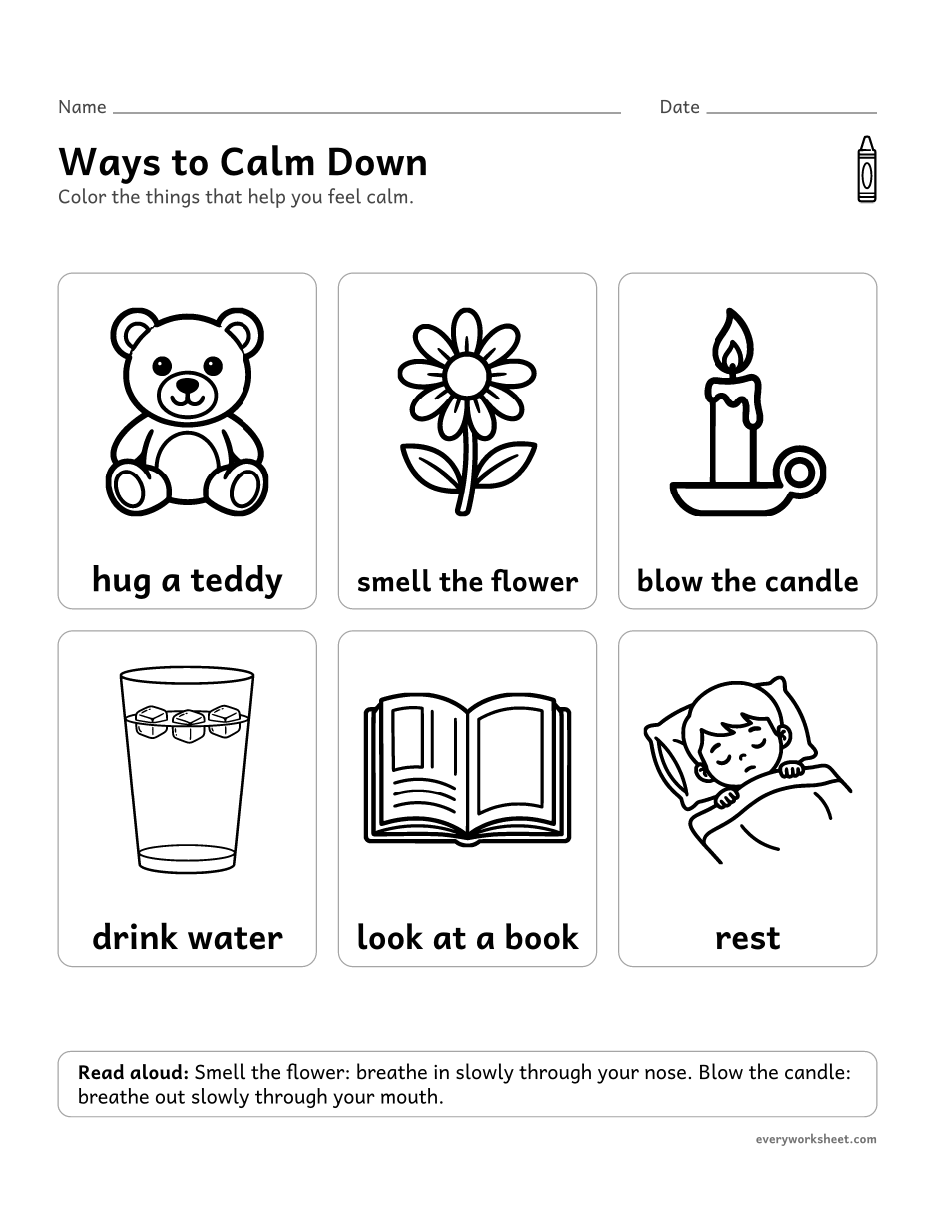
Calming down
Print at 100% (actual size) for the cleanest tracing lines.
About these feelings worksheets
Naming feelings is one of the biggest things preschoolers learn. When a child can say I feel mad or I feel scared, they can start to handle that feeling and ask for help. These pages use friendly, clear faces for happy, sad, mad, surprised and more, so children can learn what each feeling looks like.
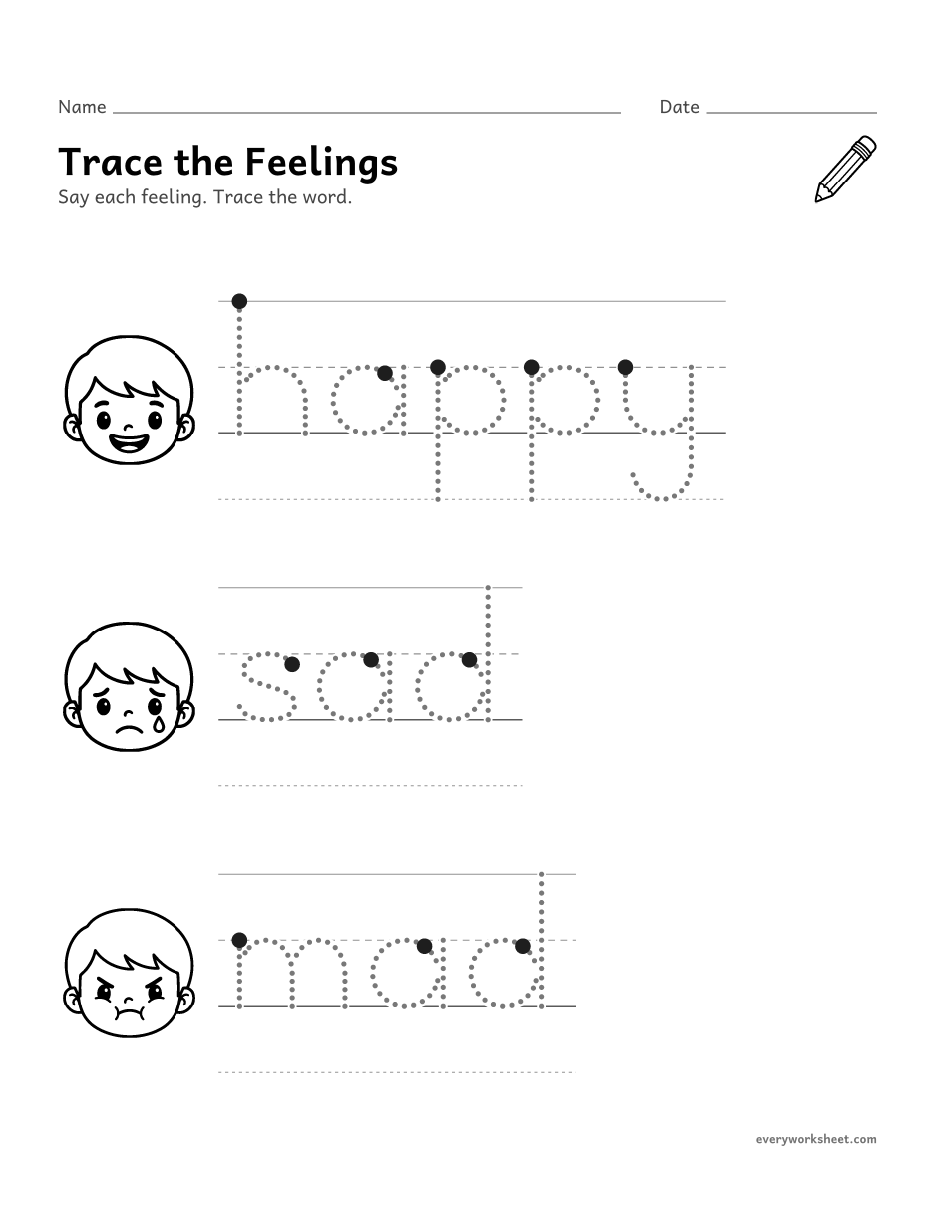
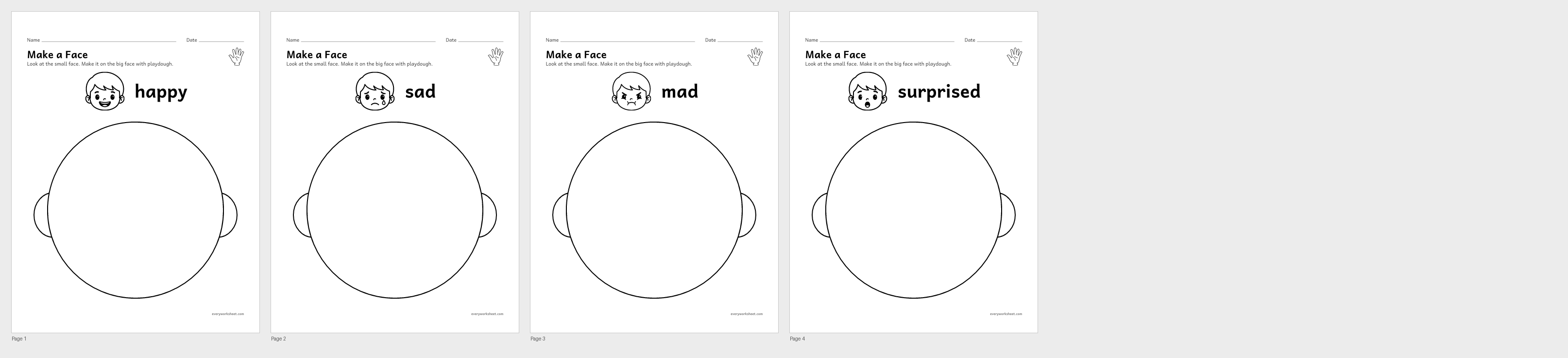
Start with the feelings chart and the face matching pages, then move on to finding the face for a feeling word and talking about how you would feel in different moments. The playdough mats let children build a happy or sad face with their hands, and the calm down page gives them simple things to try when big feelings come.
Standards
ELOF P-SE 6Child expresses a broad range of emotions and recognizes these emotions in self and others.ELOF P-SE 8Child manages emotions with increasing independence.ELOF P-ATL 1Child manages emotions with increasing independence.ELOF P-LC 6Child understands and uses a wide variety of words for a variety of purposes.ELOF P-PMP 3Child demonstrates increasing control, strength, and coordination of small muscles.ELOF P-LIT 6Child writes for a variety of purposes using increasingly sophisticated marks.
How to use them
- Make the faces together in a mirror before you start. Ask: Can you show me a sad face? What does your mouth do?
- On Find the Feeling, read the word on the left, then let your child circle the face that matches.
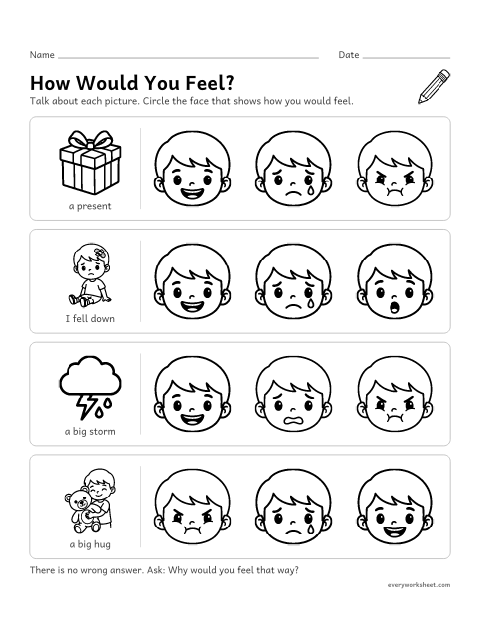
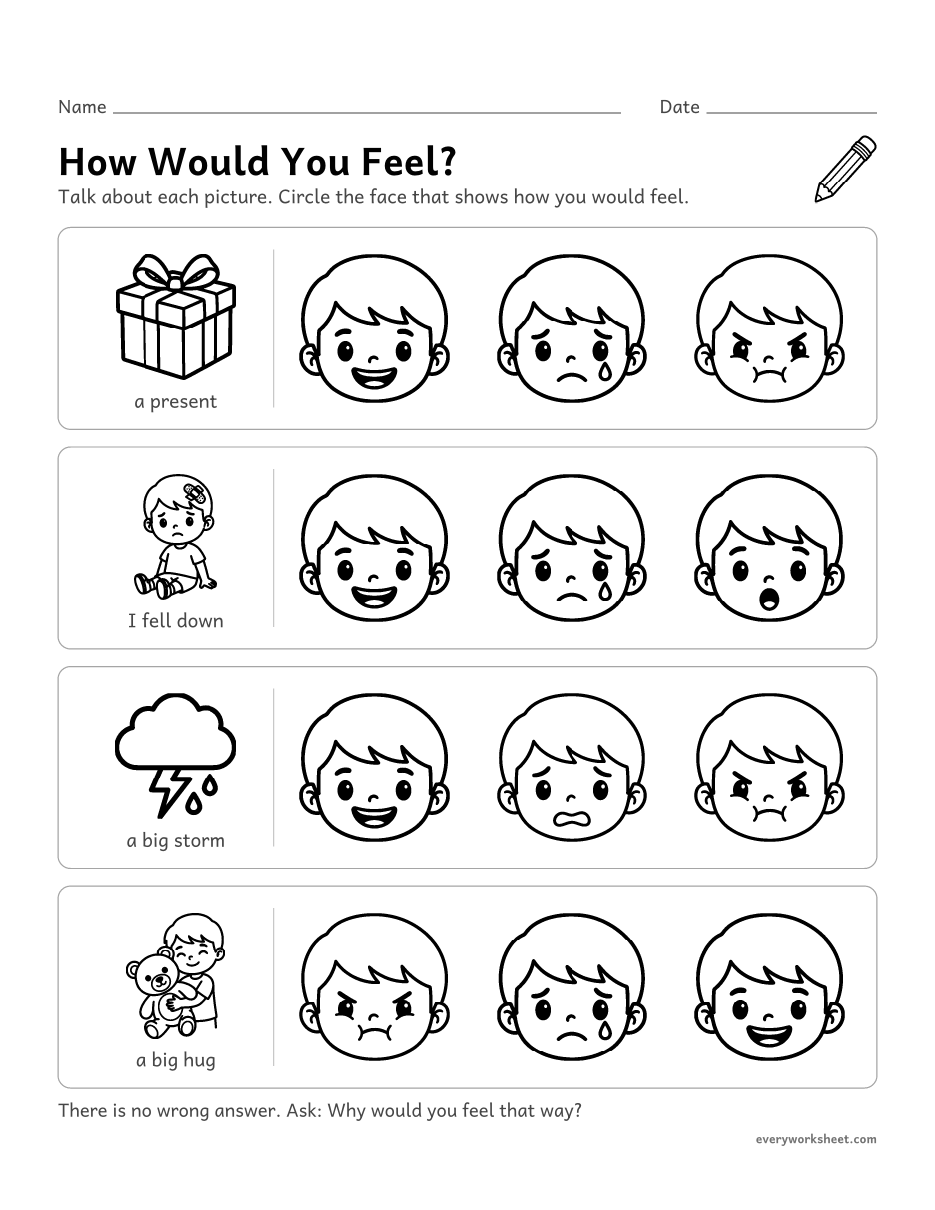
- Use How Would You Feel? as a talk page. There is no wrong answer, so ask why and listen.
- Slip the playdough mats into a sheet protector so they can be used again and again. Rolled snakes make great mouths and eyebrows.
- Practice the calm down choices when your child is already calm, so they are ready to use when a big feeling comes.
Teaching tips
- Name your own feelings out loud during the day. Children learn the words by hearing them used.
- All feelings are OK. It is what we do with them that we practice, so avoid calling a feeling bad.
- Mad and scared can look alike to young children. Point out the eyebrows and the mouth.
- For a child who is very upset, skip the worksheet. Comfort first, talk about it later.
Questions teachers and parents ask
What feelings should preschoolers learn first?
Start with happy, sad, mad and scared. Once those are easy, add surprised, loved, tired and calm.
How do I teach feelings to a three year old?
Name feelings as they happen, look at faces in books and mirrors, and keep it short. A page with big friendly faces gives you something to point to and talk about.
Are there answer keys?
Yes, for the pages with one right answer: matching faces, the cut and paste page and Find the Feeling. Talk pages like How Would You Feel? have no key, because every honest answer is fine.