 View larger
Goods and Services Worksheets for Kindergarten
A goods and services chart, a sort and a cut and paste sort, where goods come from, a market story, store prices, paying with dollars and town services.
Download the goods and services worksheets
Goods and services chart and sorts
 View larger
 View all 2 pages
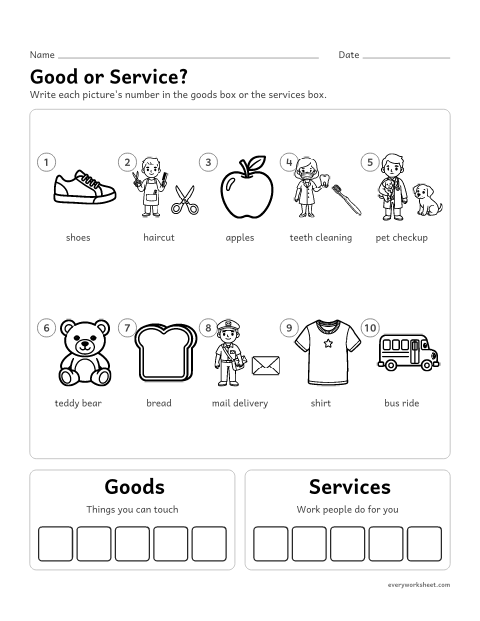
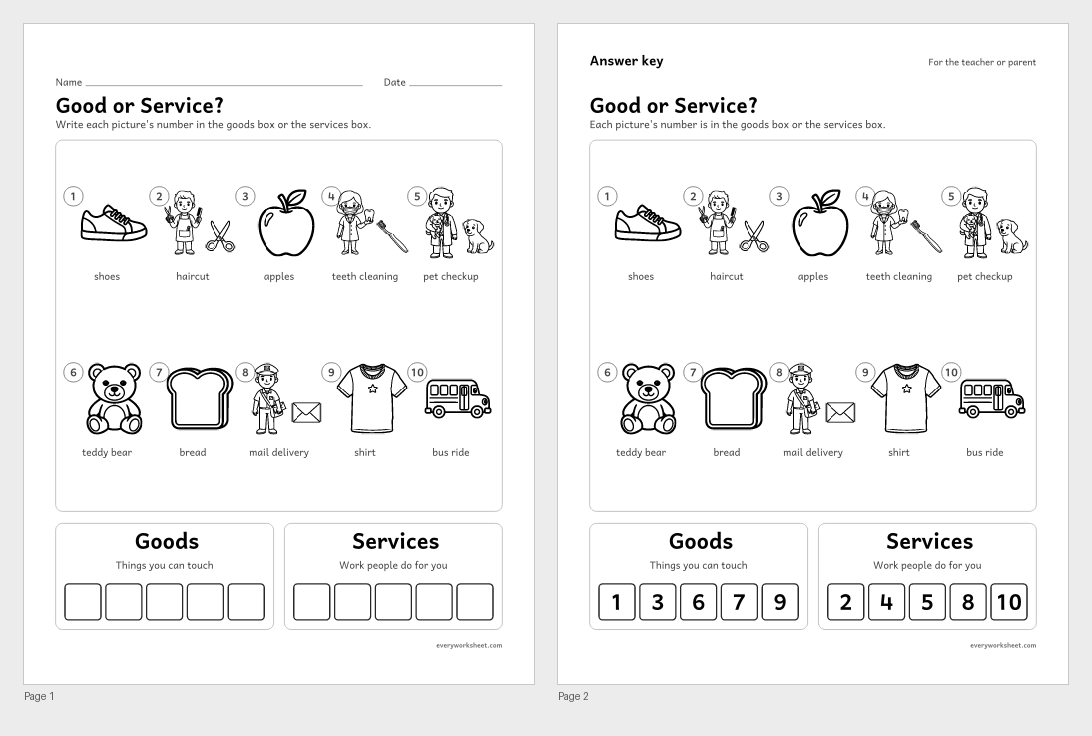
Goods and services sort
Sorting pictures into goods and services
Answer key on page 2
2 pages408 KB
 View all 2 pages
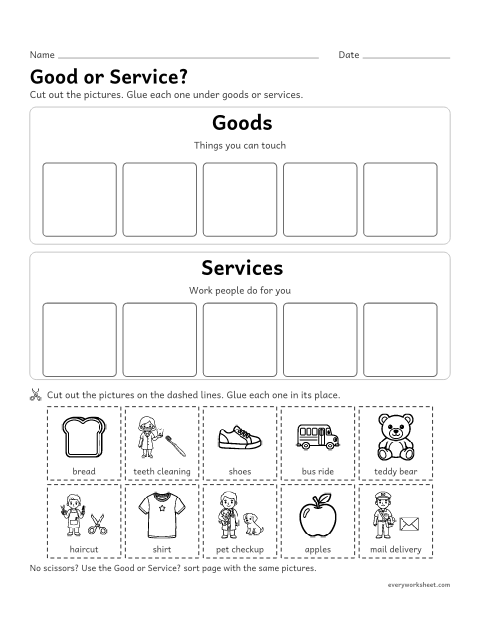
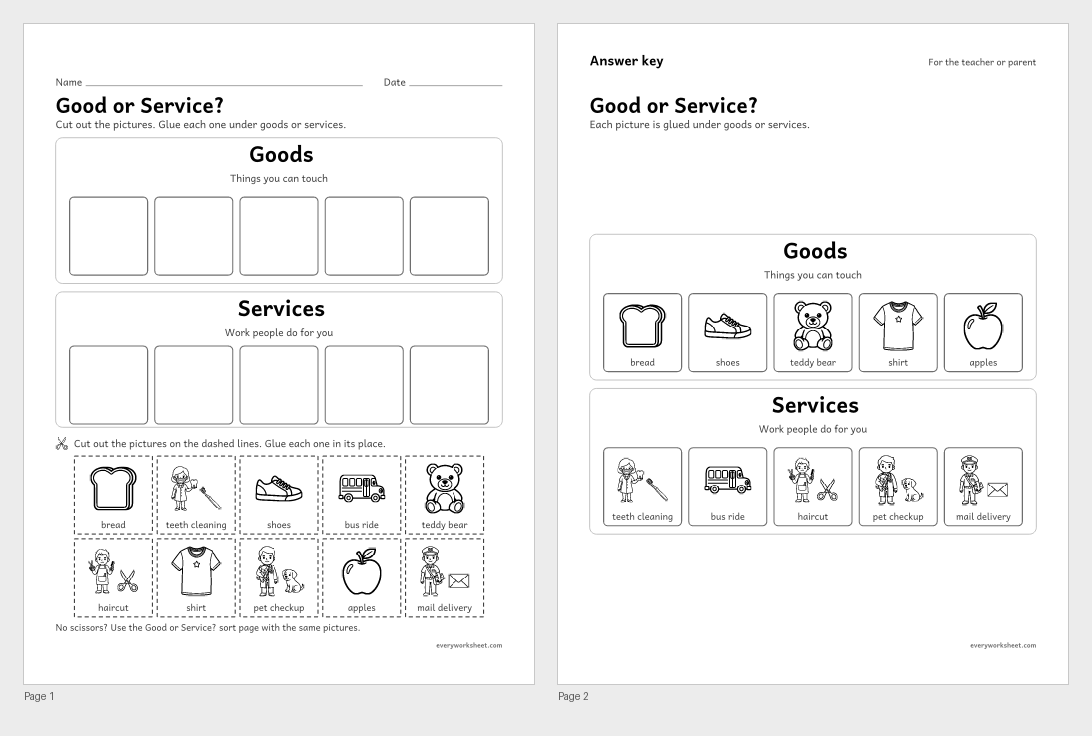
Goods and services cut and paste
Sorting pictures into goods and services
Answer key on page 2
2 pages424 KB
Where goods come from and a market story
 View all 2 pages
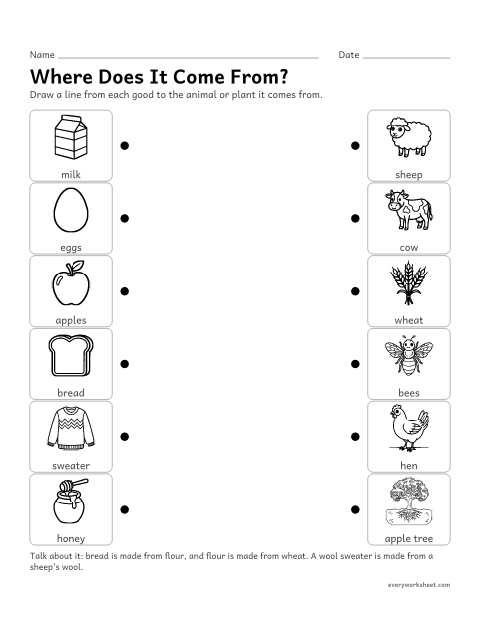
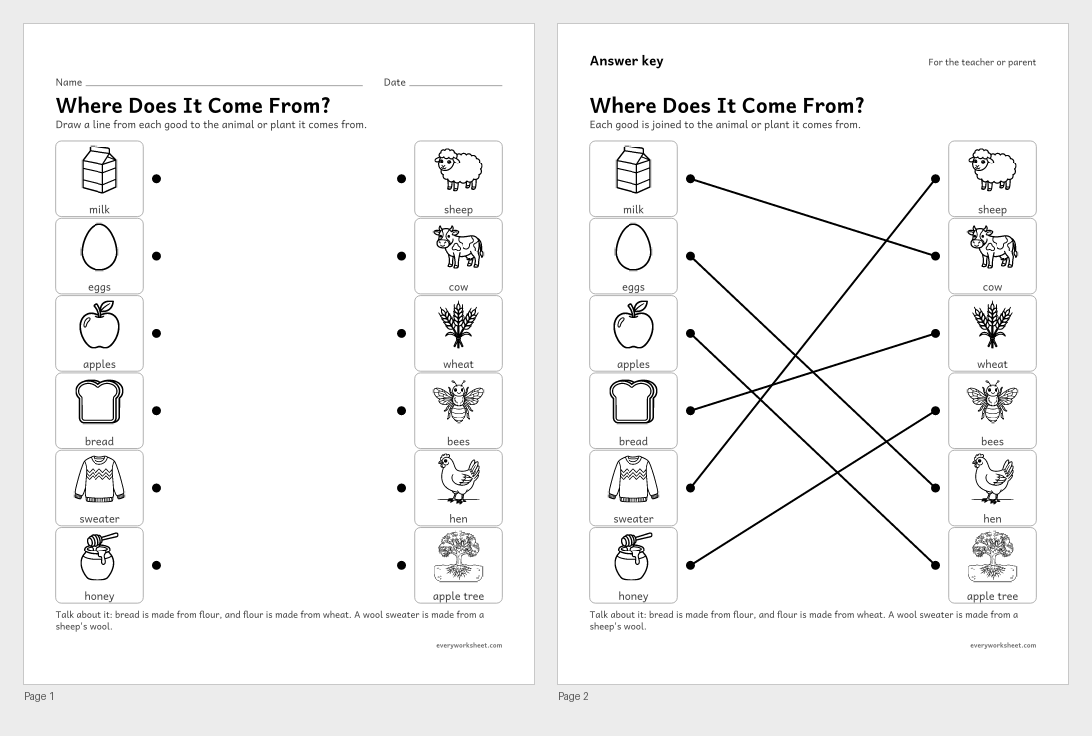
Where do goods come From? matching
Matching goods to the farm animals and plants they come from
Answer key on page 2
2 pages483 KB
 View all 2 pages
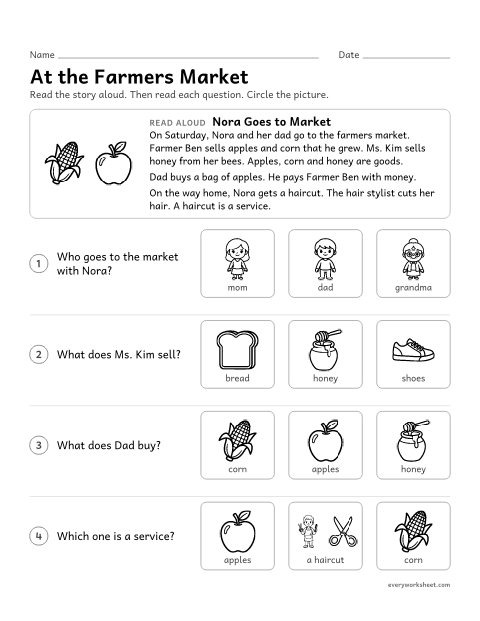
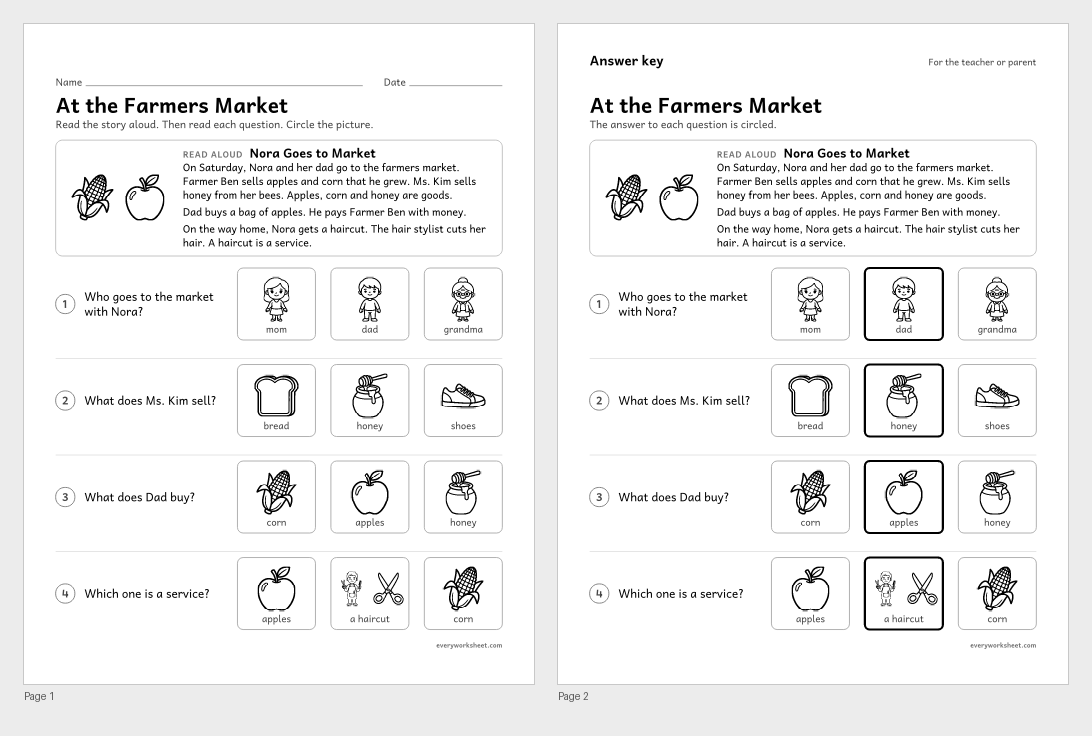
Goods and services Story: at the farmers market
Answering questions about buying goods and services in a story read aloud
Answer key on page 2
2 pages698 KB
Prices and paying
 View all 2 pages
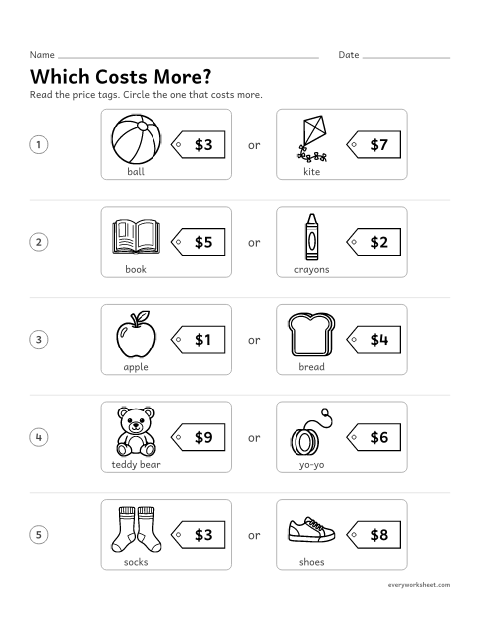
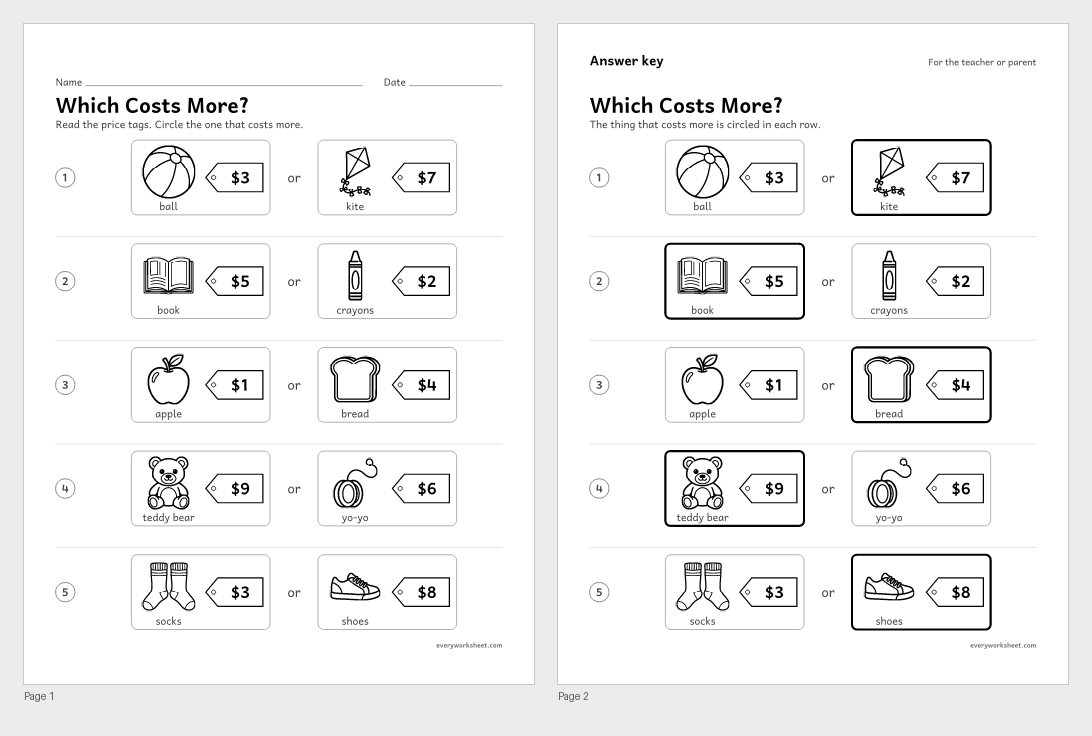
Which costs More? store prices worksheet
Reading price tags and comparing whole-dollar prices
Answer key on page 2
2 pages331 KB
 View all 2 pages
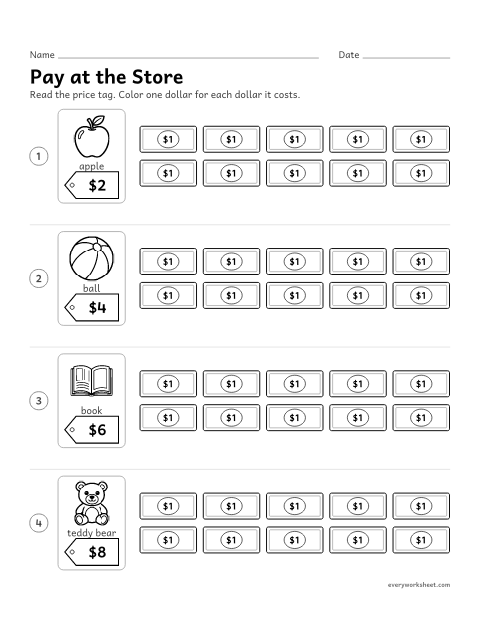
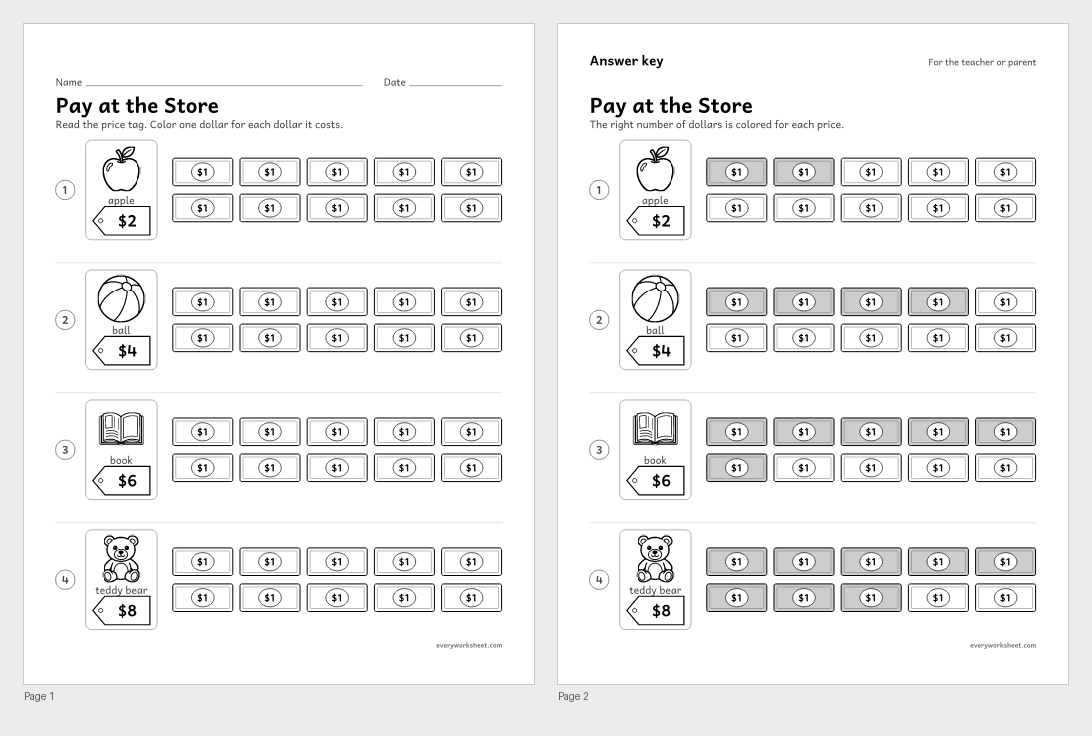
Pay at the Store: count the dollars
Reading a price tag and counting out that many dollars
Answer key on page 2
2 pages182 KB
Services for everyone and my goods and services
 View larger
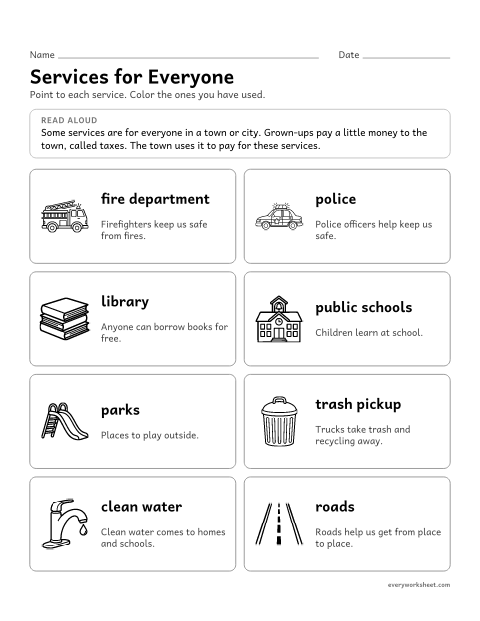
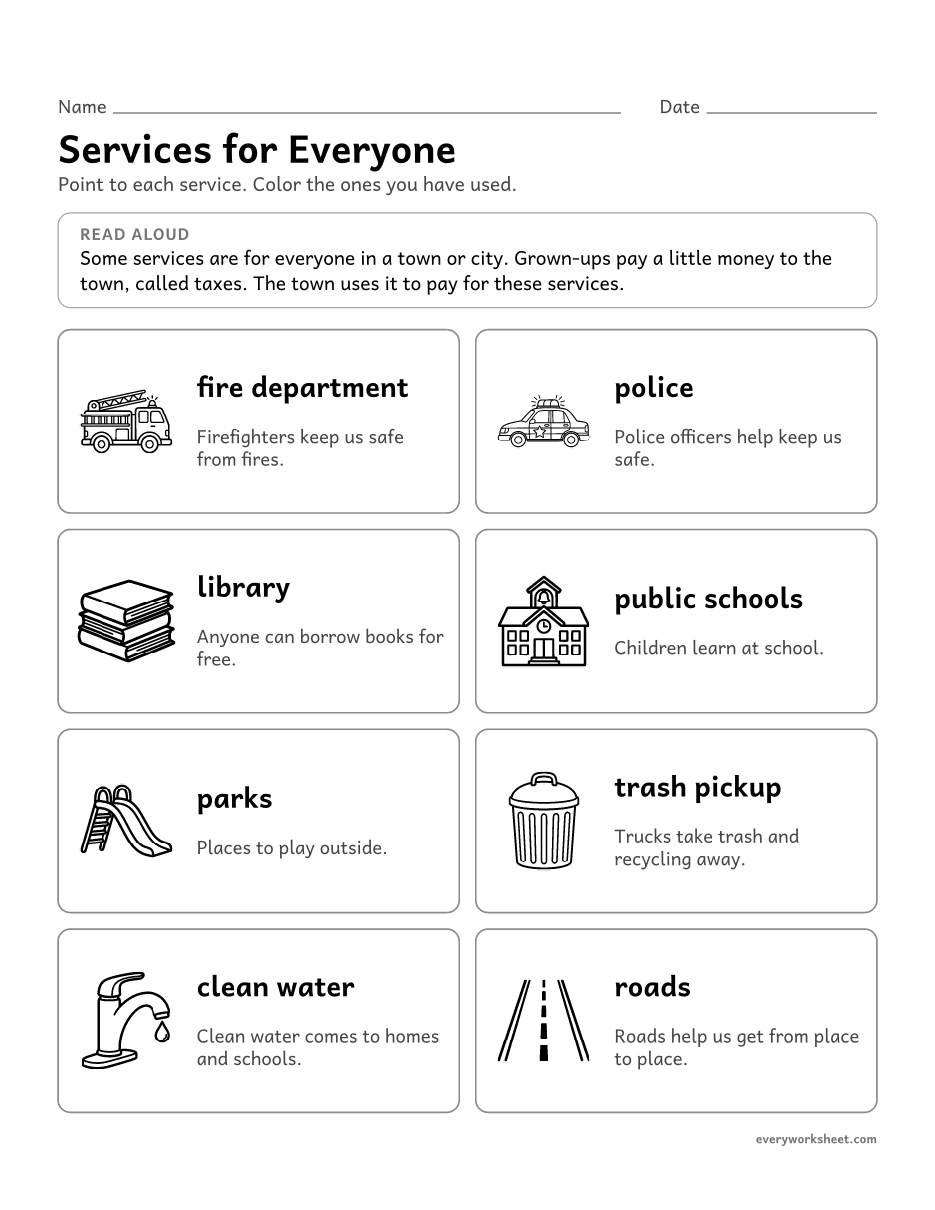
Community services chart
Naming services that a town or city gives everyone
1 page185 KB
 View larger
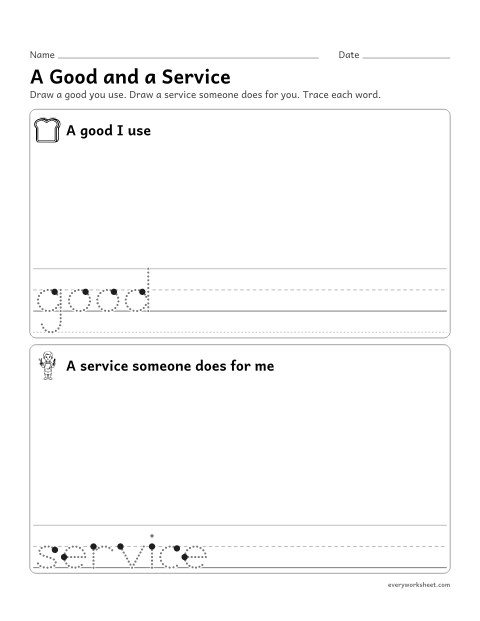
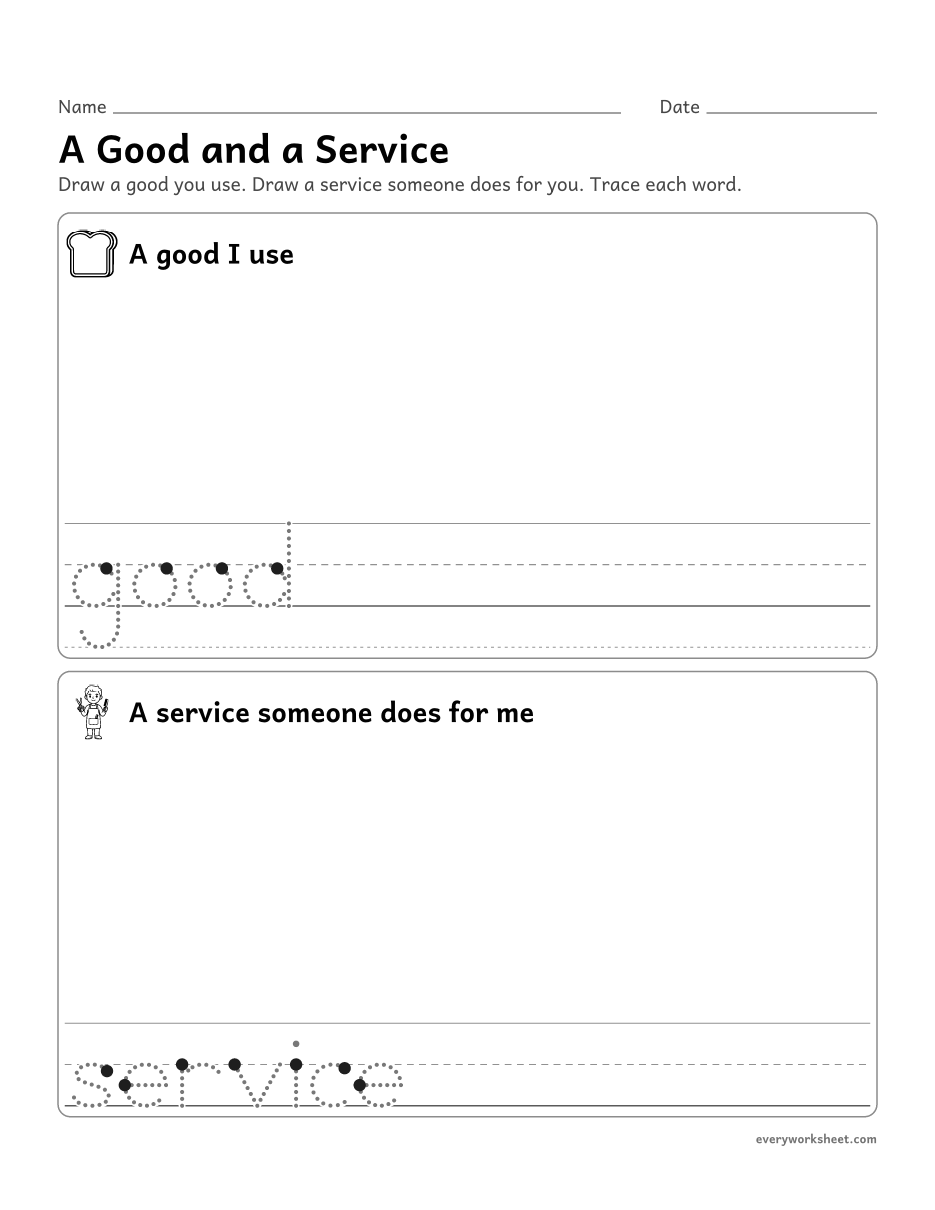
Goods and services drawing page
Drawing and naming a good and a service from their own life
1 page57 KB
Print at 100% (actual size) for the cleanest tracing lines.
About these goods and services worksheets
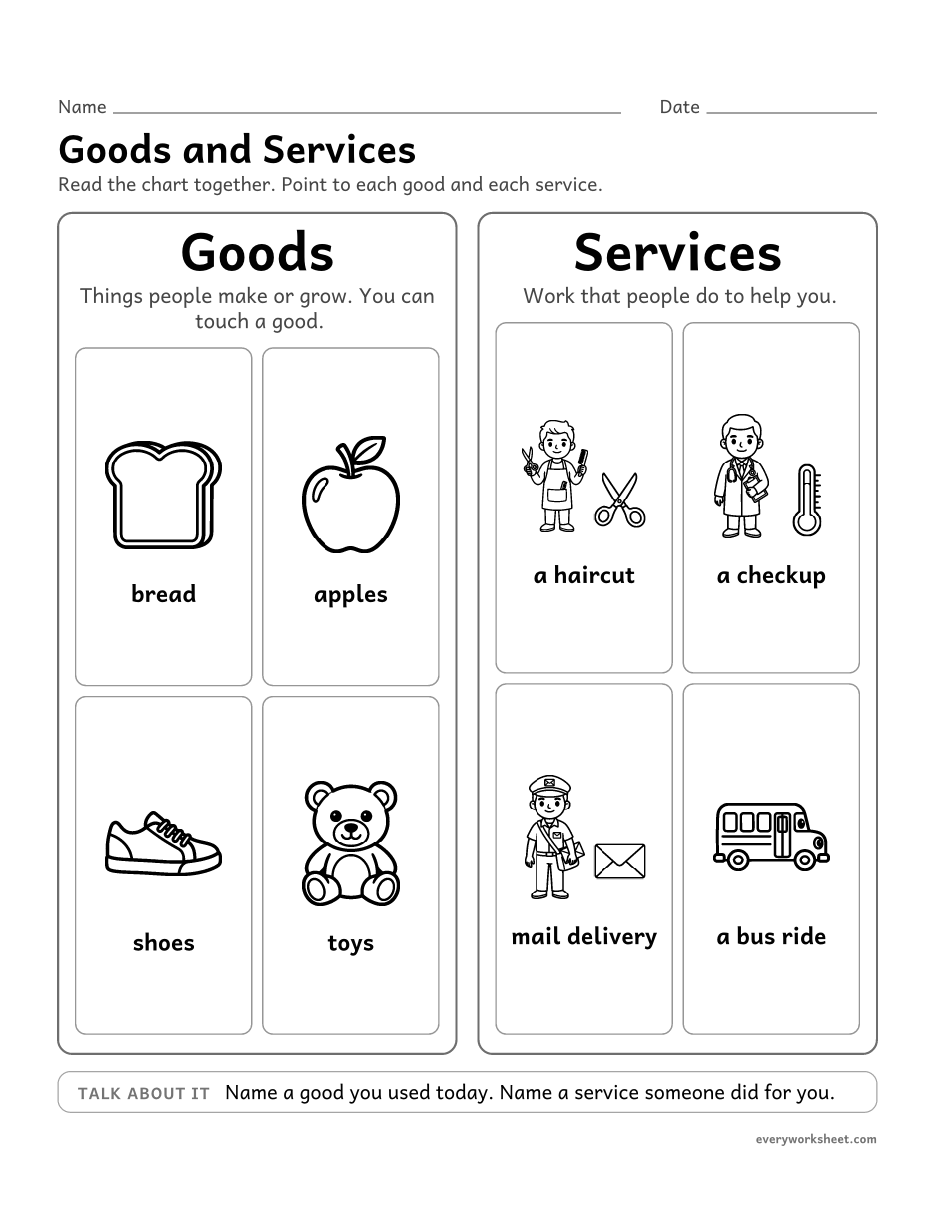
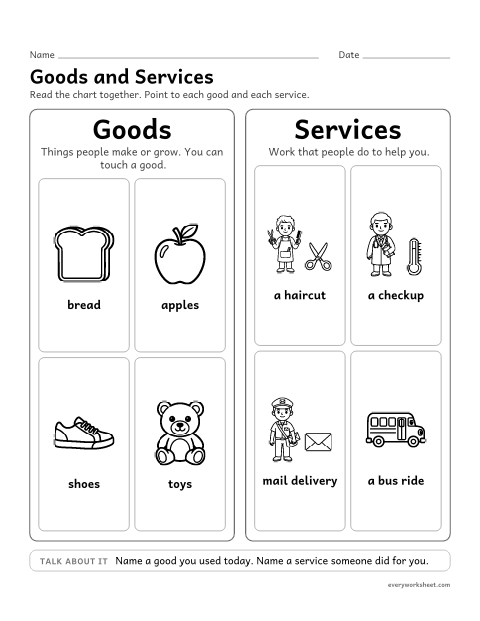
Goods are things people make or grow, like bread, apples, shoes and toys. You can touch a good. Services are work people do for you, like cutting hair, checking teeth, delivering mail or driving a bus. These goods and services worksheets help kindergartners tell the two apart and see where the things they use every day come from.
Start with the goods and services chart, then sort pictures with a pencil or with scissors and glue; both pages use the same ten pictures. Where Does It Come From? links goods to the farm animals and plants they come from, and the farmers market story shows people buying goods and getting a service.
Children also visit the store: they read price tags, circle the thing that costs more and color one dollar for each dollar a thing costs. Prices are whole dollars from $1 to $10, so the numbers stay within kindergarten math. A Services for Everyone chart shows the services a town gives to all, like libraries, parks and fire departments. Pages with one right answer have an answer key on page 2.
Standards
C3 D2.Eco.4.K-2Describe the goods and services that people in the local community produce and those that are produced in other communities.C3 D2.Eco.5.K-2Identify prices of products in a local market.C3 D2.Eco.12.K-2Describe examples of the goods and services that governments provide.CCSS.ELA-LITERACY.L.K.5.ASort common objects into categories (e.g., shapes, foods) to gain a sense of the concepts the categories represent.CCSS.ELA-LITERACY.SL.K.2Confirm understanding of a text read aloud or information presented orally or through other media by asking and answering questions about key details and requesting clarification if something is not understood.CCSS.MATH.CONTENT.K.CC.C.7Compare two numbers between 1 and 10 presented as written numerals.CCSS.MATH.CONTENT.K.CC.B.5Count to answer "how many?" questions about as many as 20 things arranged in a line, a rectangular array, or a circle, or as many as 10 things in a scattered configuration; given a number from 1–20, count out that many objects.CCSS.ELA-LITERACY.W.K.2Use a combination of drawing, dictating, and writing to compose informative/explanatory texts in which they name what they are writing about and supply some information about the topic.
How to use them
- Read the goods and services chart together. Ask, "Can you touch it?" A good is a thing; a service is work someone does for you.
- Use the pencil sort first, then the cut and paste sort as a center or for review.
- Before the Where Does It Come From? page, talk about the farm: milk comes from cows, eggs from hens and honey from bees.
- Read the farmers market story aloud, then ask children what they could buy at a market near them.
- Set up a pretend store with play money and price tags from $1 to $10 after the price pages.
- Look at the Services for Everyone chart and color the services your class has used, like the library or a park.
Teaching tips
- A worker can make goods or give a service. A baker makes bread, which is a good. A hair stylist gives haircuts, which is a service.
- Use real objects: hold up a book (a good) and then pretend to read it to the class (a service).
- On the price pages, have children point to each dollar as they count and color it.
- Explain taxes simply: grown-ups pay a little money to the town, and the town uses it to pay for things everyone shares.
- For a challenge, ask children to name the worker who makes or grows each good on the matching page.
Questions teachers and parents ask
What are goods and services for kindergarten?
Goods are things people make or grow that you can touch, like bread, apples, shoes and toys. Services are work people do for you, like a haircut, a checkup at the doctor, mail delivery or a bus ride.
Is there a goods and services cut and paste worksheet?
Yes. The cut and paste sort and the pencil sort use the same ten pictures, so children can do the same sort with or without scissors.
Are the money pages right for kindergarten?
Yes. Prices are whole dollars from $1 to $10, so children compare and count numbers they already know. They do not need to know coins.
Do these worksheets have answer keys?
Yes. The sorts, the cut and paste page, the matching page, the story questions and both price pages each have an answer key on page 2. The charts and the drawing page do not need one.