 View larger
Jobs Worksheets for Kindergarten
Jobs people do: a jobs chart, a work tools sort, a classroom jobs chart, why people work, job riddles, a job interview, a class graph and a drawing page.
Download the jobs people do worksheets
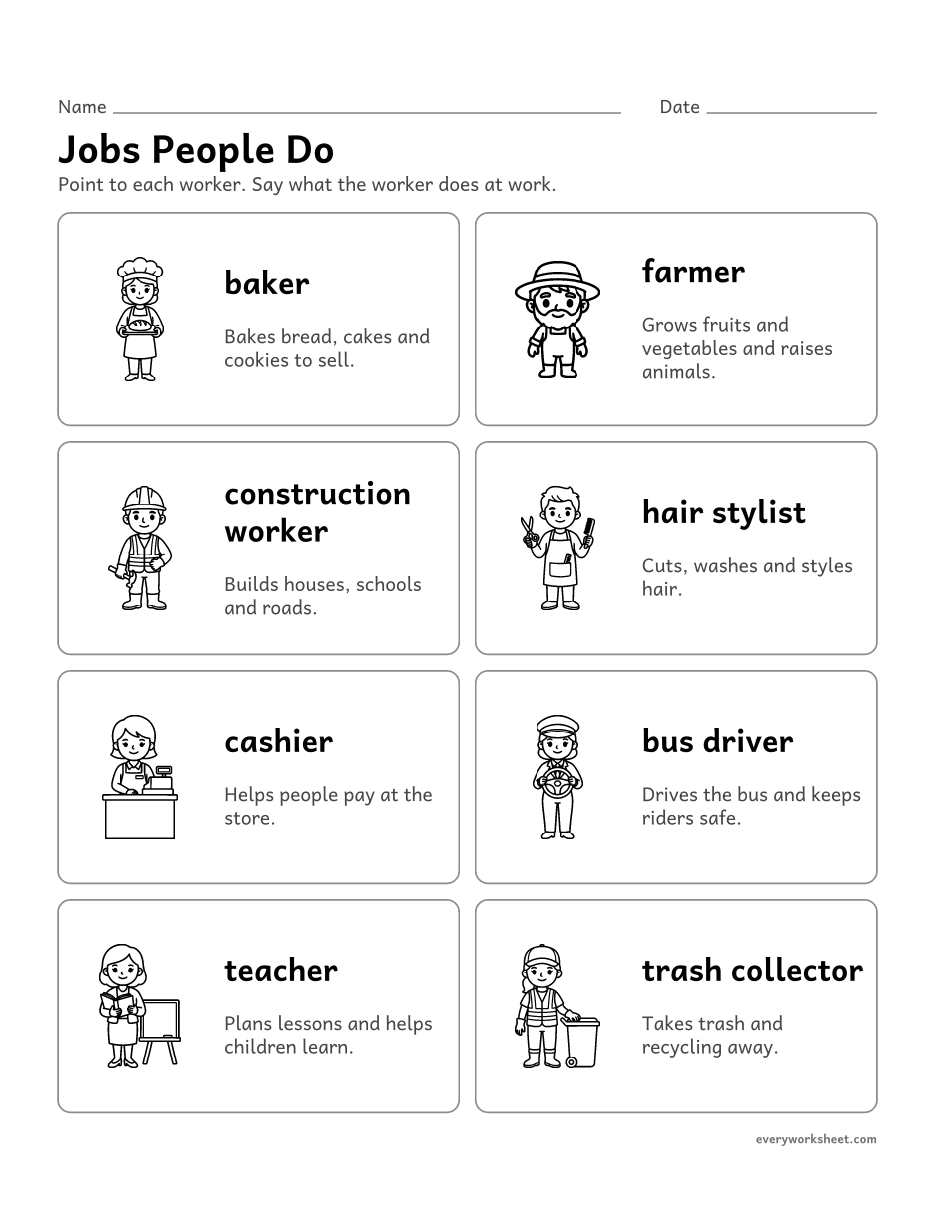
Jobs people do
 View larger
 View all 2 pages
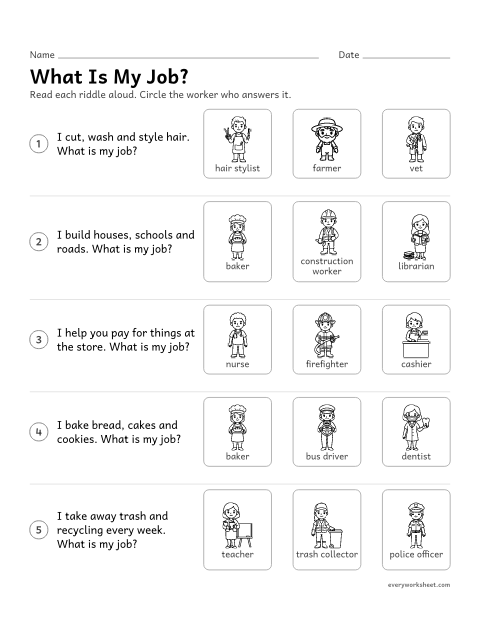
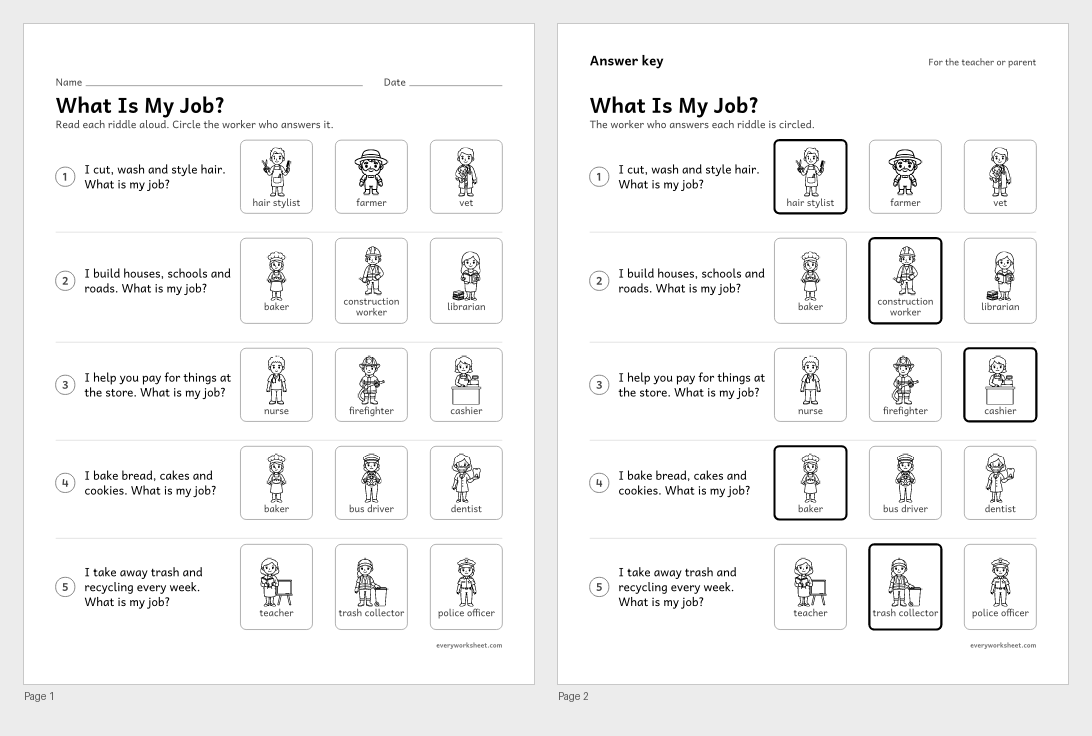
Jobs Riddles: what is my Job?
Naming jobs from clues about the work
Answer key on page 2
2 pages452 KB
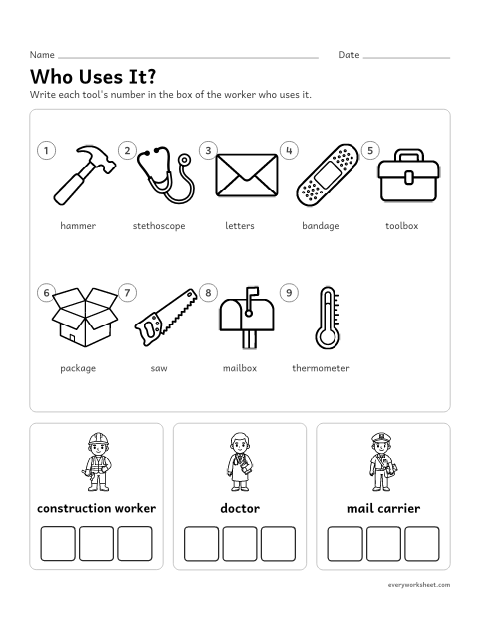
Tools workers use
 View all 2 pages
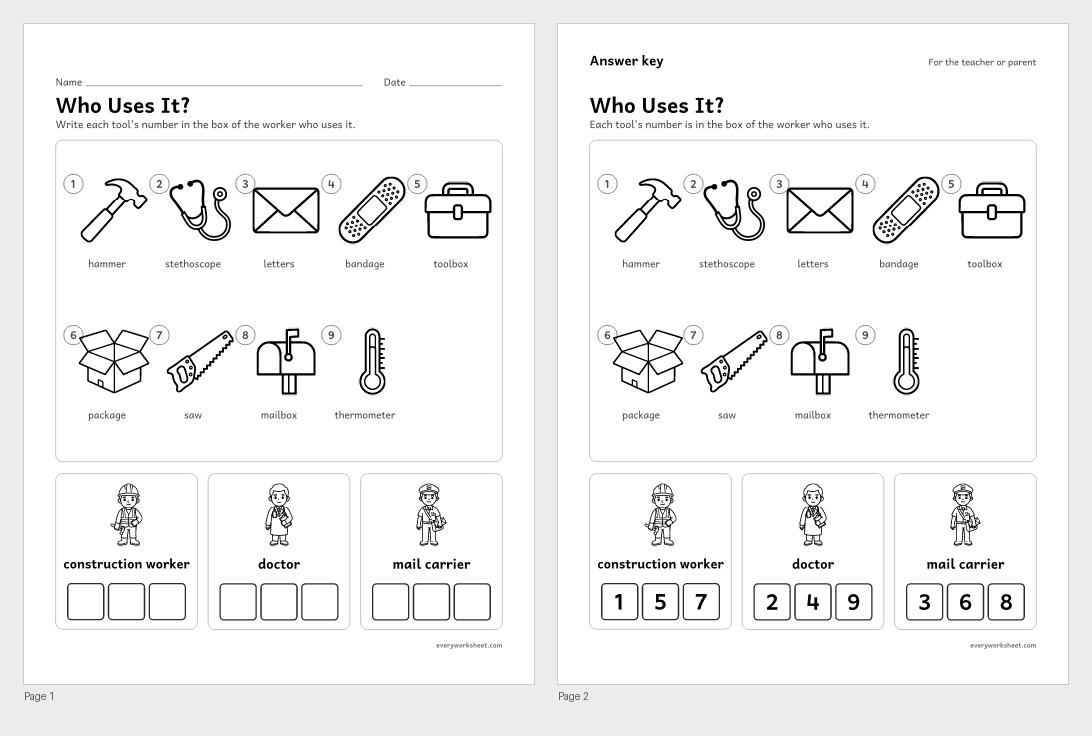
Work tools Sort: who uses It?
Sorting tools by the worker who uses them
Answer key on page 2
2 pages237 KB
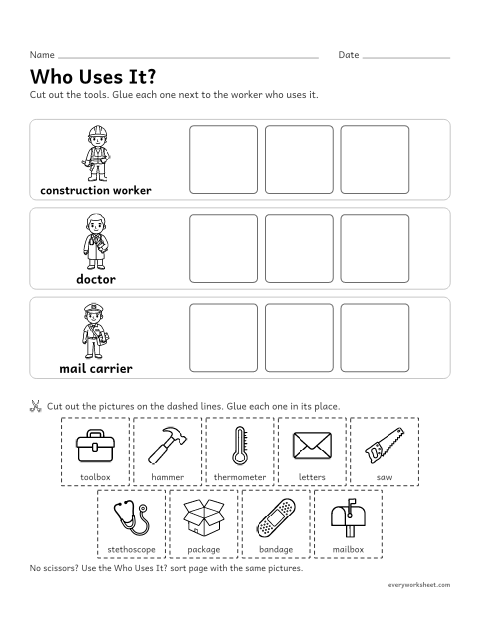 View all 2 pages
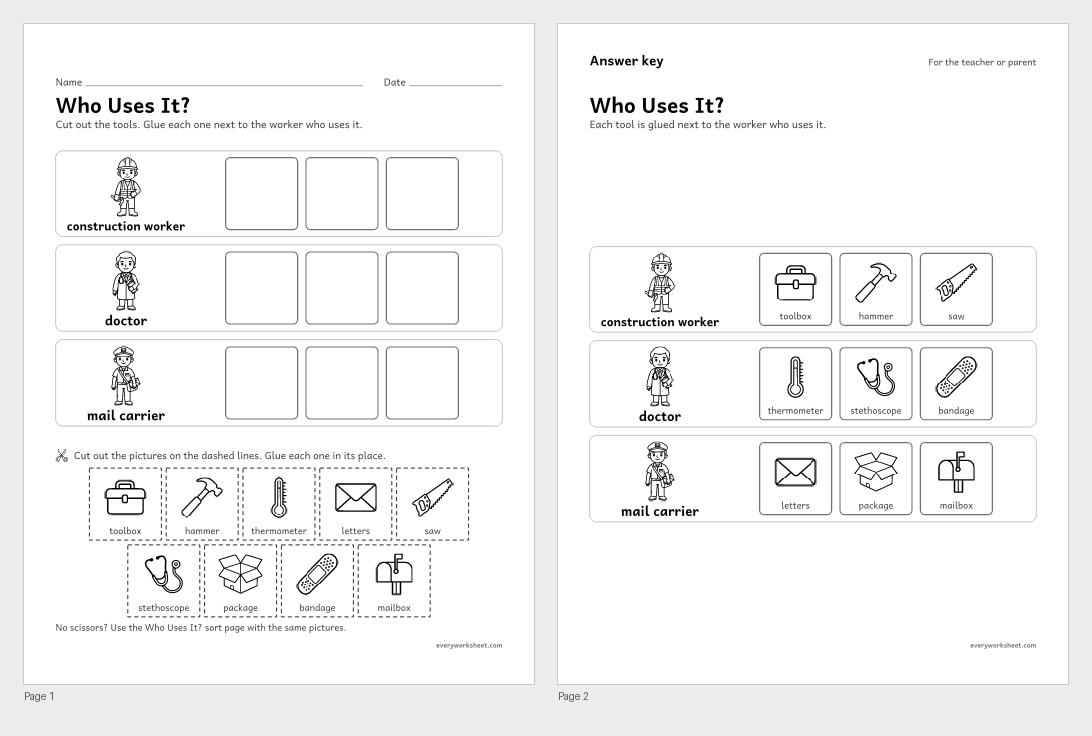
Work tools cut and paste
Sorting tools by the worker who uses them
Answer key on page 2
2 pages255 KB
Why people work
 View all 2 pages
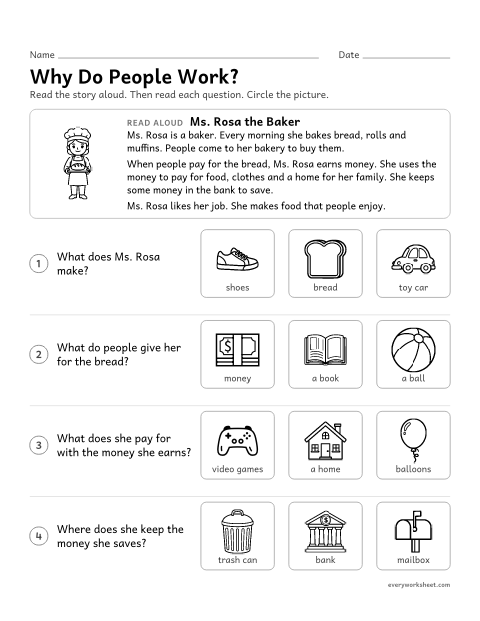
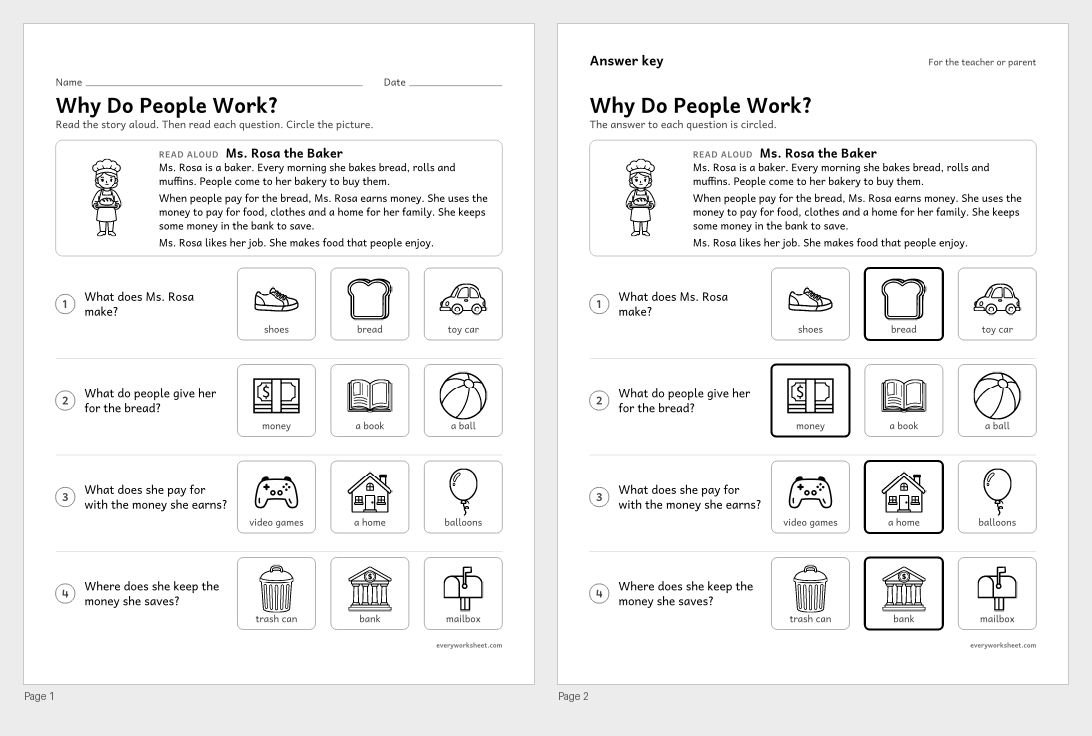
Why do people Work? Read-Aloud
Explaining that people work to earn money for needs and wants
Answer key on page 2
2 pages295 KB
 View larger
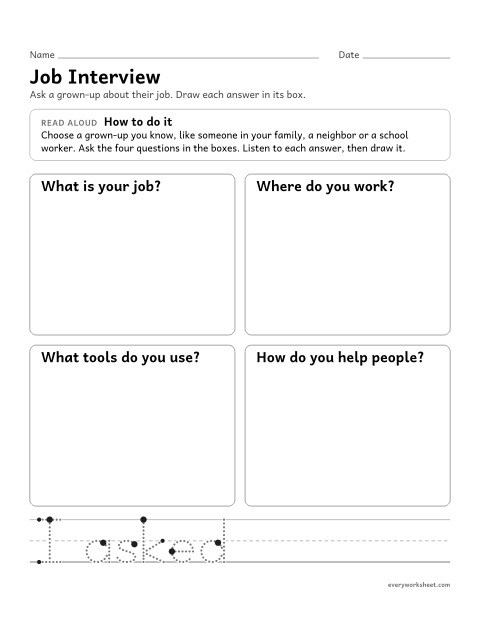
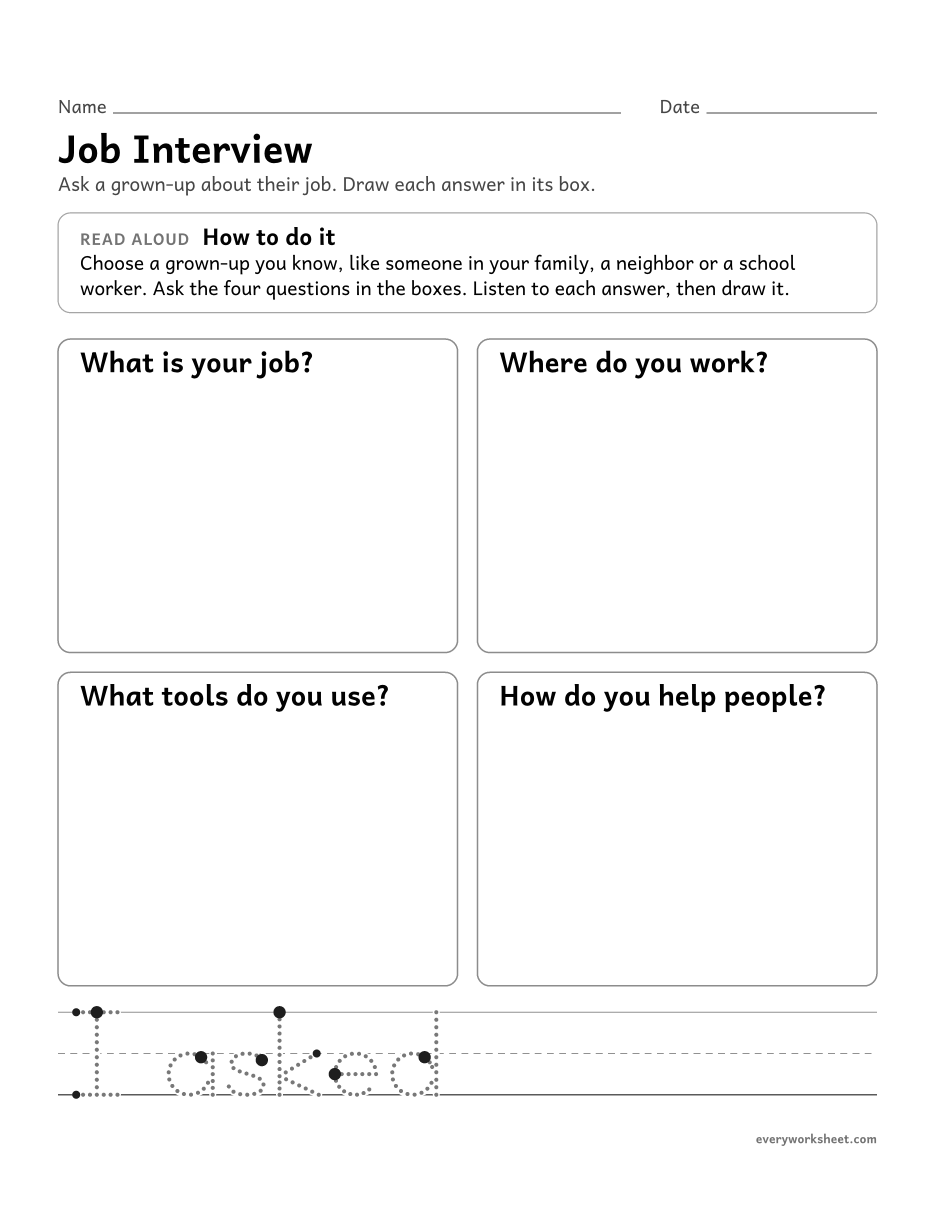
Job Interview: ask a Grown-Up about their job
Asking a grown-up questions about their job and recording the answers
1 page32 KB
Classroom jobs, dream jobs and a class graph
 View larger
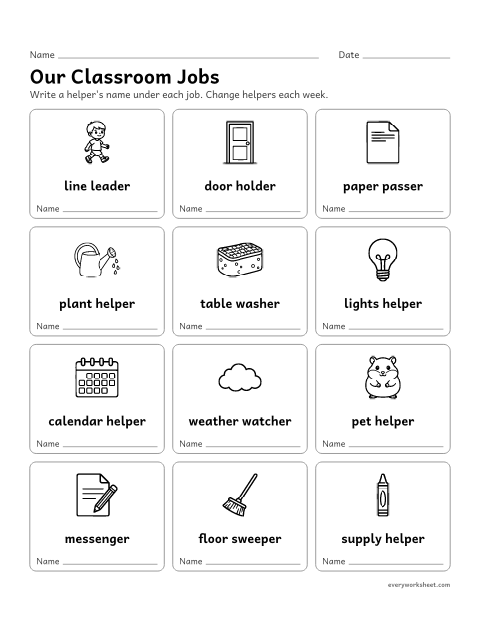
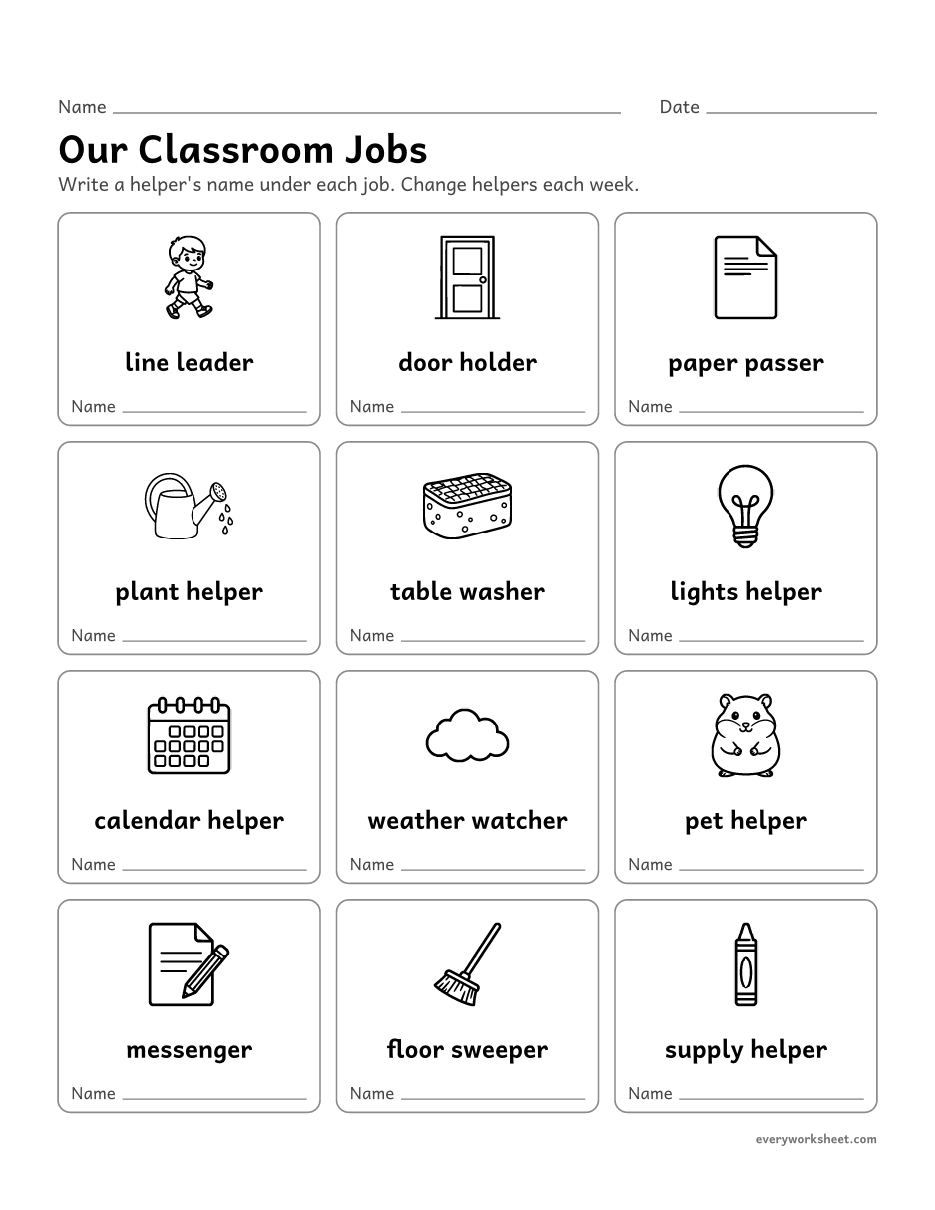
Classroom jobs chart
Taking on classroom jobs to help the class community
1 page162 KB
 View larger
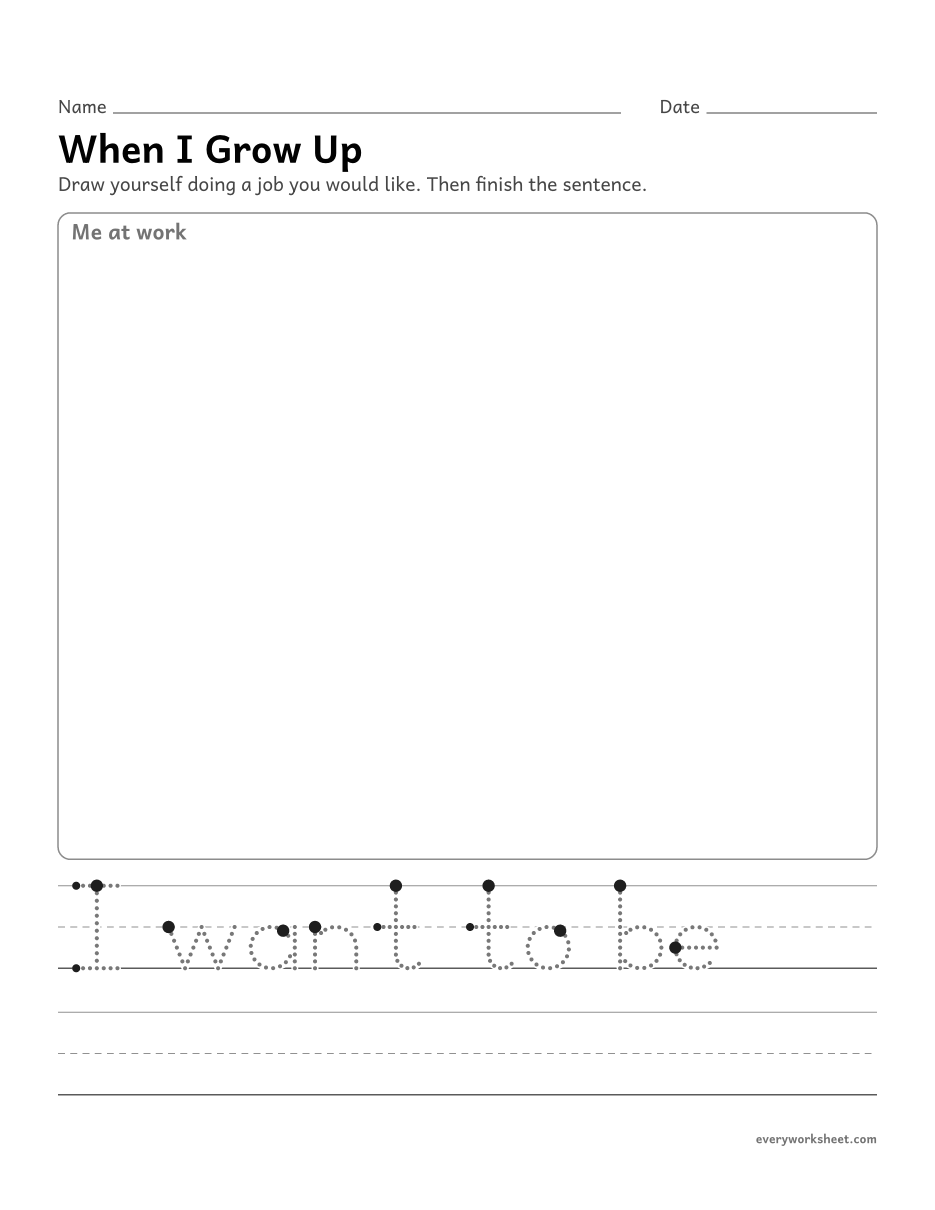
When I grow up writing page
Drawing and writing about a job they would like
1 page27 KB
 View larger
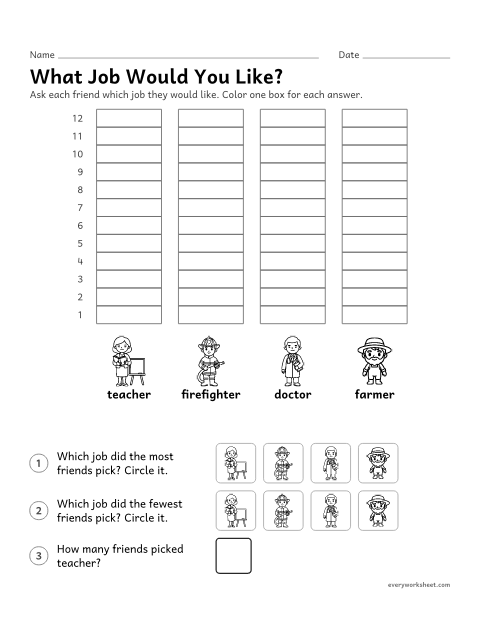
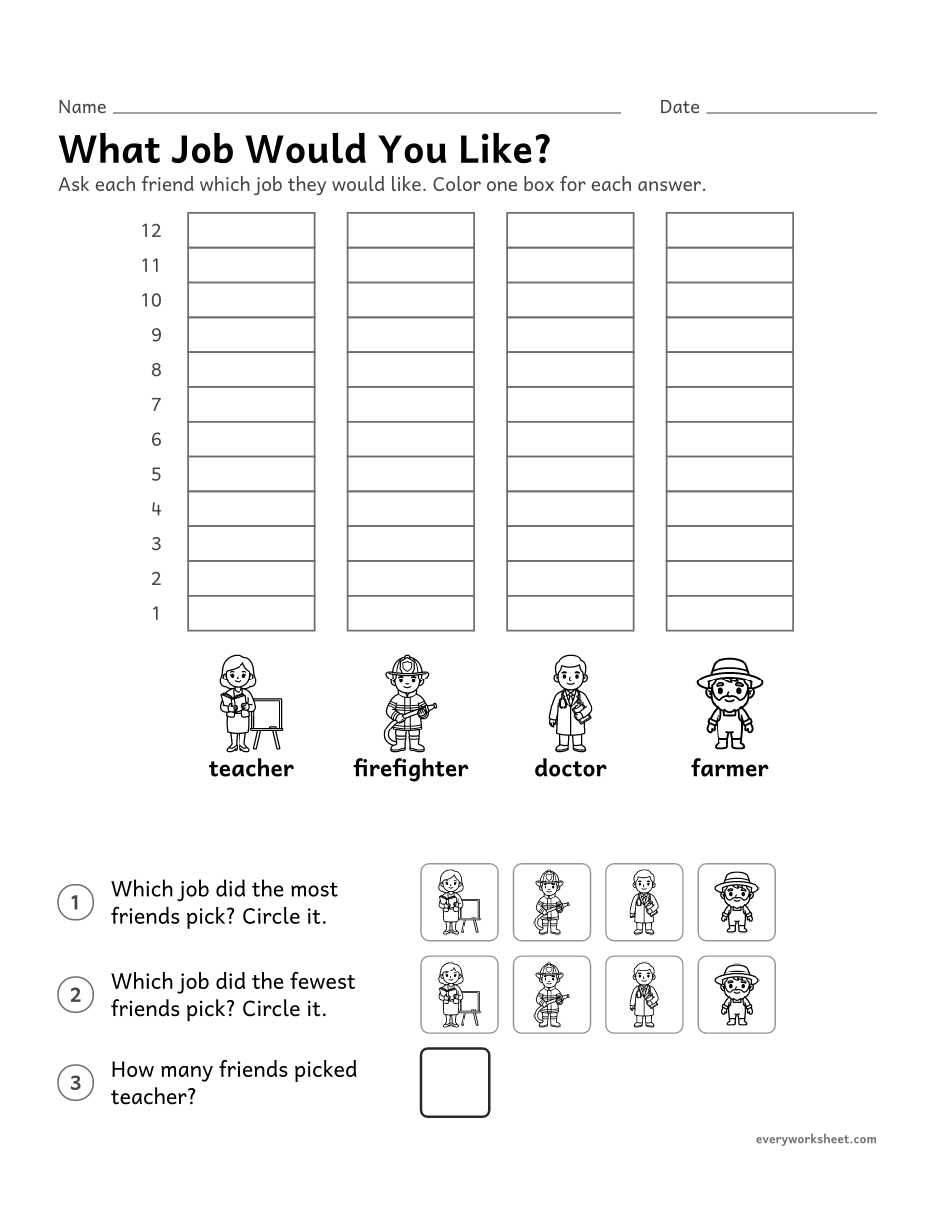
Class Graph: what job would you Like?
Making and reading a class picture graph about jobs
1 page229 KB
Print at 100% (actual size) for the cleanest tracing lines.
About these jobs people do worksheets
Grown-ups go to work every day, and kindergartners are curious about what they do there. These jobs worksheets help children name jobs, tell what each worker does and which tools they use, and understand the big idea behind work: people work to earn money for the things their families need, and their work helps other people.
Begin with the Jobs People Do chart. Then sort tools by the worker who uses them, with a pencil page and a cut and paste page that use the same pictures. The story about Ms. Rosa the baker shows how a job earns money for food, clothes and a home, and how some money is saved. Job riddles, a job interview to do with a grown-up, a When I Grow Up page and a class graph round out the set.
Children have jobs too. The classroom jobs chart gives every child a way to help the class community each week. When you are ready to go further, the goods and services worksheets show the two kinds of work people do: making goods and giving services.
Standards
C3 D2.Eco.6.K-2Explain how people earn income.C3 D2.Eco.3.K-2Describe the skills and knowledge required to produce certain goods and services.C3 D2.Civ.2.K-2Explain how all people, not just official leaders, play important roles in a community.C3 D2.Civ.6.K-2Describe how communities work to accomplish common tasks, establish responsibilities, and fulfill roles of authority.CCSS.ELA-LITERACY.L.K.5.ASort common objects into categories (e.g., shapes, foods) to gain a sense of the concepts the categories represent.CCSS.ELA-LITERACY.SL.K.2Confirm understanding of a text read aloud or information presented orally or through other media by asking and answering questions about key details and requesting clarification if something is not understood.CCSS.ELA-LITERACY.SL.K.3Ask and answer questions in order to seek help, get information, or clarify something that is not understood.CCSS.ELA-LITERACY.W.K.2Use a combination of drawing, dictating, and writing to compose informative/explanatory texts in which they name what they are writing about and supply some information about the topic.CCSS.MATH.CONTENT.K.MD.B.3Classify objects into given categories; count the numbers of objects in each category and sort the categories by count.
How to use them
- Read the Jobs People Do chart together. Ask children which of these workers they have seen in your town.
- Use the classroom jobs chart all year. Write names in pencil so you can change helpers each week.
- Do the work tools sort with a pencil first, then use the cut and paste page as a center later in the week.
- Read Ms. Rosa's story aloud and talk about where the money she earns goes.
- Send the job interview home. Children ask a grown-up four questions and draw the answers, then share them with the class.
- Make the class graph together. Each child says which job they would like, then everyone counts and compares the columns.
Teaching tips
- Keep it concrete: people work, they earn money, and they use money to buy food, clothes and a home.
- Connect jobs to things children see: the cafeteria worker, the bus driver, the person at the store checkout.
- On the class graph, color from the bottom box up. If two jobs tie for most, children can circle both.
- Children with a grown-up who is not working outside the home can interview a neighbor, a relative or a school worker.
- Avoid saying some jobs are for boys and some are for girls. The pictures show both.
Questions teachers and parents ask
Why do people work? How do I explain it to kindergartners?
Keep it simple: people work to earn money, and they use the money to pay for food, clothes and a home, and to save. Many people also work because they like helping others. The story about Ms. Rosa the baker shows all of this in a few sentences.
What classroom jobs work well in kindergarten?
Line leader, door holder, paper passer, plant helper, table washer, lights helper, calendar helper, weather watcher, pet helper, messenger, floor sweeper and supply helper. The classroom jobs chart has all twelve with a picture and a line for a name.
How are jobs connected to goods and services?
Some workers make goods, like a baker who makes bread or a farmer who grows apples. Others give services, like a hair stylist who cuts hair or a bus driver who gives rides. The goods and services worksheets build on this page.
Do these worksheets have answer keys?
Yes. The work tools sort, the cut and paste page, the job riddles and the story questions each have an answer key on page 2. The charts, the interview, the class graph and the drawing page do not need one.