 View all 2 pages
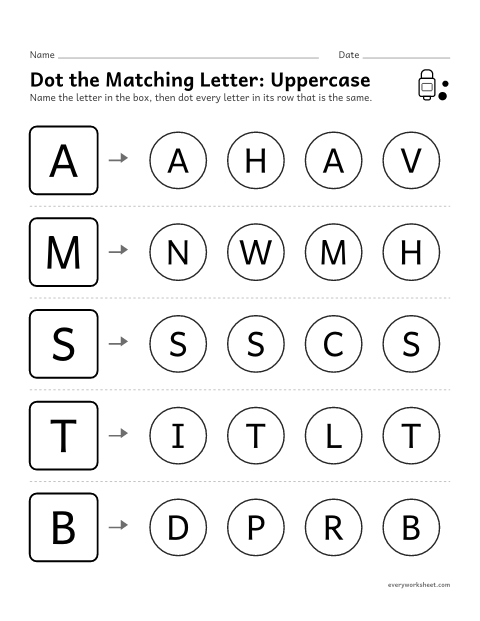
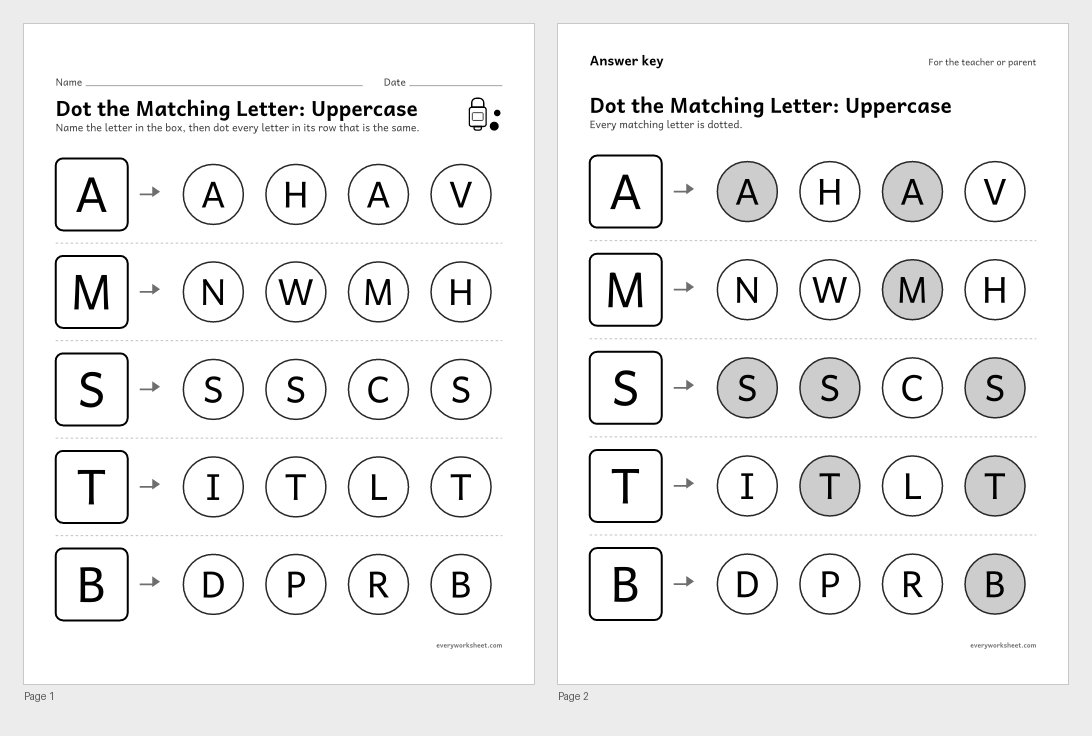
Dot the matching Letter: uppercase
Finding the same uppercase letter among other letters
Answer key on page 2
2 pages31 KB
Big, simple pages for spotting letters: dot the matching letter, color a letter path, tell letters from numbers, match the same letter and color by letter.
View all 2 pagesFinding the same uppercase letter among other letters
Answer key on page 2
2 pages31 KB
 View all 2 pages
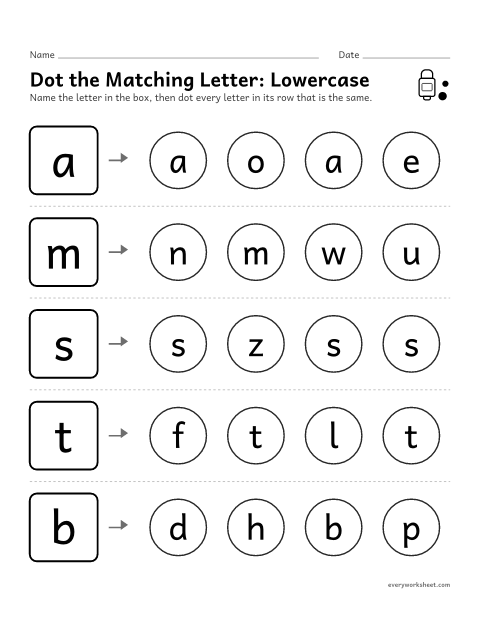
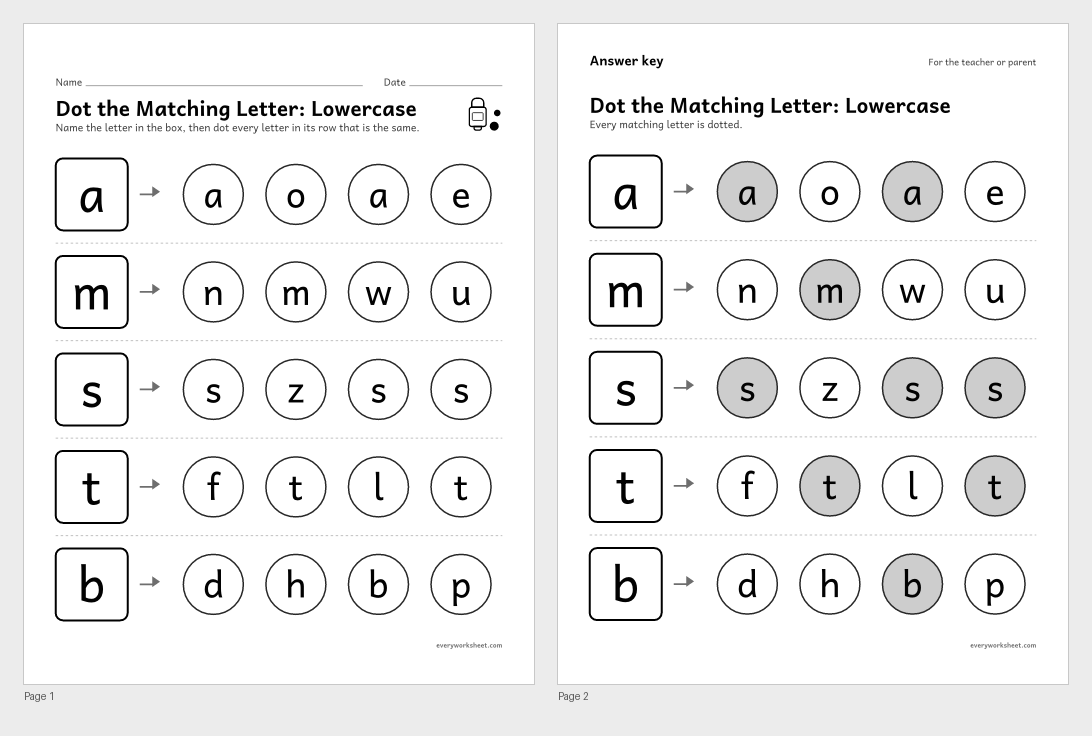
Finding the same lowercase letter among other letters
Answer key on page 2
2 pages29 KB
 View all 2 pages
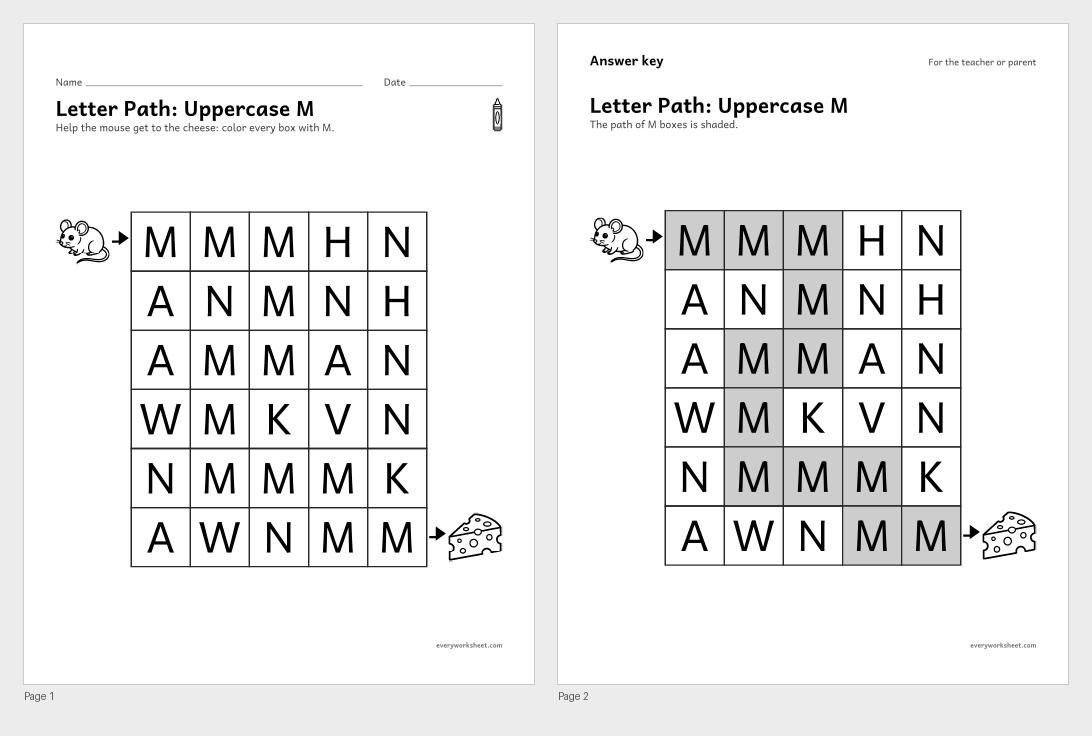
Finding the letter M to make a path
Answer key on page 2
2 pages109 KB
 View all 2 pages
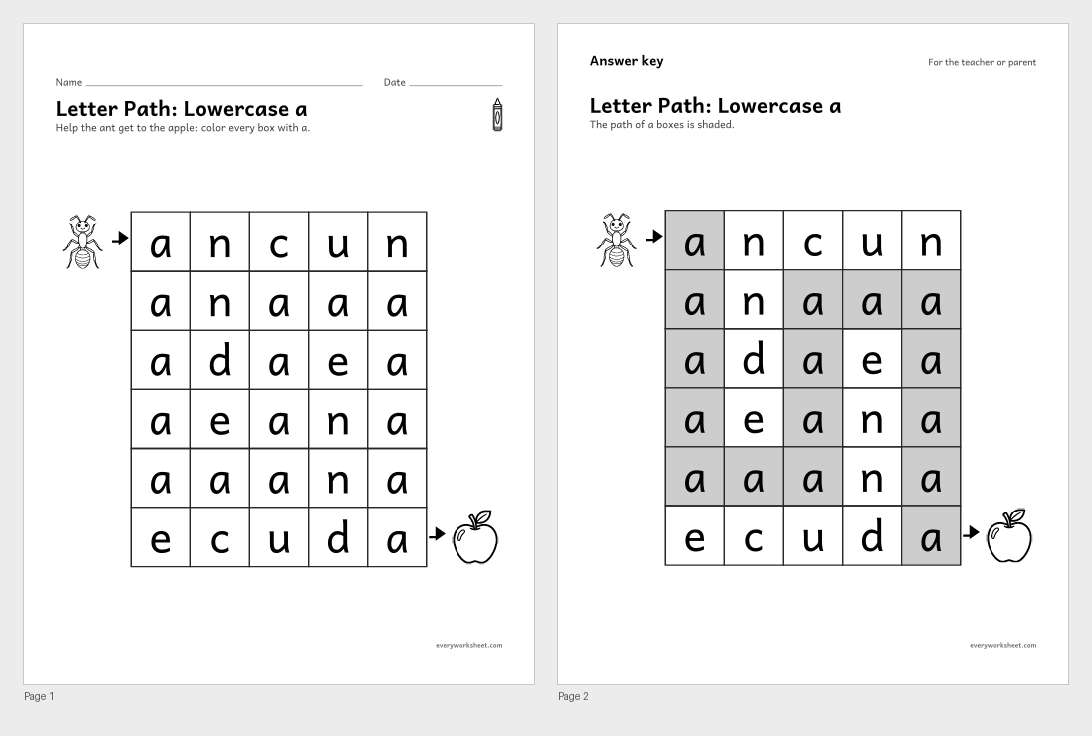
Finding the letter a to make a path
Answer key on page 2
2 pages85 KB
 View all 2 pages
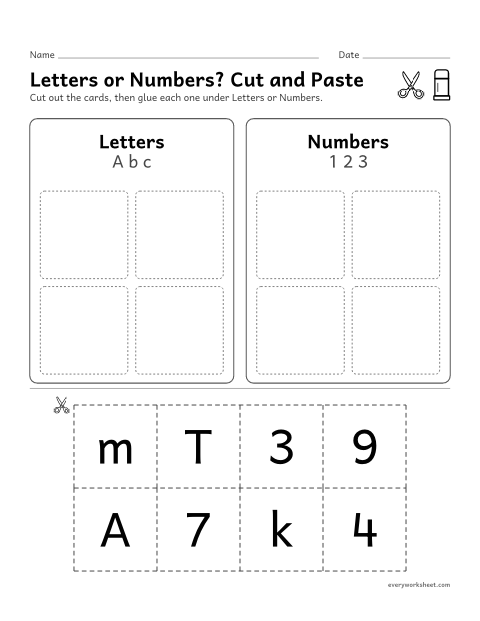
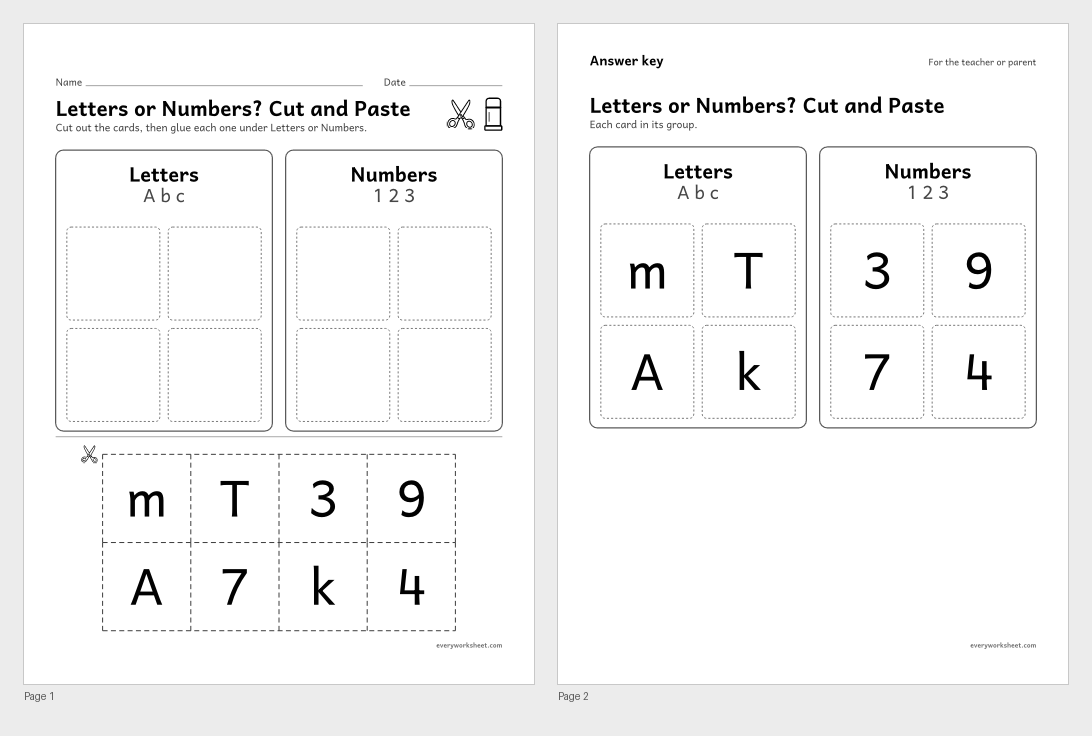
Telling letters apart from numbers
Answer key on page 2
2 pages88 KB
 View all 2 pages
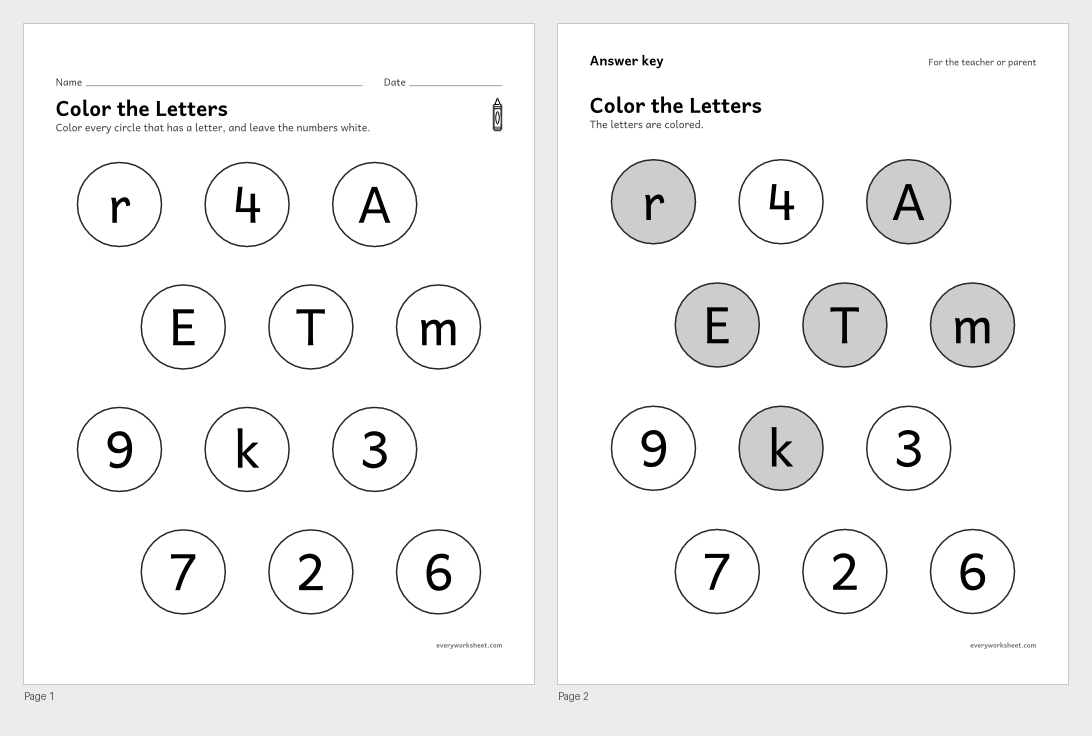
Telling letters apart from numbers
Answer key on page 2
2 pages32 KB
 View all 2 pages
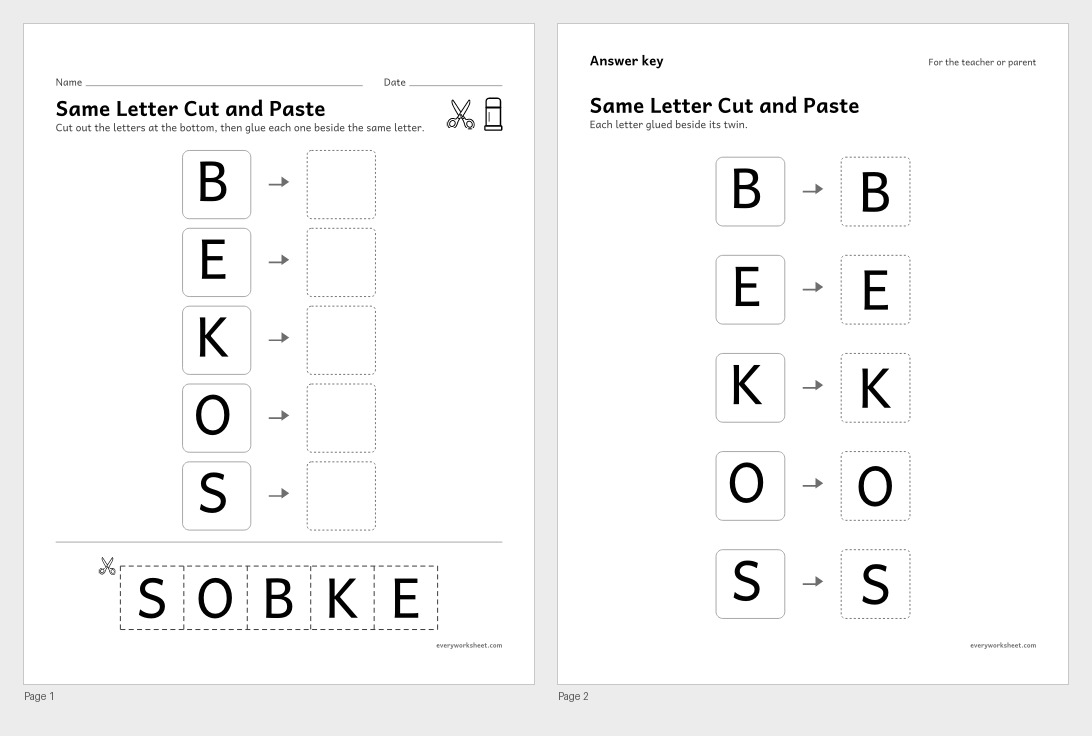
Matching letters that are the same
Answer key on page 2
2 pages84 KB
 View all 2 pages
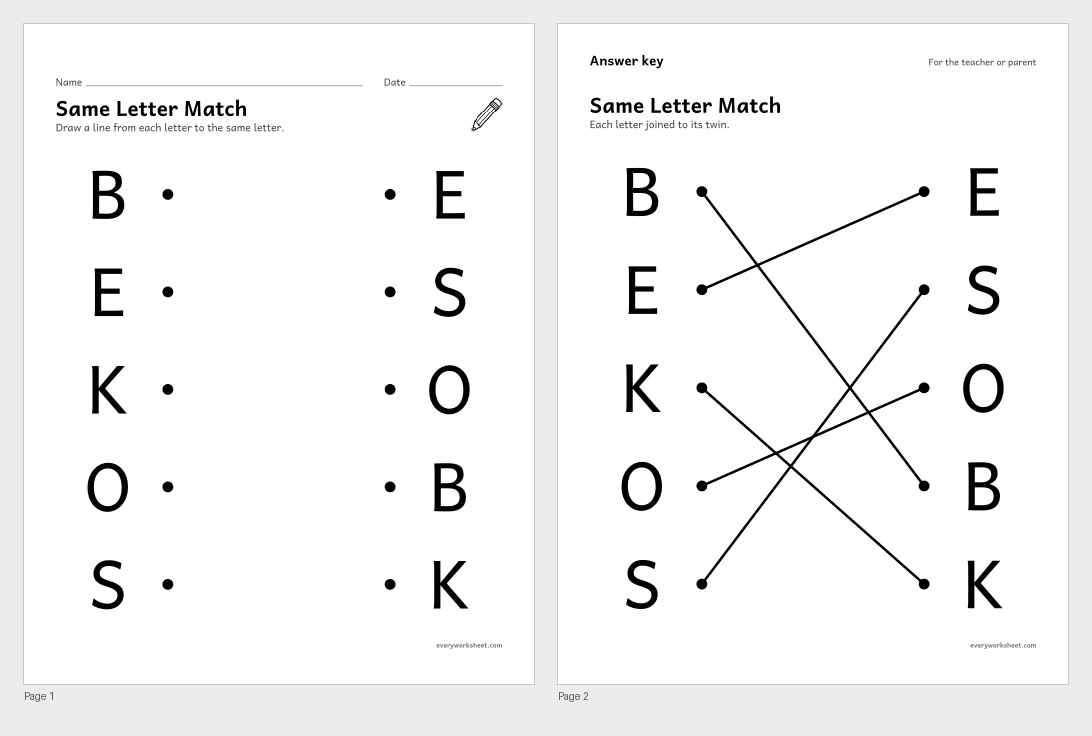
Matching letters that are the same
Answer key on page 2
2 pages36 KB
 View larger
Print at 100% (actual size) for the cleanest tracing lines.
These letter recognition worksheets for preschool help children notice what makes each letter look the way it does. Every page has one job and a few big letters, so a three- or four-year-old can finish it with a dot marker or a crayon and feel proud of it.
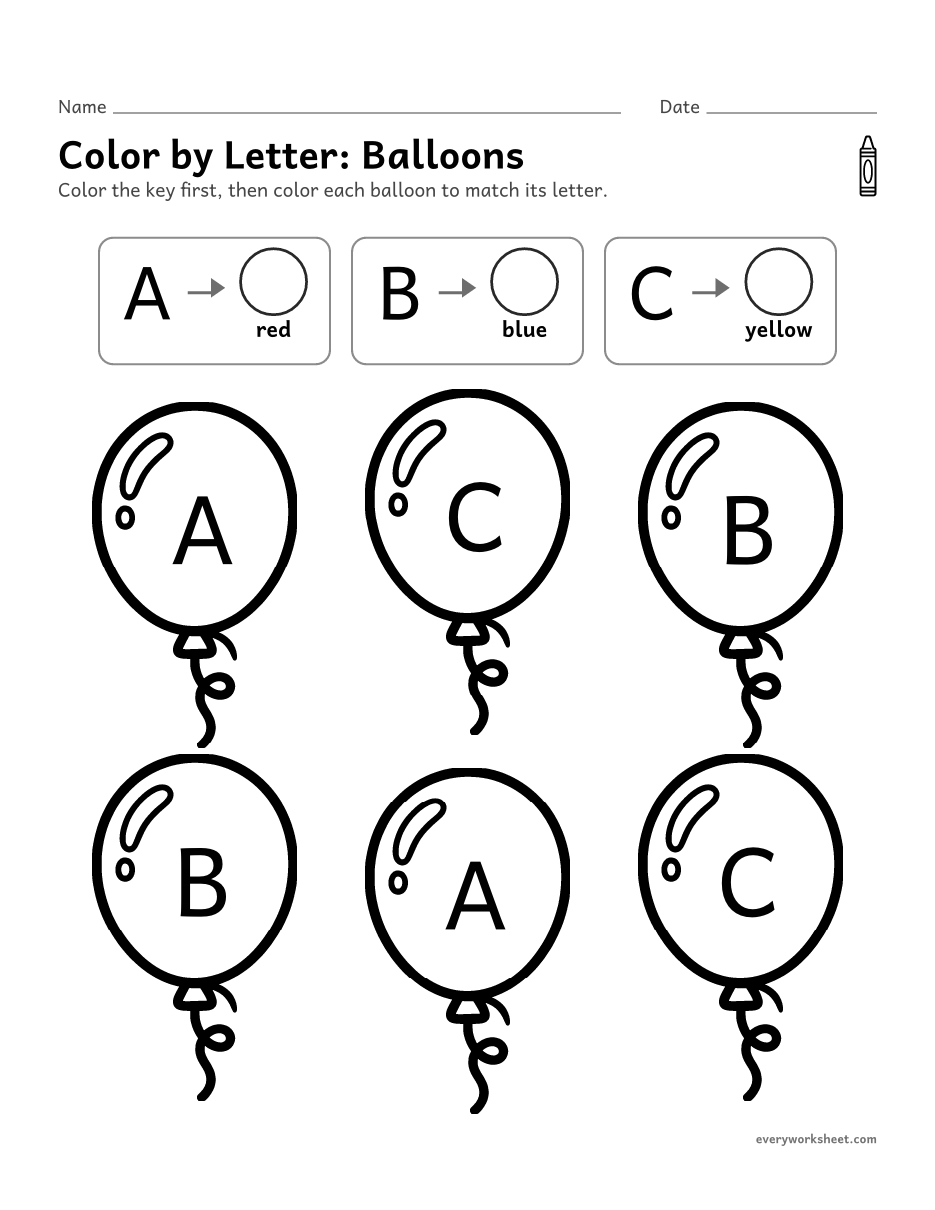
Children dot the letters that match the one in the box, color a path of the same letter to help a mouse reach its cheese, and color the balloons by their letters. Two pages ask a bigger question first: is this a letter or a number? One is cut and paste and the other is color only, so you can pick the one that suits your child.
The same-letter match comes both ways too: cut out the letters and glue each beside its twin, or draw a line to match. Pages with one right answer have an answer key on page 2.
ELOF P-LIT 3Child identifies letters of the alphabet and produces correct sounds associated with letters.ELOF P-LIT 2Child demonstrates an understanding of how print is used (functions of print) and the rules that govern how print works (conventions of print).ELOF P-PMP 3Child demonstrates increasing control, strength, and coordination of small muscles.Most children recognize some letters by age four, often the ones in their own name, and many know most uppercase letters by the end of preschool. Every child moves at their own pace, so keep it playful.
Uppercase letters are usually easier to tell apart, so many children learn them first. These pages have uppercase and lowercase versions, so you can follow your child.
Yes. Every page with one right answer has an answer key on page 2. The color by letter page is a coloring page, so it has no key.