 View larger
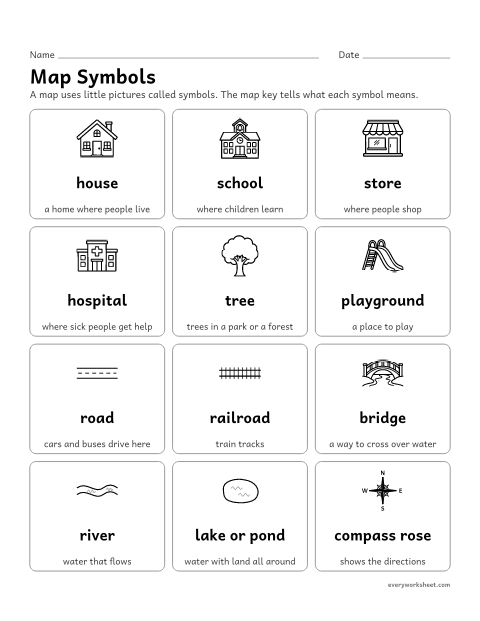
Map symbols poster
Naming common map symbols and what each one stands for
1 page134 KB
Map symbols, map keys, bird's-eye view, room maps, a make-your-own neighborhood map and a simple compass rose, with answer keys.
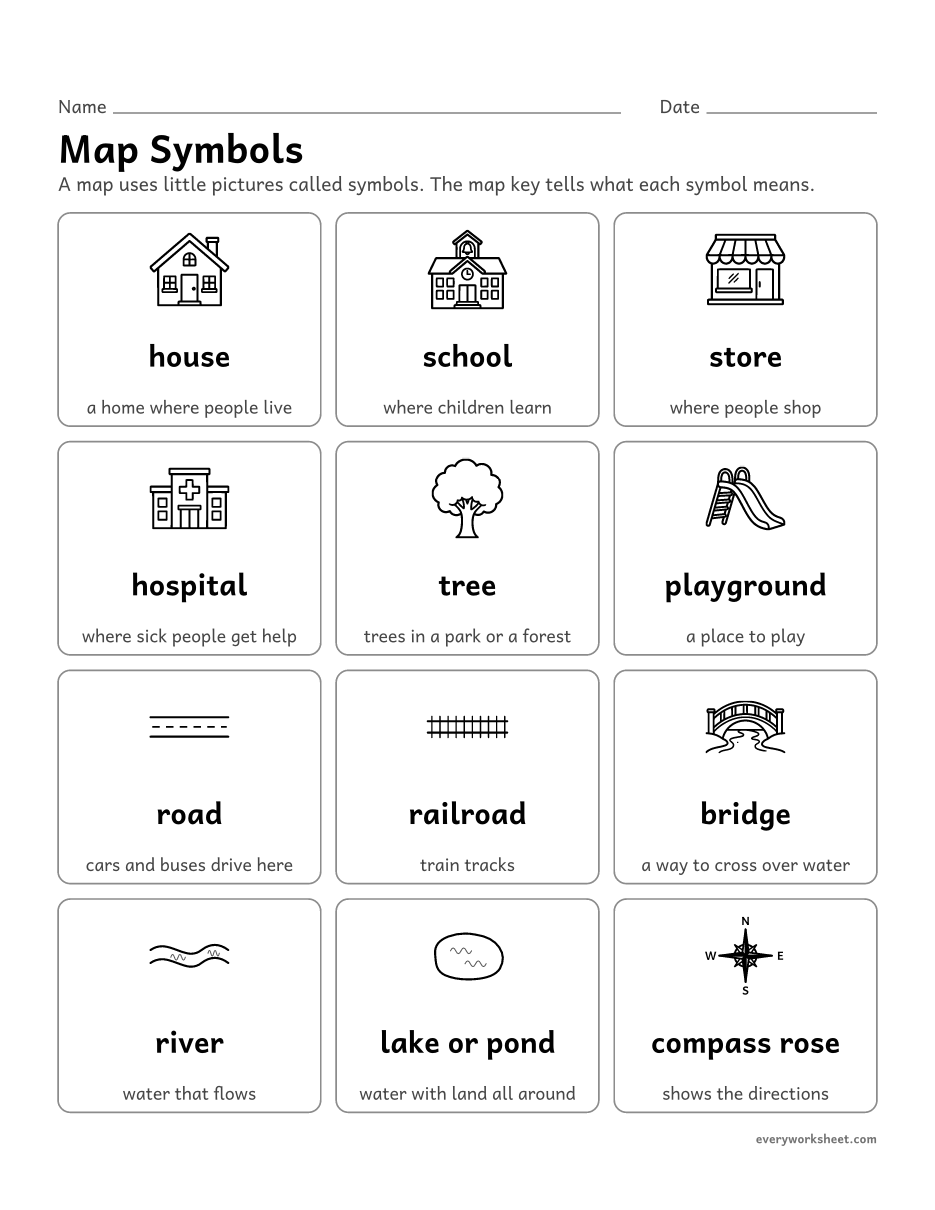
View largerNaming common map symbols and what each one stands for
1 page134 KB
 View all 2 pages
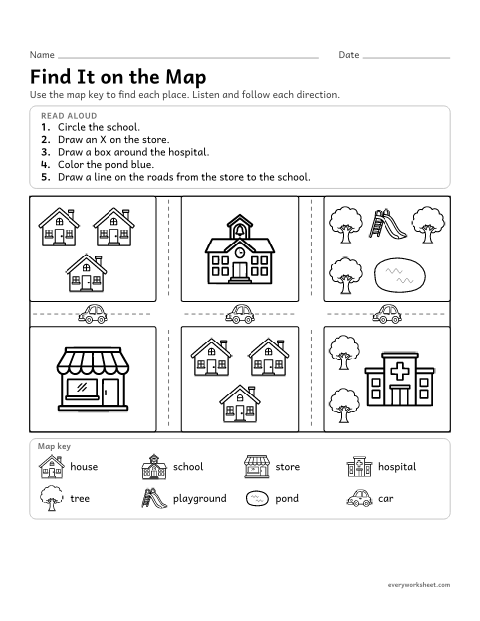
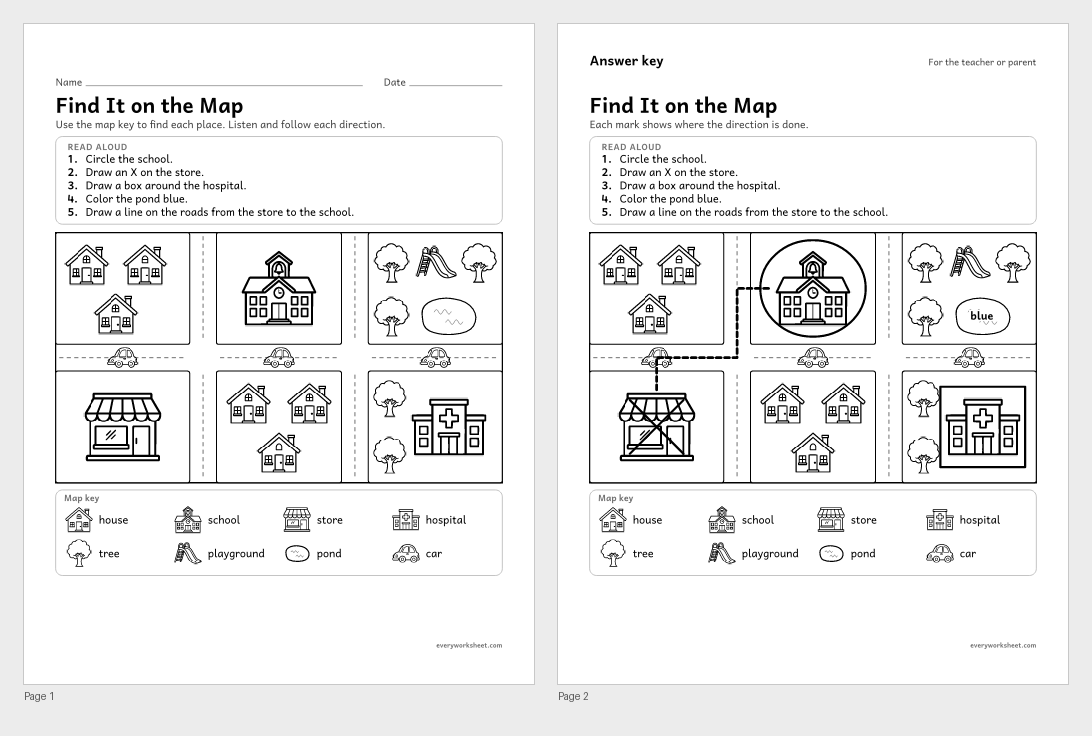
Using a map key to find places on a neighborhood map and following oral directions
Answer key on page 2
2 pages428 KB
 View all 2 pages
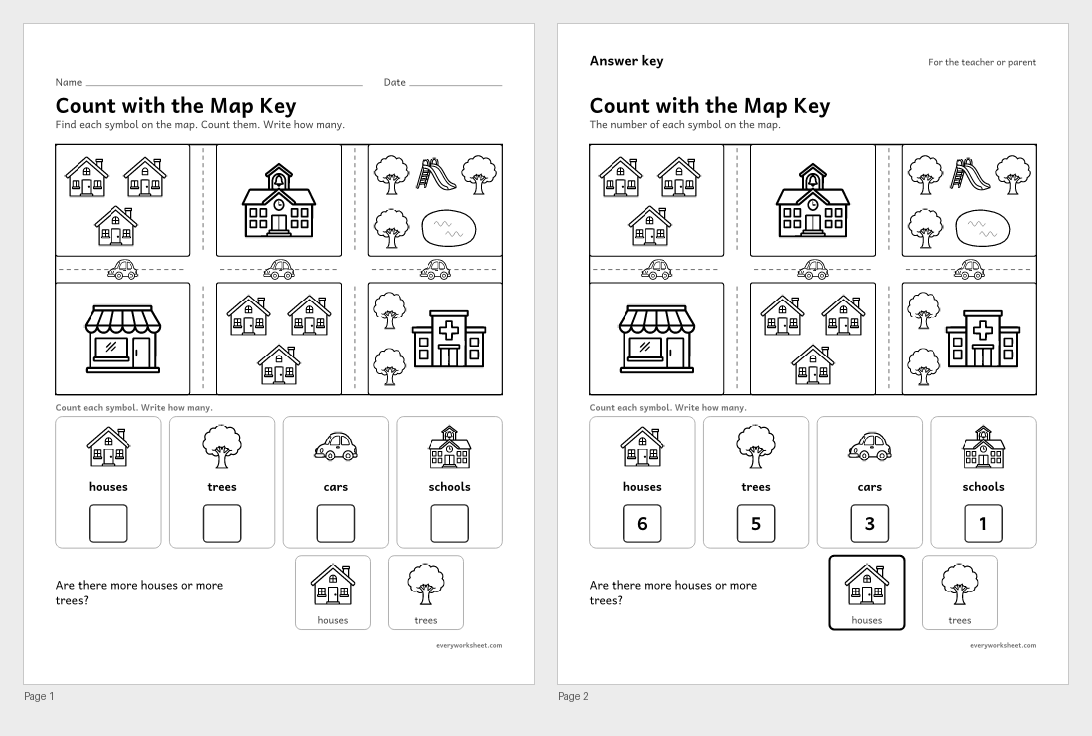
Reading map symbols and counting them (up to 10)
Answer key on page 2
2 pages362 KB
 View all 2 pages
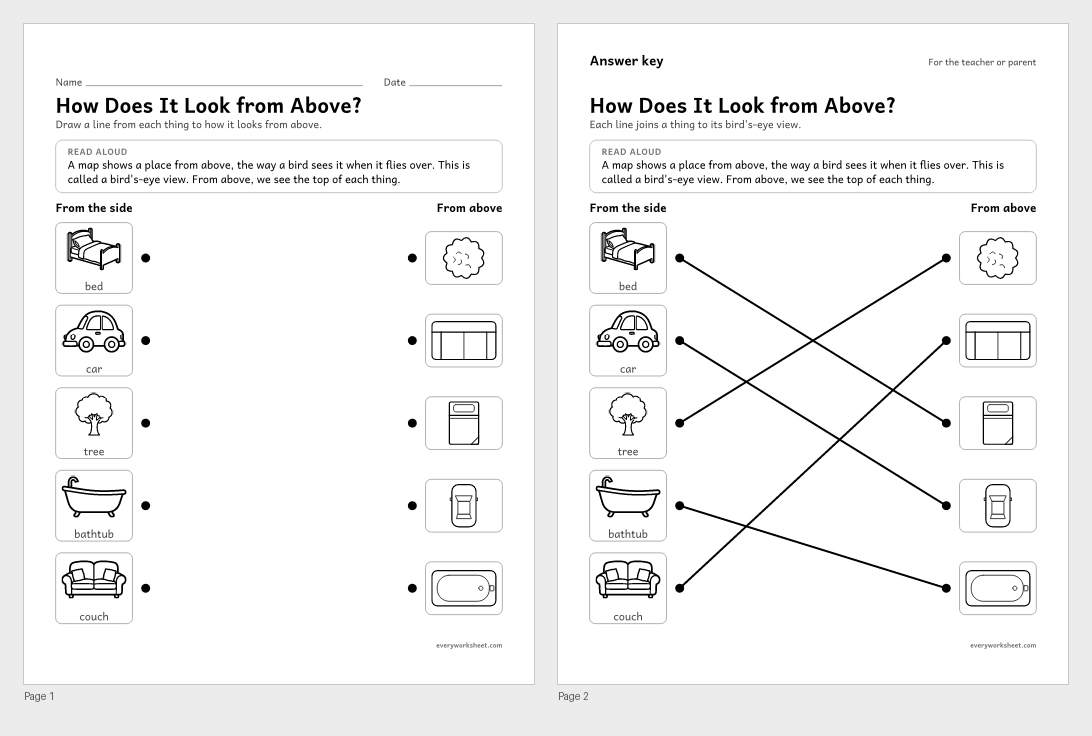
Matching objects to how they look from above (bird's-eye view), the view used on maps
Answer key on page 2
2 pages158 KB
 View all 2 pages
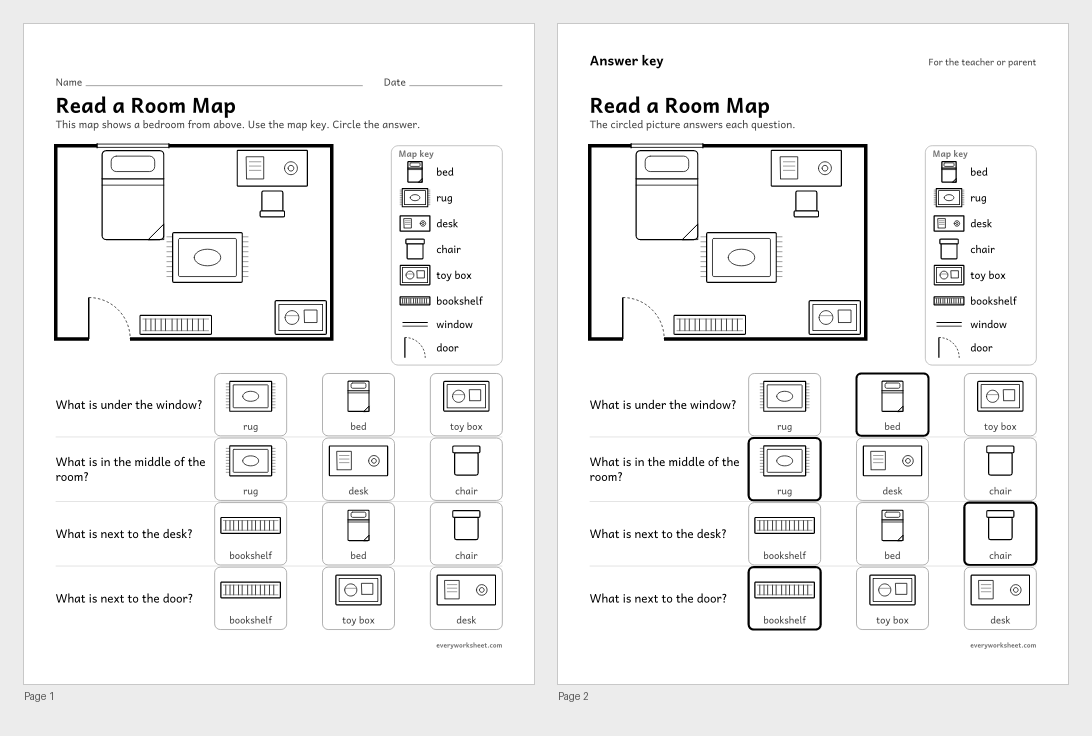
Reading a simple room map with a map key and position words (under, middle, next to)
Answer key on page 2
2 pages55 KB
 View all 2 pages
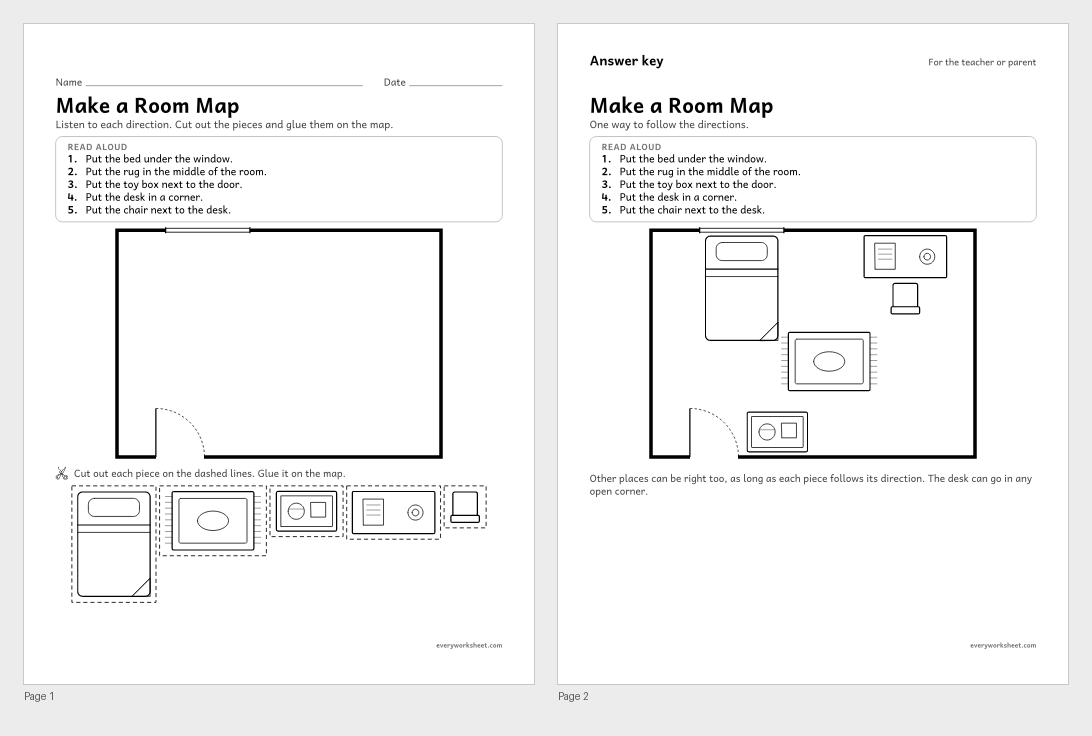
Building a room map by following position words (under, middle, next to, corner)
Answer key on page 2
2 pages67 KB
 View all 2 pages
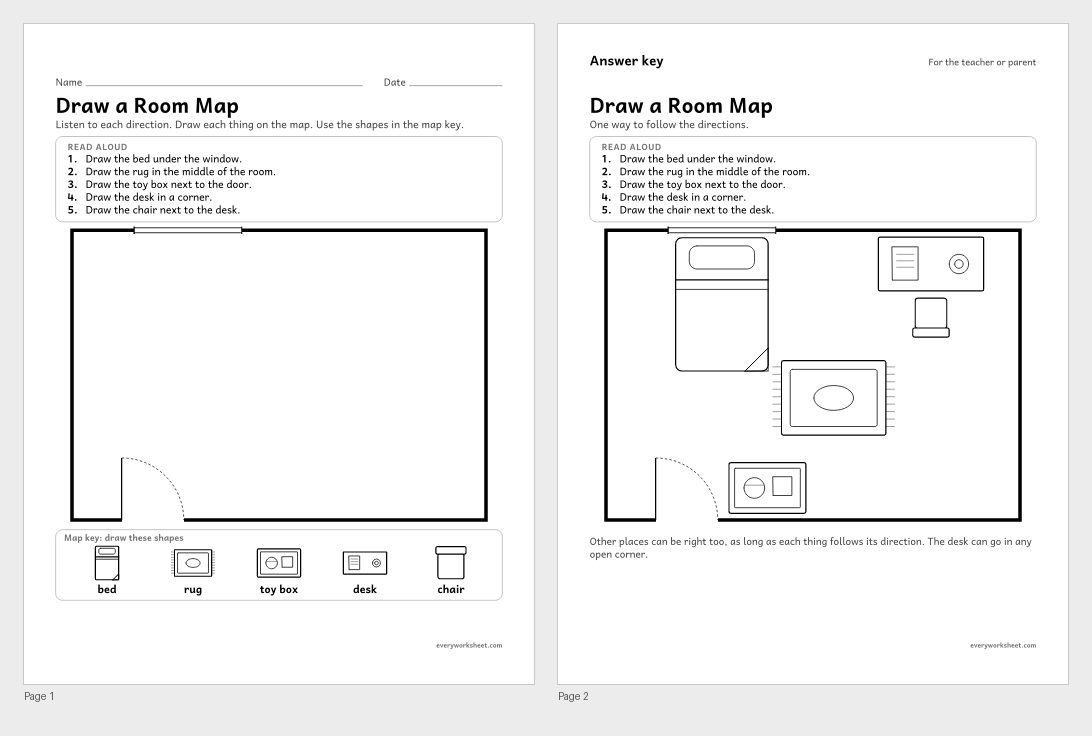
Drawing a room map by following position words (under, middle, next to, corner)
Answer key on page 2
2 pages40 KB
 View larger
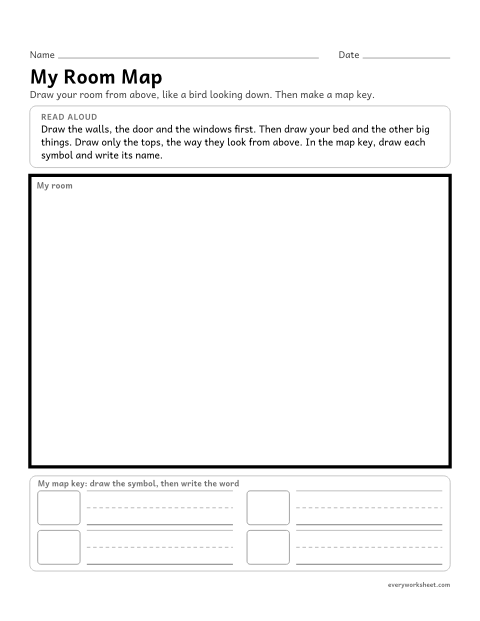
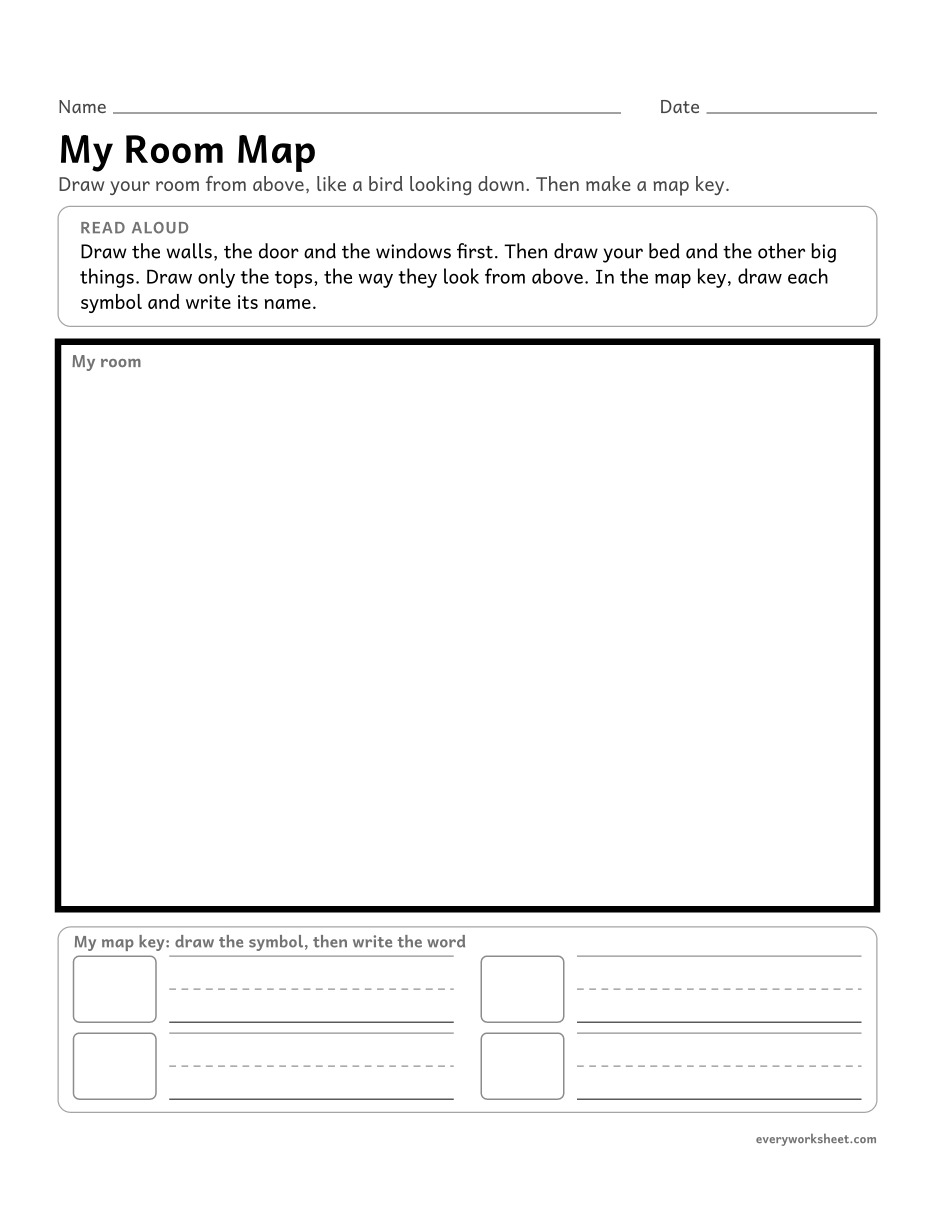
Drawing a map of a familiar place (my room) with a simple map key
1 page28 KB
 View larger
 View larger
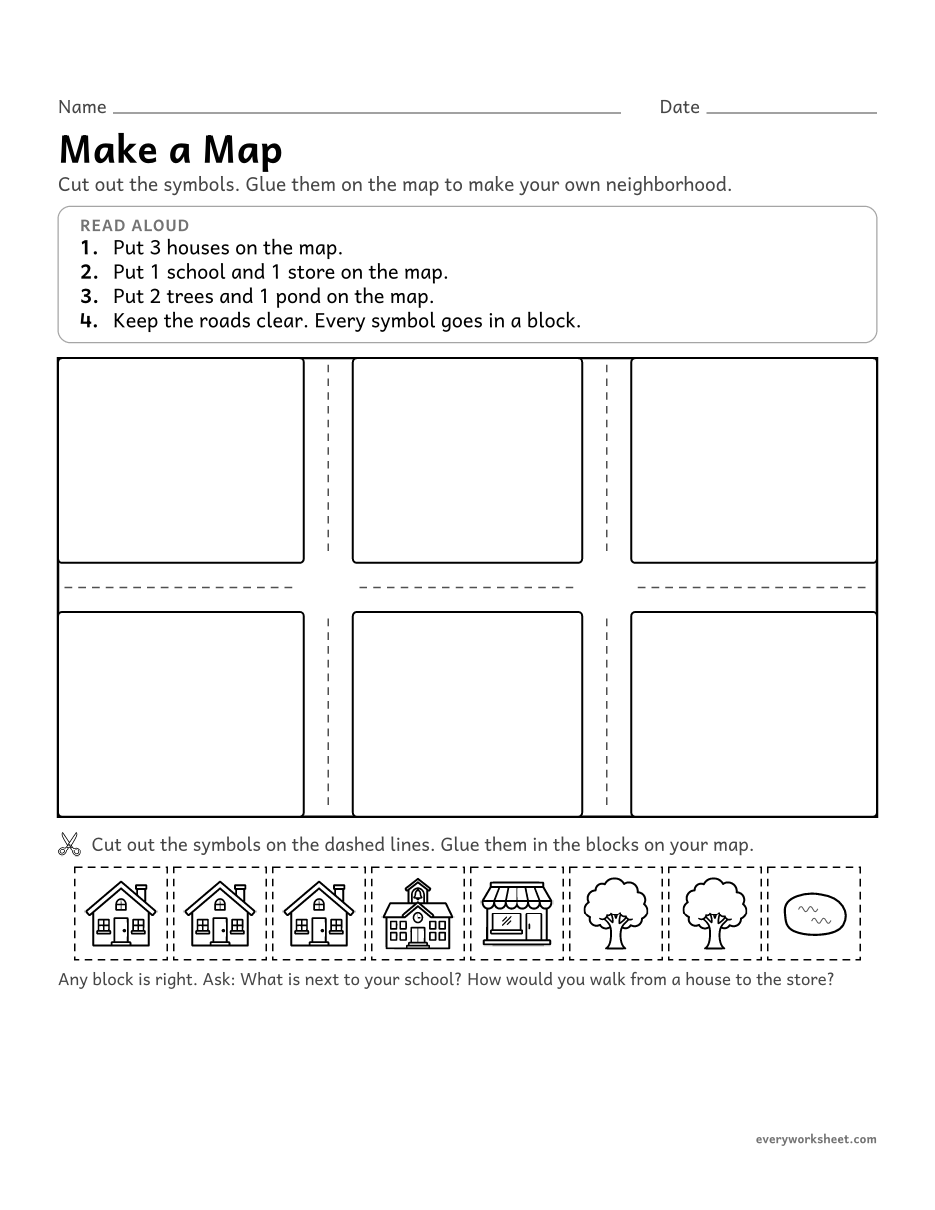
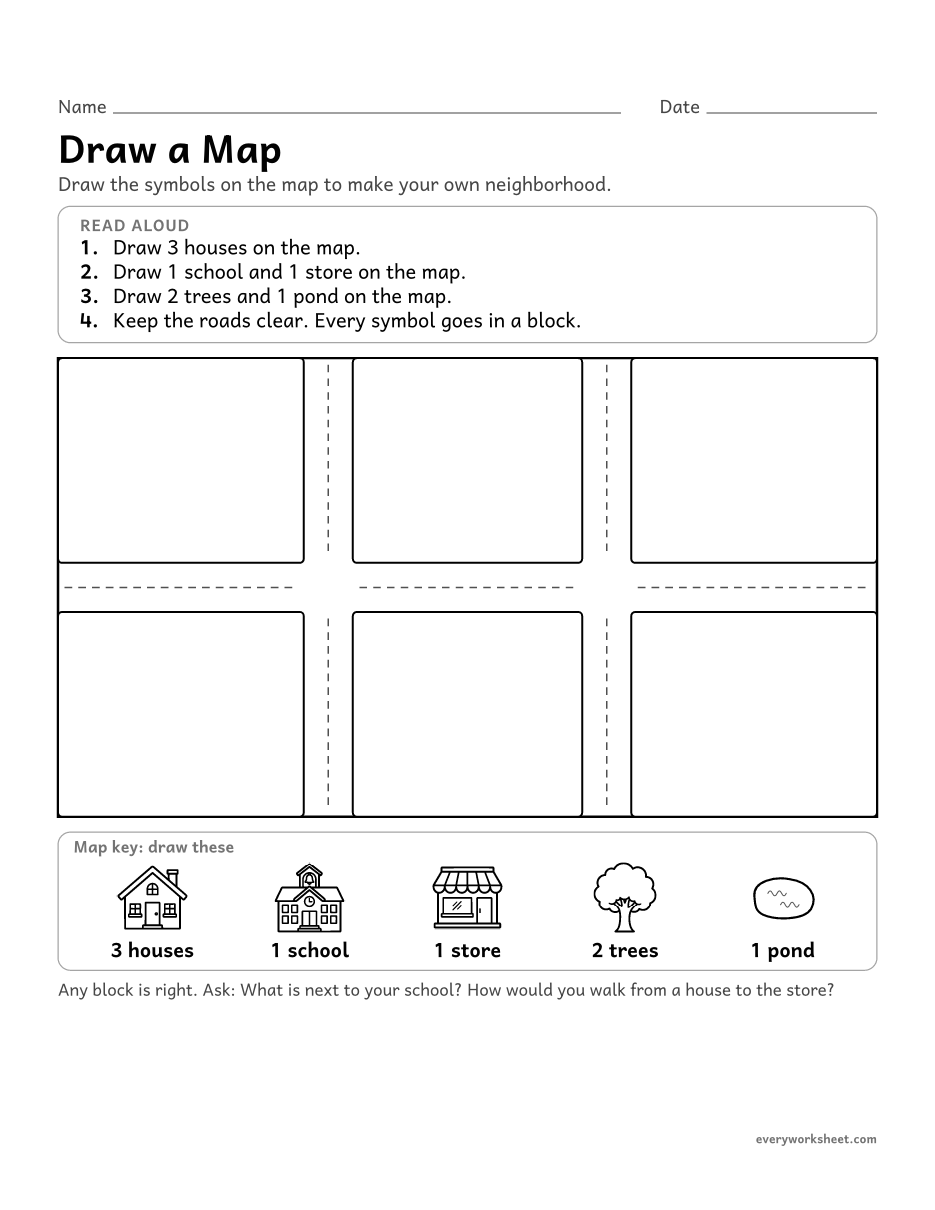
Drawing a neighborhood map with map symbols
1 page77 KB
 View larger
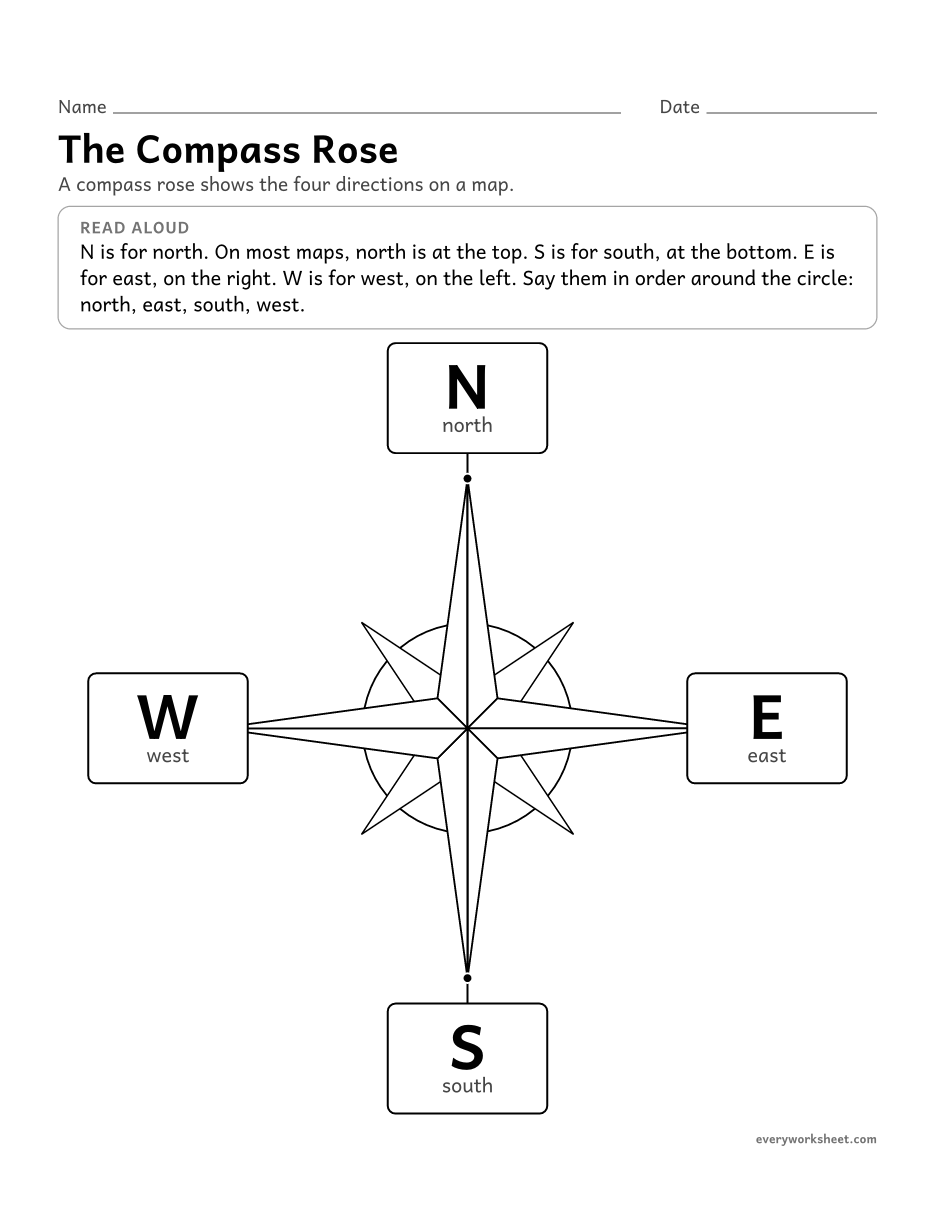
Naming the four directions on a compass rose: north, east, south and west
1 page27 KB
 View all 2 pages
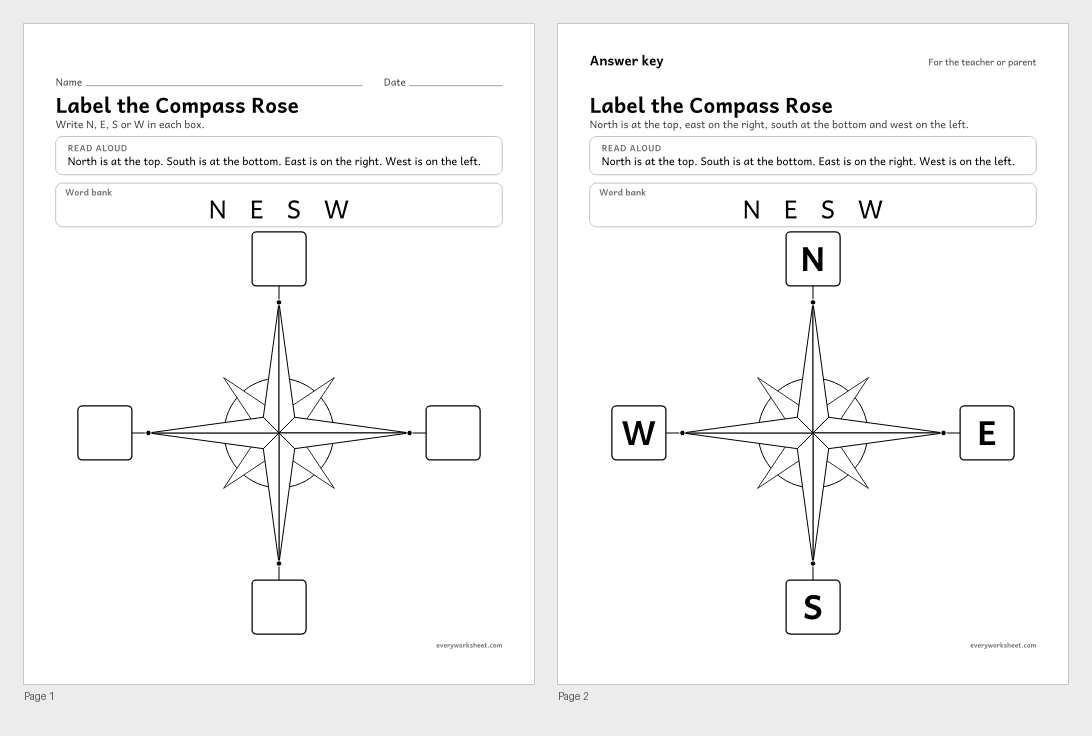
Labeling the four directions on a compass rose
Answer key on page 2
2 pages31 KB
 View all 2 pages
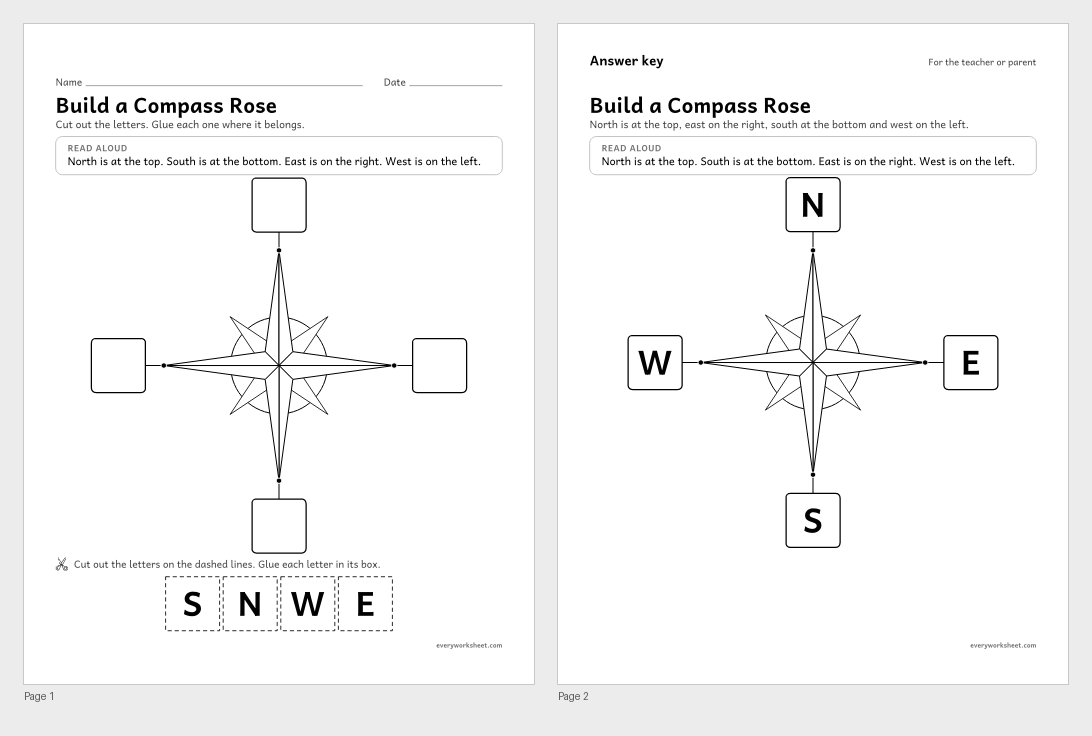
Placing N, E, S and W on a compass rose
Answer key on page 2
2 pages59 KB
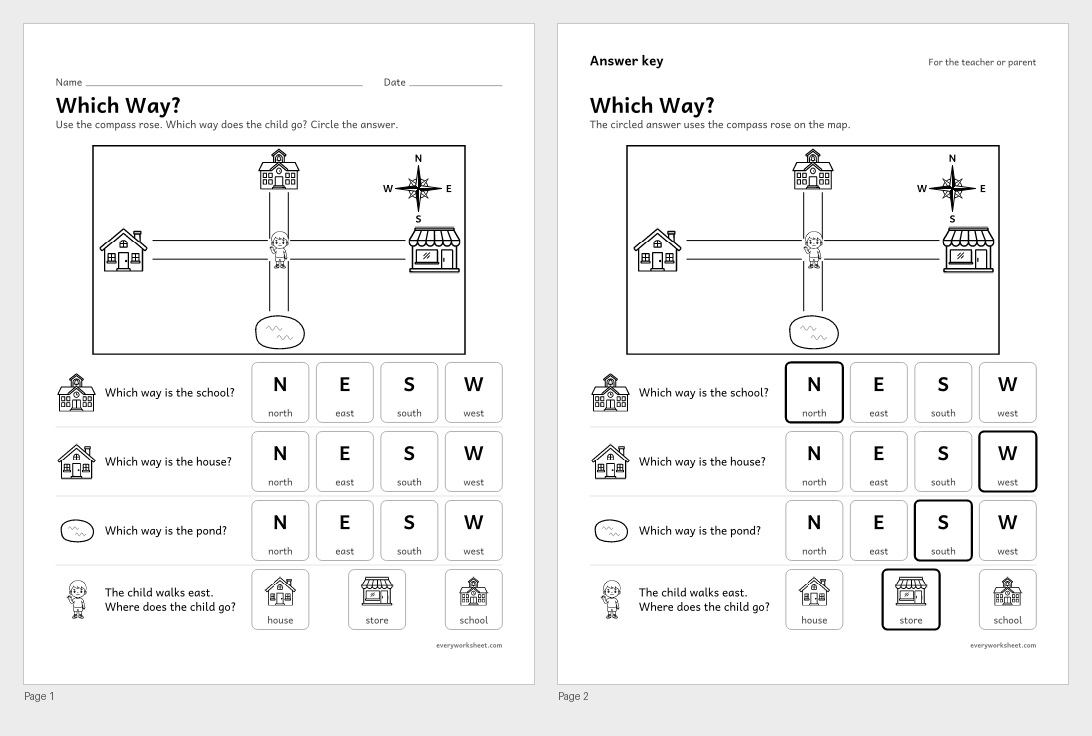 View all 2 pages
Using a compass rose to tell which way a place is: north, south, east or west
Answer key on page 2
2 pages287 KB
Print at 100% (actual size) for the cleanest tracing lines.
A map is a picture of a place seen from above. Kindergarten map skills start with that idea: things look different from above, little pictures called symbols stand for real things, and a map key tells you what each symbol means. These map worksheets for kindergarten build those ideas one step at a time, with big pictures for children who are not reading yet.
Start with the bird's-eye view matching page and the map symbols poster. Then read a bedroom map and a neighborhood map with a map key, and count the symbols. Children make maps too: they build a room map by following words like under, next to and in the middle, add places to an empty street map, and draw a map of their own room.
The compass rose pages keep it simple for kindergarten: north, east, south and west, with north at the top. A poster, a label page and a cut and paste page come first, then a map where children decide which way to go. Every page with one right answer has an answer key on page 2.
C3 D2.Geo.1.K-2Construct maps, graphs, and other representations of familiar places.C3 D2.Geo.2.K-2Use maps, graphs, photographs, and other representations to describe places and the relationships and interactions that shape them.C3 D2.Geo.3.K-2Use maps, globes, and other simple geographic models to identify cultural and environmental characteristics of places.CCSS.MATH.CONTENT.K.G.A.1Describe objects in the environment using names of shapes, and describe the relative positions of these objects using terms such as above, below, beside, in front of, behind, and next to.CCSS.MATH.CONTENT.K.CC.B.5Count to answer "how many?" questions about as many as 20 things arranged in a line, a rectangular array, or a circle, or as many as 10 things in a scattered configuration; given a number from 1–20, count out that many objects.CCSS.MATH.CONTENT.K.CC.C.6Identify whether the number of objects in one group is greater than, less than, or equal to the number of objects in another group, e.g., by using matching and counting strategies.CCSS.ELA-LITERACY.SL.K.2Confirm understanding of a text read aloud or information presented orally or through other media by asking and answering questions about key details and requesting clarification if something is not understood.Kindergarteners learn that a map shows a place from above, that symbols stand for real things, and that a map key explains the symbols. They also use position words like next to and under, make simple maps of familiar places, and begin to learn north, south, east and west.
Keep it to the four main directions. Show that north is at the top of most maps, then south at the bottom, east on the right and west on the left. Label a wall in your room north, and play short games where children point or step in a direction.
A map key is a small box on a map that shows each symbol and tells what it means, for example a little house for a home or a tree for a park. Children look at the key, then find those symbols on the map.
Yes. Every page with one right answer, like the matching, map reading, counting, compass rose and which way pages, has an answer key on page 2. Open pages, such as drawing your own map, do not need one.