 View all 2 pages
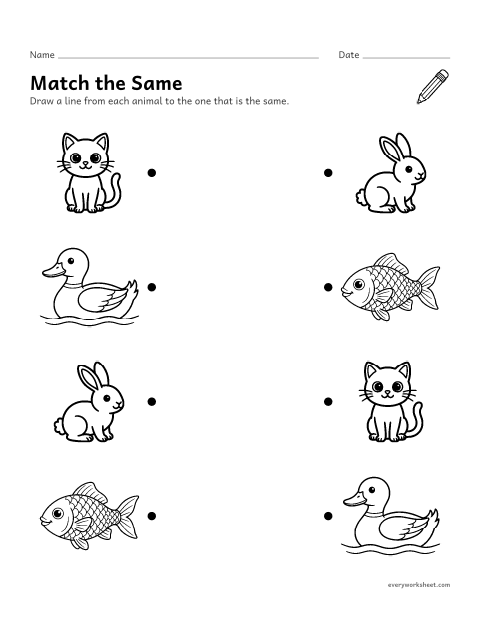
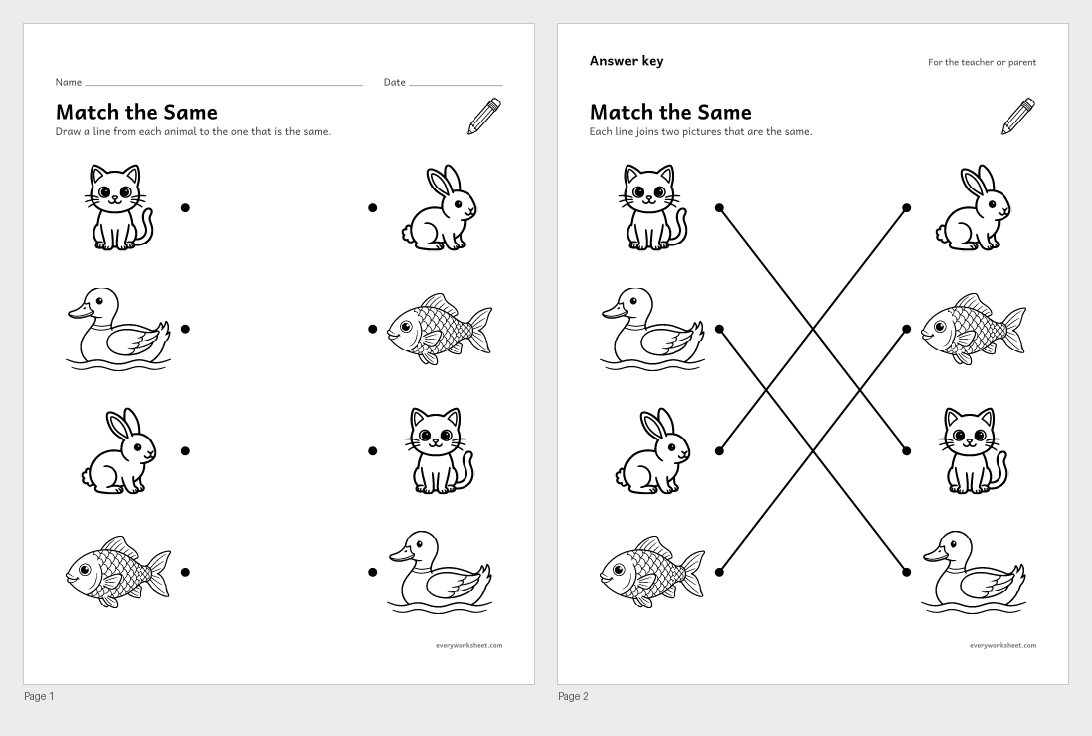
Match the same Pictures: animals
Matching pictures that are the same
Answer key on page 2
2 pages281 KB
Match the same pictures and shapes, find the same and the different one, match halves, things that go together and memory game cards.
View all 2 pagesMatching pictures that are the same
Answer key on page 2
2 pages281 KB
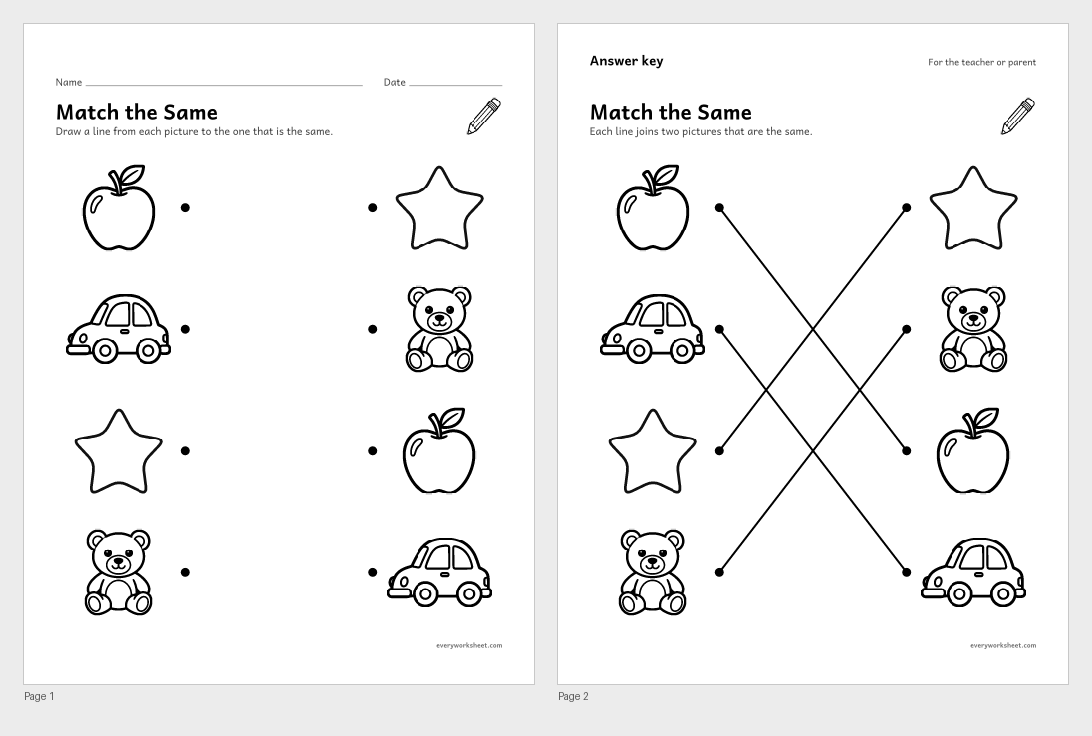 View all 2 pages
Matching pictures that are the same
Answer key on page 2
2 pages204 KB
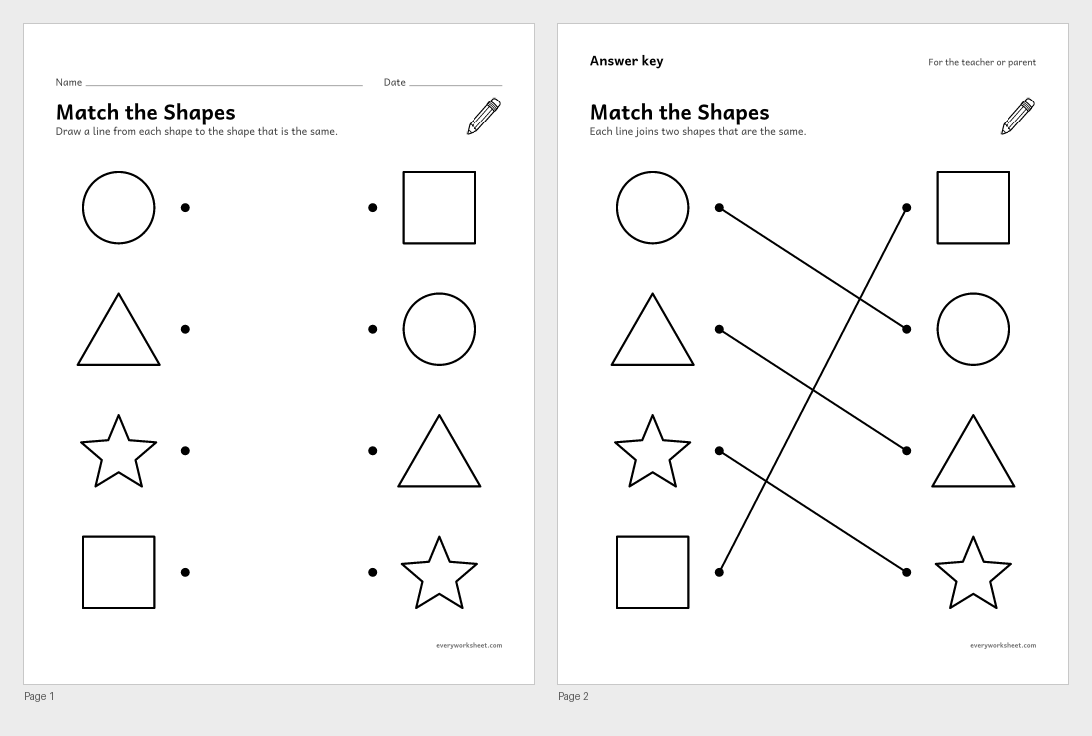 View all 2 pages
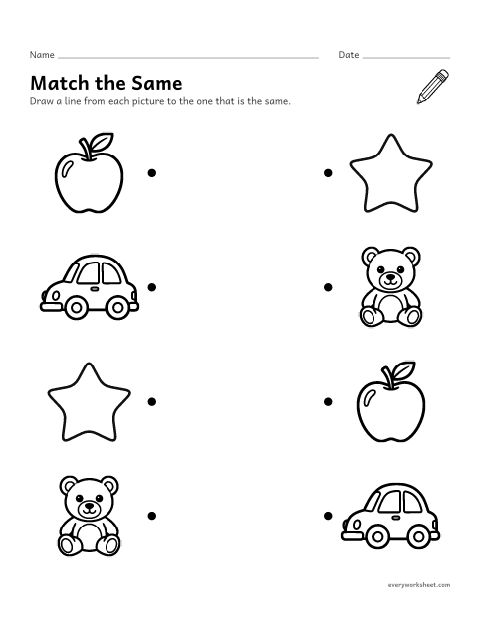
Matching shapes that are the same
Answer key on page 2
2 pages46 KB
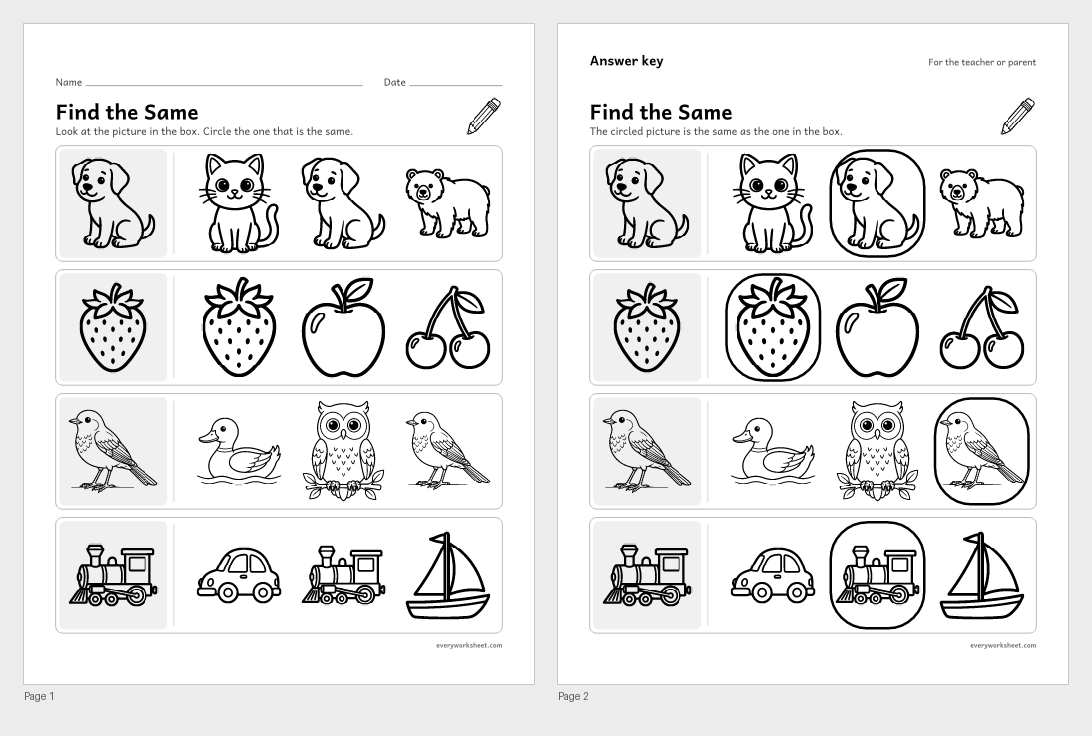 View all 2 pages
Finding the picture that is the same
Answer key on page 2
2 pages556 KB
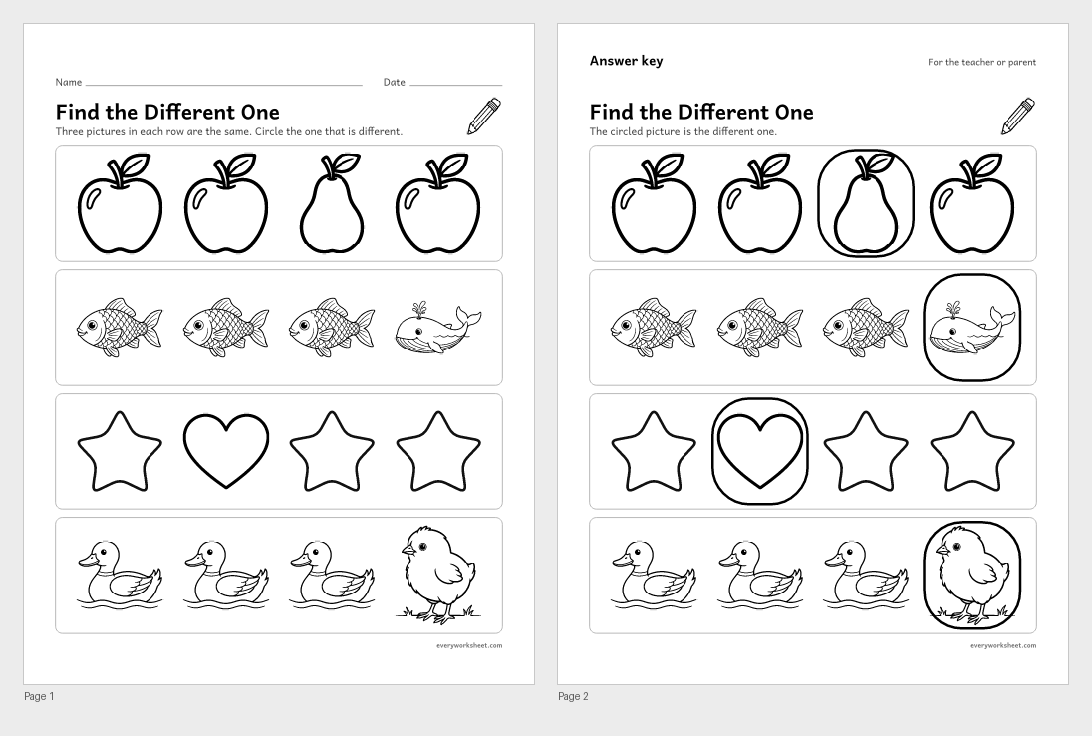 View all 2 pages
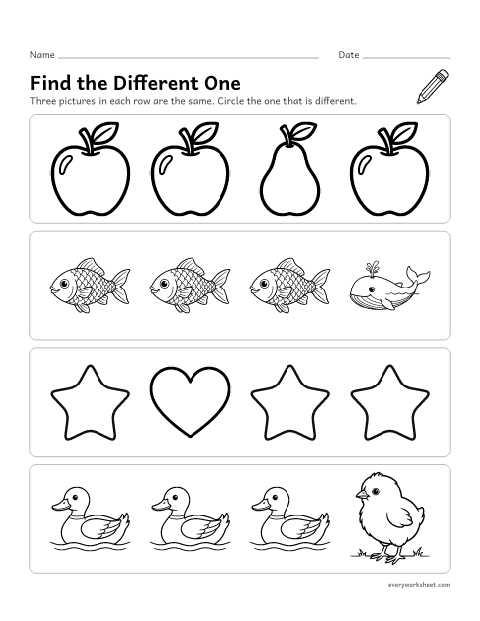
Finding the picture that is different
Answer key on page 2
2 pages336 KB
 View all 2 pages
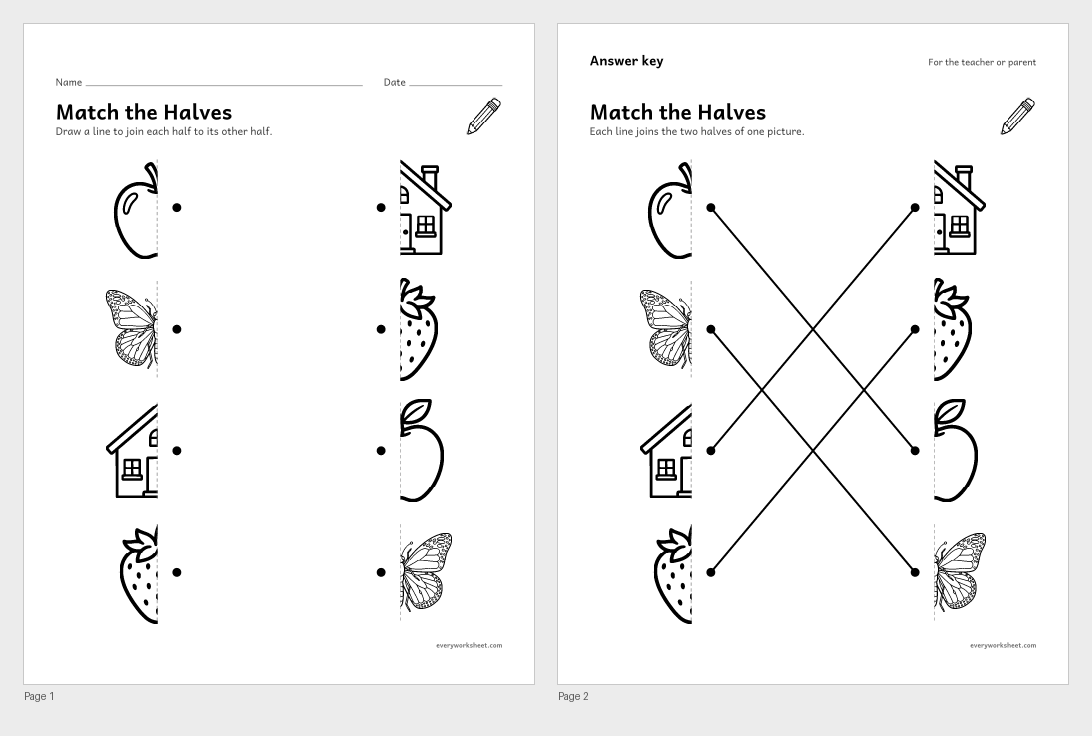
Matching the two halves of a picture
Answer key on page 2
2 pages376 KB
 View all 2 pages
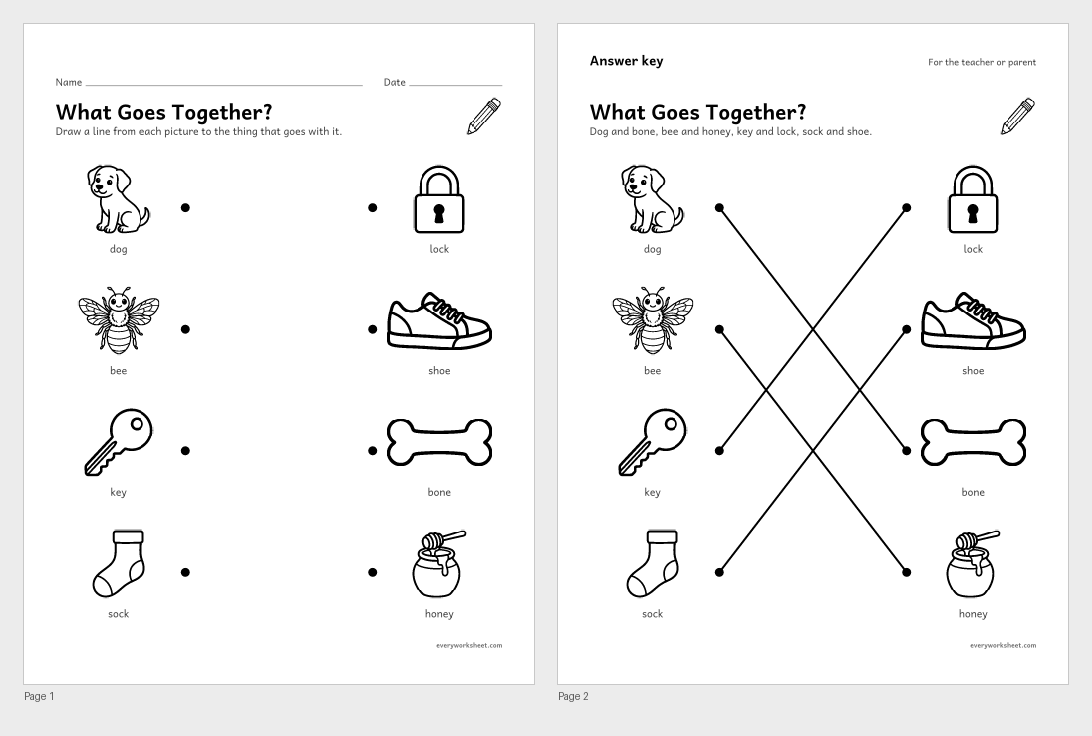
Matching things that go together
Answer key on page 2
2 pages245 KB
 View larger
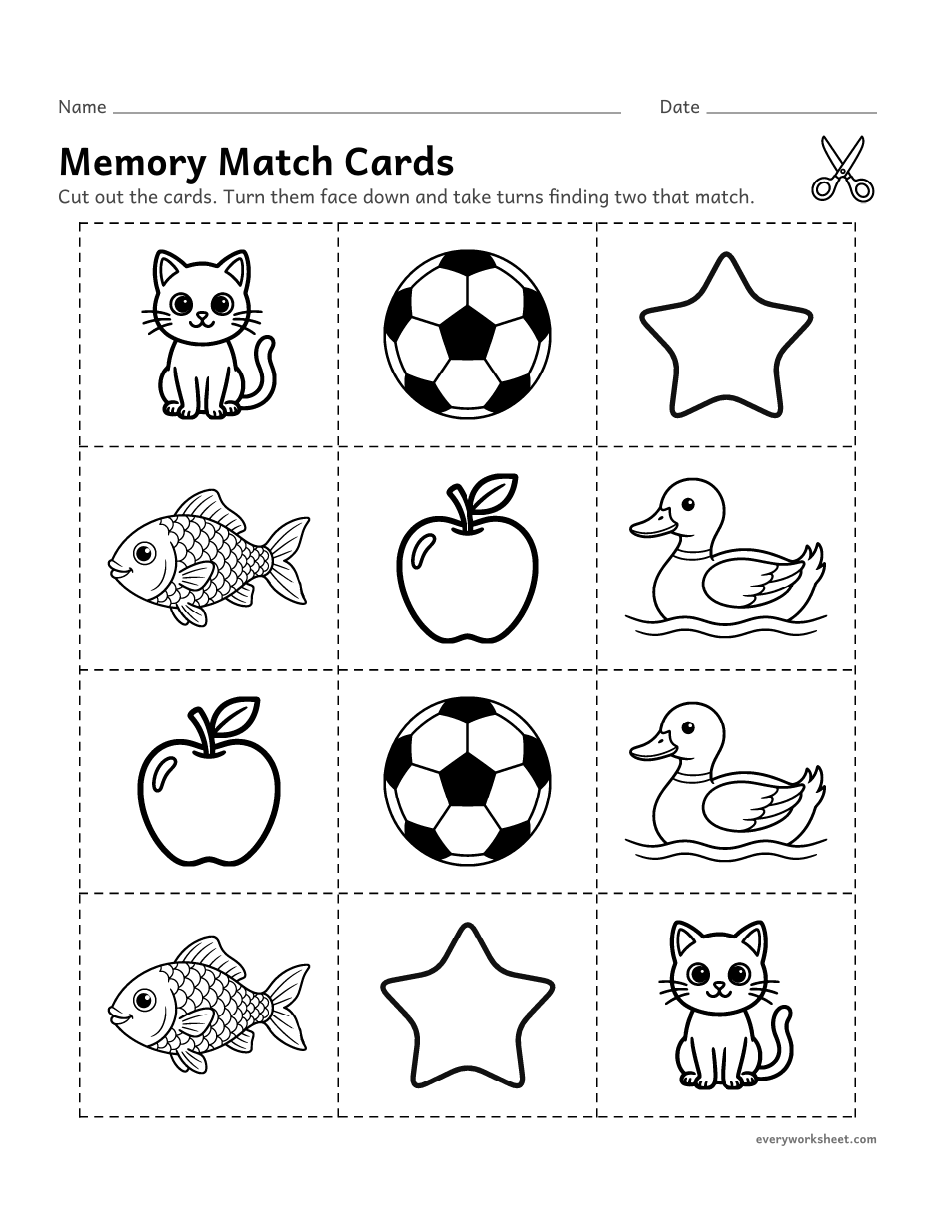
Remembering where pictures are to find matching pairs
1 page184 KB
Print at 100% (actual size) for the cleanest tracing lines.
Matching asks children to look closely and spot what is the same and what is different. It is one of the first thinking skills preschoolers practice, and it gets them ready to match letters, numbers and words later.
These matching worksheets for preschool start with drawing a line between two pictures that are the same. Then children find the picture that is the same as the one in the box, and the one picture that is different in a row. Match the halves joins two halves of one picture, and what goes together matches a dog with a bone and a key with a lock.
The memory game cards turn matching into a game for two or more players. Every page has four rows or fewer, with big pictures, and every page with one right answer has an answer key on page 2.
ELOF P-SCI 3Child compares and categorizes observable phenomena.ELOF P-LC 7Child shows understanding of word categories and relationships among words.ELOF P-ATL 8Child holds information in mind and manipulates it to perform tasks.ELOF P-MATH 9Child identifies, describes, compares, and composes shapes.They teach children to look closely, notice details and tell same from different. These skills help later with letters, numbers and reading.
Three to five pairs is plenty for most preschoolers. These pages use four big pairs or fewer.
Yes. Every page with one right answer has an answer key on page 2. The memory game cards do not need one.