 View larger
My address worksheet
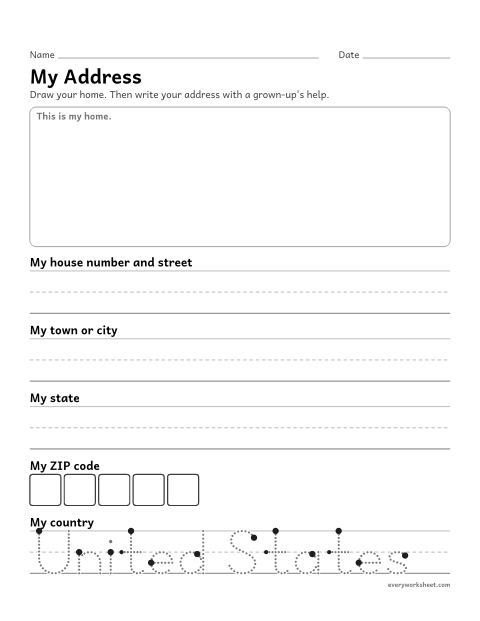
Writing my own address: house number, street, town or city, state and ZIP code
1 page28 KB
Write and learn your address, address an envelope, house numbers, a phone number page, me on the map and a US map to color your state.
View largerWriting my own address: house number, street, town or city, state and ZIP code
1 page28 KB
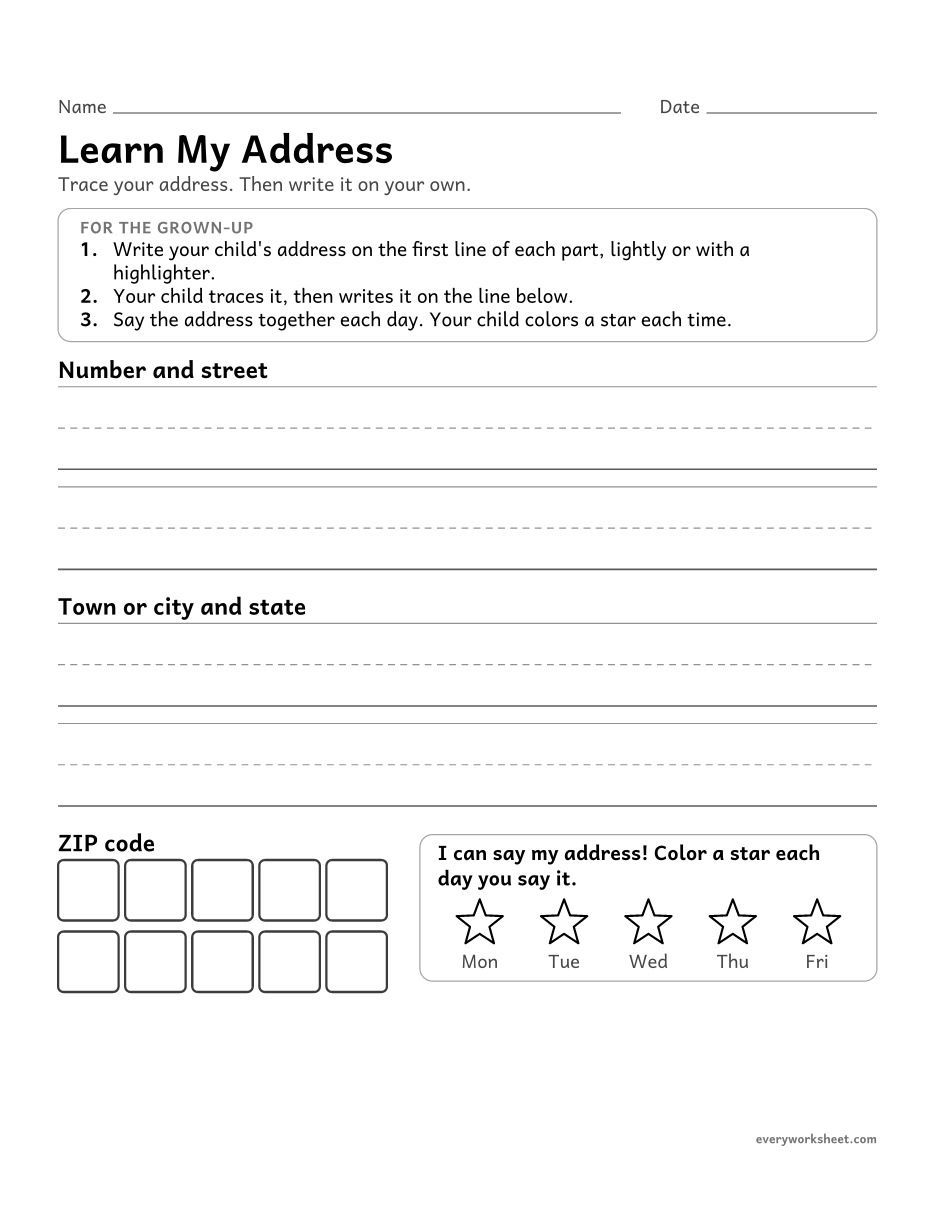 View larger
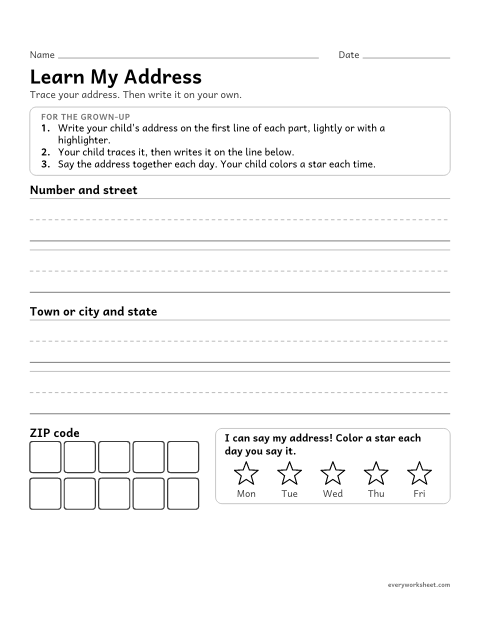
Learning my address by tracing, writing and saying it
1 page32 KB
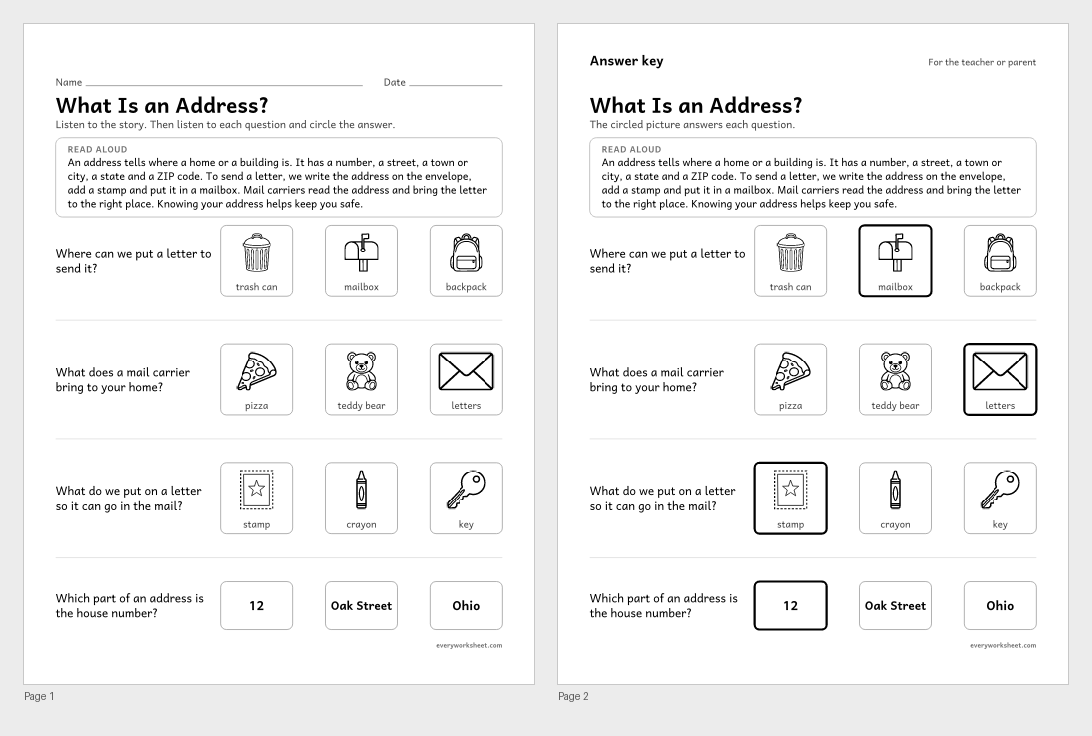 View all 2 pages
Explaining what an address is and how mail gets to the right home
Answer key on page 2
2 pages222 KB
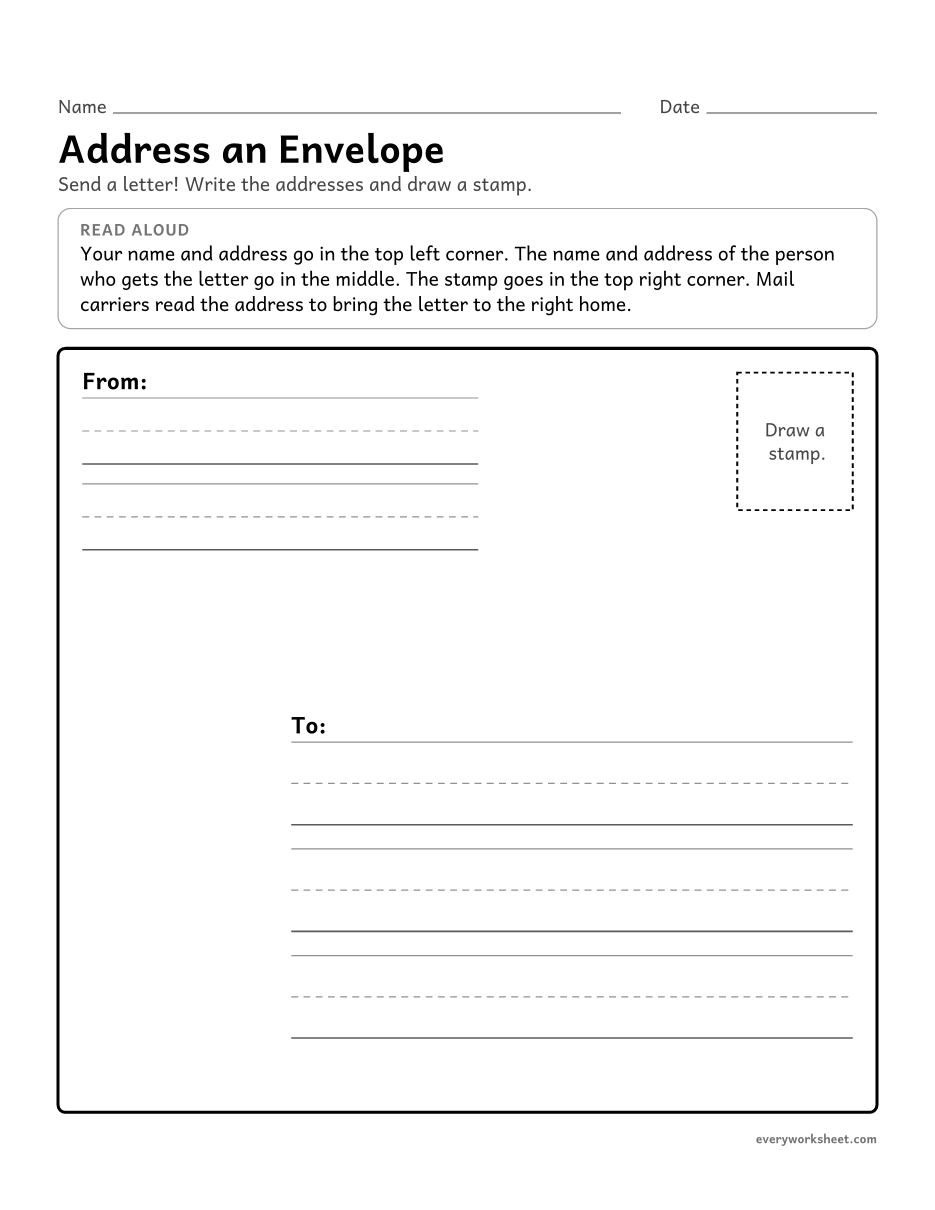 View larger
Addressing an envelope: who it is from, who it is to, and a stamp
1 page26 KB
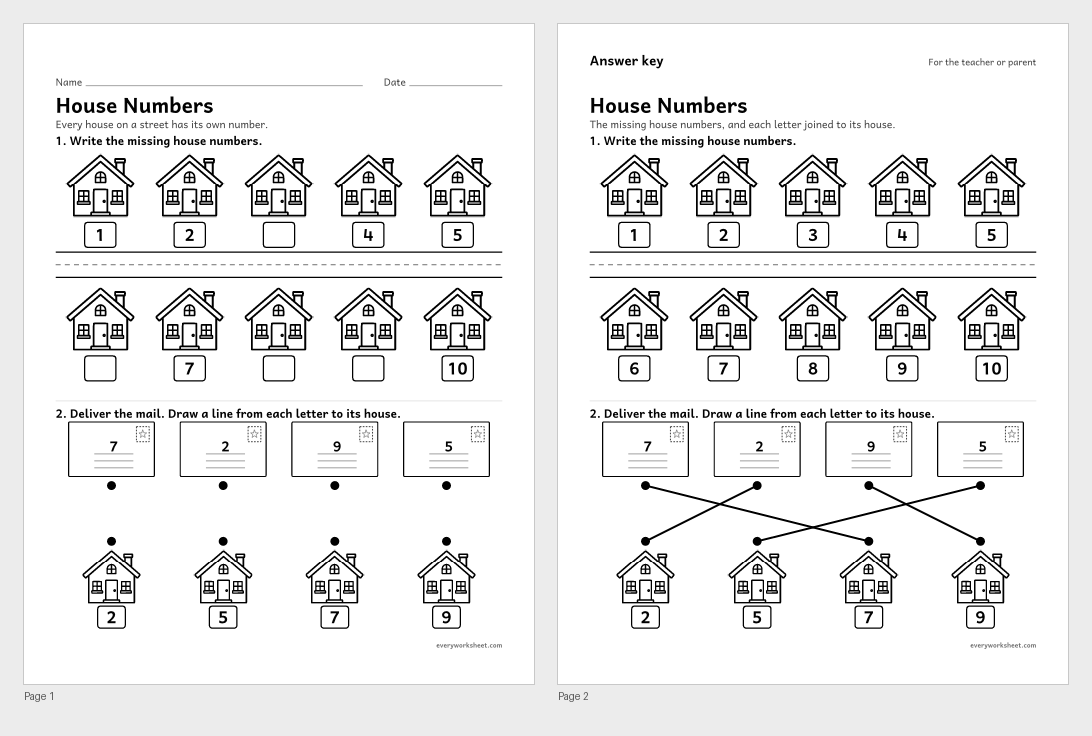 View all 2 pages
Writing missing house numbers in order (1 to 10) and matching numbers to deliver mail
Answer key on page 2
2 pages68 KB
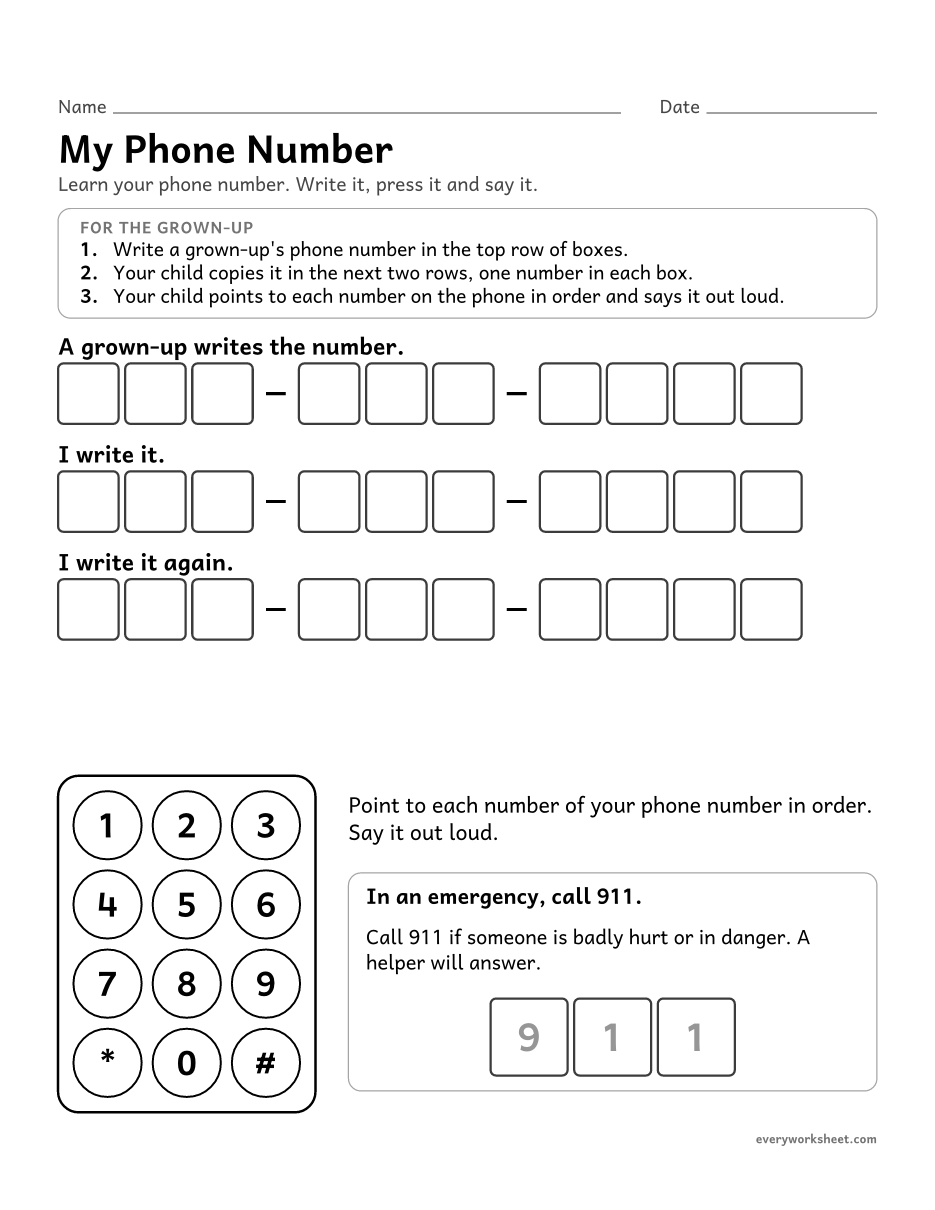 View larger
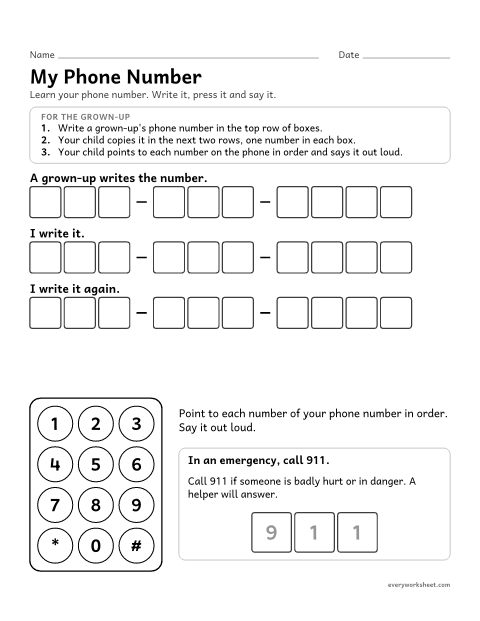
Learning a grown-up's phone number and when to call 911
1 page36 KB
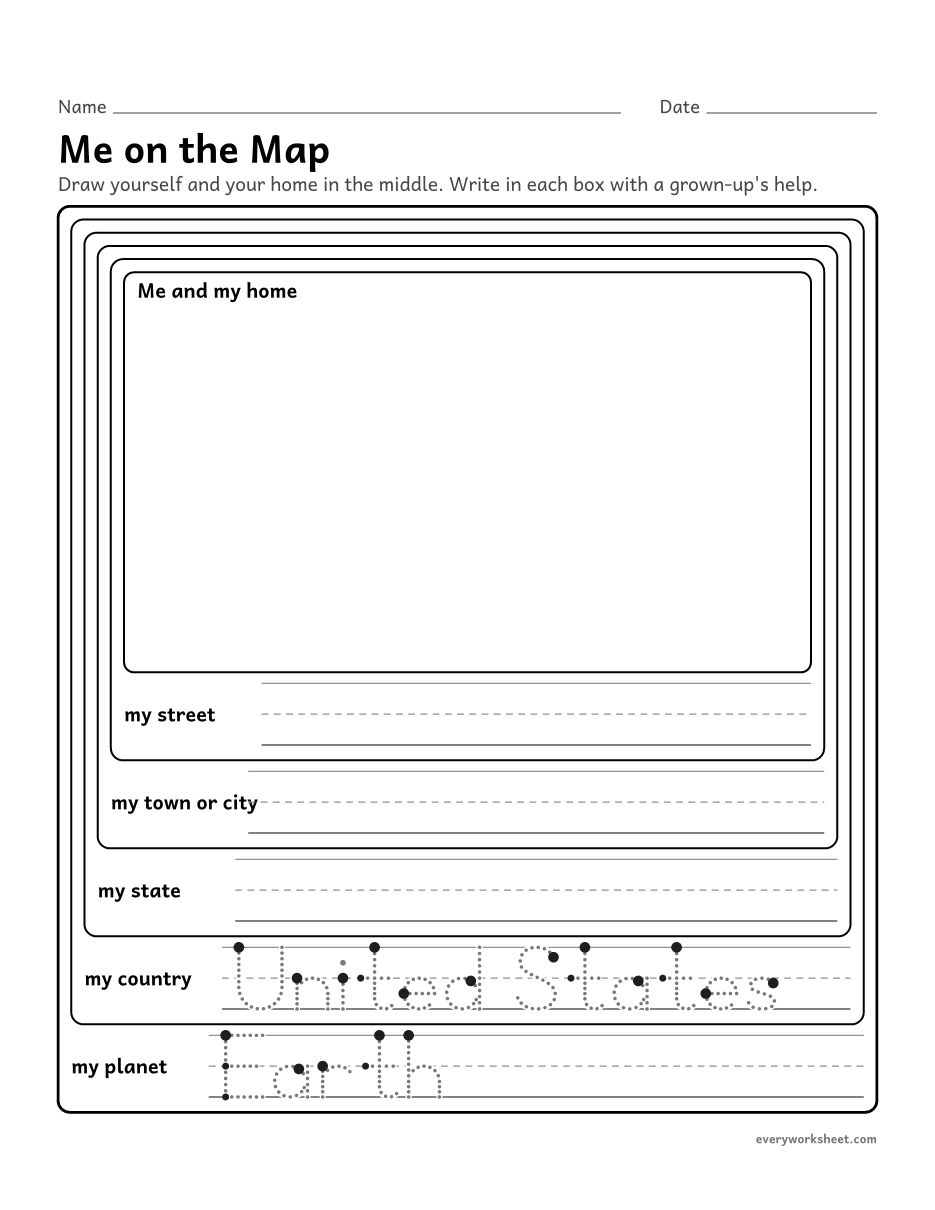 View larger
Showing where I live, from my home and street out to my country and Earth
1 page29 KB
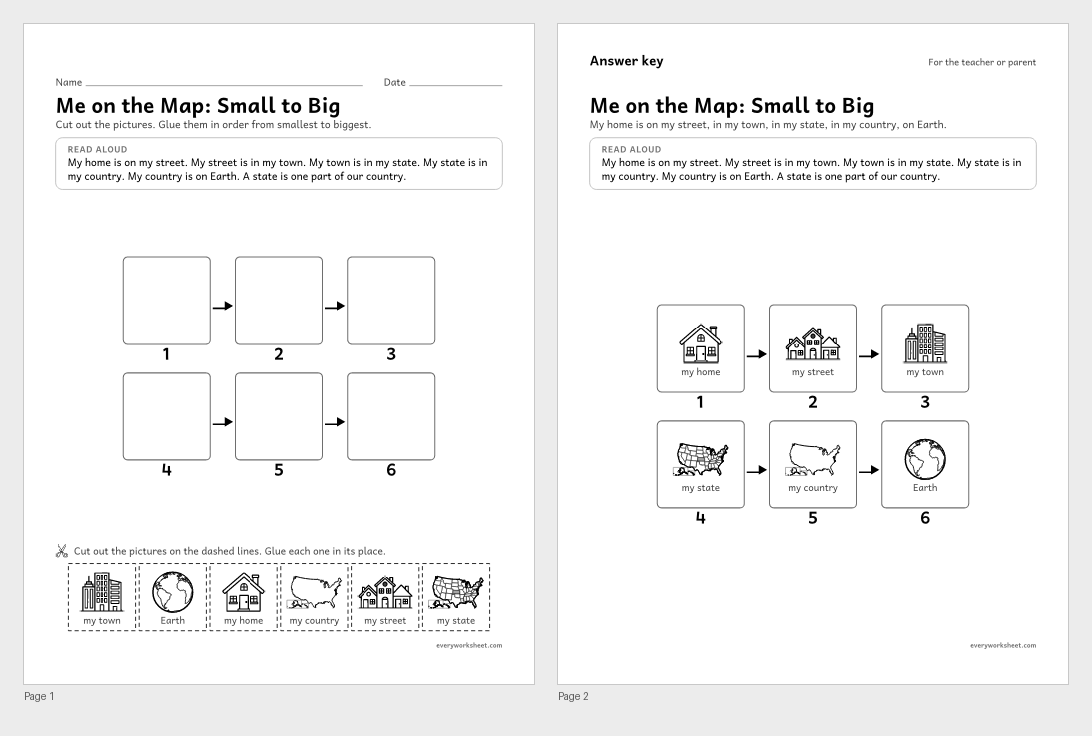 View all 2 pages
Ordering places from smallest to biggest: home, street, town, state, country, Earth
Answer key on page 2
2 pages244 KB
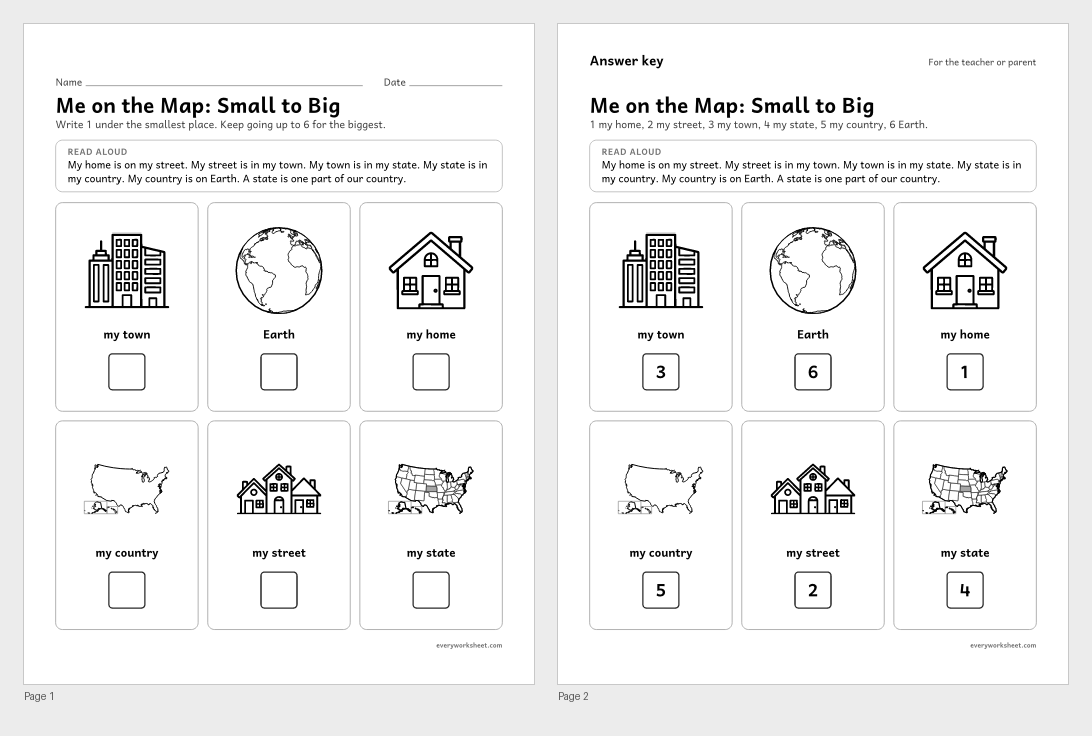 View all 2 pages
Ordering places from smallest to biggest: home, street, town, state, country, Earth
Answer key on page 2
2 pages220 KB
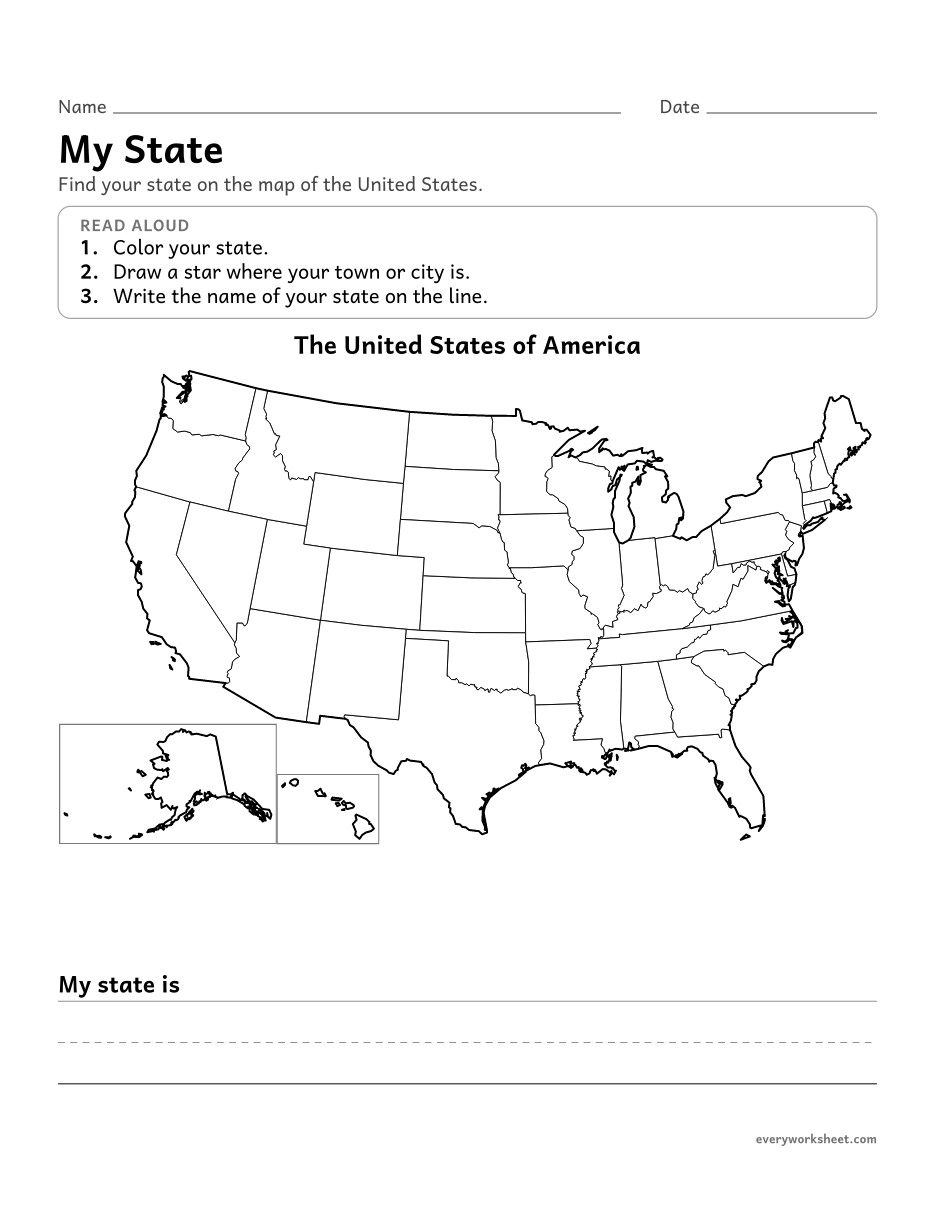 View larger
Finding and coloring my state on a map of the United States
1 page63 KB
Print at 100% (actual size) for the cleanest tracing lines.
Knowing their address helps keep young children safe, and it is a first step in learning where they live in the world. This my address worksheet set starts with a simple page to draw your home and write your house number, street, town or city, state and ZIP code, with a grown-up's help.
The learn my address page turns practice into a short daily habit: a grown-up writes the address, the child traces it, writes it and says it, and colors a star each day. A read-aloud page explains what an address is and how mail reaches the right home, and children can address an envelope to someone they love. House numbers and a phone number page, with when to call 911, round it out.
The me on the map pages show how places fit inside each other: my home is on my street, in my town, in my state, in my country, on Earth. Children write their own places in nested boxes, put pictures in order from smallest to biggest, and color their state on a map of the United States.
C3 D2.Geo.1.K-2Construct maps, graphs, and other representations of familiar places.C3 D2.Geo.2.K-2Use maps, graphs, photographs, and other representations to describe places and the relationships and interactions that shape them.C3 D2.Geo.3.K-2Use maps, globes, and other simple geographic models to identify cultural and environmental characteristics of places.C3 D2.Eco.12.K-2Describe examples of the goods and services that governments provide.CCSS.ELA-LITERACY.L.K.1.APrint many upper- and lowercase letters.CCSS.ELA-LITERACY.SL.K.2Confirm understanding of a text read aloud or information presented orally or through other media by asking and answering questions about key details and requesting clarification if something is not understood.CCSS.ELA-LITERACY.SL.K.6Speak audibly and express thoughts, feelings, and ideas clearly.CCSS.MATH.CONTENT.K.CC.A.2Count forward beginning from a given number within the known sequence (instead of having to begin at 1).CCSS.MATH.CONTENT.K.CC.A.3Write numbers from 0 to 20. Represent a number of objects with a written numeral 0-20 (with 0 representing a count of no objects).Yes, learning their address is a common kindergarten goal because it helps keep children safe if they are lost. Most children start with their house number and street name, then add the town, state and ZIP code.
Say it together every day in the same order, write it for your child to trace, and let them find the house number on your door. The learn my address page has a star to color each day they say it.
Me on the map is a way to show that places fit inside each other. My home is on my street, my street is in my town, my town is in my state, my state is in my country, and my country is on Earth.
The house numbers, what is an address and me on the map order pages have an answer key on page 2. Pages where children write their own address or phone number have no key, because every child's answer is different.