 View larger
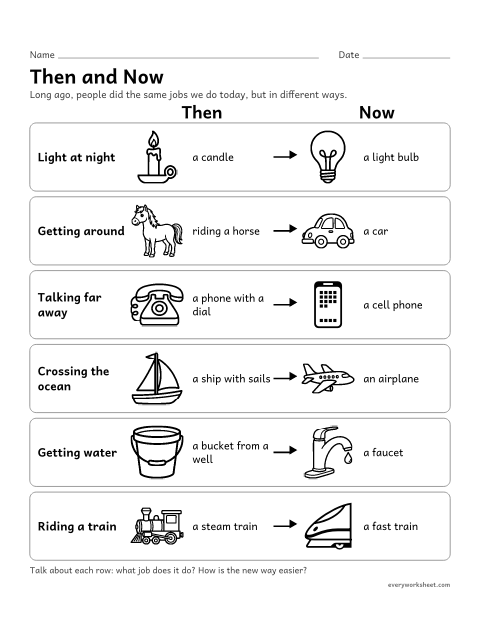
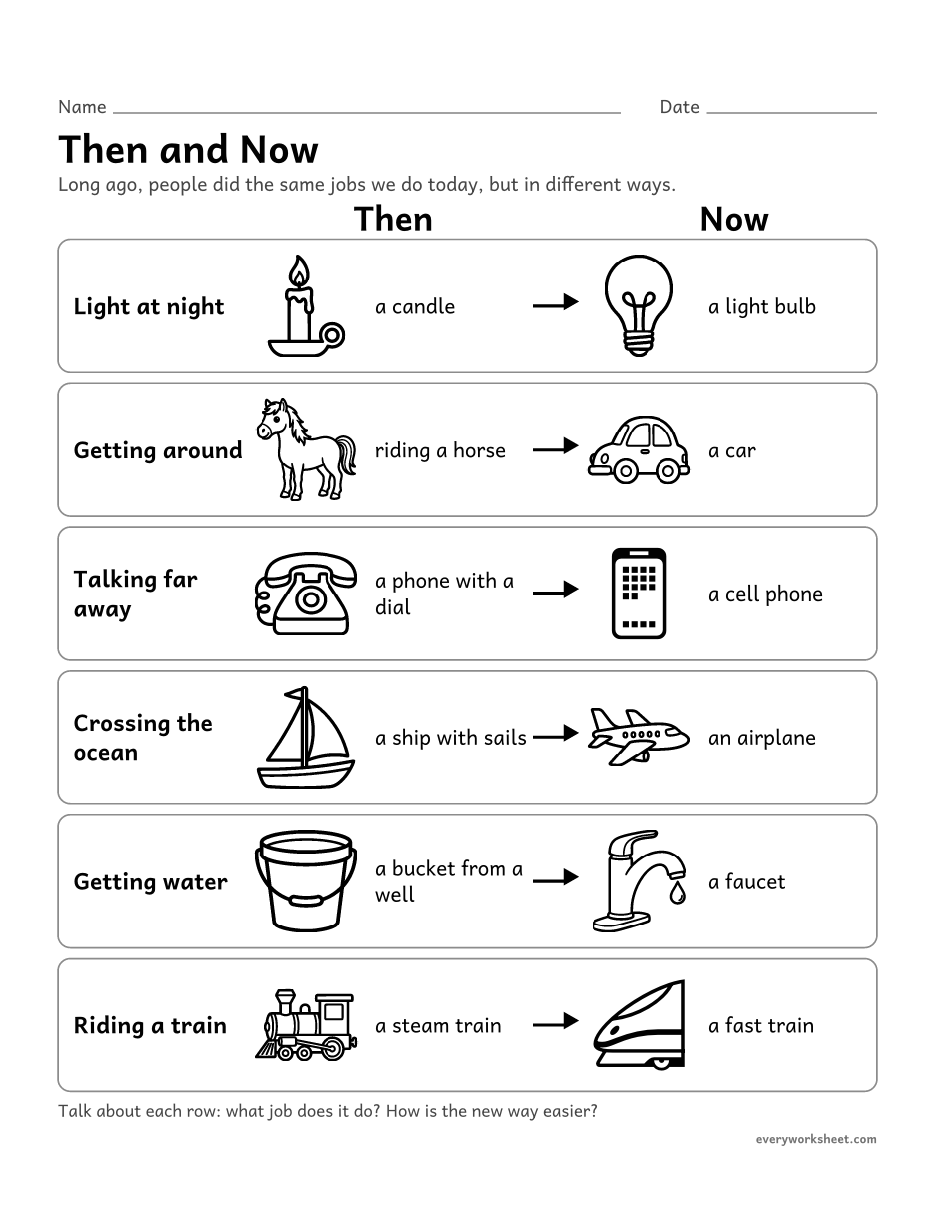
Then and now poster
Comparing how people did everyday jobs long ago and today
1 page185 KB
Then and now poster, matching, long ago or now sorts, school and home long ago read-alouds, growing up in order and a grown-up interview, with keys.
View largerComparing how people did everyday jobs long ago and today
1 page185 KB
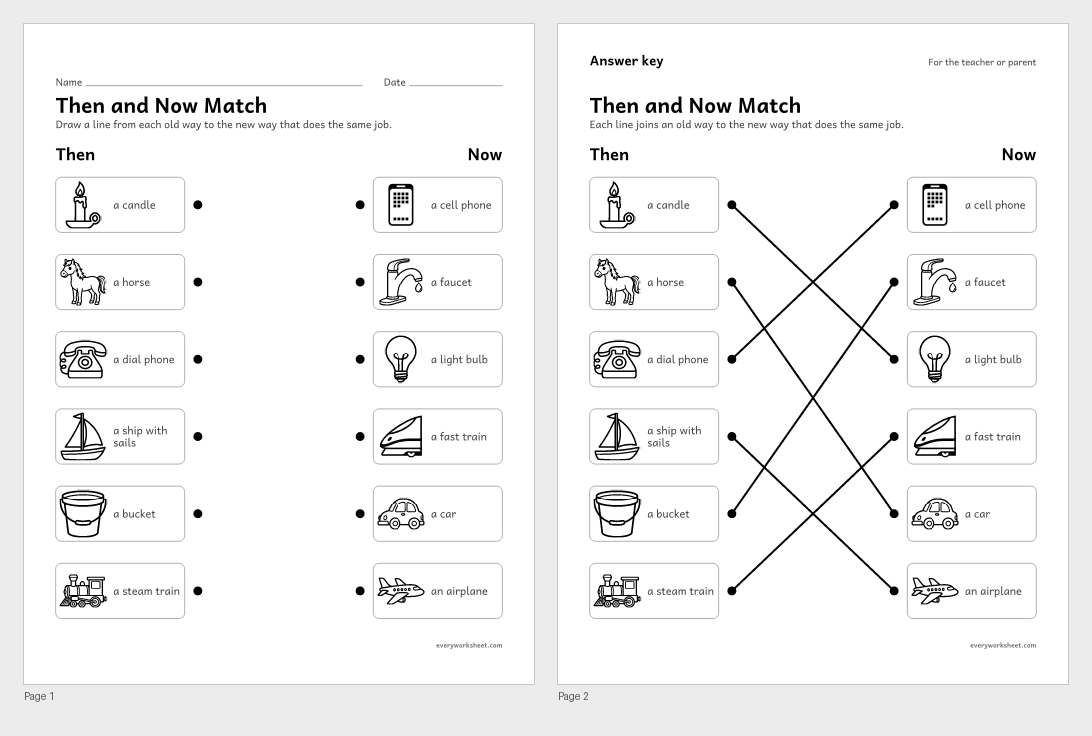 View all 2 pages
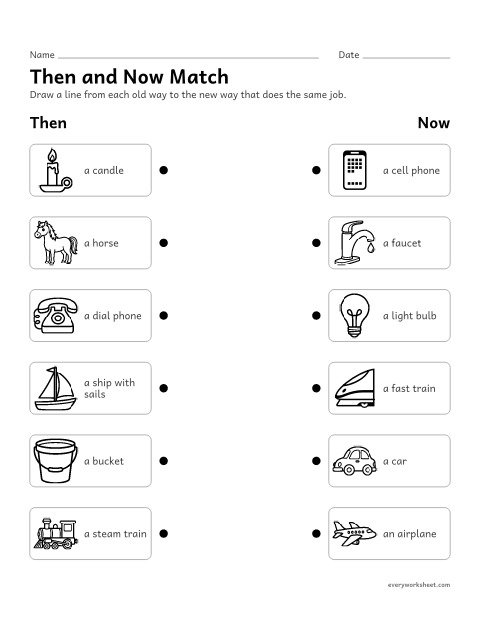
Matching things people used long ago to the things we use for the same job today
Answer key on page 2
2 pages332 KB
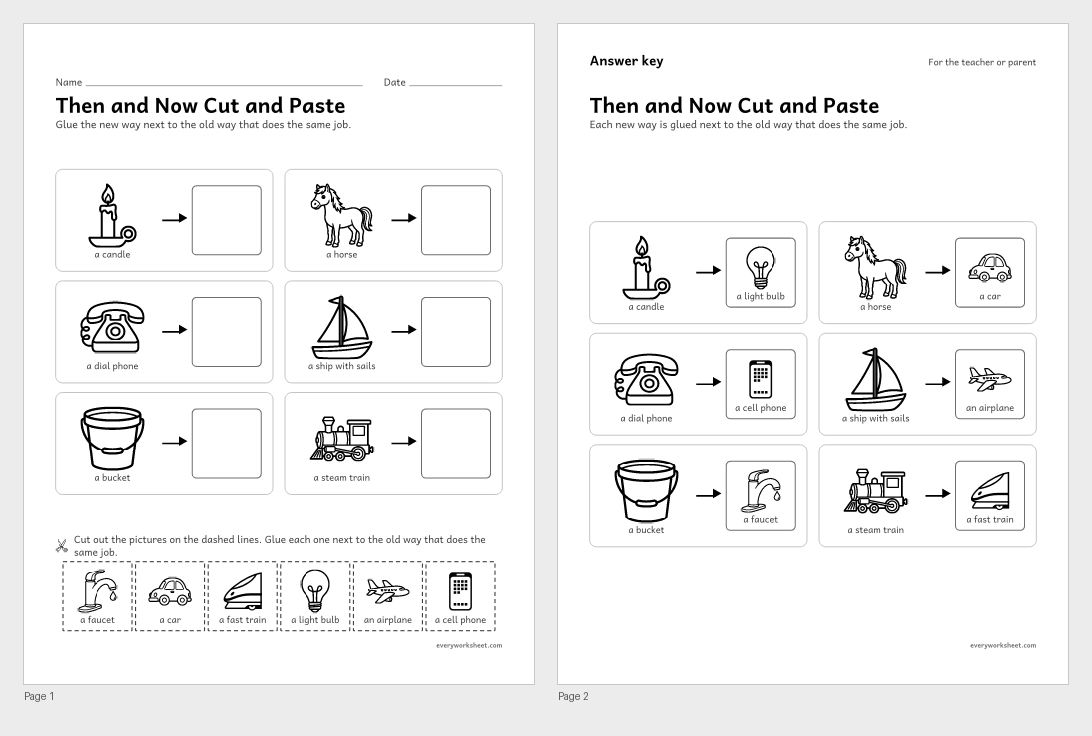 View all 2 pages
Matching things people used long ago to the things we use for the same job today (cut and paste)
Answer key on page 2
2 pages359 KB
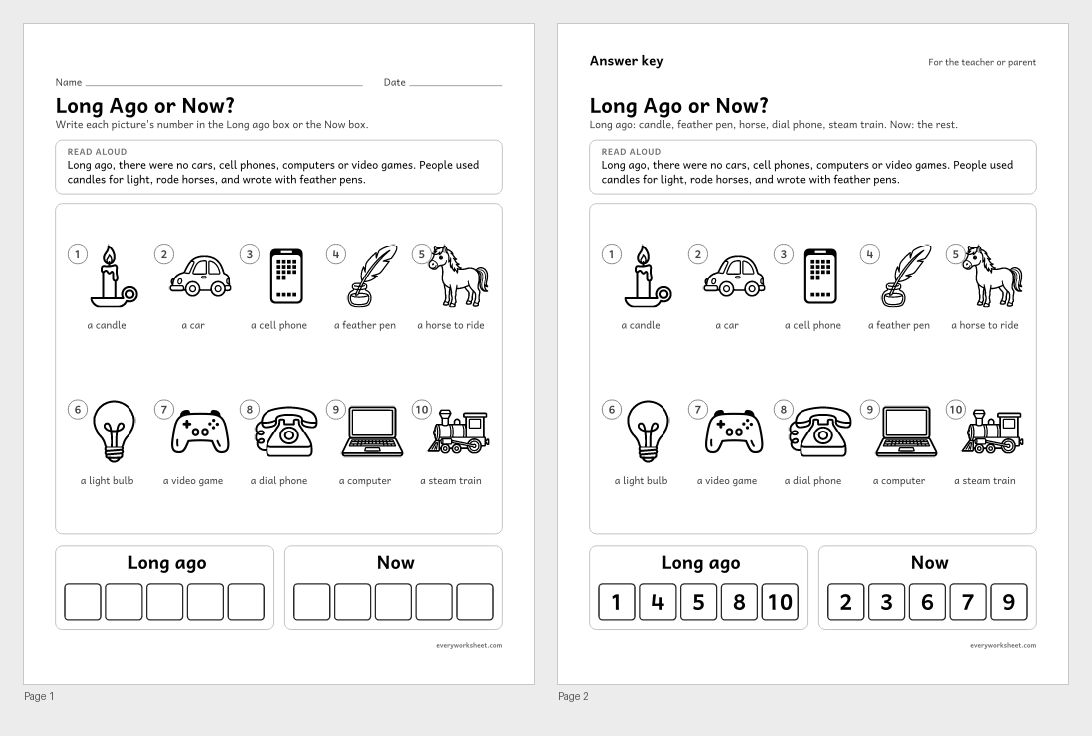 View all 2 pages
Sorting pictures into things from long ago and things from today
Answer key on page 2
2 pages300 KB
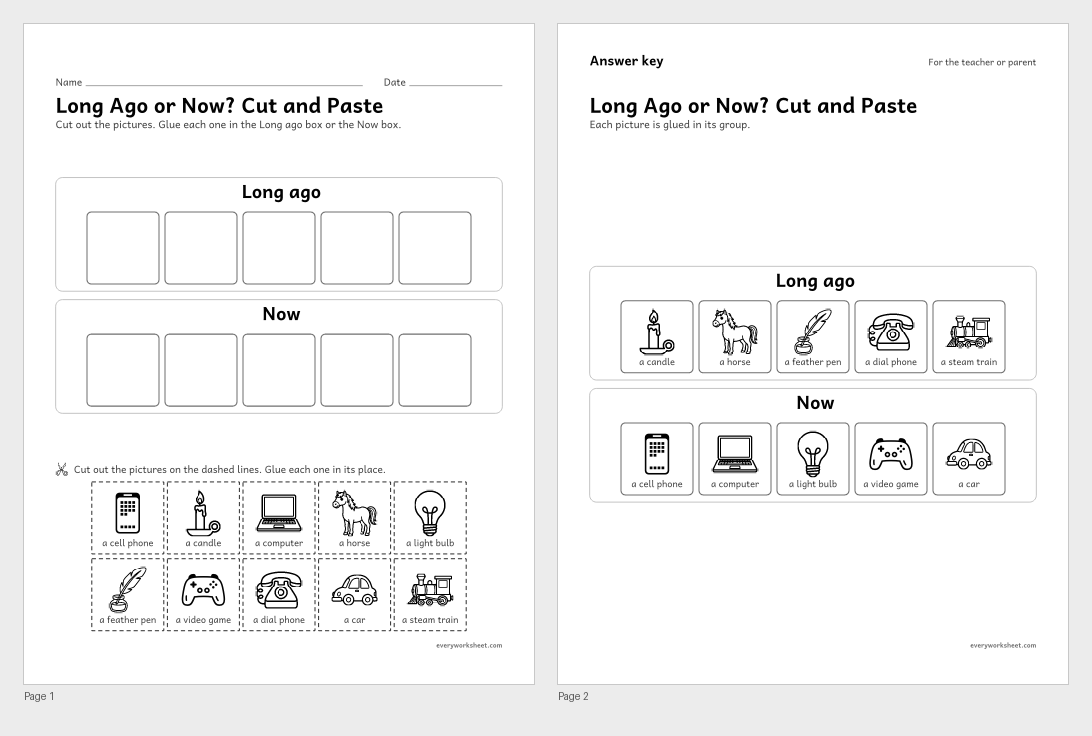 View all 2 pages
Sorting pictures into things from long ago and things from today (cut and paste)
Answer key on page 2
2 pages315 KB
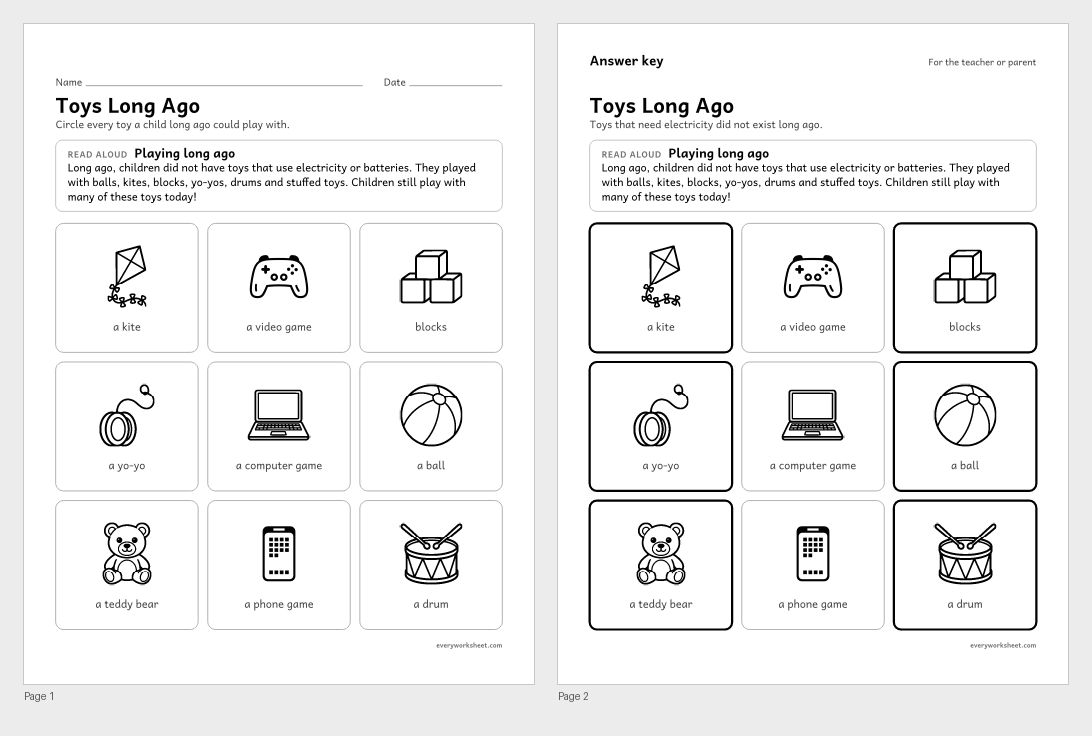 View all 2 pages
Telling which toys children could play with long ago
Answer key on page 2
2 pages265 KB
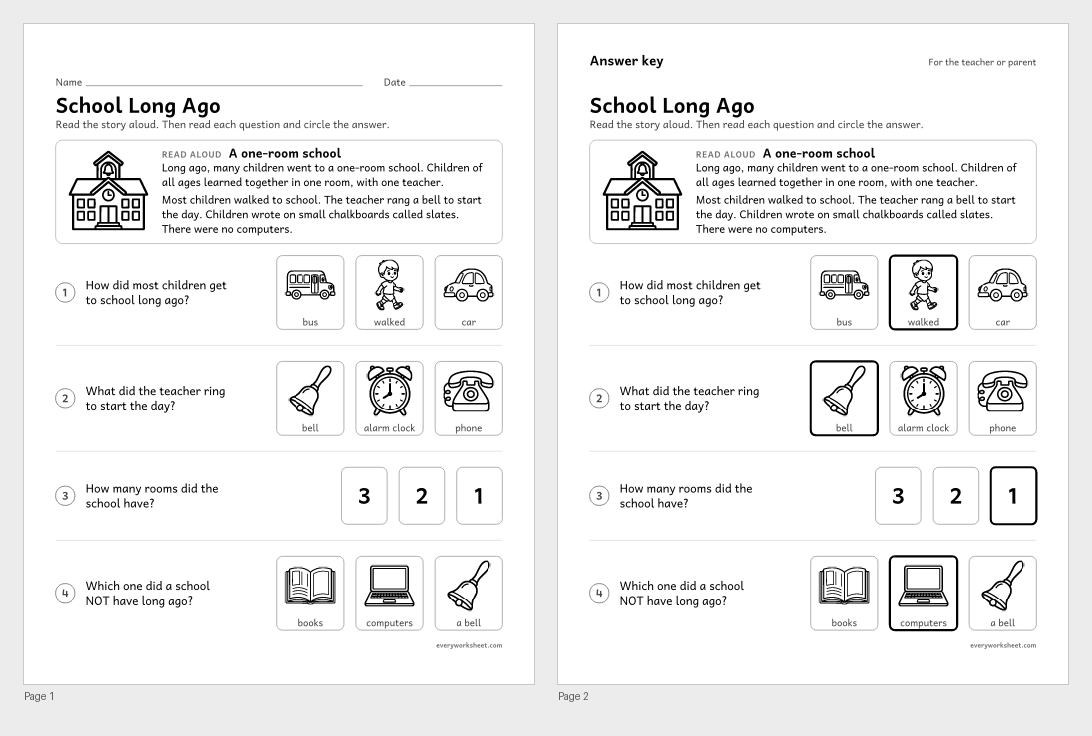 View all 2 pages
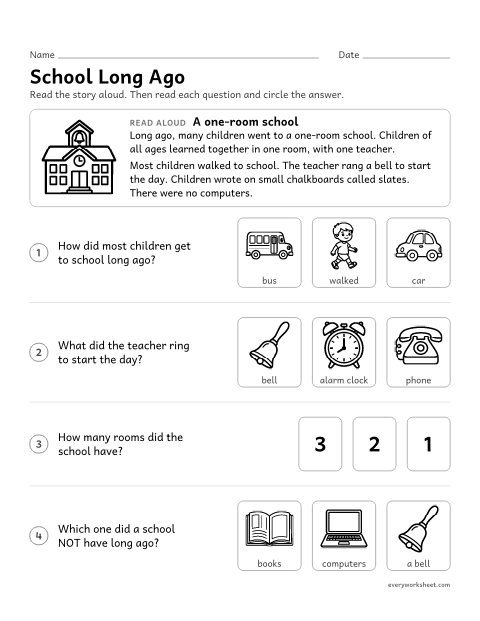
Listening to a story about school long ago and comparing it with school today
Answer key on page 2
2 pages377 KB
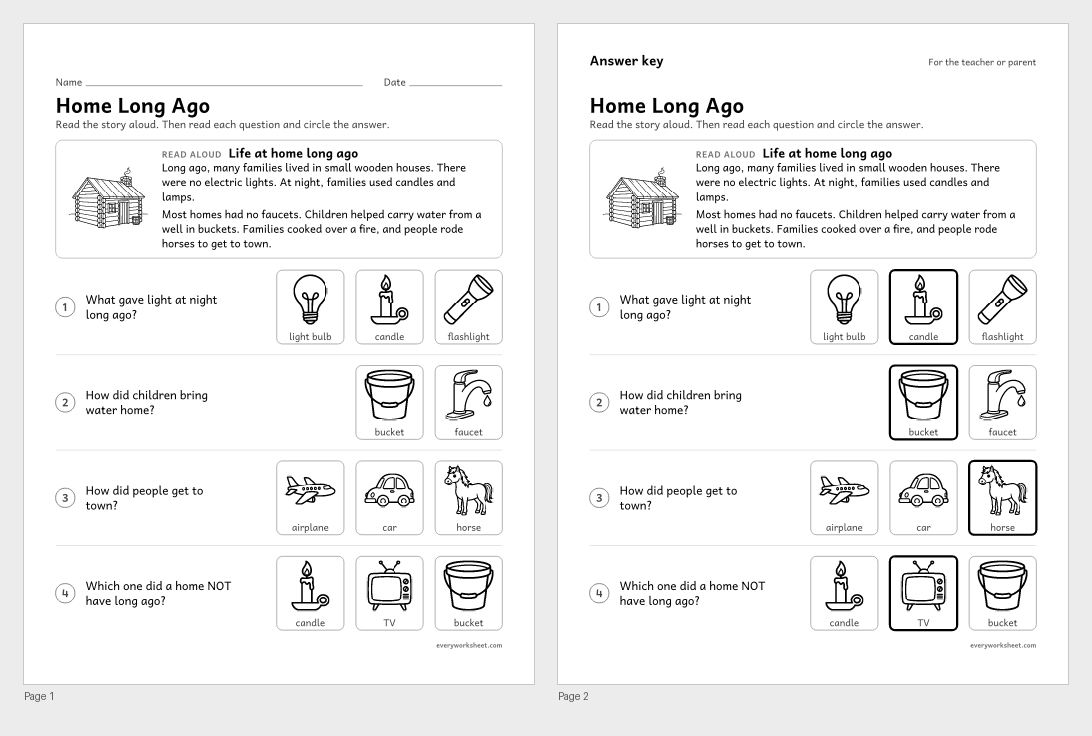 View all 2 pages
Listening to a story about home life long ago and comparing it with home life today
Answer key on page 2
2 pages369 KB
 View larger
Drawing and writing about how I have changed since I was a baby
1 page27 KB
 View all 2 pages
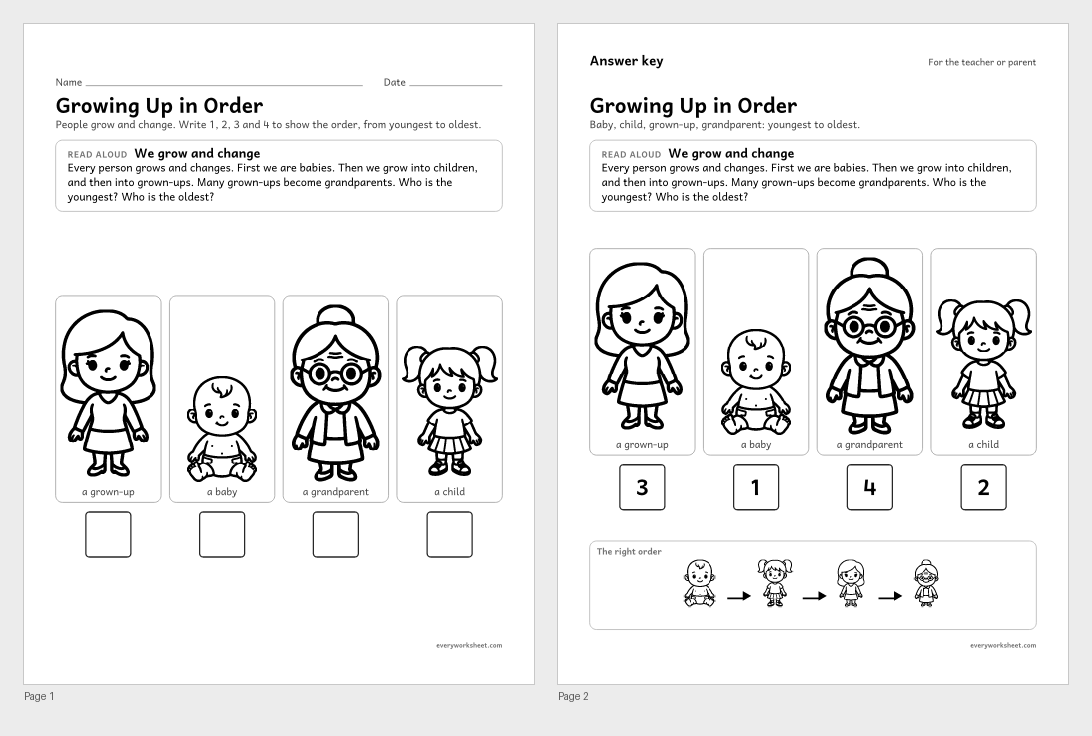
Putting the stages of a person's life in order (baby, child, grown-up, grandparent)
Answer key on page 2
2 pages313 KB
 View all 2 pages
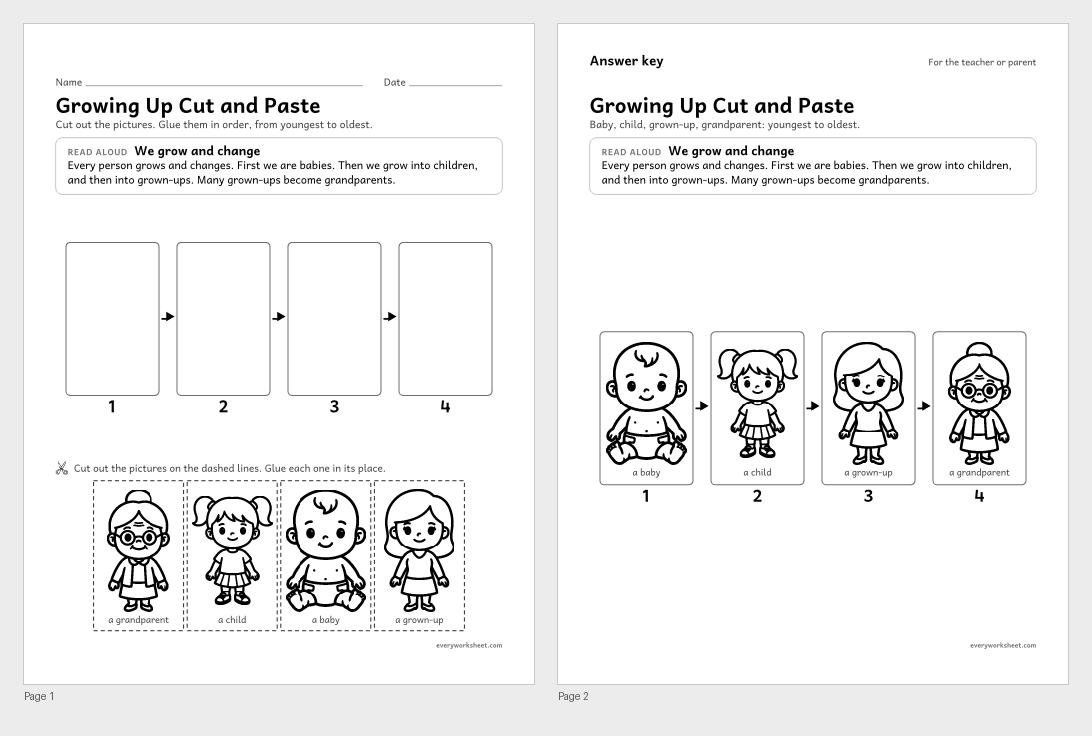
Putting the stages of a person's life in order (cut and paste)
Answer key on page 2
2 pages248 KB
 View larger
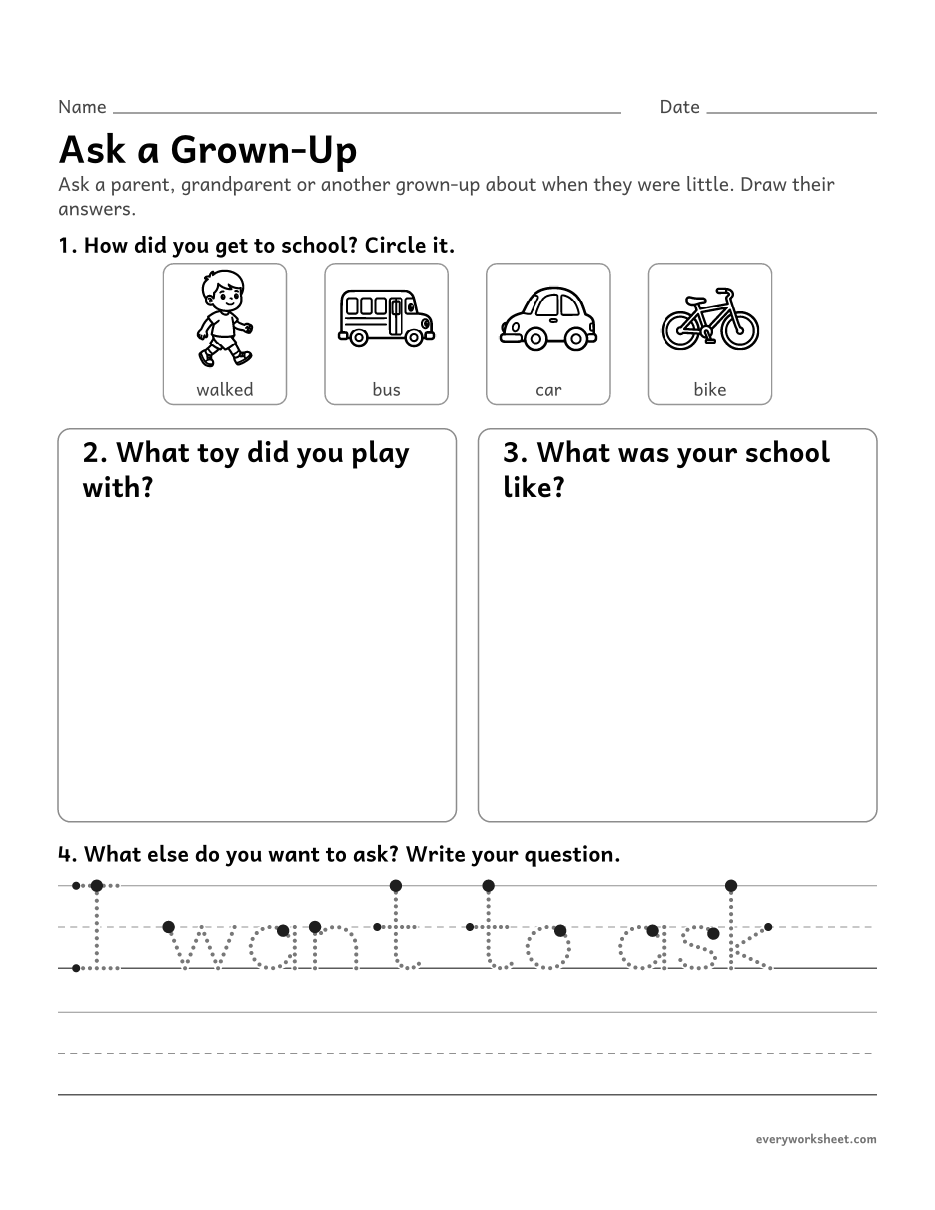
Asking a grown-up questions about life when they were young
1 page99 KB
Print at 100% (actual size) for the cleanest tracing lines.
Kindergartners are just starting to understand that the world was different before they were born. Past and present worksheets give them a simple way in: look at how people did an everyday job long ago, then look at how we do the same job now. A candle and a light bulb both give light. A horse and a car both get people around.
Begin with the then and now poster and talk through each row. Then children practice with a draw-a-line matching page and a cut and paste page that pair each old way with its new way. The long ago or now sort asks them to decide on their own, with a pencil-only version and a cut and paste version. Read-alouds about school long ago and home long ago add a little more detail, with picture questions children answer by circling.
Children also look at change in their own lives. They draw themselves as a baby and now, put the stages of growing up in order, and take an interview page home to ask a parent or grandparent what life was like when they were little. Every page with one right answer has an answer key on page 2.
C3 D2.His.2.K-2Compare life in the past to life today.C3 D2.His.1.K-2Create a chronological sequence of multiple events.C3 D2.His.3.K-2Generate questions about individuals and groups who have shaped significant historical changes and continuities.CCSS.ELA-LITERACY.SL.K.2Confirm understanding of a text read aloud or information presented orally or through other media by asking and answering questions about key details and requesting clarification if something is not understood.CCSS.ELA-LITERACY.SL.K.3Ask and answer questions in order to seek help, get information, or clarify something that is not understood.CCSS.ELA-LITERACY.L.K.5.ASort common objects into categories (e.g., shapes, foods) to gain a sense of the concepts the categories represent.CCSS.ELA-LITERACY.W.K.2Use a combination of drawing, dictating, and writing to compose informative/explanatory texts in which they name what they are writing about and supply some information about the topic.They learn that life long ago was different from life today, and that some things stay the same. They compare everyday things, like light, travel, school and toys, and they notice how they themselves have changed since they were babies.
Pick one everyday job, like lighting a room at night. Show how people did it long ago with a candle and how we do it now with a light bulb. Ask what is the same and what is different. The then and now poster has six of these pairs.
Yes. Every page with one right answer, including the matching, sorts, read-aloud questions and growing up pages, has an answer key on page 2 of the PDF.