 View larger
Adverbs Worksheets
An adverbs chart plus circle the adverb, how, when and where sorts, adding -ly, choosing adverbs and writing sentences.
Download the adverbs worksheets
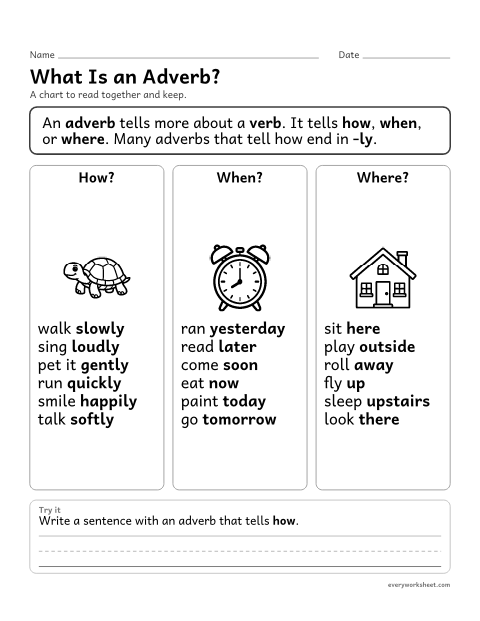
Adverbs chart
 View larger
Adverb practice
 View all 2 pages
 View all 2 pages
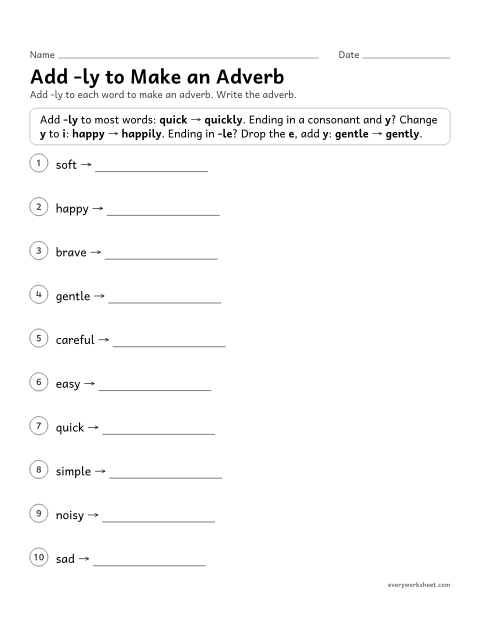
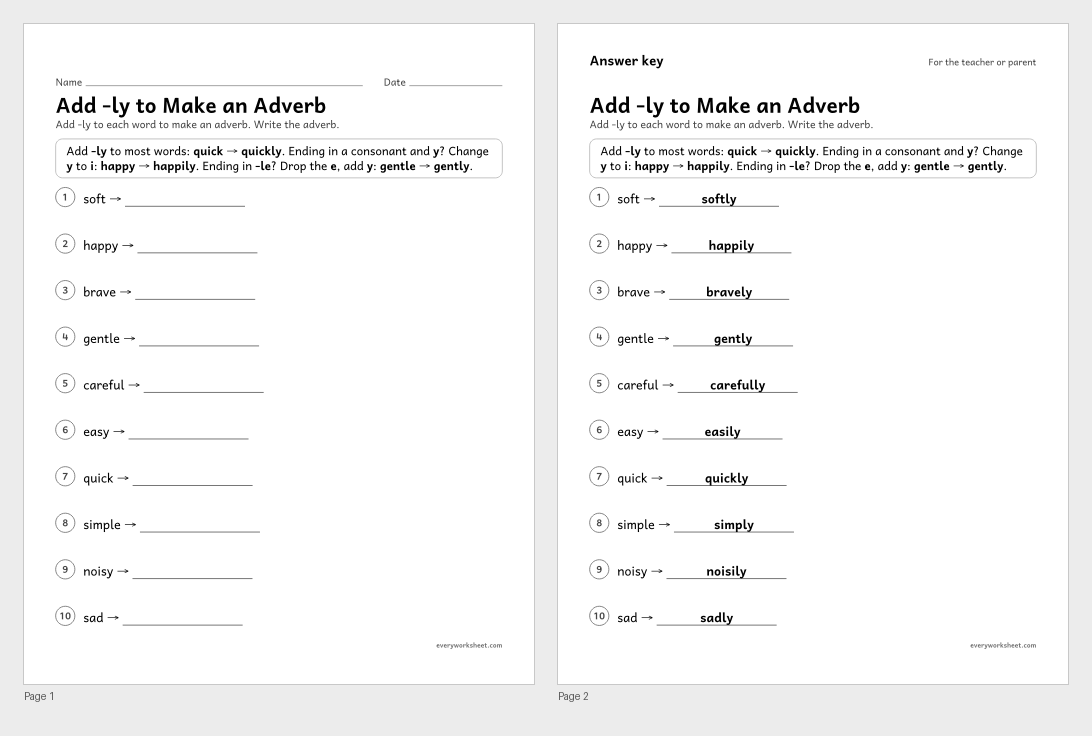
Add -ly to make an adverb
Forming adverbs with -ly (y to i, -le to -ly)
Answer key on page 2
2 pages51 KB
 View all 2 pages
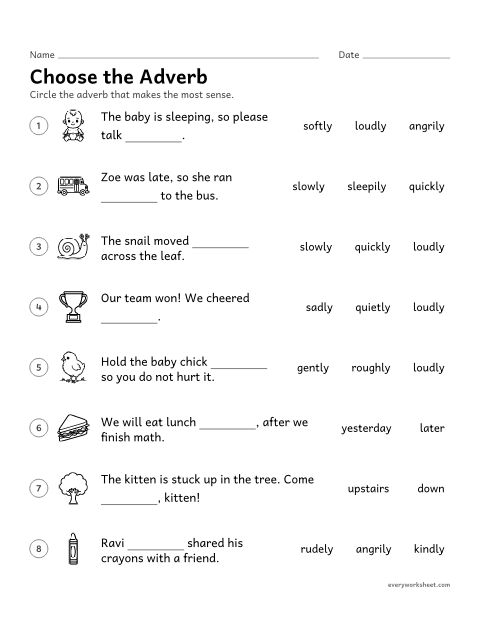
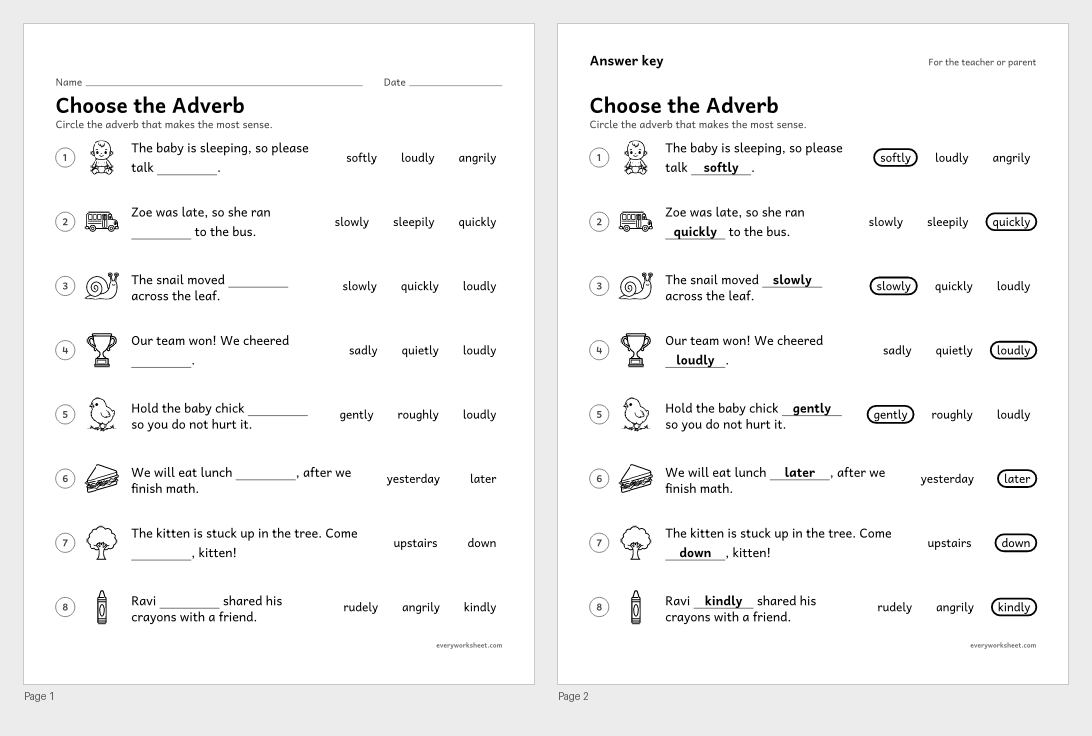
Choose the adverb
Choosing an adverb that fits the meaning of a sentence
Answer key on page 2
2 pages272 KB
 View all 2 pages
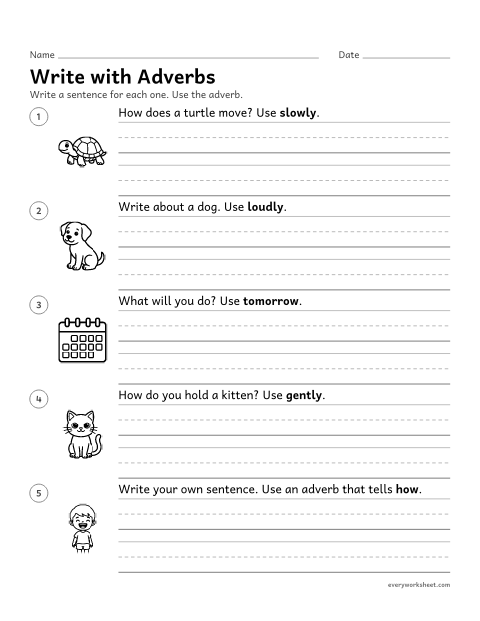
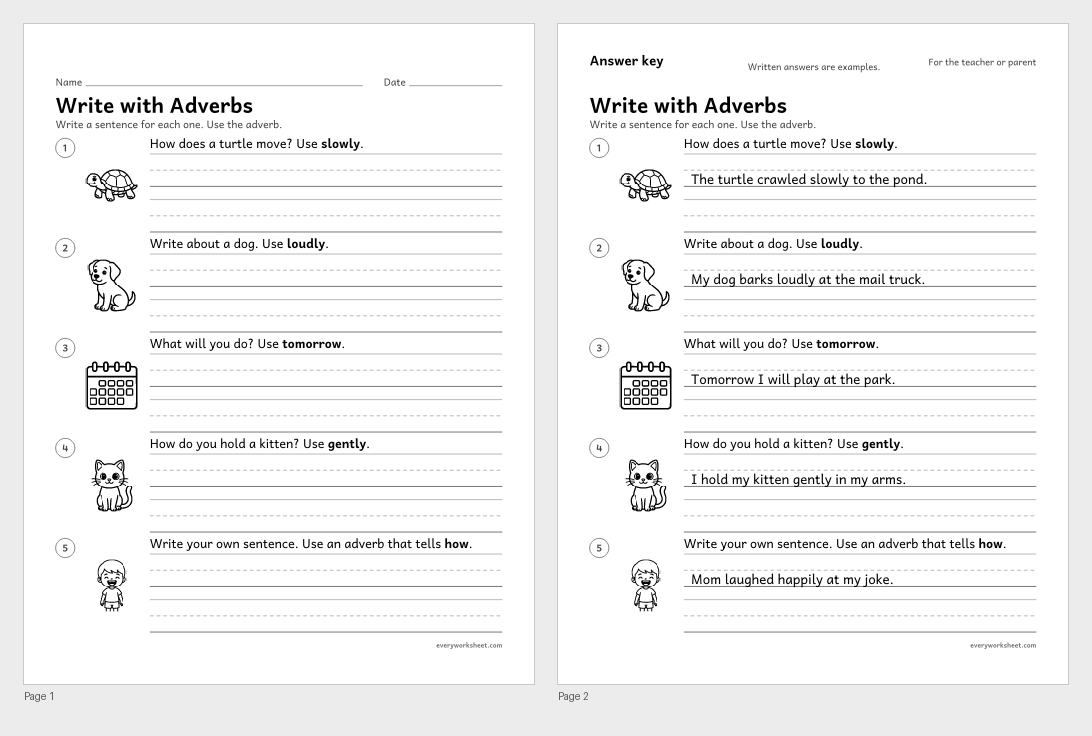
Write with adverbs
Writing sentences that use adverbs
Answer key on page 2
2 pages224 KB
 View all 2 pages
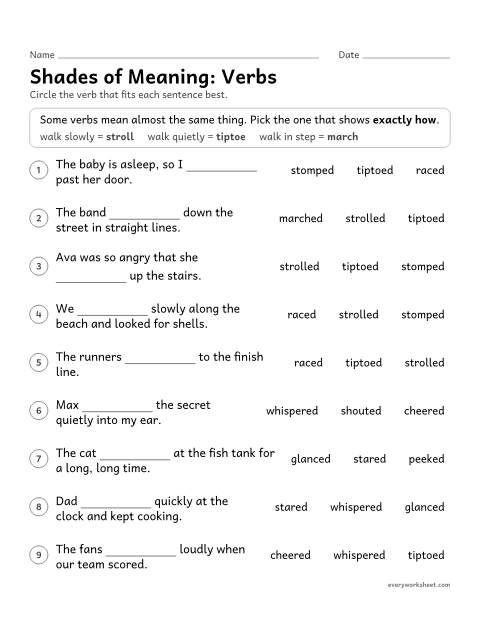
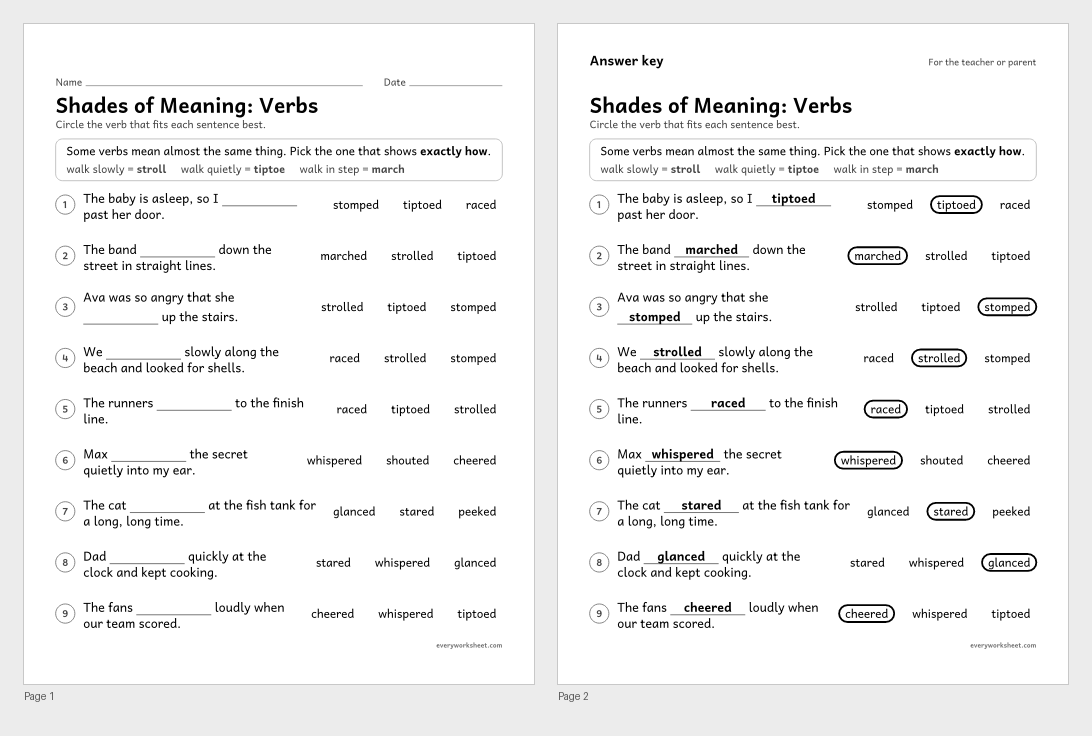
Shades of Meaning: verbs
Choosing among verbs with close meanings (walk, stroll, march, tiptoe)
Answer key on page 2
2 pages52 KB
 View all 2 pages
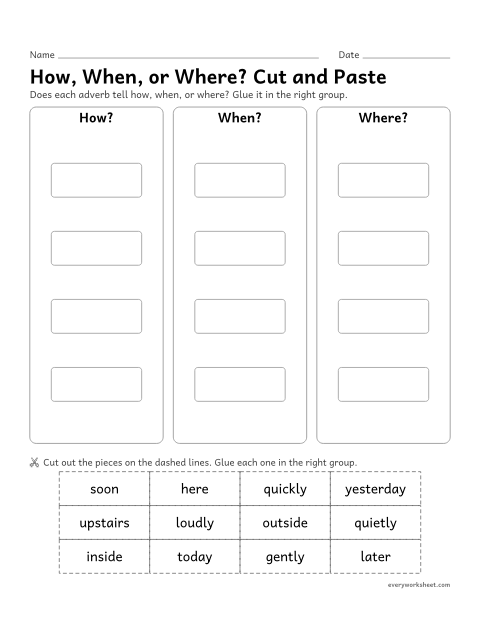
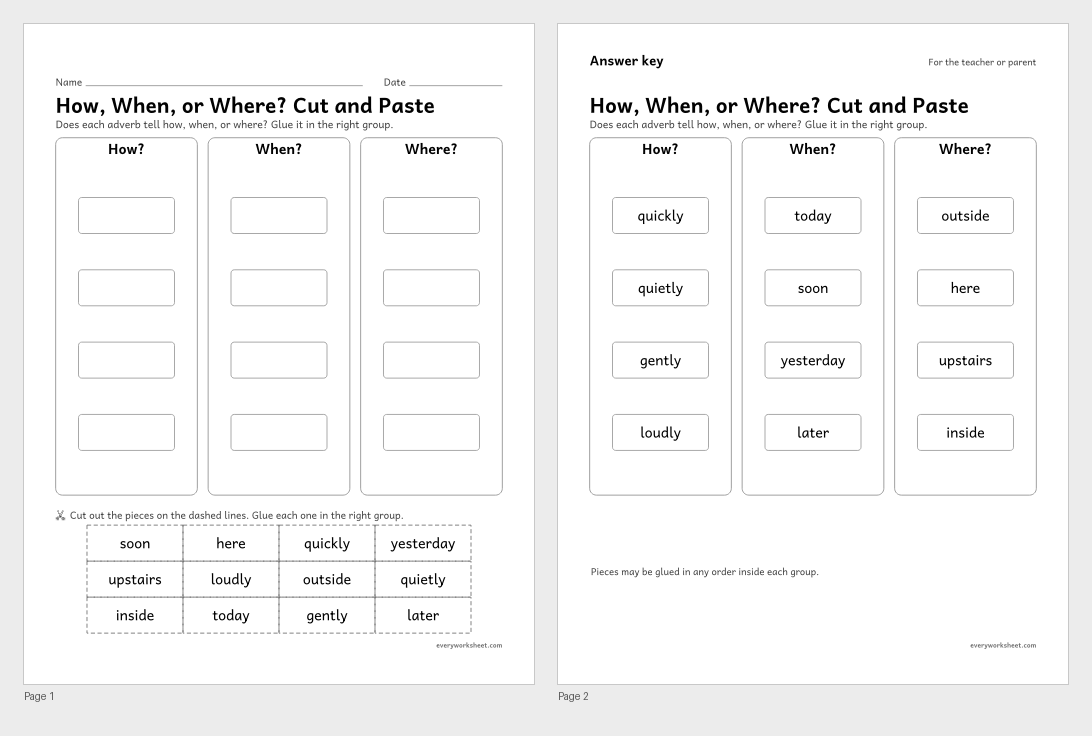
How, When, or Where? cut and paste
Sorting adverbs that tell how, when and where
Answer key on page 2
2 pages66 KB
 View all 2 pages
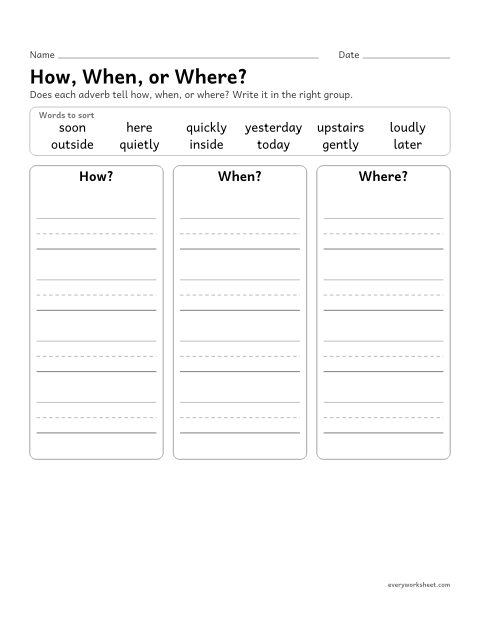
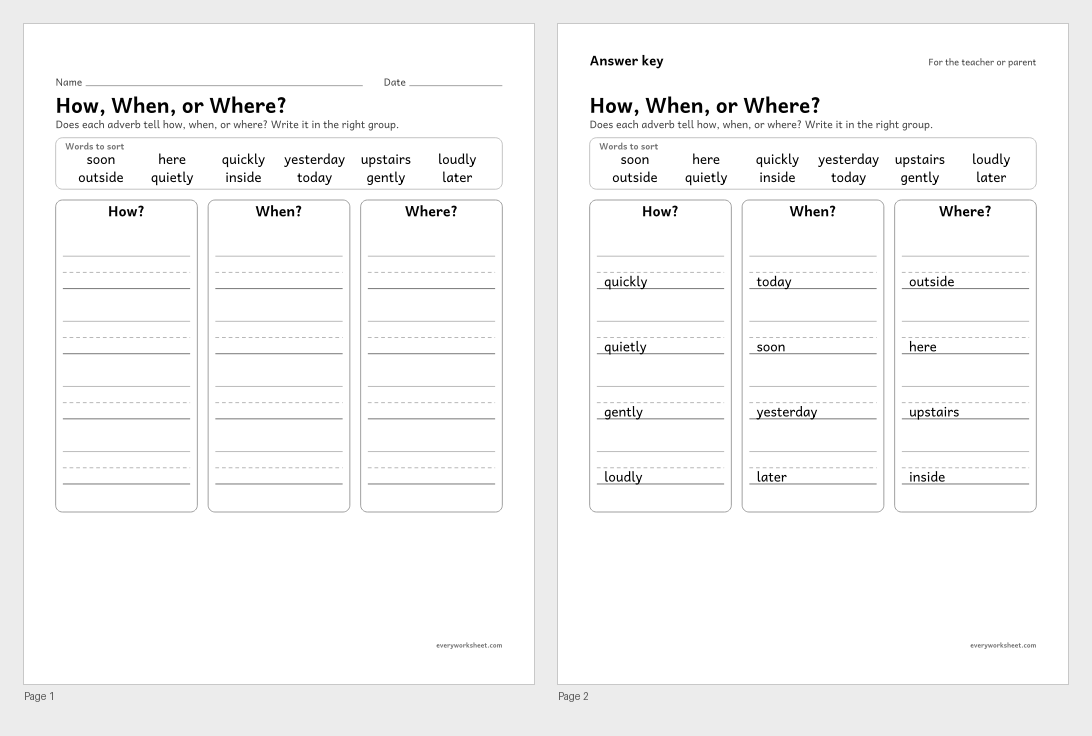
How, When, or Where?
Sorting adverbs that tell how, when and where
Answer key on page 2
2 pages35 KB
Print at 100% (actual size) for the cleanest tracing lines.
About these adverbs worksheets
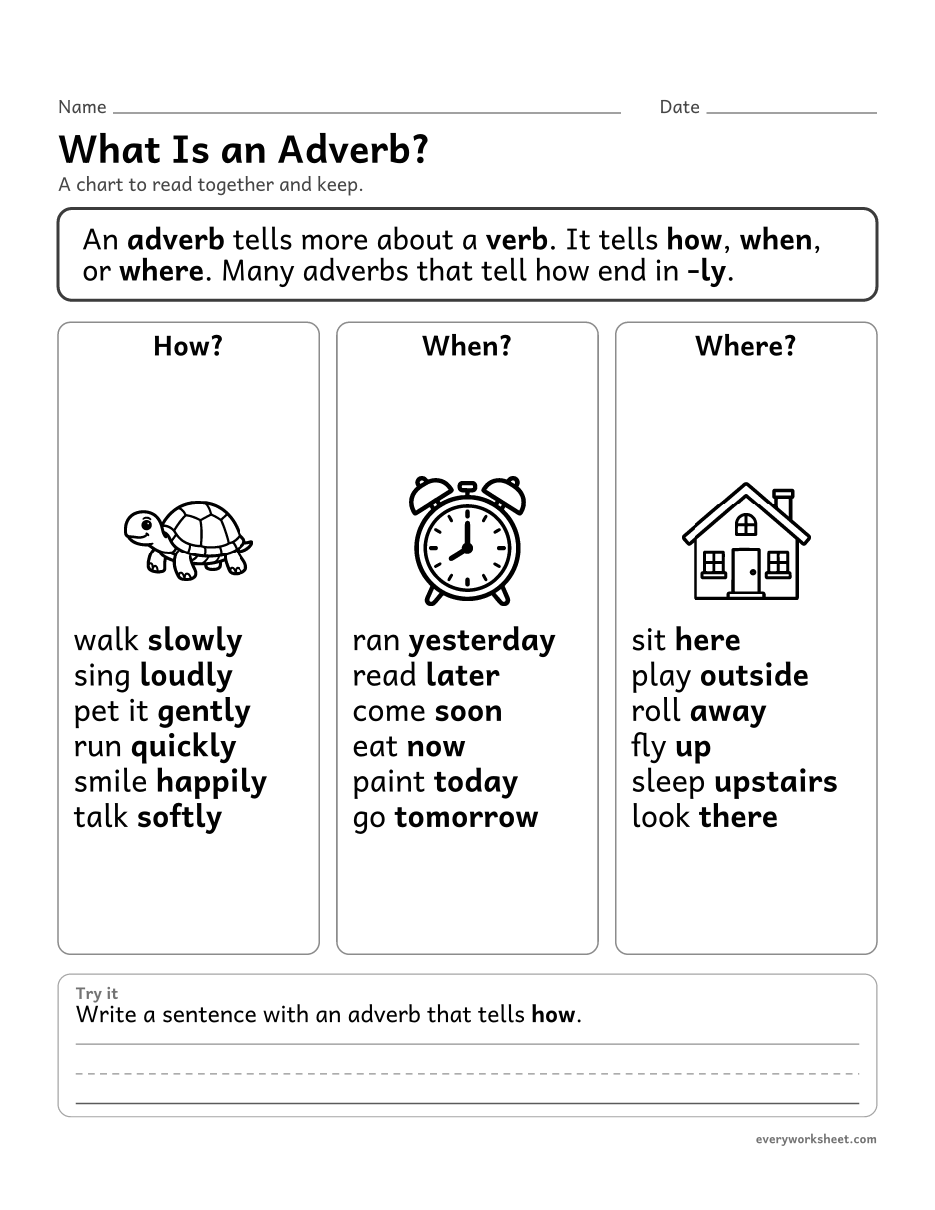
An adverb tells more about a verb. It tells how (slowly, gently), when (today, soon) or where (here, outside) something happens. Many adverbs that tell how end in -ly.
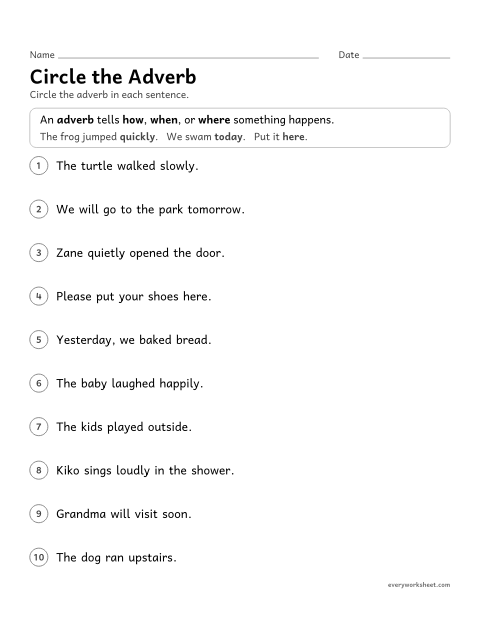
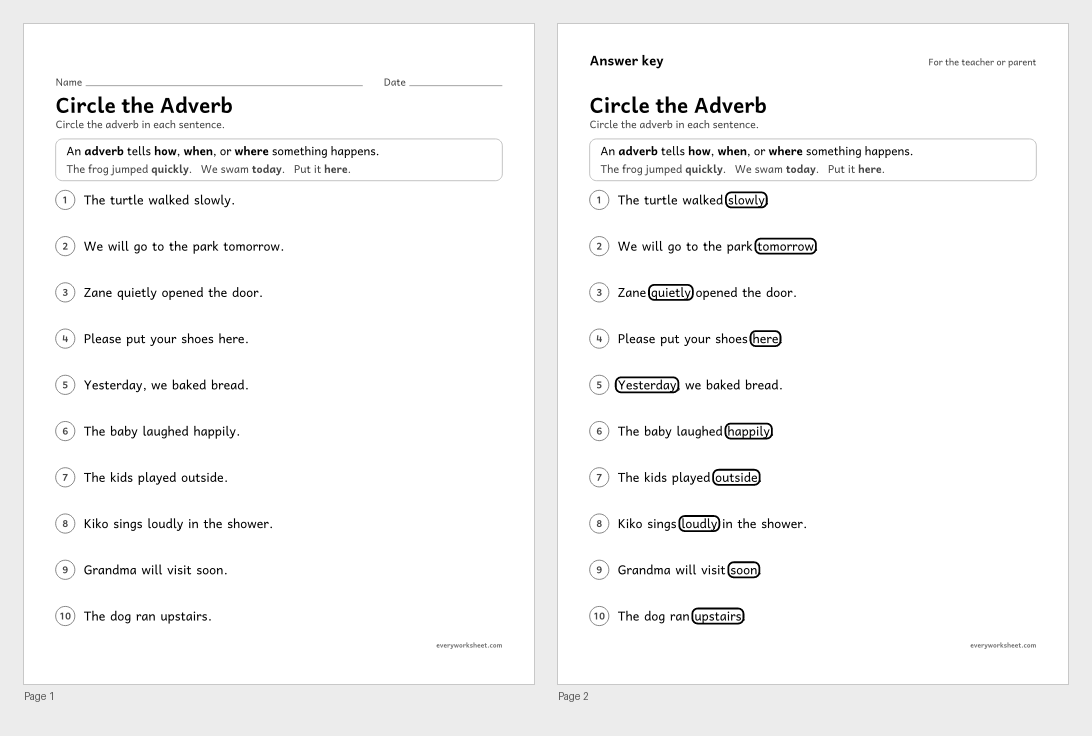
These adverbs worksheets start with a chart that sorts adverbs into how, when and where. Practice pages ask children to circle the adverb in a sentence, sort adverbs by what they tell (cut and paste or write), add -ly to make an adverb, choose the adverb that fits, pick the verb that shows exactly how, and write sentences with adverbs.
Every page with right answers has an answer key, and the cut and paste sort has a no-cut twin.
Standards
CCSS.ELA-LITERACY.L.2.1.EUse adjectives and adverbs, and choose between them depending on what is to be modified.CCSS.ELA-LITERACY.L.2.6Use words and phrases acquired through conversations, reading and being read to, and responding to texts, including using adjectives and adverbs to describe (e.g., When other kids are happy that makes me happy).CCSS.ELA-LITERACY.L.2.5.BDistinguish shades of meaning among closely related verbs (e.g., toss, throw, hurl) and closely related adjectives (e.g., thin, slender, skinny, scrawny).
How to use them
- Start with the chart and act out a few adverbs: walk slowly, walk quickly.
- Do circle the adverb next, asking how, when or where for each sentence.
- Use the sort, then the add -ly page.
- Finish with the writing page.
Teaching tips
- Ask: how did it happen? When? Where? The answer word is often the adverb.
- To add -ly to a word ending in y, change y to i: happy, happily.
- Not every -ly word is an adverb (friendly, lovely), so these pages use clear examples.
- Pair this topic with adjectives: an adjective tells about a noun, an adverb about a verb.
Questions teachers and parents ask
What is an adverb?
A word that tells more about a verb: how, when or where something happens.
How do I explain adjectives and adverbs?
An adjective describes a noun (a quiet cat). An adverb describes a verb (the cat walked quietly).
Do the worksheets have answer keys?
Yes. Every practice page has an answer key.