 View all 2 pages
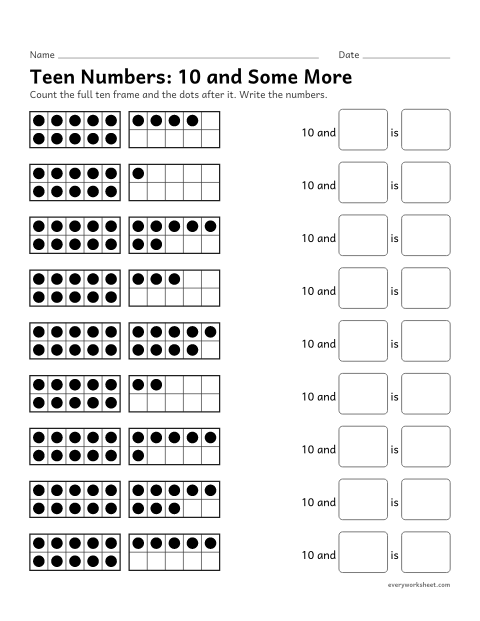
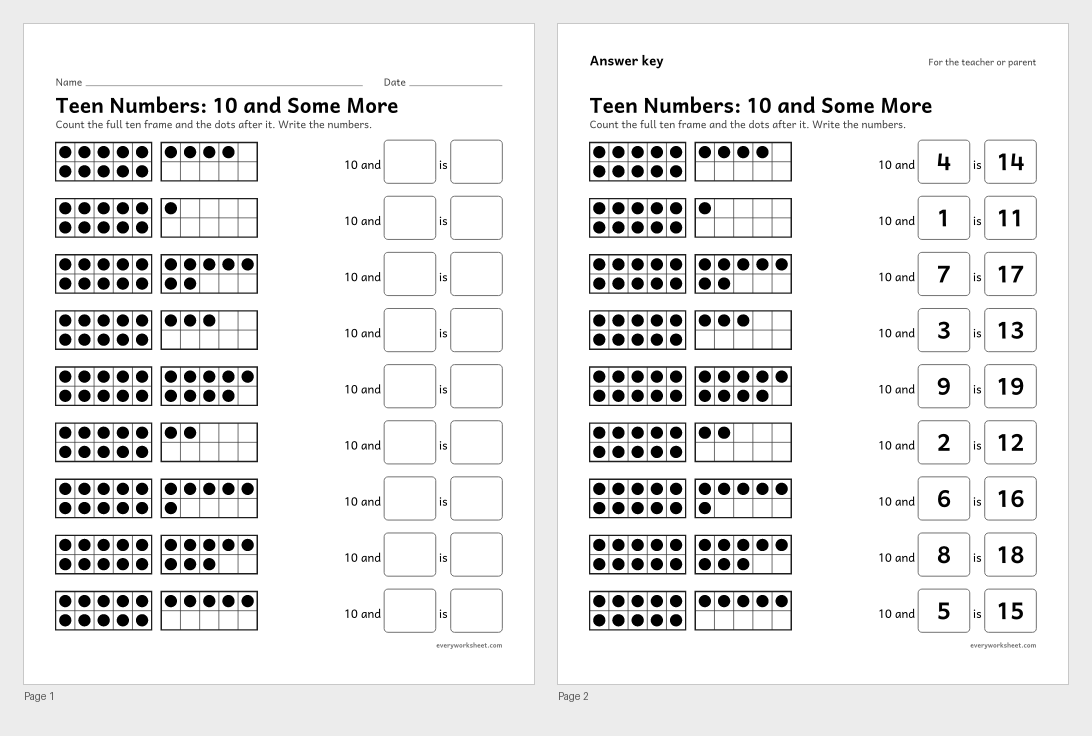
Teen Numbers: 10 and some more
Seeing 11 to 19 as ten ones and some more ones
Answer key on page 2
2 pages38 KB
Teen numbers as ten and some more, tens and ones with rods and cubes, and hundreds, tens and ones with flats, from kindergarten to 2nd grade.
View all 2 pagesSeeing 11 to 19 as ten ones and some more ones
Answer key on page 2
2 pages38 KB
 View all 2 pages
Building 11 to 19 from ten ones and some more ones
Answer key on page 2
2 pages39 KB
 View all 2 pages
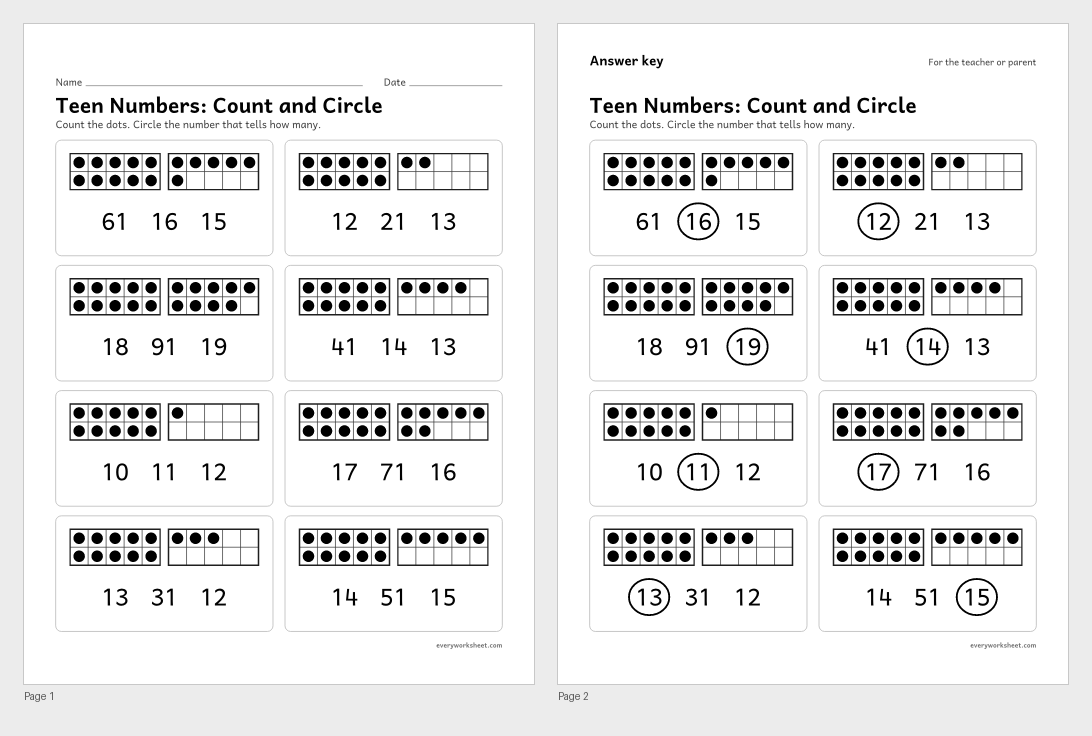
Matching ten frames to teen numbers 11 to 19
Answer key on page 2
2 pages34 KB
 View all 2 pages
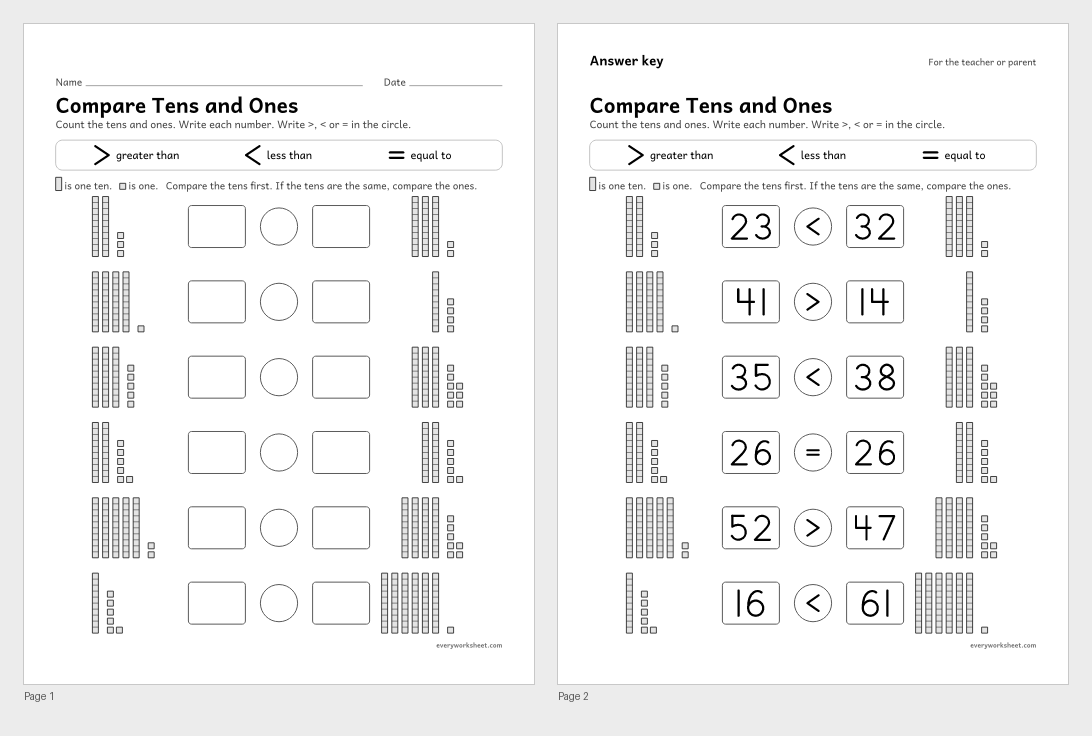
Comparing two-digit numbers using tens and ones
Answer key on page 2
2 pages37 KB
 View larger
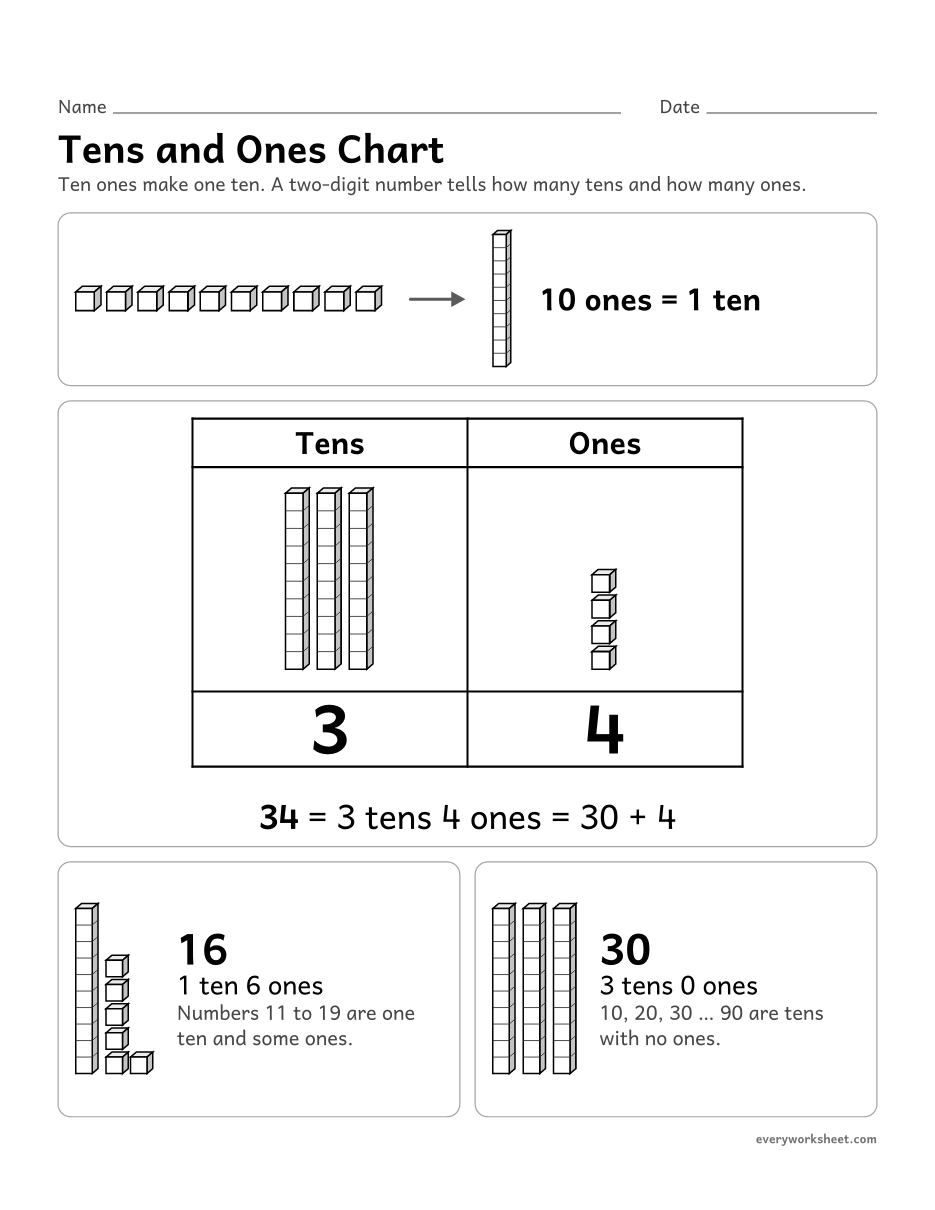
Seeing a ten as ten ones and a two-digit number as tens and ones
1 page31 KB
 View all 2 pages
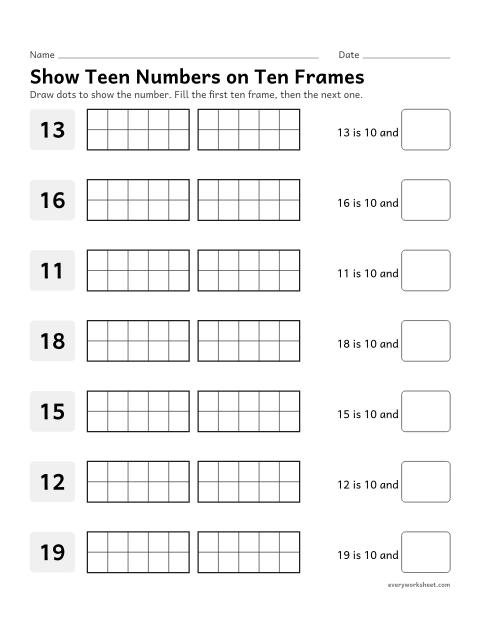
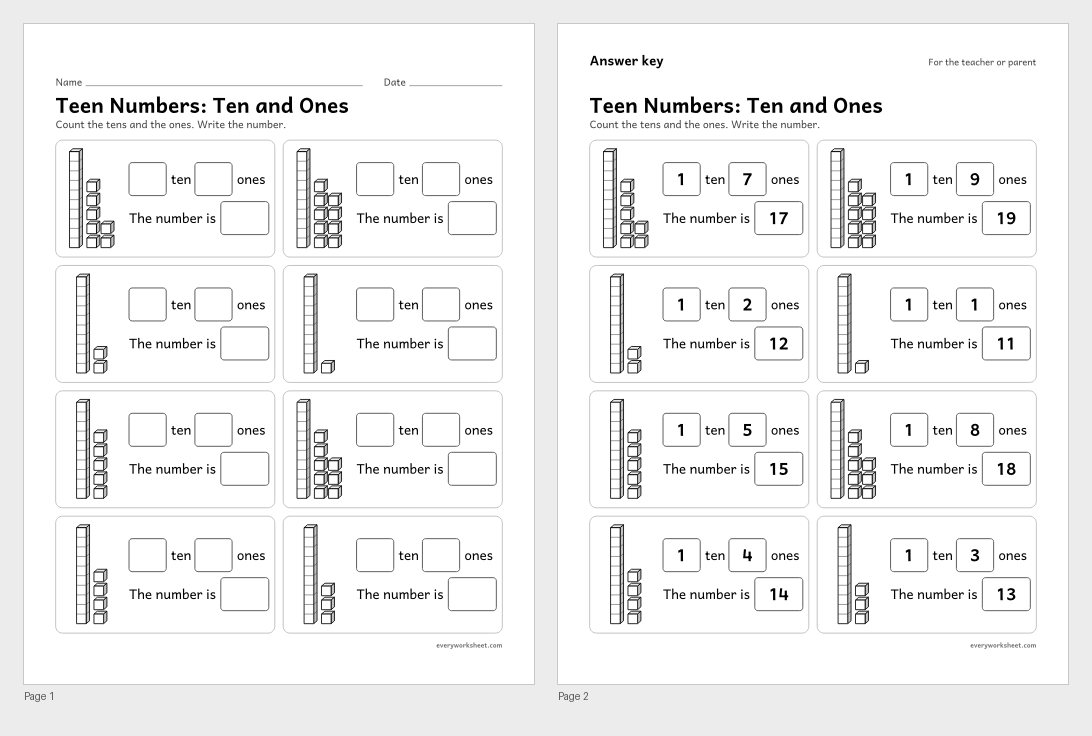
Writing 11 to 19 as one ten and some ones
Answer key on page 2
2 pages40 KB
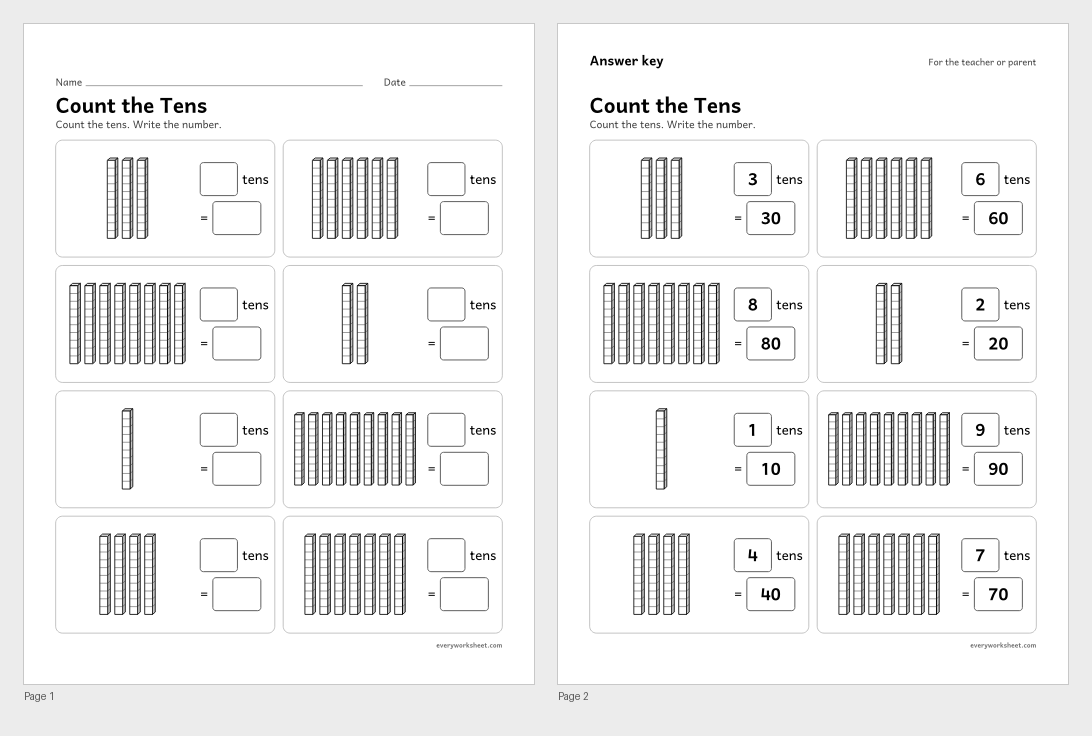 View all 2 pages
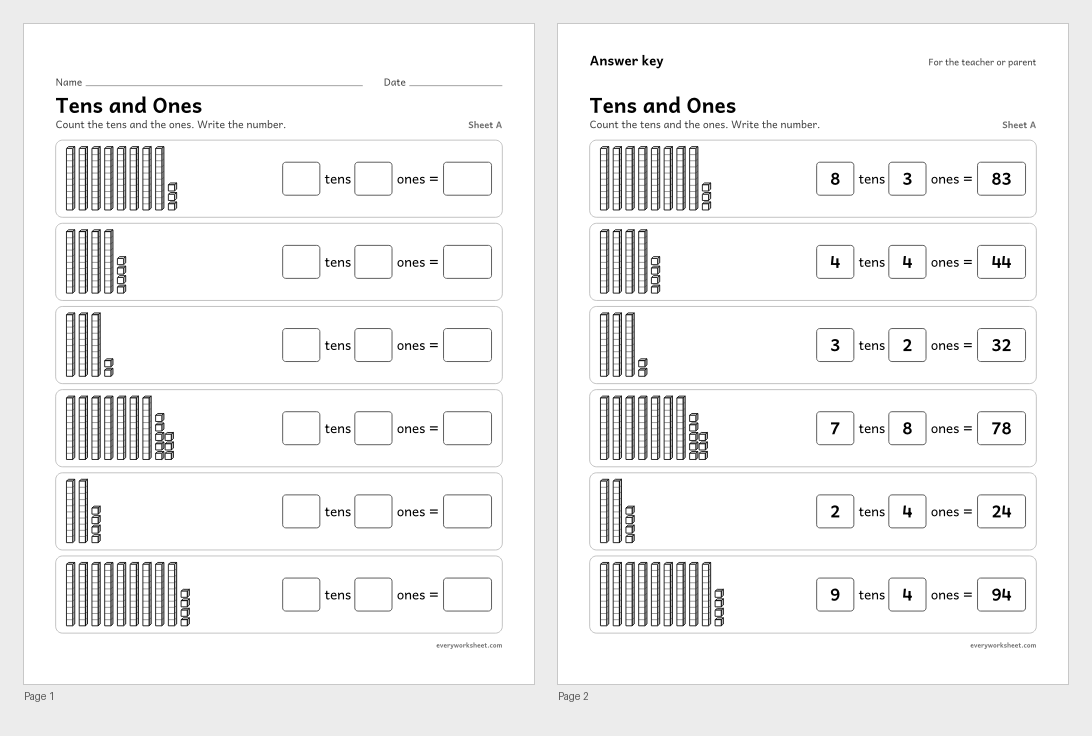 View all 2 pages
Counting tens and ones in base-ten blocks and writing the two-digit number
Answer key on page 2
2 pages41 KB
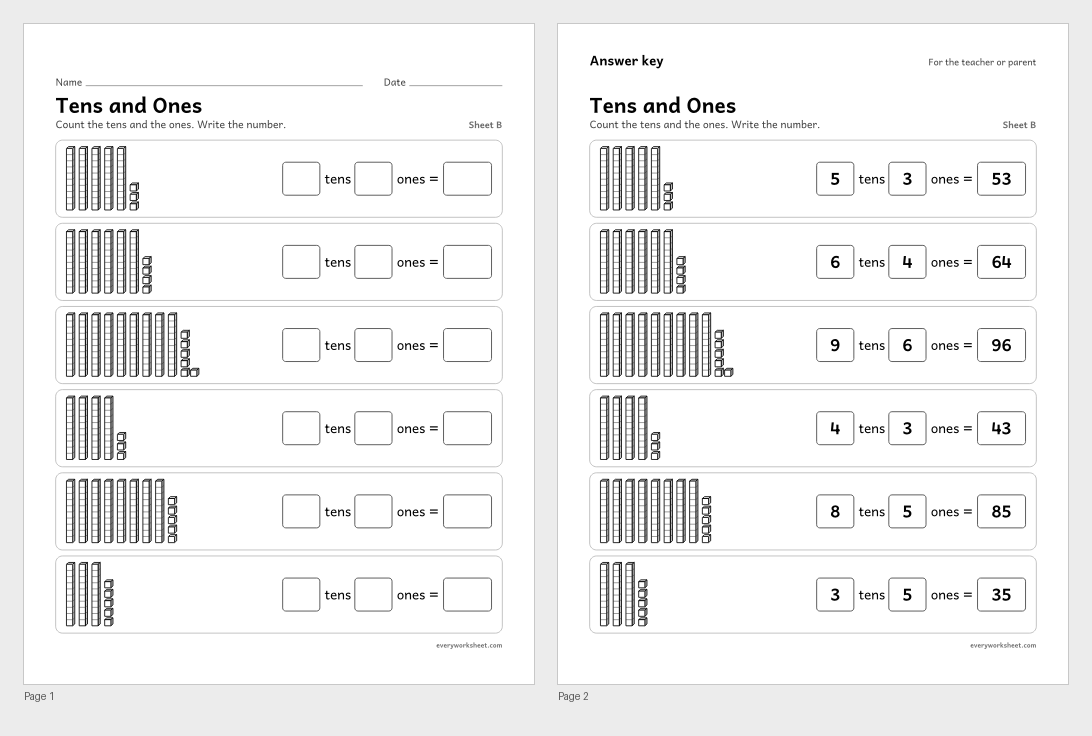 View all 2 pages
Counting tens and ones in base-ten blocks and writing the two-digit number
Answer key on page 2
2 pages42 KB
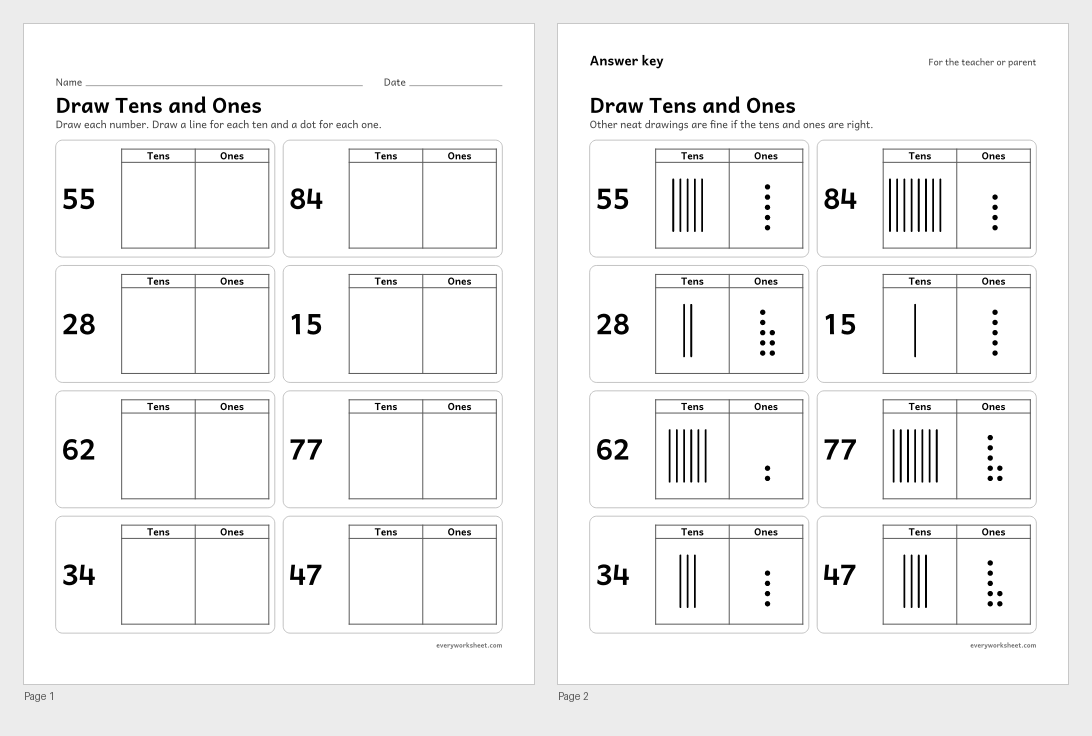 View all 2 pages
Drawing a two-digit number as tens (lines) and ones (dots)
Answer key on page 2
2 pages51 KB
 View all 2 pages
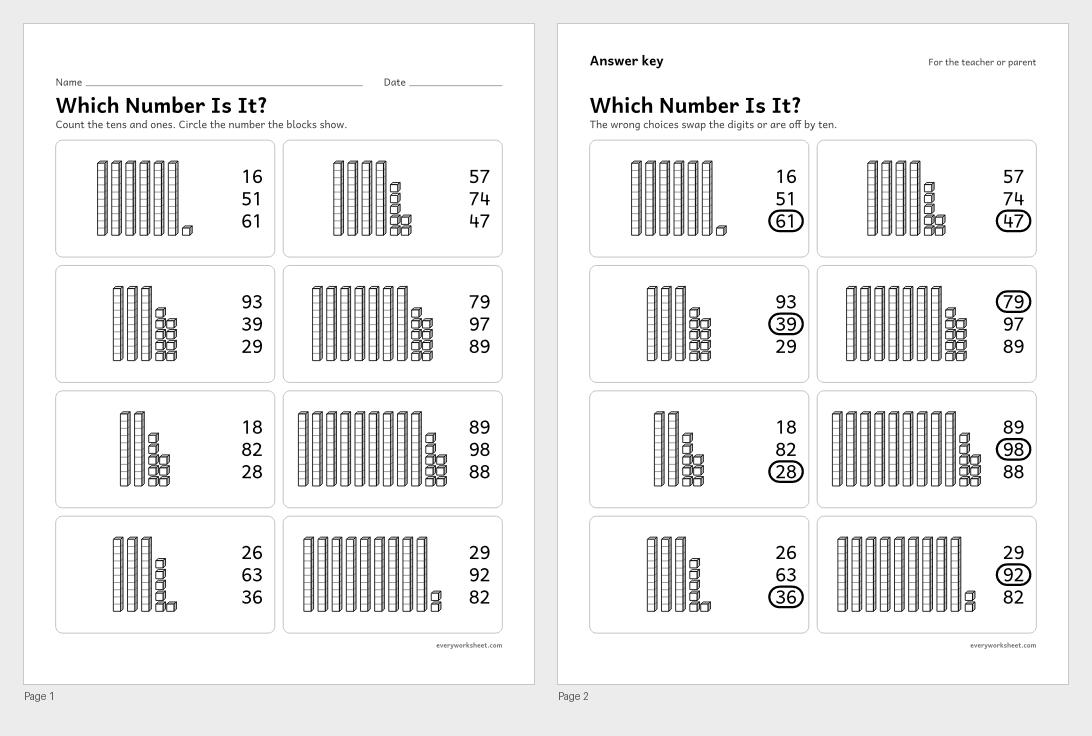
Telling 46 from 64: matching base-ten blocks to the right number
Answer key on page 2
2 pages47 KB
 View all 2 pages
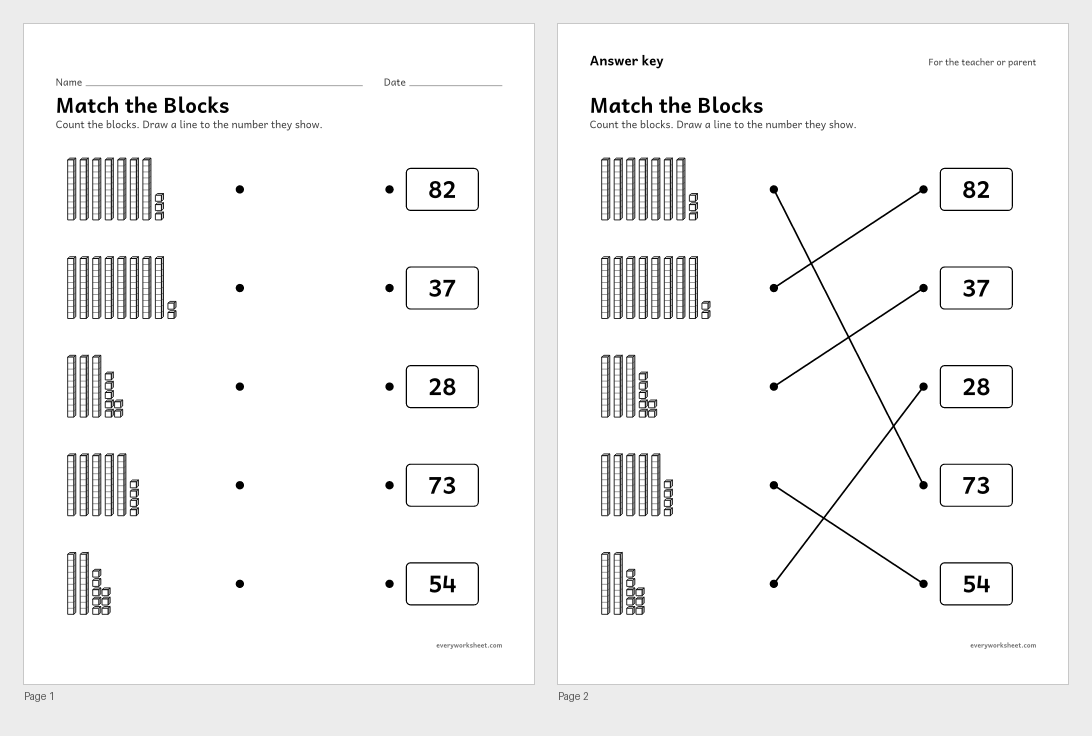
Matching base-ten pictures to two-digit numbers
Answer key on page 2
2 pages33 KB
 View all 2 pages
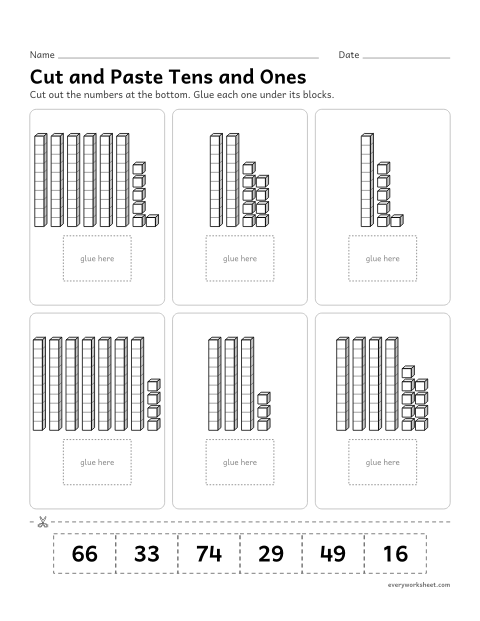
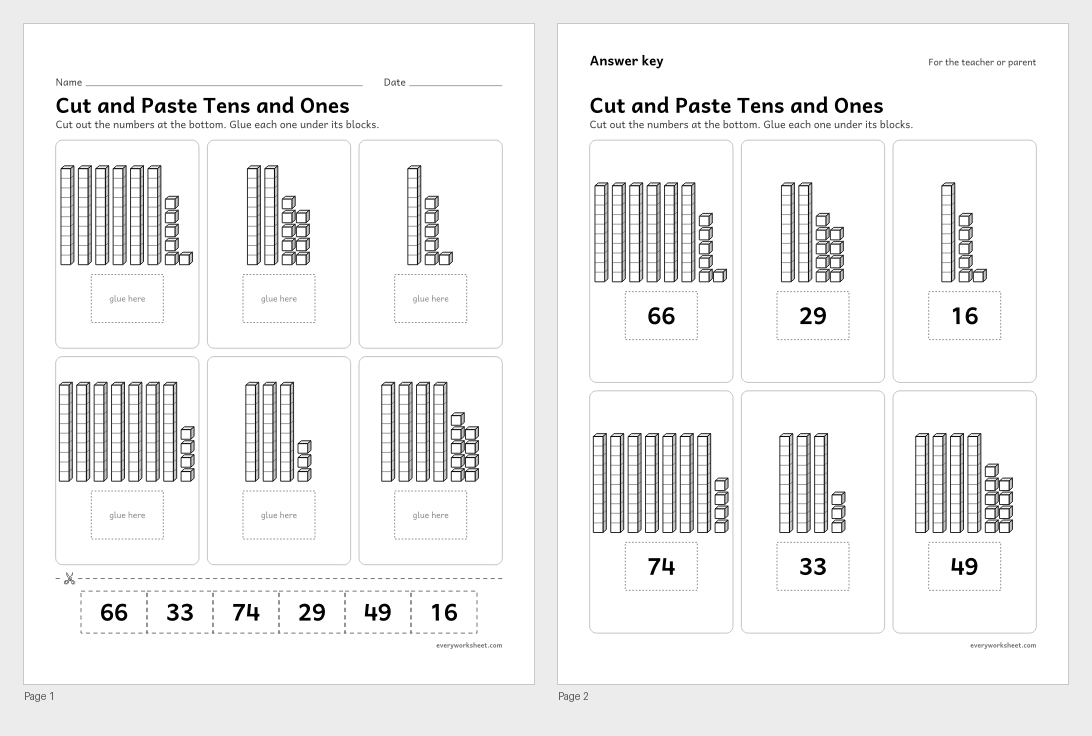
Matching number cards to base-ten pictures (cut and paste)
Answer key on page 2
2 pages65 KB
 View all 2 pages
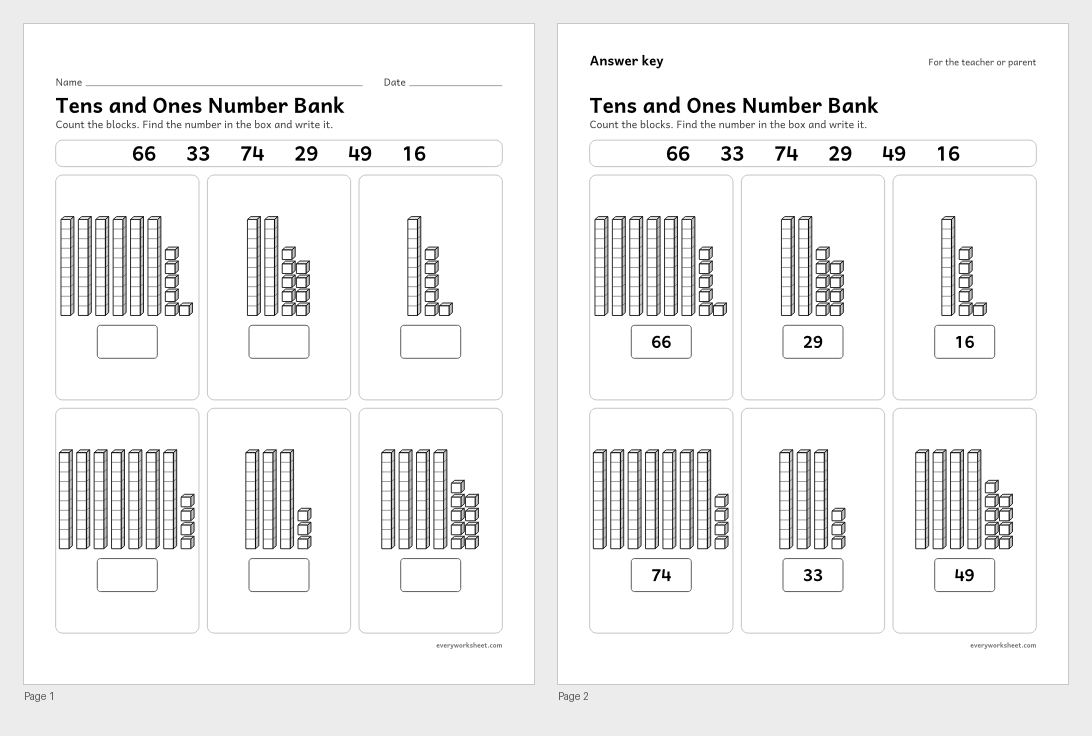
Matching numbers from a bank to base-ten pictures (no cutting)
Answer key on page 2
2 pages36 KB
 View all 2 pages
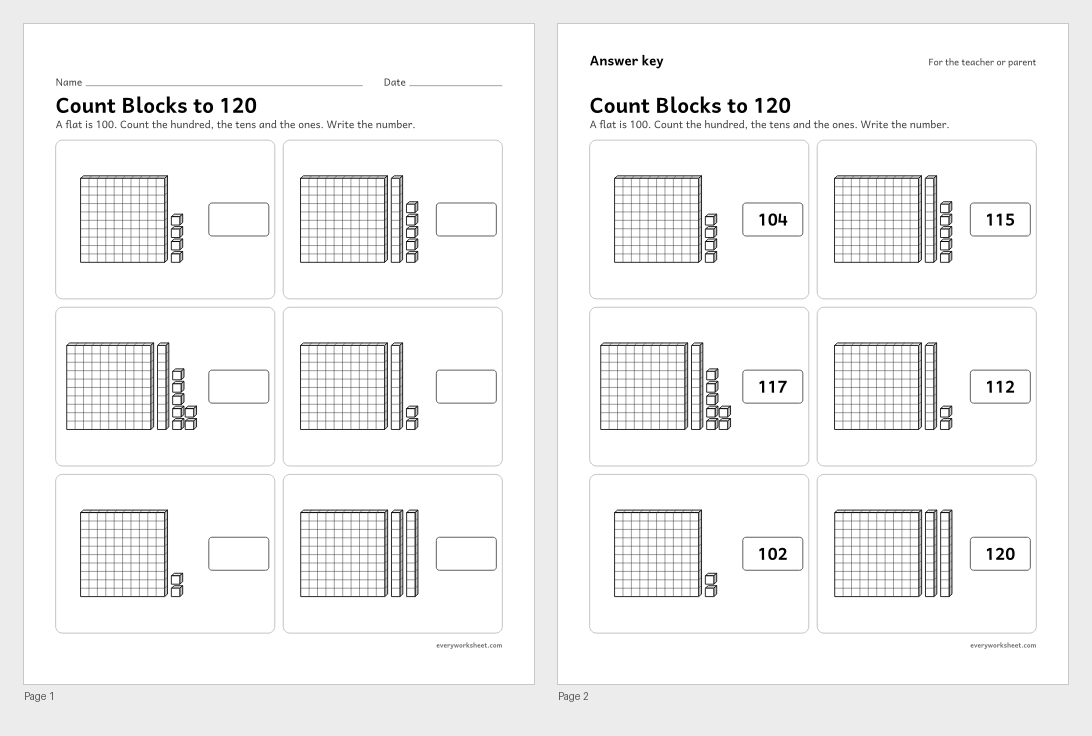
Counting hundreds, tens and ones blocks to 120 and writing the number
Answer key on page 2
2 pages37 KB
 View all 2 pages
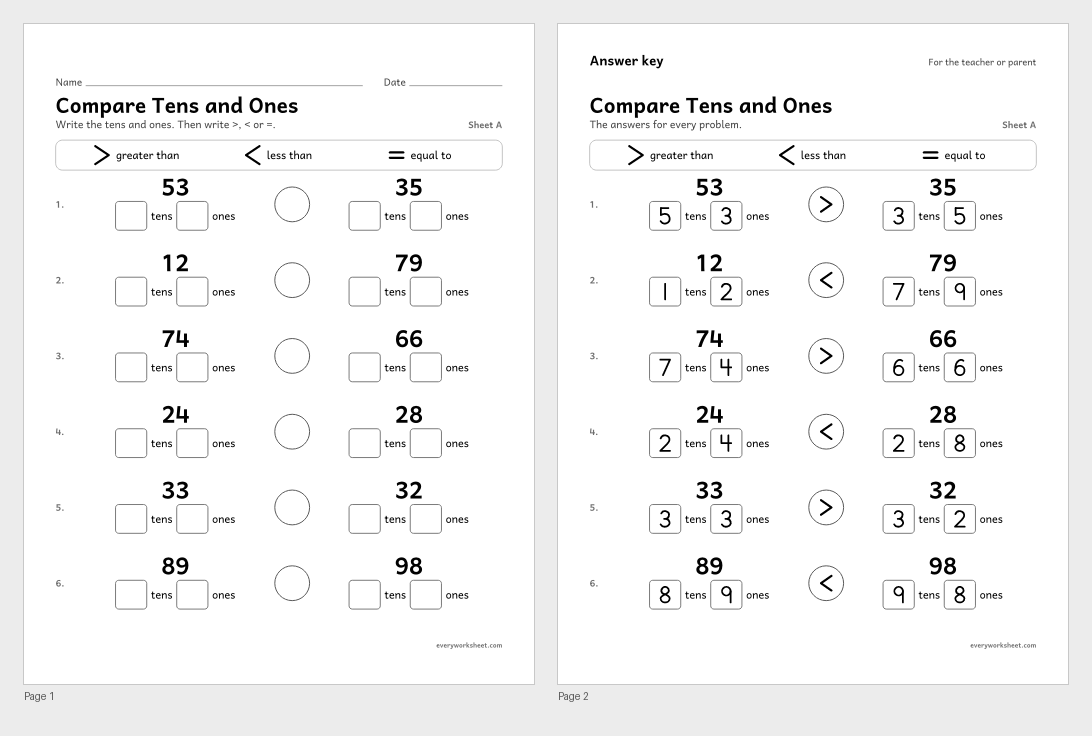
Comparing two-digit numbers by their tens and ones
Answer key on page 2
2 pages61 KB
 View all 2 pages
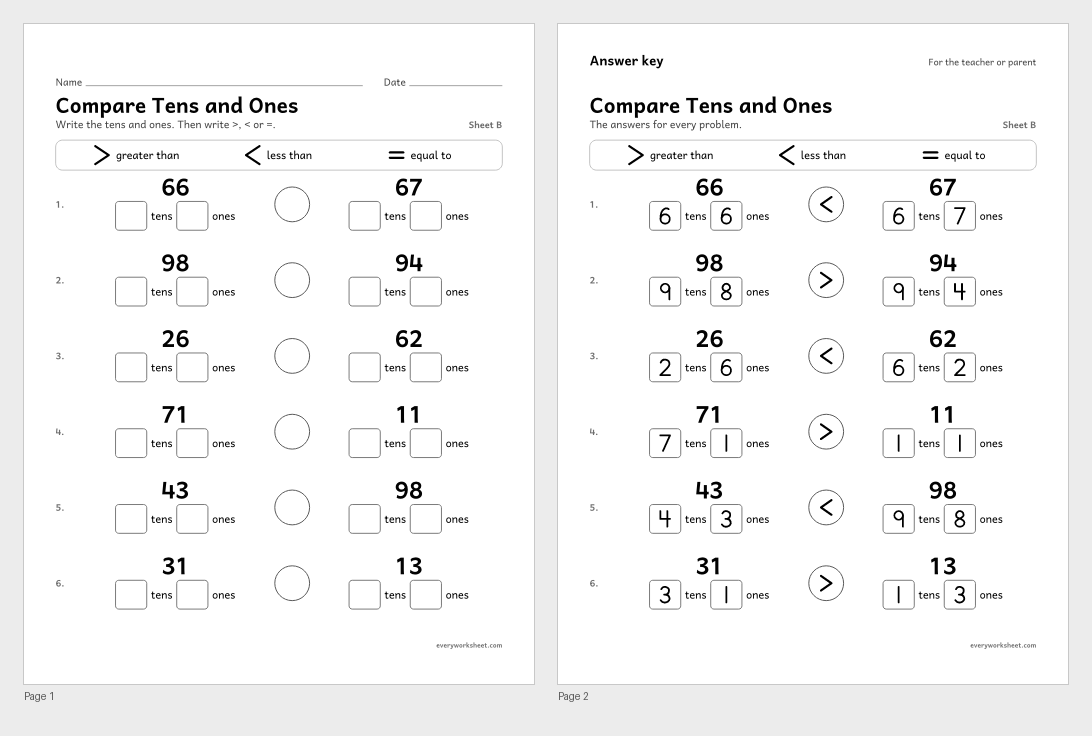
Comparing two-digit numbers by their tens and ones
Answer key on page 2
2 pages61 KB
 View all 2 pages
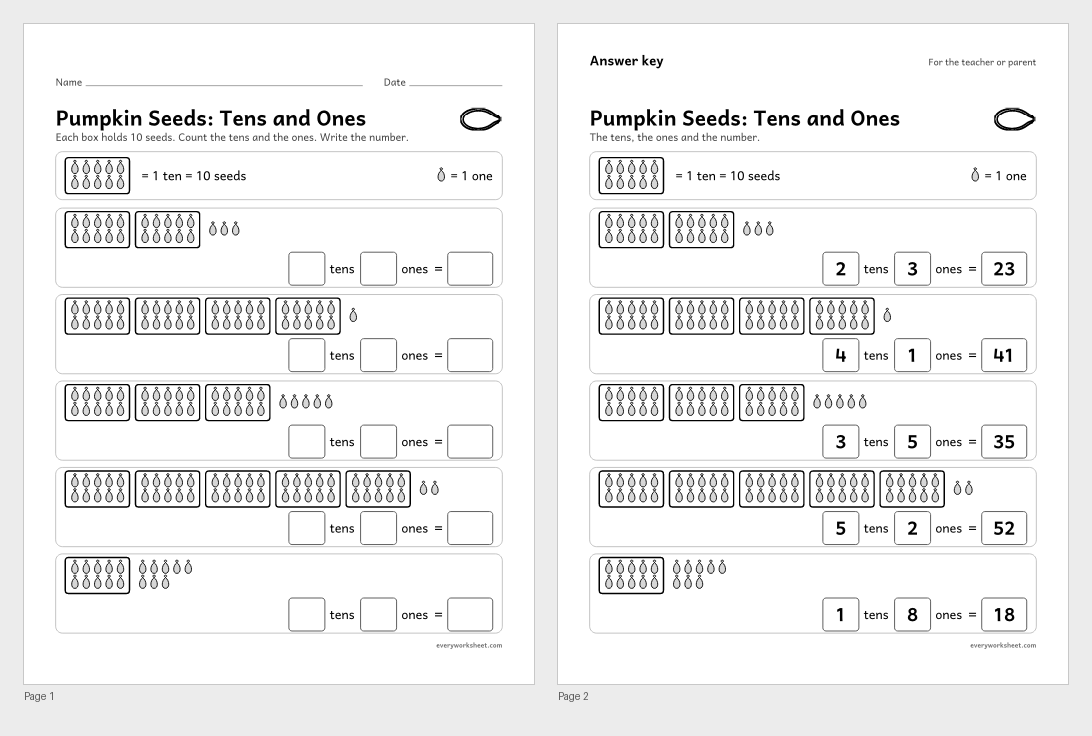
Counting seeds as tens and ones and writing the two-digit number
Answer key on page 2
2 pages71 KB
 View all 2 pages
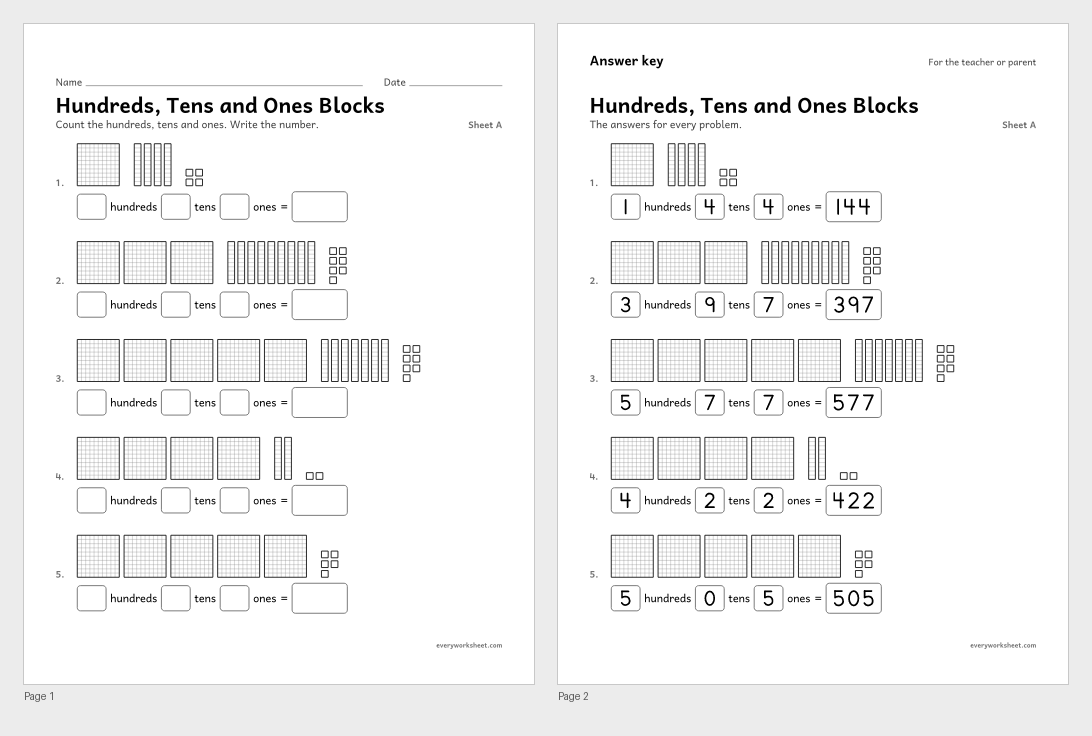
Reading three-digit numbers shown with base-ten blocks
Answer key on page 2
2 pages62 KB
 View all 2 pages
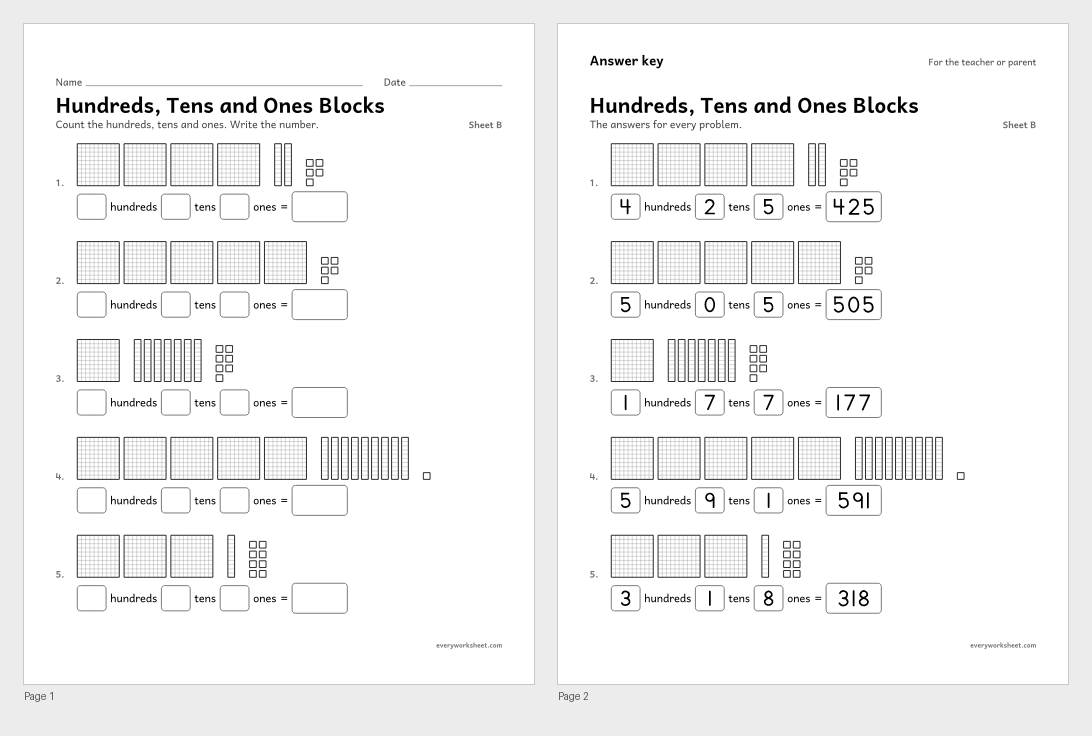
Reading three-digit numbers shown with base-ten blocks
Answer key on page 2
2 pages62 KB
 View all 2 pages
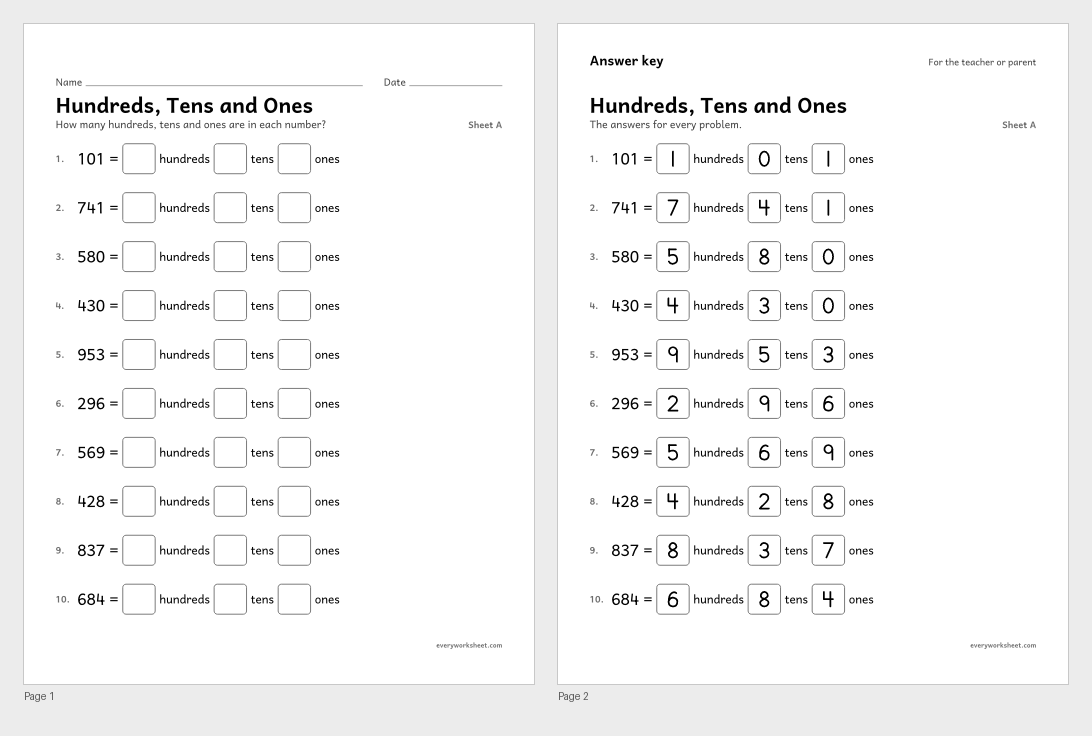
Writing a three-digit number as hundreds, tens and ones
Answer key on page 2
2 pages69 KB
 View all 2 pages
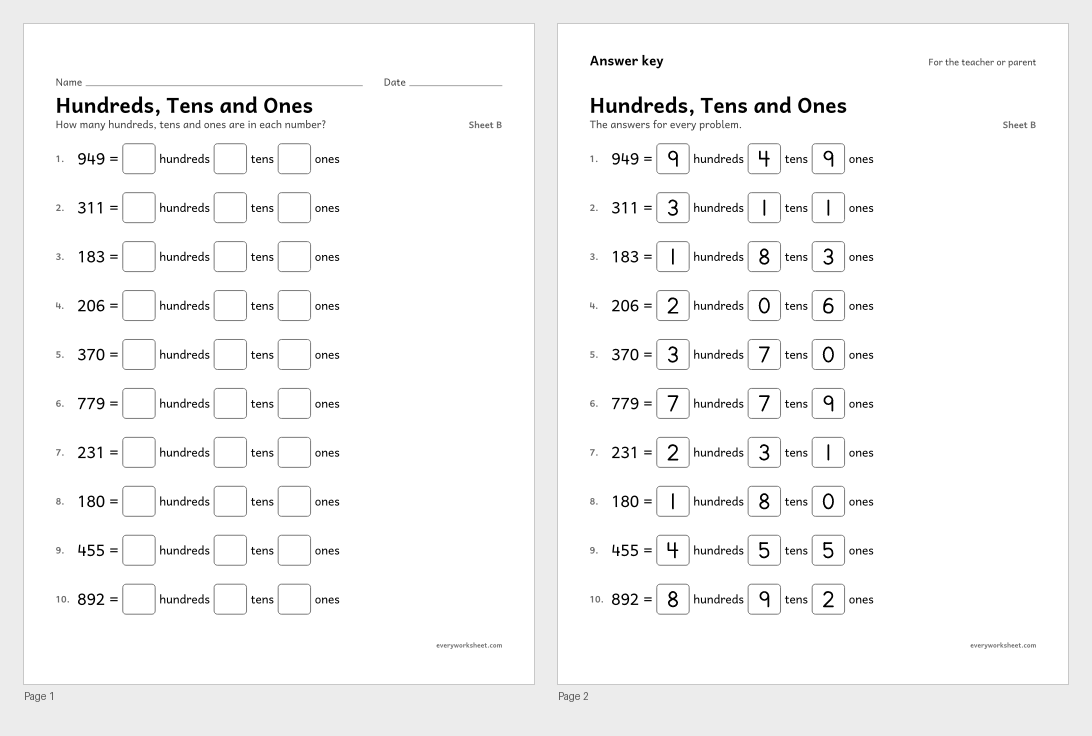
Writing a three-digit number as hundreds, tens and ones
Answer key on page 2
2 pages69 KB
 View all 2 pages
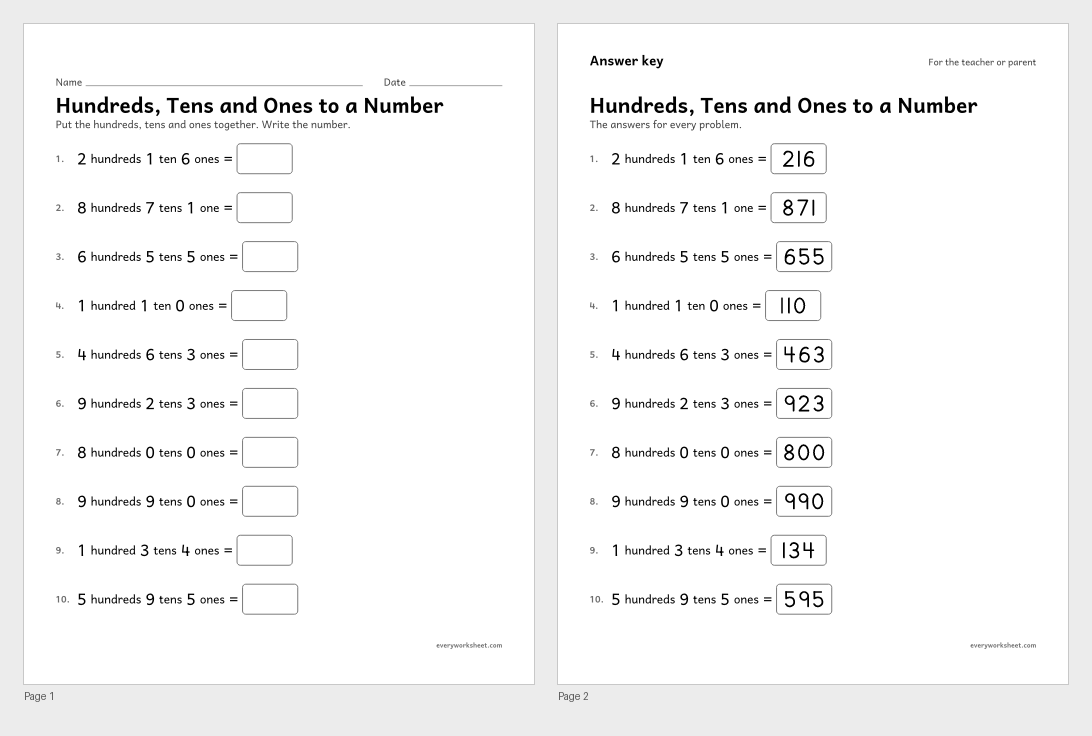
Writing a number from hundreds, tens and ones
Answer key on page 2
2 pages75 KB
 View all 2 pages
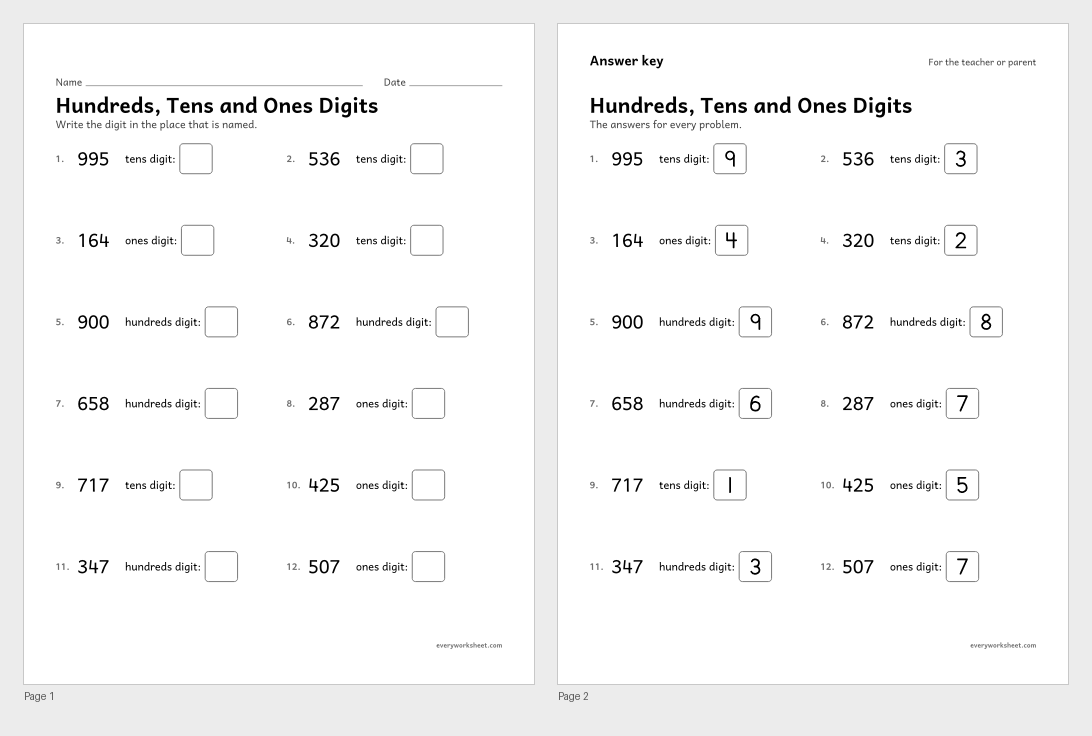
Naming the digit in the hundreds, tens or ones place
Answer key on page 2
2 pages60 KB
 View all 2 pages
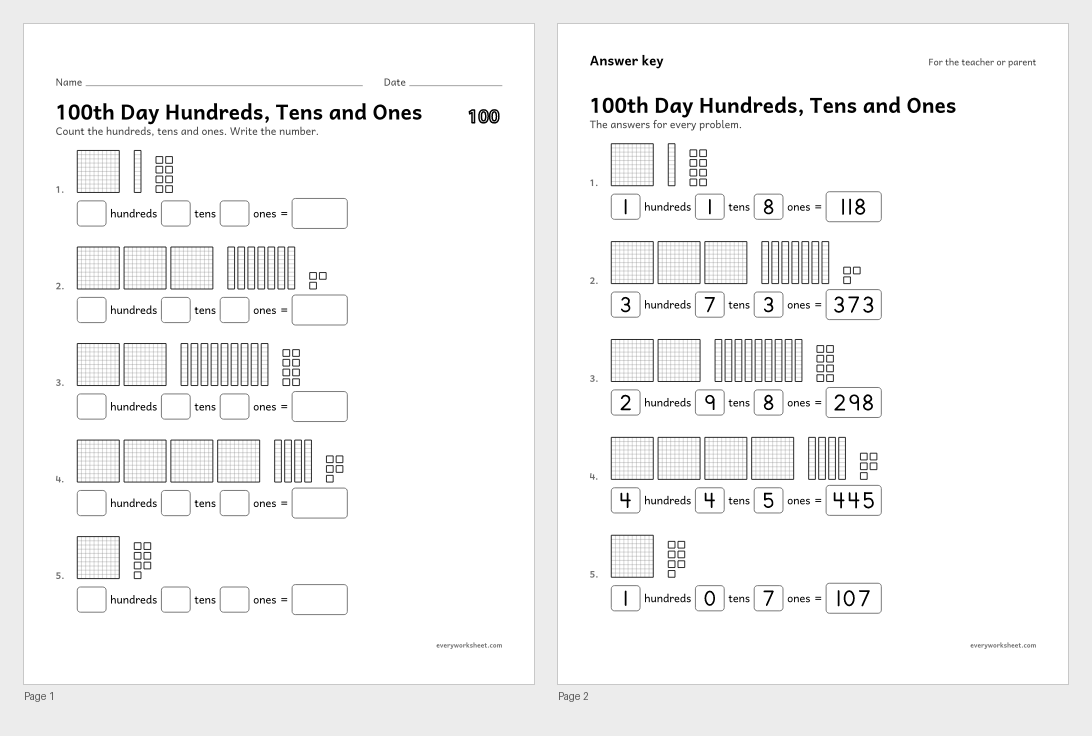
Reading three-digit numbers shown with base-ten blocks
Answer key on page 2
2 pages62 KB
Print at 100% (actual size) for the cleanest tracing lines.
Base ten blocks show place value you can see: a small cube is 1, a rod is 10 cubes, and a flat is 100 cubes. A child can count 34 as 3 rods and 4 cubes.
Kindergarten starts with teen numbers as 10 and some more. 1st grade works with tens and ones up to 120, and 2nd grade adds hundreds.
The sheets are grouped by grade, and the practice sheets have answer keys.
CCSS.MATH.CONTENT.K.NBT.A.1Compose and decompose numbers from 11 to 19 into ten ones and some further ones, e.g., by using objects or drawings, and record each composition or decomposition by a drawing or equation (e.g., 18 = 10 + 8); understand that these numbers are composed of ten ones and one, two, three, four, five, six, seven, eight, or nine ones.CCSS.MATH.CONTENT.1.NBT.B.2Understand that the two digits of a two-digit number represent amounts of tens and ones. Understand the following as special cases:CCSS.MATH.CONTENT.2.NBT.A.1Understand that the three digits of a three-digit number represent amounts of hundreds, tens, and ones; e.g., 706 equals 7 hundreds, 0 tens, and 6 ones. Understand the following as special cases:Base ten blocks are cubes (ones), rods (tens) and flats (hundreds). Ten cubes make a rod and ten rods make a flat, so the blocks match how our numbers are written.
Teen numbers are 11 to 19. Each is one ten and some ones, so 13 is 10 and 3. Kindergarten children learn to see them that way.