 View larger
Homophones
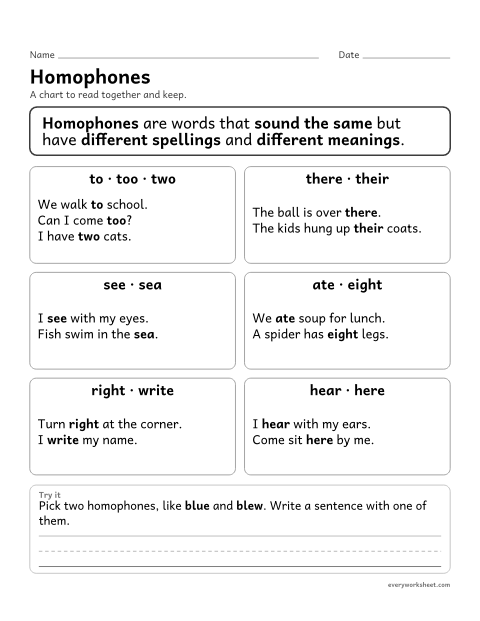
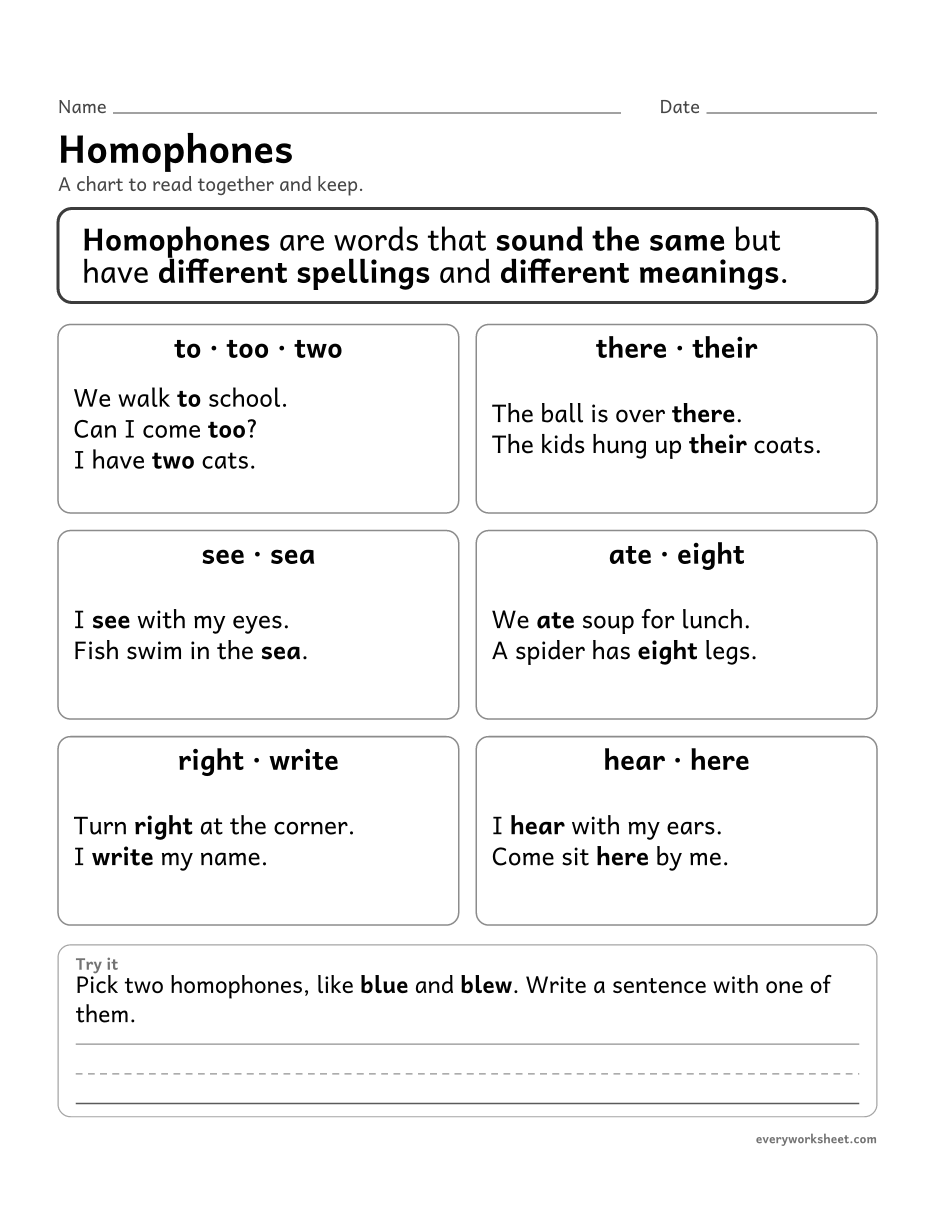
Knowing that homophones sound alike but have different spellings and meanings
1 page32 KB
A homophones chart plus choose, write, match and picture-clue pages and sentence writing, with answer keys.
View largerKnowing that homophones sound alike but have different spellings and meanings
1 page32 KB
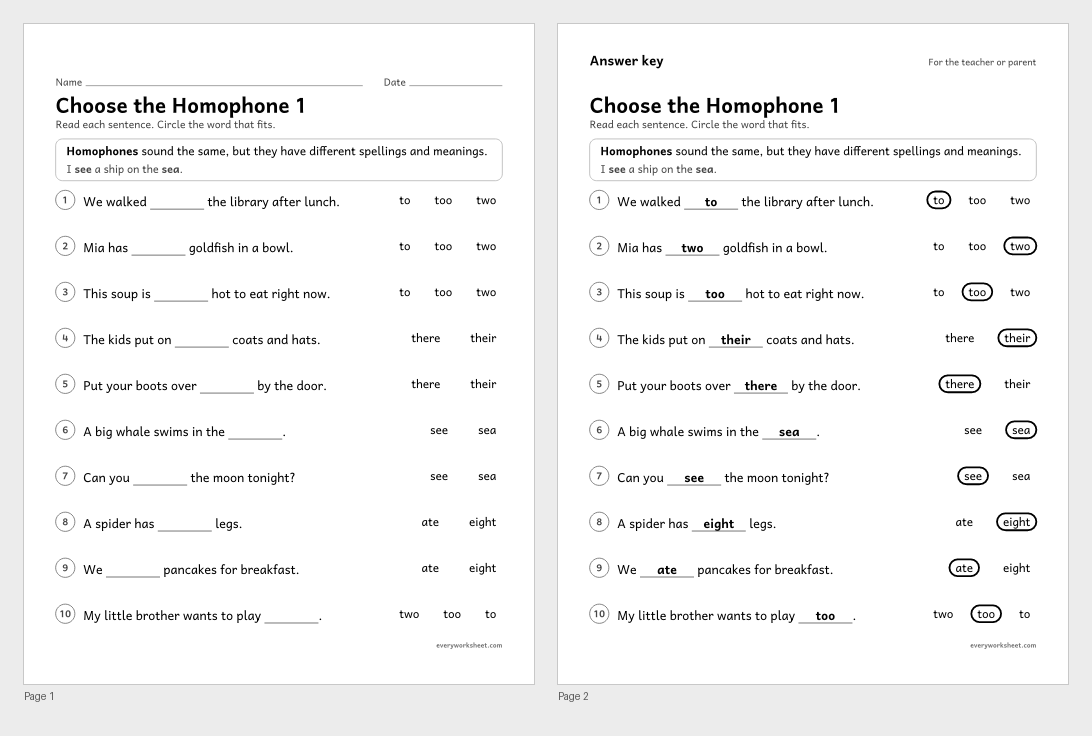 View all 2 pages
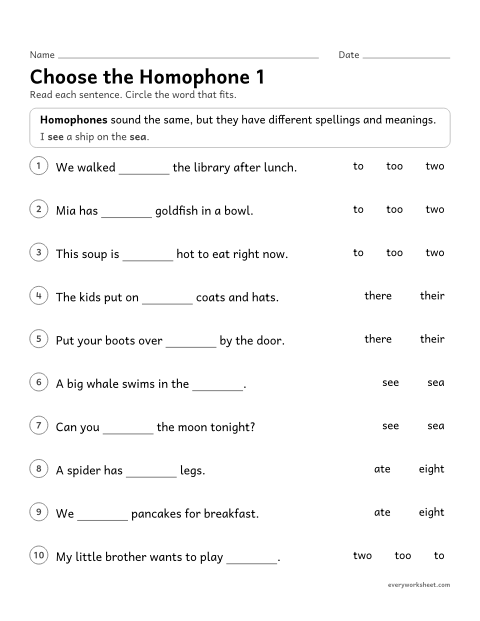
Using sentence context to choose between to, too, two, there, their, see, sea, ate and eight
Answer key on page 2
2 pages52 KB
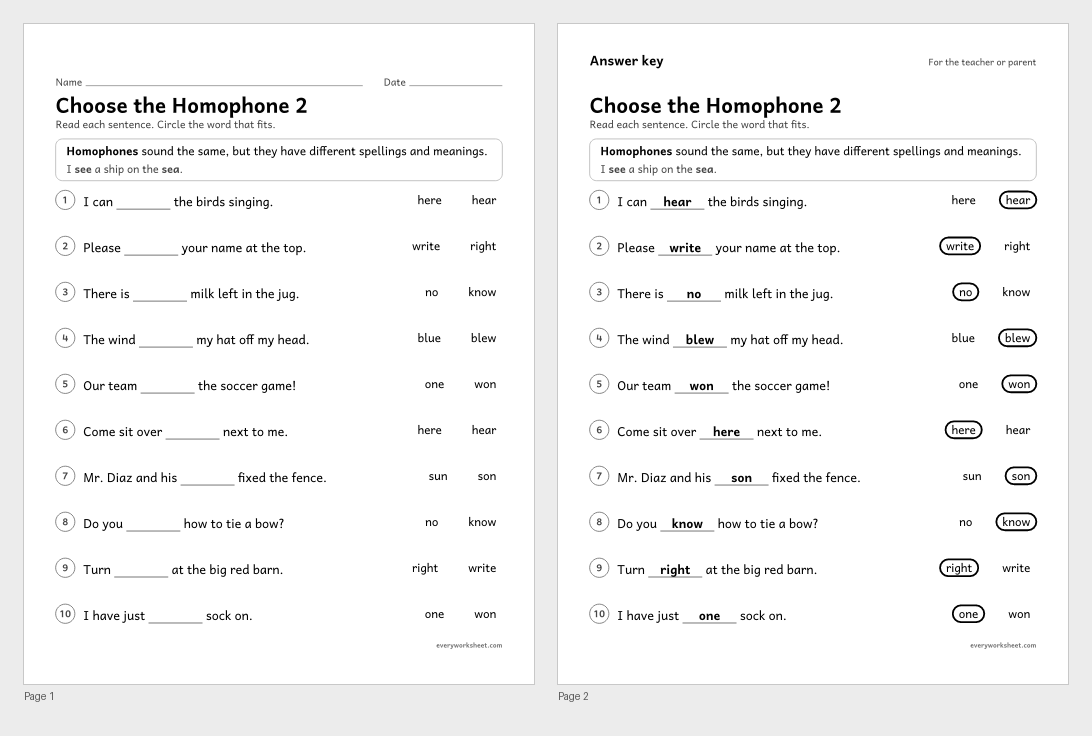 View all 2 pages
Using sentence context to choose between hear, here, right, write, know, no, blue, blew, one, won, sun and son
Answer key on page 2
2 pages53 KB
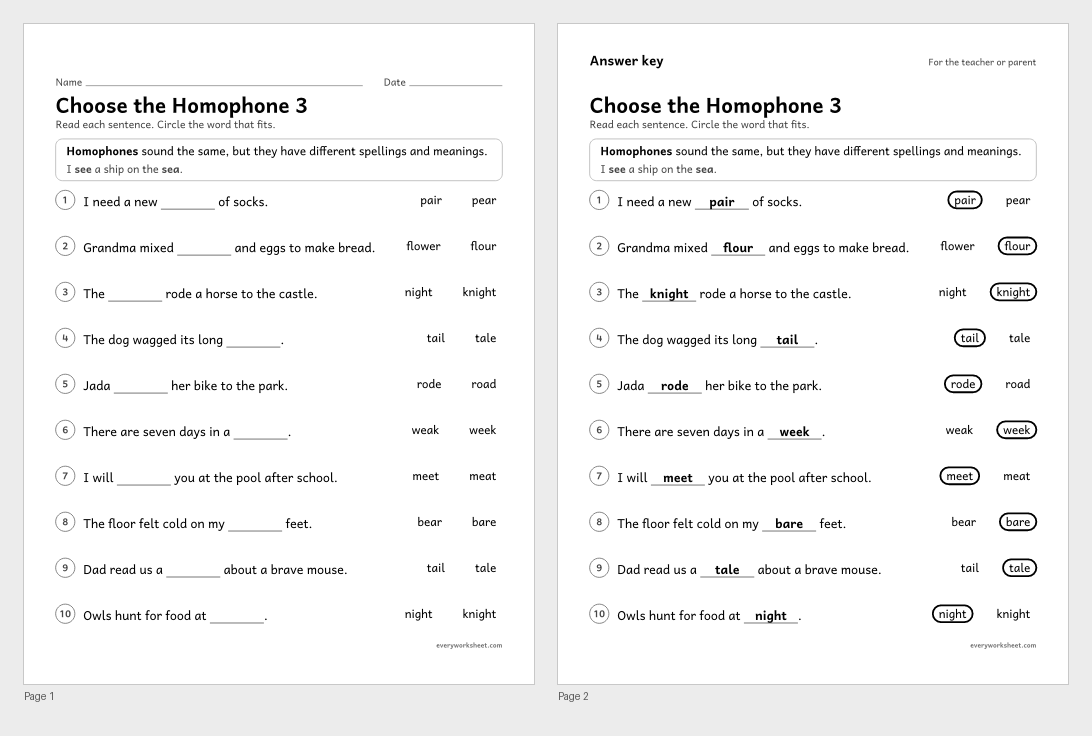 View all 2 pages
Using sentence context to choose between pair, pear, flower, flour, night, knight, tail, tale and other homophones
Answer key on page 2
2 pages53 KB
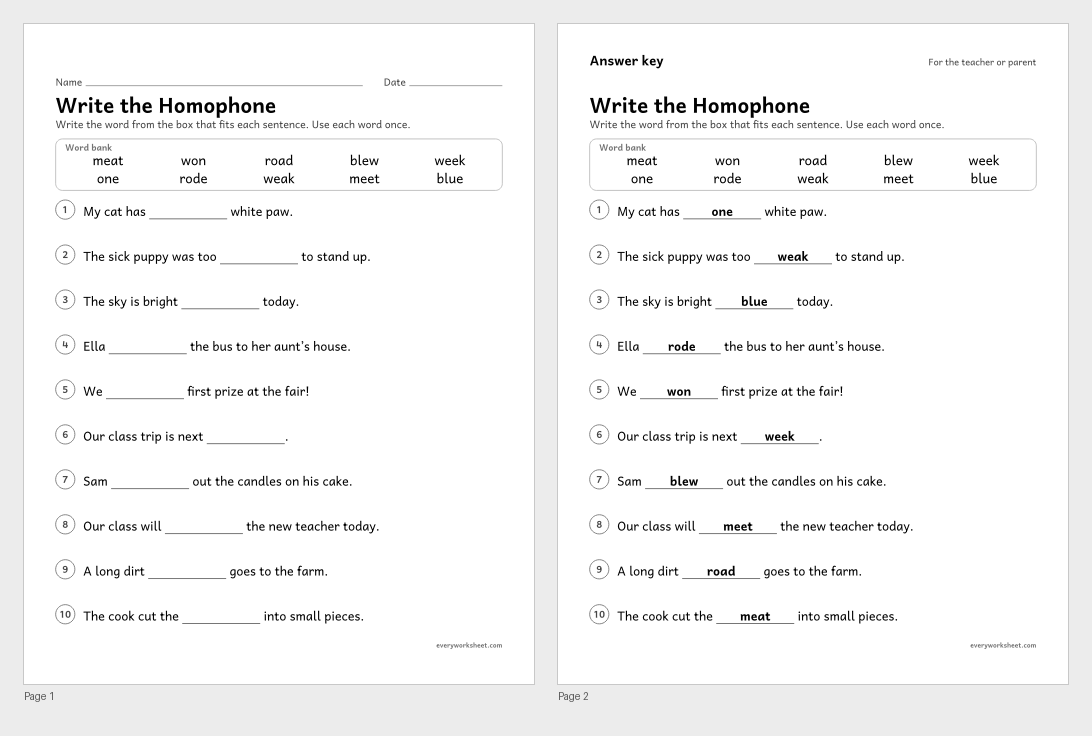 View all 2 pages
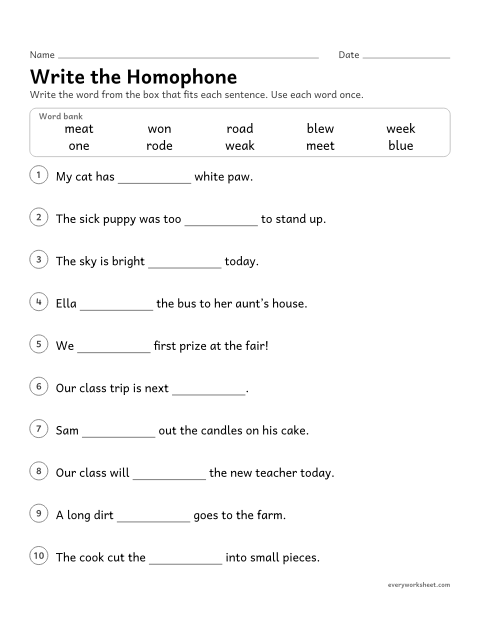
Spelling the homophone that fits a sentence (one, won, blue, blew, week, weak, road, rode, meet, meat)
Answer key on page 2
2 pages50 KB
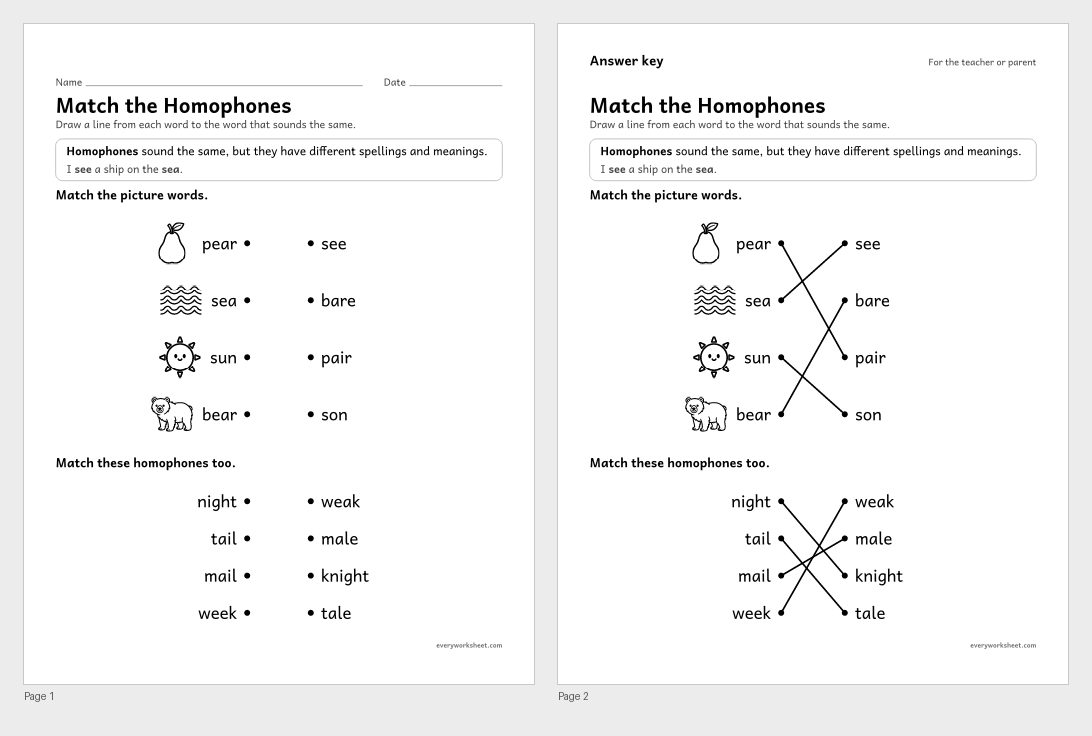 View all 2 pages
Matching homophone pairs that sound the same but are spelled differently
Answer key on page 2
2 pages122 KB
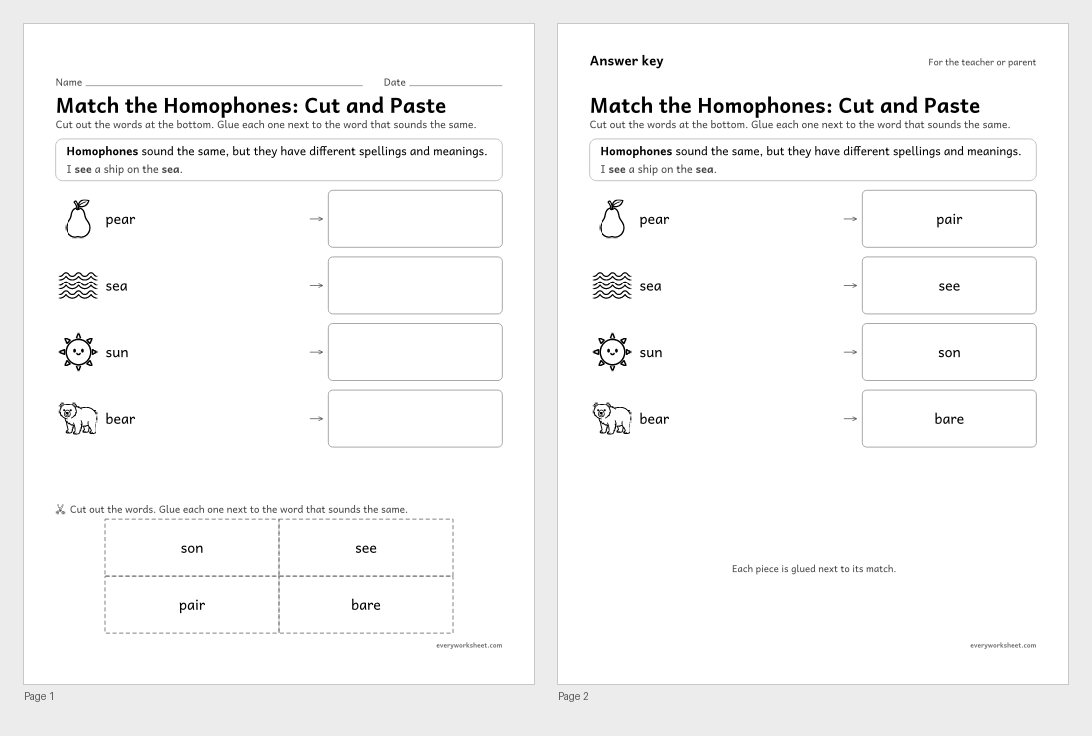 View all 2 pages
Matching homophone pairs that sound the same but are spelled differently
Answer key on page 2
2 pages150 KB
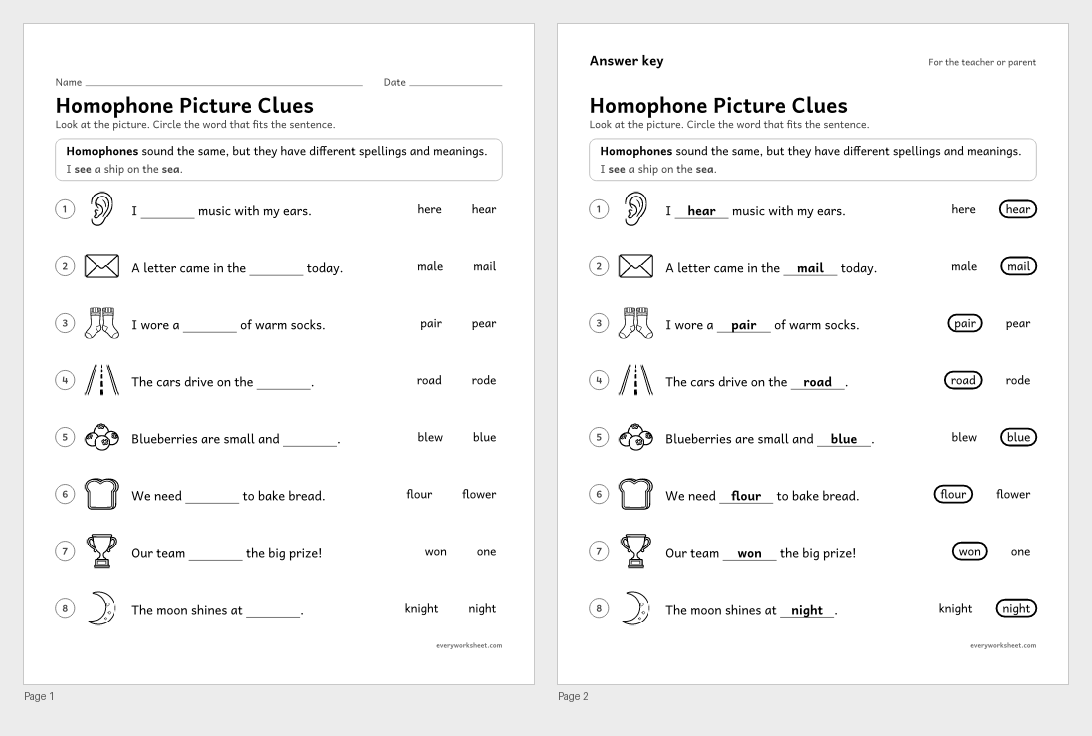 View all 2 pages
Using a picture and a sentence to choose the right homophone
Answer key on page 2
2 pages226 KB
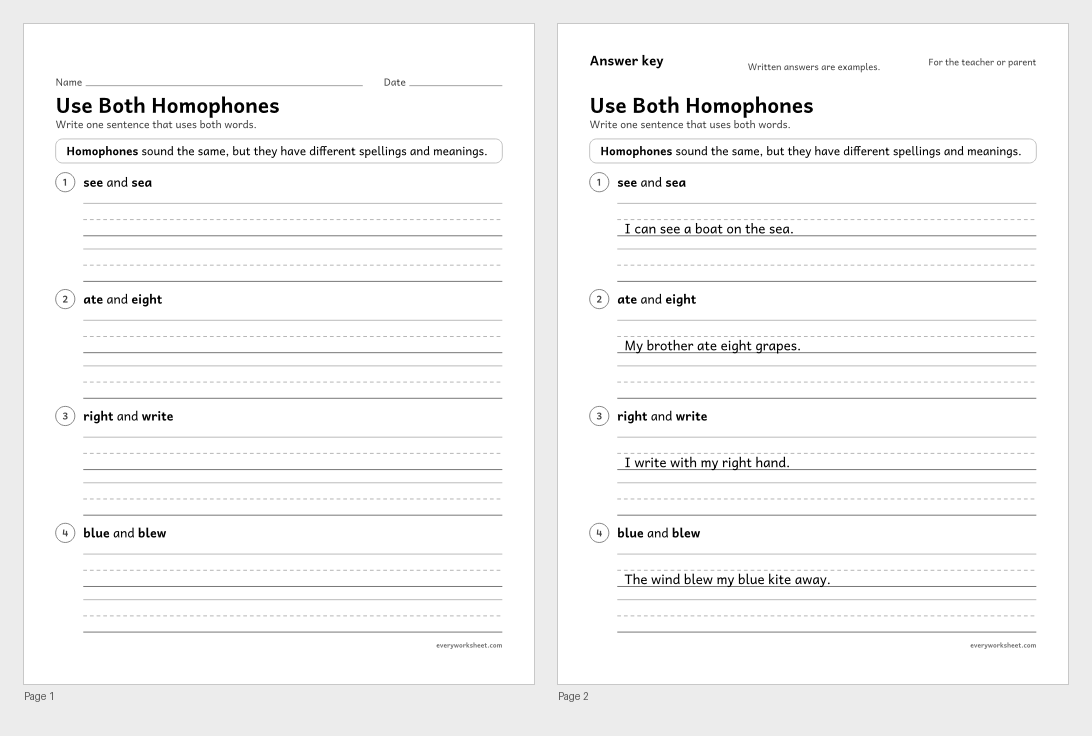 View all 2 pages
Writing a sentence that uses both words of a homophone pair correctly
Answer key on page 2
2 pages37 KB
Print at 100% (actual size) for the cleanest tracing lines.
Homophones are words that sound the same but have different spellings and meanings: to, too and two; see and sea; right and write. Second graders meet them in their reading and need to choose the right spelling when they write.
These homophones worksheets start with a chart of common pairs, each in a sentence. Practice pages ask children to circle the homophone that fits a sentence, write the right homophone from a word bank, match homophone pairs (with lines or cut and paste), use picture clues, and write sentences that use both words of a pair.
Every page with right answers has an answer key.
CCSS.ELA-LITERACY.L.2.4.AUse sentence-level context as a clue to the meaning of a word or phrase.CCSS.ELA-LITERACY.L.2.2.DGeneralize learned spelling patterns when writing words (e.g., cage → badge; boy → boil).Words that sound the same but are spelled differently and mean different things, like see and sea or ate and eight.
Common pairs like to, too and two; there and their; see and sea; ate and eight; right and write; hear and here; one and won; blue and blew.
Yes. Every practice page has an answer key.