 View larger
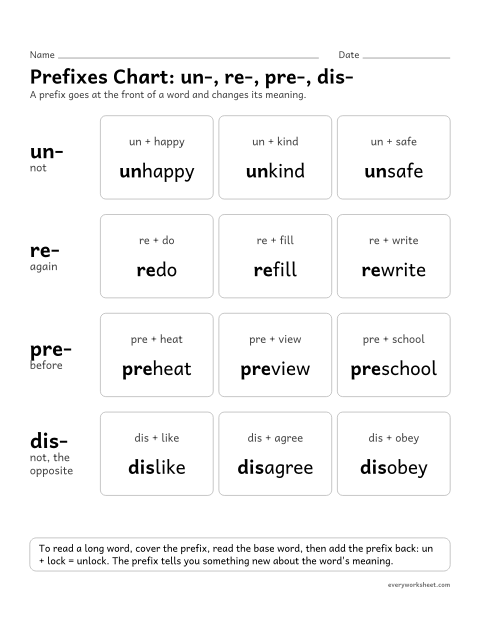
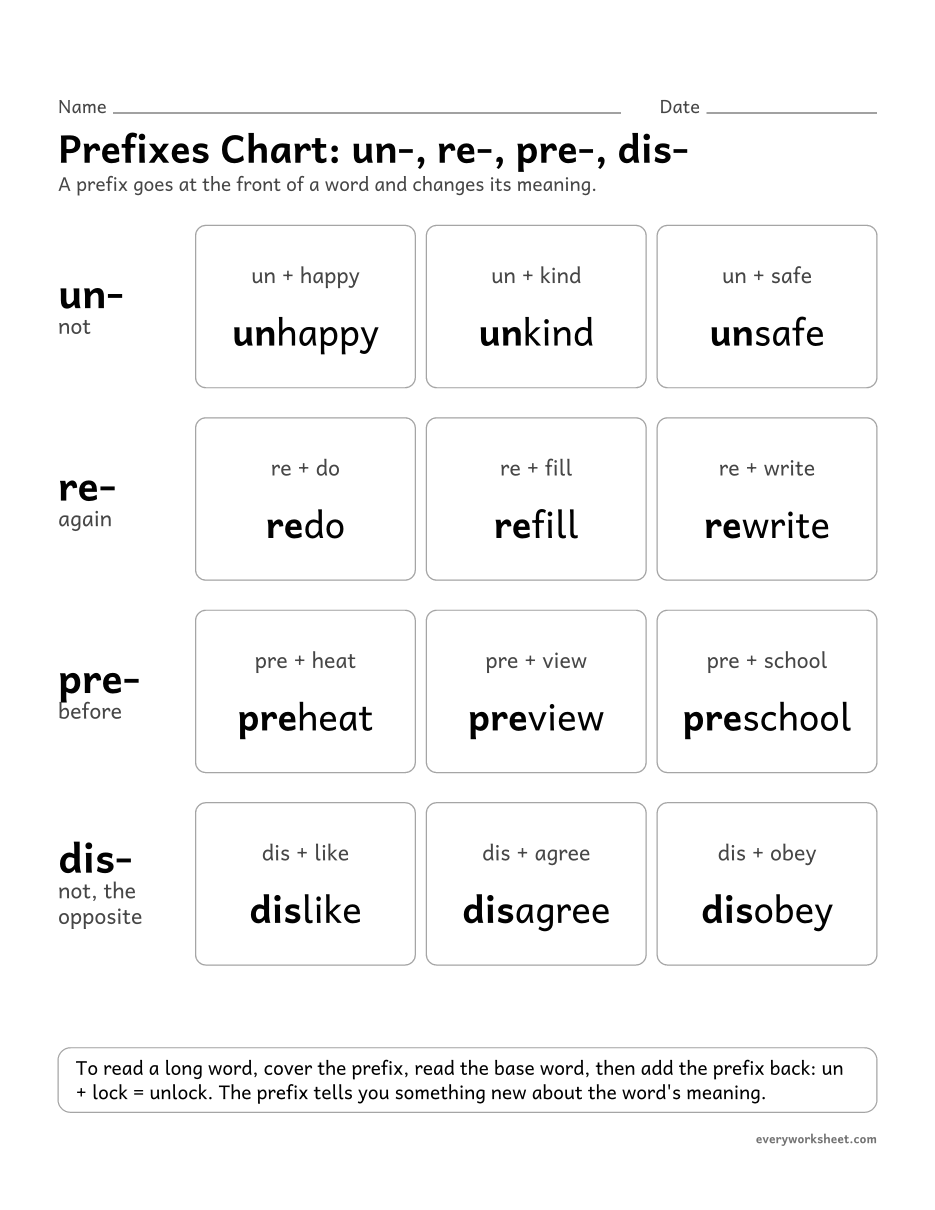
Prefixes Chart: un-, re-, pre-, dis-
Seeing four common prefixes, what they mean and words made with them
1 page31 KB
Charts, a word list, add-a-prefix and add-a-suffix pages, find the base word, meaning matches, sorts, cut and paste with a no-cut twin, and sentences.
View largerSeeing four common prefixes, what they mean and words made with them
1 page31 KB
 View larger
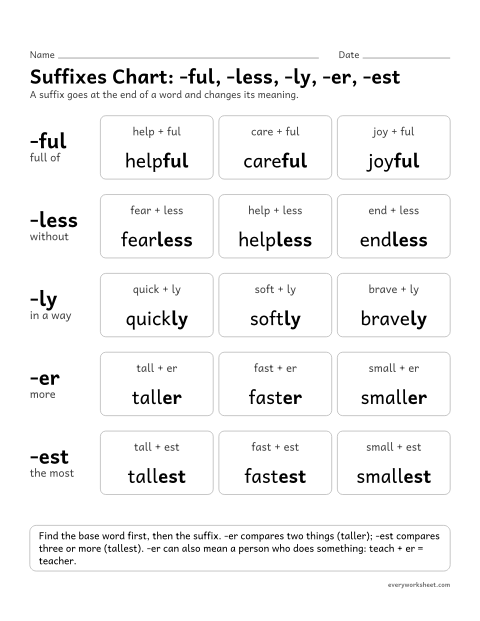
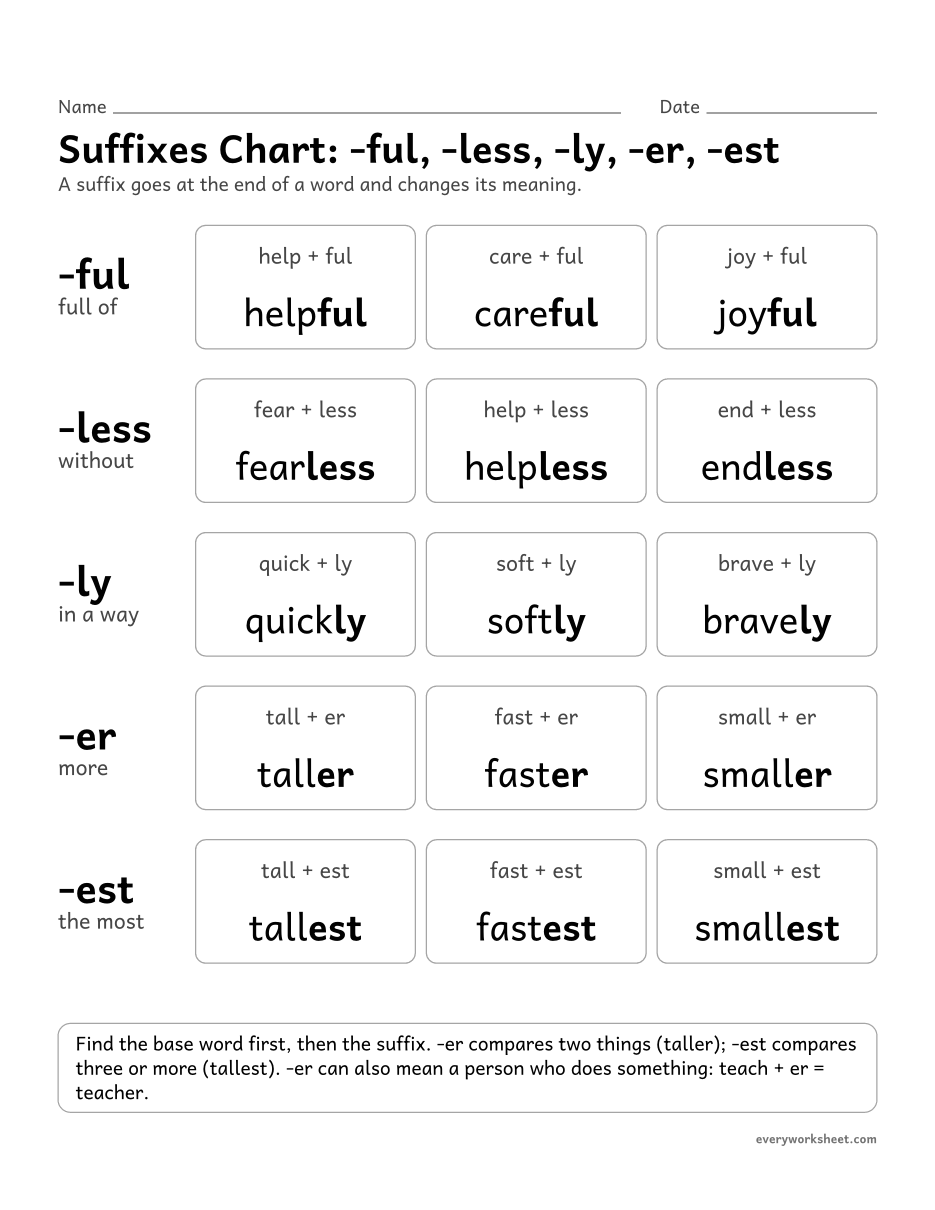
Seeing five common suffixes, what they mean and words made with them
1 page32 KB
 View larger
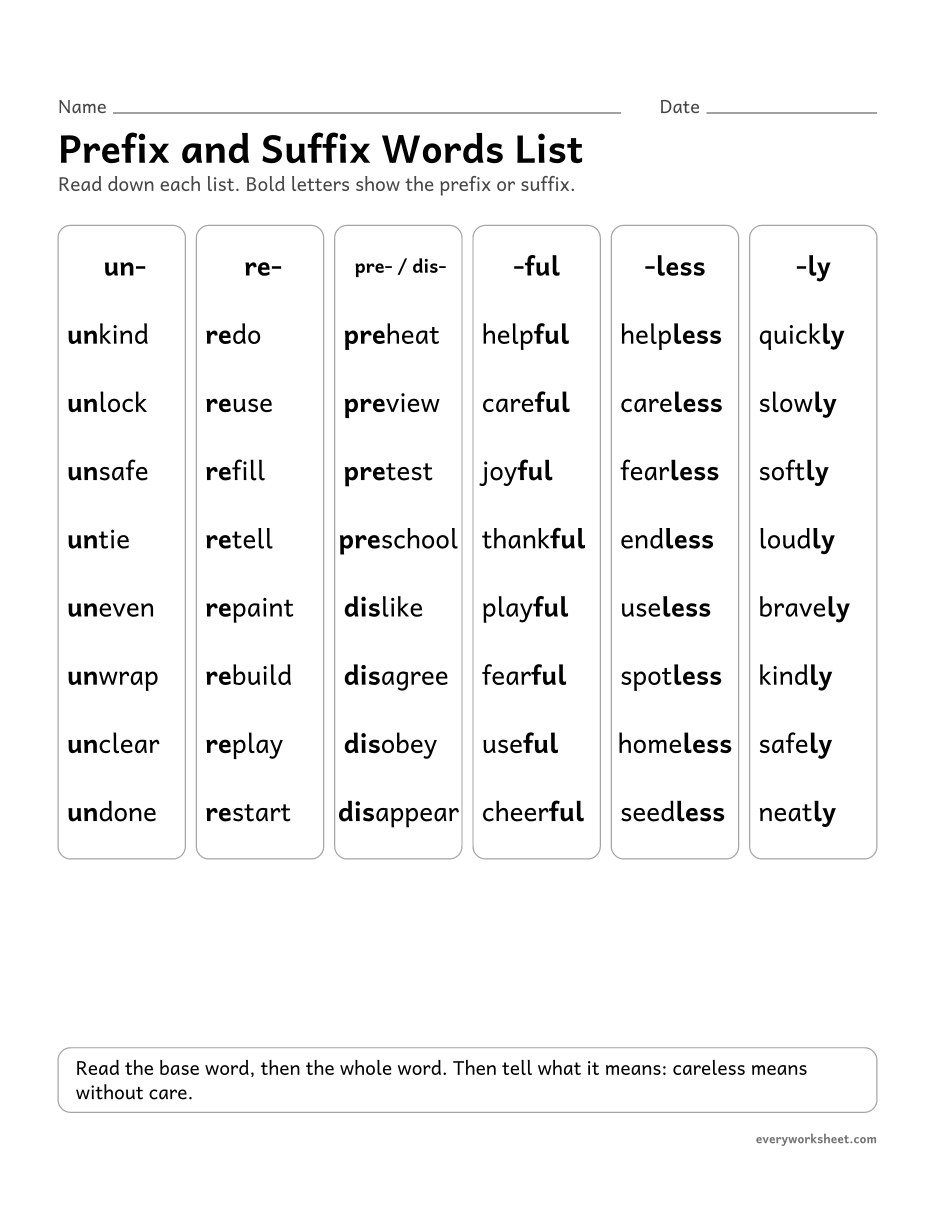
Reading 48 words with common prefixes and suffixes
1 page30 KB
 View all 2 pages
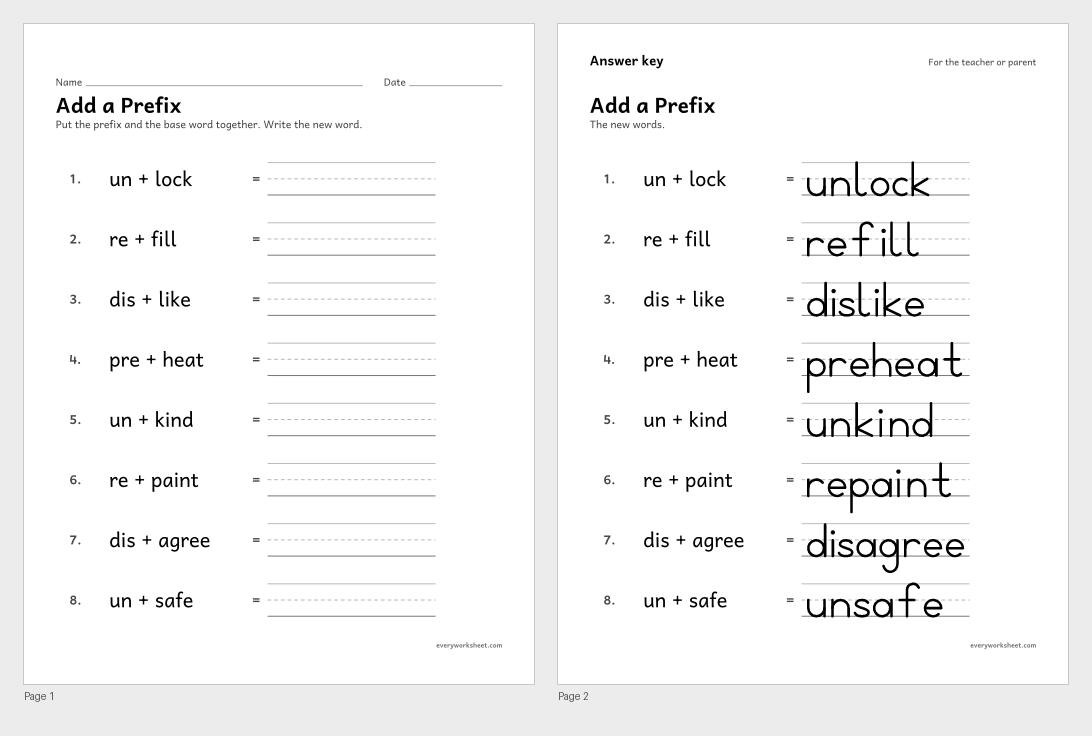
Joining a prefix and a base word to make a new word
Answer key on page 2
2 pages48 KB
 View all 2 pages
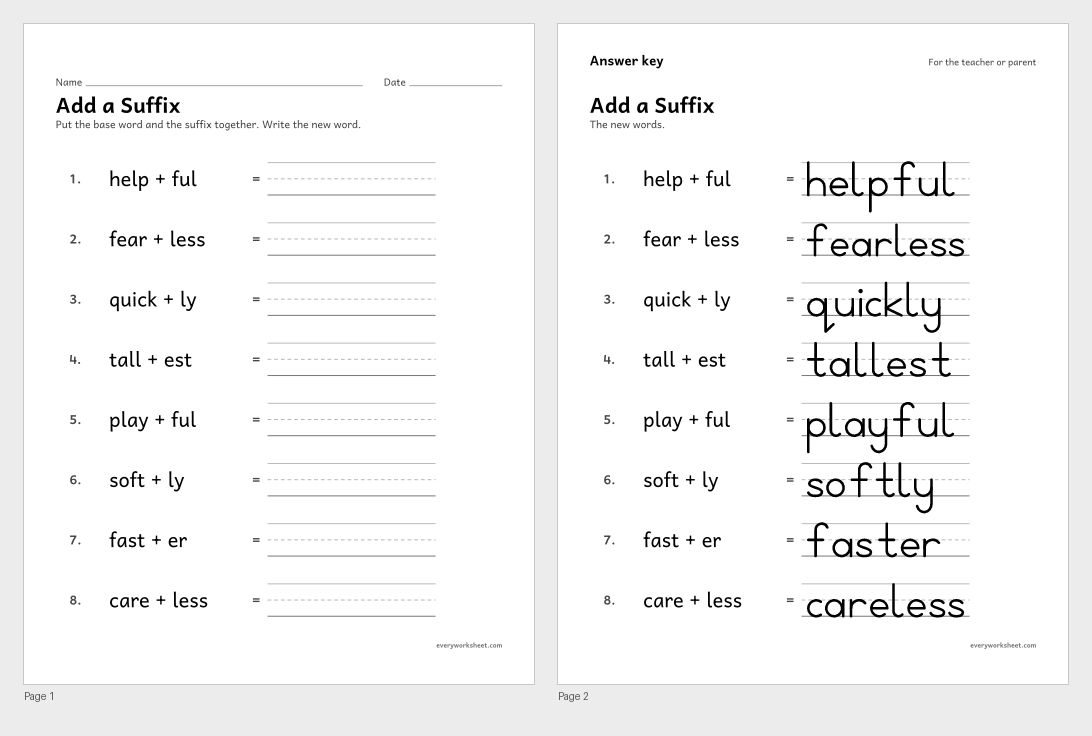
Joining a base word and a suffix to make a new word
Answer key on page 2
2 pages49 KB
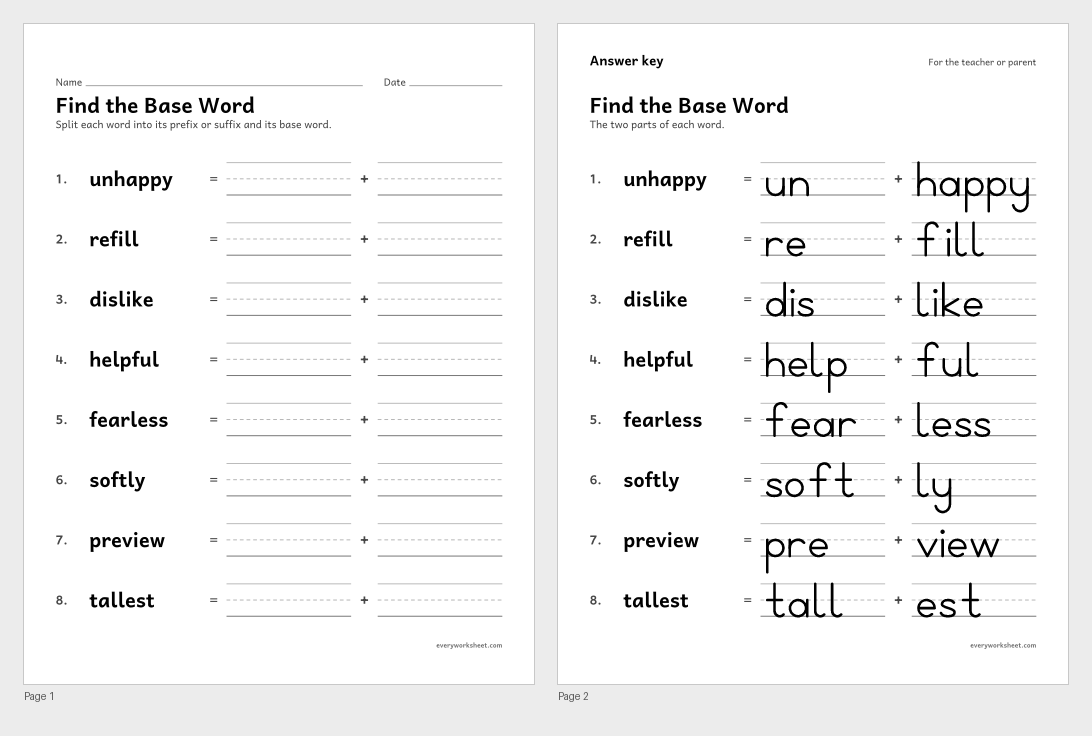 View all 2 pages
Splitting a word into its base word and its prefix or suffix
Answer key on page 2
2 pages50 KB
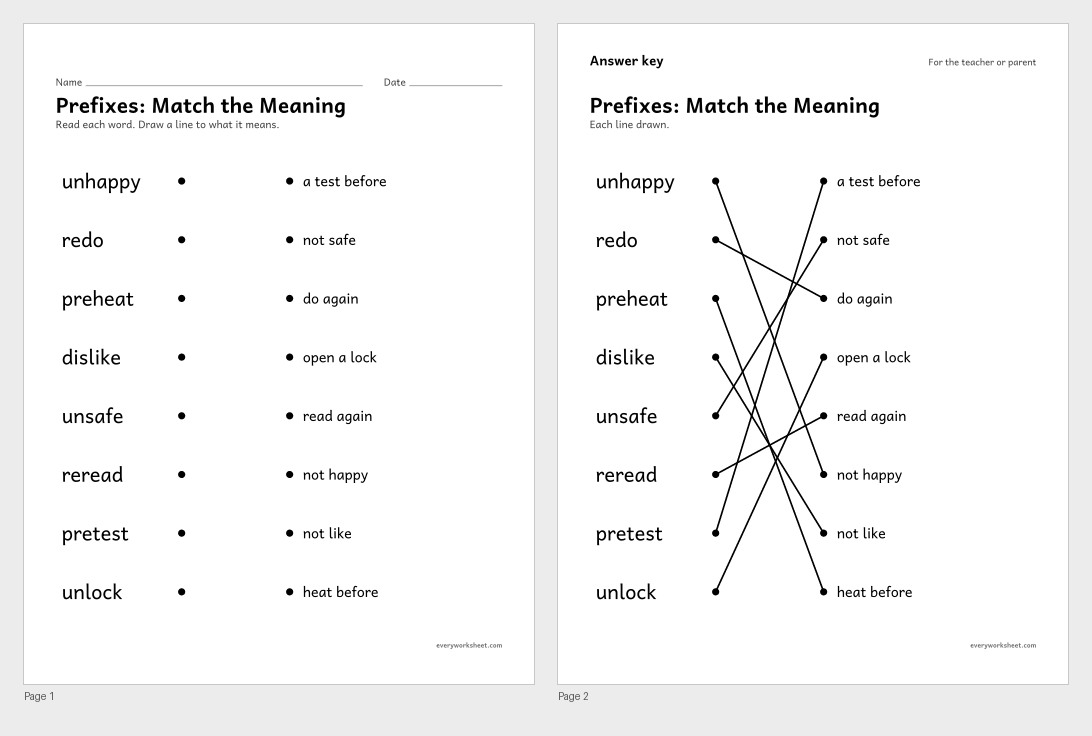 View all 2 pages
Using the prefix to tell what a word means
Answer key on page 2
2 pages28 KB
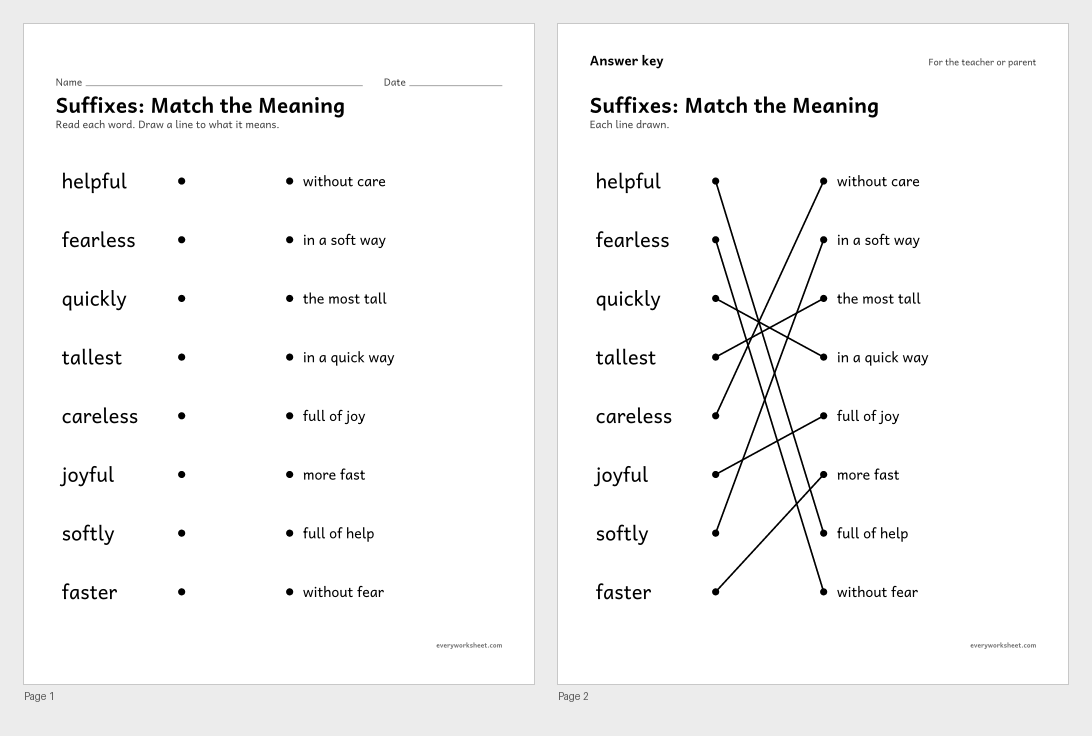 View all 2 pages
Using the suffix to tell what a word means
Answer key on page 2
2 pages28 KB
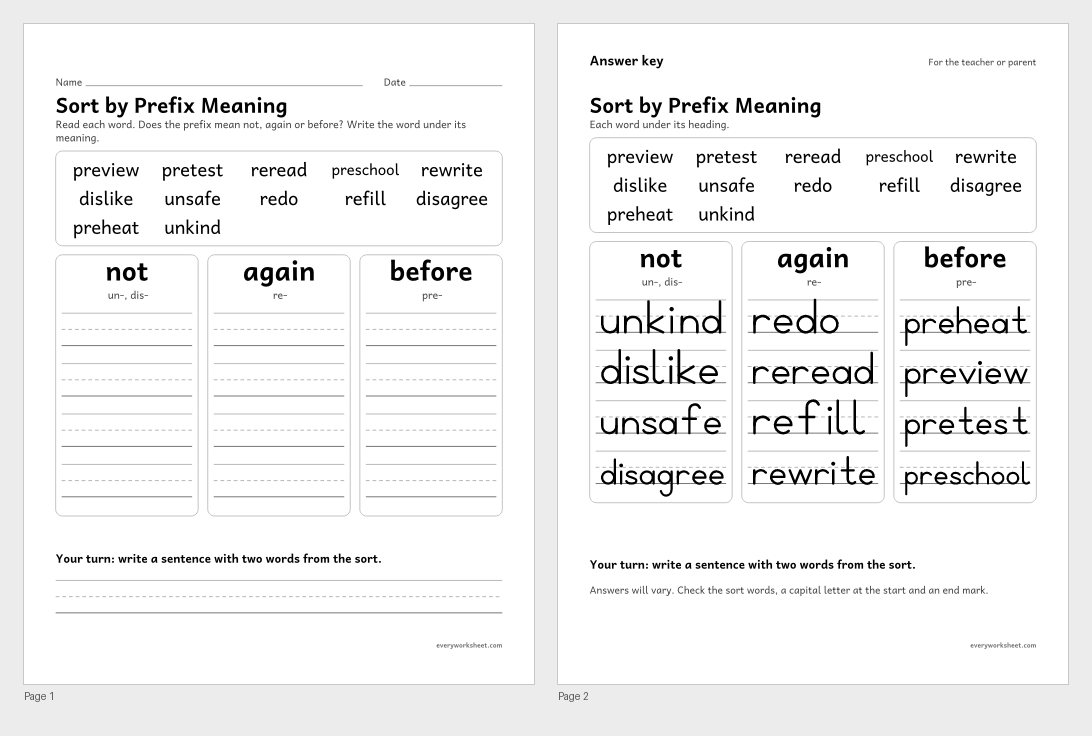 View all 2 pages
Sorting un-, dis-, re- and pre- words by what the prefix means
Answer key on page 2
2 pages44 KB
 View all 2 pages
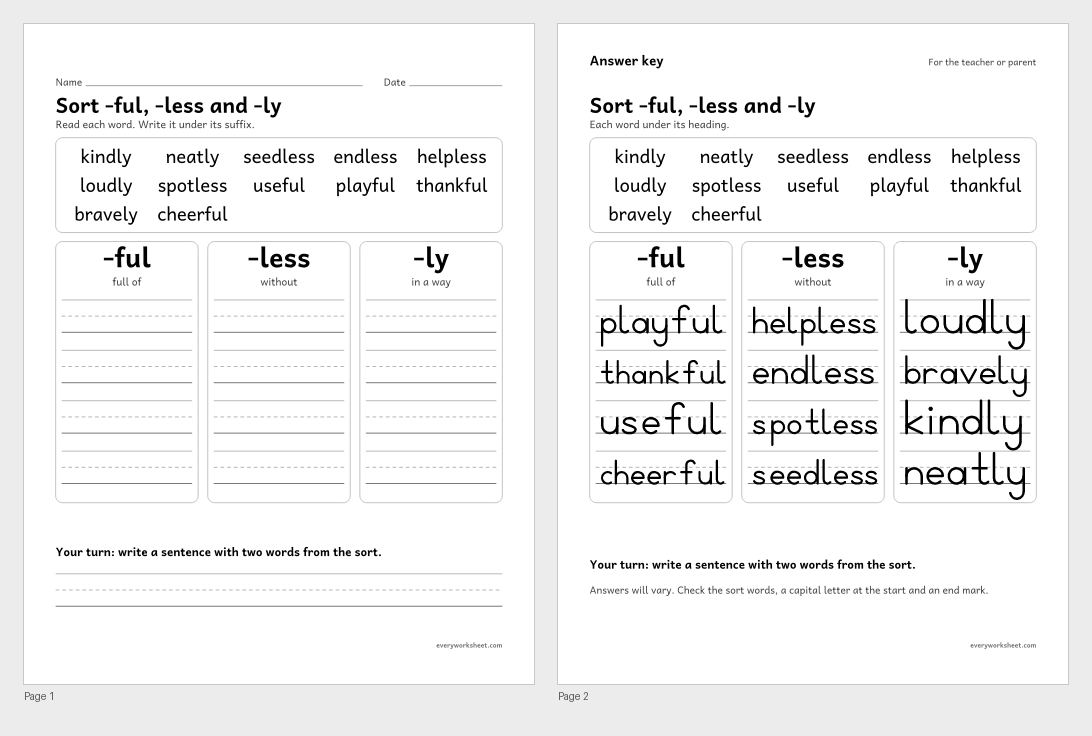
Sorting words by their suffix
Answer key on page 2
2 pages44 KB
 View all 2 pages
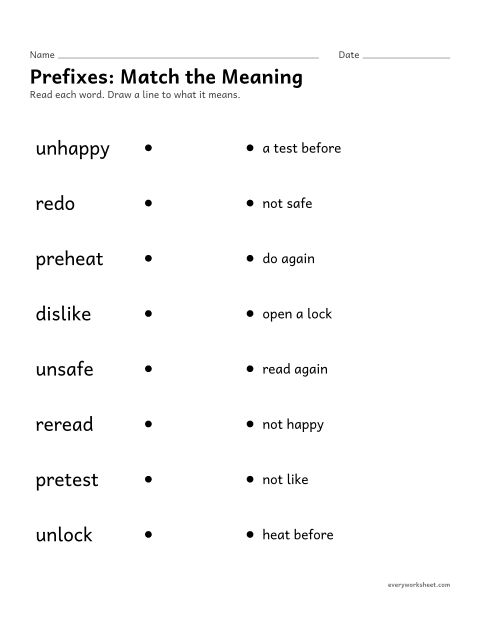
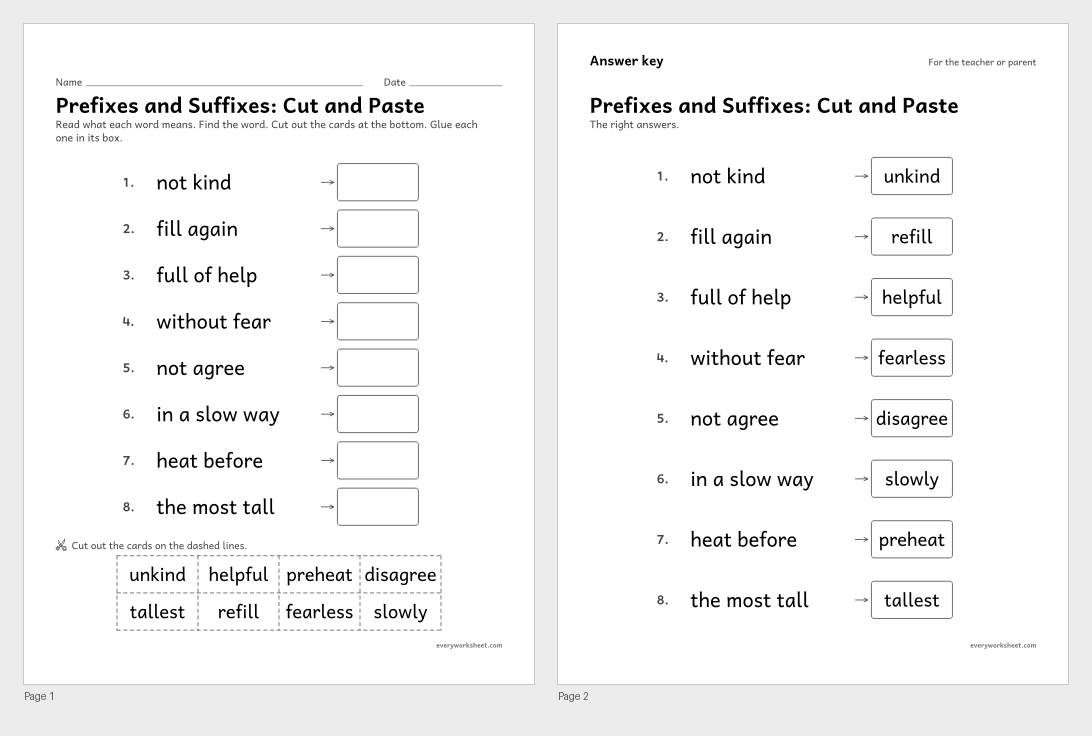
Matching a meaning to the word with a prefix or suffix
Answer key on page 2
2 pages78 KB
 View all 2 pages
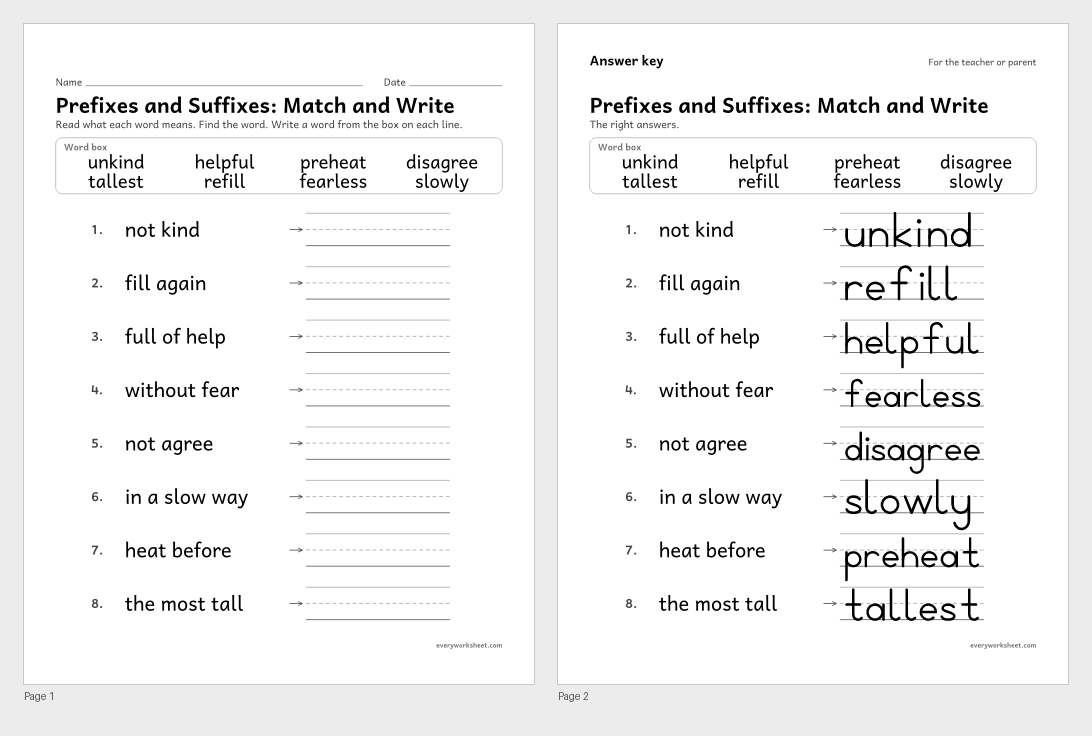
Writing the word with a prefix or suffix that matches a meaning
Answer key on page 2
2 pages56 KB
 View all 2 pages
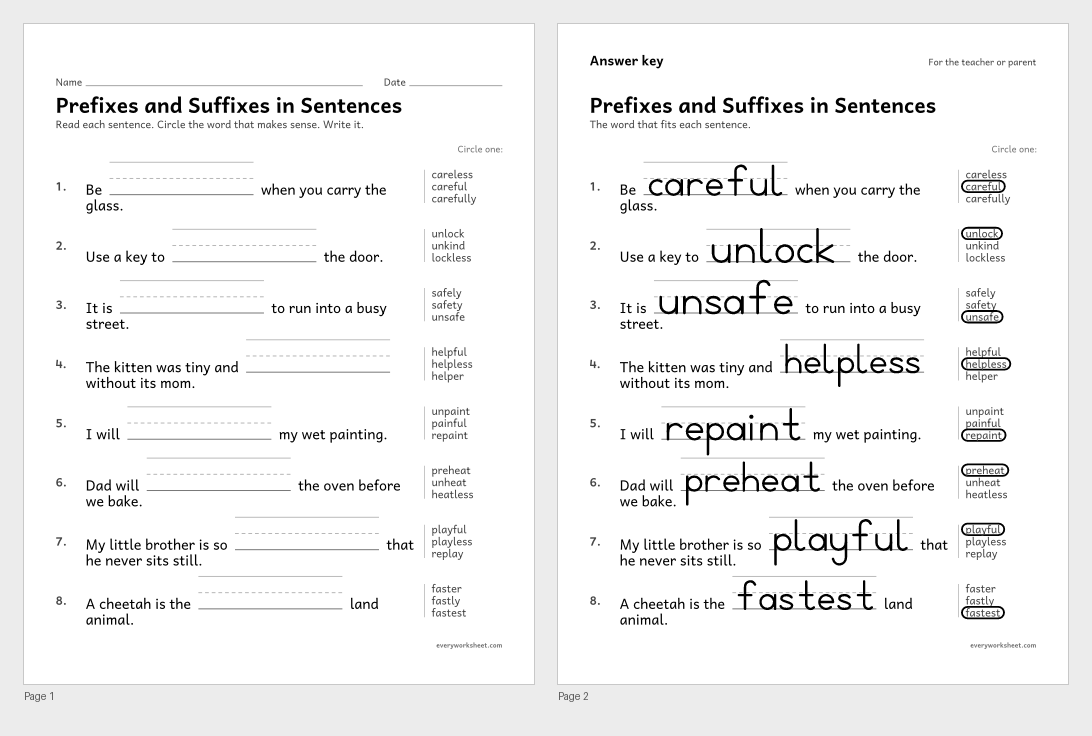
Choosing the word with the prefix or suffix that makes sense
Answer key on page 2
2 pages51 KB
Print at 100% (actual size) for the cleanest tracing lines.
A prefix is a word part added to the front of a word (un + happy = unhappy), and a suffix is a word part added to the end (help + ful = helpful). Each one changes the meaning of the base word in a predictable way: un- means not, re- means again, pre- means before, -ful means full of, -less means without, and -ly tells how.
These prefixes and suffixes worksheets start with a chart for each and a word list. Children join word parts to make new words, split words into a base word and its prefix or suffix, match words to their meanings, sort words by what the prefix means or by suffix, and choose the word that makes sense in a sentence. The cut and paste page has a no-cut twin.
Reading words with common prefixes and suffixes is a 2nd grade standard, and knowing what they mean helps children figure out new words on their own. Every page prints in black and white on US Letter or A4 with an answer key on page 2.
CCSS.ELA-LITERACY.RF.2.3.DDecode words with common prefixes and suffixes.CCSS.ELA-LITERACY.L.2.4.BDetermine the meaning of the new word formed when a known prefix is added to a known word (e.g., happy/unhappy, tell/retell).CCSS.ELA-LITERACY.L.2.4.CUse a known root word as a clue to the meaning of an unknown word with the same root (e.g., addition, additional).CCSS.ELA-LITERACY.L.2.4.AUse sentence-level context as a clue to the meaning of a word or phrase.CCSS.ELA-LITERACY.RF.2.3Know and apply grade-level phonics and word analysis skills in decoding words.A prefix goes at the beginning of a word (un + lock = unlock). A suffix goes at the end (quick + ly = quickly). Both change the meaning of the base word.
Common 2nd grade prefixes are un-, re-, pre- and dis-. Common suffixes are -ful, -less, -ly, -er and -est, along with the endings -s, -es, -ed and -ing.
un- means not, or the opposite: unhappy means not happy, and unlock means to open a lock.
When children can find the base word and the word parts, they can read and understand long words they have never seen, like unbreakable or helpfully.
Yes, on page 2 of every page with right answers.