 25 pagesView all 25 pages
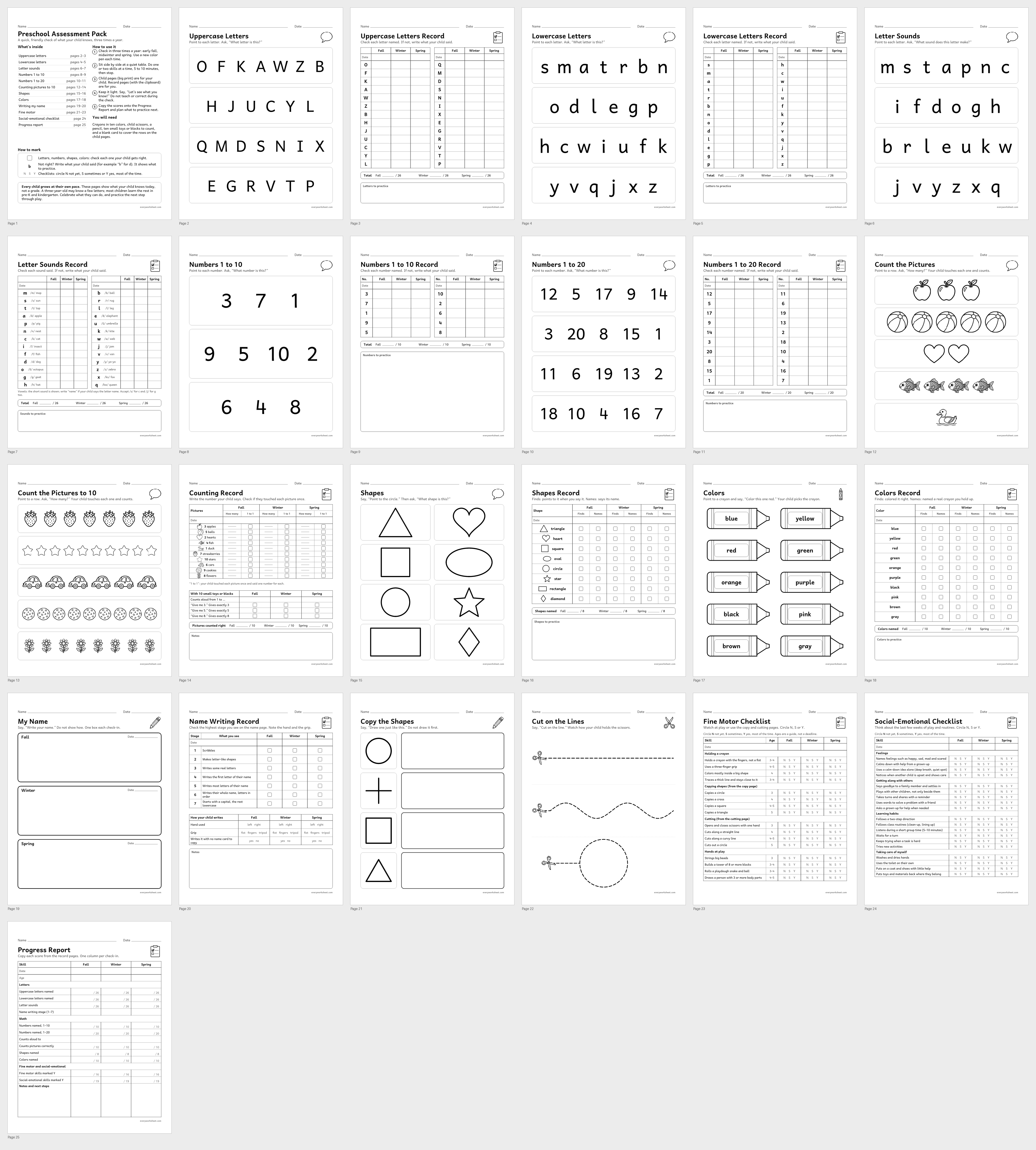
Preschool assessment Pack: all pages
Checking letters, numbers, counting, shapes, colors, name writing, fine motor and social-emotional skills
25 pages1.4 MB
A printable pre-K assessment: big child pages, simple record sheets and a progress report for fall, winter and spring.
25 pagesView all 25 pagesChecking letters, numbers, counting, shapes, colors, name writing, fine motor and social-emotional skills
25 pages1.4 MB
 View larger
 3 pagesView all 3 pages
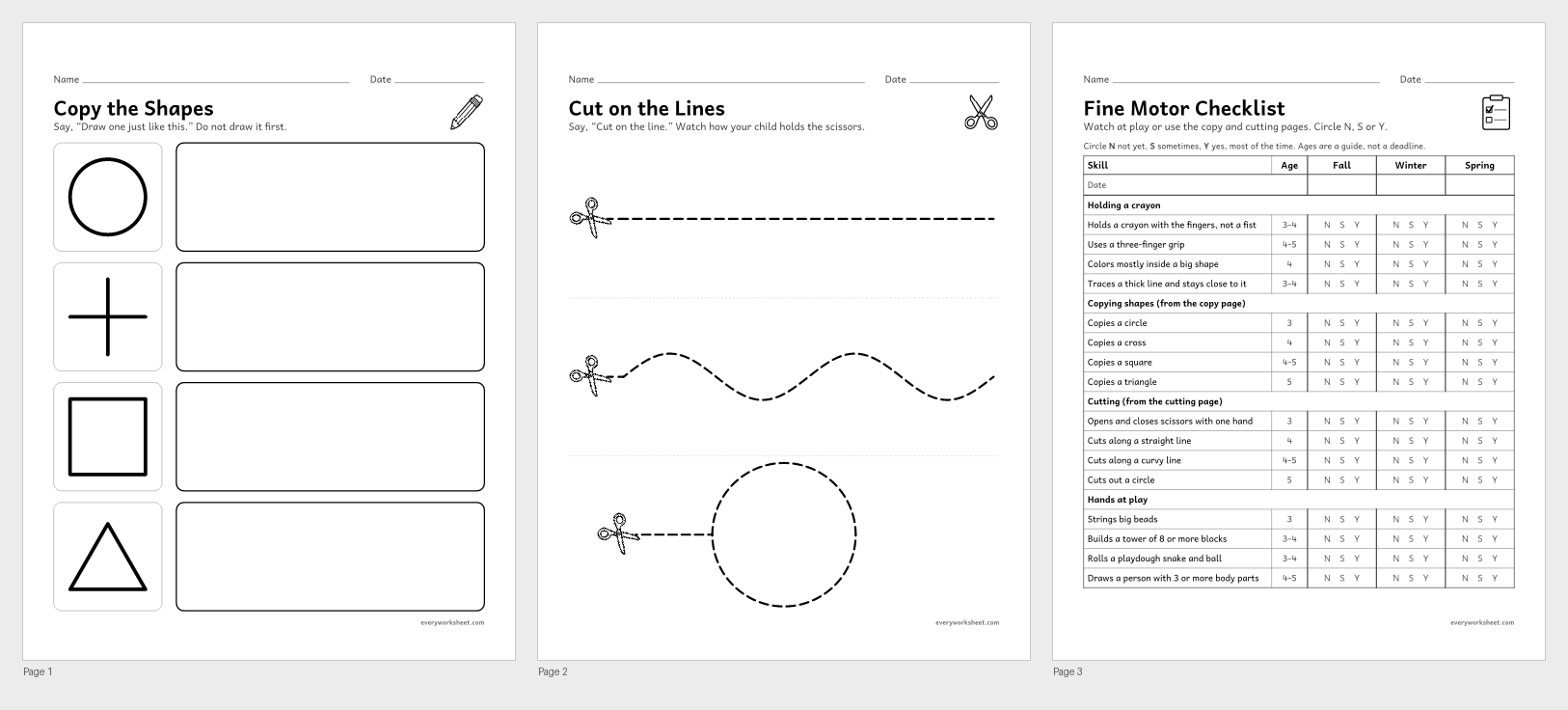
Copying shapes, cutting and holding a crayon
3 pages194 KB
 View larger
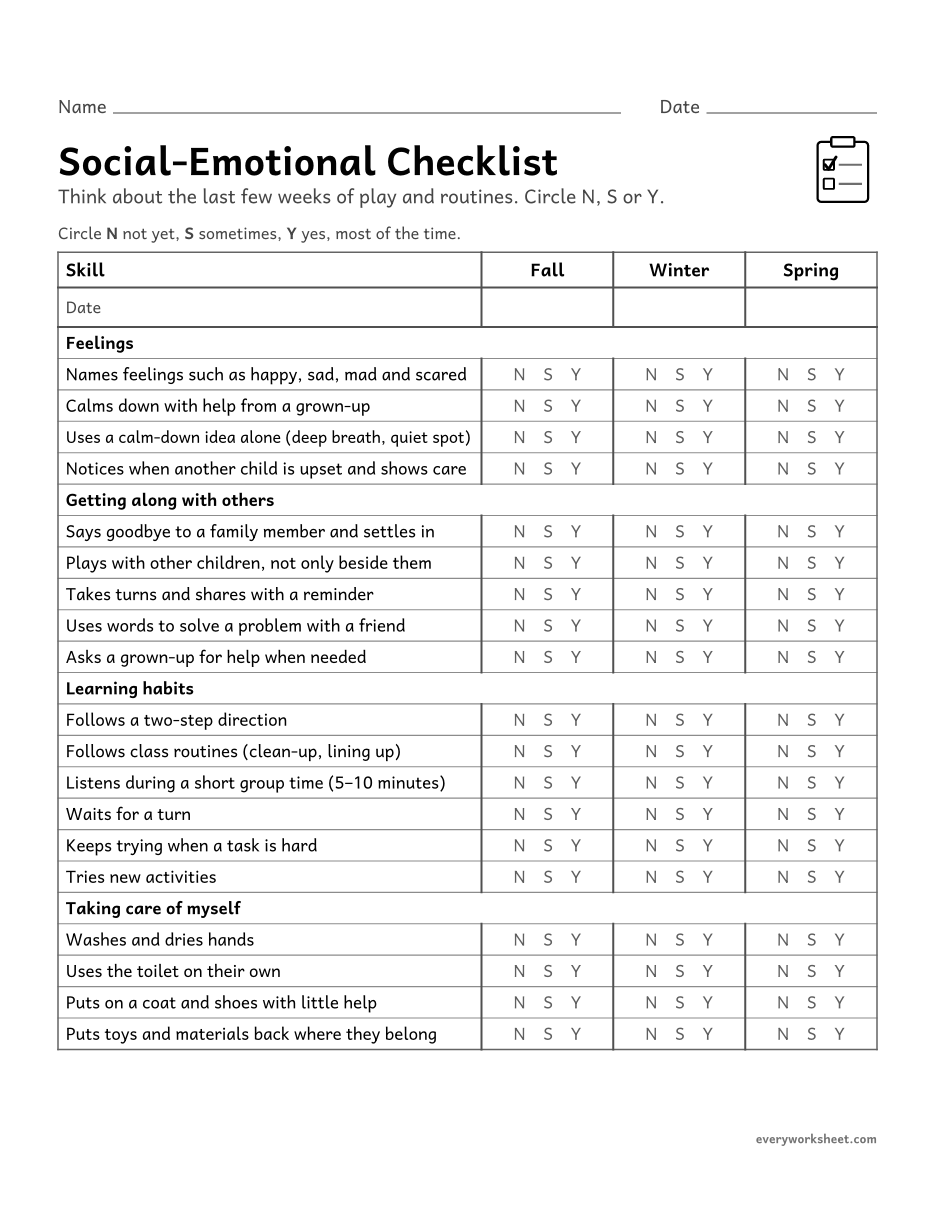
Feelings, getting along, learning habits and self-care
1 page63 KB
Print at 100% (actual size) for the cleanest tracing lines.
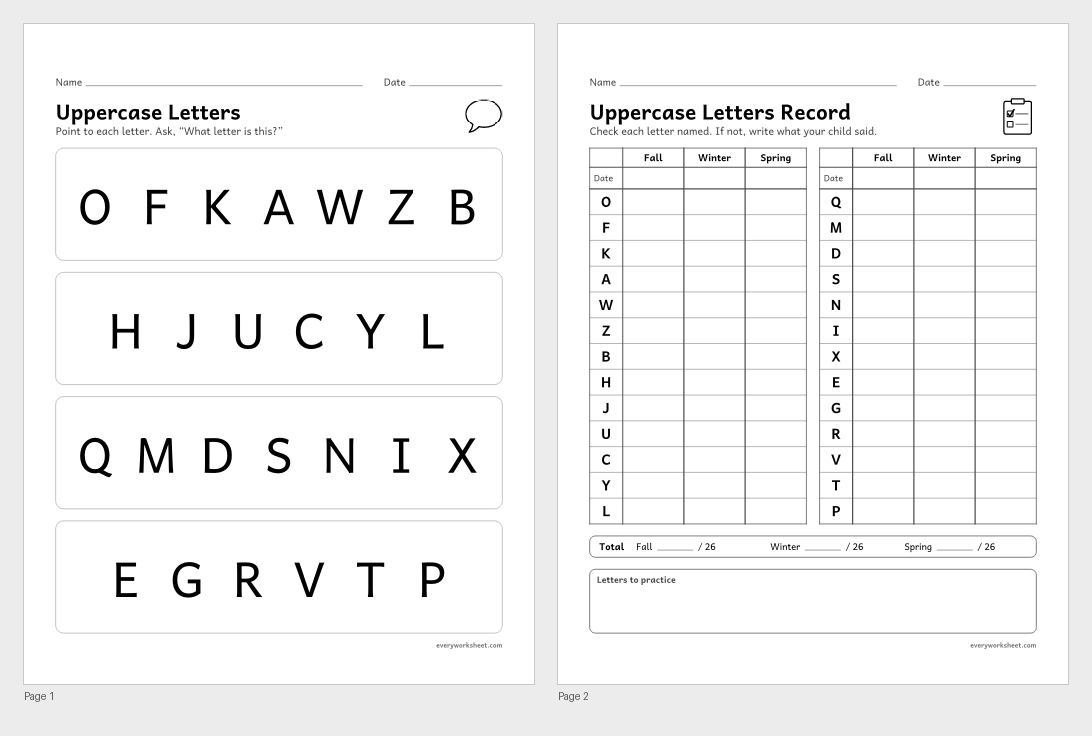
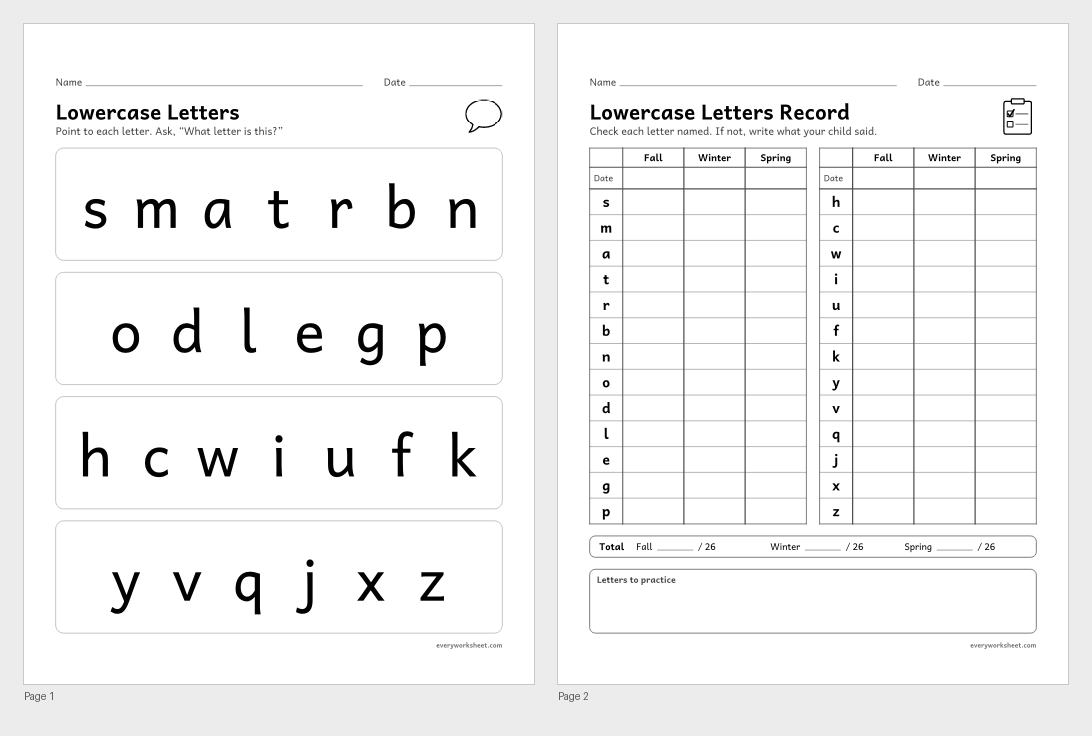
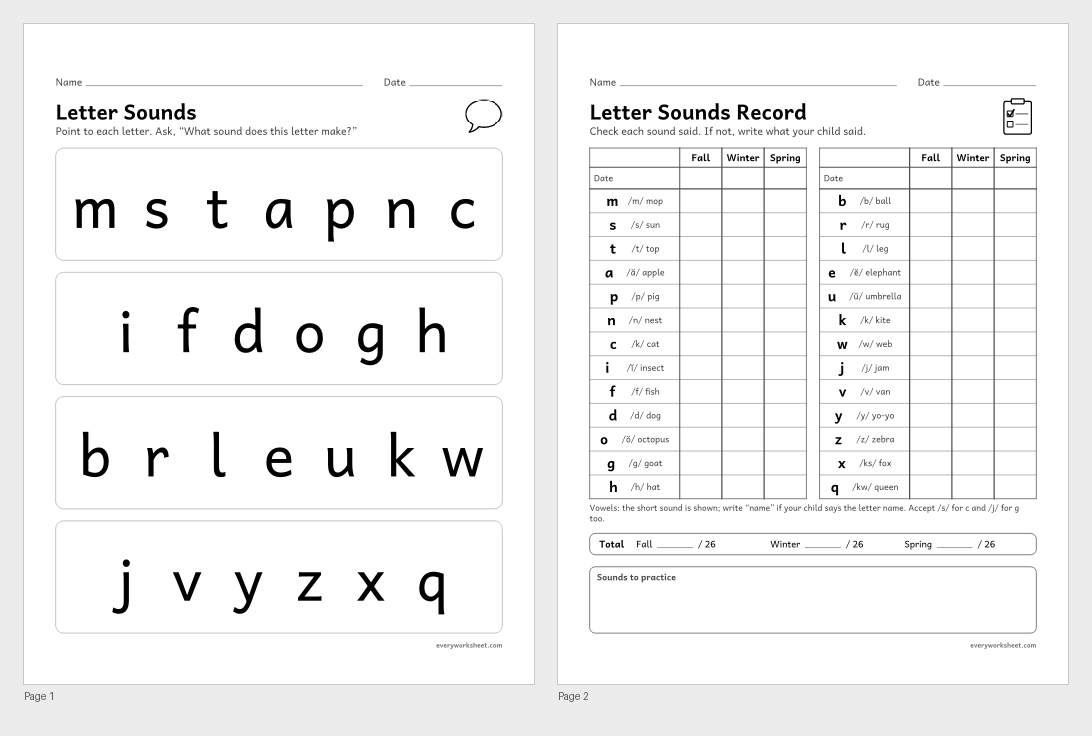
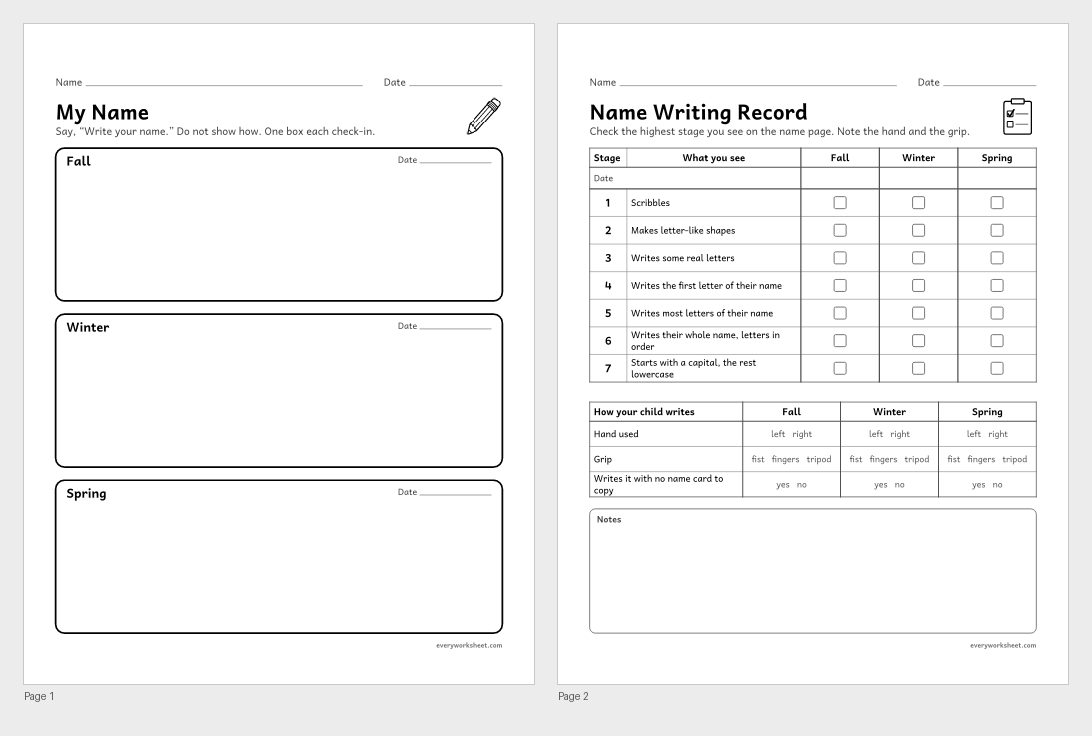
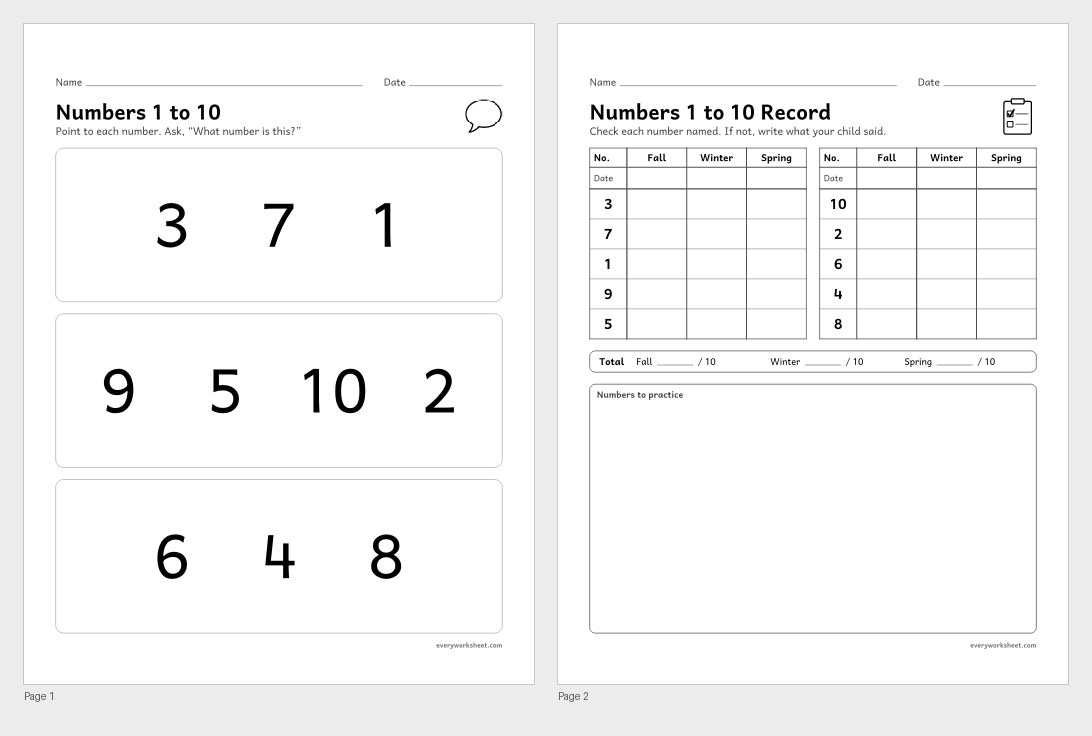
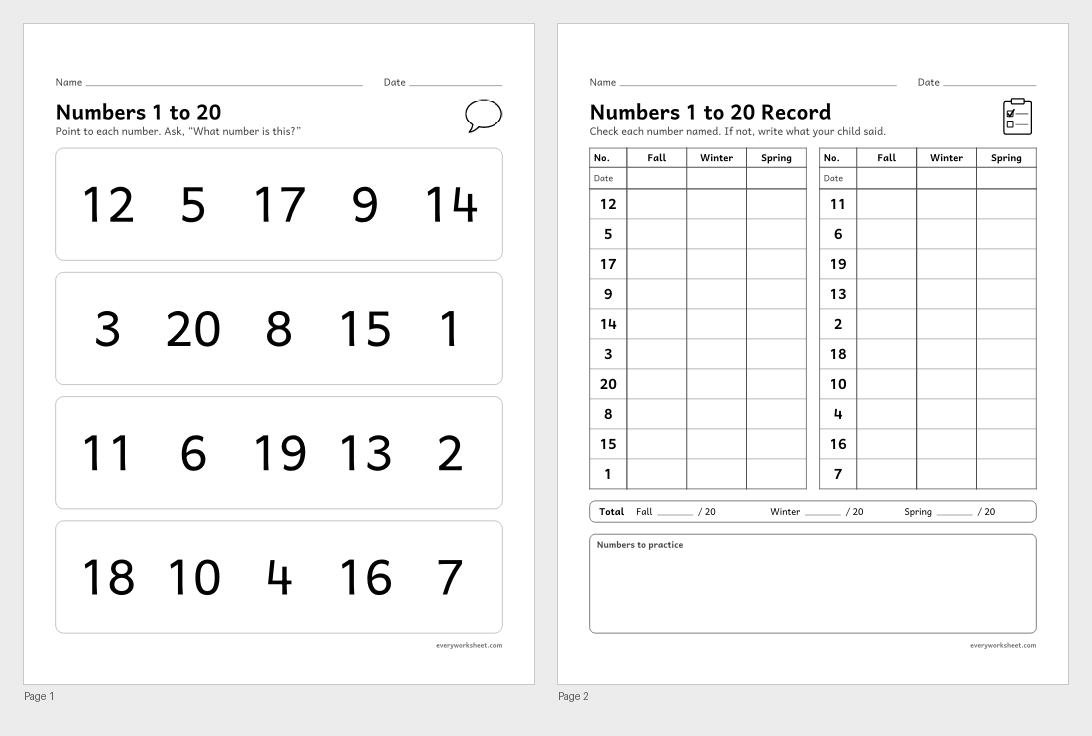
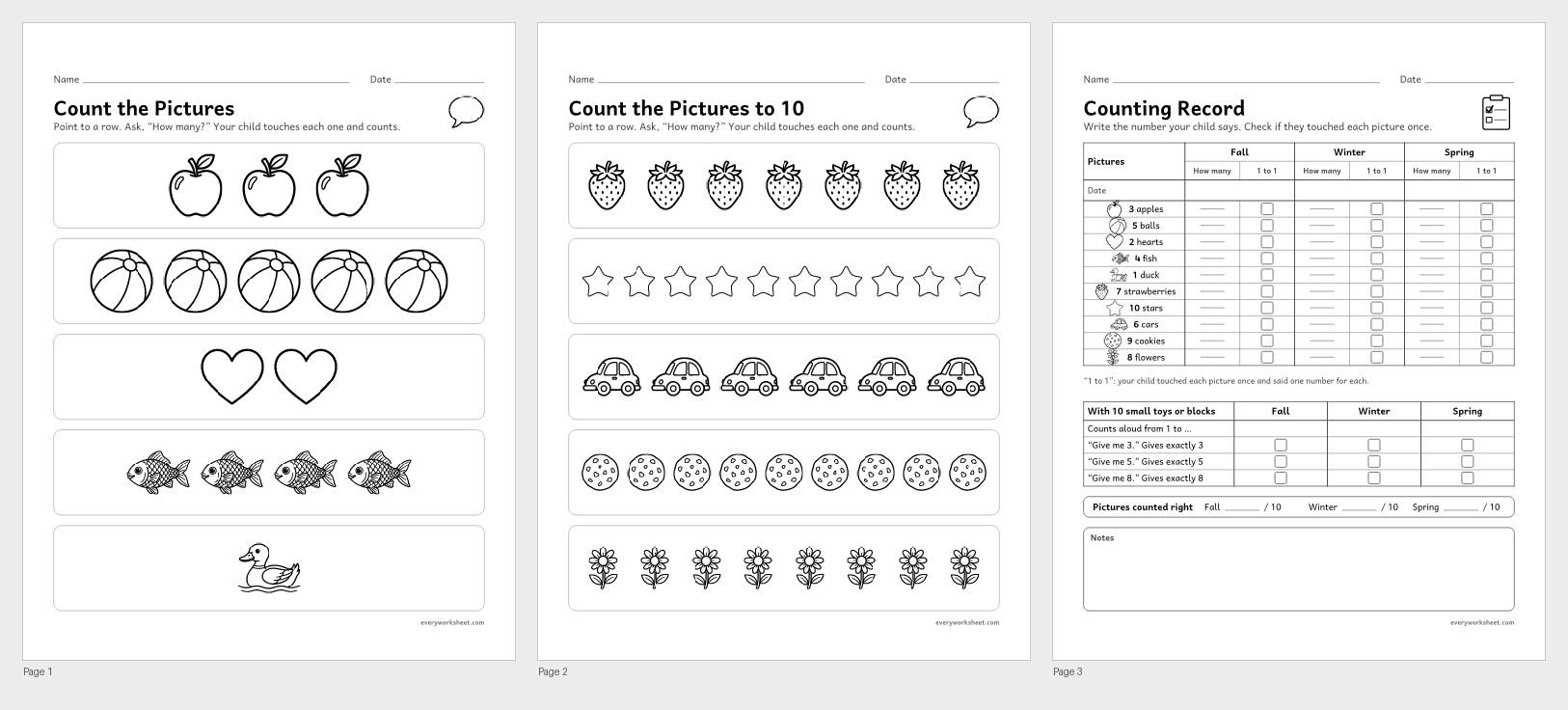
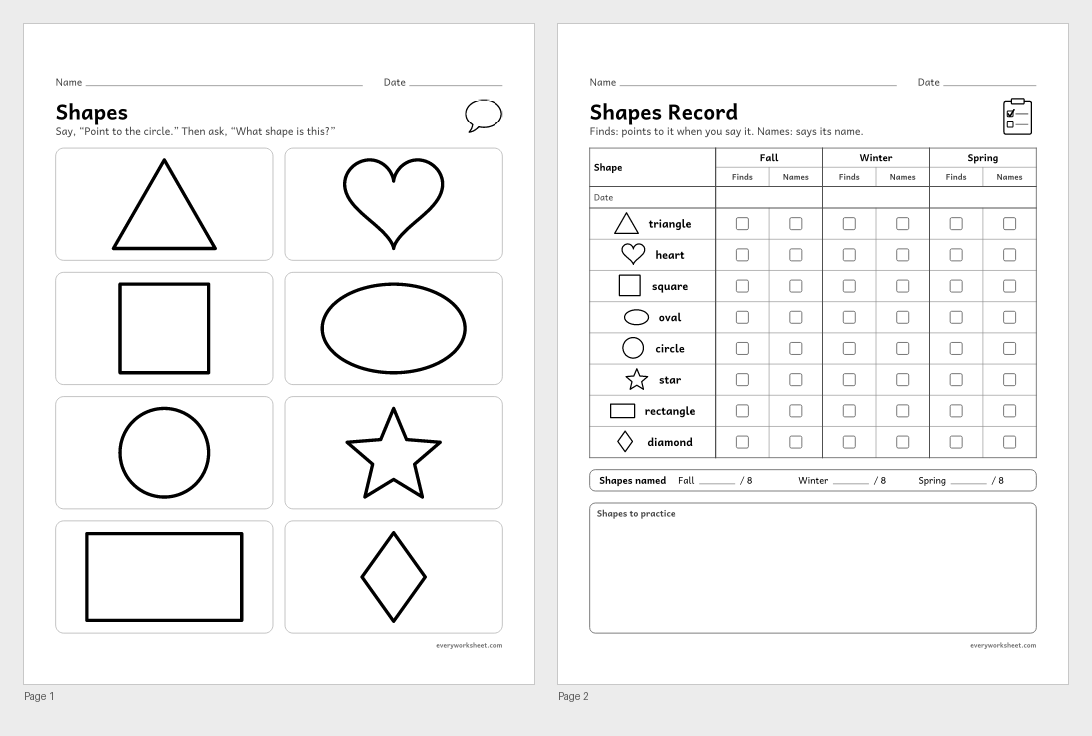
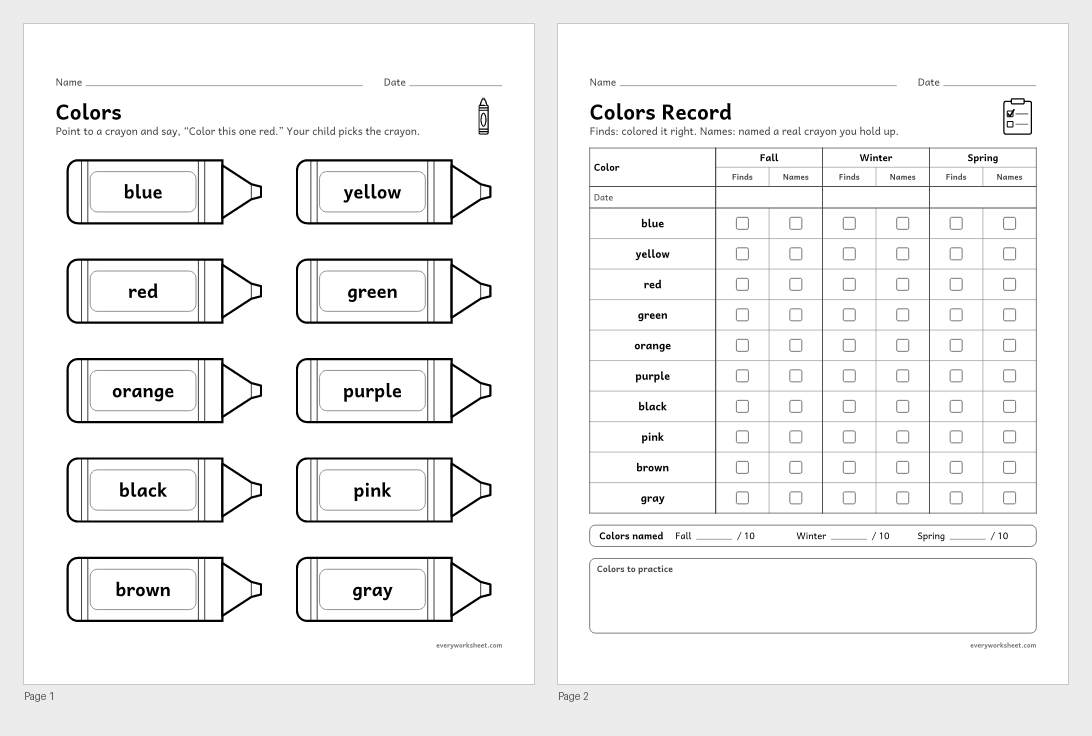
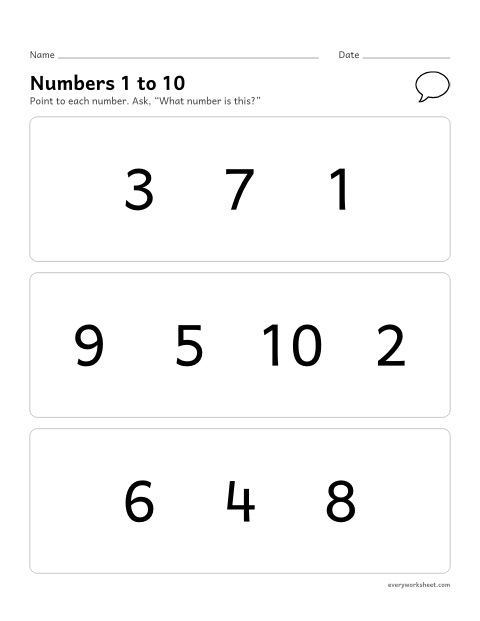
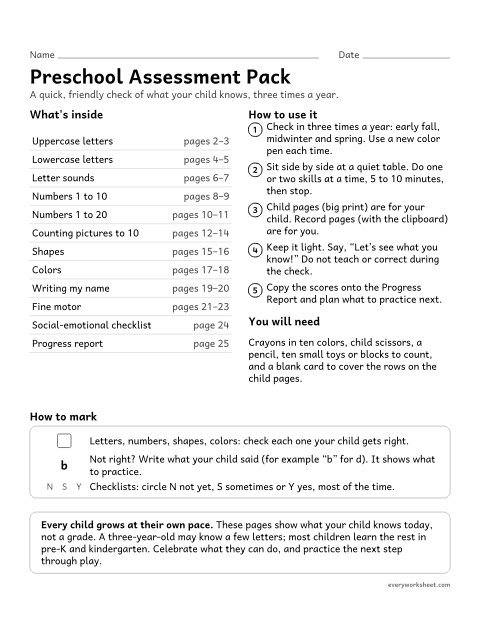
This free preschool assessment pack helps you see what a three, four or five year old knows today, and what to practice next. It covers the skills most pre-K programs check: uppercase and lowercase letter recognition, letter sounds, numbers 1 to 10 and 1 to 20, counting objects to 10, shapes, colors, writing their name, fine motor skills and social-emotional skills.
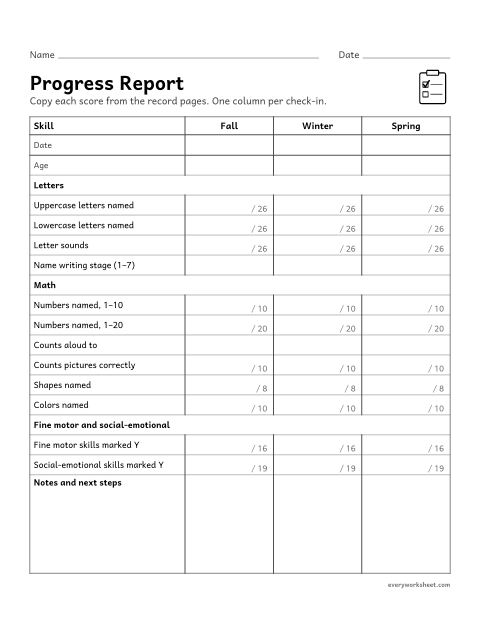
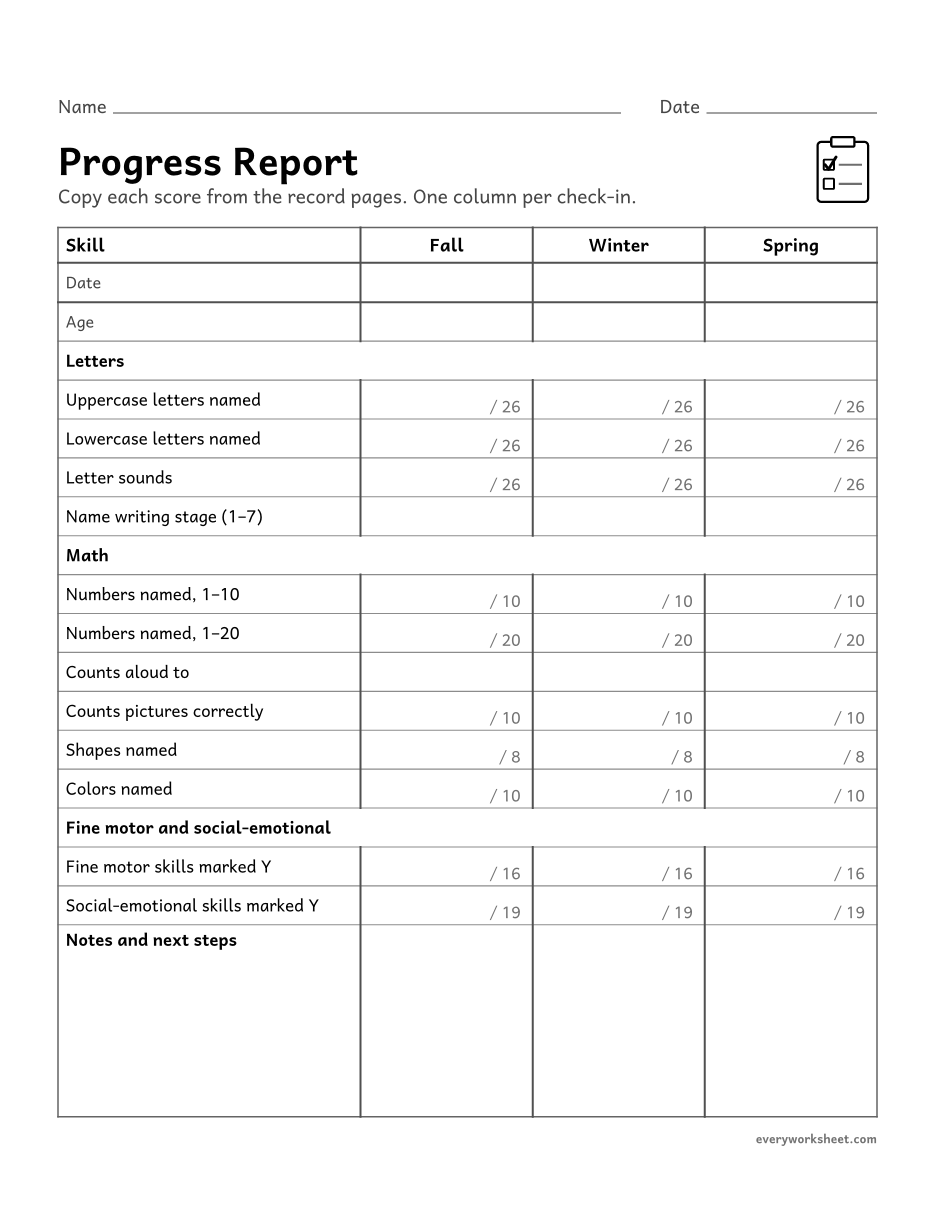
Each skill has a big, calm child page and a record page for the grown-up. The child points, names, counts, colors, writes or cuts; you mark the record. Every record page has a column for each of three check-ins, fall, winter and spring, so one copy follows a child through the whole year. A one-page progress report pulls the scores together for a parent conference or a portfolio.
ELOF P-LIT 3Child identifies letters of the alphabet and produces correct sounds associated with letters.ELOF P-LIT 6Child writes for a variety of purposes using increasingly sophisticated marks.ELOF P-MATH 1Child knows number names and the count sequence.ELOF P-MATH 3Child understands the relationship between numbers and quantities.ELOF P-MATH 5Child associates a quantity with written numerals up to 5 and begins to write numbers.ELOF P-MATH 9Child identifies, describes, compares, and composes shapes.ELOF P-LC 6Child understands and uses a wide variety of words for a variety of purposes.ELOF P-PMP 3Child demonstrates increasing control, strength, and coordination of small muscles.ELOF P-SE 3Child engages in and maintains positive interactions and relationships with other children.ELOF P-SE 6Child expresses a broad range of emotions and recognizes these emotions in self and others.ELOF P-SE 8Child manages emotions with increasing independence.ELOF P-ATL 2Child follows classroom rules and routines with increasing independence.ELOF P-ATL 7Child persists in tasks.A good pre-K assessment checks letter recognition and letter sounds, number recognition, counting objects, shapes, colors and writing the child's own name. It also looks at fine motor skills such as holding a crayon, cutting and copying shapes, and at social-emotional skills such as taking turns and handling big feelings.
Three times a year works well: early fall, midwinter and spring. Each record page has a column for each check-in, so you can see growth at a glance on one sheet.
Each skill takes about 2 to 5 minutes. Spread the pack over a few short sittings rather than doing it all at once.
That is normal, especially at three. The check shows where your child is today. Pick two or three letters, such as the ones in their name, and play with them until the next check-in.
Yes. The spring check-in gives a clear picture of the skills kindergarten teachers look for, and the Progress Report is easy to share at a conference.
No. Download the whole pack, or just the skills you need. Each skill is also its own PDF with a child page and a record page.