 View all 2 pages
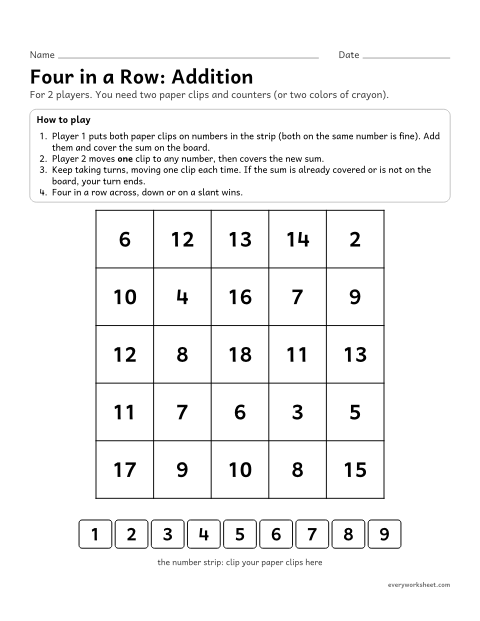
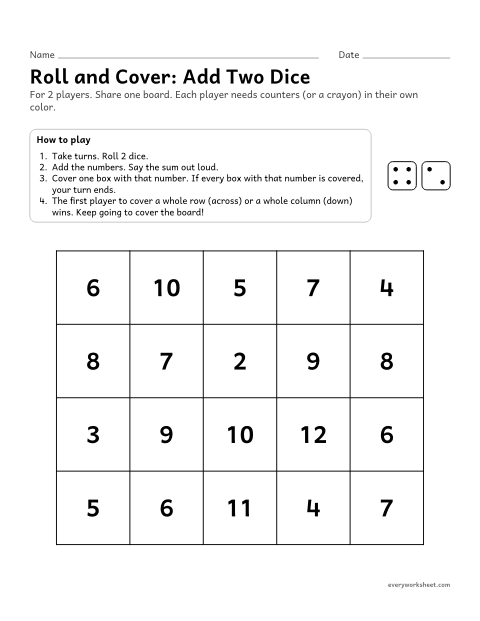
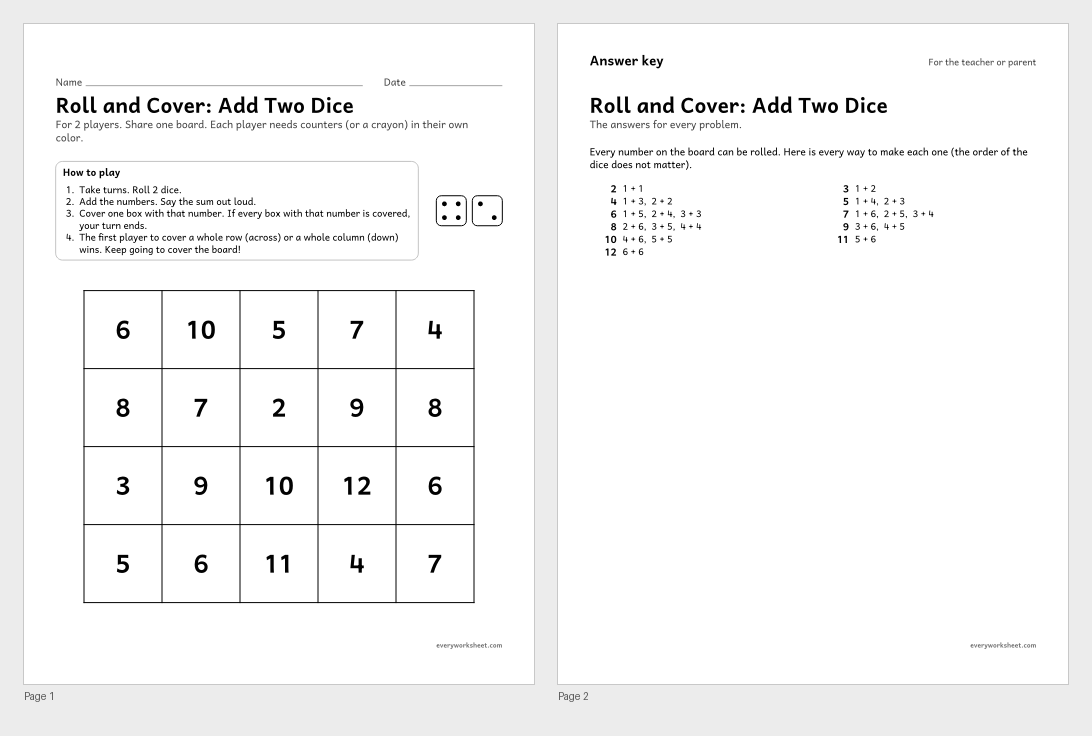
Roll and Cover: add two dice
Adding the numbers on two dice and covering the sum on a game board
Answer key on page 2
2 pages45 KB
Dice games, four in a row, math mazes, riddle code breakers and cross-number puzzles for 1st to 5th grade, each with an answer key.
View all 2 pagesAdding the numbers on two dice and covering the sum on a game board
Answer key on page 2
2 pages45 KB
 View all 2 pages
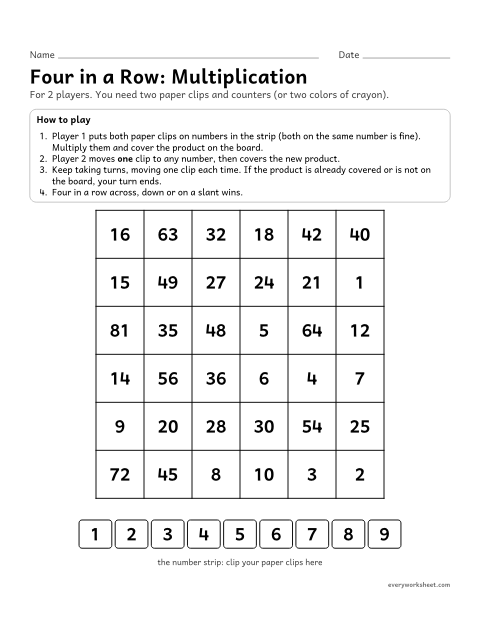
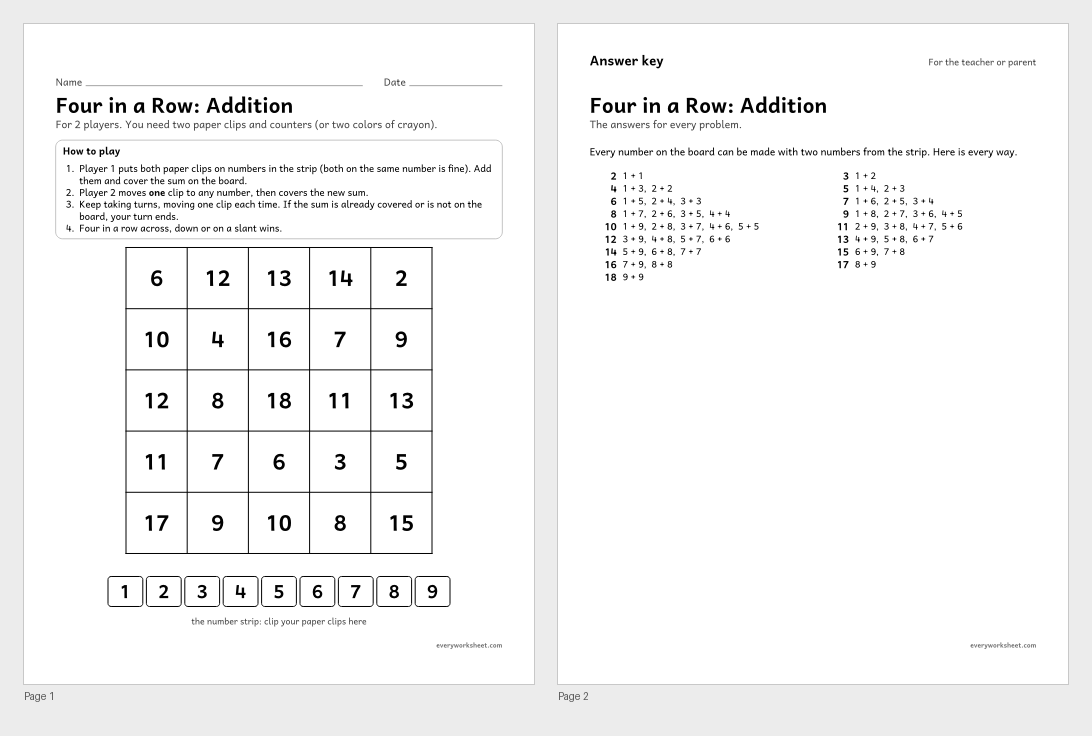
Adding two numbers from a number strip to cover sums in a four-in-a-row game
Answer key on page 2
2 pages52 KB
 View all 2 pages
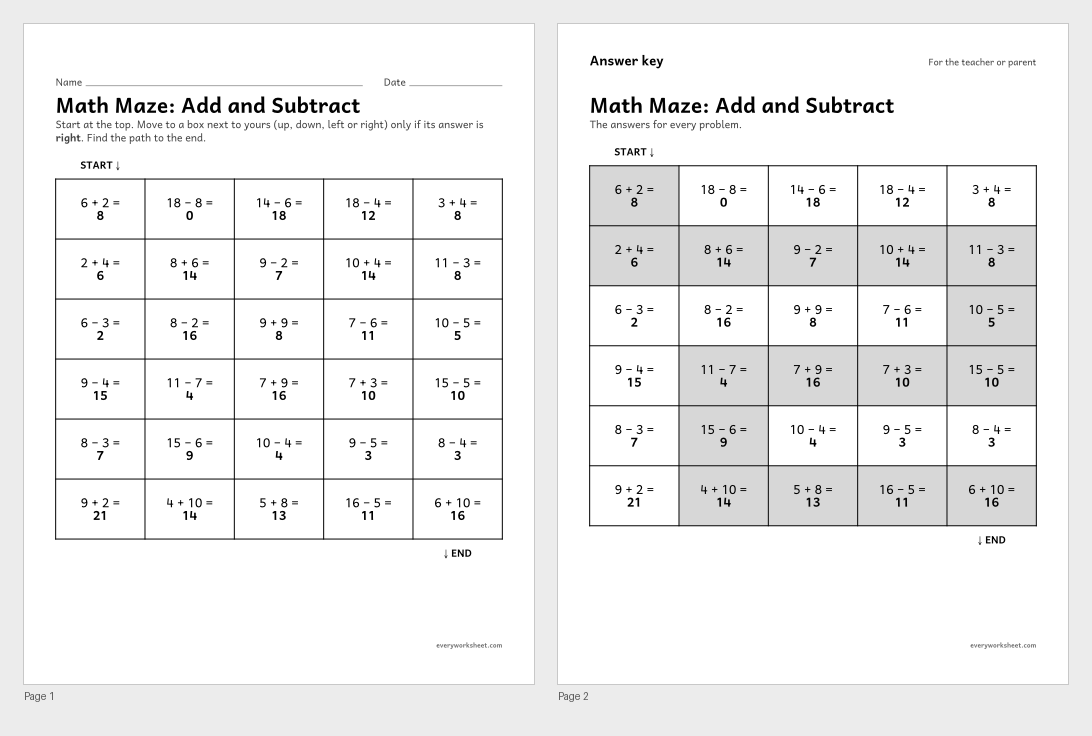
Checking addition and subtraction facts within 20 to find the path through a maze
Answer key on page 2
2 pages47 KB
 View all 2 pages
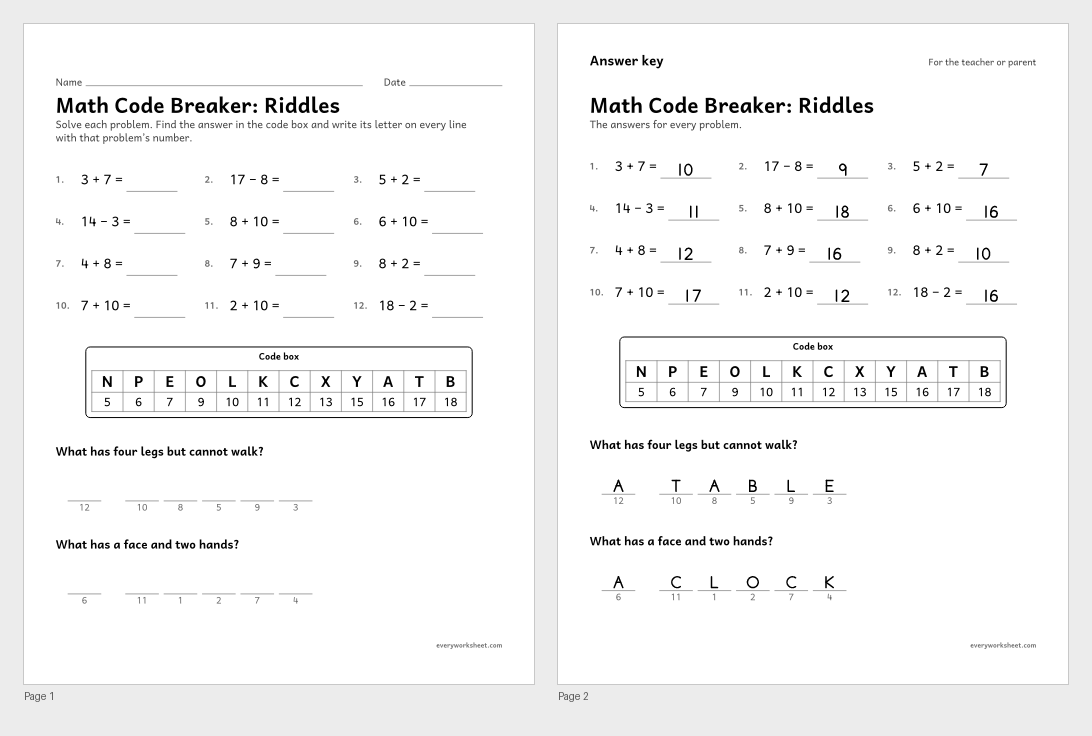
Solving addition and subtraction facts to decode two riddle answers
Answer key on page 2
2 pages64 KB
 View all 2 pages
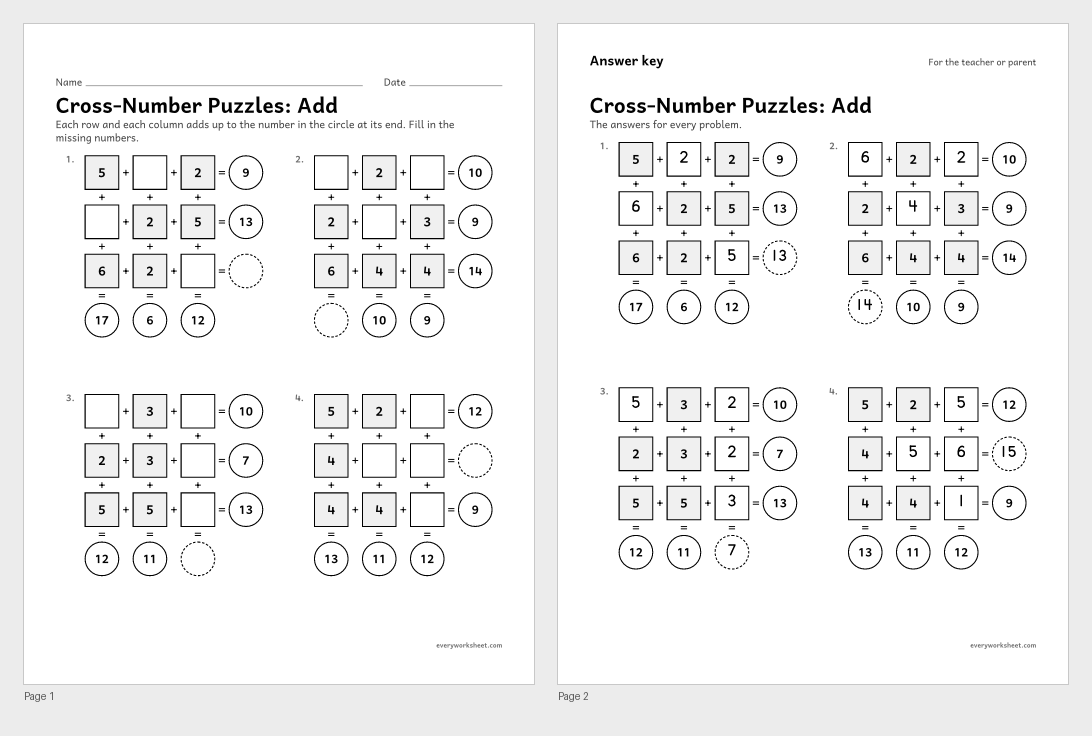
Adding three numbers across and down to complete cross-number puzzles
Answer key on page 2
2 pages101 KB
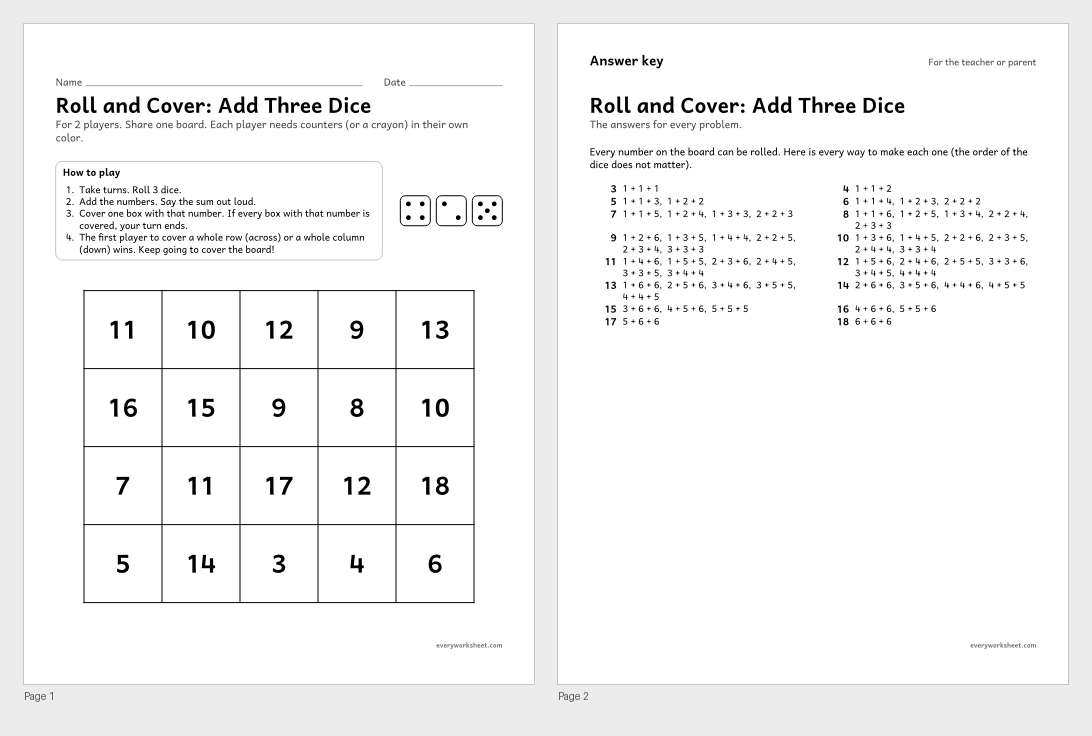 View all 2 pages
Adding three one-digit numbers from dice and covering the sum on a game board
Answer key on page 2
2 pages48 KB
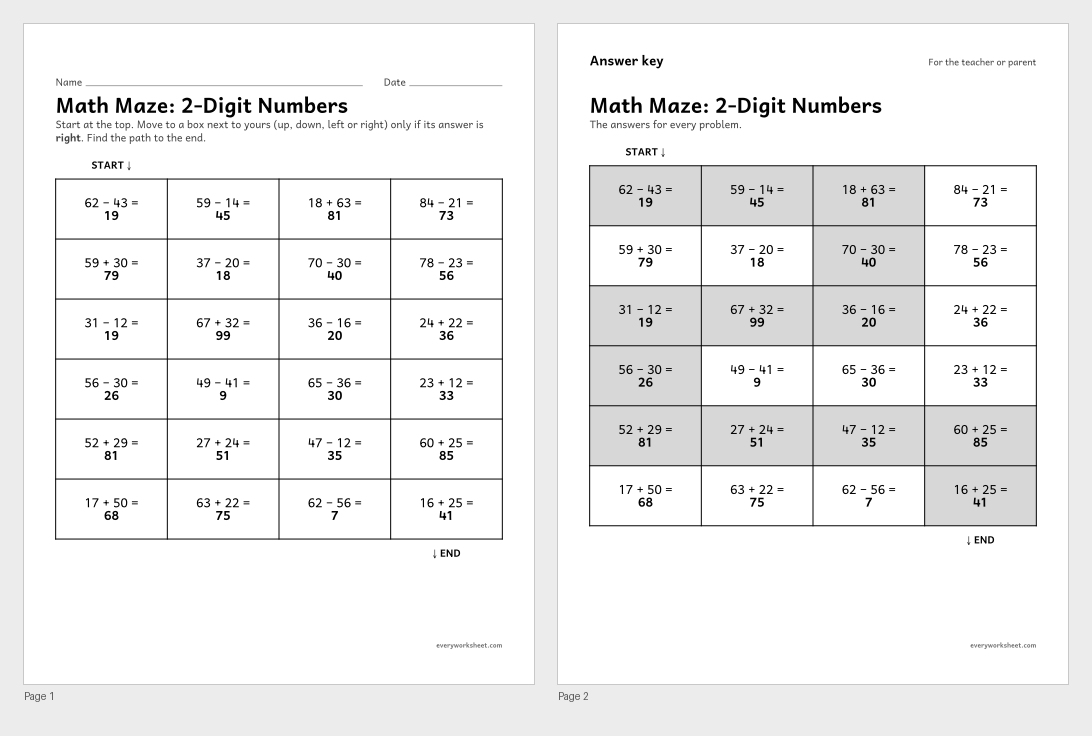 View all 2 pages
Checking 2-digit addition and subtraction to find the path through a maze
Answer key on page 2
2 pages44 KB
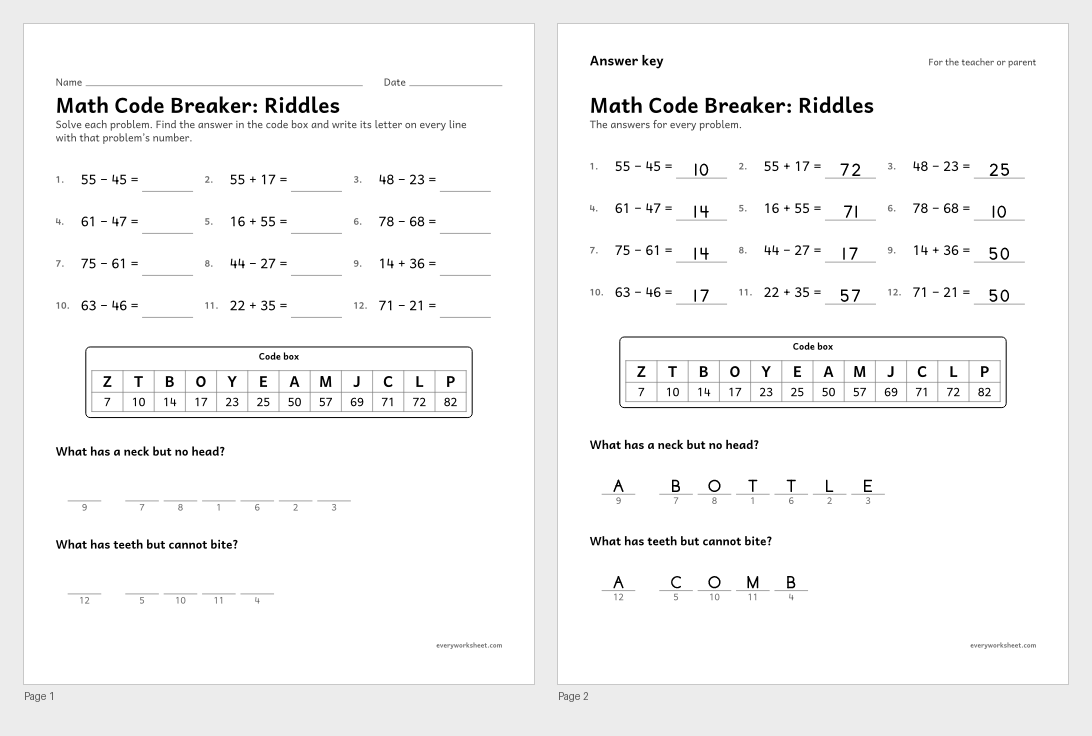 View all 2 pages
Solving 2-digit addition and subtraction to decode two riddle answers
Answer key on page 2
2 pages63 KB
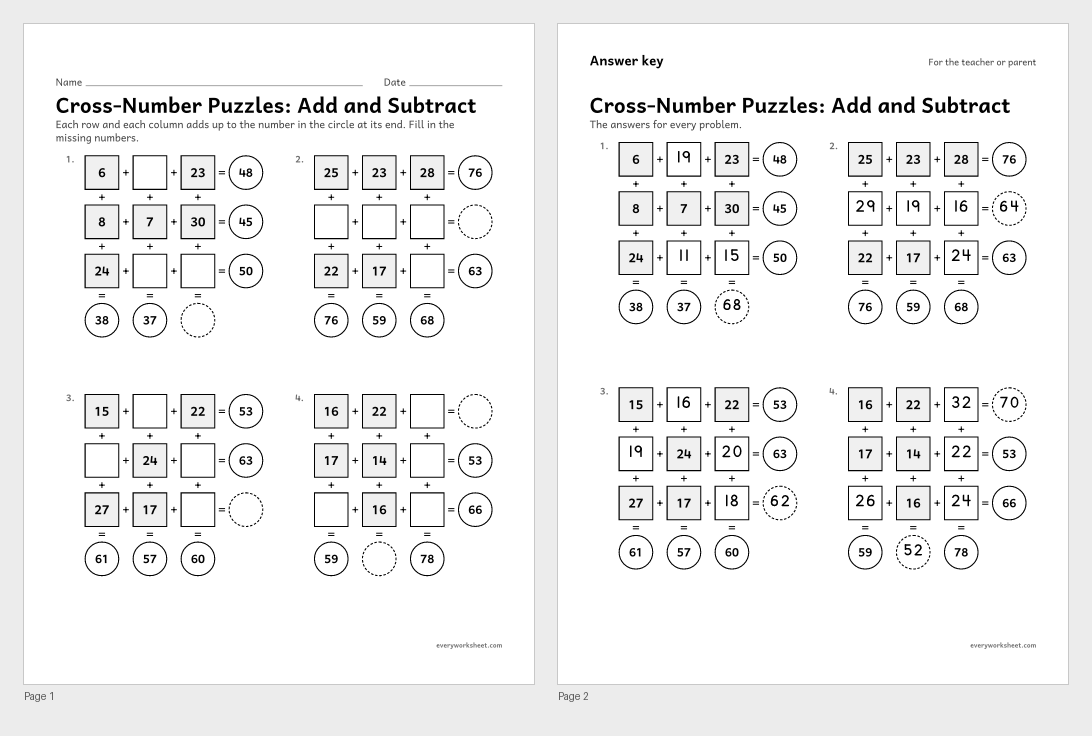 View all 2 pages
Adding and subtracting 2-digit numbers to complete cross-number puzzles
Answer key on page 2
2 pages102 KB
 View all 2 pages
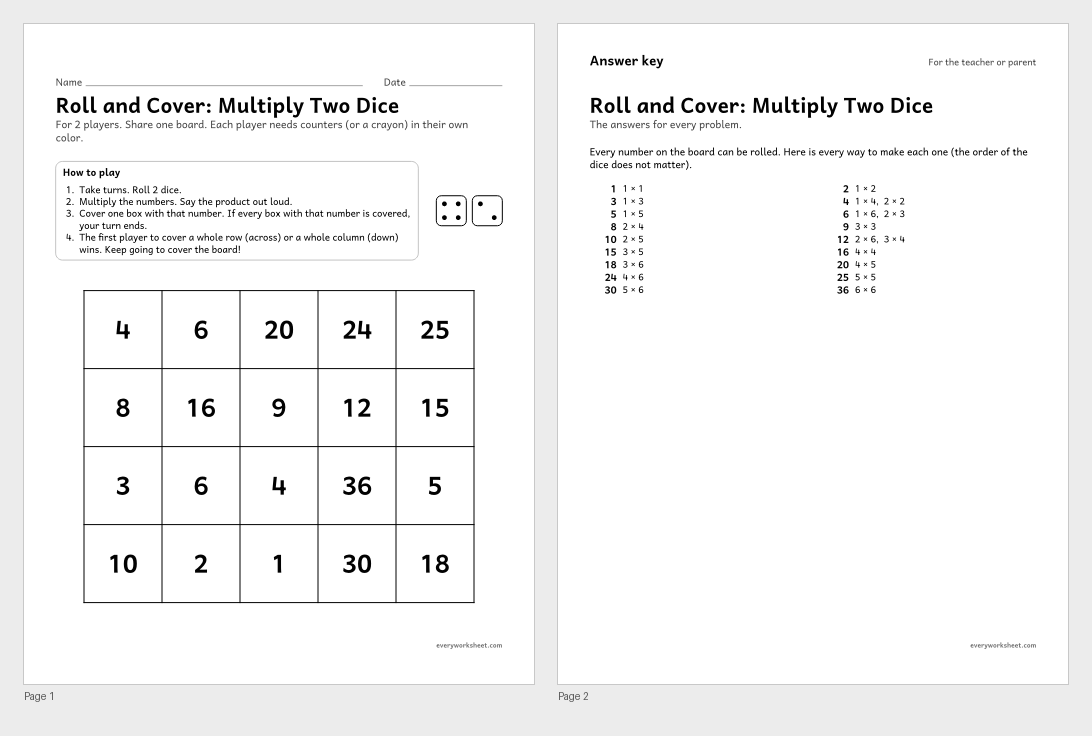
Multiplying the numbers on two dice and covering the product on a game board
Answer key on page 2
2 pages49 KB
 View all 2 pages
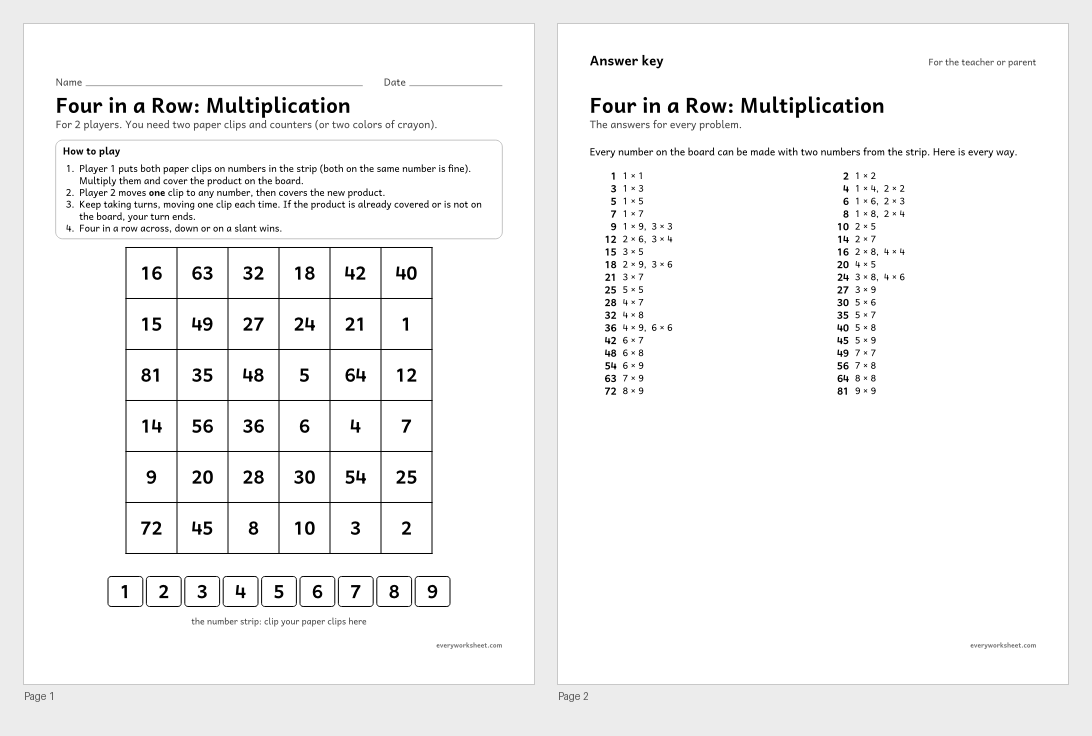
Multiplying two numbers from a number strip to cover products in a four-in-a-row game
Answer key on page 2
2 pages66 KB
 View all 2 pages
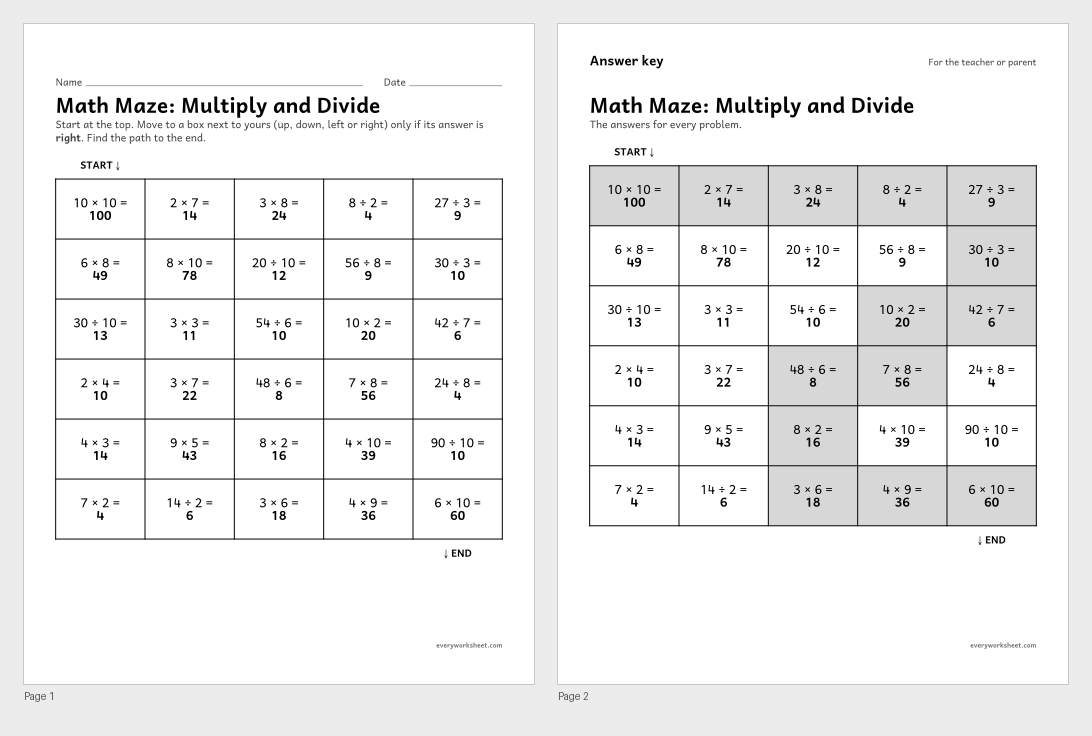
Checking multiplication and division facts to find the path through a maze
Answer key on page 2
2 pages48 KB
 View all 2 pages
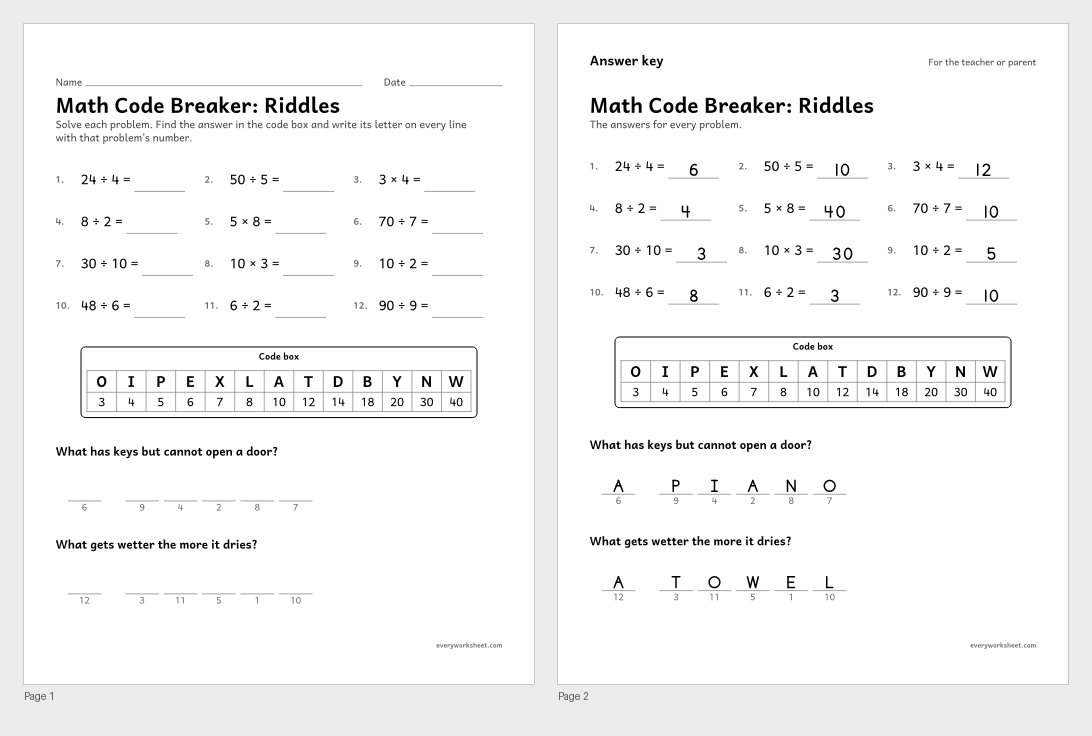
Solving multiplication and division facts to decode two riddle answers
Answer key on page 2
2 pages65 KB
 View all 2 pages
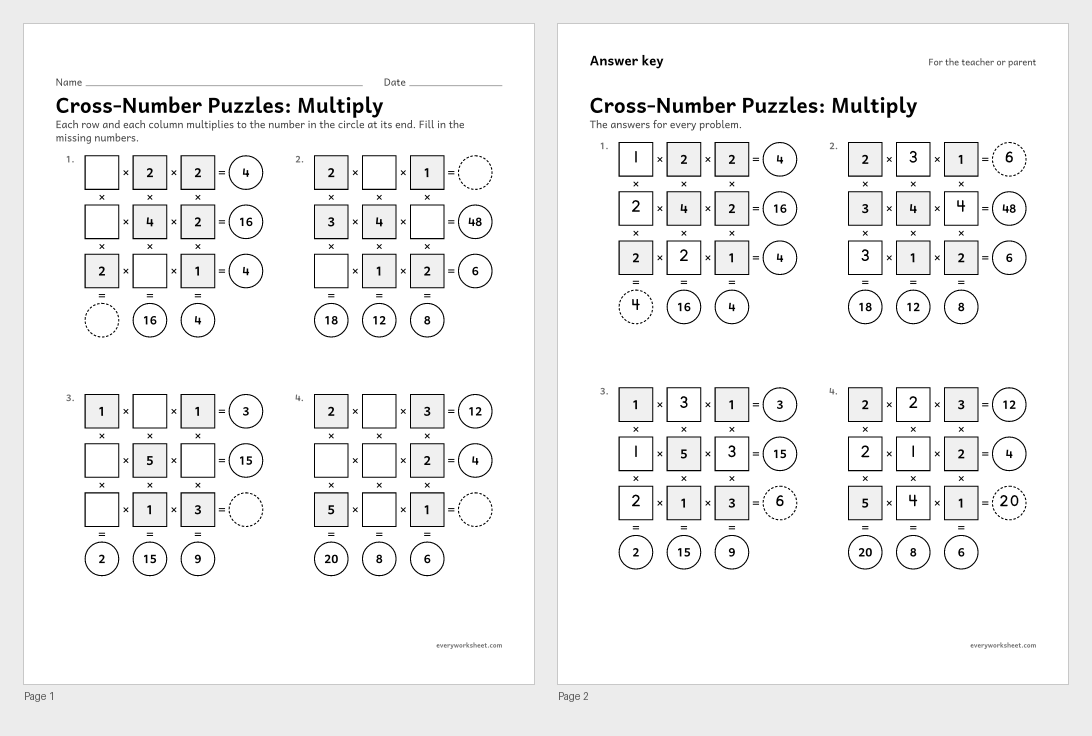
Multiplying and dividing across and down to complete cross-number puzzles
Answer key on page 2
2 pages101 KB
 View all 2 pages
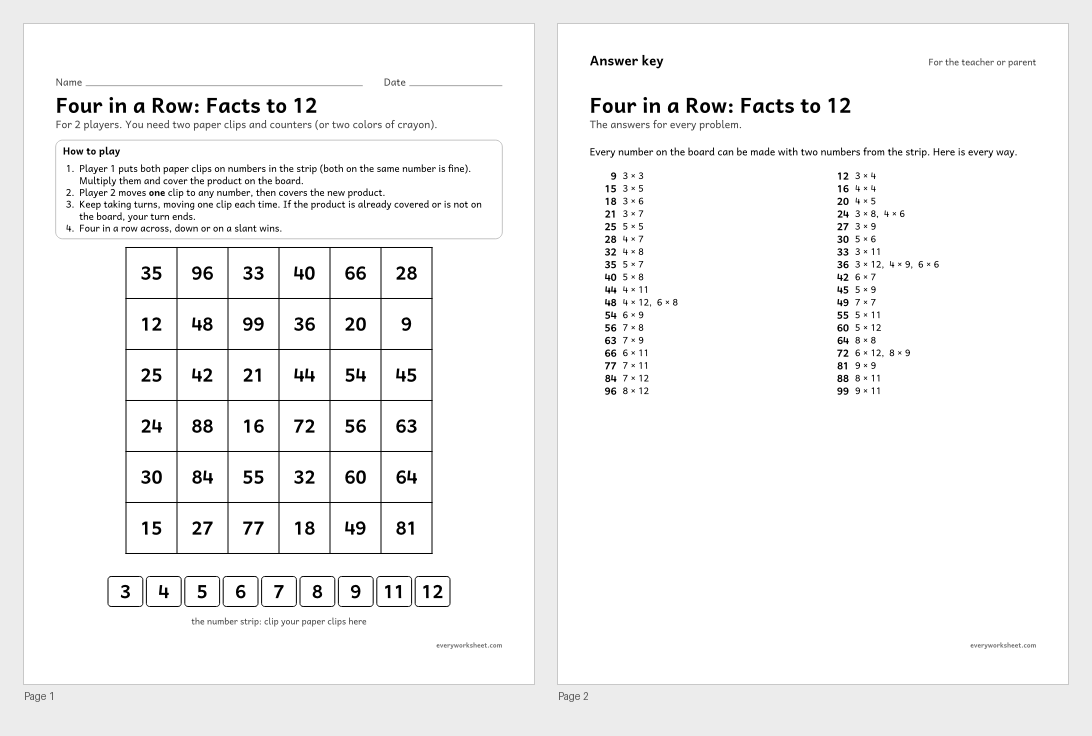
Multiplying factors up to 12 to cover products in a four-in-a-row game
Answer key on page 2
2 pages66 KB
 View all 2 pages
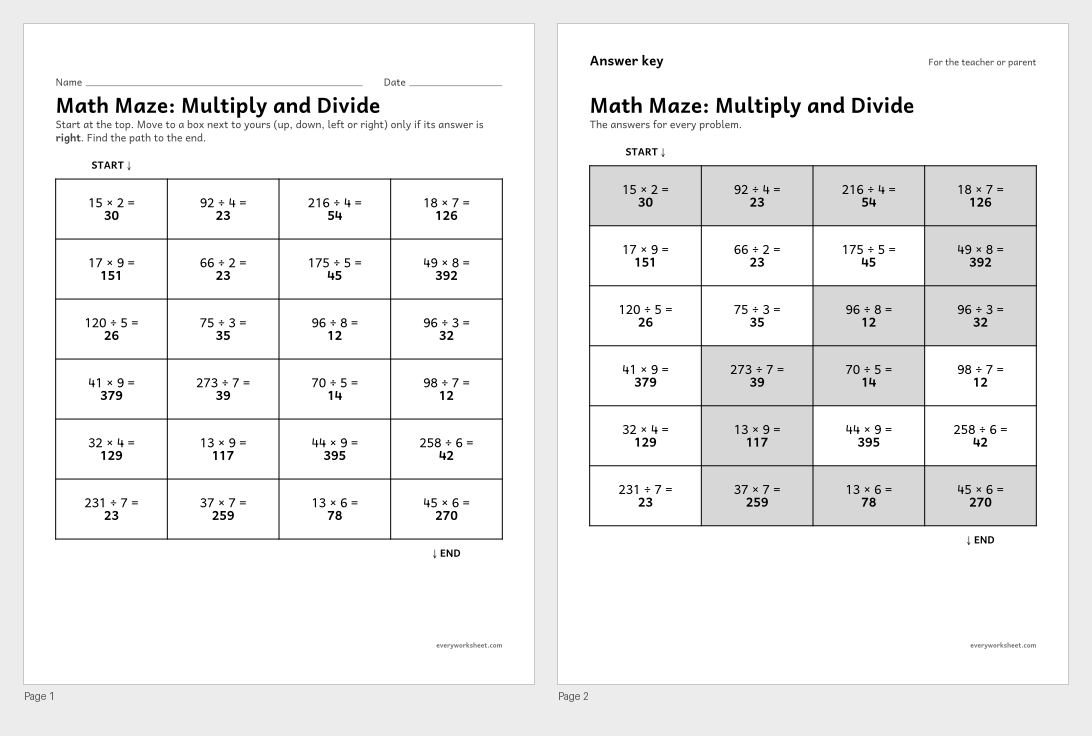
Checking multi-digit multiplication and division to find the path through a maze
Answer key on page 2
2 pages45 KB
 View all 2 pages
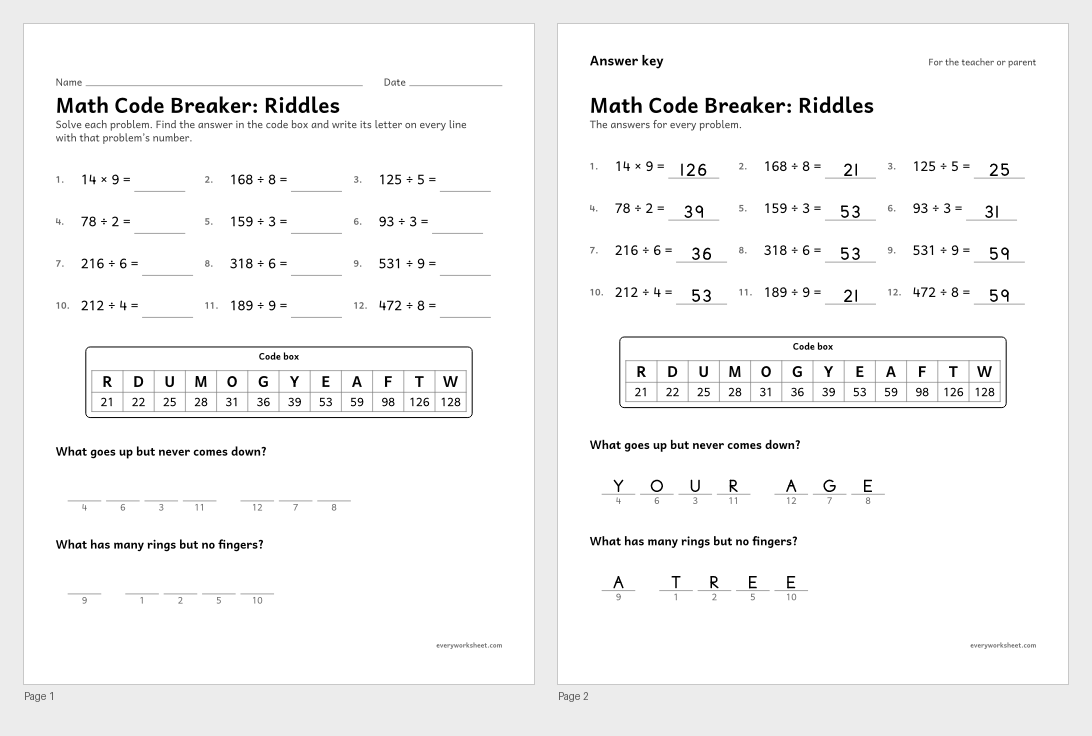
Solving multi-digit multiplication and division to decode two riddle answers
Answer key on page 2
2 pages65 KB
 View all 2 pages
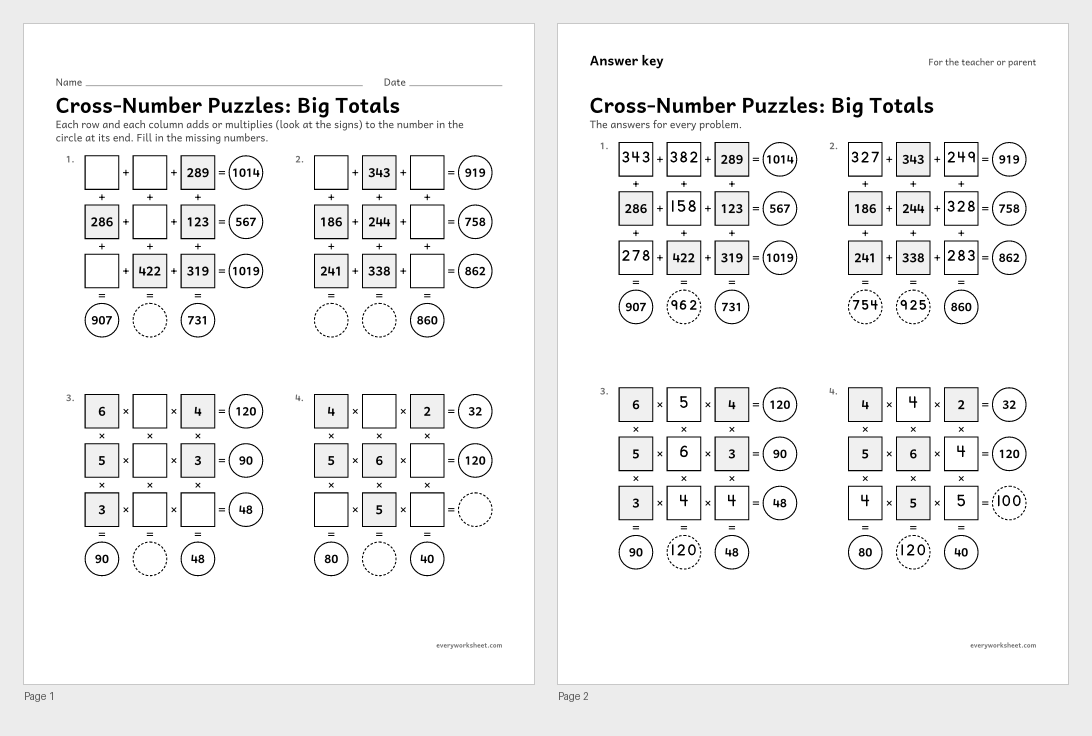
Adding 3-digit numbers and multiplying across and down to complete cross-number puzzles
Answer key on page 2
2 pages103 KB
 View all 2 pages
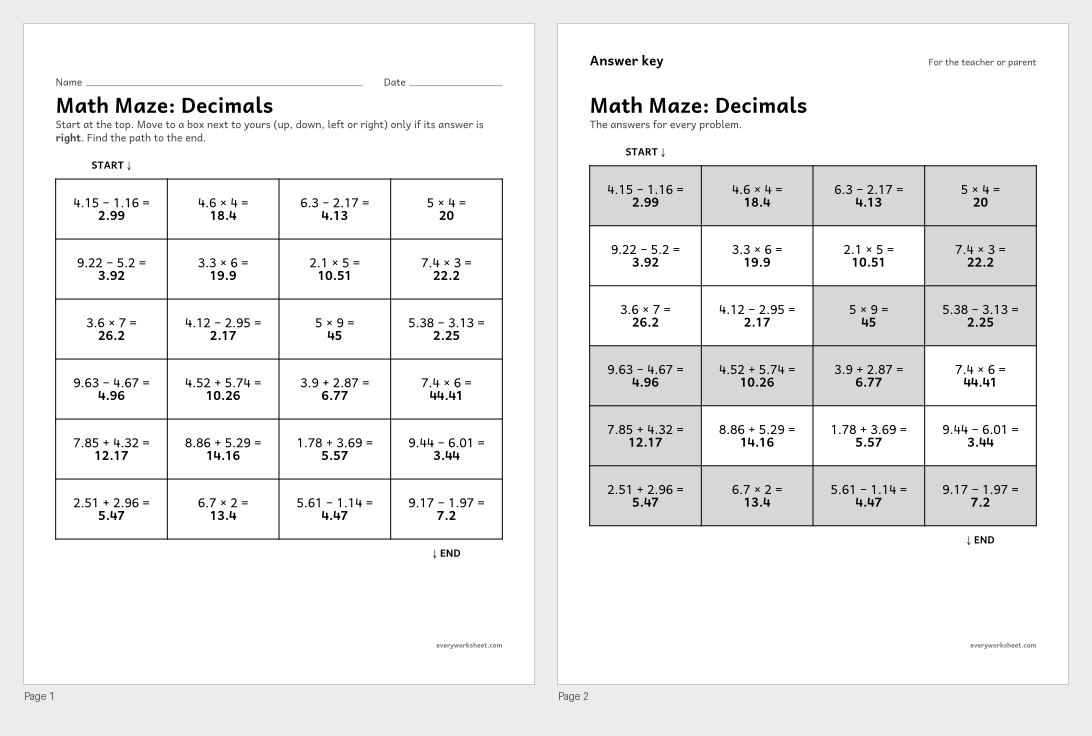
Checking decimal addition, subtraction and multiplication to find the path through a maze
Answer key on page 2
2 pages44 KB
 View all 2 pages
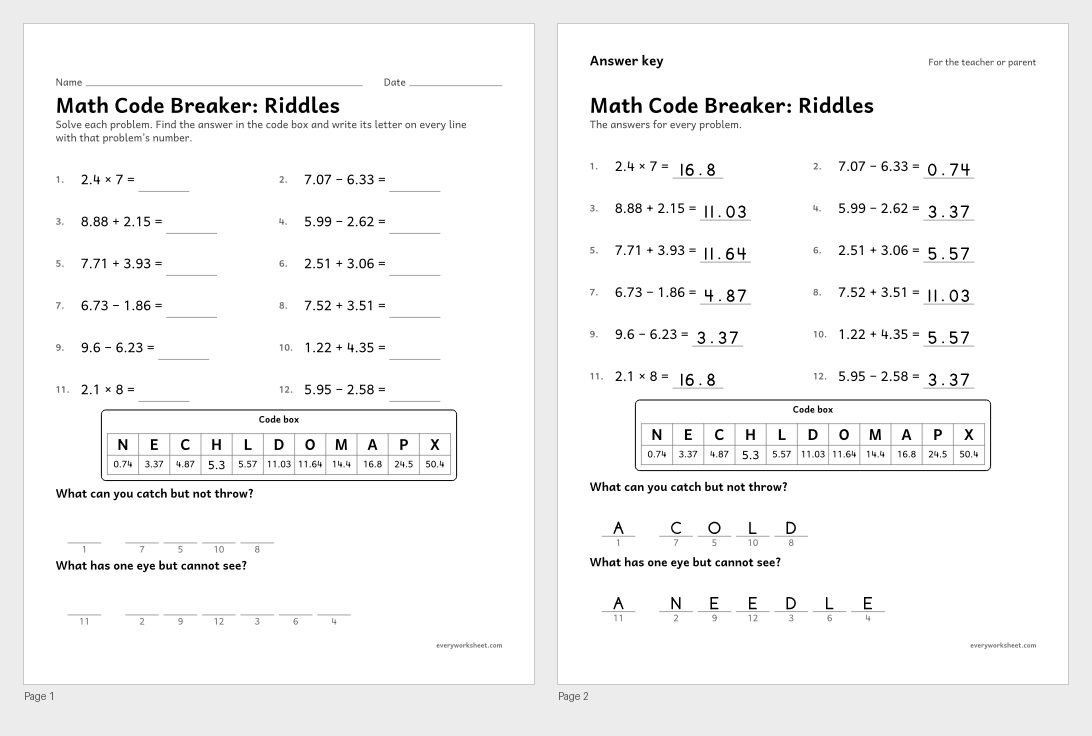
Solving decimal problems to decode two riddle answers
Answer key on page 2
2 pages65 KB
 View all 2 pages
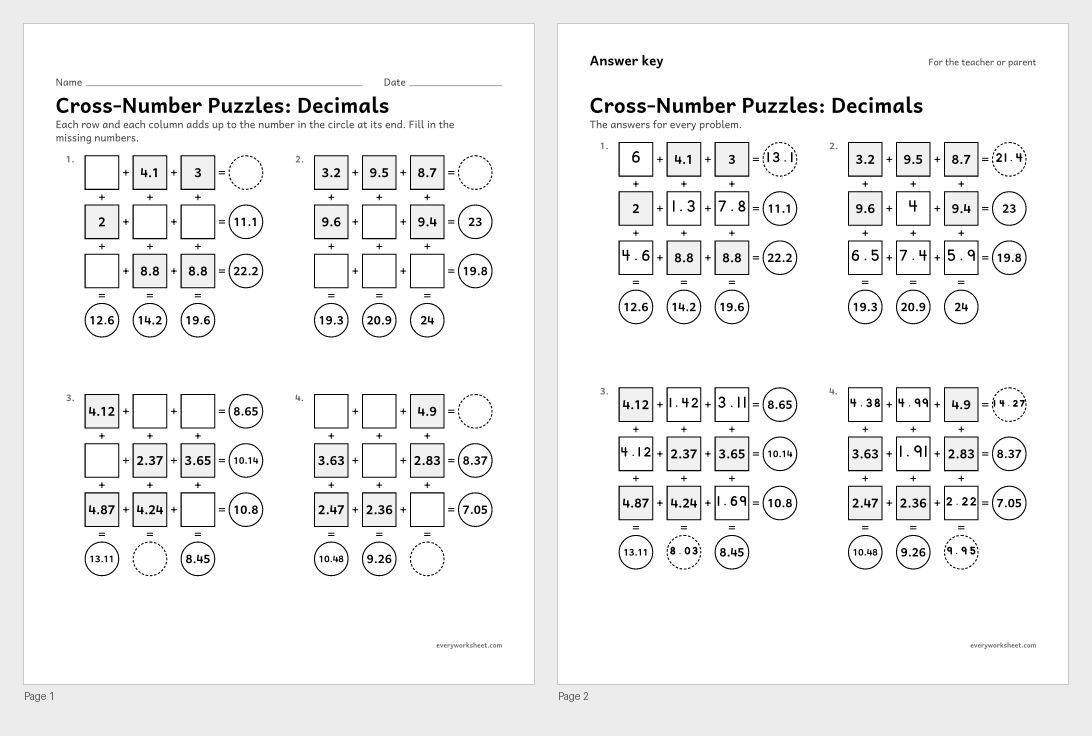
Adding and subtracting decimals across and down to complete cross-number puzzles
Answer key on page 2
2 pages107 KB
Print at 100% (actual size) for the cleanest tracing lines.
These printable math games turn fact practice into something children ask to play. Every game needs only the page, a pencil and things you already have: dice, paper clips and counters.
Roll and cover and four in a row are games for two players. Mazes, code breakers and cross-number puzzles are for working alone, and each has an answer key on page 2.
Every number on the game boards can be made with the dice or the number strip, and the key lists every way to make each one. The maze has only one path, and the code breakers spell their riddle answers only when every problem is right.
CCSS.MATH.CONTENT.1.OA.C.6Add and subtract within 20, demonstrating fluency for addition and subtraction within 10. Use strategies such as counting on; making ten (e.g., 8 + 6 = 8 + 2 + 4 = 10 + 4 = 14); decomposing a number leading to a ten (e.g., 13 - 4 = 13 - 3 - 1 = 10 - 1 = 9); using the relationship between addition and subtraction (e.g., knowing that 8 + 4 = 12, one knows 12 - 8 = 4); and creating equivalent but easier or known sums (e.g., adding 6 + 7 by creating the known equivalent 6 + 6 + 1 = 12 + 1 = 13).CCSS.MATH.CONTENT.2.NBT.B.5Fluently add and subtract within 100 using strategies based on place value, properties of operations, and/or the relationship between addition and subtraction.CCSS.MATH.CONTENT.3.OA.C.7Fluently multiply and divide within 100, using strategies such as the relationship between multiplication and division (e.g., knowing that 8 × 5 = 40, one knows 40 ÷ 5 = 8) or properties of operations. By the end of Grade 3, know from memory all products of two one-digit numbers.CCSS.MATH.CONTENT.4.NBT.B.6Find whole-number quotients and remainders with up to four-digit dividends and one-digit divisors, using strategies based on place value, the properties of operations, and/or the relationship between multiplication and division. Illustrate and explain the calculation by using equations, rectangular arrays, and/or area models.CCSS.MATH.CONTENT.5.NBT.B.7Add, subtract, multiply, and divide decimals to hundredths, using concrete models or drawings and strategies based on place value, properties of operations, and/or the relationship between addition and subtraction; relate the strategy to a written method and explain the reasoning used.The dice games need two dice (three for the 2nd grade game) and counters or a crayon. Four in a row needs two paper clips and two colors of counters or crayons. The mazes, code breakers and cross-number puzzles need only a pencil.
No. Each maze has exactly one way from start to end through boxes with right answers. Every other box has a wrong answer, so checking the math is the only way through.
It is a 3 by 3 grid of numbers. Each row and each column adds (or multiplies) to the number in its circle. Some numbers are missing, and children use the totals to find them, one line at a time.