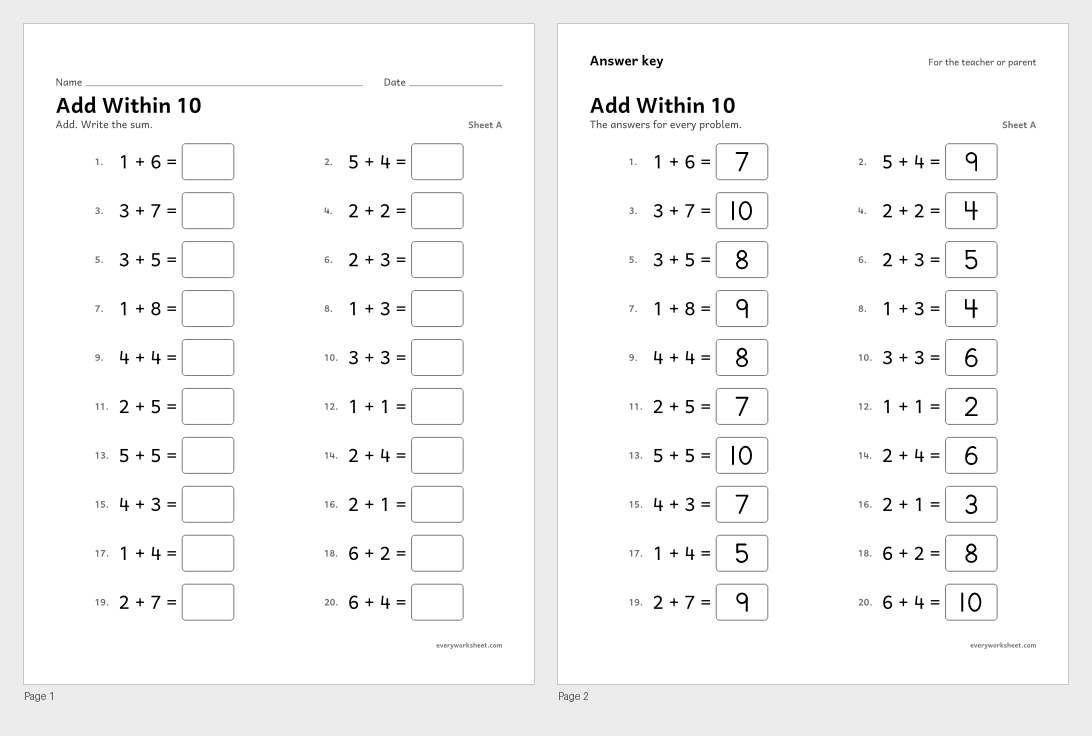
 View all 2 pages
Addition Worksheets
Addition facts to 10 and 20 for 1st grade, with counting on, doubles, near doubles, make 10 and adding three numbers. Every page has an answer key.
Download the addition worksheets
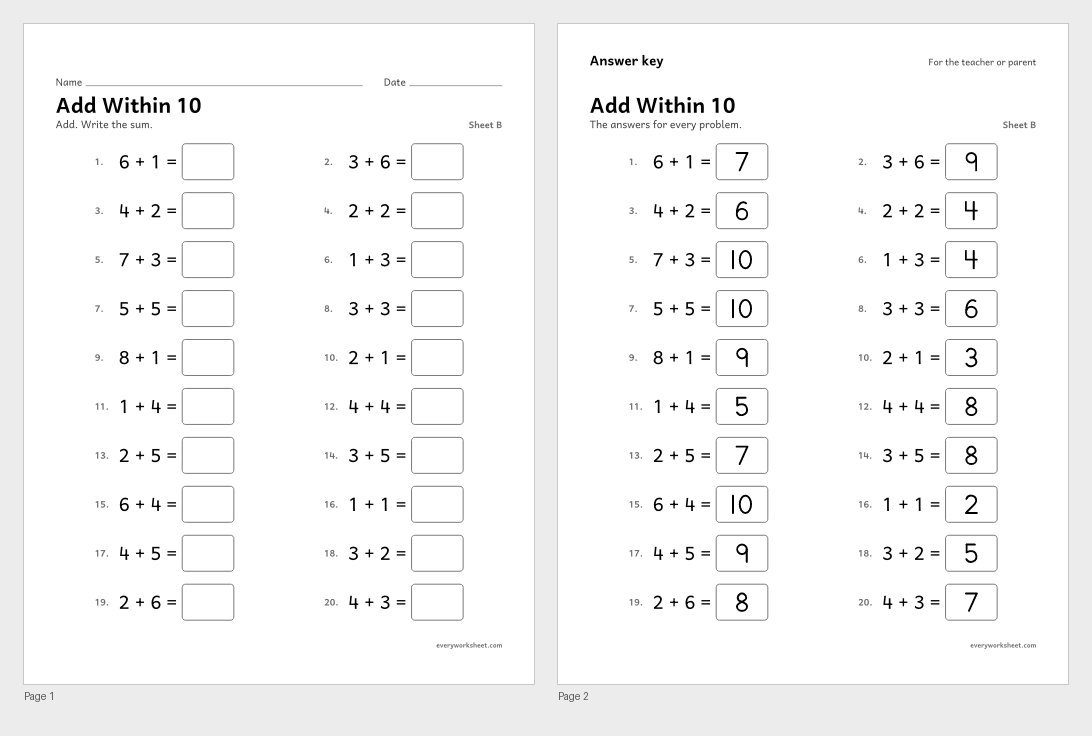
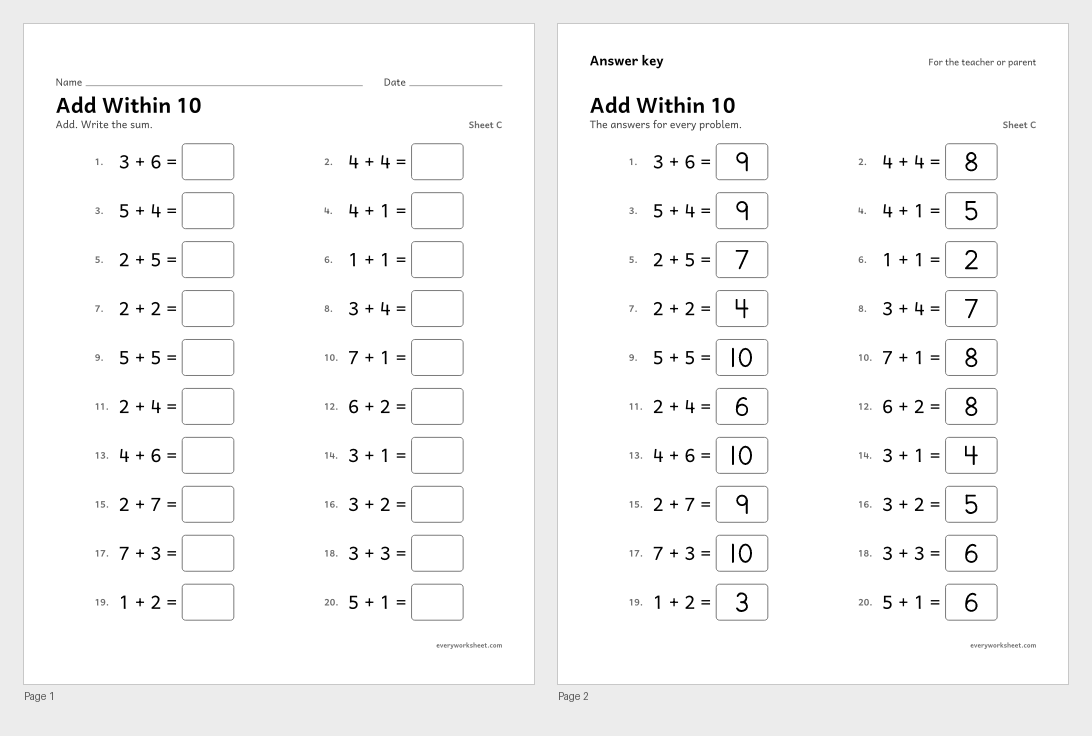
Addition facts to 10
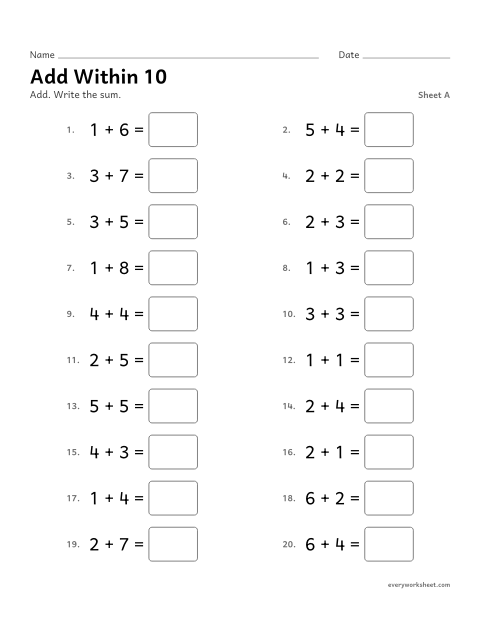 View all 2 pages
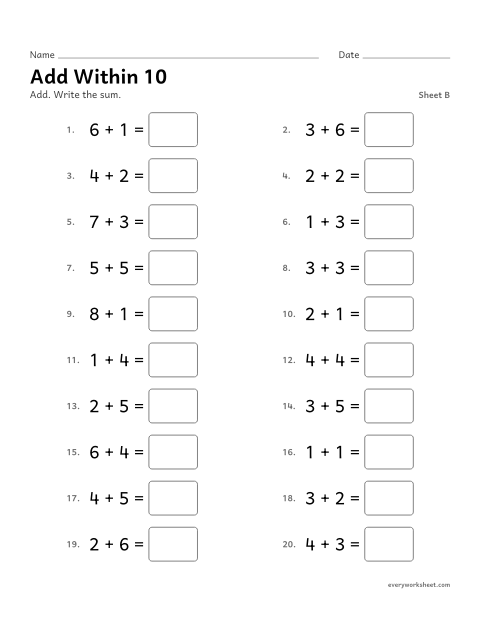 View all 2 pages
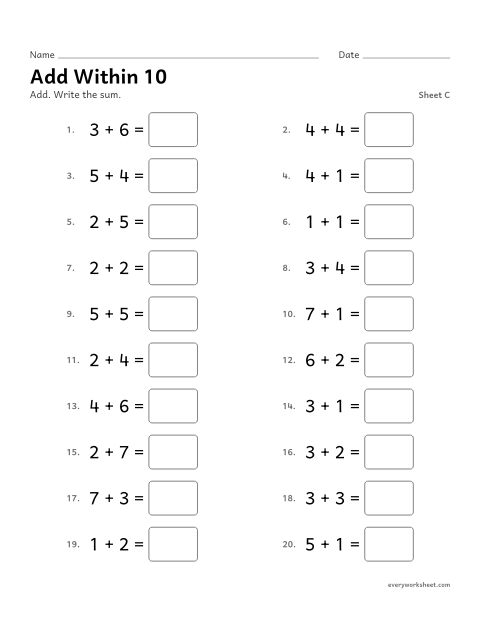 View all 2 pages
 View all 2 pages
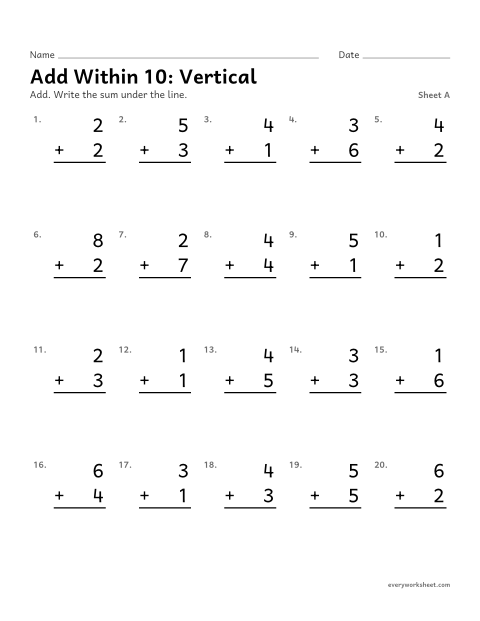
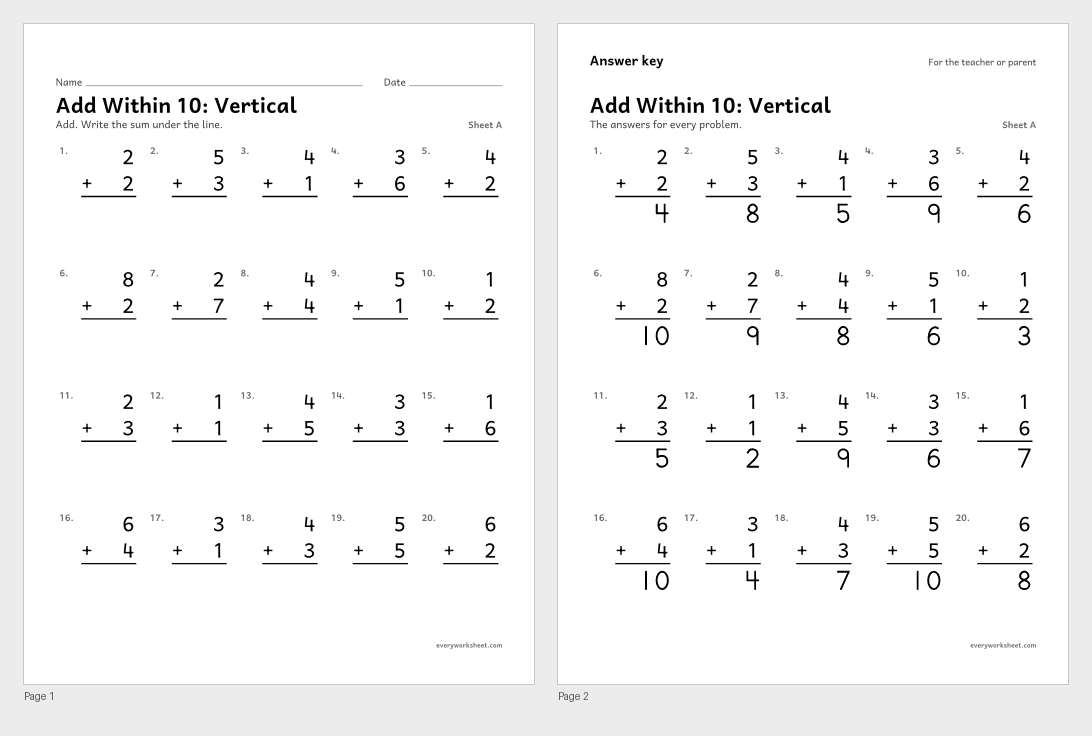
Add within 10: Vertical, sheet A
Adding within 10 in vertical form
Answer key on page 2
2 pages57 KB
 View all 2 pages
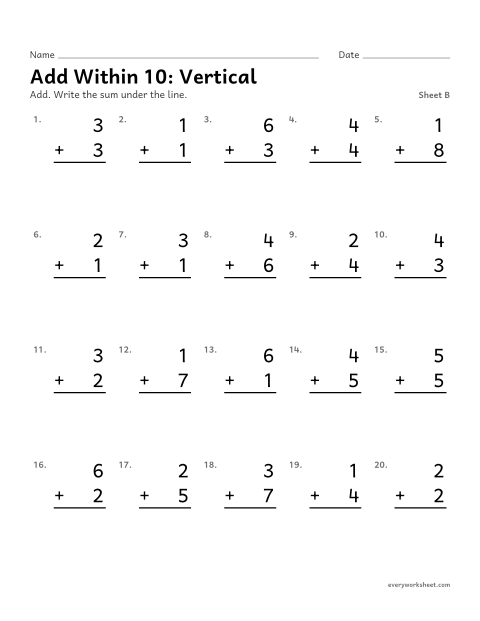
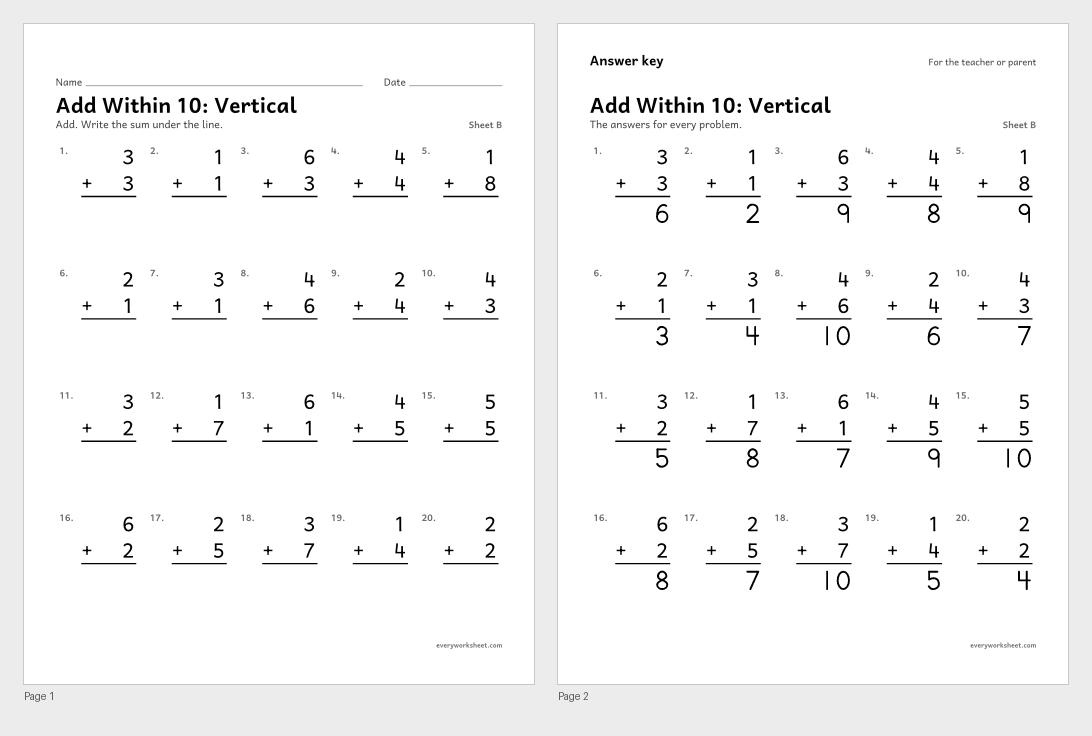
Add within 10: Vertical, sheet B
Adding within 10 in vertical form
Answer key on page 2
2 pages57 KB
 View all 2 pages
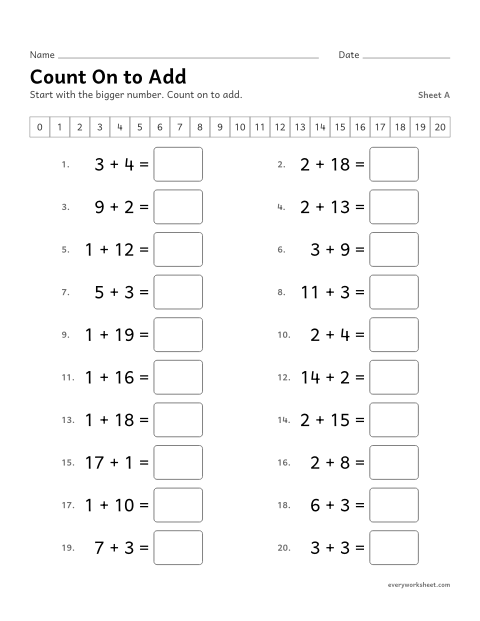
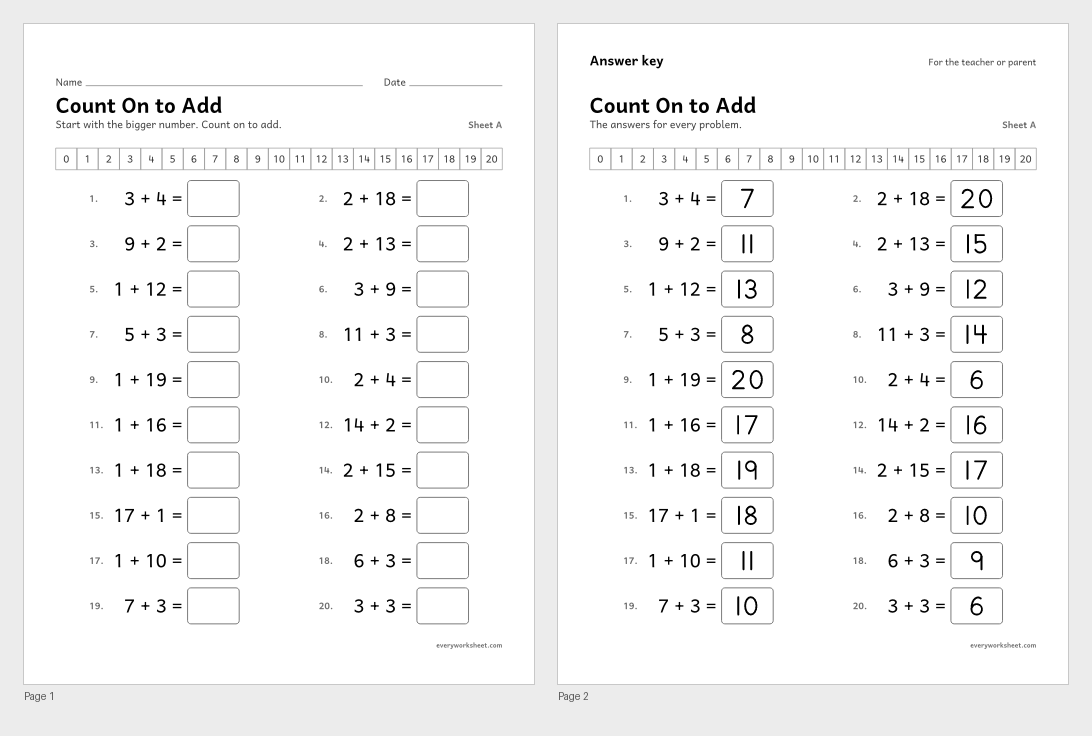
Count on to Add, sheet A
Counting on 1, 2 or 3 to add
Answer key on page 2
2 pages96 KB
 View all 2 pages
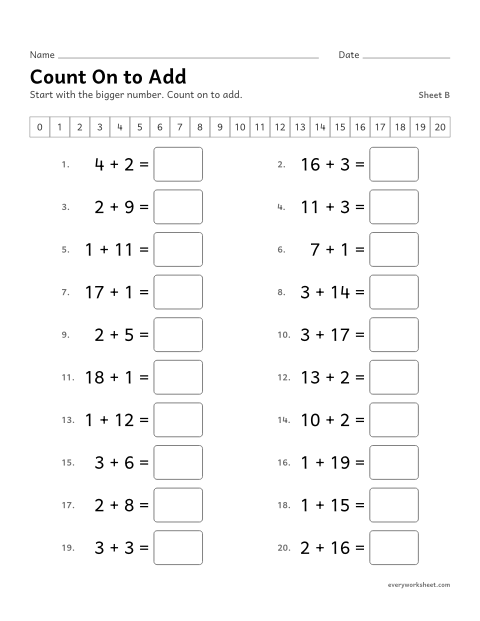
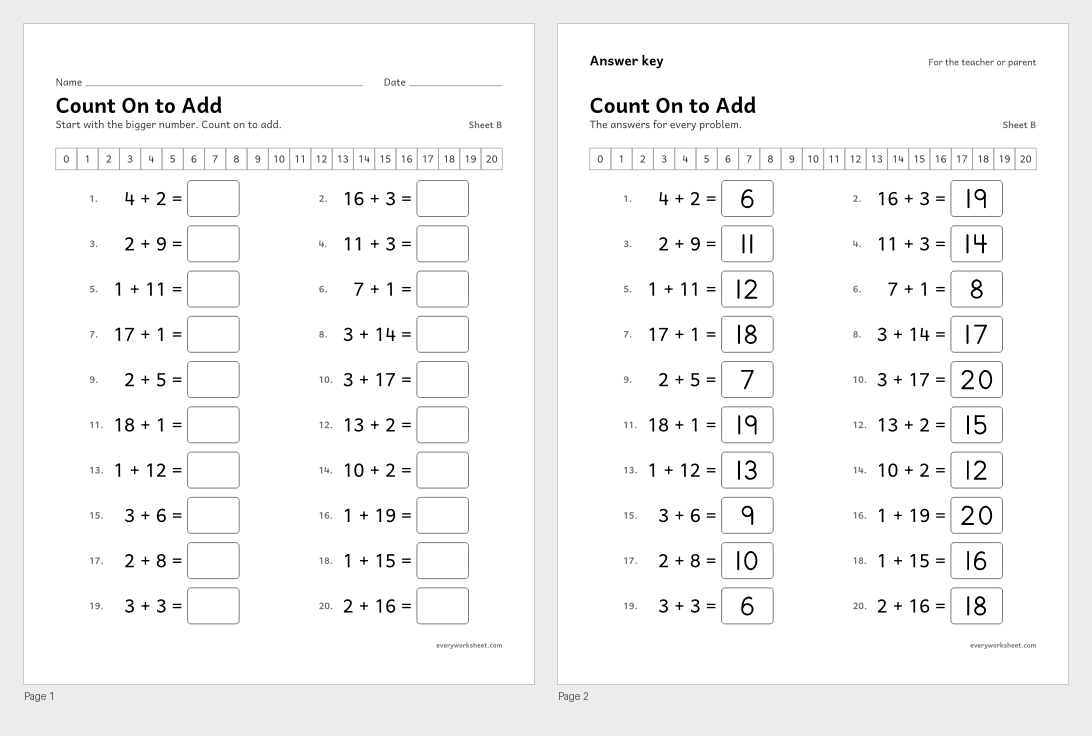
Count on to Add, sheet B
Counting on 1, 2 or 3 to add
Answer key on page 2
2 pages97 KB
 View all 2 pages
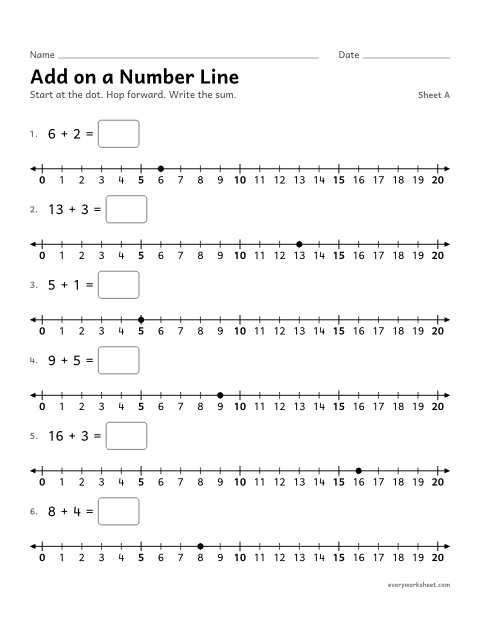
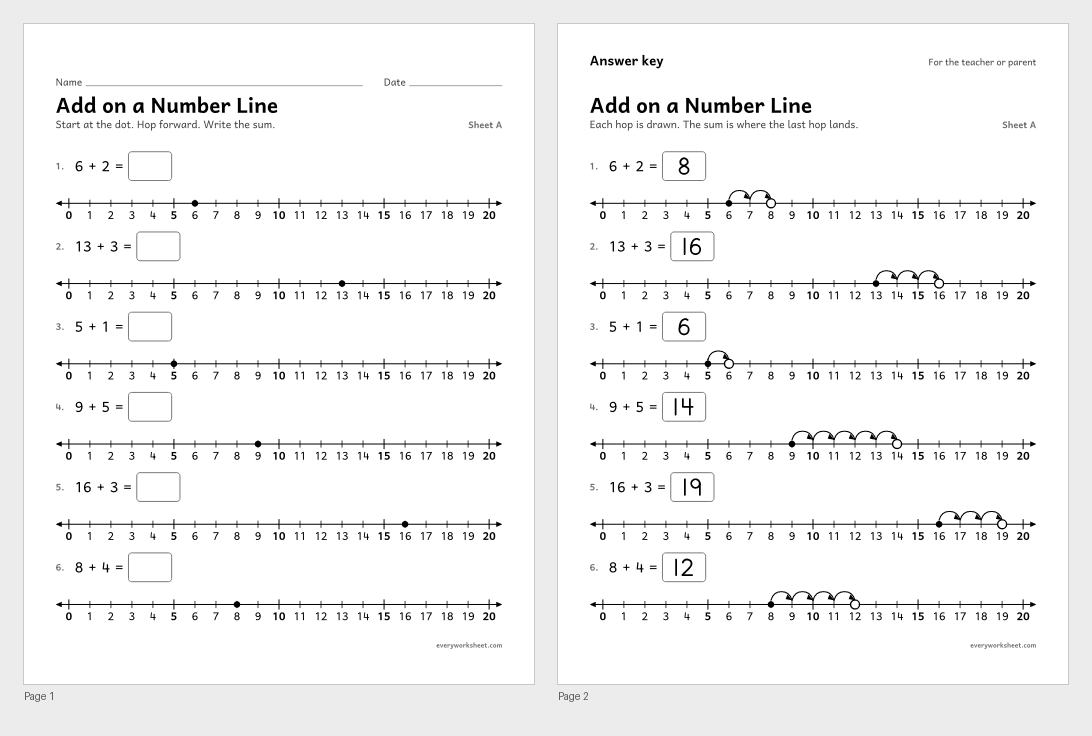
Add on a number Line, sheet A
Adding within 20 by hopping on a number line
Answer key on page 2
2 pages56 KB
 View all 2 pages
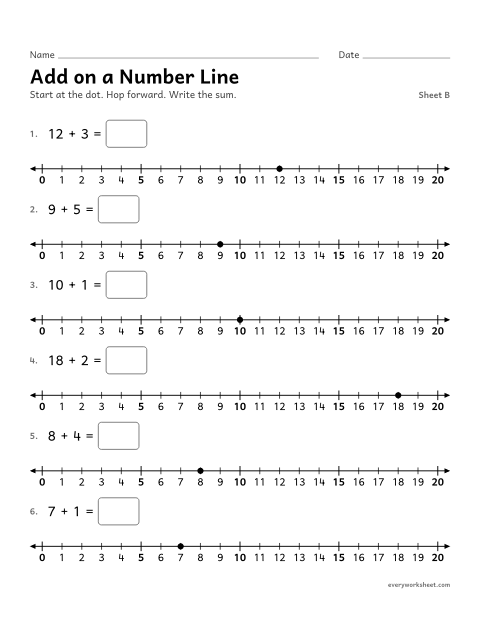
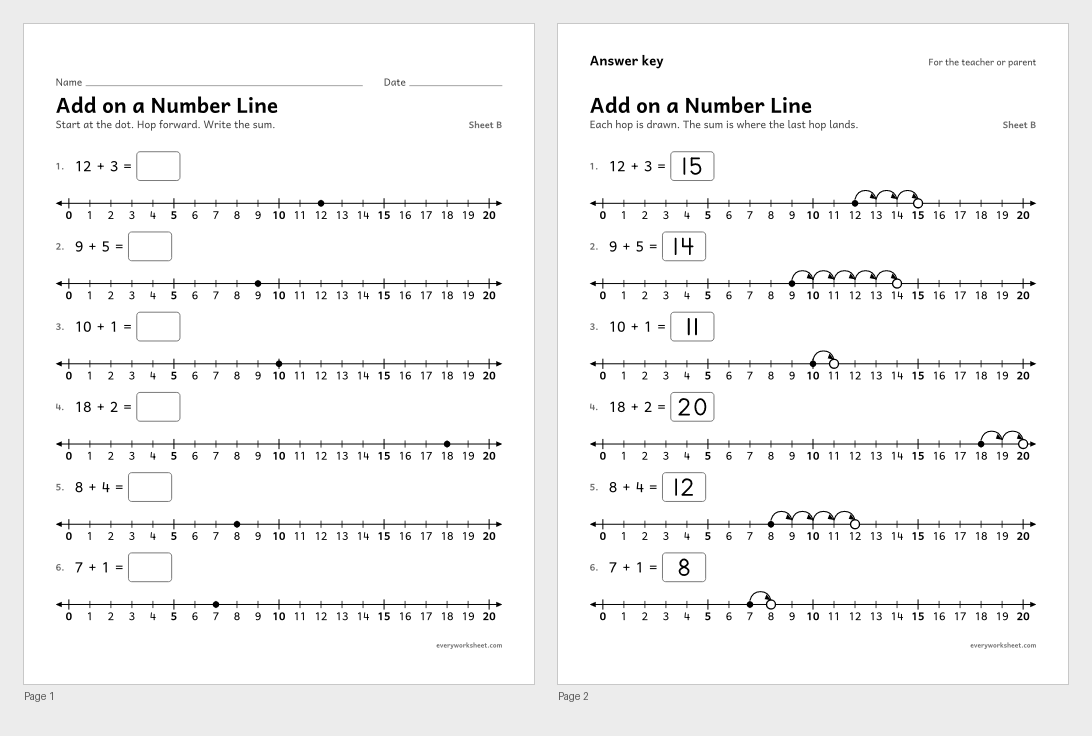
Add on a number Line, sheet B
Adding within 20 by hopping on a number line
Answer key on page 2
2 pages57 KB
Addition facts to 20
 View all 2 pages
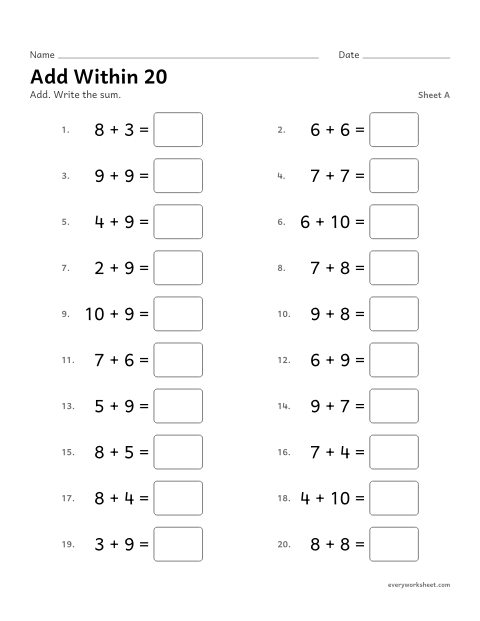
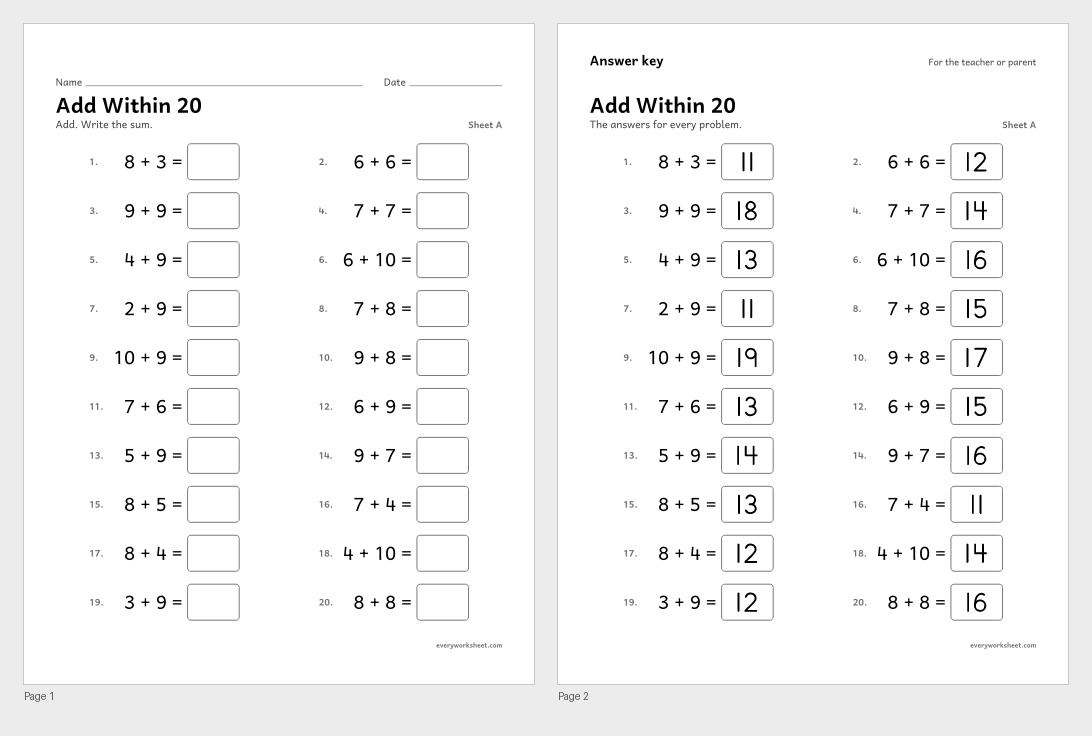
Add within 20, sheet A
Adding within 20 (sums 11 to 20)
Answer key on page 2
2 pages94 KB
 View all 2 pages
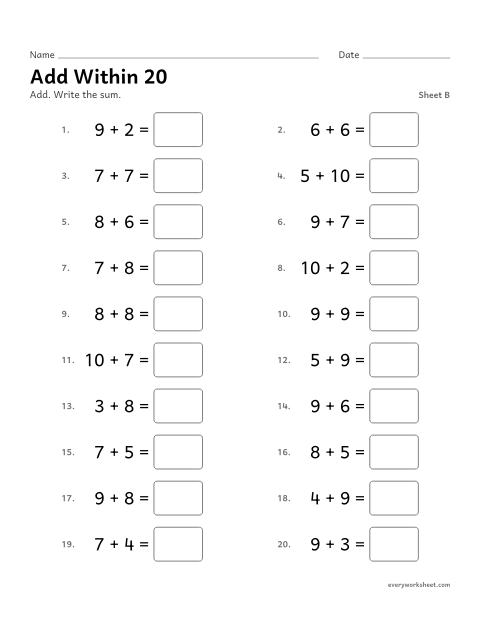
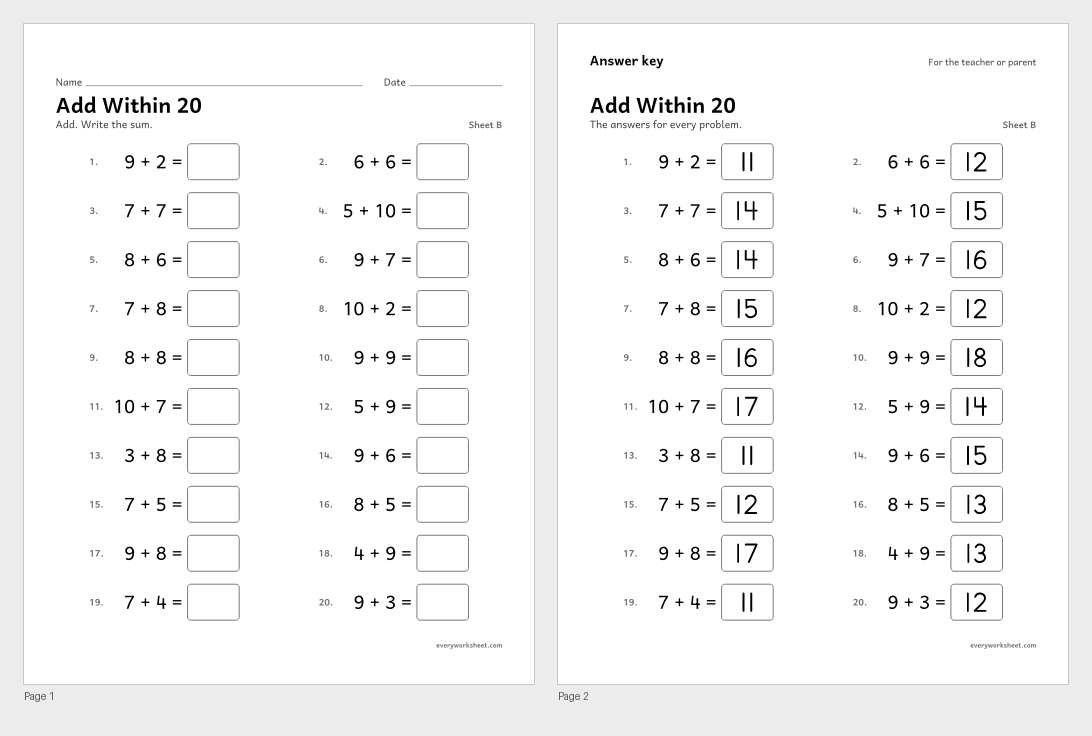
Add within 20, sheet B
Adding within 20 (sums 11 to 20)
Answer key on page 2
2 pages94 KB
 View all 2 pages
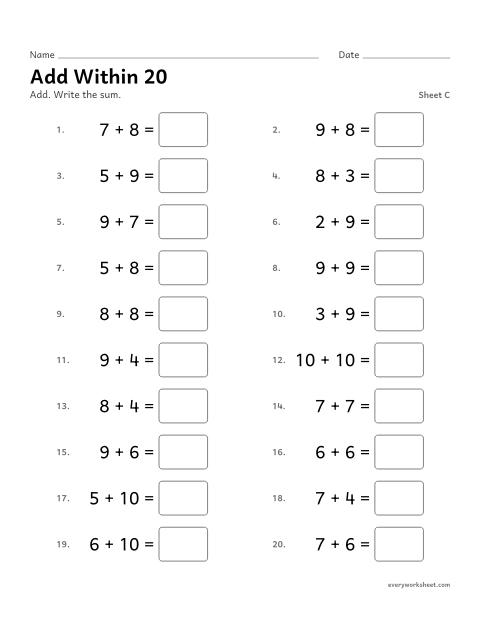
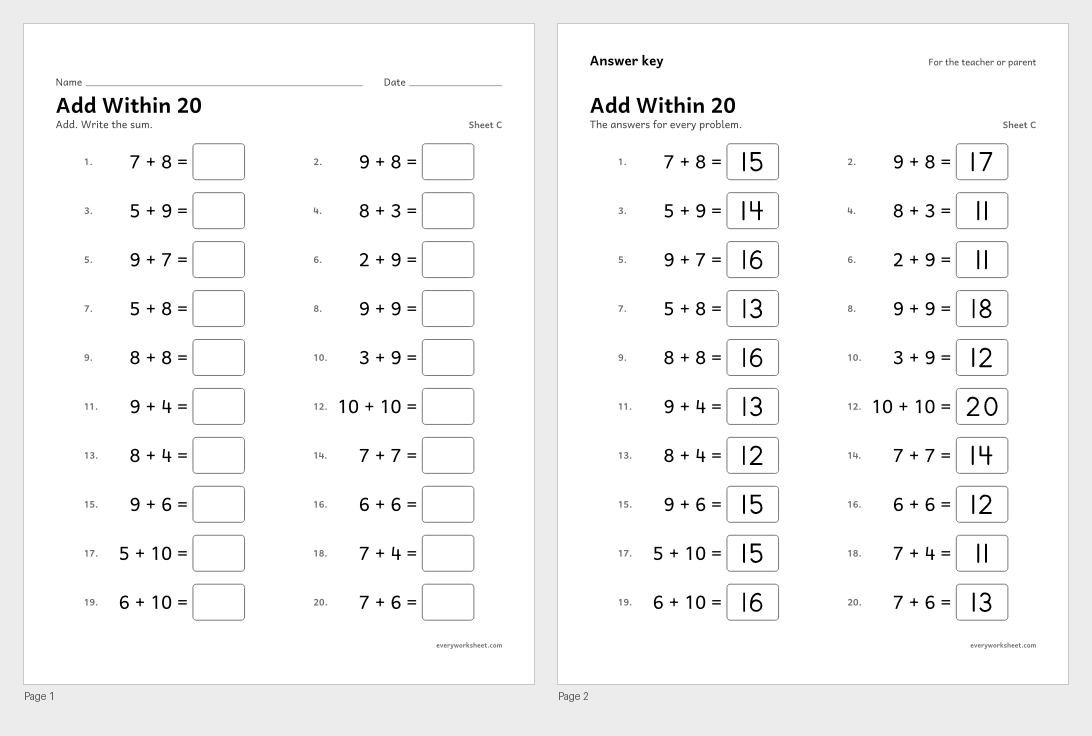
Add within 20, sheet C
Adding within 20 (sums 11 to 20)
Answer key on page 2
2 pages94 KB
 View all 2 pages
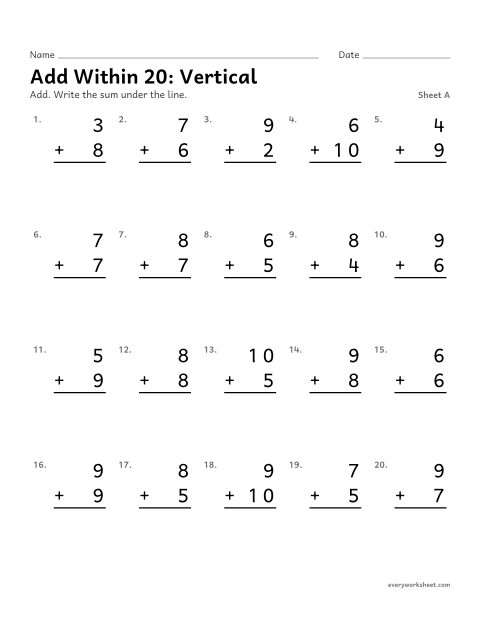
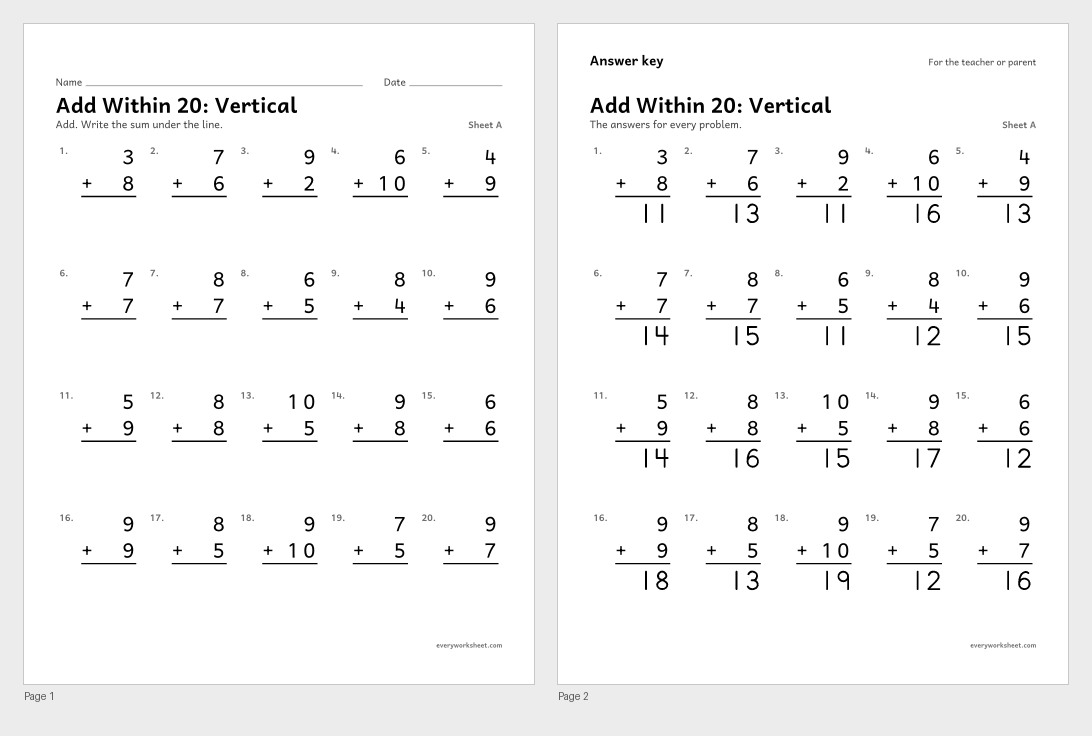
Add within 20: Vertical, sheet A
Adding within 20 in vertical form
Answer key on page 2
2 pages58 KB
 View all 2 pages
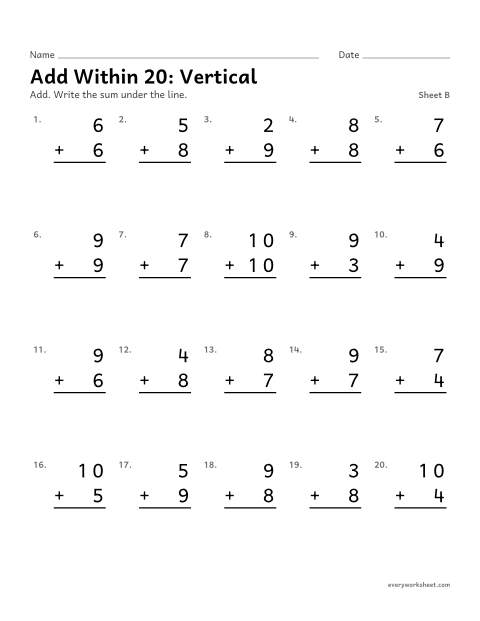
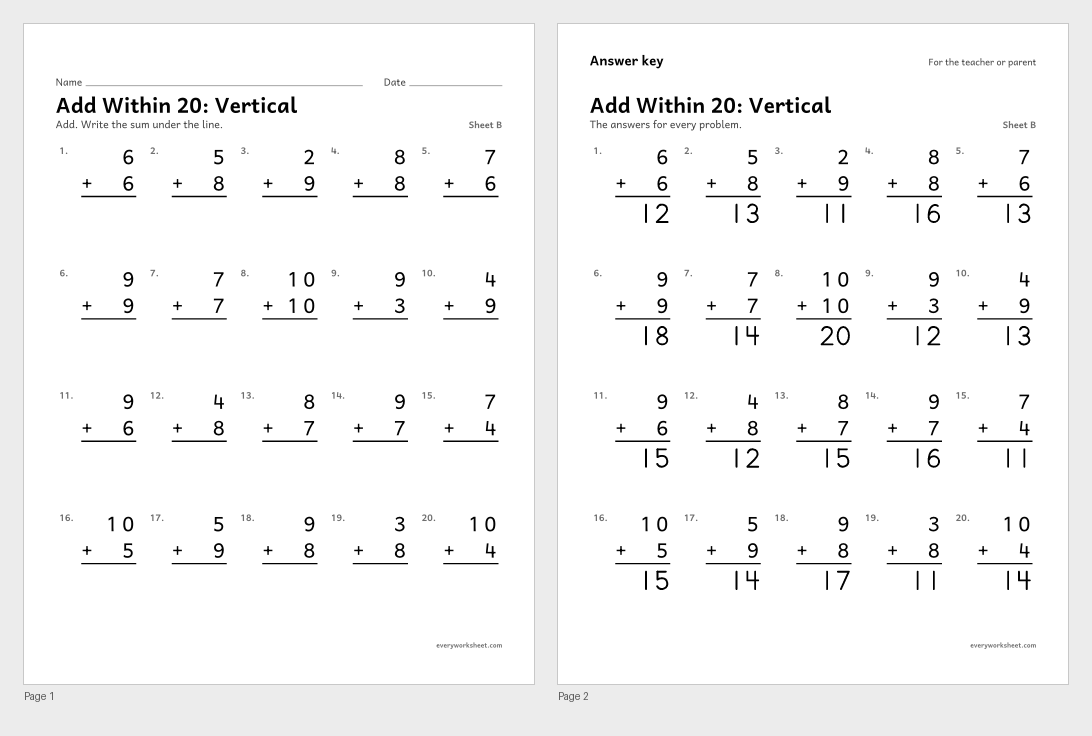
Add within 20: Vertical, sheet B
Adding within 20 in vertical form
Answer key on page 2
2 pages58 KB
 View all 2 pages
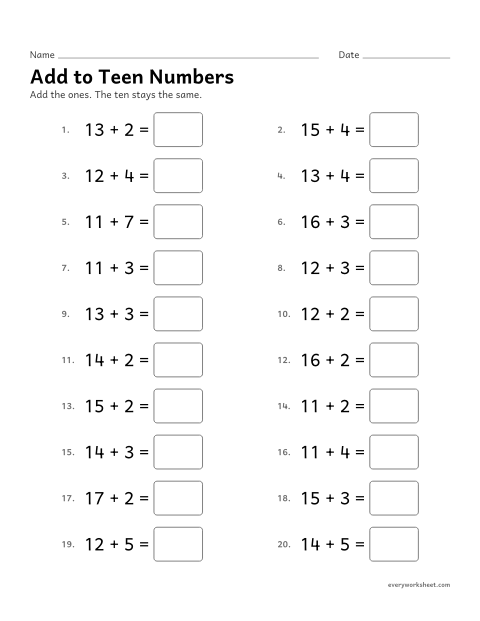
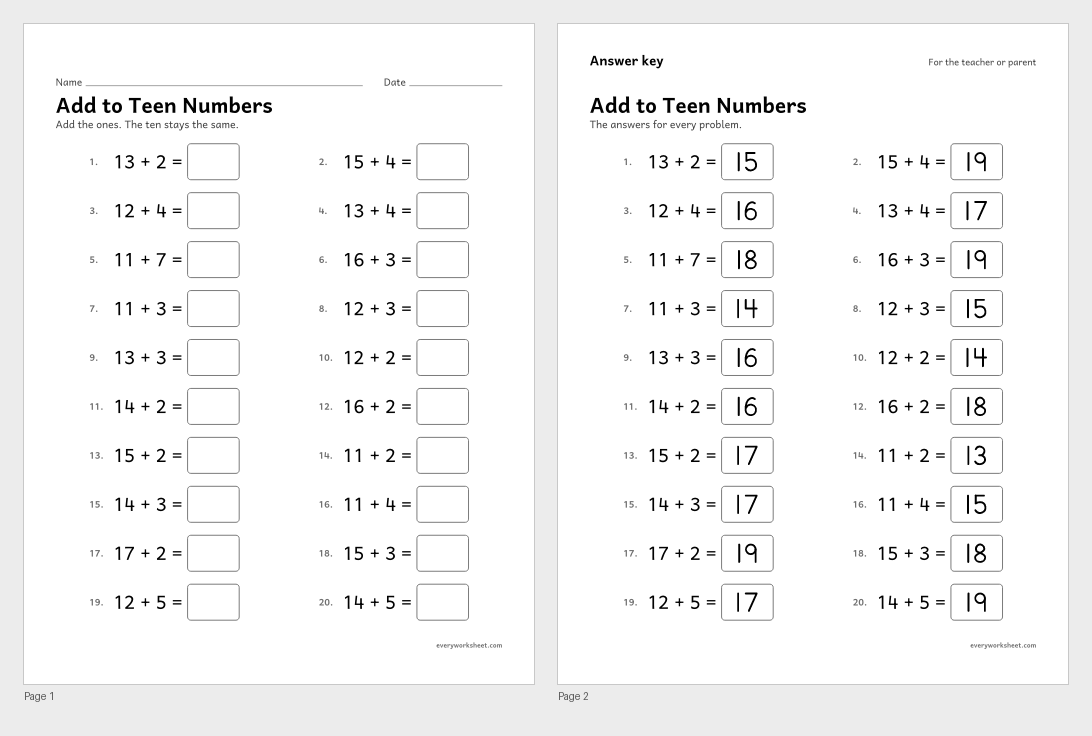
Add to teen numbers
Adding a one-digit number to a teen number
Answer key on page 2
2 pages93 KB
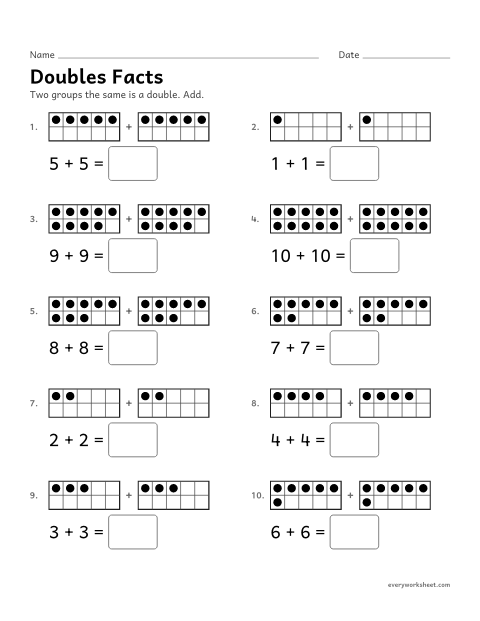
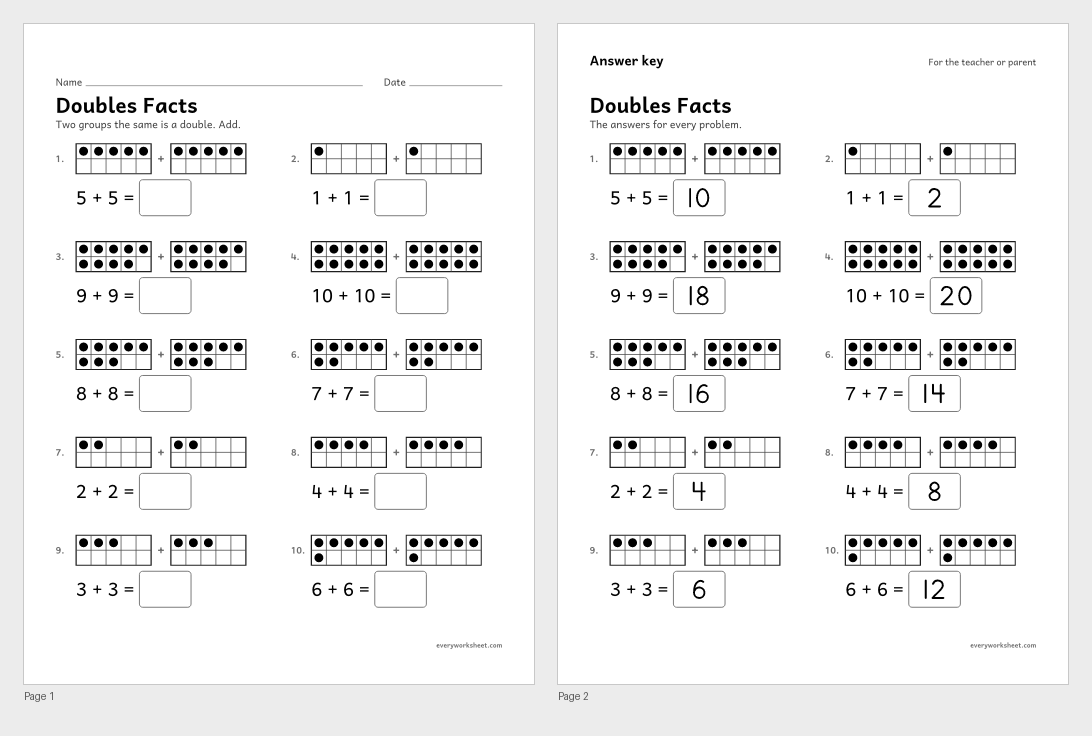
Doubles and near doubles
 View all 2 pages
 View all 2 pages
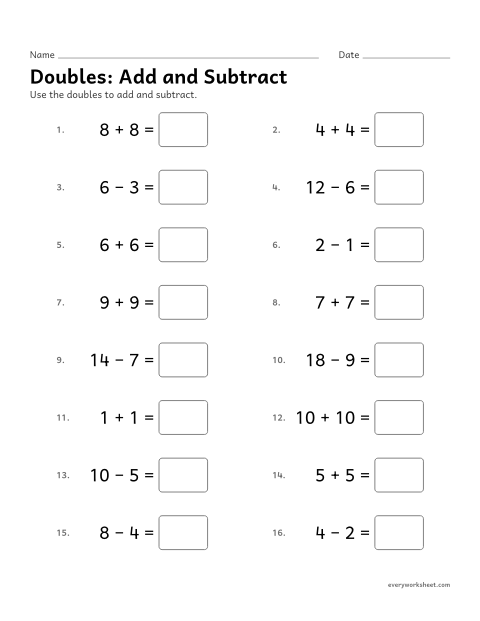
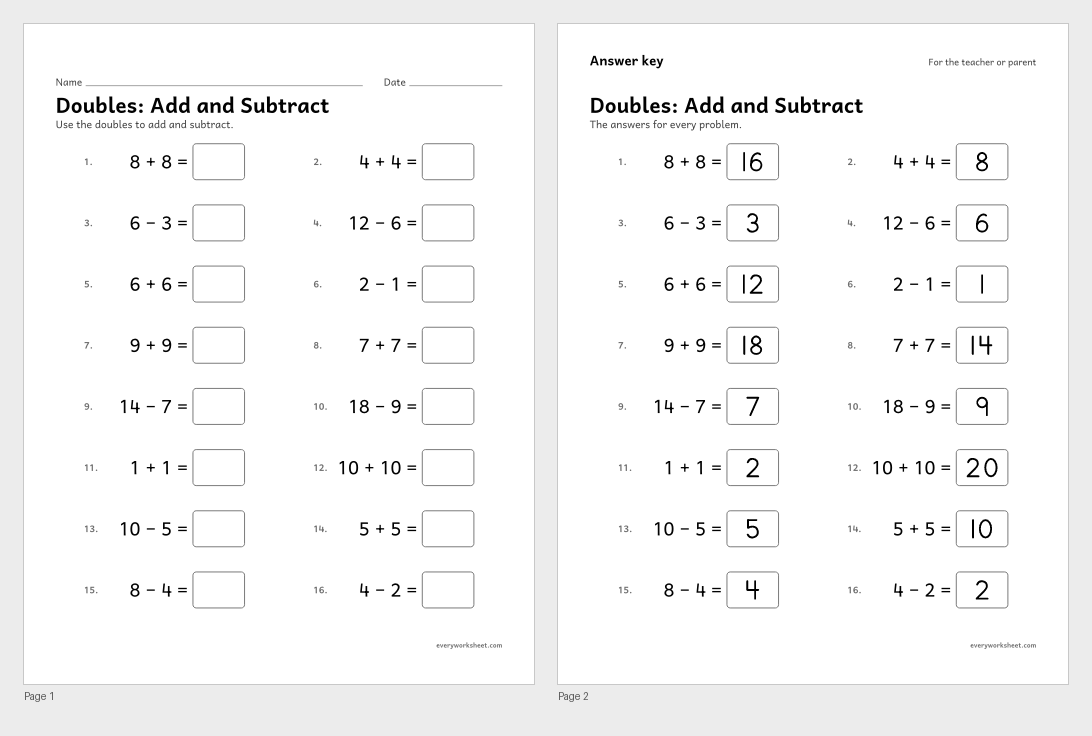
Doubles: add and subtract
Adding and subtracting with doubles
Answer key on page 2
2 pages81 KB
 View all 2 pages
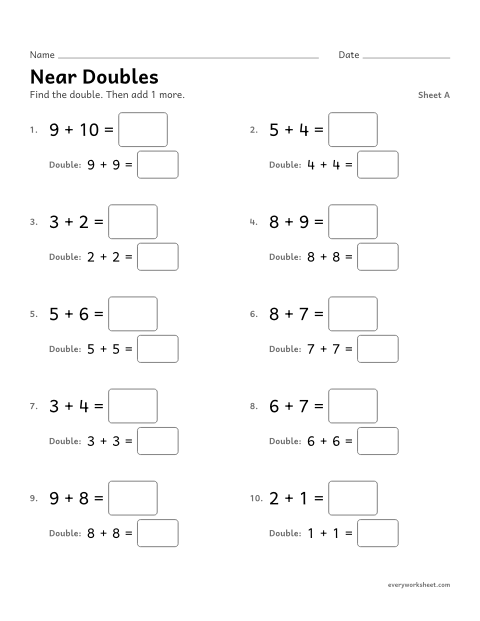
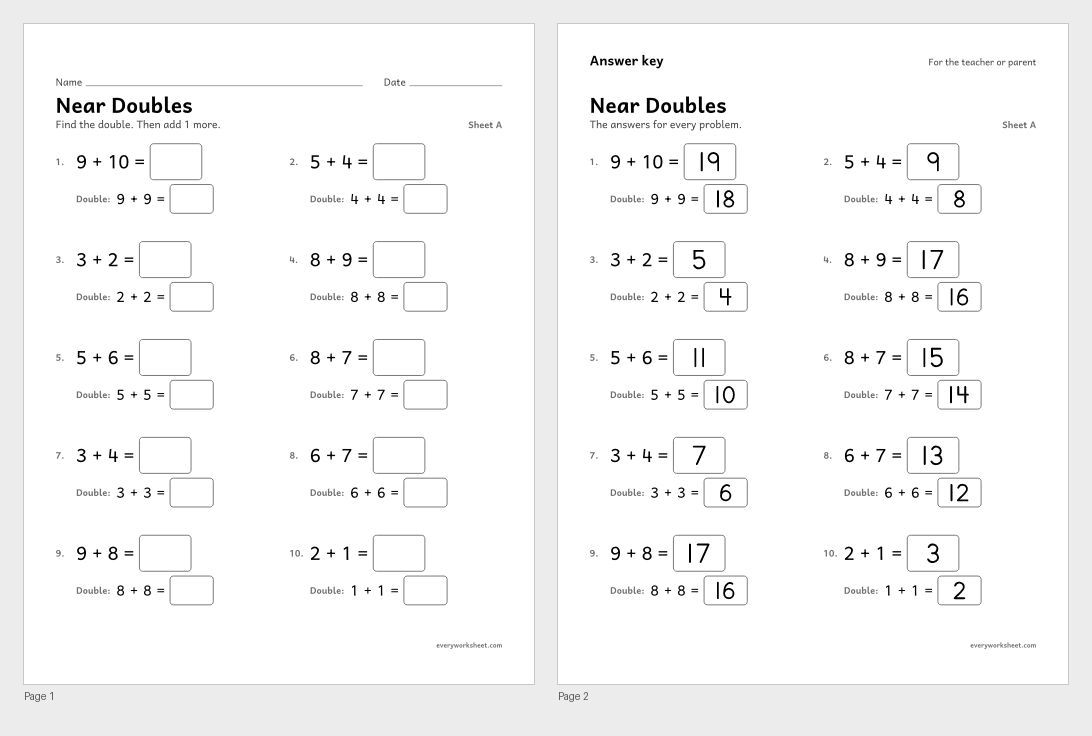
Near Doubles, sheet A
Adding near doubles as a double plus 1
Answer key on page 2
2 pages96 KB
 View all 2 pages
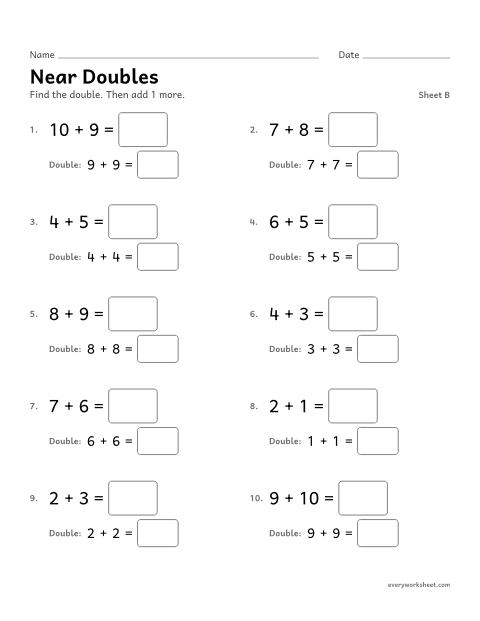
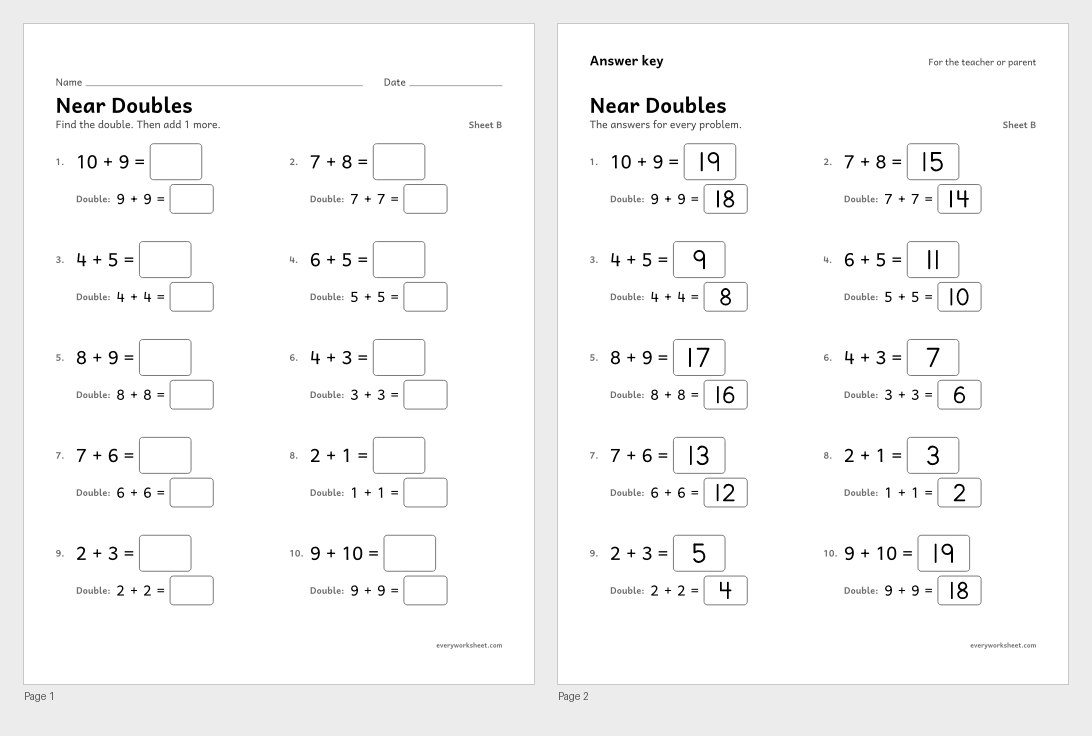
Near Doubles, sheet B
Adding near doubles as a double plus 1
Answer key on page 2
2 pages96 KB
Make 10
 View all 2 pages
 View all 2 pages
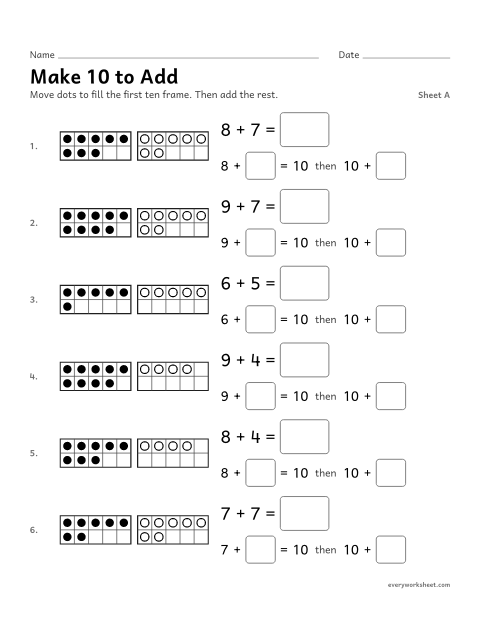
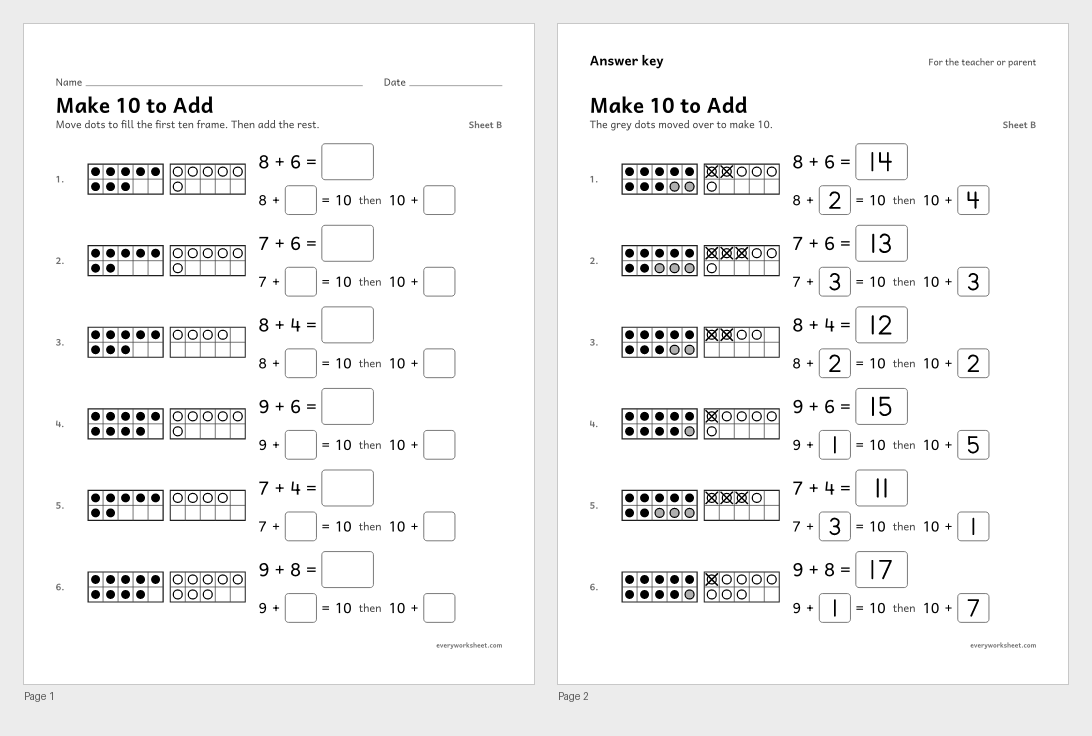
Make 10 to Add, sheet A
Making 10 to add (8 + 6 = 10 + 4)
Answer key on page 2
2 pages77 KB
 View all 2 pages
Make 10 to Add, sheet B
Making 10 to add (8 + 6 = 10 + 4)
Answer key on page 2
2 pages77 KB
 View all 2 pages
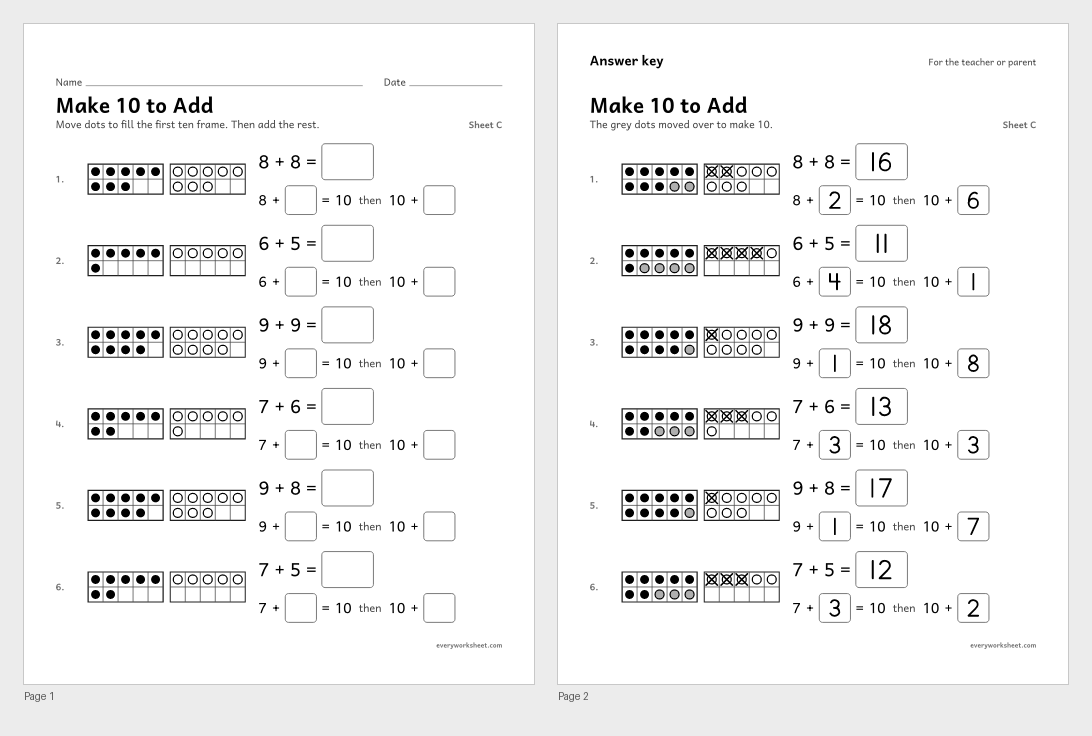
Make 10 to Add, sheet C
Making 10 to add (8 + 6 = 10 + 4)
Answer key on page 2
2 pages78 KB
Add three numbers
 View all 2 pages
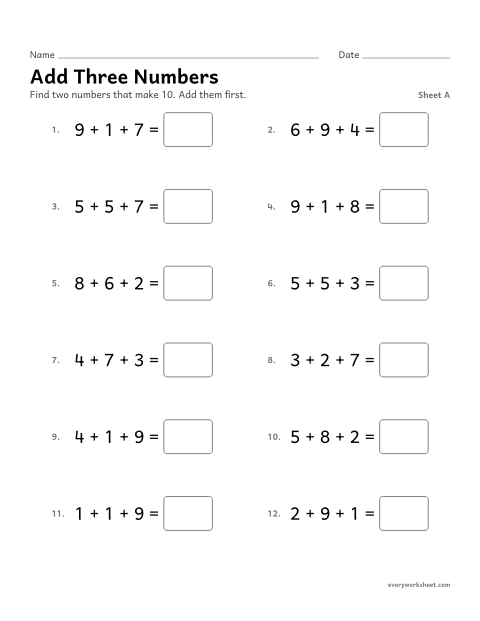
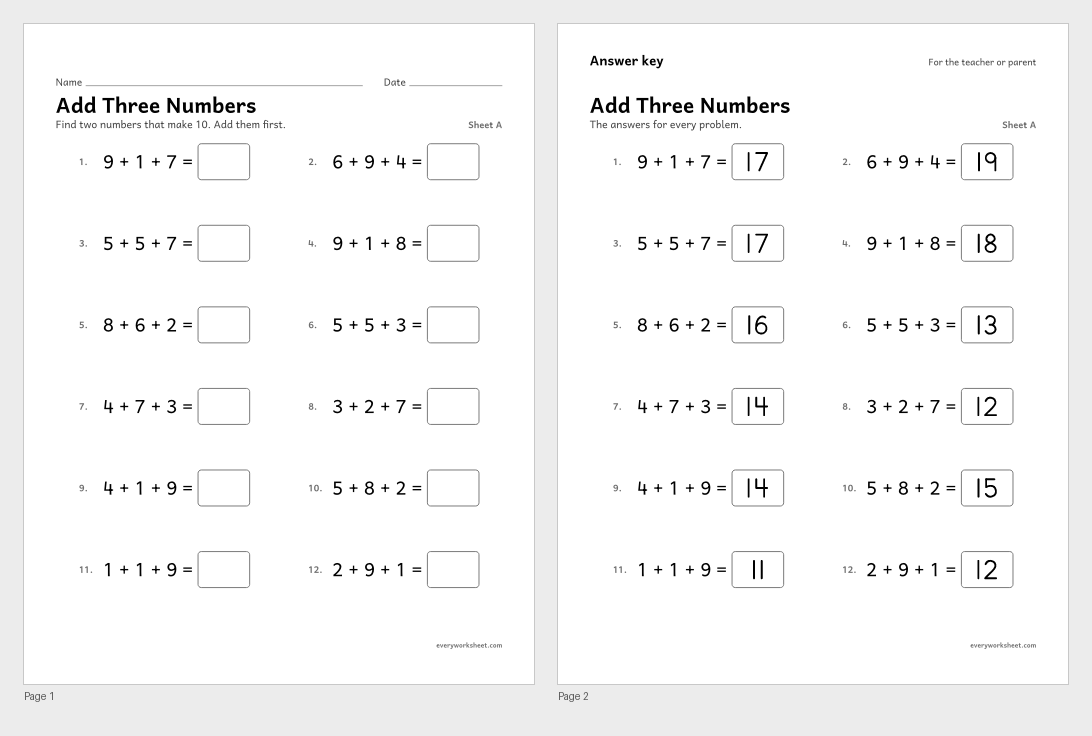
Add three Numbers, sheet A
Adding three numbers by making 10 first
Answer key on page 2
2 pages80 KB
 View all 2 pages
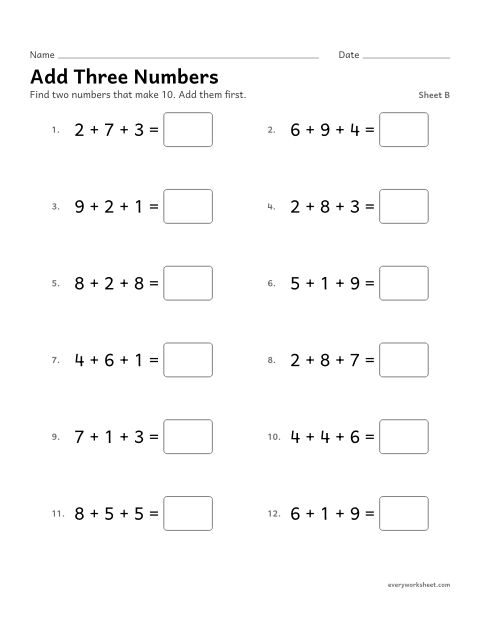
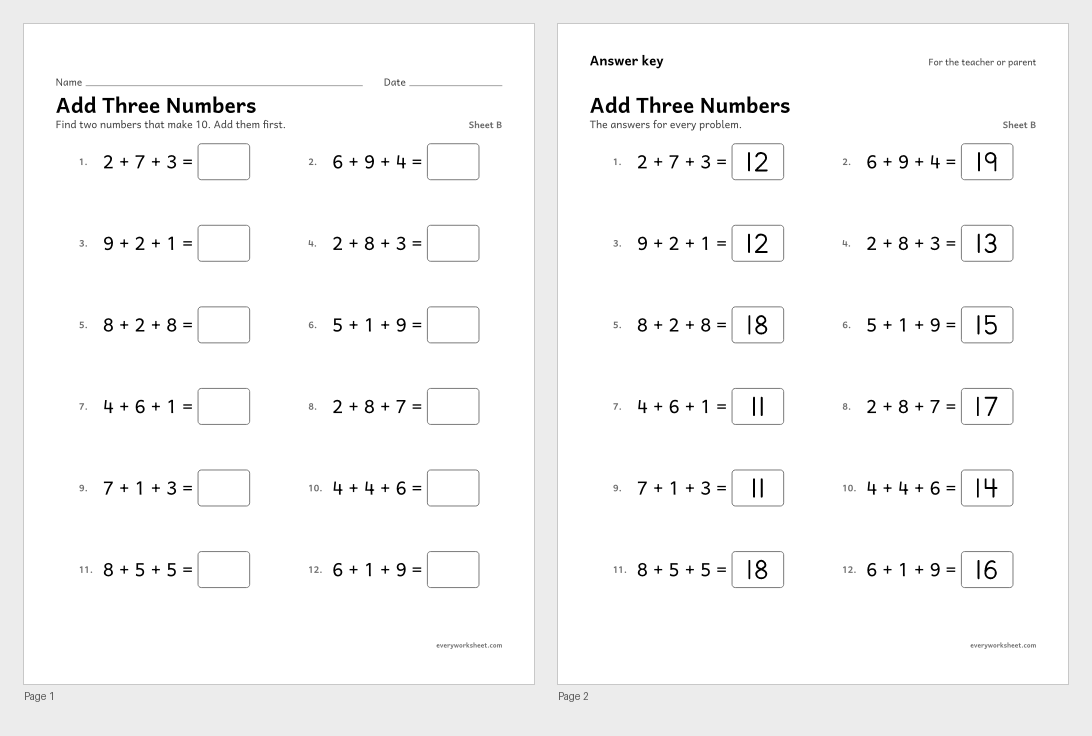
Add three Numbers, sheet B
Adding three numbers by making 10 first
Answer key on page 2
2 pages80 KB
 View all 2 pages
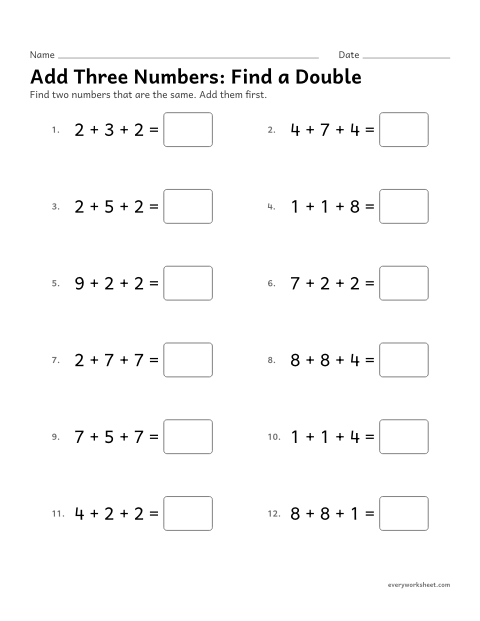
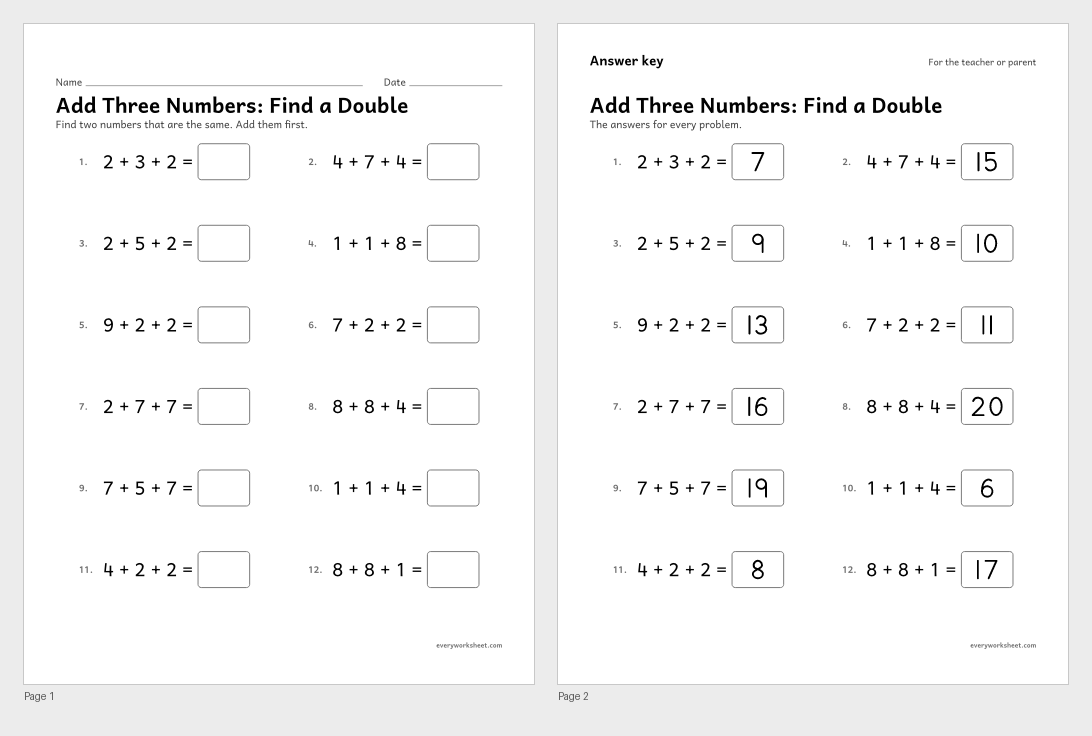
Add three Numbers: find a double
Adding three numbers by finding a double first
Answer key on page 2
2 pages80 KB
 View all 2 pages
Fluency checks
 View all 2 pages
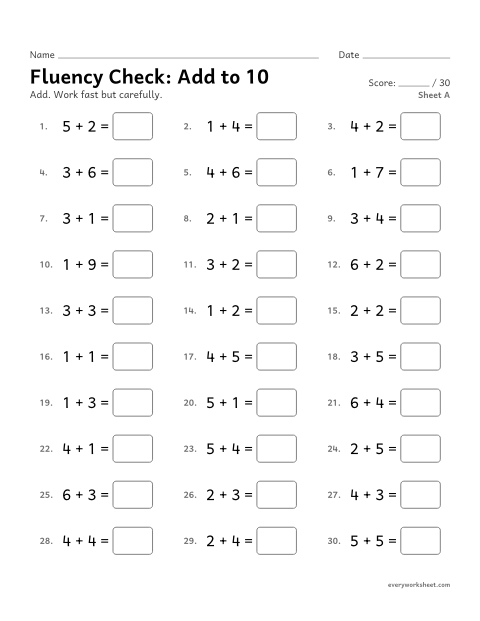
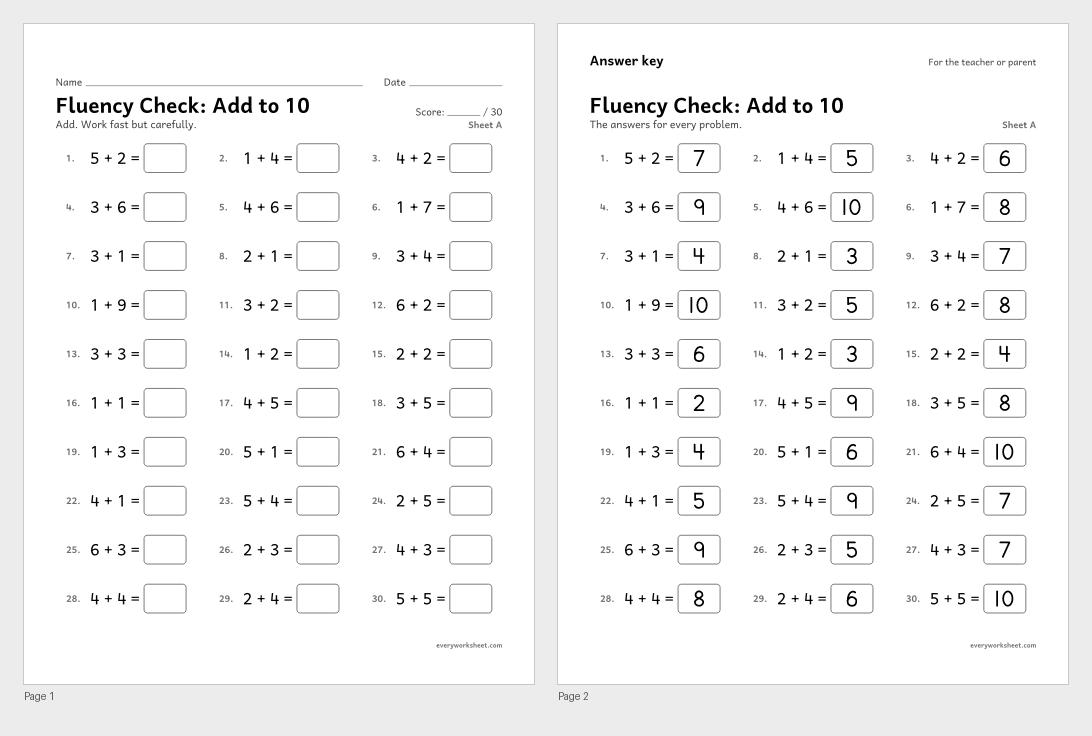
Fluency Check: add to 10, sheet A
Adding within 10 fluently
Answer key on page 2
2 pages126 KB
 View all 2 pages
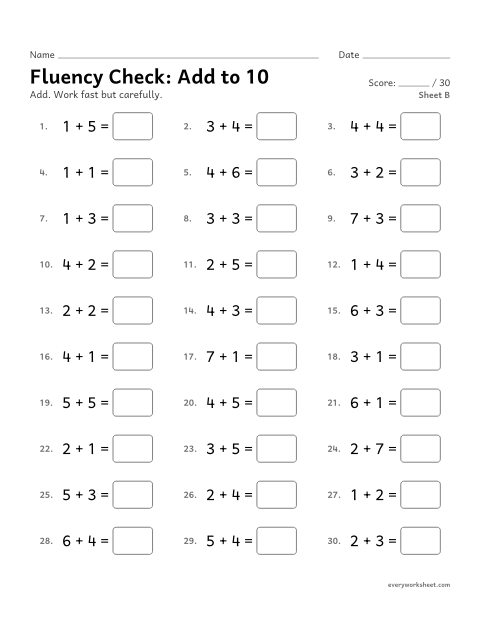
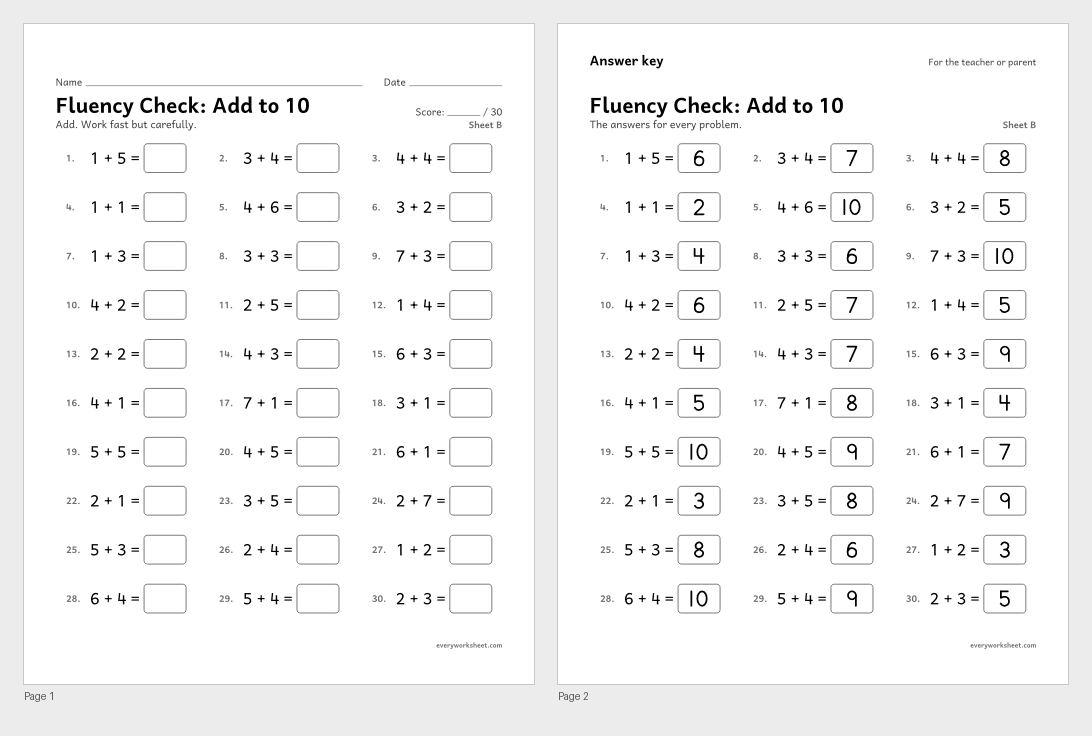
Fluency Check: add to 10, sheet B
Adding within 10 fluently
Answer key on page 2
2 pages127 KB
Print at 100% (actual size) for the cleanest tracing lines.
About these addition worksheets
These addition worksheets cover the first grade year: adding within 10 until the facts are quick, then adding within 20 with the strategies that make the bigger facts easy. Each skill has its own page, so you can practice exactly what your child or class needs next.
Facts to 10 come in rows and in vertical (stacked) form, plus counting on and number line pages for children who still count to add. For facts to 20 there are doubles, near doubles (6 + 7 is 6 + 6 and 1 more), make 10 pages with two ten frames, and adding three numbers by finding a pair that makes 10.
Most pages come as Sheet A, B and C with the same skill and different problems, so you can practice on Monday and check again on Friday. Every page has an answer key on page 2, and prints in black and white on US Letter or A4.
Standards
CCSS.MATH.CONTENT.1.OA.B.3Apply properties of operations as strategies to add and subtract. Examples: If 8 + 3 = 11 is known, then 3 + 8 = 11 is also known. (Commutative property of addition.) To add 2 + 6 + 4, the second two numbers can be added to make a ten, so 2 + 6 + 4 = 2 + 10 = 12. (Associative property of addition.)CCSS.MATH.CONTENT.1.OA.C.5Relate counting to addition and subtraction (e.g., by counting on 2 to add 2).CCSS.MATH.CONTENT.1.OA.C.6Add and subtract within 20, demonstrating fluency for addition and subtraction within 10. Use strategies such as counting on; making ten (e.g., 8 + 6 = 8 + 2 + 4 = 10 + 4 = 14); decomposing a number leading to a ten (e.g., 13 - 4 = 13 - 3 - 1 = 10 - 1 = 9); using the relationship between addition and subtraction (e.g., knowing that 8 + 4 = 12, one knows 12 - 8 = 4); and creating equivalent but easier or known sums (e.g., adding 6 + 7 by creating the known equivalent 6 + 6 + 1 = 12 + 1 = 13).
How to use them
- Start with Add Within 10. If your child counts every fact on fingers, spend time on the Count On to Add and number line pages before moving on.
- Teach one strategy at a time: doubles first, then near doubles, then make 10. Each strategy page shows the steps so children can see why the answer is right.
- Use the fluency checks every week or two. Time one minute, or just count how many are right, and let your child try to beat their own score.
- Move to Add Within 20 once facts to 10 are quick. Keep a ten frame or a 0 to 20 number path on the table while children learn the strategies.
- Use Sheet B or C a few days later to see if the skill has stuck.
Teaching tips
- Counting on: put the bigger number in your head, then count up. For 2 + 9, start at 9 and say 10, 11.
- Make 10: 8 + 5 is the same as 8 + 2 + 3. Fill the ten first, then add what is left: 10 + 3 = 13.
- Near doubles: if your child knows 6 + 6 = 12, then 6 + 7 is just 1 more.
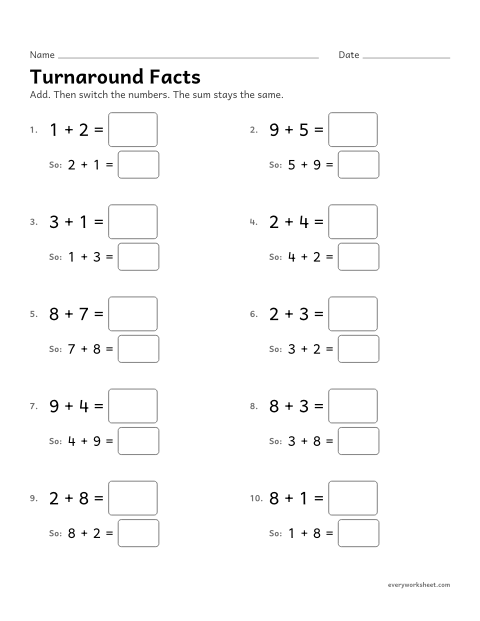
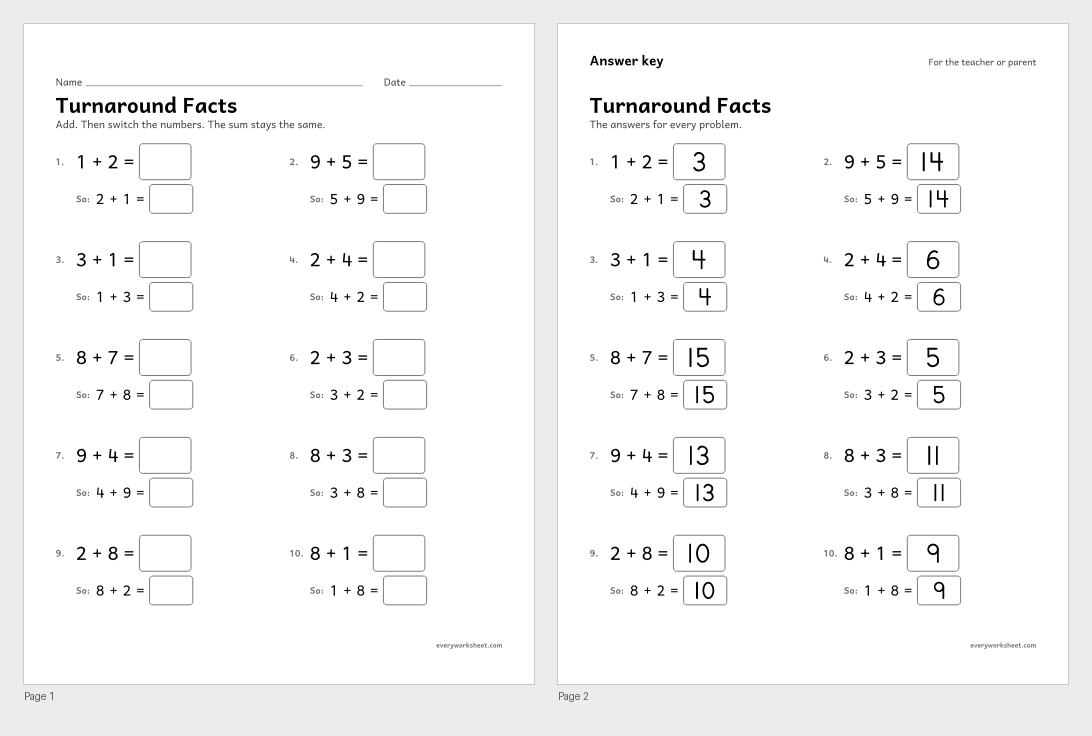
- Turnaround facts halve the work: once a child knows 3 + 8, they also know 8 + 3.
- For three numbers, look for two that make 10 and add them first. 7 + 4 + 3 becomes 10 + 4.
- If a page feels hard, cover half of it. A few problems done well beat a full page of guessing.
Questions teachers and parents ask
What addition should a 1st grader know?
By the end of 1st grade, children add within 20 using strategies like counting on, making 10 and doubles, and they know their addition facts within 10 quickly from memory.
What is the make 10 strategy?
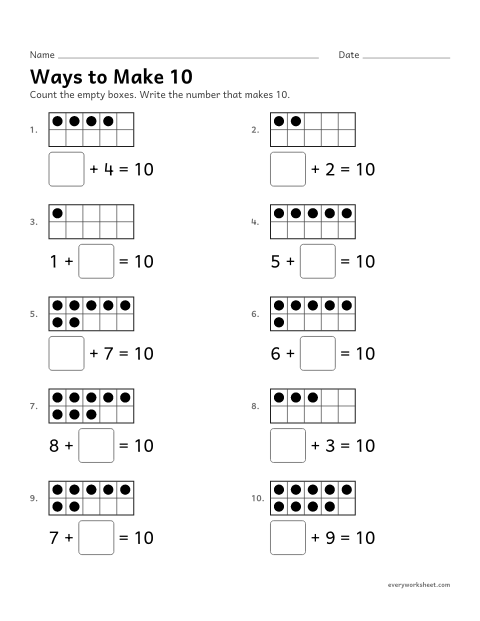
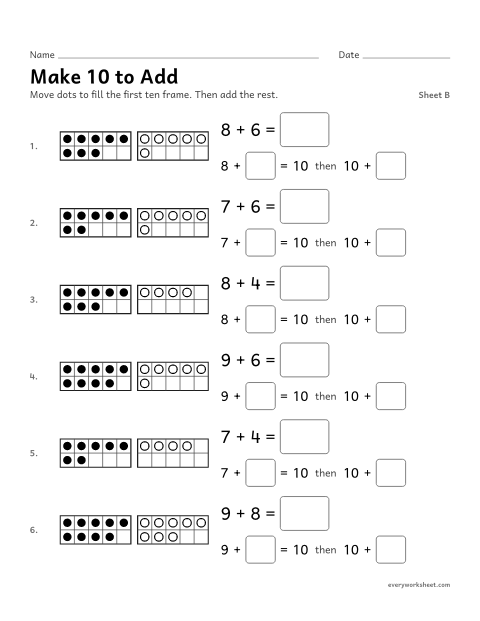
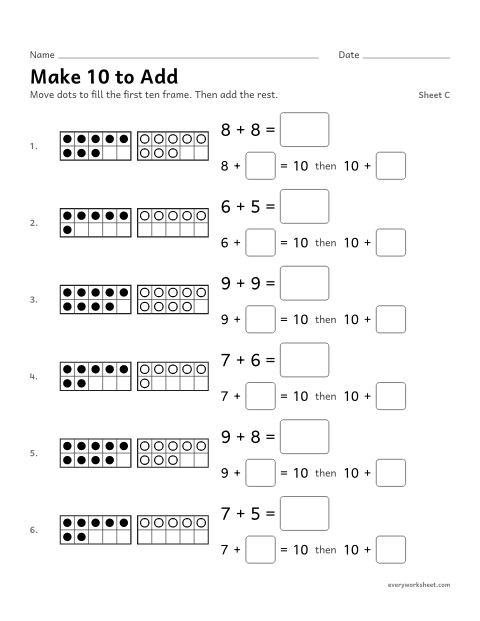
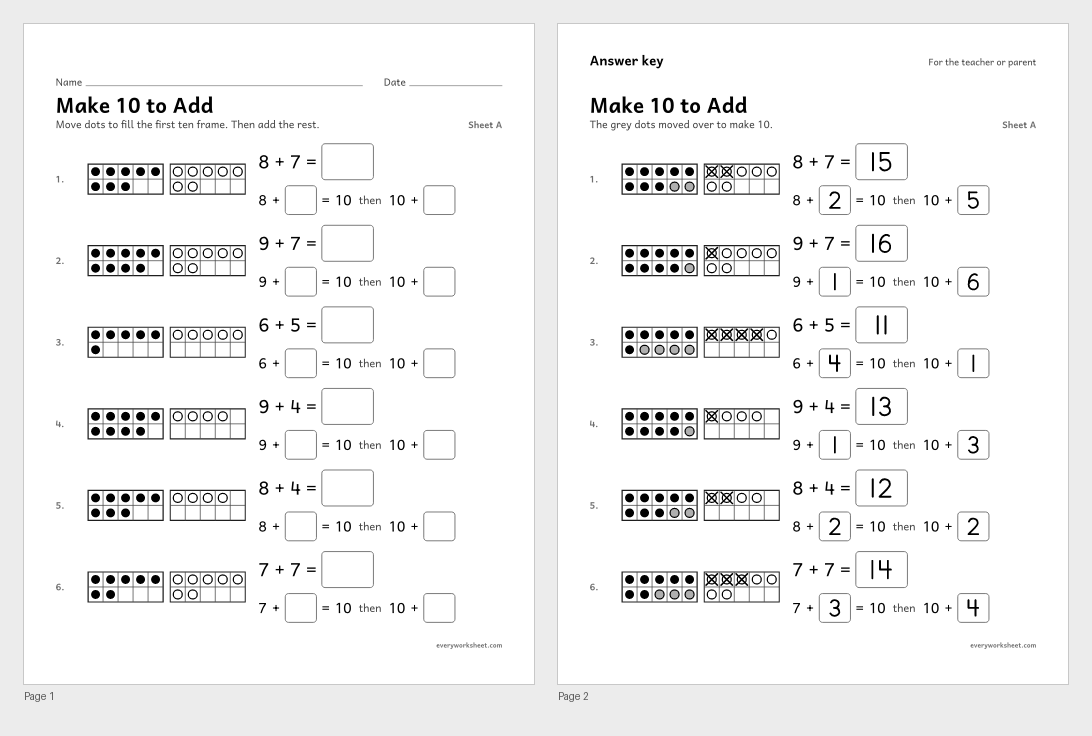
To add 8 + 5, move 2 from the 5 to make the 8 a ten: 8 + 2 = 10, then 10 + 3 = 13. The make 10 pages show this with two ten frames, so children can see the dots move.
Why are there Sheet A, B and C versions?
Each version practices the same skill with different problems. Use one to practice, then another a few days later to see if the skill has stuck.
Are there answer keys?
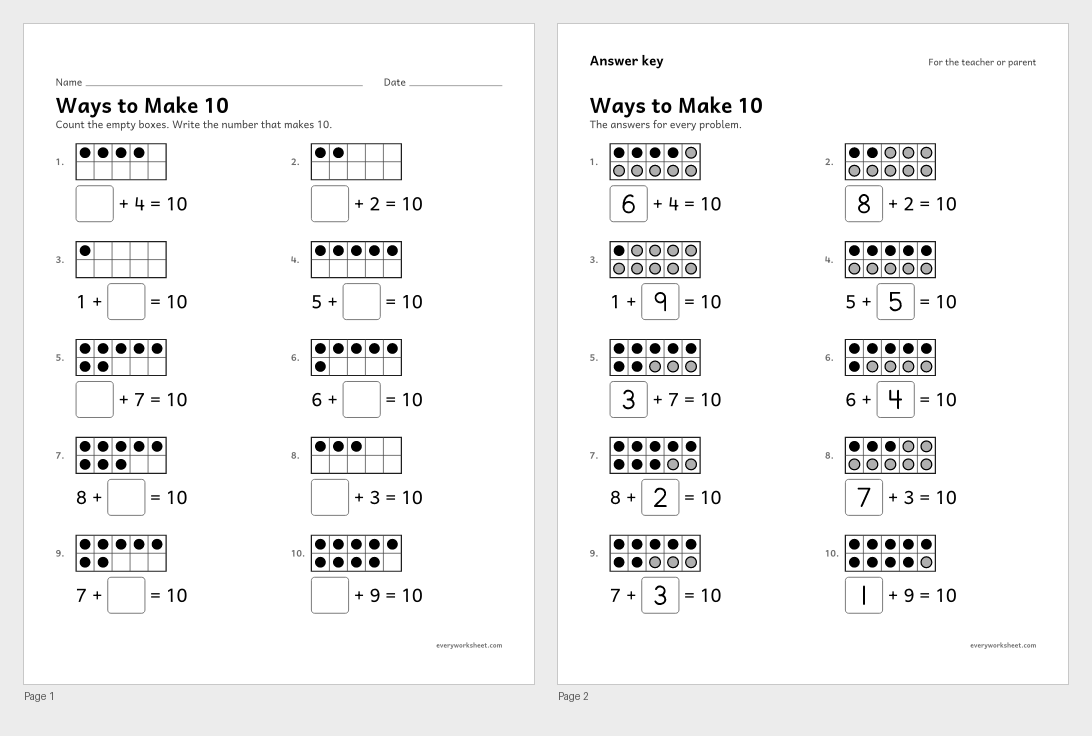
Yes. Every page has an answer key on page 2 of the PDF. The number line keys show every hop, and the make 10 keys show which dots moved.
How do I use the fluency checks?
Give your child the page and time one minute, or let them finish and count how many are right. Write the score at the top, and try Sheet B a week later to see the progress.