 3 pagesView all 3 pages
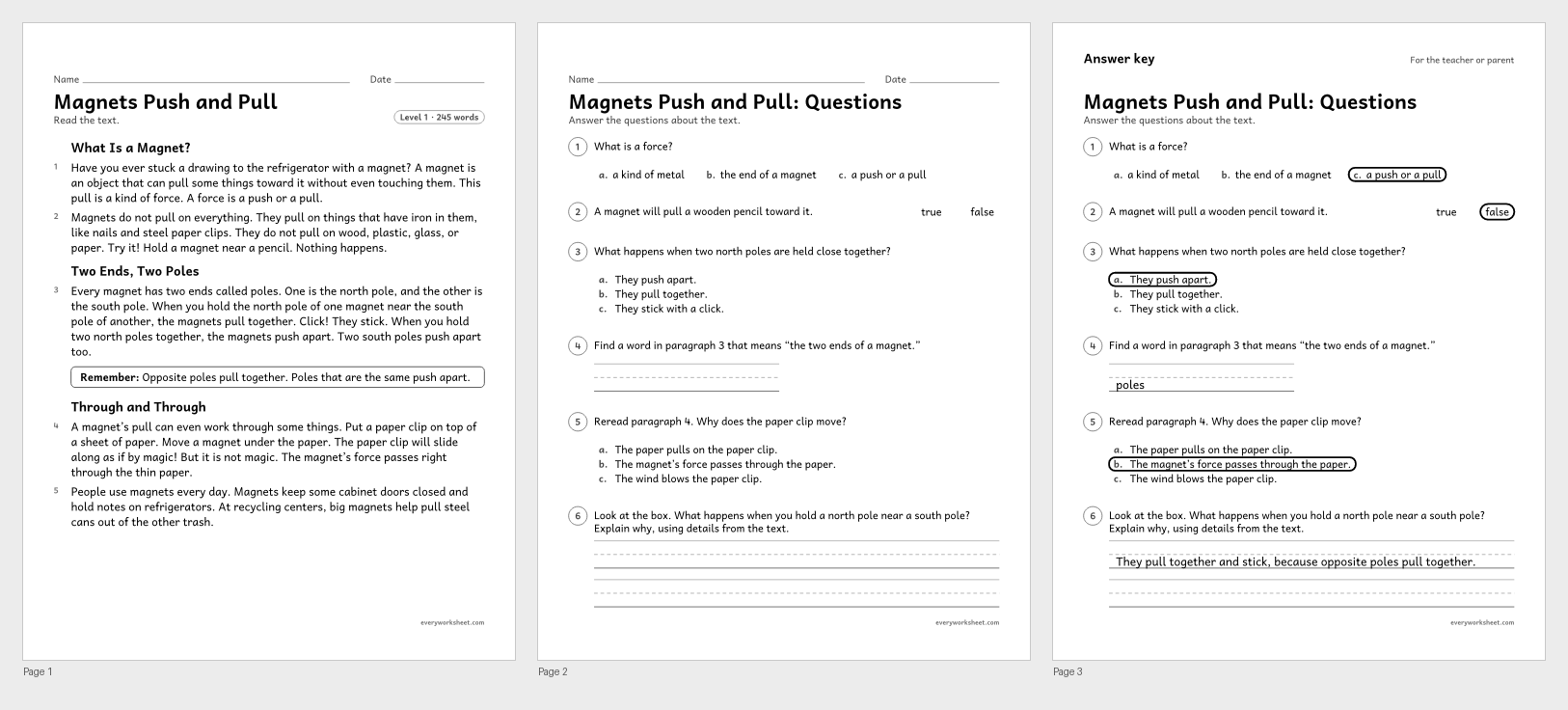
Magnets push and pull
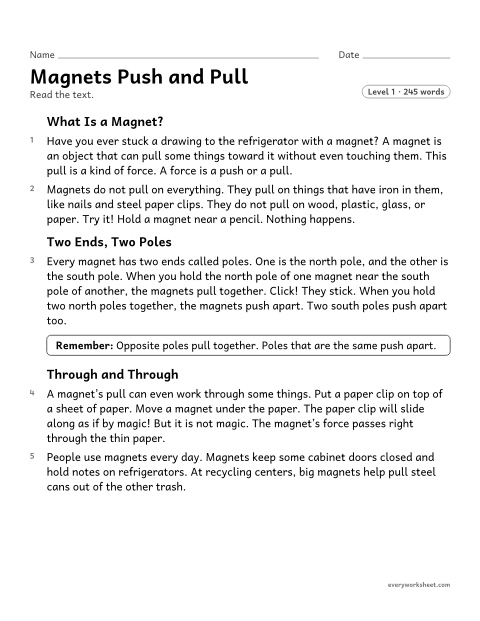
Explaining cause and effect in a science text about magnets
Answer key on page 3
3 pages54 KB
Science and social studies passages, paired texts on the same topic, and original folktales, each with questions and an answer key.
3 pagesView all 3 pagesExplaining cause and effect in a science text about magnets
Answer key on page 3
3 pages54 KB
 3 pagesView all 3 pages
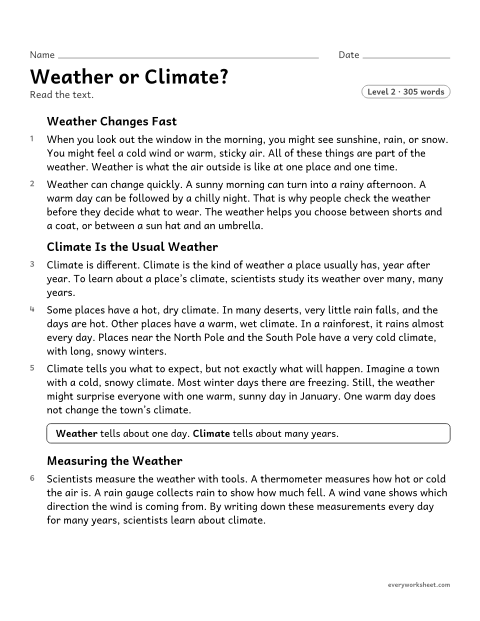
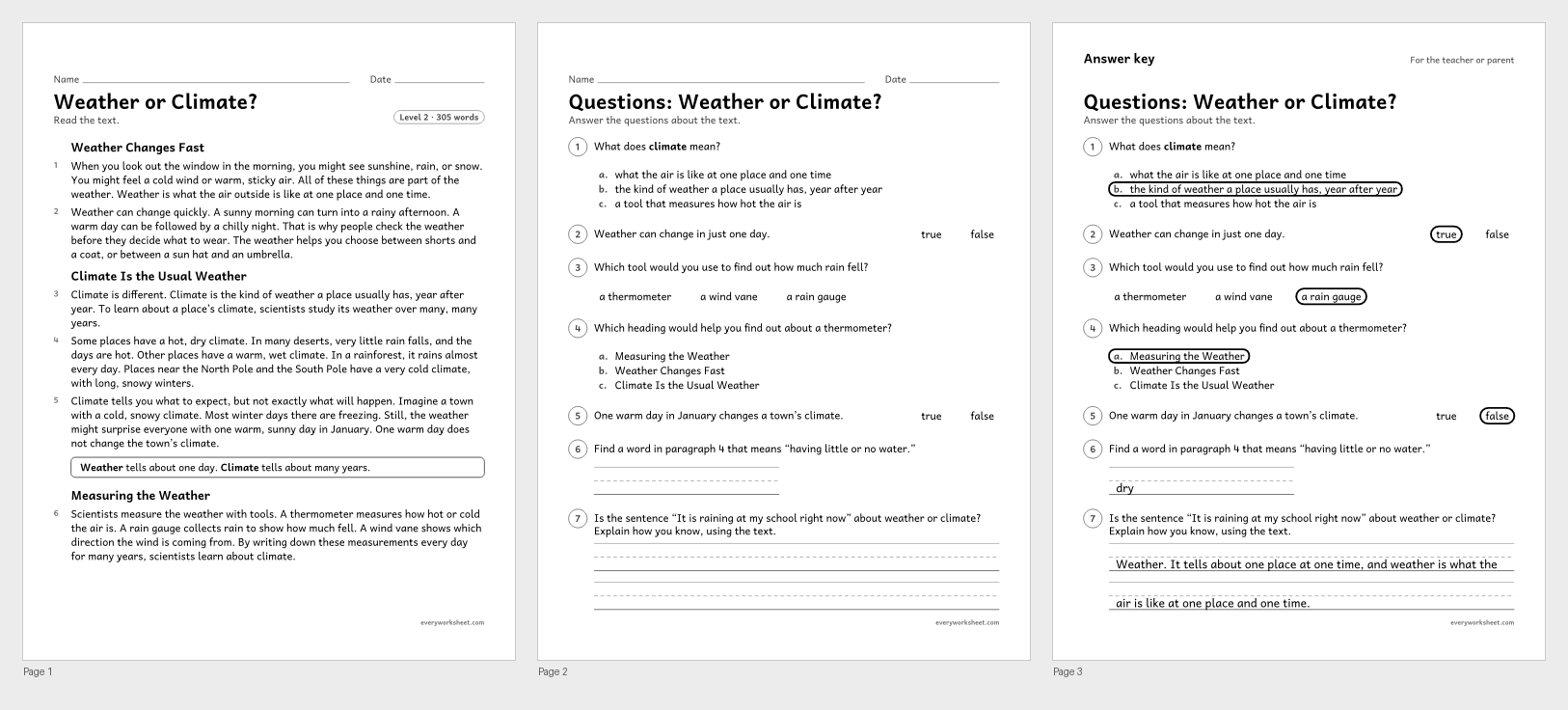
Using context to understand the science words weather and climate
Answer key on page 3
3 pages58 KB
 3 pagesView all 3 pages
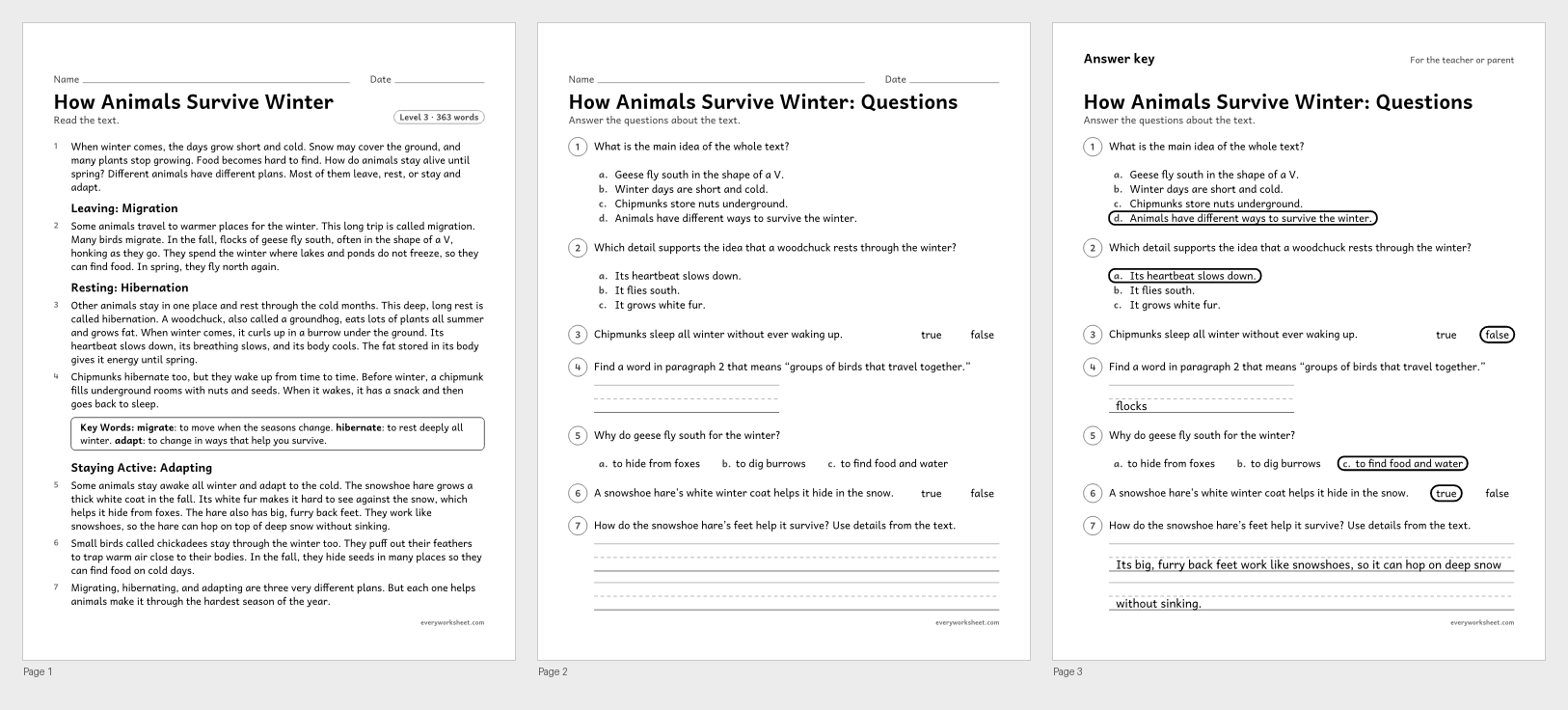
Finding the main idea of a science text and the details that support it
Answer key on page 3
3 pages61 KB
 3 pagesView all 3 pages
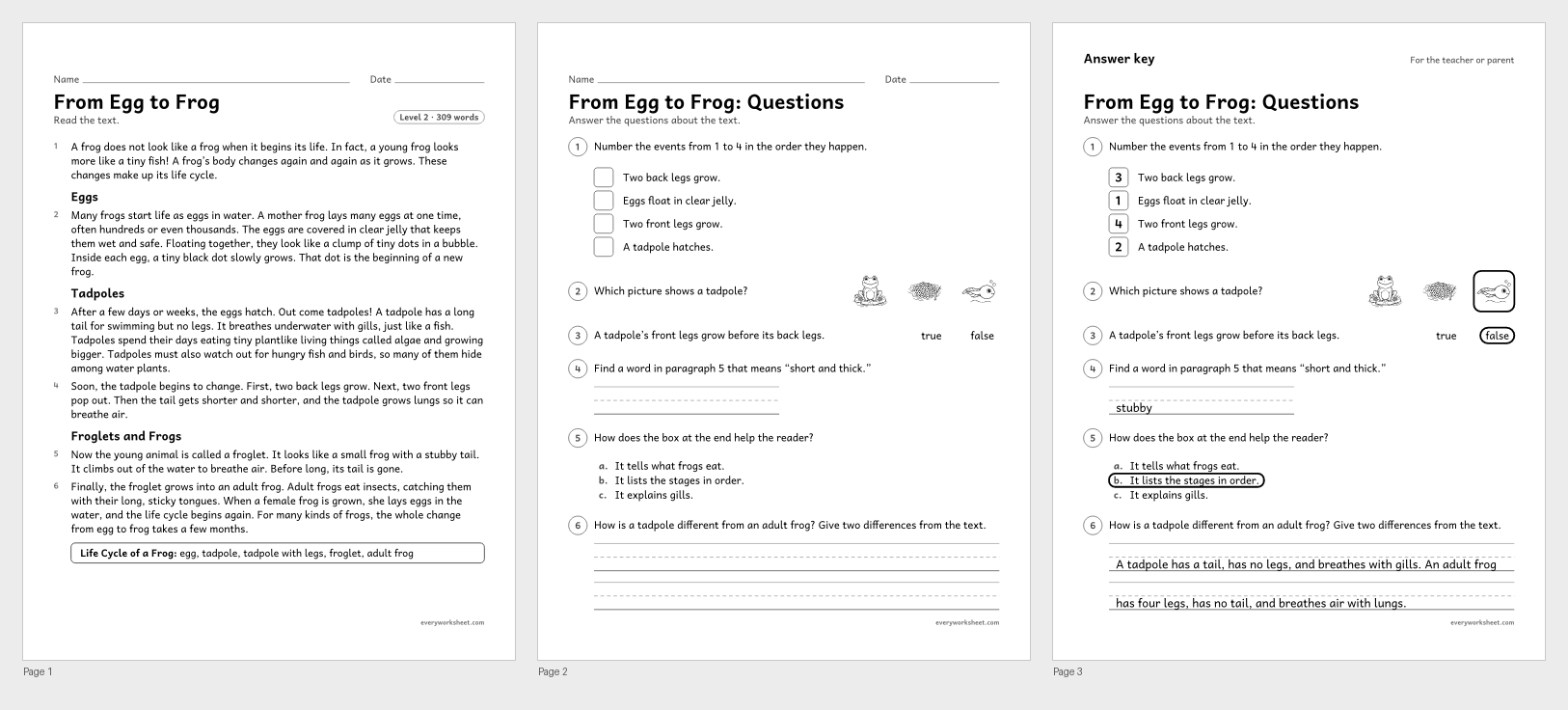
Describing the steps in a life cycle using words that show sequence
Answer key on page 3
3 pages130 KB
 3 pagesView all 3 pages
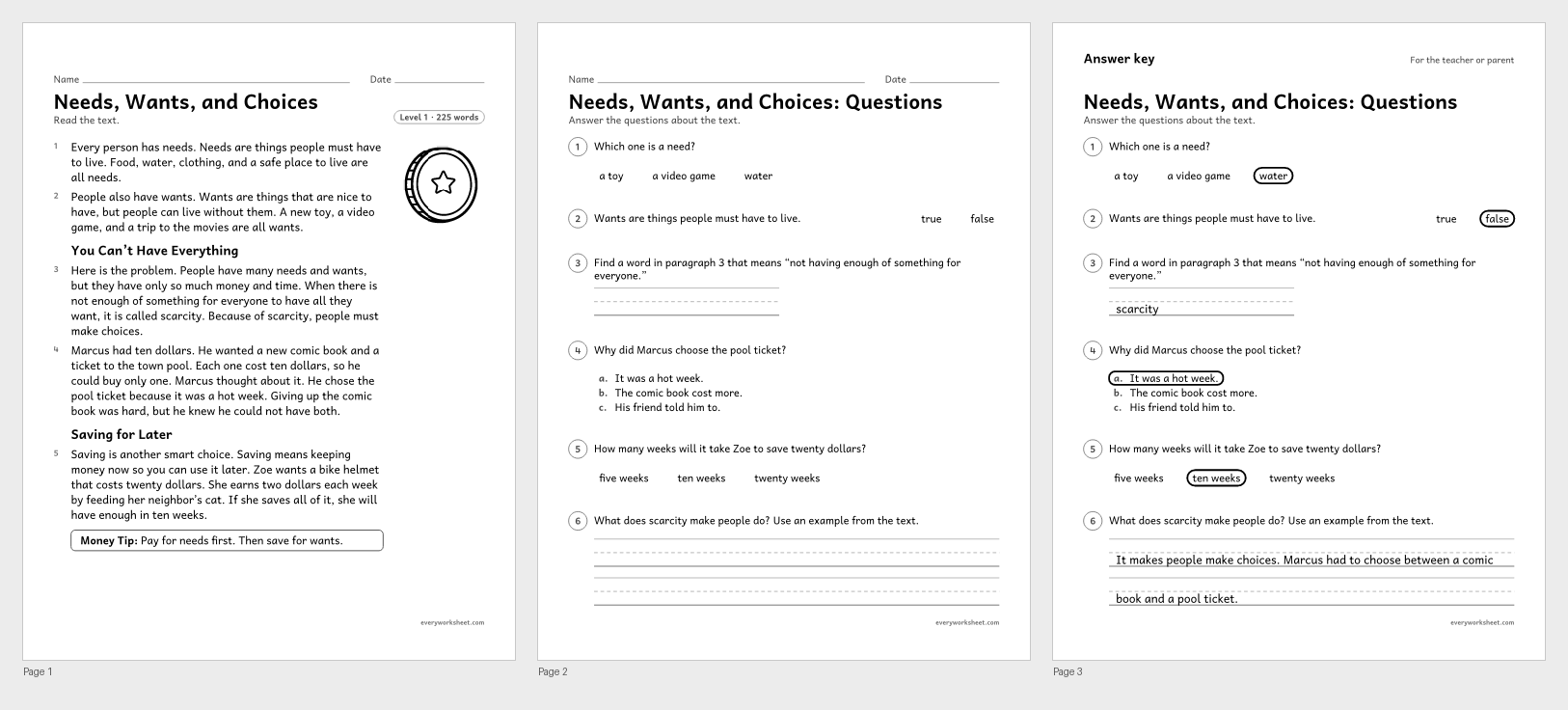
Finding the main idea and key details in a text about needs, wants, and saving
Answer key on page 3
3 pages79 KB
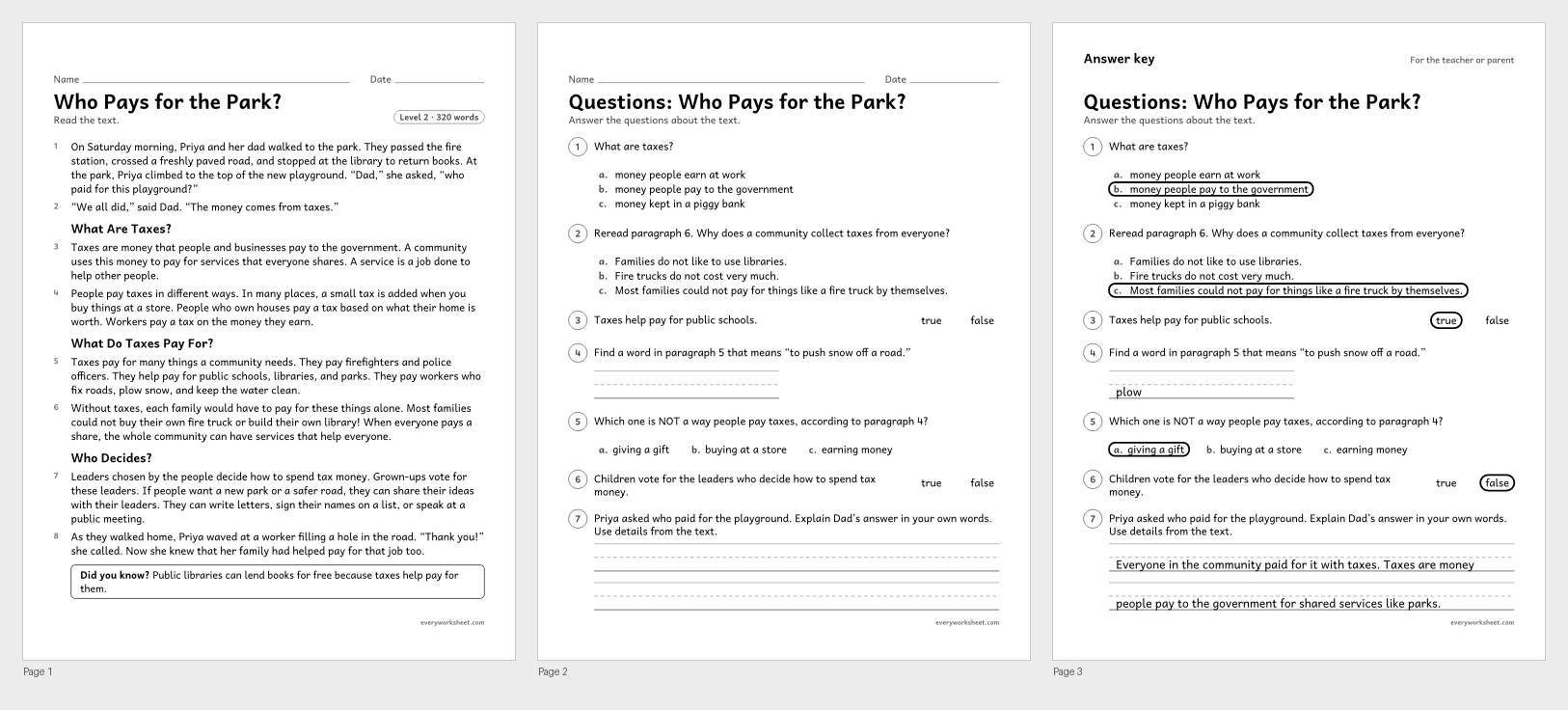 3 pagesView all 3 pages
Explaining the cause-and-effect links between paragraphs in a text about taxes and community services
Answer key on page 3
3 pages60 KB
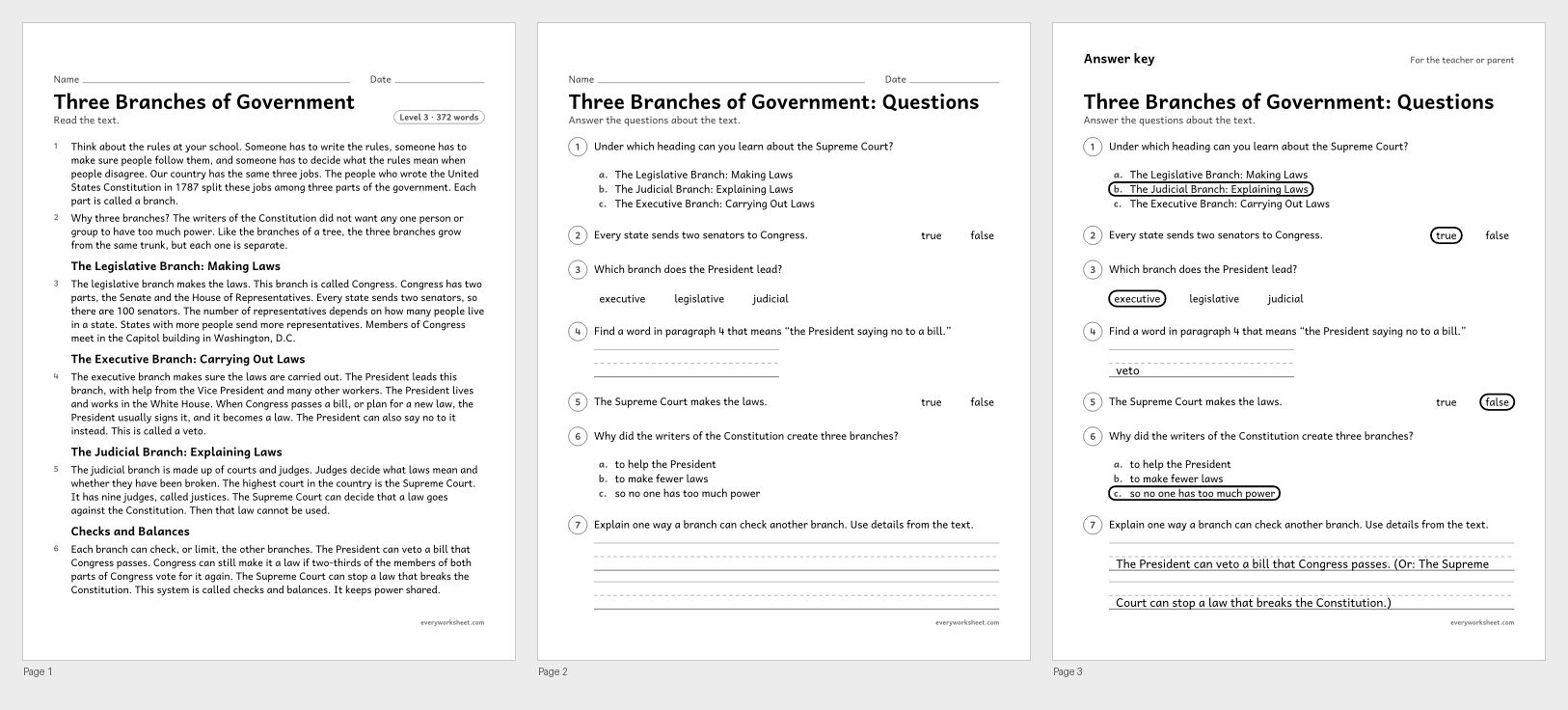 3 pagesView all 3 pages
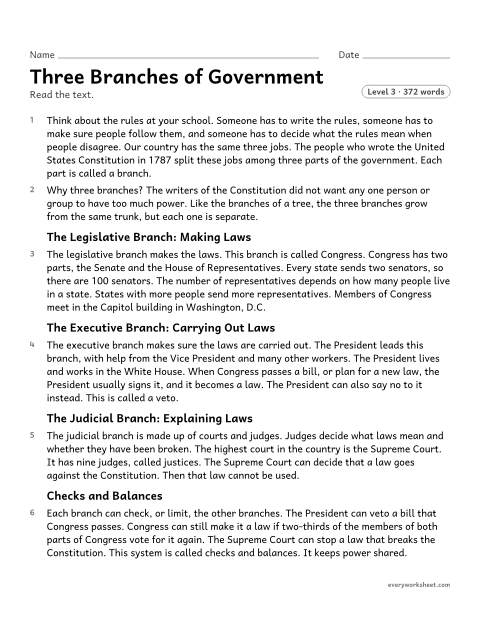
Using headings to find information about the three branches of the US government
Answer key on page 3
3 pages59 KB
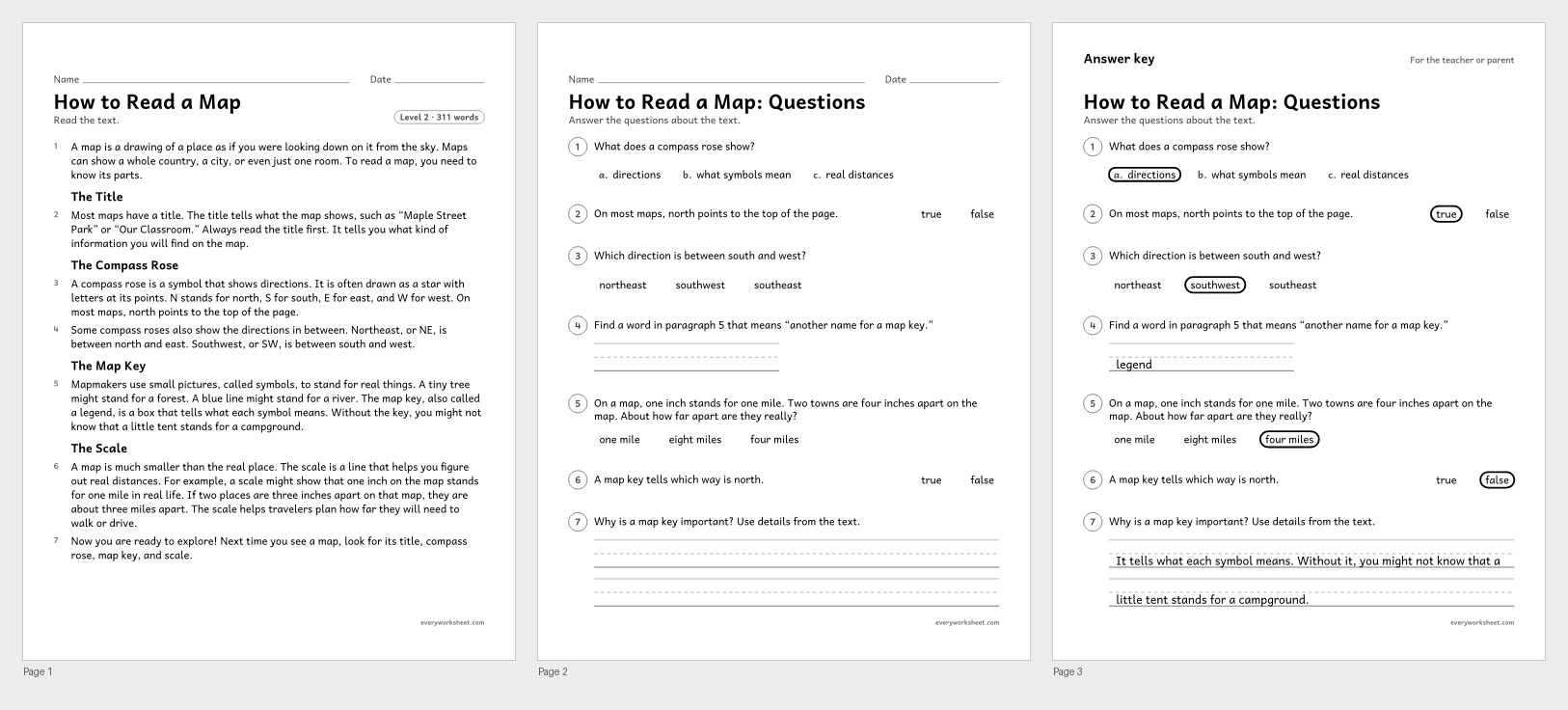 3 pagesView all 3 pages
Learning the meanings of map words: compass rose, map key, and scale
Answer key on page 3
3 pages51 KB
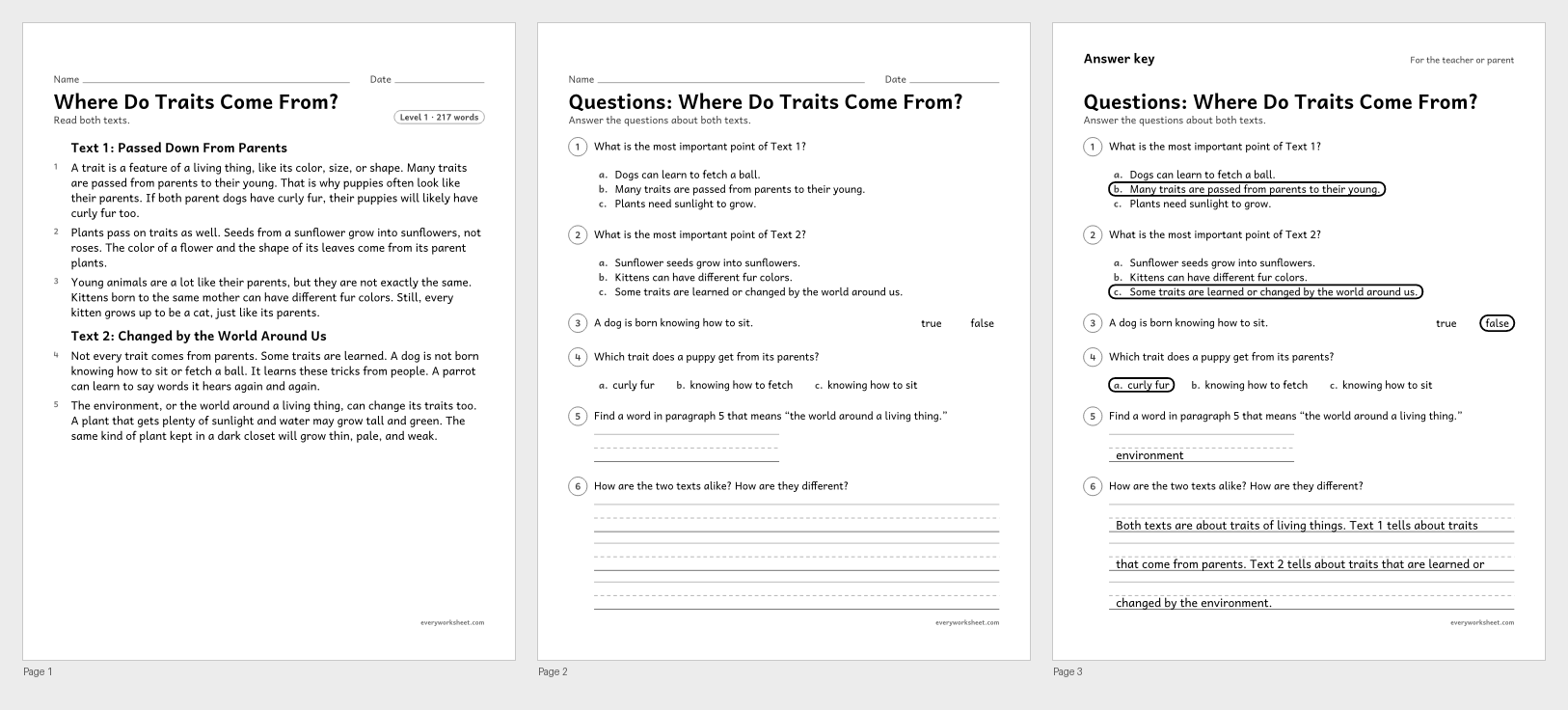 3 pagesView all 3 pages
Comparing the most important points of two texts about inherited and learned traits
Answer key on page 3
3 pages55 KB
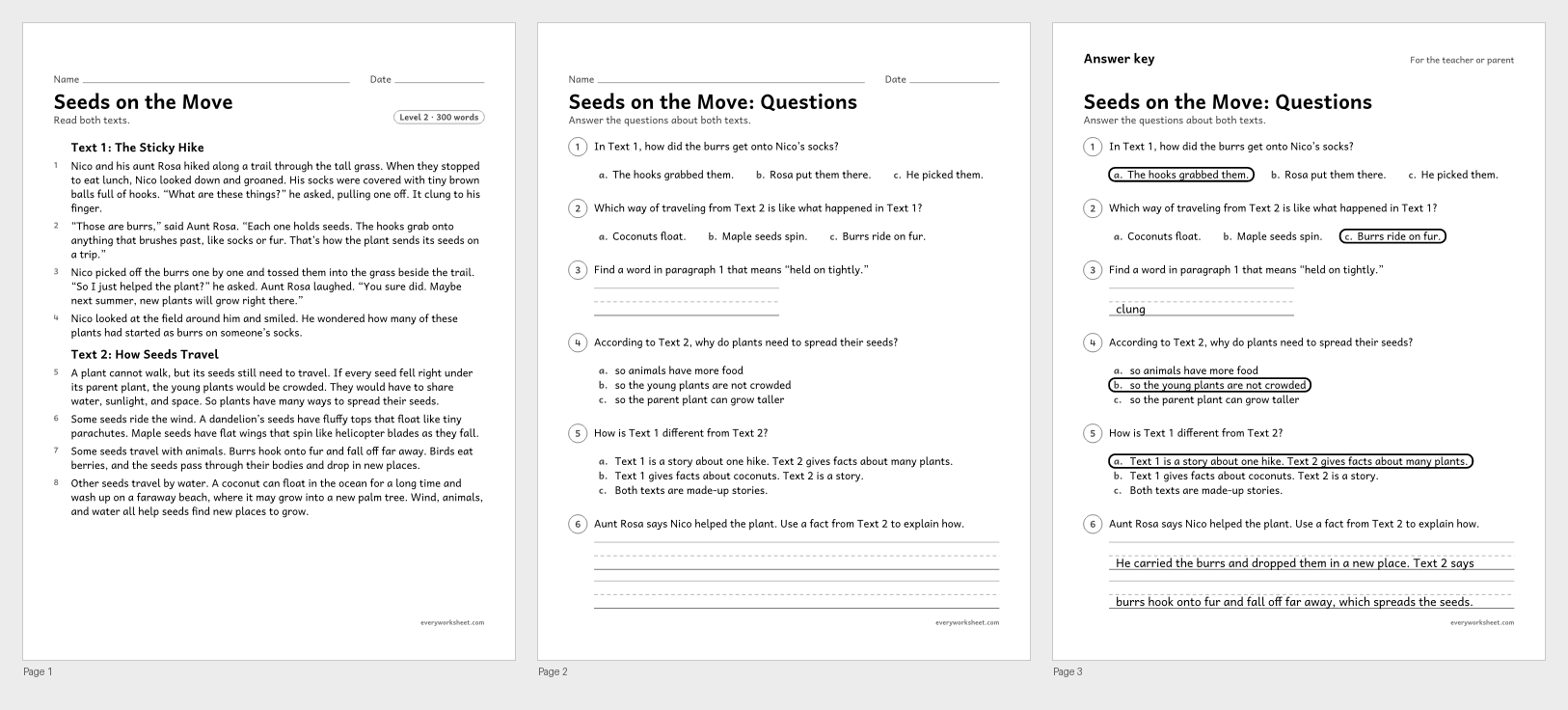 3 pagesView all 3 pages
Answering questions about a story and a nonfiction text on the same topic, using details from both
Answer key on page 3
3 pages56 KB
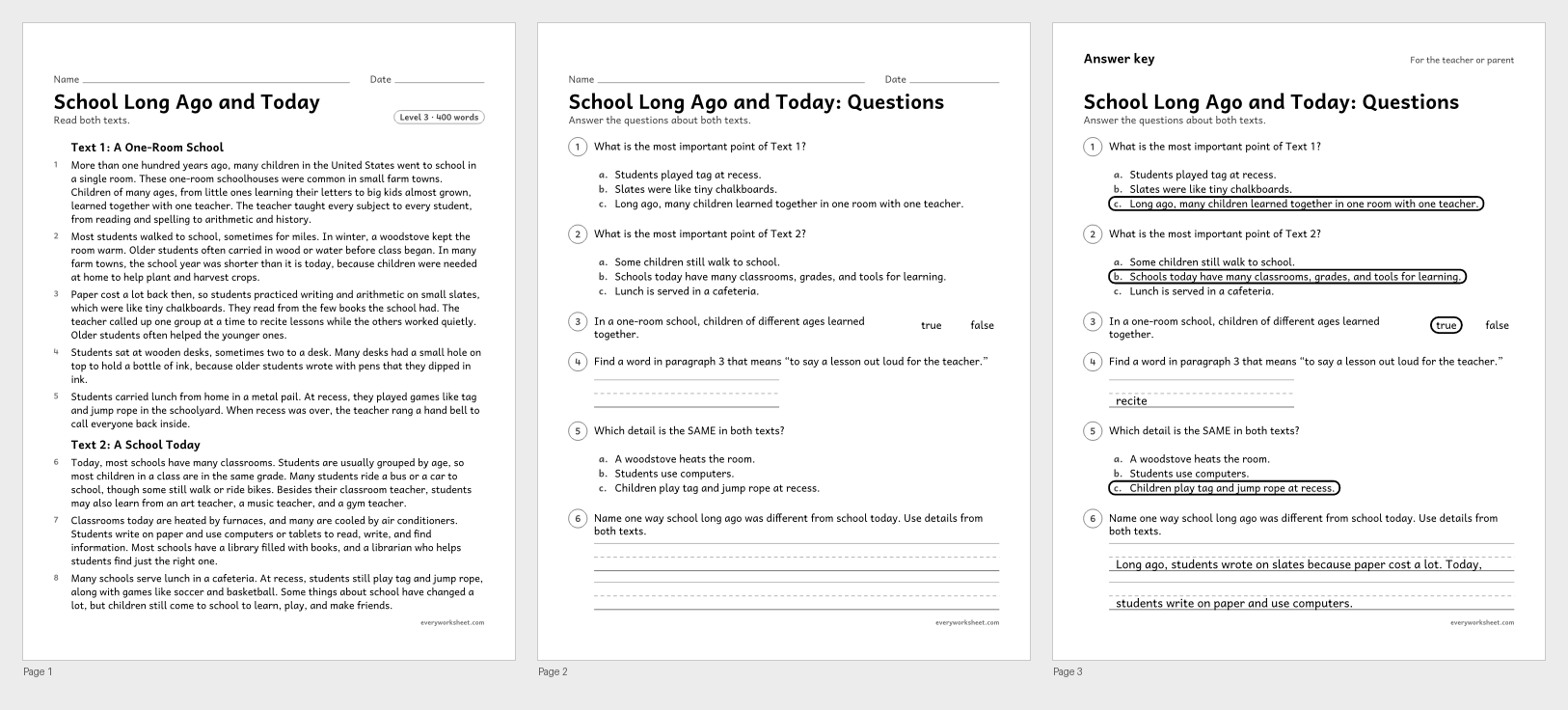 3 pagesView all 3 pages
Comparing the most important points and details of two texts about schools long ago and today
Answer key on page 3
3 pages60 KB
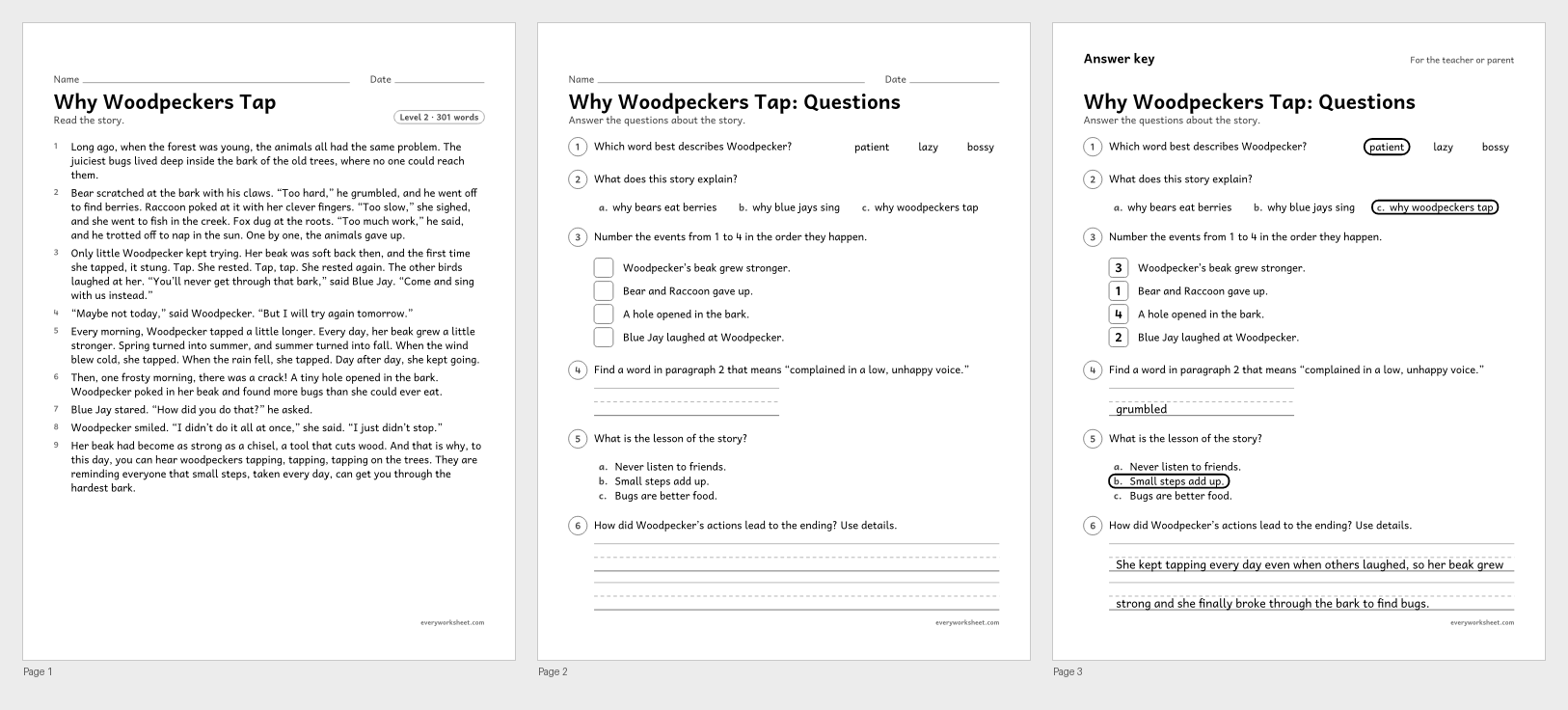 3 pagesView all 3 pages
Describing how a character's traits and actions lead to the events and ending of a tale
Answer key on page 3
3 pages57 KB
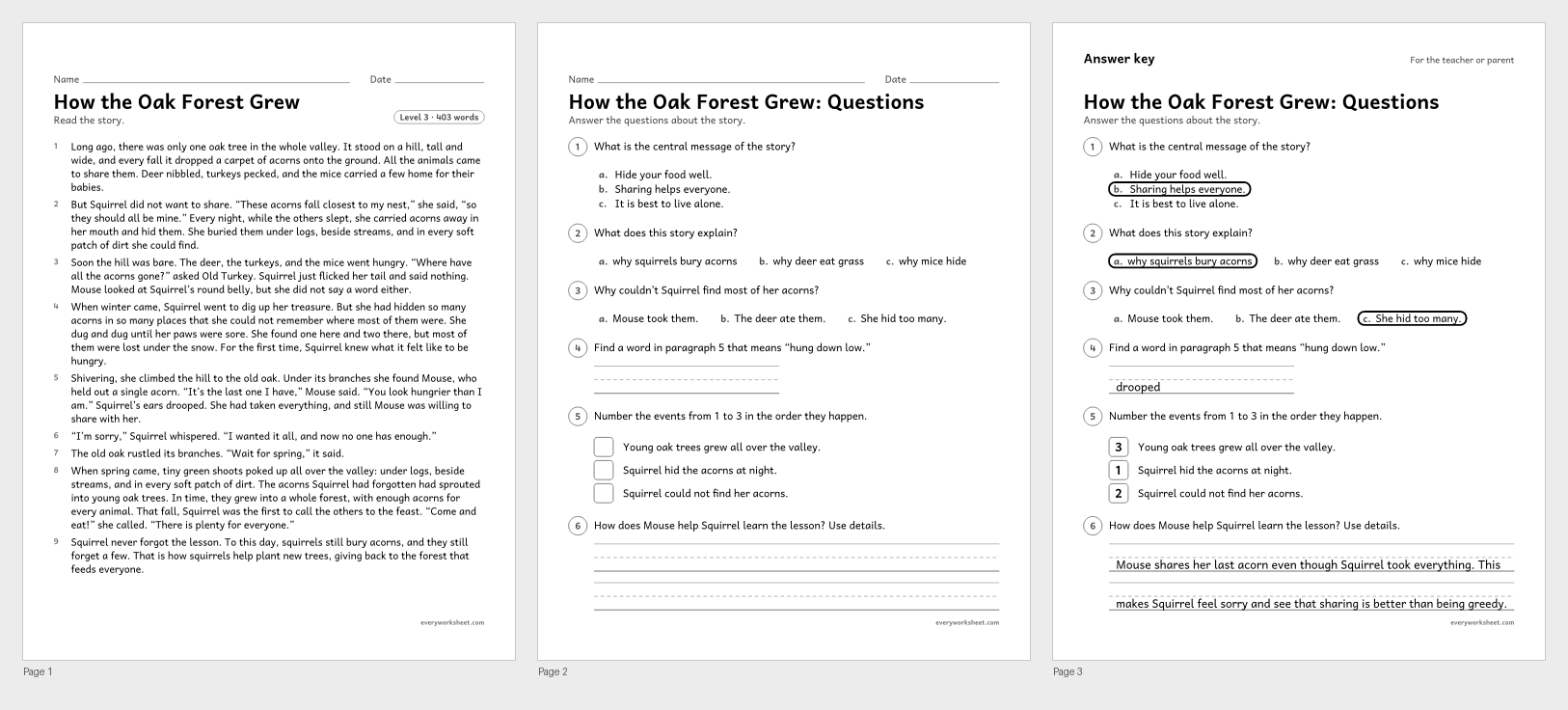 3 pagesView all 3 pages
Determining the central message of an original pourquoi tale and how key details convey it
Answer key on page 3
3 pages56 KB
Print at 100% (actual size) for the cleanest tracing lines.
Third graders read to learn in every subject. These reading passages for 3rd graders connect reading to what children study in science and social studies: magnets, weather and climate, animal life cycles, the three branches of government, and how a town pays for a park.
Paired passages put two short texts on the same topic side by side, so children practice comparing the most important points of two texts, a key 3rd grade skill. Original folktales and "why" stories explain something in nature and teach a lesson.
Every passage is original, has numbered paragraphs, and comes with six to eight questions and an answer key.
CCSS.ELA-LITERACY.RL.3.2Recount stories, including fables, folktales, and myths from diverse cultures; determine the central message, lesson, or moral and explain how it is conveyed through key details in the text.CCSS.ELA-LITERACY.RL.3.3Describe characters in a story (e.g., their traits, motivations, or feelings) and explain how their actions contribute to the sequence of events.CCSS.ELA-LITERACY.RI.3.1Ask and answer questions to demonstrate understanding of a text, referring explicitly to the text as the basis for the answers.CCSS.ELA-LITERACY.RI.3.2Determine the main idea of a text; recount the key details and explain how they support the main idea.CCSS.ELA-LITERACY.RI.3.3Describe the relationship between a series of historical events, scientific ideas or concepts, or steps in technical procedures in a text, using language that pertains to time, sequence, and cause/effect.CCSS.ELA-LITERACY.RI.3.4Determine the meaning of general academic and domain-specific words and phrases in a text relevant to a grade 3 topic or subject area.CCSS.ELA-LITERACY.RI.3.5Use text features and search tools (e.g., key words, sidebars, hyperlinks) to locate information relevant to a given topic efficiently.CCSS.ELA-LITERACY.RI.3.8Describe the logical connection between particular sentences and paragraphs in a text (e.g., comparison, cause/effect, first/second/third in a sequence).CCSS.ELA-LITERACY.RI.3.9Compare and contrast the most important points and key details presented in two texts on the same topic.These passages are grouped by subject (science, social studies, paired texts, and folktales). The reading comprehension page has leveled stories, nonfiction, and poems for general reading practice.
Yes. The nonfiction passages use well-established facts suited to third grade science and social studies.
Two short texts on the same topic. Children compare the most important points and details in the two texts.
Yes. Every page with right answers has an answer key on page 2. Written answers show an example.