 View all 2 pages
Multiplication Worksheets
A page for every times table from 0 to 12, mixed facts, arrays and equal groups, multiplying by multiples of 10, timed tests, mad minutes and mystery pictures, all with keys.
Download the multiplication worksheets worksheets
Times tables 0 to 12
 View all 2 pages
 View all 2 pages
 View all 2 pages
 View all 2 pages
 View all 2 pages
 View all 2 pages
 View all 2 pages
 View all 2 pages
 View all 2 pages
 View all 2 pages
 View all 2 pages
 View all 2 pages
 View all 2 pages
 View all 2 pages
 View all 2 pages
 View all 2 pages
 View all 2 pages
 View all 2 pages
 View all 2 pages
 View all 2 pages
 View all 2 pages
 View all 2 pages
 View all 2 pages
 View all 2 pages
 View all 2 pages
 View all 2 pages
 View all 2 pages
 View all 2 pages
 View all 2 pages
 View all 2 pages
 View all 2 pages
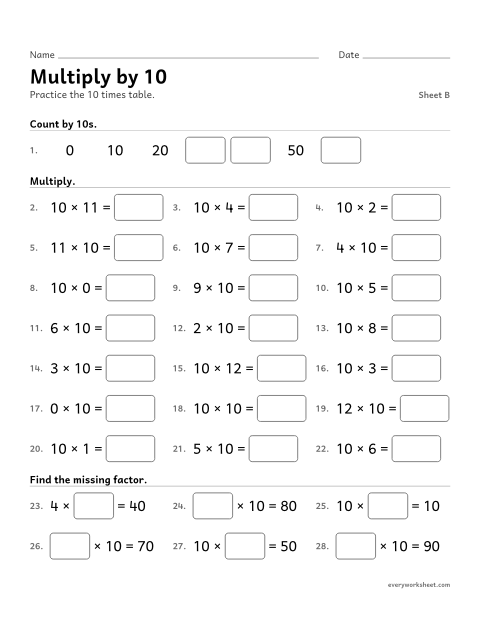 View all 2 pages
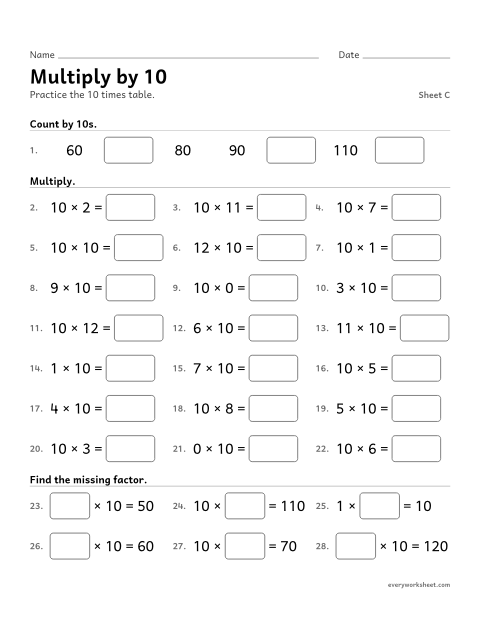 View all 2 pages
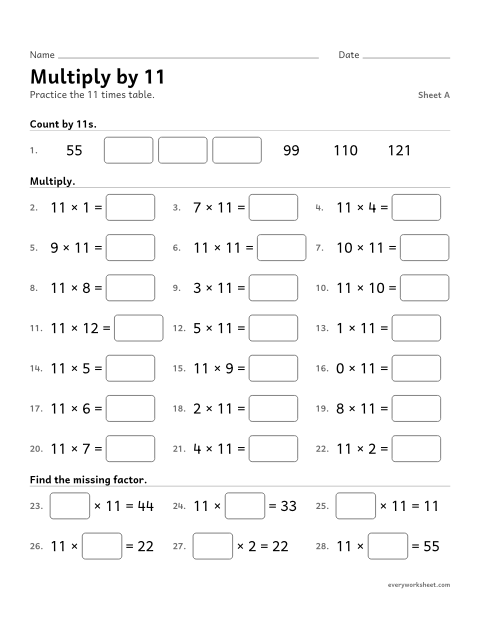 View all 2 pages
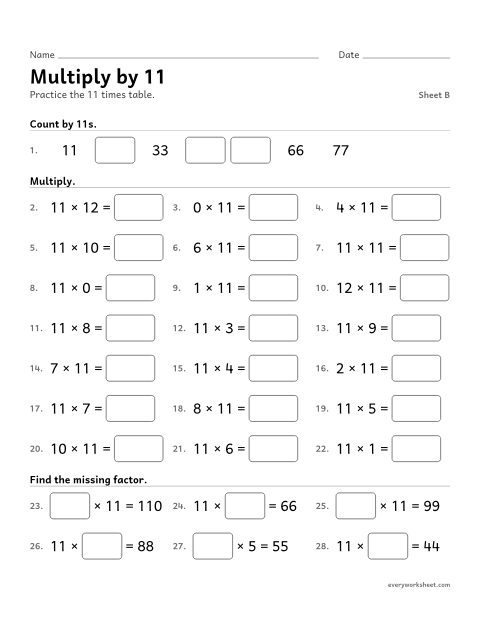 View all 2 pages
 View all 2 pages
 View all 2 pages
 View all 2 pages
 View all 2 pages
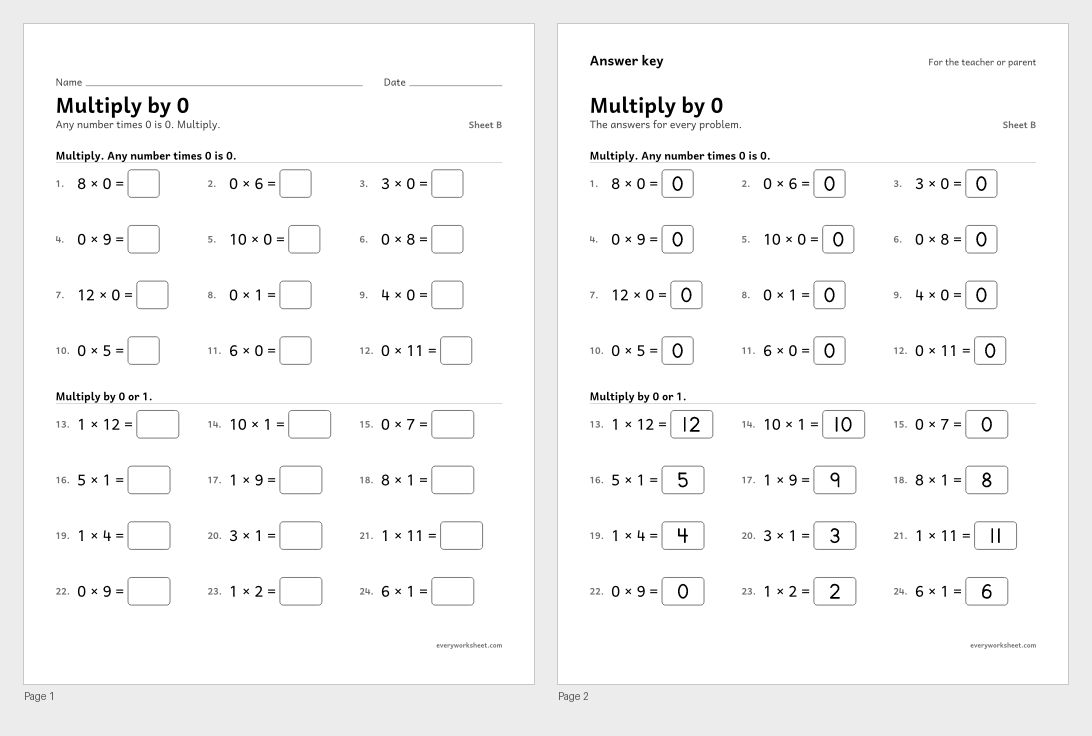
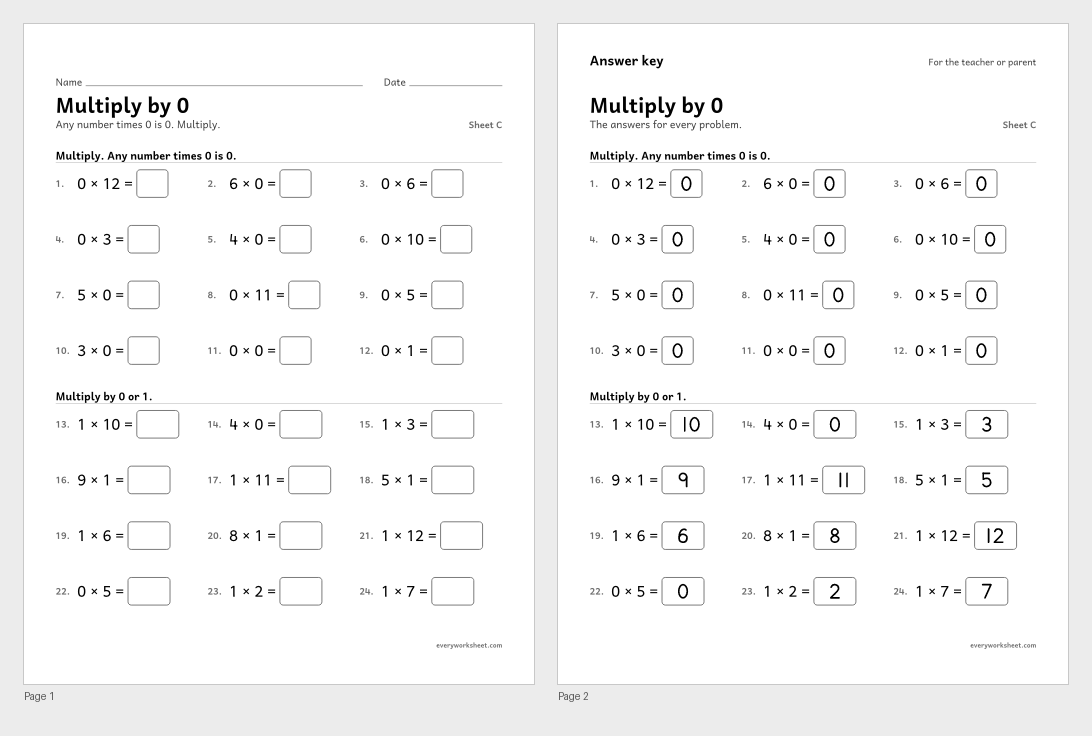
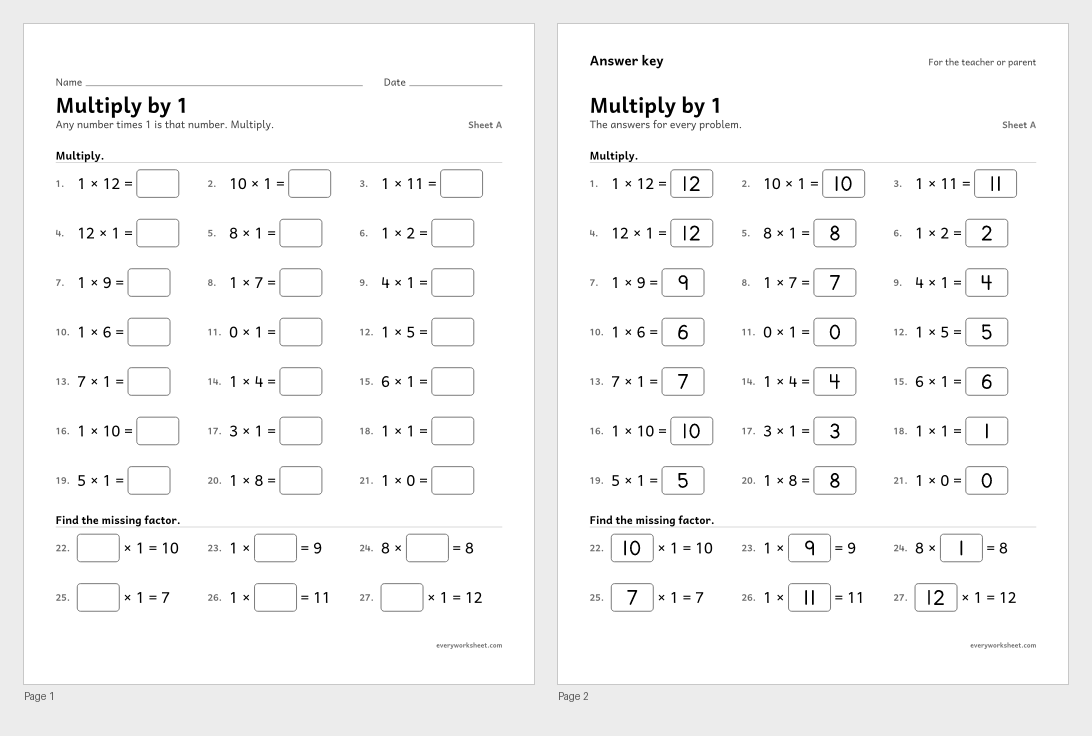
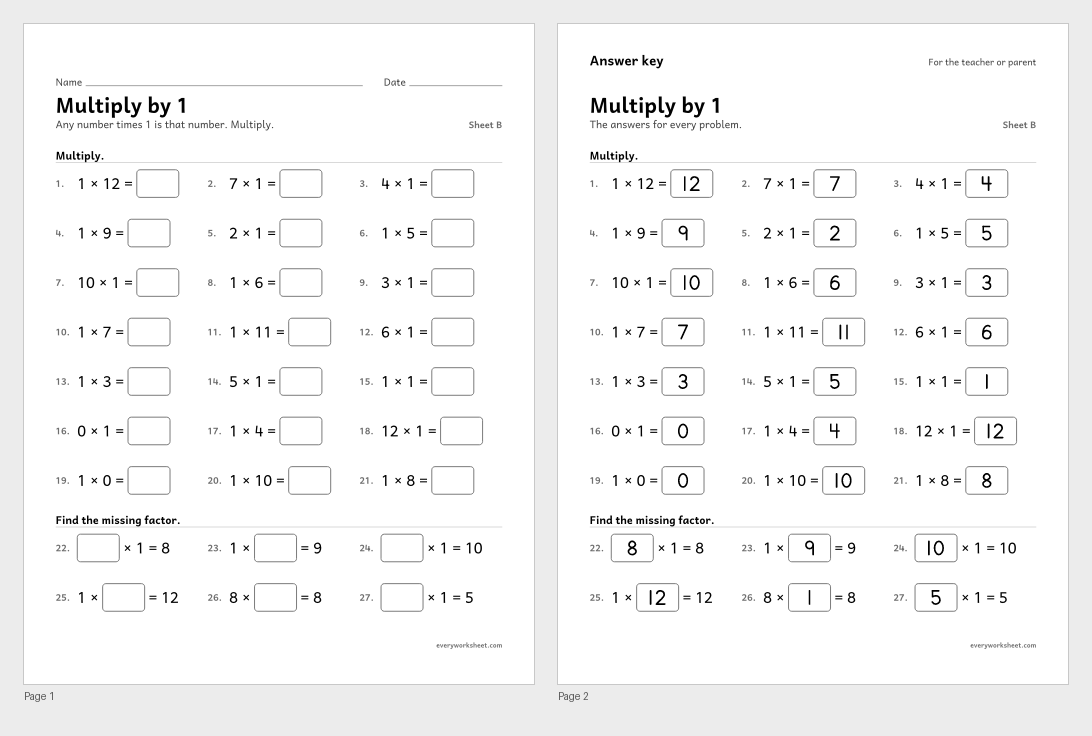
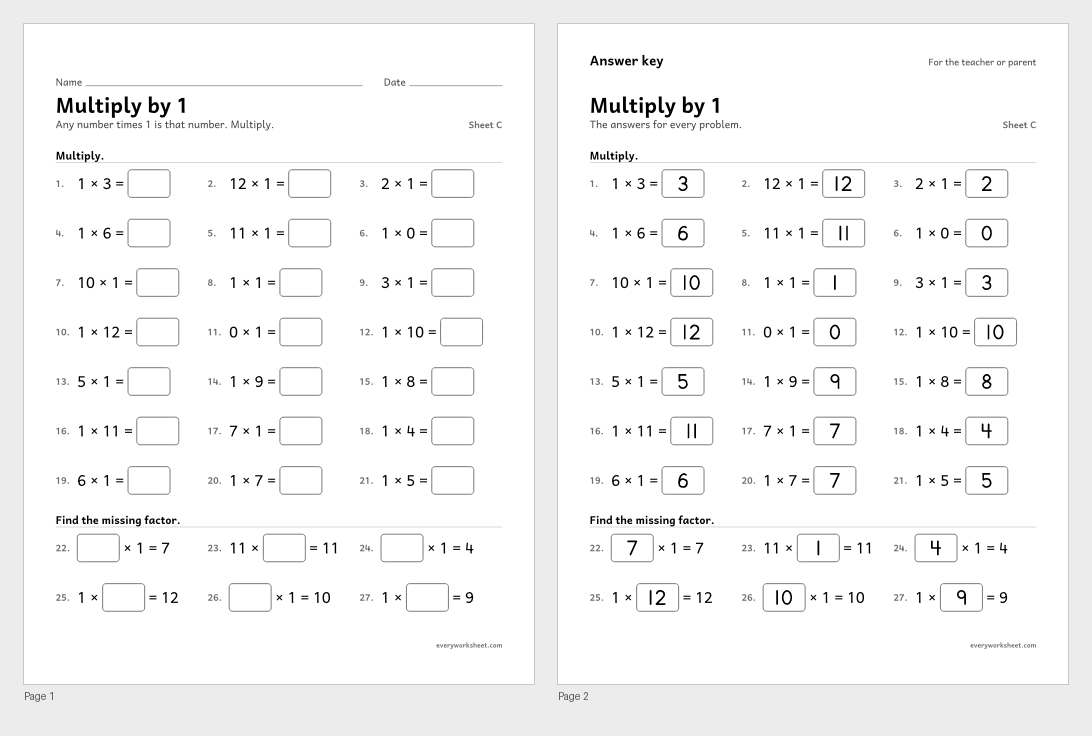
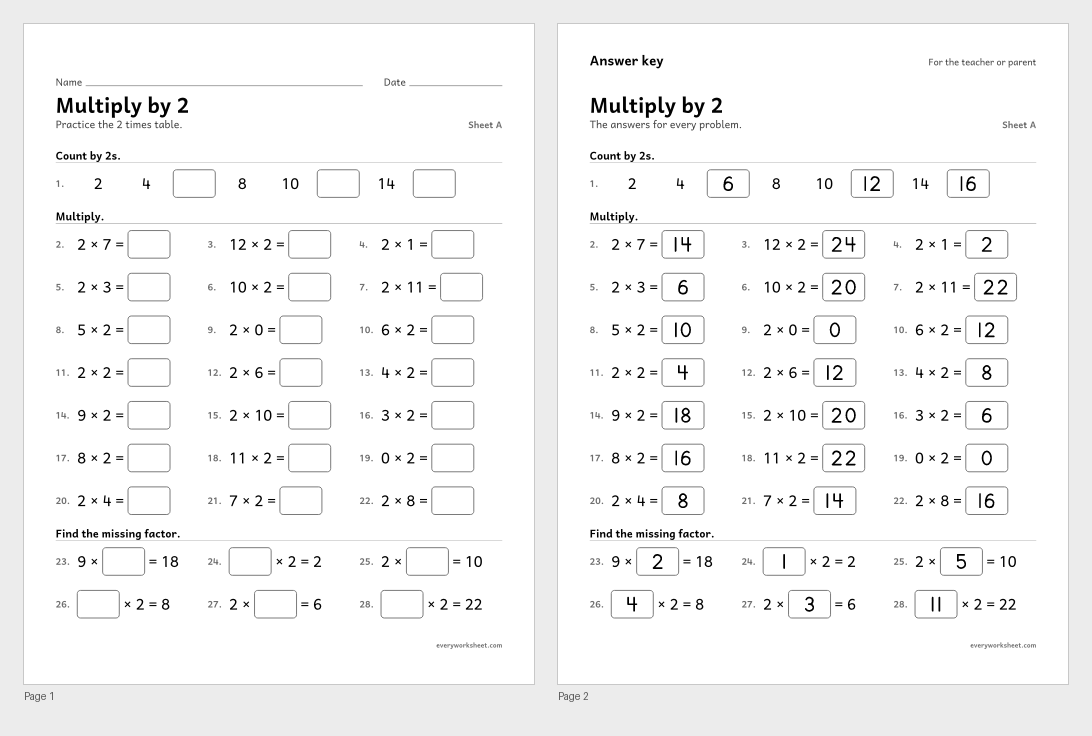
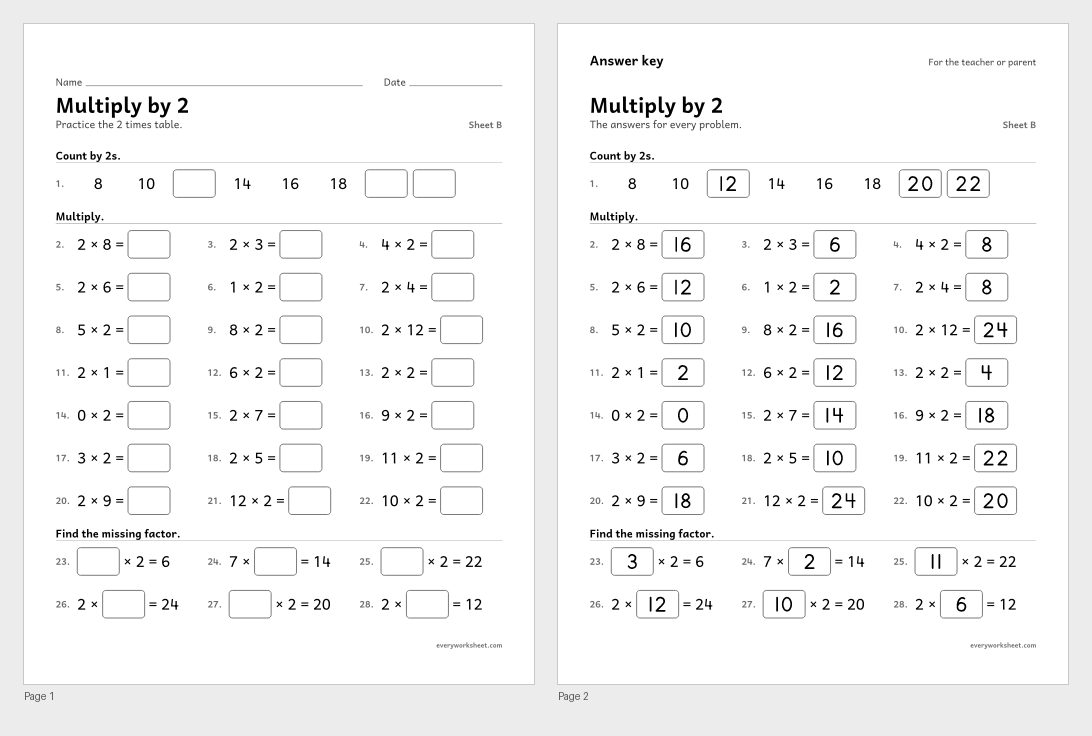
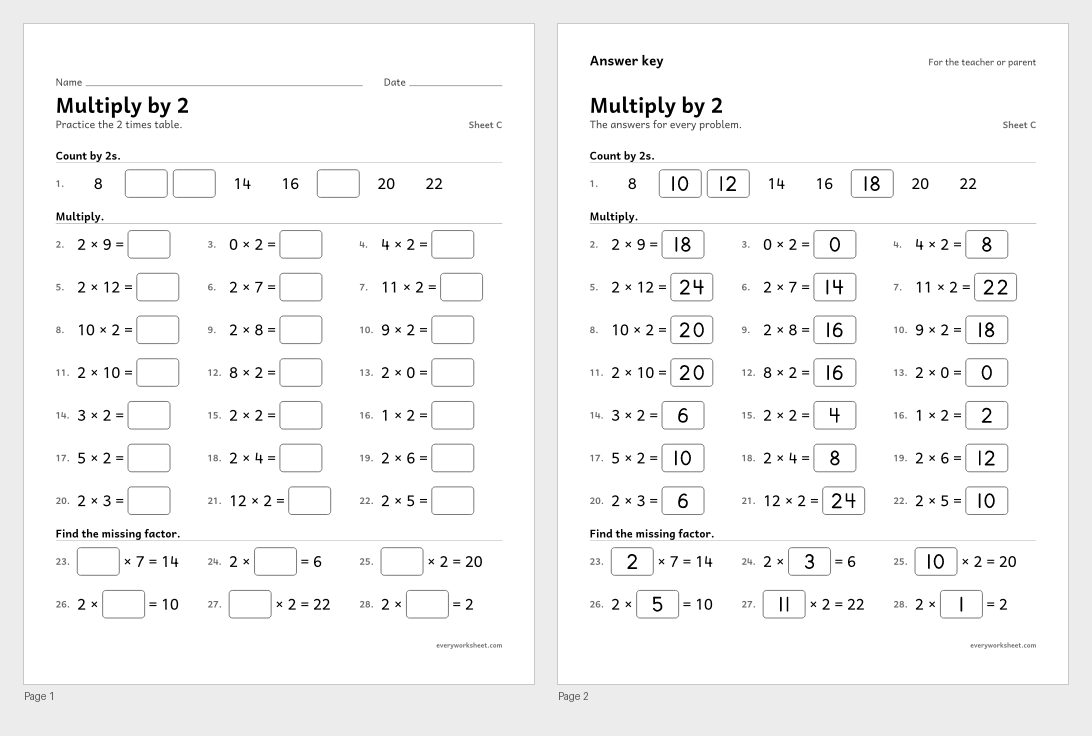
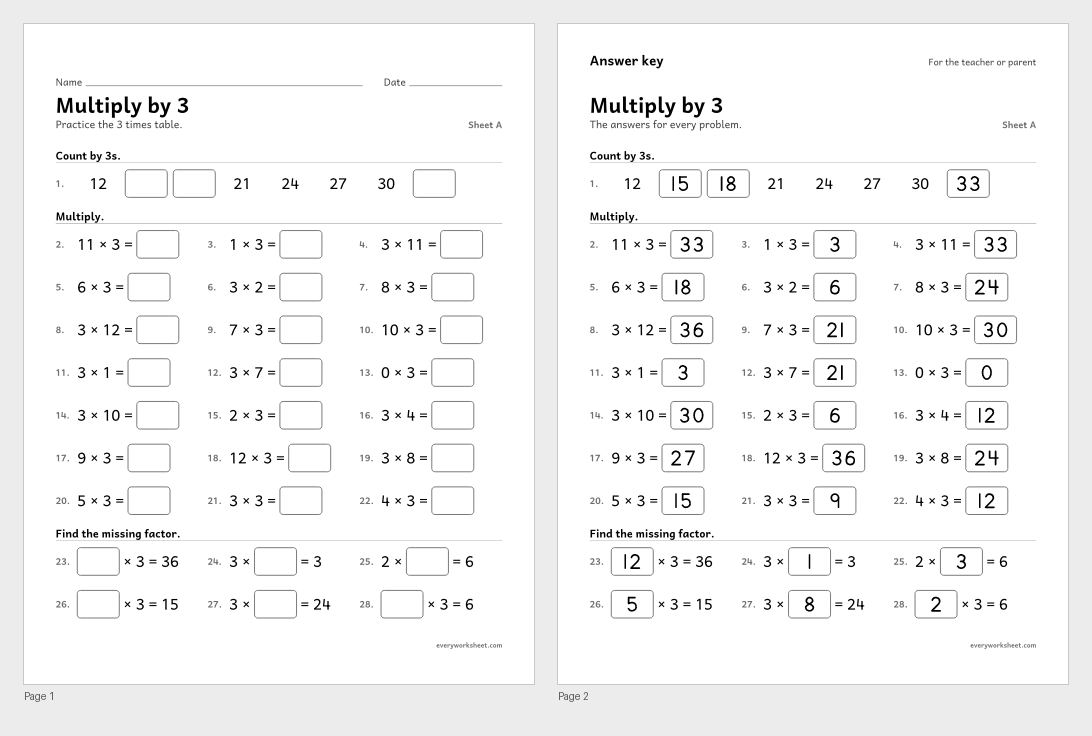
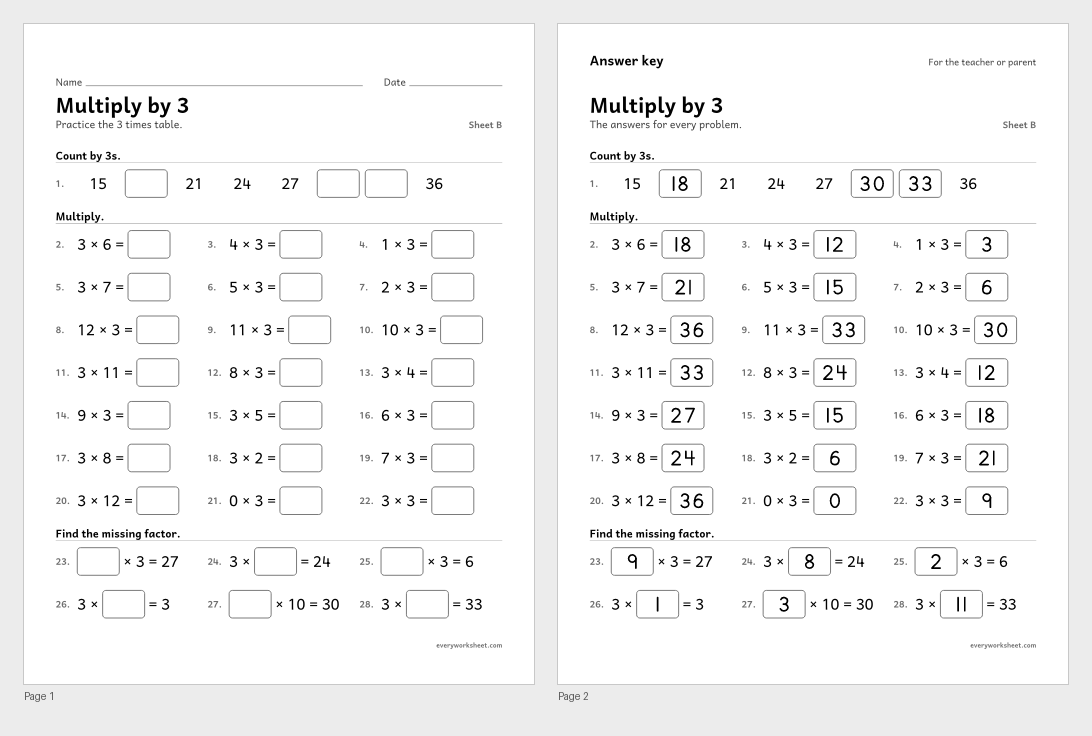
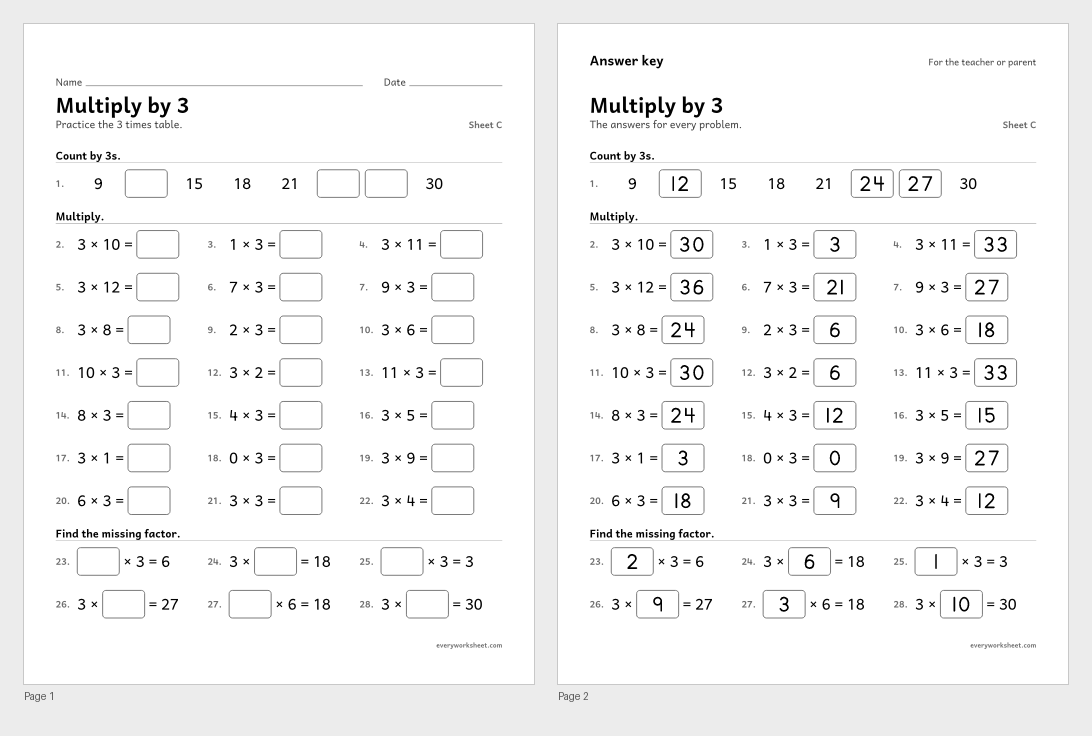
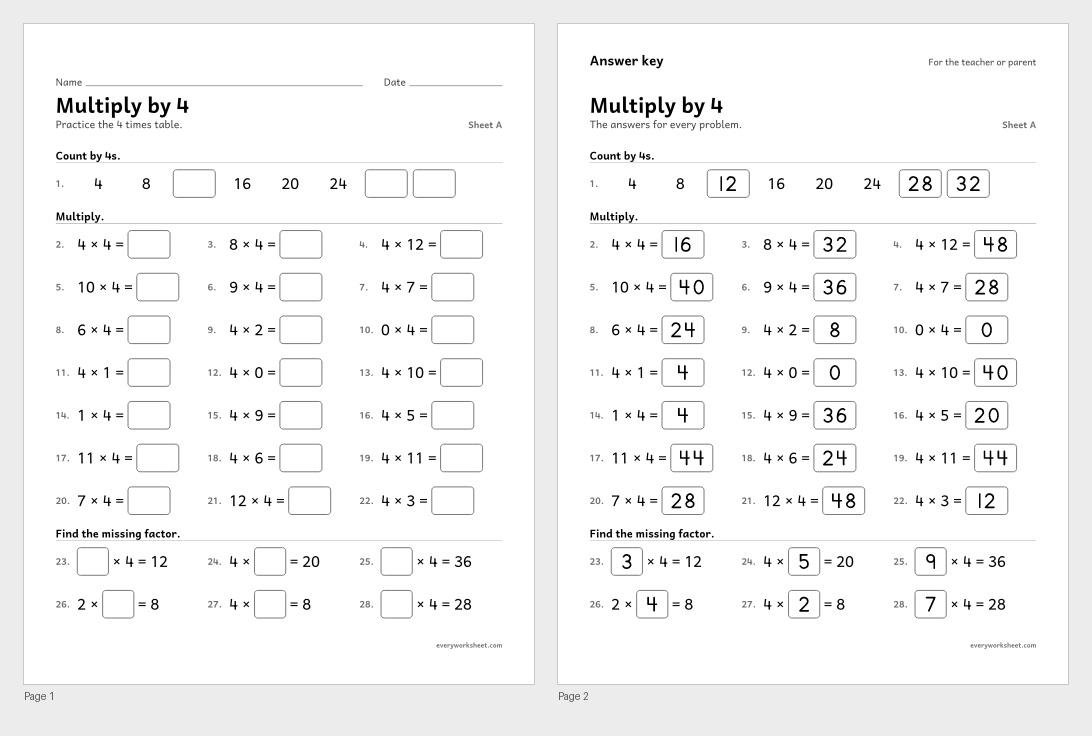
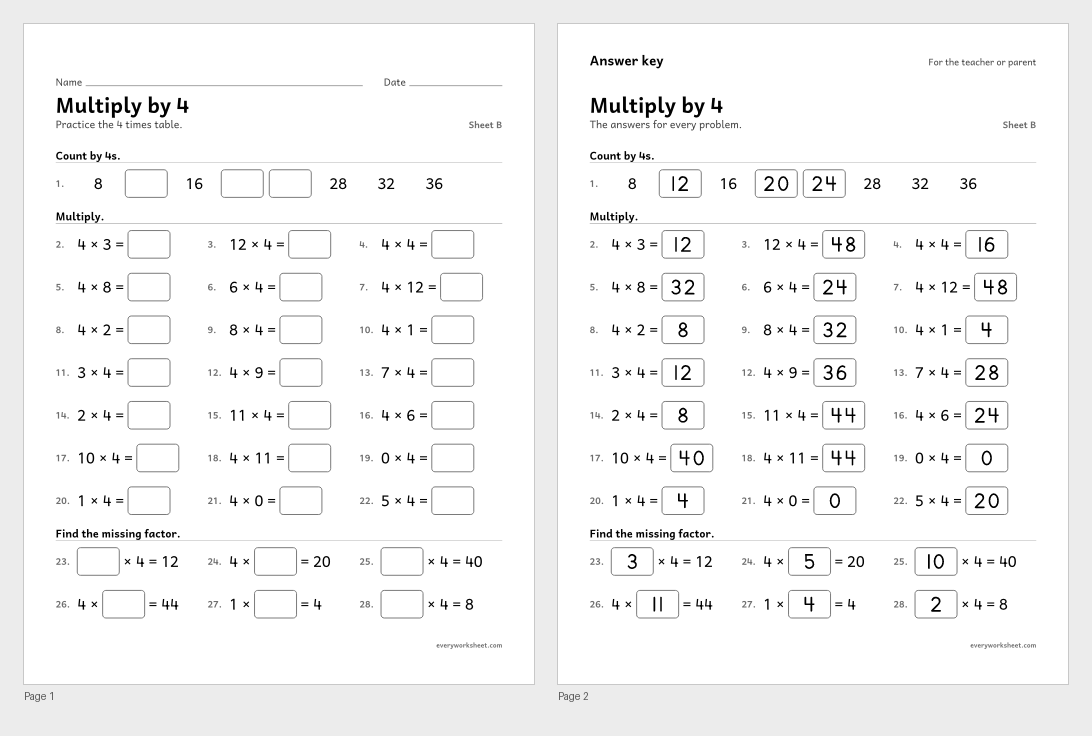
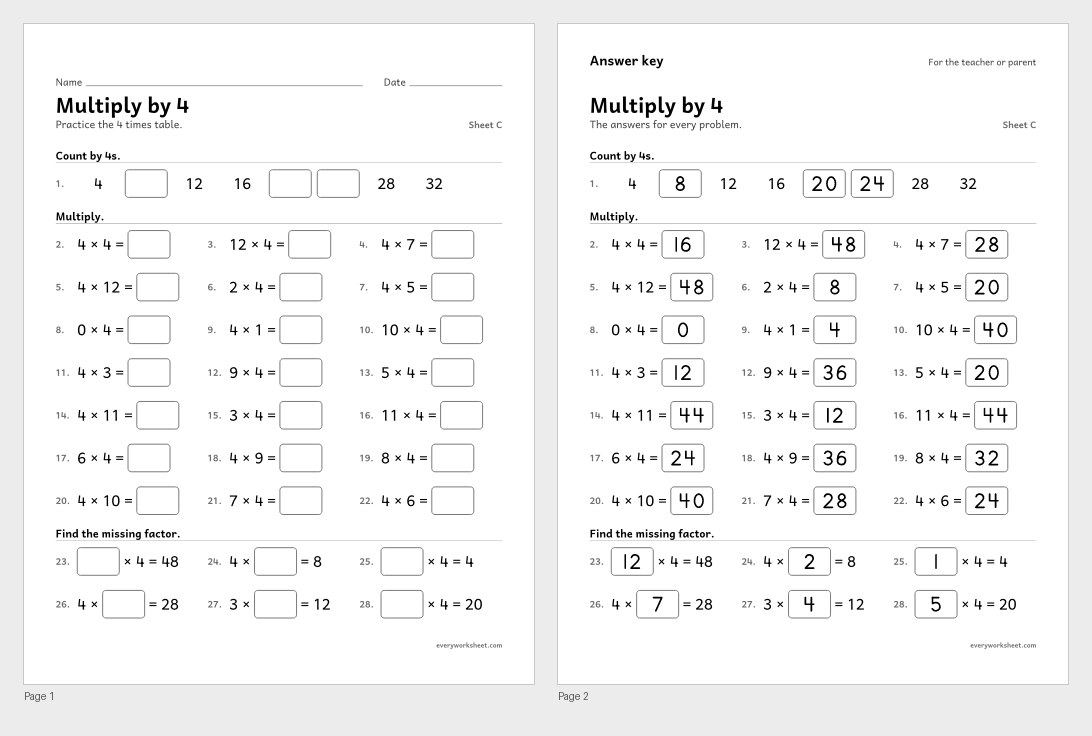
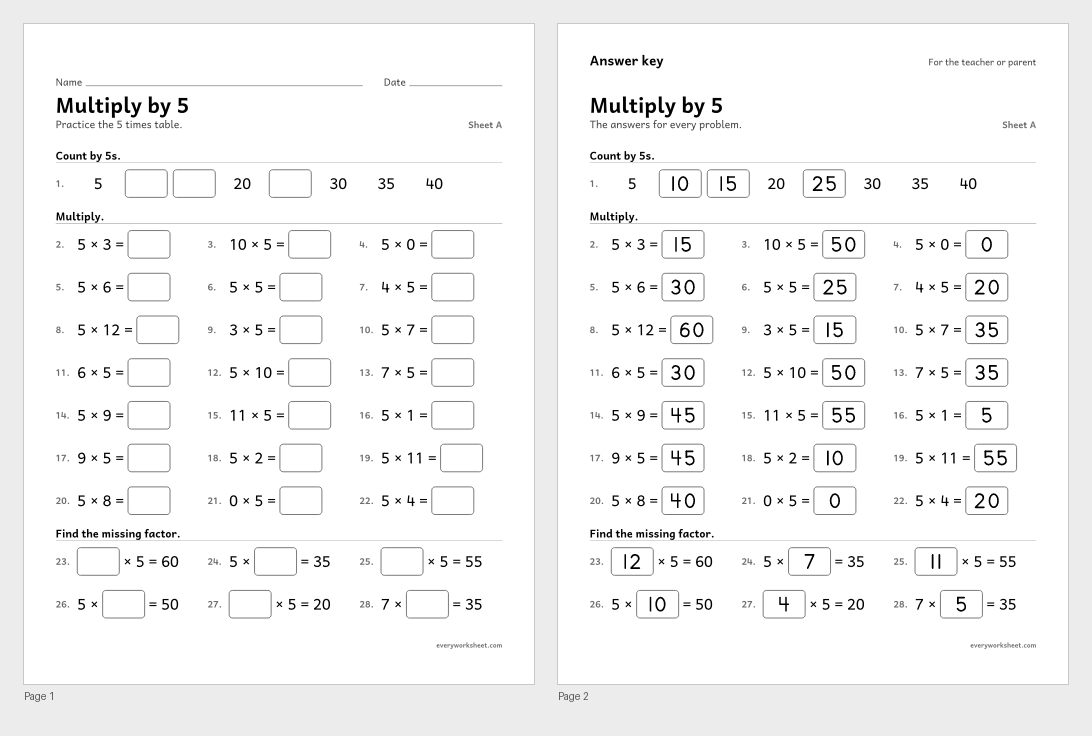
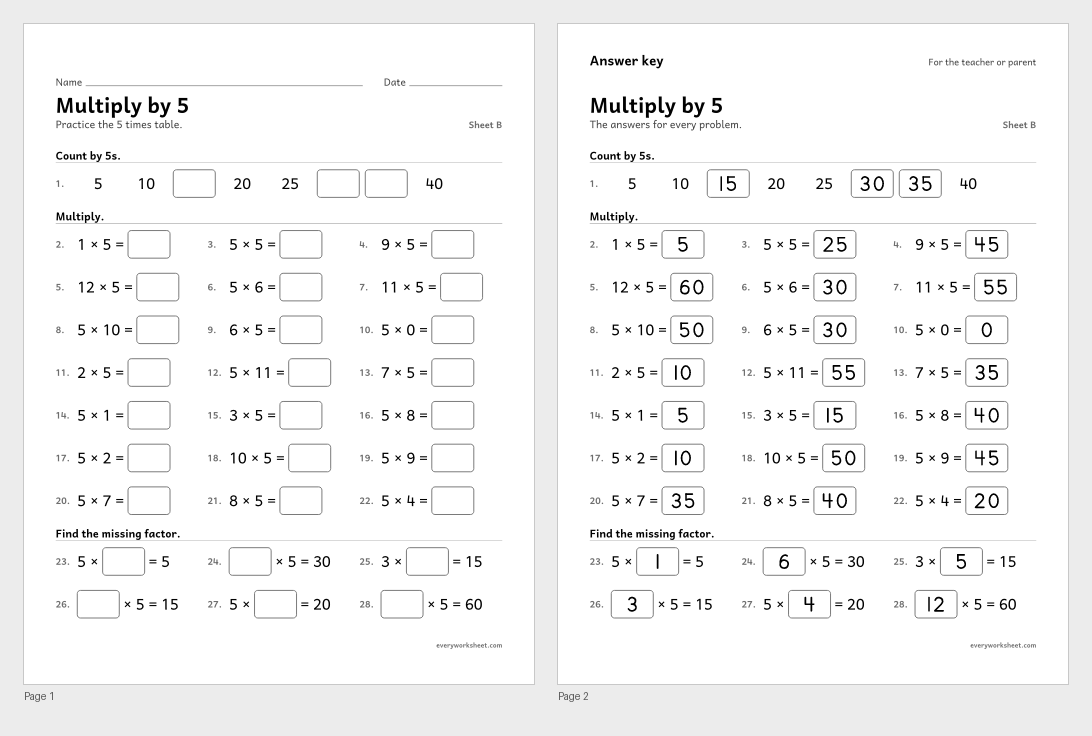
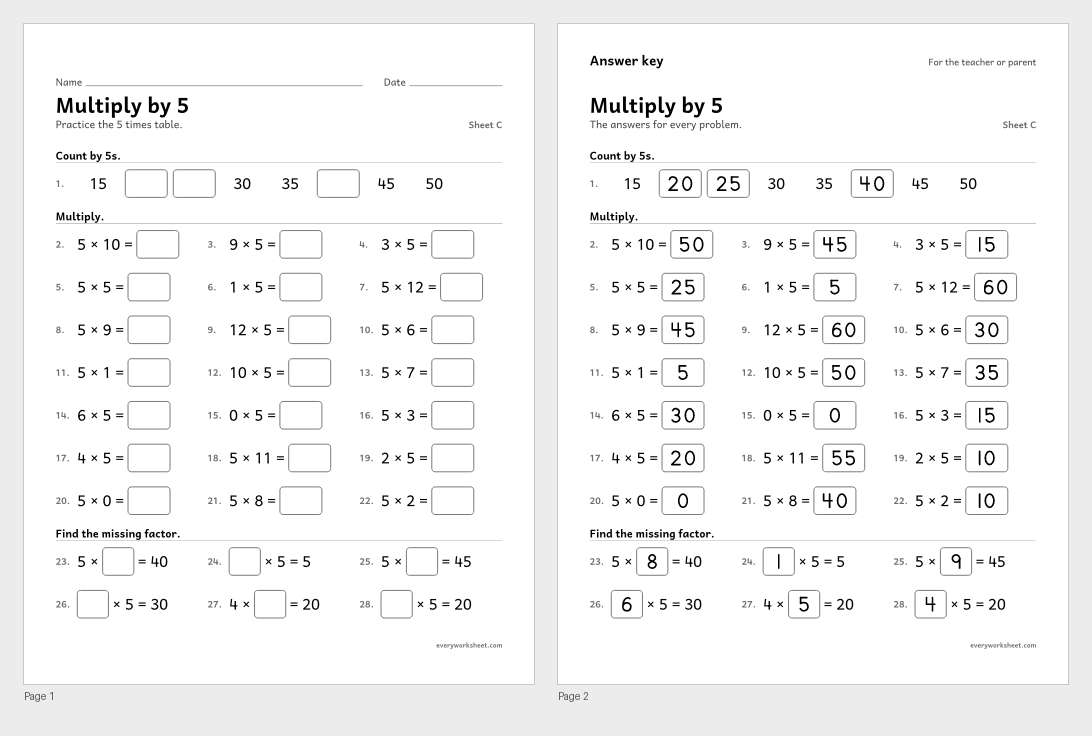
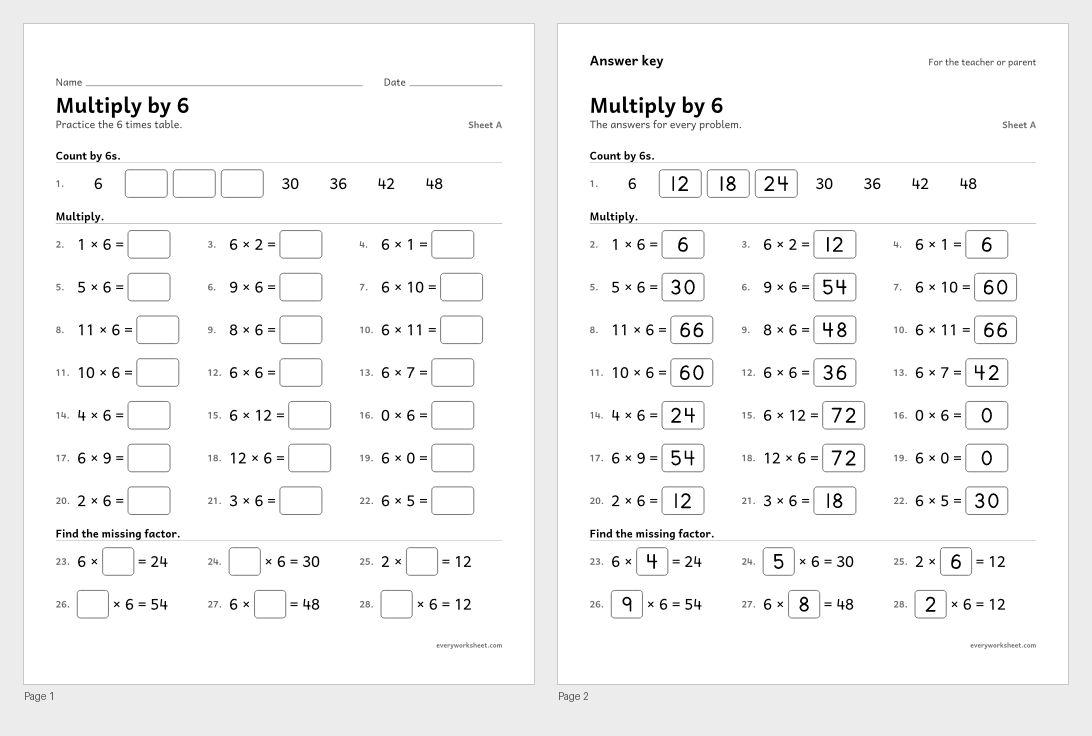
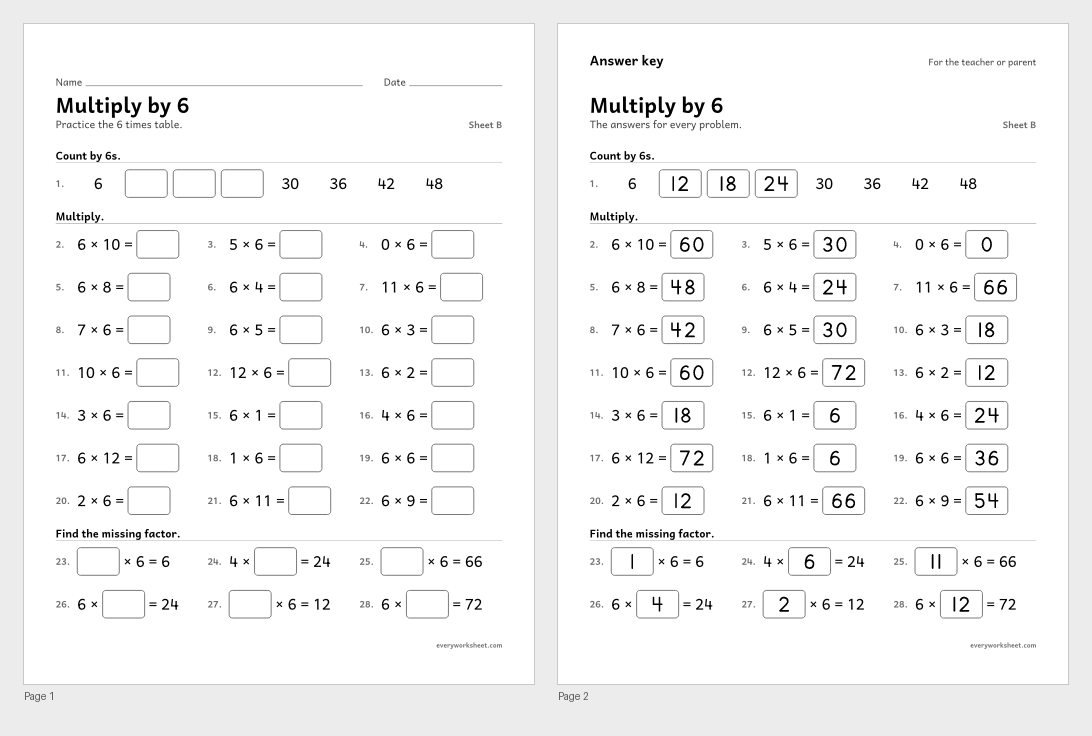
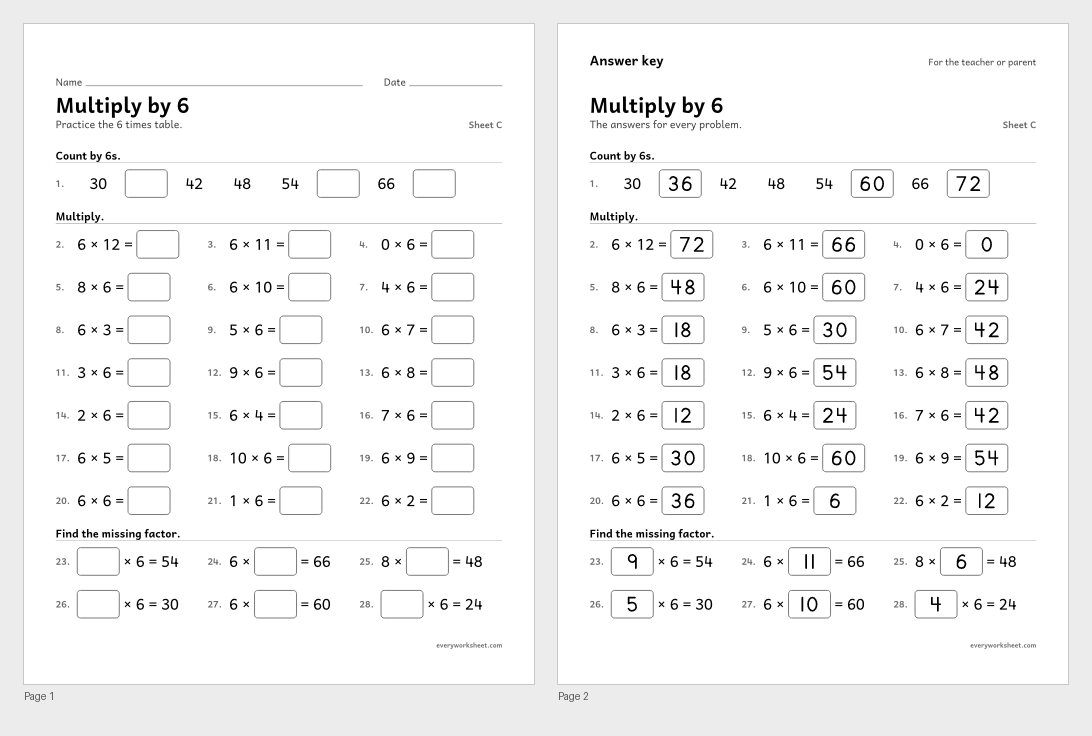
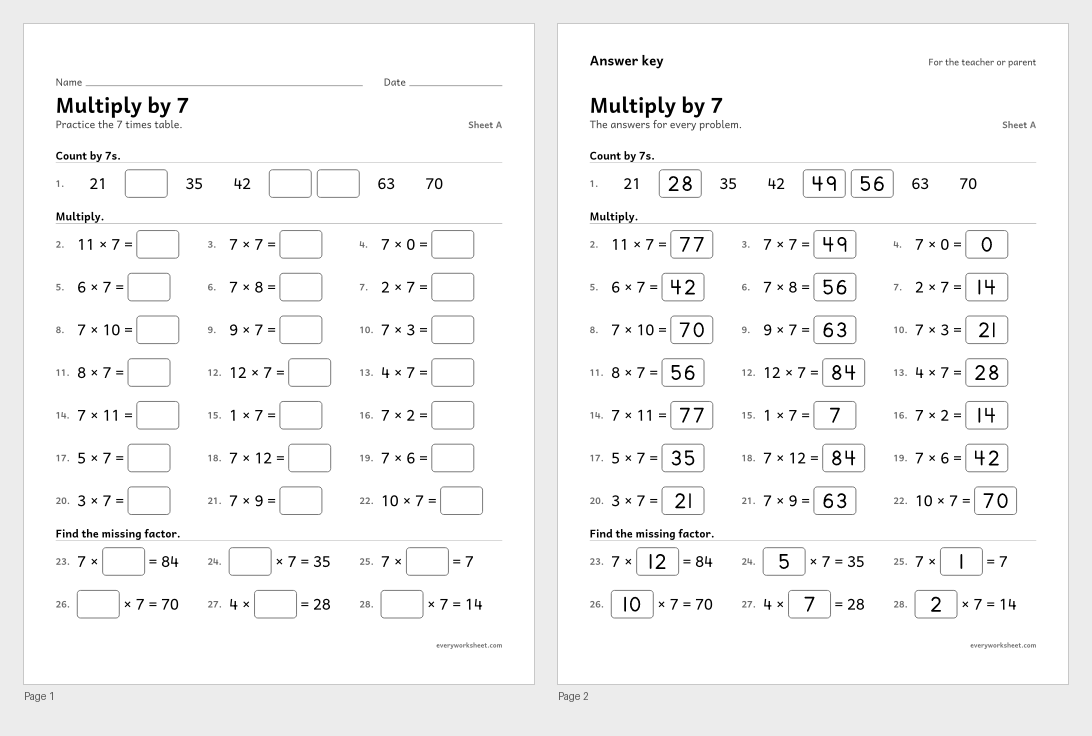
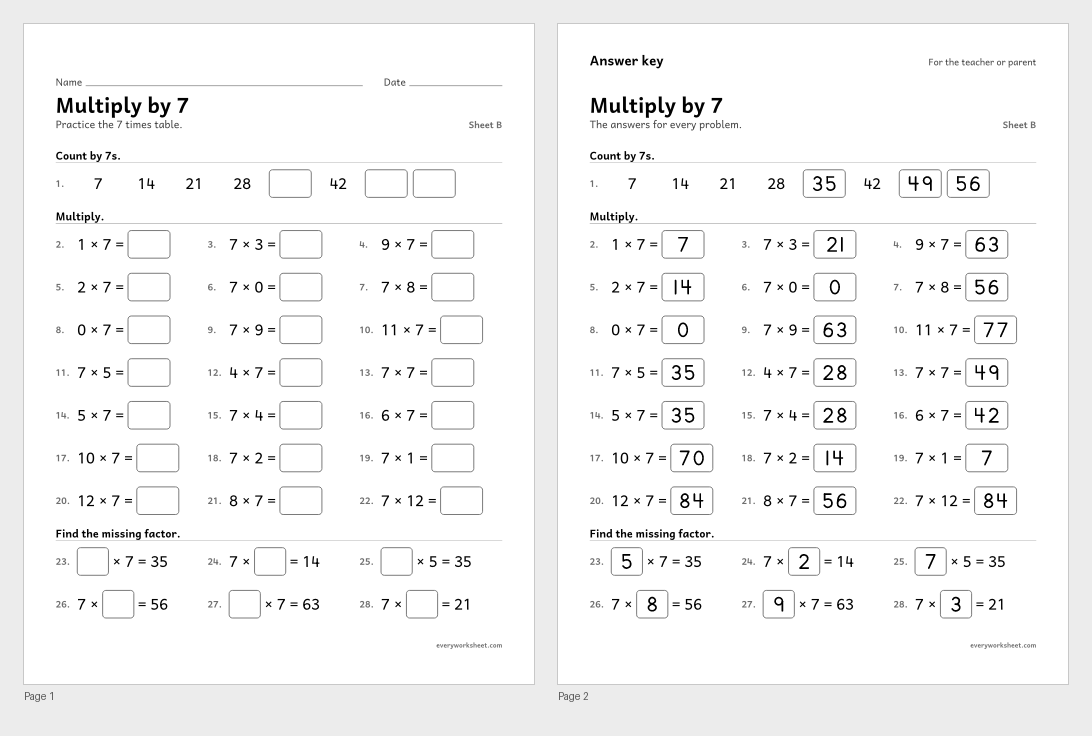
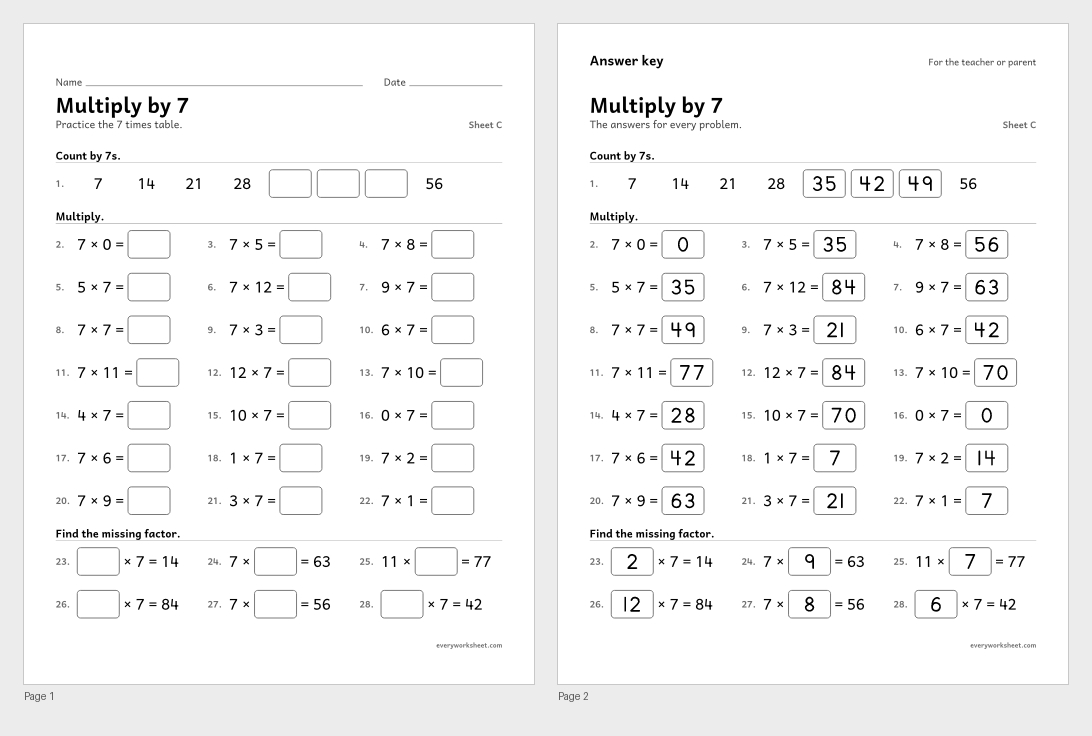
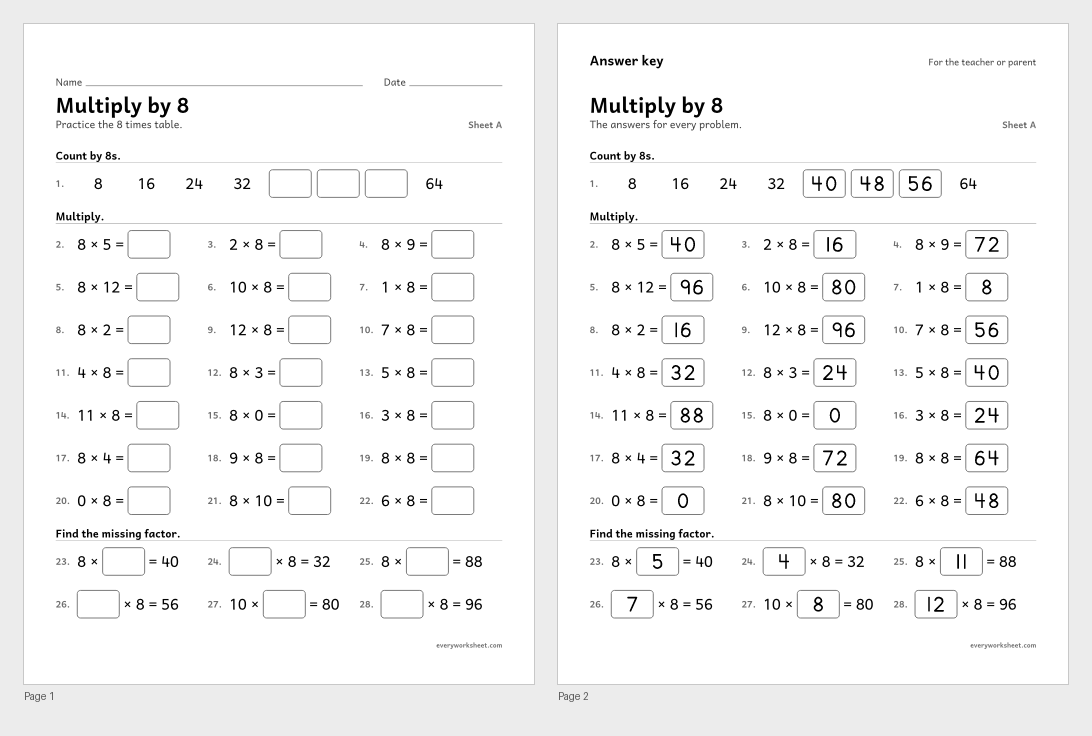
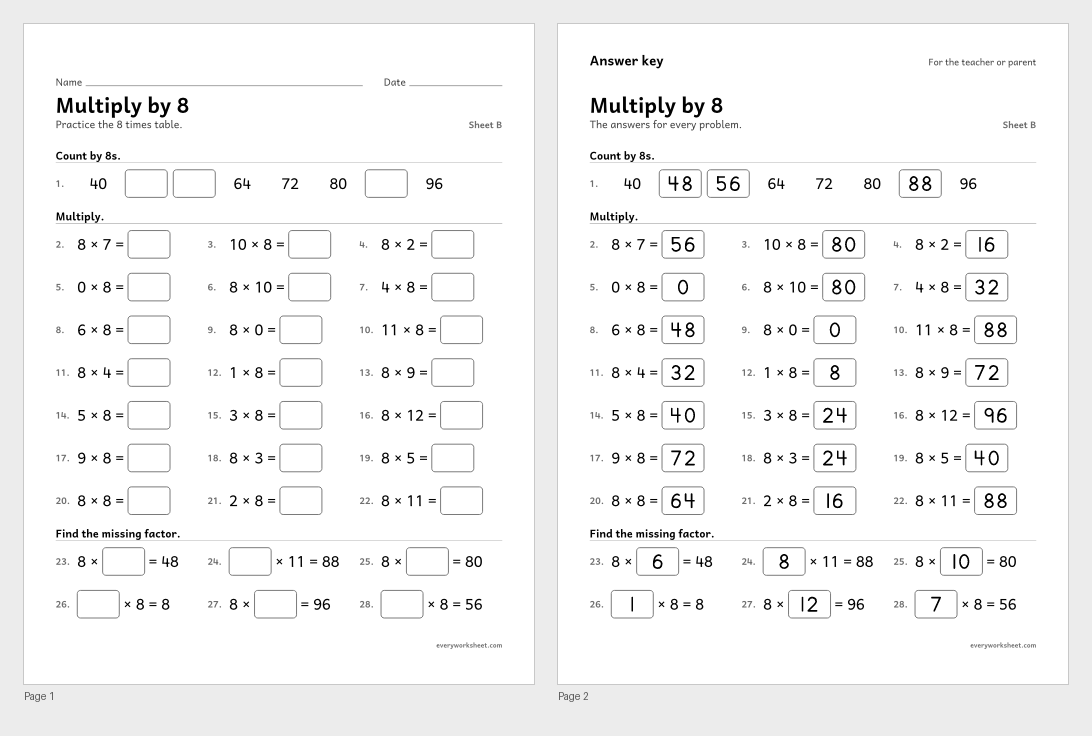
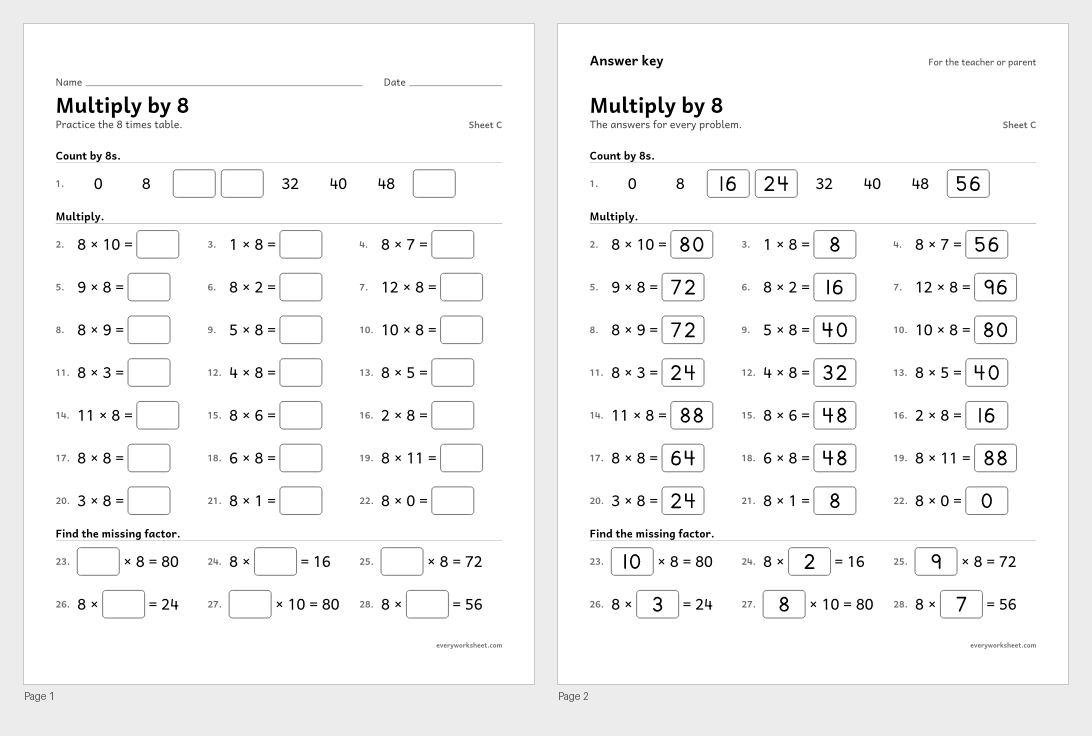
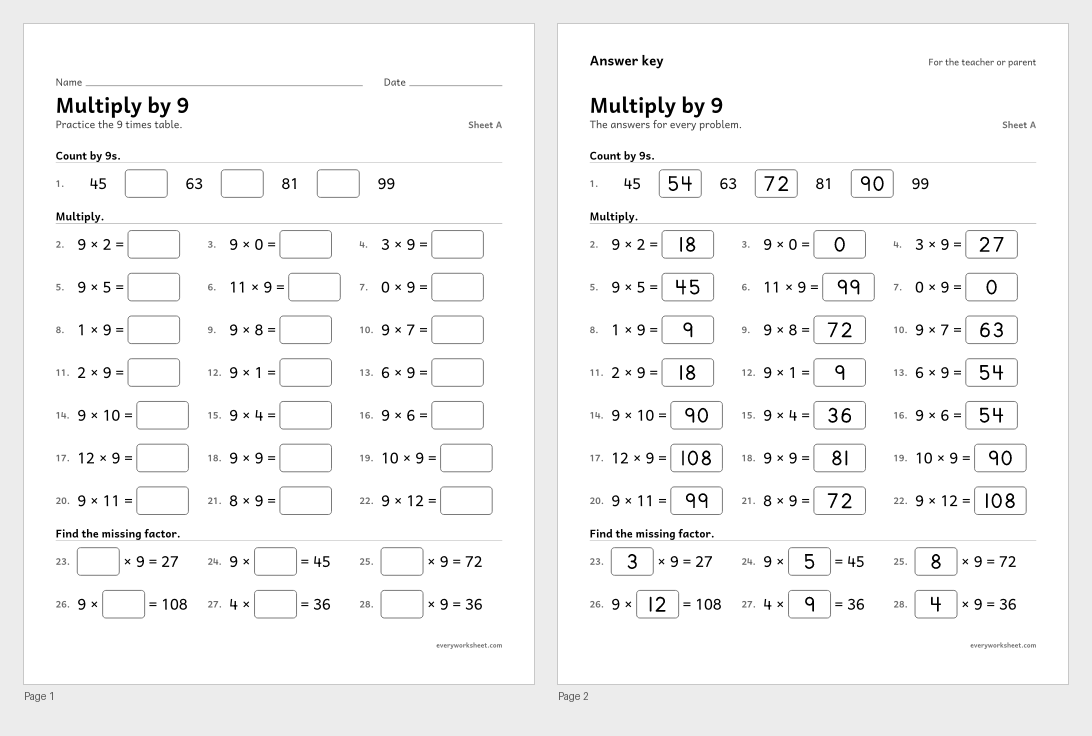
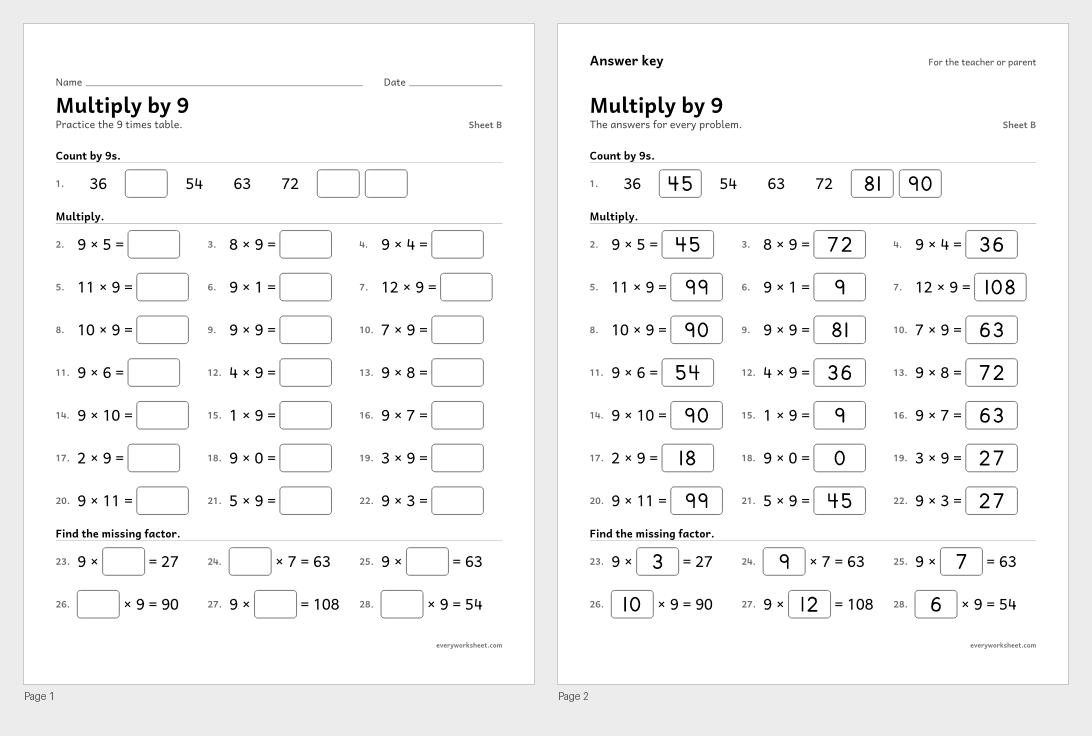
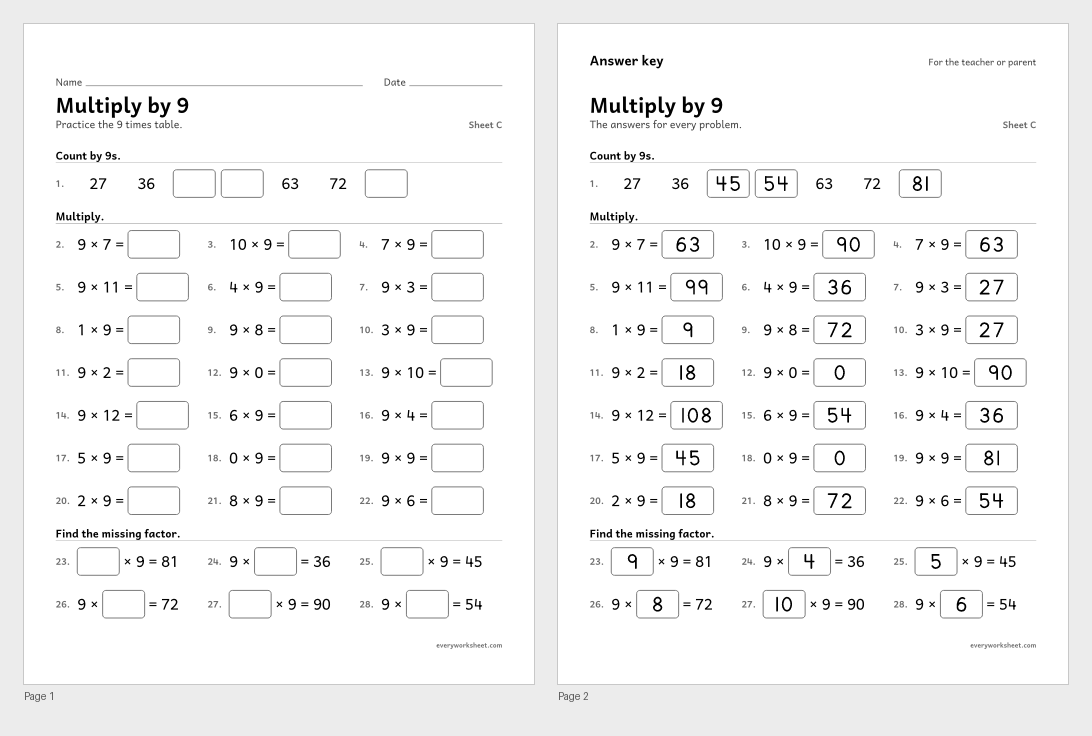
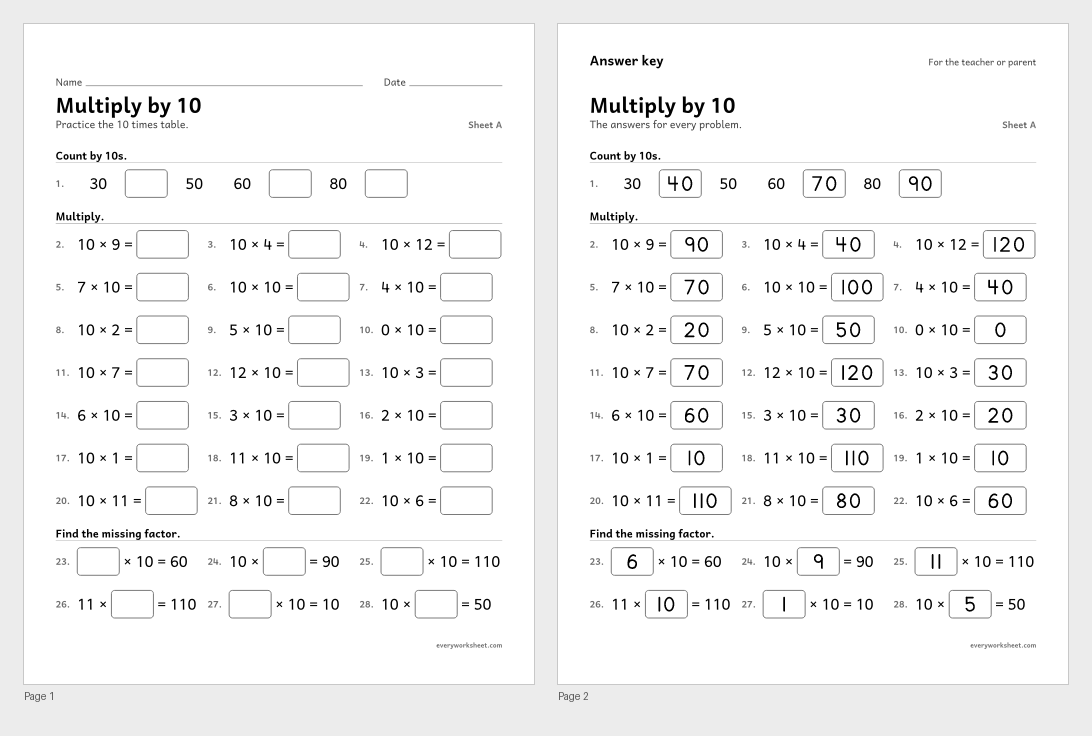
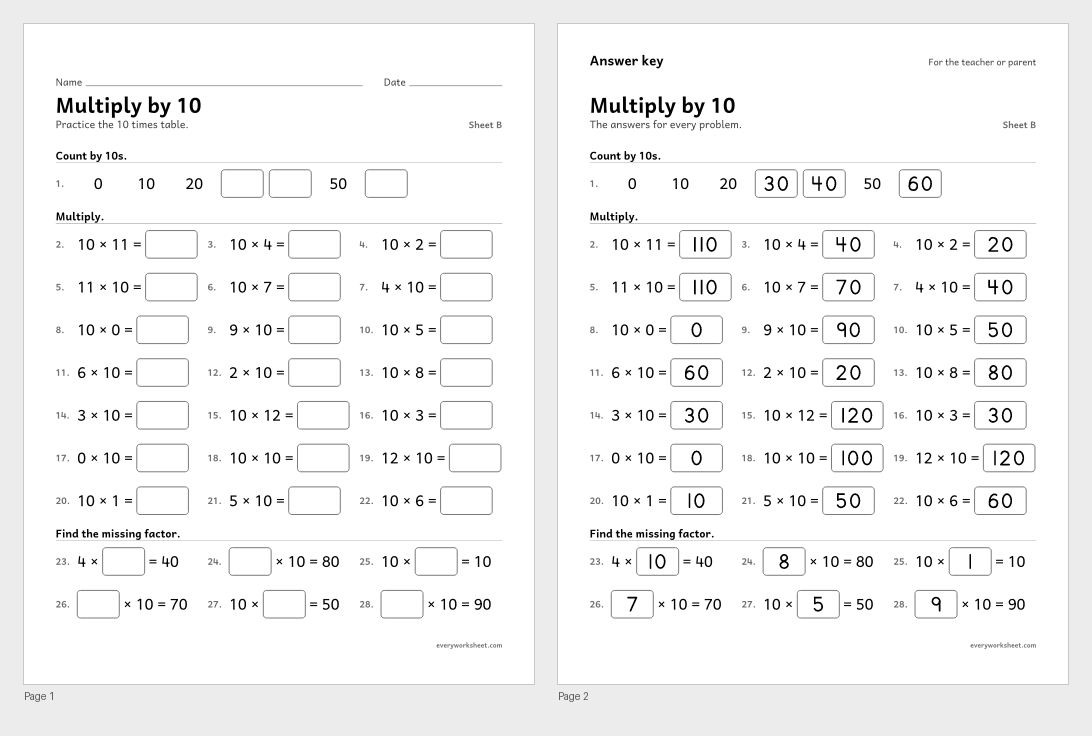
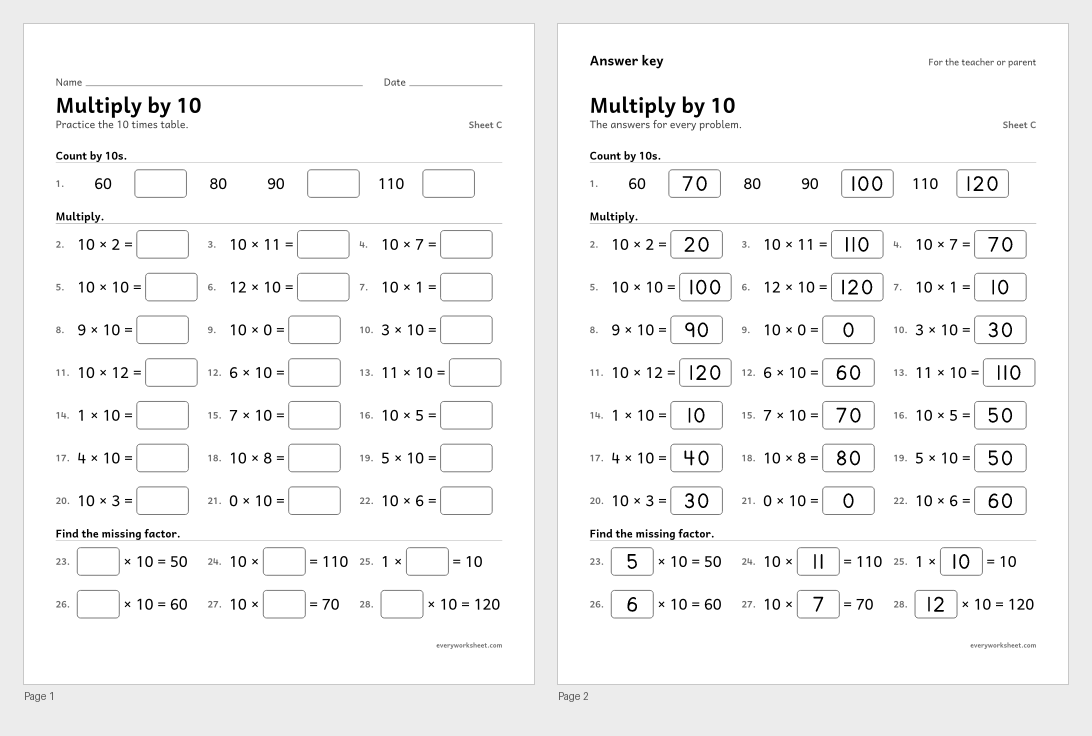
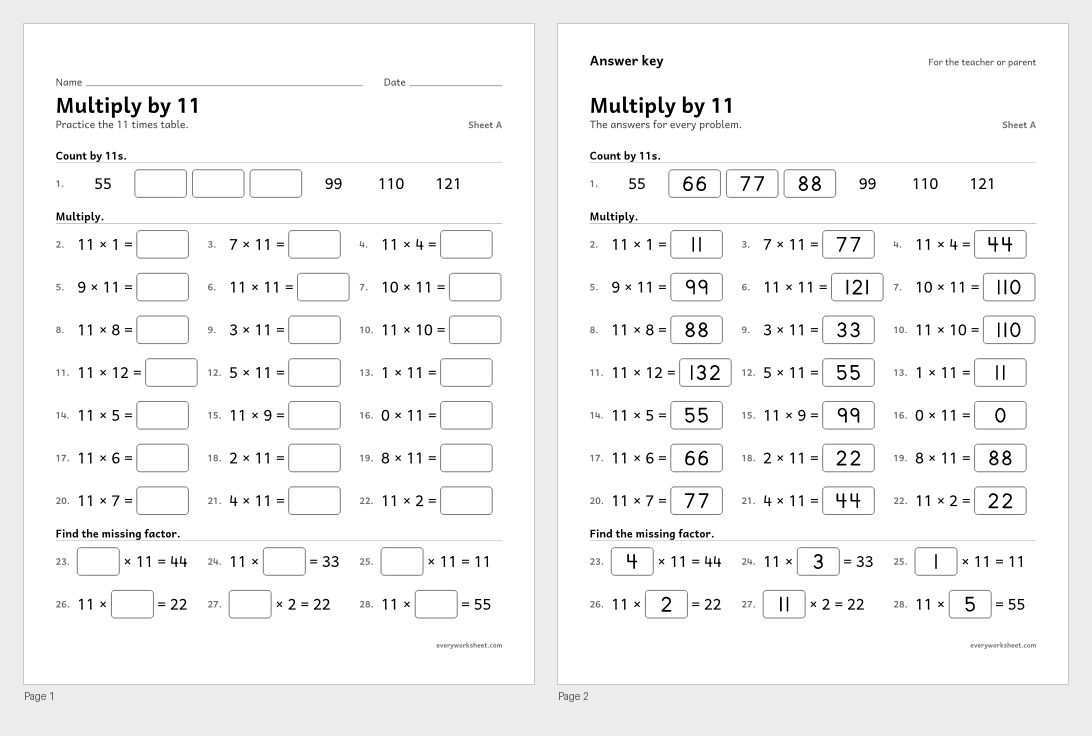
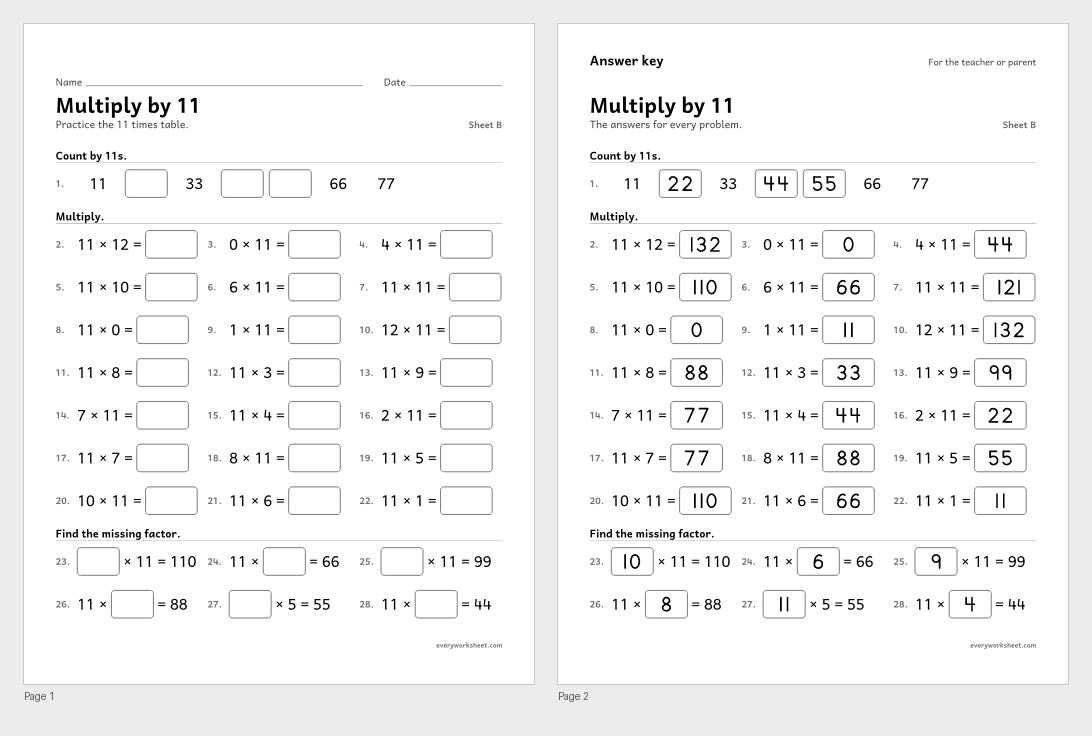
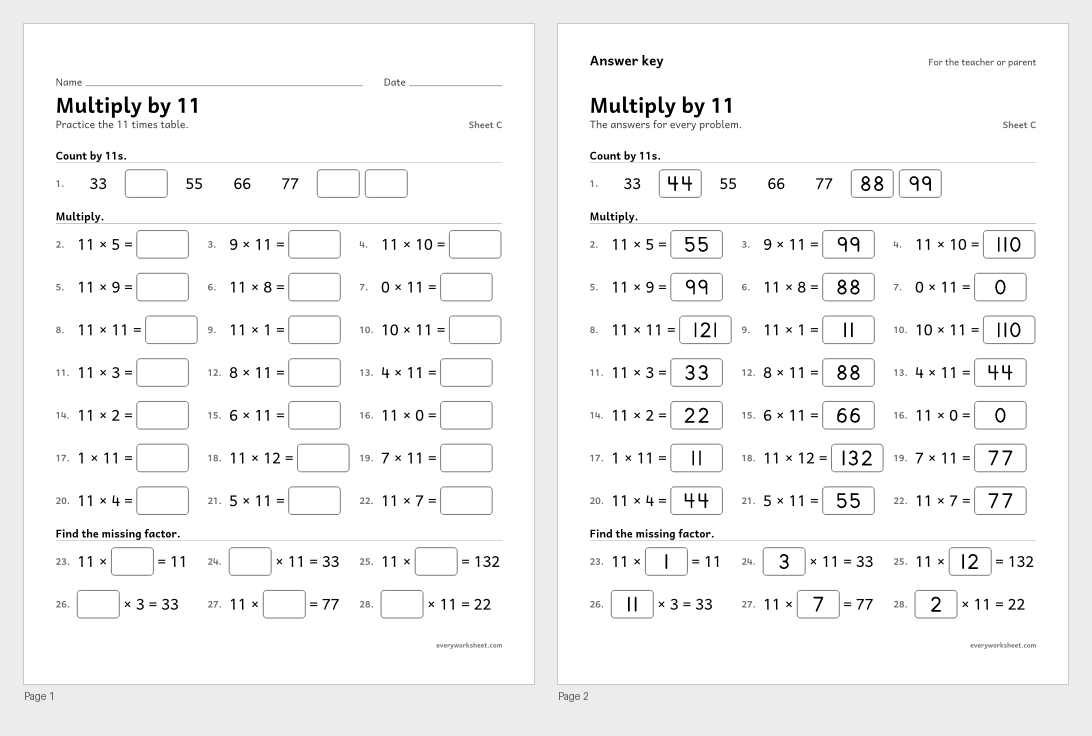
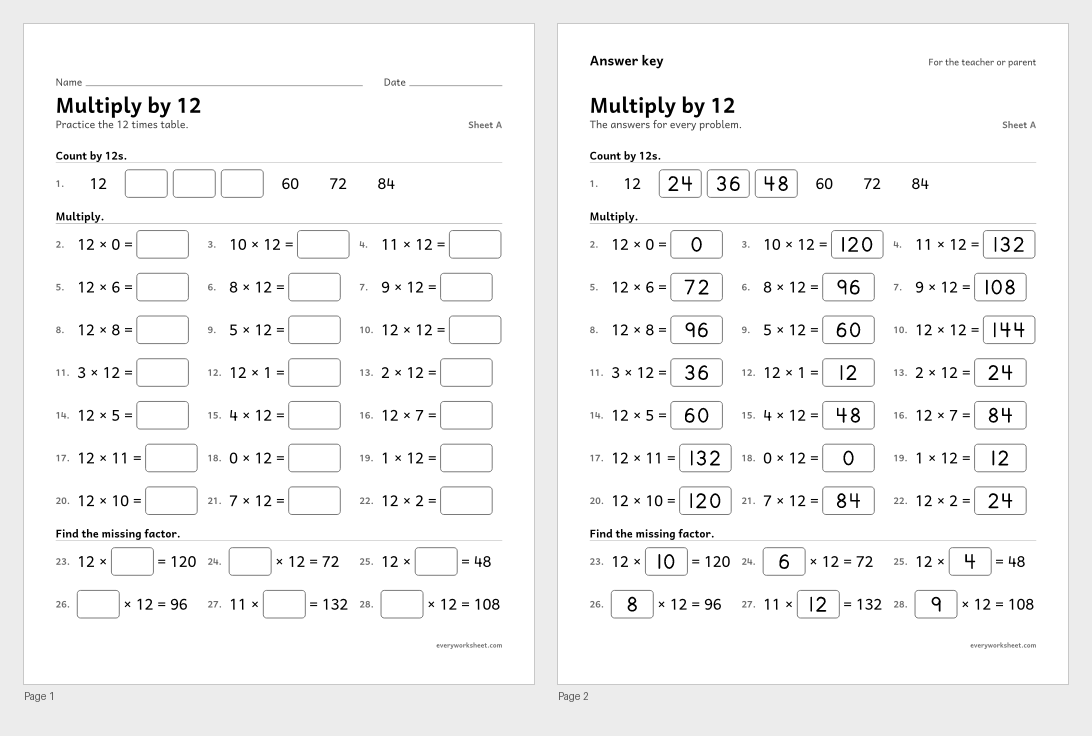
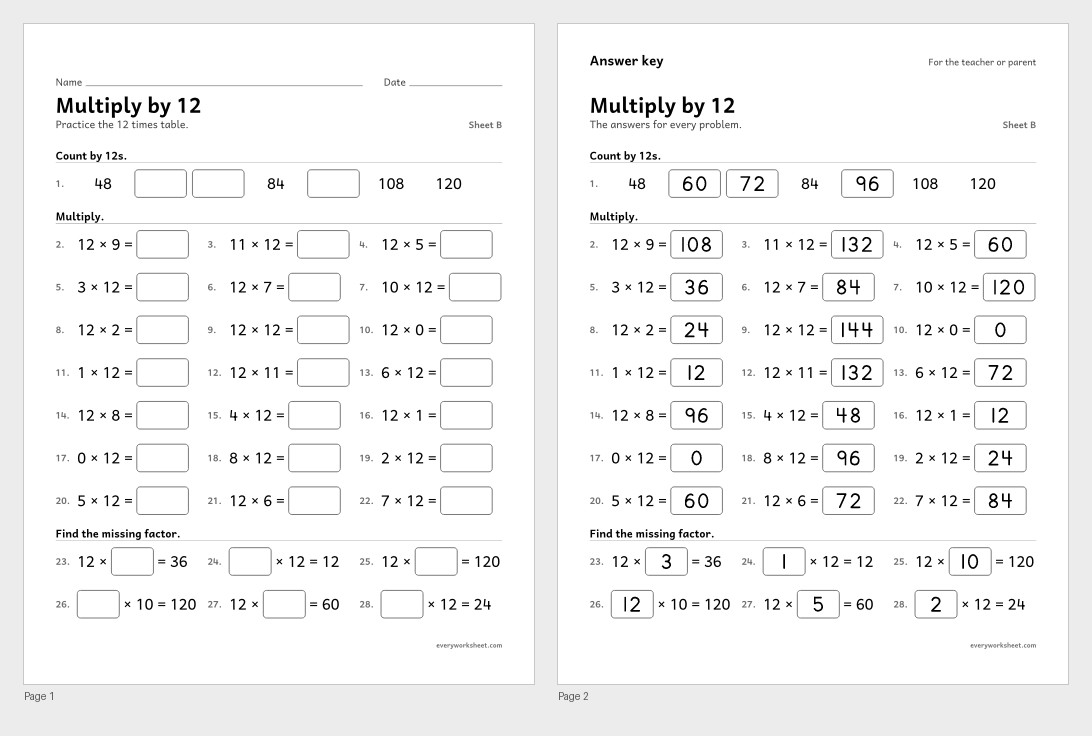
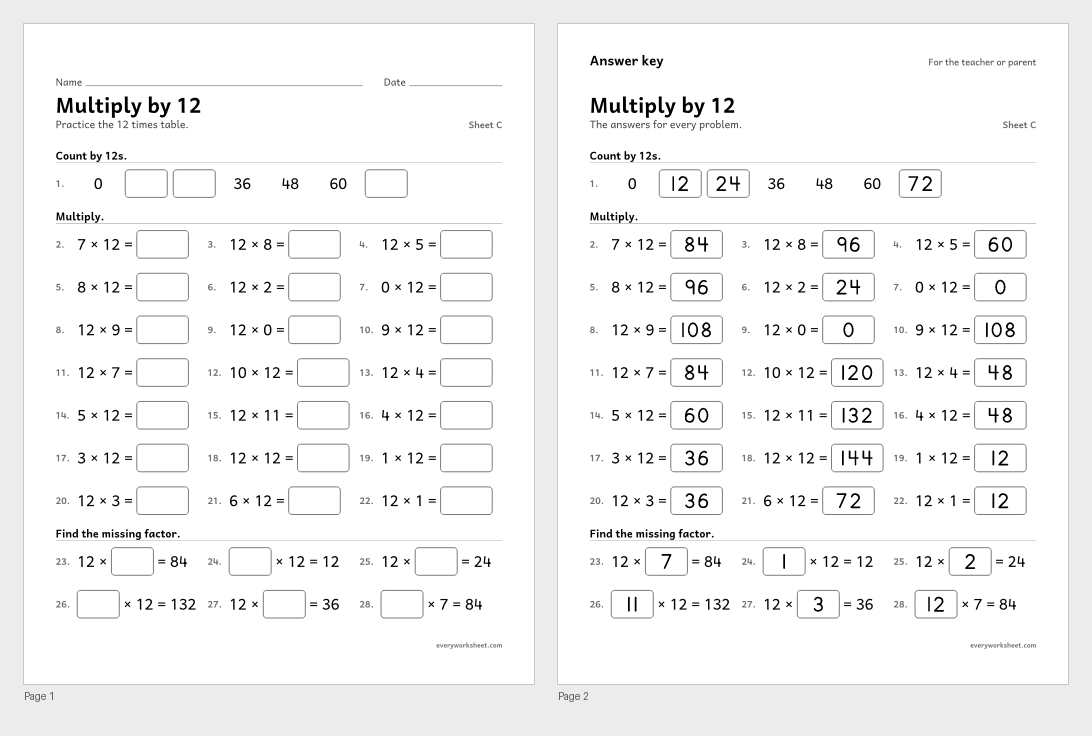
Mixed multiplication facts
 View all 2 pages
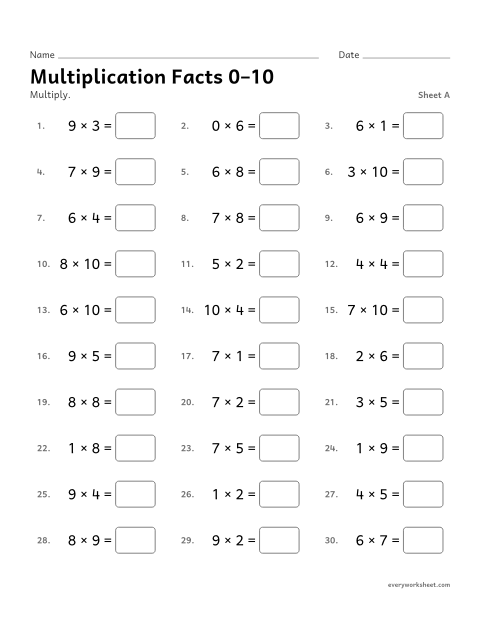
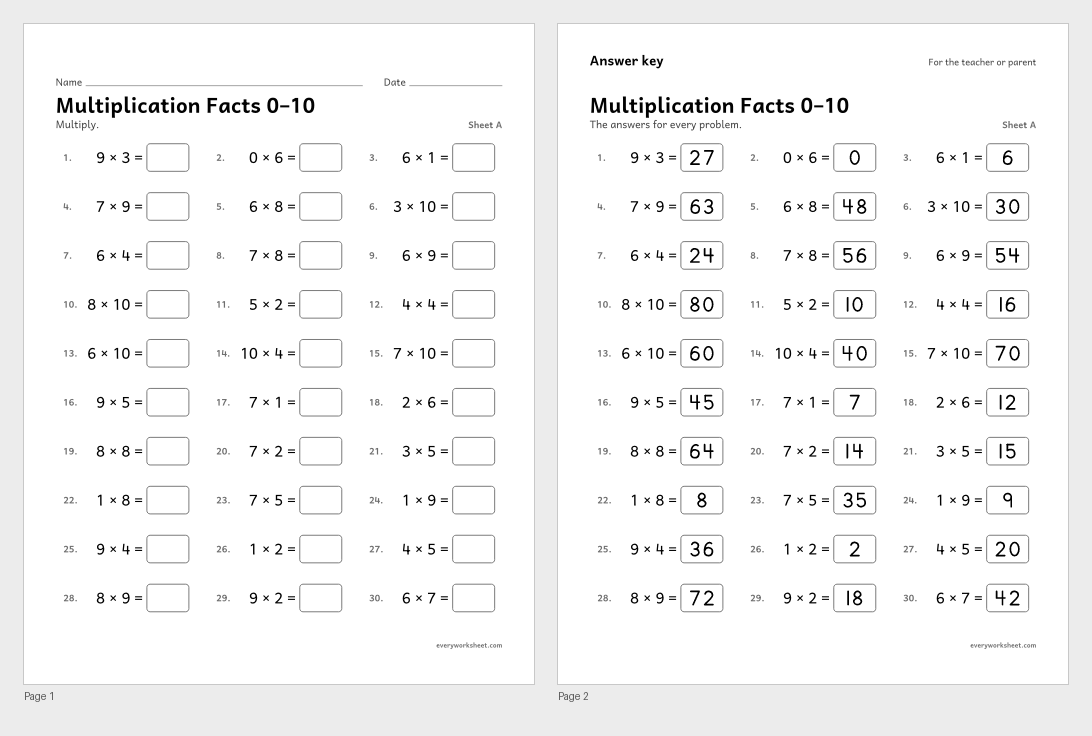
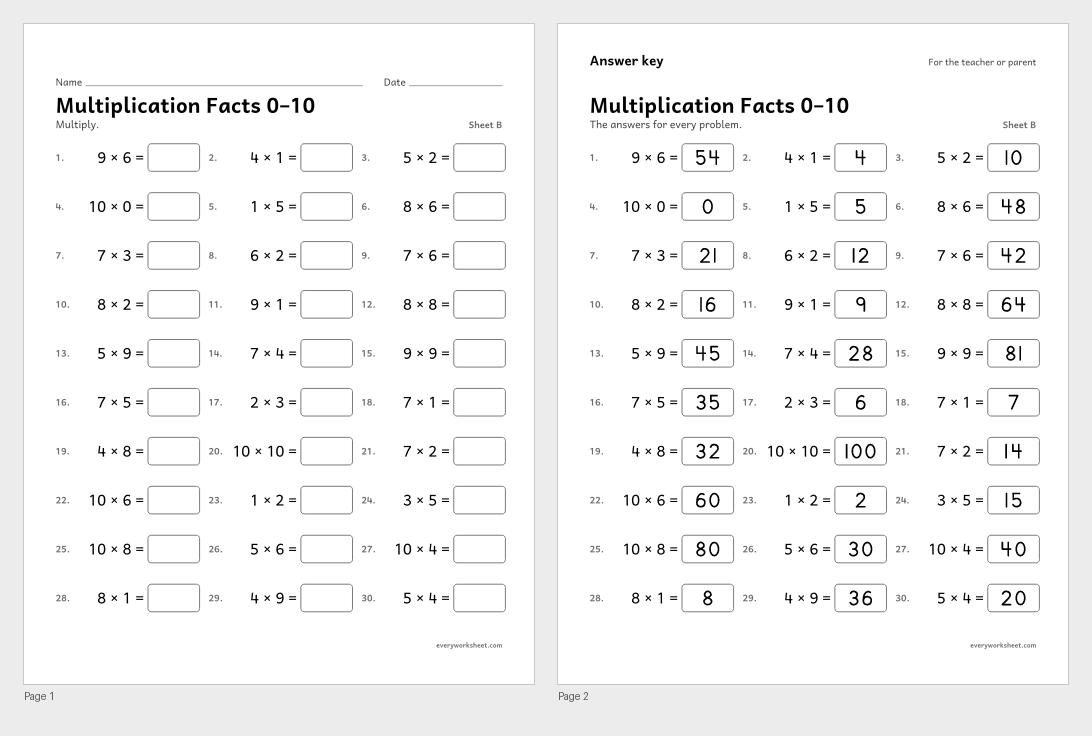
Multiplication facts 0–10, sheet A
Multiplication facts 0 to 10
Answer key on page 2
2 pages127 KB
 View all 2 pages
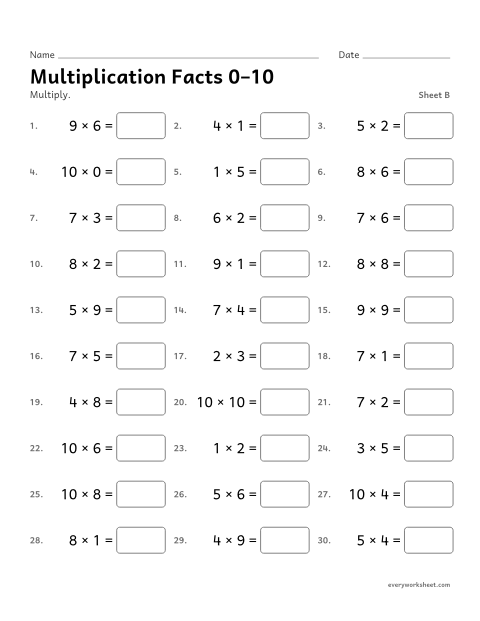
Multiplication facts 0–10, sheet B
Multiplication facts 0 to 10
Answer key on page 2
2 pages127 KB
 View all 2 pages
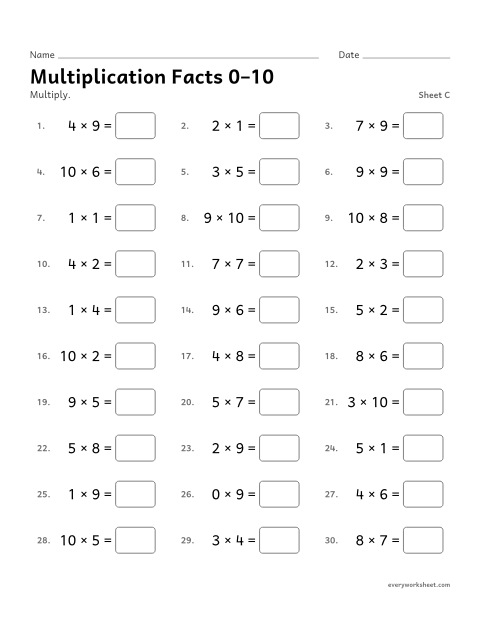
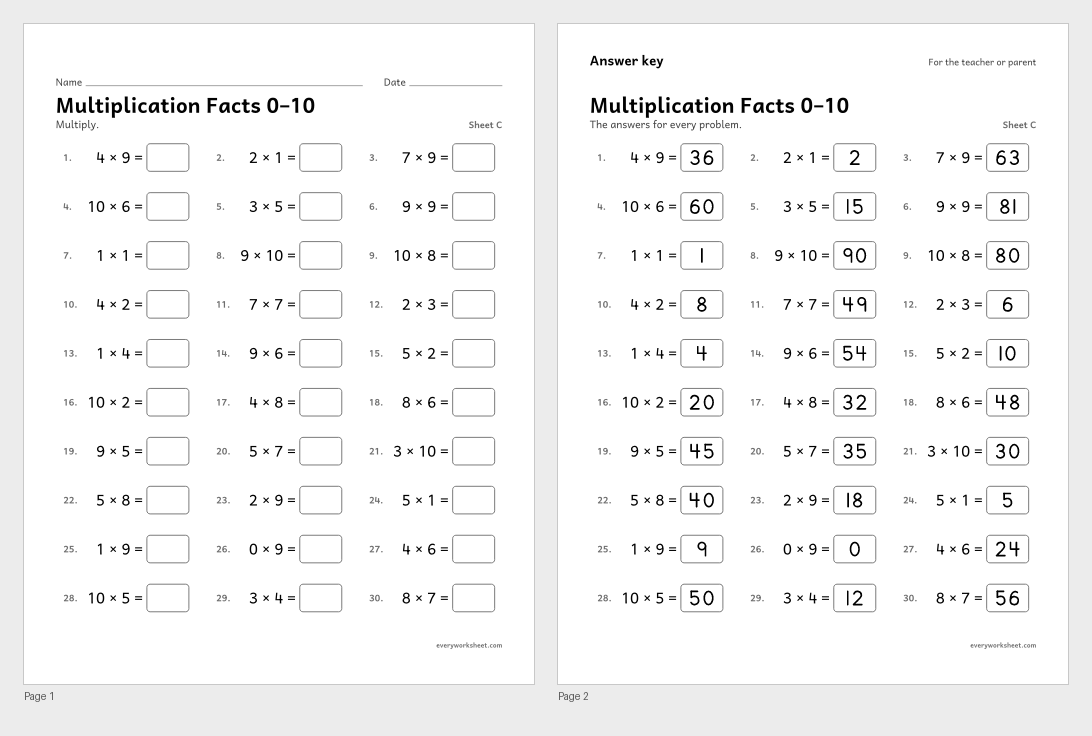
Multiplication facts 0–10, sheet C
Multiplication facts 0 to 10
Answer key on page 2
2 pages127 KB
 View all 2 pages
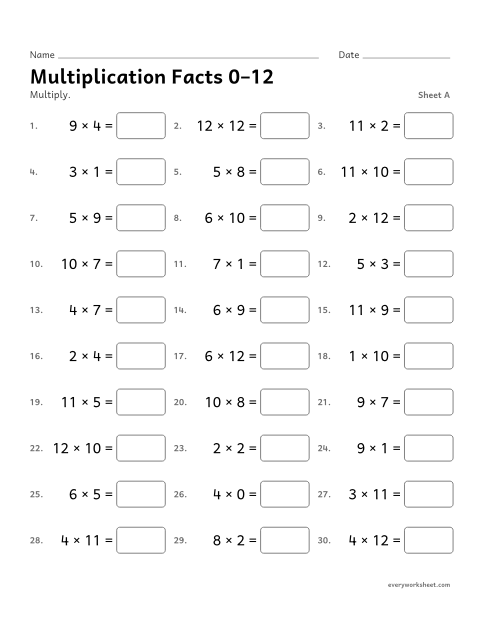
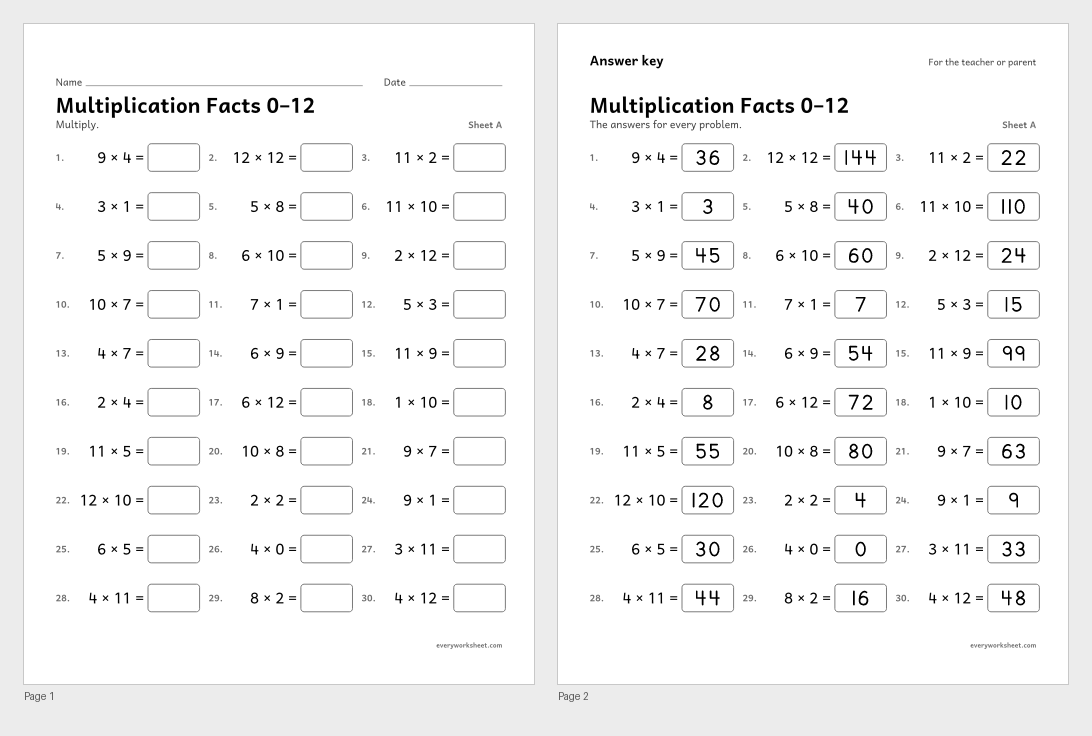
Multiplication facts 0–12, sheet A
Multiplication facts 0 to 12
Answer key on page 2
2 pages127 KB
 View all 2 pages
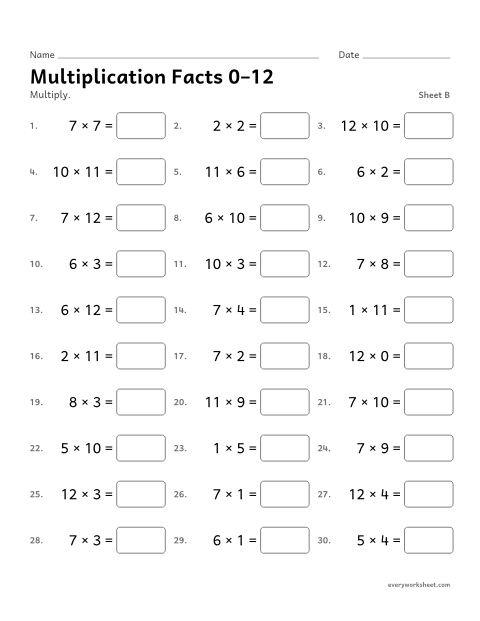
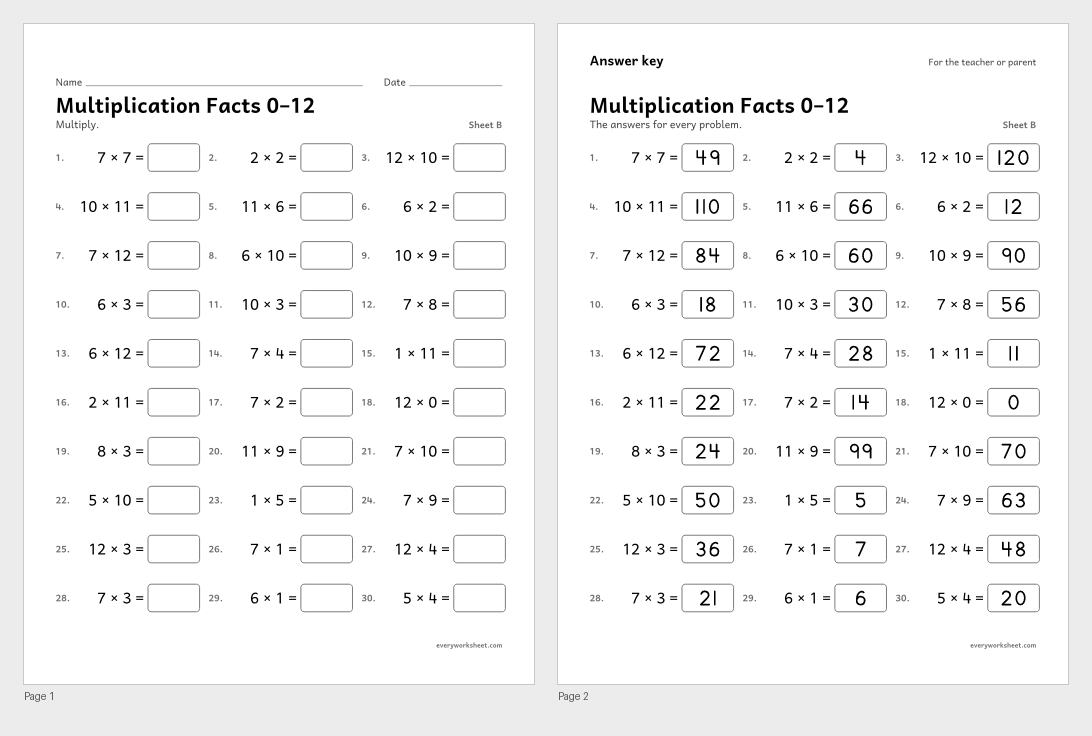
Multiplication facts 0–12, sheet B
Multiplication facts 0 to 12
Answer key on page 2
2 pages127 KB
 View all 2 pages
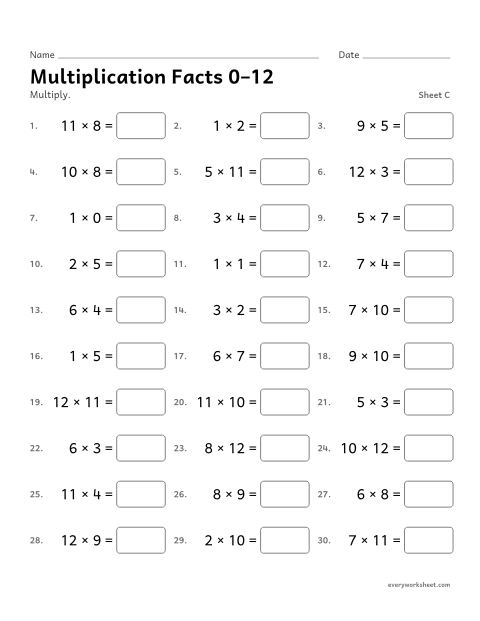
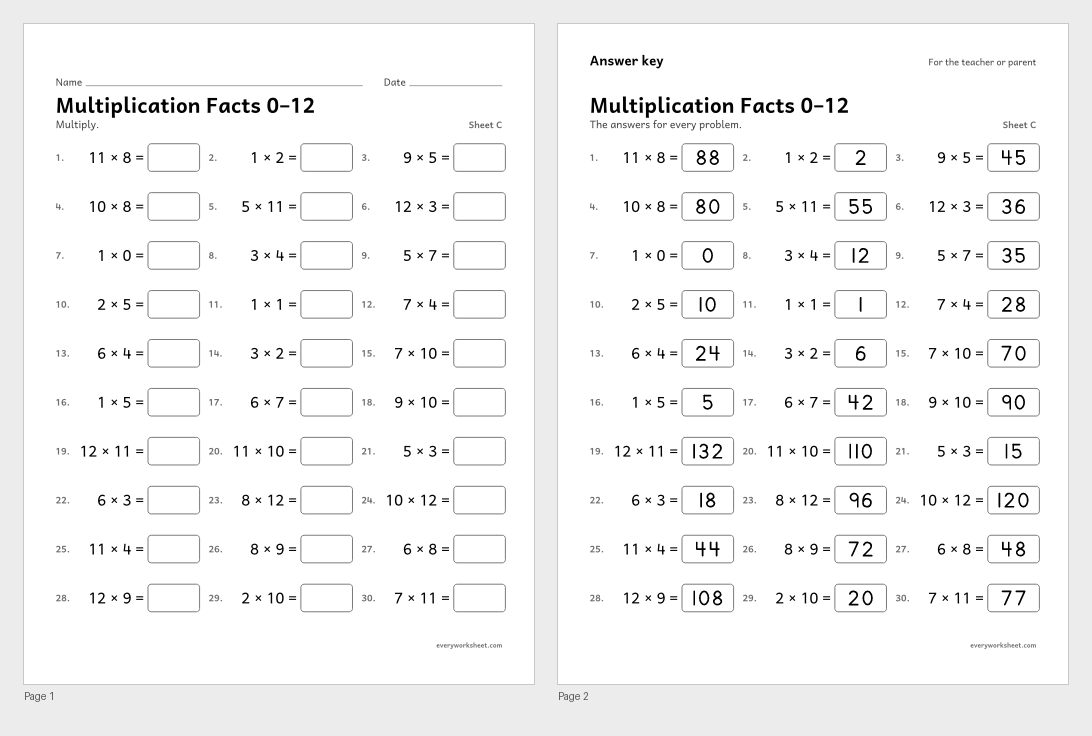
Multiplication facts 0–12, sheet C
Multiplication facts 0 to 12
Answer key on page 2
2 pages127 KB
 View all 2 pages
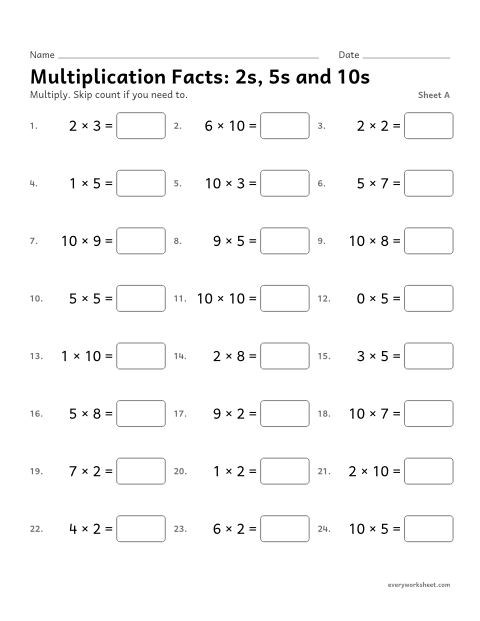
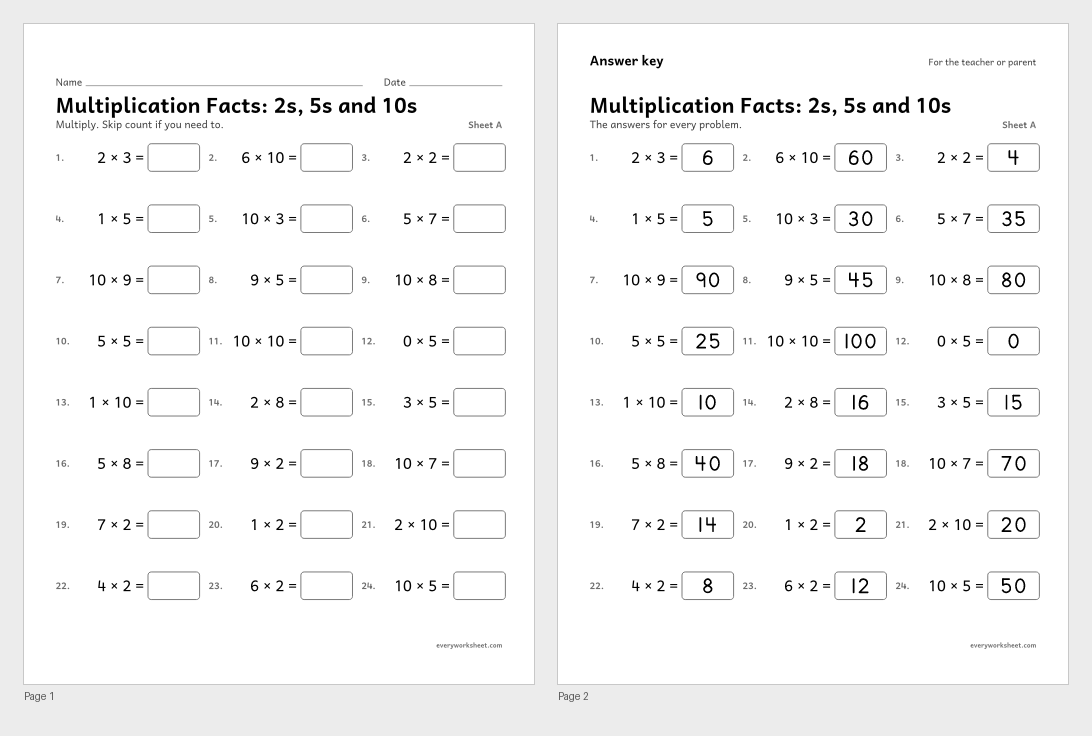
Multiplication Facts: 2s, 5s and 10s, sheet A
Multiplying by 2, 5 and 10
Answer key on page 2
2 pages108 KB
 View all 2 pages
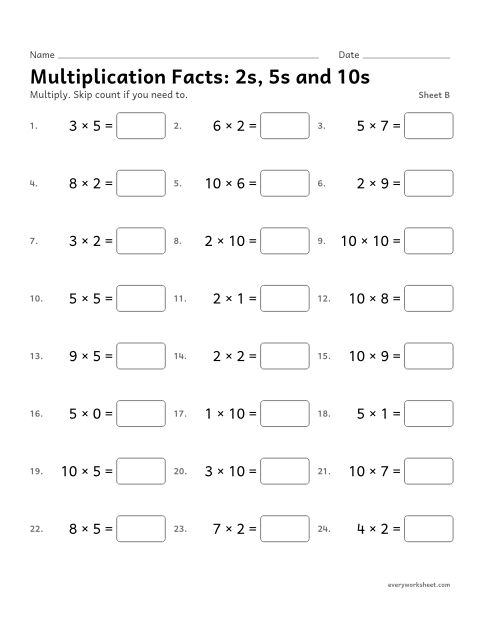
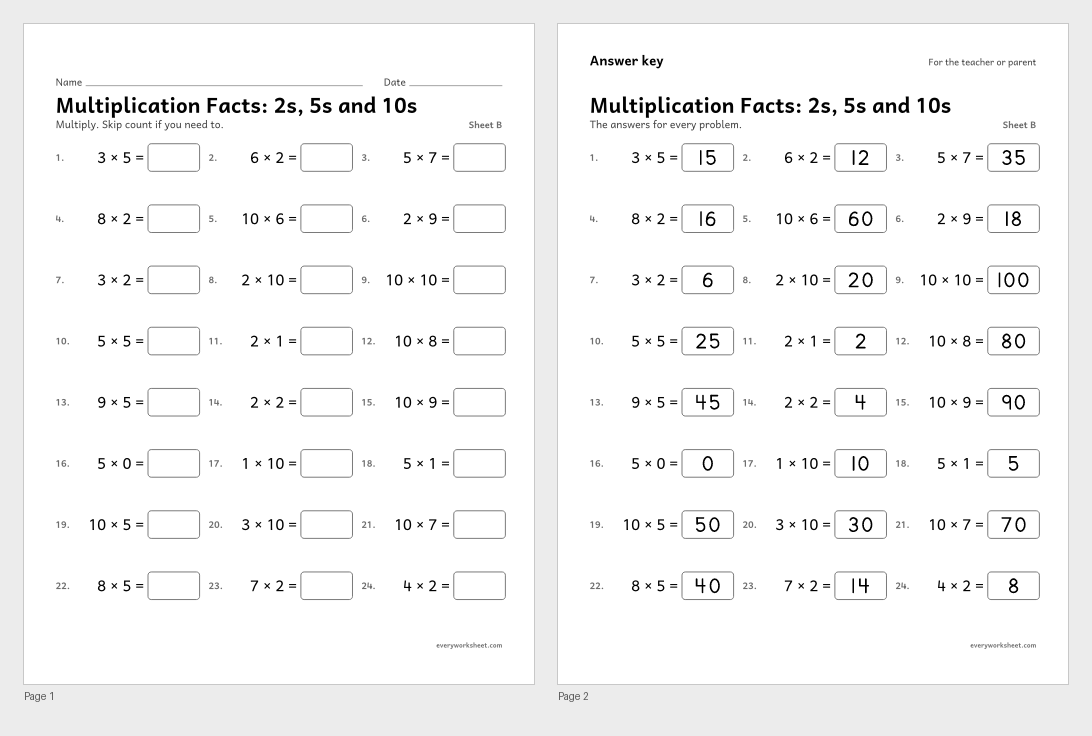
Multiplication Facts: 2s, 5s and 10s, sheet B
Multiplying by 2, 5 and 10
Answer key on page 2
2 pages108 KB
 View all 2 pages
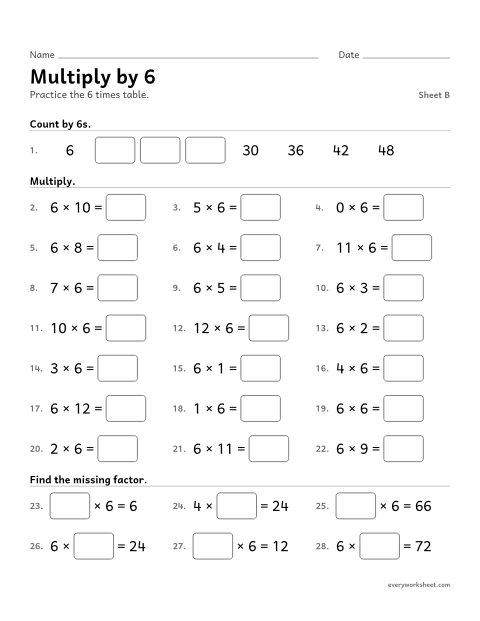
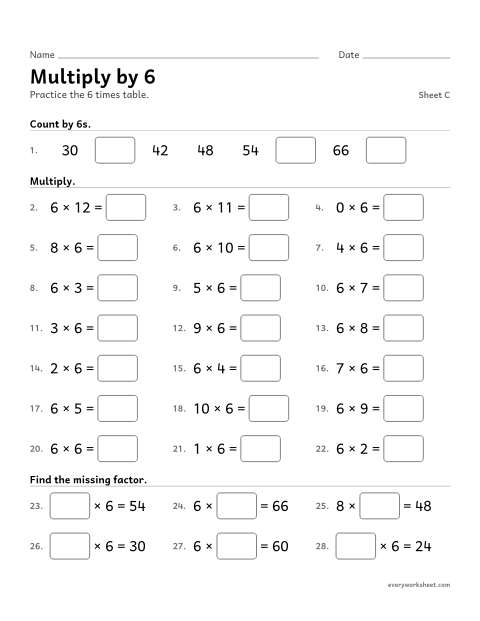
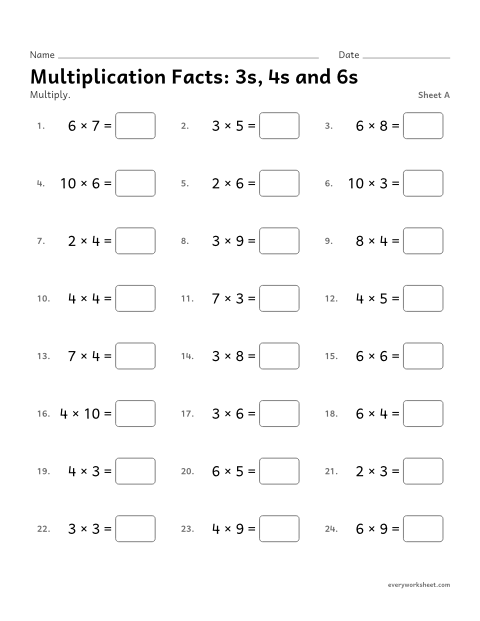
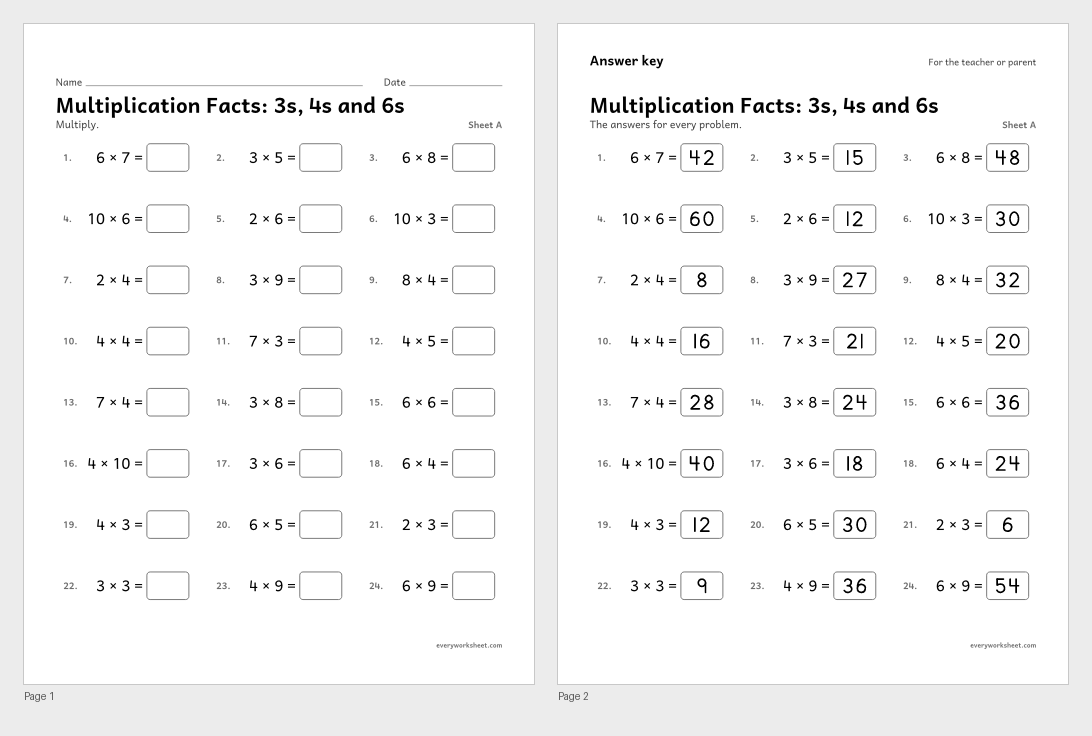
Multiplication Facts: 3s, 4s and 6s, sheet A
Multiplying by 3, 4 and 6
Answer key on page 2
2 pages108 KB
 View all 2 pages
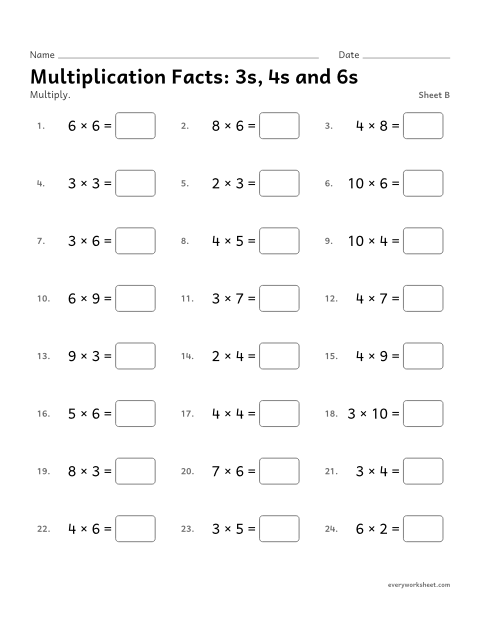
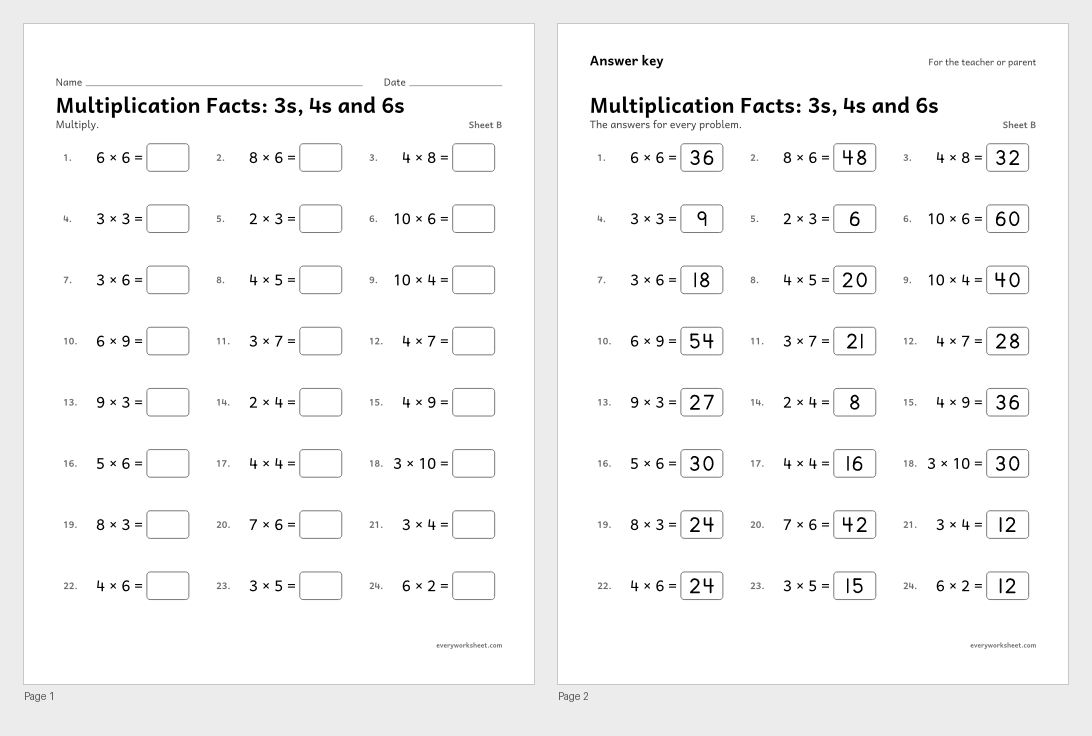
Multiplication Facts: 3s, 4s and 6s, sheet B
Multiplying by 3, 4 and 6
Answer key on page 2
2 pages108 KB
 View all 2 pages
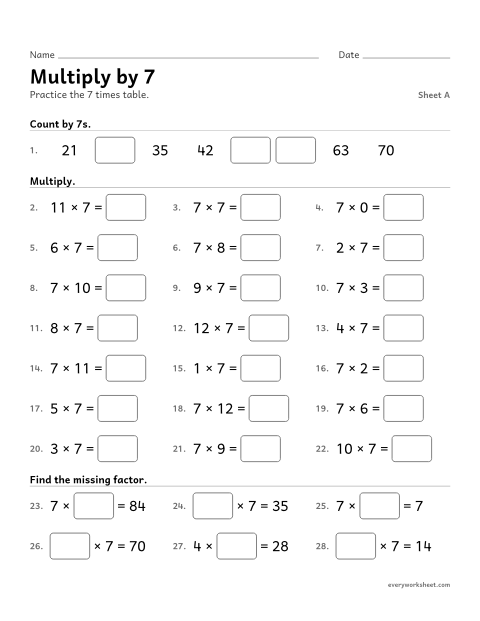
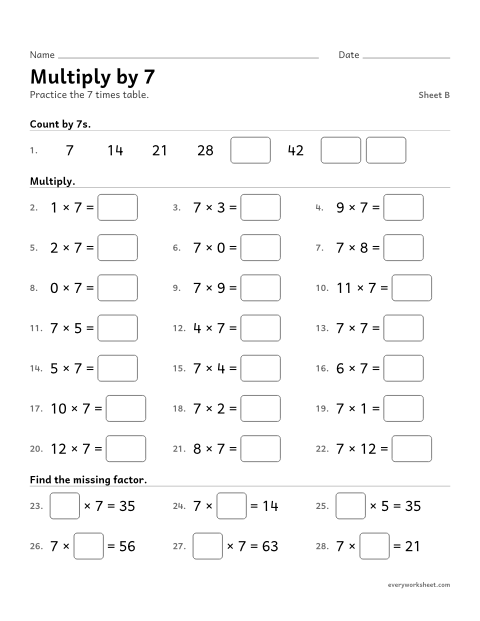
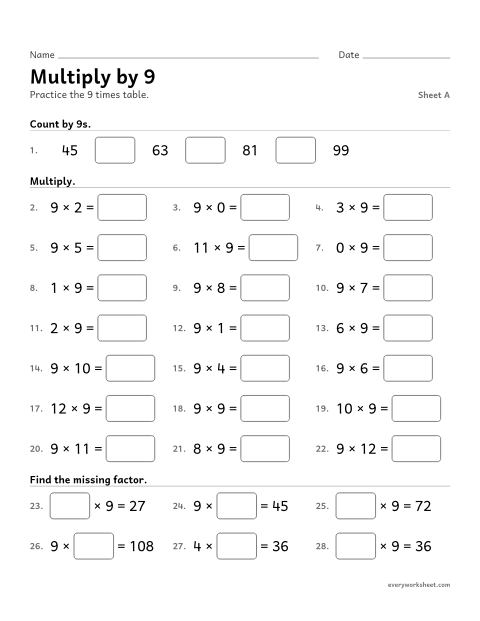
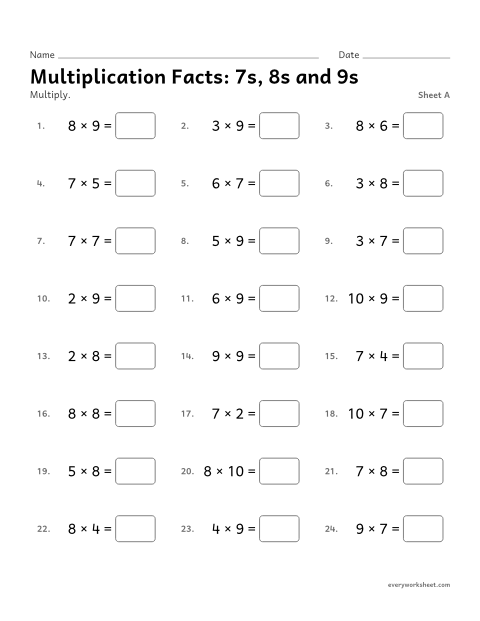
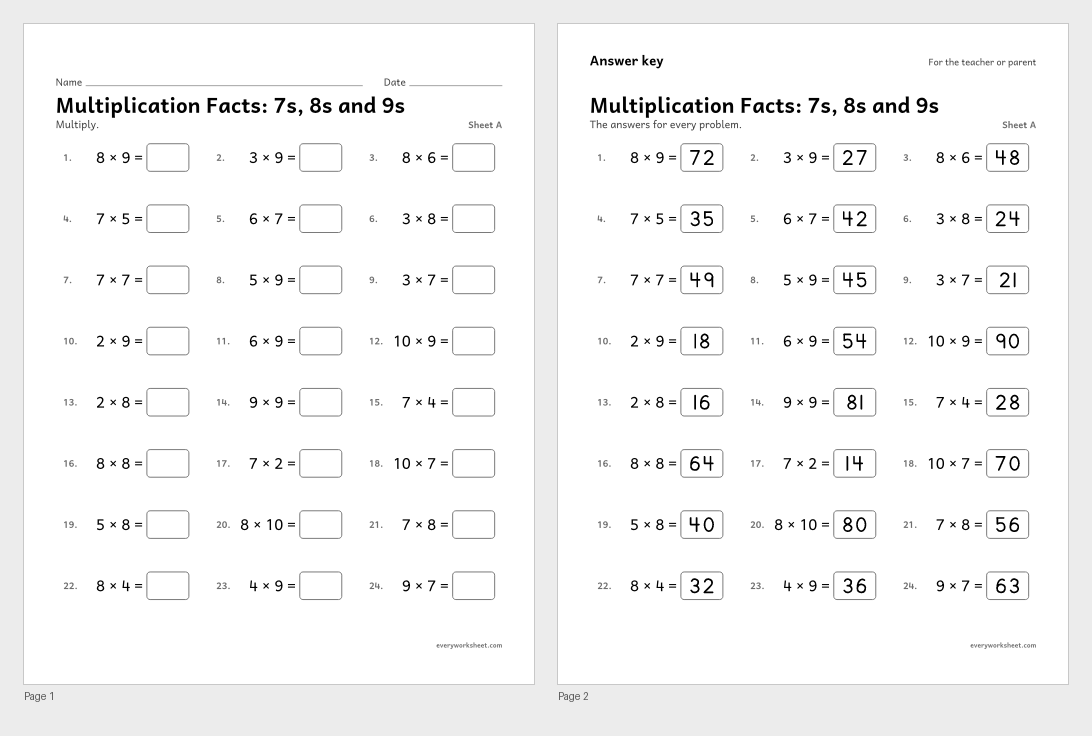
Multiplication Facts: 7s, 8s and 9s, sheet A
Multiplying by 7, 8 and 9
Answer key on page 2
2 pages108 KB
 View all 2 pages
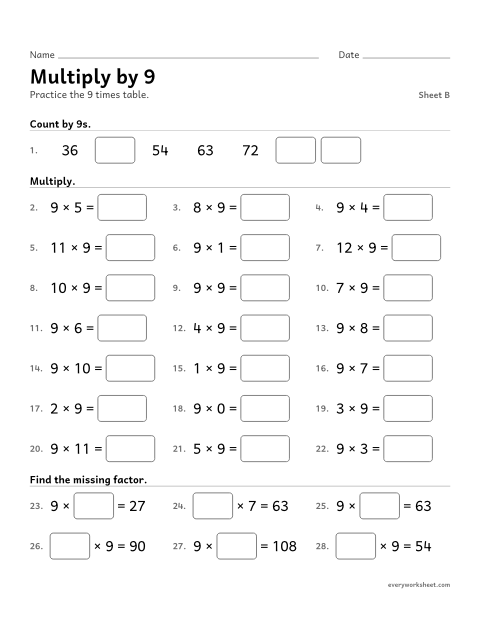
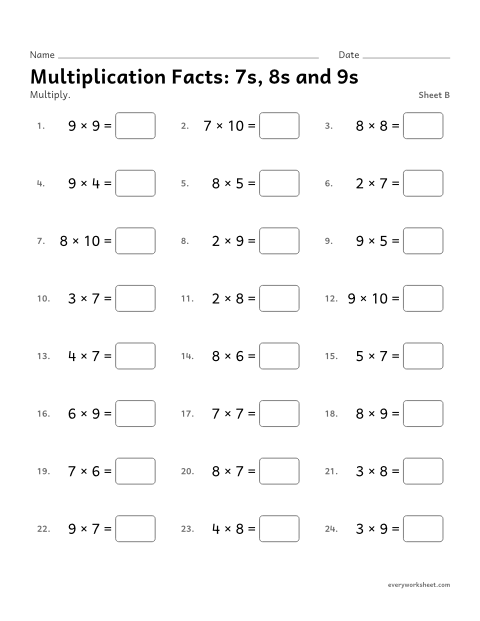
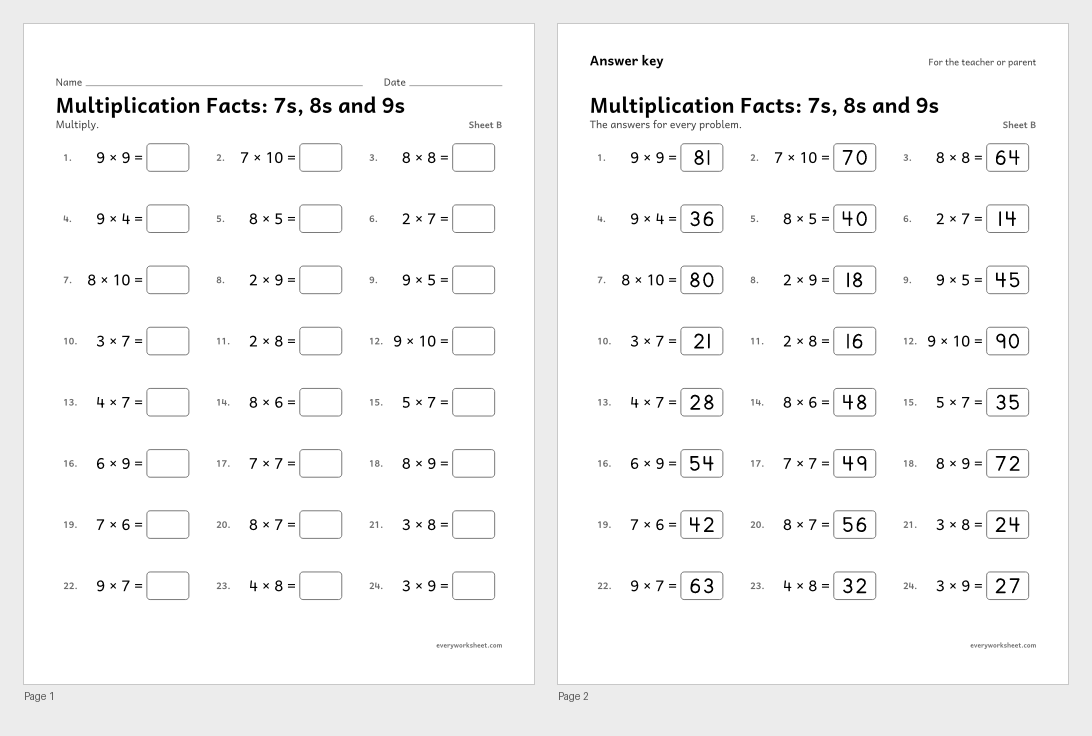
Multiplication Facts: 7s, 8s and 9s, sheet B
Multiplying by 7, 8 and 9
Answer key on page 2
2 pages108 KB
 View all 2 pages
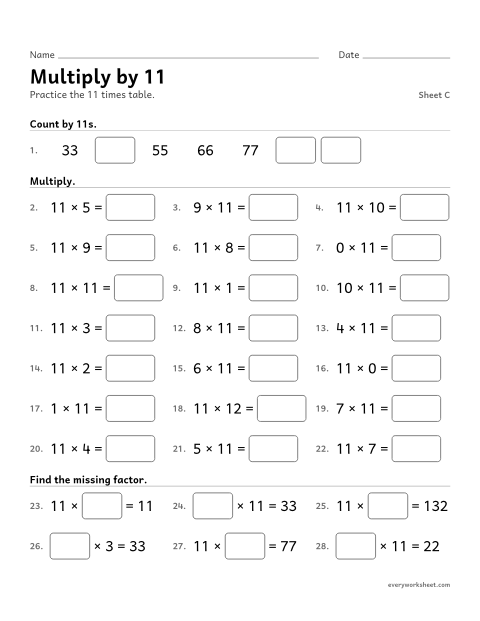
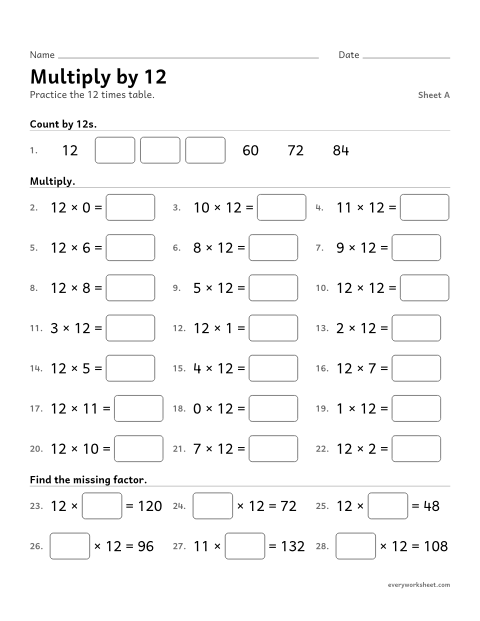
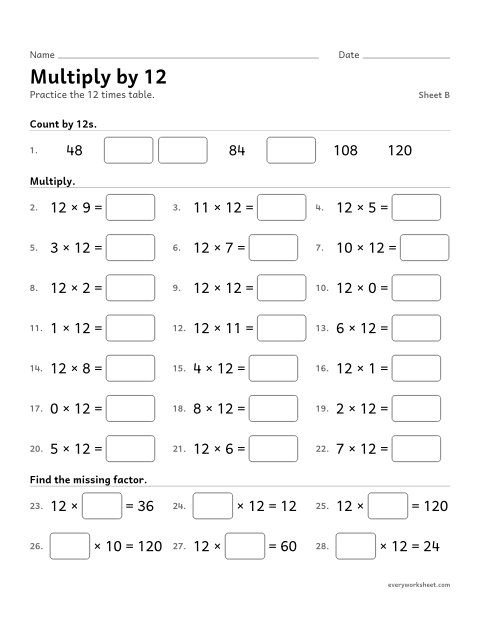
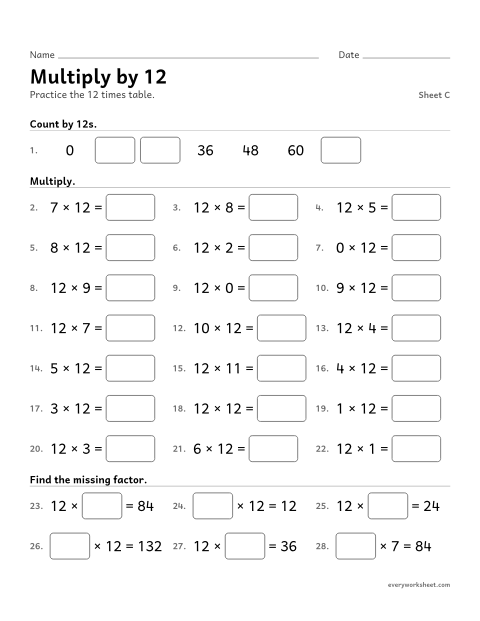
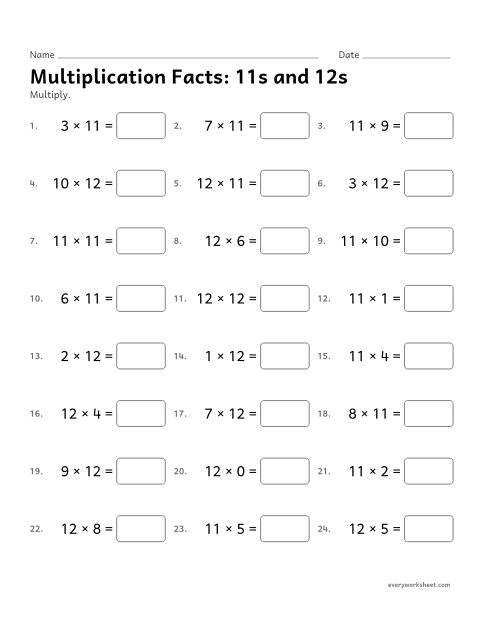
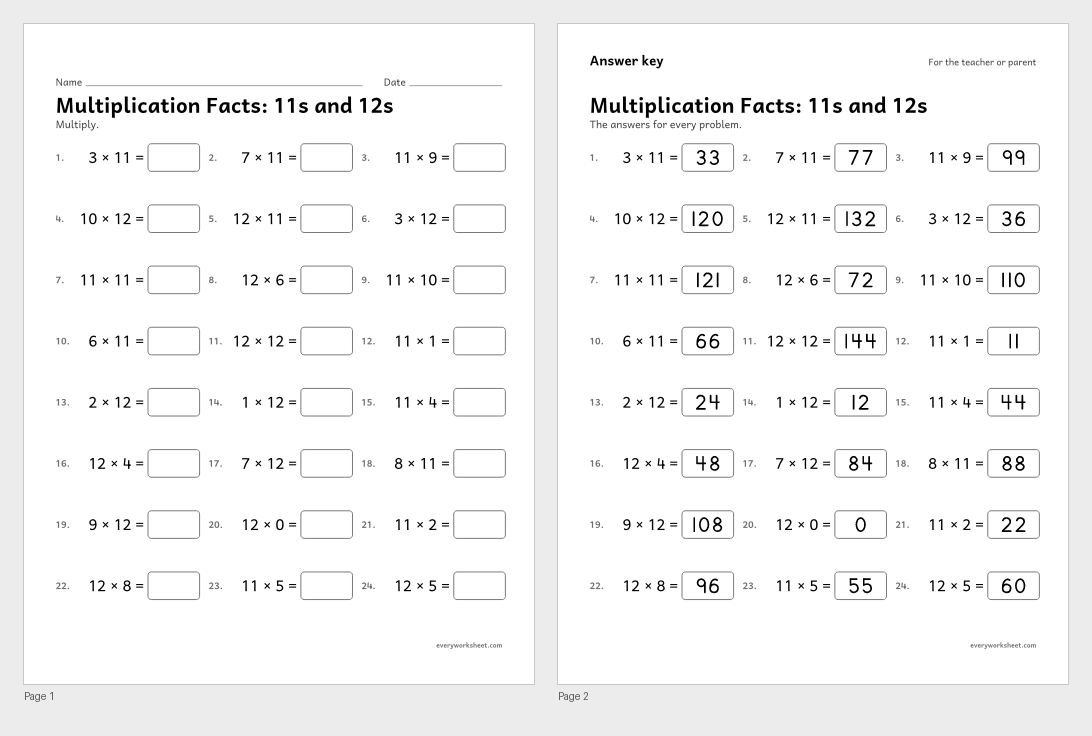
Multiplication Facts: 11s and 12s
Multiplying by 11 and 12
Answer key on page 2
2 pages107 KB
 View all 2 pages
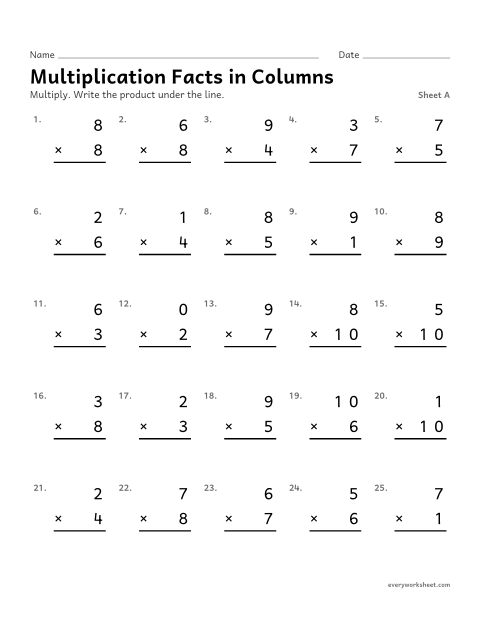
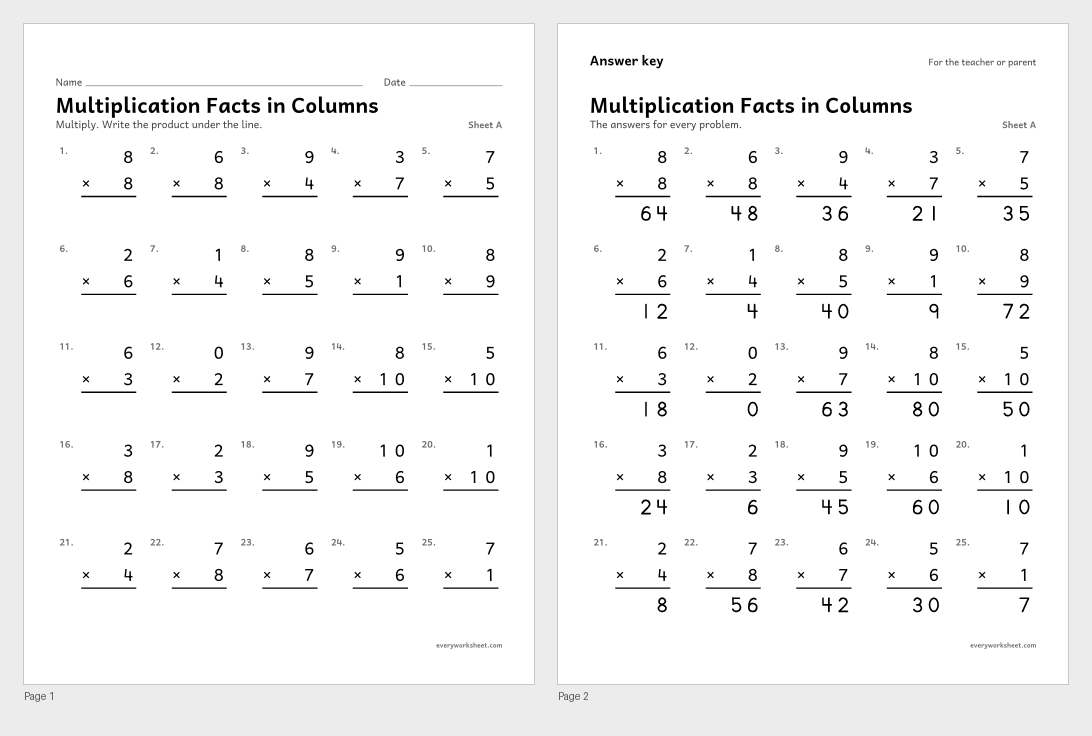
Multiplication facts in Columns, sheet A
Multiplication facts written in columns
Answer key on page 2
2 pages65 KB
 View all 2 pages
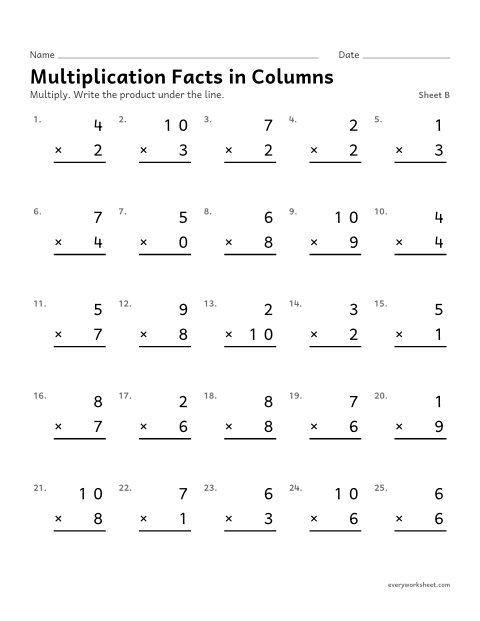
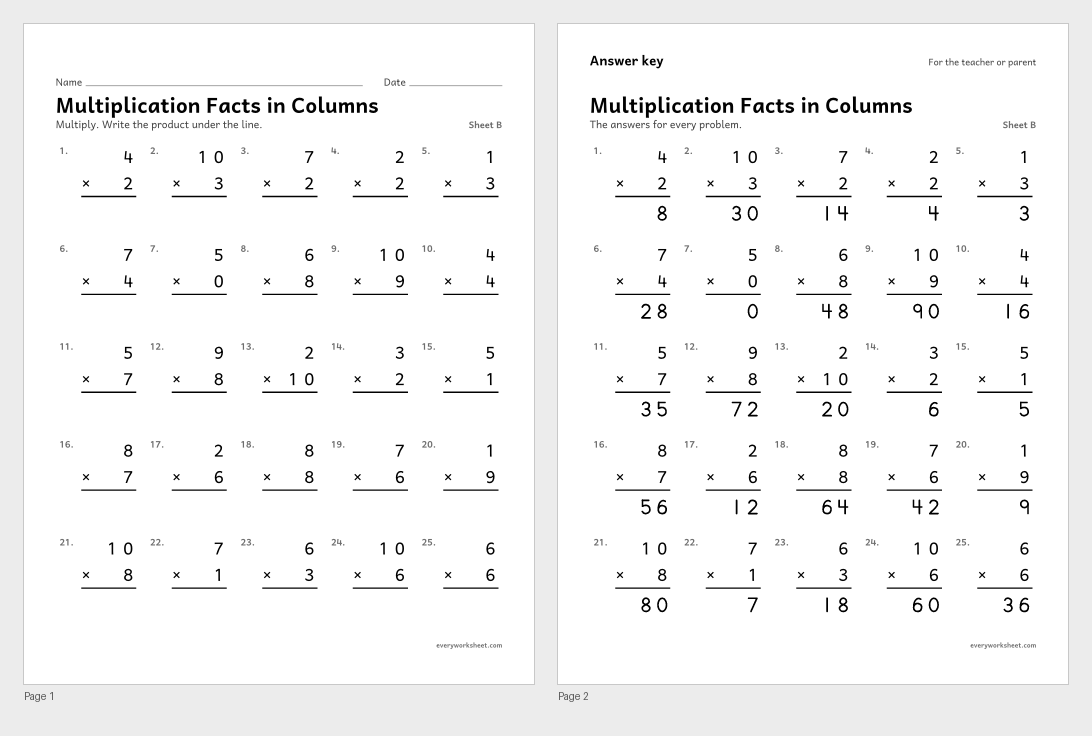
Multiplication facts in Columns, sheet B
Multiplication facts written in columns
Answer key on page 2
2 pages65 KB
 View all 2 pages
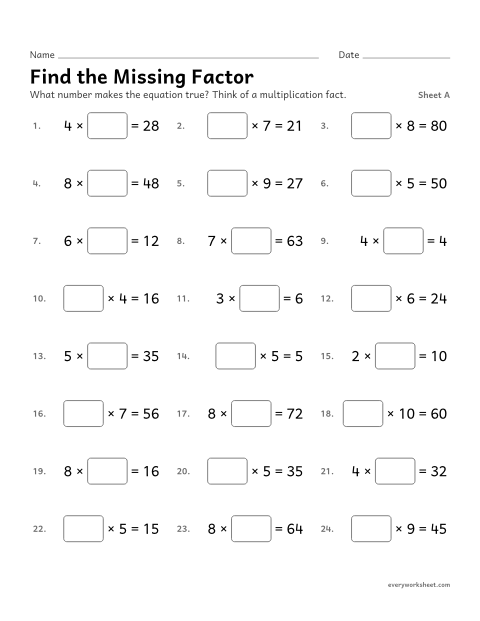
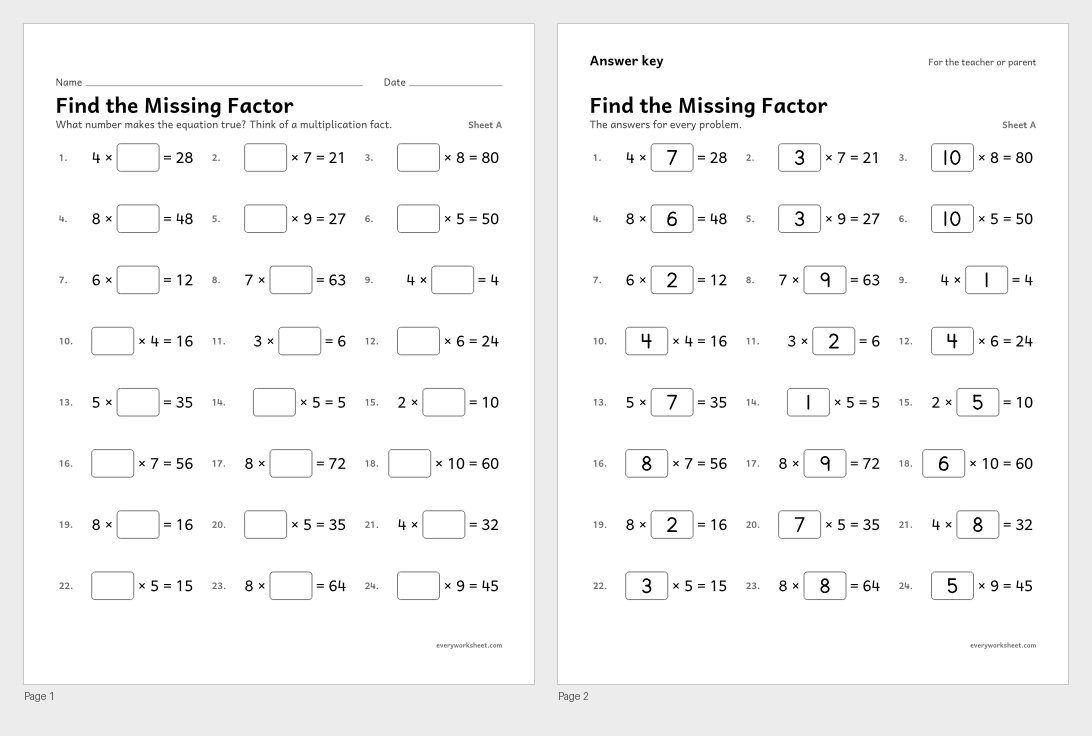
Find the missing Factor, sheet A
Finding an unknown factor
Answer key on page 2
2 pages108 KB
 View all 2 pages
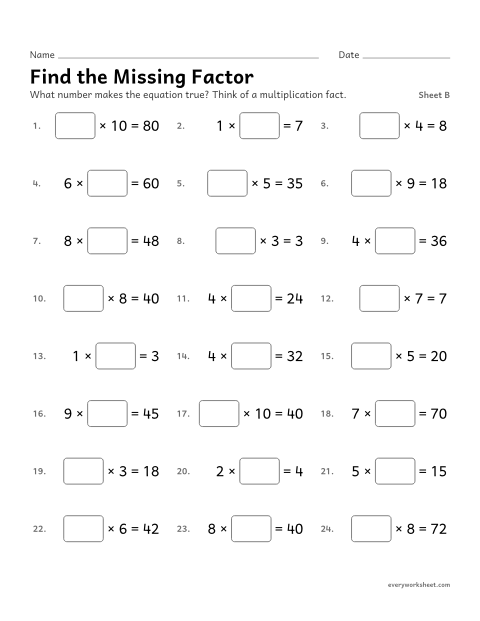
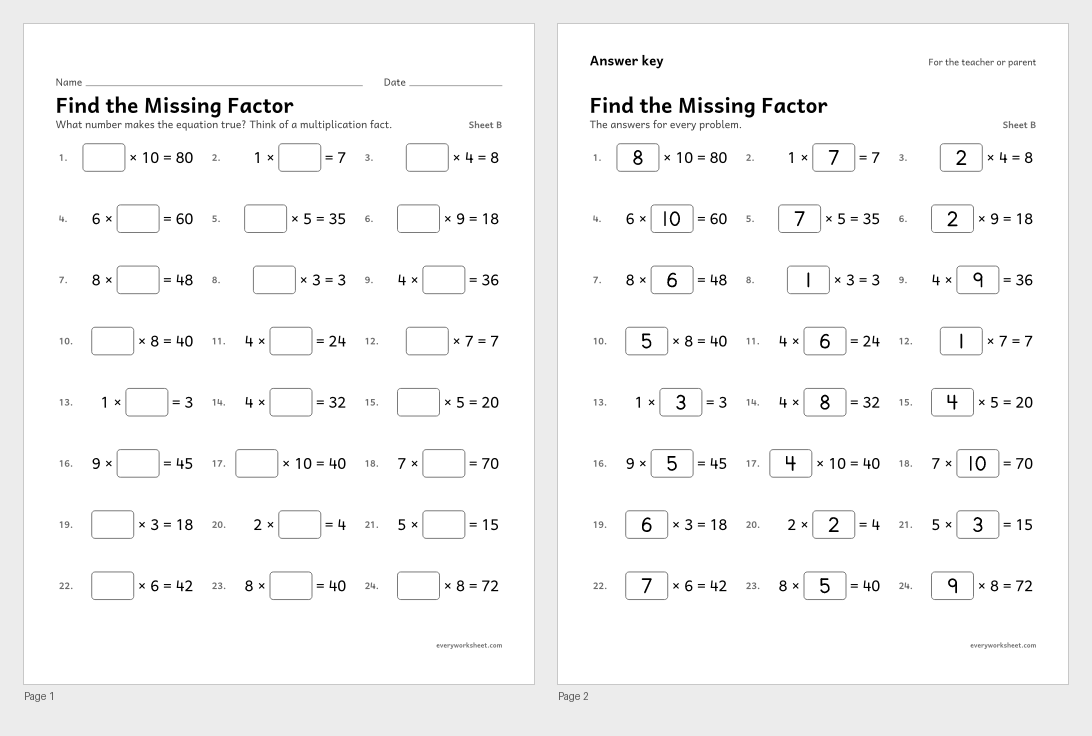
Find the missing Factor, sheet B
Finding an unknown factor
Answer key on page 2
2 pages108 KB
Arrays and equal groups
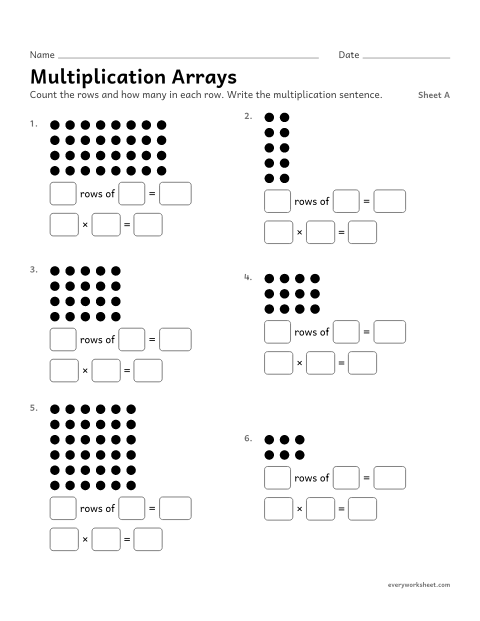 View all 2 pages
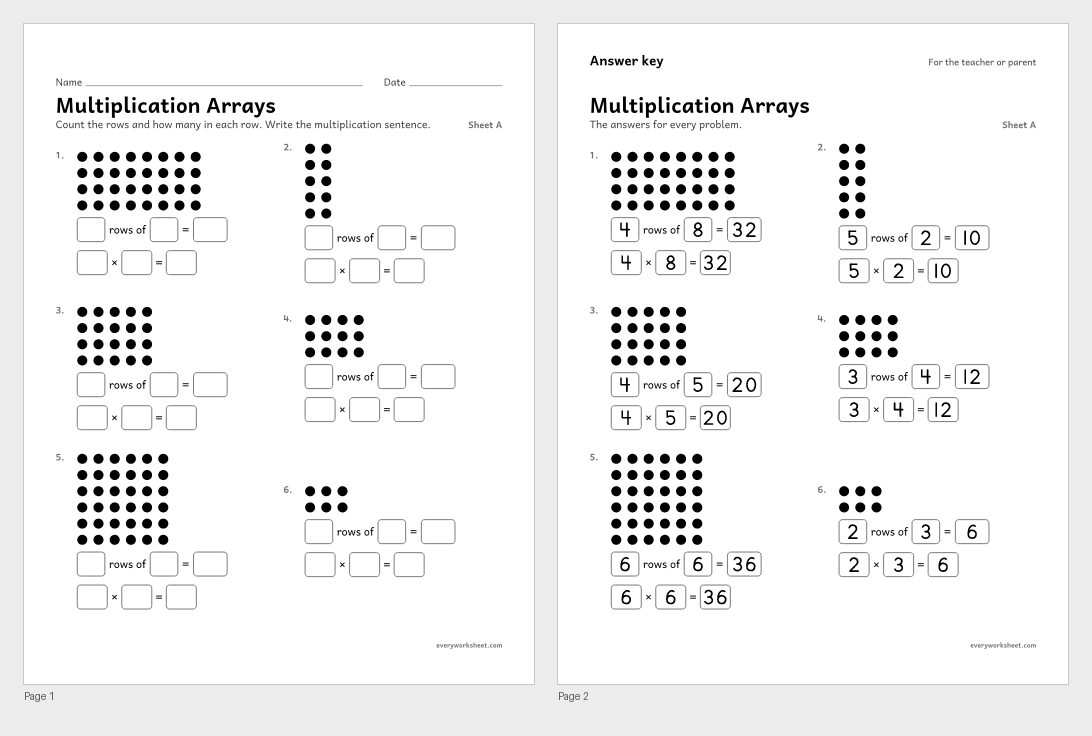
Multiplication Arrays, sheet A
Writing a multiplication sentence for an array
Answer key on page 2
2 pages56 KB
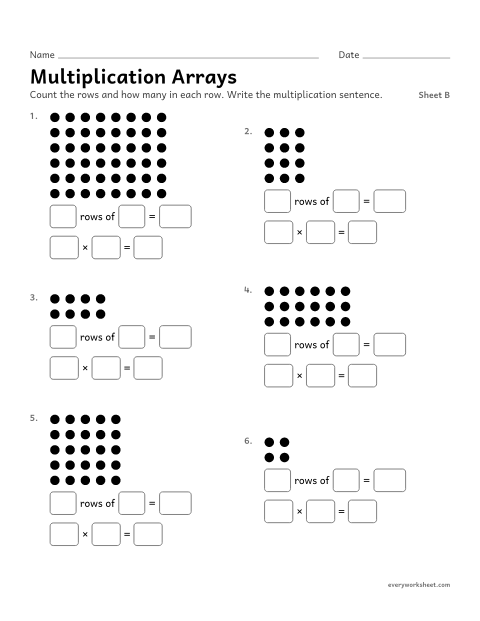 View all 2 pages
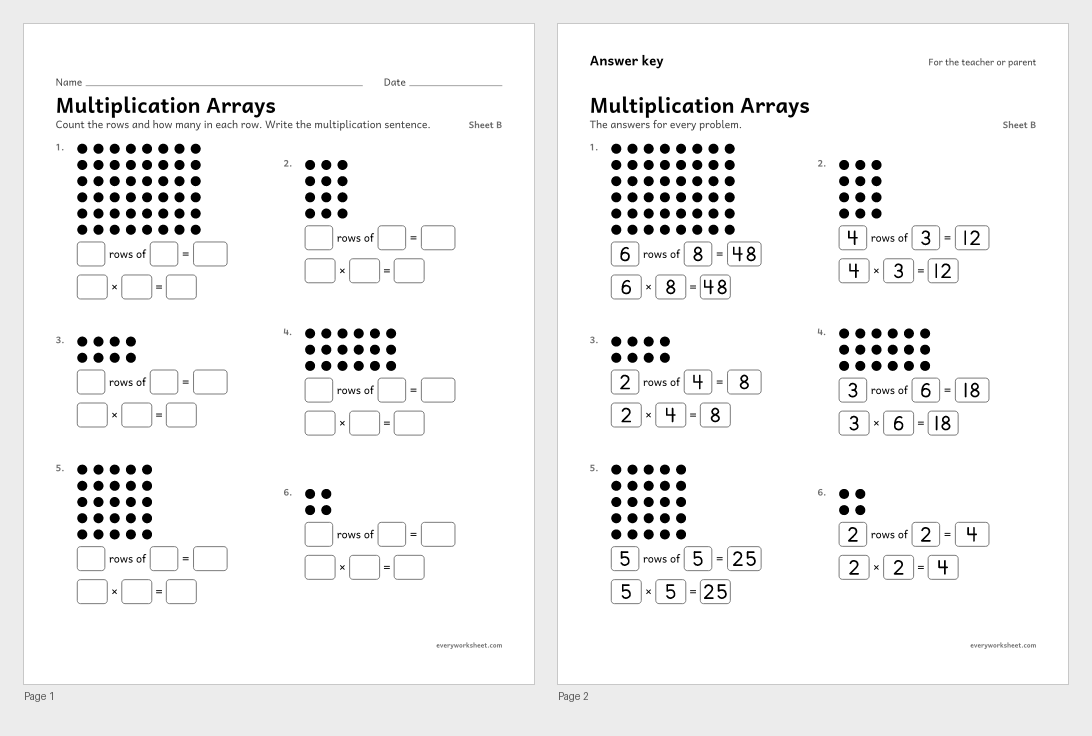
Multiplication Arrays, sheet B
Writing a multiplication sentence for an array
Answer key on page 2
2 pages56 KB
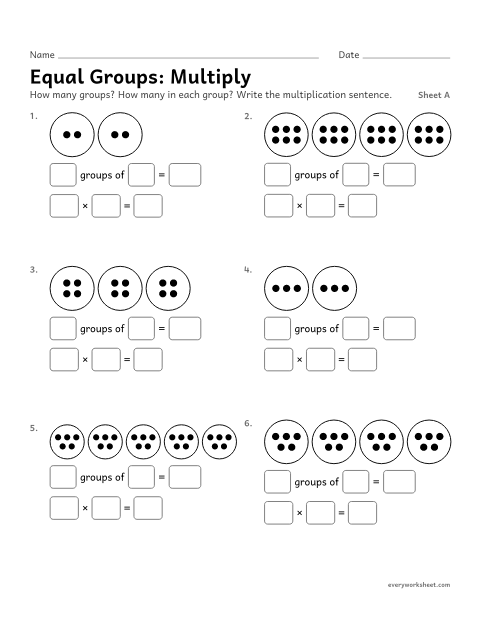 View all 2 pages
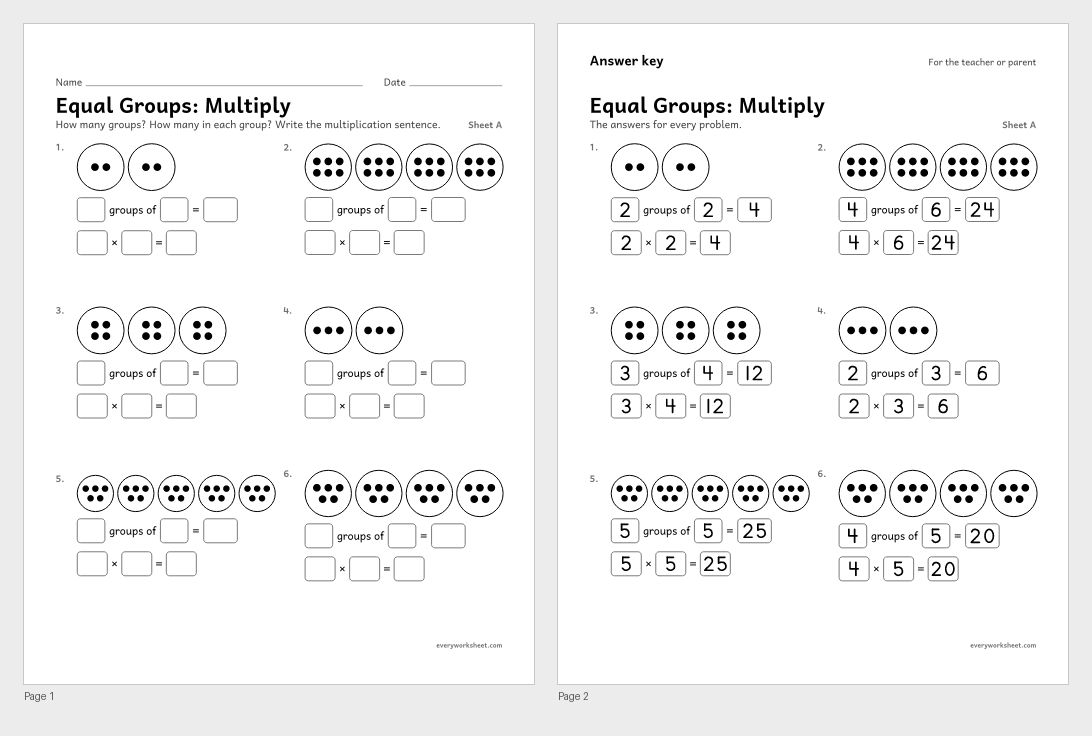
Equal Groups: Multiply, sheet A
Multiplying equal groups
Answer key on page 2
2 pages58 KB
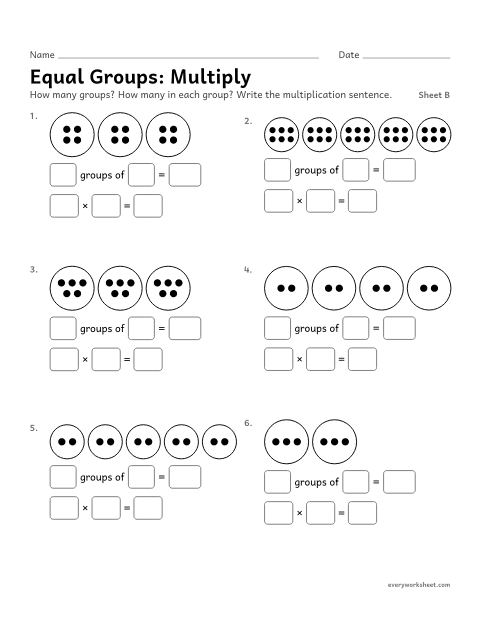 View all 2 pages
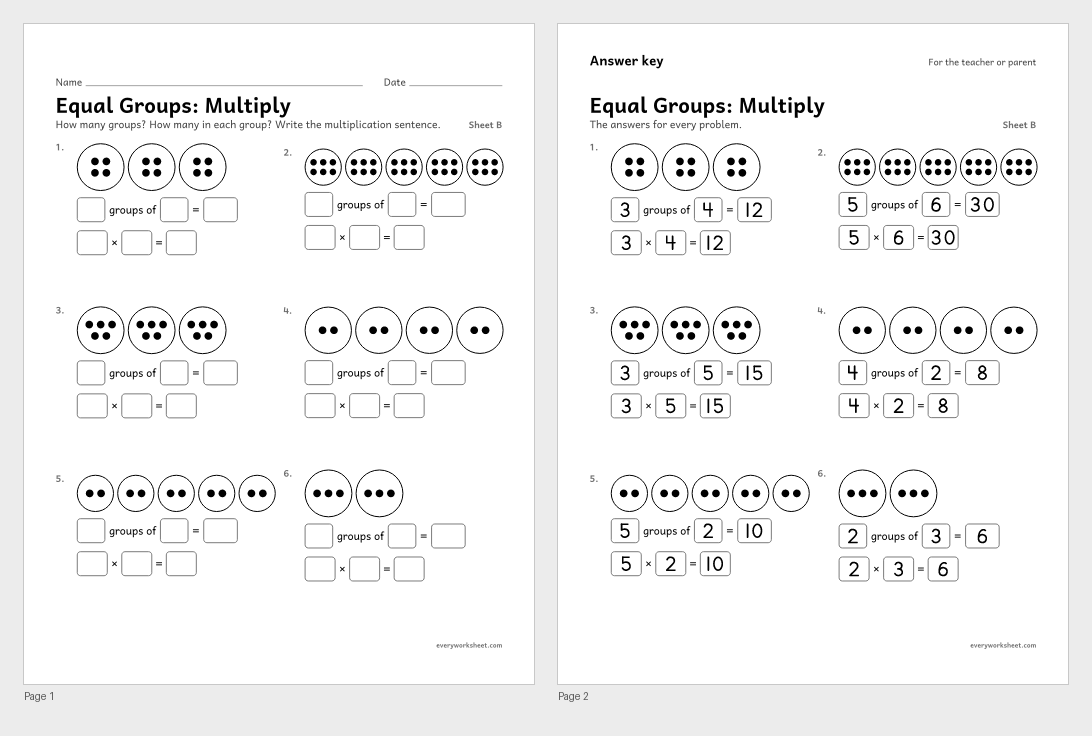
Equal Groups: Multiply, sheet B
Multiplying equal groups
Answer key on page 2
2 pages58 KB
 View all 2 pages
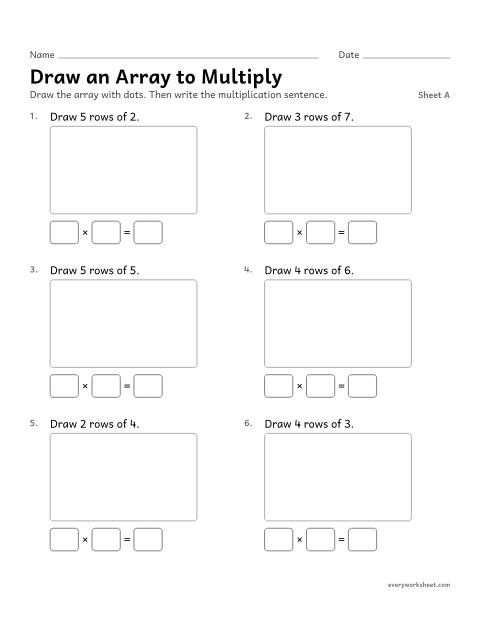
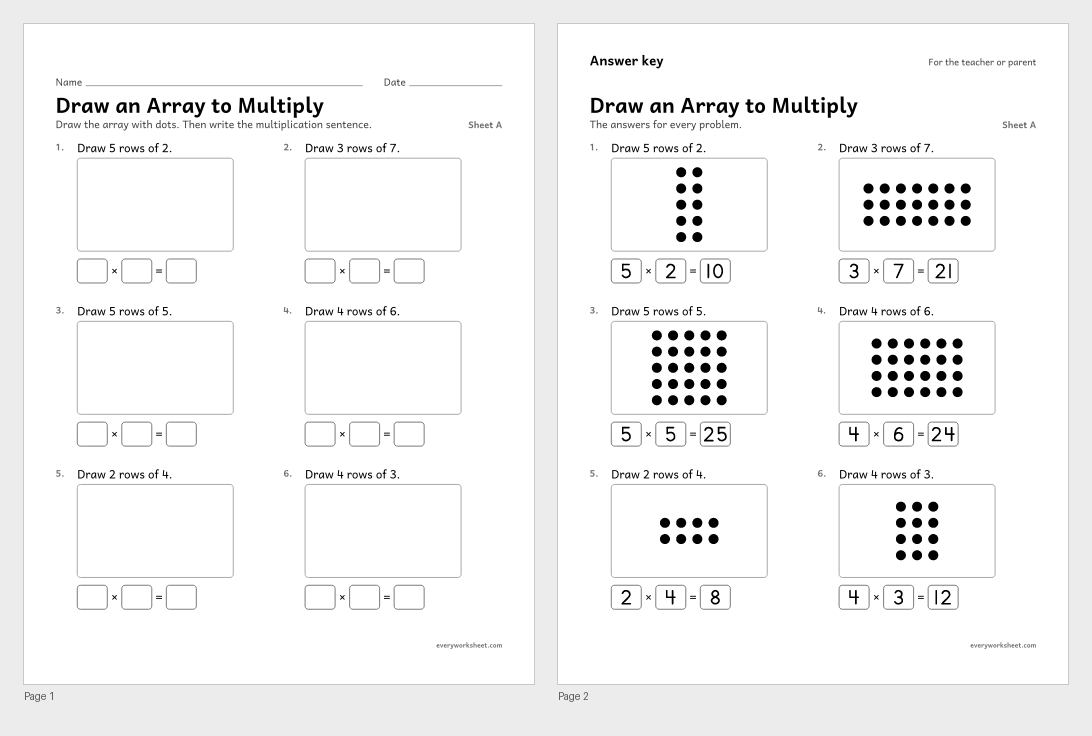
Draw an array to Multiply, sheet A
Drawing arrays to show multiplication
Answer key on page 2
2 pages48 KB
 View all 2 pages
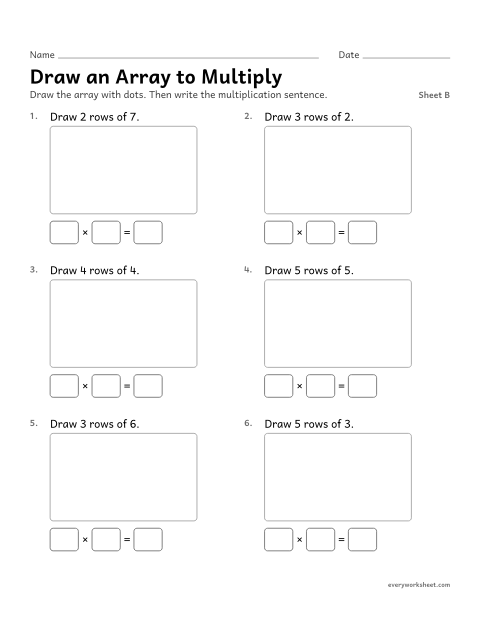
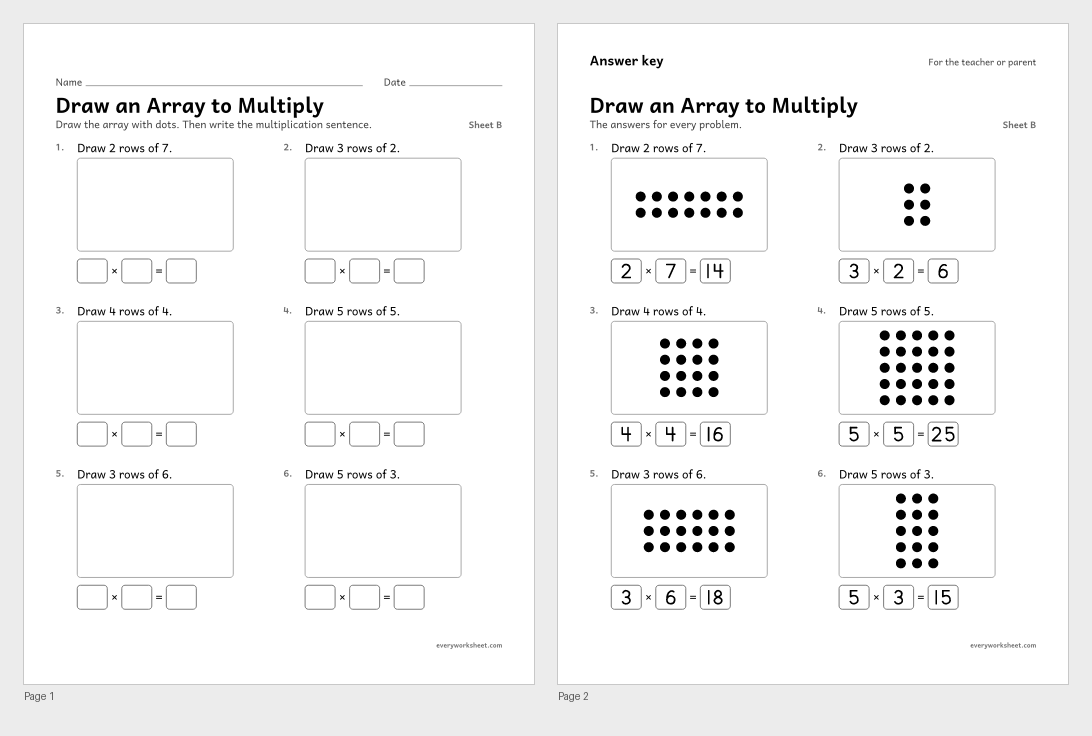
Draw an array to Multiply, sheet B
Drawing arrays to show multiplication
Answer key on page 2
2 pages48 KB
Multiply by multiples of 10
 View all 2 pages
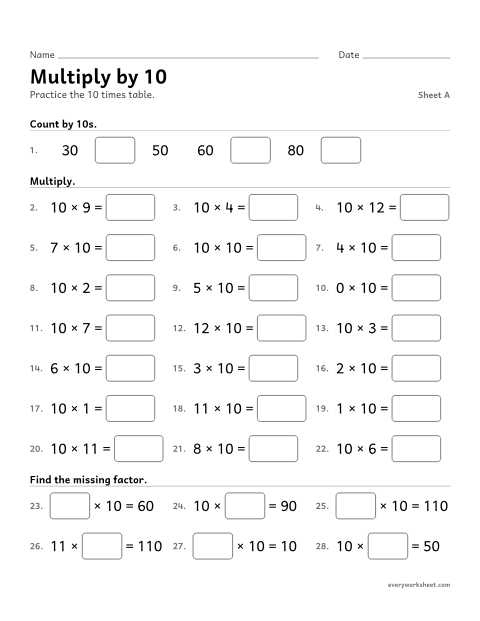
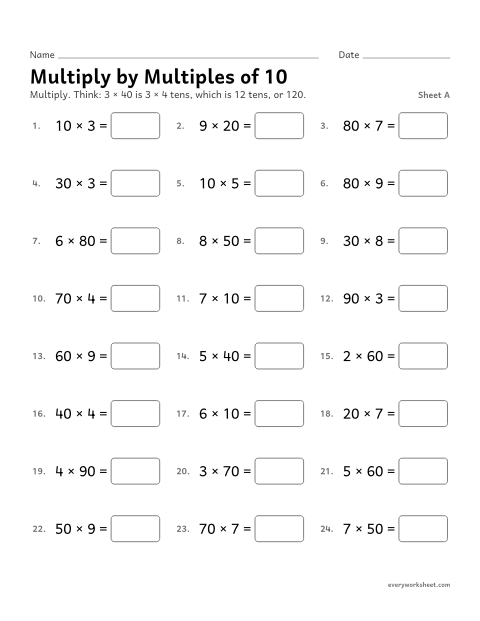
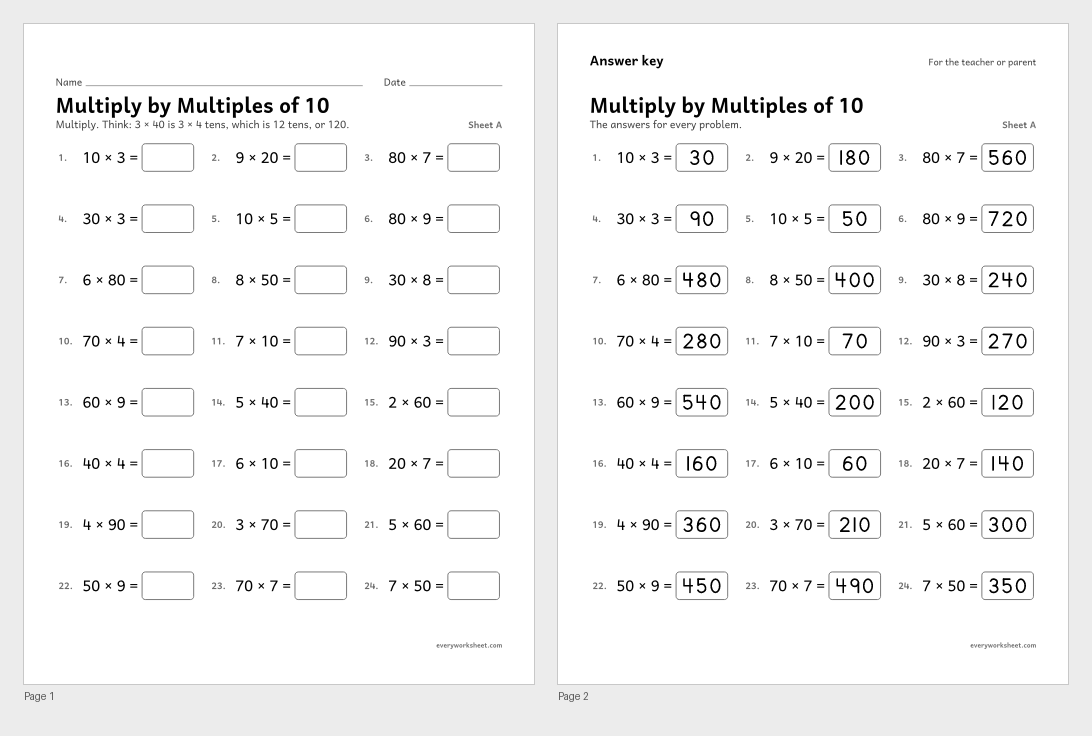
Multiply by multiples of 10, sheet A
Multiplying one-digit numbers by multiples of 10
Answer key on page 2
2 pages108 KB
 View all 2 pages
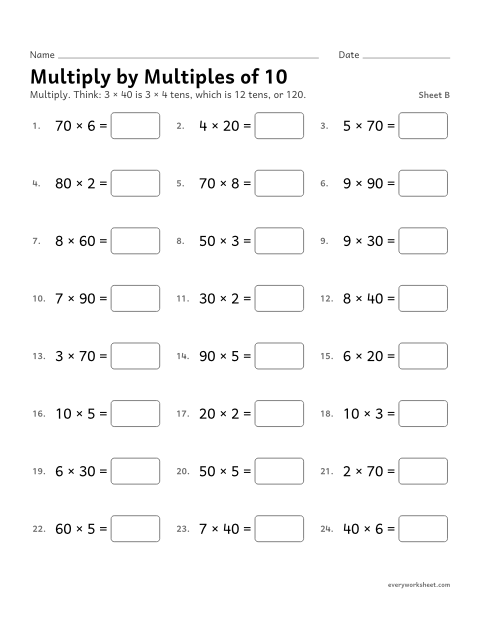
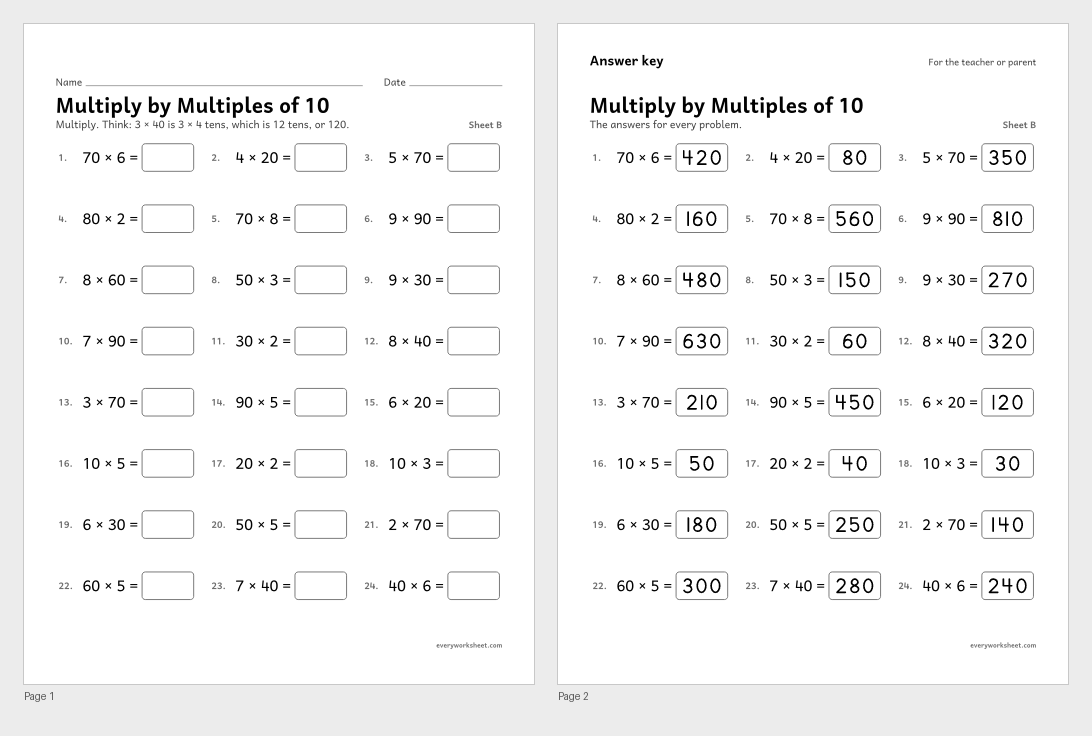
Multiply by multiples of 10, sheet B
Multiplying one-digit numbers by multiples of 10
Answer key on page 2
2 pages108 KB
 View all 2 pages
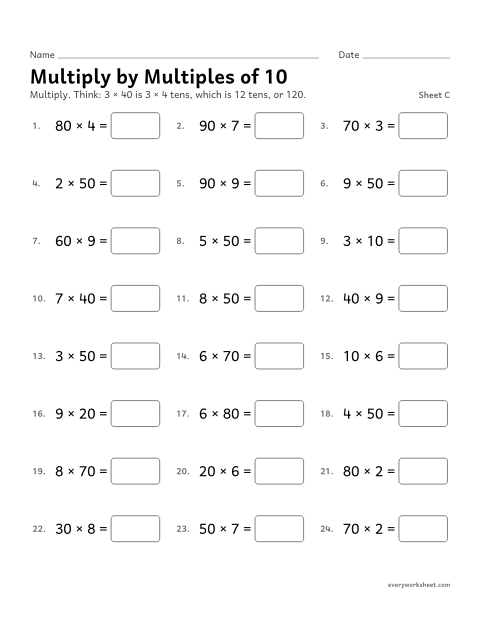
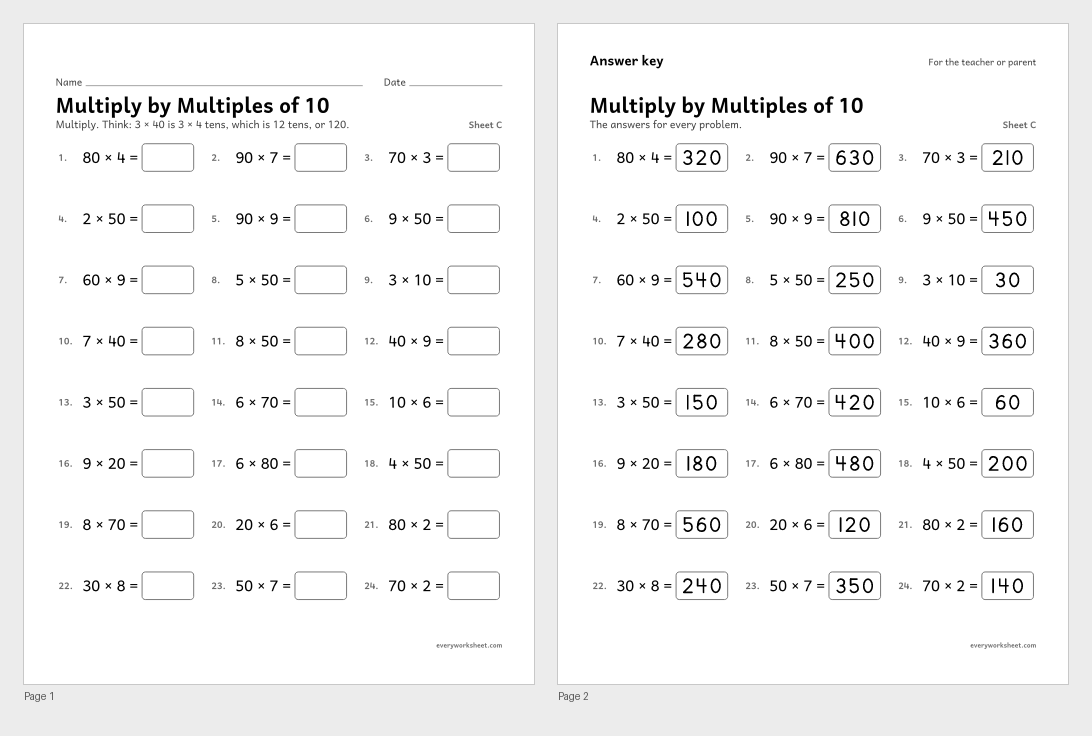
Multiply by multiples of 10, sheet C
Multiplying one-digit numbers by multiples of 10
Answer key on page 2
2 pages108 KB
 View all 2 pages
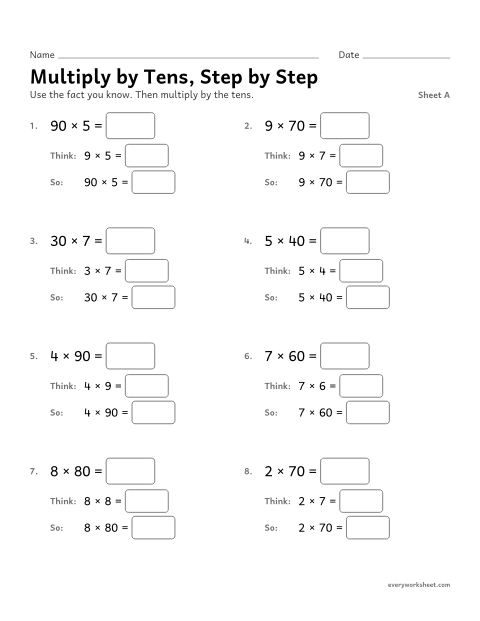
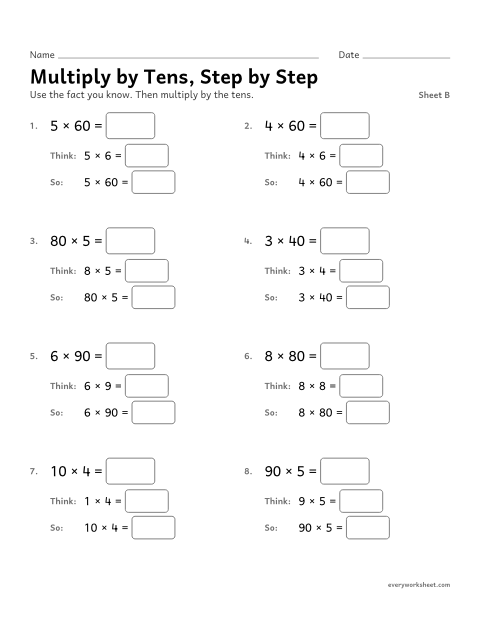
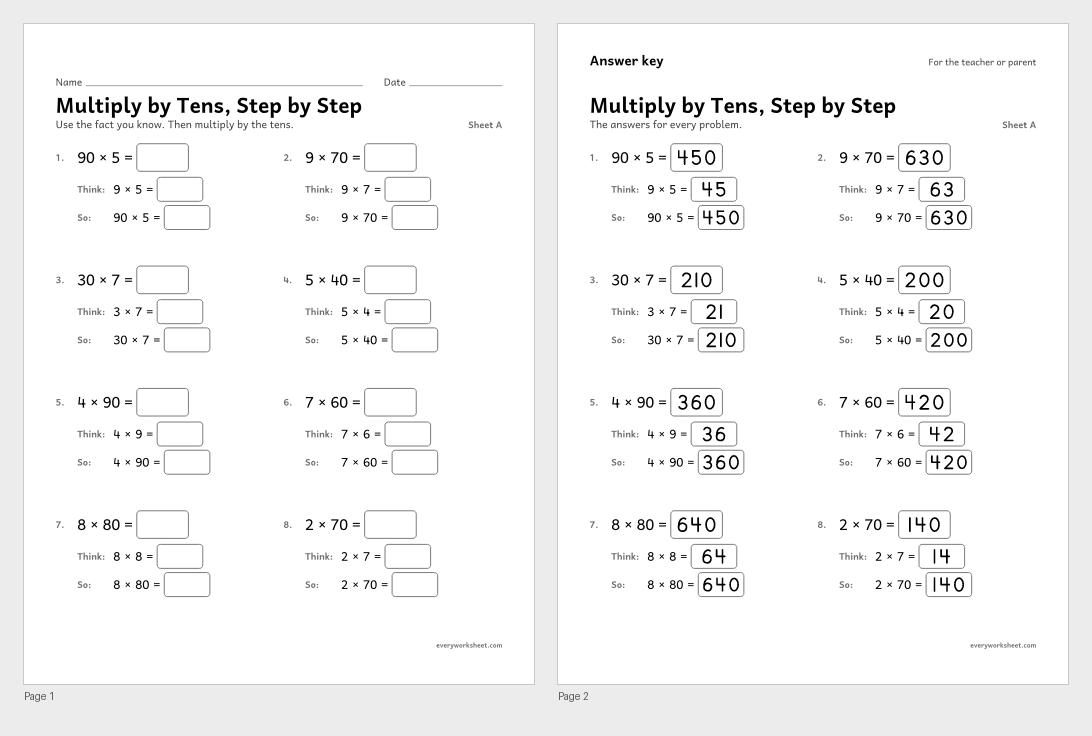
Multiply by Tens, step by Step, sheet A
Using place value to multiply by multiples of 10
Answer key on page 2
2 pages109 KB
 View all 2 pages
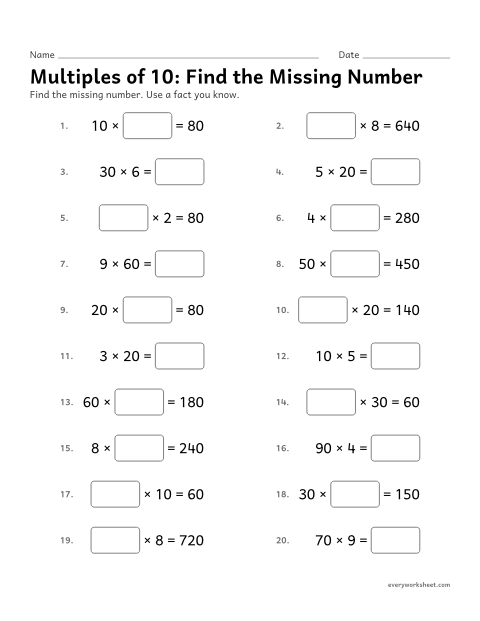
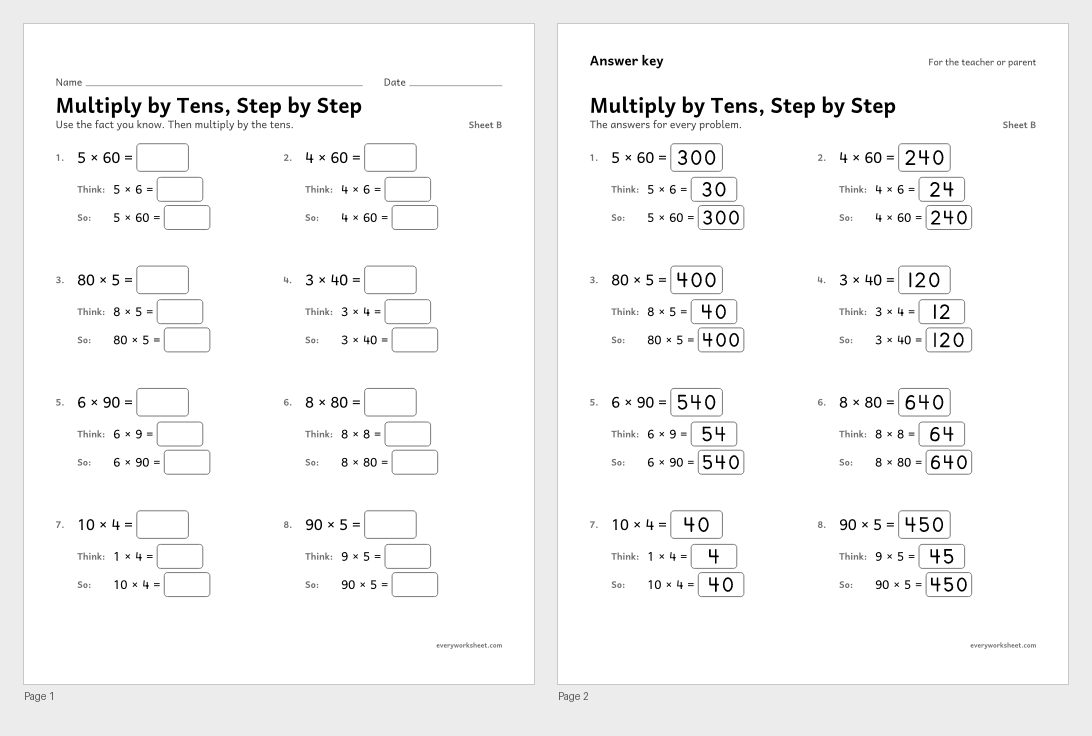
Multiply by Tens, step by Step, sheet B
Using place value to multiply by multiples of 10
Answer key on page 2
2 pages109 KB
 View all 2 pages
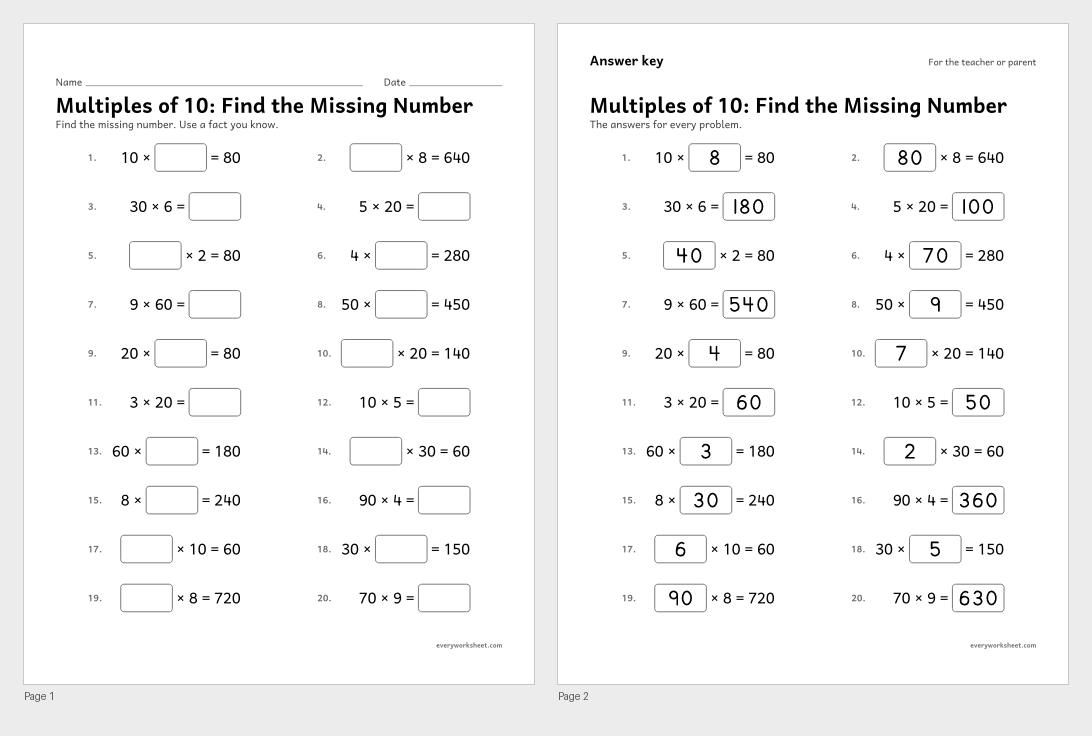
Multiples of 10: find the missing number
Finding unknown factors with multiples of 10
Answer key on page 2
2 pages96 KB
Timed tests and mad minutes
 View all 2 pages
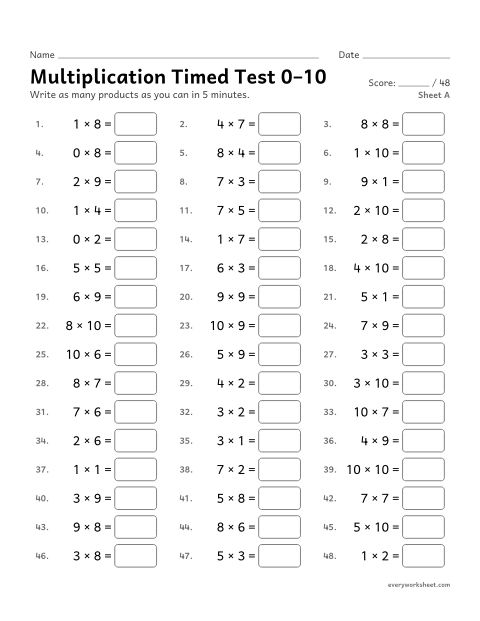
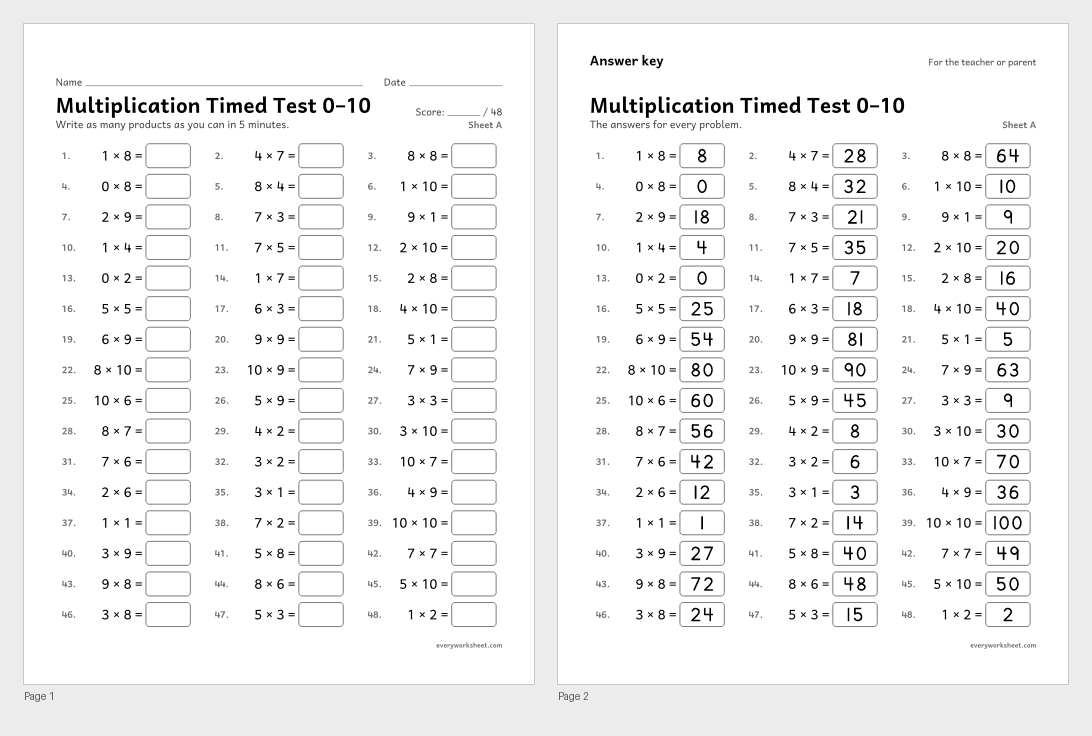
Multiplication timed test 0–10, sheet A
Multiplication facts 0 to 10 from memory
Answer key on page 2
2 pages188 KB
 View all 2 pages
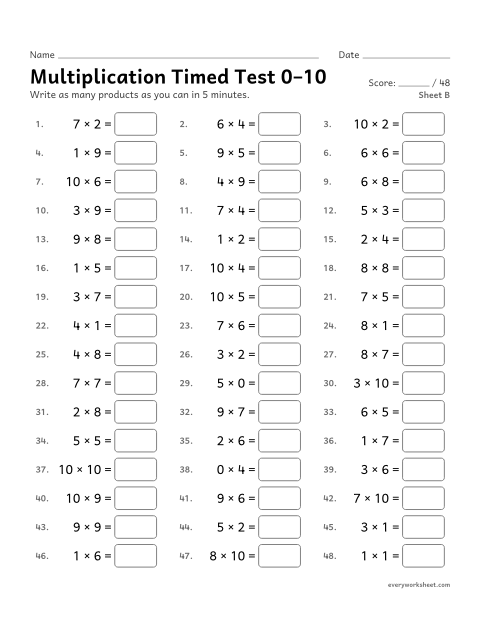
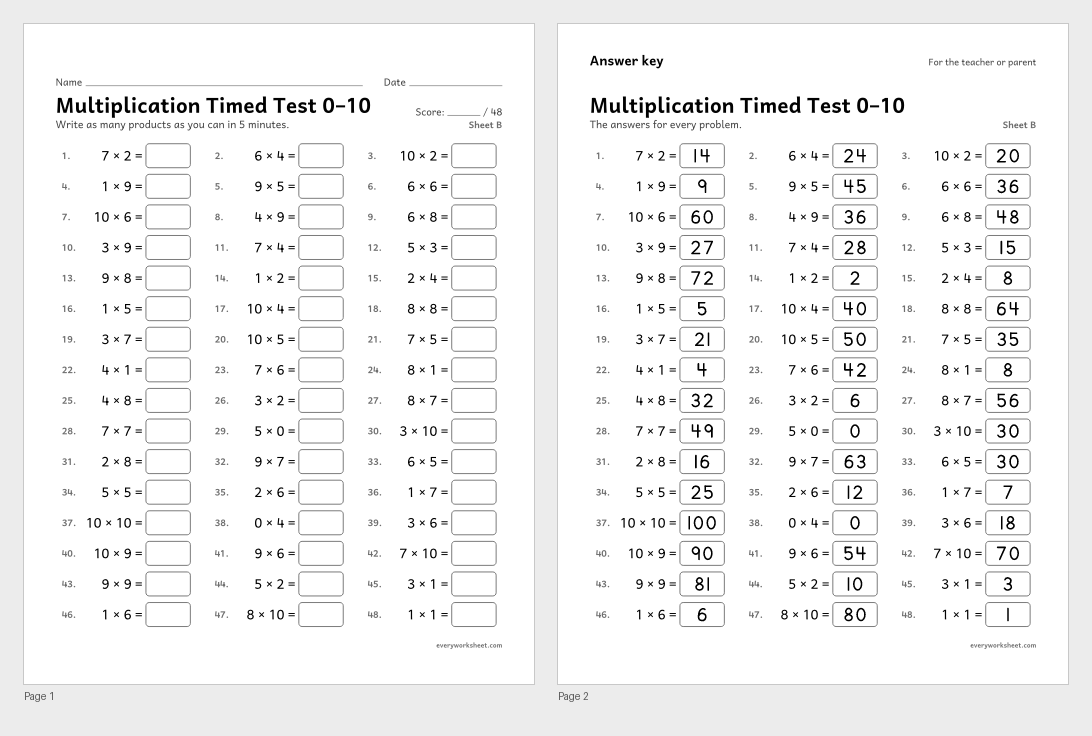
Multiplication timed test 0–10, sheet B
Multiplication facts 0 to 10 from memory
Answer key on page 2
2 pages188 KB
 View all 2 pages
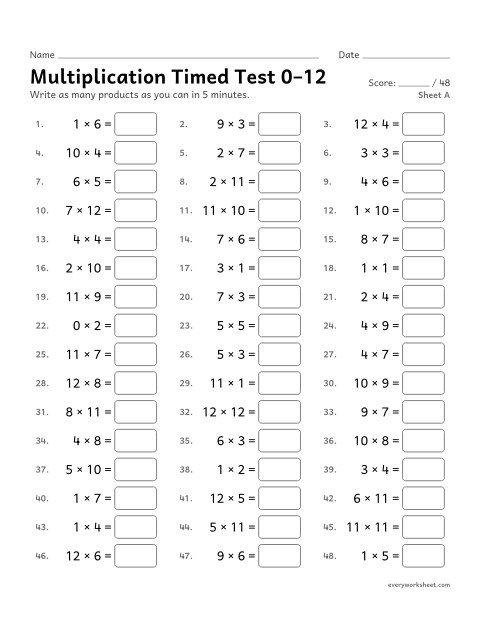
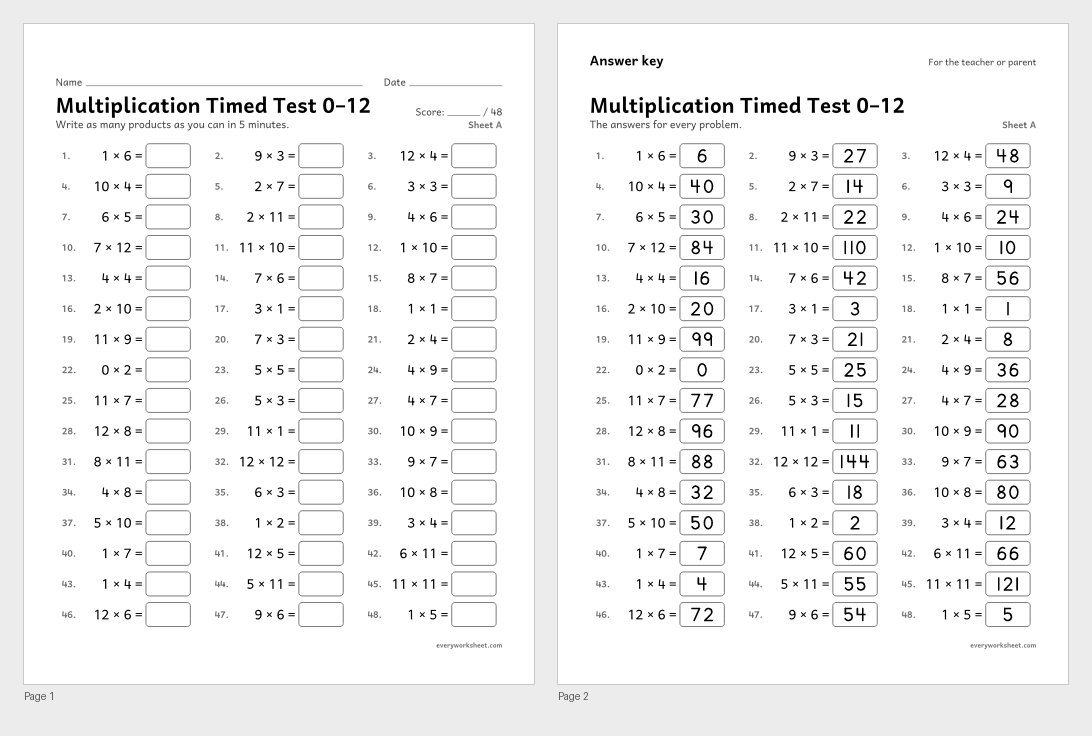
Multiplication timed test 0–12, sheet A
Multiplication facts 0 to 12 from memory
Answer key on page 2
2 pages188 KB
 View all 2 pages
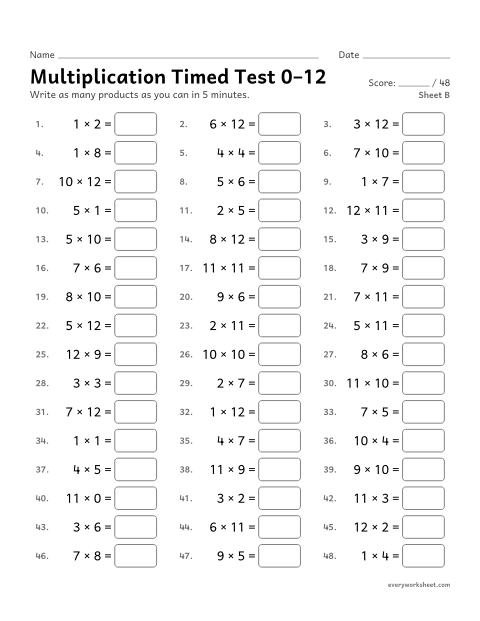
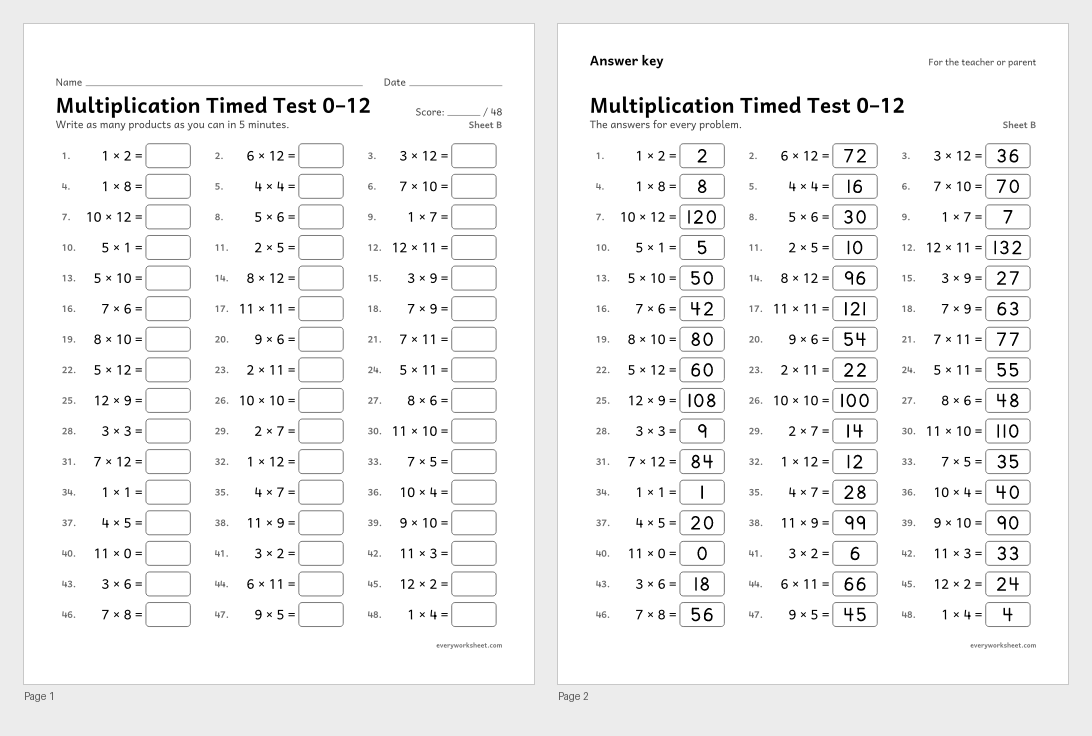
Multiplication timed test 0–12, sheet B
Multiplication facts 0 to 12 from memory
Answer key on page 2
2 pages188 KB
 View all 2 pages
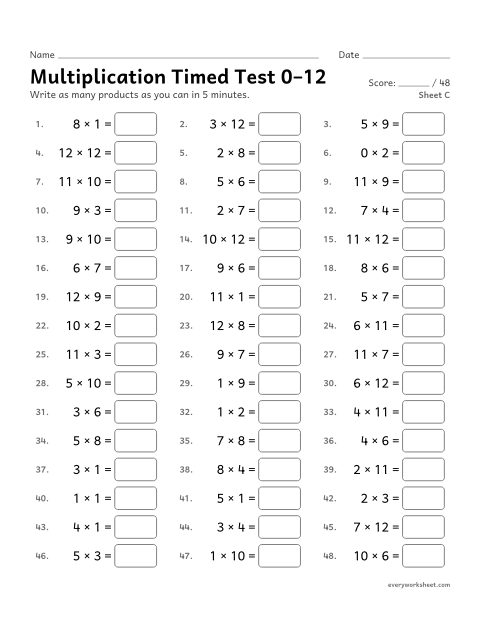
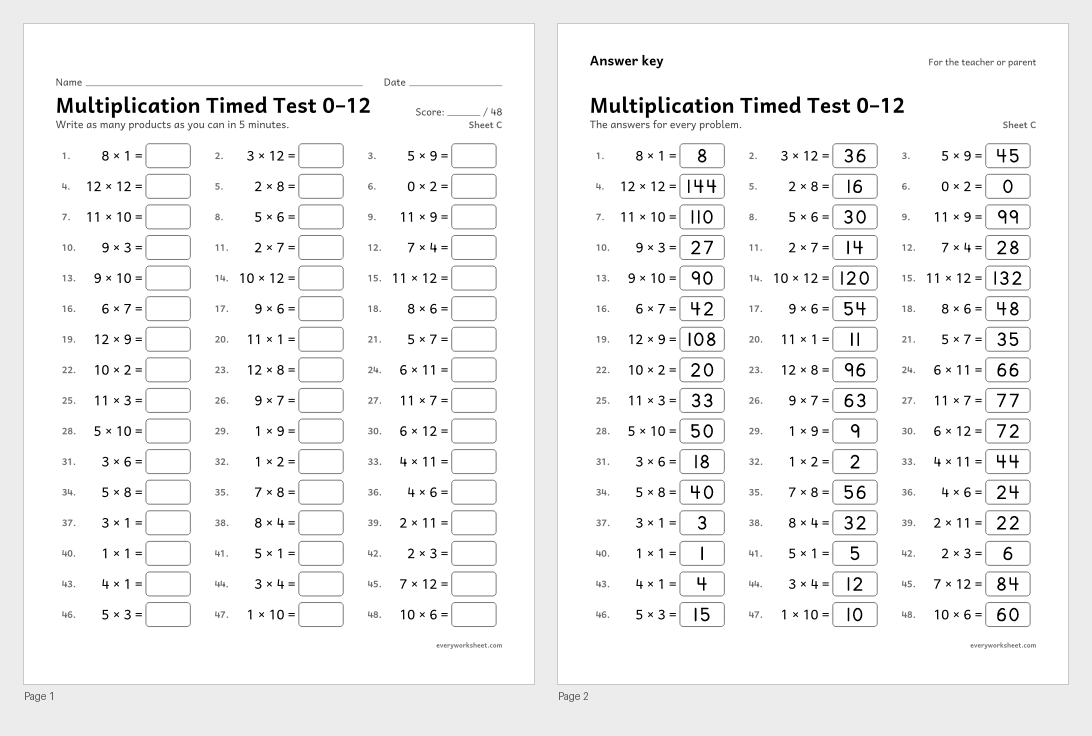
Multiplication timed test 0–12, sheet C
Multiplication facts 0 to 12 from memory
Answer key on page 2
2 pages188 KB
 View all 2 pages
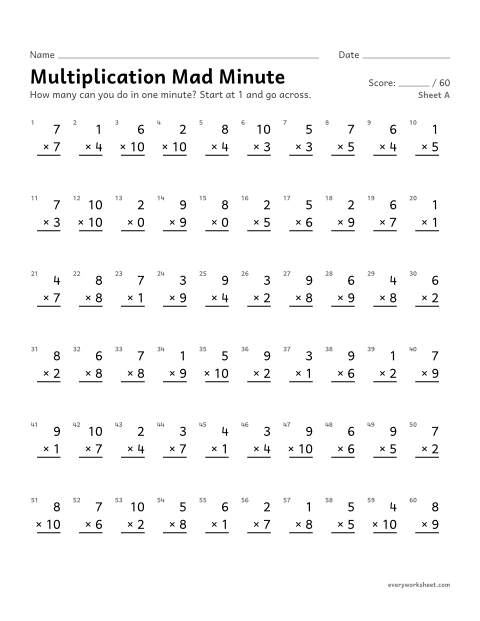
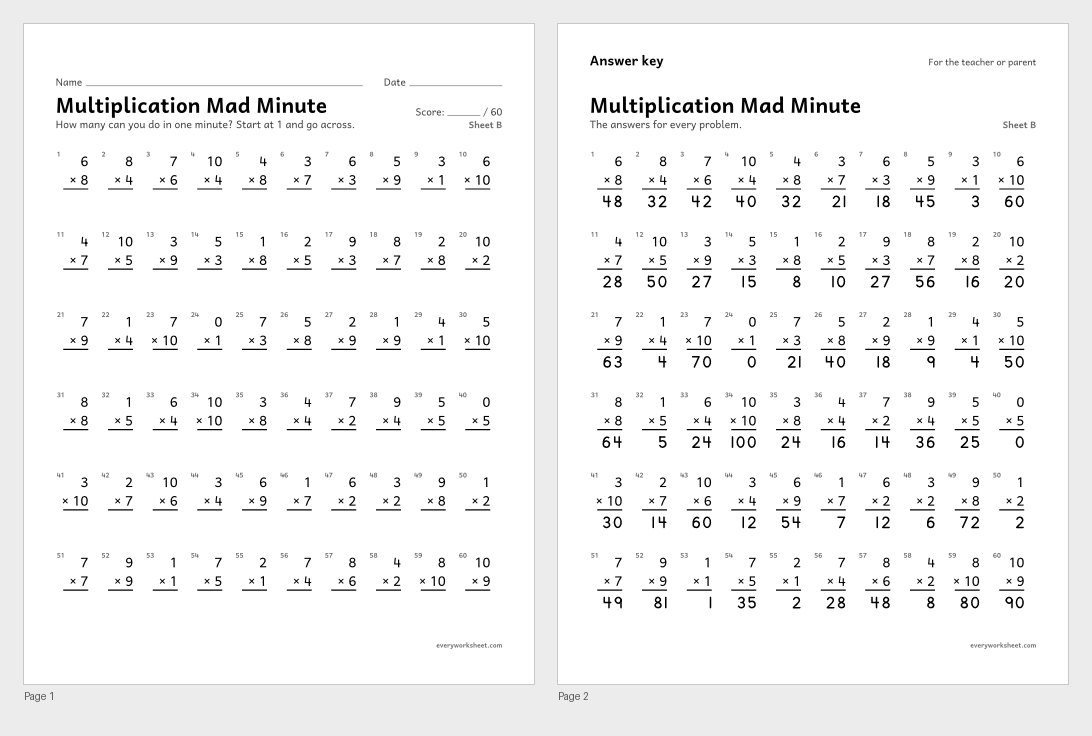
Multiplication mad Minute, sheet A
Multiplication facts 0 to 10 from memory
Answer key on page 2
2 pages40 KB
 View all 2 pages
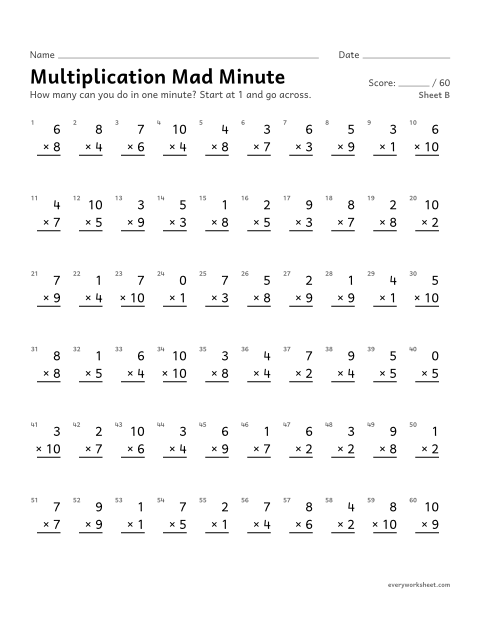
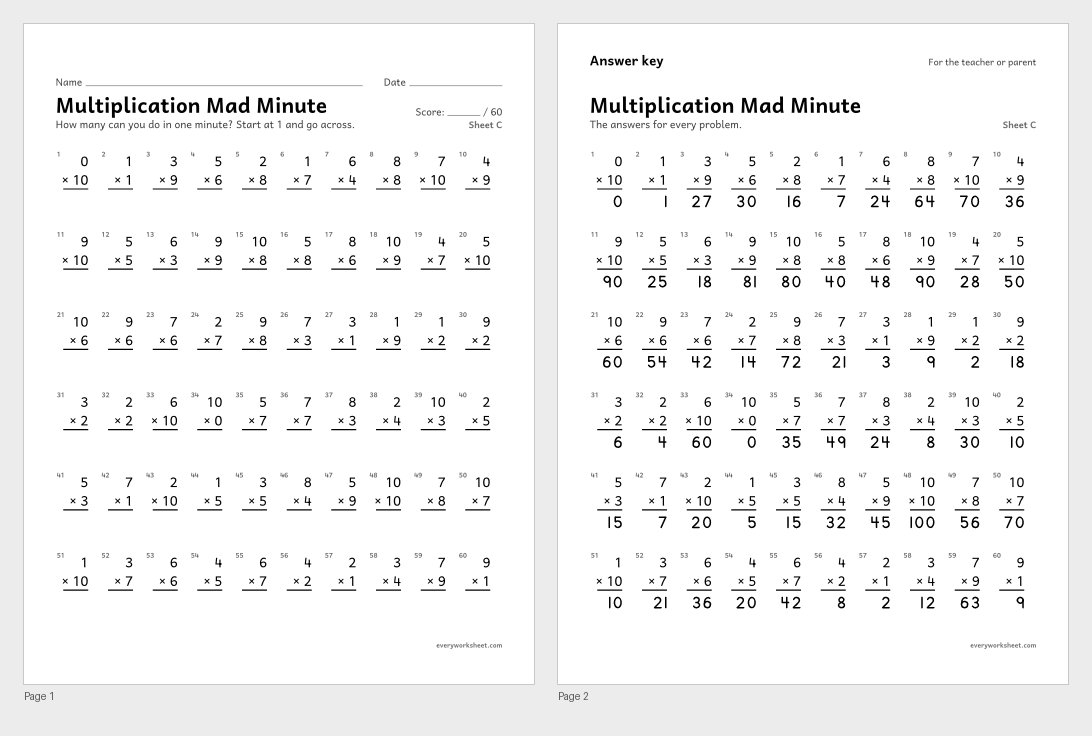
Multiplication mad Minute, sheet B
Multiplication facts 0 to 10 from memory
Answer key on page 2
2 pages40 KB
 View all 2 pages
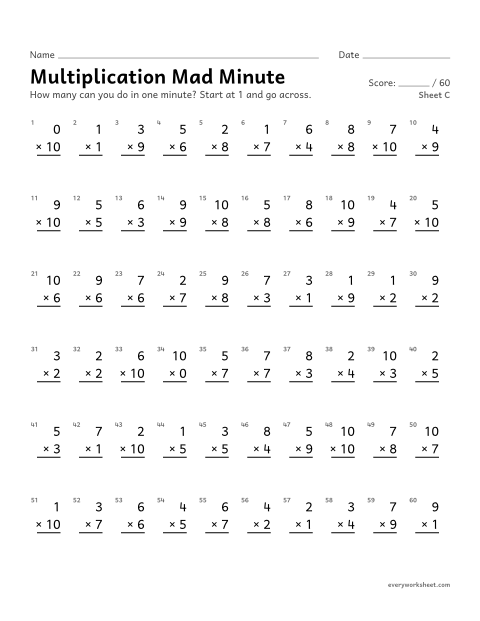
Multiplication mad Minute, sheet C
Multiplication facts 0 to 10 from memory
Answer key on page 2
2 pages40 KB
 View all 2 pages
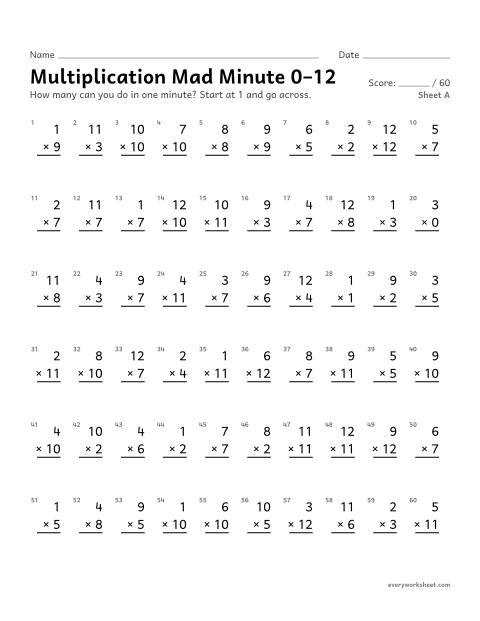
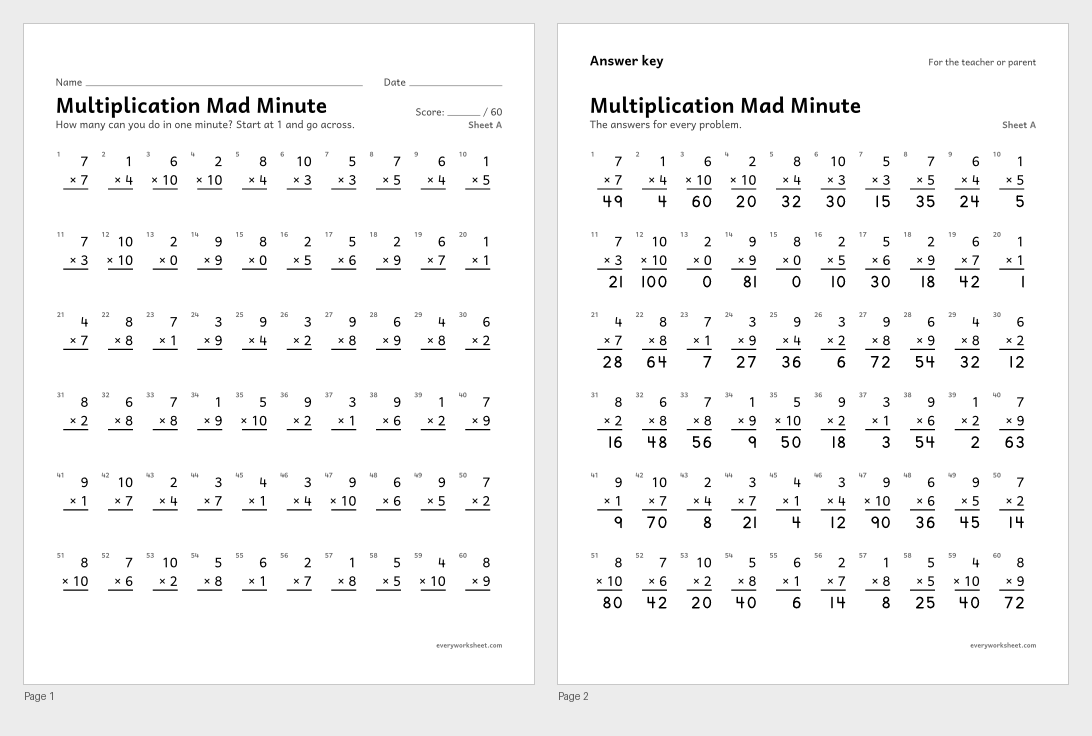
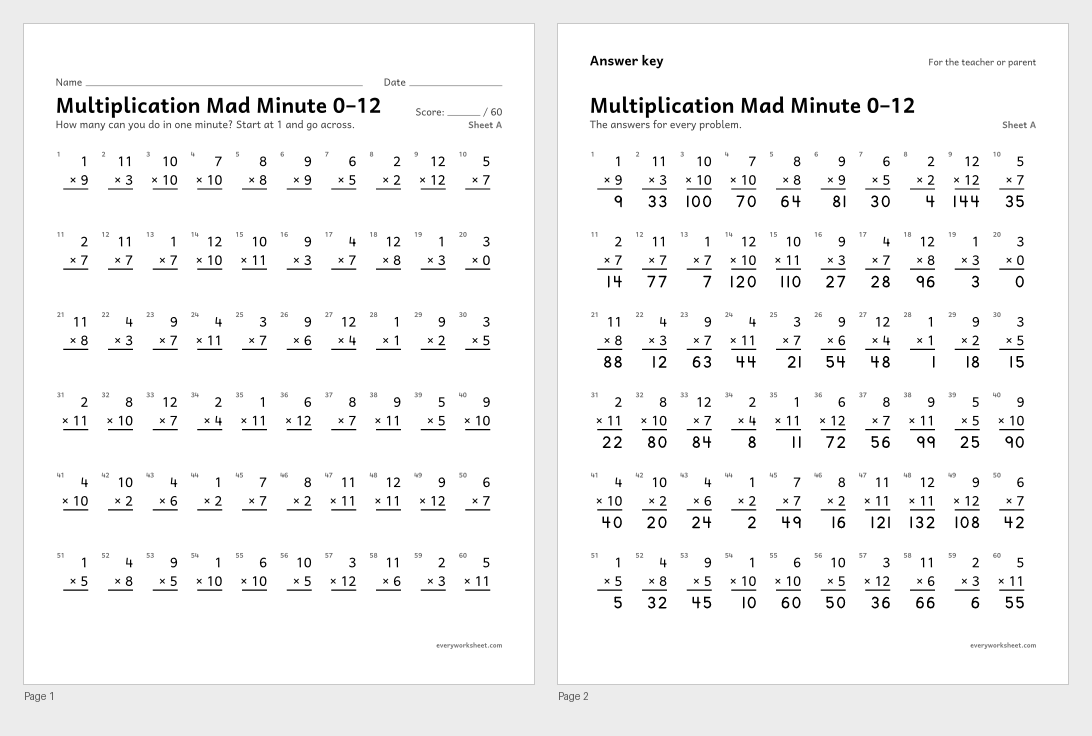
Multiplication mad minute 0–12, sheet A
Multiplication facts 0 to 12 from memory
Answer key on page 2
2 pages40 KB
 View all 2 pages
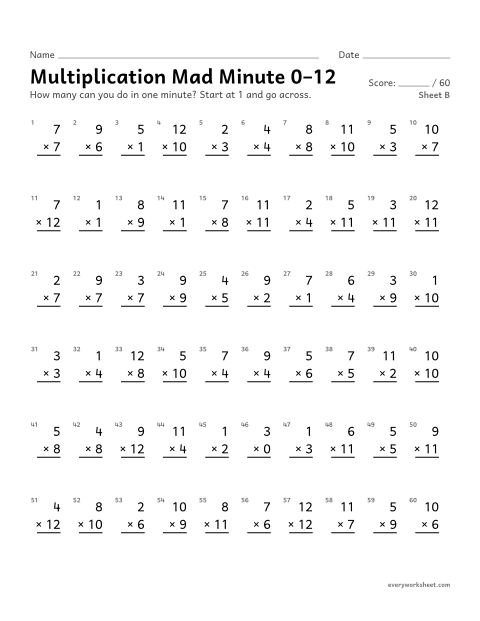
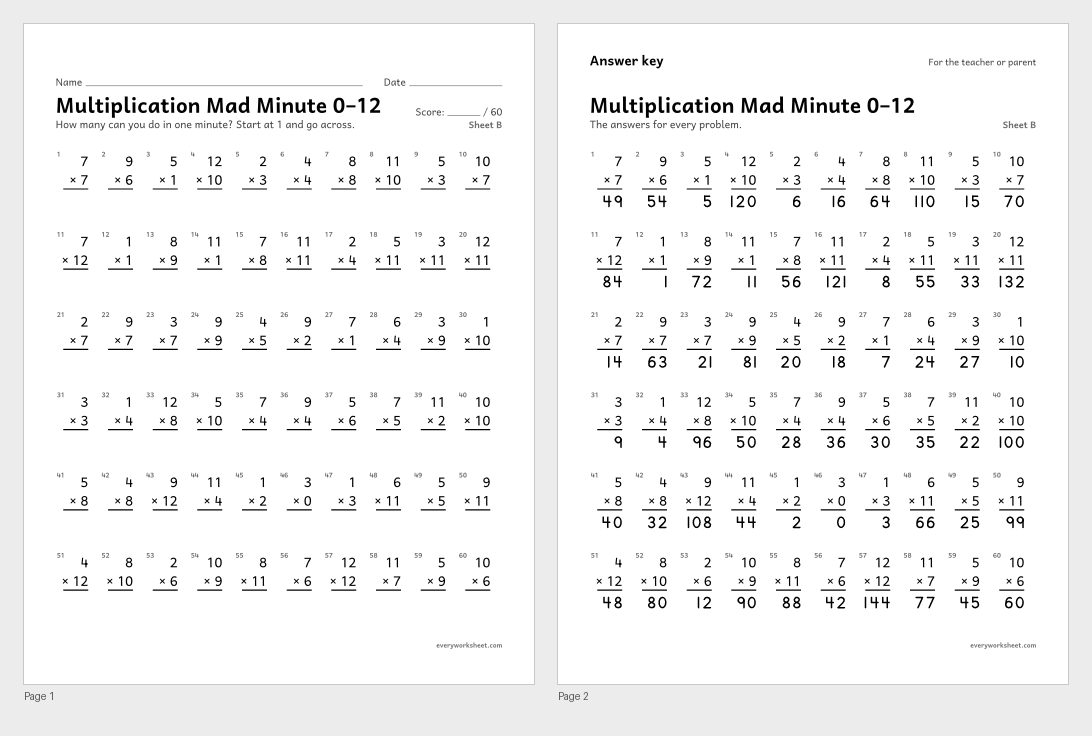
Multiplication mad minute 0–12, sheet B
Multiplication facts 0 to 12 from memory
Answer key on page 2
2 pages40 KB
Multiplication coloring
 View all 2 pages
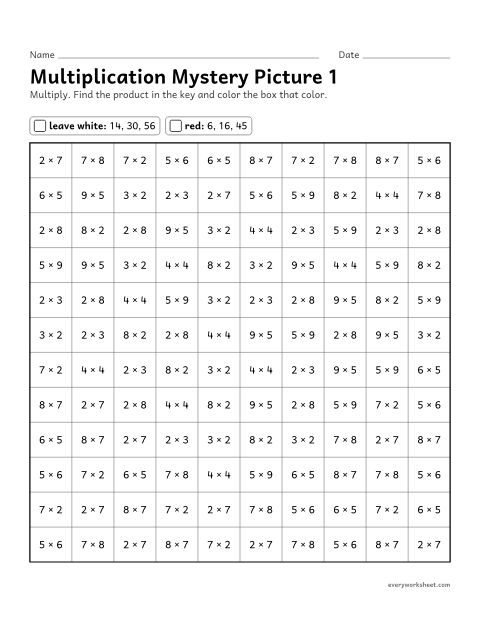
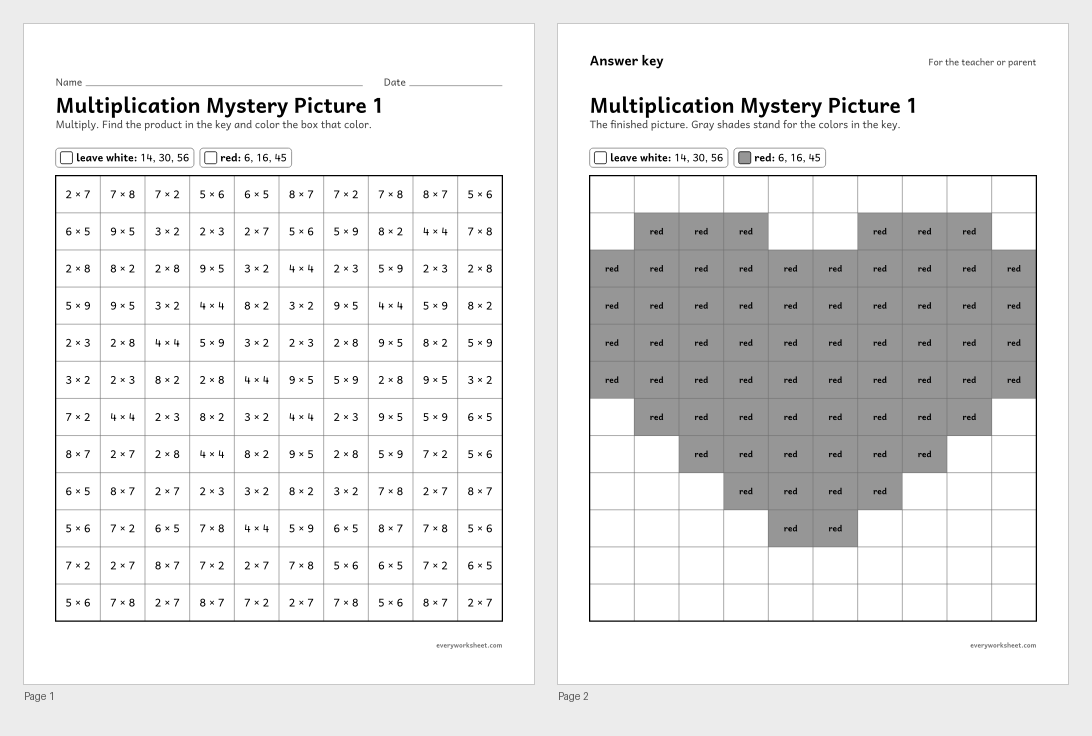
Multiplication mystery picture 1
Multiplication facts within 100 (color by product)
Answer key on page 2
2 pages33 KB
 View all 2 pages
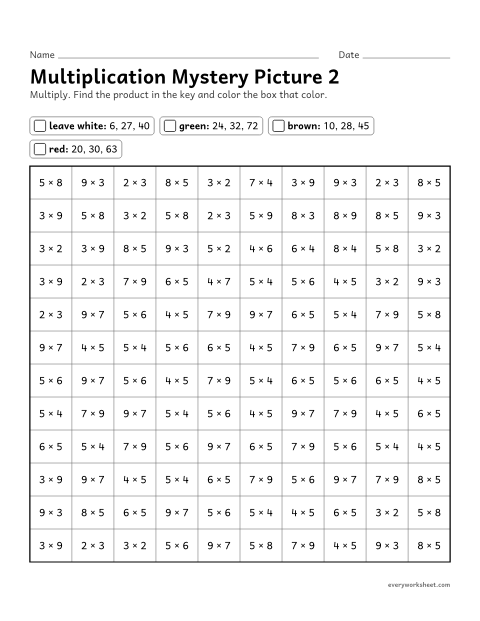
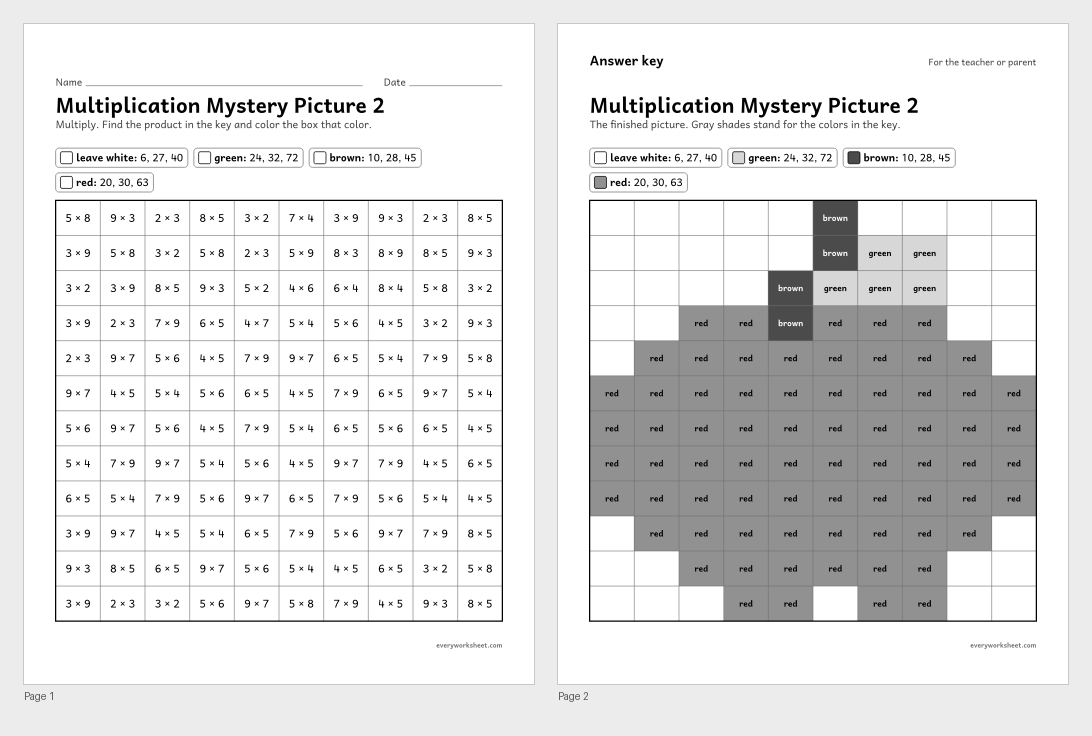
Multiplication mystery picture 2
Multiplication facts within 100 (color by product)
Answer key on page 2
2 pages35 KB
 View all 2 pages
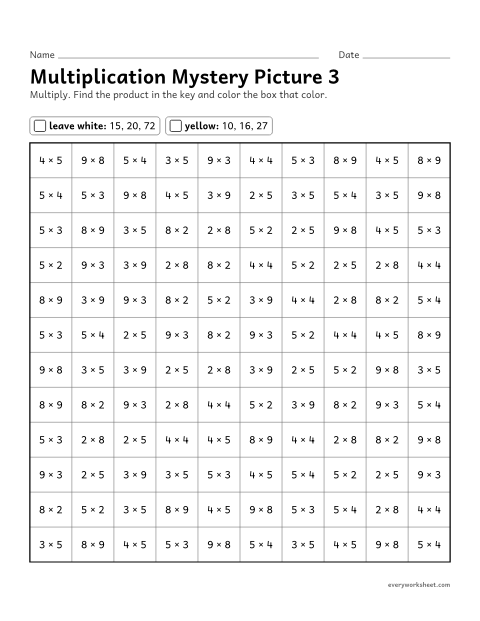
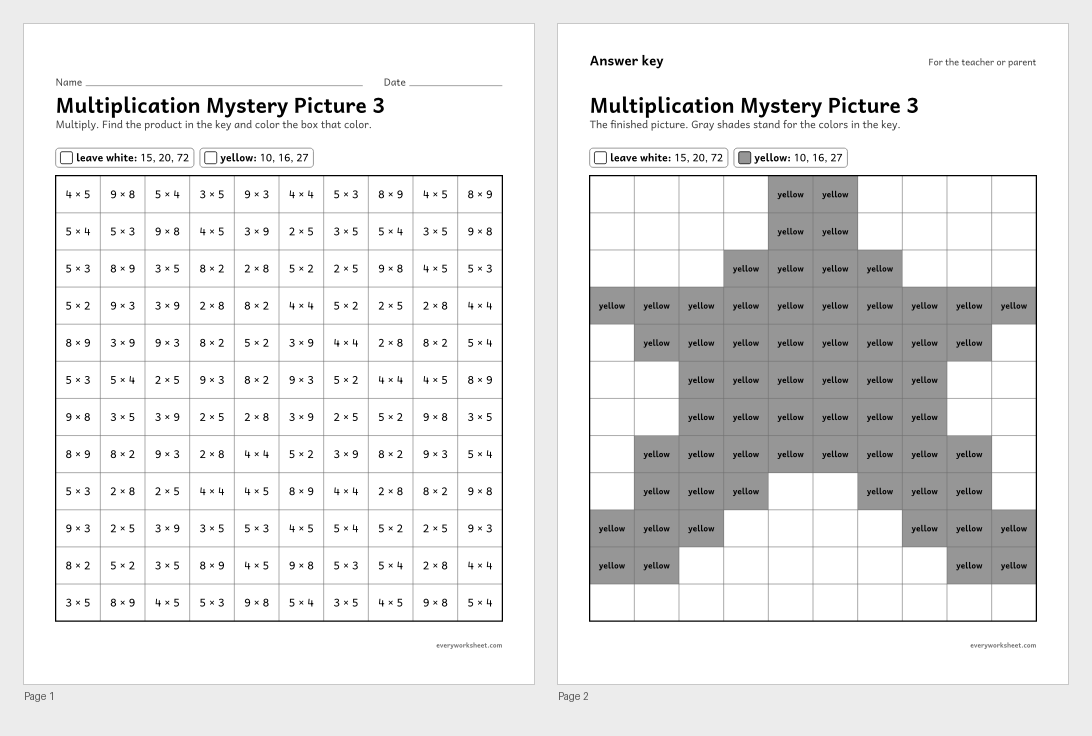
Multiplication mystery picture 3
Multiplication facts within 100 (color by product)
Answer key on page 2
2 pages33 KB
 View all 2 pages
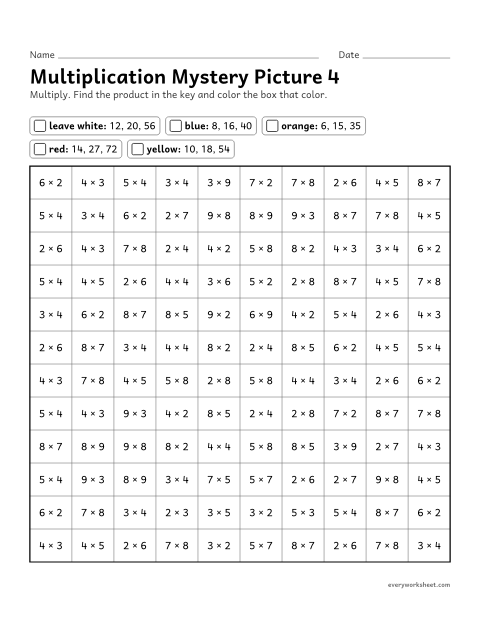
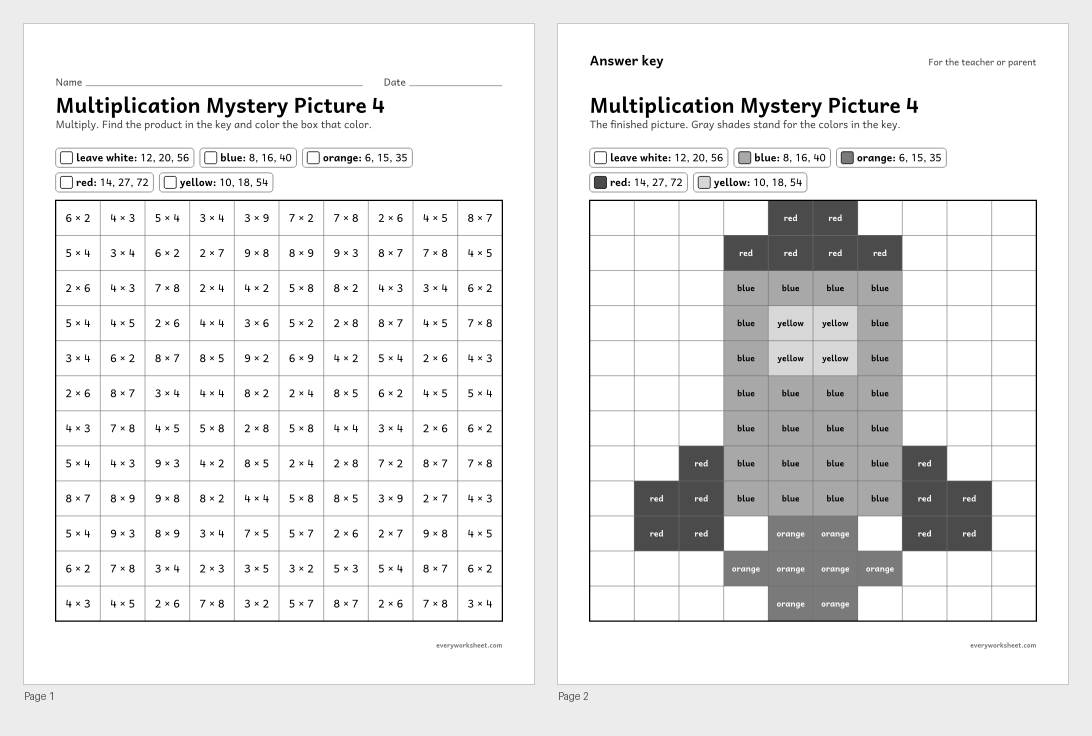
Multiplication mystery picture 4
Multiplication facts within 100 (color by product)
Answer key on page 2
2 pages35 KB
 View all 2 pages
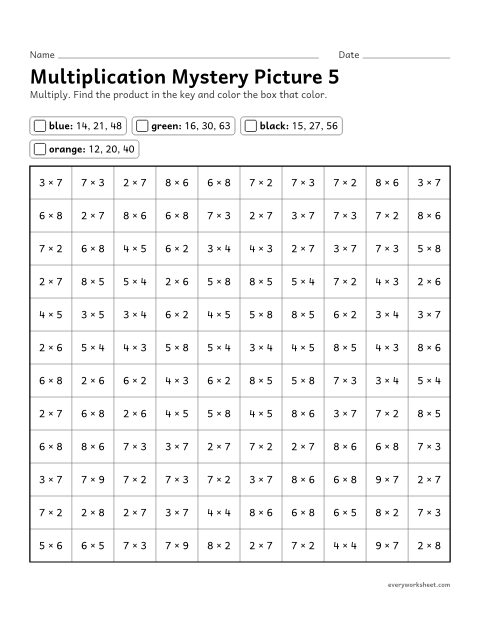
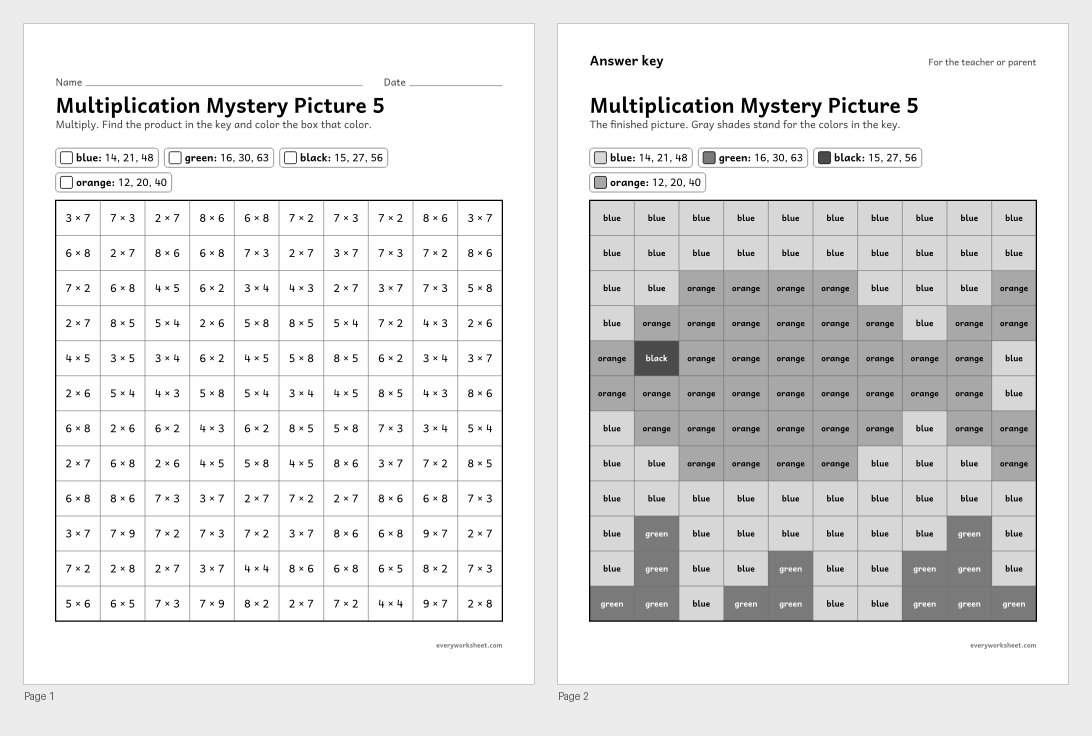
Multiplication mystery picture 5
Multiplication facts within 100 (color by product)
Answer key on page 2
2 pages35 KB
 View all 2 pages
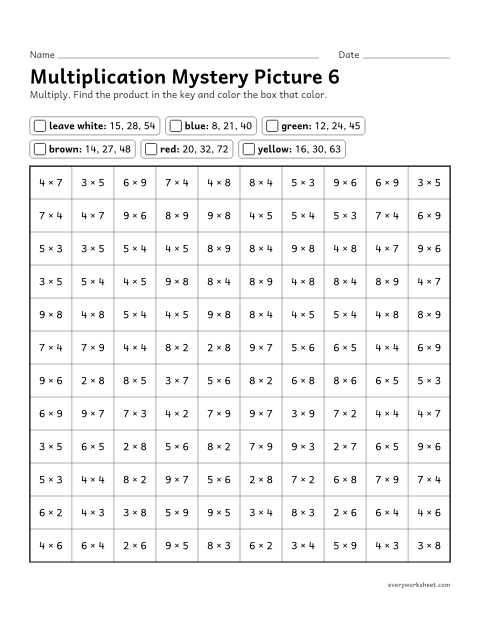
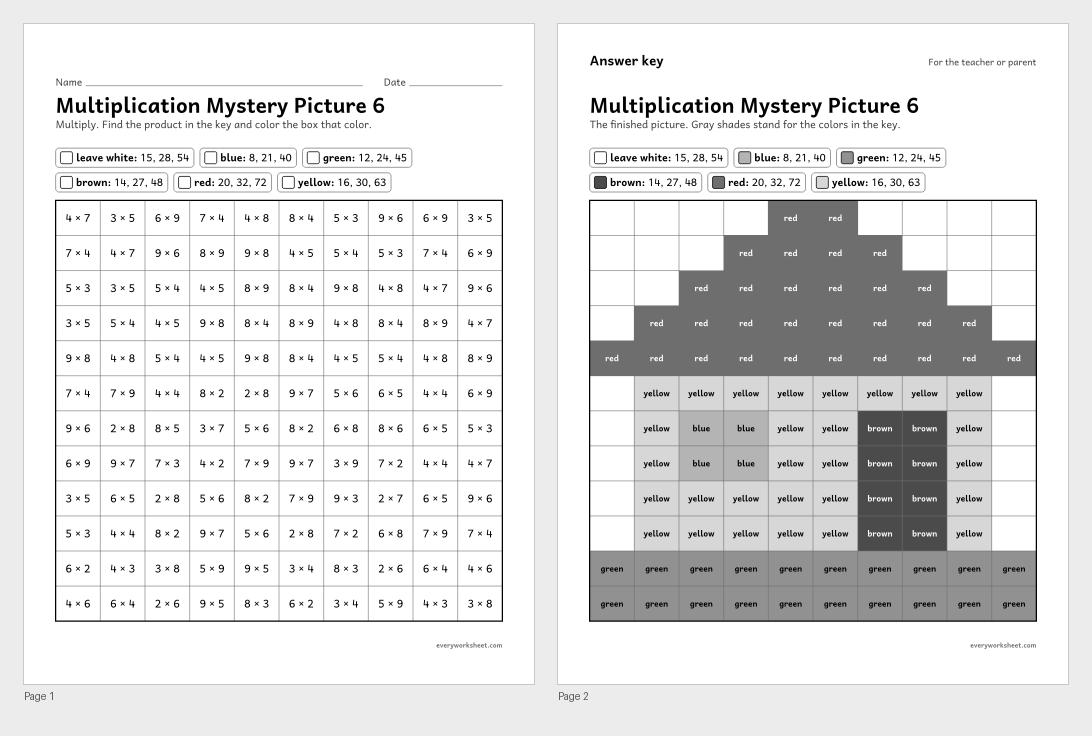
Multiplication mystery picture 6
Multiplication facts within 100 (color by product)
Answer key on page 2
2 pages36 KB
 View all 2 pages
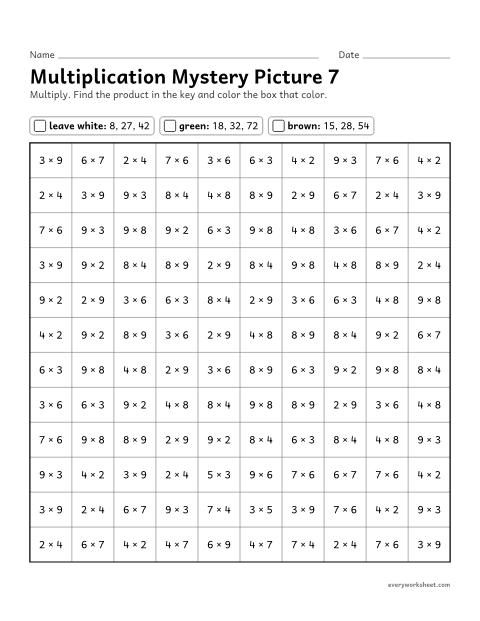
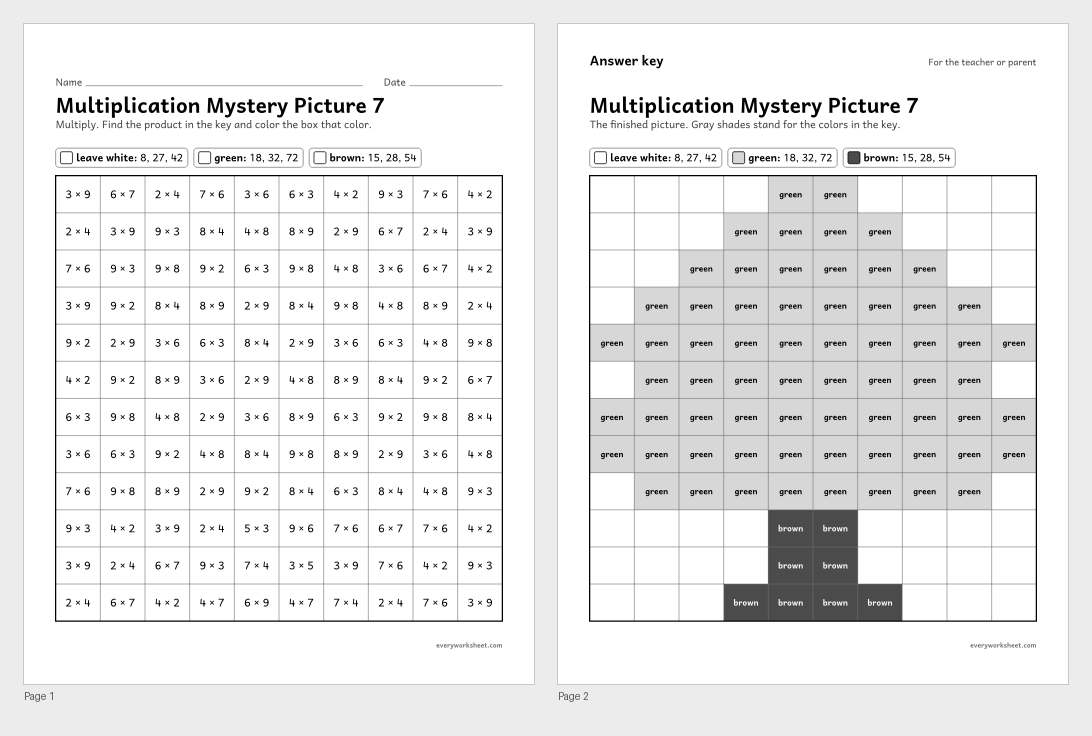
Multiplication mystery picture 7
Multiplication facts within 100 (color by product)
Answer key on page 2
2 pages34 KB
 View all 2 pages
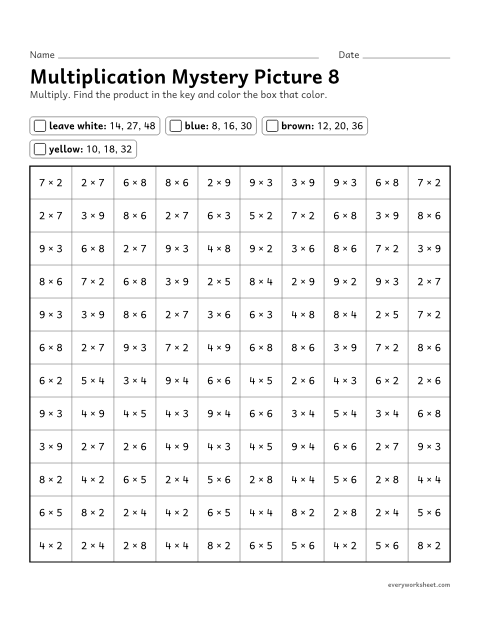
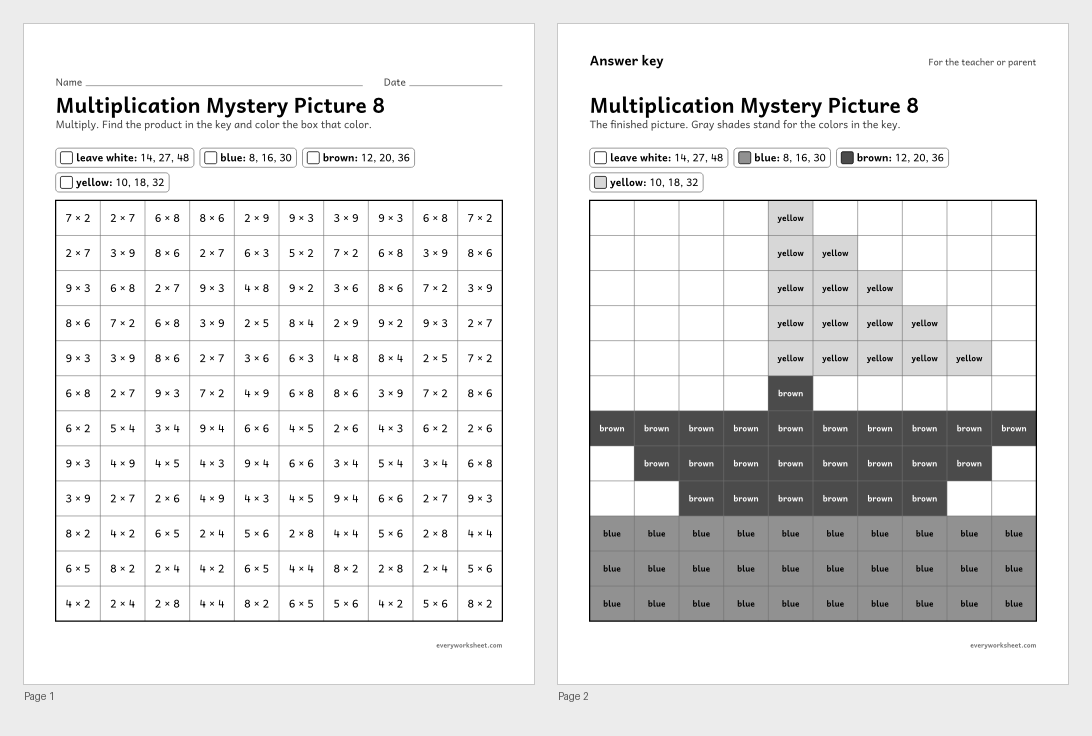
Multiplication mystery picture 8
Multiplication facts within 100 (color by product)
Answer key on page 2
2 pages34 KB
Print at 100% (actual size) for the cleanest tracing lines.
About these multiplication worksheets worksheets
Multiplication is the big new idea of 3rd grade. Children start with equal groups and arrays (4 bags with 6 apples in each is 4 × 6), then learn the facts one table at a time until they know every product of two one-digit numbers by heart.
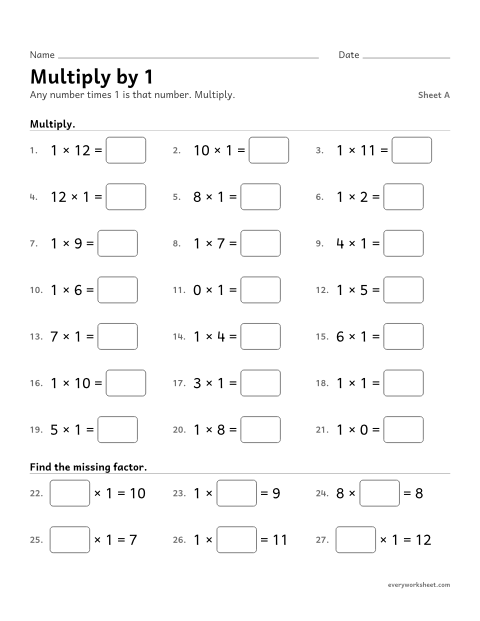
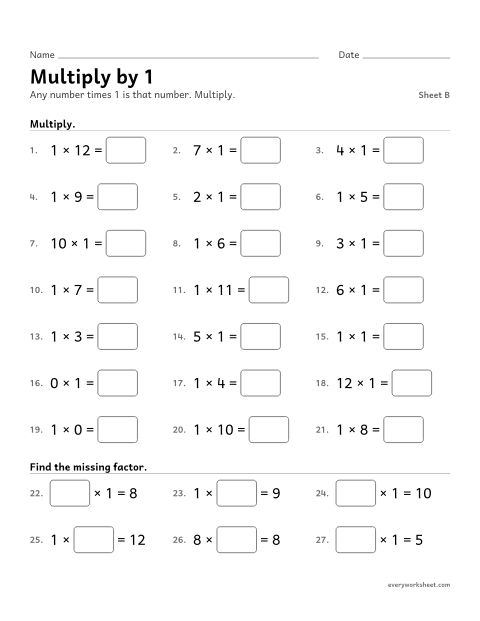
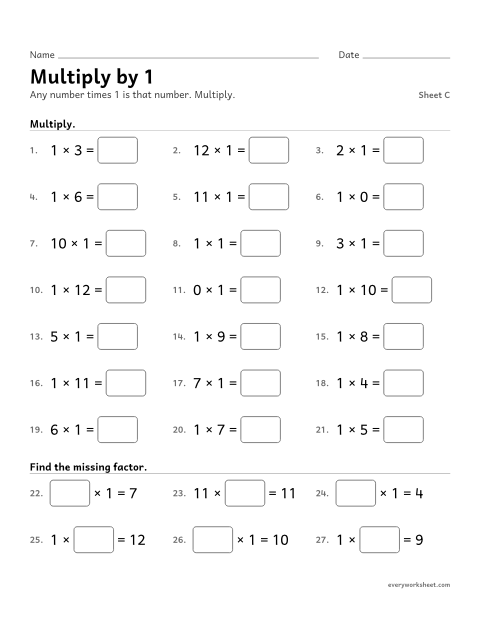
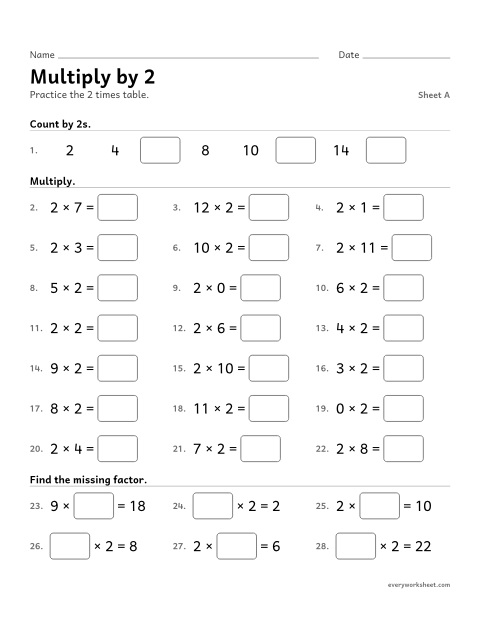
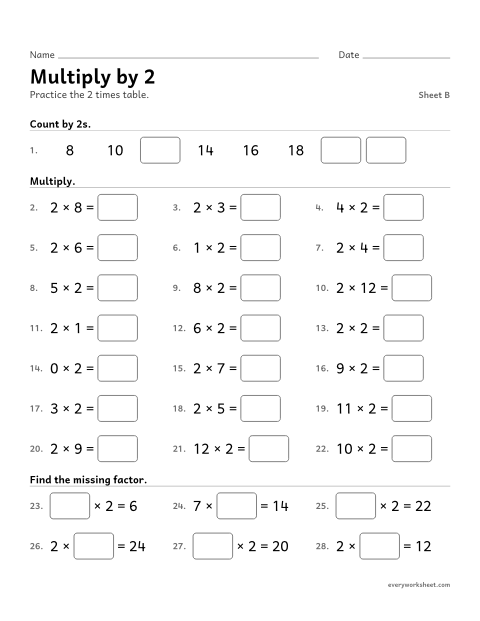
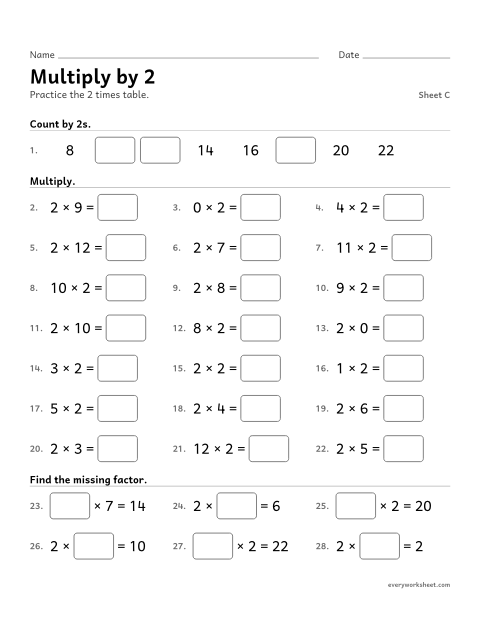
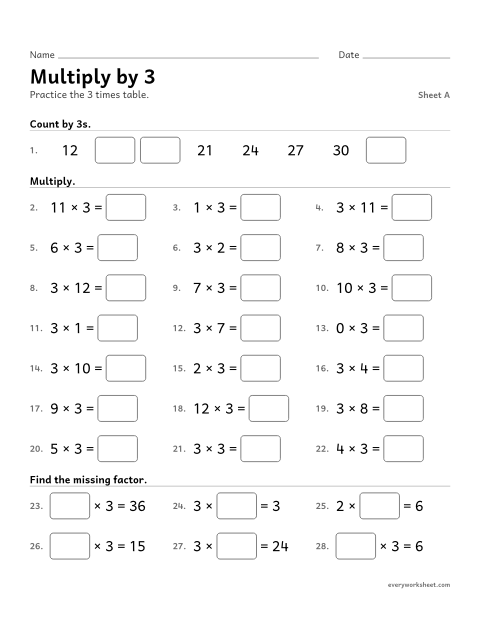
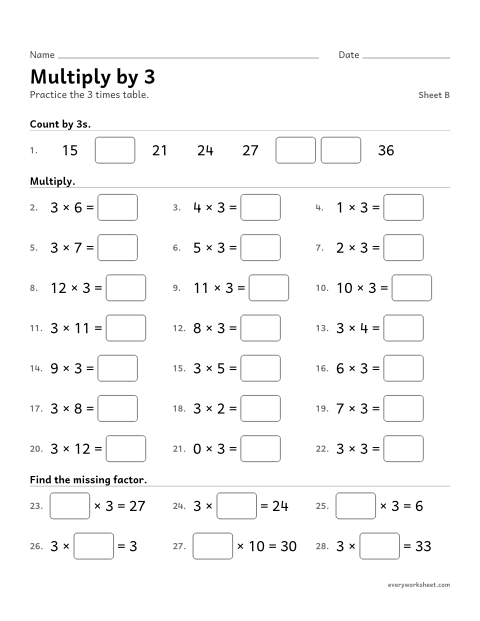
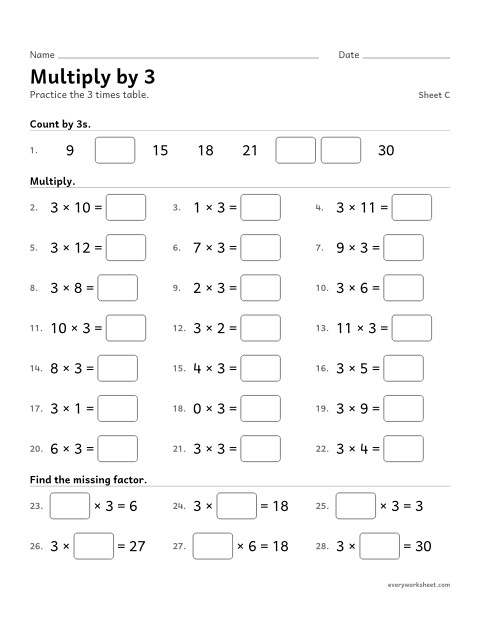
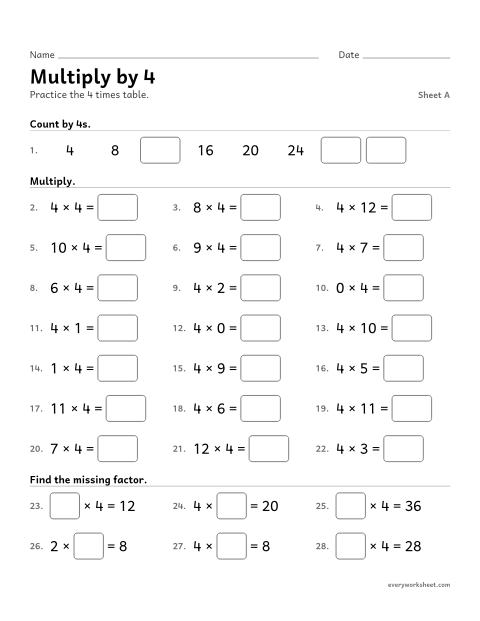
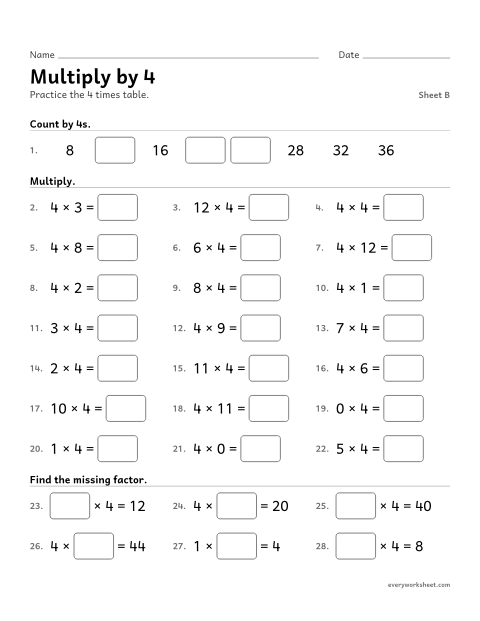
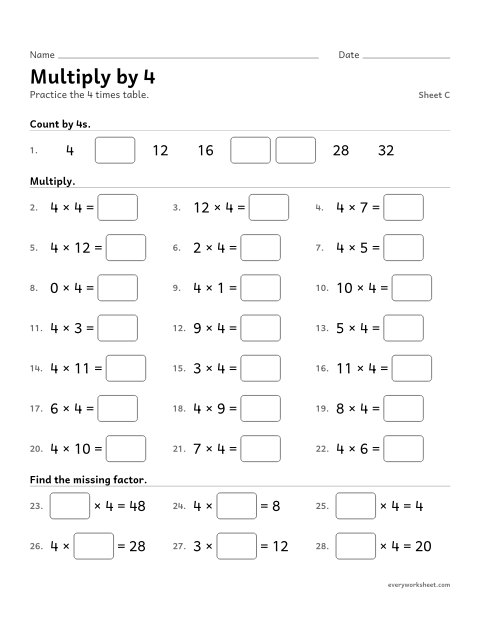
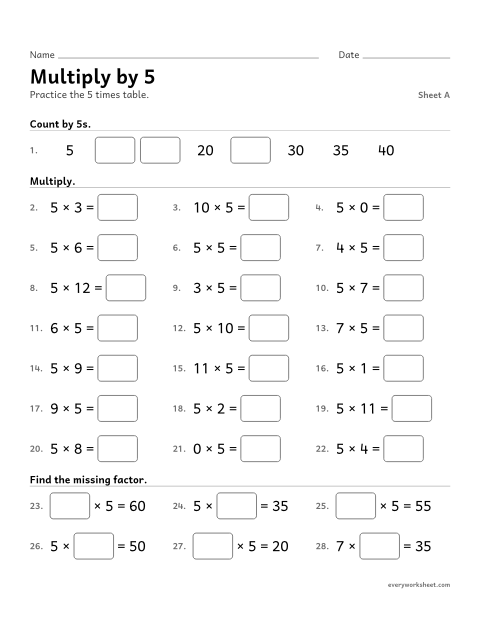
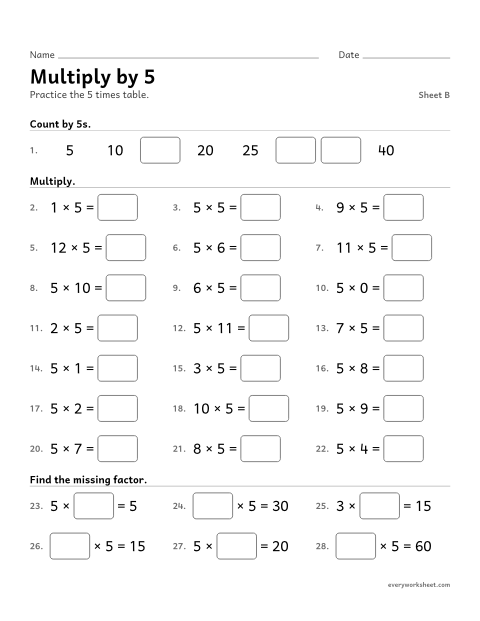
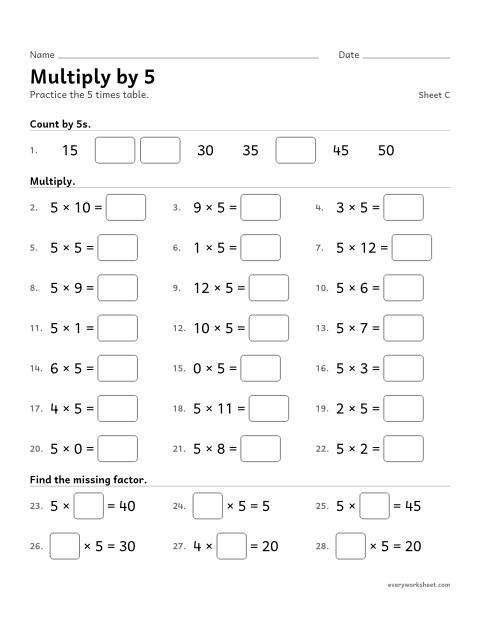
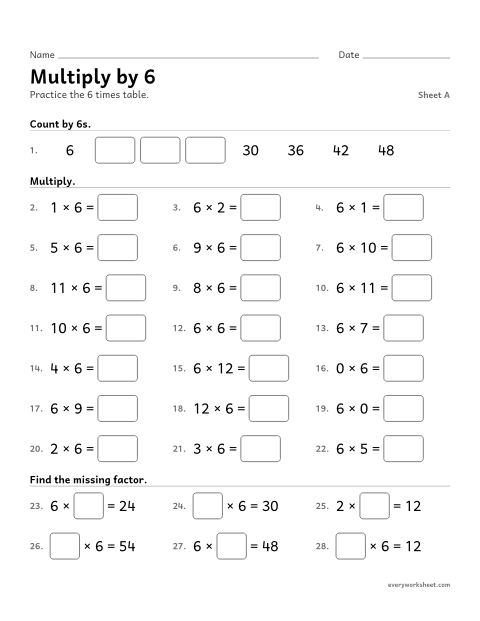
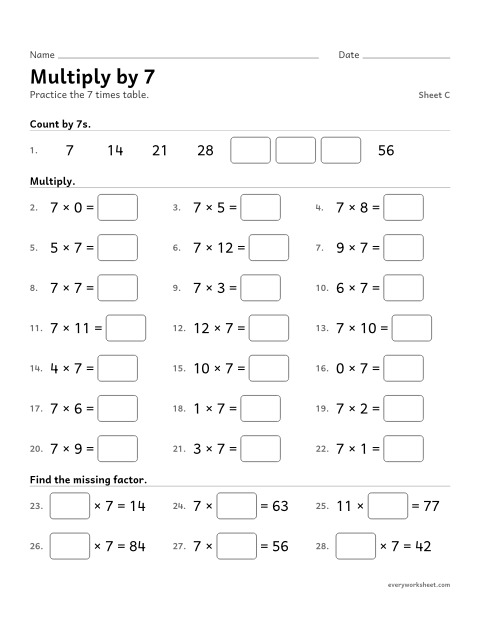
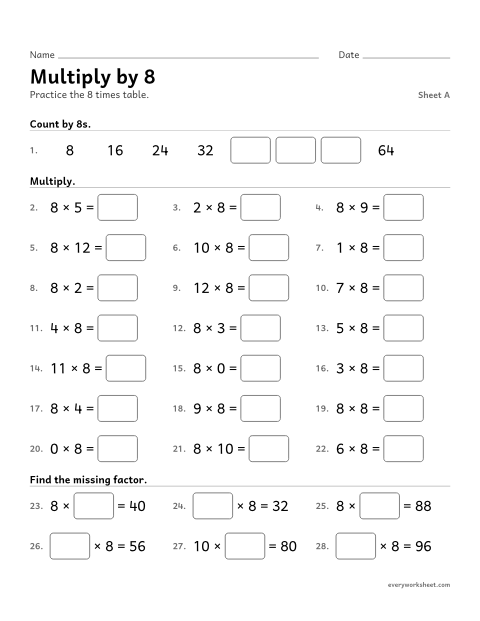
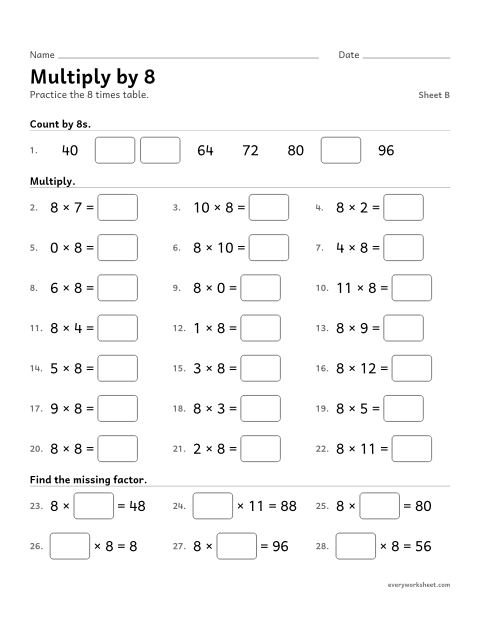
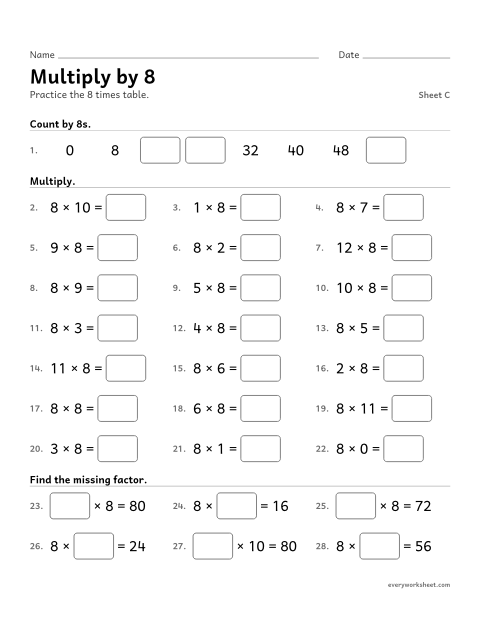
There is a page for every times table from 0 to 12, each in three versions. Each page starts with skip counting by that number, then mixes the facts in both orders (7 × 4 and 4 × 7), and ends with missing factors. Mixed fact pages, arrays and equal groups, multiples of 10, timed tests and mad minutes build speed, and the color-by-product mystery pictures make practice feel like play.
Every page has an answer key on page 2 and prints in black and white on US Letter or A4. The problems are made fresh for every version, so Sheet A, B and C can be used on different days.
Standards
CCSS.MATH.CONTENT.3.OA.A.1Interpret products of whole numbers, e.g., interpret 5 × 7 as the total number of objects in 5 groups of 7 objects each. For example, describe a context in which a total number of objects can be expressed as 5 × 7.CCSS.MATH.CONTENT.3.OA.A.3Use multiplication and division within 100 to solve word problems in situations involving equal groups, arrays, and measurement quantities, e.g., by using drawings and equations with a symbol for the unknown number to represent the problem.CCSS.MATH.CONTENT.3.OA.A.4Determine the unknown whole number in a multiplication or division equation relating three whole numbers. For example, determine the unknown number that makes the equation true in each of the equations 8 × ? = 48, 5 = _ ÷ 3, 6 × 6 = ?CCSS.MATH.CONTENT.3.OA.C.7Fluently multiply and divide within 100, using strategies such as the relationship between multiplication and division (e.g., knowing that 8 × 5 = 40, one knows 40 ÷ 5 = 8) or properties of operations. By the end of Grade 3, know from memory all products of two one-digit numbers.CCSS.MATH.CONTENT.3.NBT.A.3Multiply one-digit whole numbers by multiples of 10 in the range 10–90 (e.g., 9 × 80, 5 × 60) using strategies based on place value and properties of operations.
How to use them
- Begin with arrays and equal groups so children see what 3 × 5 means before they memorize it.
- Teach the tables in an easy order: 2s, 5s and 10s, then 0s and 1s, 3s, 4s and 6s, and finally 7s, 8s and 9s. The 11s and 12s come last.
- Use one times table page a day for a week (Sheets A, B and C), then a mixed facts page to check.
- Give a timed test or mad minute once a week. Children track their own score and try to beat it, not each other.
- Use Multiply by Multiples of 10 once the facts are steady: 4 × 70 is 4 × 7 tens, which is 28 tens, or 280.
Teaching tips
- Turnarounds halve the work: 6 × 8 and 8 × 6 are the same fact.
- Use a fact you know to find one you don't. 7 × 6 is 7 × 5 plus one more 7, so 35 + 7 = 42.
- The 9s have a pattern: the tens digit is one less than the number you multiply by, and the two digits add to 9 (9 × 7 = 63).
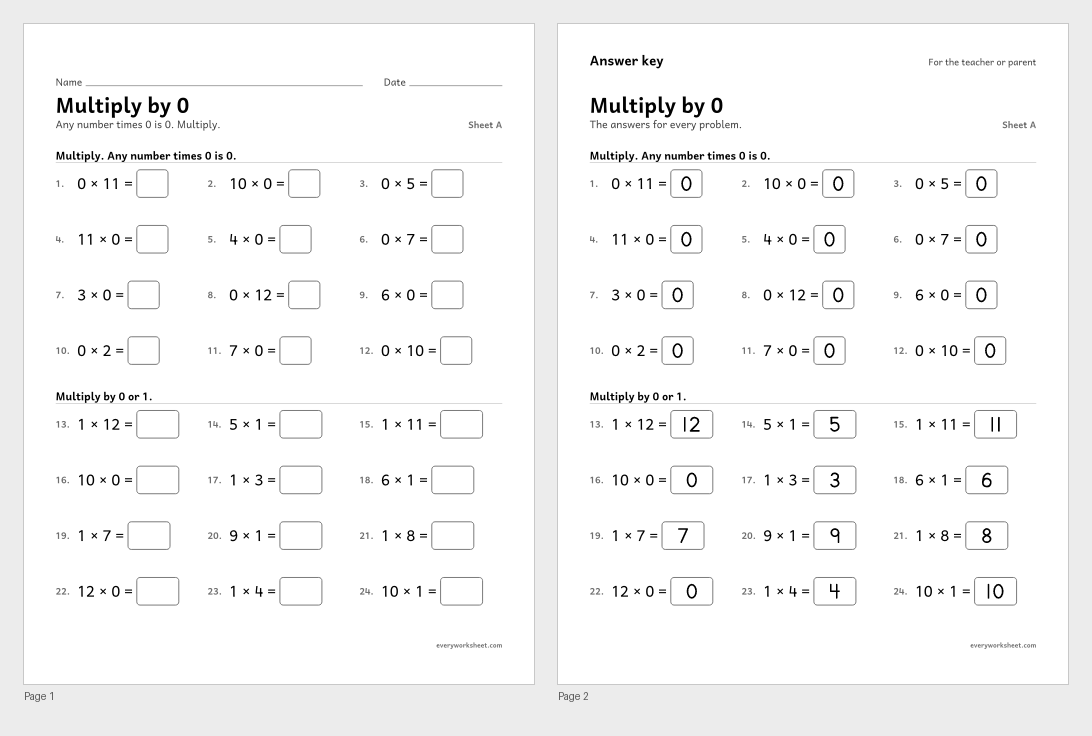
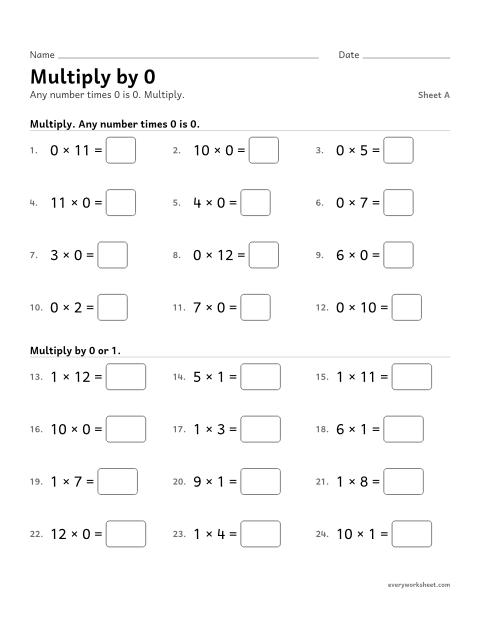
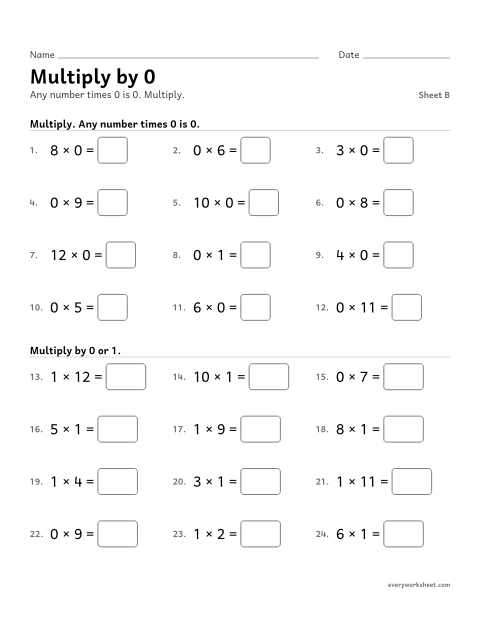
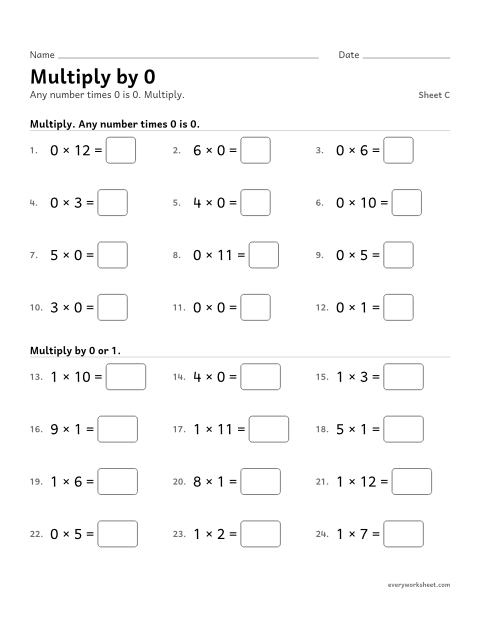
- Anything times 0 is 0, and anything times 1 is itself. That is 23 facts learned in one go.
- Short, daily practice works better than a long session once a week.
Questions teachers and parents ask
What multiplication should a 3rd grader know?
By the end of 3rd grade, children know from memory all products of two one-digit numbers, up to 9 × 9 and 10 × 10. They also multiply a one-digit number by a multiple of 10, like 6 × 40, and use multiplication to solve word problems within 100.
What order should the times tables be taught in?
Most children find this order easiest: 2, 5 and 10; then 0 and 1; then 3, 4 and 6 (using doubles); then 7, 8 and 9. The 11s and 12s are extra practice after that.
What is a mad minute?
A mad minute is a page of quick facts children answer in one minute (or as many as they can). It builds speed once the facts are understood. Our mad minutes have 60 facts in columns and a score line.
How does multiplication color by number work?
Each box has a fact. The child multiplies, finds the product in the color key and colors the box. When every box is done, a picture appears. The answer key shows the finished picture.
Are there answer keys?
Yes. Every page has an answer key on page 2 of the PDF.