 View all 2 pages
Circle the different picture
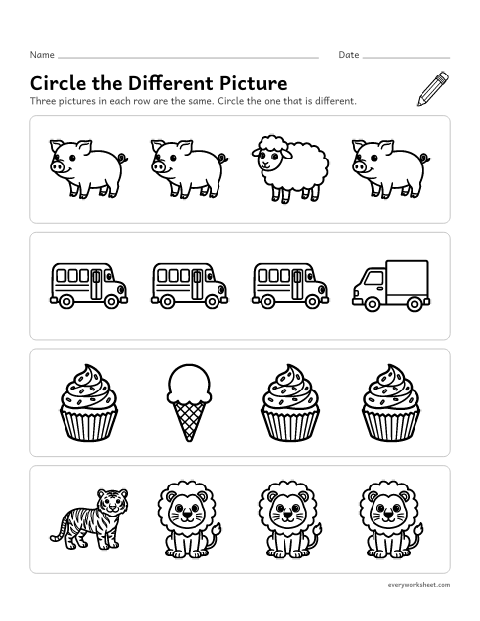
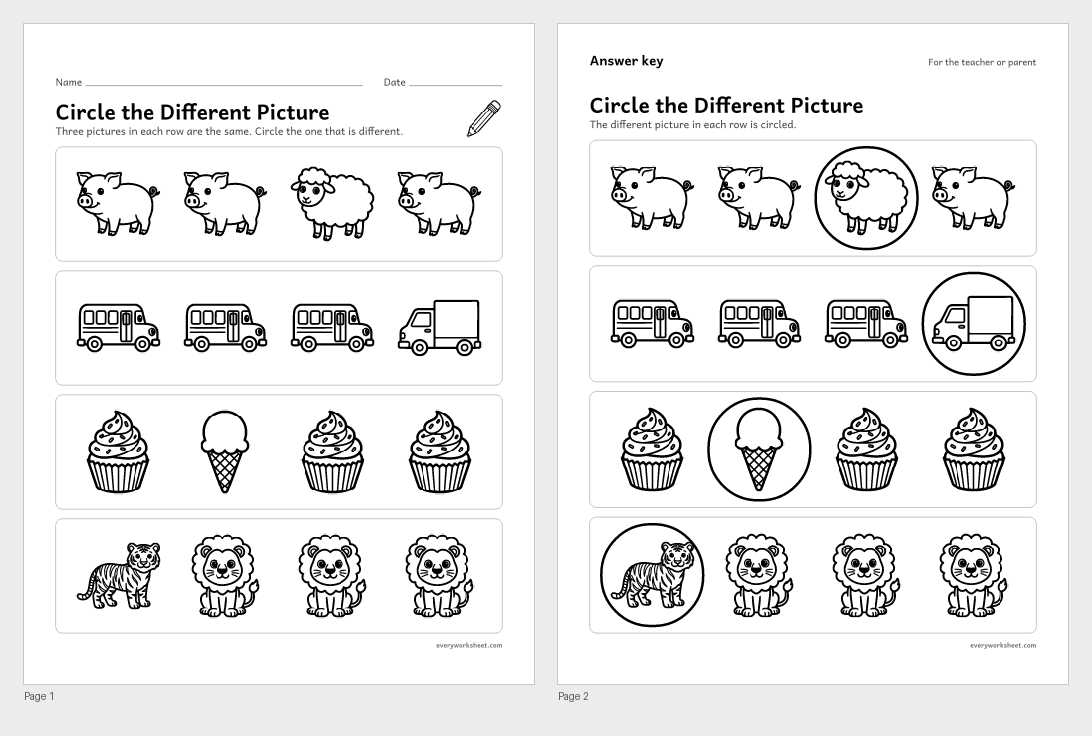
Finding the picture that is different
Answer key on page 2
2 pages708 KB
Circle the one that is different, find the two that are the same, same or different, and spot the difference pictures.
View all 2 pagesFinding the picture that is different
Answer key on page 2
2 pages708 KB
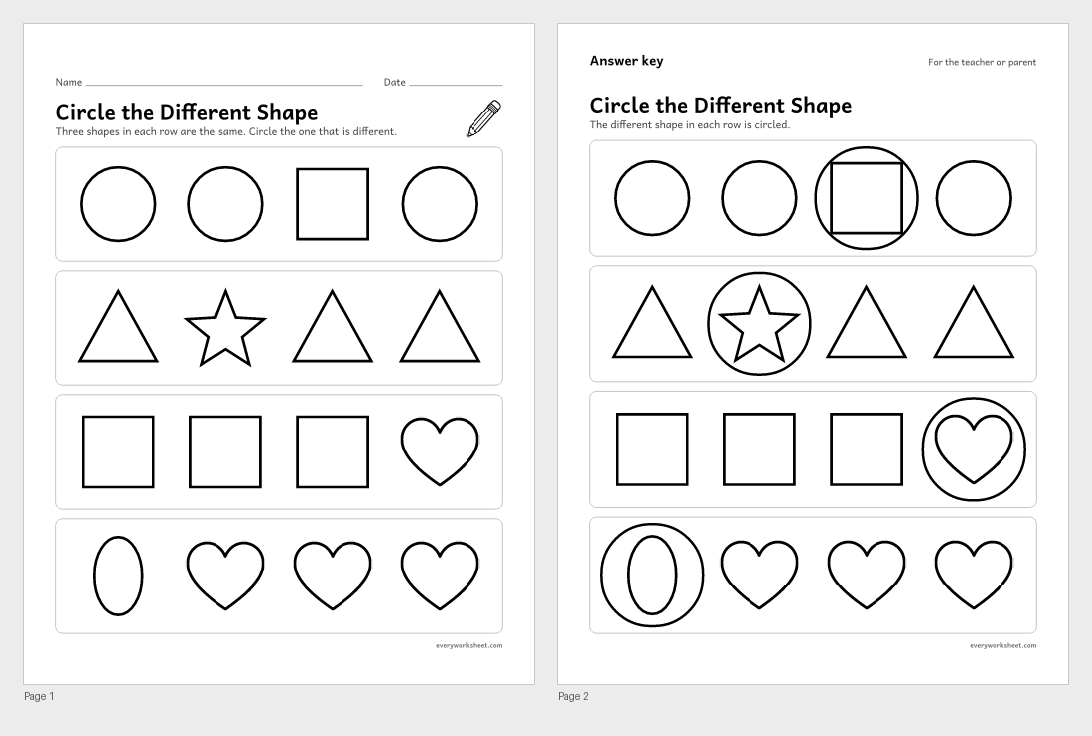 View all 2 pages
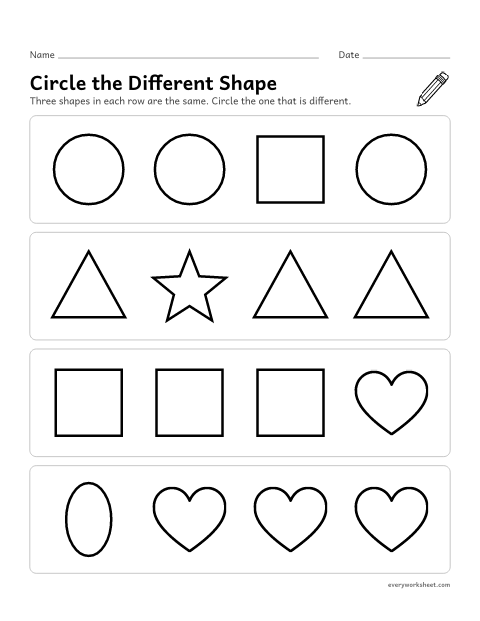
Finding the shape that is different
Answer key on page 2
2 pages61 KB
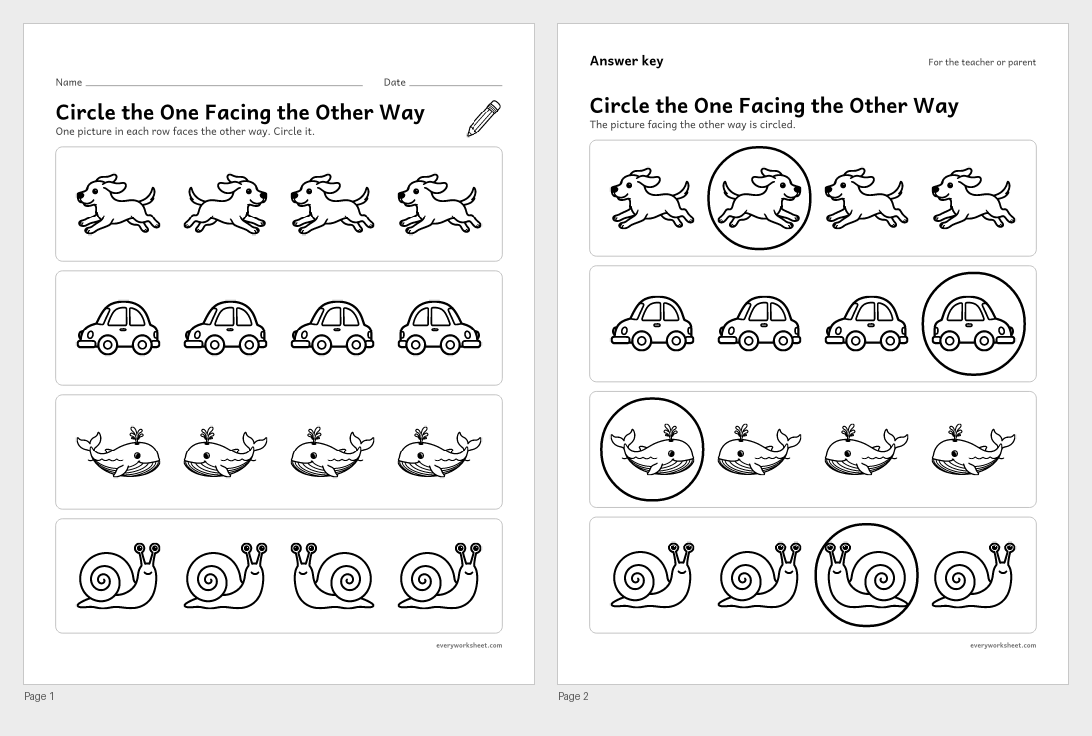 View all 2 pages
Noticing which way a picture faces
Answer key on page 2
2 pages268 KB
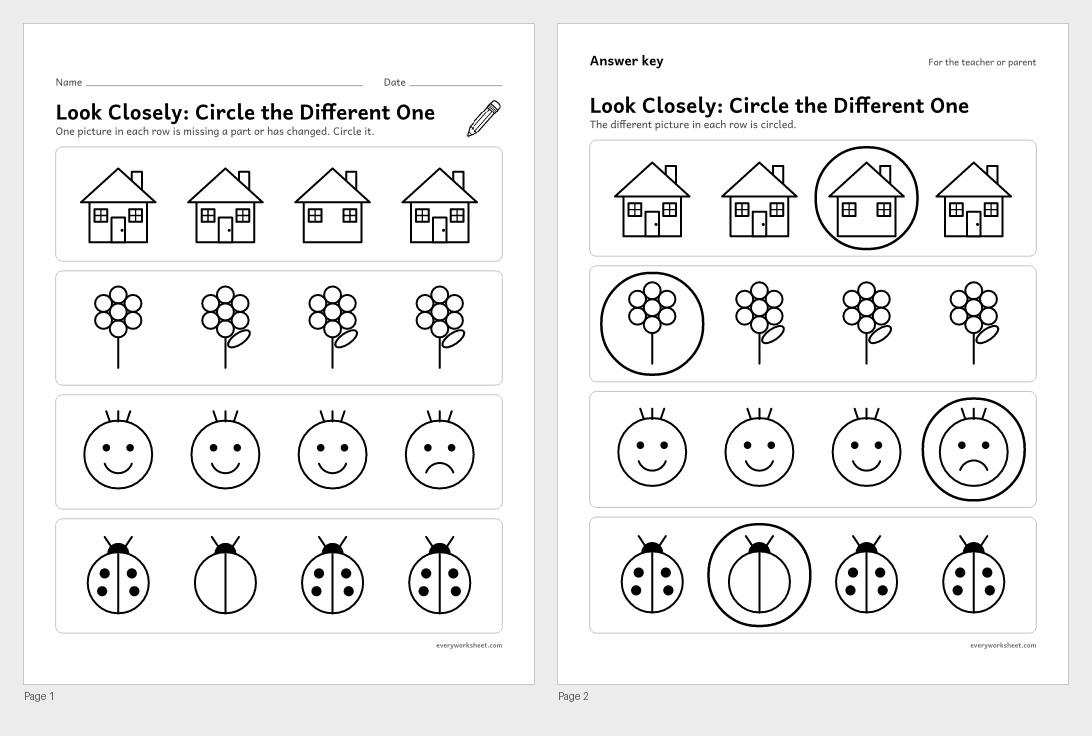 View all 2 pages
Finding a small difference between pictures
Answer key on page 2
2 pages40 KB
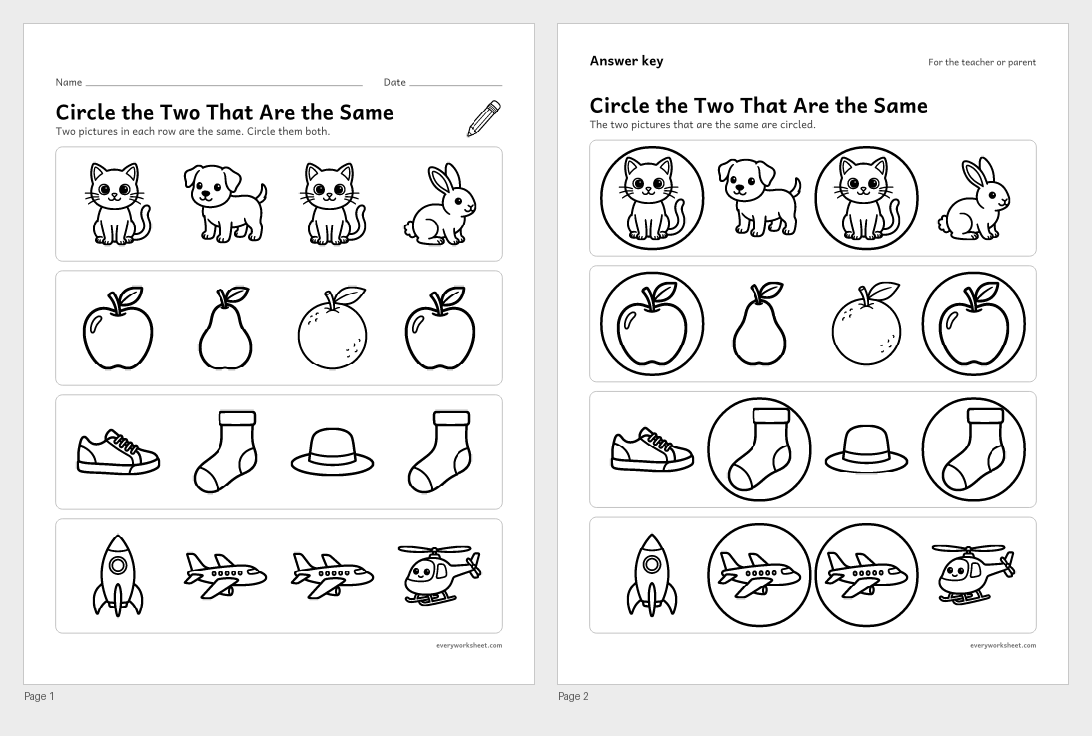 View all 2 pages
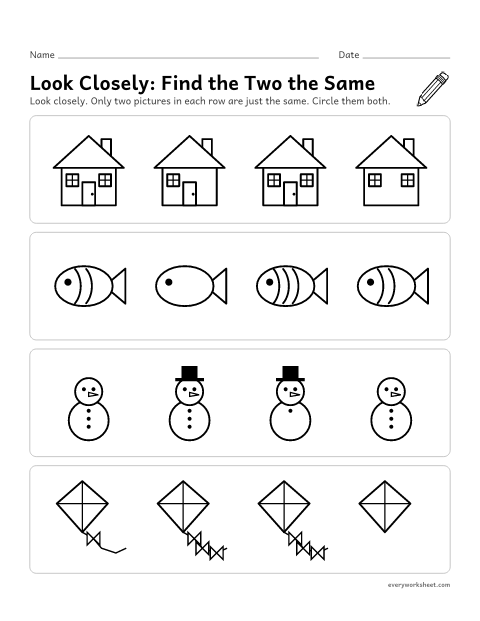
Finding two pictures that are the same
Answer key on page 2
2 pages523 KB
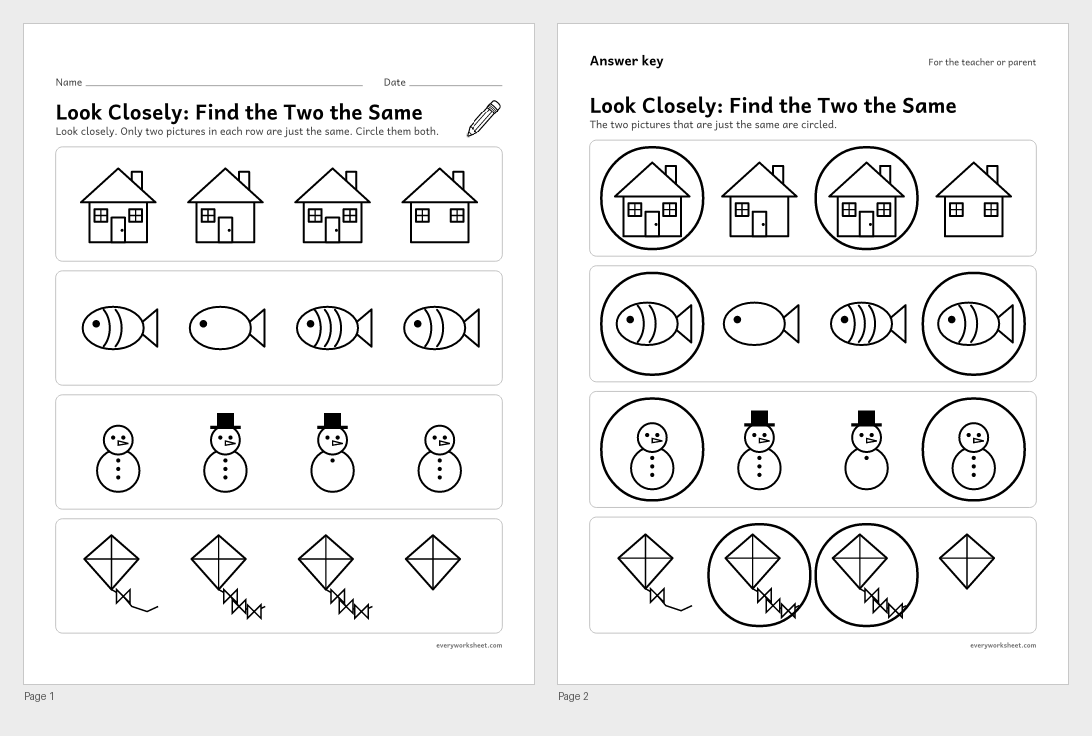 View all 2 pages
Comparing small details to find two pictures that match
Answer key on page 2
2 pages41 KB
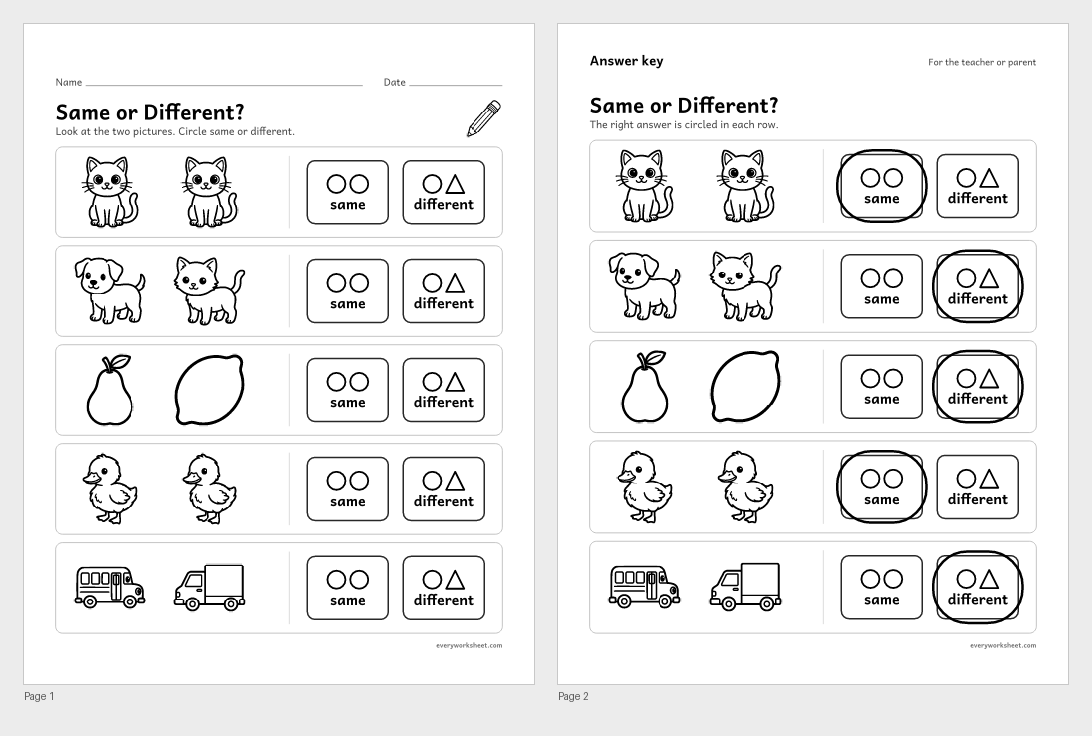 View all 2 pages
Telling whether two pictures are the same or different
Answer key on page 2
2 pages389 KB
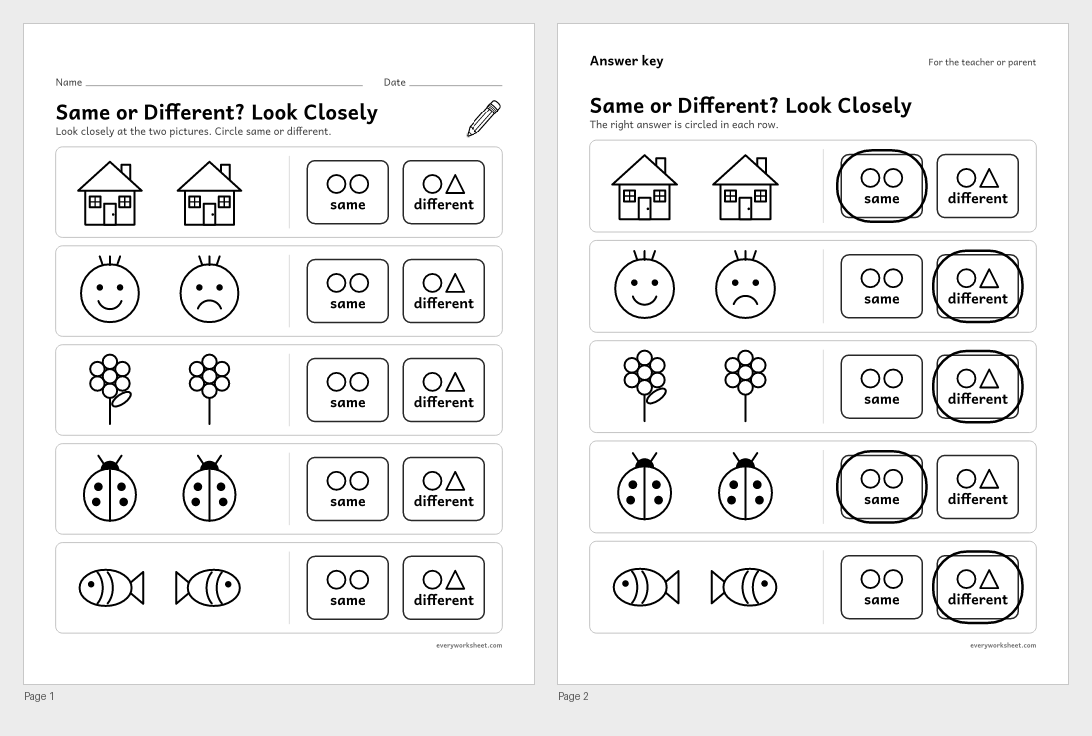 View all 2 pages
Comparing details to tell same from different
Answer key on page 2
2 pages42 KB
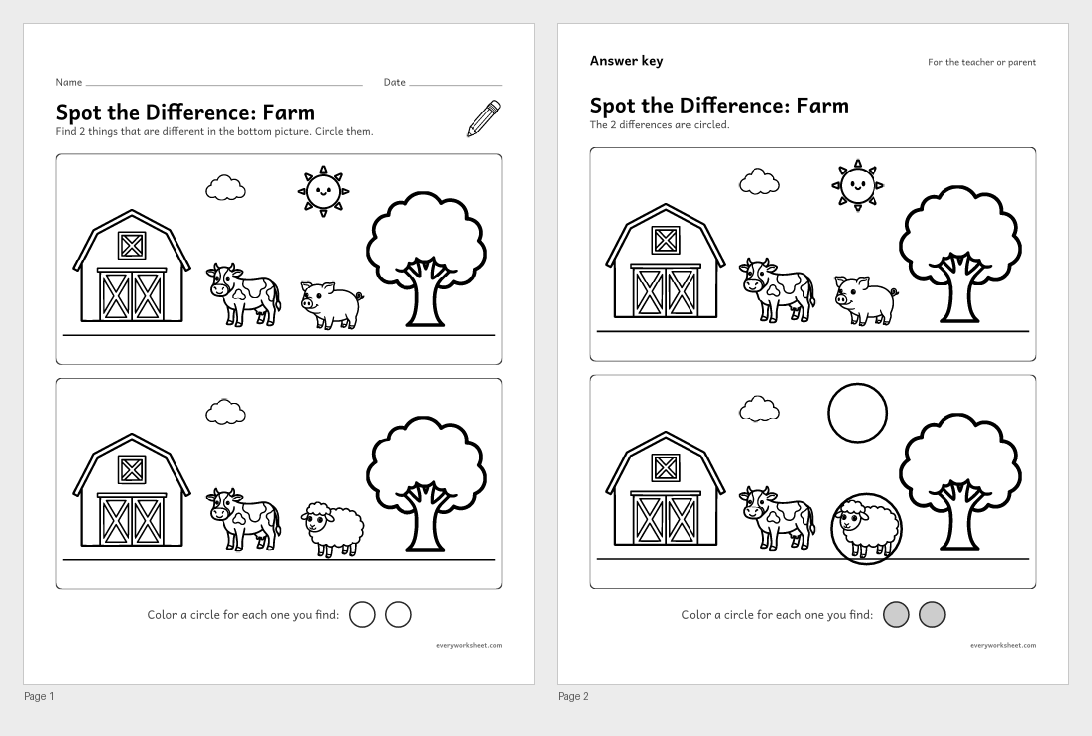 View all 2 pages
Finding 2 differences between two pictures
Answer key on page 2
2 pages340 KB
 View all 2 pages
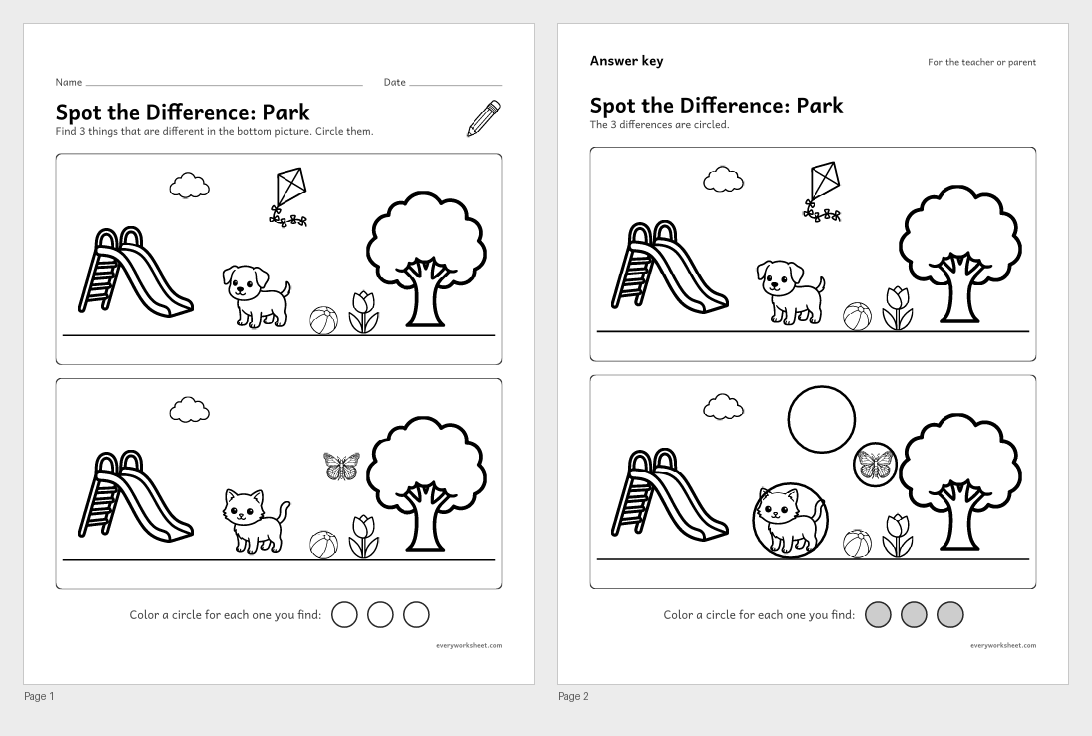
Finding 3 differences between two pictures
Answer key on page 2
2 pages521 KB
Print at 100% (actual size) for the cleanest tracing lines.
Telling same from different is one of the first thinking skills preschoolers practice. It trains the close looking children need later to tell b from d, 6 from 9, and one word from another.
These same and different worksheets start easy, with a pig among three sheep, and build up. Next come shapes, a picture facing the other way, and pictures that differ in one small part, like a house with no door or a ladybug with no spots. Then children find the two that match, say whether two pictures are the same or different, and spot 2 or 3 differences between two scenes.
Every page has big black and white pictures and one short direction for the grown-up. Each page has an answer key on page 2, and every page prints on US Letter or A4.
ELOF P-SCI 3Child compares and categorizes observable phenomena.ELOF P-MATH 9Child identifies, describes, compares, and composes shapes.ELOF P-ATL 6Child maintains focus and sustains attention with minimal adult support.Spotting what is the same and what is different is the base of sorting, matching, patterns, and later of telling letters and numbers apart. It also builds focus, because children have to look carefully before they answer.
The first pages suit most 3 year olds with a grown-up's help. The look closely and spot the difference pages suit 4 and 5 year olds.
Yes. Every page in this set has an answer key on page 2 with the right pictures circled.