 View larger
Weather Graph: tally a month of weather
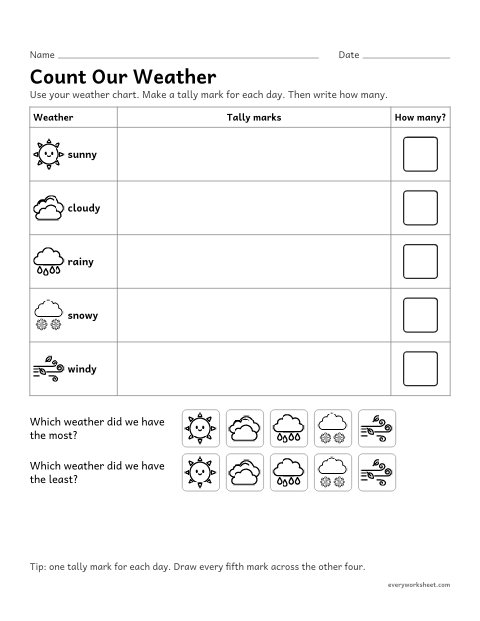
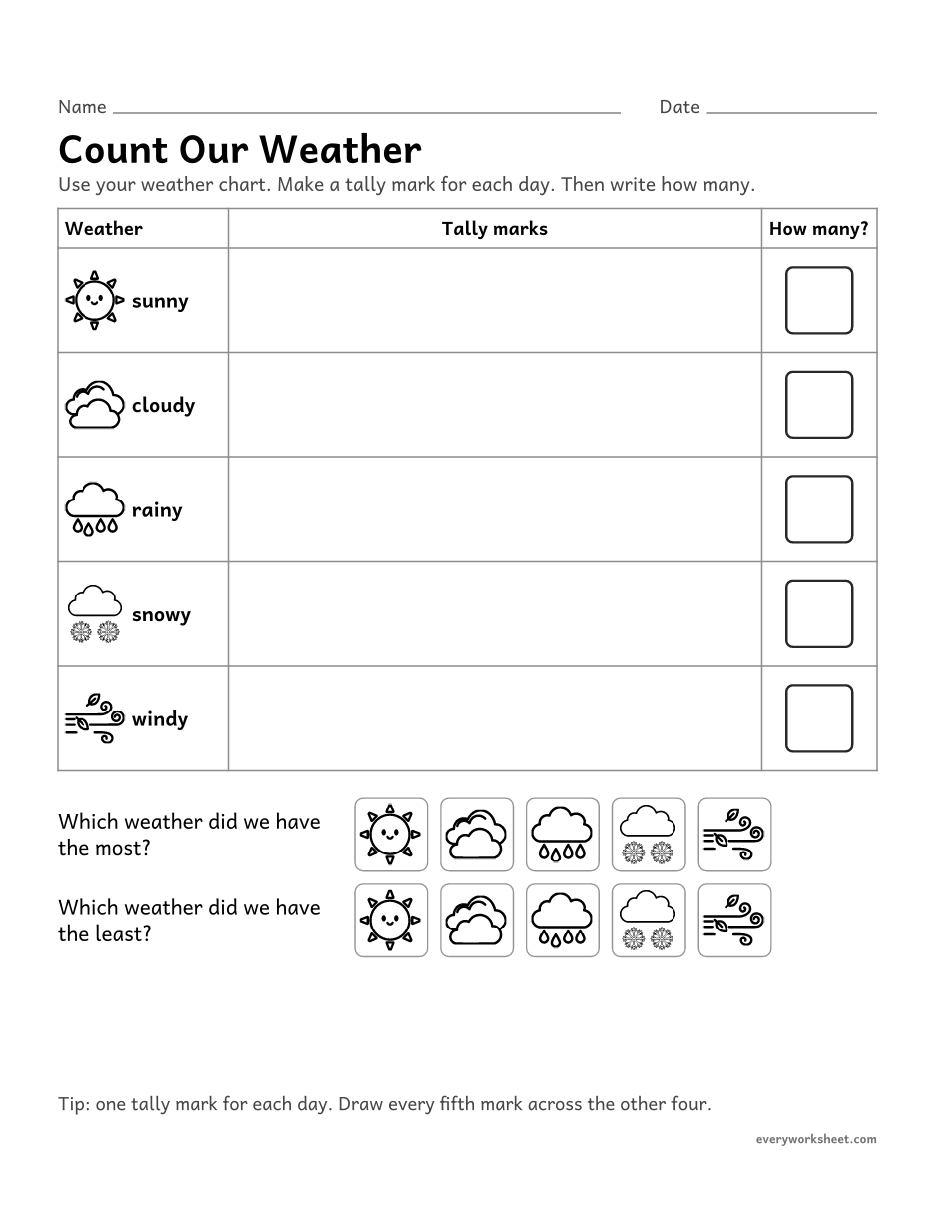
Tallying a month of weather observations and comparing the counts
1 page104 KB
Count and write tally marks in groups of five, read and make tally charts, and tally real data like the weather and class votes.
View largerTallying a month of weather observations and comparing the counts
1 page104 KB
 View all 2 pages
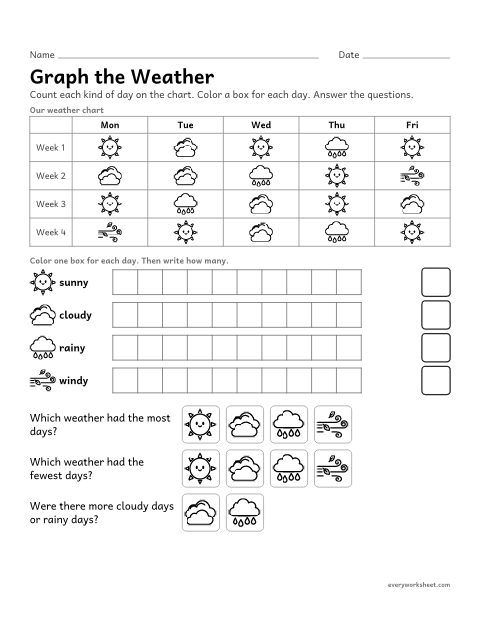
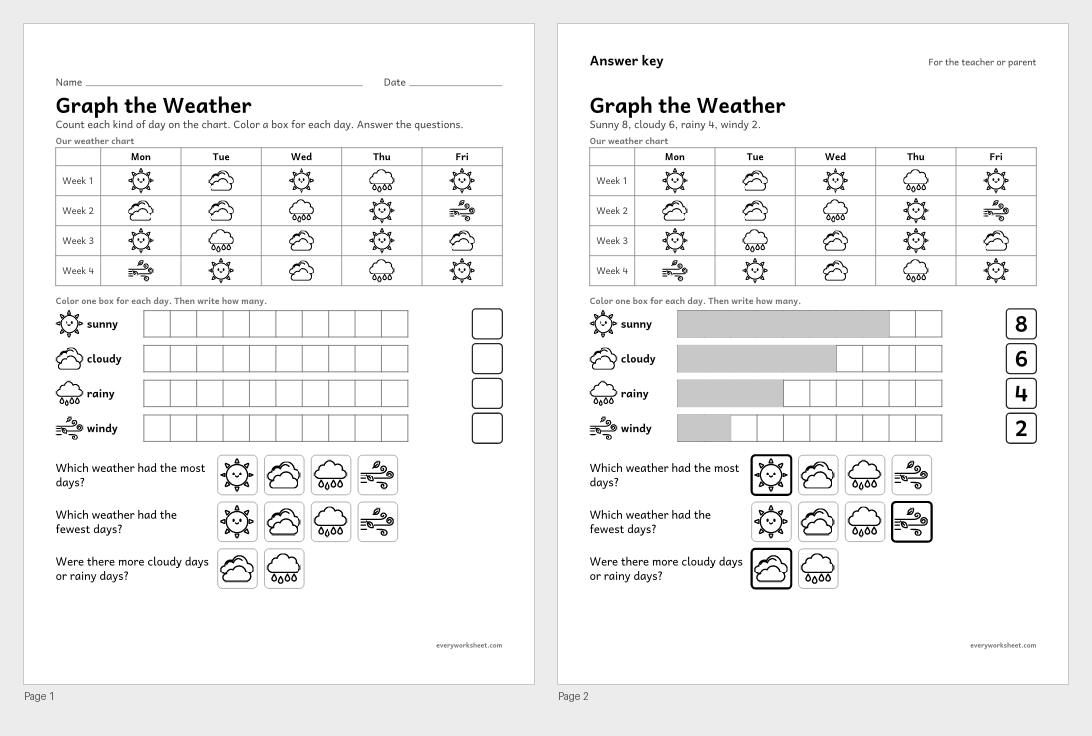
Counting and graphing a month of weather to find a pattern
Answer key on page 2
2 pages140 KB
 View all 2 pages
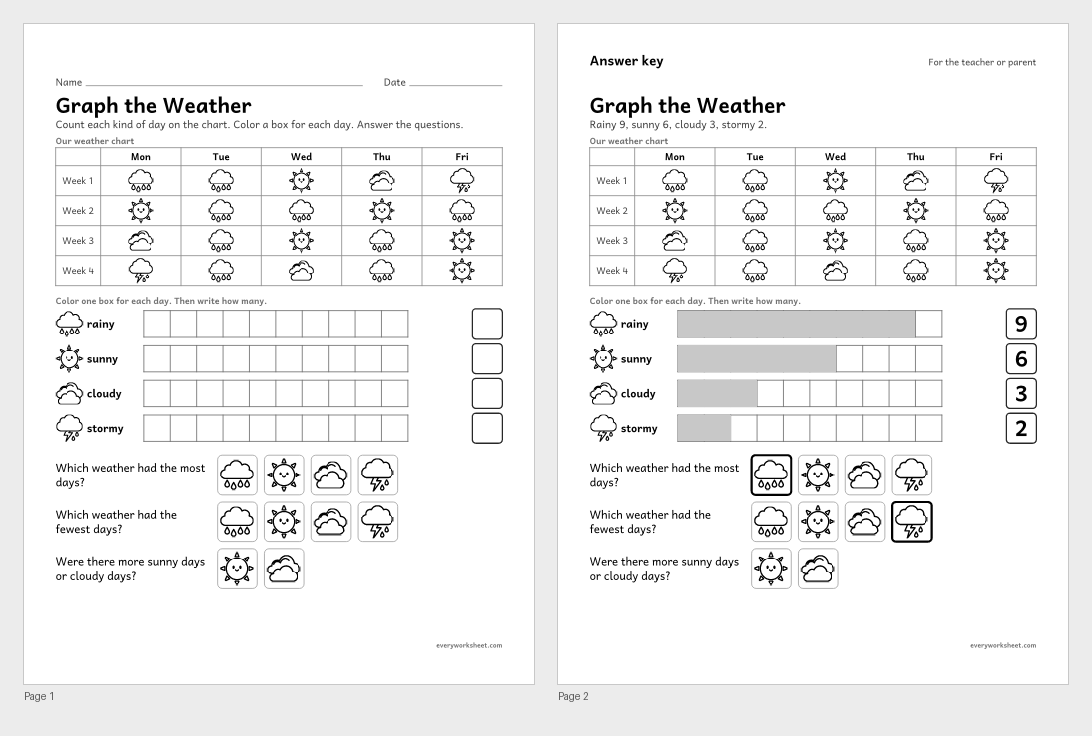
Counting and graphing a month of weather to find a pattern
Answer key on page 2
2 pages131 KB
 View all 2 pages
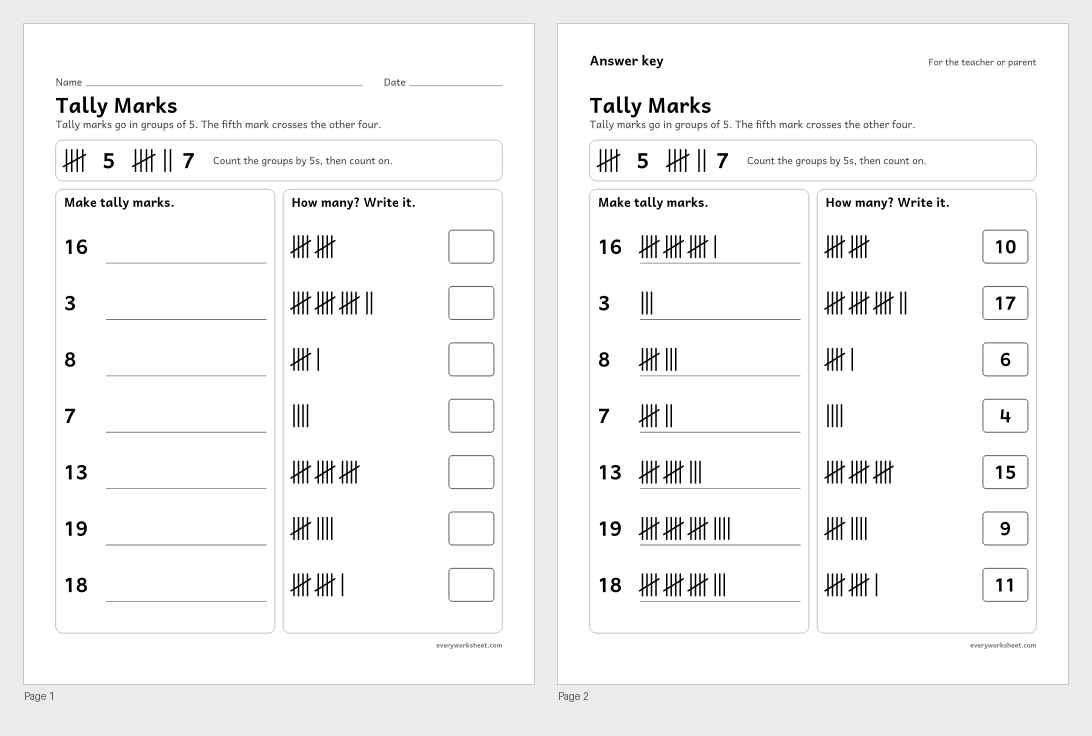
Writing numbers as tally marks in groups of five, and reading tallies
Answer key on page 2
2 pages43 KB
 View all 2 pages
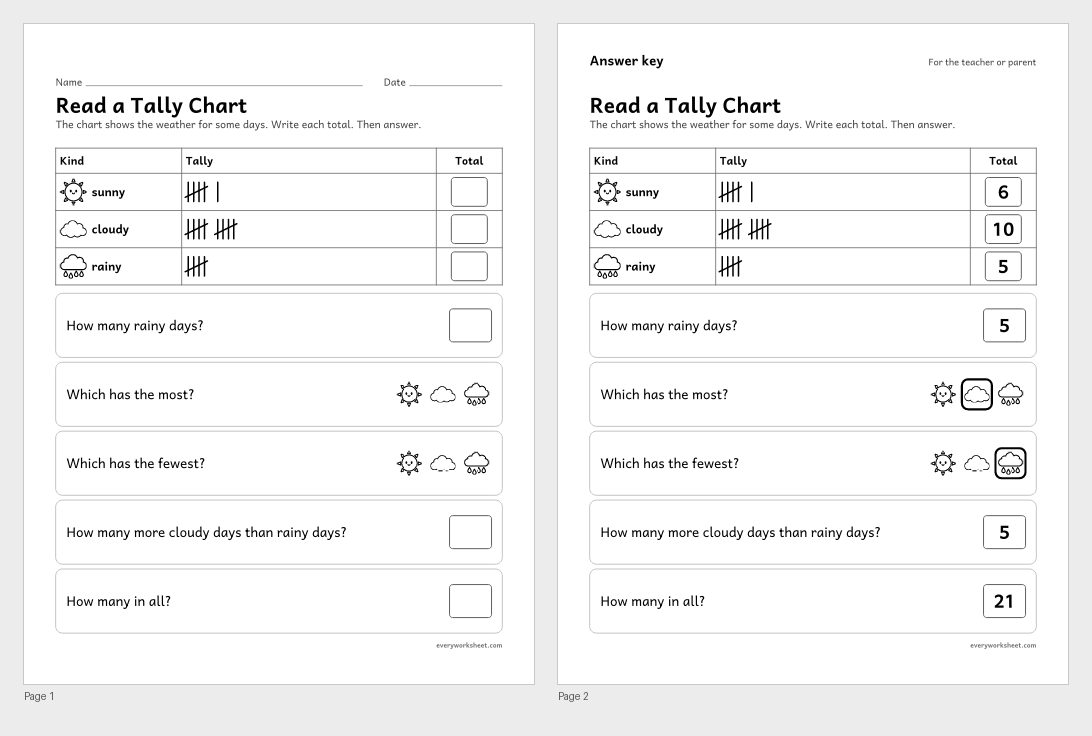
Reading a tally chart with three categories and answering questions
Answer key on page 2
2 pages130 KB
 View all 2 pages
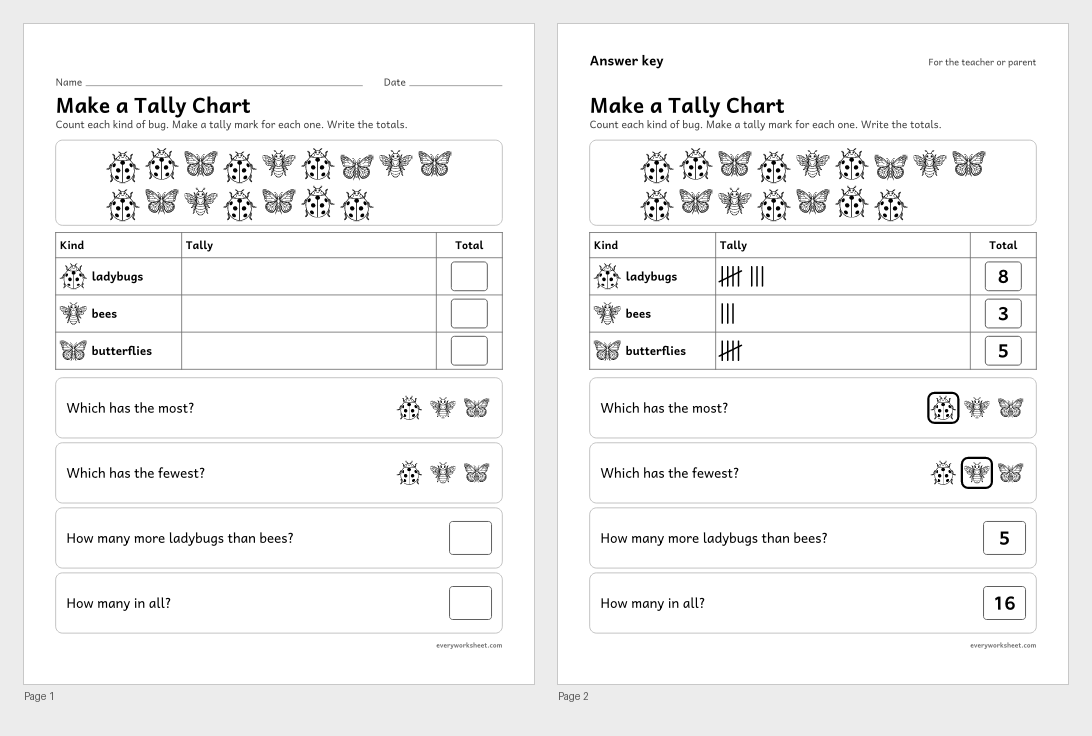
Counting pictures into a tally chart, then answering questions
Answer key on page 2
2 pages864 KB
 View all 2 pages
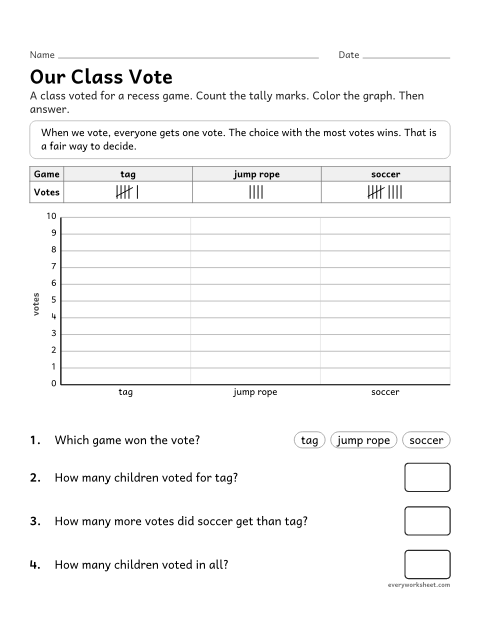
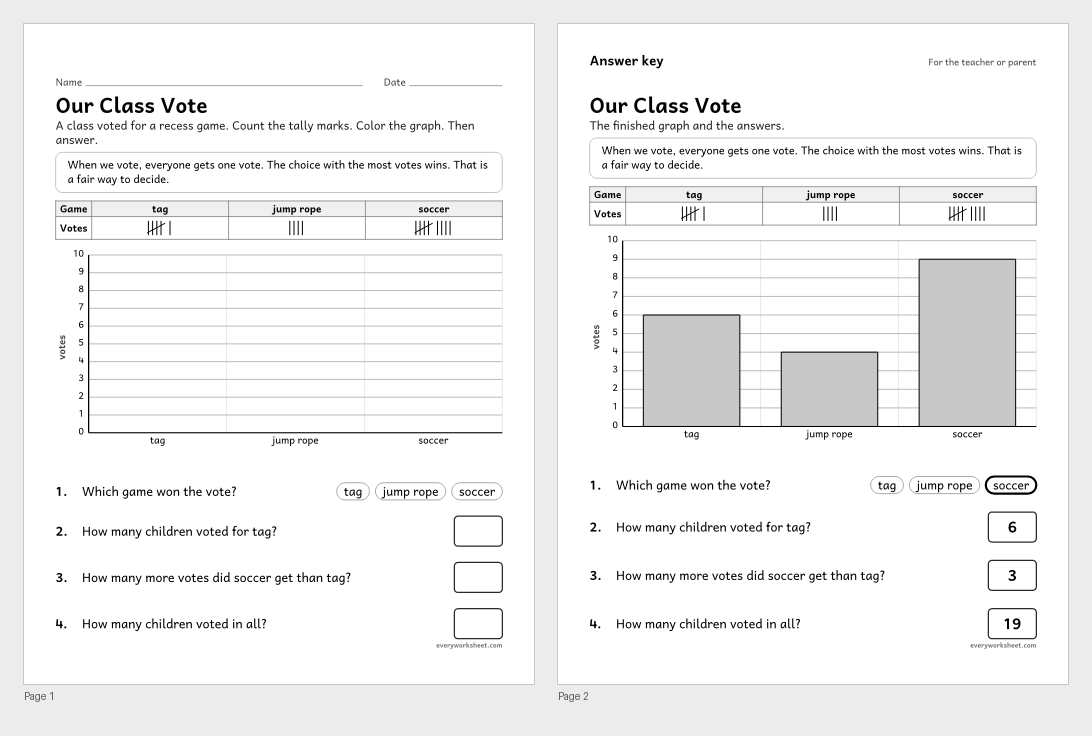
Voting to make a fair group decision and graphing the results
Answer key on page 2
2 pages42 KB
 View all 2 pages
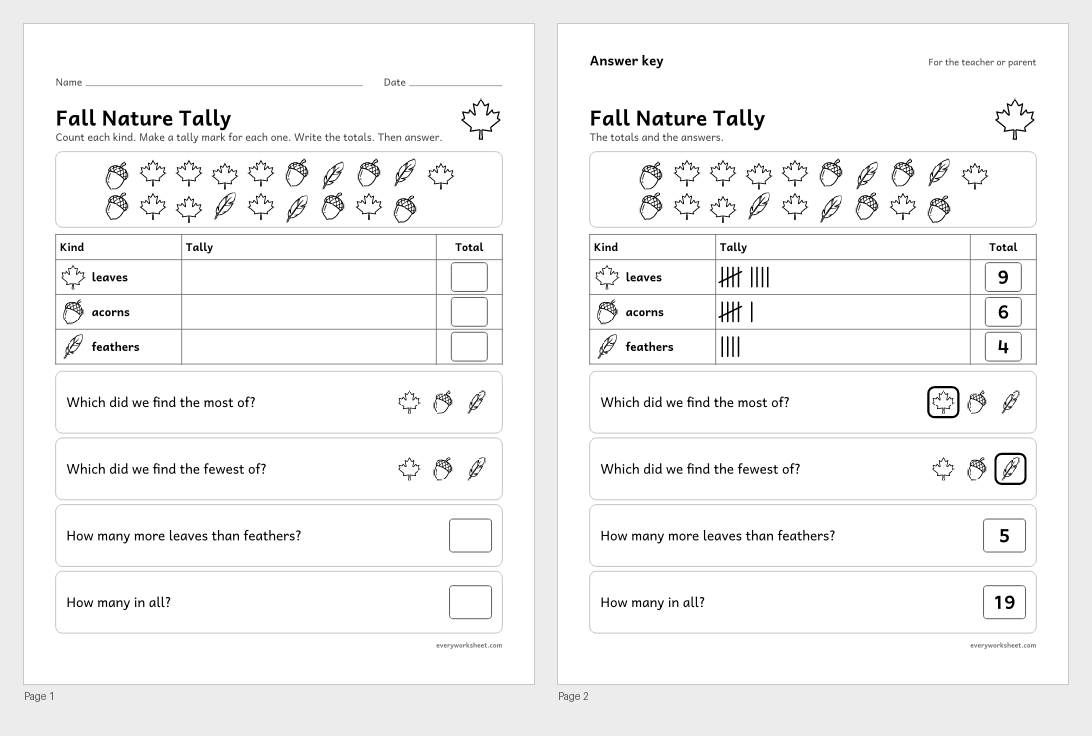
Sorting fall things into a tally chart and comparing the totals
Answer key on page 2
2 pages819 KB
 View all 2 pages
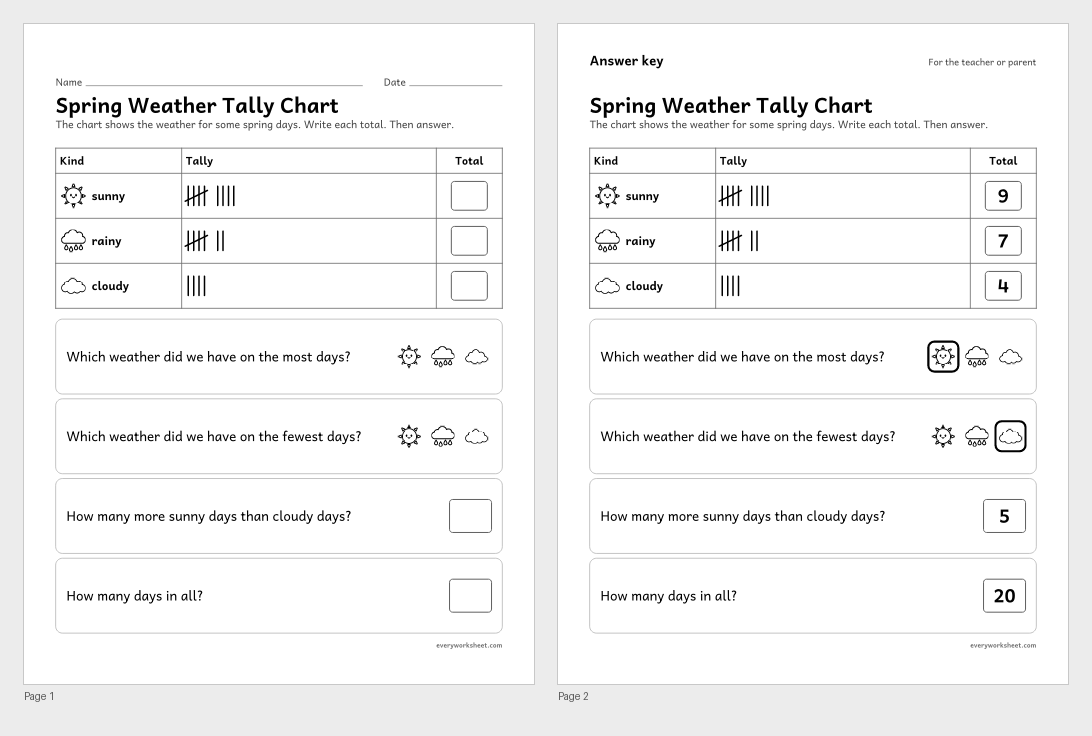
Reading a tally chart of spring weather and comparing the totals
Answer key on page 2
2 pages130 KB
 View all 2 pages
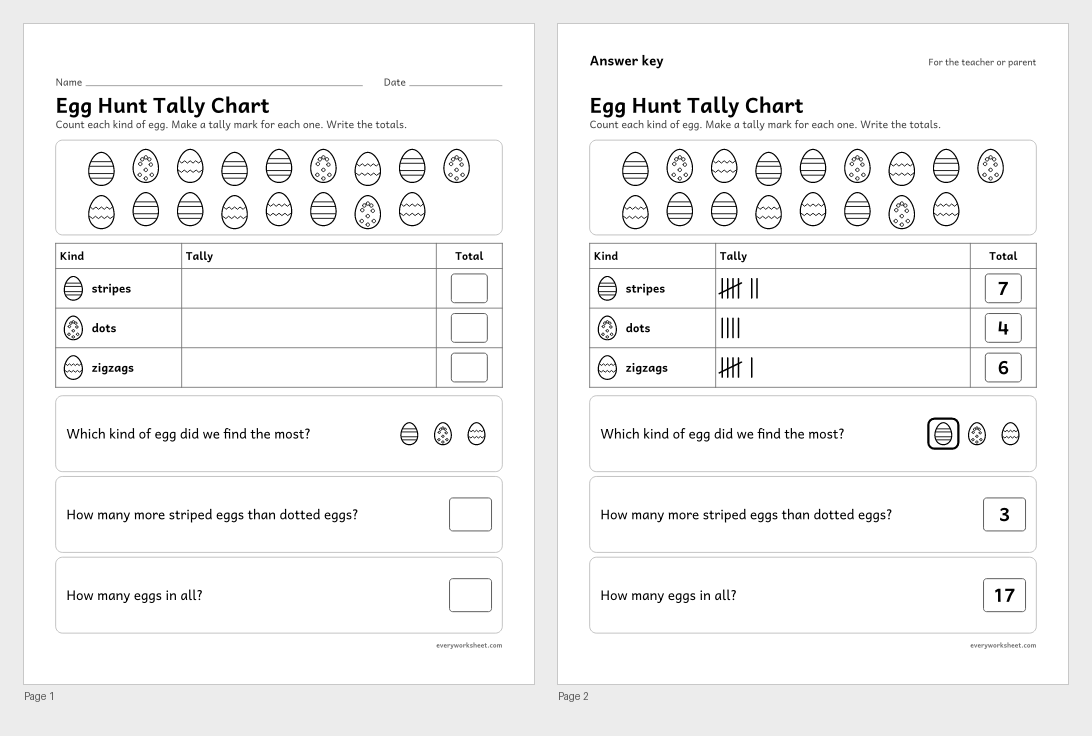
Sorting and tallying eggs into three groups and comparing the totals
Answer key on page 2
2 pages52 KB
 View all 2 pages
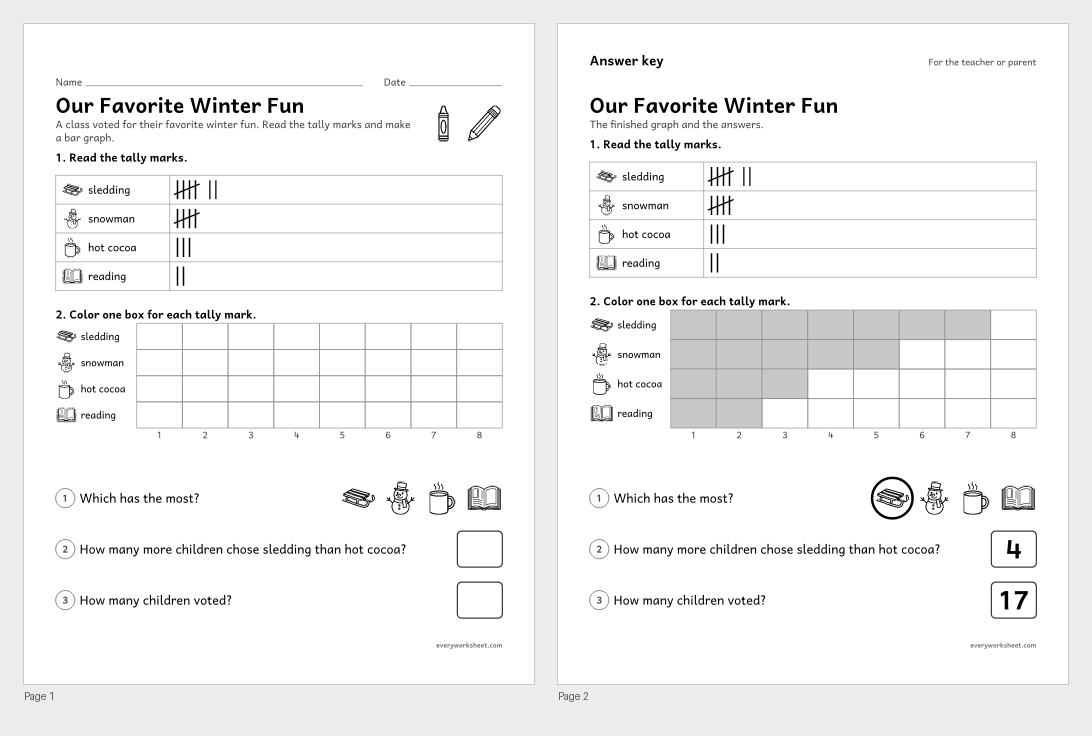
Reading tally marks, making a bar graph and comparing
Answer key on page 2
2 pages502 KB
 View all 2 pages
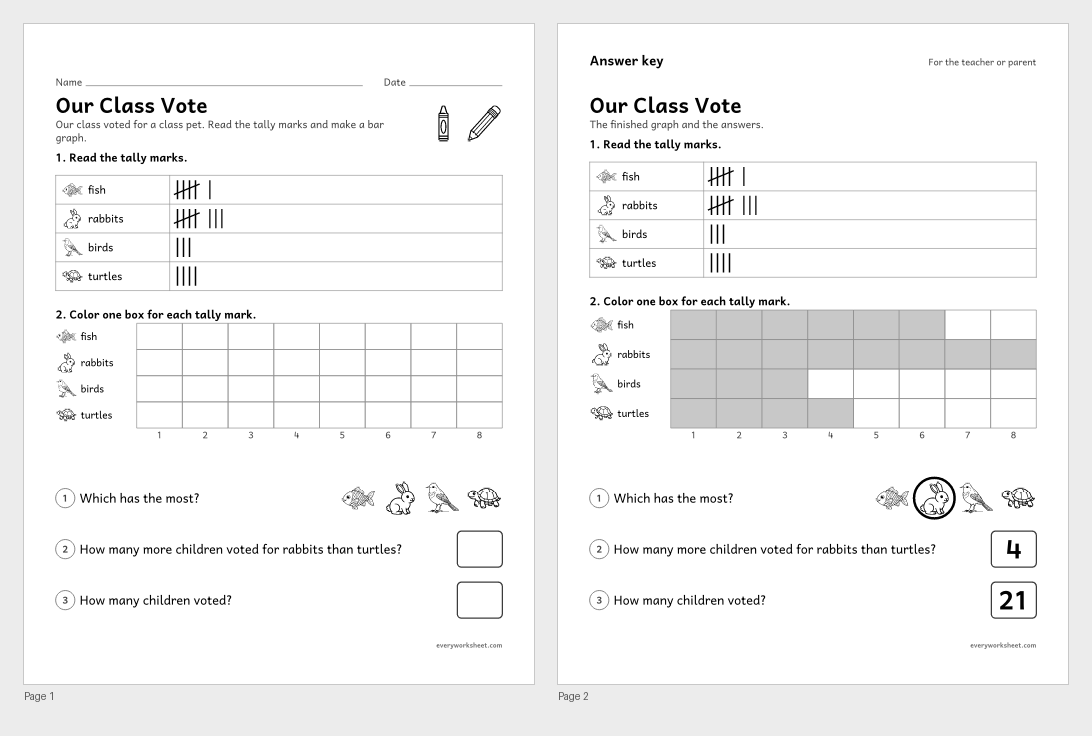
Reading tally marks, making a bar graph and comparing
Answer key on page 2
2 pages469 KB
Print at 100% (actual size) for the cleanest tracing lines.
Tally marks are a quick way to keep count: one line for each thing, with every fifth line drawn across the four before it to make a bundle of five.
Counting tallies by 5s and then by 1s practices skip counting, and a finished tally chart is ready to turn into a bar graph.
Weather and class vote sheets give children real things to tally.
CCSS.MATH.CONTENT.K.MD.B.3Classify objects into given categories; count the numbers of objects in each category and sort the categories by count.CCSS.MATH.CONTENT.1.MD.C.4Organize, represent, and interpret data with up to three categories; ask and answer questions about the total number of data points, how many in each category, and how many more or less are in one category than in another.Count each bundle of five by 5s (5, 10, 15) and then count the single marks on by 1s. Three bundles and two marks make 17.
Groups of five are easy to see at a glance and easy to count by 5s, so a long tally can be counted quickly without losing your place.