 View larger
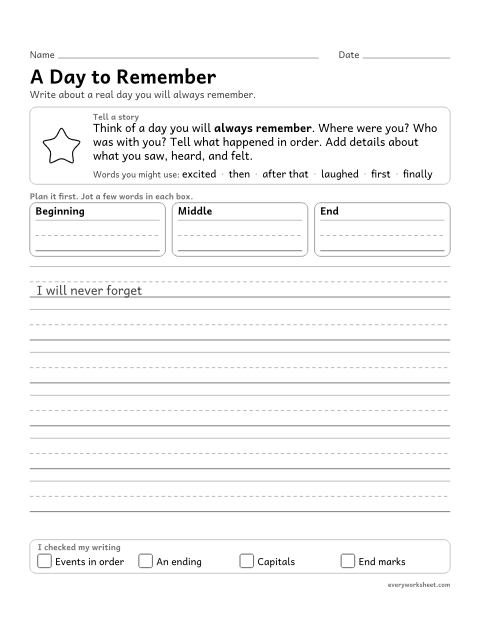
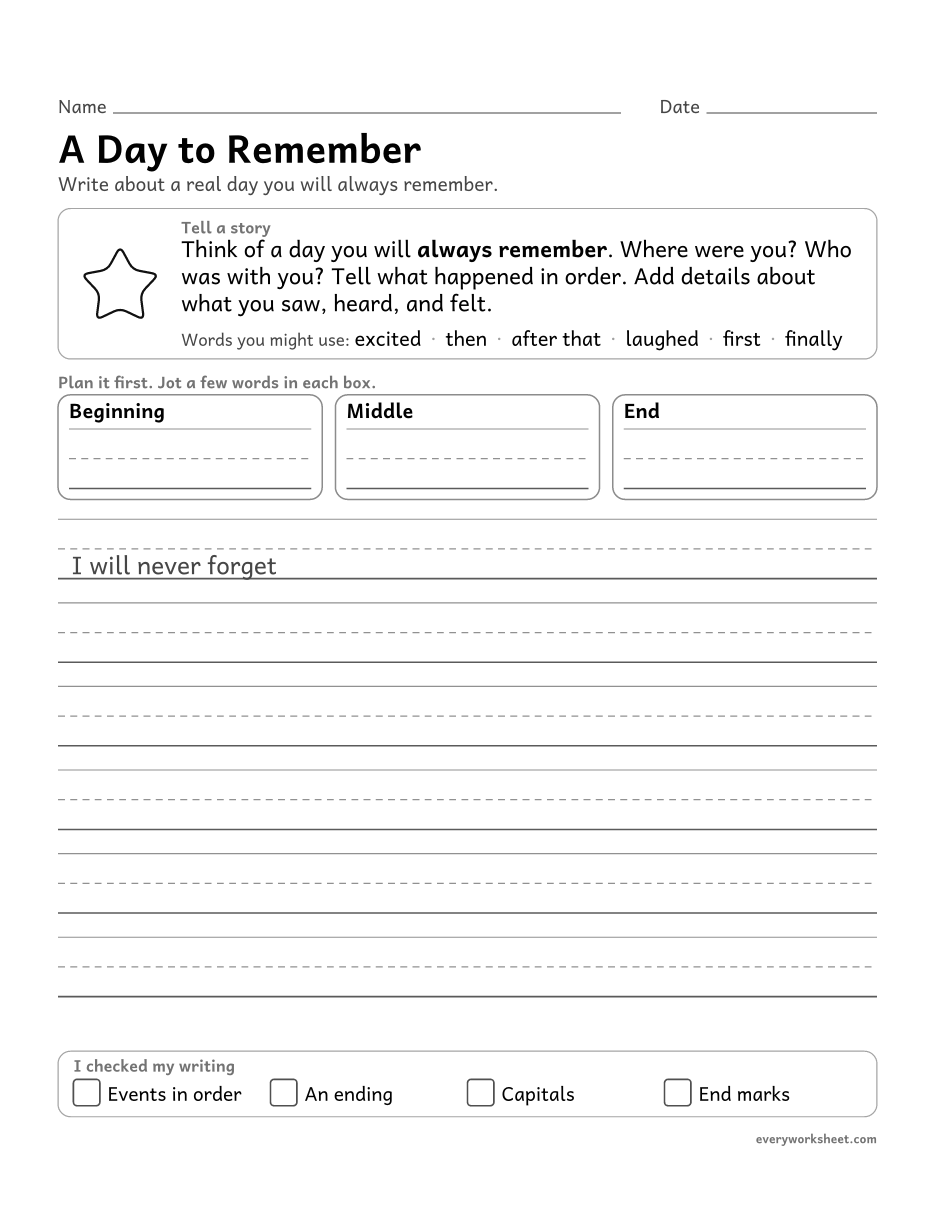
A day to remember
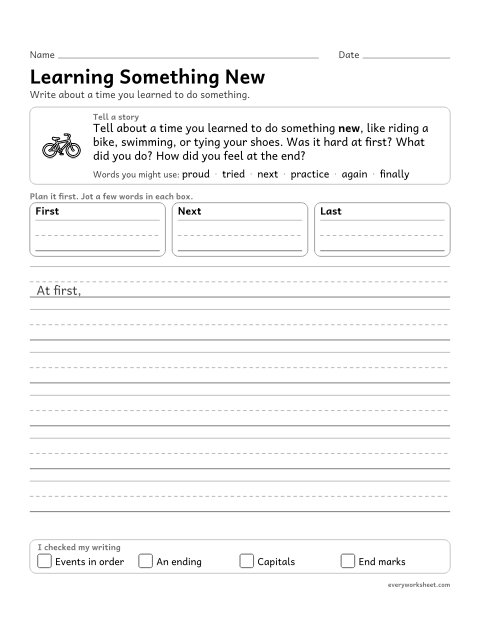
Writing a narrative with events in order, details, feelings and an ending
1 page32 KB
Narrative, informative and opinion writing prompts with plan boxes, word banks and room to write, plus planners and a revise-and-edit page.
View largerWriting a narrative with events in order, details, feelings and an ending
1 page32 KB
 View larger
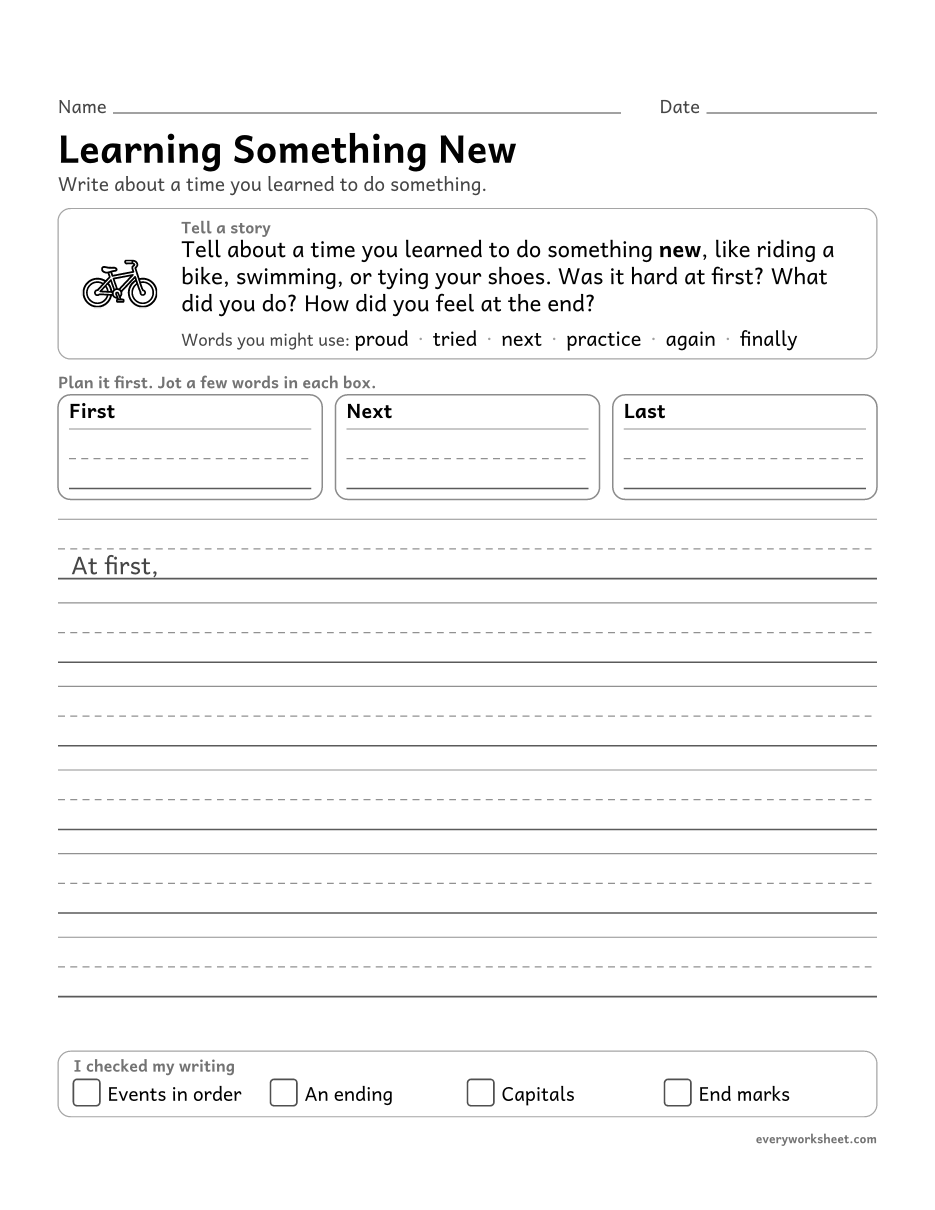
Writing a narrative with events in order, details, feelings and an ending
1 page57 KB
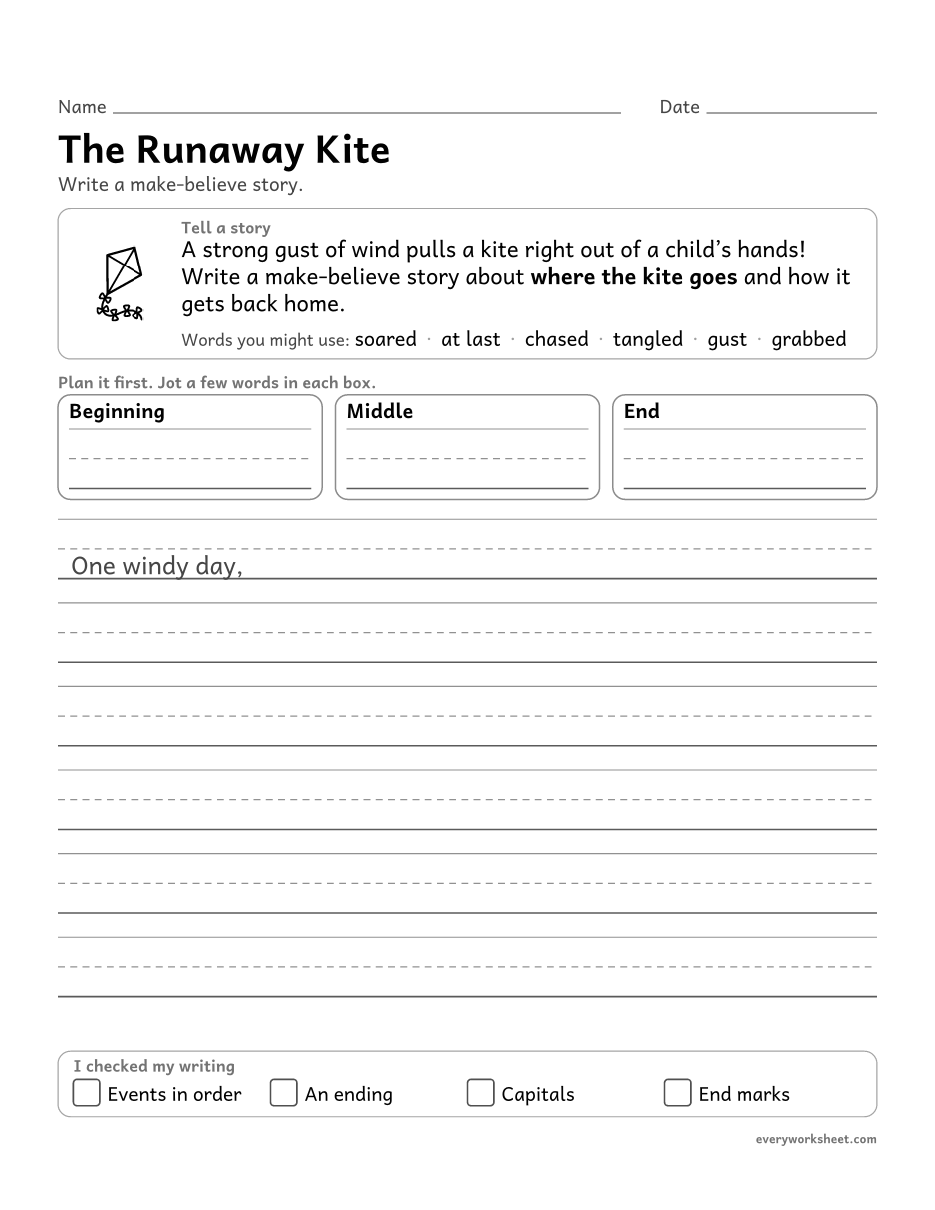 View larger
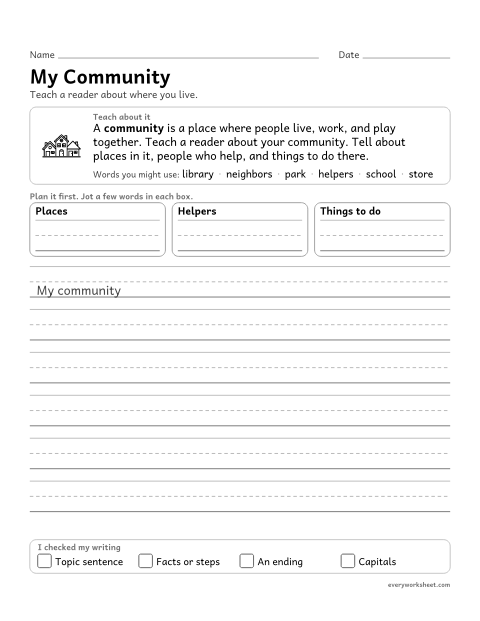
Writing a made-up story with a beginning, a middle and an ending
1 page53 KB
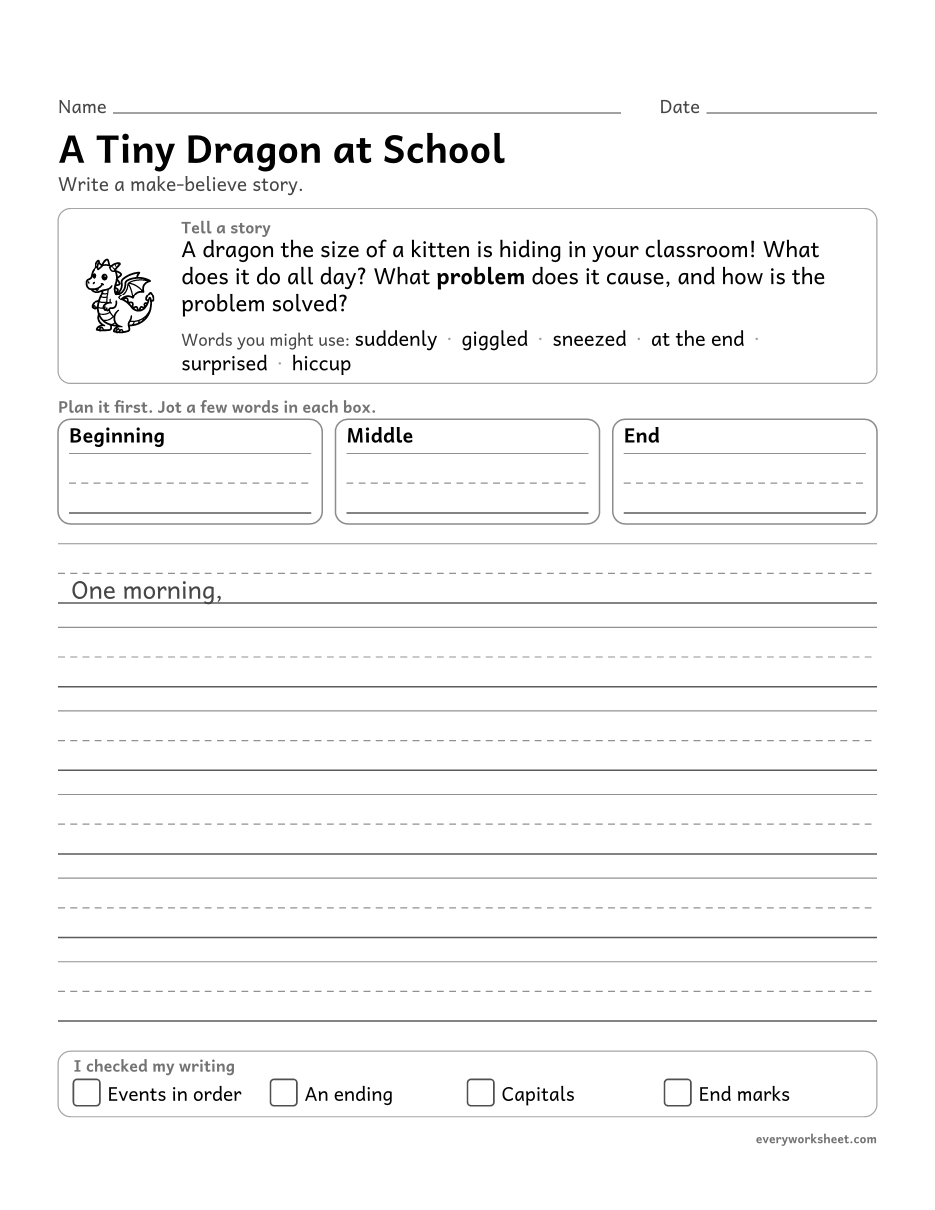 View larger
Writing a made-up story with a problem and a solution
1 page67 KB
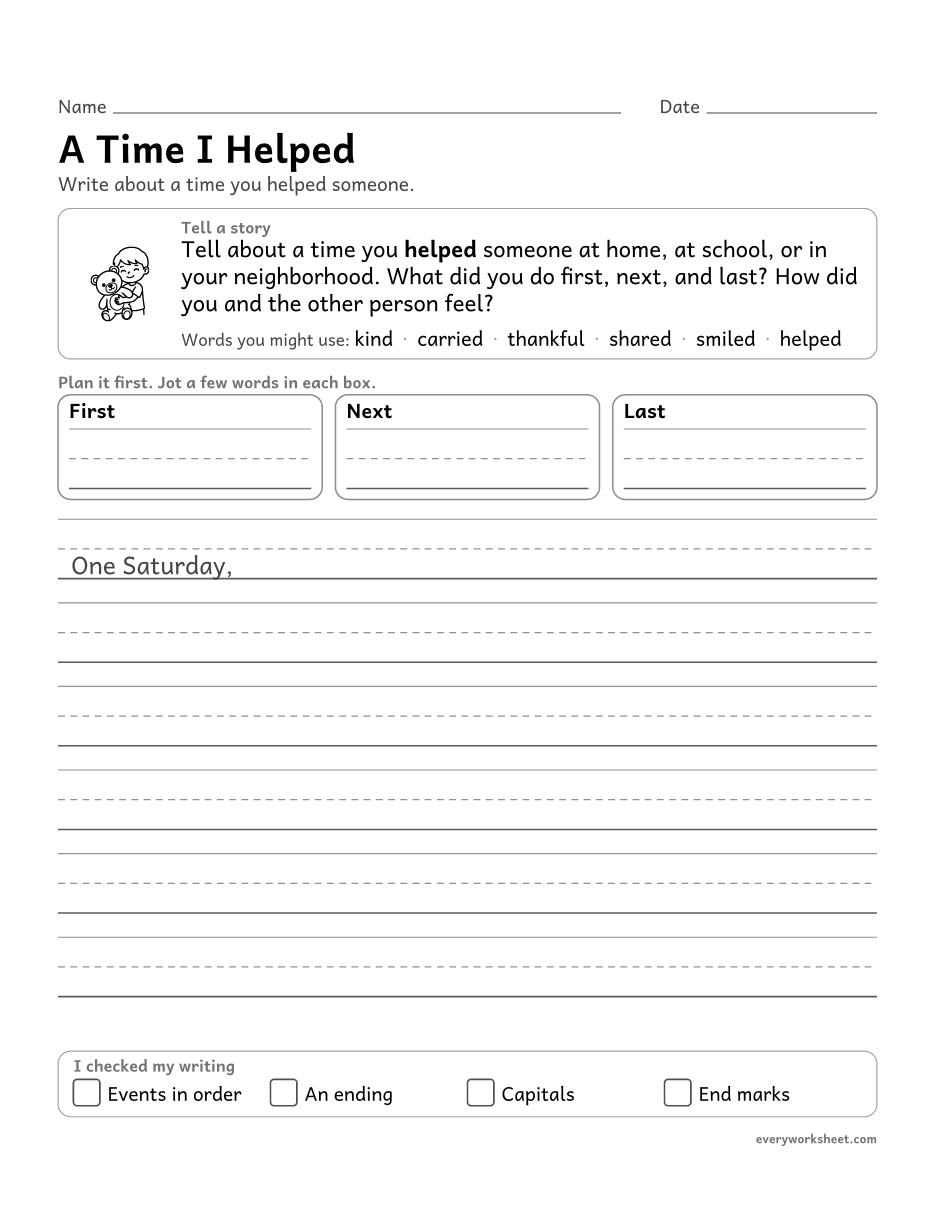 View larger
Writing a narrative with events in order, details, feelings and an ending
1 page54 KB
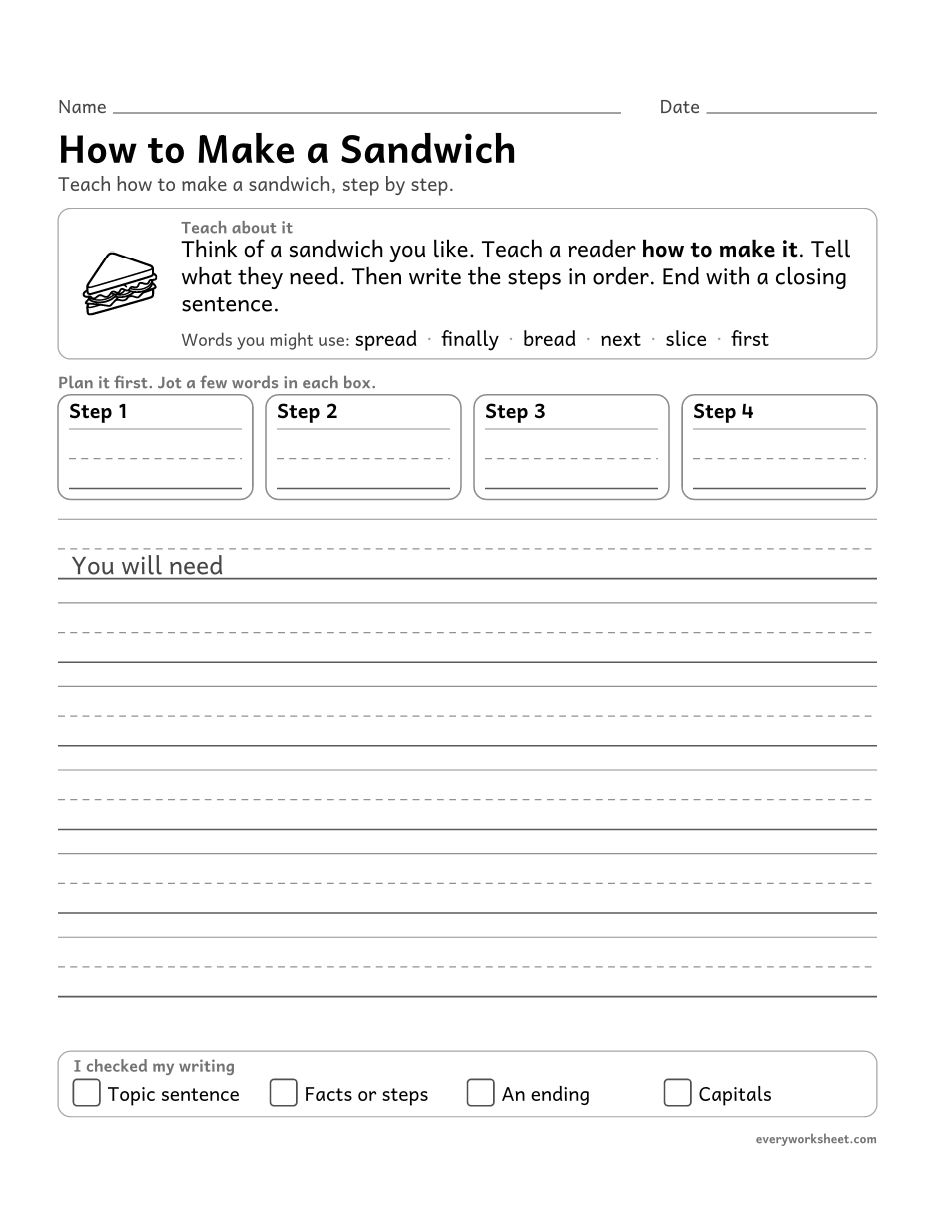 View larger
Writing a how-to piece with steps in order and a closing sentence
1 page62 KB
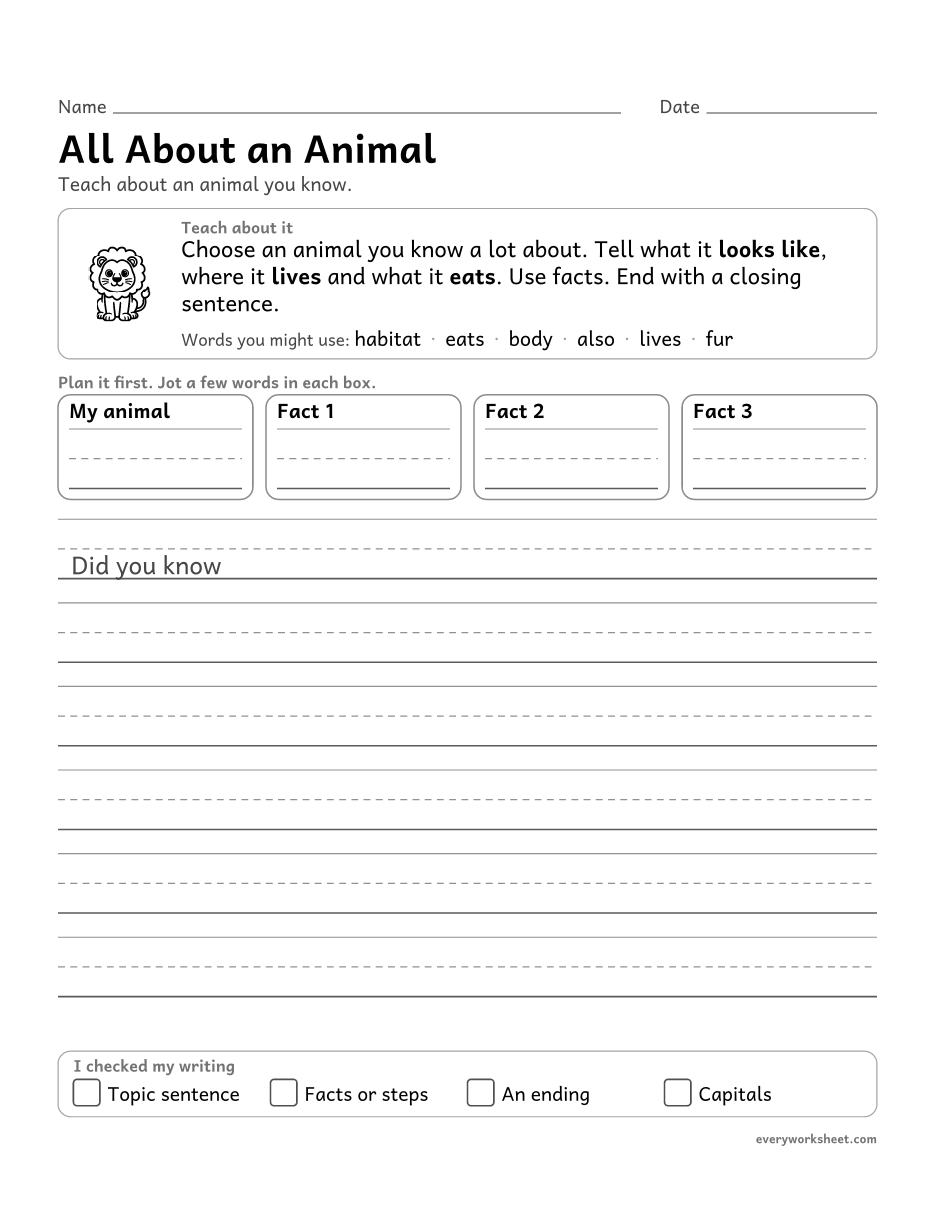 View larger
Writing an informative piece with a topic, facts and a closing sentence
1 page63 KB
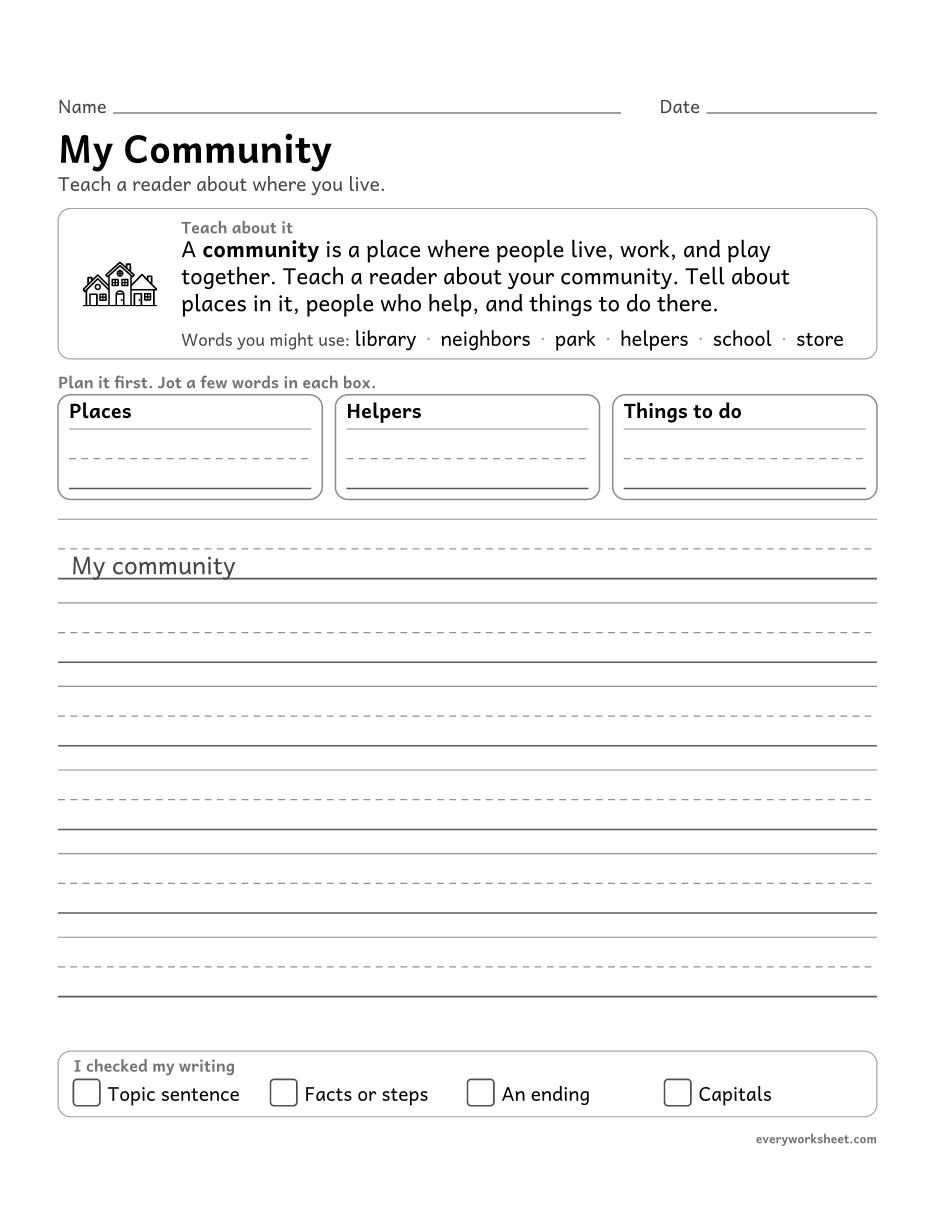 View larger
Writing an informative piece with a topic, facts and a closing sentence
1 page38 KB
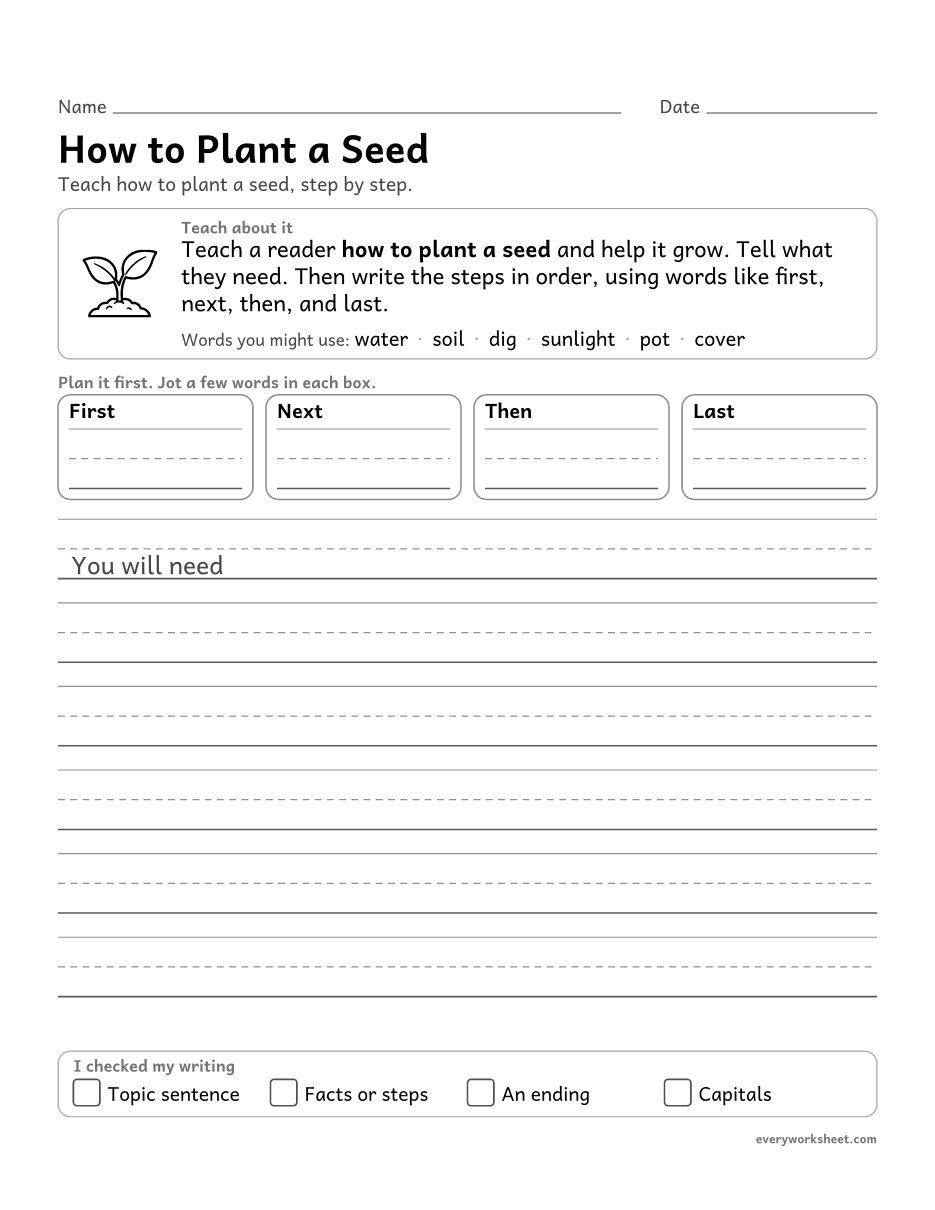 View larger
Writing a how-to piece with steps in order and a closing sentence
1 page44 KB
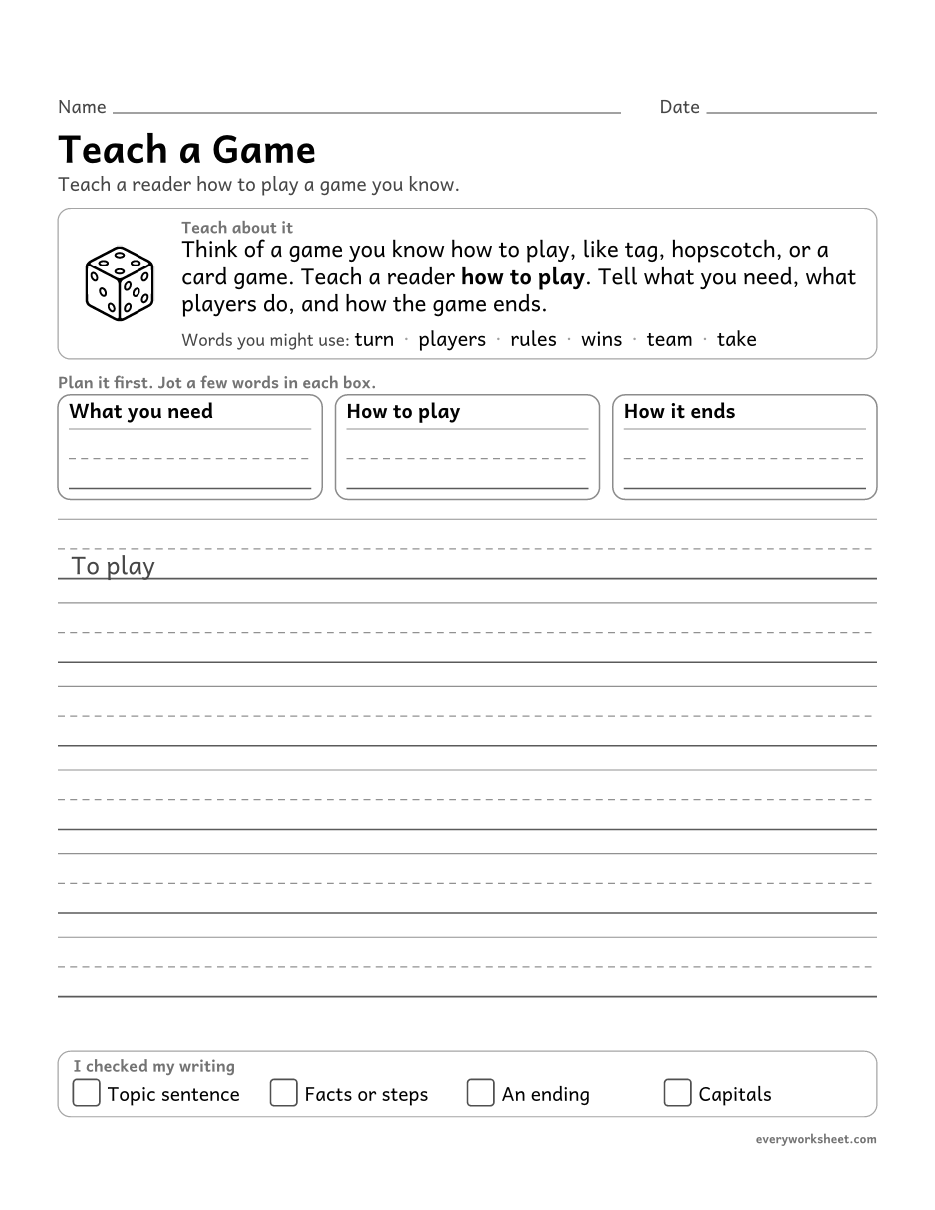 View larger
Writing a how-to piece with steps in order and a closing sentence
1 page58 KB
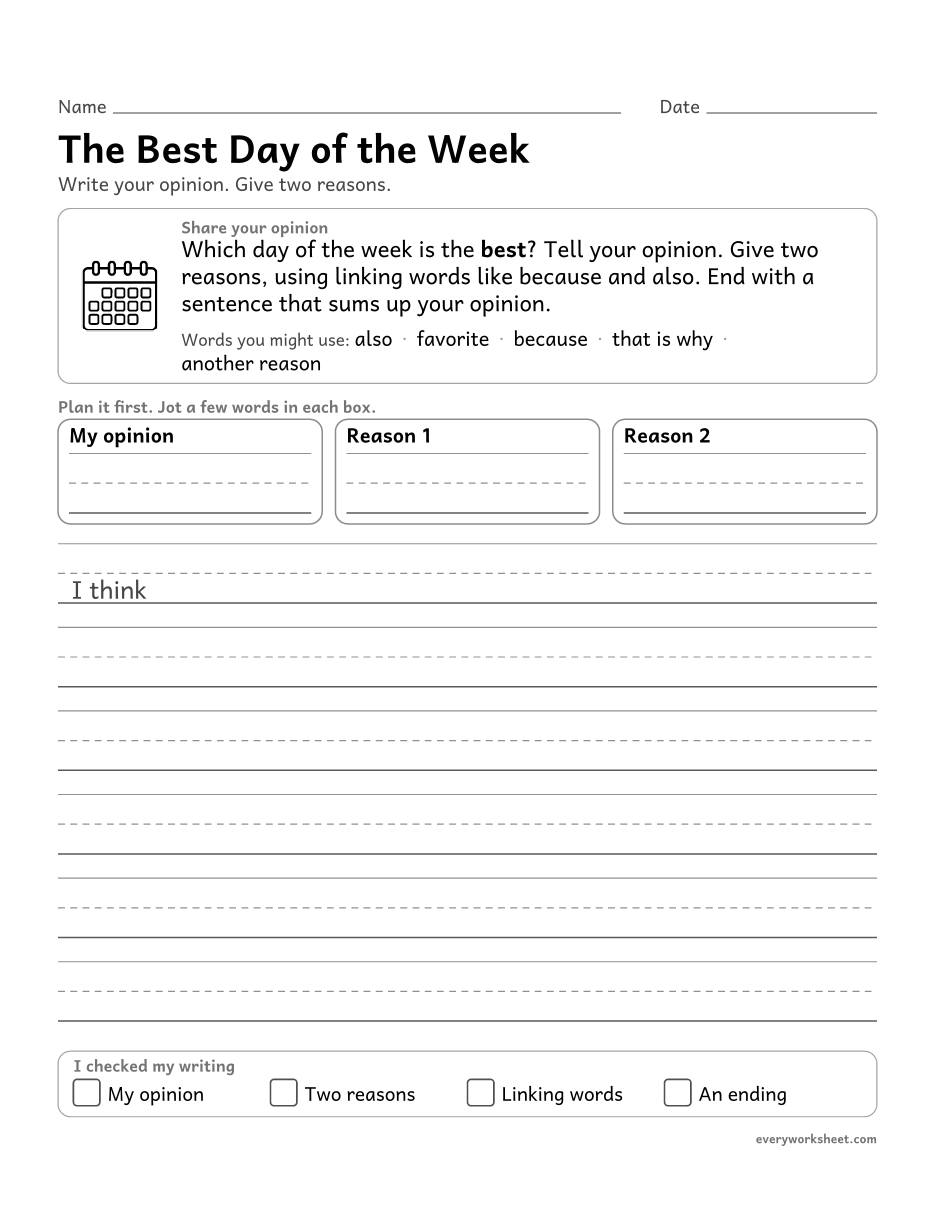 View larger
Writing an opinion with two reasons, linking words and a closing sentence
1 page42 KB
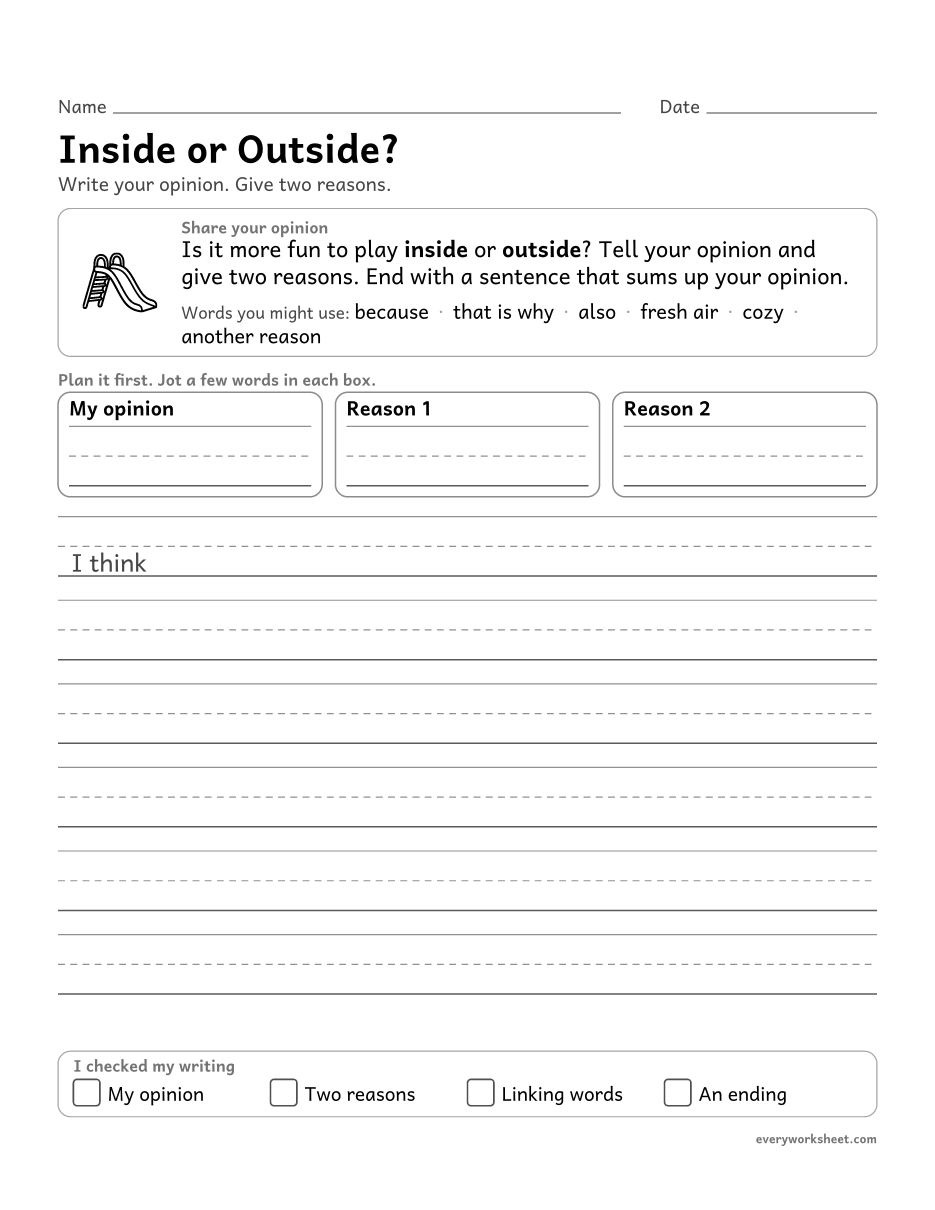 View larger
Writing an opinion with two reasons, linking words and a closing sentence
1 page60 KB
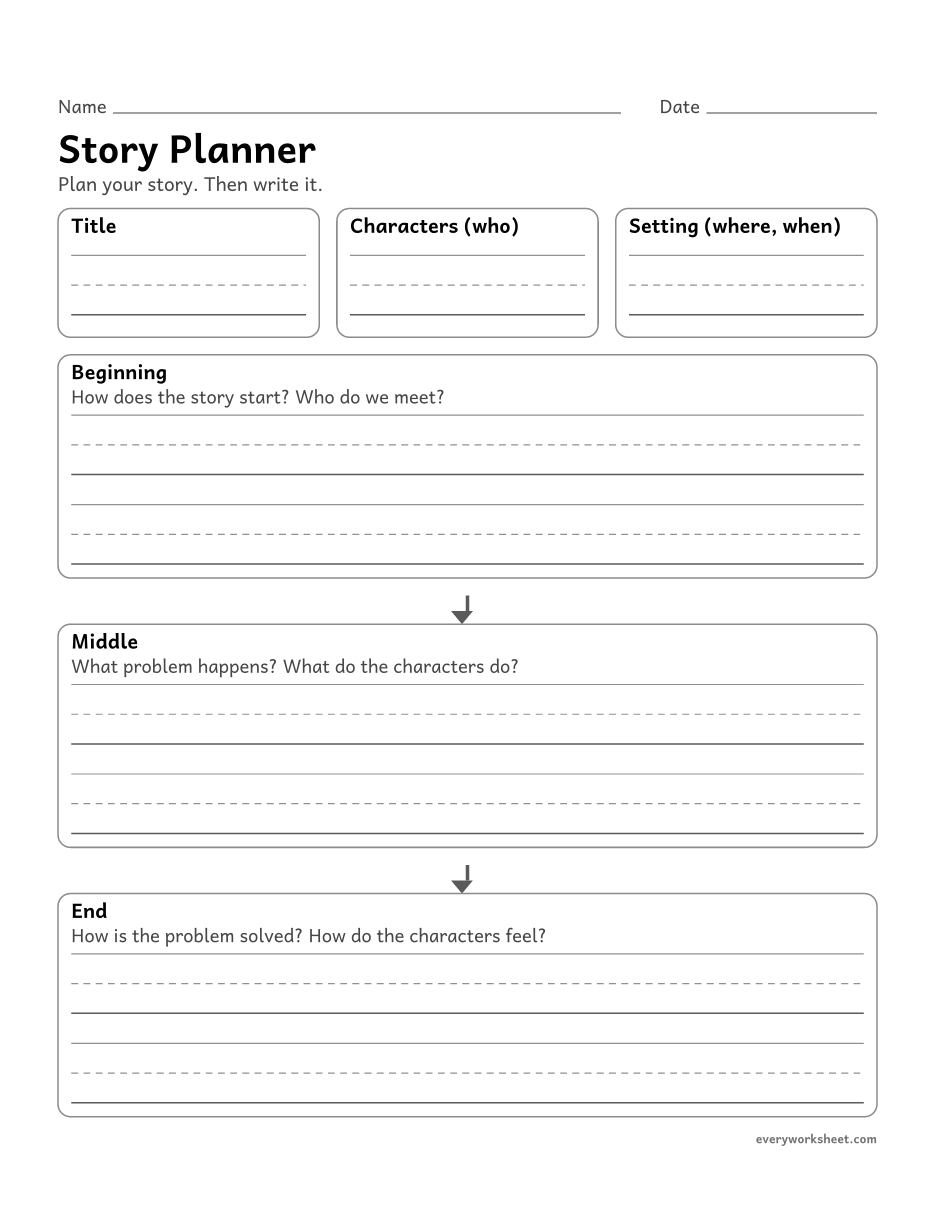 View larger
Planning a story with characters, a setting, a problem and an ending
1 page28 KB
 View larger
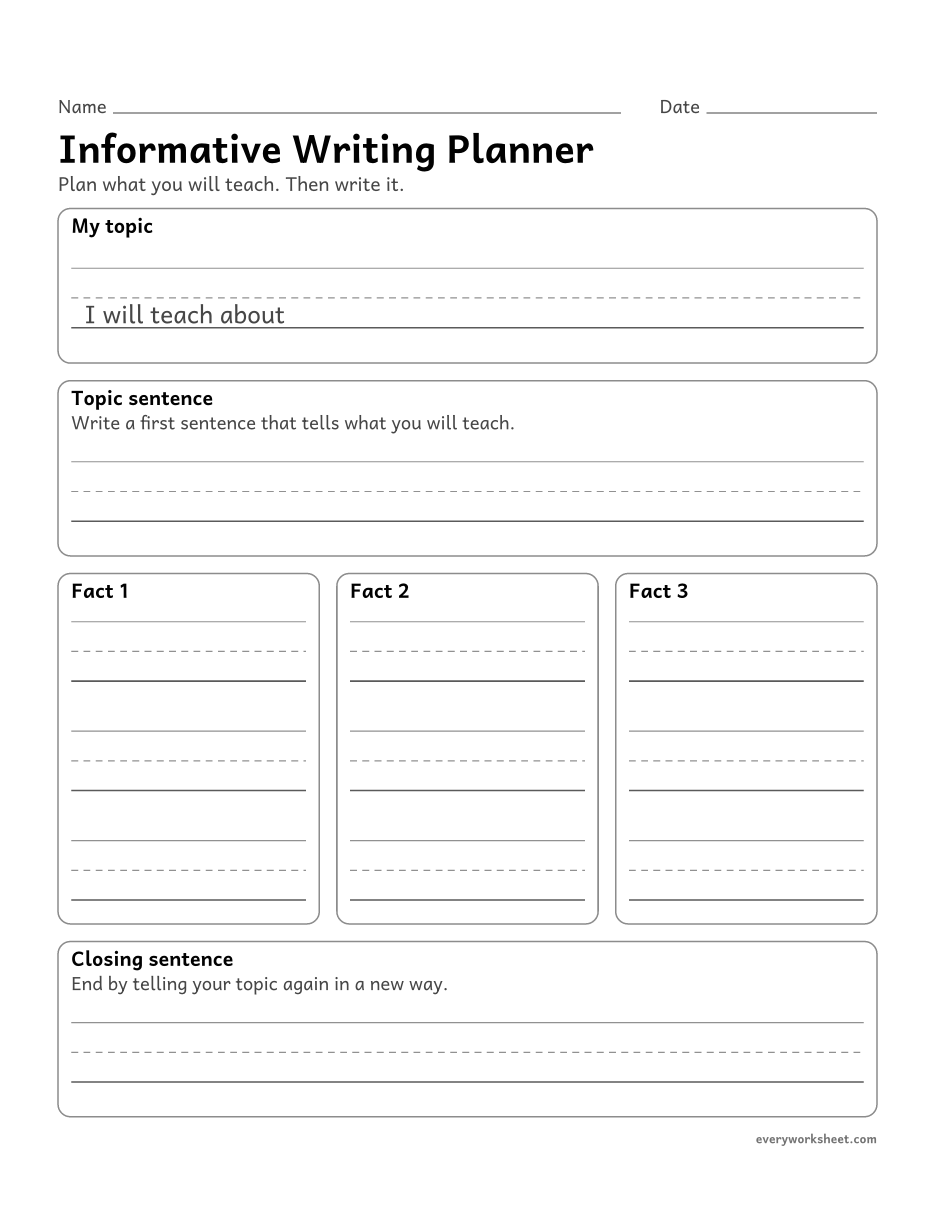
Planning an informative piece with a topic, facts and a closing sentence
1 page28 KB
 View larger
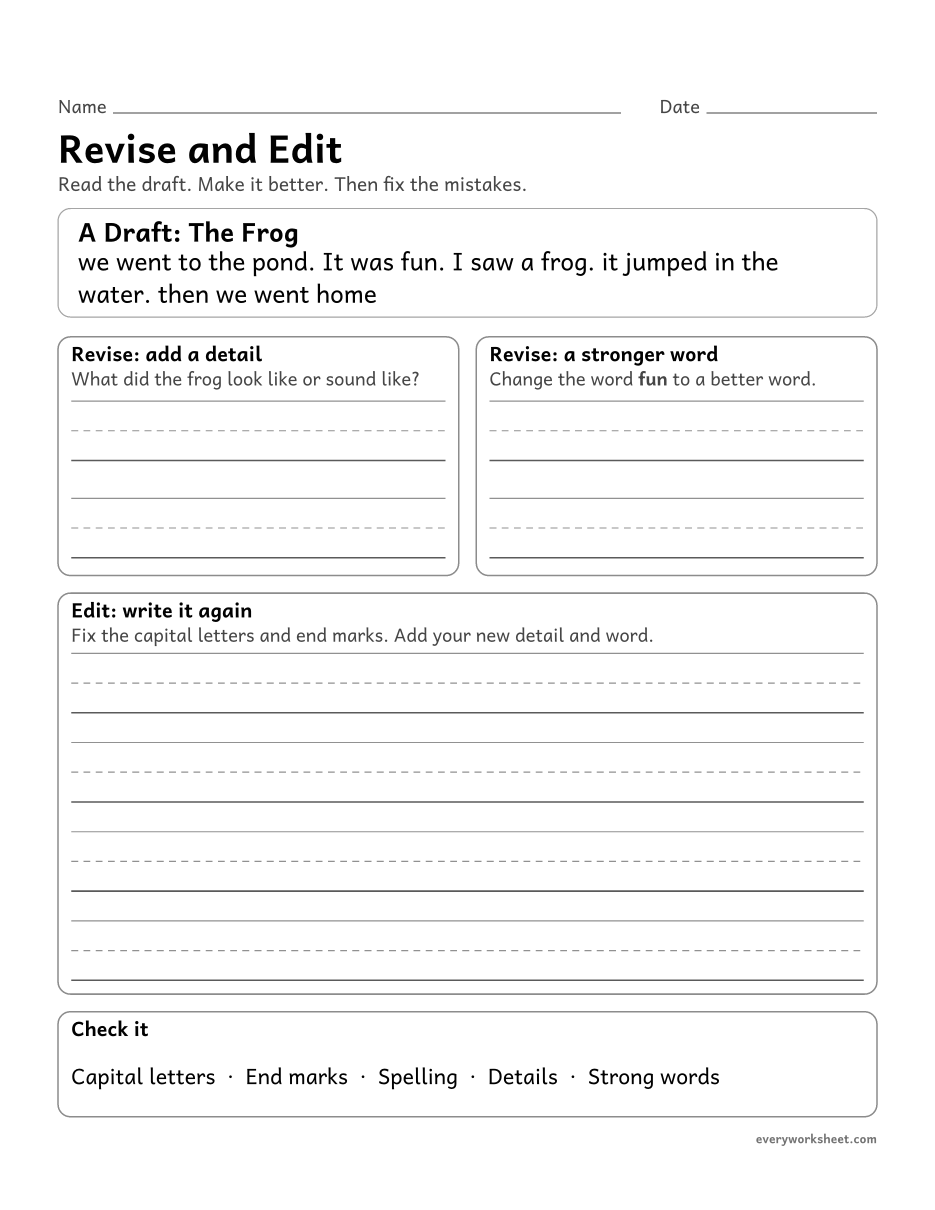
Revising a draft by adding details and stronger words, then editing capitals and end marks
1 page29 KB
Print at 100% (actual size) for the cleanest tracing lines.
Second graders write real paragraphs. They tell a story with details about actions and feelings, teach a reader how to do something, and share an opinion with reasons. A good prompt gives them something worth writing about and a simple plan to follow.
These writing prompts for 2nd graders each have a clear prompt, a short list of words children might use, a row of small boxes to plan in, and a full page of second grade writing lines. Story prompts plan Beginning, Middle and End. How-to and all-about prompts plan steps or facts. Opinion prompts plan an opinion and two reasons. A checklist at the bottom helps children check their own writing.
Two planners and a revise-and-edit page help children plan any piece and make a draft better.
CCSS.ELA-LITERACY.W.2.1Write opinion pieces in which they introduce the topic or book they are writing about, state an opinion, supply reasons that support the opinion, use linking words (e.g., because, and, also) to connect opinion and reasons, and provide a concluding statement or section.CCSS.ELA-LITERACY.W.2.2Write informative/explanatory texts in which they introduce a topic, use facts and definitions to develop points, and provide a concluding statement or section.CCSS.ELA-LITERACY.W.2.3Write narratives in which they recount a well-elaborated event or short sequence of events, include details to describe actions, thoughts, and feelings, use temporal words to signal event order, and provide a sense of closure.CCSS.ELA-LITERACY.W.2.5With guidance and support from adults and peers, focus on a topic and strengthen writing as needed by revising and editing.By the end of second grade, children write a short story with events in order and details, an informative piece with facts and a closing, and an opinion with reasons and linking words.
Most second graders write one paragraph of five to eight sentences on a page like these. The lines leave room for more.
No. Writing prompts have no single right answer. Use the checklist at the bottom of each page to talk about the writing.