 View all 2 pages
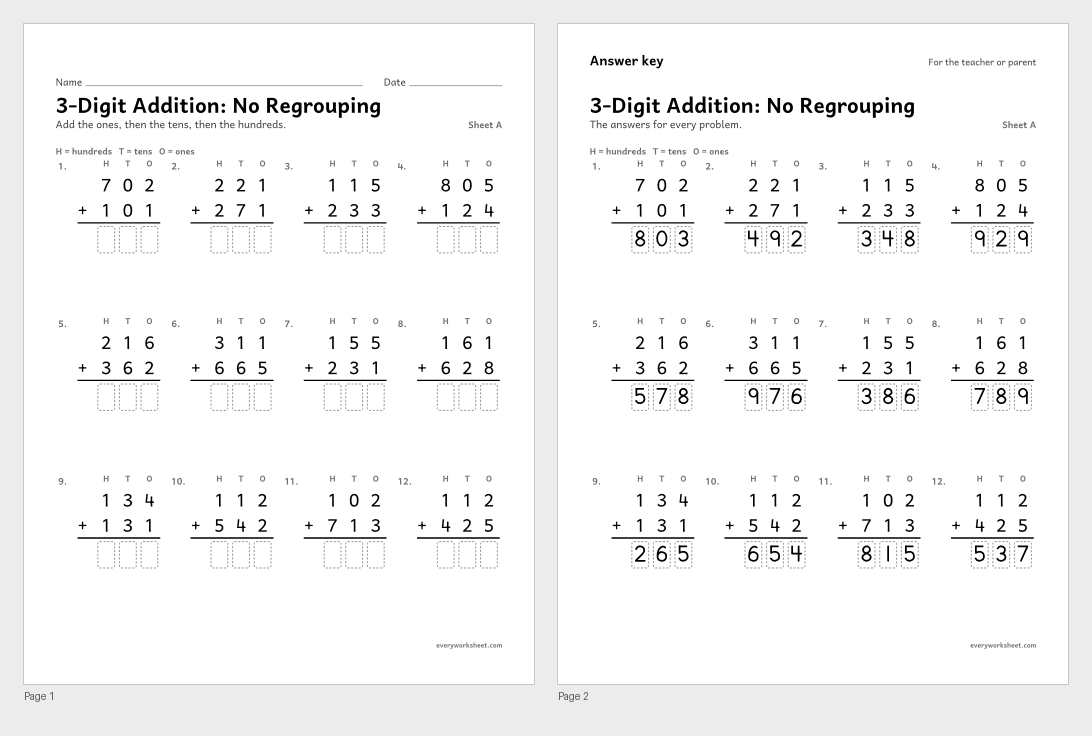
3-Digit Addition: no Regrouping, sheet A
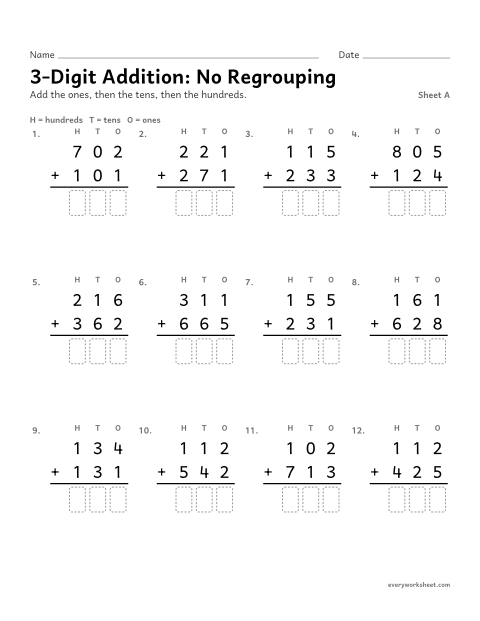
Adding three-digit numbers without regrouping
Answer key on page 2
2 pages52 KB
3-digit addition and subtraction within 1000, without regrouping, regrouping once and twice, across zeros, with place value strategies and find the mistake pages.
View all 2 pagesAdding three-digit numbers without regrouping
Answer key on page 2
2 pages52 KB
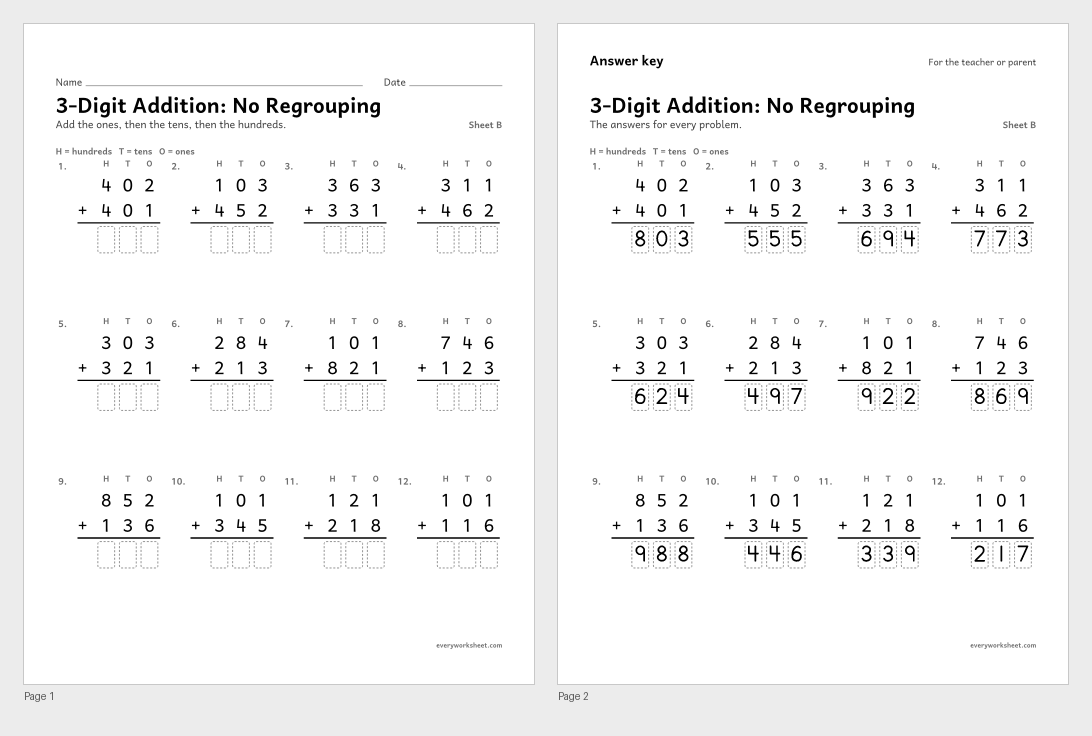 View all 2 pages
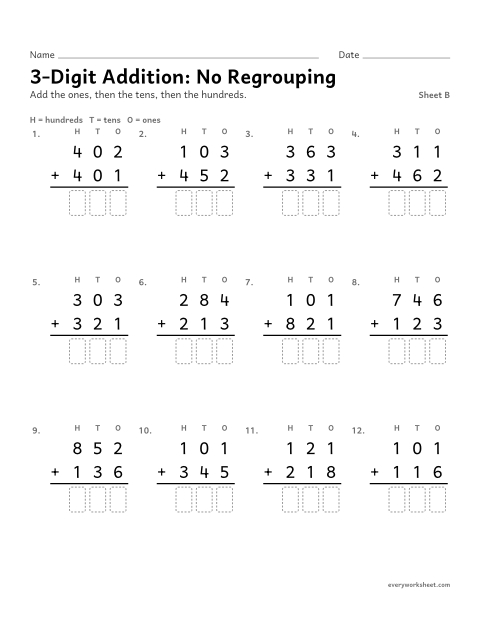
Adding three-digit numbers without regrouping
Answer key on page 2
2 pages52 KB
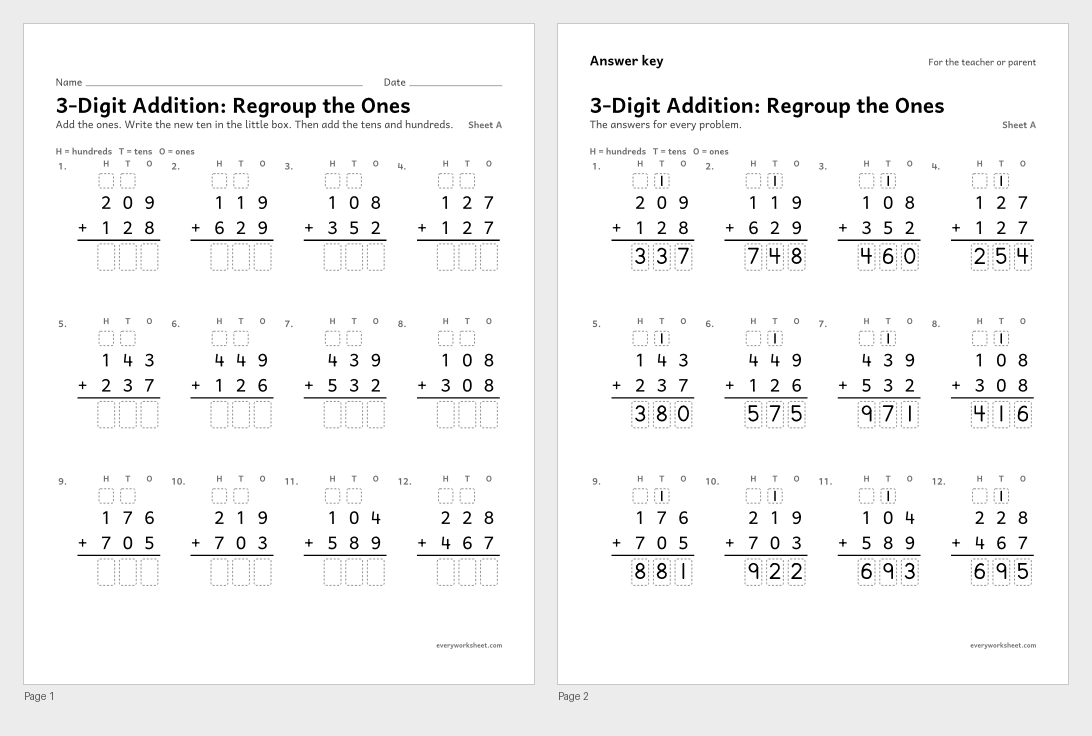 View all 2 pages
Adding three-digit numbers, making a new ten
Answer key on page 2
2 pages53 KB
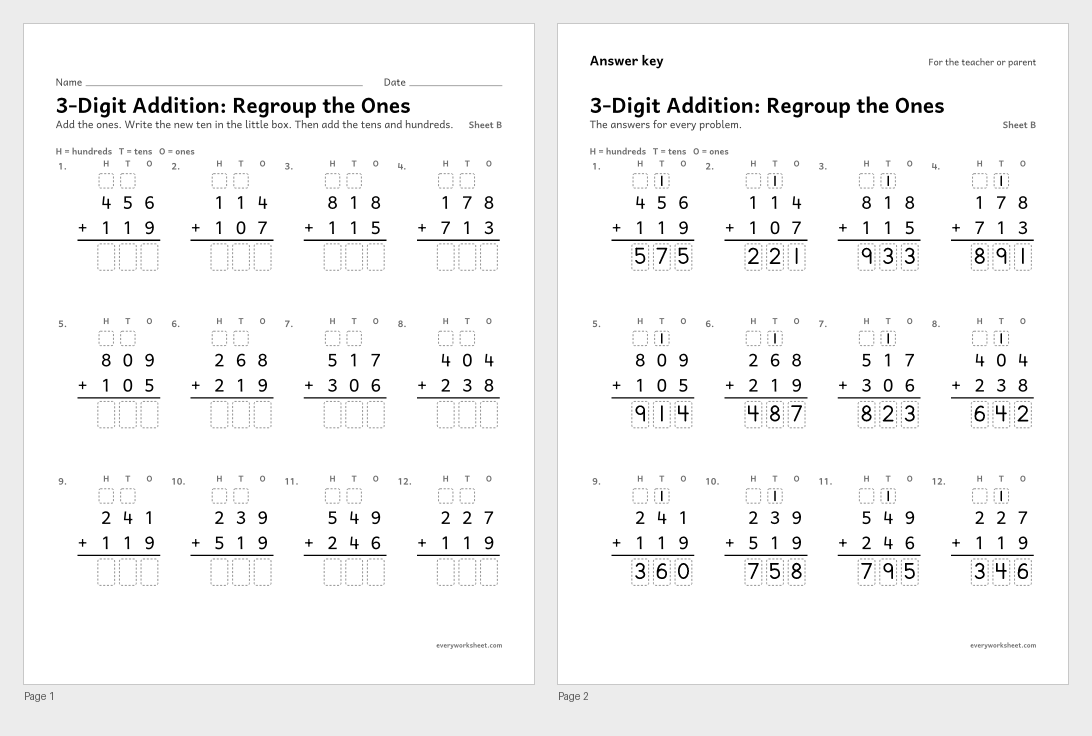 View all 2 pages
Adding three-digit numbers, making a new ten
Answer key on page 2
2 pages53 KB
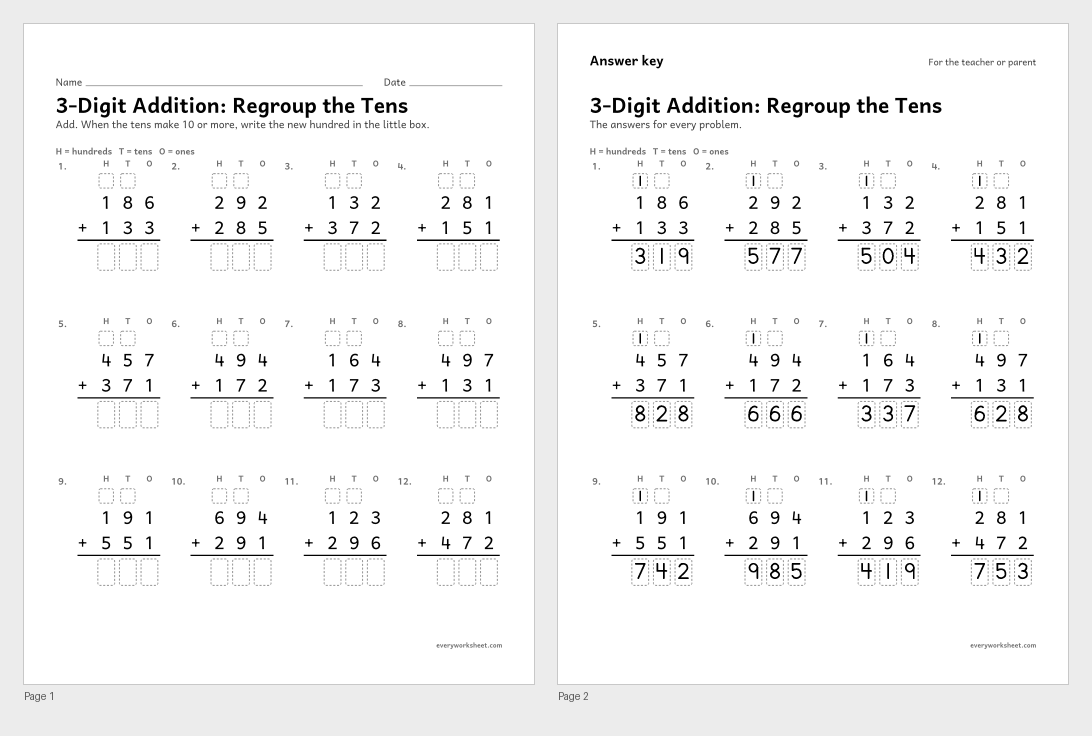 View all 2 pages
Adding three-digit numbers, making a new hundred
Answer key on page 2
2 pages53 KB
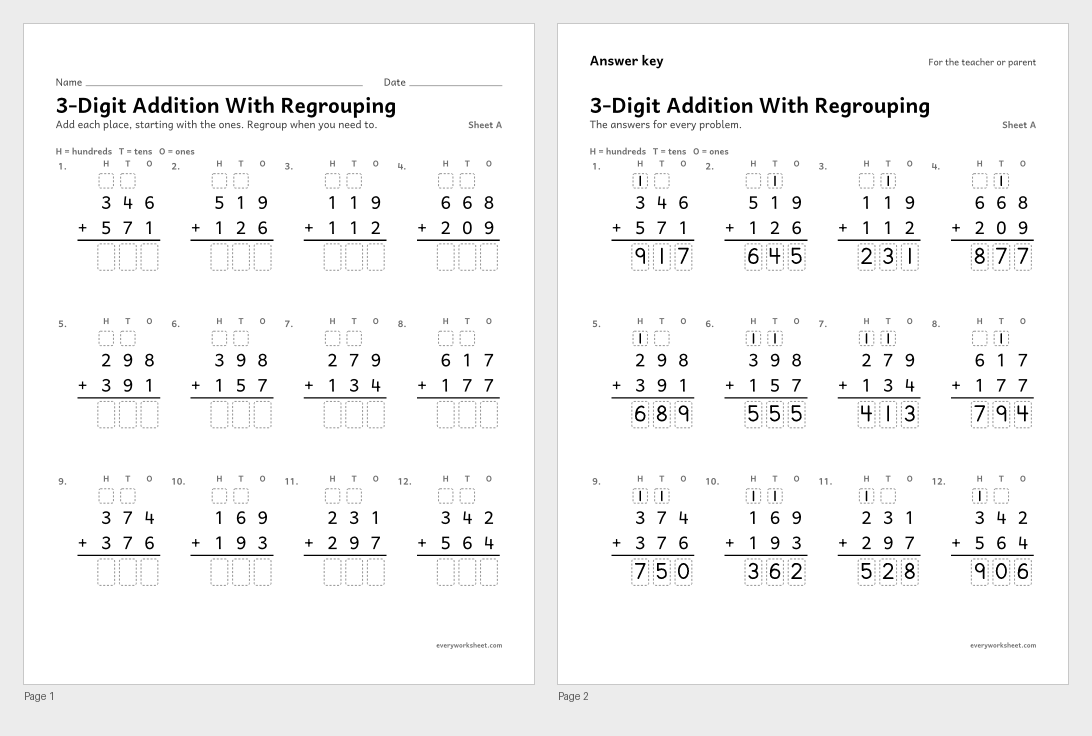 View all 2 pages
Adding three-digit numbers with regrouping
Answer key on page 2
2 pages53 KB
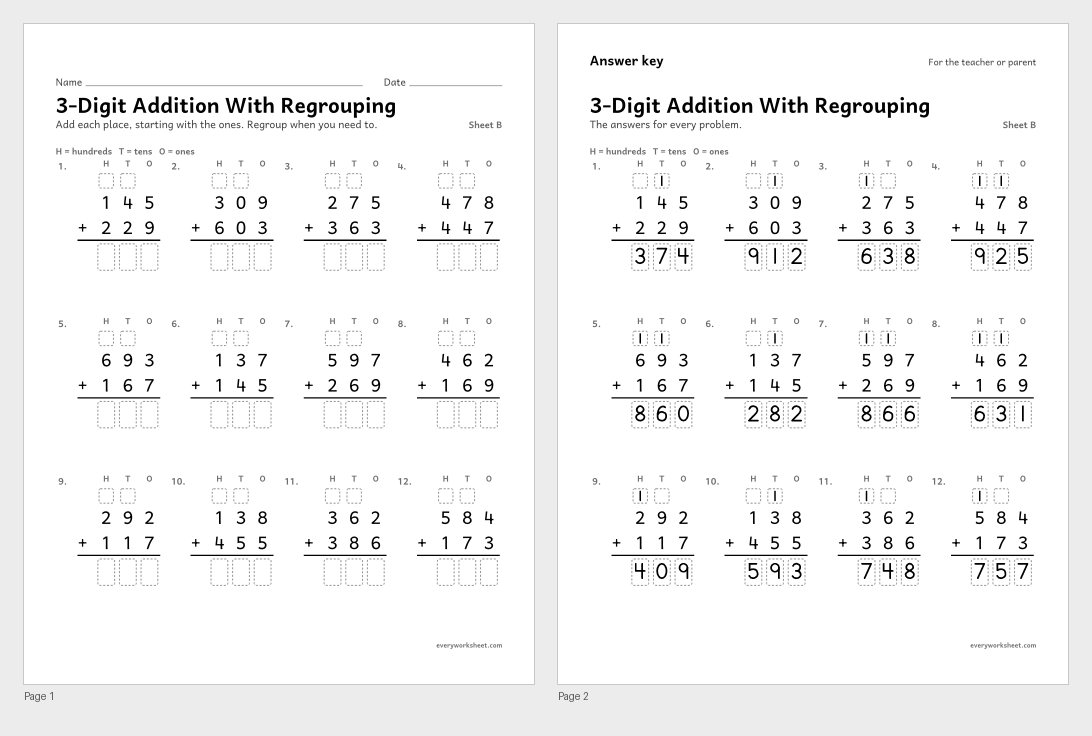 View all 2 pages
Adding three-digit numbers with regrouping
Answer key on page 2
2 pages53 KB
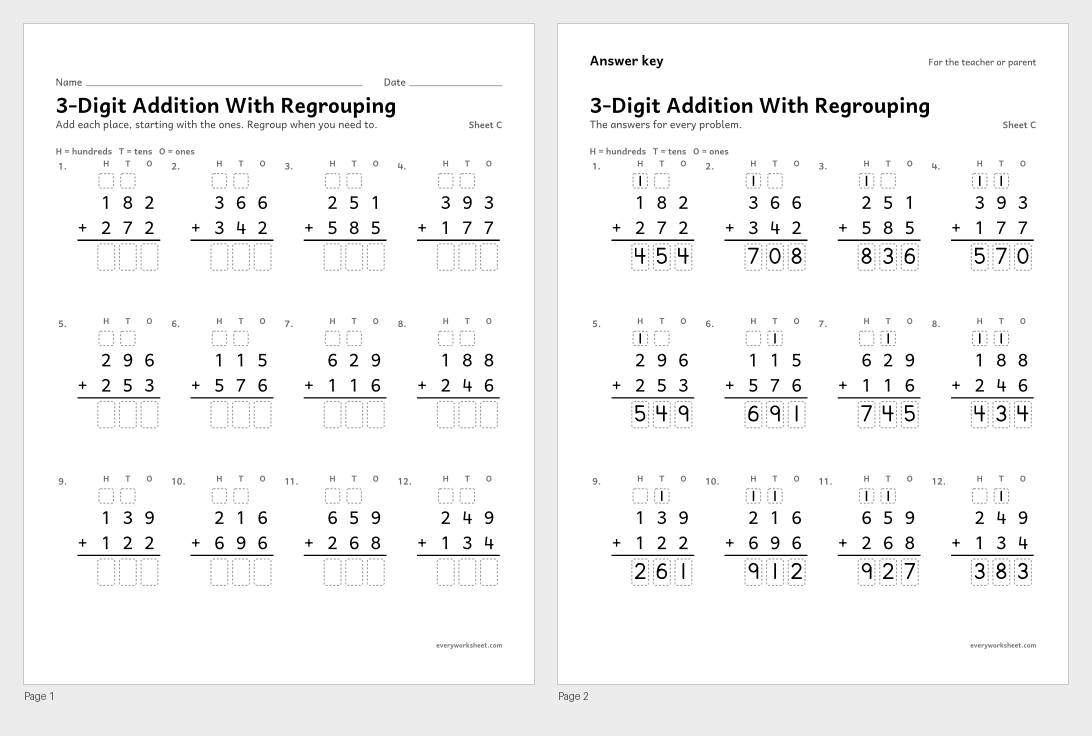 View all 2 pages
Adding three-digit numbers with regrouping
Answer key on page 2
2 pages53 KB
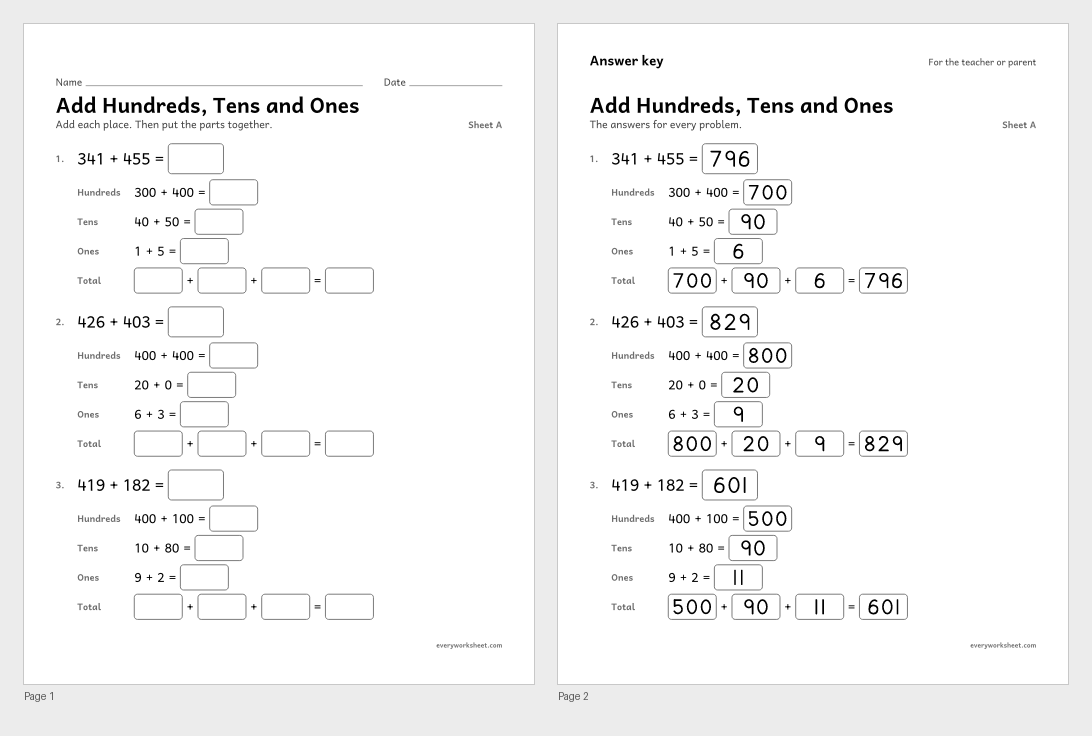 View all 2 pages
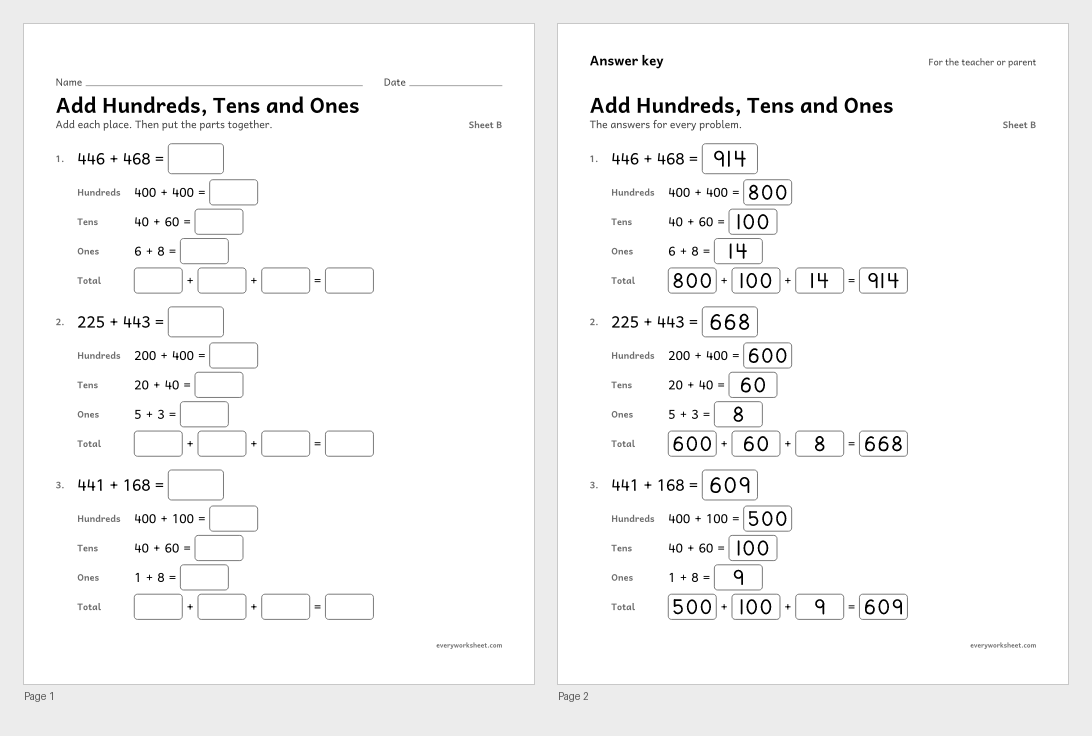
Adding three-digit numbers by place value
Answer key on page 2
2 pages78 KB
 View all 2 pages
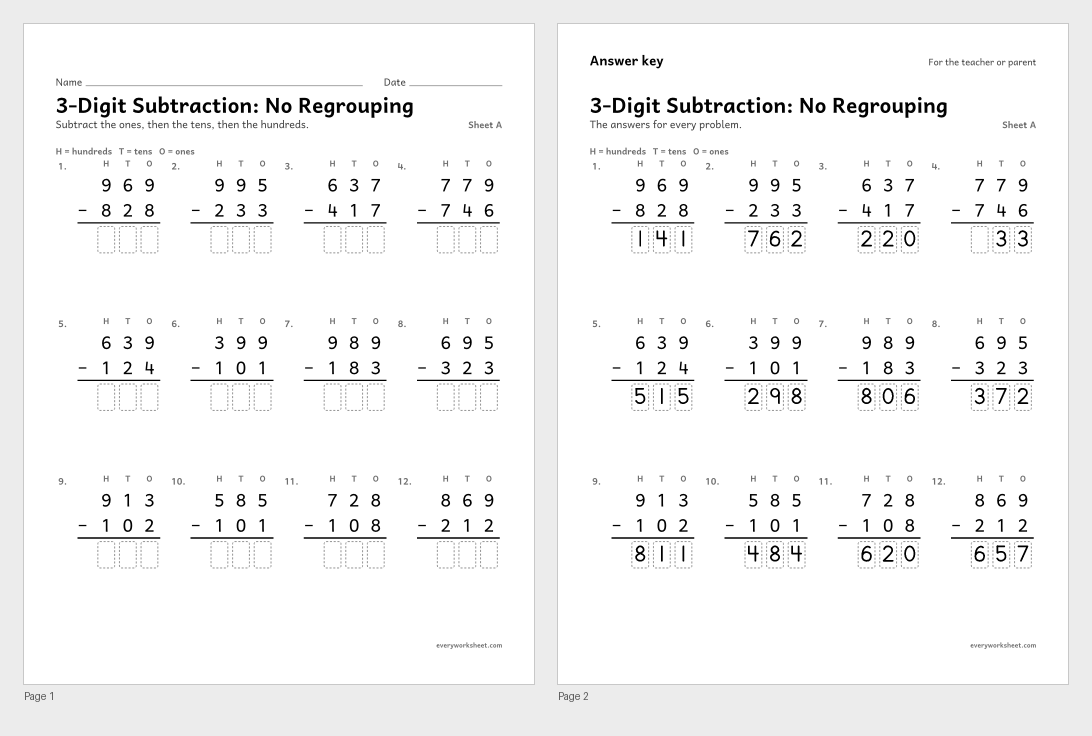
Adding three-digit numbers by place value
Answer key on page 2
2 pages78 KB
 View all 2 pages
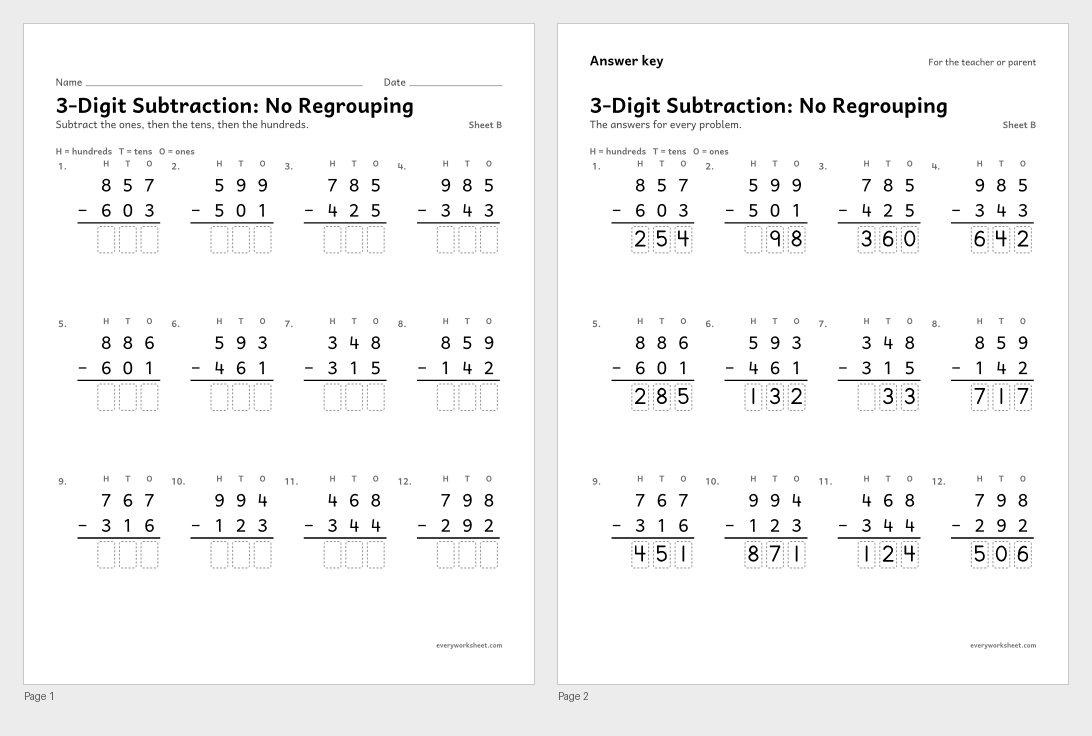
Subtracting three-digit numbers without regrouping
Answer key on page 2
2 pages52 KB
 View all 2 pages
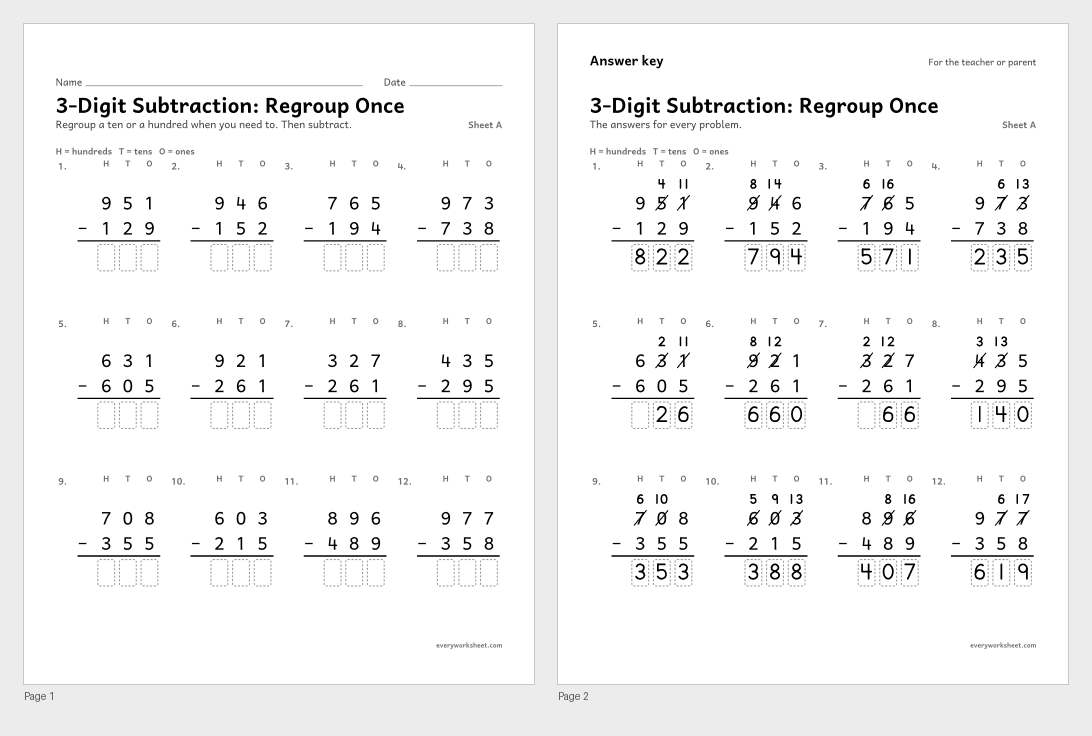
Subtracting three-digit numbers without regrouping
Answer key on page 2
2 pages53 KB
 View all 2 pages
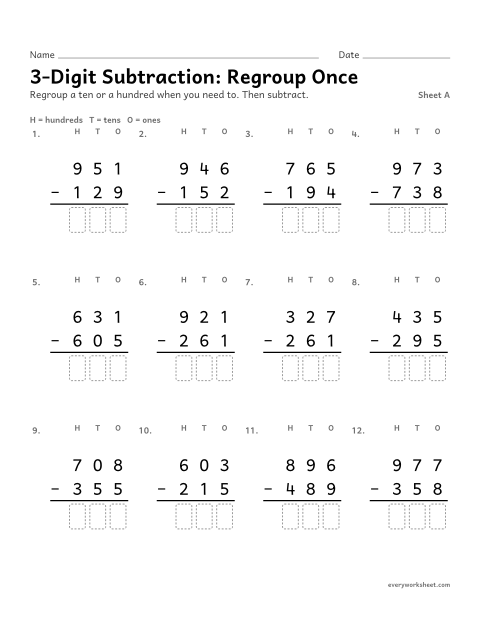
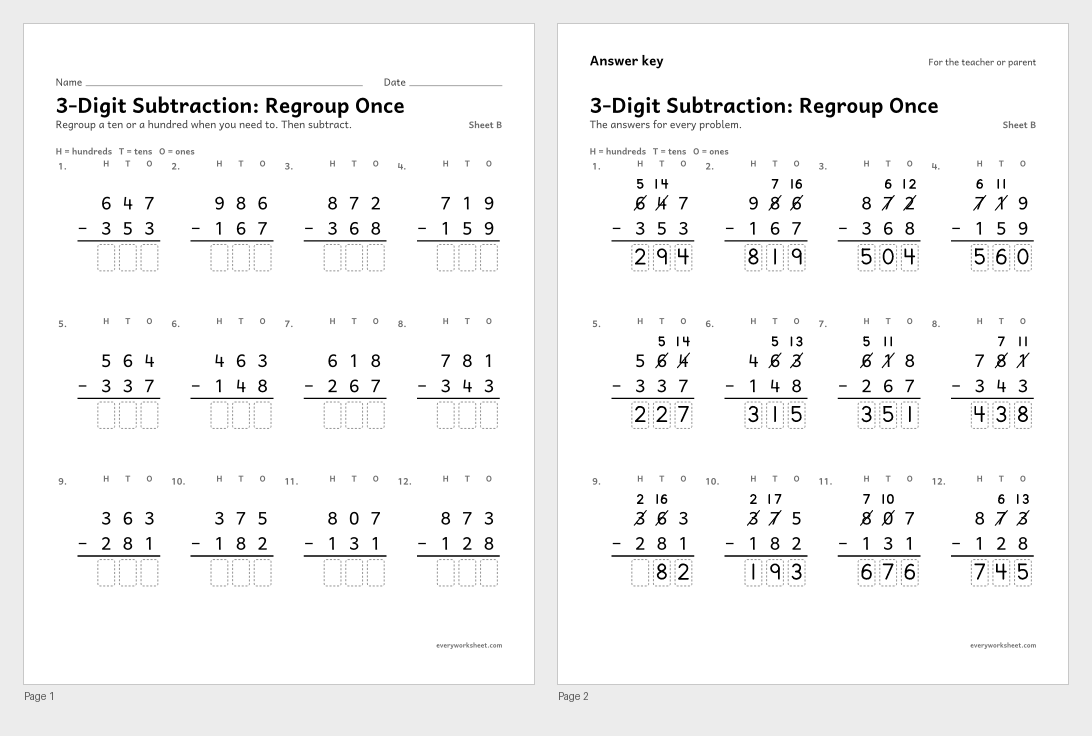
Subtracting three-digit numbers with one regroup
Answer key on page 2
2 pages54 KB
 View all 2 pages
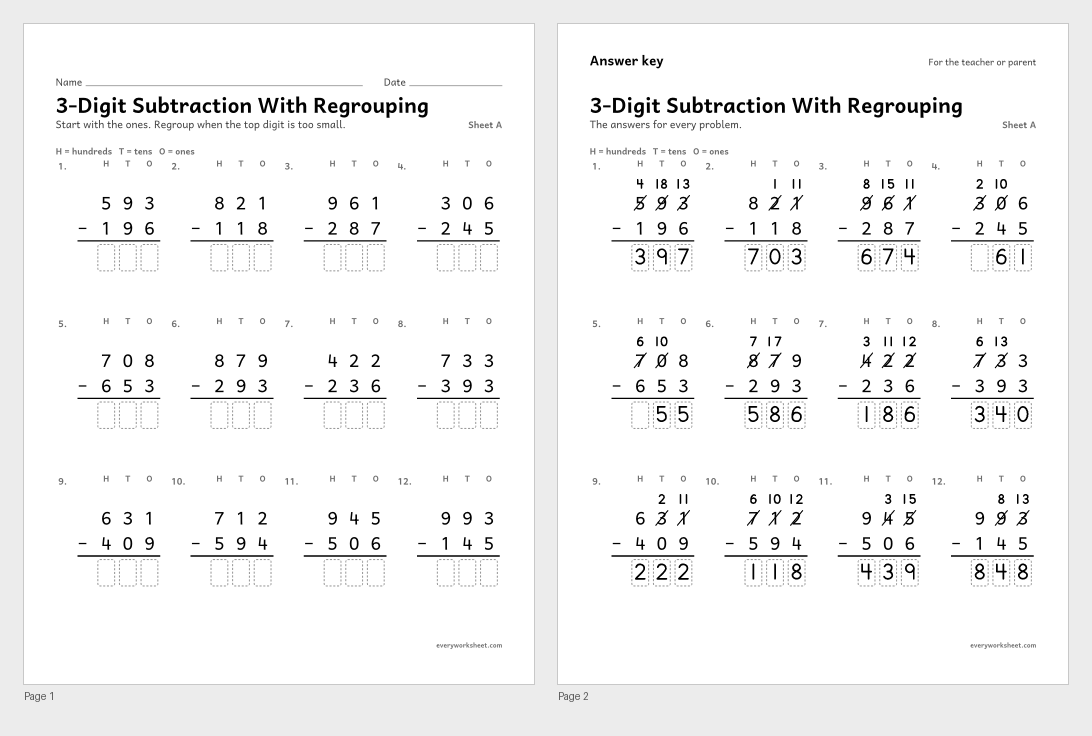
Subtracting three-digit numbers with one regroup
Answer key on page 2
2 pages54 KB
 View all 2 pages
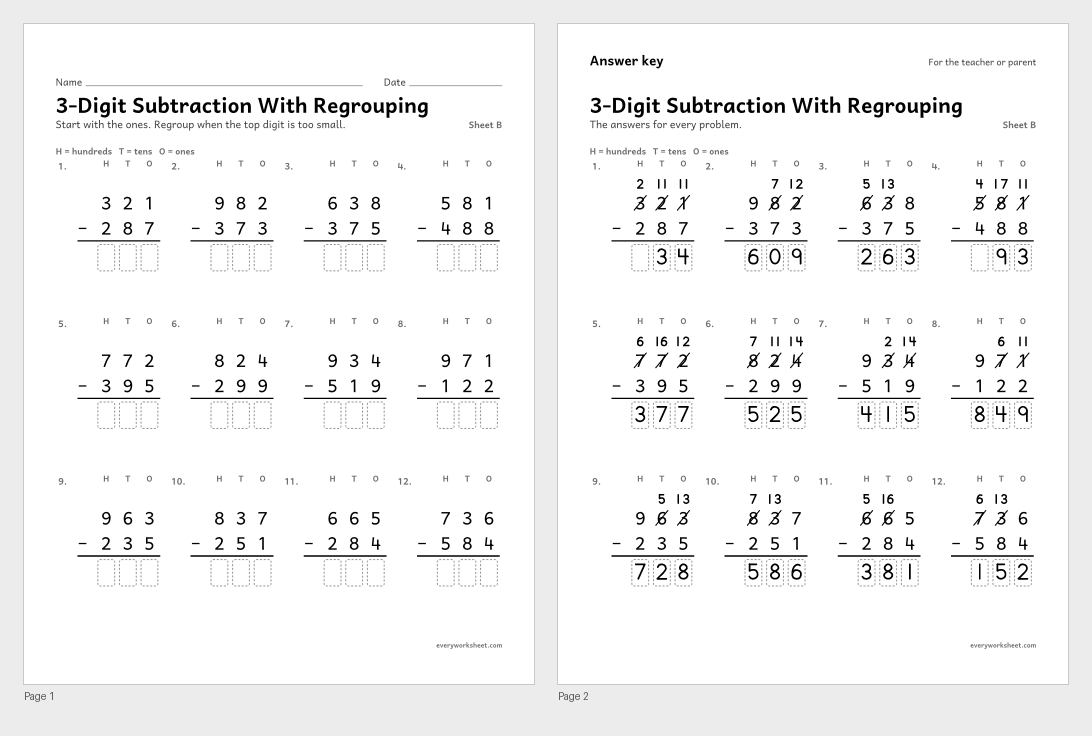
Subtracting three-digit numbers with regrouping
Answer key on page 2
2 pages55 KB
 View all 2 pages
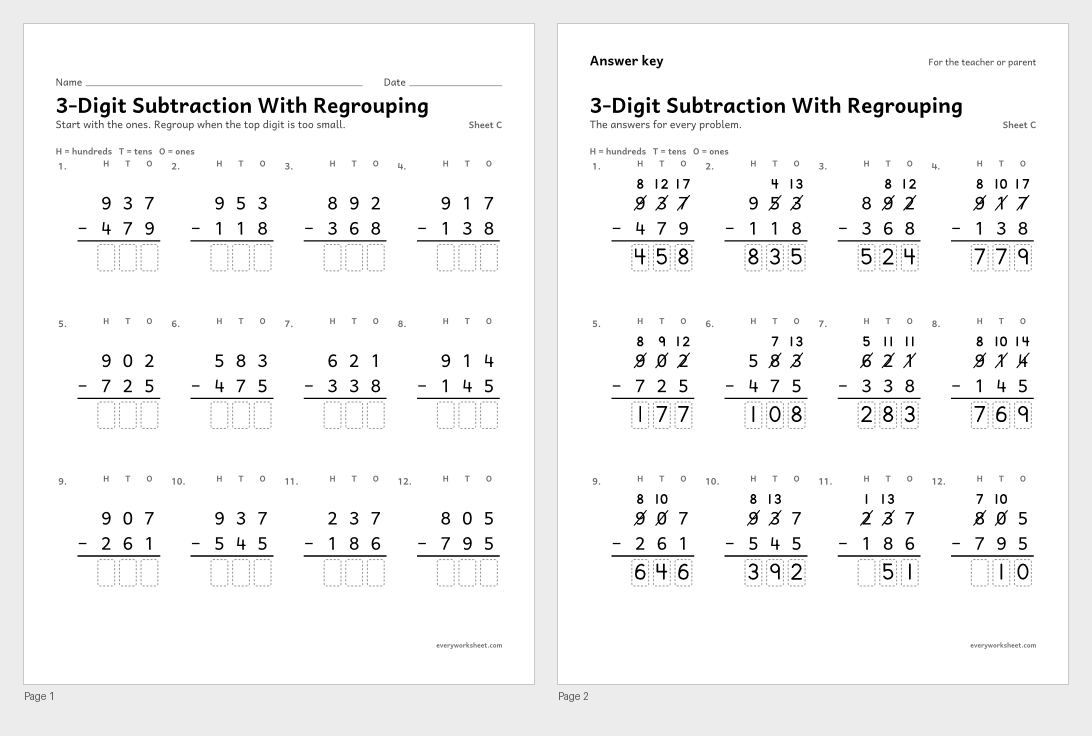
Subtracting three-digit numbers with regrouping
Answer key on page 2
2 pages54 KB
 View all 2 pages
Subtracting three-digit numbers with regrouping
Answer key on page 2
2 pages54 KB
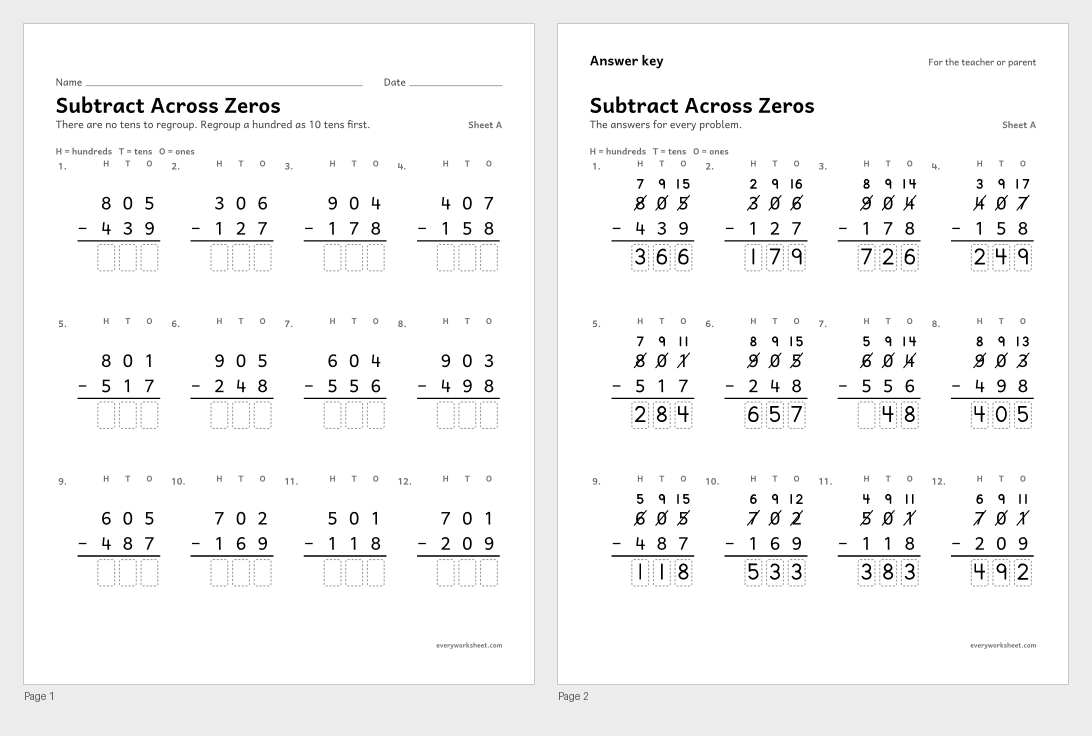 View all 2 pages
Subtracting across a zero
Answer key on page 2
2 pages54 KB
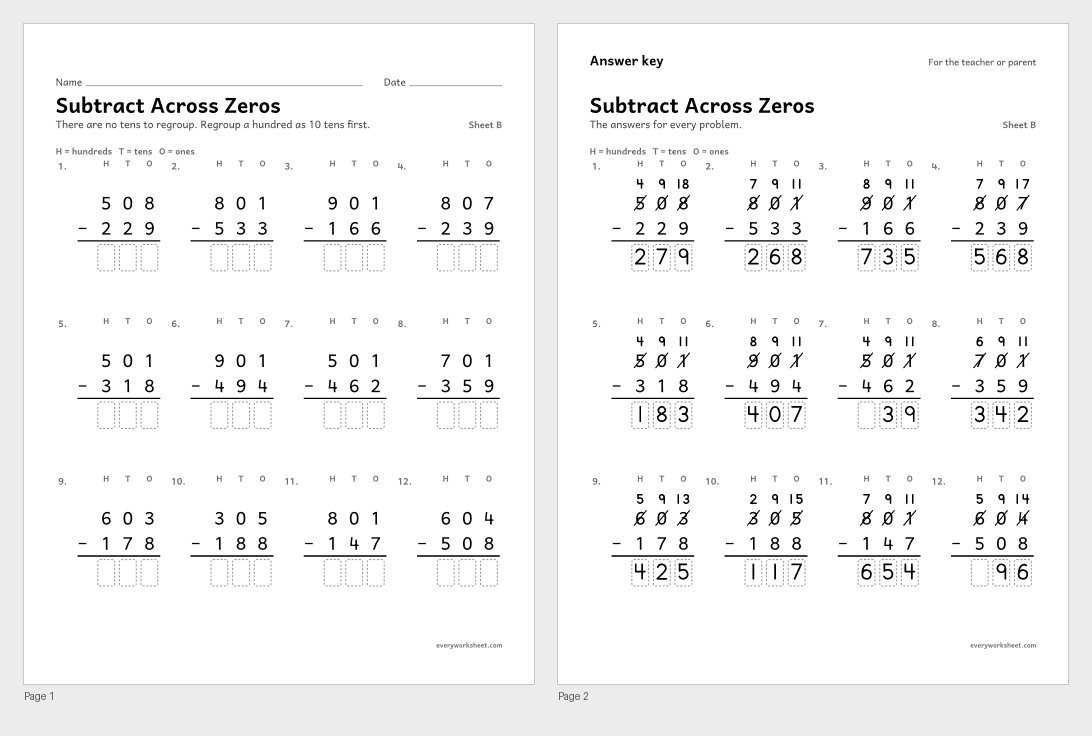 View all 2 pages
Subtracting across a zero
Answer key on page 2
2 pages54 KB
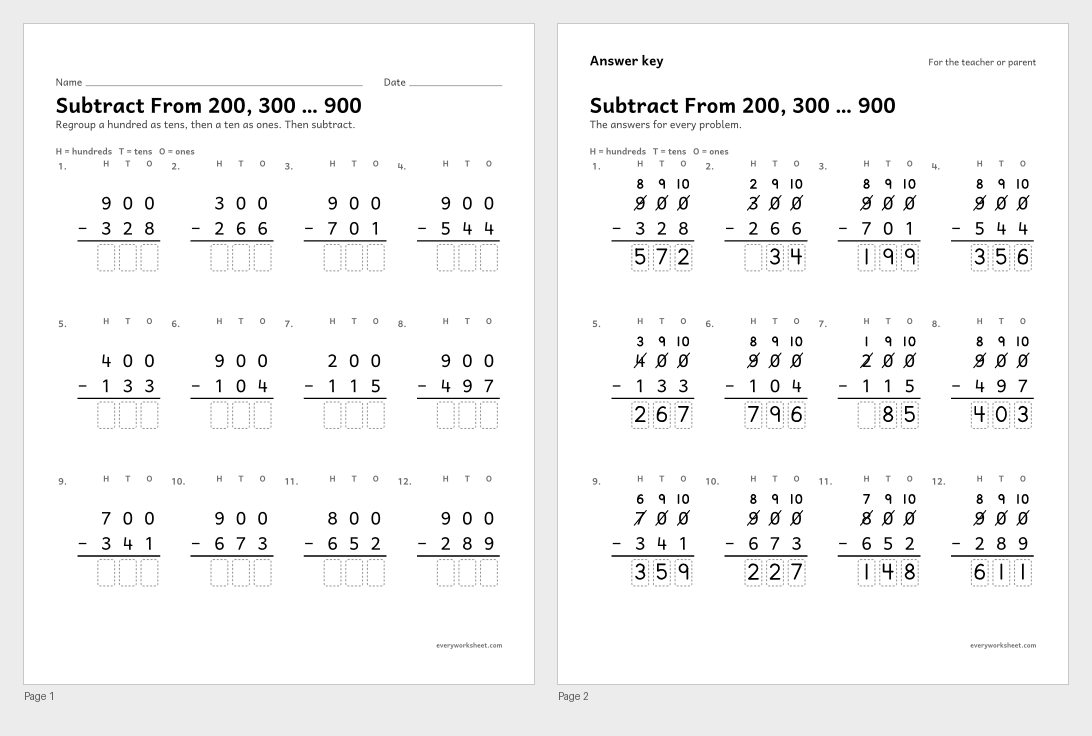 View all 2 pages
Subtracting from a multiple of 100
Answer key on page 2
2 pages53 KB
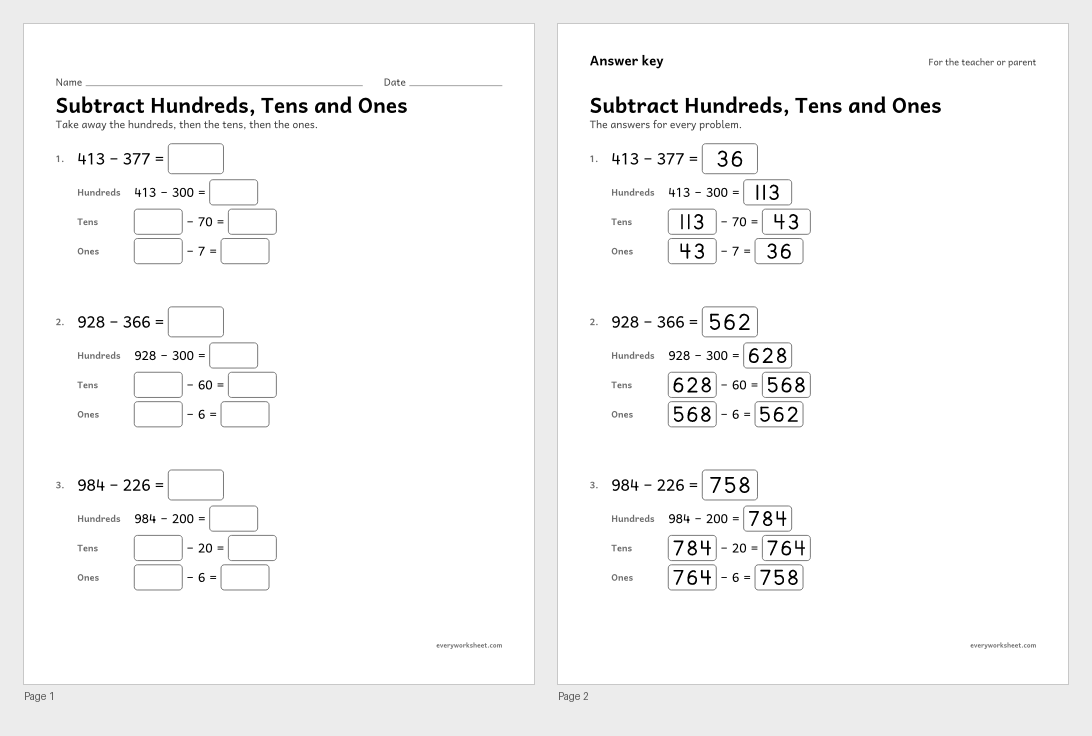 View all 2 pages
Subtracting three-digit numbers by place value
Answer key on page 2
2 pages68 KB
 View all 2 pages
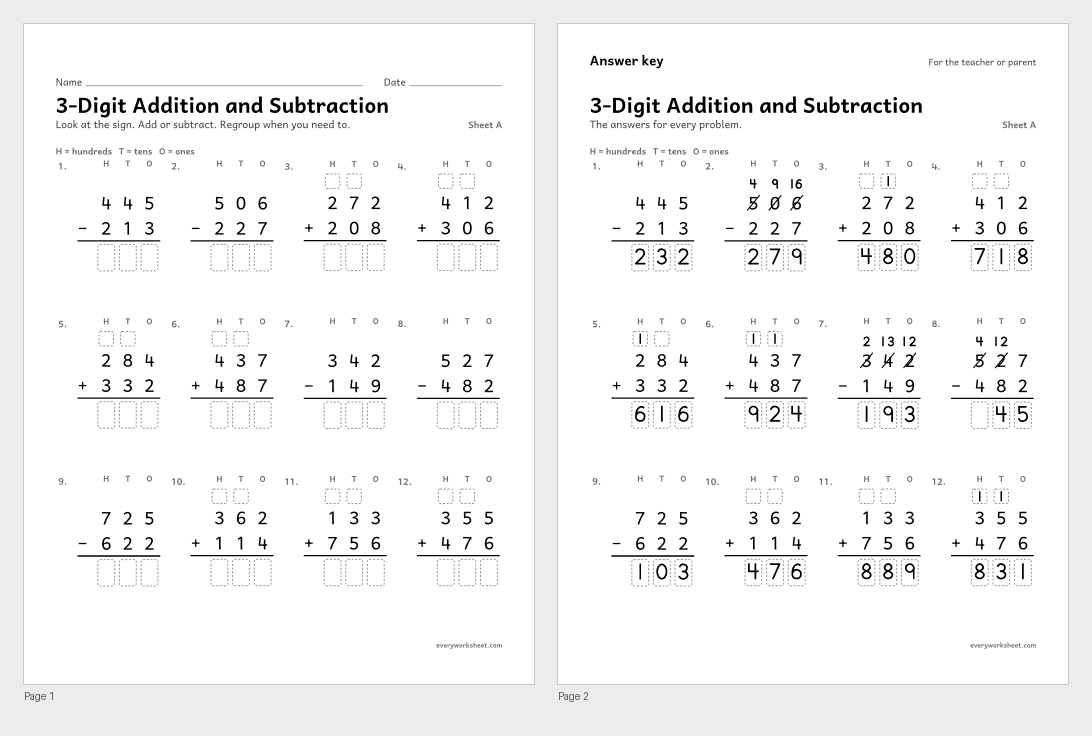
Adding and subtracting within 1000
Answer key on page 2
2 pages54 KB
 View all 2 pages
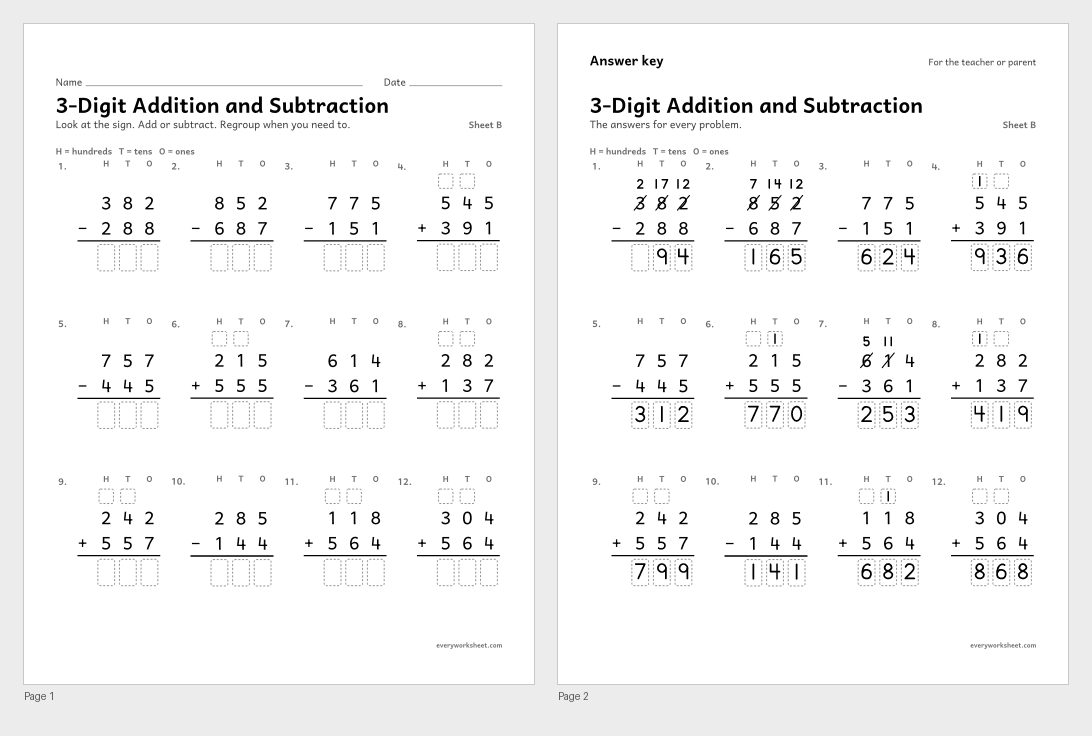
Adding and subtracting within 1000
Answer key on page 2
2 pages54 KB
 View all 2 pages
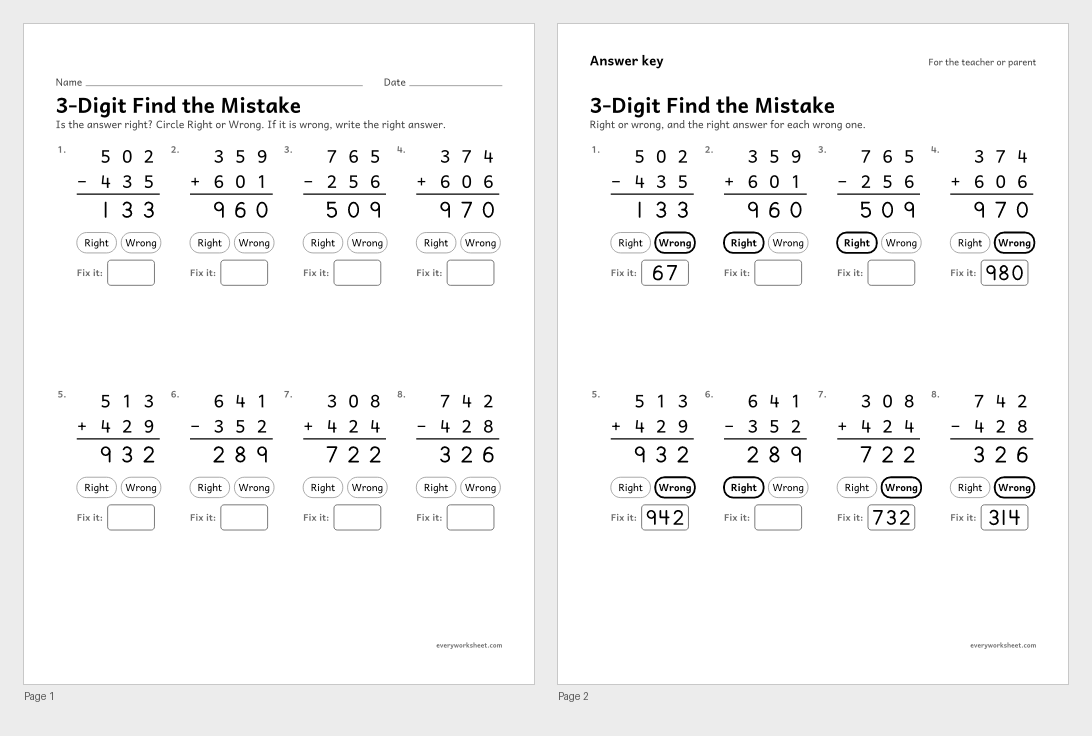
Explaining three-digit addition and subtraction by finding a mistake
Answer key on page 2
2 pages53 KB
Print at 100% (actual size) for the cleanest tracing lines.
By the end of 2nd grade, children add and subtract within 1000. The rule is the same as with 2-digit numbers: hundreds with hundreds, tens with tens, ones with ones, and regroup when a place has 10 or more (or not enough). These worksheets go one step at a time.
Start without regrouping, then regroup only the ones, only the tens, and both. Subtraction ends with the trickiest kind: subtracting across a zero, like 503 − 278, where a hundred must be regrouped as tens before there are any tens to regroup as ones. Strategy pages break each number into hundreds, tens and ones.
Most pages come as Sheet A, B and C. Every page has an answer key on page 2 that shows the regrouping, and every page prints in black and white on US Letter or A4.
CCSS.MATH.CONTENT.2.NBT.B.7Add and subtract within 1000, using concrete models or drawings and strategies based on place value, properties of operations, and/or the relationship between addition and subtraction; relate the strategy to a written method. Understand that in adding or subtracting three-digit numbers, one adds or subtracts hundreds and hundreds, tens and tens, ones and ones; and sometimes it is necessary to compose or decompose tens or hundreds.CCSS.MATH.CONTENT.2.NBT.B.9Explain why addition and subtraction strategies work, using place value and the properties of operations.The standards for 2nd grade include adding and subtracting within 1000 with models and place value strategies. Many classes finish the written method with regrouping in 2nd grade and practice it again in 3rd grade.
For 503 − 278, there are no tens to regroup. Regroup 1 hundred as 10 tens (4 hundreds, 10 tens, 3 ones), then 1 ten as 10 ones (4 hundreds, 9 tens, 13 ones). Now subtract each place: 13 − 8 = 5, 9 − 7 = 2, 4 − 2 = 2, so 225.
Yes. Every page has an answer key on page 2, with the regrouped digits shown above the problem.