 View larger
Abstract Nouns
What abstract nouns are, how they differ from concrete nouns, how suffixes make them, and practice worksheets with answer keys.
Download the abstract nouns worksheets
Abstract nouns charts
 View larger
 View larger
Abstract nouns with suffixes
Forming abstract nouns with suffixes such as -ness, -ship, -hood, and -ment
1 page41 KB
Find, sort, and make abstract nouns
 View all 2 pages
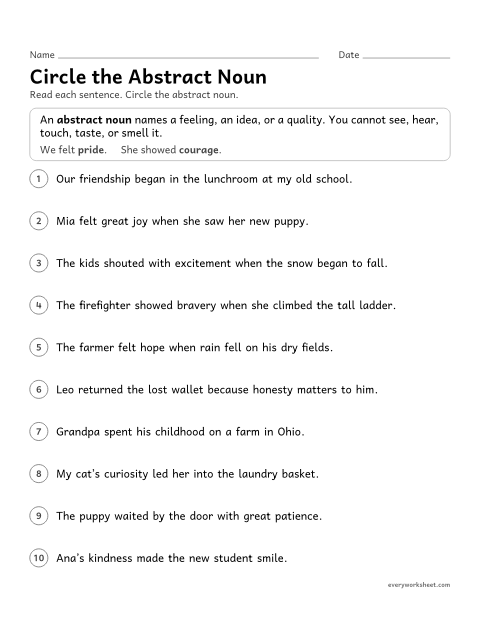
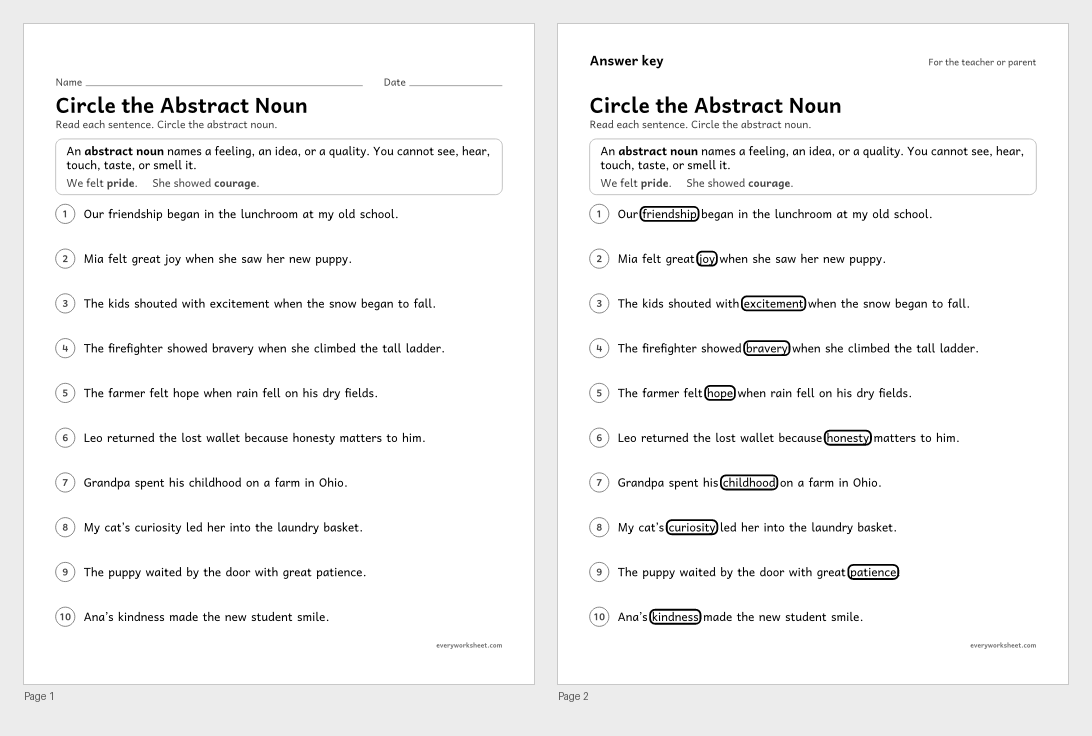
Circle the abstract noun
Finding the abstract noun in a sentence
Answer key on page 2
2 pages52 KB
 View all 2 pages
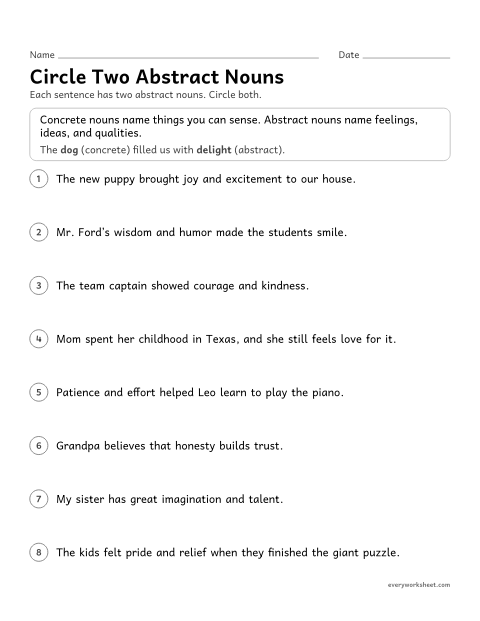
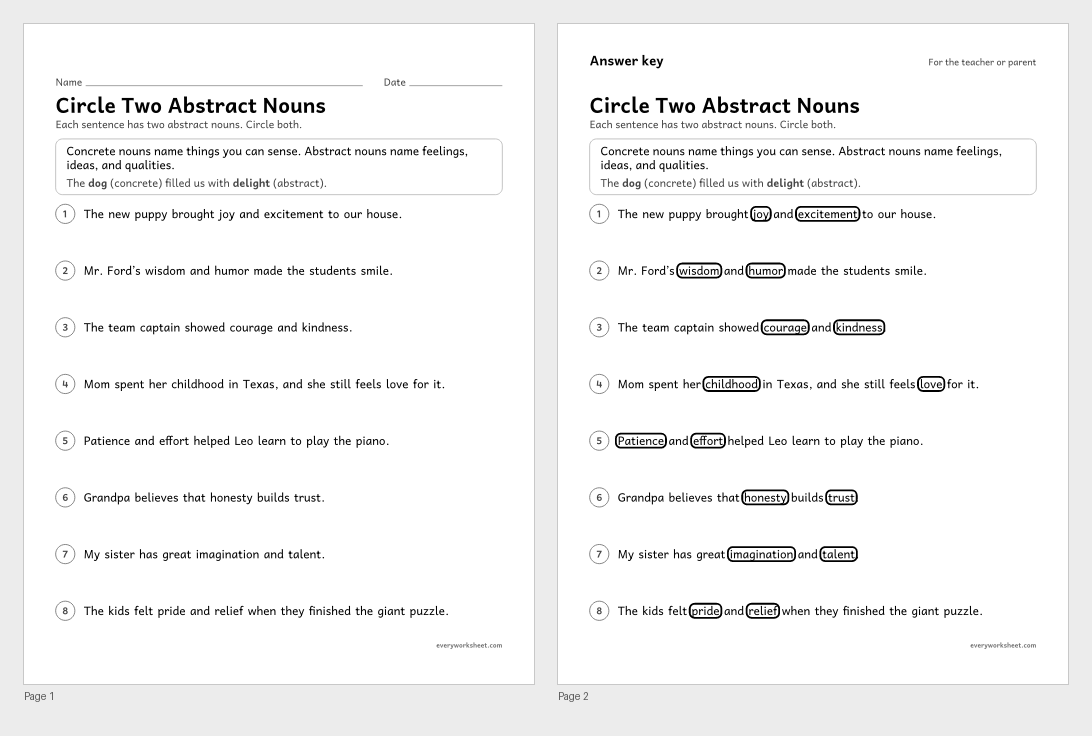
Circle two abstract nouns
Finding two abstract nouns in a sentence with concrete nouns
Answer key on page 2
2 pages48 KB
 View all 2 pages
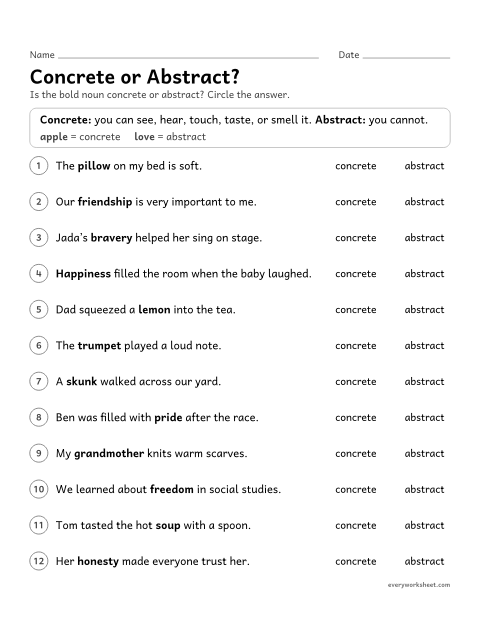
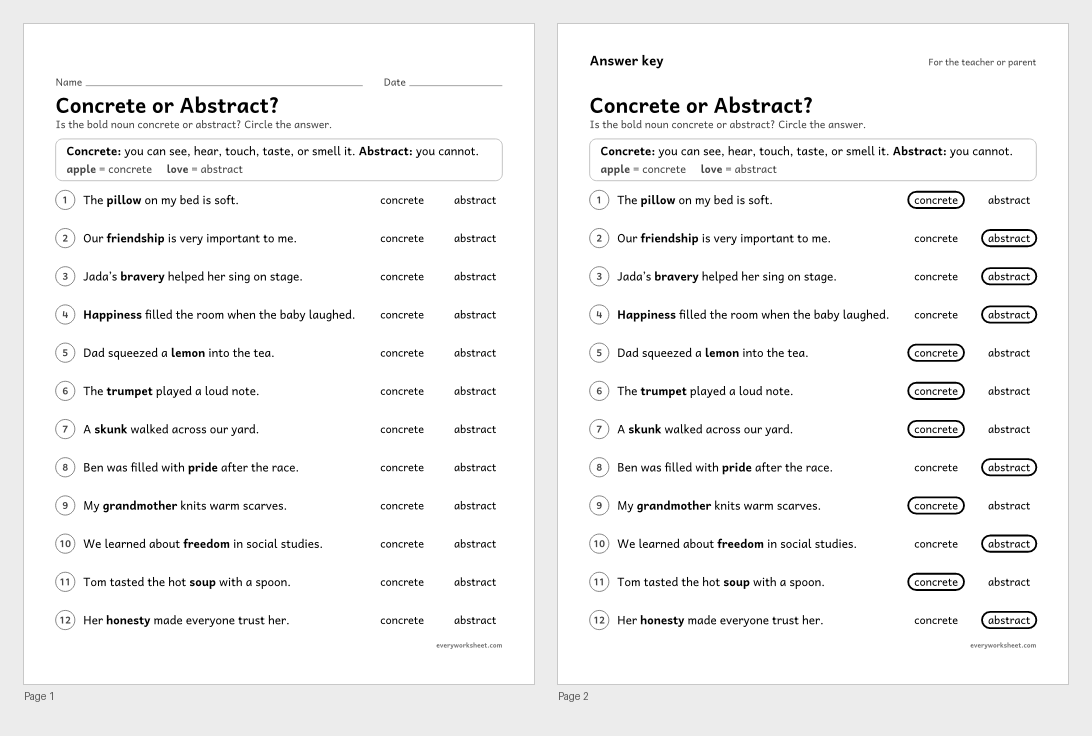
Concrete or Abstract?
Deciding whether a noun is concrete or abstract
Answer key on page 2
2 pages60 KB
 View all 2 pages
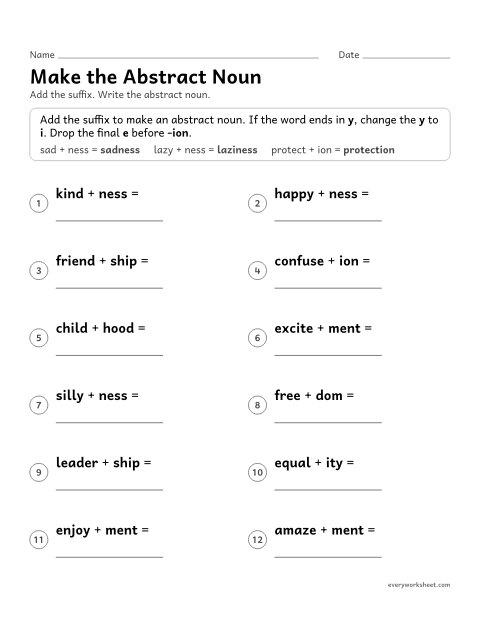
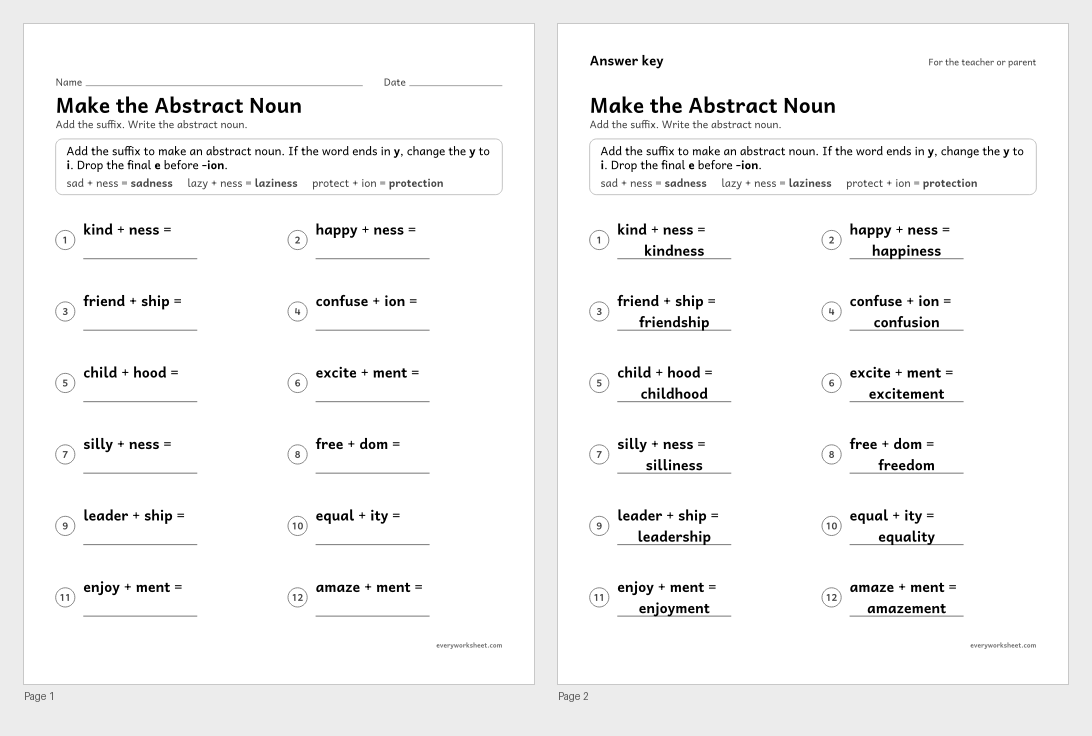
Make the abstract noun
Forming abstract nouns by adding -ness, -ship, -hood, -dom, -ment, -ity, and -ion
Answer key on page 2
2 pages59 KB
 View all 2 pages
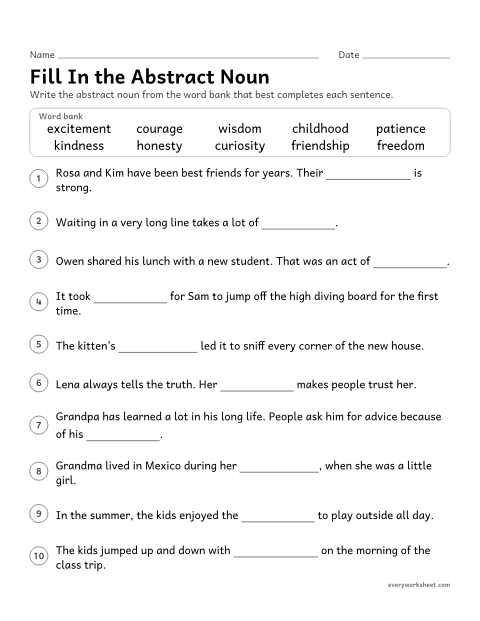
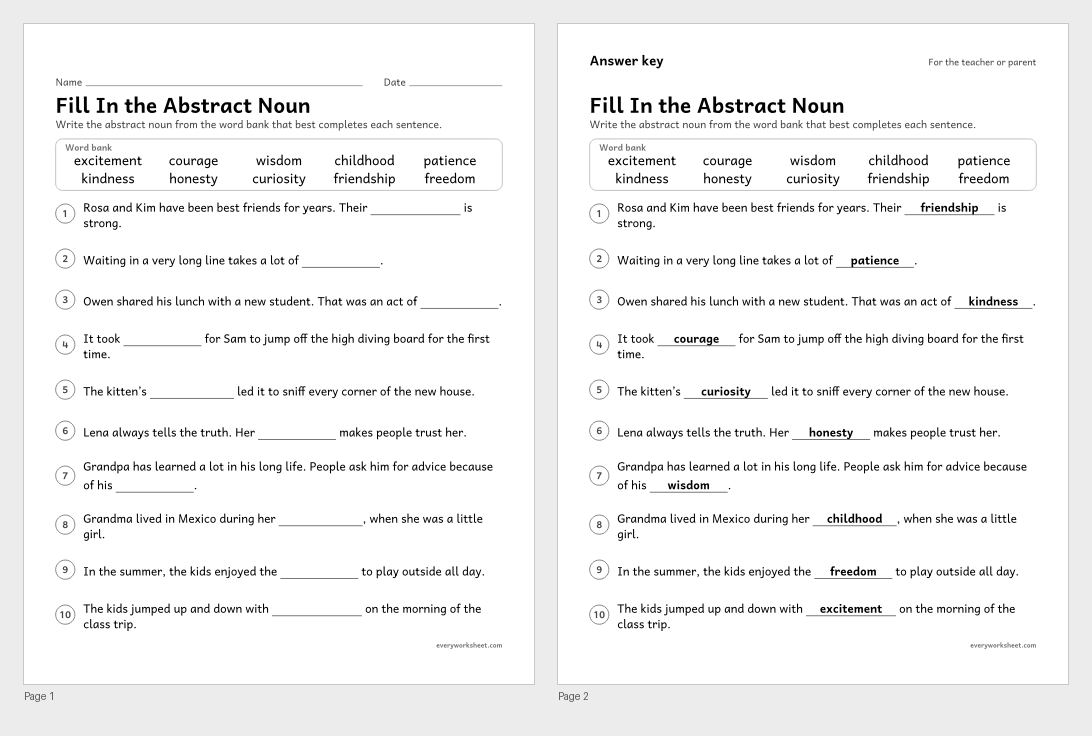
Fill in the abstract noun
Using abstract nouns in context with a word bank
Answer key on page 2
2 pages53 KB
 View all 2 pages
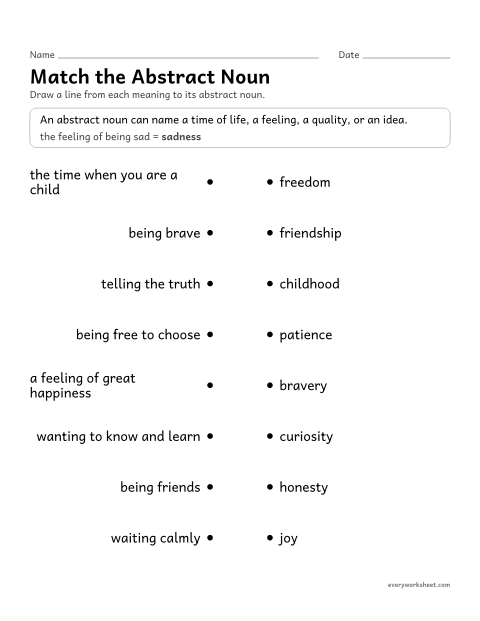
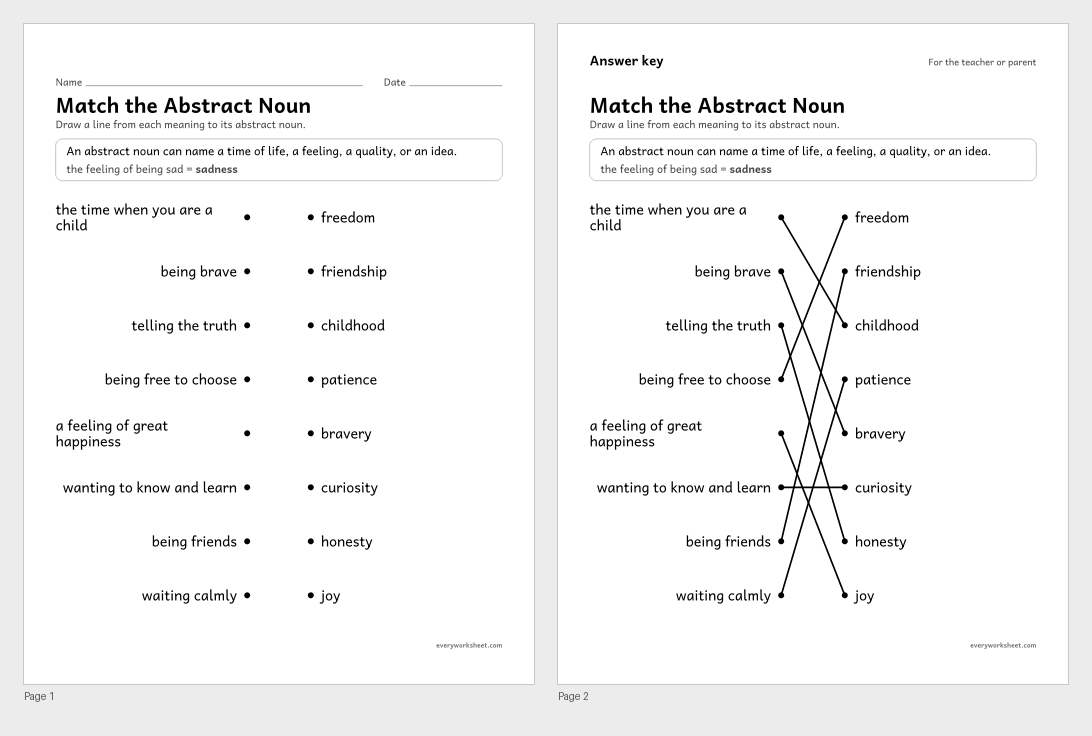
Match the abstract noun
Matching abstract nouns to their meanings
Answer key on page 2
2 pages37 KB
 View all 2 pages
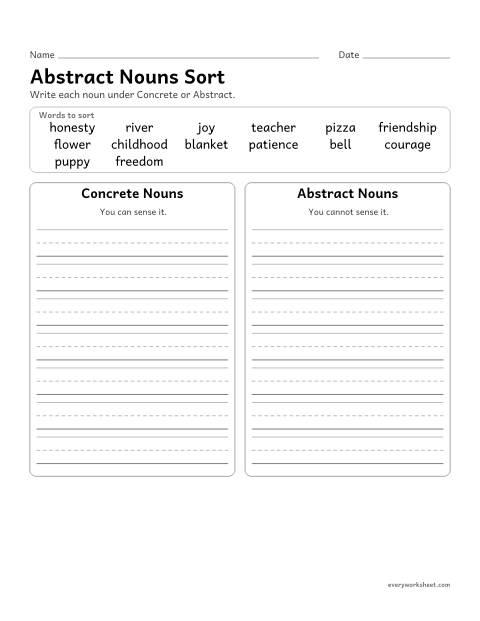
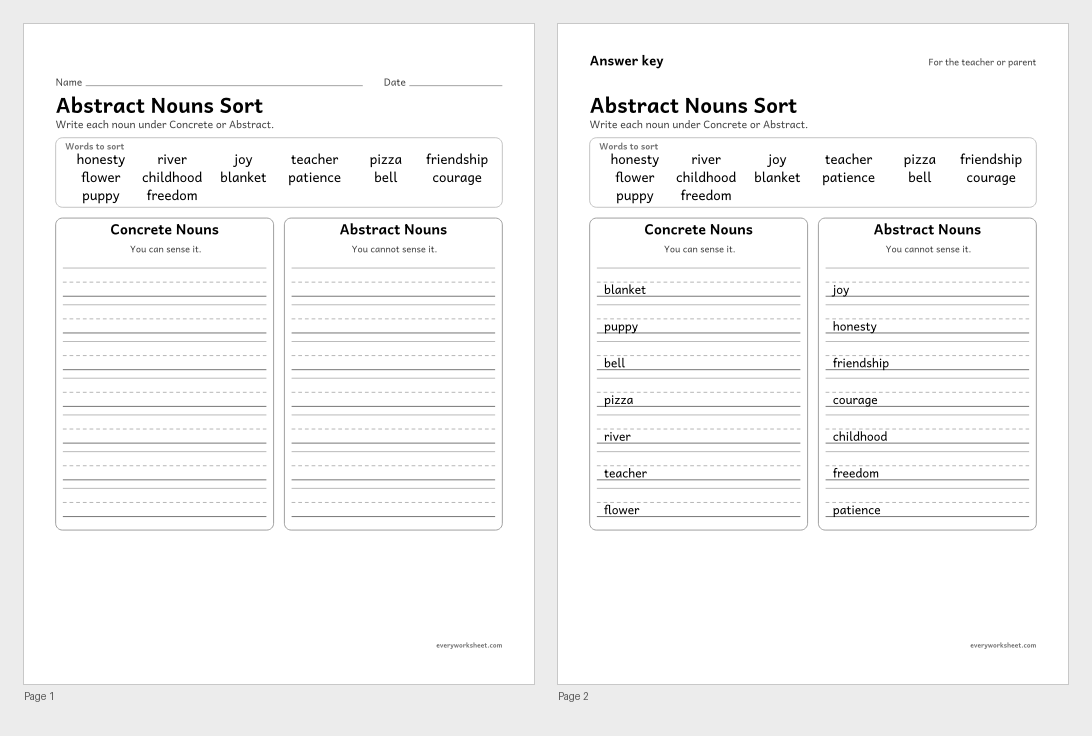
Abstract nouns sort
Sorting nouns into concrete and abstract
Answer key on page 2
2 pages38 KB
 View all 2 pages
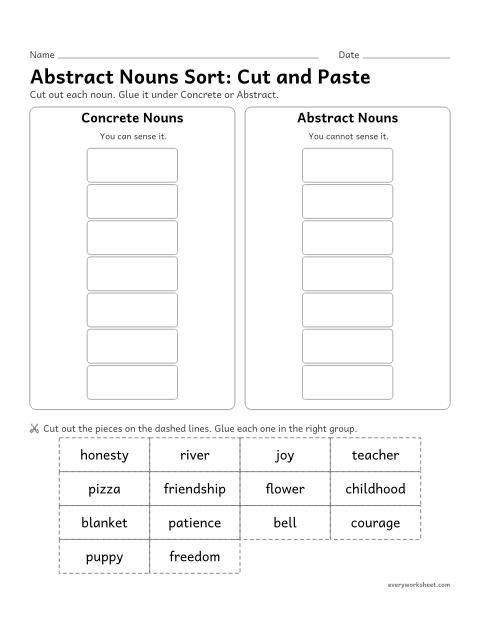
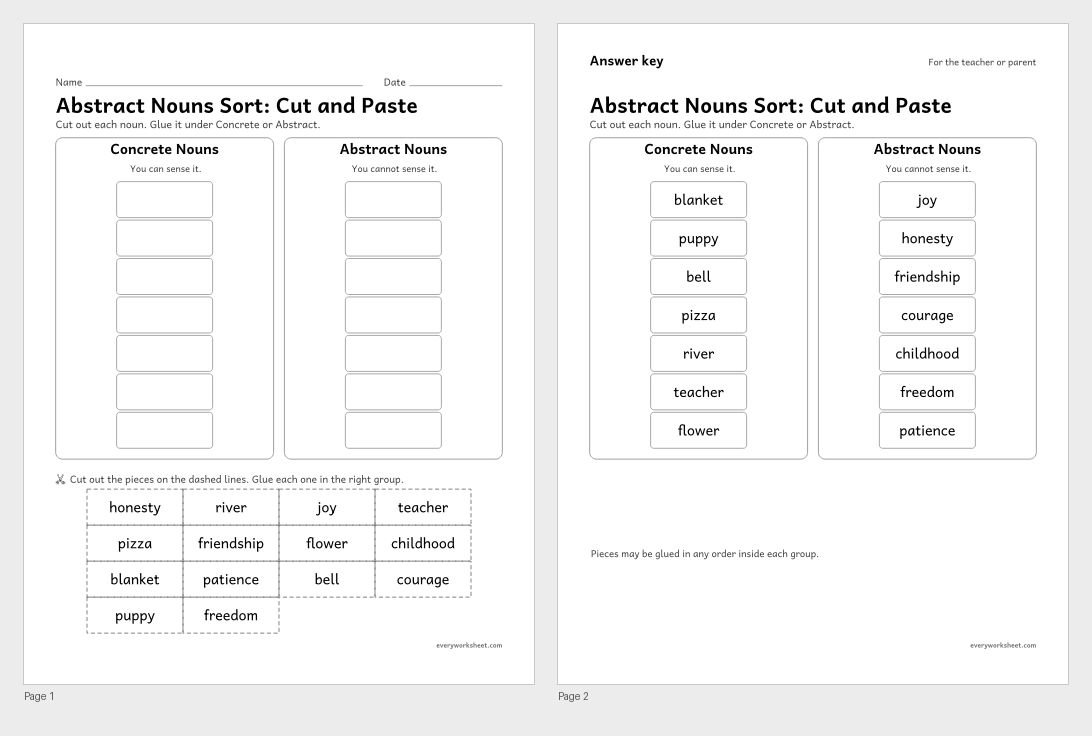
Abstract nouns Sort: cut and paste
Sorting nouns into concrete and abstract
Answer key on page 2
2 pages68 KB
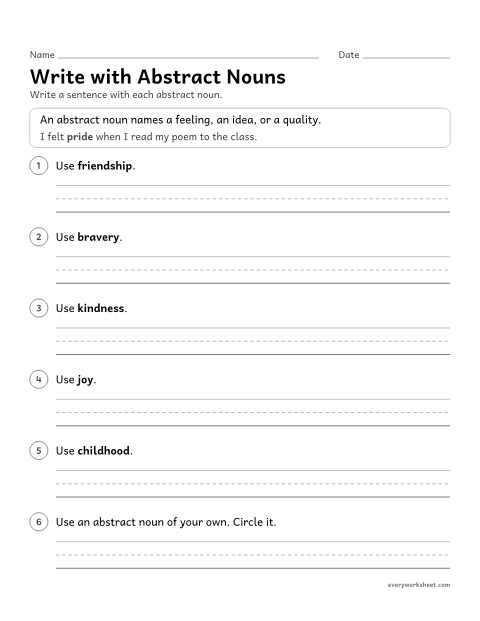
Write with abstract nouns
 View all 2 pages
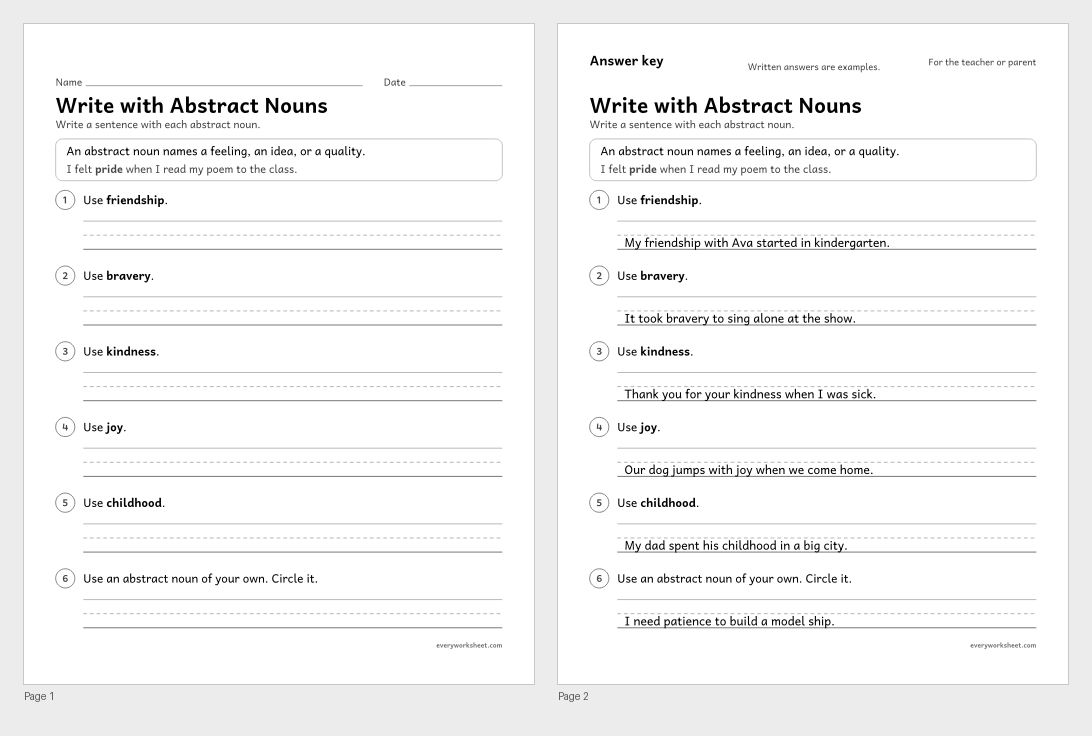
Write with abstract nouns
Writing sentences that use abstract nouns
Answer key on page 2
2 pages42 KB
Print at 100% (actual size) for the cleanest tracing lines.
About these abstract nouns worksheets
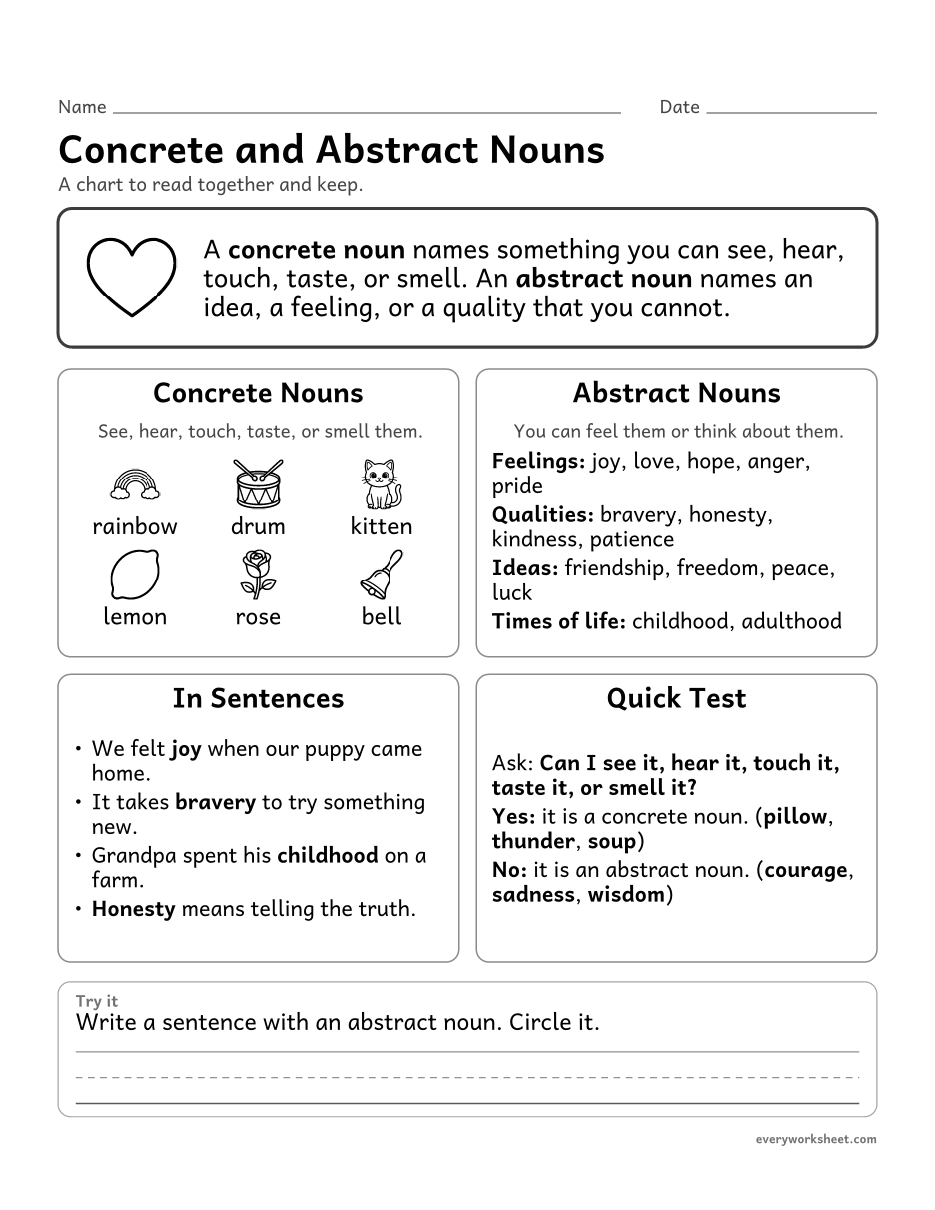
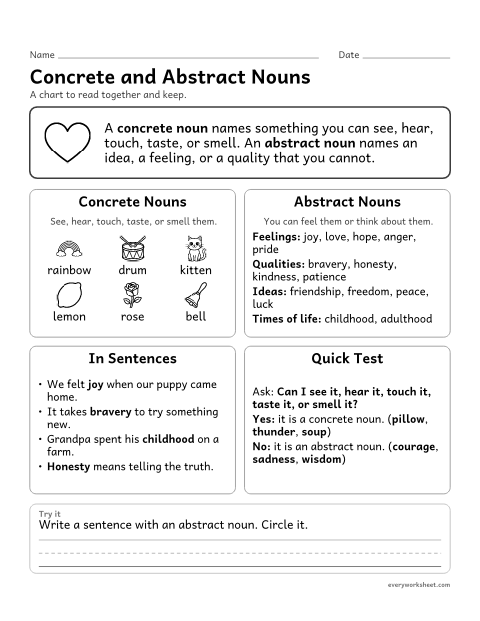
A noun names a person, place, thing, or idea. A concrete noun names something you can see, hear, touch, taste, or smell: a rainbow, a drum, a kitten, a lemon, a bell. An abstract noun names something you cannot sense: a feeling, an idea, a quality, or a time of life.
Examples of abstract nouns: feelings like joy, love, hope, anger, and pride; qualities like bravery, honesty, kindness, and patience; ideas like friendship, freedom, and peace; and times of life like childhood and adulthood. In a sentence: "We felt joy when our puppy came home." "It takes bravery to try something new." A quick test: can I see it, hear it, touch it, taste it, or smell it? If yes, it is concrete. If no, it is abstract.
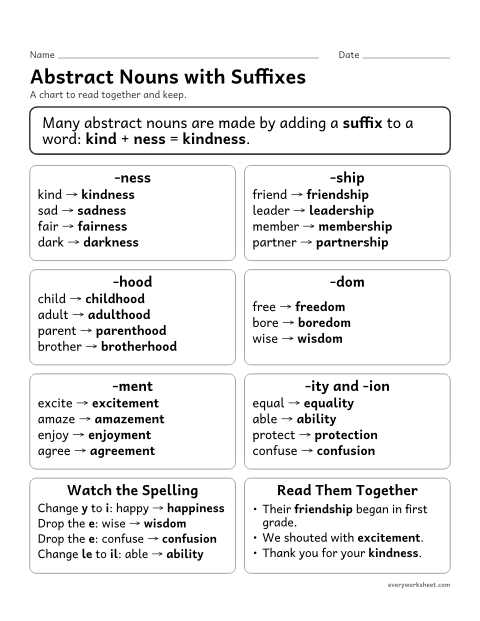
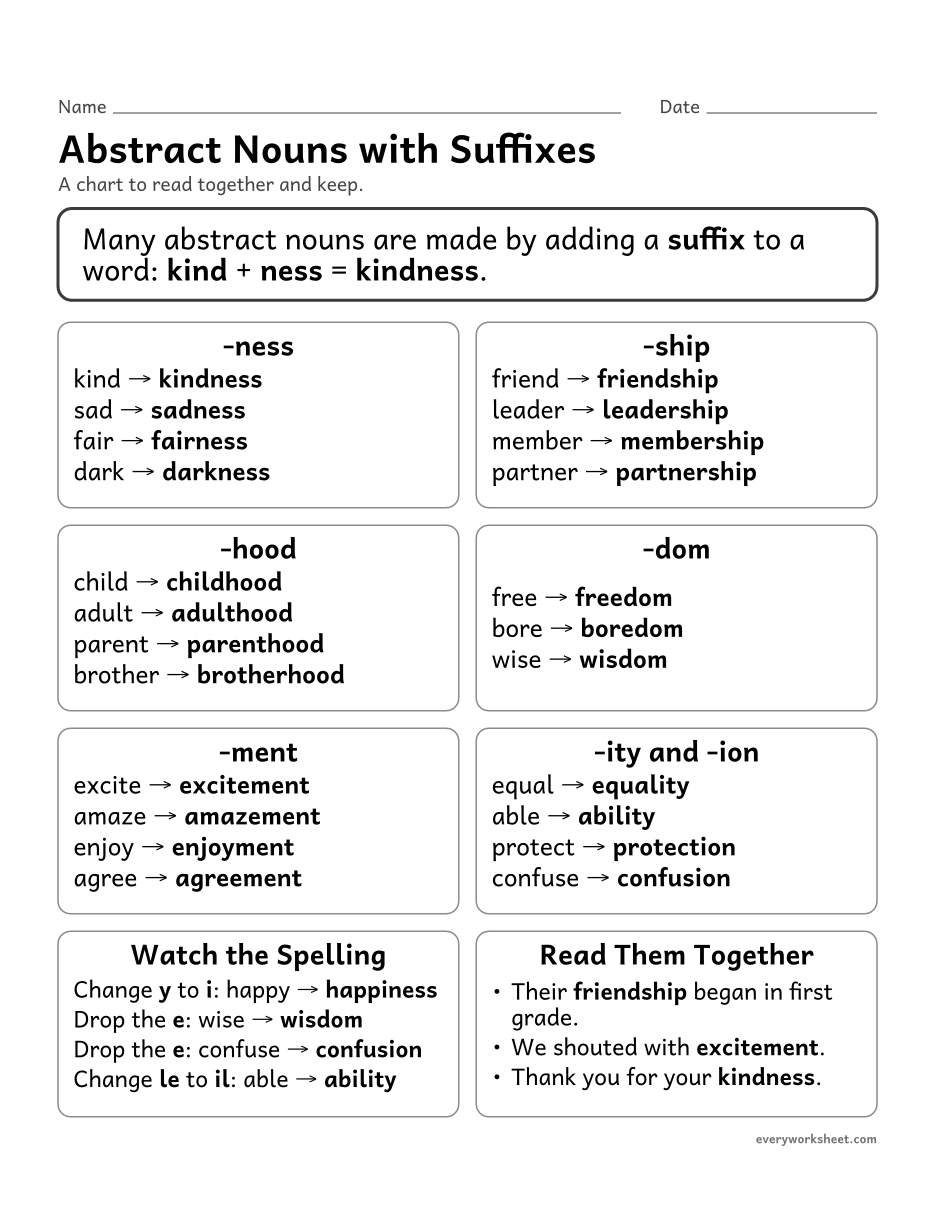
Many abstract nouns are made by adding a suffix to another word: kind + ness = kindness, friend + ship = friendship, child + hood = childhood, free + dom = freedom, enjoy + ment = enjoyment, equal + ity = equality. Some need a spelling change: happy becomes happiness.
These abstract nouns worksheets start with two charts to keep. Practice pages ask children to circle abstract nouns, decide concrete or abstract, sort nouns (cut and paste or write), add suffixes, fill in from a word bank, match abstract nouns to their meanings, and write sentences of their own. Every practice page has an answer key.
Standards
CCSS.ELA-LITERACY.L.3.1.CUse abstract nouns (e.g., childhood).
How to use them
- Start with the concrete and abstract nouns chart and play the five senses test with nouns around the room.
- Do the circle and concrete or abstract pages next.
- Use the suffix chart before the add a suffix page.
- Finish with the word bank and writing pages.
Teaching tips
- Use only the five senses test. "I can feel happy" does not count: feeling an emotion is not touching it.
- Some words can be tricky, like noise or time. These pages use clear examples, so save tricky words for discussion.
- Suffixes -ness, -ship, -hood, -dom, -ment, -ity, and -ion often signal an abstract noun.
- Abstract nouns make writing stronger: "She showed great courage" says more than "She was brave."
Questions teachers and parents ask
What is an abstract noun?
A noun that names something you cannot see, hear, touch, taste, or smell, such as a feeling (joy), a quality (honesty), an idea (freedom), or a time of life (childhood).
What is the difference between concrete and abstract nouns?
Concrete nouns name things you can sense, like a drum or a lemon. Abstract nouns name feelings, ideas, and qualities you cannot sense, like hope or bravery.
What are some examples of abstract nouns?
Joy, love, anger, pride, bravery, honesty, kindness, patience, friendship, freedom, peace, childhood, and wisdom.
What grade learns abstract nouns?
Abstract nouns are a third grade grammar skill.
Do the worksheets have answer keys?
Yes. Every page with right answers has an answer key on page 2. Written answers show an example.