Animal Adaptations Worksheets

8 free PDFsUS Letter PDFsAnswer key includedNo login

Body parts and behaviors that help living things survive, habitats where they survive best, variation and camouflage, and animals that live in groups.

Download the adaptations worksheets

Adaptations and habitats

A poster, a how-does-it-help matching page and a where-would-it-survive page.

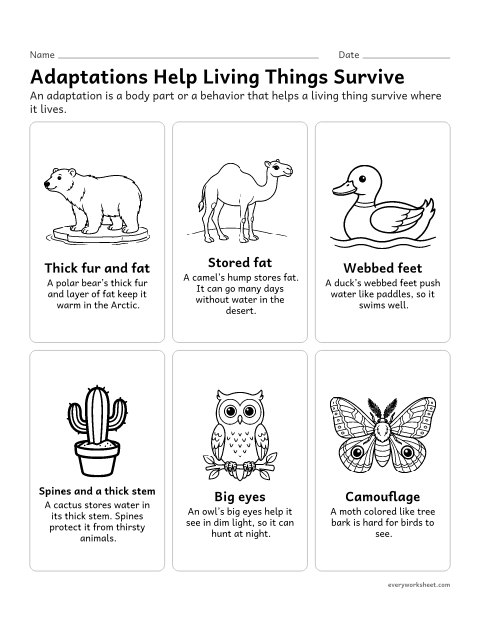
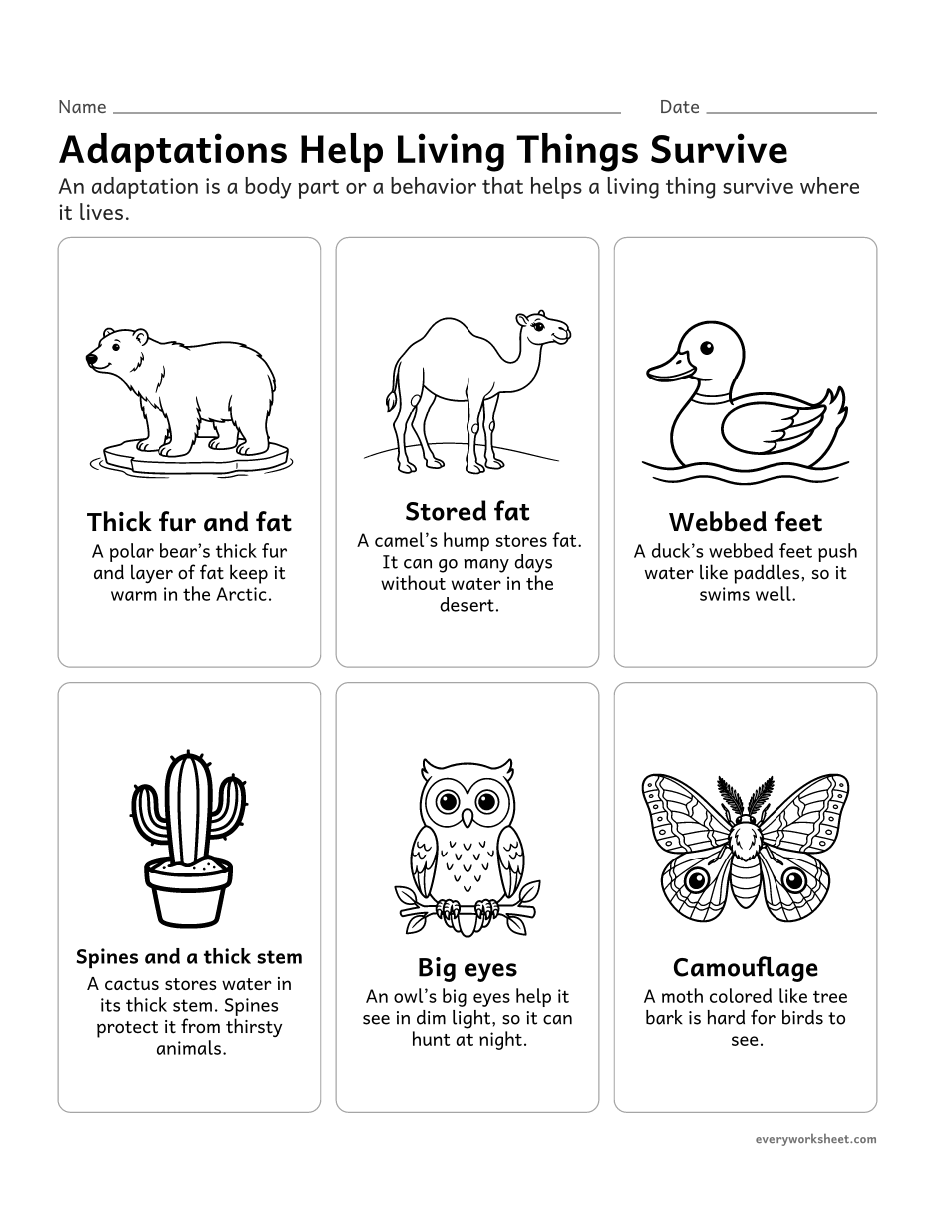
  • Preview of the printable “Animal adaptations poster for 3rd grade” worksheet: describing body parts and behaviors that help plants and animals survive in their habitatsView larger

    Animal adaptations poster for 3rd grade

    Describing body parts and behaviors that help plants and animals survive in their habitats

    1 page118 KB
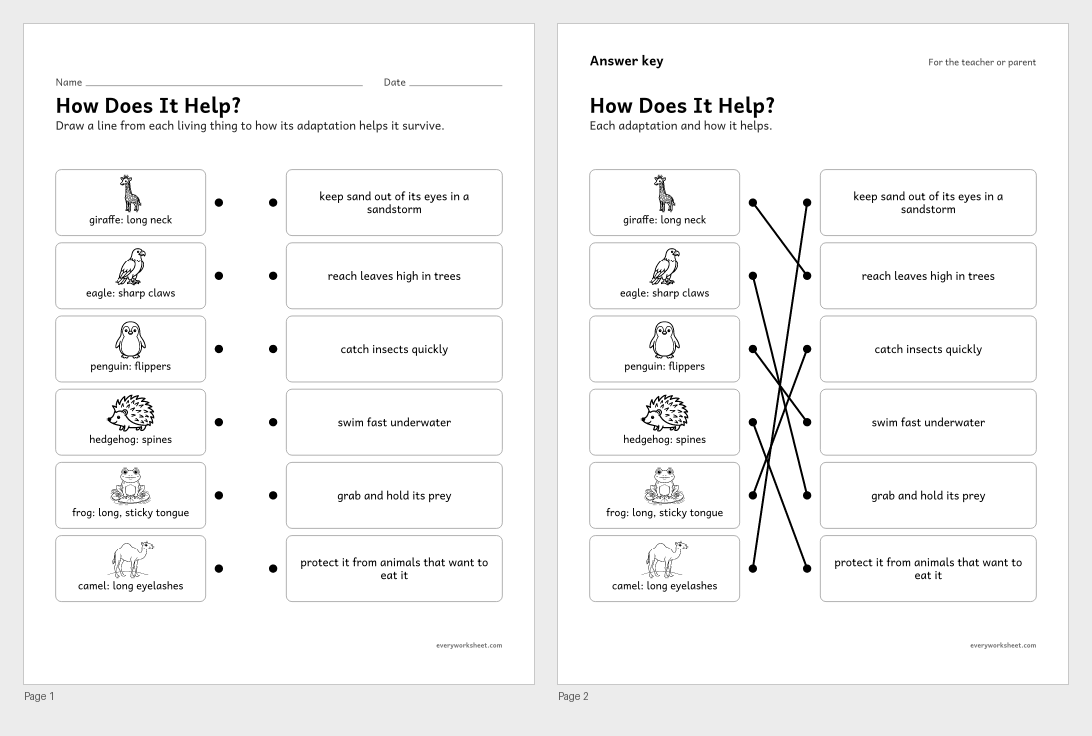
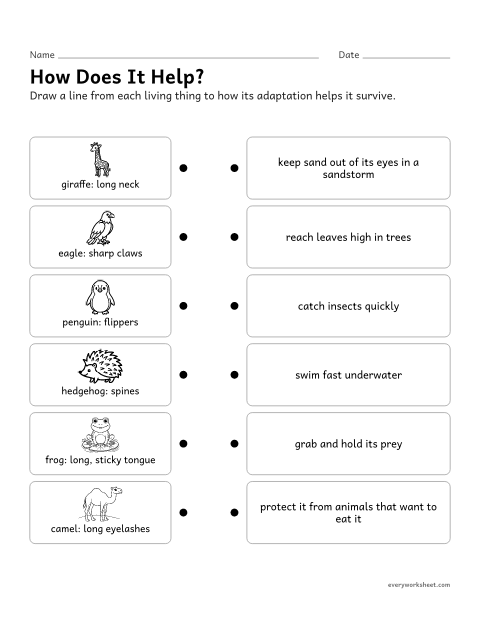
  • Preview of the printable “Animal adaptations matching worksheet” worksheet: matching adaptations to how they help living things surviveView all 2 pages

    Animal adaptations matching worksheet

    Matching adaptations to how they help living things survive

    Answer key on page 2

    2 pages234 KB
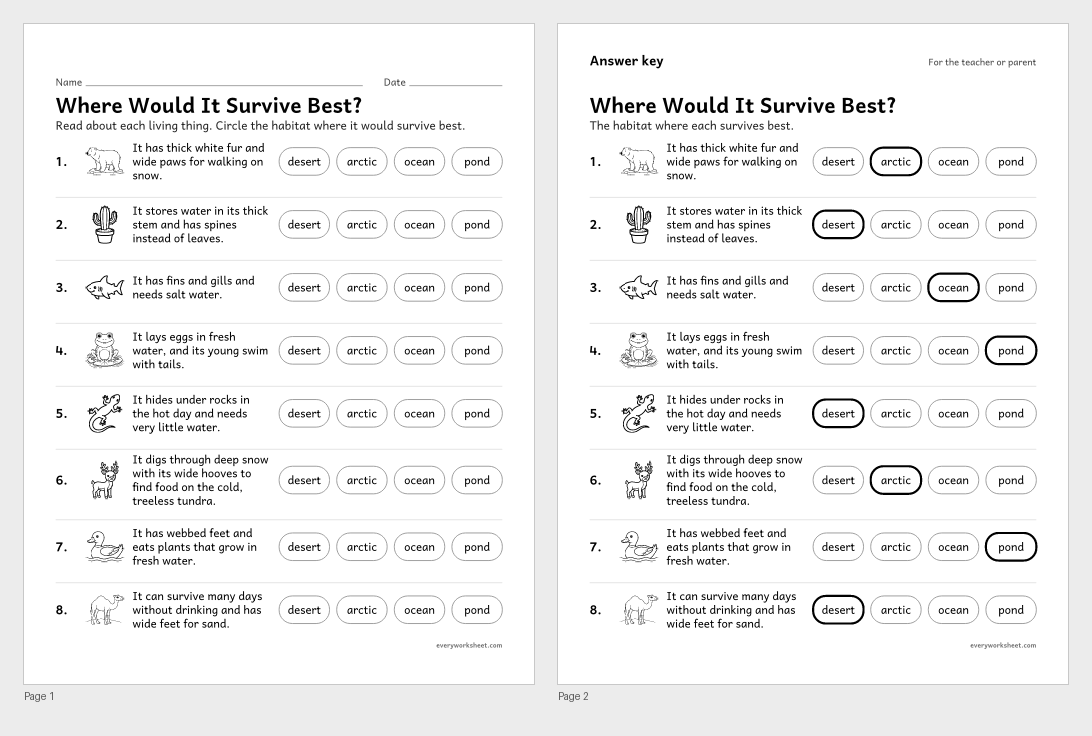
  • Preview of the printable “Where could it Survive? habitat adaptations worksheet” worksheet: arguing from traits which habitat an organism could survive well inView all 2 pages

    Where could it Survive? habitat adaptations worksheet

    Arguing from traits which habitat an organism could survive well in

    Answer key on page 2

    2 pages251 KB
Variation and survival

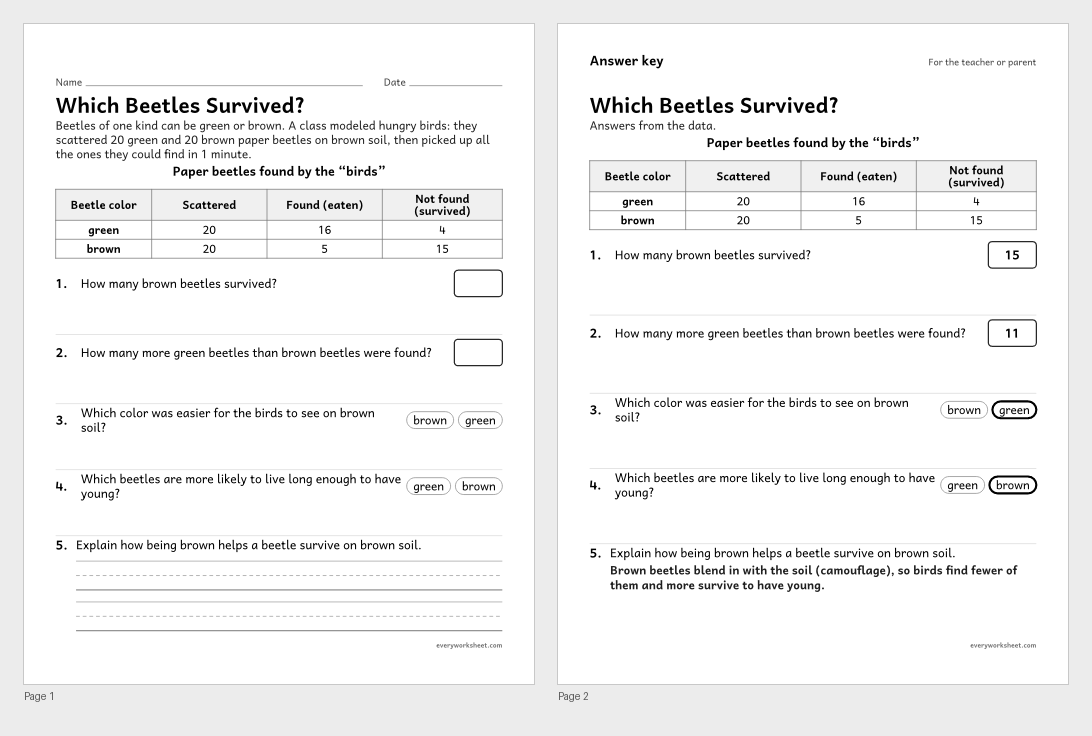
Use camouflage data to explain why some beetles survived.

  • Preview of the printable “Variation and Survival: camouflage data worksheet” worksheet: using data to explain how variation in color can help some individuals surviveView all 2 pages

    Variation and Survival: camouflage data worksheet

    Using data to explain how variation in color can help some individuals survive

    Answer key on page 2

    2 pages45 KB
Living in groups

Match animal groups to how they help and read about meerkats on guard.

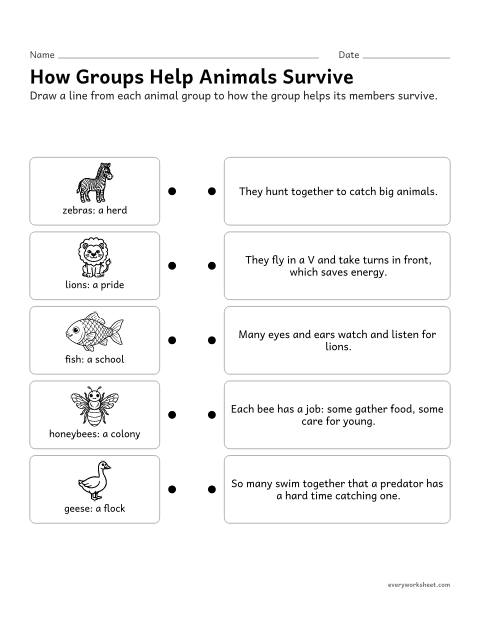
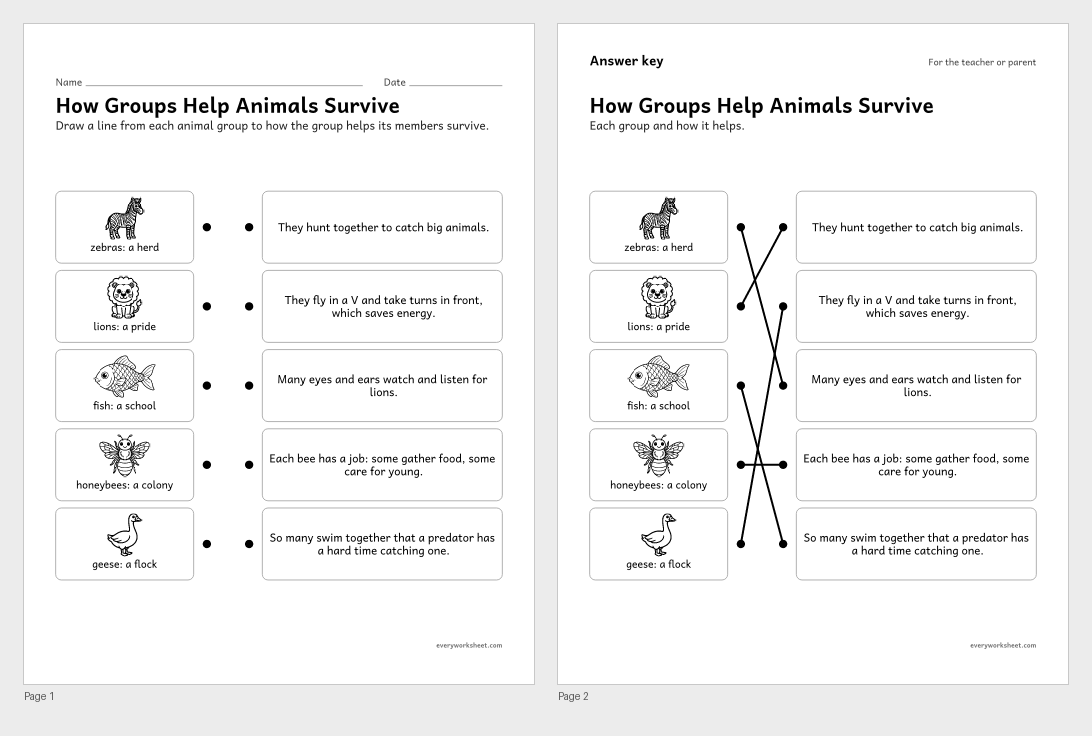
  • Preview of the printable “Animals living in groups matching worksheet” worksheet: matching animal groups to the ways living in a group helps members surviveView all 2 pages

    Animals living in groups matching worksheet

    Matching animal groups to the ways living in a group helps members survive

    Answer key on page 2

    2 pages279 KB
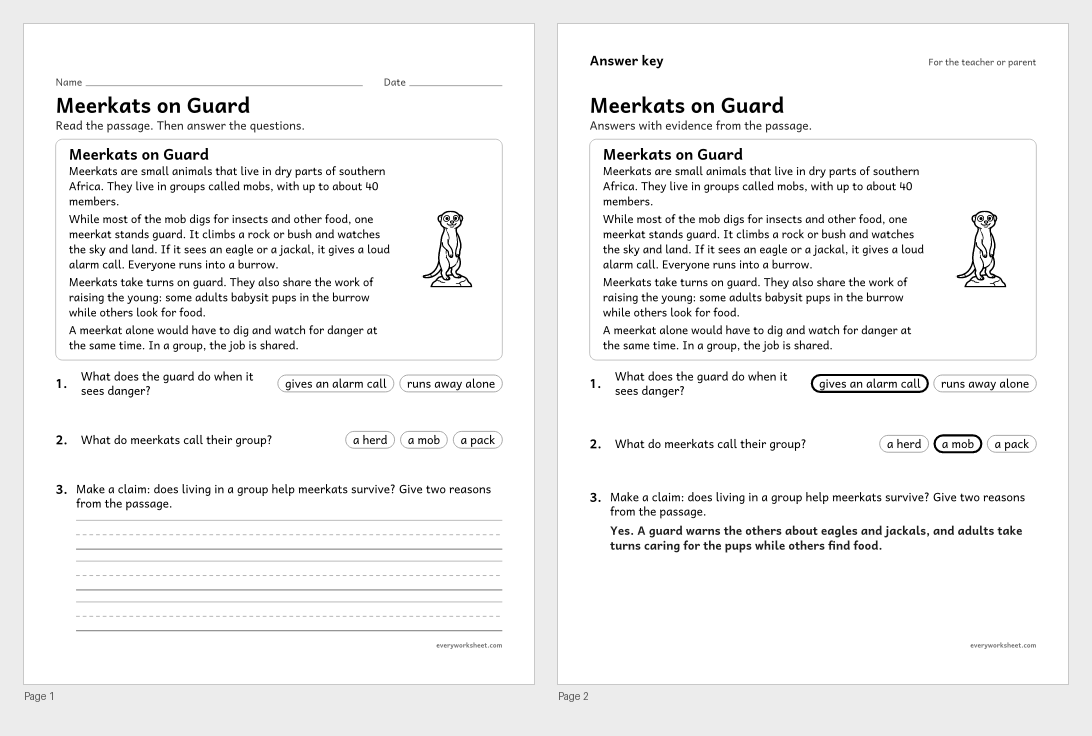
  • Preview of the printable “Animals in groups reading Passage: meerkats” worksheet: reading an informational passage and arguing that living in a group helps animals surviveView all 2 pages

    Animals in groups reading Passage: meerkats

    Reading an informational passage and arguing that living in a group helps animals survive

    Answer key on page 2

    2 pages83 KB
When habitats change

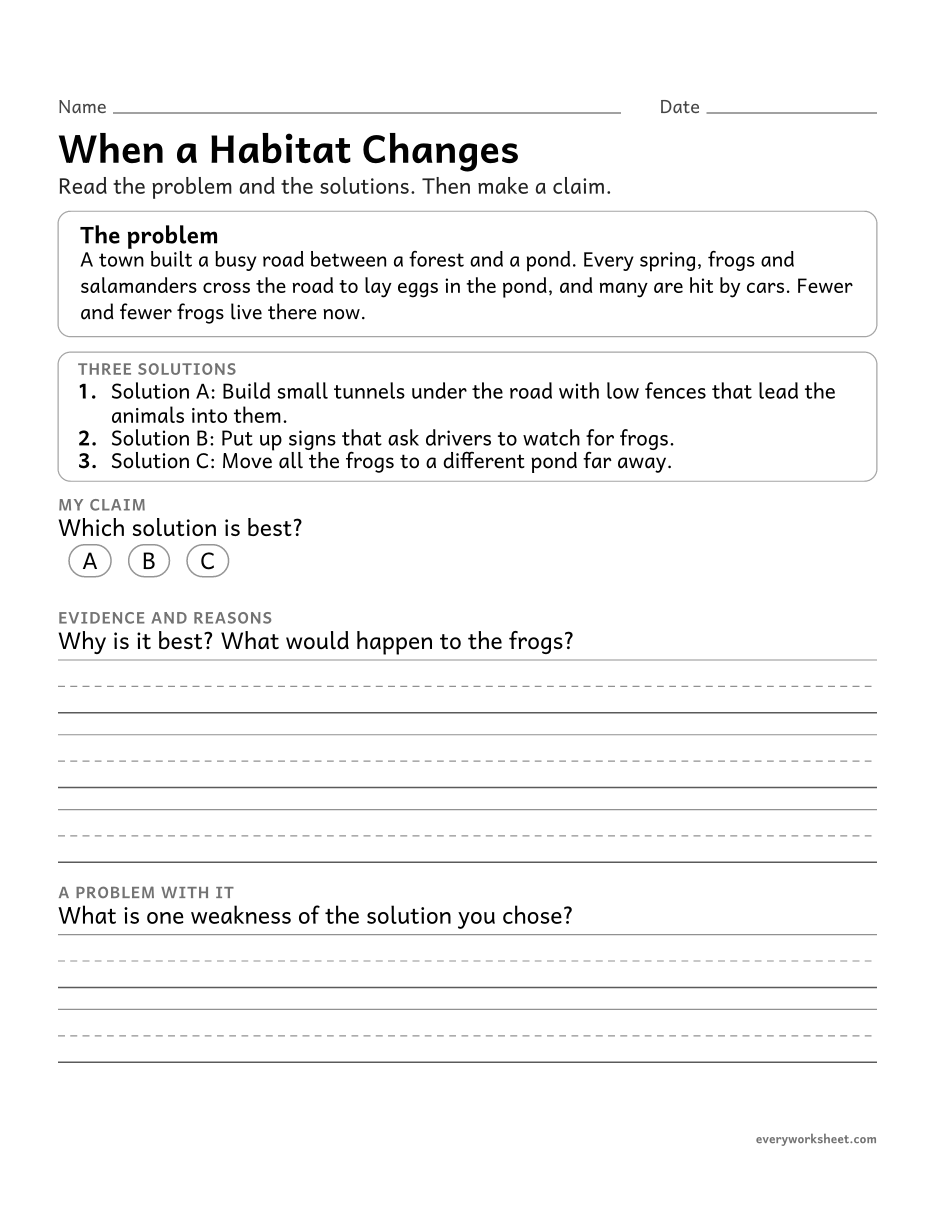
Make a claim about the best solution for frogs and a new road, then review.

  • Preview of the printable “When the environment Changes: claim and evidence” worksheet: making a claim about the merit of a solution to a problem caused when the environment changesView larger

    When the environment Changes: claim and evidence

    Making a claim about the merit of a solution to a problem caused when the environment changes

    1 page32 KB
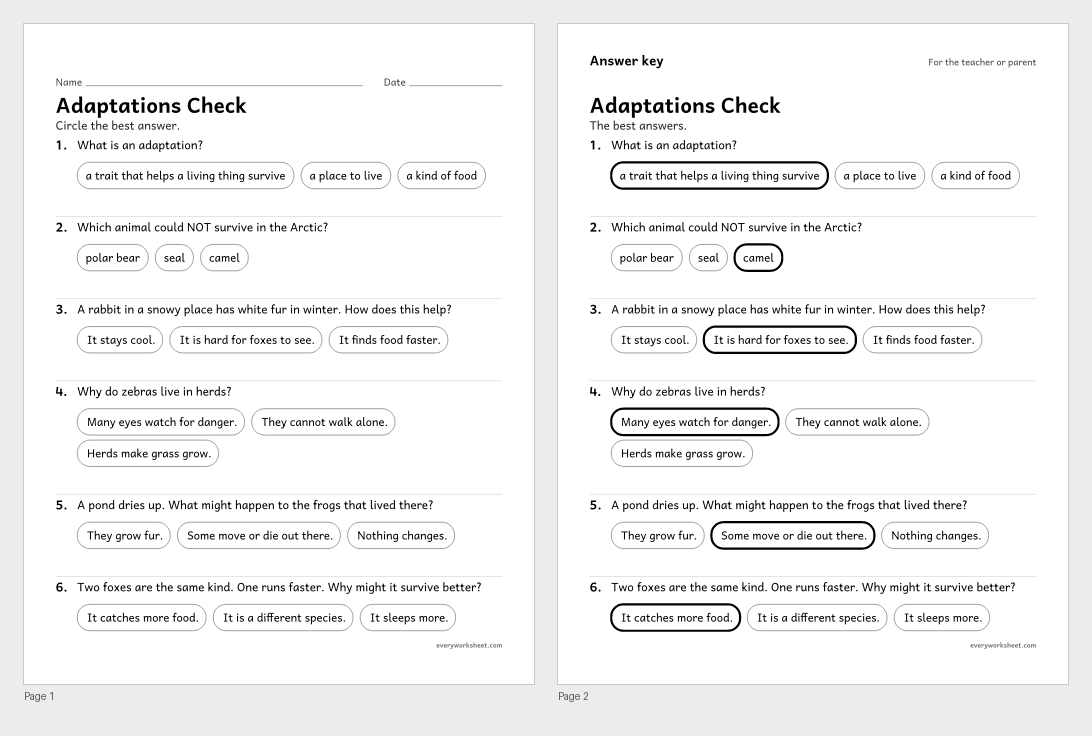
  • Preview of the printable “Adaptations quiz for 3rd grade” worksheet: reviewing adaptations, variation, survival and animal groupsView all 2 pages

    Adaptations quiz for 3rd grade

    Reviewing adaptations, variation, survival and animal groups

    Answer key on page 2

    2 pages40 KB

About these adaptations worksheets

A polar bear’s thick fur, a camel’s hump and a cactus’s spines all help living things survive where they live. Third graders learn about these adaptations, argue which habitat a living thing could survive in, and use data to see how small differences, like color, can help some individuals survive.

These adaptations worksheets also explore animals that live in groups, from meerkat guards to zebra herds, and ask children to make a claim about the best solution when a habitat changes, like a new road between a forest and a frog pond.

Every page is black and white, prints on US Letter or A4, and every page with right answers has an answer key on page 2.

Standards

  • NGSS 3-LS4-3Construct an argument with evidence that in a particular habitat some organisms can survive well, some survive less well, and some cannot survive at all.
  • NGSS 3-LS4-2Use evidence to construct an explanation for how the variations in characteristics among individuals of the same species may provide advantages in surviving, finding mates, and reproducing.
  • NGSS 3-LS2-1Construct an argument that some animals form groups that help members survive.
  • NGSS 3-LS4-4Make a claim about the merit of a solution to a problem caused when the environment changes and the types of plants and animals that live there may change.

How to use them

  1. Start with the poster. Ask children to find an adaptation on a pet or a backyard animal.
  2. Match adaptations to how they help, then decide where each living thing would survive best.
  3. Play the camouflage game: scatter green and brown paper beetles on a brown carpet or soil, collect them for one minute, and compare with the data page.
  4. Read Meerkats on Guard and match animal groups to how they help.
  5. Discuss the frog road problem before children write their claim.

Teaching tips

  • An adaptation is a trait that helps a living thing survive and reproduce where it lives.
  • Individuals don’t change to fit the environment. Those whose traits fit better are more likely to survive and have young.
  • Groups help in many ways: finding food, staying safe from predators, raising young and saving energy.
  • In a claim, accept any solution that is backed by reasons, but ask for one weakness too.
  • Whales and seals breathe air with lungs; fish use gills. Watch for this mix-up.

Questions teachers and parents ask

What is an adaptation?

An adaptation is a body part or behavior that helps a living thing survive in its habitat, like webbed feet for swimming or thick fur for cold.

Why do some animals live in groups?

Groups can help members find food, watch for danger, protect their young and save energy. Wolves and lions hunt together, zebras have many eyes watching for lions and meerkats take turns standing guard.

What happens when a habitat changes?

Some living things survive and reproduce, some move away and some die out there. People can sometimes help, for example by building tunnels so frogs can cross under a road.