 View all 2 pages
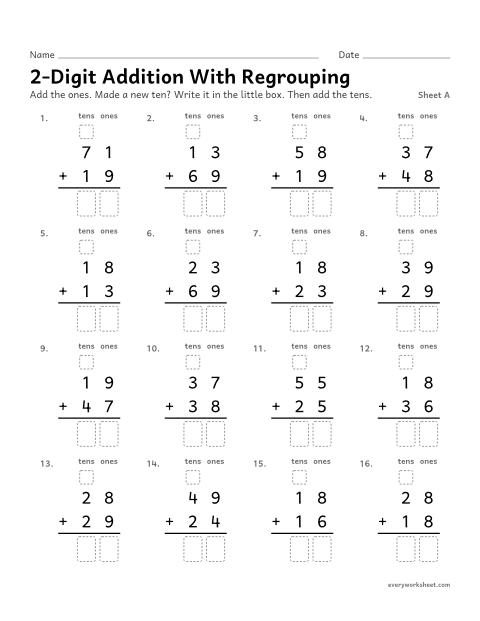
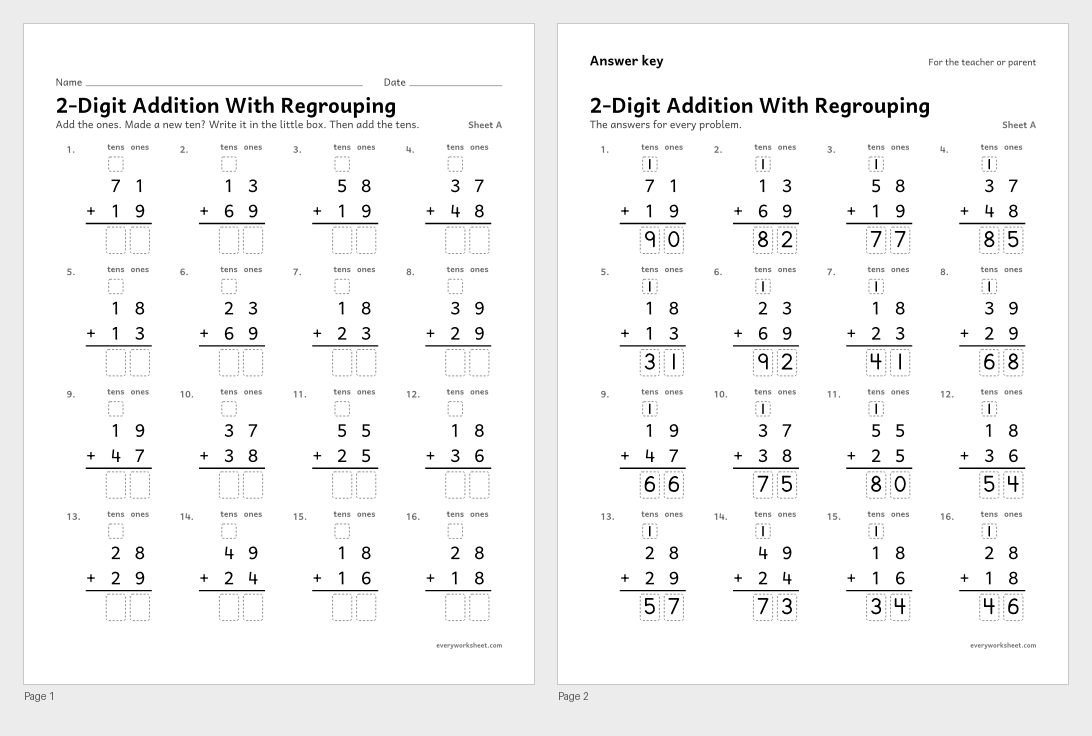
2-Digit addition with Regrouping, sheet A
Adding two-digit numbers with regrouping
Answer key on page 2
2 pages57 KB
2-digit addition with regrouping in columns, place value and number line strategies, adding three and four numbers, and find the mistake pages. Every page has a key.
View all 2 pagesAdding two-digit numbers with regrouping
Answer key on page 2
2 pages57 KB
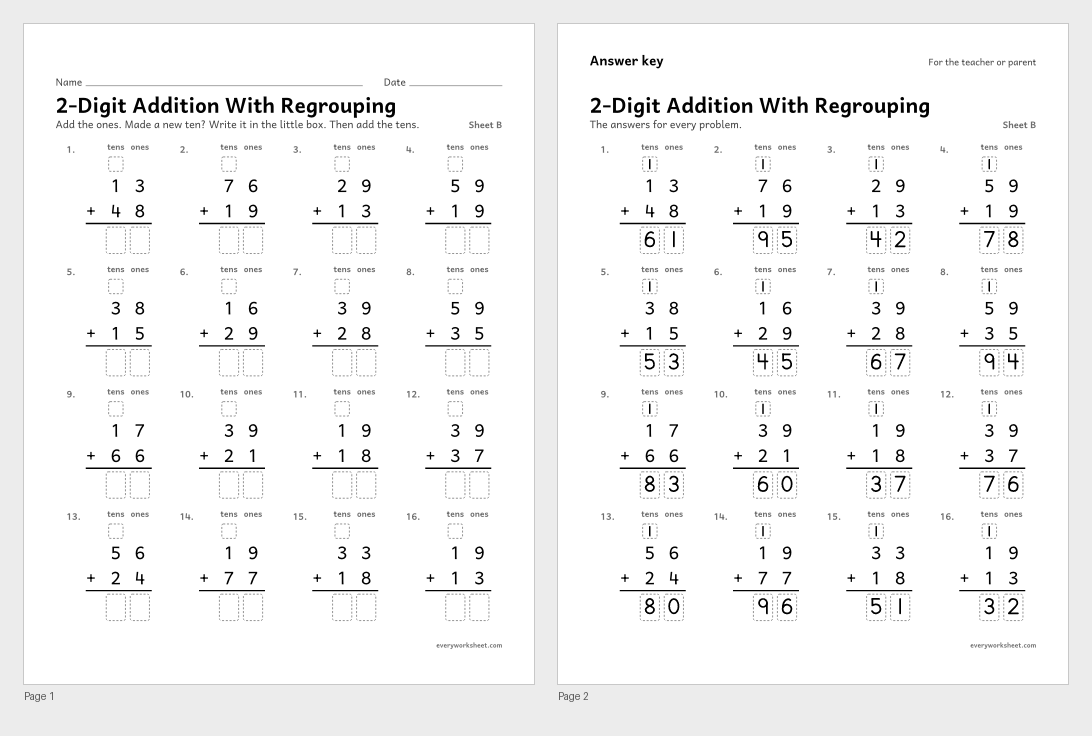 View all 2 pages
Adding two-digit numbers with regrouping
Answer key on page 2
2 pages57 KB
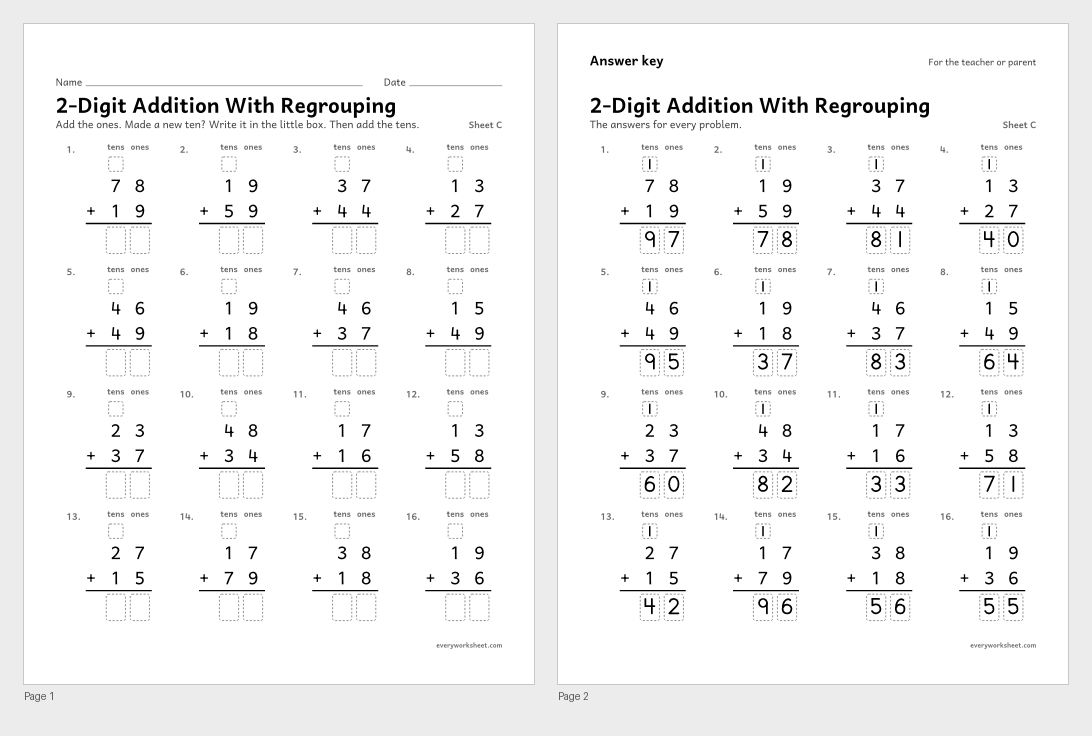 View all 2 pages
Adding two-digit numbers with regrouping
Answer key on page 2
2 pages57 KB
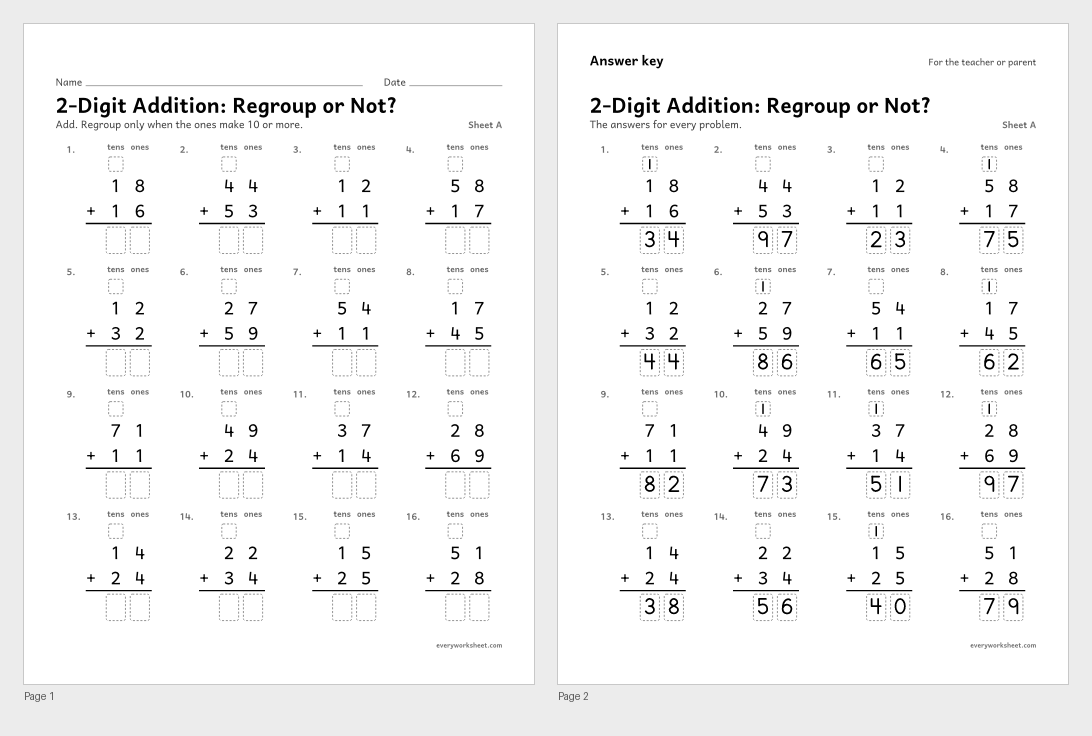 View all 2 pages
Deciding when to regroup in two-digit addition
Answer key on page 2
2 pages57 KB
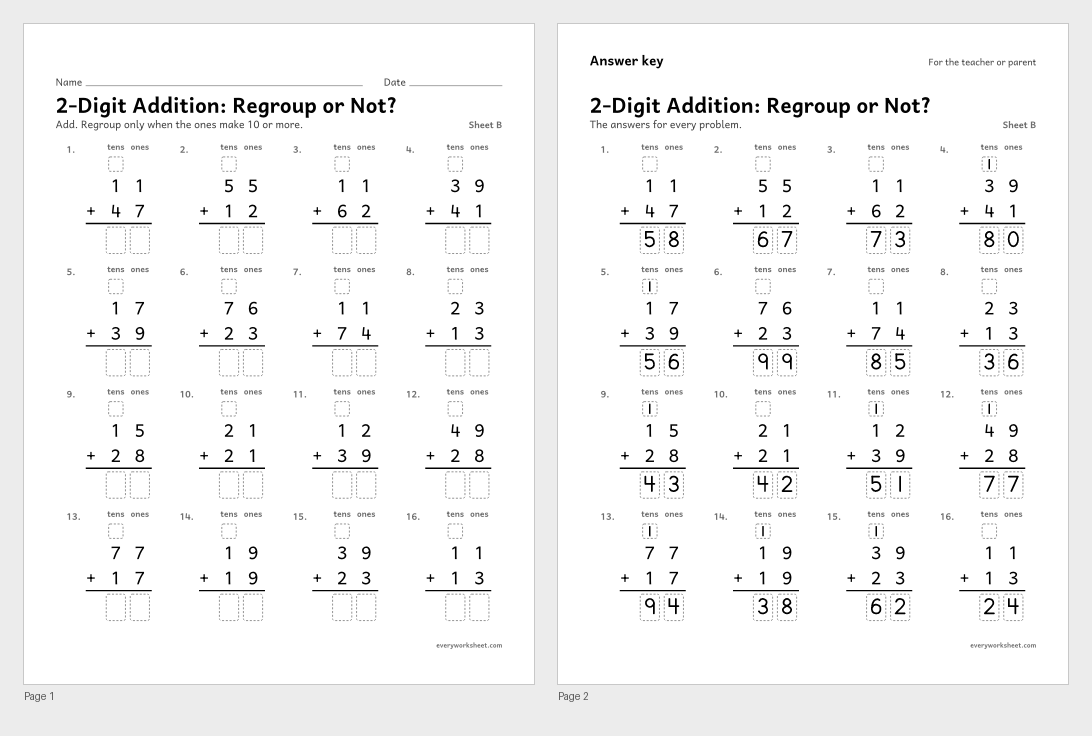 View all 2 pages
Deciding when to regroup in two-digit addition
Answer key on page 2
2 pages57 KB
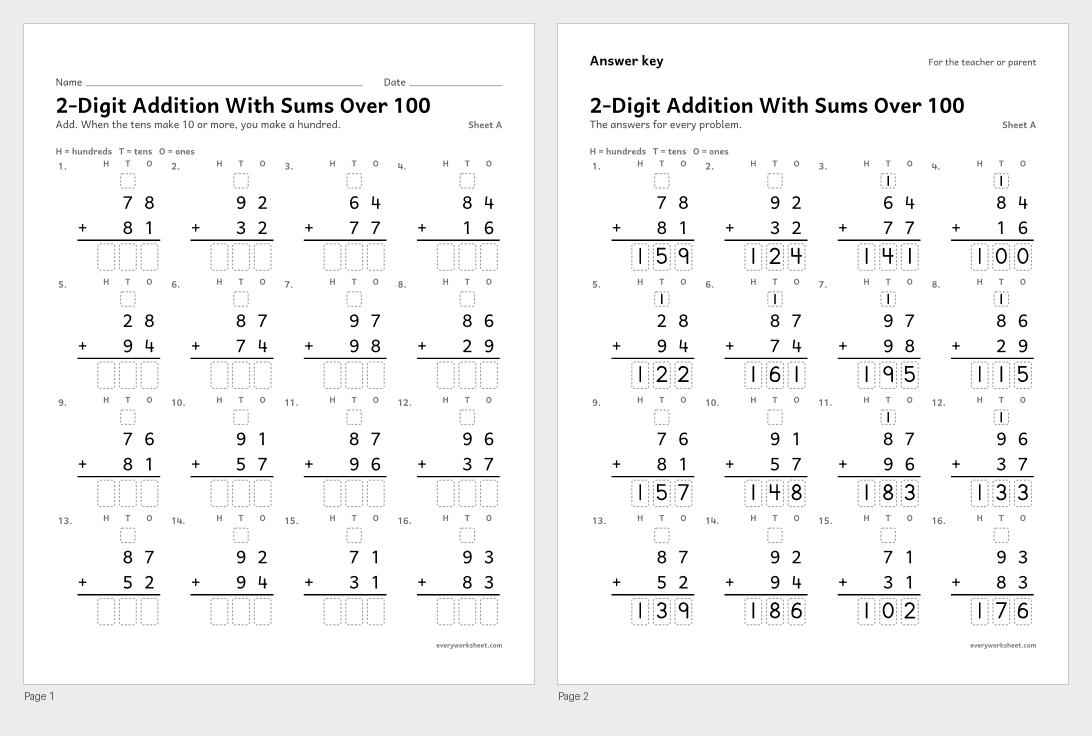 View all 2 pages
Adding two-digit numbers with sums over 100
Answer key on page 2
2 pages58 KB
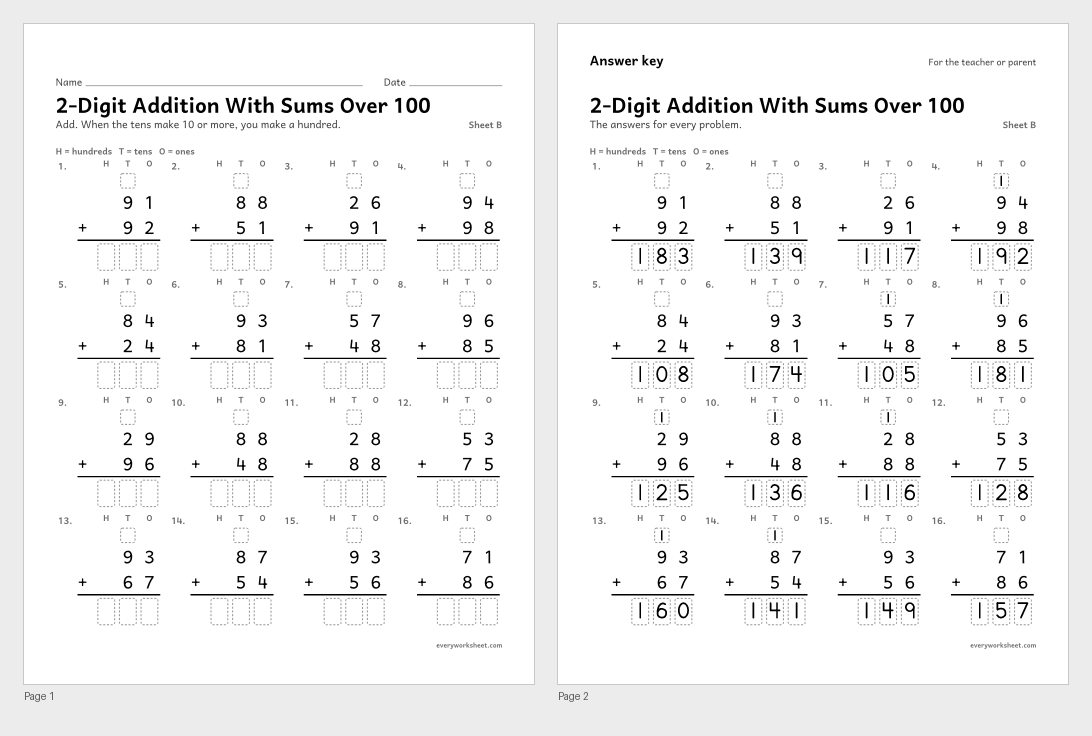 View all 2 pages
Adding two-digit numbers with sums over 100
Answer key on page 2
2 pages58 KB
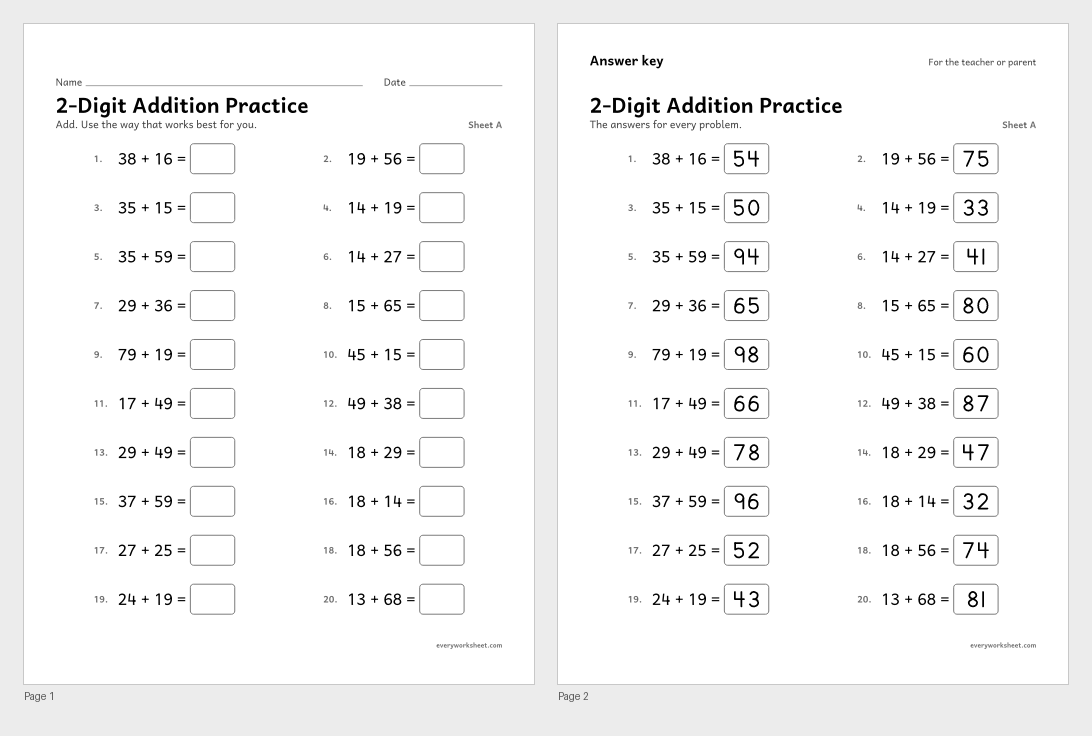 View all 2 pages
Adding within 100 fluently
Answer key on page 2
2 pages95 KB
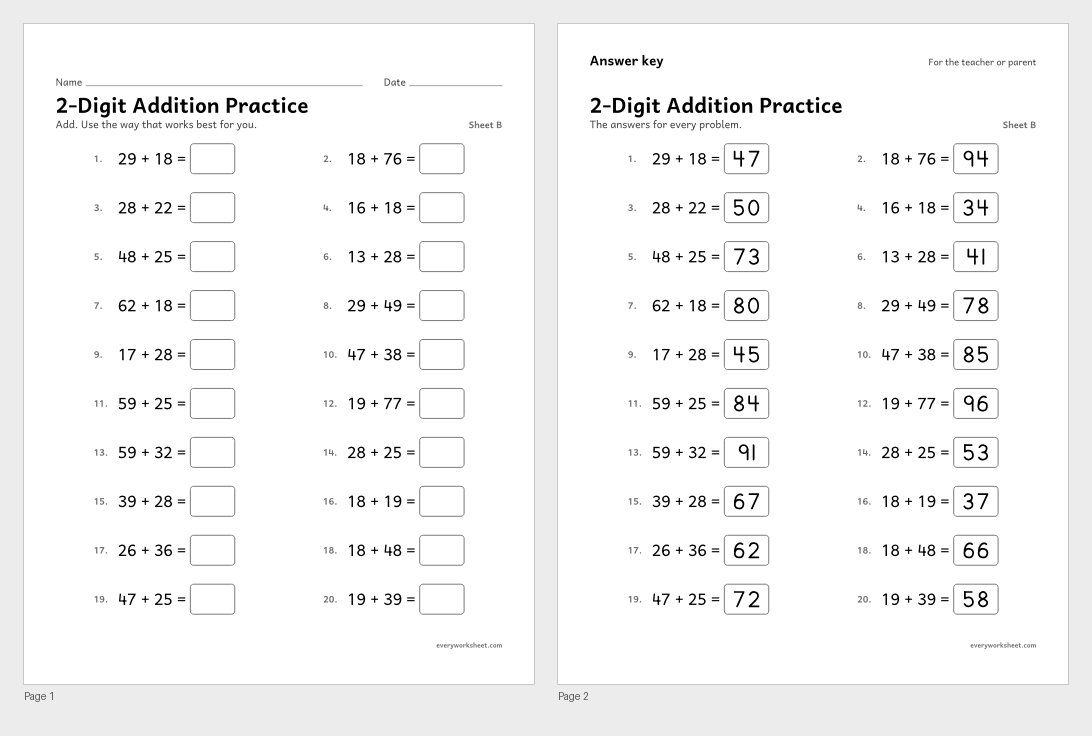 View all 2 pages
Adding within 100 fluently
Answer key on page 2
2 pages95 KB
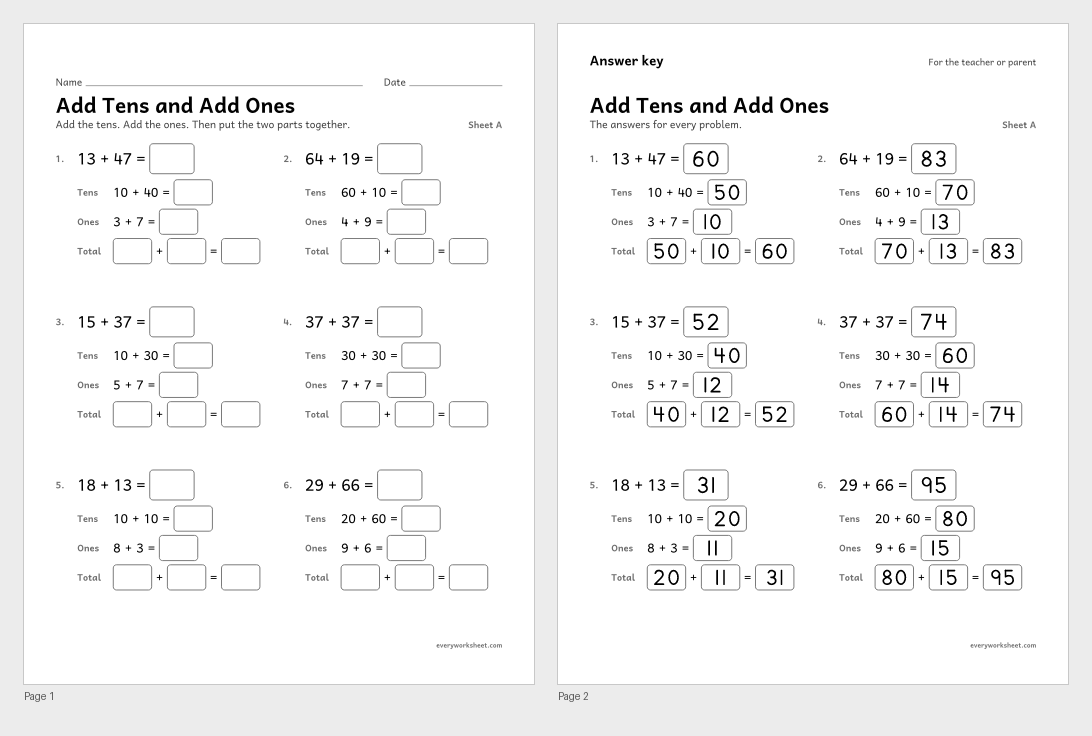 View all 2 pages
Adding two-digit numbers by place value (tens and ones)
Answer key on page 2
2 pages103 KB
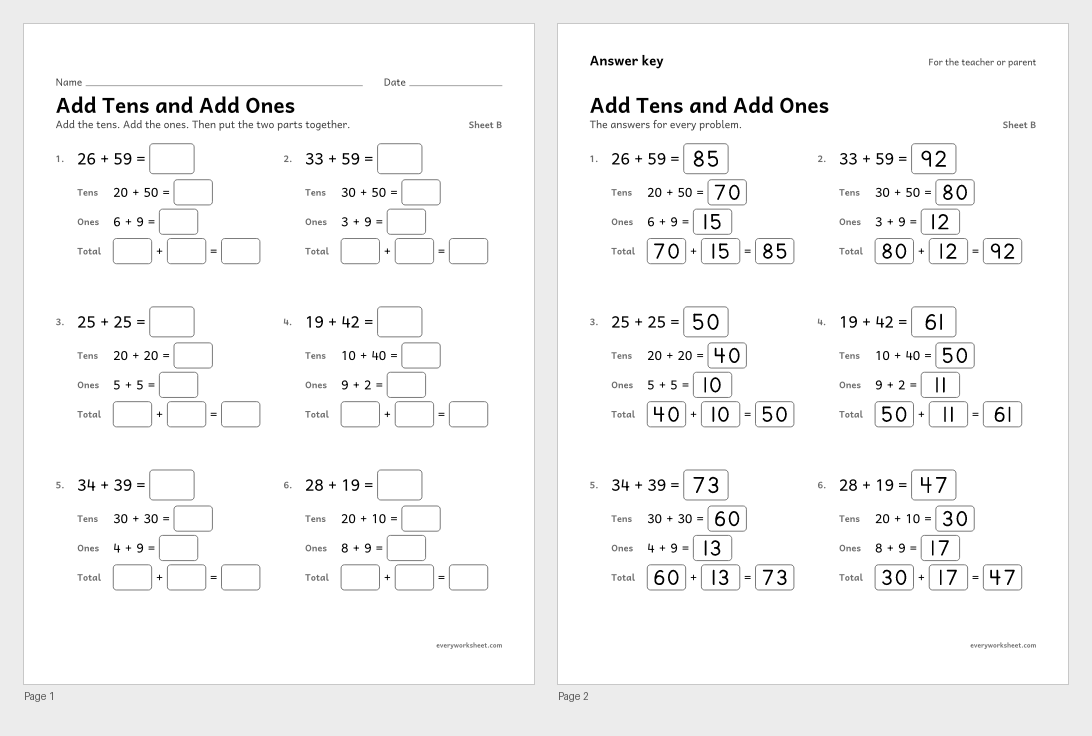 View all 2 pages
Adding two-digit numbers by place value (tens and ones)
Answer key on page 2
2 pages103 KB
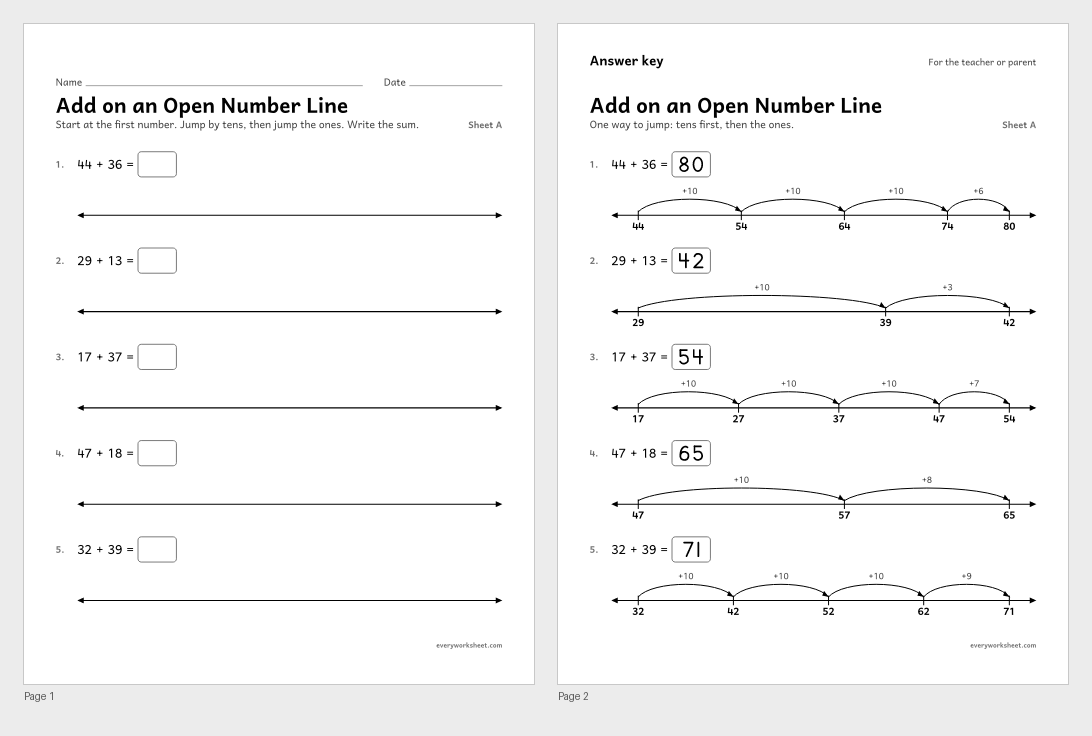 View all 2 pages
Showing two-digit sums on a number line
Answer key on page 2
2 pages48 KB
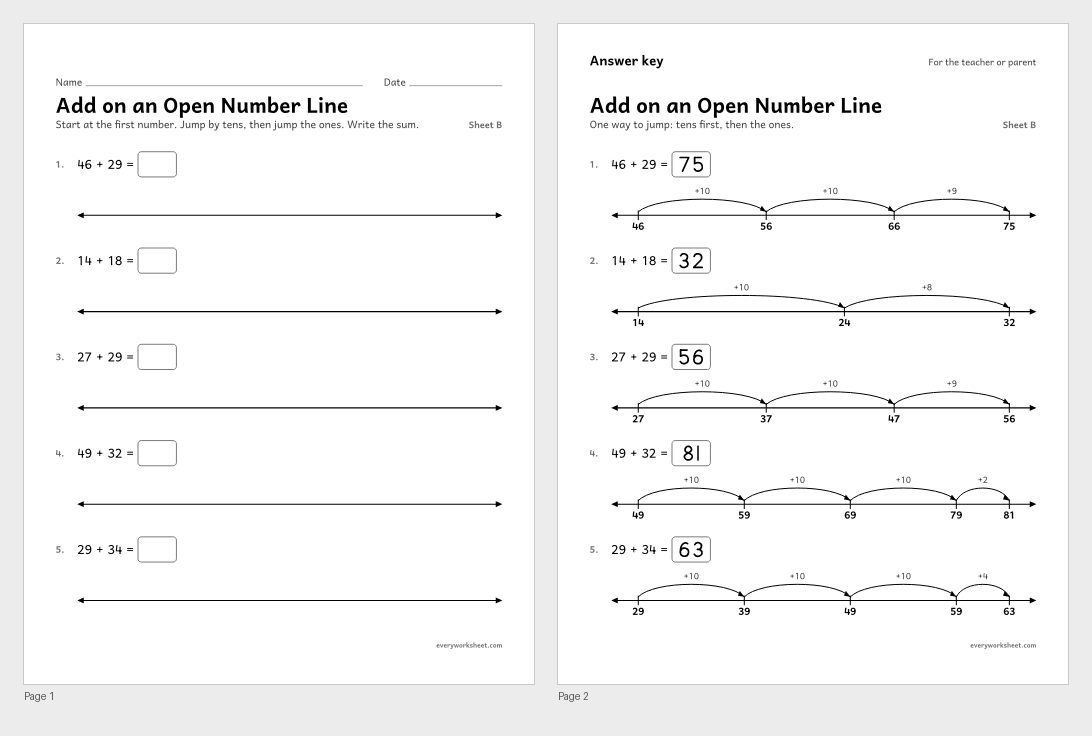 View all 2 pages
Showing two-digit sums on a number line
Answer key on page 2
2 pages48 KB
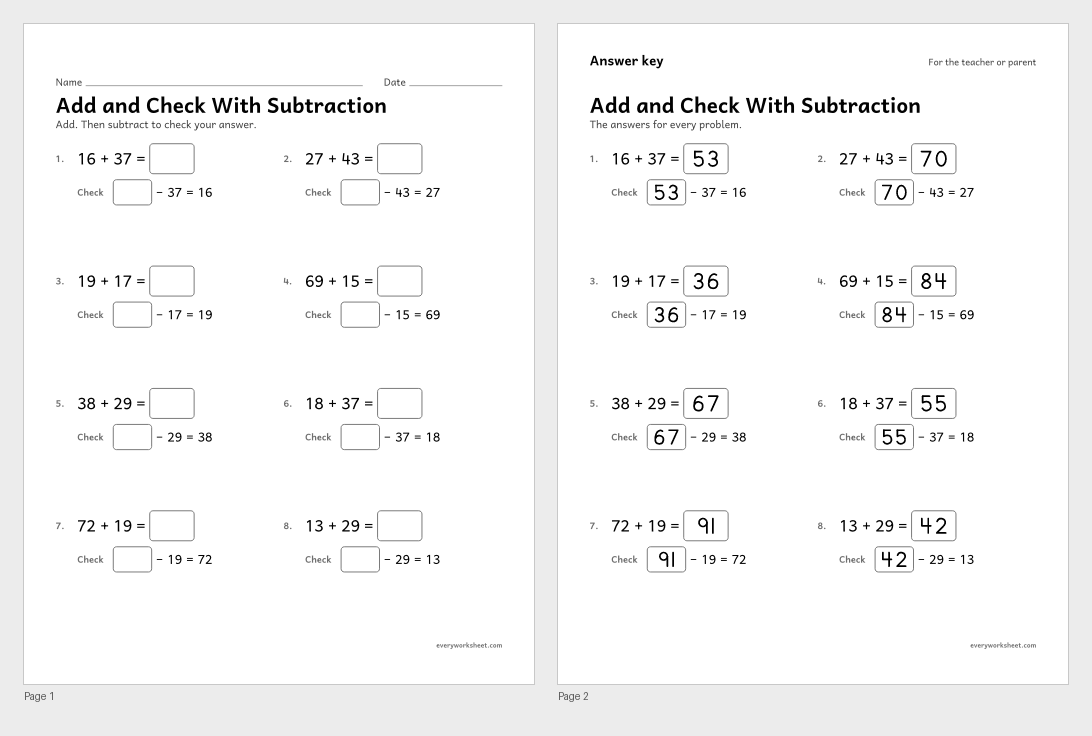 View all 2 pages
Using the relationship between addition and subtraction to check a sum
Answer key on page 2
2 pages83 KB
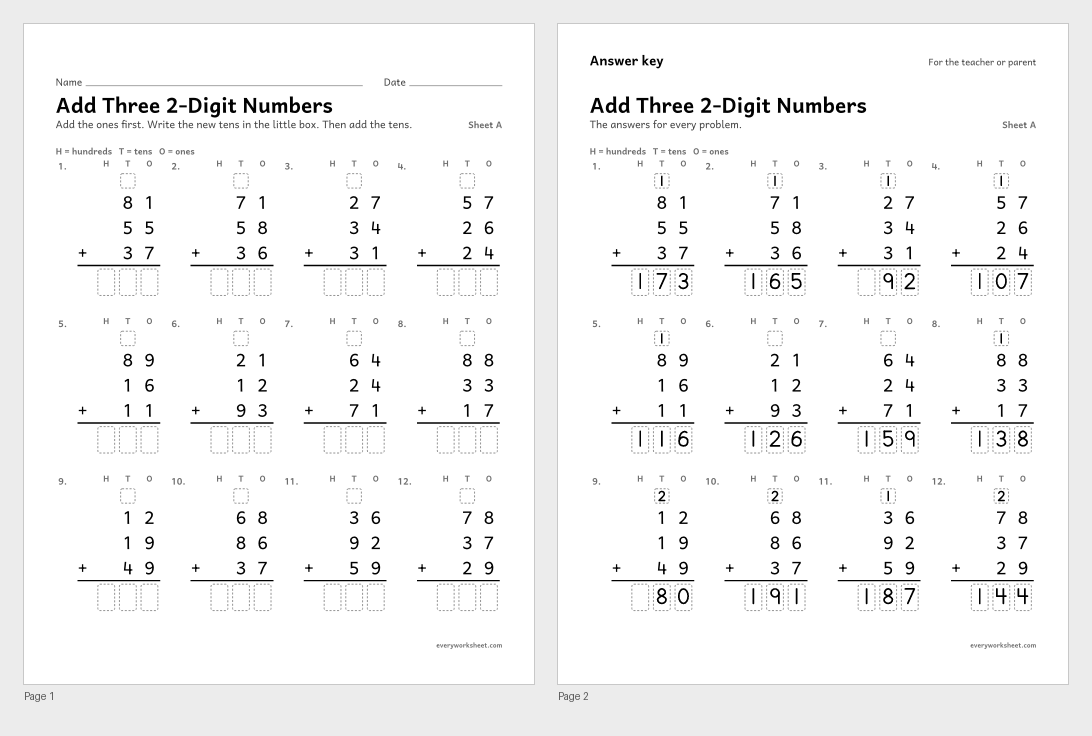 View all 2 pages
Adding three two-digit numbers
Answer key on page 2
2 pages53 KB
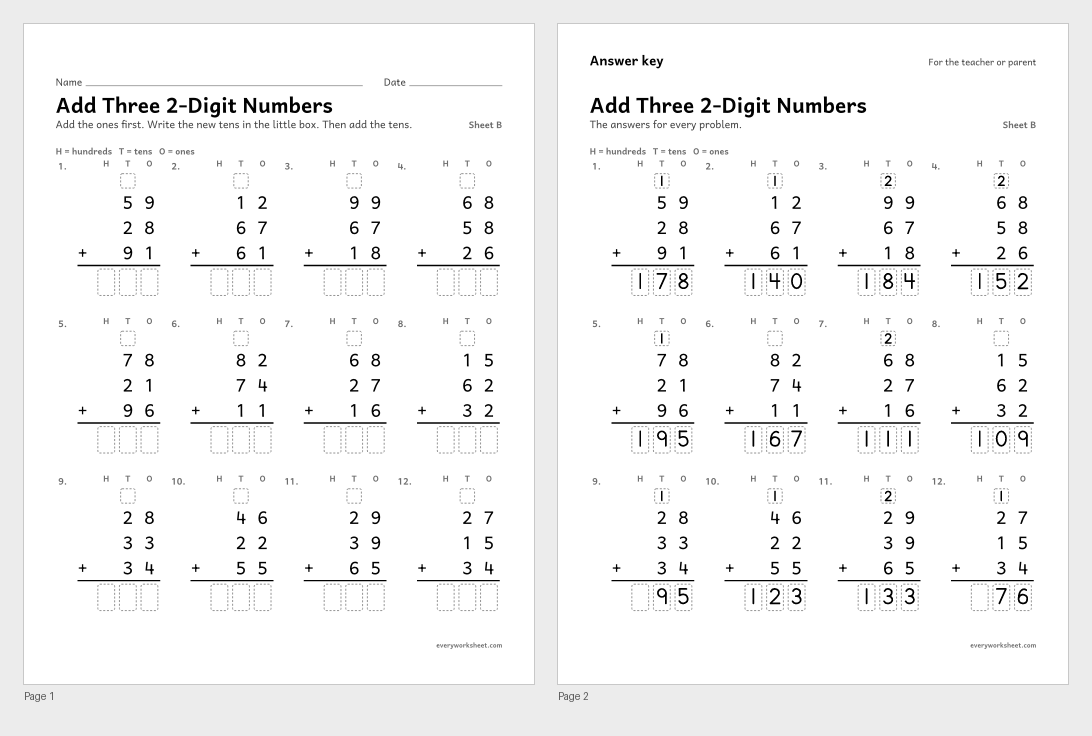 View all 2 pages
Adding three two-digit numbers
Answer key on page 2
2 pages53 KB
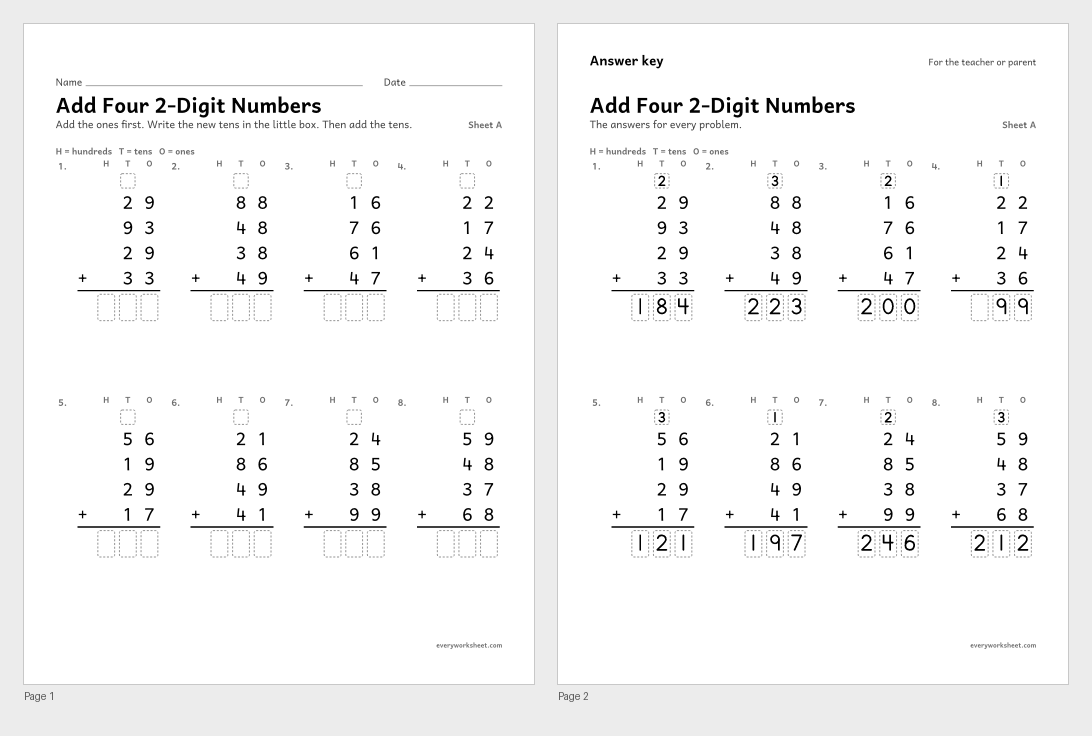 View all 2 pages
Adding four two-digit numbers
Answer key on page 2
2 pages46 KB
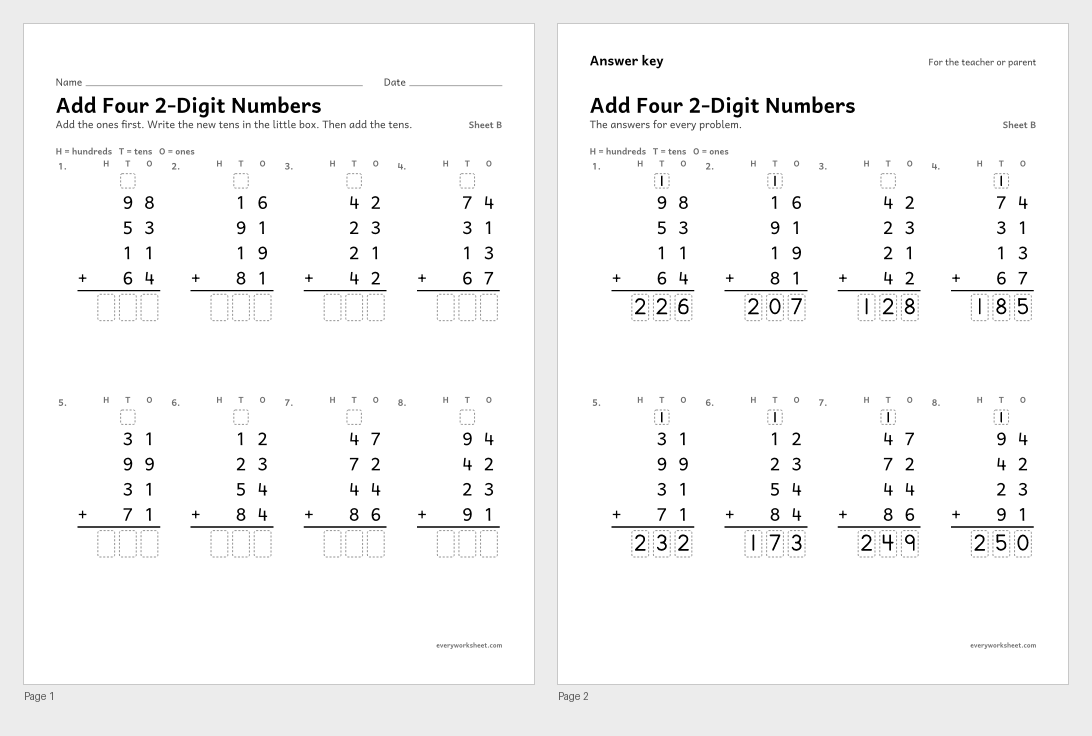 View all 2 pages
Adding four two-digit numbers
Answer key on page 2
2 pages46 KB
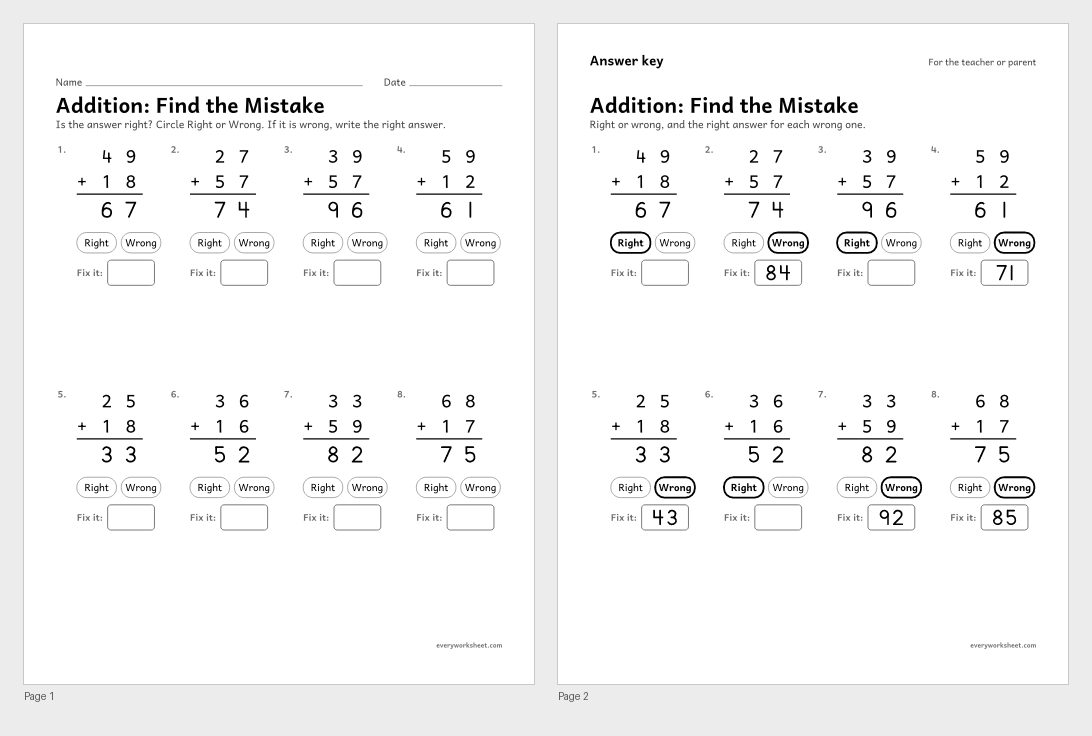 View all 2 pages
Explaining two-digit addition with regrouping by finding a mistake
Answer key on page 2
2 pages51 KB
Print at 100% (actual size) for the cleanest tracing lines.
Regrouping (some teachers say carrying) is the big new step in 2nd grade addition. When the ones add up to 10 or more, the child trades 10 ones for 1 ten and writes it at the top of the tens column. These worksheets teach that step slowly, then mix it with problems that do not need it, so children learn to decide.
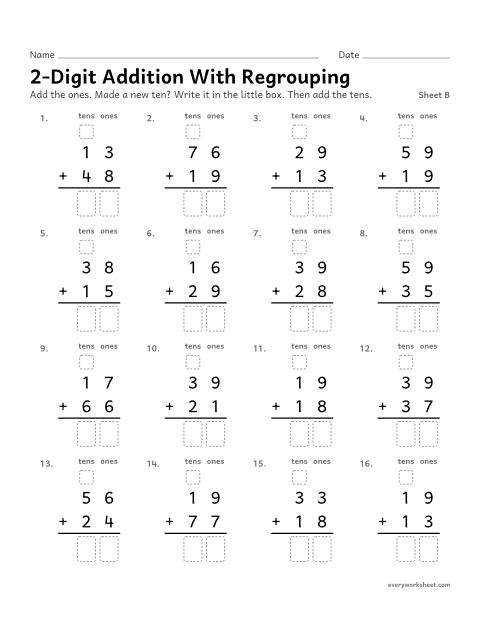
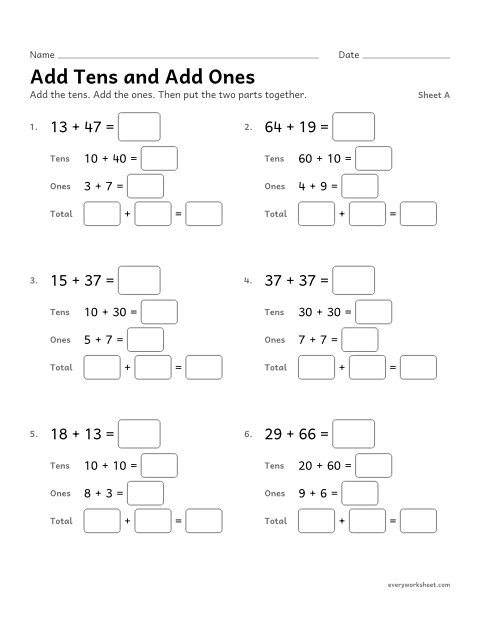
The column pages have a small box over the tens for the new ten, tens and ones headings, and a box for each digit of the answer, so the work stays lined up. Strategy pages show the same sums a second way: adding tens and ones separately, and jumping on an open number line. Later pages add three and four 2-digit numbers and cross into the hundreds.
Most pages come as Sheet A, B and C with new problems at the same level. Every page has an answer key on page 2. The keys show the regrouped ten, and the number line keys show every jump. All pages print in black and white on US Letter or A4.
CCSS.MATH.CONTENT.2.NBT.B.5Fluently add and subtract within 100 using strategies based on place value, properties of operations, and/or the relationship between addition and subtraction.CCSS.MATH.CONTENT.2.NBT.B.6Add up to four two-digit numbers using strategies based on place value and properties of operations.CCSS.MATH.CONTENT.2.NBT.B.7Add and subtract within 1000, using concrete models or drawings and strategies based on place value, properties of operations, and/or the relationship between addition and subtraction; relate the strategy to a written method. Understand that in adding or subtracting three-digit numbers, one adds or subtracts hundreds and hundreds, tens and tens, ones and ones; and sometimes it is necessary to compose or decompose tens or hundreds.CCSS.MATH.CONTENT.2.NBT.B.9Explain why addition and subtraction strategies work, using place value and the properties of operations.CCSS.MATH.CONTENT.2.MD.B.6Represent whole numbers as lengths from 0 on a number line diagram with equally spaced points corresponding to the numbers 0, 1, 2, ..., and represent whole-number sums and differences within 100 on a number line diagram.When the digits in a column add up to 10 or more, you trade 10 ones for 1 ten (or 10 tens for 1 hundred) and move it to the next column. For 27 + 15, the ones make 12, so you write 2 and regroup 1 ten: 27 + 15 = 42.
Yes. Carrying and regrouping are two names for the same step. Regrouping is the word most schools use now because it says what really happens: 10 ones become 1 ten.
Most children learn 2-digit addition with regrouping in 2nd grade and 3-digit addition with regrouping later in 2nd grade or in 3rd grade.
Yes. Every page has an answer key on page 2 of the PDF. The column keys show the regrouped ten in its box.