 View larger
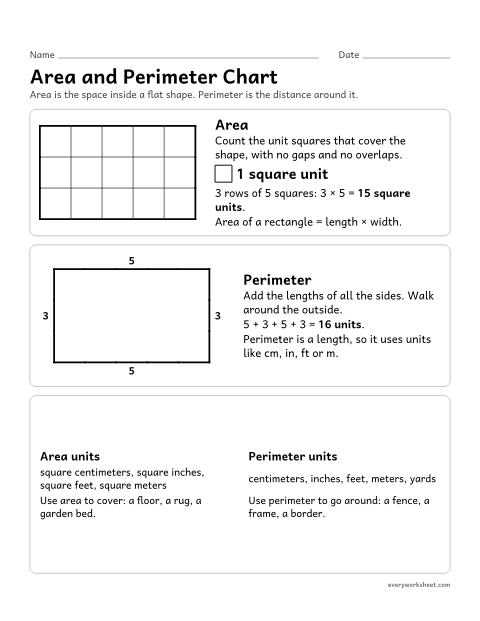
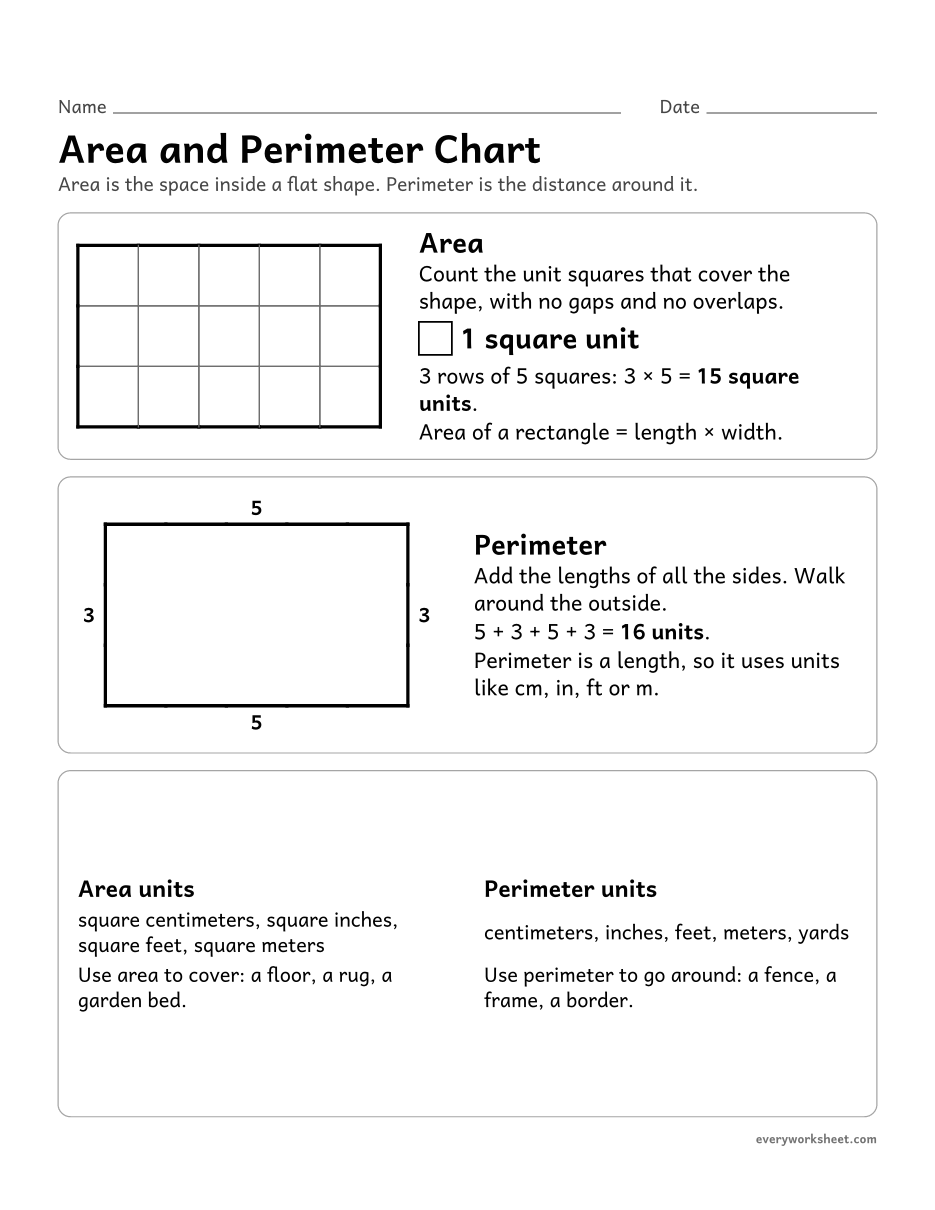
Area and perimeter chart
What area and perimeter mean, square units, and how to find each
1 page31 KB
Count unit squares, tile rectangles, multiply side lengths, split L shapes, find perimeters and unknown sides, and compare rectangles. With answer keys.
View largerWhat area and perimeter mean, square units, and how to find each
1 page31 KB
 View all 2 pages
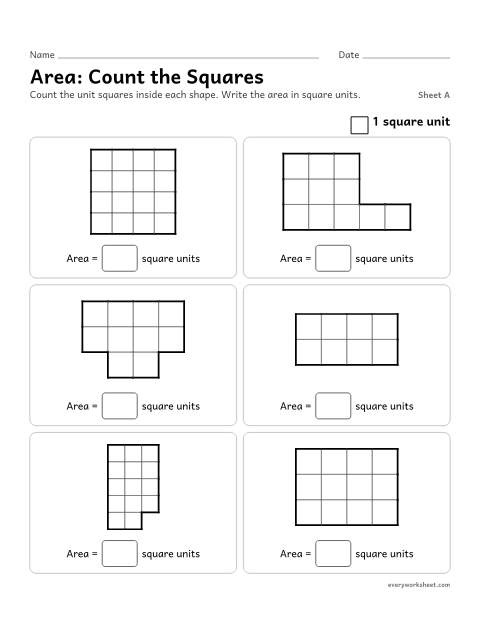
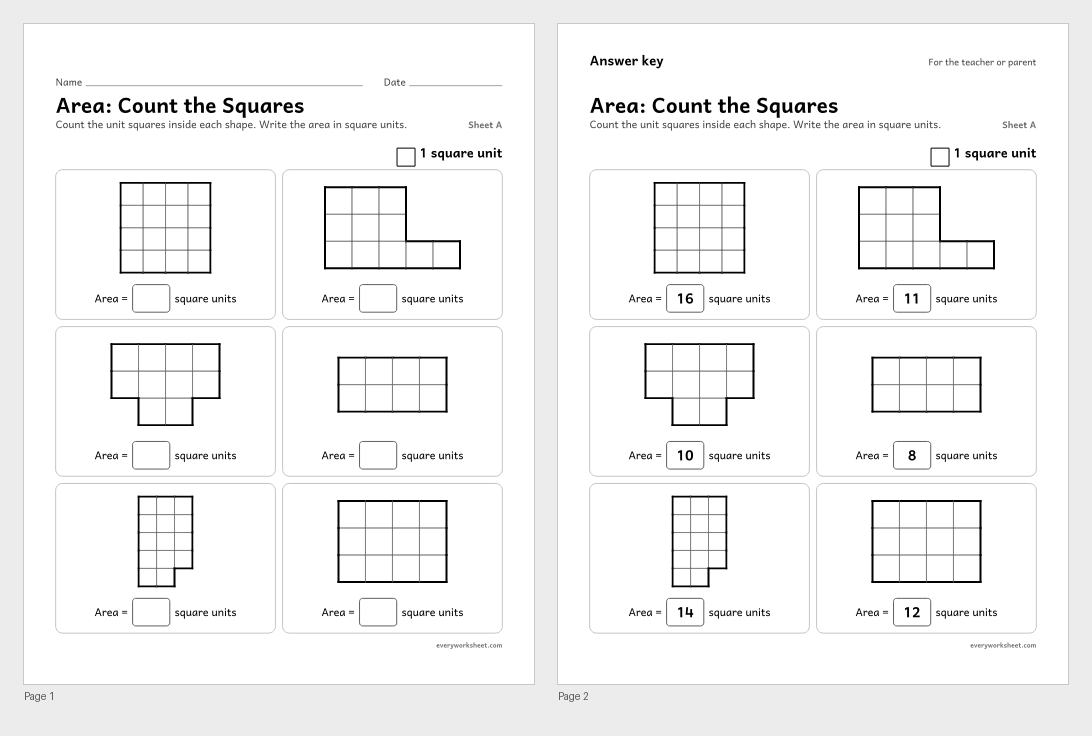
Finding area by counting unit squares in rectangles and simple shapes
Answer key on page 2
2 pages35 KB
 View all 2 pages
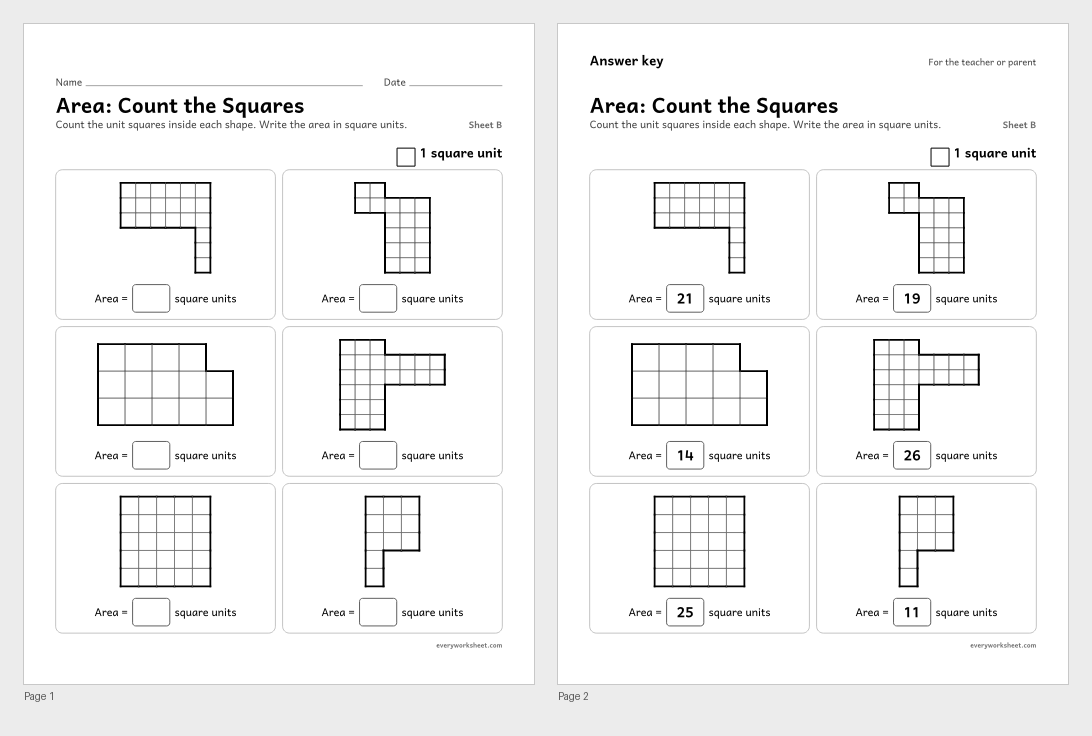
Finding the area of rectilinear shapes by counting unit squares
Answer key on page 2
2 pages37 KB
 View all 2 pages
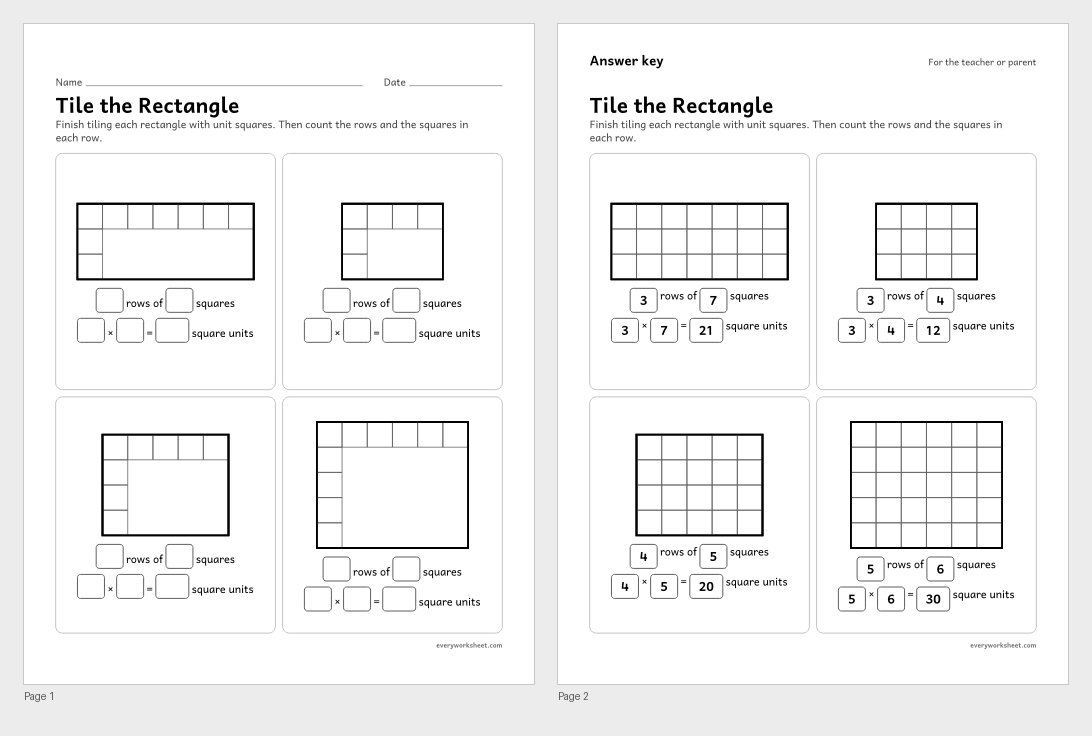
Finishing the tiling of a rectangle, then seeing the area is rows times columns
Answer key on page 2
2 pages31 KB
 View all 2 pages
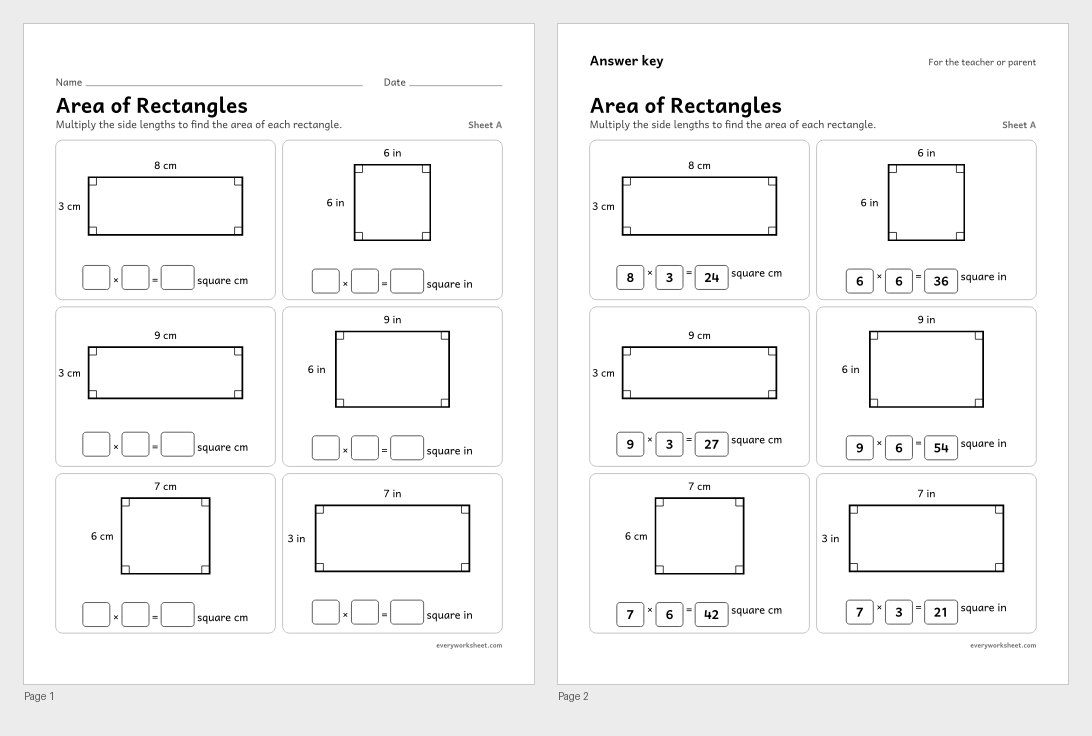
Multiplying side lengths to find the area of rectangles in centimeters and inches
Answer key on page 2
2 pages35 KB
 View all 2 pages
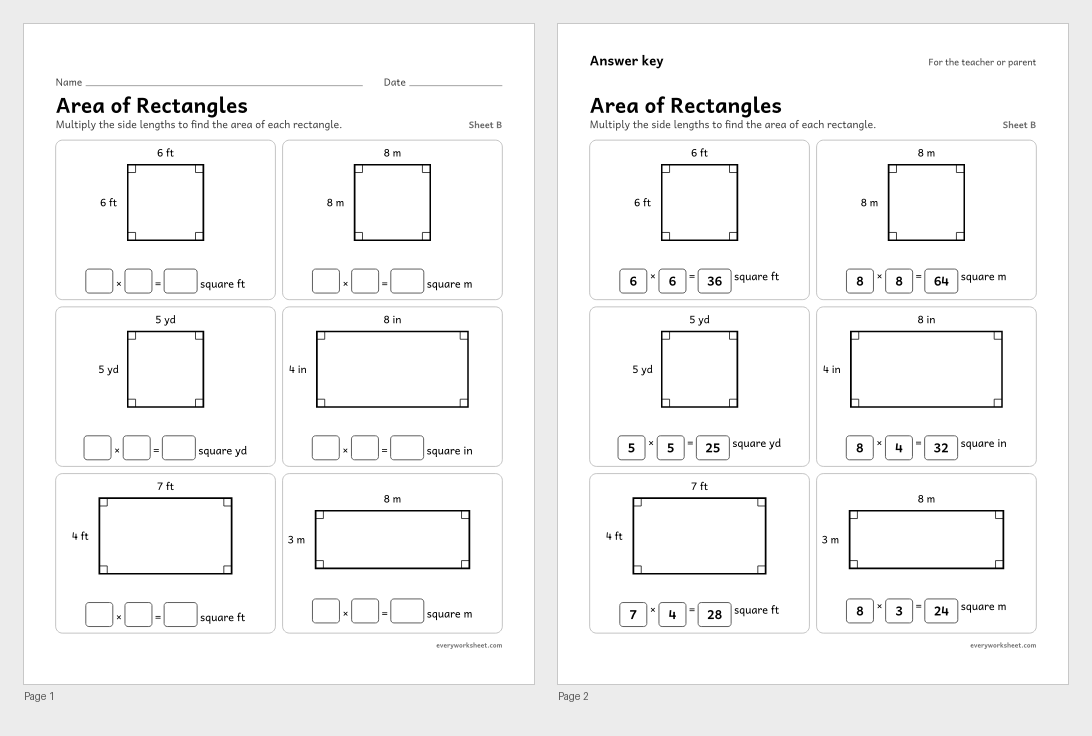
Multiplying side lengths to find the area of rectangles and squares in feet, meters, yards and inches
Answer key on page 2
2 pages35 KB
 View all 2 pages
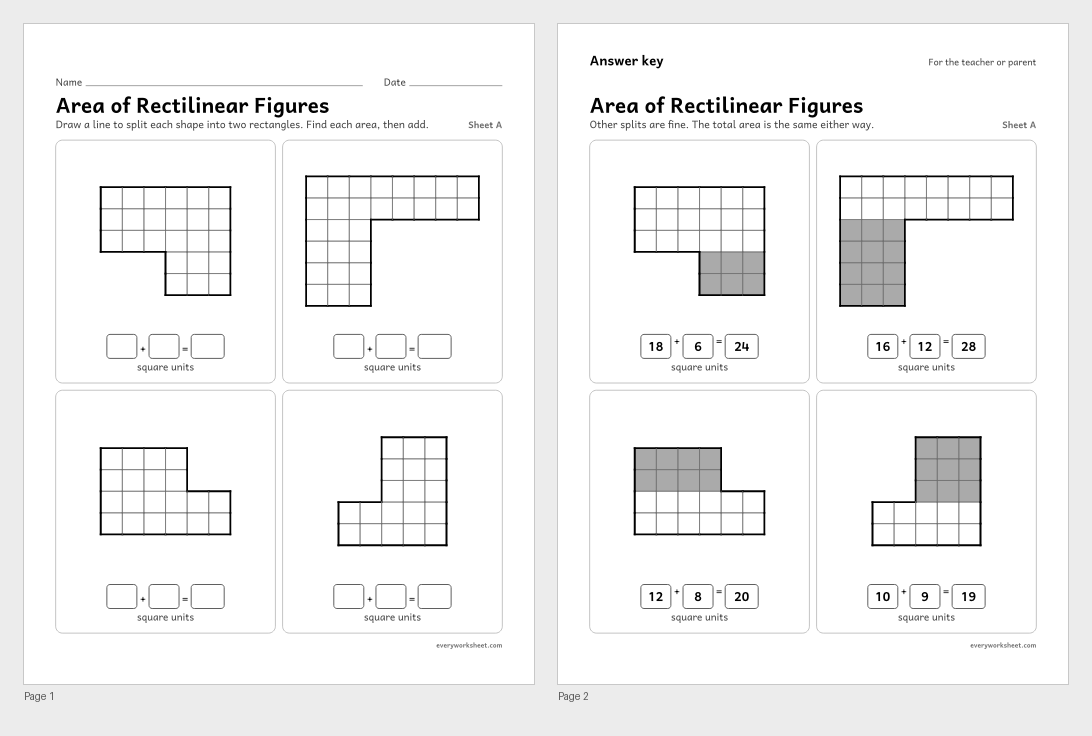
Splitting L shapes on a grid into two rectangles and adding the areas
Answer key on page 2
2 pages35 KB
 View all 2 pages
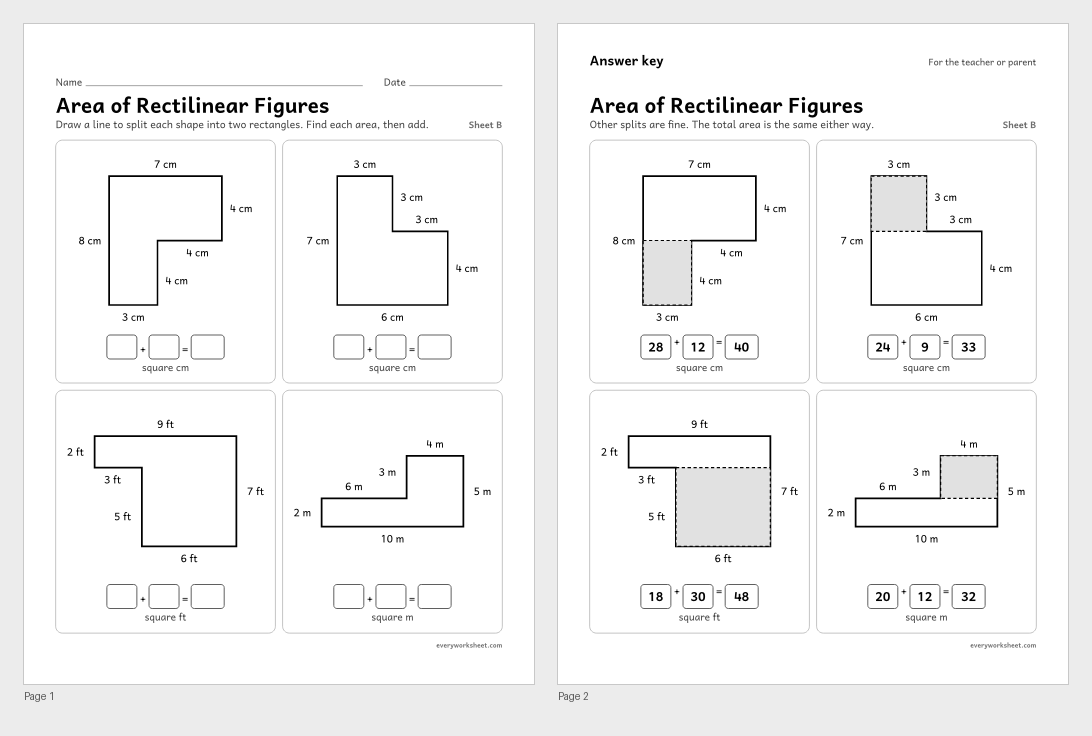
Finding the area of L shapes from side lengths by splitting them into rectangles
Answer key on page 2
2 pages35 KB
 View all 2 pages
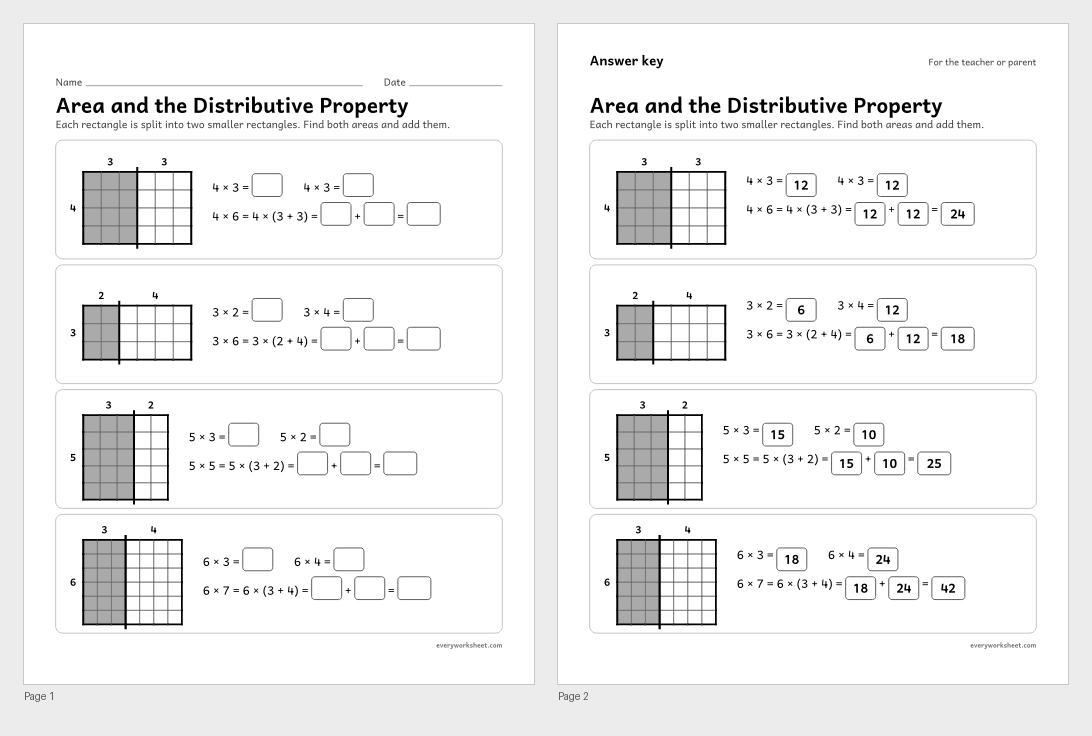
Splitting a rectangle into two to show a × (b + c) = a × b + a × c
Answer key on page 2
2 pages41 KB
 View all 2 pages
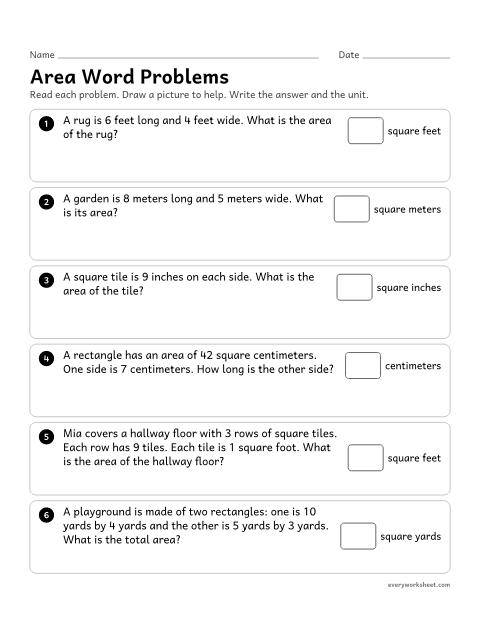
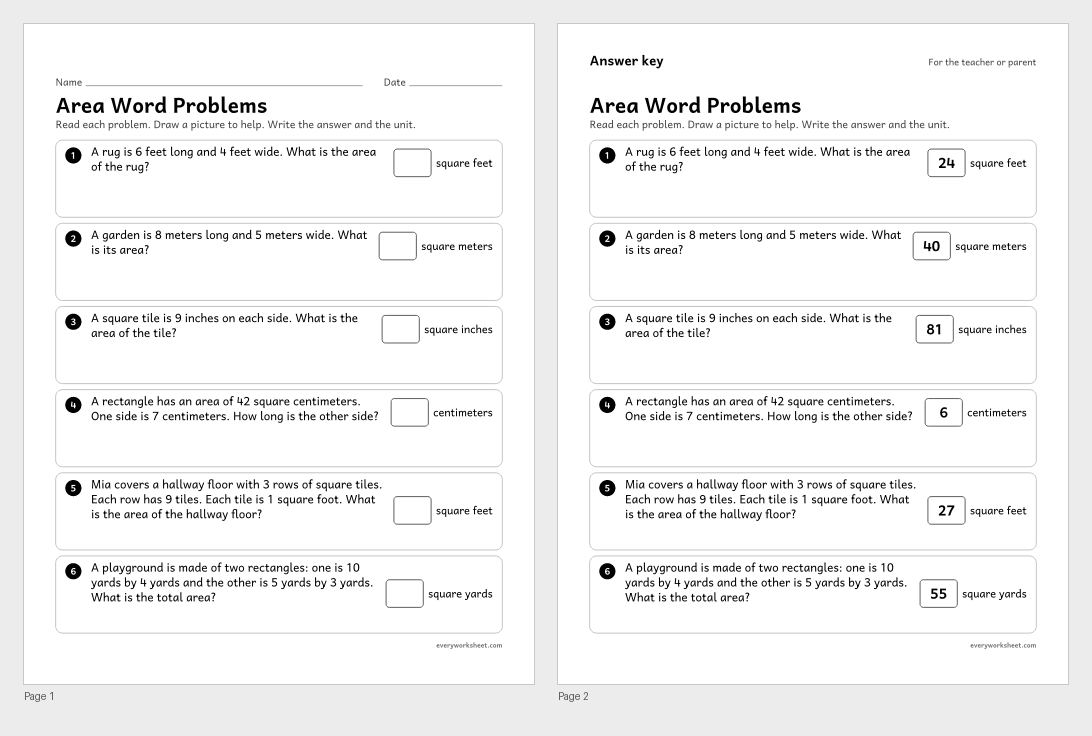
Solving real world area problems by multiplying and adding
Answer key on page 2
2 pages41 KB
 View all 2 pages
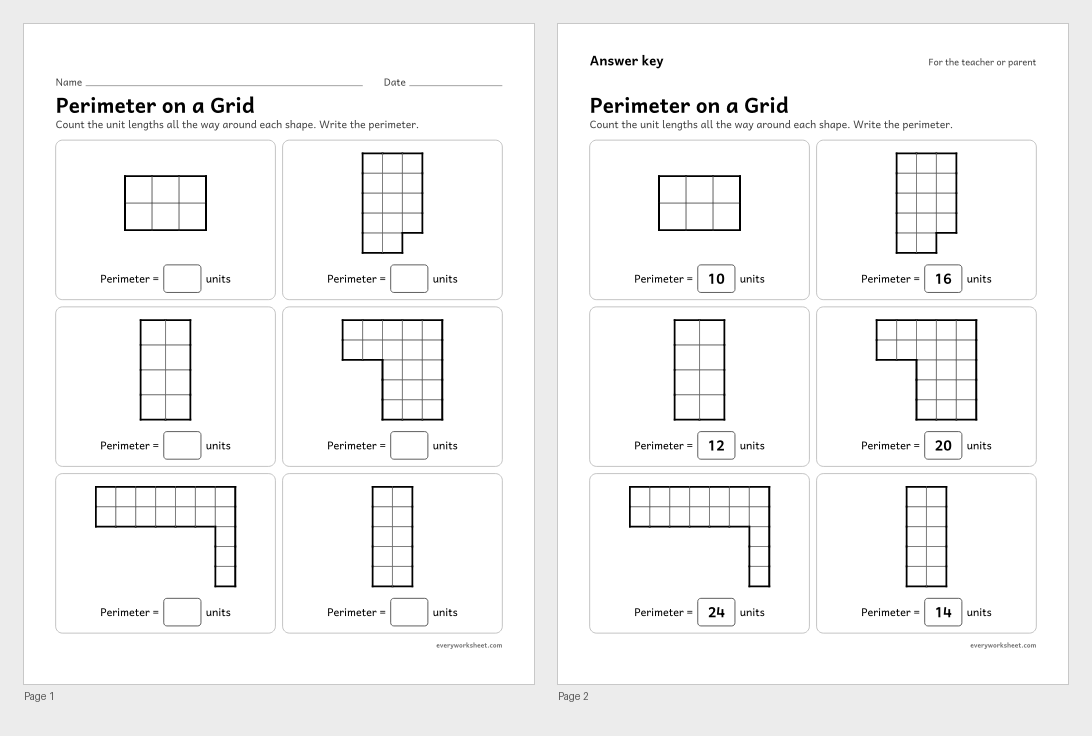
Finding perimeter by counting the unit lengths around a shape on a grid
Answer key on page 2
2 pages34 KB
 View all 2 pages
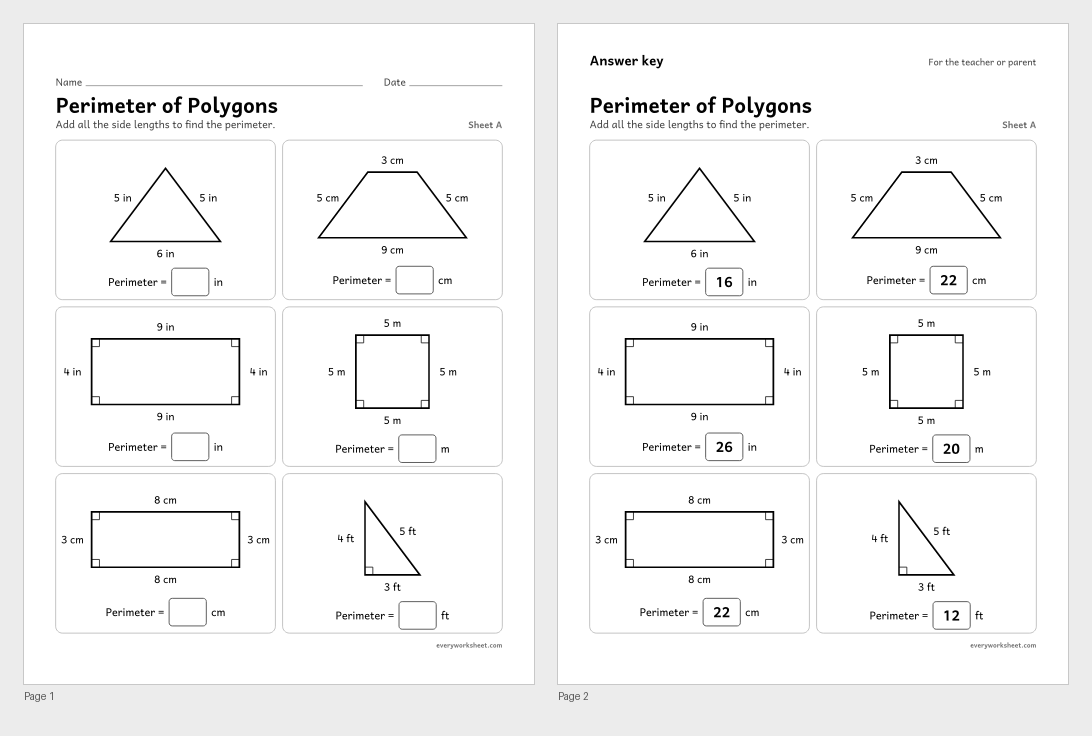
Adding side lengths to find the perimeter of rectangles, squares, triangles and trapezoids
Answer key on page 2
2 pages33 KB
 View all 2 pages
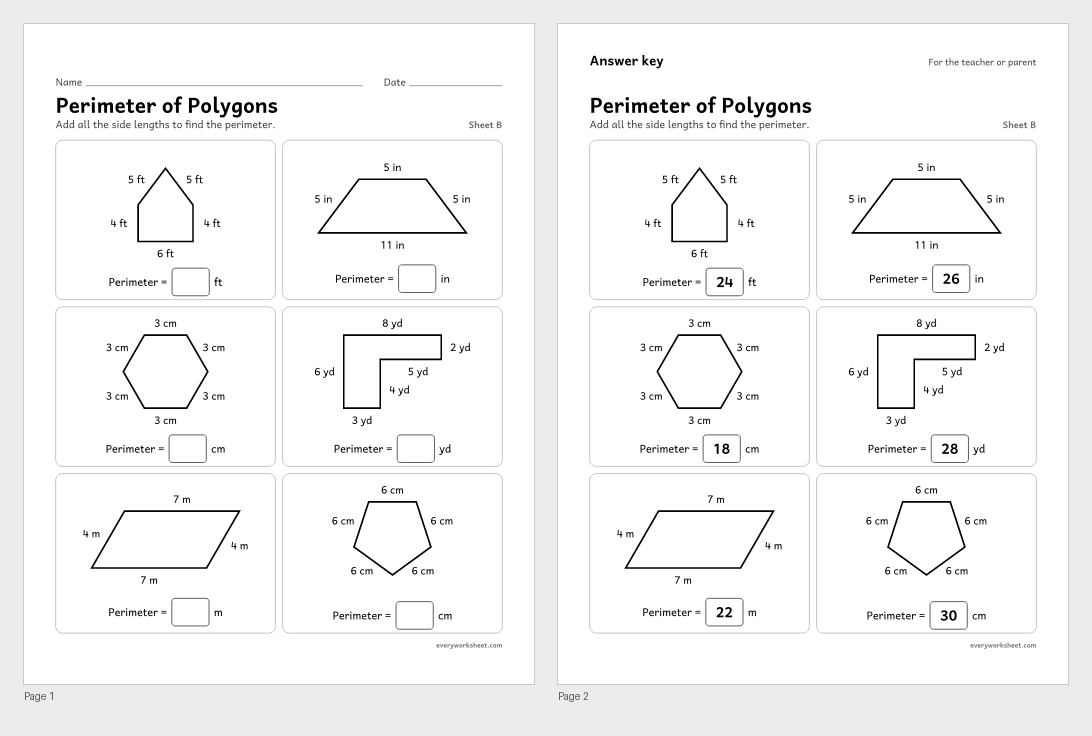
Adding side lengths to find the perimeter of hexagons, pentagons, trapezoids and rectilinear shapes
Answer key on page 2
2 pages35 KB
 View all 2 pages
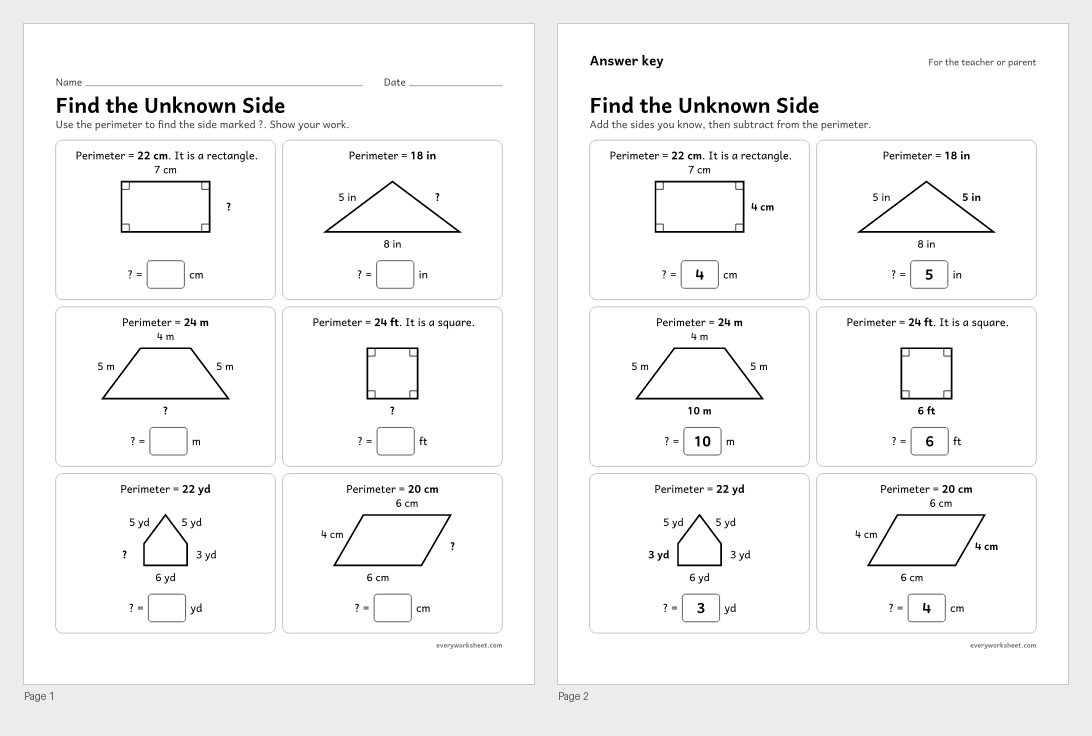
Using the perimeter to find an unknown side length
Answer key on page 2
2 pages39 KB
 View all 2 pages
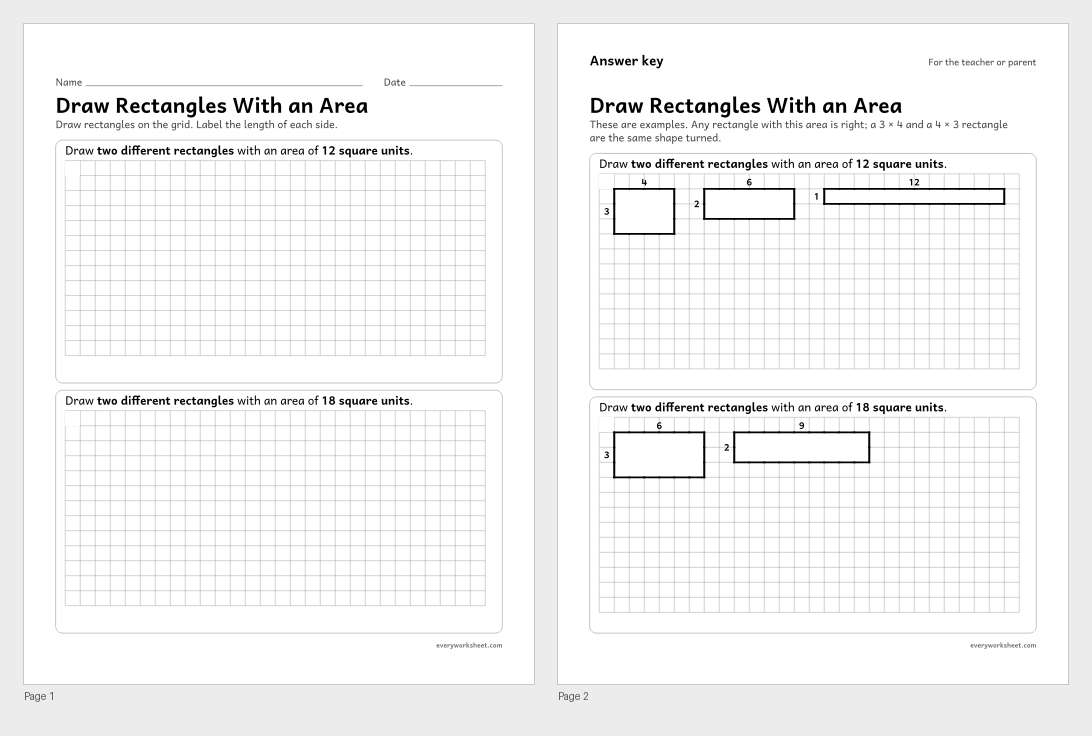
Drawing different rectangles with the same area on grid paper and labeling the sides
Answer key on page 2
2 pages34 KB
 View all 2 pages
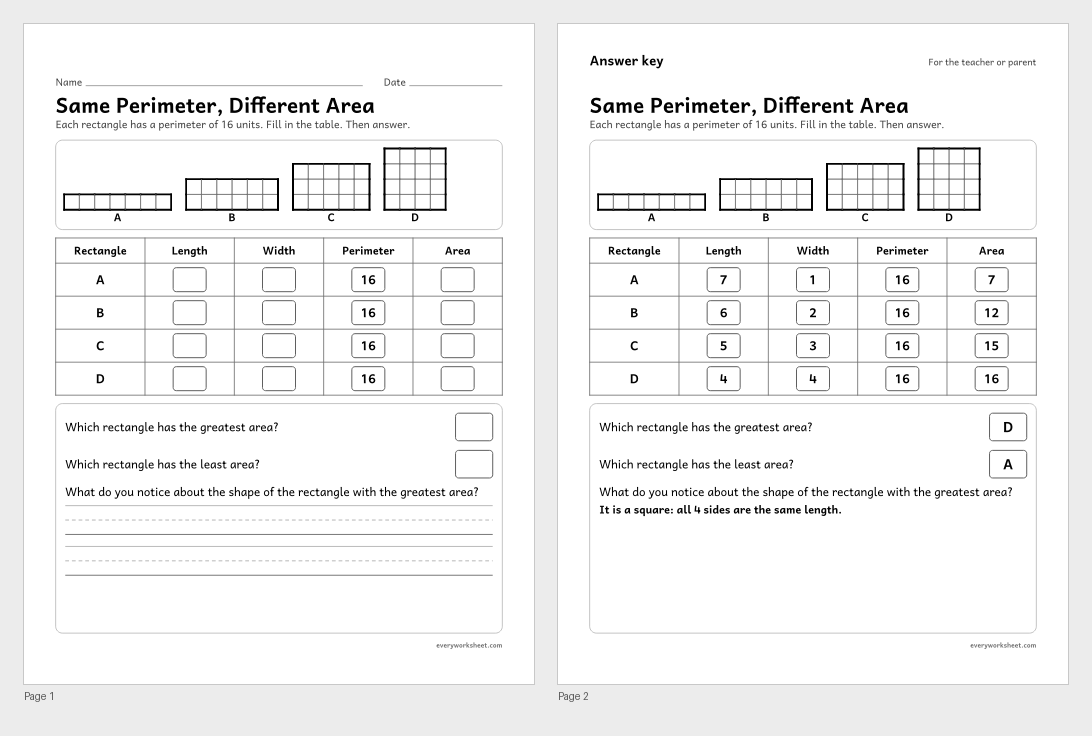
Finding that rectangles with the same perimeter can have different areas
Answer key on page 2
2 pages47 KB
 View all 2 pages
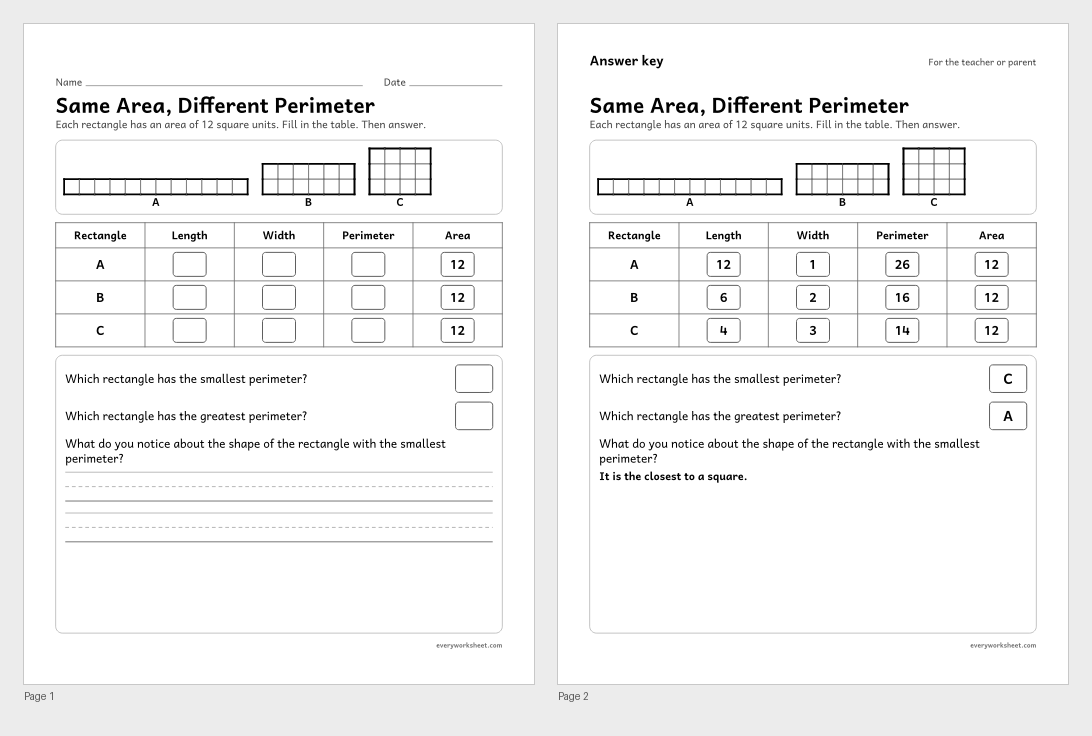
Finding that rectangles with the same area can have different perimeters
Answer key on page 2
2 pages44 KB
 View all 2 pages
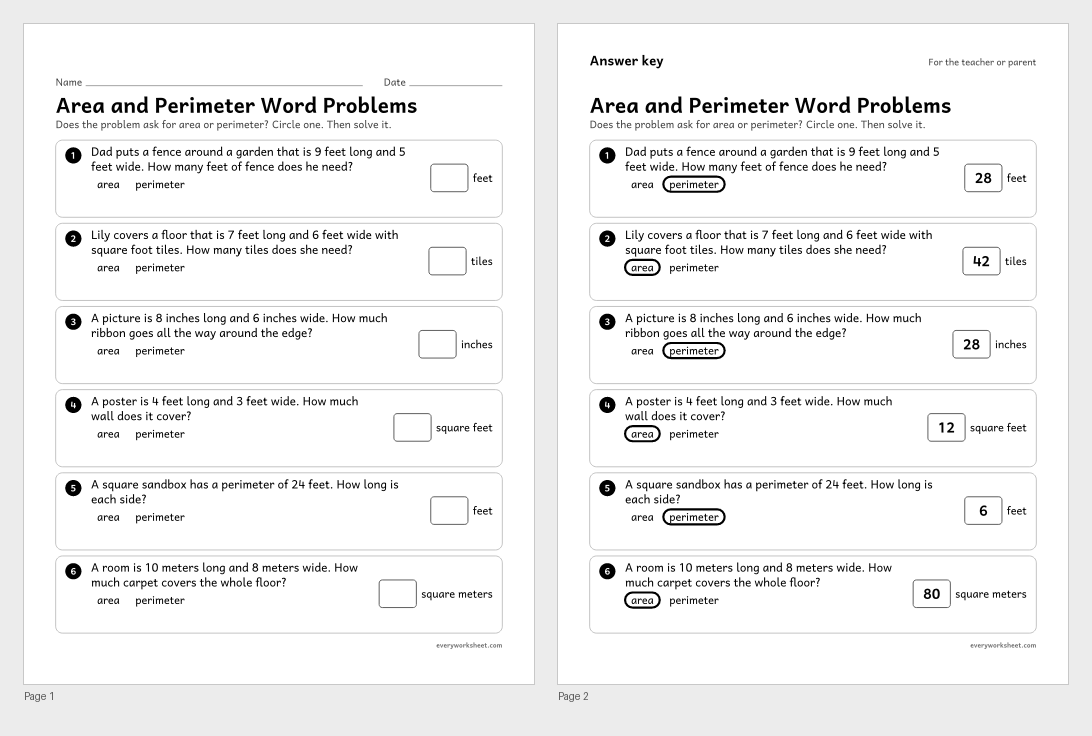
Deciding whether a problem asks for area or perimeter, then solving it
Answer key on page 2
2 pages42 KB
Print at 100% (actual size) for the cleanest tracing lines.
Area is the amount of space inside a flat shape, measured in square units. Perimeter is the distance around it, measured in units of length. Third graders learn both, and learn to tell them apart: a rug covers an area, a fence goes around a perimeter.
These worksheets start with counting unit squares and finishing the tiling of rectangles, so children see why the area of a rectangle is length times width. Then they multiply side lengths, split L shapes into two rectangles and add, and use area to show the distributive property. The perimeter pages count unit lengths on a grid, add side lengths, and use a known perimeter to find a missing side.
Grids are drawn with exact unit squares, and polygons with side lengths are drawn to proportion, so a 6 cm side really is longer than a 3 cm side. The last pages compare rectangles with the same perimeter or the same area. Every practice page has an answer key on page 2.
CCSS.MATH.CONTENT.3.MD.C.5Recognize area as an attribute of plane figures and understand concepts of area measurement.CCSS.MATH.CONTENT.3.MD.C.6Measure areas by counting unit squares (square cm, square m, square in, square ft, and improvised units).CCSS.MATH.CONTENT.3.MD.C.7.AFind the area of a rectangle with whole-number side lengths by tiling it, and show that the area is the same as would be found by multiplying the side lengths.CCSS.MATH.CONTENT.3.MD.C.7.BMultiply side lengths to find areas of rectangles with whole-number side lengths in the context of solving real world and mathematical problems, and represent whole-number products as rectangular areas in mathematical reasoning.CCSS.MATH.CONTENT.3.MD.C.7.CUse tiling to show in a concrete case that the area of a rectangle with whole-number side lengths a and b + c is the sum of a × b and a × c. Use area models to represent the distributive property in mathematical reasoning.CCSS.MATH.CONTENT.3.MD.C.7.DRecognize area as additive. Find areas of rectilinear figures by decomposing them into non-overlapping rectangles and adding the areas of the non-overlapping parts, applying this technique to solve real world problems.CCSS.MATH.CONTENT.3.MD.D.8Solve real world and mathematical problems involving perimeters of polygons, including finding the perimeter given the side lengths, finding an unknown side length, and exhibiting rectangles with the same perimeter and different areas or with the same area and different perimeters.Area is the space inside a shape, counted in square units. Perimeter is the distance around the outside, counted in units of length like centimeters or feet.
First by counting unit squares, then by tiling a rectangle and seeing it is rows times columns. Then they multiply the side lengths, and add the areas of rectangles to find the area of L shapes.
Add the sides you know, then subtract that total from the perimeter. For a rectangle you only need two sides, because opposite sides are equal.