 View larger
Comparative and superlative adjectives
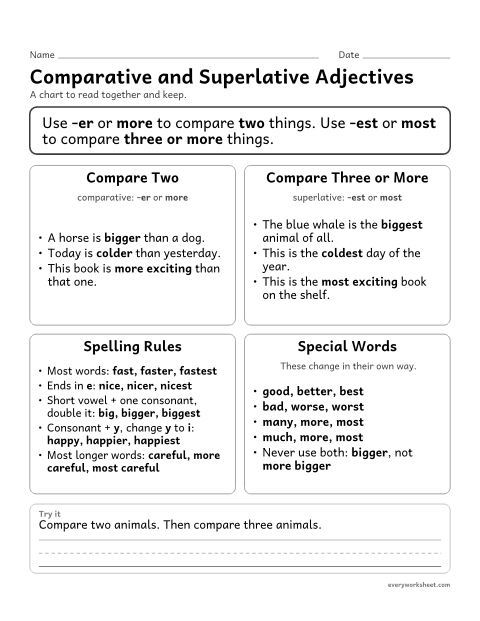
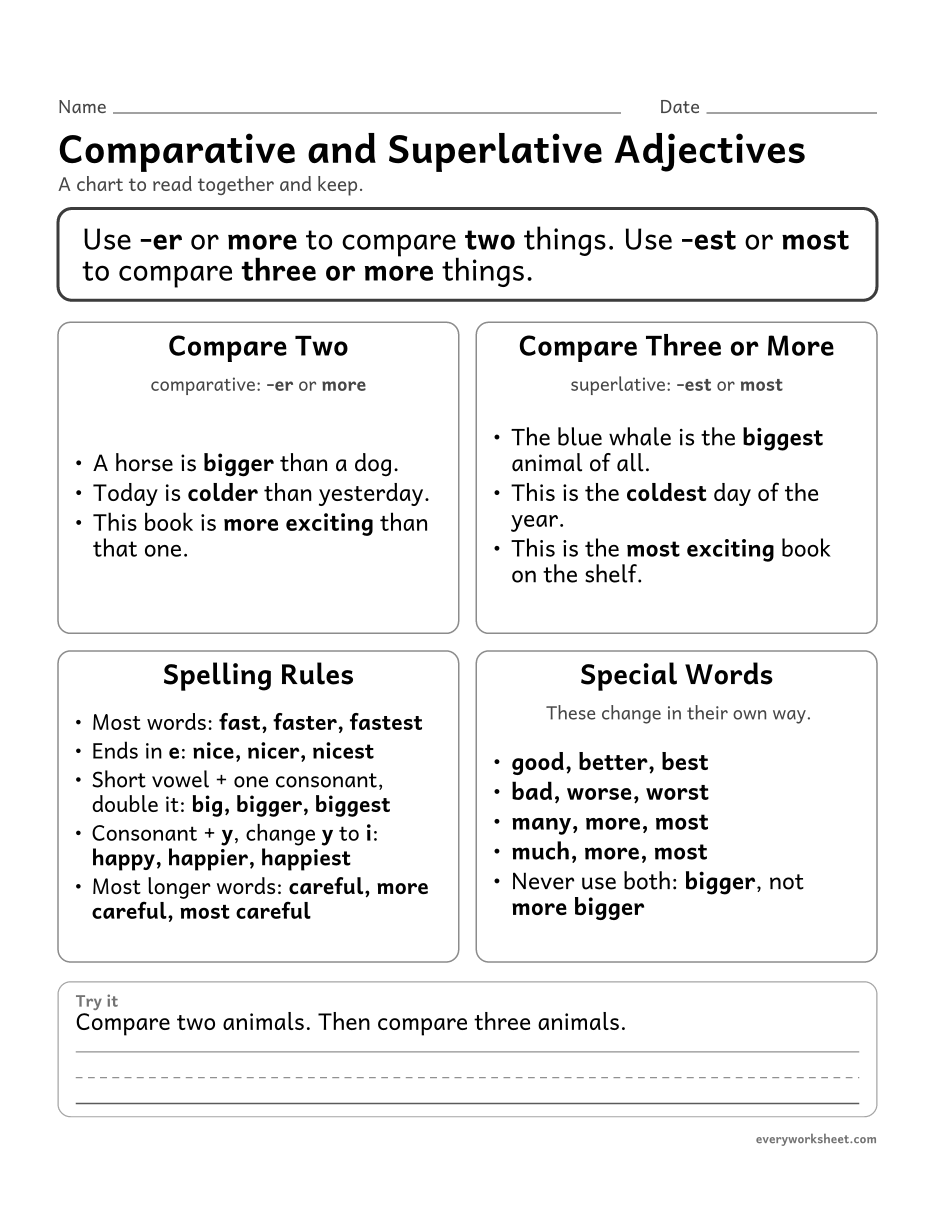
Forming comparative and superlative adjectives with -er, -est, more, most, and irregular forms
1 page42 KB
A chart of -er and -est, more and most, and irregular forms, plus practice forming and using comparisons, with answer keys.
View largerForming comparative and superlative adjectives with -er, -est, more, most, and irregular forms
1 page42 KB
 View all 2 pages
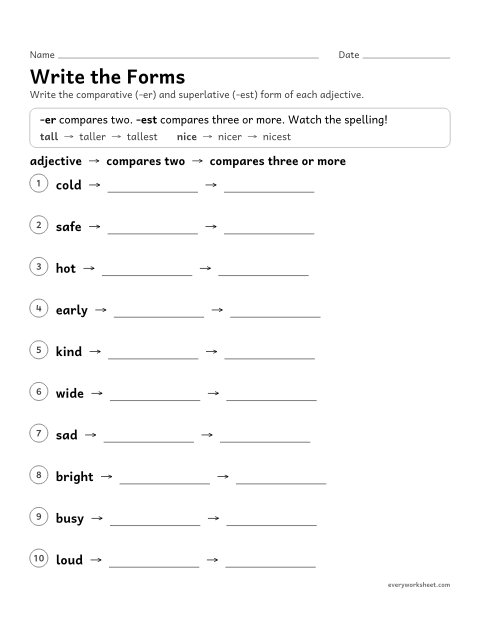
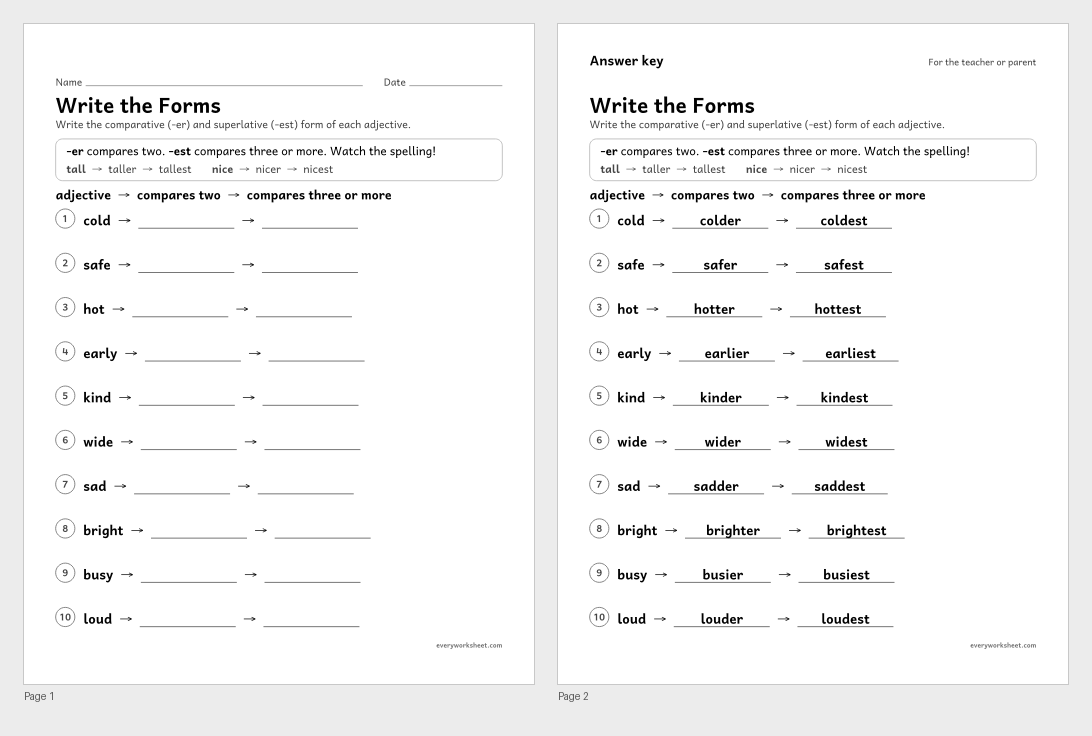
Writing comparative and superlative forms of adjectives
Answer key on page 2
2 pages49 KB
 View all 2 pages
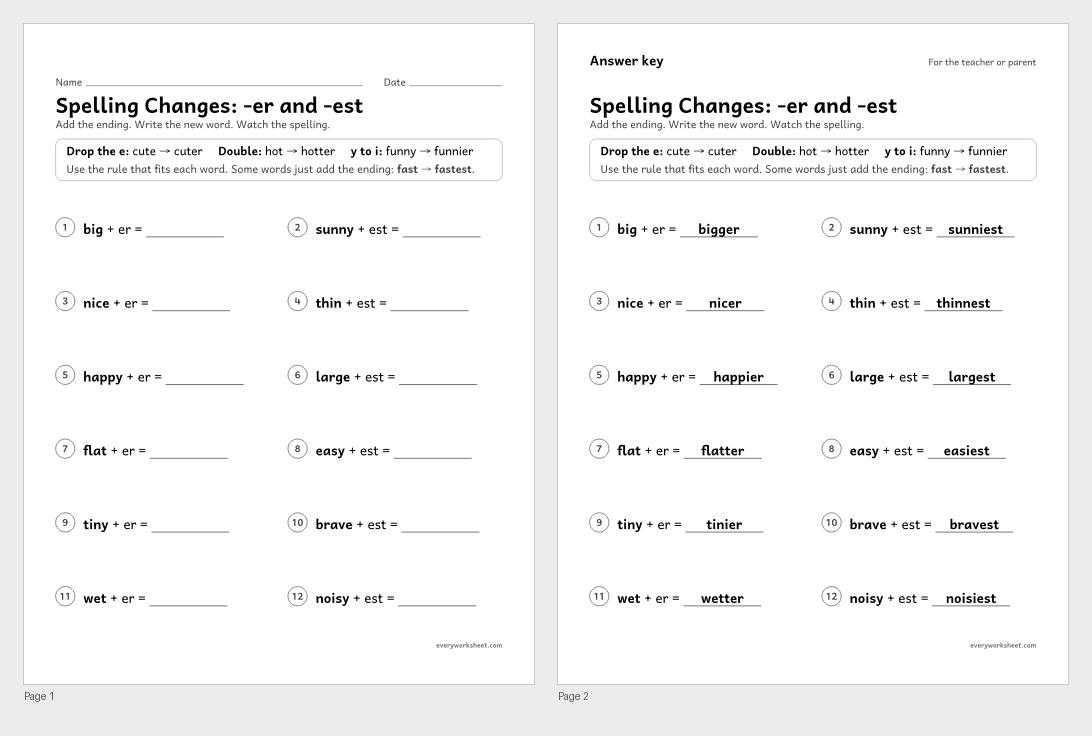
Spelling comparatives and superlatives: drop e, double the consonant, change y to i
Answer key on page 2
2 pages54 KB
 View all 2 pages
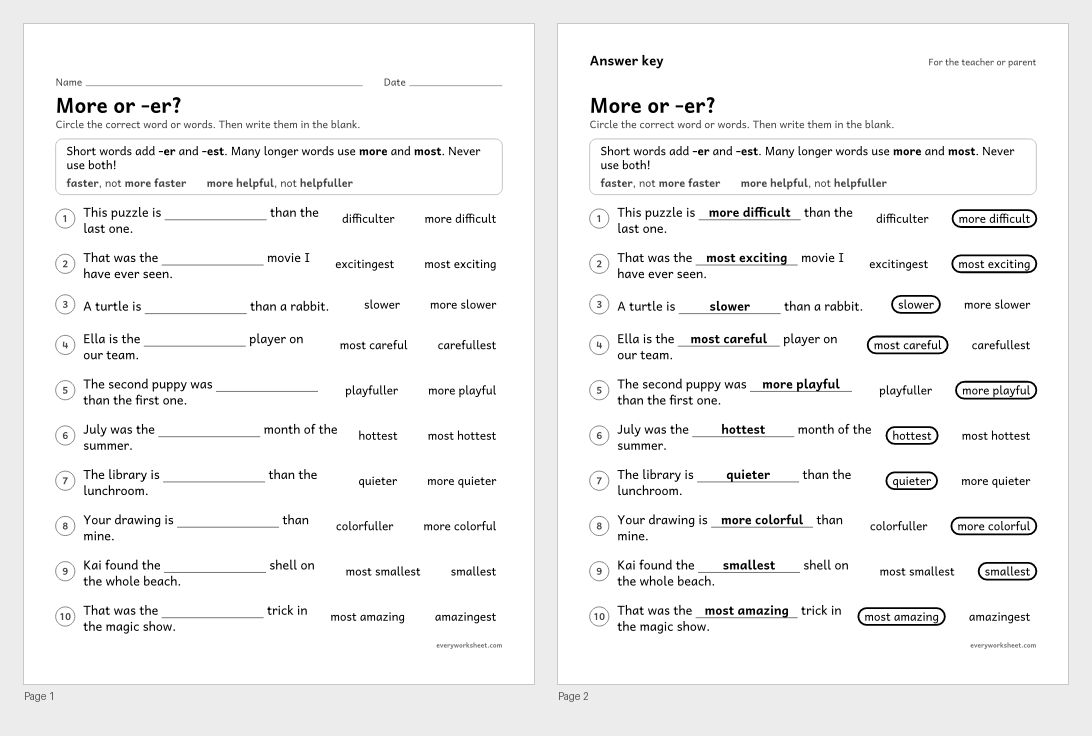
Choosing between -er/-est and more/most
Answer key on page 2
2 pages56 KB
 View all 2 pages
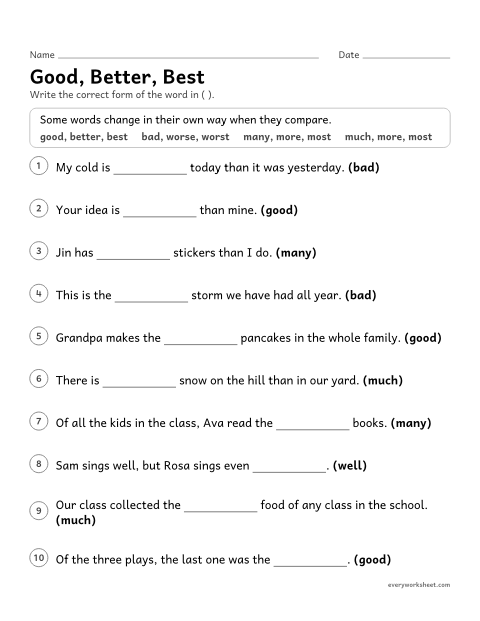
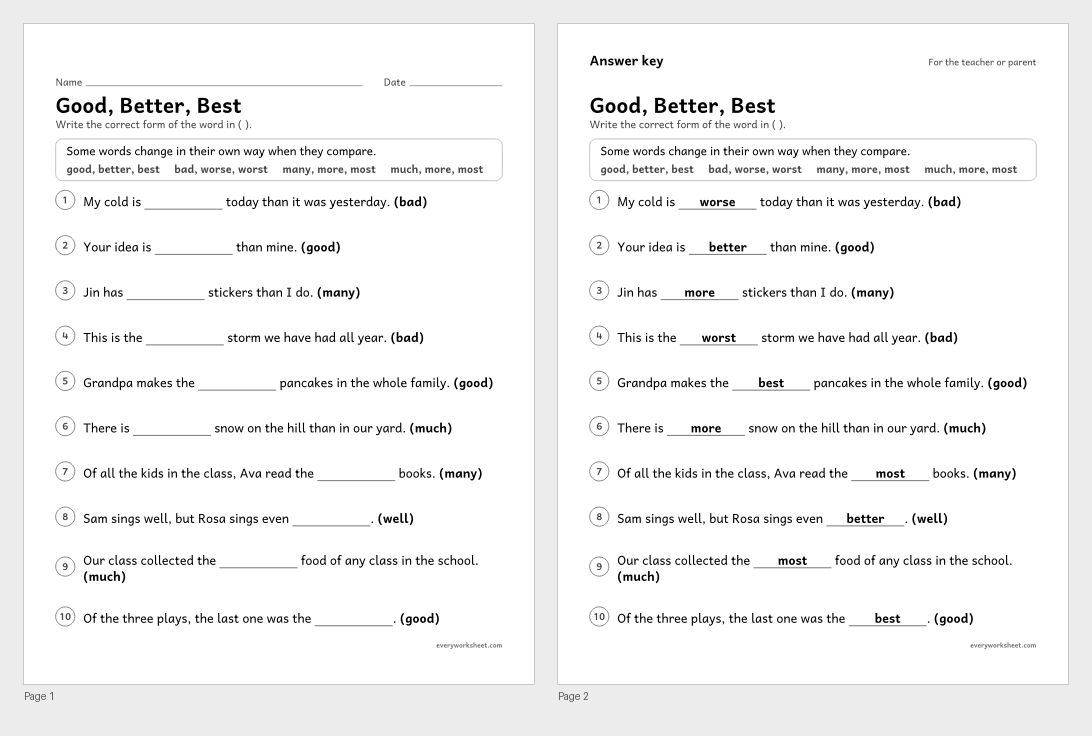
Using irregular comparatives and superlatives (good, bad, many, much, well)
Answer key on page 2
2 pages50 KB
 View all 2 pages
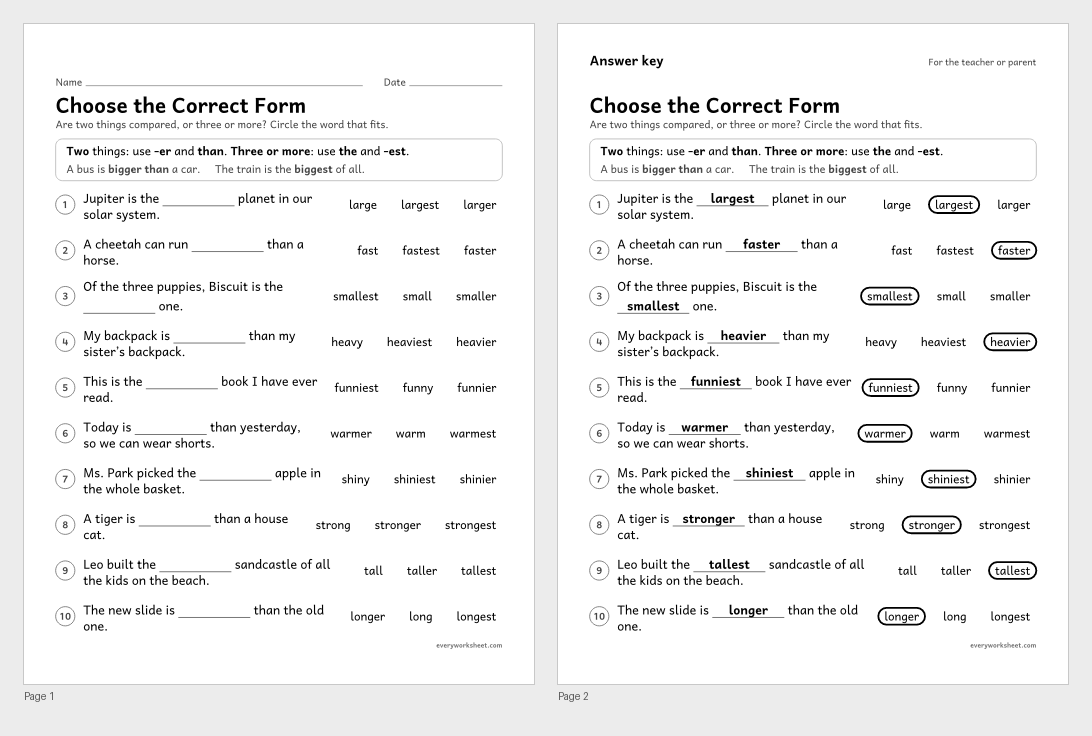
Choosing comparative or superlative adjectives in sentences
Answer key on page 2
2 pages55 KB
 View all 2 pages
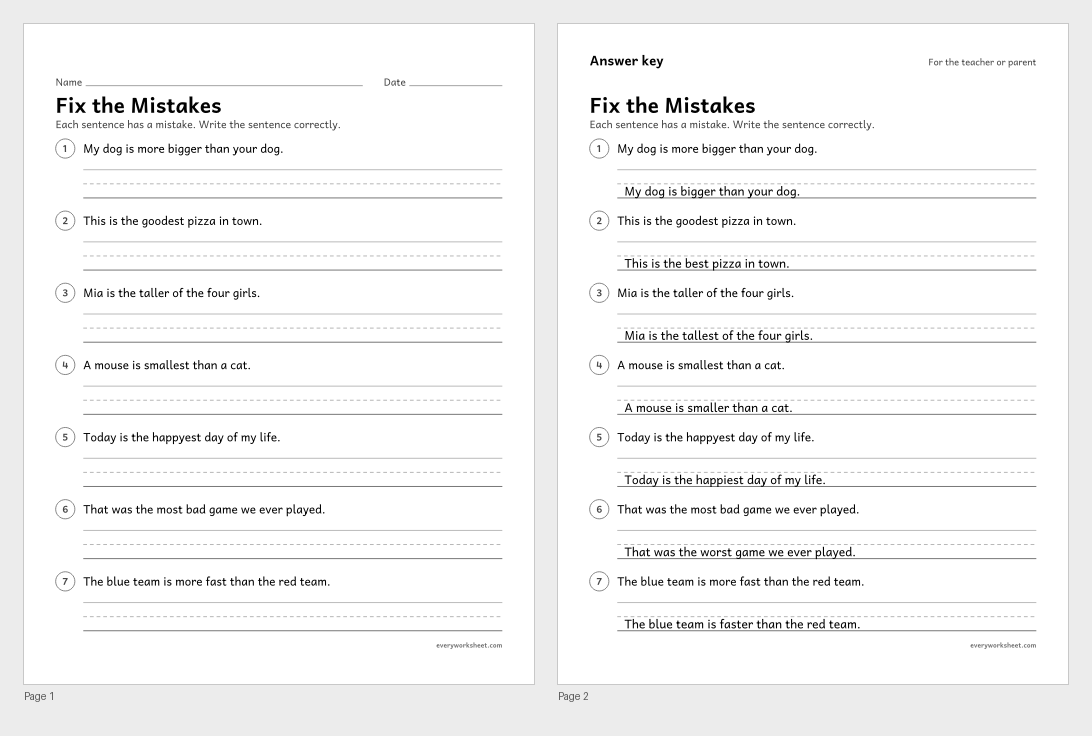
Correcting mistakes with comparative and superlative adjectives
Answer key on page 2
2 pages37 KB
 View all 2 pages
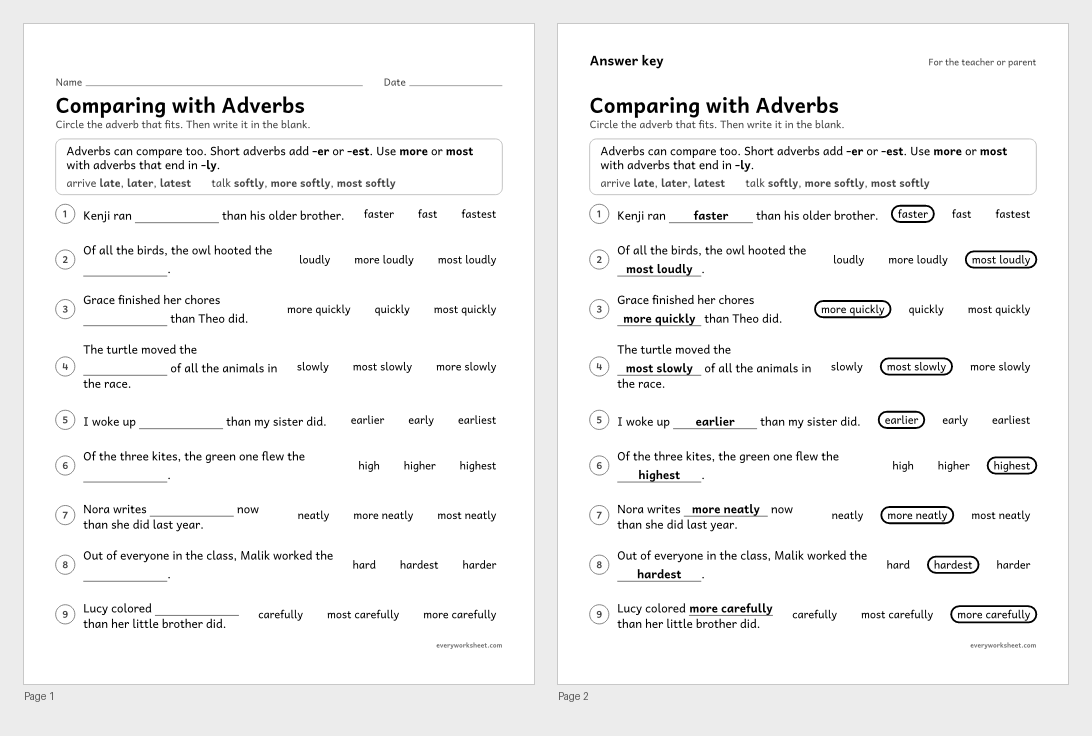
Choosing comparative and superlative adverbs (faster, more carefully, most slowly)
Answer key on page 2
2 pages54 KB
 View all 2 pages
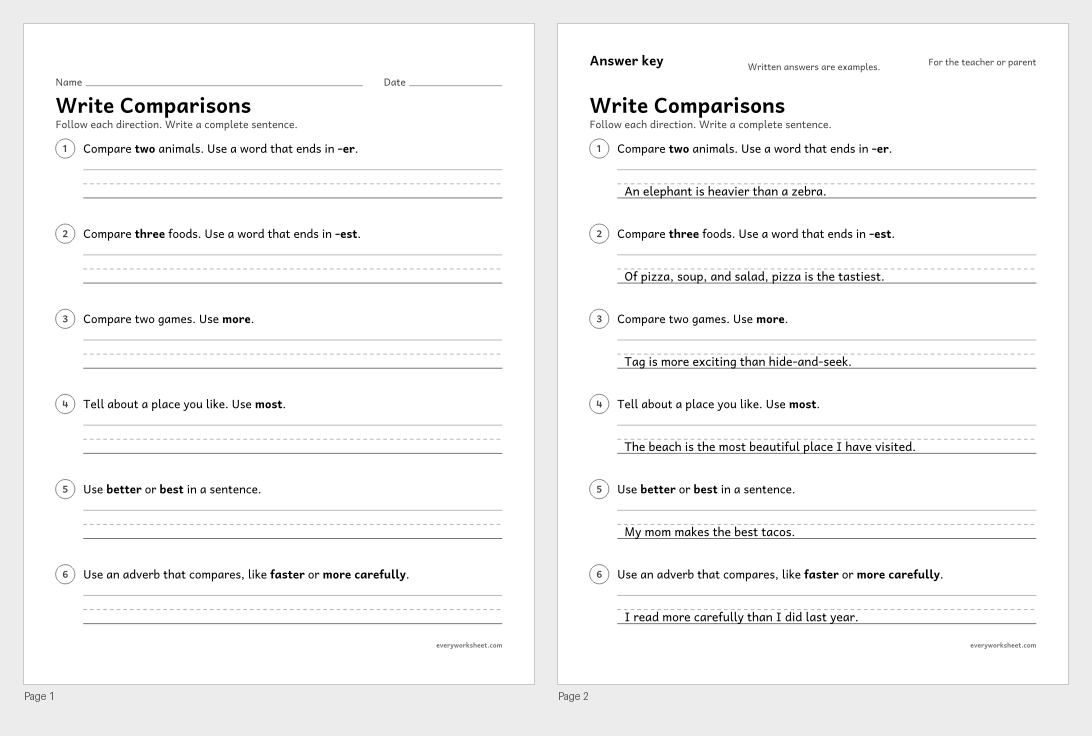
Writing sentences with comparative and superlative adjectives and adverbs
Answer key on page 2
2 pages43 KB
Print at 100% (actual size) for the cleanest tracing lines.
Comparative adjectives compare two things, usually with -er or more: "A cheetah is faster than a horse." Superlative adjectives compare three or more, usually with -est or most: "Jupiter is the largest planet." Short adjectives add -er and -est; longer ones use more and most (more careful, most beautiful).
Spelling changes matter: double the last consonant after a short vowel (big, bigger, biggest), change y to i (happy, happier, happiest), and drop a silent e (nice, nicer, nicest). A few are irregular: good, better, best; bad, worse, worst; many, more, most. Third graders also compare with adverbs: faster, more carefully.
These comparative and superlative adjectives worksheets start with a chart, then practice writing both forms, spelling changes, choosing more or -er, good, better, and best, choosing the right form in a sentence, fixing mistakes, comparing with adverbs, and writing comparisons. Every page with right answers has an answer key.
CCSS.ELA-LITERACY.L.3.1.GForm and use comparative and superlative adjectives and adverbs, and choose between them depending on what is to be modified.CCSS.ELA-LITERACY.L.3.2.EUse conventional spelling for high-frequency and other studied words and for adding suffixes to base words (e.g., sitting, smiled, cries, happiness).A comparative compares two things (taller). A superlative compares three or more (tallest).
With most adjectives of two or more syllables: more careful, most beautiful. Short adjectives add -er and -est.
Yes. Every page with right answers has an answer key on page 2. Written answers show an example.