 View larger
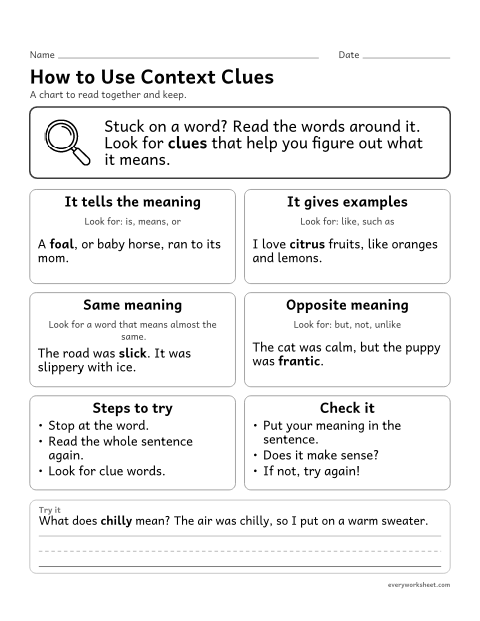
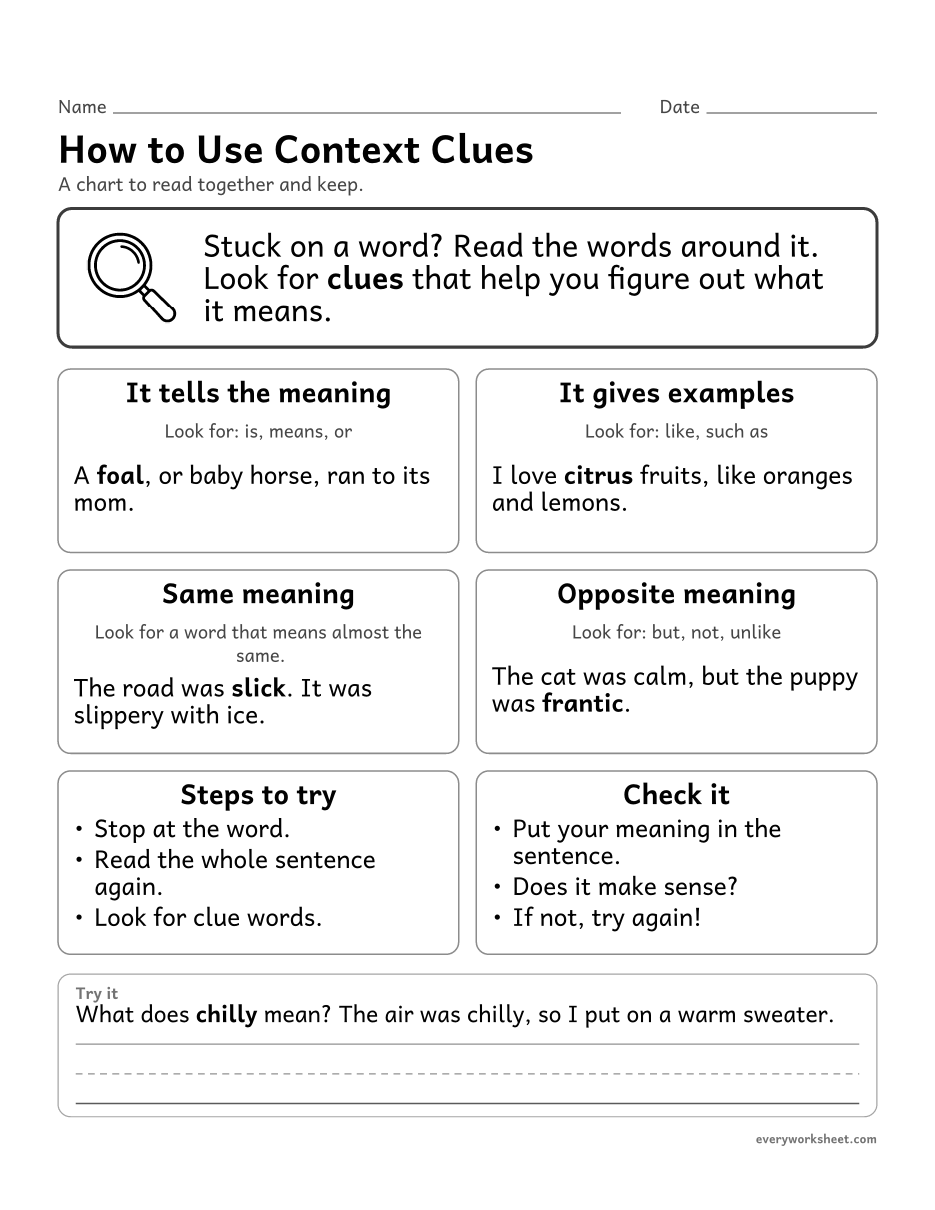
How to use context clues
Knowing the kinds of context clues and the steps to use them
1 page52 KB
Use the words around a new word to work out what it means, in sentences, multiple-meaning words, made-up words and short passages.
View largerKnowing the kinds of context clues and the steps to use them
1 page52 KB
 View all 2 pages
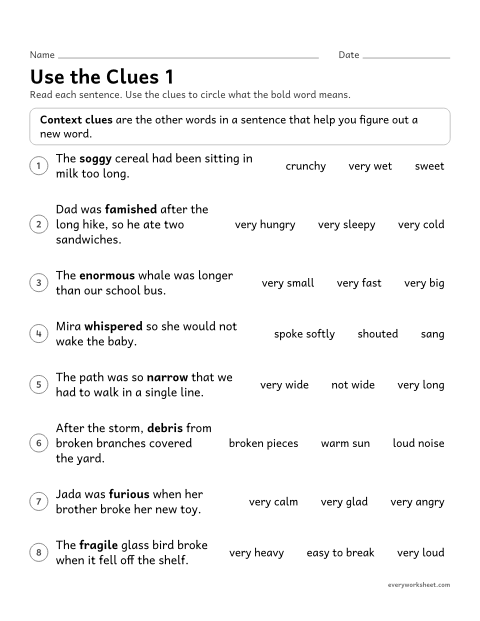
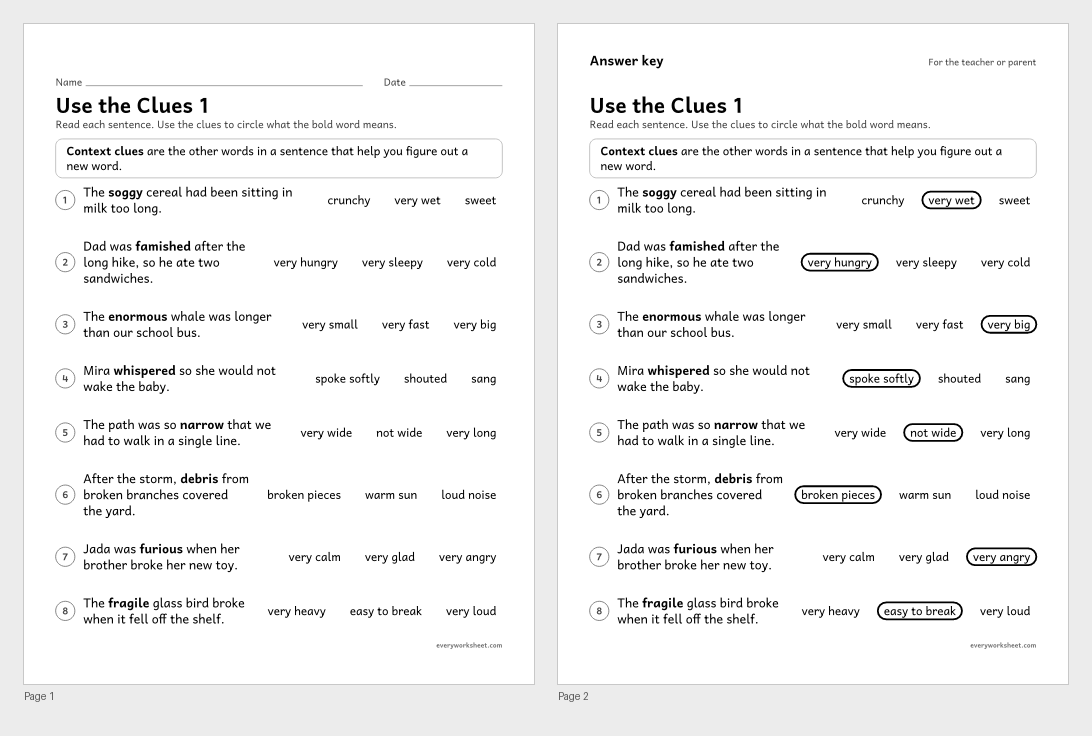
Using the words in a sentence to figure out what a new word means
Answer key on page 2
2 pages50 KB
 View all 2 pages
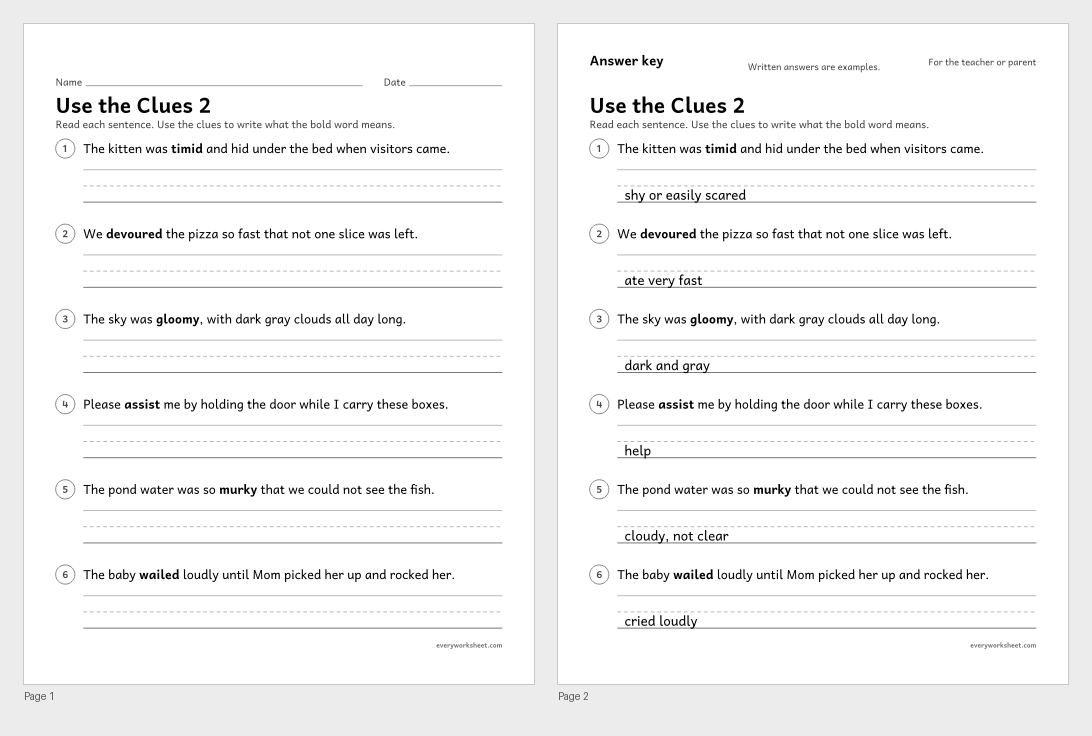
Writing the meaning of a new word using clues in the sentence
Answer key on page 2
2 pages41 KB
 View all 2 pages
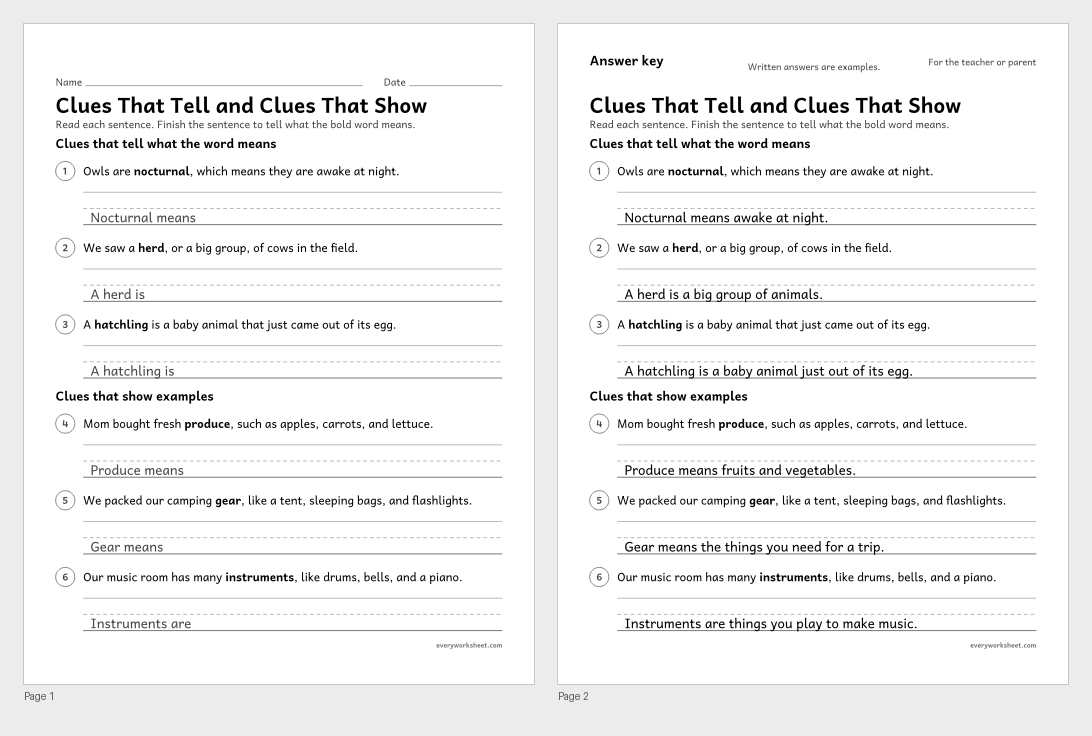
Using a meaning told in the sentence or a list of examples to figure out a word
Answer key on page 2
2 pages44 KB
 View all 2 pages
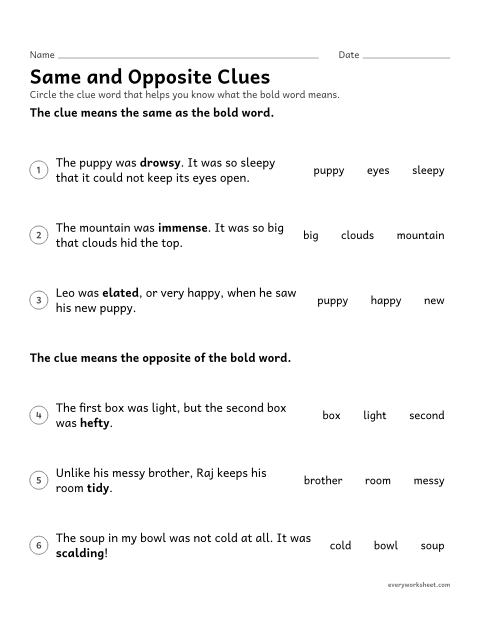
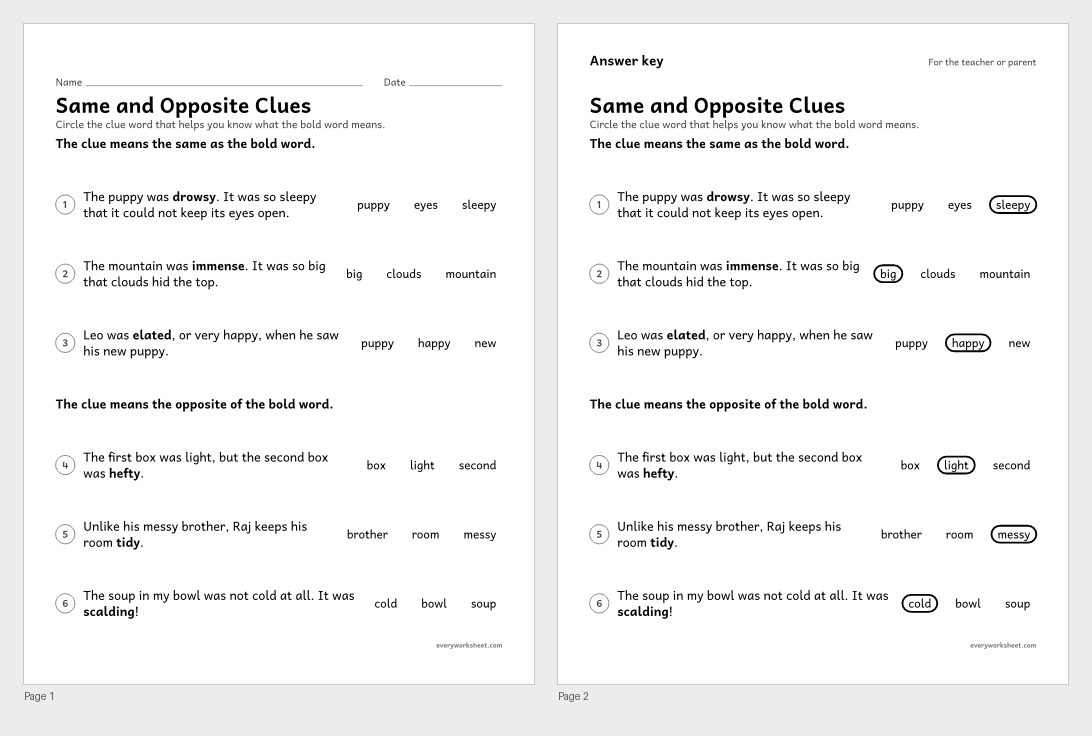
Finding a clue word that means the same as or the opposite of a new word
Answer key on page 2
2 pages45 KB
 View all 2 pages
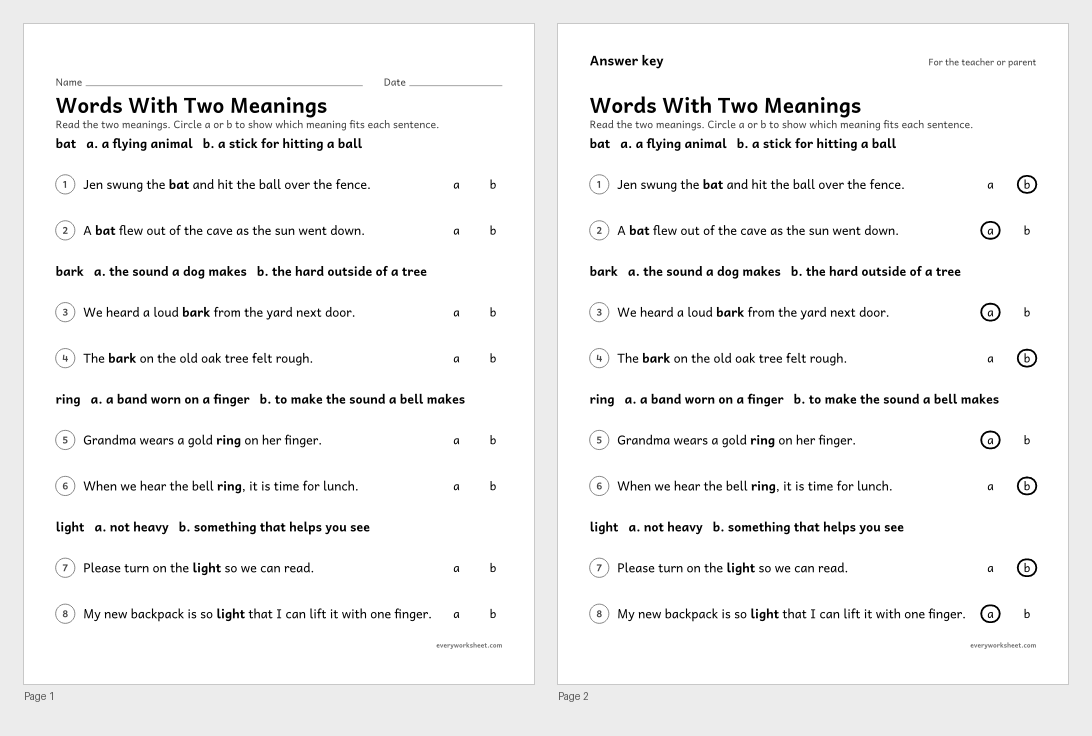
Using context to choose the right meaning of a multiple-meaning word
Answer key on page 2
2 pages51 KB
 View all 2 pages
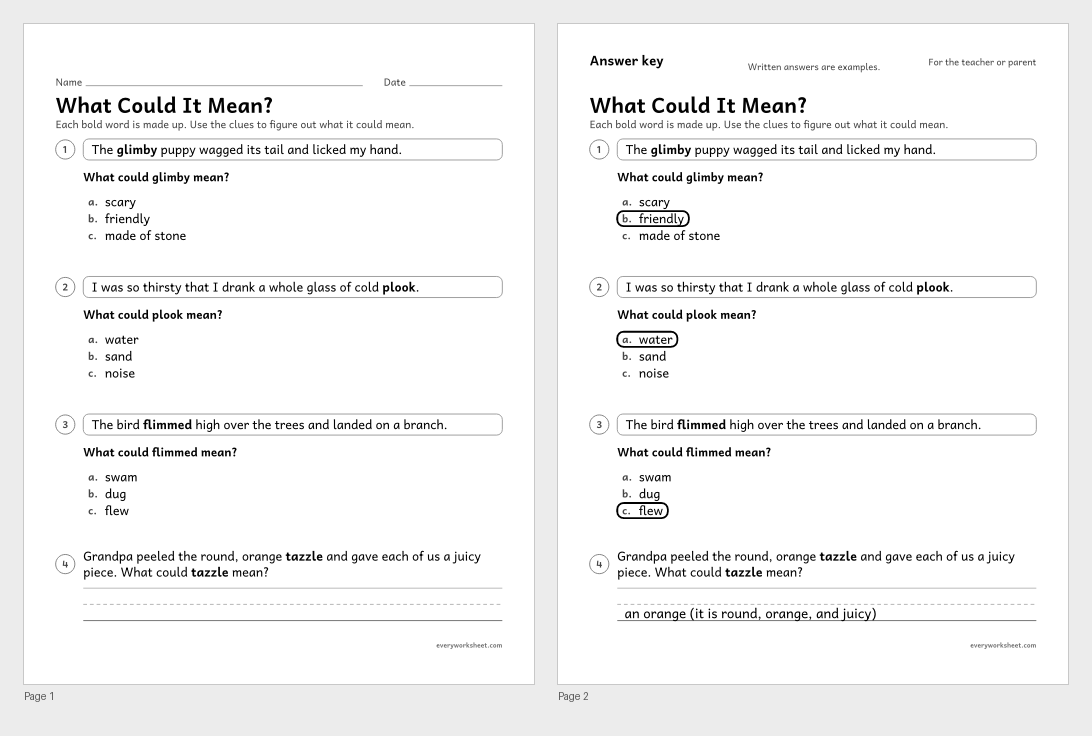
Using context clues to figure out the meaning of a made-up word
Answer key on page 2
2 pages48 KB
 3 pagesView all 3 pages
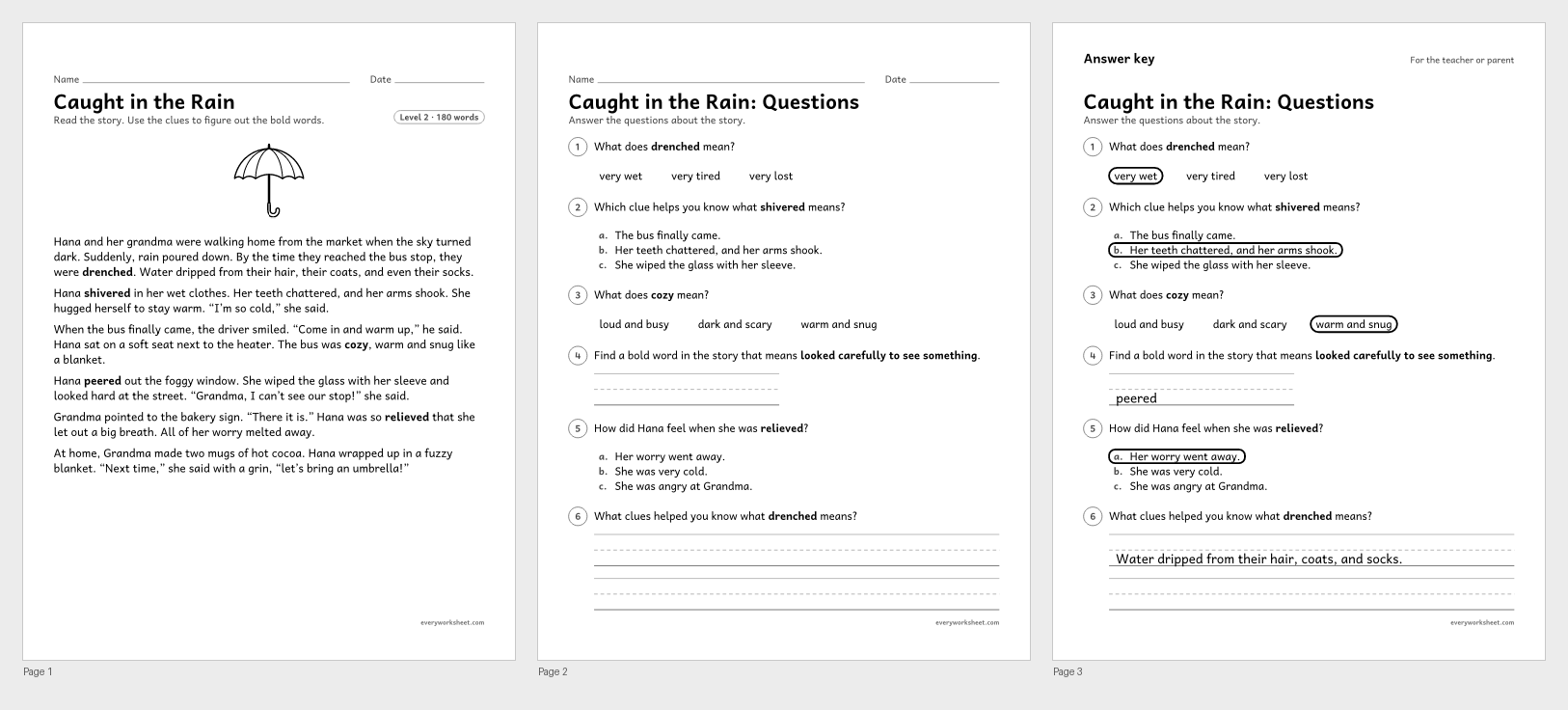
Using context clues in a story to figure out the meaning of new words
Answer key on page 3
3 pages56 KB
 View all 2 pages
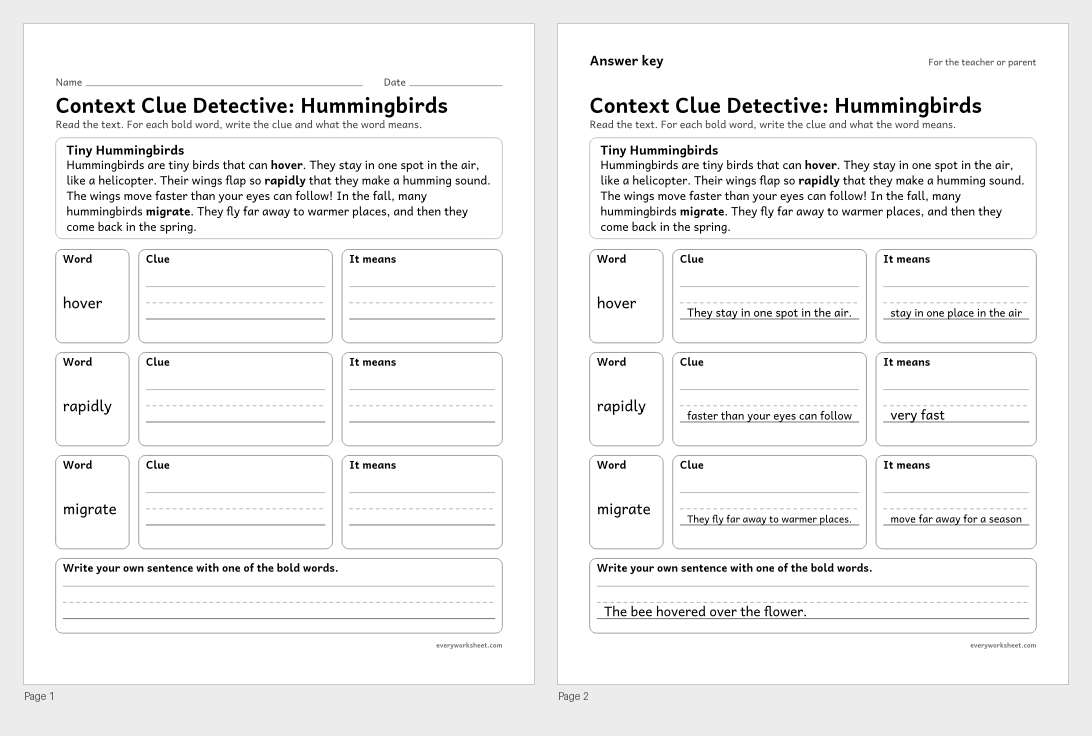
Finding the clue for each new word in a nonfiction text and writing its meaning
Answer key on page 2
2 pages40 KB
Print at 100% (actual size) for the cleanest tracing lines.
Context clues are the other words in a sentence or paragraph that help a reader figure out a new word. A good reader who meets a word like drenched does not stop. They read on, notice that water was dripping from someone's hair, and work out that drenched means very wet.
These context clues worksheets teach that habit step by step. A chart shows the kinds of clues: a sentence that tells the meaning, examples, a word that means the same, and a word that means the opposite. Practice pages use sentences with a bold word to define, words with two meanings like bat, bark and ring, and made-up words that can only be solved with clues. Two pages use a short story and a short nonfiction text.
Every page has an answer key.
CCSS.ELA-LITERACY.L.2.4.AUse sentence-level context as a clue to the meaning of a word or phrase.CCSS.ELA-LITERACY.RF.2.4.CUse context to confirm or self-correct word recognition and understanding, rereading as necessary.CCSS.ELA-LITERACY.RI.2.4Determine the meaning of words and phrases in a text relevant to a grade 2 topic or subject area.Context clues are the words and sentences around an unknown word that help a reader work out what it means.
They are written for second grade, when children start using sentence clues to figure out new words, and they work well for third grade review.
Yes. Every page has an answer key. Where children write a meaning, the key shows an example.