 View larger
FANBOYS: coordinating conjunctions
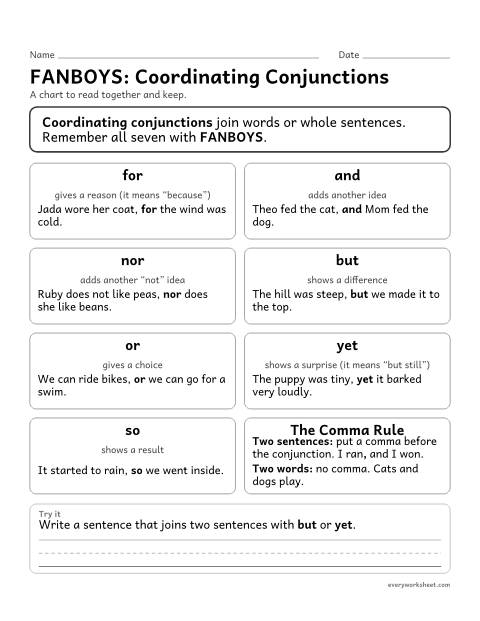
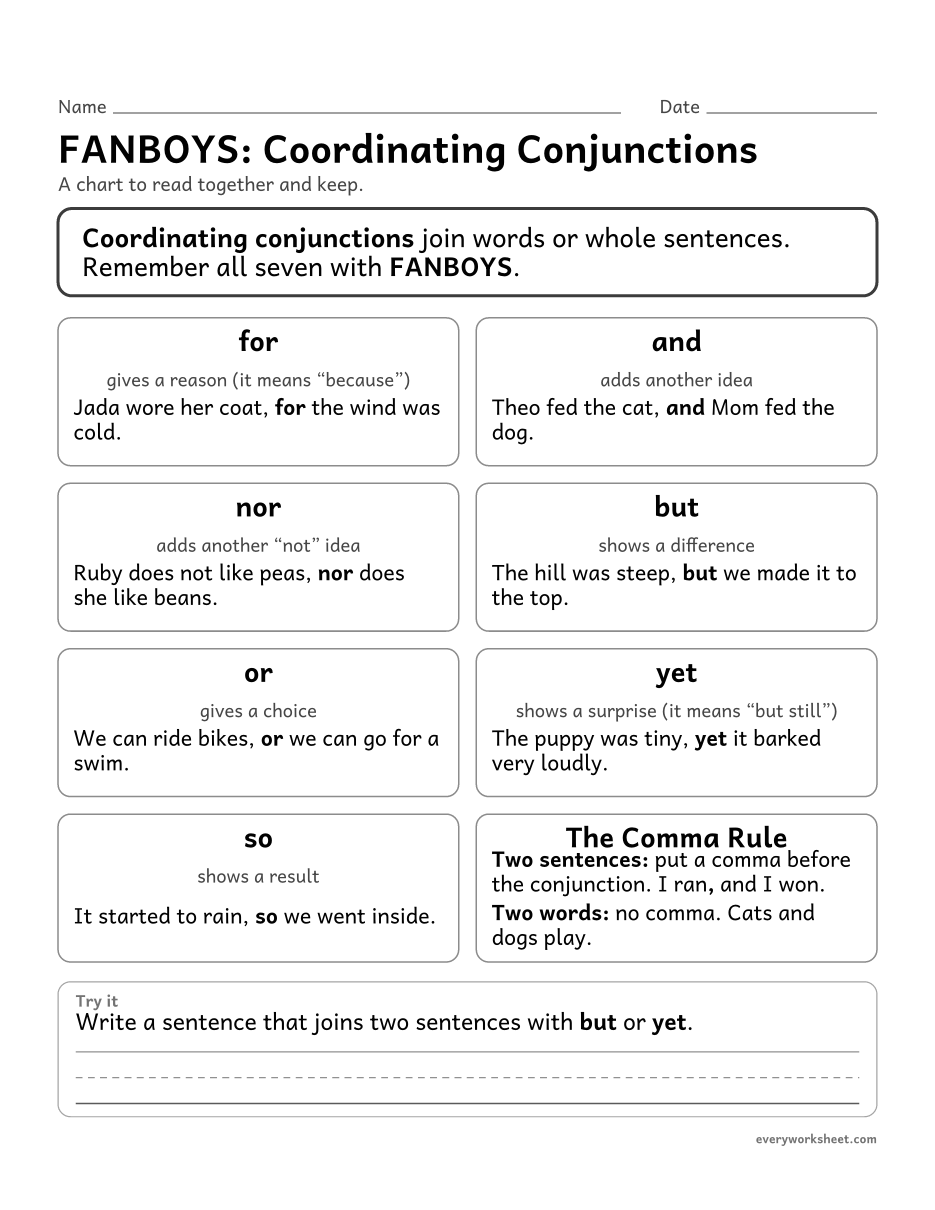
Knowing the seven coordinating conjunctions and the job of each one
1 page35 KB
What coordinating conjunctions are, the FANBOYS chart, the comma rule, and practice worksheets with answer keys.
View largerKnowing the seven coordinating conjunctions and the job of each one
1 page35 KB
 View larger
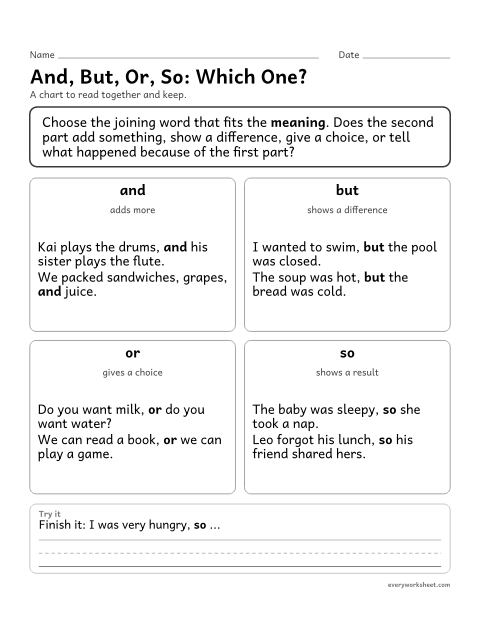
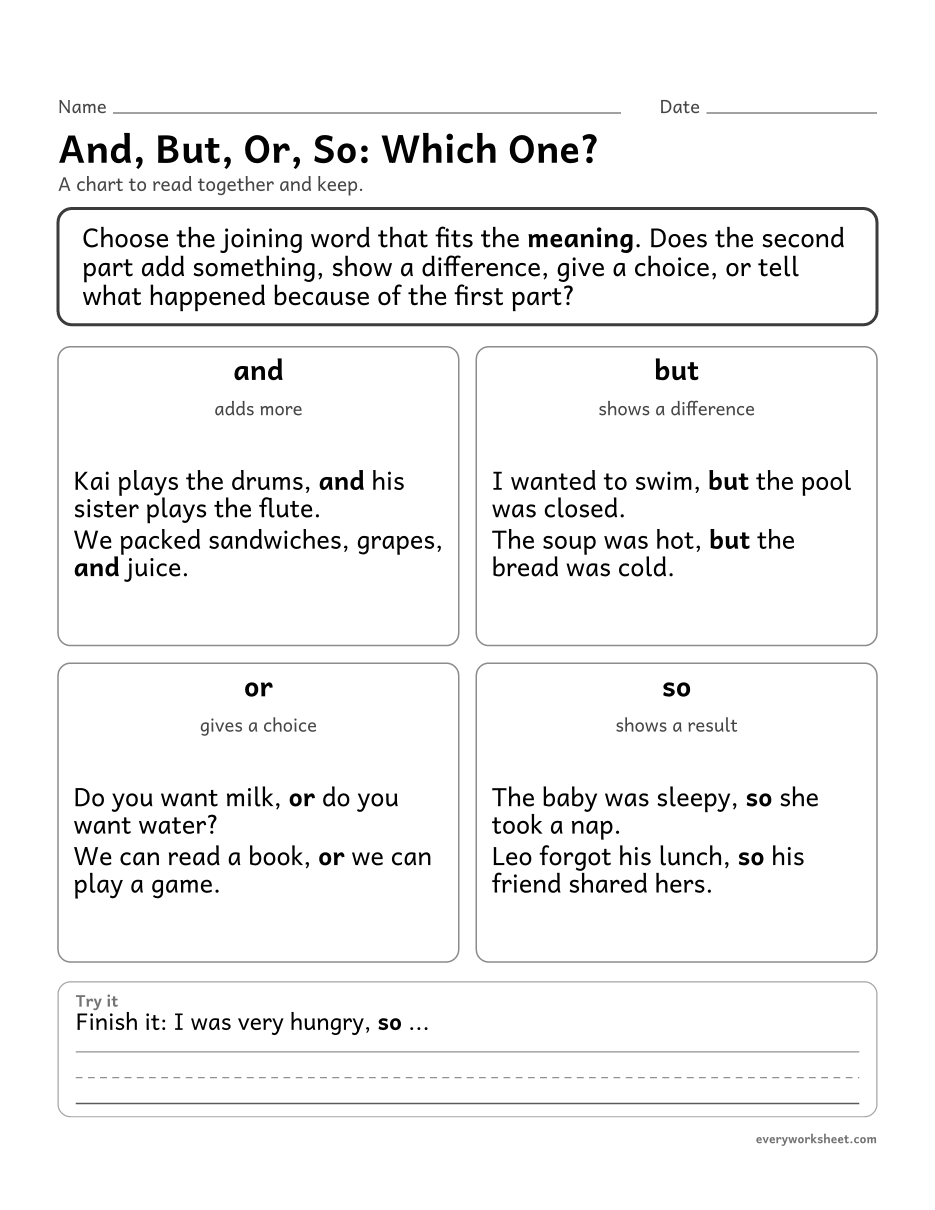
Choosing and, but, or, or so by what the sentence means
1 page32 KB
 View all 2 pages
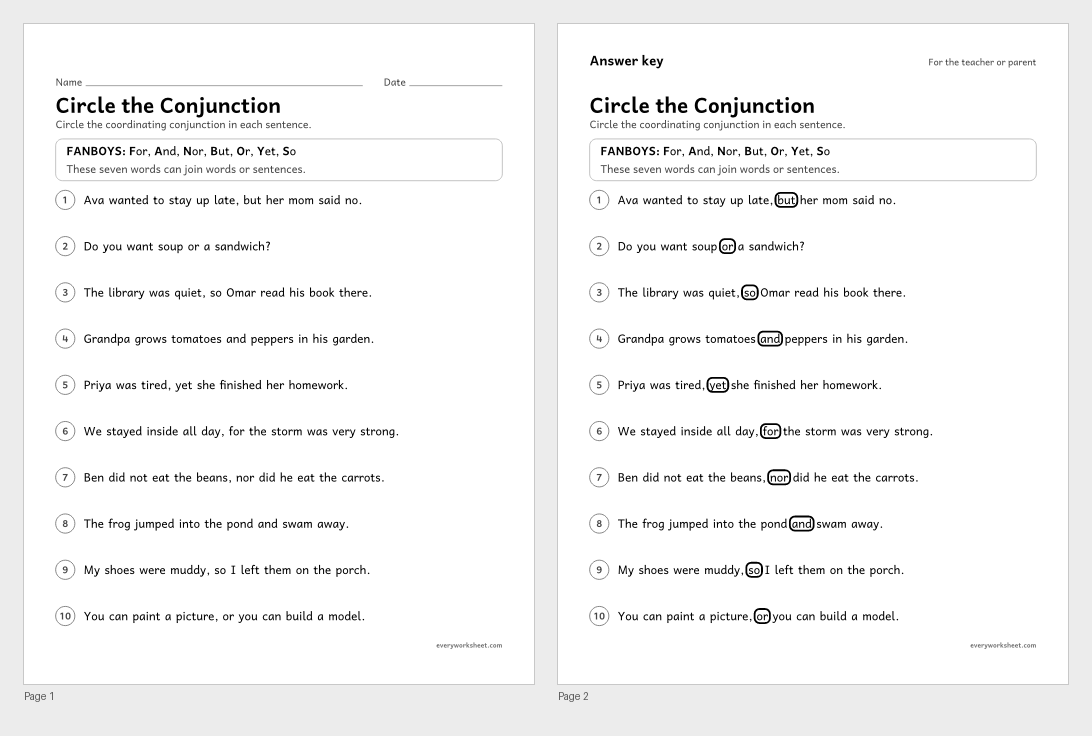
Finding coordinating conjunctions in sentences
Answer key on page 2
2 pages54 KB
 View all 2 pages
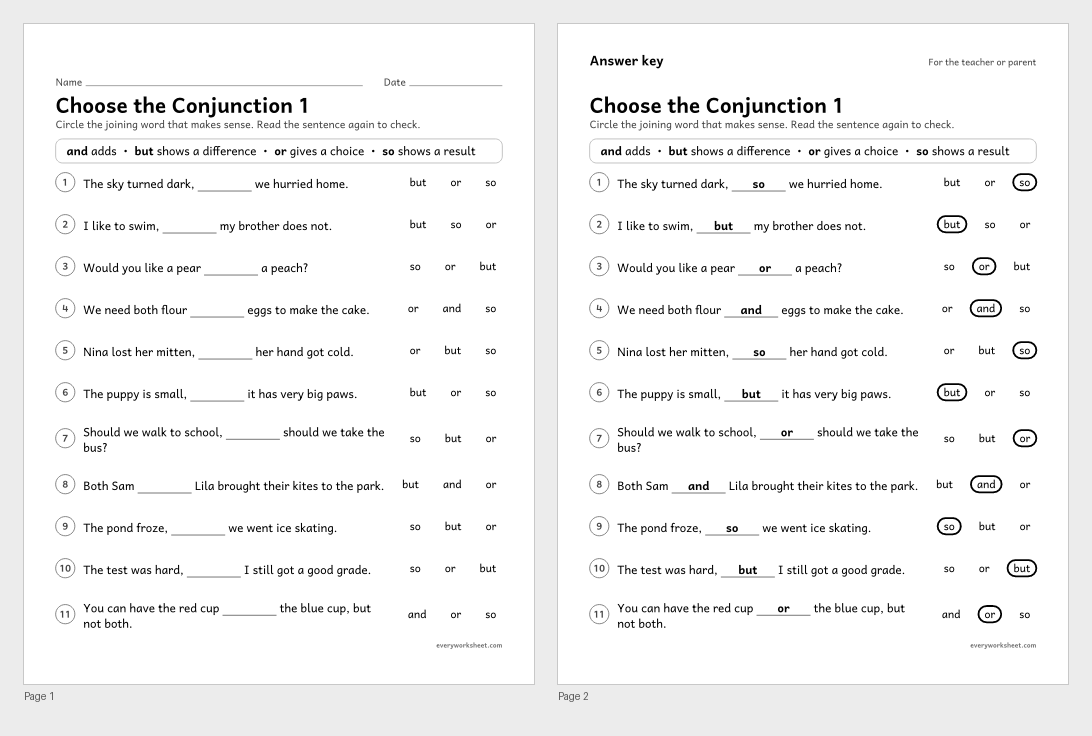
Choosing and, but, or, or so to fit the meaning of a sentence
Answer key on page 2
2 pages56 KB
 View all 2 pages
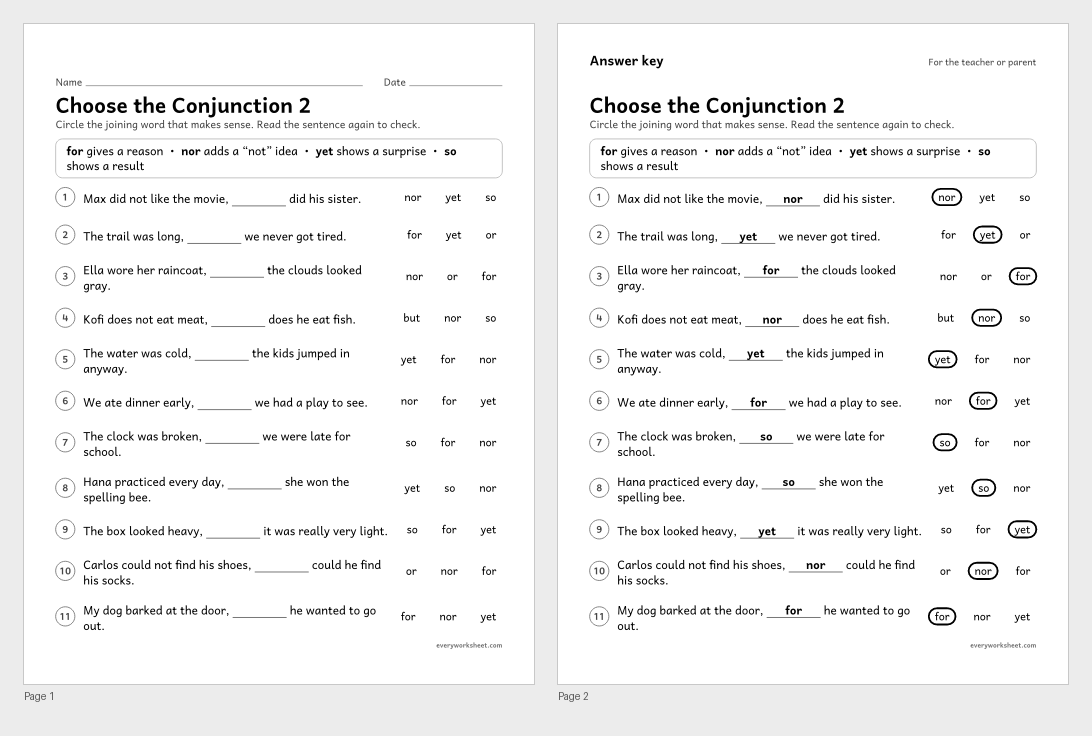
Choosing for, nor, yet, and so to fit the meaning of a sentence
Answer key on page 2
2 pages56 KB
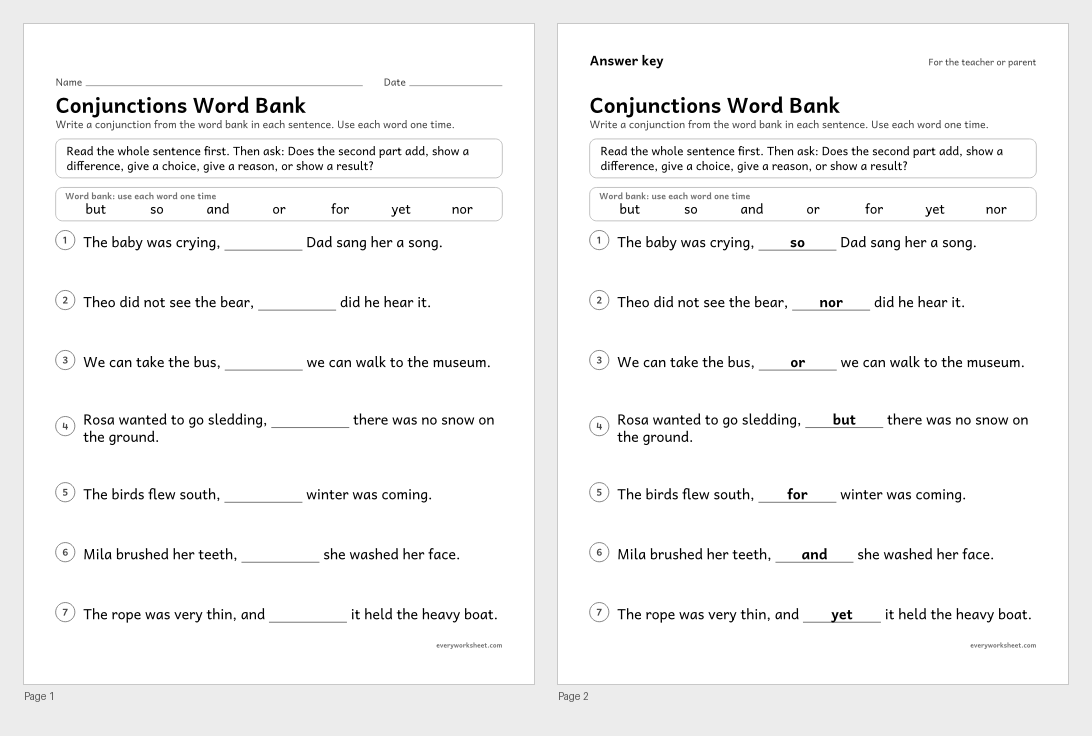 View all 2 pages
Completing sentences with the seven coordinating conjunctions
Answer key on page 2
2 pages45 KB
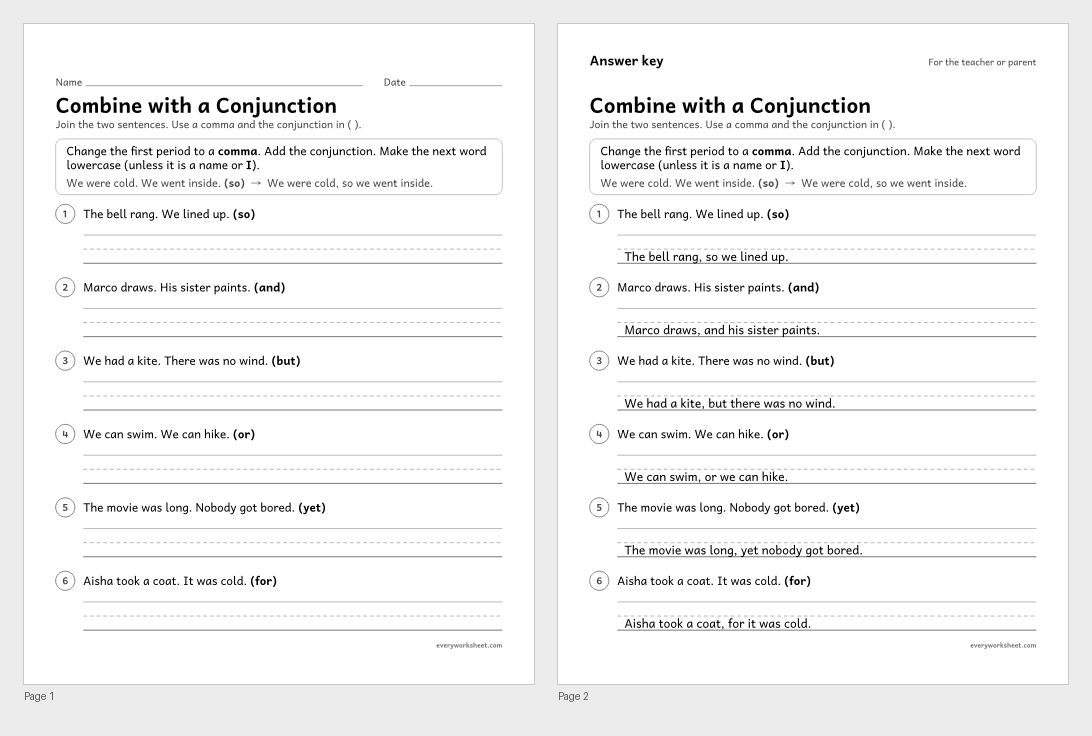 View all 2 pages
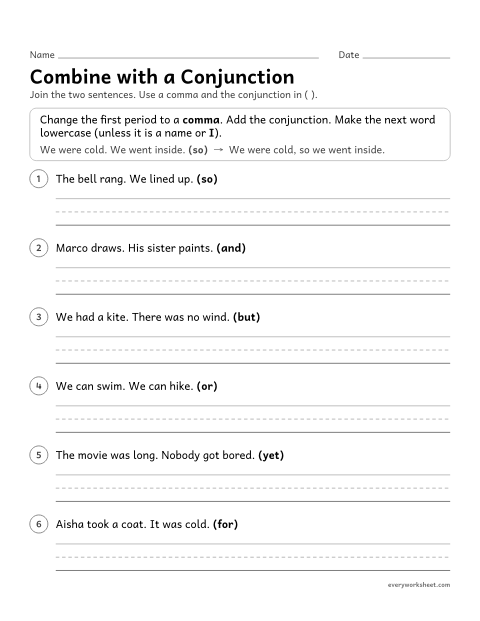
Joining two sentences with a comma and a coordinating conjunction
Answer key on page 2
2 pages42 KB
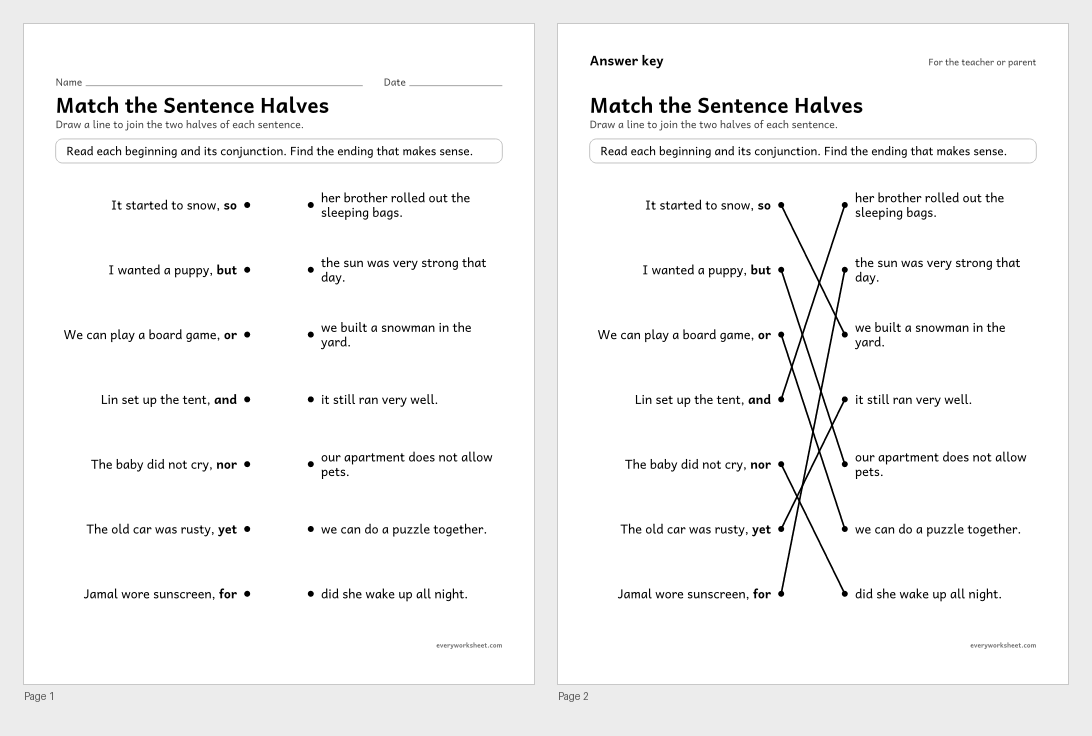 View all 2 pages
Matching sentence halves joined by coordinating conjunctions
Answer key on page 2
2 pages39 KB
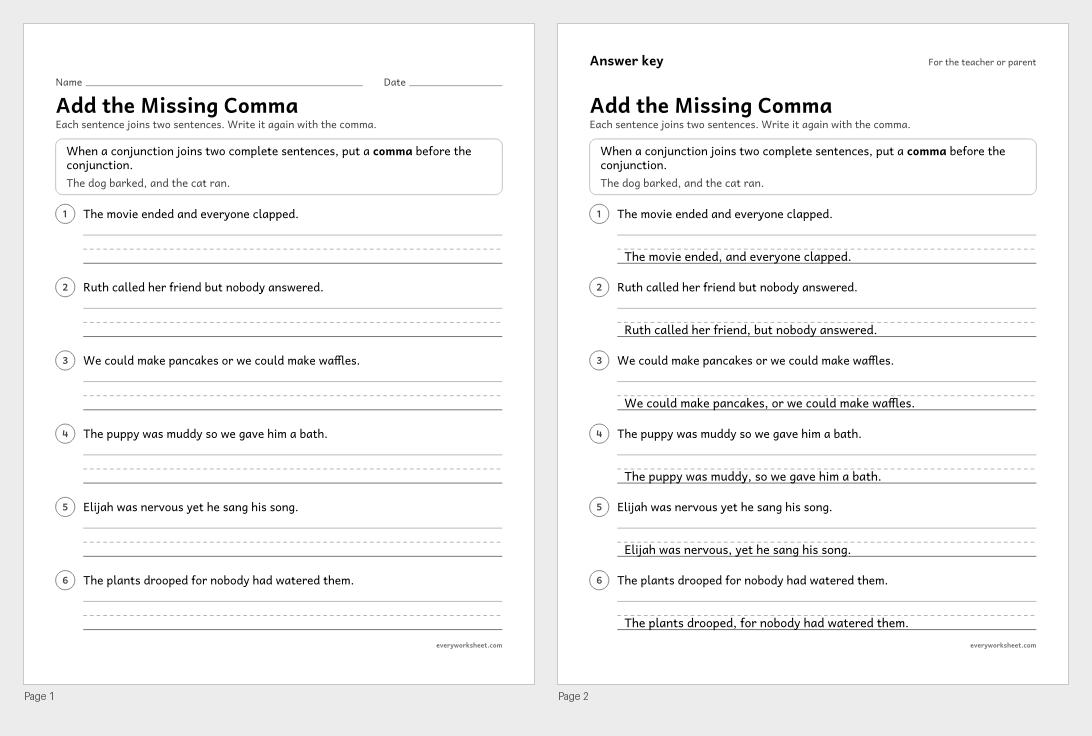 View all 2 pages
Using a comma before a conjunction that joins two sentences
Answer key on page 2
2 pages38 KB
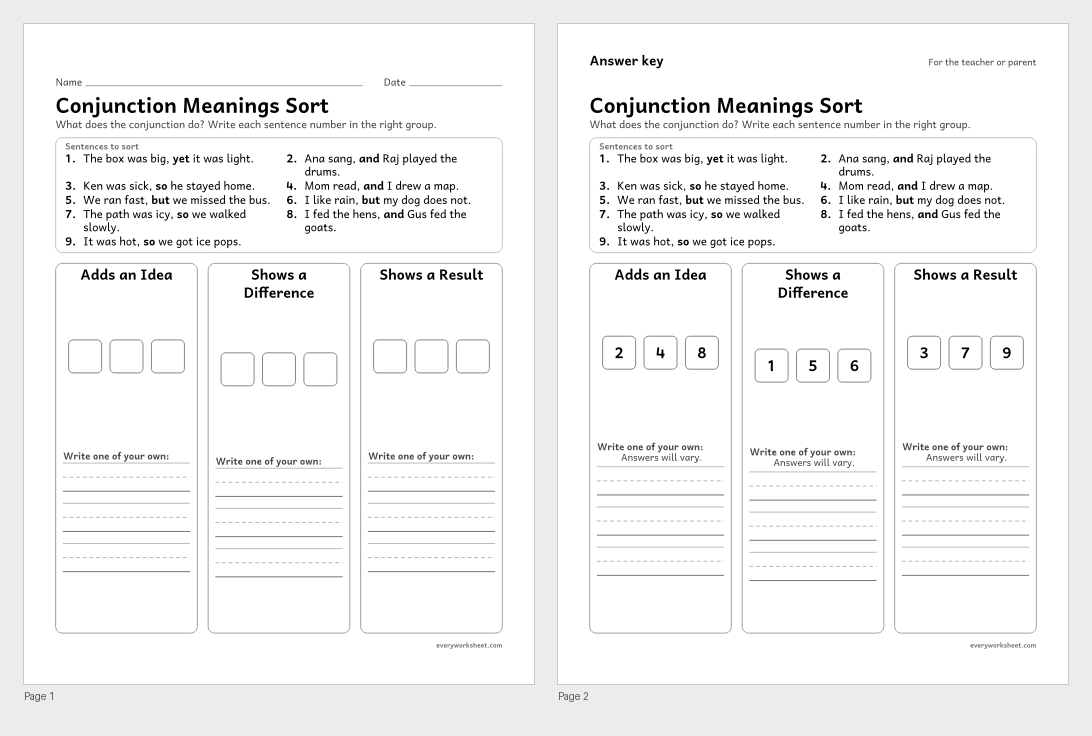 View all 2 pages
Sorting sentences by what the conjunction means
Answer key on page 2
2 pages52 KB
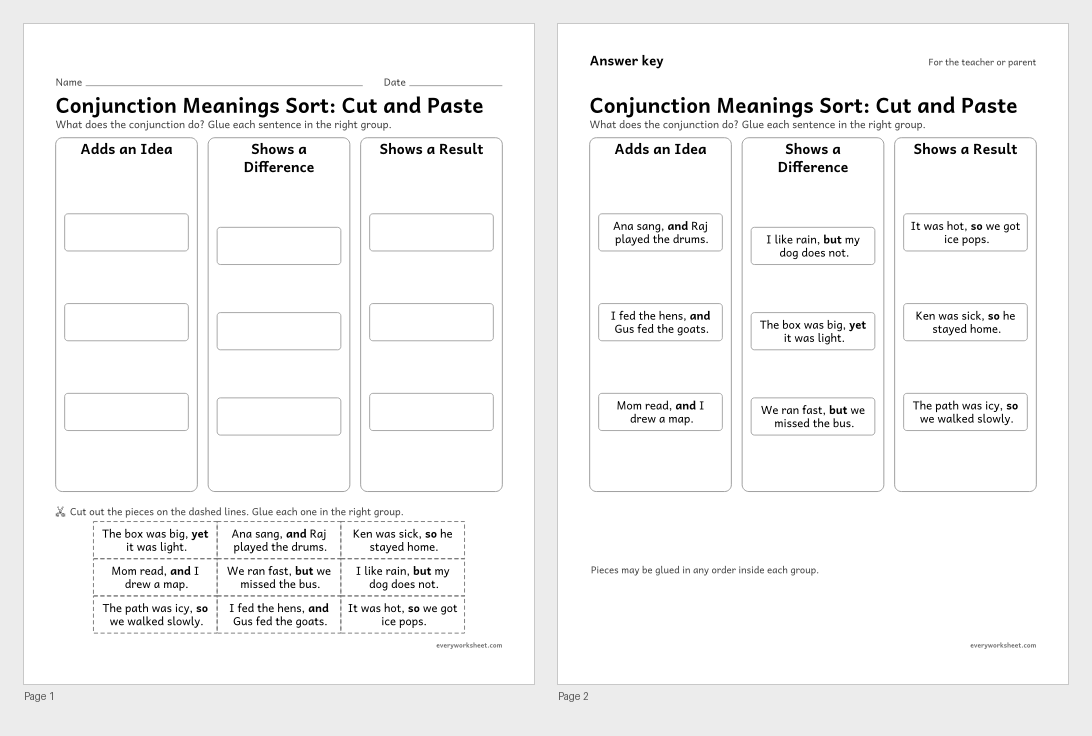 View all 2 pages
Sorting sentences by what the conjunction means (cut and paste)
Answer key on page 2
2 pages69 KB
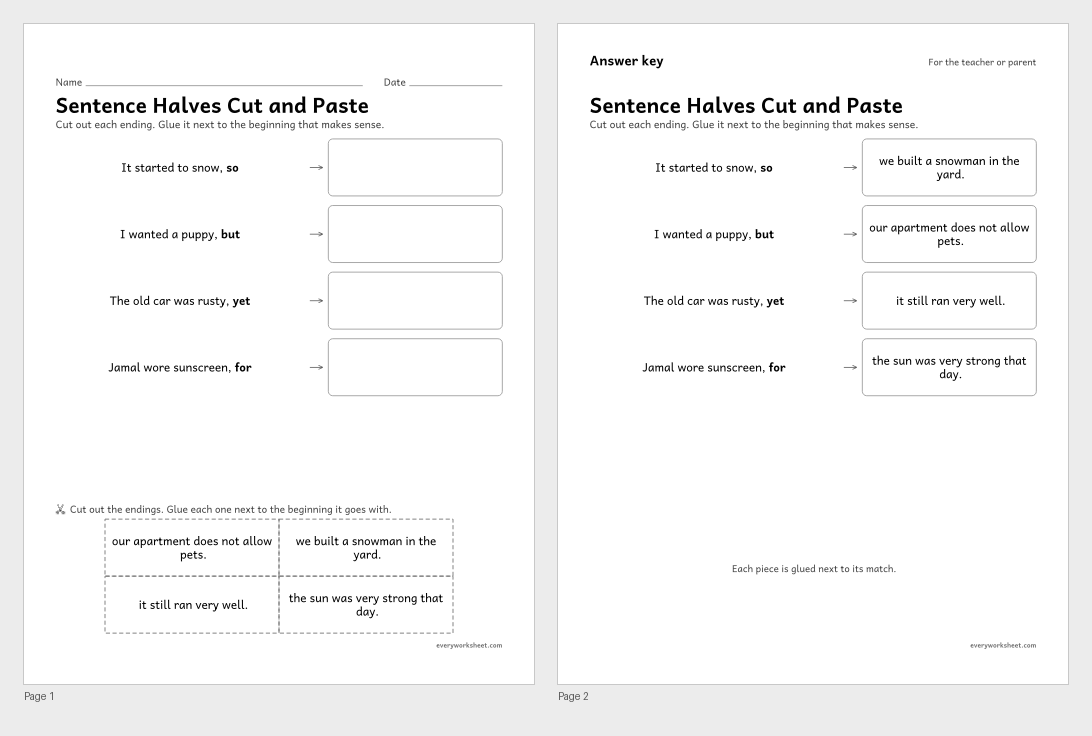 View all 2 pages
Matching sentence halves joined by coordinating conjunctions (cut and paste)
Answer key on page 2
2 pages66 KB
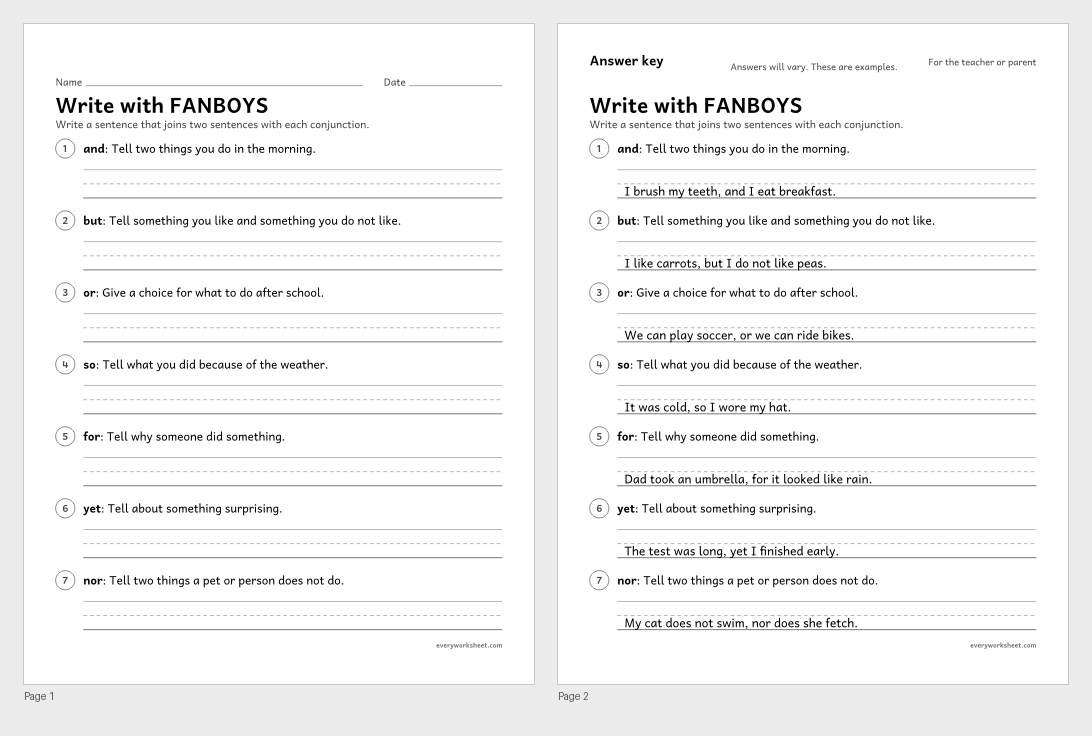 View all 2 pages
Writing compound sentences with each coordinating conjunction
Answer key on page 2
2 pages41 KB
Print at 100% (actual size) for the cleanest tracing lines.
Coordinating conjunctions are joining words. They join words, groups of words, or two whole sentences that are equally important. There are only seven, and the word FANBOYS helps children remember them: for, and, nor, but, or, yet, and so.
Each one has its own job. For gives a reason (it means because): "Jada wore her coat, for the wind was cold." And adds another idea: "Theo fed the cat, and Mom fed the dog." Nor adds another "not" idea: "Ruby does not like peas, nor does she like beans." But shows a difference: "The hill was steep, but we made it to the top." Or gives a choice: "We can ride bikes, or we can go for a swim." Yet shows a surprise (it means but still): "The puppy was tiny, yet it barked very loudly." So shows a result: "It started to rain, so we went inside."
The comma rule: when a coordinating conjunction joins two complete sentences, put a comma before the conjunction ("I ran, and I won."). When it joins only two words, there is no comma ("Cats and dogs play."). A sentence made of two complete sentences joined this way is a compound sentence.
These coordinating conjunctions worksheets start with a FANBOYS chart and a chart for choosing between and, but, or, and so. Practice pages ask children to circle conjunctions, choose the one that makes sense, fill in from a word bank, join two sentences with a comma and a conjunction, match sentence halves (draw lines or cut and paste), add the missing comma, sort sentences by what the conjunction does, and write their own. Every practice page has an answer key.
CCSS.ELA-LITERACY.L.3.1.HUse coordinating and subordinating conjunctions.Joining words that connect words or sentences of equal importance. There are seven: for, and, nor, but, or, yet, and so (FANBOYS).
The first letters of the seven coordinating conjunctions: for, and, nor, but, or, yet, so.
When it joins two complete sentences, put a comma before it: "I was tired, so I went to bed." When it joins two words, no comma: "salt and pepper."
Children use and, but, and so from first grade. Third graders learn all seven by name and use them to write compound sentences.
Yes. Every page with right answers has an answer key on page 2. Written answers show an example.