 View all 2 pages
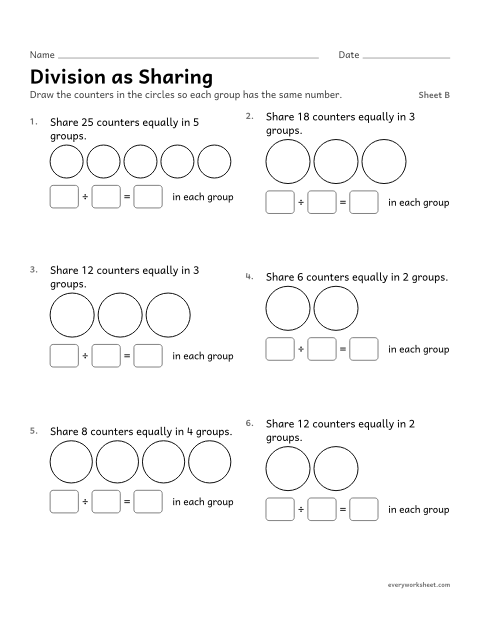
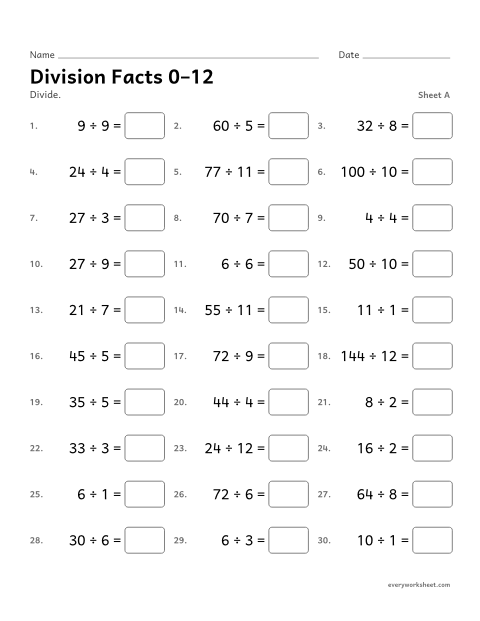
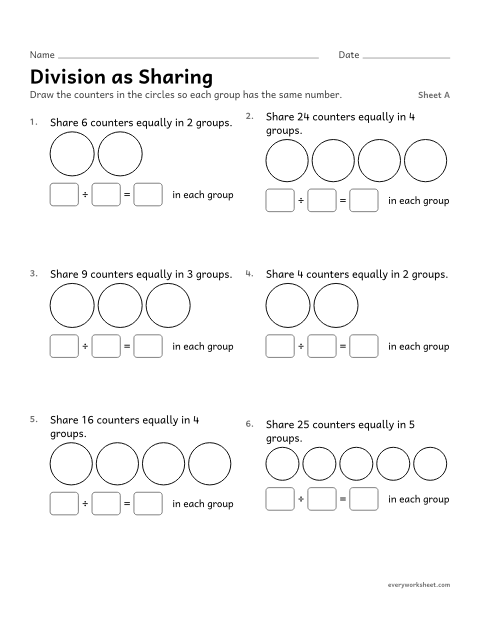
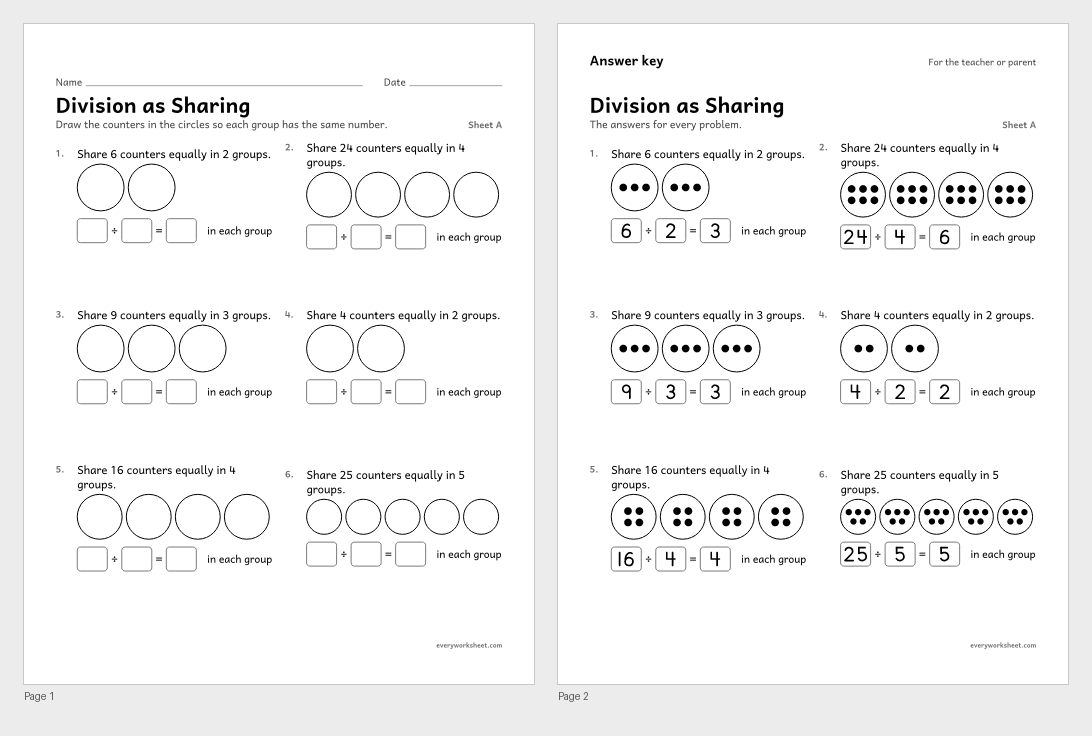
Division as Sharing, sheet A
Dividing by sharing into equal groups
Answer key on page 2
2 pages54 KB
Division as sharing and grouping, arrays, division facts within 100, using multiplication to divide, fact families, missing numbers, timed tests and remainders.
View all 2 pagesDividing by sharing into equal groups
Answer key on page 2
2 pages54 KB
 View all 2 pages
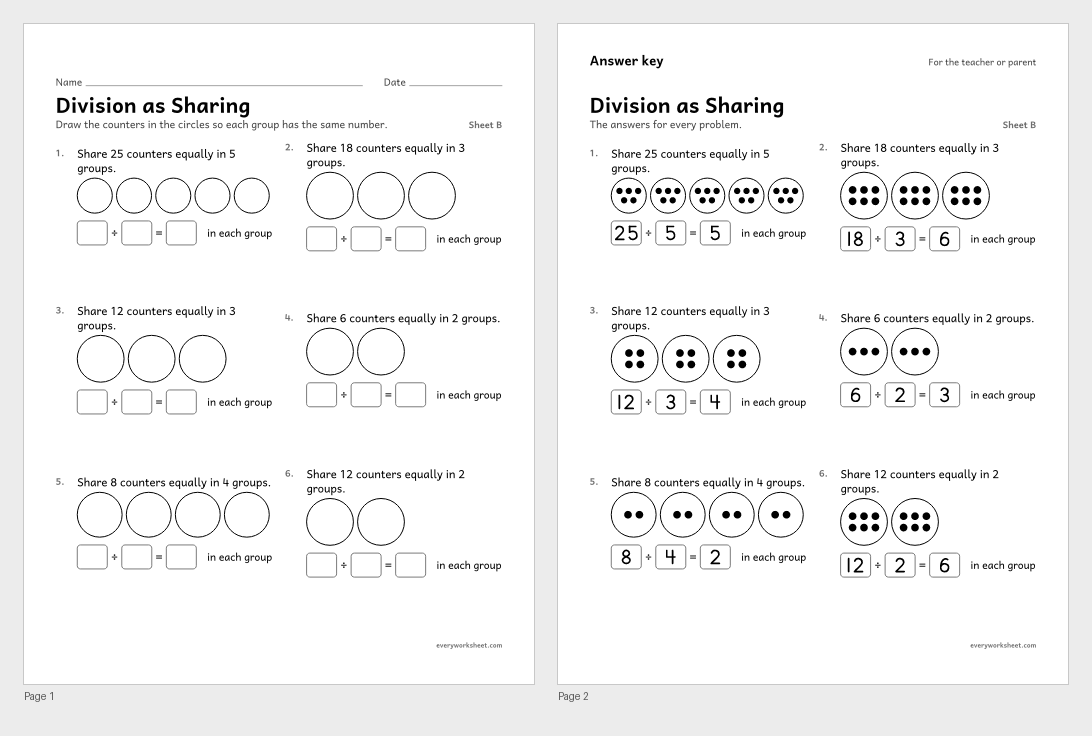
Dividing by sharing into equal groups
Answer key on page 2
2 pages55 KB
 View all 2 pages
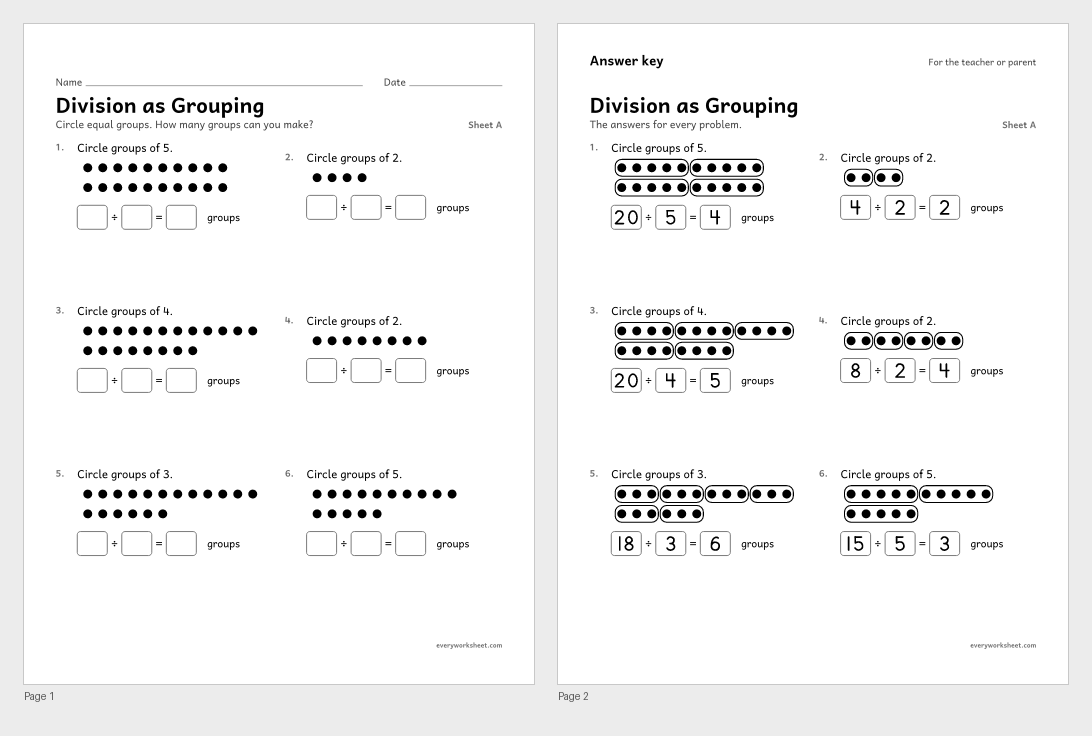
Dividing by making equal groups
Answer key on page 2
2 pages55 KB
 View all 2 pages
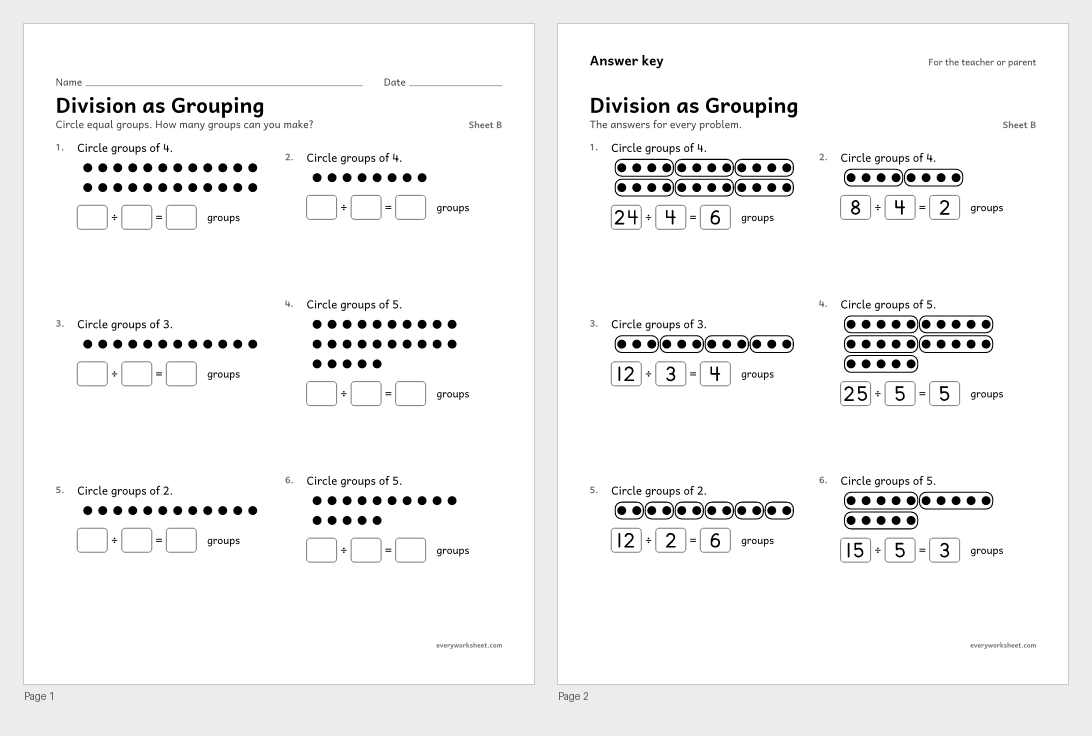
Dividing by making equal groups
Answer key on page 2
2 pages55 KB
 View all 2 pages
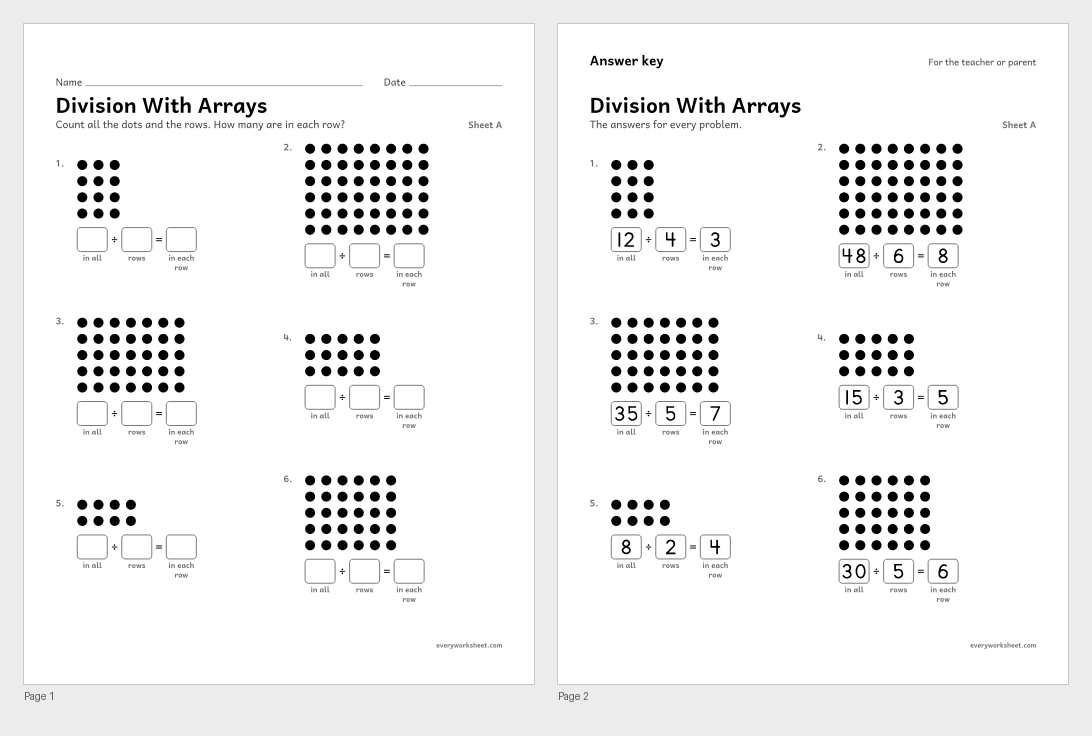
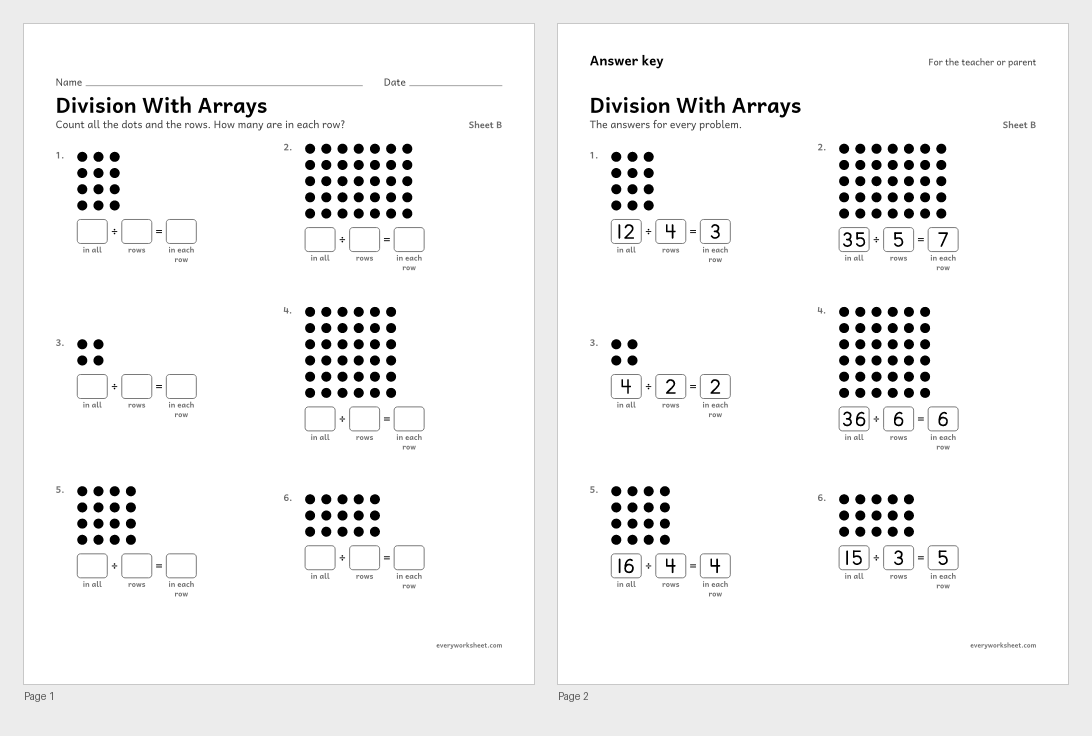
Using arrays to divide
Answer key on page 2
2 pages58 KB
 View all 2 pages
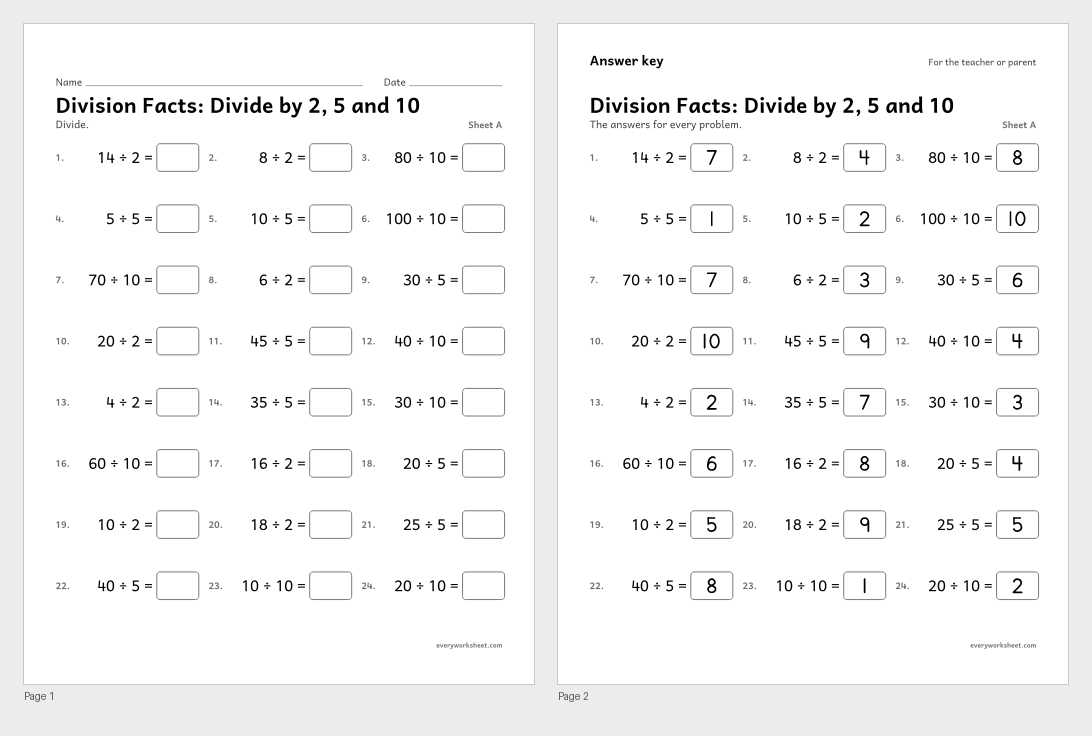
Using arrays to divide
Answer key on page 2
2 pages57 KB
 View all 2 pages
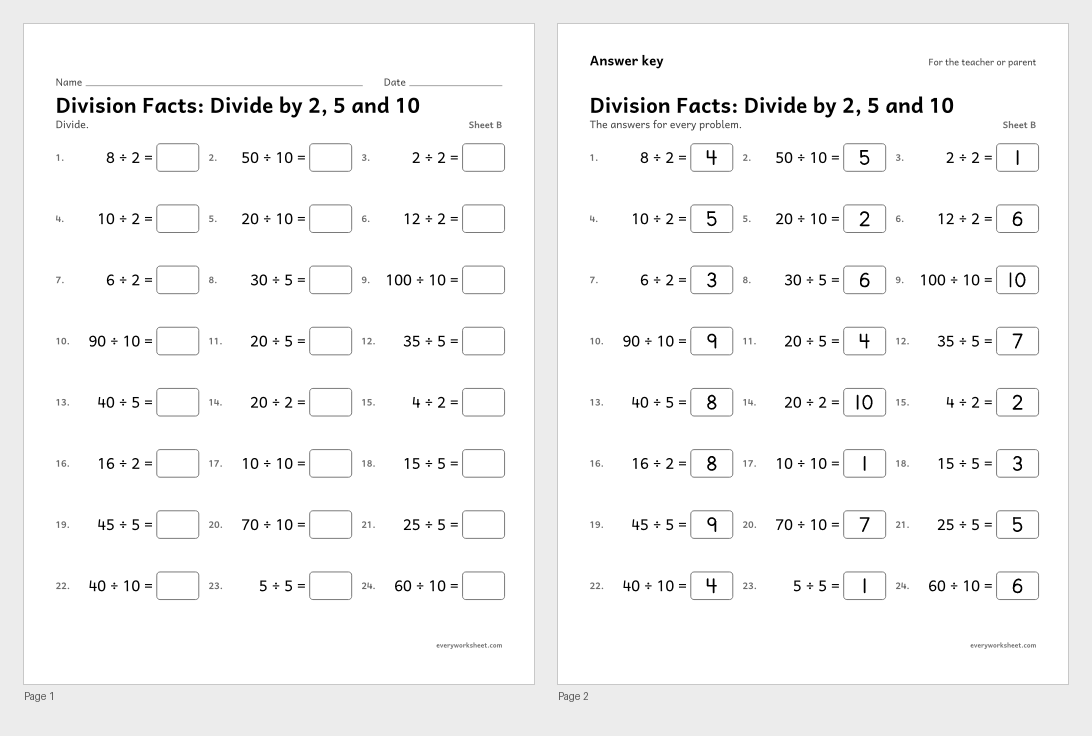
Dividing by 2, 5 and 10
Answer key on page 2
2 pages107 KB
 View all 2 pages
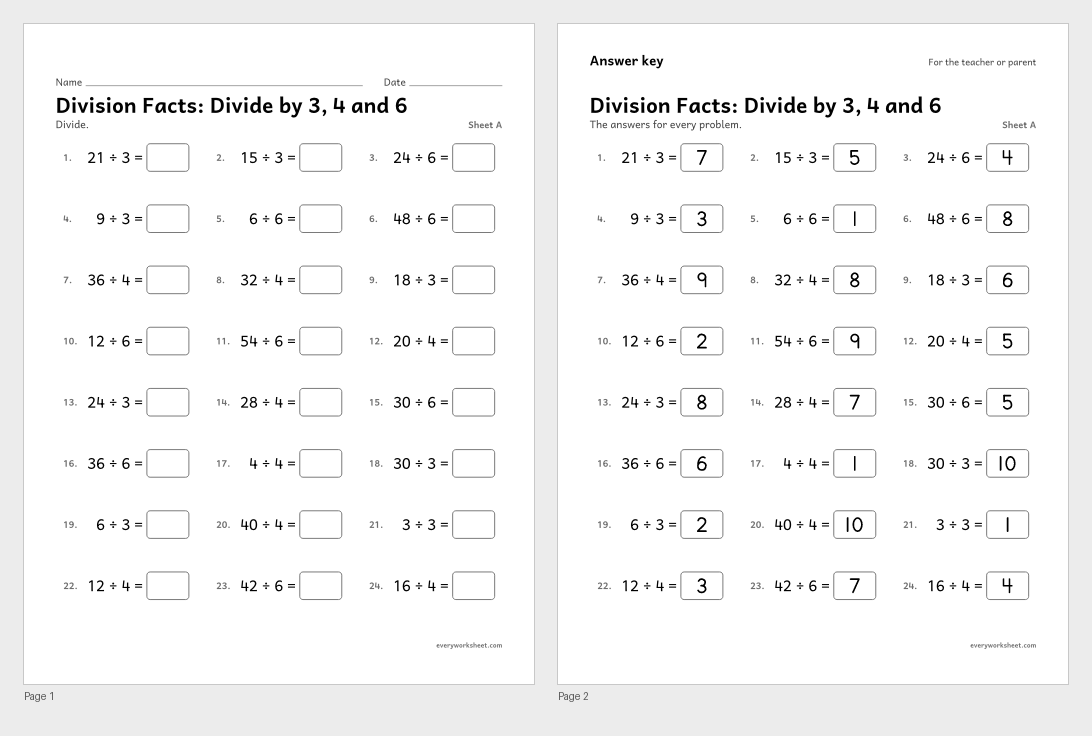
Dividing by 2, 5 and 10
Answer key on page 2
2 pages107 KB
 View all 2 pages
Dividing by 3, 4 and 6
Answer key on page 2
2 pages107 KB
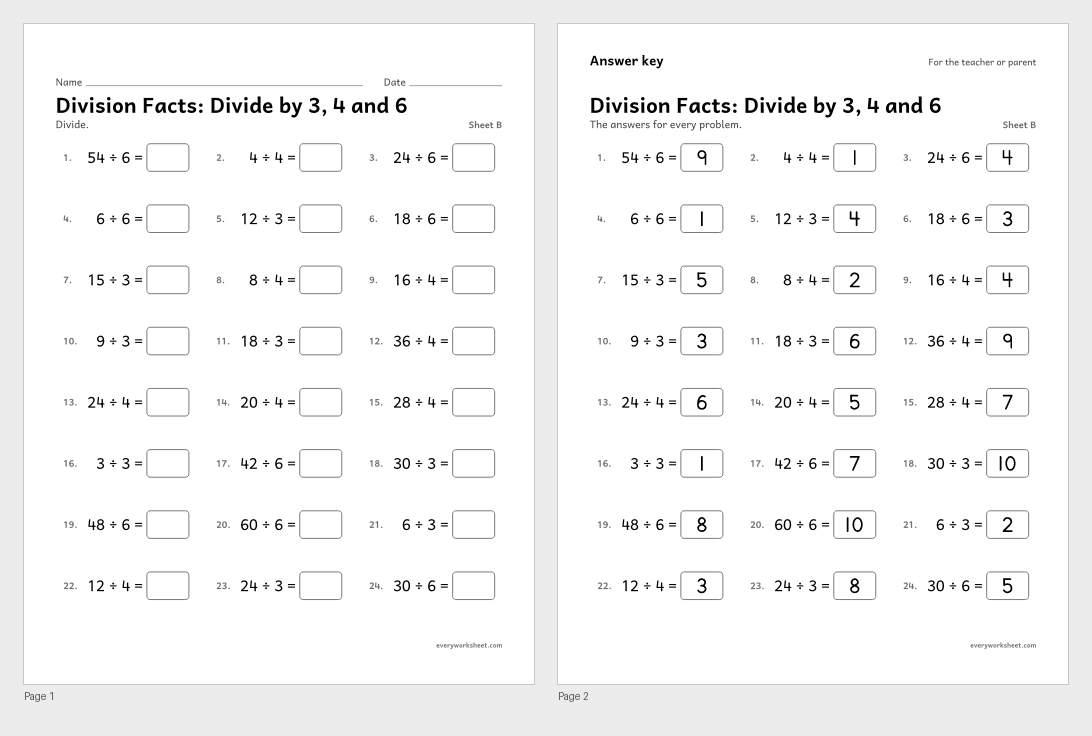 View all 2 pages
Dividing by 3, 4 and 6
Answer key on page 2
2 pages107 KB
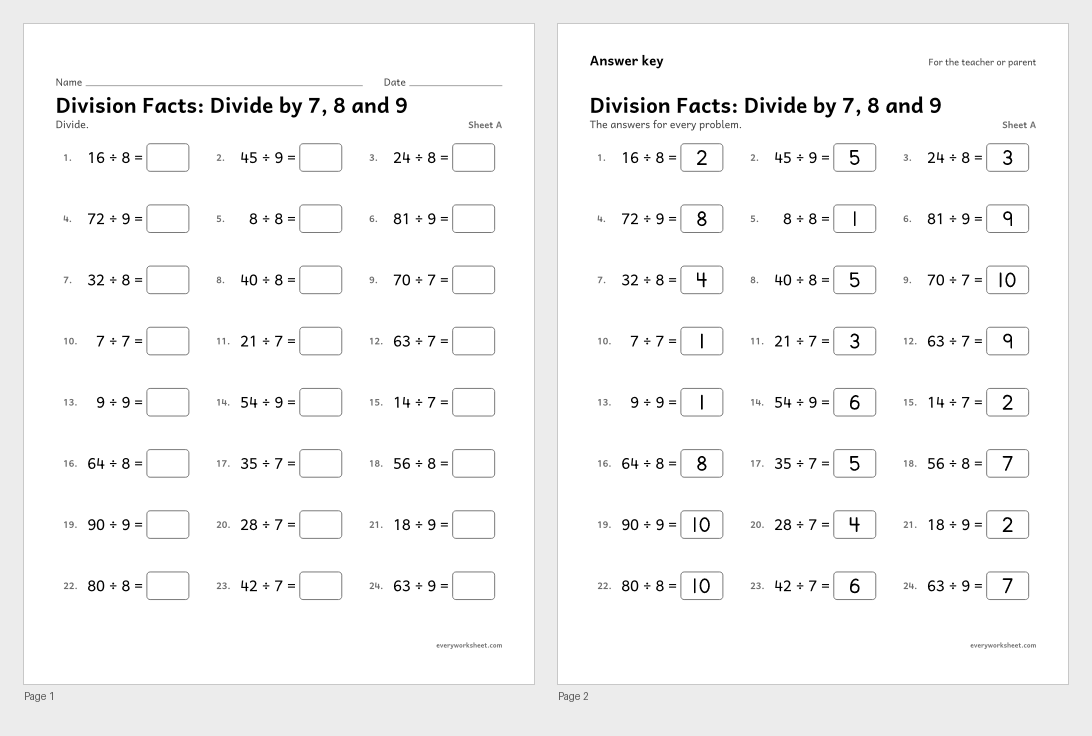 View all 2 pages
Dividing by 7, 8 and 9
Answer key on page 2
2 pages107 KB
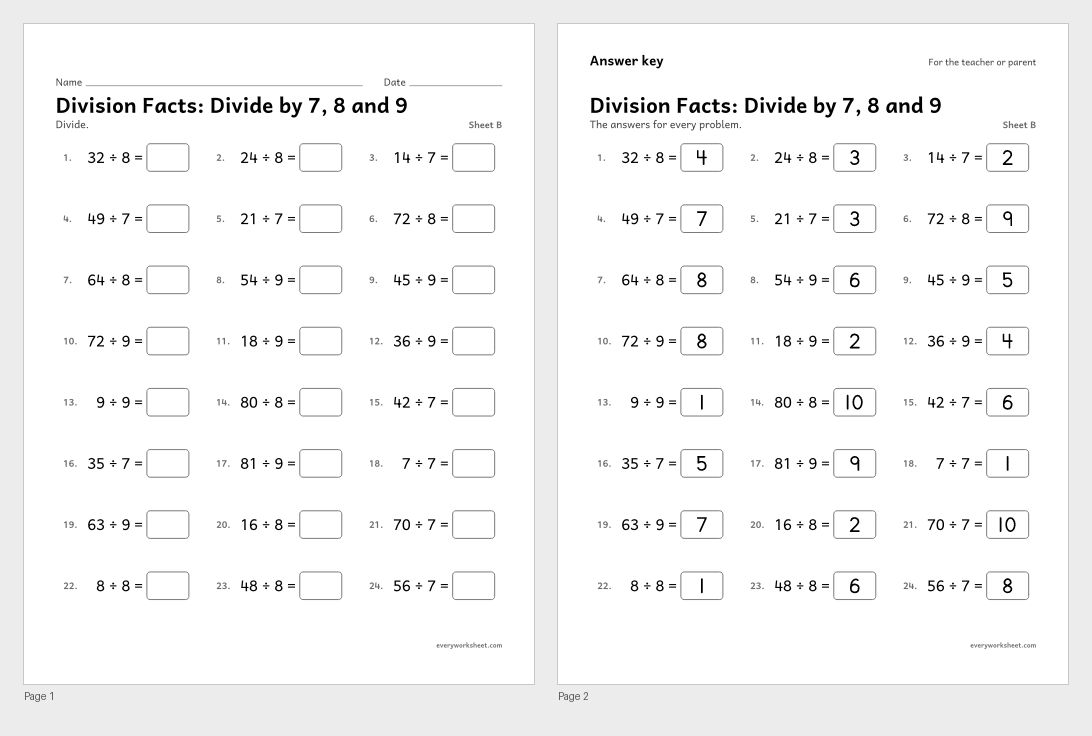 View all 2 pages
Dividing by 7, 8 and 9
Answer key on page 2
2 pages107 KB
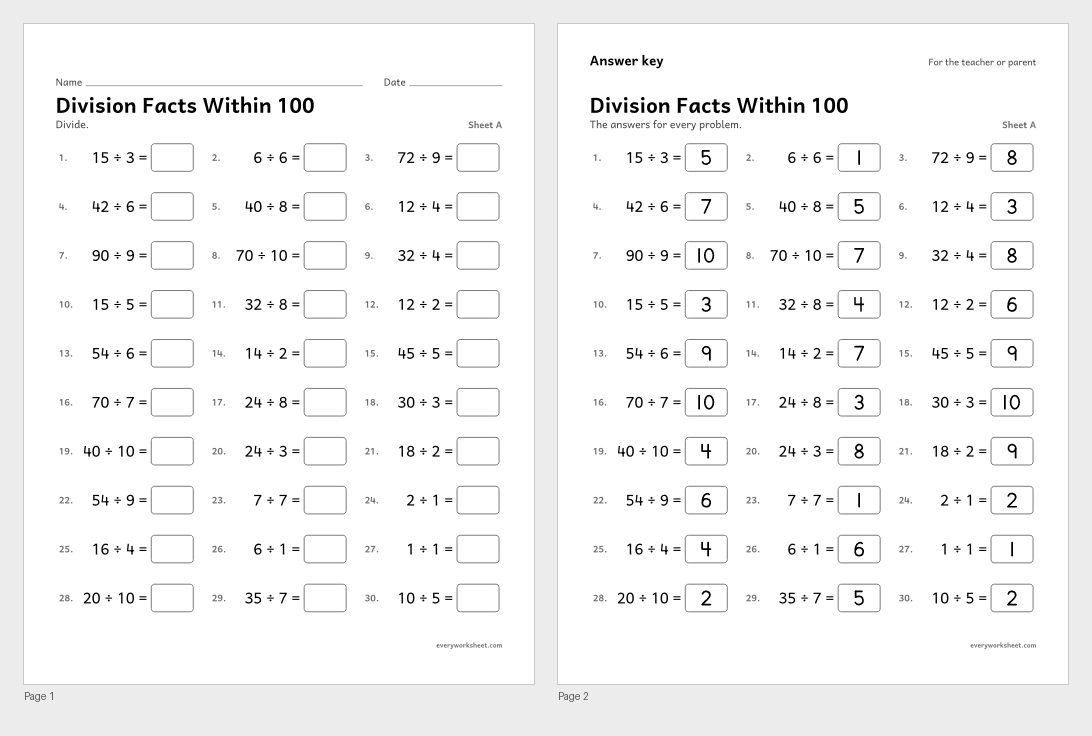 View all 2 pages
Division facts within 100
Answer key on page 2
2 pages126 KB
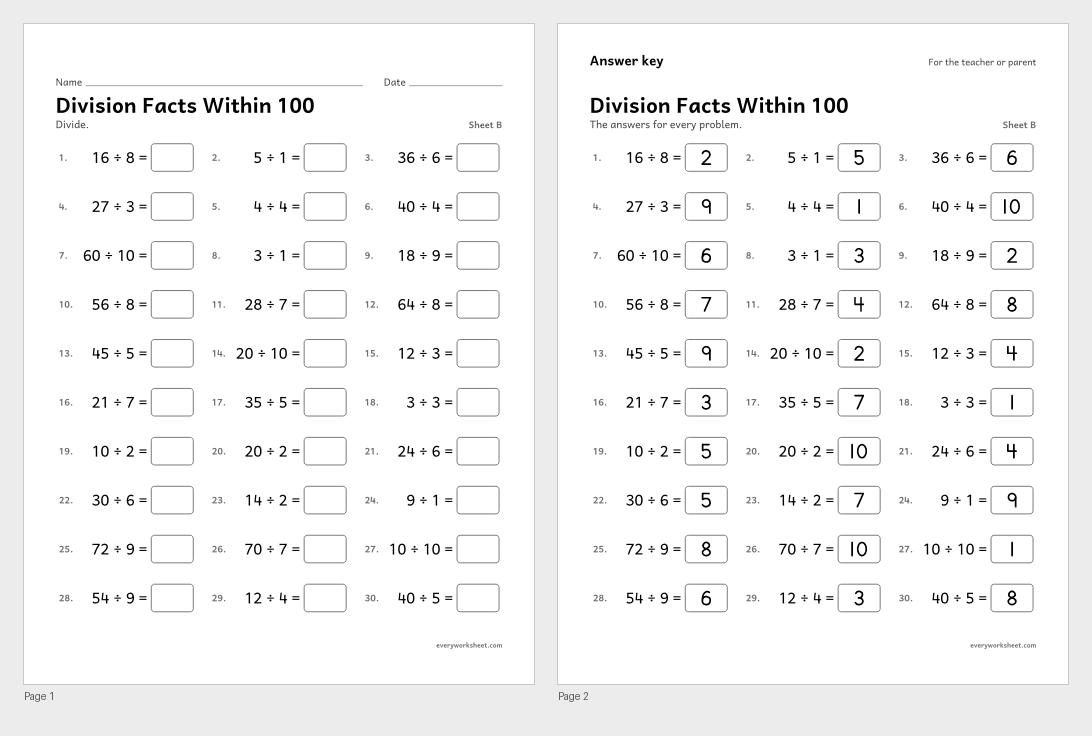 View all 2 pages
Division facts within 100
Answer key on page 2
2 pages126 KB
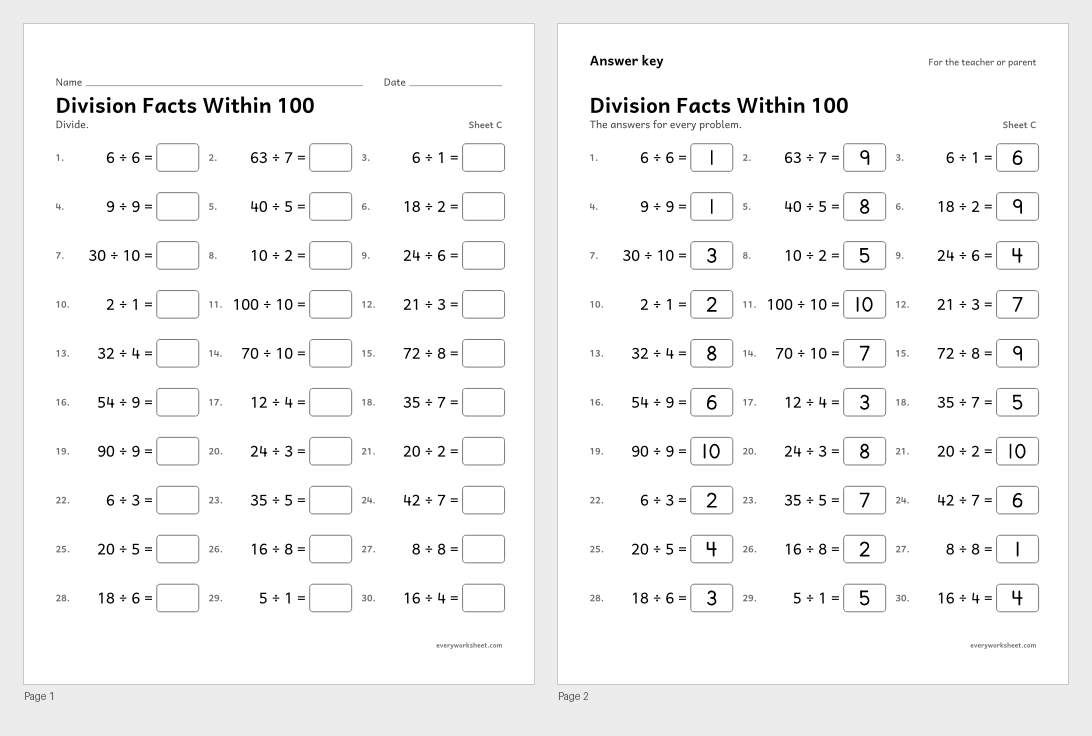 View all 2 pages
Division facts within 100
Answer key on page 2
2 pages126 KB
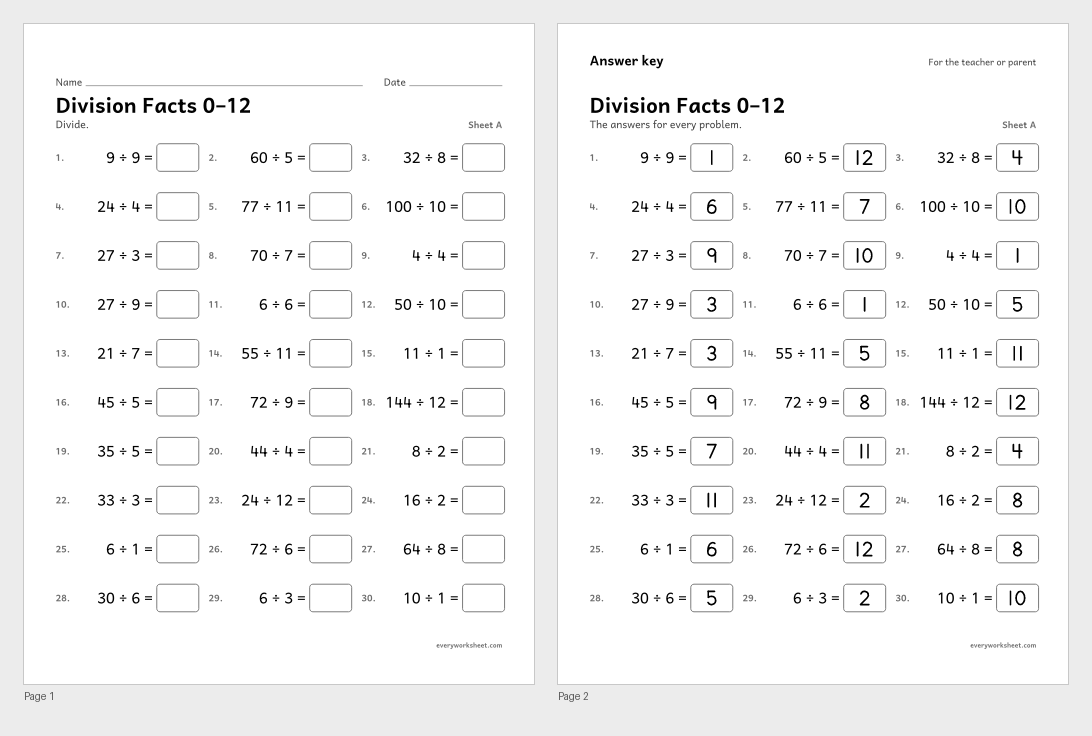 View all 2 pages
Division facts with the 11s and 12s
Answer key on page 2
2 pages126 KB
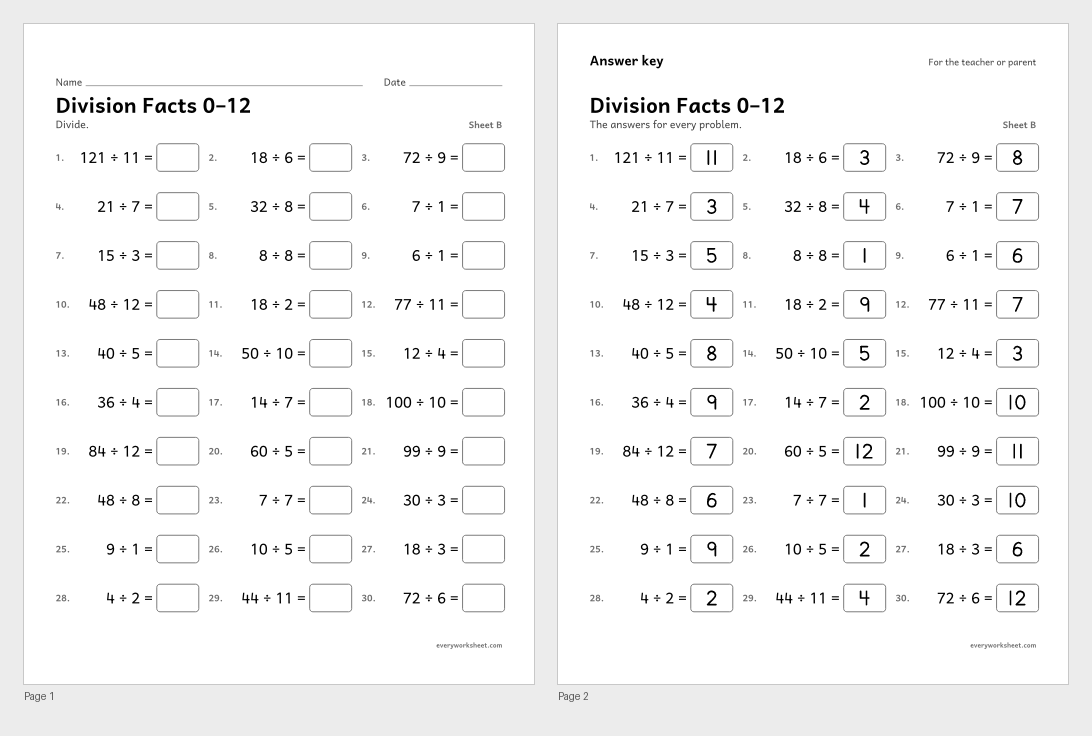 View all 2 pages
Division facts with the 11s and 12s
Answer key on page 2
2 pages126 KB
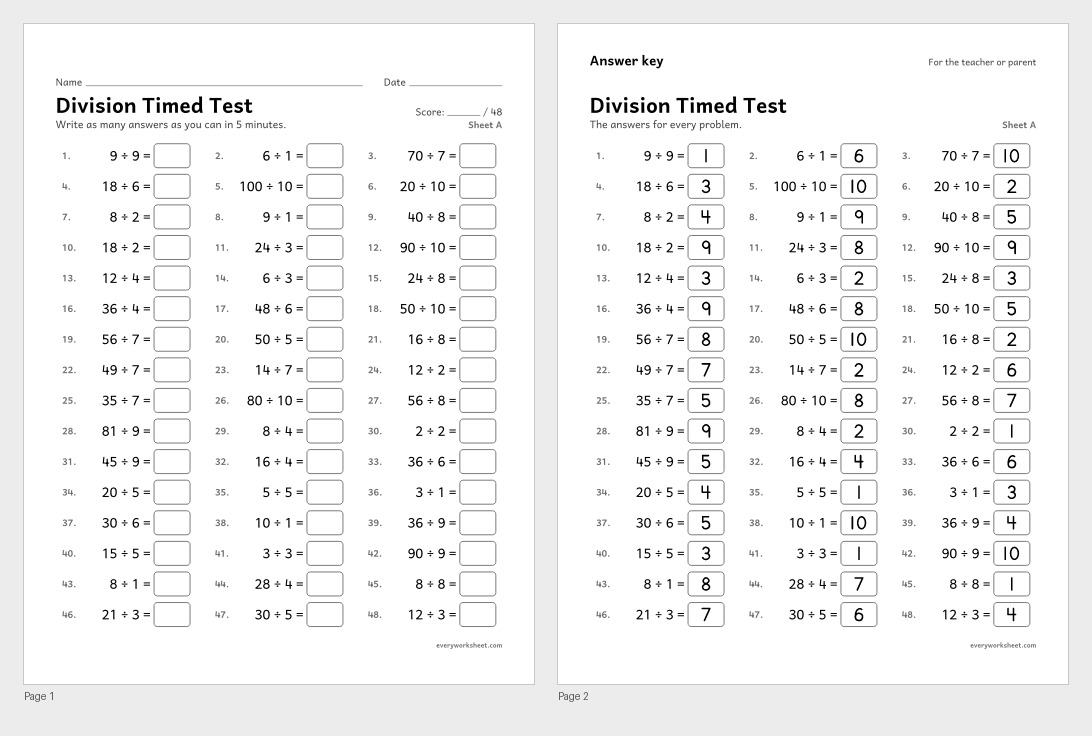 View all 2 pages
Division facts within 100 from memory
Answer key on page 2
2 pages187 KB
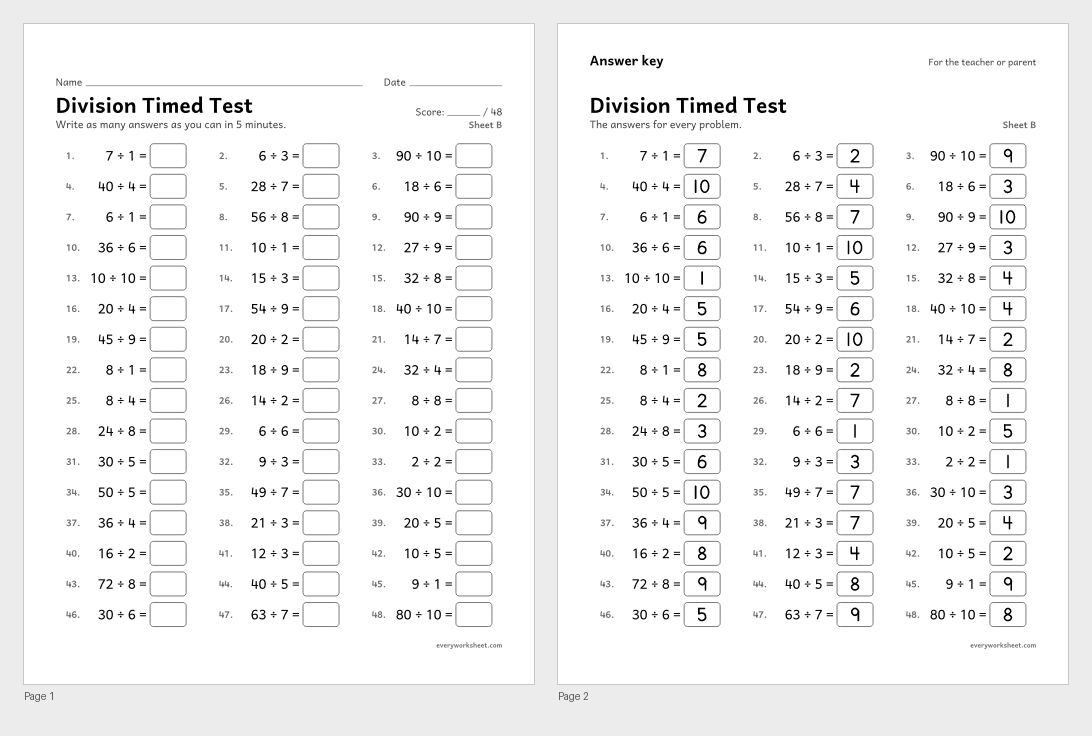 View all 2 pages
Division facts within 100 from memory
Answer key on page 2
2 pages187 KB
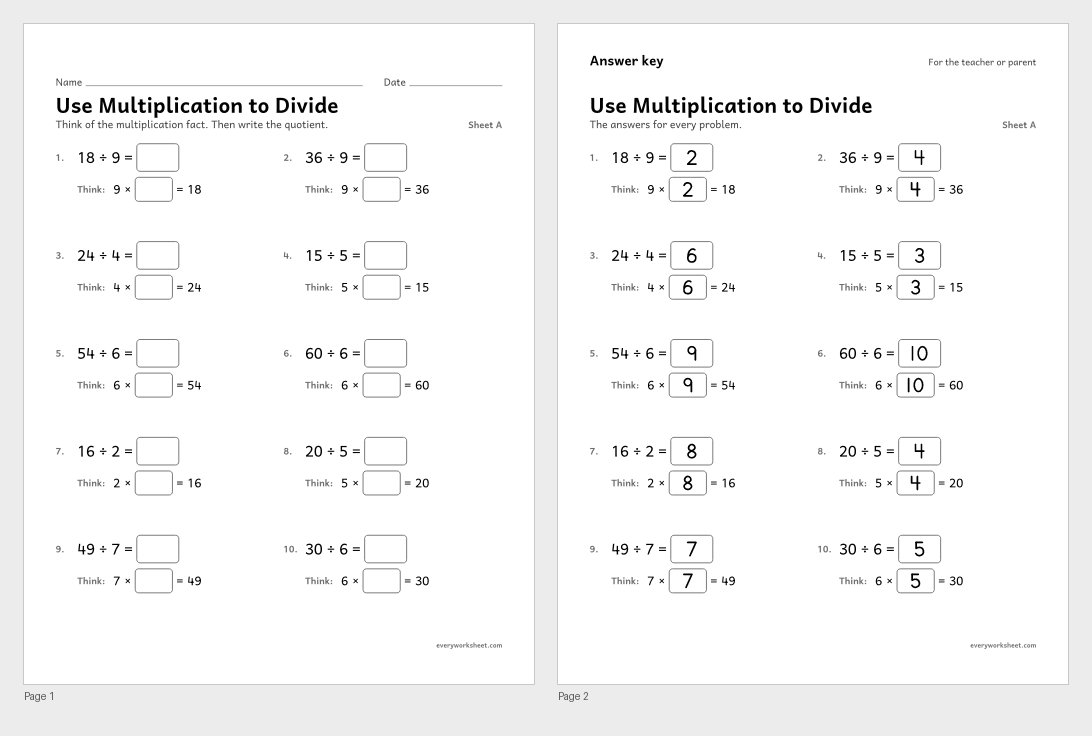 View all 2 pages
Dividing by finding an unknown factor
Answer key on page 2
2 pages97 KB
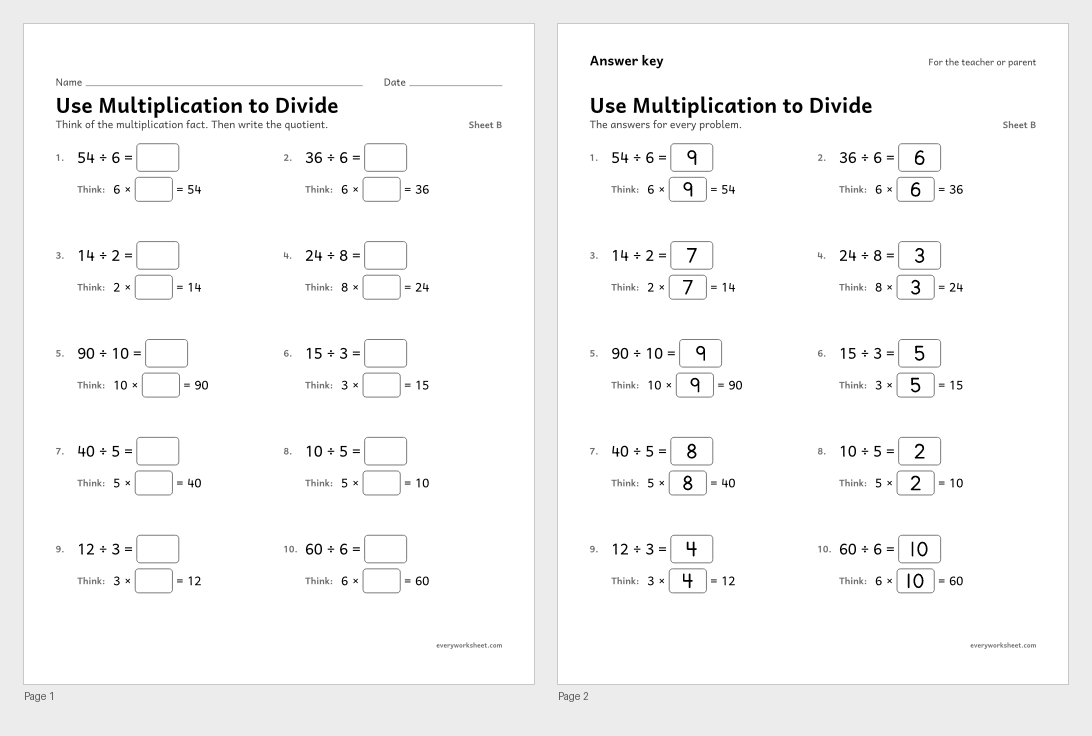 View all 2 pages
Dividing by finding an unknown factor
Answer key on page 2
2 pages98 KB
 View all 2 pages
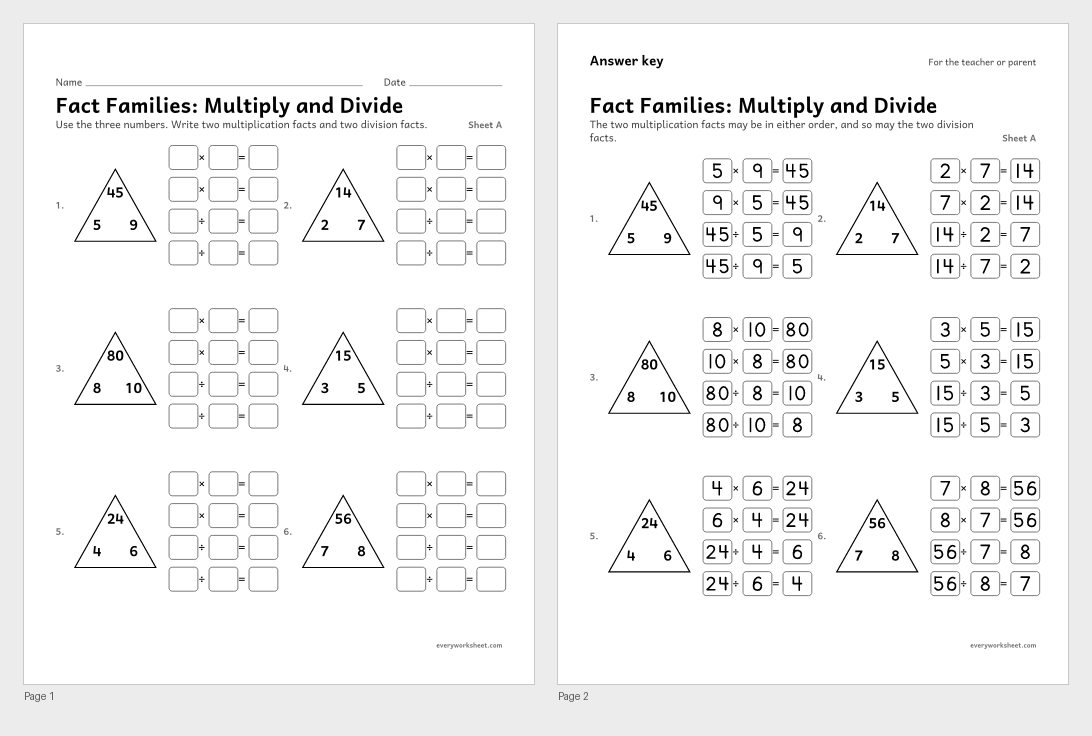
Writing multiplication and division fact families
Answer key on page 2
2 pages83 KB
 View all 2 pages
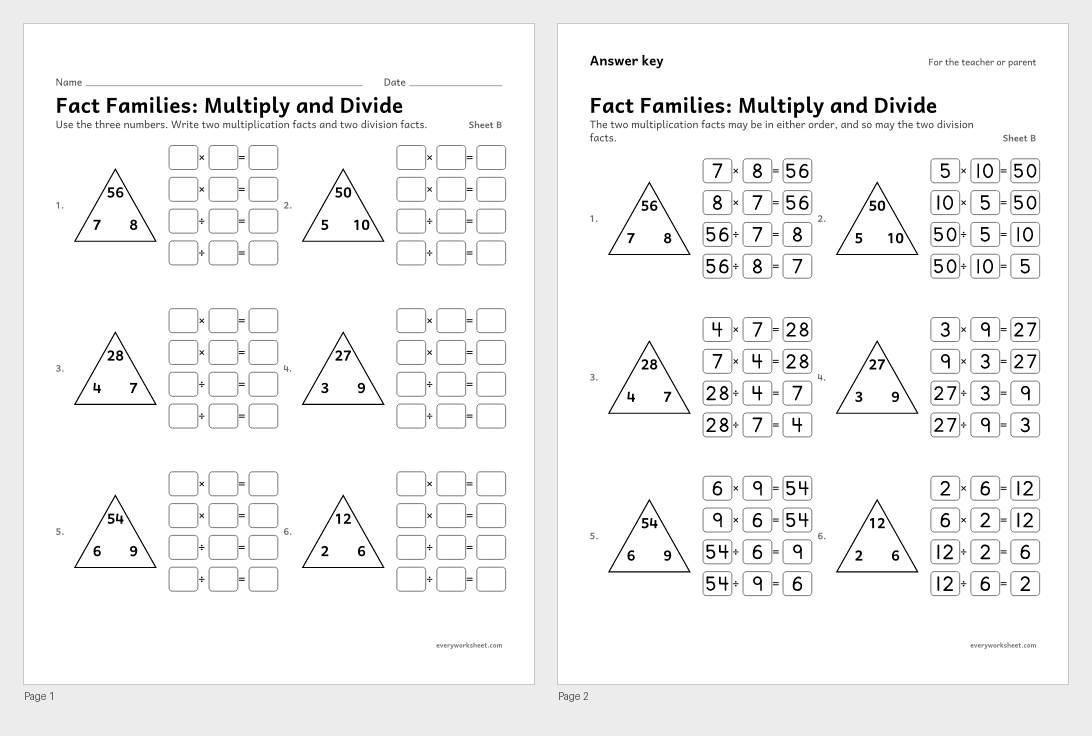
Writing multiplication and division fact families
Answer key on page 2
2 pages83 KB
 View all 2 pages
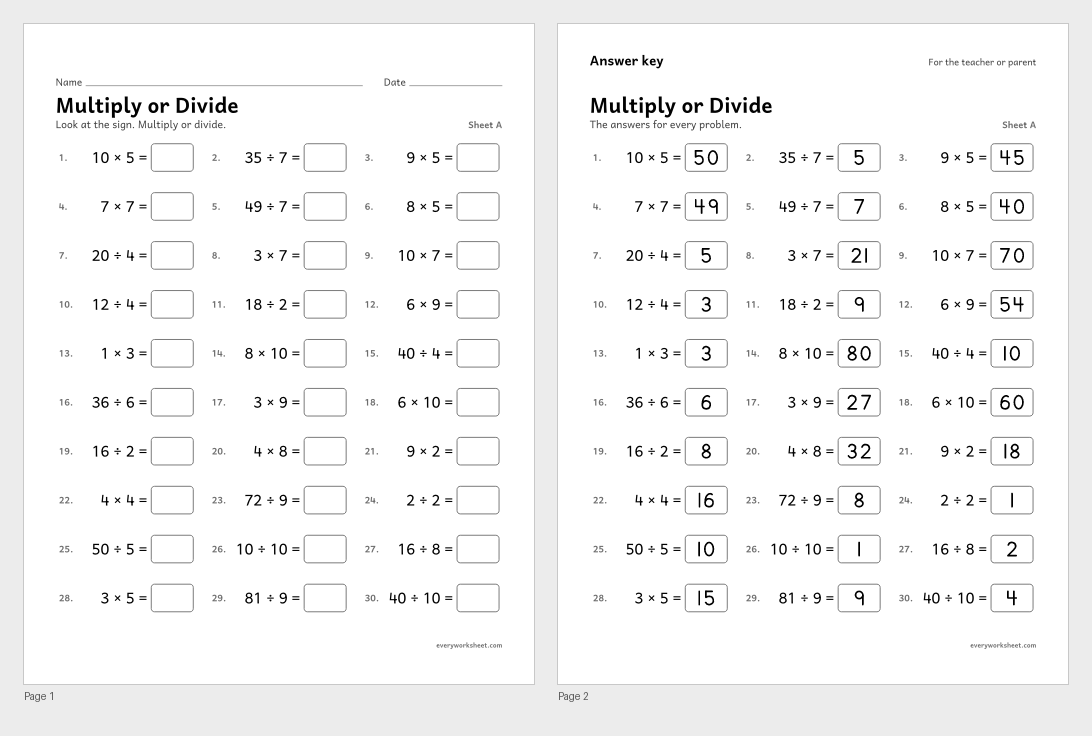
Multiplying and dividing within 100
Answer key on page 2
2 pages127 KB
 View all 2 pages
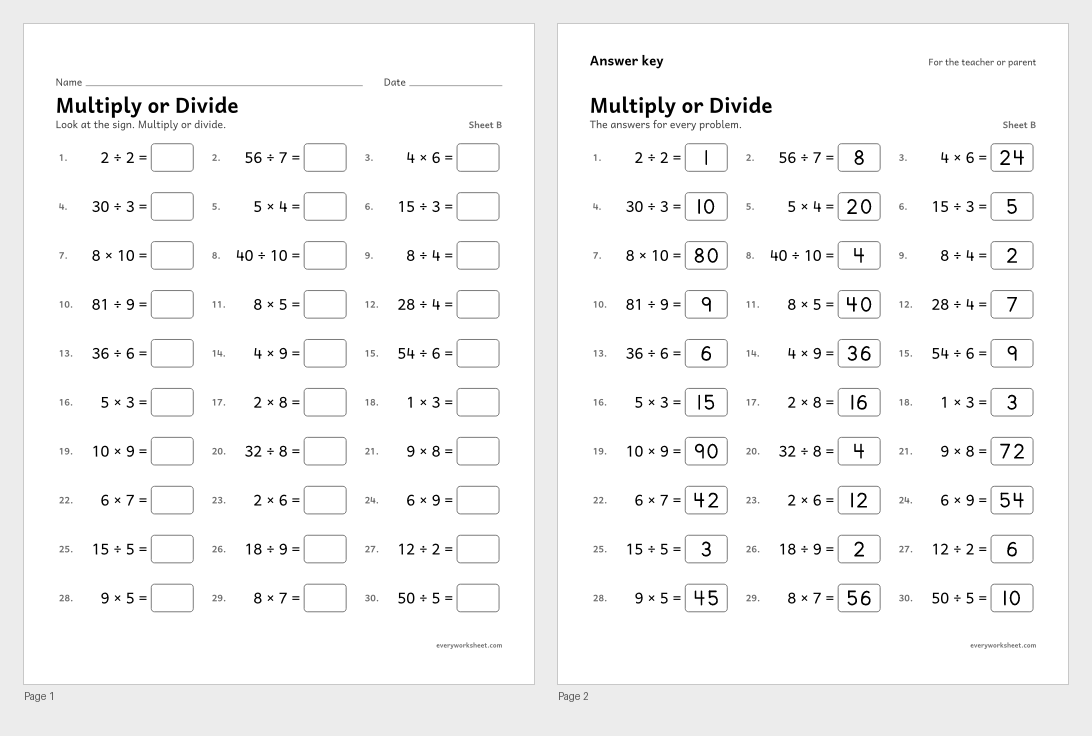
Multiplying and dividing within 100
Answer key on page 2
2 pages128 KB
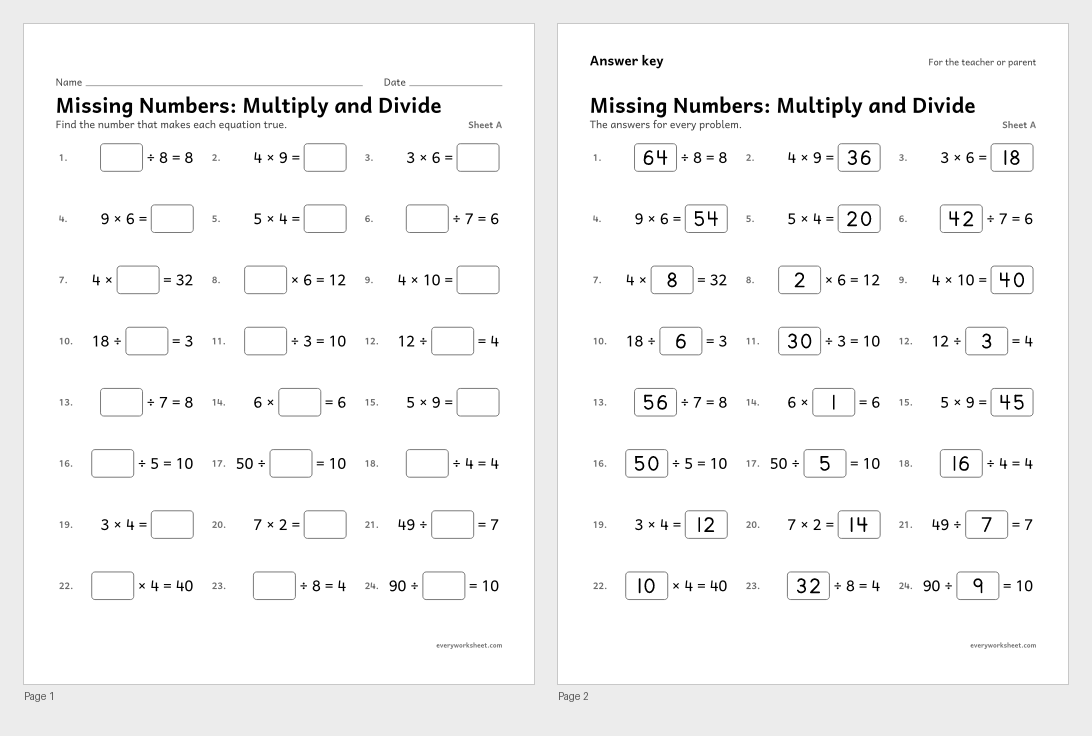 View all 2 pages
Finding the unknown number in multiplication and division equations
Answer key on page 2
2 pages109 KB
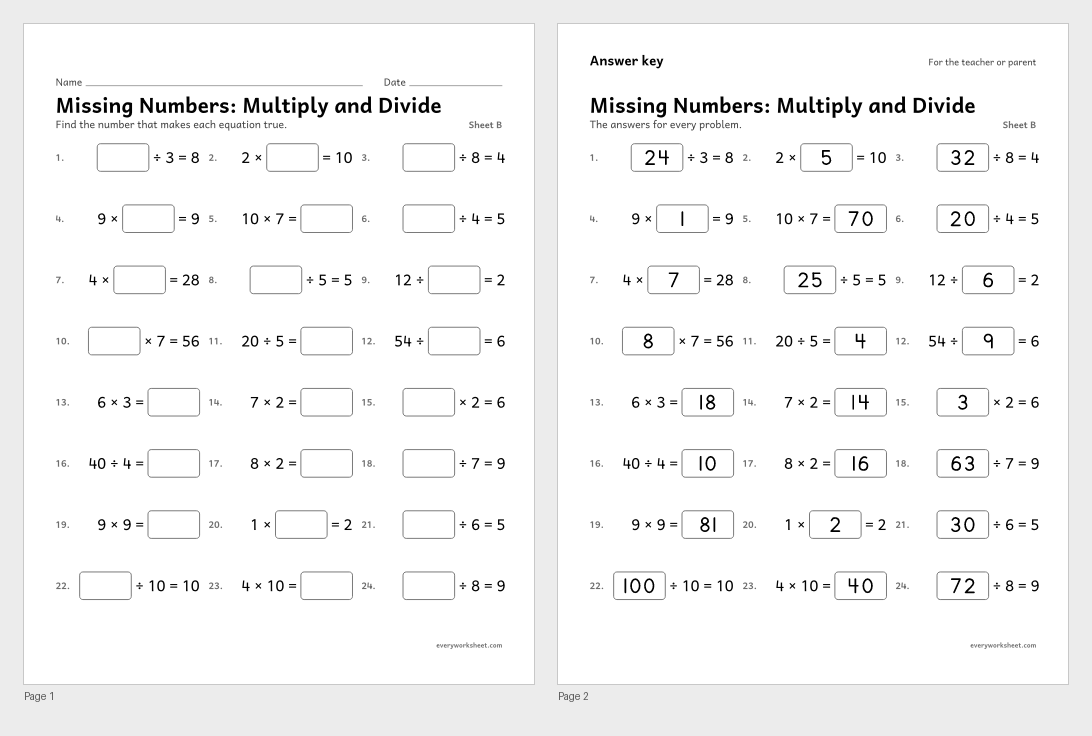 View all 2 pages
Finding the unknown number in multiplication and division equations
Answer key on page 2
2 pages109 KB
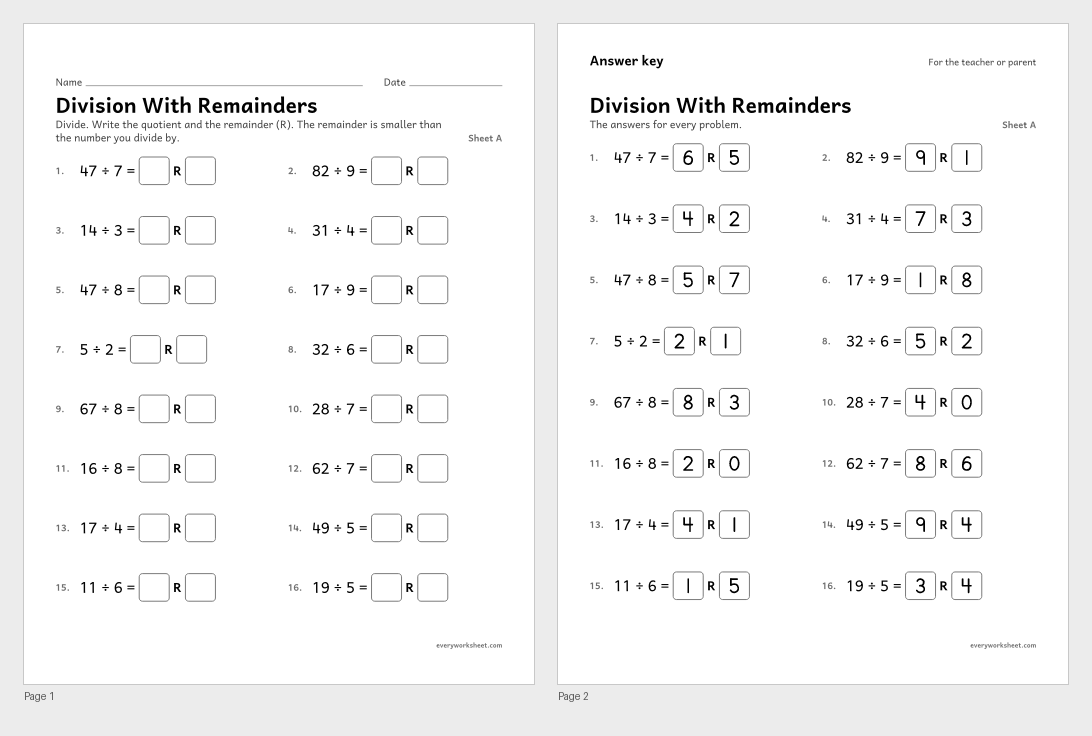 View all 2 pages
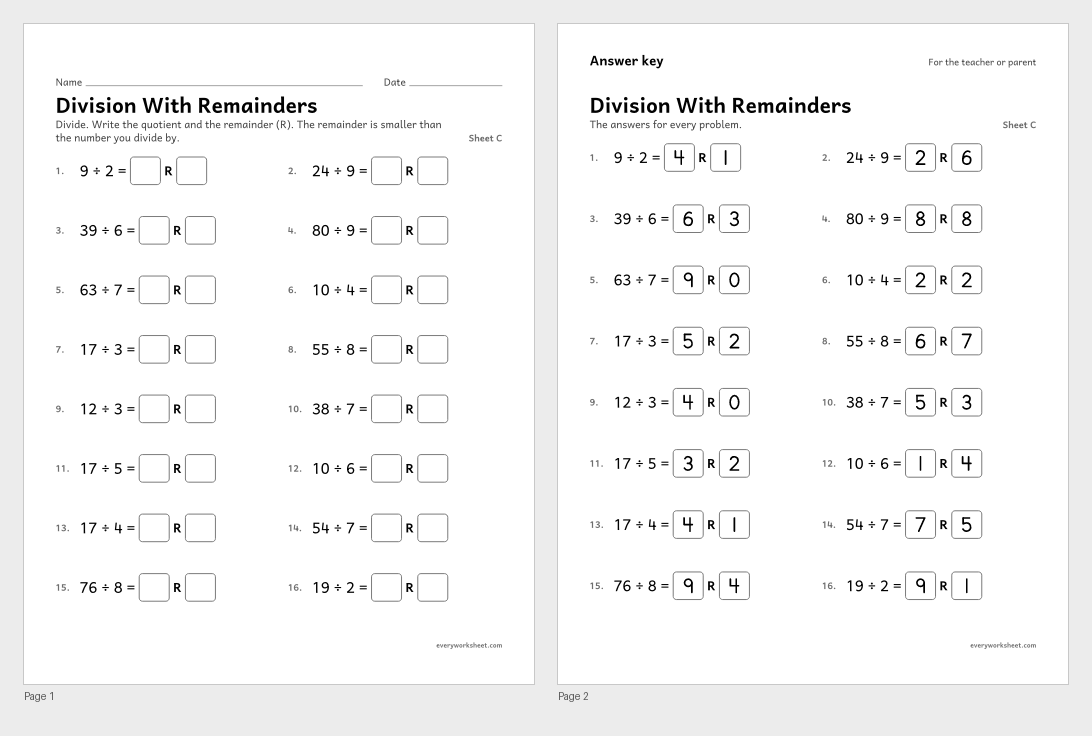
Dividing with a remainder (extension)
Answer key on page 2
2 pages93 KB
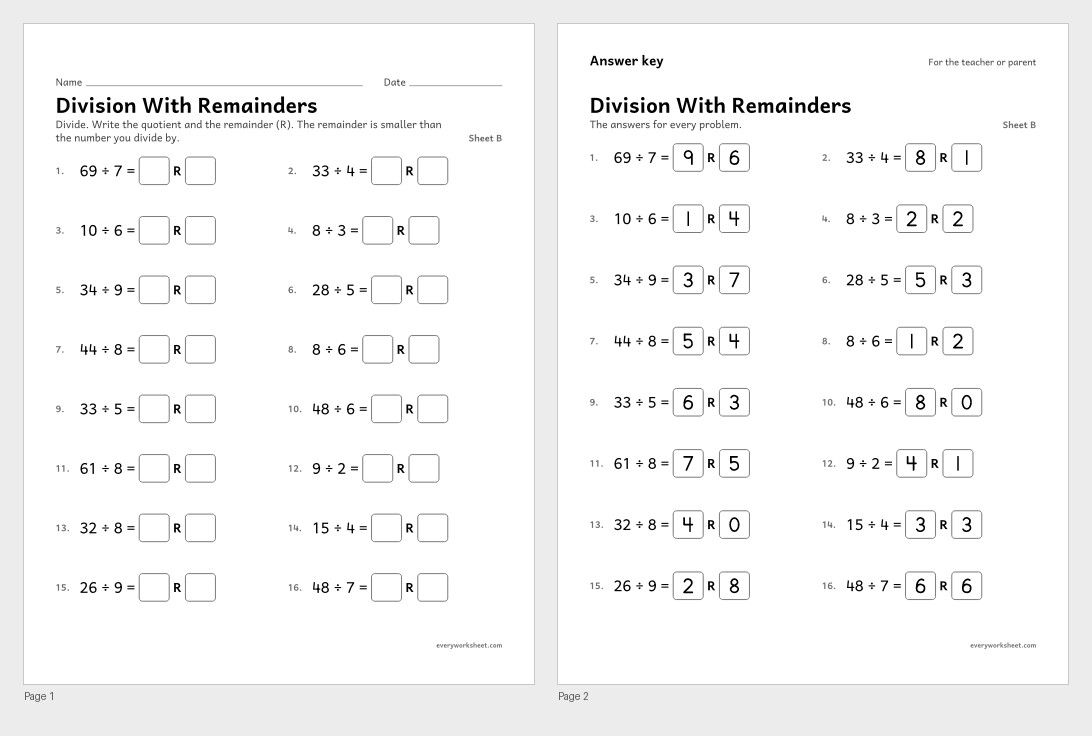 View all 2 pages
Dividing with a remainder (extension)
Answer key on page 2
2 pages93 KB
 View all 2 pages
Dividing with a remainder (extension)
Answer key on page 2
2 pages93 KB
Print at 100% (actual size) for the cleanest tracing lines.
Division asks one of two questions. Sharing: 12 cookies shared equally among 3 friends, how many does each friend get? Grouping: 12 cookies put in bags of 3, how many bags? Both are 12 ÷ 3 = 4. These worksheets start with pictures for both ideas, so children know what division means before they practice the facts.
The key idea of 3rd grade division is that every division fact is a multiplication fact in disguise: to find 56 ÷ 8, ask 8 times what is 56? Pages on related facts and multiplication and division fact families build that link. Fact pages, missing number pages and timed tests then build speed, and an extension page introduces remainders.
Every page has an answer key on page 2. All pages print in black and white on US Letter or A4, and most come in two or three versions.
CCSS.MATH.CONTENT.3.OA.A.2Interpret whole-number quotients of whole numbers, e.g., interpret 56 ÷ 8 as the number of objects in each share when 56 objects are partitioned equally into 8 shares, or as a number of shares when 56 objects are partitioned into equal shares of 8 objects each. For example, describe a context in which a number of shares or a number of groups can be expressed as 56 ÷ 8.CCSS.MATH.CONTENT.3.OA.A.4Determine the unknown whole number in a multiplication or division equation relating three whole numbers. For example, determine the unknown number that makes the equation true in each of the equations 8 × ? = 48, 5 = _ ÷ 3, 6 × 6 = ?CCSS.MATH.CONTENT.3.OA.B.6Understand division as an unknown-factor problem. For example, find 32 ÷ 8 by finding the number that makes 32 when multiplied by 8.CCSS.MATH.CONTENT.3.OA.C.7Fluently multiply and divide within 100, using strategies such as the relationship between multiplication and division (e.g., knowing that 8 × 5 = 40, one knows 40 ÷ 5 = 8) or properties of operations. By the end of Grade 3, know from memory all products of two one-digit numbers.Division is sharing equally or making equal groups. 15 ÷ 3 can mean 15 things shared among 3 people (5 each) or 15 things put in groups of 3 (5 groups). Counters and drawings make both meanings easy to see.
They undo each other. If 6 × 7 = 42, then 42 ÷ 7 = 6 and 42 ÷ 6 = 7. The three numbers 6, 7 and 42 make a fact family with two multiplication facts and two division facts.
The 3rd grade standards cover division facts within 100 with no remainder. Remainders are formally taught in 4th grade, so our remainder page is an extension for children who are ready.
Yes. Every page has an answer key on page 2 of the PDF.