 View larger
Economics for kids Poster: key words
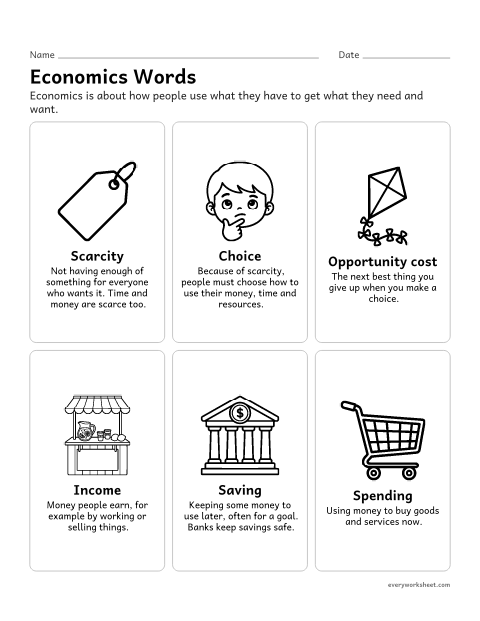
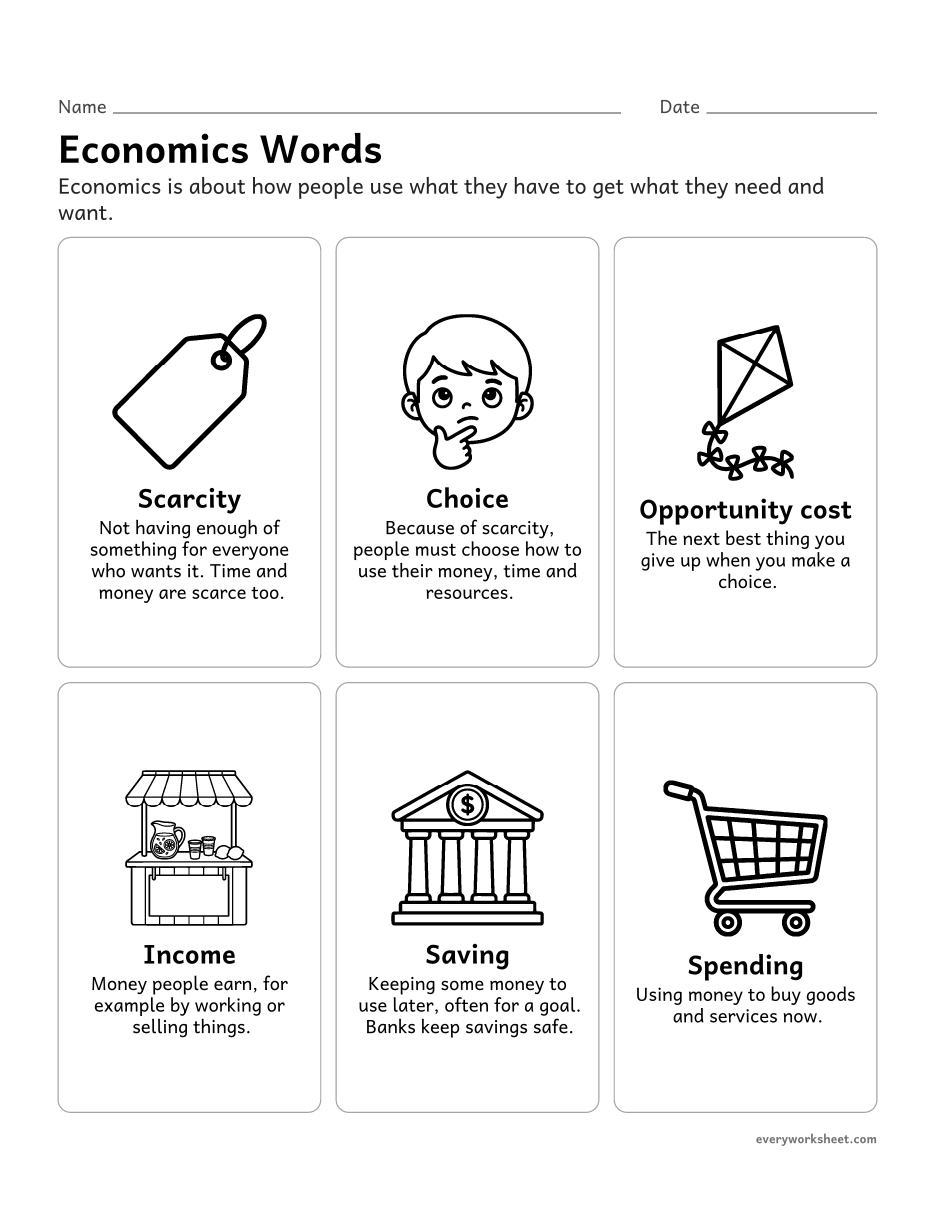
Defining scarcity, choice, opportunity cost, income, saving and spending
1 page128 KB
Scarcity and choices, opportunity cost, benefits and costs, saving for a goal, natural, human and capital resources, and why people trade.
View largerDefining scarcity, choice, opportunity cost, income, saving and spending
1 page128 KB
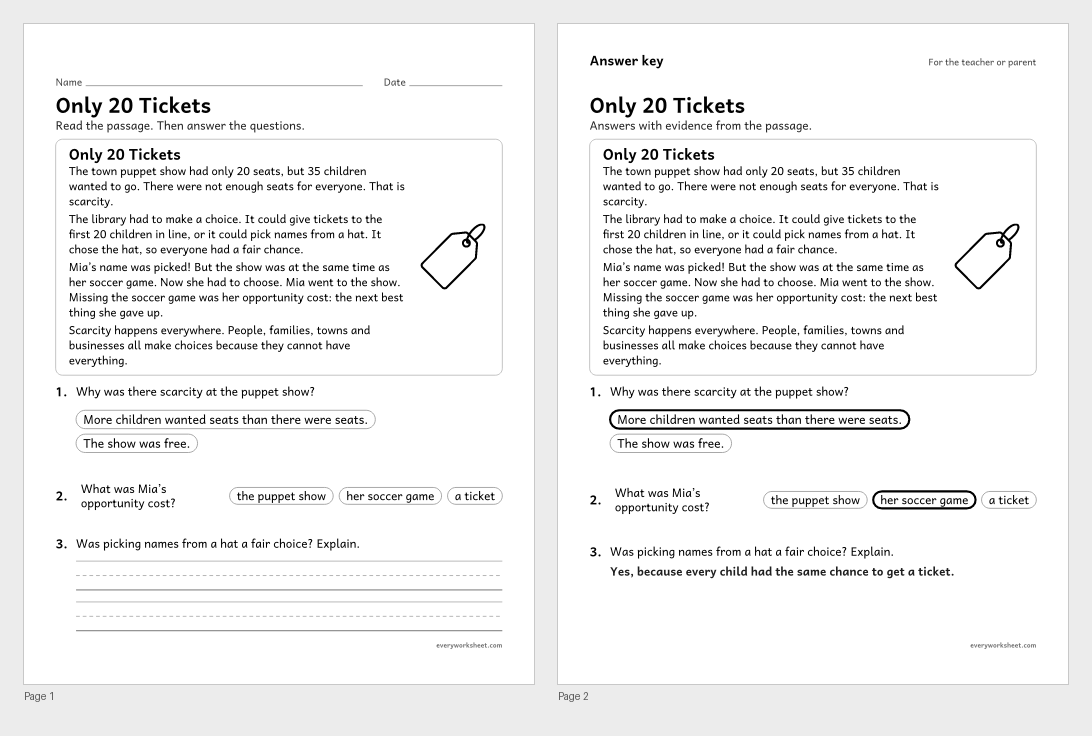 View all 2 pages
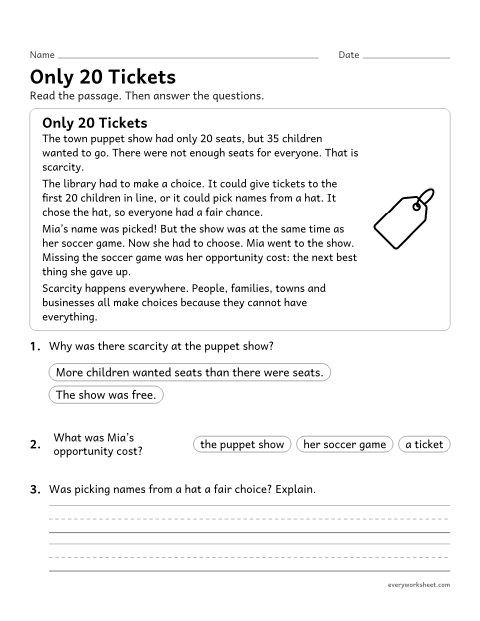
Reading about how scarcity forces people to make choices
Answer key on page 2
2 pages49 KB
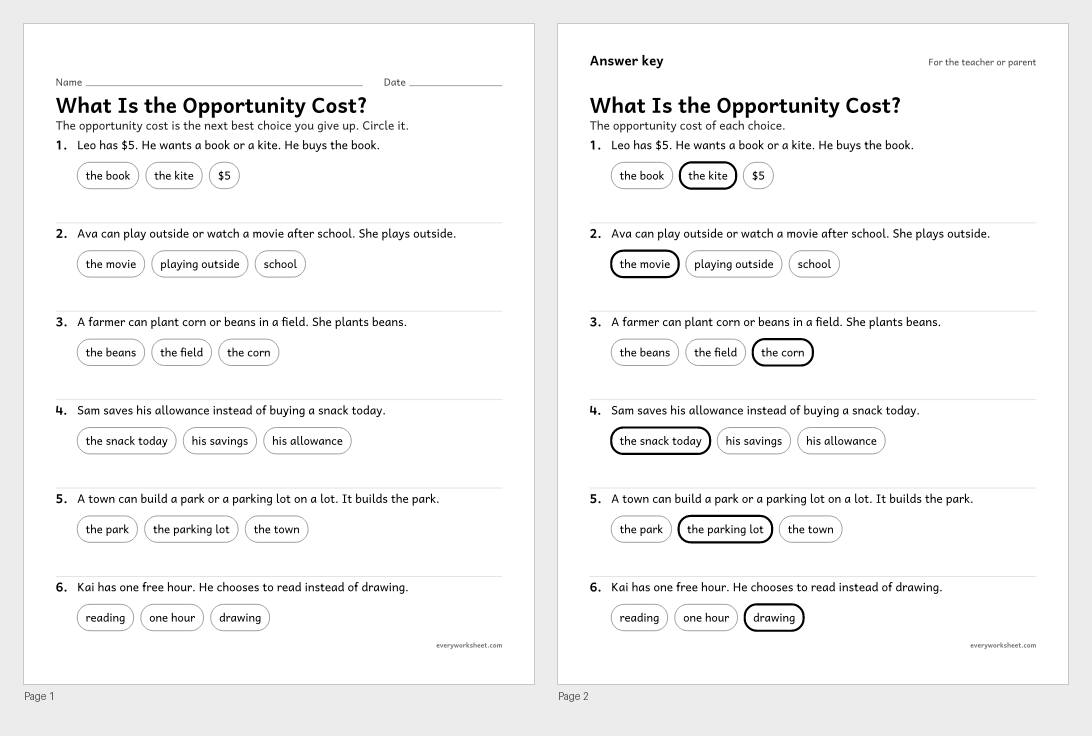 View all 2 pages
Identifying the opportunity cost of a choice
Answer key on page 2
2 pages39 KB
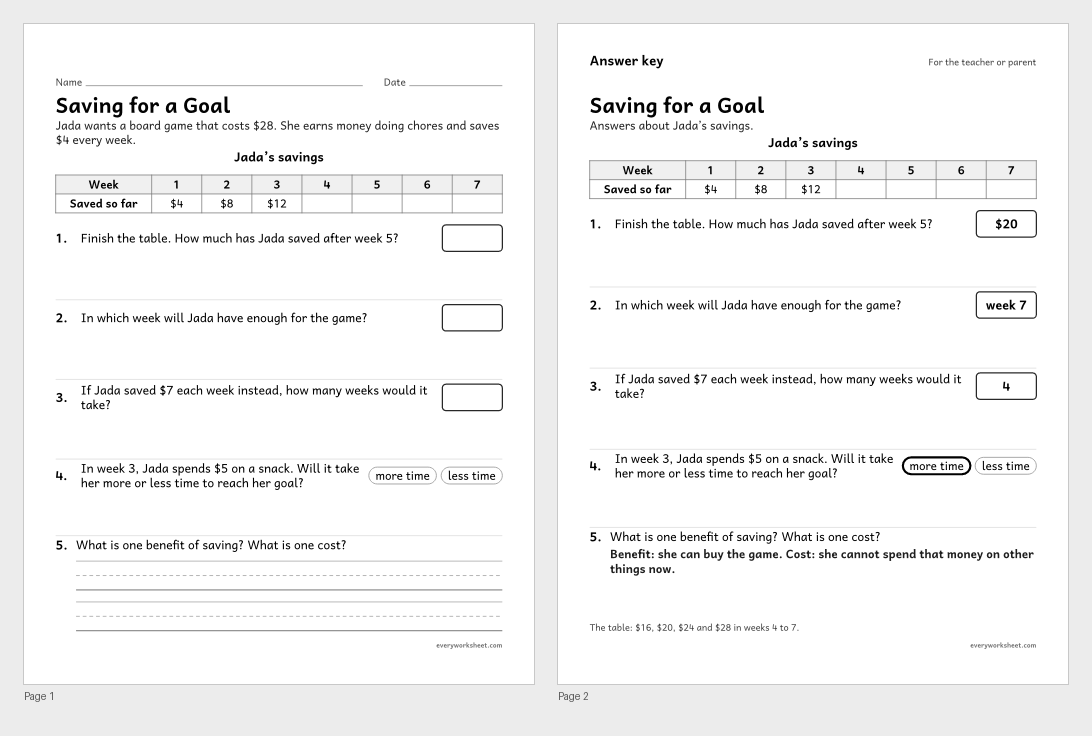 View all 2 pages
Planning how long it takes to save for a goal
Answer key on page 2
2 pages47 KB
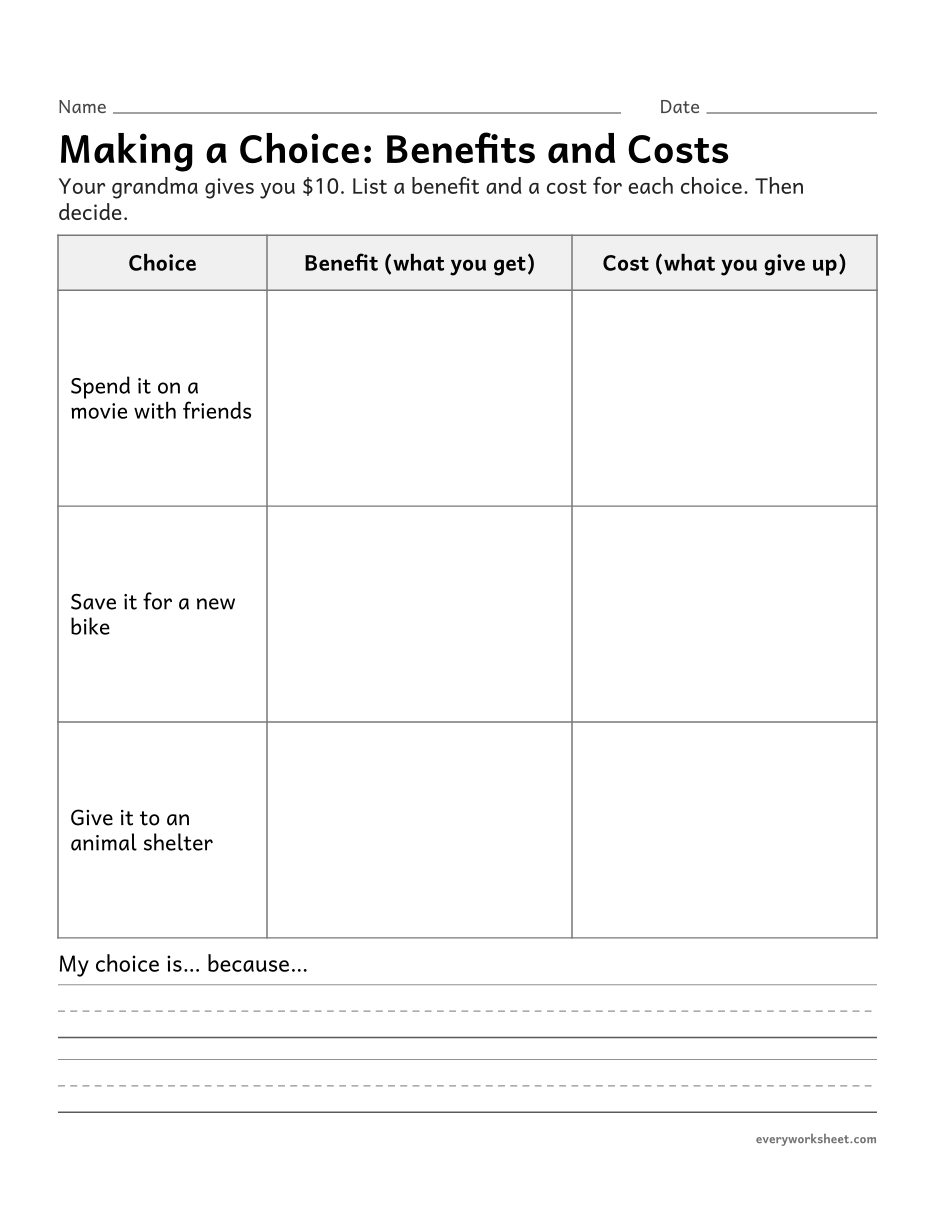 View larger
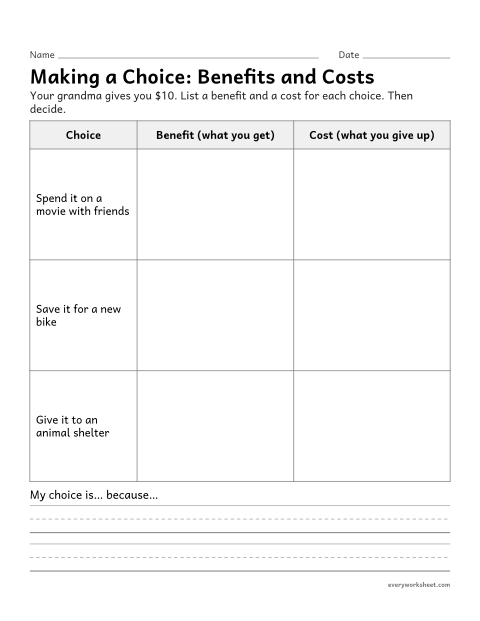
Comparing the benefits and costs of individual choices
1 page29 KB
 View all 2 pages
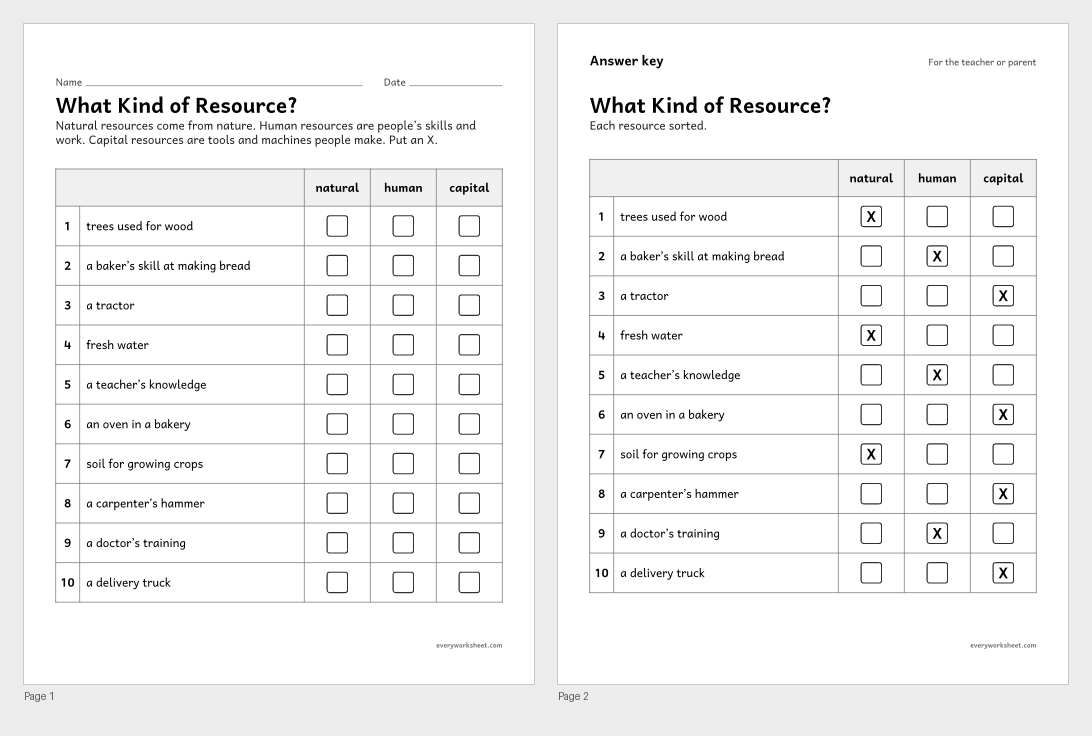
Sorting the resources used to make goods and services
Answer key on page 2
2 pages49 KB
 View all 2 pages
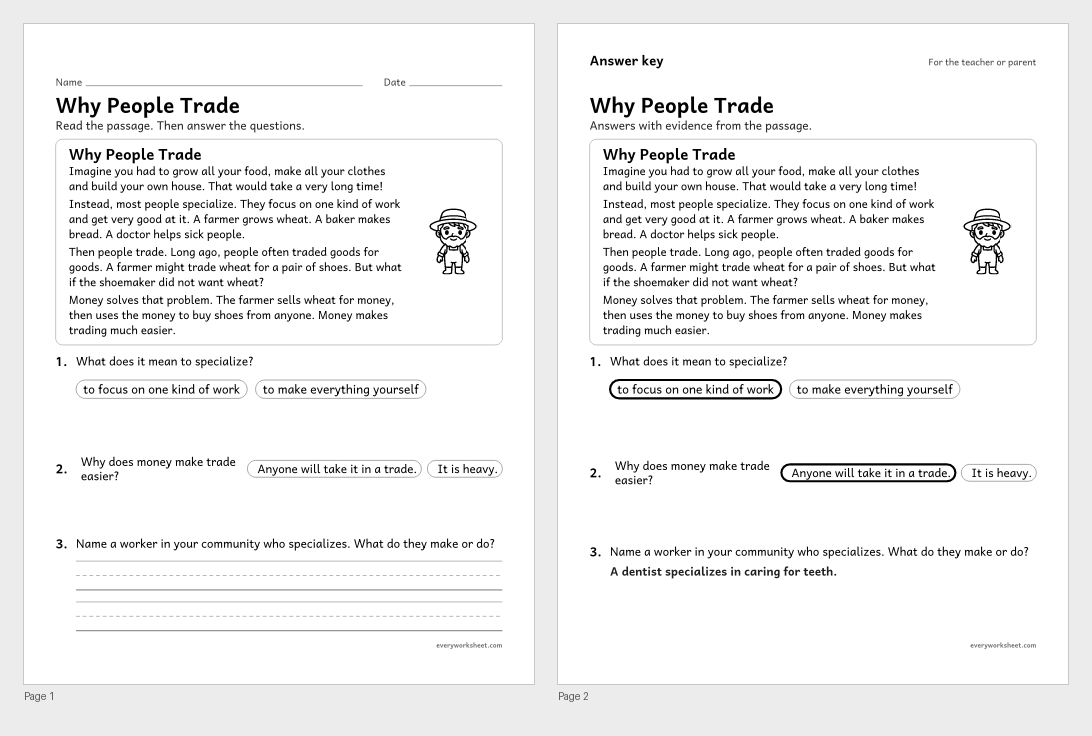
Reading about why people specialize and trade and how money makes trade easier
Answer key on page 2
2 pages88 KB
 View all 2 pages
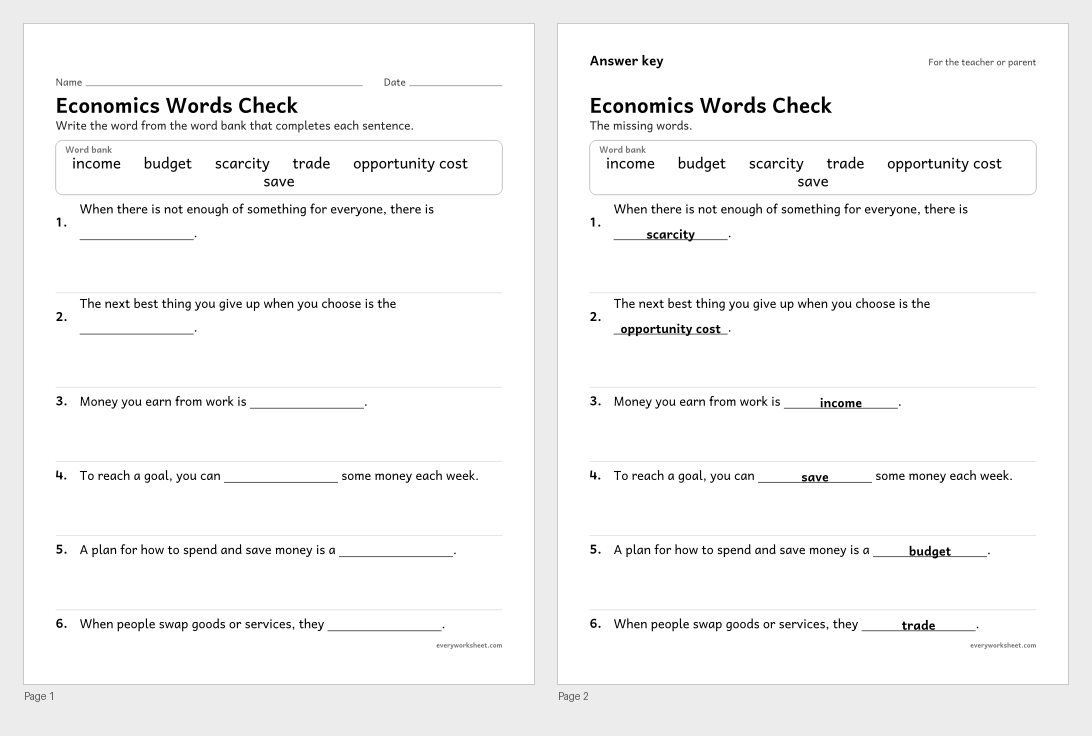
Using economics vocabulary in context
Answer key on page 2
2 pages36 KB
 View all 2 pages
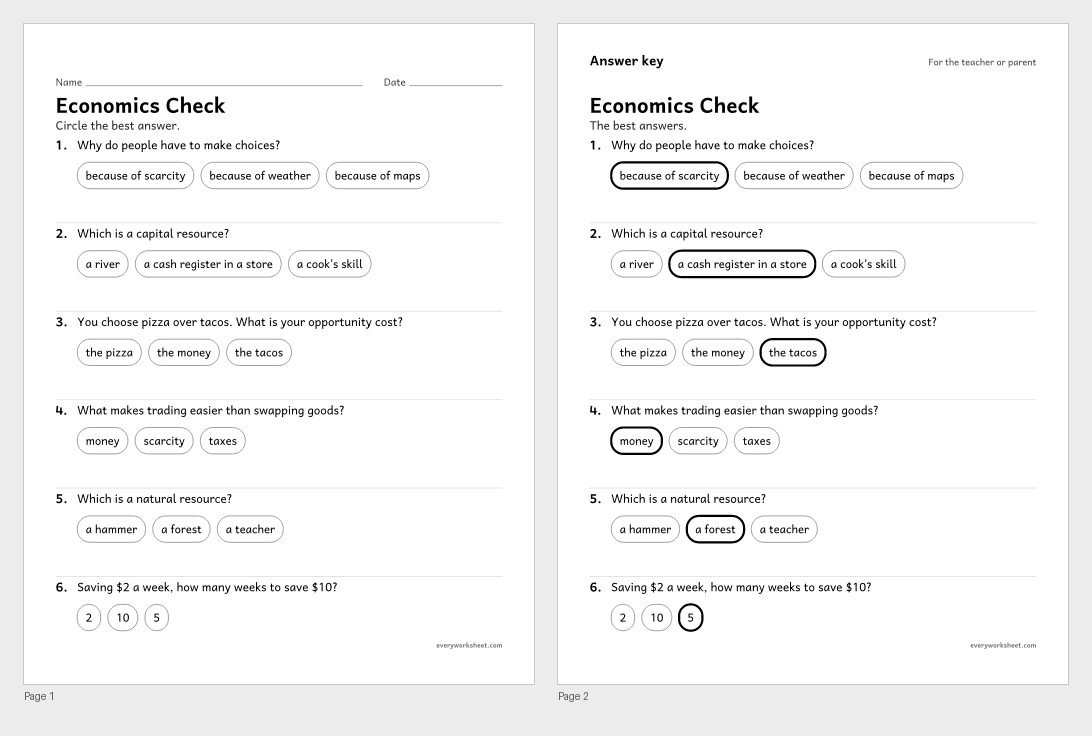
Reviewing scarcity, choices, opportunity cost, resources and money
Answer key on page 2
2 pages39 KB
Print at 100% (actual size) for the cleanest tracing lines.
Economics starts with a simple fact: there is never enough of everything for everyone. That is scarcity, and it means people must make choices. Third graders learn to name the opportunity cost of a choice, weigh benefits and costs, and plan how long it takes to save for a goal.
These economics worksheets for kids include a vocabulary poster, a reading passage about scarce tickets, an opportunity cost page, a saving goal planner, a resources sort, a benefits and costs chart, and a passage about why people specialize and trade and how money makes trade easier.
Every page is black and white, prints on US Letter or A4, and every page with right answers has an answer key on page 2.
C3 D2.Eco.1.3-5Compare the benefits and costs of individual choices.C3 D2.Eco.3.3-5Identify examples of the variety of resources (human capital, physical capital, and natural resources) that are used to produce goods and services.C3 D2.Eco.4.3-5Explain why individuals and businesses specialize and trade.CCSS.ELA-LITERACY.RI.3.4Determine the meaning of general academic and domain-specific words and phrases in a text relevant to a grade 3 topic or subject area.Scarcity means there is not enough of something for everyone who wants it, like seats at a show, money or time. Because of scarcity, people have to make choices.
Opportunity cost is the next best thing you give up when you make a choice. If you buy a book instead of a kite, the kite is your opportunity cost.
Natural resources come from nature, like water and trees. Human resources are people’s skills and work. Capital resources are tools, machines and buildings people make to produce goods and services.