Engineering Design Process Worksheets

7 free PDFsUS Letter PDFsAnswer key includedNo login

The steps engineers follow, criteria and constraints, fair tests, comparing designs with data, and a planner for any building challenge.

Download the engineering design worksheets

The design process

A poster and the steps in order, as cut and paste or a no-cut twin.

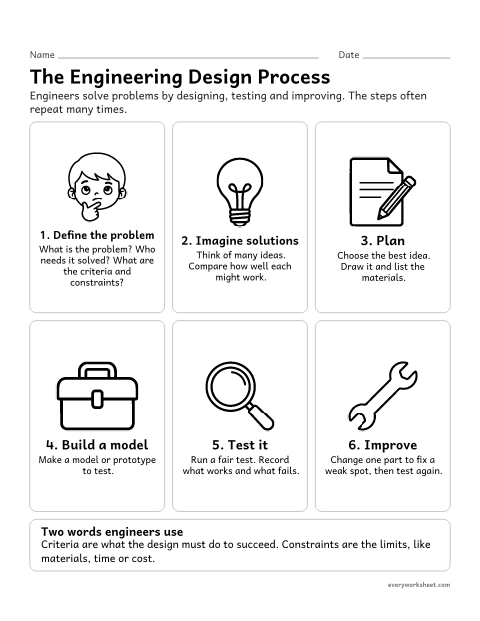
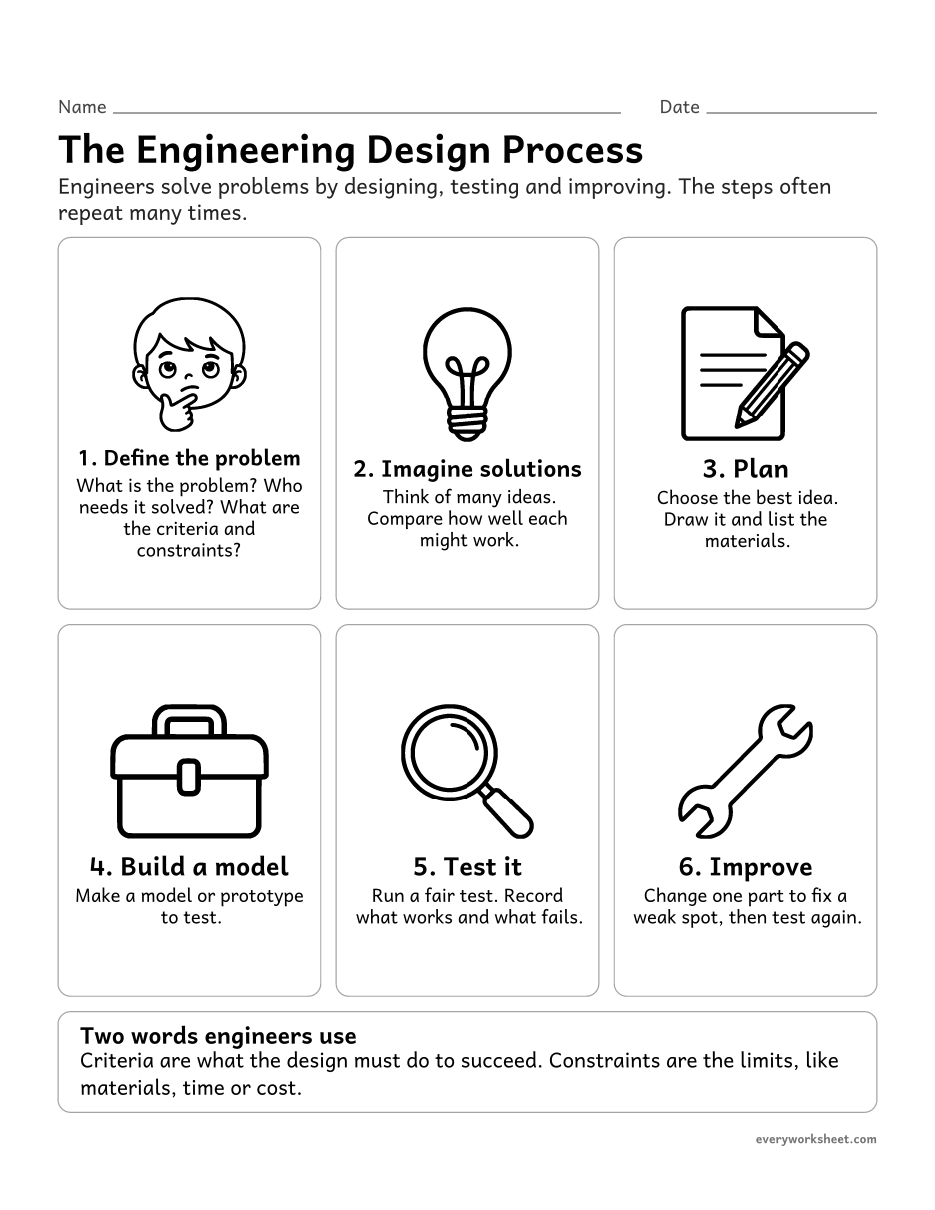
  • Preview of the printable “Engineering design process poster for kids” worksheet: describing the steps engineers use to solve problemsView larger

    Engineering design process poster for kids

    Describing the steps engineers use to solve problems

    1 page104 KB
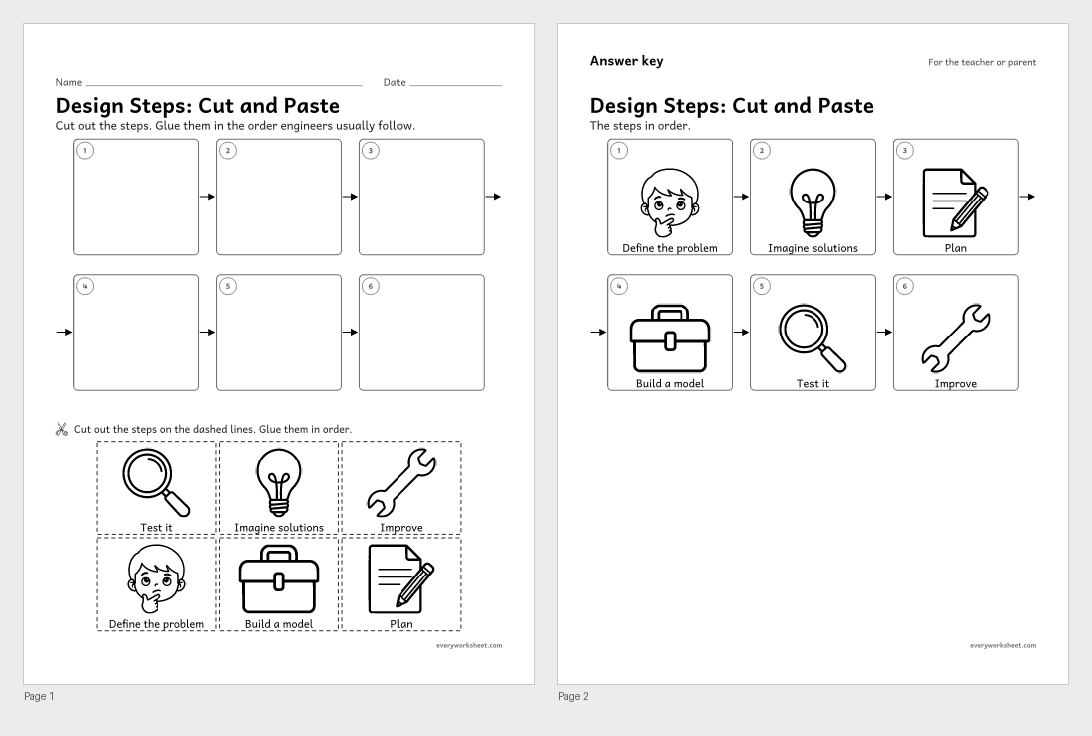
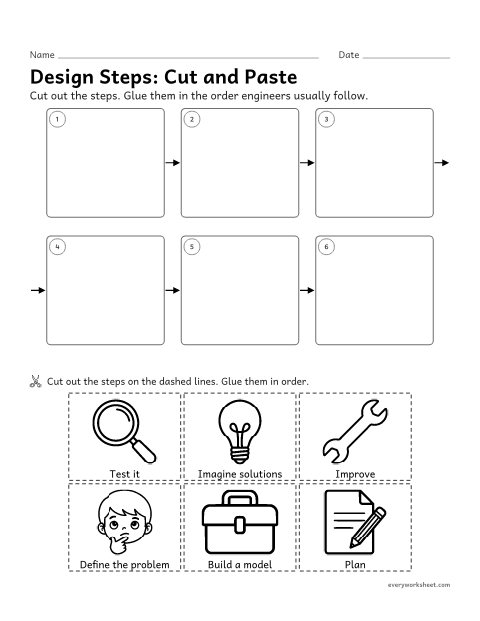
  • Preview of the printable “Engineering design process cut and paste” worksheet: sequencing the steps of the engineering design processView all 2 pages

    Engineering design process cut and paste

    Sequencing the steps of the engineering design process

    Answer key on page 2

    2 pages212 KB
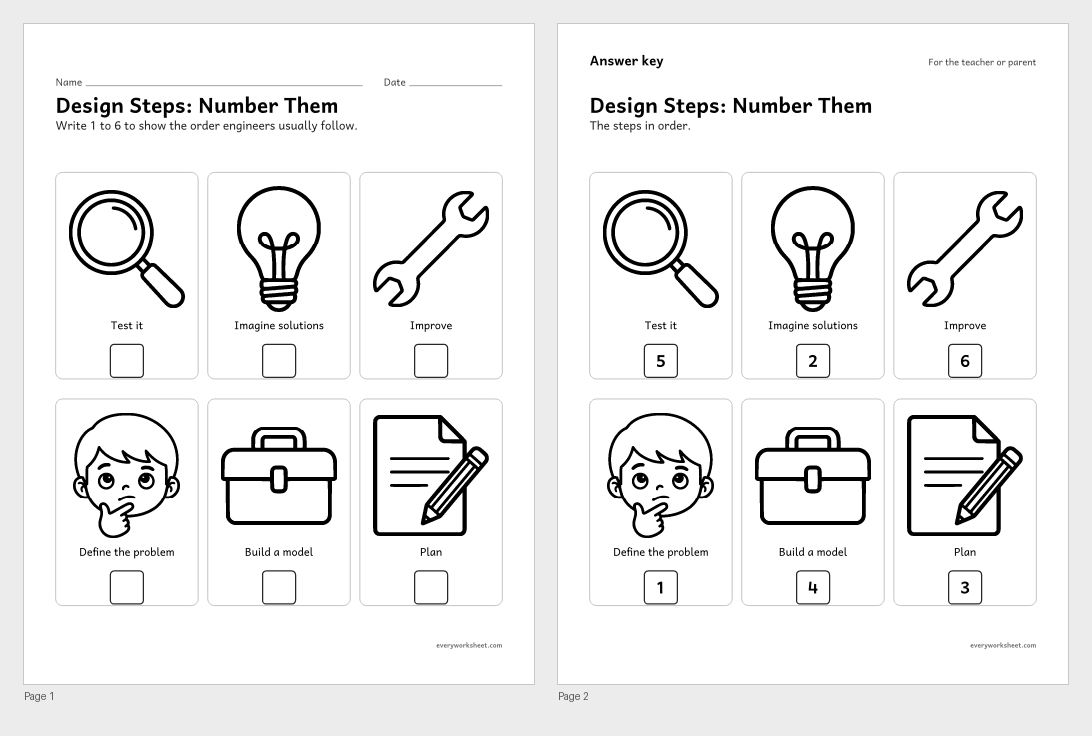
  • Preview of the printable “Engineering design process Worksheet: number the steps” worksheet: sequencing the steps of the engineering design processView all 2 pages

    Engineering design process Worksheet: number the steps

    Sequencing the steps of the engineering design process

    Answer key on page 2

    2 pages179 KB
Plan and test

Criteria or constraint, fair tests, paper bridge data and a blank challenge planner.

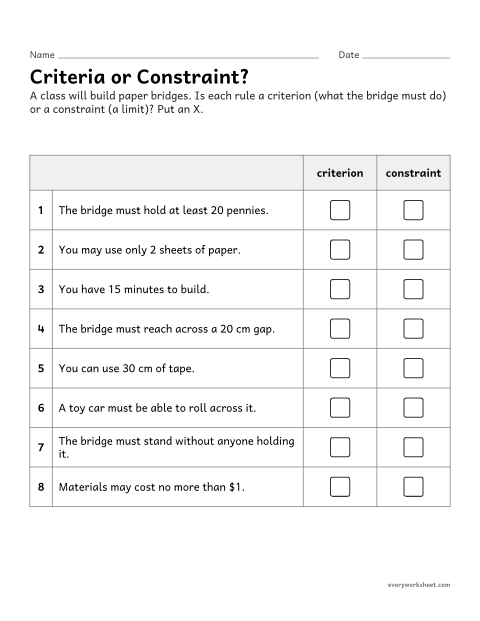
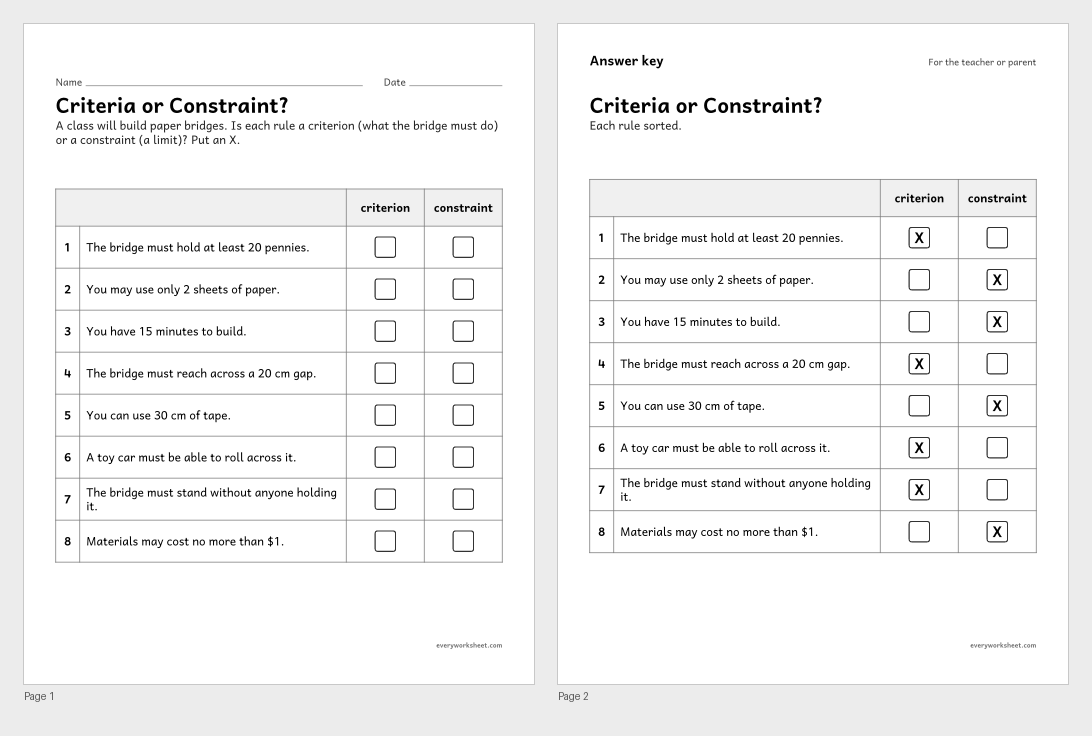
  • Preview of the printable “Criteria and constraints sort worksheet” worksheet: sorting the requirements of a design problem into criteria and constraintsView all 2 pages

    Criteria and constraints sort worksheet

    Sorting the requirements of a design problem into criteria and constraints

    Answer key on page 2

    2 pages43 KB
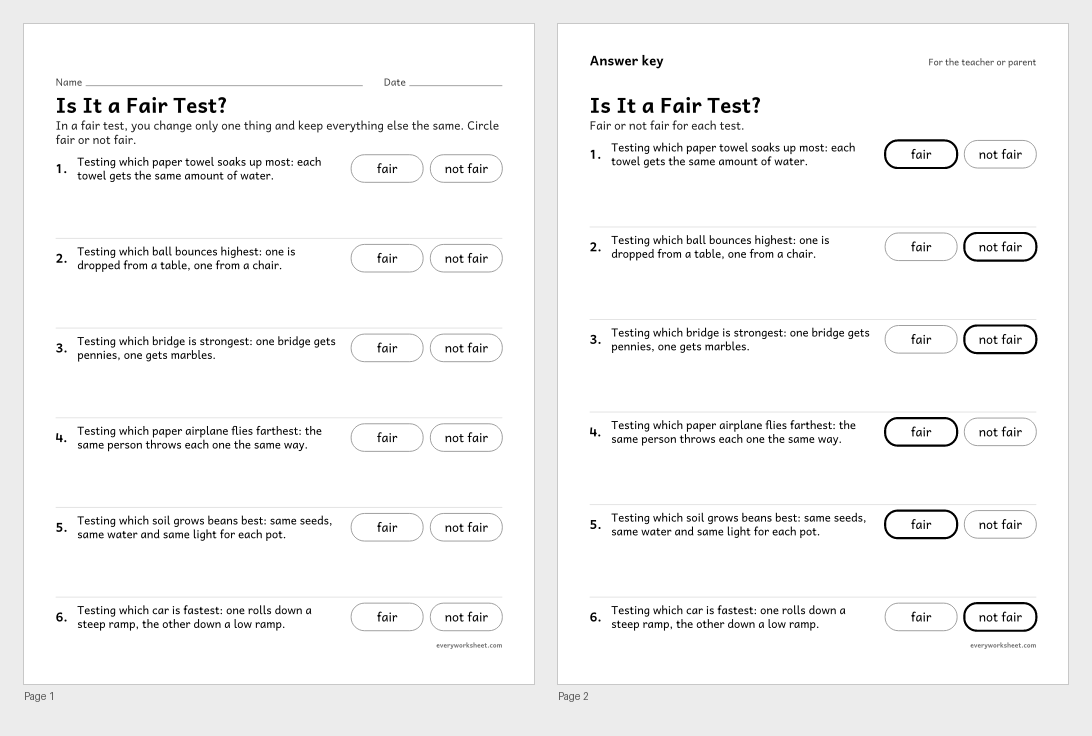
  • Preview of the printable “Fair test worksheet for 3rd grade” worksheet: identifying fair tests in which only one variable changesView all 2 pages

    Fair test worksheet for 3rd grade

    Identifying fair tests in which only one variable changes

    Answer key on page 2

    2 pages40 KB
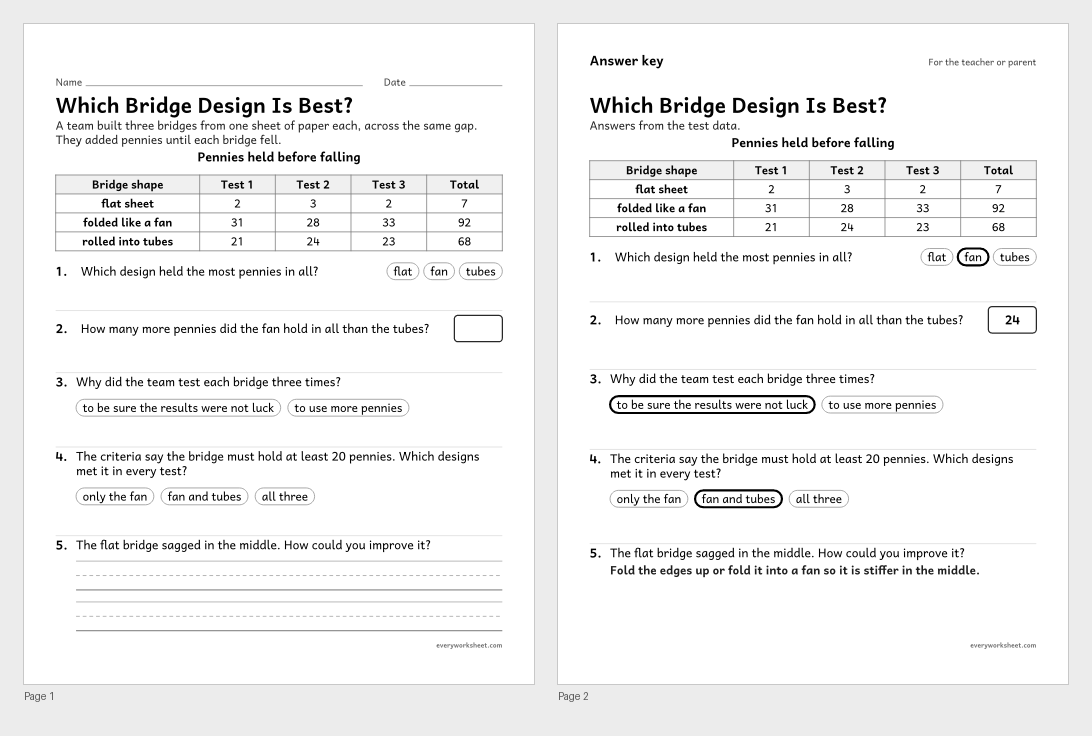
  • Preview of the printable “Engineering Design: compare paper bridge designs” worksheet: comparing test data from several designs to judge which best meets the criteriaView all 2 pages

    Engineering Design: compare paper bridge designs

    Comparing test data from several designs to judge which best meets the criteria

    Answer key on page 2

    2 pages49 KB
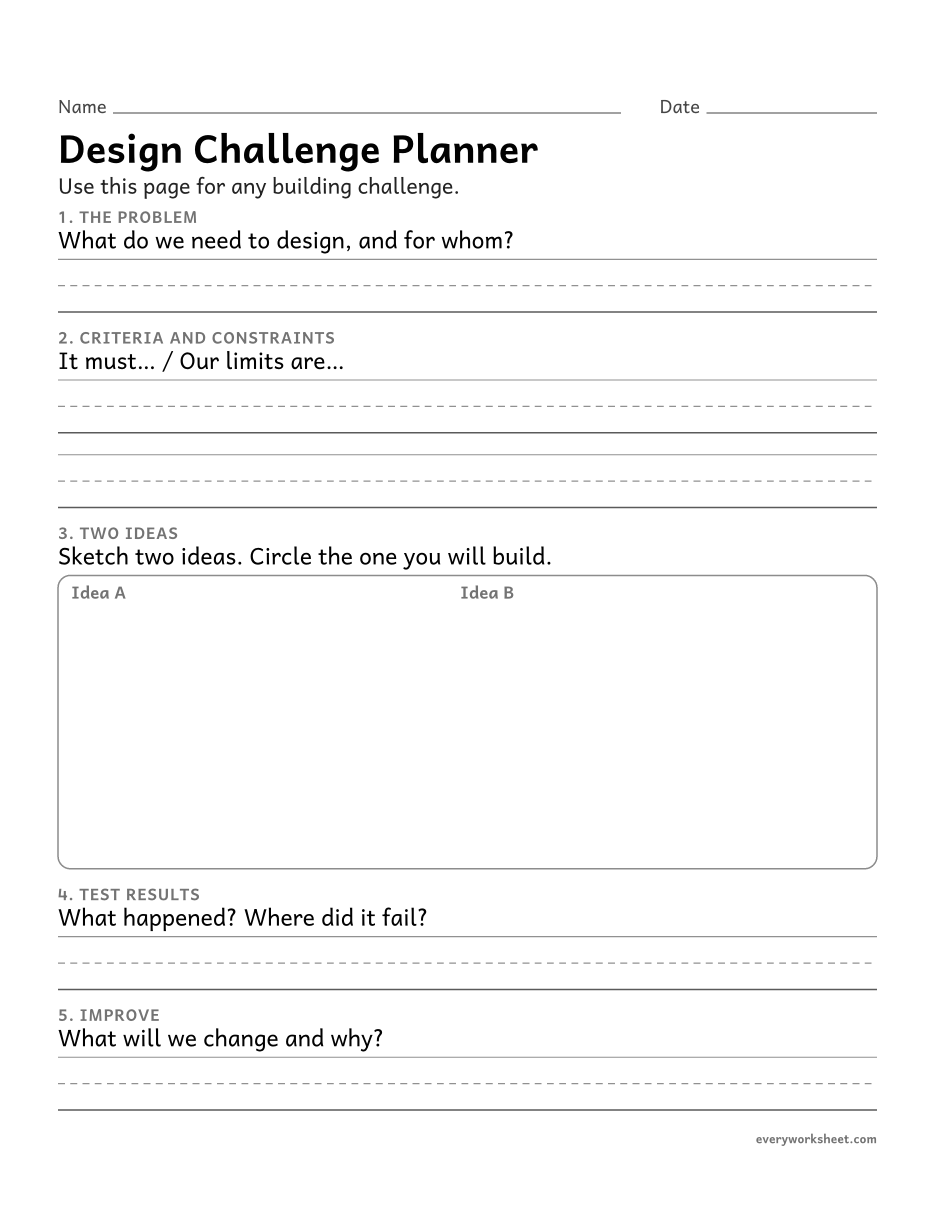
  • Preview of the printable “Engineering design challenge planner (Blank)” worksheet: planning, testing and improving a design for any challengeView larger

    Engineering design challenge planner (Blank)

    Planning, testing and improving a design for any challenge

    1 page29 KB

About these engineering design worksheets

Engineers solve problems by defining them, imagining ideas, building models, testing them fairly and improving them. Third graders can do the same with paper, straws and tape.

These engineering design worksheets teach the steps of the design process (as cut and paste and a no-cut twin), the difference between criteria and constraints, how to spot a fair test, and how to compare three paper bridges using test data. A blank planner works for any challenge in your class.

Every page is black and white, prints on US Letter or A4, and every page with right answers has an answer key on page 2.

Standards

  • NGSS 3-5-ETS1-1Define a simple design problem reflecting a need or a want that includes specified criteria for success and constraints on materials, time, or cost.
  • NGSS 3-5-ETS1-3Plan and carry out fair tests in which variables are controlled and failure points are considered to identify aspects of a model or prototype that can be improved.
  • NGSS 3-5-ETS1-2Generate and compare multiple possible solutions to a problem based on how well each is likely to meet the criteria and constraints of the problem.

How to use them

  1. Show the poster and walk through a quick challenge: build the tallest tower from 10 index cards in 5 minutes.
  2. Use the design steps cut and paste page or its no-cut twin.
  3. Sort criteria and constraints before any challenge so children know the rules.
  4. Build paper bridges, test with pennies, and compare your data with the bridge data page.
  5. Copy the planner for every new challenge.

Teaching tips

  • Criteria are what the design must do. Constraints are the limits: materials, time and cost.
  • A fair test changes only one thing at a time.
  • Failure is useful: the weak point shows what to improve.
  • The steps often loop. Engineers test and improve many times.
  • Pair this topic with the earthquake tower and magnet design challenges on the natural hazards and magnets pages.

Questions teachers and parents ask

What are the steps of the engineering design process?

Define the problem, imagine solutions, plan, build a model, test it and improve it. The steps often repeat many times.

What is the difference between criteria and constraints?

Criteria are what a design must do to succeed, like hold 20 pennies. Constraints are limits, like using only 2 sheets of paper or 15 minutes.

What is a fair test?

A test where only one thing changes and everything else stays the same, so you know what caused the result.