 View larger
Fast and slow earth changes poster
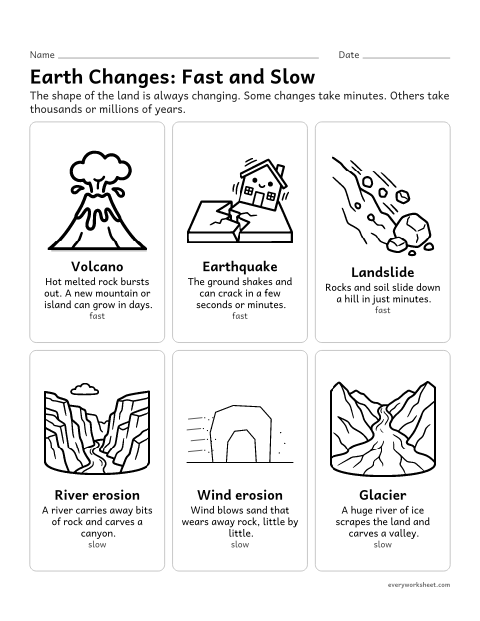
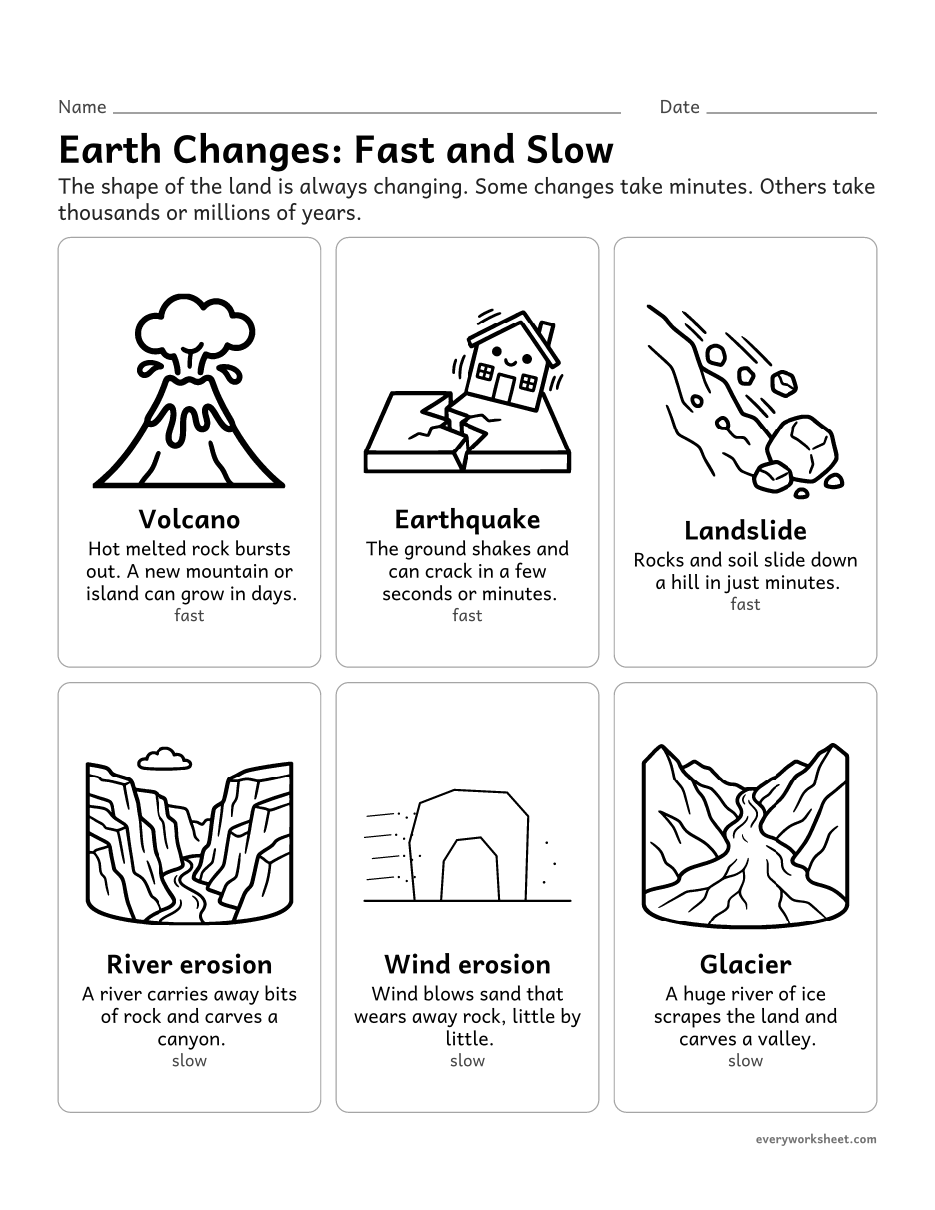
Describing Earth events that happen quickly and ones that happen slowly
1 page182 KB
Fast and slow changes to the land, weathering and erosion, the Grand Canyon and Mount St. Helens, and ways to slow erosion.
View largerDescribing Earth events that happen quickly and ones that happen slowly
1 page182 KB
 View all 2 pages
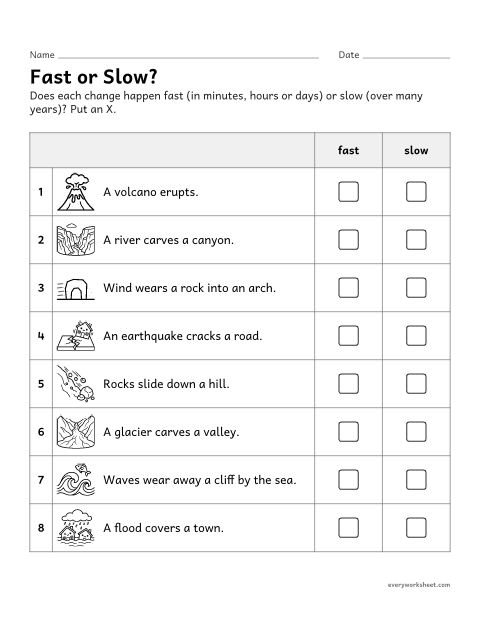
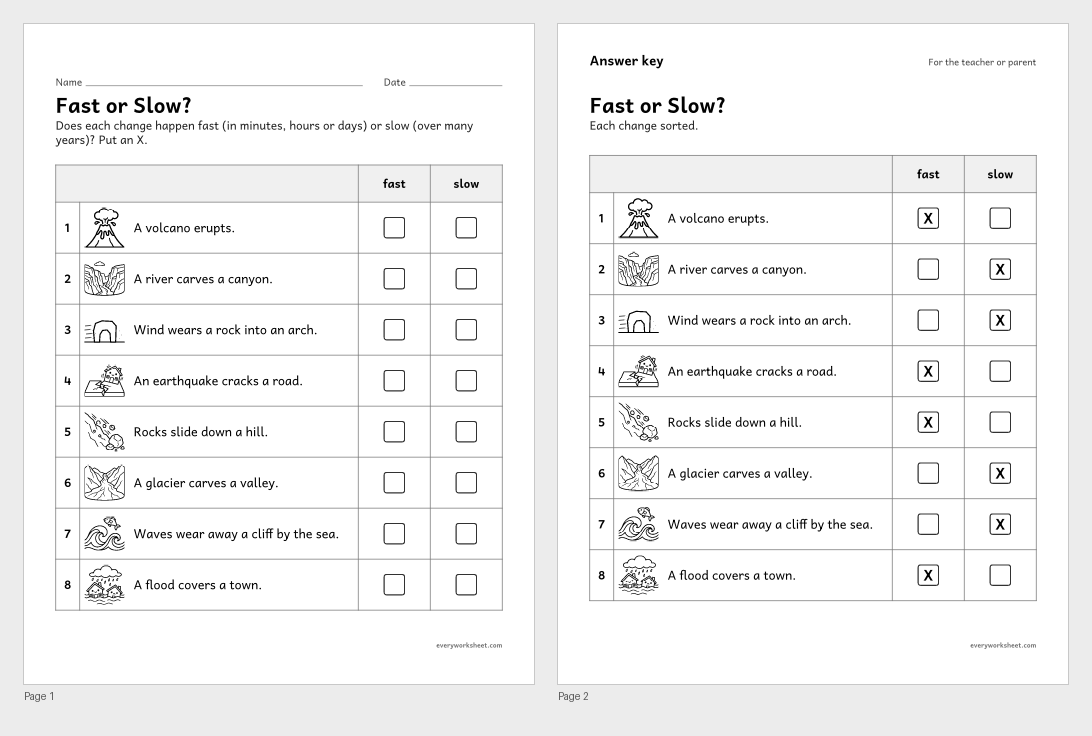
Sorting Earth events into fast changes and slow changes
Answer key on page 2
2 pages442 KB
 View all 2 pages
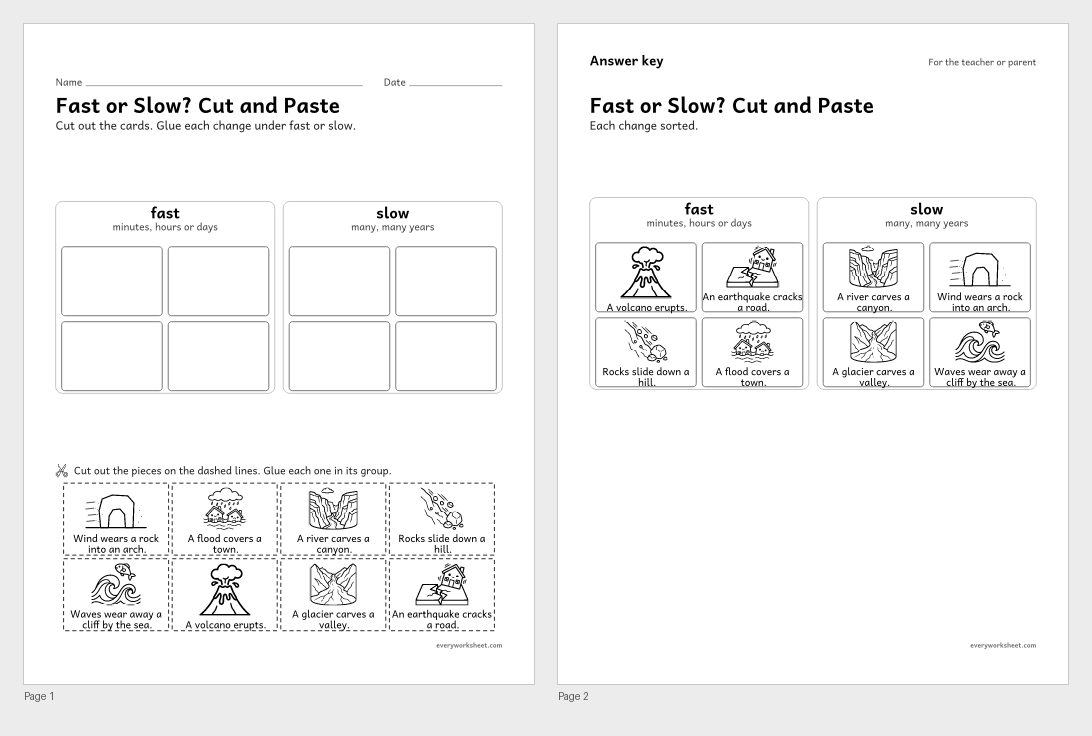
Sorting Earth events into fast changes and slow changes
Answer key on page 2
2 pages457 KB
 View all 2 pages
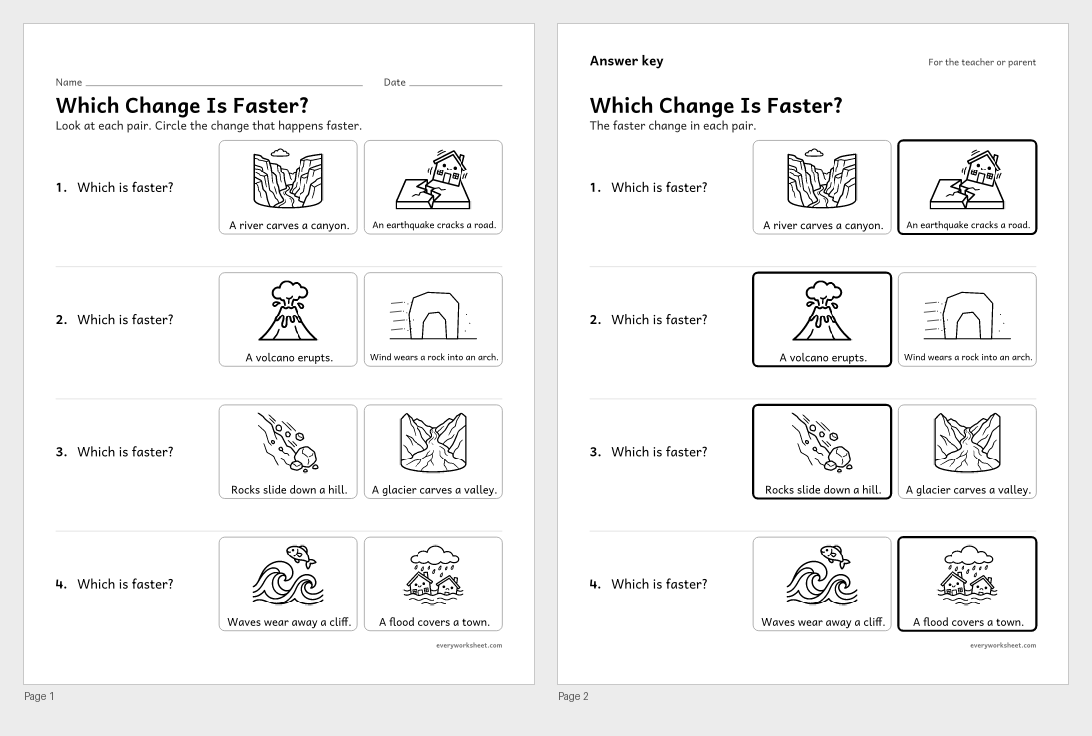
Comparing how quickly different Earth events happen
Answer key on page 2
2 pages432 KB
 View all 2 pages
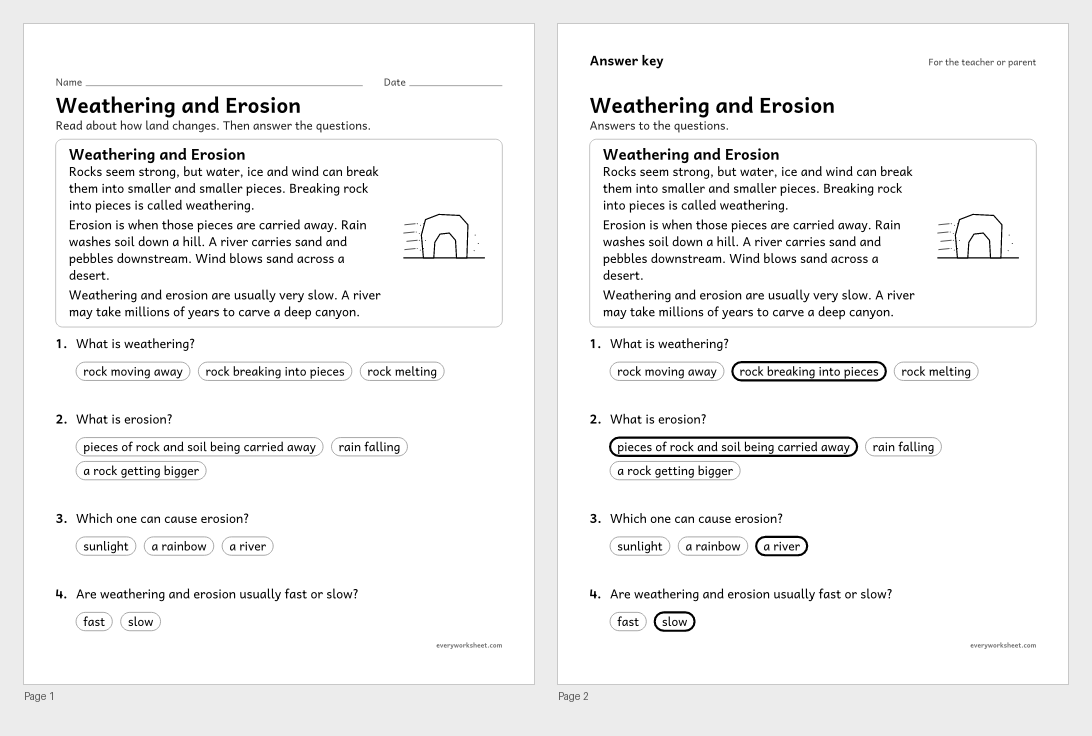
Reading about how wind and water break down rock and move it
Answer key on page 2
2 pages38 KB
 View all 2 pages
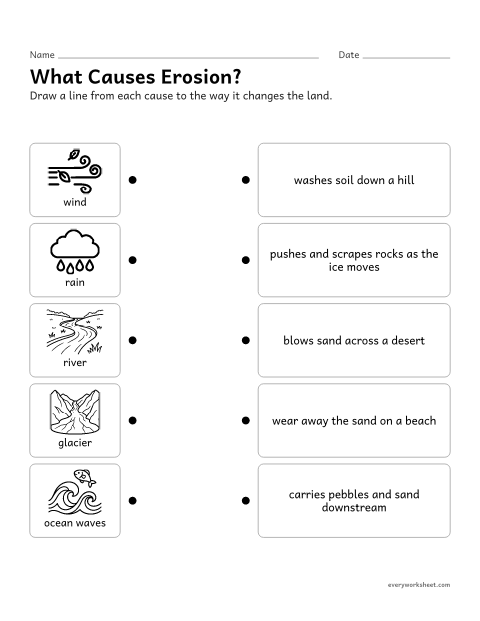
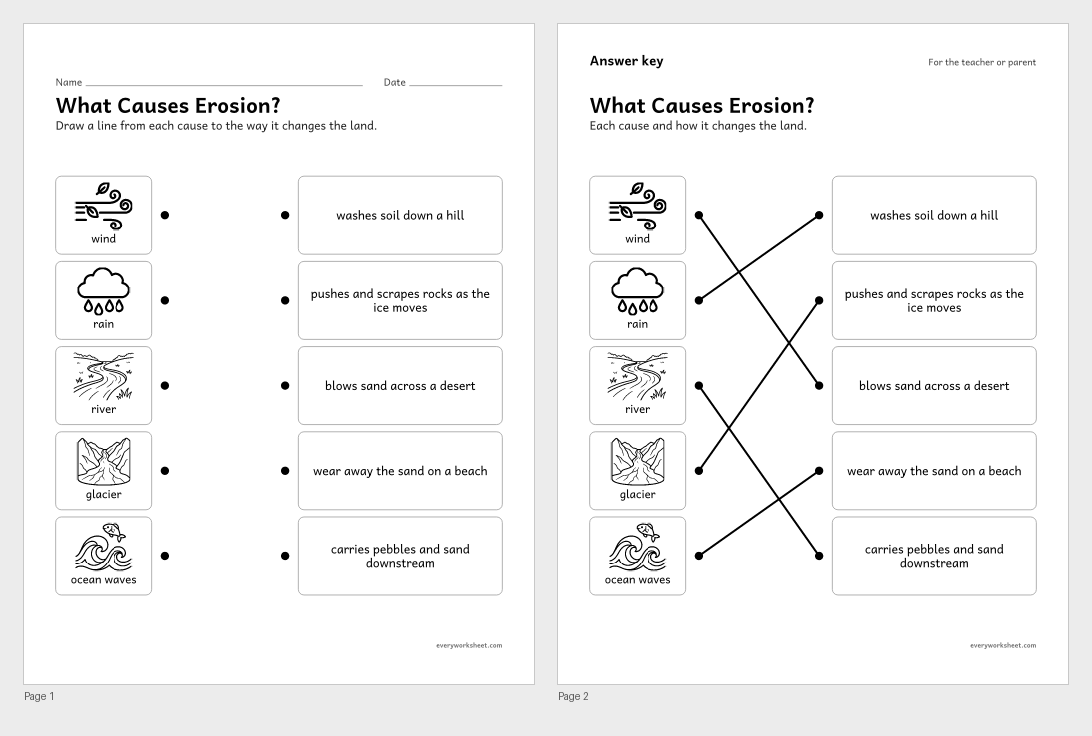
Matching causes of erosion to how they change the land
Answer key on page 2
2 pages188 KB
 View all 2 pages
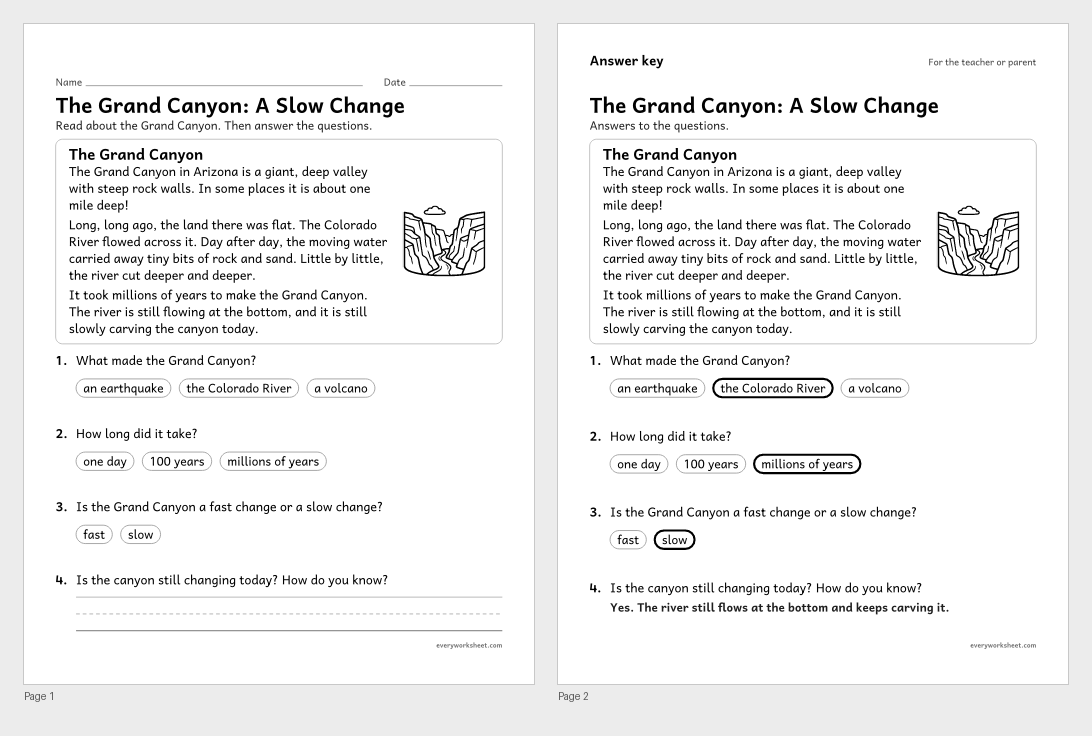
Reading about a slow Earth change and answering questions
Answer key on page 2
2 pages123 KB
 View all 2 pages
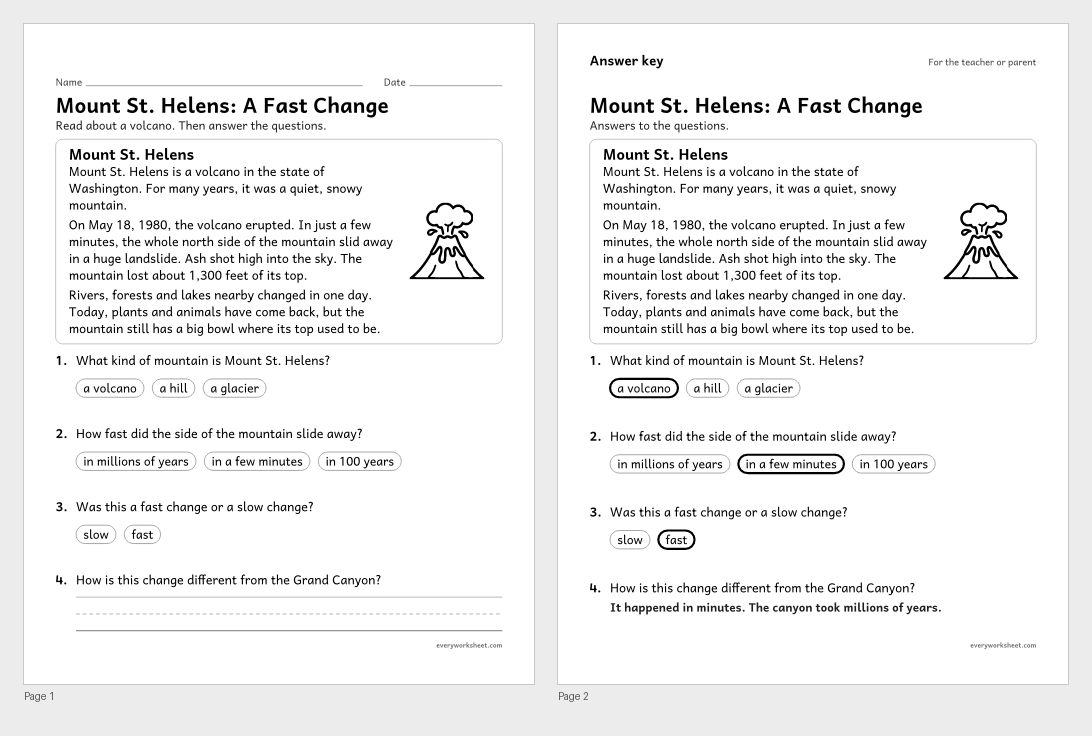
Reading about a fast Earth change and answering questions
Answer key on page 2
2 pages80 KB
 View all 2 pages
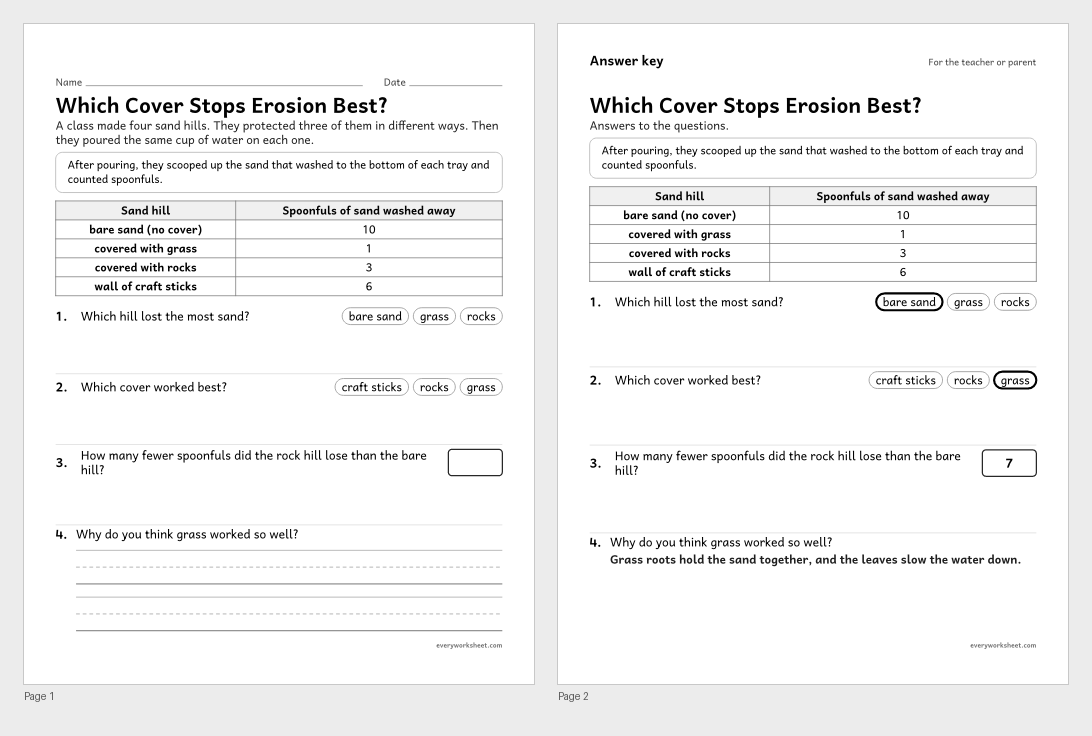
Comparing solutions that slow water from changing the shape of the land
Answer key on page 2
2 pages42 KB
 View all 2 pages
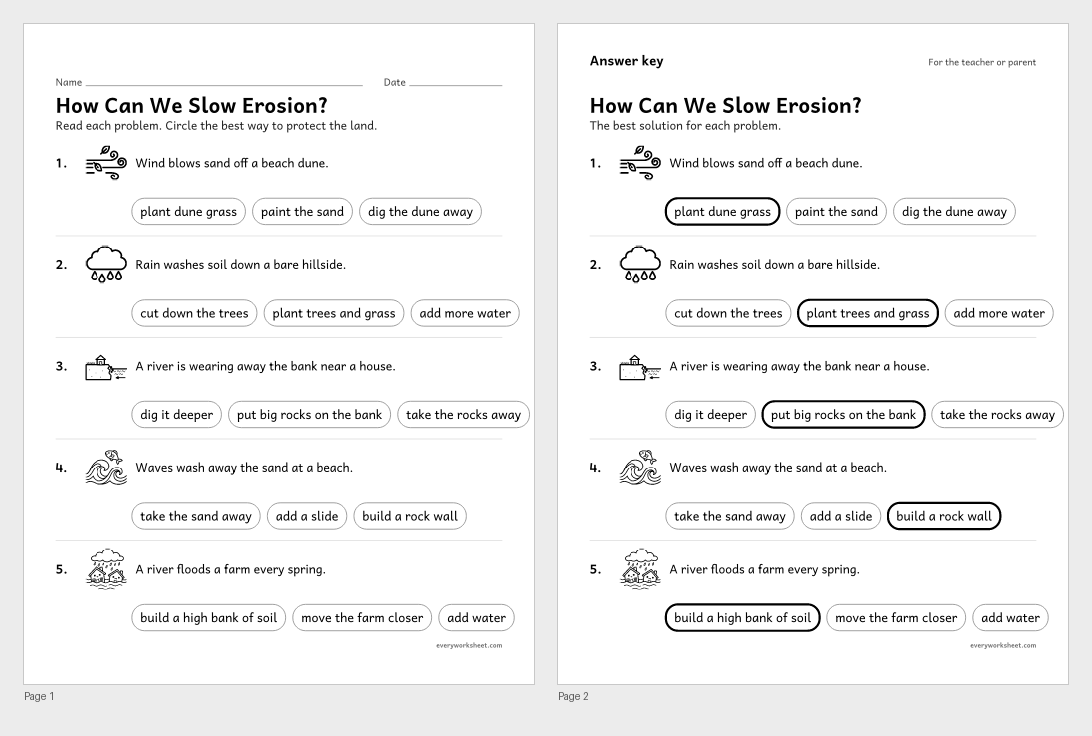
Choosing solutions that slow wind or water from changing the land
Answer key on page 2
2 pages141 KB
 View larger
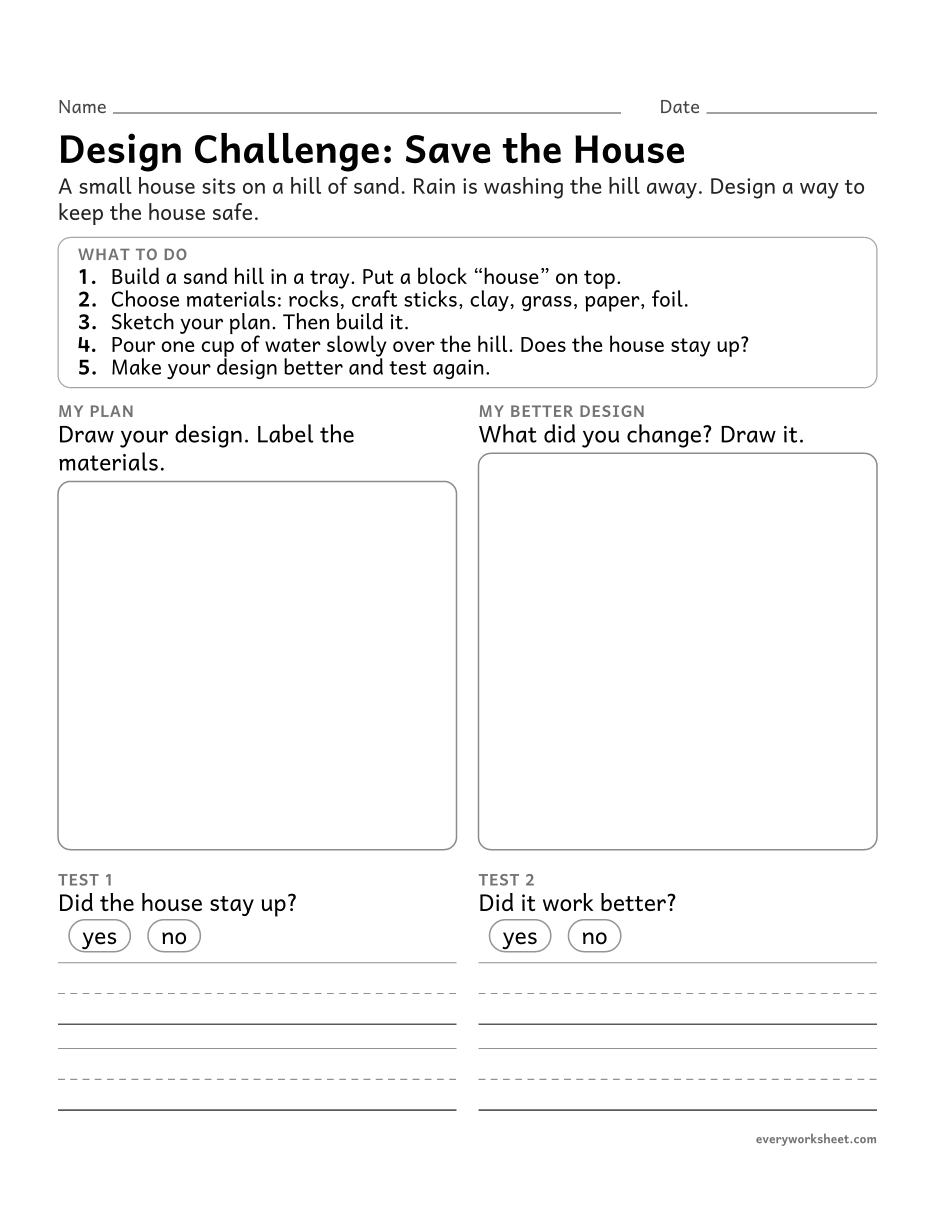
Designing, testing and improving a solution that slows water from changing the land
1 page33 KB
Print at 100% (actual size) for the cleanest tracing lines.
The land is always changing. A volcano can build a mountain in days, and a landslide can reshape a hill in minutes. Other changes, like a river carving a canyon, take millions of years. Second graders compare fast and slow changes and use what they learn to protect the land.
These erosion worksheets begin with a fast and slow changes poster and sort, then explain weathering and erosion in plain words. Two reading passages compare a slow change, the Grand Canyon, with a fast one, the 1980 eruption of Mount St. Helens. Children read real-looking test results to compare ways to stop erosion and then design and test their own solution.
Pages are black and white with short directions a 2nd grader can read. Each prints on US Letter or A4, and every page with right answers has a key on page 2.
NGSS 2-ESS1-1Use information from several sources to provide evidence that Earth events can occur quickly or slowly.NGSS 2-ESS2-1Compare multiple solutions designed to slow or prevent wind or water from changing the shape of the land.NGSS K-2-ETS1-2Develop a simple sketch, drawing, or physical model to illustrate how the shape of an object helps it function as needed to solve a given problem.NGSS K-2-ETS1-1Ask questions, make observations, and gather information about a situation people want to change to define a simple problem that can be solved through the development of a new or improved object or tool.CCSS.ELA-LITERACY.RI.2.1Ask and answer such questions as who, what, where, when, why, and how to demonstrate understanding of key details in a text.Erosion is when wind, water or ice carries away bits of rock and soil. Rain washes soil down a hill, rivers carry sand downstream and wind blows sand across a desert.
Fast changes, like volcanoes, earthquakes, landslides and floods, happen in minutes, hours or days. Slow changes, like a river carving a canyon or wind wearing down rock, take many years, even millions of years.
Planting grass and trees, placing rocks along riverbanks, building walls and fences, and growing grass on sand dunes all help slow wind or water from changing the land.