 View larger
Food chain poster for 3rd grade
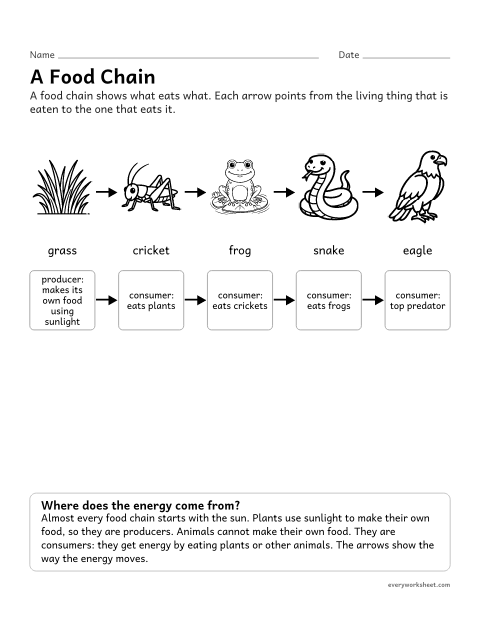
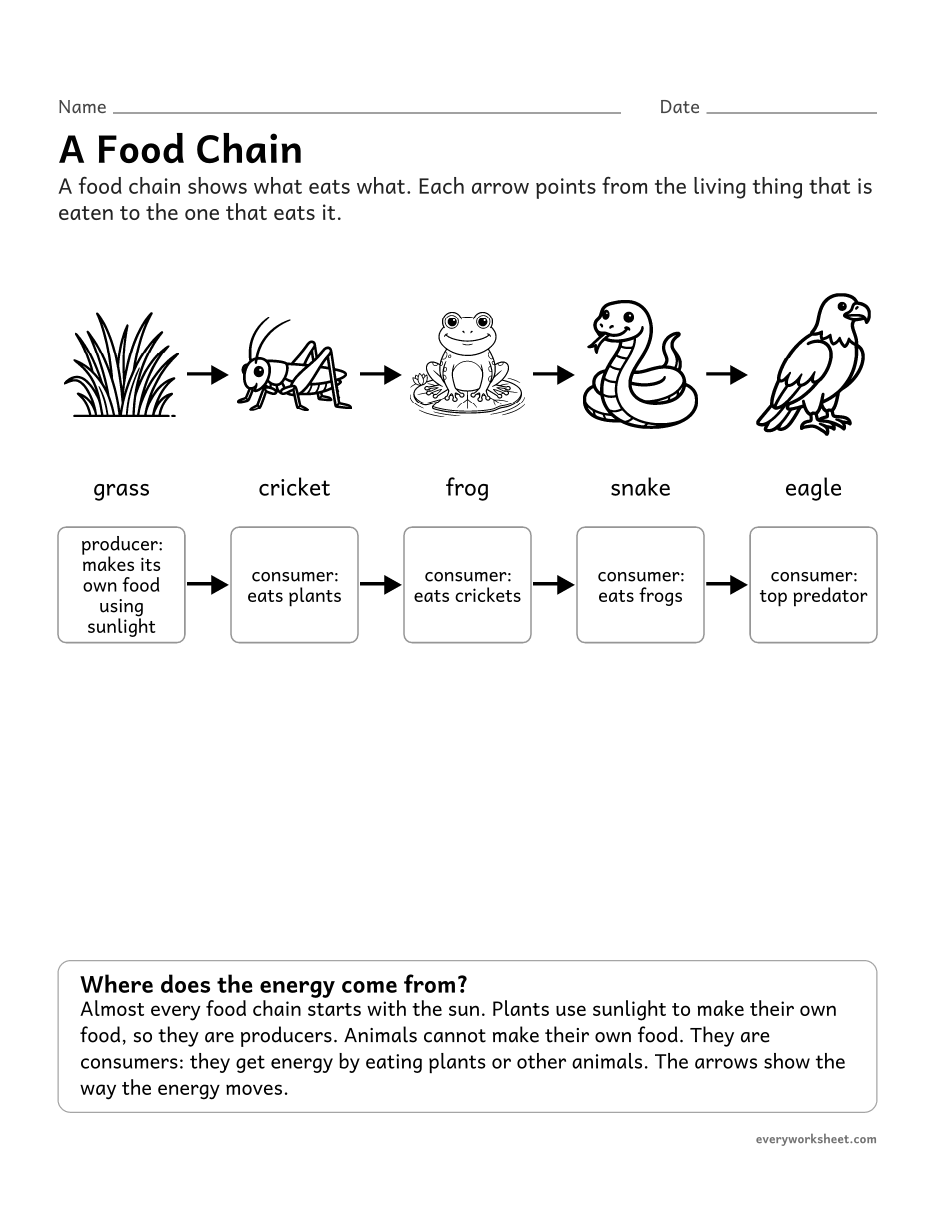
Describing a food chain with producers and consumers, and what the arrows mean
1 page156 KB
Read and build food chains, sort producers, consumers and decomposers, find predators and prey, and follow the energy from the sun.
View largerDescribing a food chain with producers and consumers, and what the arrows mean
1 page156 KB
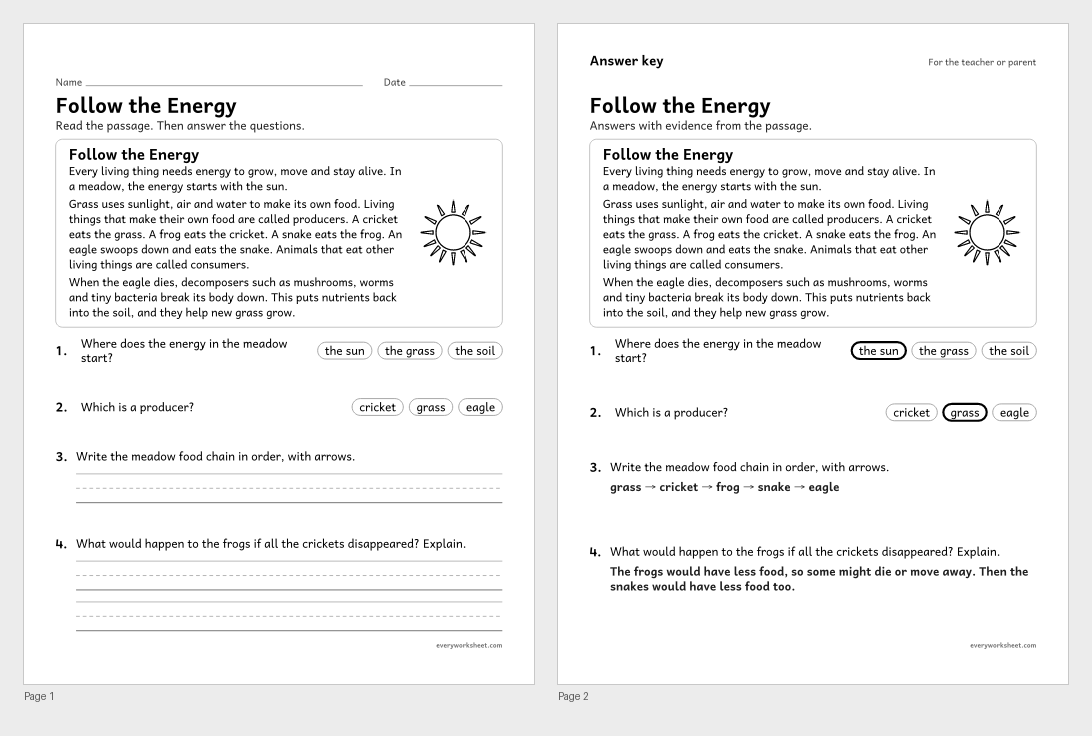 View all 2 pages
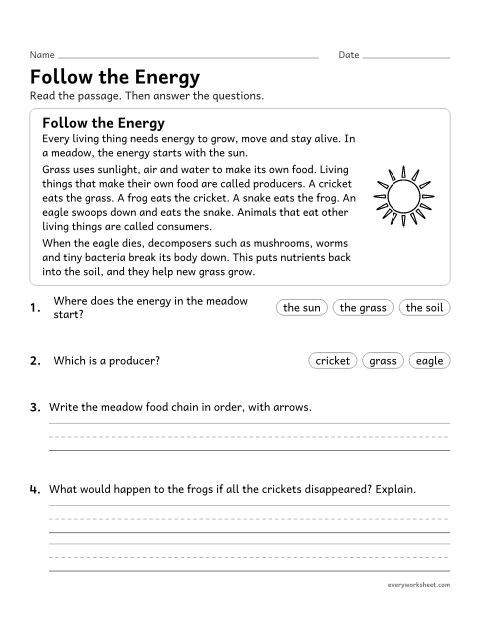
Reading an informational passage about how energy moves through a food chain
Answer key on page 2
2 pages47 KB
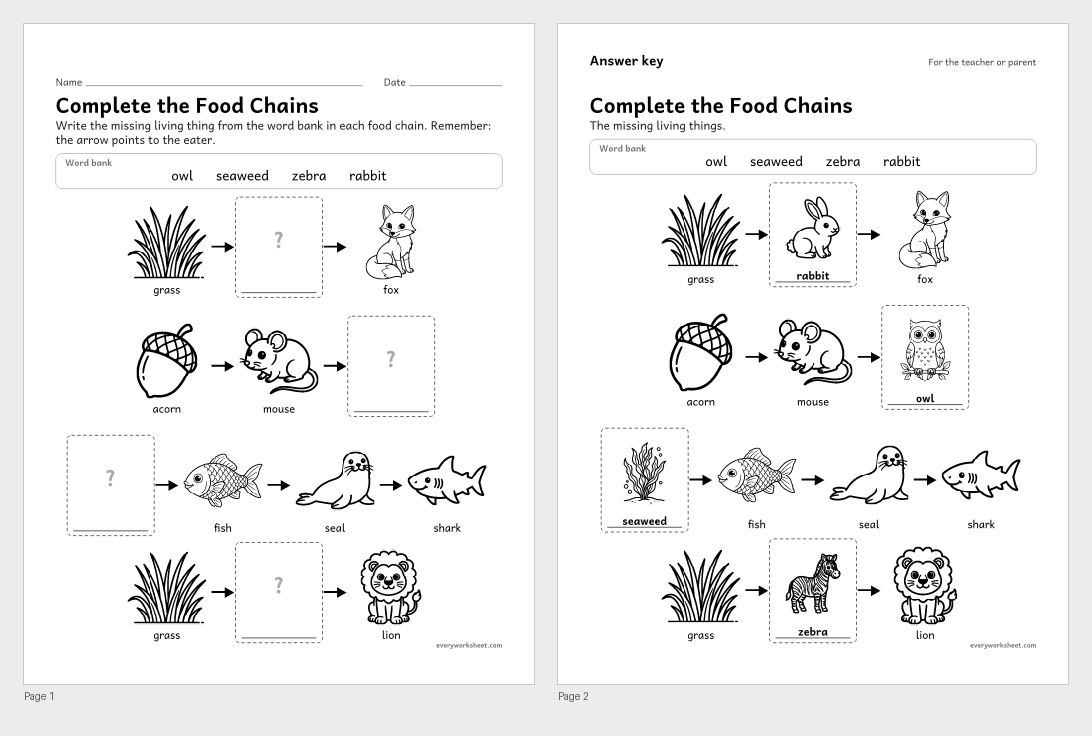 View all 2 pages
Completing food chains by naming the missing producer or consumer
Answer key on page 2
2 pages579 KB
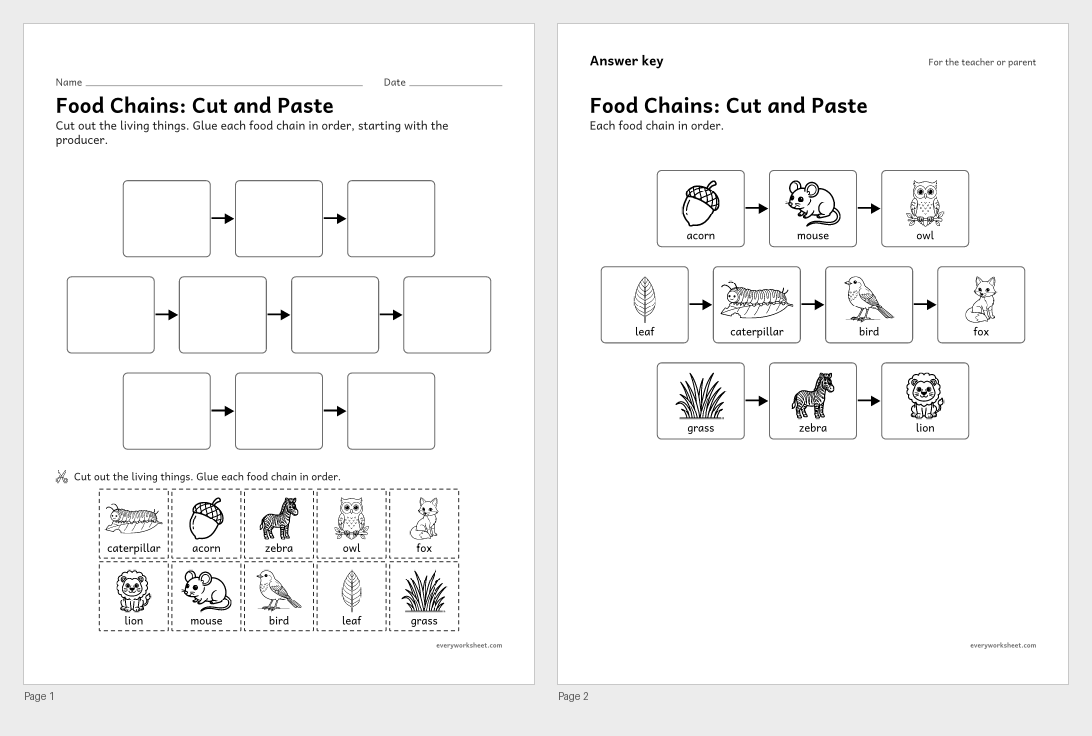 View all 2 pages
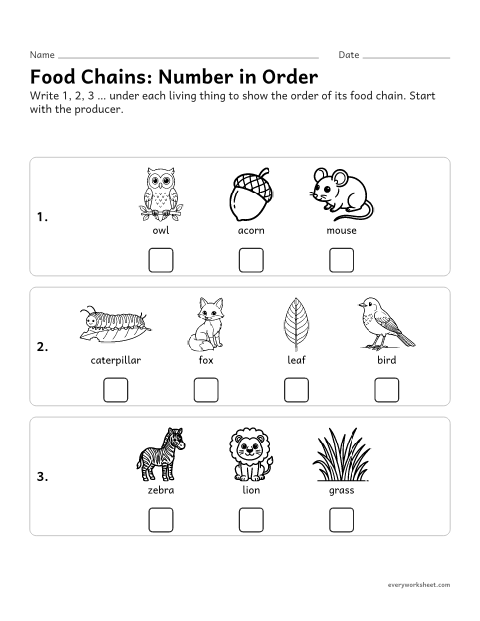
Ordering living things into food chains from producer to top consumer
Answer key on page 2
2 pages515 KB
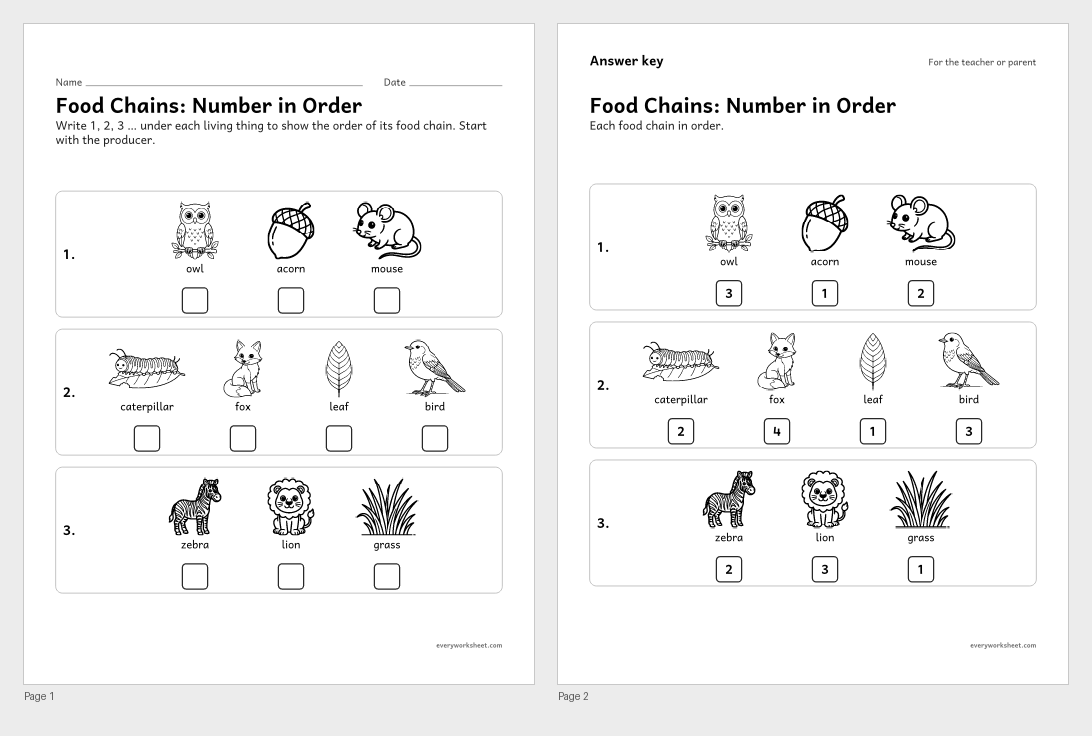 View all 2 pages
Ordering living things into food chains from producer to top consumer
Answer key on page 2
2 pages488 KB
 View all 2 pages
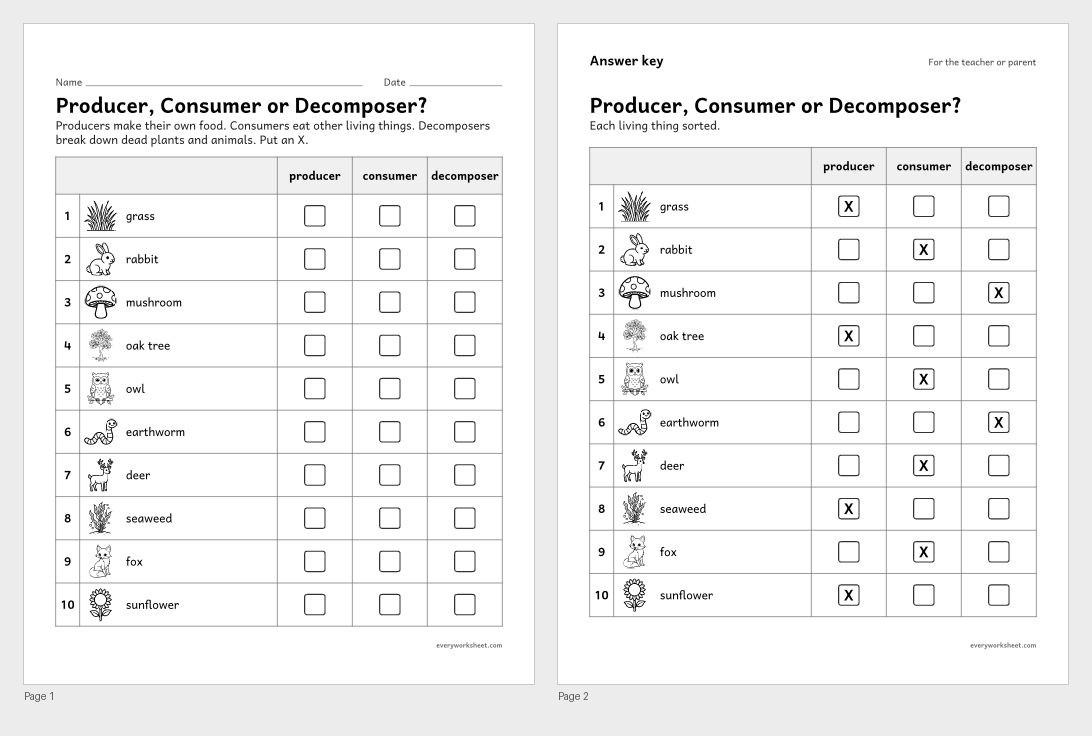
Classifying living things as producers, consumers or decomposers
Answer key on page 2
2 pages488 KB
 View all 2 pages
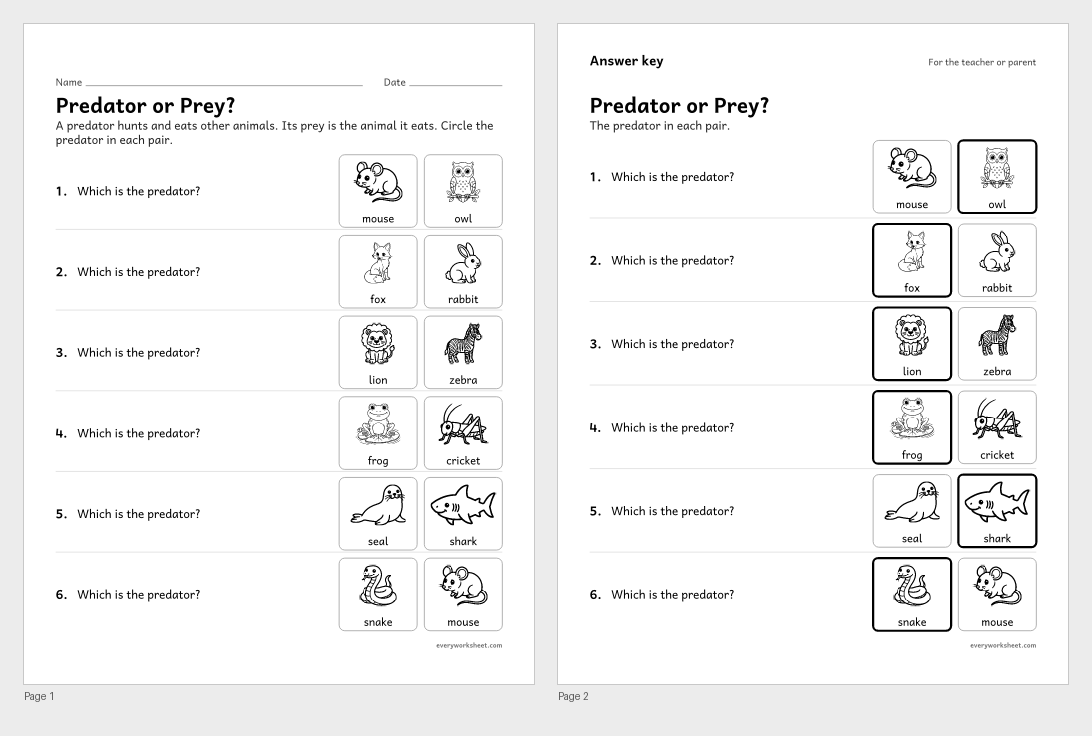
Identifying the predator and the prey in pairs of animals
Answer key on page 2
2 pages521 KB
 View all 2 pages
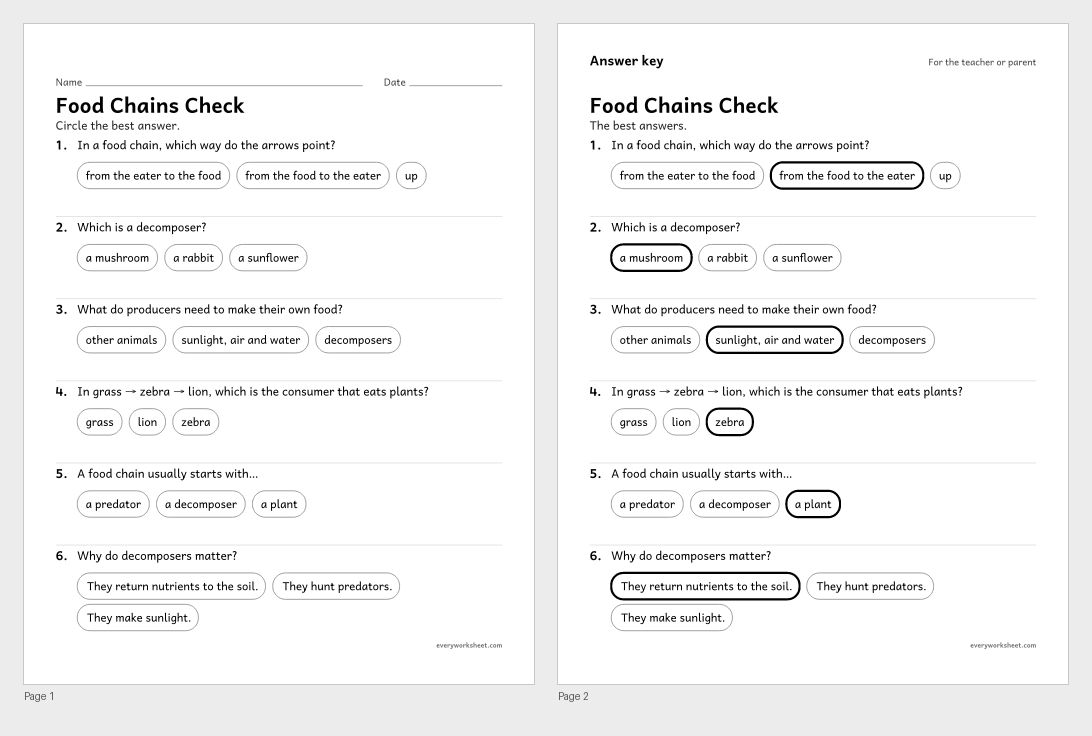
Reviewing producers, consumers, decomposers and food chains
Answer key on page 2
2 pages39 KB
Print at 100% (actual size) for the cleanest tracing lines.
A food chain shows what eats what. Grass makes its own food from sunlight, a cricket eats the grass, a frog eats the cricket, and the energy keeps moving up the chain. Third graders learn to read the arrows, name producers and consumers, and see why decomposers matter.
These food chain worksheets include a poster, a complete-the-chain page with a word bank, a cut and paste page with its no-cut twin, a producer, consumer or decomposer sort, a predator and prey page and a reading passage about how energy moves in a meadow.
Every page is black and white, prints on US Letter or A4, and every page with right answers has an answer key on page 2.
CCSS.ELA-LITERACY.RI.3.3Describe the relationship between a series of historical events, scientific ideas or concepts, or steps in technical procedures in a text, using language that pertains to time, sequence, and cause/effect.CCSS.ELA-LITERACY.RI.3.4Determine the meaning of general academic and domain-specific words and phrases in a text relevant to a grade 3 topic or subject area.NGSS 3-LS4-3Construct an argument with evidence that in a particular habitat some organisms can survive well, some survive less well, and some cannot survive at all.Arrows point from the food to the eater. In grass → rabbit → fox, the arrow points from the grass to the rabbit because the rabbit eats the grass and gets its energy.
A producer, like a plant, makes its own food using sunlight. A consumer, like an animal, gets energy by eating plants or other animals.
Decomposers such as mushrooms, earthworms and bacteria break down dead plants and animals and return nutrients to the soil, which helps new plants grow.