 View larger
Forces and motion poster for 3rd grade
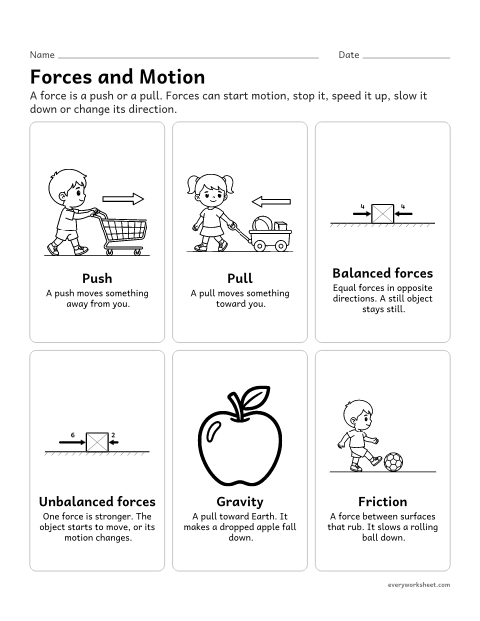
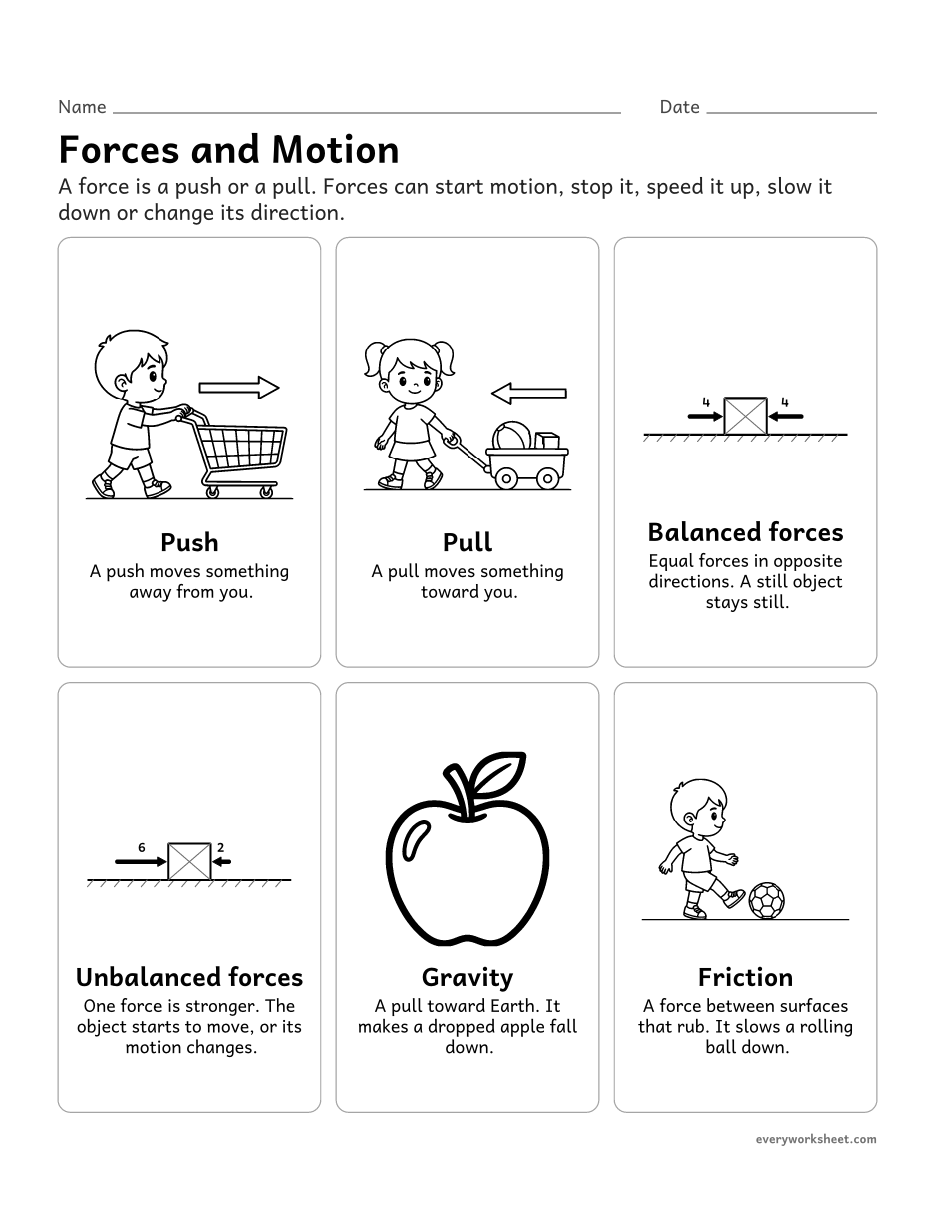
Describing pushes and pulls, balanced and unbalanced forces, gravity and friction
1 page84 KB
Pushes and pulls, balanced and unbalanced forces, friction and gravity, and using patterns of motion to predict what happens next.
View largerDescribing pushes and pulls, balanced and unbalanced forces, gravity and friction
1 page84 KB
 View all 2 pages
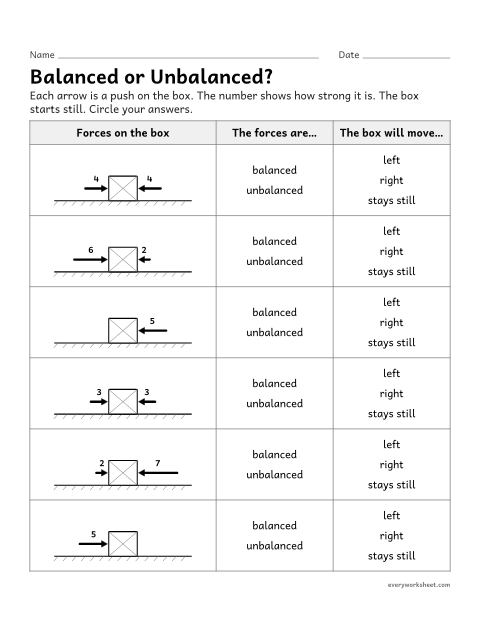
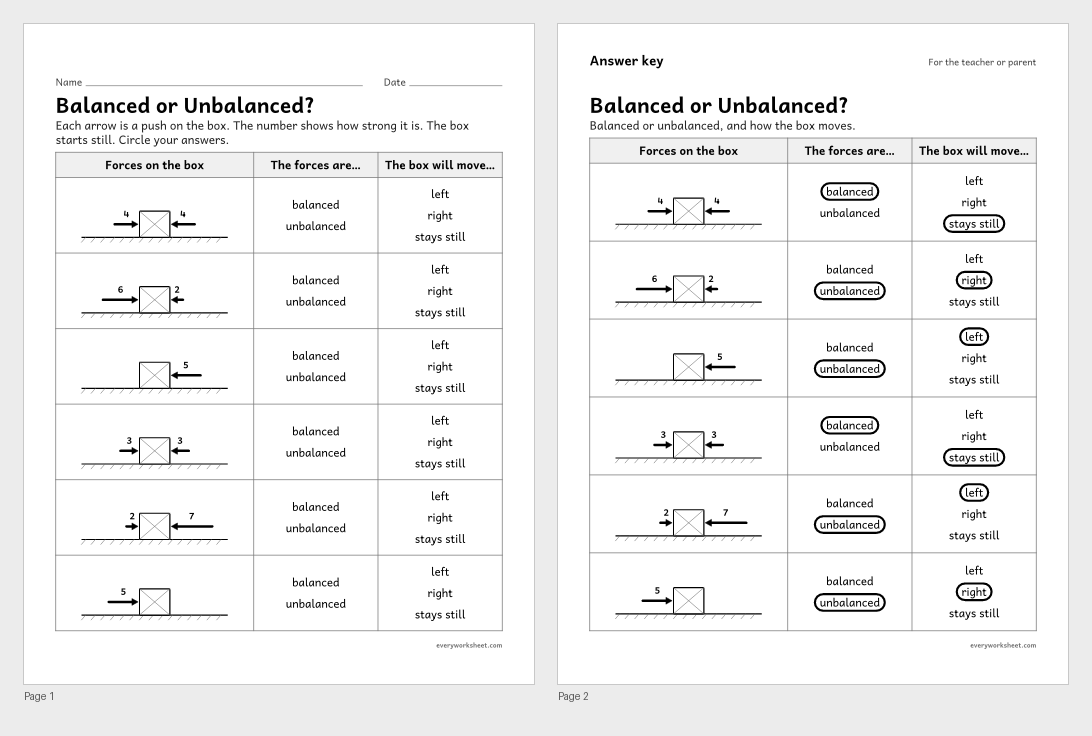
Using force diagrams to tell balanced from unbalanced forces and predict the motion
Answer key on page 2
2 pages40 KB
 View all 2 pages
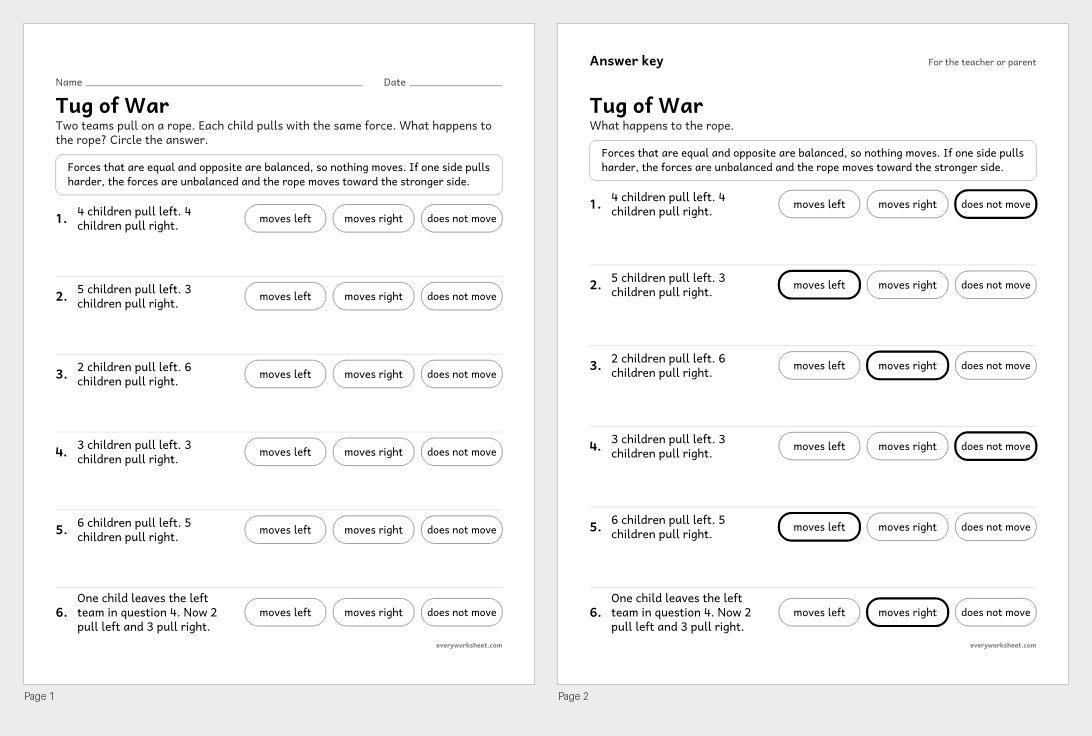
Predicting motion from the sizes of opposing forces
Answer key on page 2
2 pages41 KB
 View all 2 pages
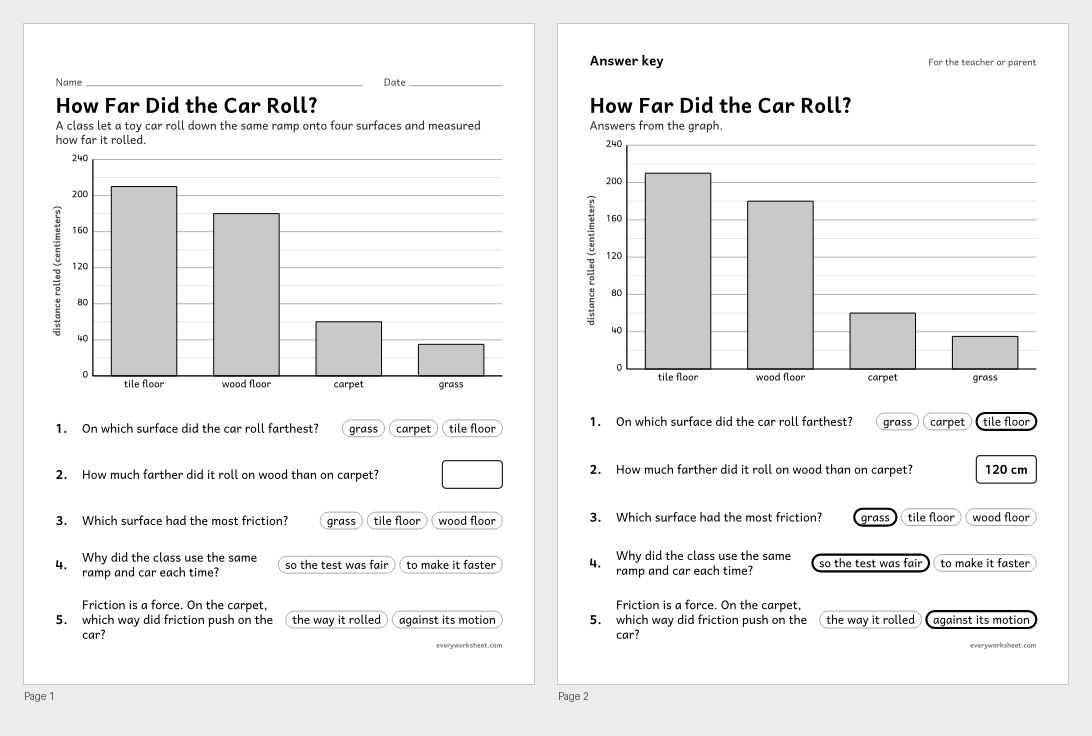
Reading a scaled bar graph of an investigation into friction on different surfaces
Answer key on page 2
2 pages39 KB
 View all 2 pages
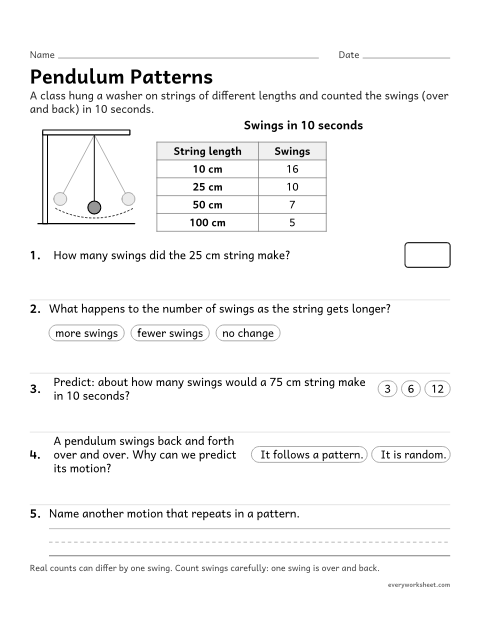
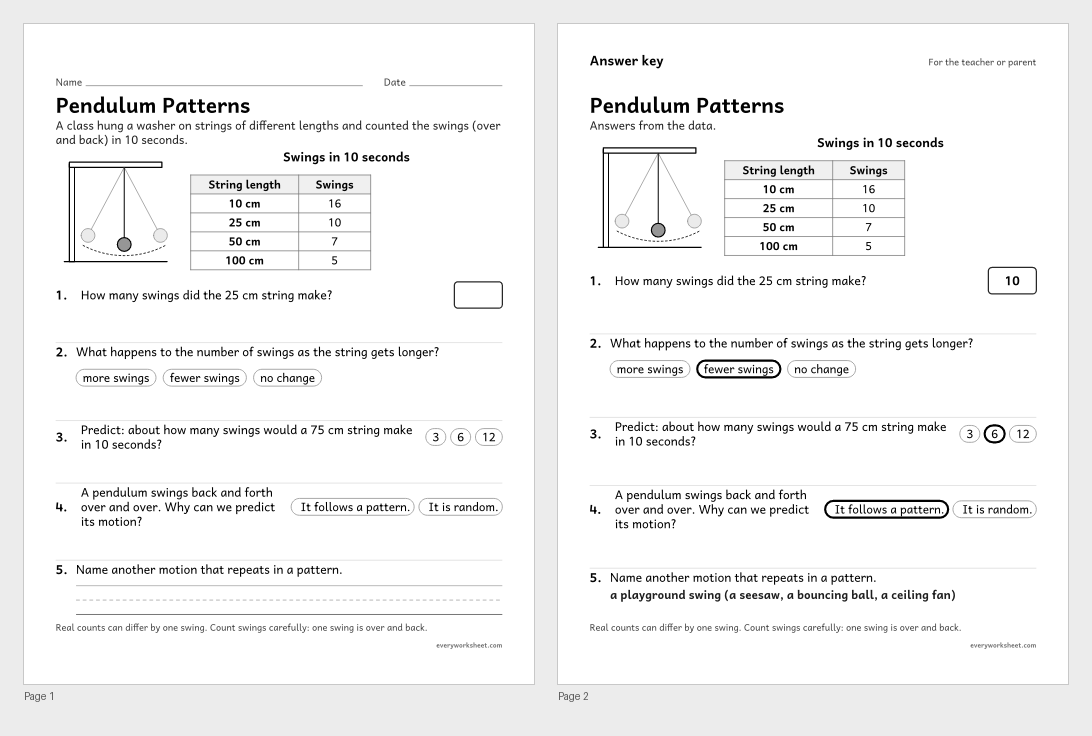
Using measurements of a pendulum’s motion to find a pattern and predict future motion
Answer key on page 2
2 pages46 KB
 View all 2 pages
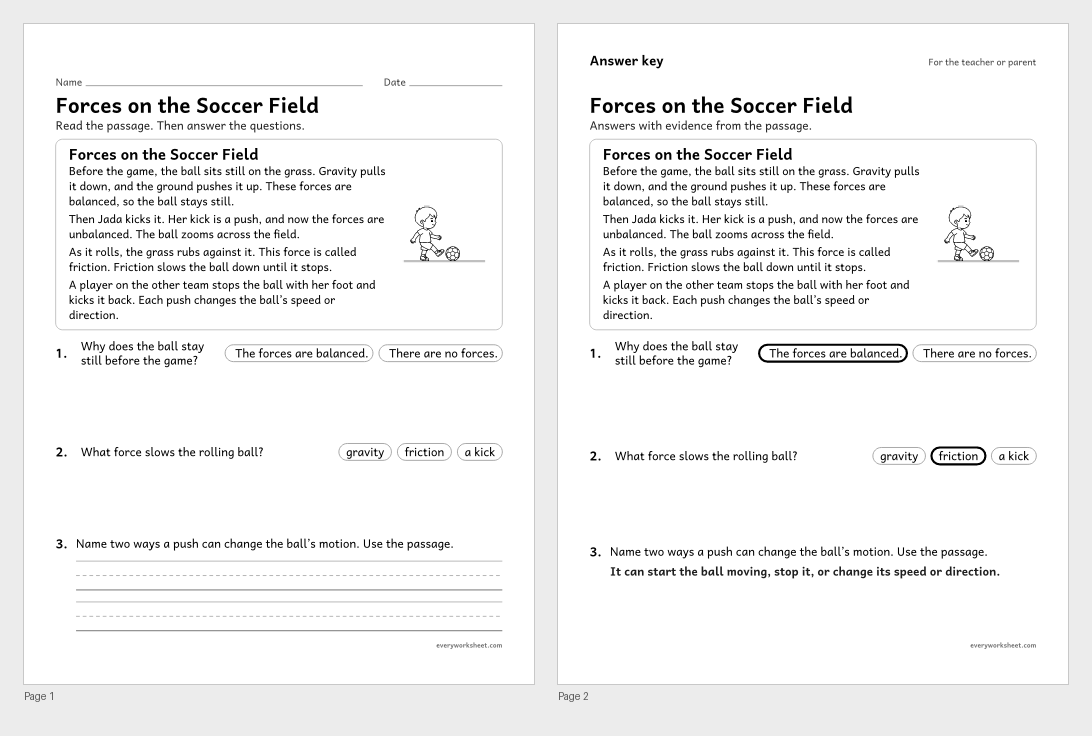
Reading an informational passage about forces that change motion
Answer key on page 2
2 pages58 KB
 View all 2 pages
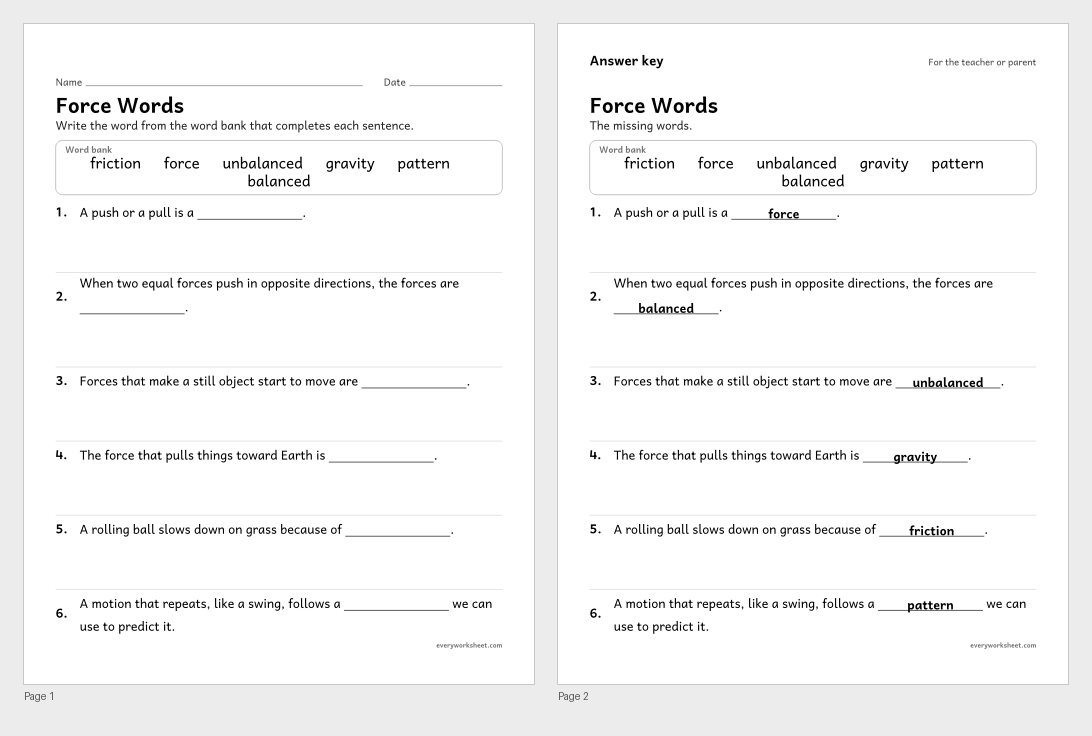
Using the vocabulary of forces and motion
Answer key on page 2
2 pages36 KB
 View all 2 pages
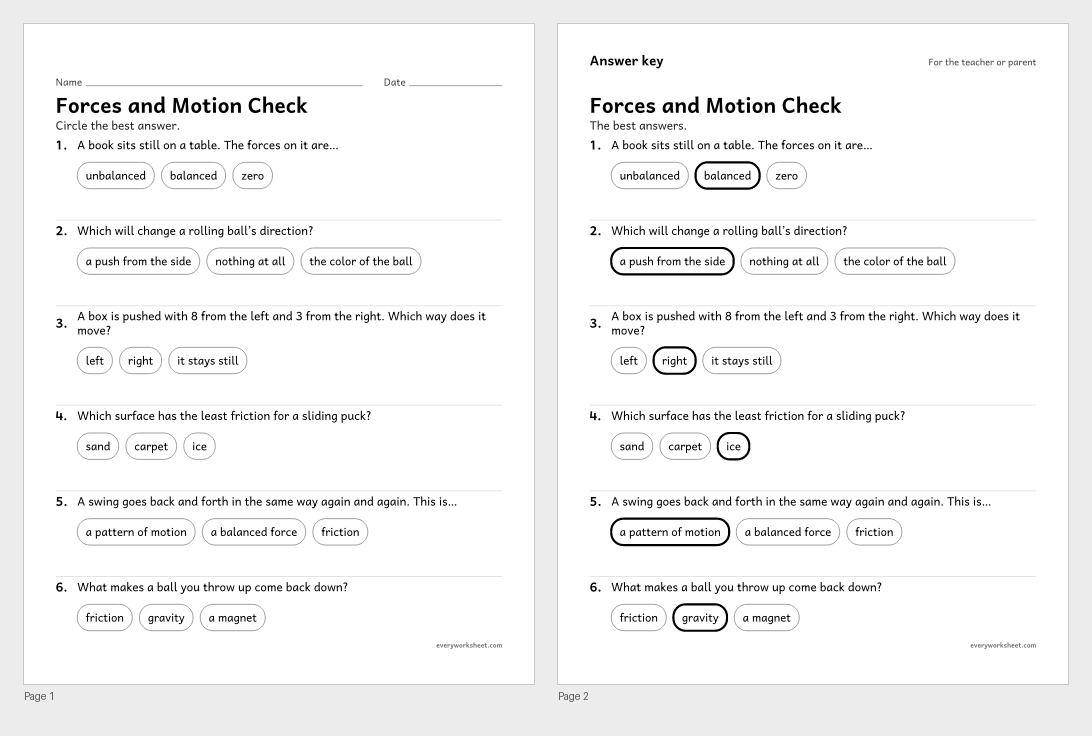
Reviewing forces, balanced and unbalanced forces and patterns of motion
Answer key on page 2
2 pages39 KB
Print at 100% (actual size) for the cleanest tracing lines.
A force is a push or a pull. When the forces on an object are balanced, nothing changes. When they are unbalanced, the object starts to move, speeds up, slows down or turns. Third graders investigate forces with force diagrams, tug of war and toy cars, and use patterns to predict motion.
These forces and motion worksheets include a poster, a balanced or unbalanced chart with force diagrams, a tug of war page, a friction bar graph from a toy car test, a pendulum data page and a reading passage about the forces on a soccer field.
Every page is black and white, prints on US Letter or A4, and every page with right answers has an answer key on page 2.
NGSS 3-PS2-1Plan and conduct an investigation to provide evidence of the effects of balanced and unbalanced forces on the motion of an object.NGSS 3-PS2-2Make observations and/or measurements of an object’s motion to provide evidence that a pattern can be used to predict future motion.CCSS.ELA-LITERACY.RI.3.3Describe the relationship between a series of historical events, scientific ideas or concepts, or steps in technical procedures in a text, using language that pertains to time, sequence, and cause/effect.CCSS.ELA-LITERACY.RI.3.4Determine the meaning of general academic and domain-specific words and phrases in a text relevant to a grade 3 topic or subject area.CCSS.MATH.CONTENT.3.MD.B.3Draw a scaled picture graph and a scaled bar graph to represent a data set with several categories. Solve one- and two-step “how many more” and “how many less” problems using information presented in scaled bar graphs. For example, draw a bar graph in which each square in the bar graph might represent 5 pets.Balanced forces are equal and opposite, so an object’s motion does not change. Unbalanced forces are not equal, so the object starts moving, stops, speeds up, slows down or changes direction.
A motion that repeats in a predictable way, like a pendulum or swing going back and forth. Because it repeats, we can predict what it will do next.
Yes. Magnets and static electricity, the other half of 3rd grade forces, are on our magnets worksheets page.