 View larger
Types of fossils poster for 3rd grade
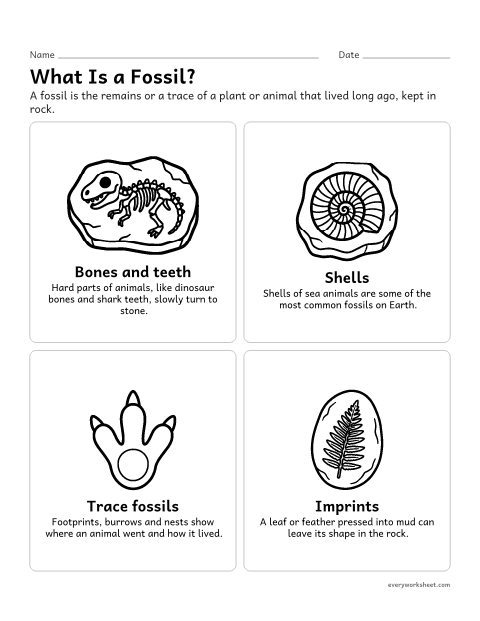
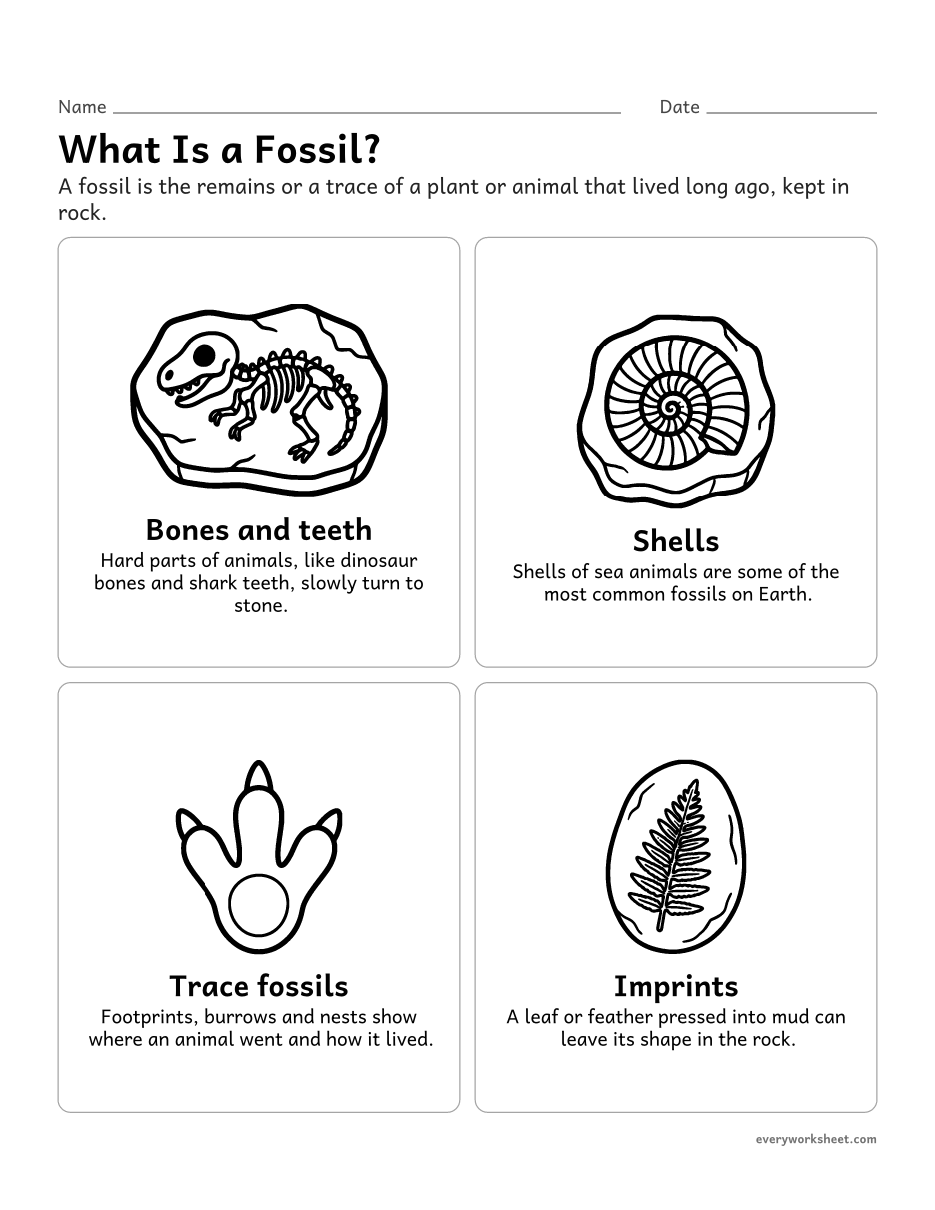
Describing what fossils are and the kinds of fossils scientists find
1 page174 KB
How fossils form, the main kinds of fossils, reading rock layers, and using fossils as clues to living things and environments of long ago.
View largerDescribing what fossils are and the kinds of fossils scientists find
1 page174 KB
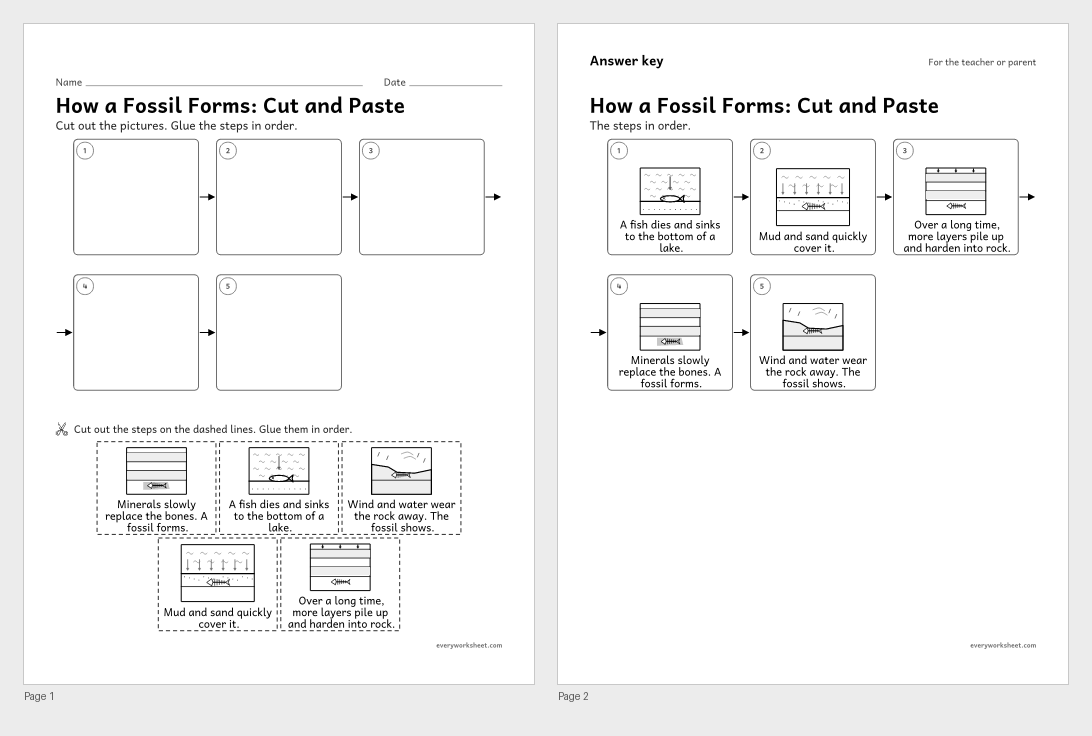 View all 2 pages
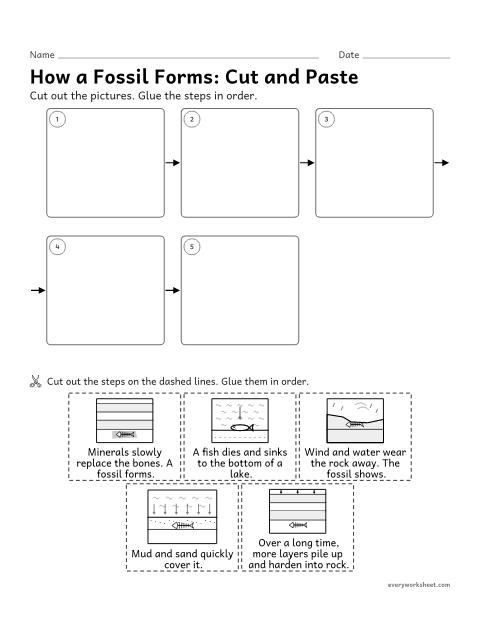
Sequencing the steps by which a fossil forms in sedimentary rock
Answer key on page 2
2 pages71 KB
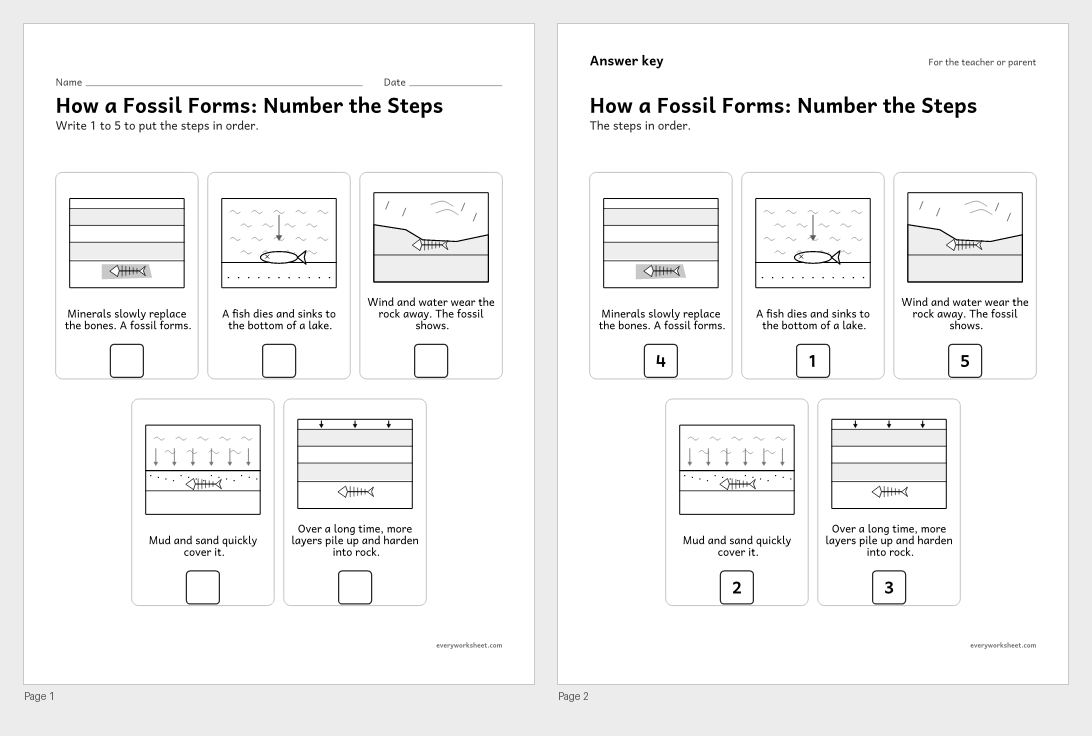 View all 2 pages
Sequencing the steps by which a fossil forms in sedimentary rock
Answer key on page 2
2 pages37 KB
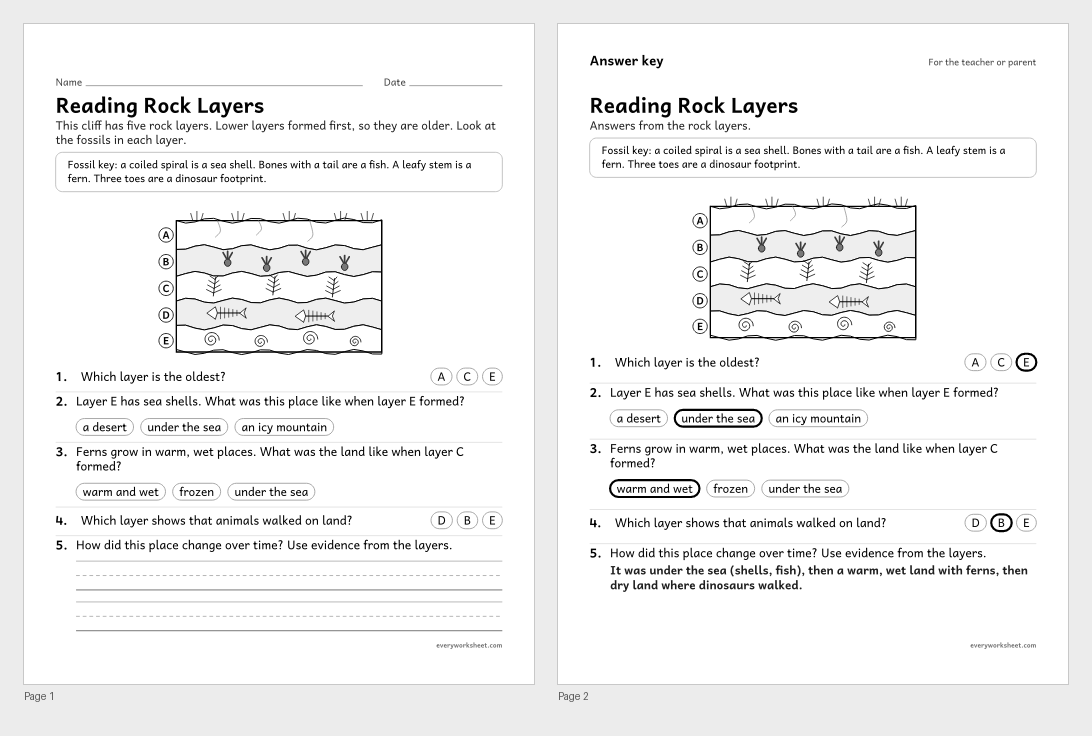 View all 2 pages
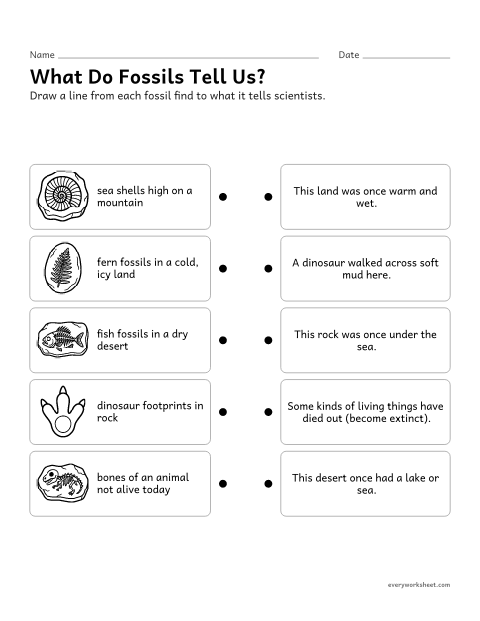
Using fossils in rock layers as evidence of the organisms and environments of long ago
Answer key on page 2
2 pages53 KB
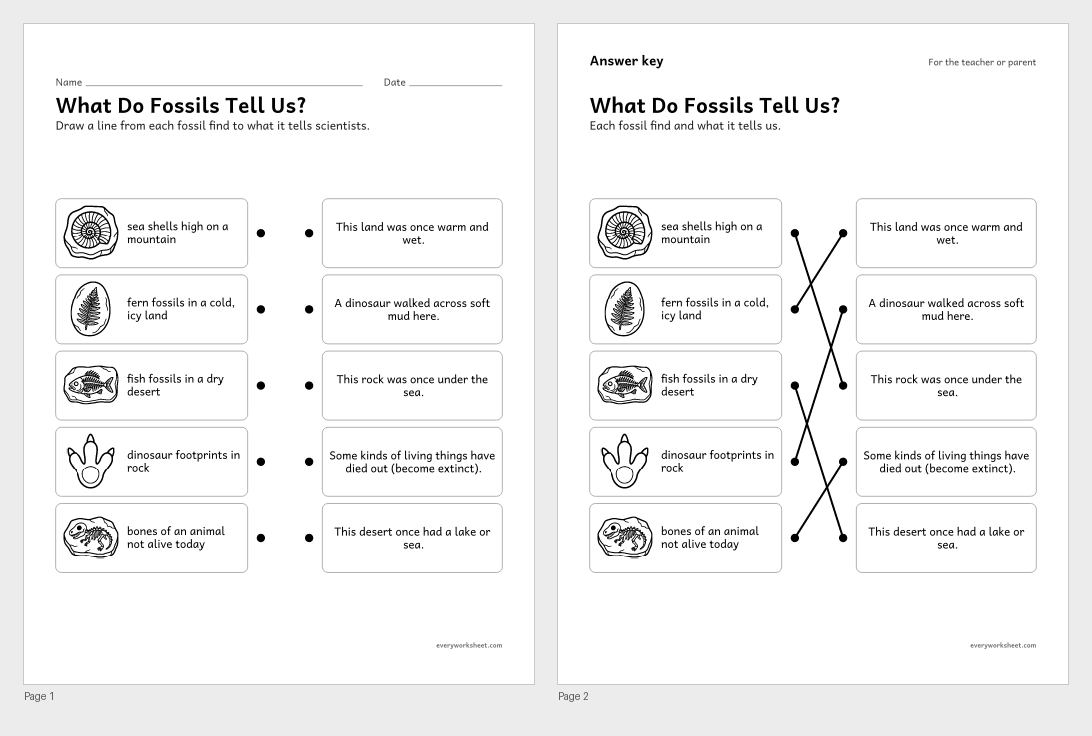 View all 2 pages
Using fossil evidence to infer the environments of long ago
Answer key on page 2
2 pages418 KB
 View all 2 pages
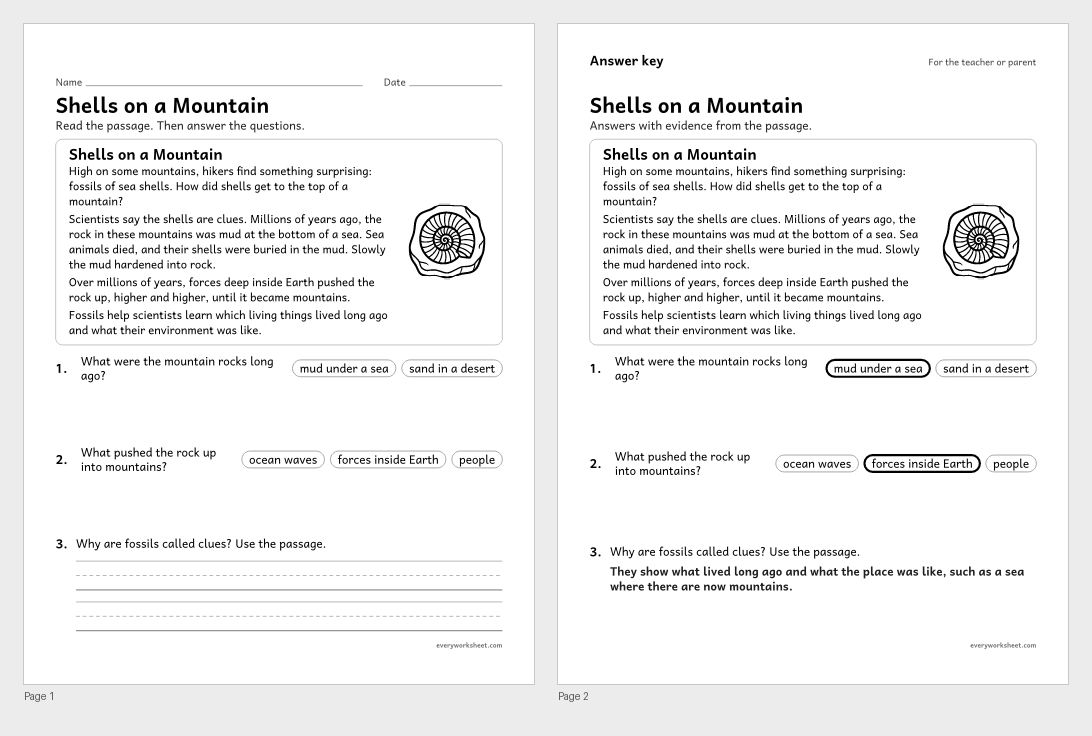
Reading an informational passage about fossil evidence of past environments
Answer key on page 2
2 pages134 KB
 View all 2 pages
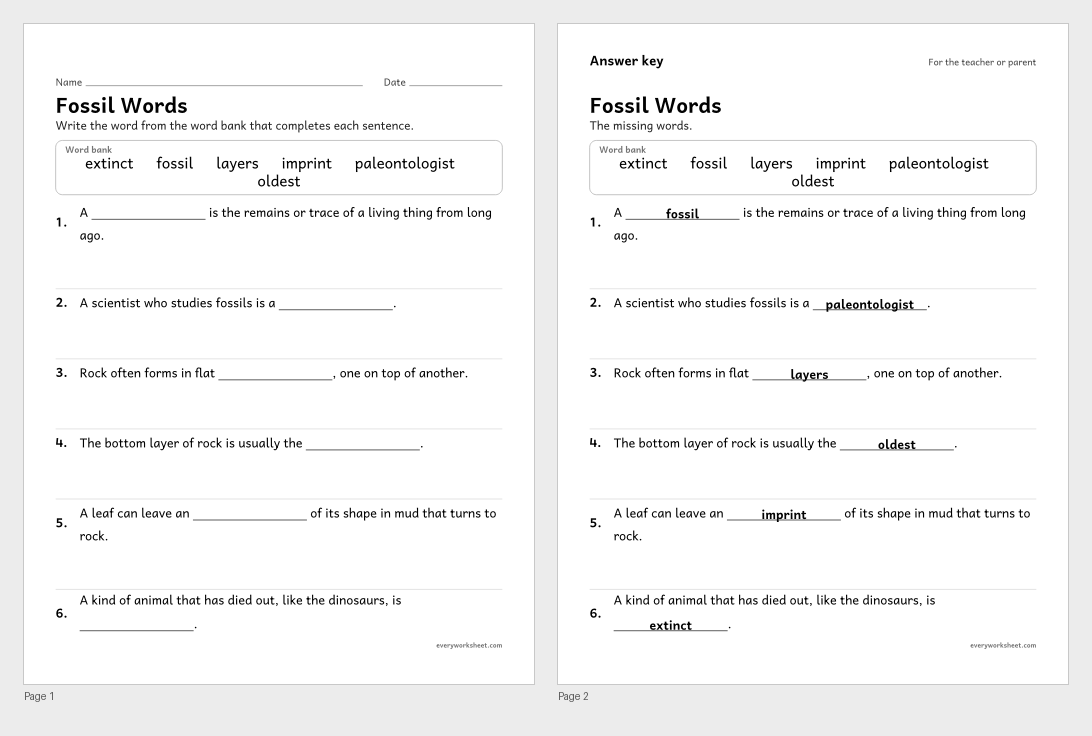
Using the vocabulary of fossils
Answer key on page 2
2 pages36 KB
 View all 2 pages
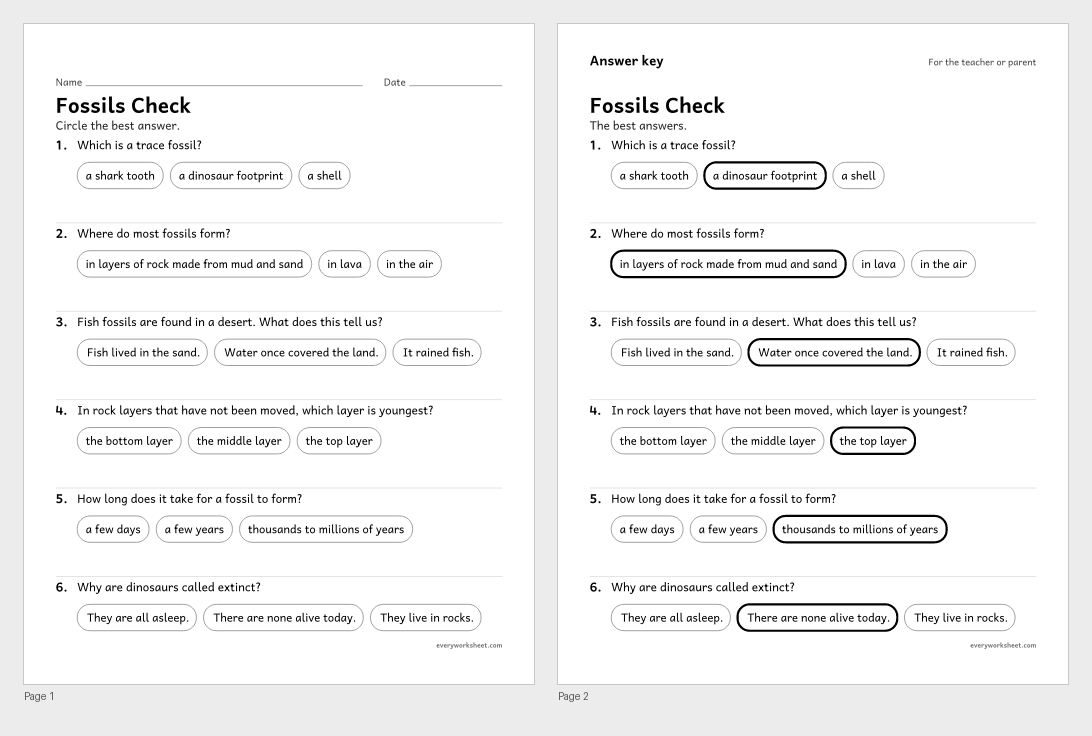
Reviewing how fossils form and what they tell us
Answer key on page 2
2 pages38 KB
Print at 100% (actual size) for the cleanest tracing lines.
Sea shells on a mountaintop, fish bones in a desert, fern leaves in icy rock: fossils are clues to a very different past. Third graders learn how fossils form and how scientists use them to figure out which living things lived long ago and what their environments were like.
These fossil worksheets order the steps of fossil formation (as cut and paste and a no-cut twin), introduce bones, shells, trace fossils and imprints, and ask children to read a cliff of rock layers to tell the story of a place that was once under the sea.
Every page is black and white, prints on US Letter or A4, and every page with right answers has an answer key on page 2.
NGSS 3-LS4-1Analyze and interpret data from fossils to provide evidence of the organisms and the environments in which they lived long ago.CCSS.ELA-LITERACY.RI.3.1Ask and answer questions to demonstrate understanding of a text, referring explicitly to the text as the basis for the answers.CCSS.ELA-LITERACY.RI.3.4Determine the meaning of general academic and domain-specific words and phrases in a text relevant to a grade 3 topic or subject area.A plant or animal is buried quickly by mud or sand. Over a very long time the layers harden into rock, and minerals slowly replace the hard parts. Later, wind and water wear the rock away and the fossil is uncovered.
Fossils show which living things lived long ago and what their environments were like. Sea shell fossils on land show the land was once under water; fern fossils show a place was once warm and wet.
Yes. Our dinosaur worksheets page has counting, letters and coloring for Pre-K to 1st grade.